Only a few days remain to submit candidates for the 2022 Martin Ennals Award for Human Rights Defenders. For detials see: https://humanrightsdefenders.blog/2021/04/15/call-for-nominations-martin-ennals-award-2022-with-a-focus-on-digital-rights/
Archive for the 'Human Rights Defenders' Category
Reminder: Call for Nominations MEA closes on 30 May
May 26, 202110th edition of CIVICUS’s State of Civil Society Report (2021)
May 26, 2021Protests prove the power of collective action as states fail pandemic test, says new report
As COVID-19 swept the globe, deepening existing fault-lines in societies and generating fear and uncertainty, many governments used the pandemic as a pretext to clamp down on civic freedoms, sparking protests in many countries. The annual State of Civil Society Report 2021, by global civil society alliance CIVICUS, shows that despite the odds, millions of people around the world mobilised to demand more just, equal and sustainable societies during the pandemic.
Mobilising against the odds
Globally, the mass mobilisation that made headlines and changed the conversation was the resurgence of demands for racial justice under the Black Lives Matter banner in the USA and beyond following the police killing of George Floyd in May 2020. People from all walks of life came to the streets to demand an end to systemic racism and police brutality.
The scourge of racism was highlighted in places as diverse as Colombia, the Netherlands and South Africa. The determination to end police brutality resonated widely, encouraging uprisings against police violence, notably in Nigeria.
Even in highly repressive countries, people bravely put their bodies on the line to oppose abusive power and demand democratic freedoms.
India witnessed the largest coordinated strike in world history as farmers defied brutal tactics to protest against corporate capture and elite collusion. Exposure of grand corruption in authoritarian Russia brought people to the streets, where they were met with more repression.
Bold civil disobedience against military might was offered in Myanmar. Dreams of democracy were deferred in Algeria, Belarus and Hong Kong, among others, but people showed extraordinary courage, taking to the streets in the face of great odds, keeping alive hopes for change.
Proving the power of collective action
The success of collective action led to breakthroughs in democracy and human rights across the globe.
In Chile, concerted street protests led to a commitment to develop a new constitution through democratic processes, with gender parity and Indigenous representation guaranteed. Sustained mobilisations in Argentina resulted in abortion being legalised, while in several countries young environmental activists took action to keep climate change in the spotlight.
Civil society’s collective action forced an election re-run in Malawi, and overcame systematic voter suppression in the USA. In Thailand, tens of thousands of protesters called for democratic reforms, including, for the first time, demanding a curb on the powers of the monarchy; activists used many creative forms of protest, including using giant inflatable ducks during mobilisations and holding ‘Runs Against Dictatorship’.
Following civic actions, same-sex relations were decriminalised in Bhutan and Gabon and same-sex marriage legalised in Costa Rica.
Many states failed the pandemic test
The pandemic offered a stress test for political institutions, and most were found wanting. The inadequacy of healthcare and social support systems was revealed. International cooperation was lacking as governments asserted narrow self-interest, birthing the dismal practice of vaccine nationalism by wealthy industrialised countries.
Many governments poured out official propaganda and sought to control the flow of information, ramping up censorship and criminalising legitimate inquiry and commentary. China was in the front rank of states that expanded surveillance practices and trampled on the right to privacy.
During the pandemic, several states increased their coercive power. In the Philippines, people were put in dog cages for breaking pandemic regulations, while in several Middle Eastern and North African states, including Bahrain, Egypt and Iran, human rights defenders remained in crowded jails, at risk of contracting COVID-19.
Some countries – notably New Zealand, South Korea and Taiwan – got the virus under control, won public trust and communicated pandemic response measures clearly, while largely respecting rights and democratic freedoms. This shows that the path of repression taken by many was not a necessity but a choice.
Pandemic proves the need for civil society
When states failed to respond effectively to the pandemic, civil society stepped up, providing help to people most in need and defending rights. Civil society organisations responded swiftly with vital support, distributing cash, food, medicines and sanitary supplies, sharing accurate information on the virus and providing healthcare and psychological services.
Looking forward
CIVICUS’s report calls on states to reverse rights restrictions imposed under the pandemic at the earliest opportunity. It urges them to respect human rights and democratic freedoms, and listen to the voices of protesters. It asks the international community to do more to uphold norms on civic freedoms and support peaceful assembly.
The great current wave of protests is sure to continue. People are brave to protest, but they should not have to do so at the risk of being thrown behind bars, or facing brutal, even lethal, violence.
https://reliefweb.int/report/world/state-civil-society-report-2021-enarpt
Coming up: Voices of Uyghur camp survivors – a conversation with Gulbahar Jalilova
May 24, 2021The Voices of Uyghur camp survivors : a conversation with Gulbahar Jalilova, is organised by the International Service for Human Rights and the World Uygur Congress. This event will be held in English, with Uyghur and French interpretation. Time 25 May 2021 11:00 AM in Zurich
Description Over a million Uyghurs and Turkic Muslims people are held in internment camps in the Uyghur region, exposed to harsh detention conditions, sexual violence, and the suppression of culture and
religious practice.
Gülbahar Jalilova was arbitrarily detained for sixteen months: now in exile, she’s decided to speak out on what she’s been through as a woman detainee despite the very high risks she faces.
Last February, ten UN independent experts wrote to the Chinese government about her case, raising grave concern about violations of international human rights and requesting explanations. What is the impact of this letter? What can the United Nations do to push for greater documentation, accountability, and justice for victims?
An event with Gülbahar Jalilova, Elizabeth Broderick (Chair of the UN Working Group on discrimination against women and girls), and Zumretay Arkin (Program and Advocacy Manager, World Uyghur Congress). Moderation by Raphael Viana David (ISHR).
https://us02web.zoom.us/webinar/register/WN_aTNzmcMfTVqxuhkLNoqTsw
5th China Human Rights Lawyers Day on 9 July 2021
May 24, 2021
The fifth China Human Rights Lawyers Day will be held virtually on July 9, 2021. [see also: https://humanrightsdefenders.blog/2020/07/12/china-five-years-after-major-crackdown-international-community-must-support-to-human-rights-lawyers/]
The China Human Rights Lawyers Day was created on July 9, 2017 in acknowledgement of the tireless efforts of Chinese human rights lawyers in their struggle for justice and the rule of law. It commemorates the mass arrest of lawyers that occured on July 9, 2015, and celebrates the ideals, courage, and tenacity of human rights lawyers in China. [see: https://humanrightsdefenders.blog/2020/12/18/chinas-continuing-crackdown-on-human-rights-lawyers-shocking-say-un-experts/]
Most human rights lawyers are not famous, nor are they wealthy, but they have irrefutably stood out in the Chinese legal community, elevating the profession to a worthier height. Over the past two decades, they have represented clients in all aspects of human rights and public interest, including but not limited to freedom of speech, freedom of belief, political dissent, property rights, women’s rights, labor rights, minority rights, anti-discrimination, food safety, and redress of wrongful convictions and other grievances. Their clients are from all walks of Chinese society, including political dissidents, religious believers, human rights defenders, civil society activists, farmers who lost land to illegal appropriation, factory workers, NGO practitioners, private entrepreneurs, writers, journalists, ordinary netizens, street vendors, victims of miscarriage of justice, and even Chinese Communist Party officials who have become prisoners in the so-called anti-corruption campaign. Their clients are often either opponents of the authoritarian regime or those whose rights and dignity are trampled.
Human rights lawyers have performed their duties in the process of defending their clients under the law, but precisely because they take both the law and their duties seriously, they have been subject to increasingly strong hostility from the authorities. Since the emergence of the legal rights defense movement in the early 2000s, these lawyers have only faced worse repercussions for their work; many have been arrested and tortured, suspended and disbarred. But the mass arrests on July 9, 2015, marked the beginning of a broader persecution of human rights lawyers by the Chinese authorities. Dozens of human rights lawyers and their assistants were suddenly arrested and hundreds of lawyers were threatened across the country. The jailed lawyers were subjected to harrowing physical and mental abuse. They were deprived of legal representation, forcibly injected with unknown drugs, forced to make confessions. Over the past two decades, more than 70 human rights lawyers have been disbarred, and about 40 of them have had their licenses revoked or cancelled in the past five years. At least 50 human rights lawyers have been illegally barred from leaving the country.
Even though most of the 709 detainees have been released, imprisonment of human rights lawyers has not ceased. Today, 13 human rights lawyers remain in prison in China, and one has been missing for more than three years.
Although human rights lawyers are a small group among China’s half-million lawyers, they are among those holding a torch lighting the road to rule of law and freedom for the Chinese people. They emerged during the most dynamic period of China’s reform and opening up, and now face hardship and great danger. In a totalitarian state in possession of an overwhelming state apparatus, they have opted for a challenge that few of their peers would be willing to take, but they have no regrets and hold their heads high in their vocation. They and their families have endured sufferings and setbacks, but have remained resilient and steadfast. They have been writing history and they are paving the road to the future. More than 15 human rights lawyers figure in the Digest of Human Rights laureates: see https://www.trueheroesfilms.org/thedigest.
For this special day, we call upon members of the public, whoever and wherever you are, to send a message of appreciation and encouragement to human rights lawyers in China by:
· Printing or handwriting your message on a sheet of paper (or displaying it on your laptop screen);
· Taking a photo of yourself with your message (group photo is welcome); and
· Sending it to humanrights.lawyers.day@gmail.com with your name, profession, and location. Your email address will be carefully guarded and not shared or used for any other purposes. Deadline: June 10, 2021
We will play your message in a video collage called “Messages to Human Rights Lawyers in China.”
Organizers:
Humanitarian China (U.S.), ChinaAid (U.S.), China Change (U.S.), Judicial Reform Foundation (Taiwan), New School for Democracy (Taiwan), Taiwan Support China Human Rights Lawyers Network
Ocen Ivan Kenneth from Uganda is Human Rights Defender of the Month
May 24, 2021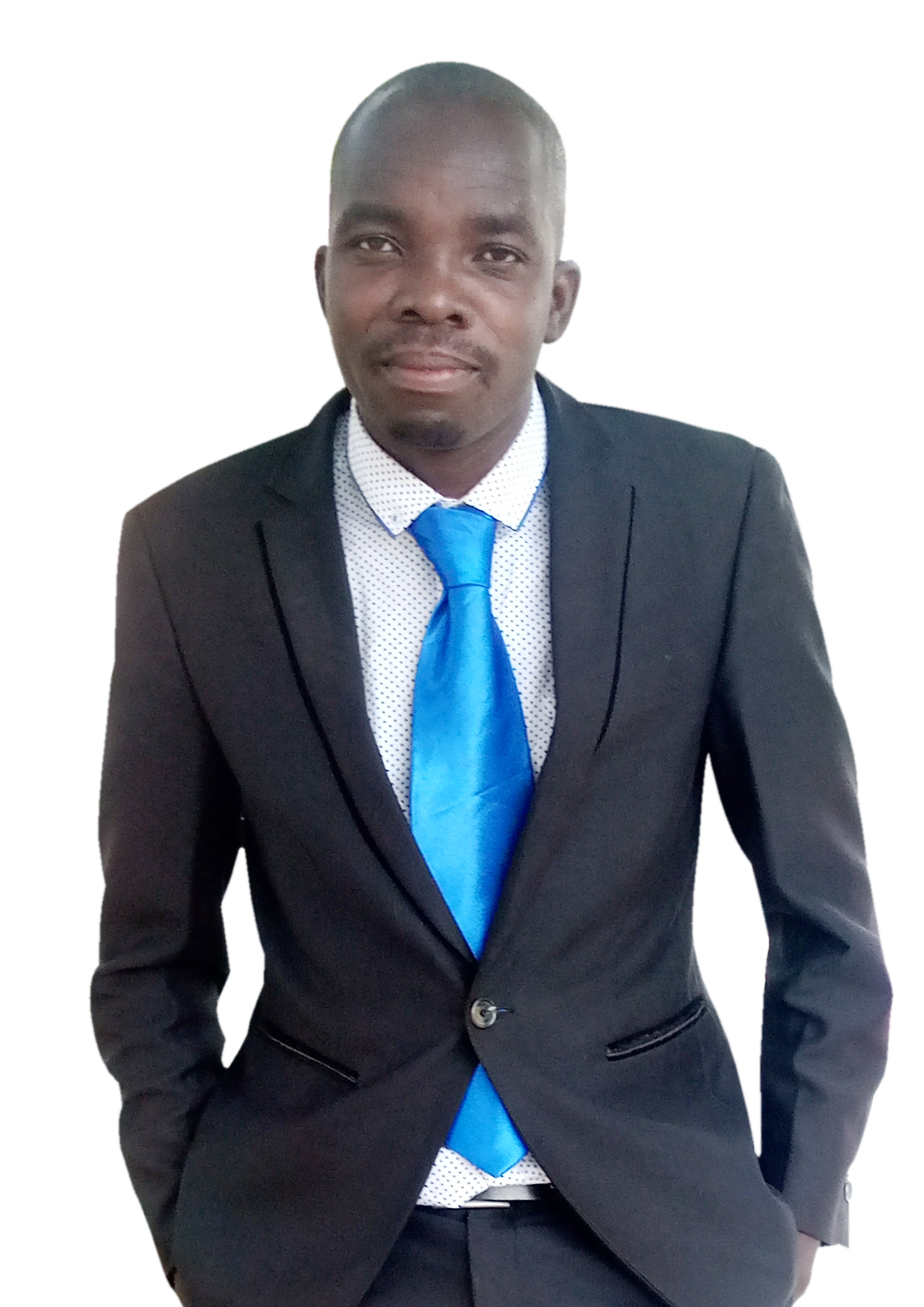
Ocen Ivan Kenneth is a Program Director at Foundation for Development and Relief Africa (FIDRA), with more than 10 years of experience working in the human rights field. Ivan’s ambitions for change focus on building inner peace, defending human rights and empowering local communities using theatre and storytelling. He creates a space where people from the community share their personal stories of trauma and resilience as well as identify mechanisms of healing.
“There may be times when we are powerless to prevent injustice, but there must never be a time when we fail to defend justice.” Ocen Ivan Kenneth Tweet
As an activist, Ivan has faced several challenges including personal threats that sometimes extend to his family and colleagues. His work with victims of conflict related sexual violence also at times takes a toll on him.
“I get moved when speaking to people whose human rights have been violated in some way, or those who have survived sexual violence, or those brutalised by militia. I can see the trauma in their eyes and hear it in their voices. It has always been the most difficult aspect of my job.”
Just like many other human rights defenders, the lack of adequate equipment and limited resources coupled with limited capacity and skills, plus legal restrictions curtail his ability to efficiently execute his work. Despite all these challenges, Ivan’s commitment to keep protecting and promoting human rights remains unwavering.
“After decades of armed conflict, now we are facing another attack, this time affecting our health and life. I am motivated because we are strong resilient workers. We keep resisting this new attack as we have always done by staying together, helping each other, and keeping our spirits high,” he says.
He believes that there should be more work done to support human rights defenders through building their capacity and expertise, strengthening their recognition, and protecting them from threats, risks, and reprisals particularly those who are marginalised or most at risk.
“I believe that current protection measures for human rights defenders in Uganda are insufficient. Particularly protection offered from the government mechanisms towards human right defenders is insufficient. A mechanism needs to be created and developed, and people working on other protection mechanisms for human rights defenders should truly address the different vulnerabilities for male and female human rights defenders.” Ocen Ivan Kenneth
China – EU investment deal off the rail
May 21, 2021
As earlier reported human rights defenders objected to the proposed EU-China investment deal {https://humanrightsdefenders.blog/2021/01/06/china-eu-deal-what-about-human-rights], now the European Parliament has rejected it. HRW said: “On May 21, only a few months after the conclusion of the Comprehensive Agreement on Investment (CAI), a trade deal between the EU and China, the European Parliament adopted a resolution to freeze its ratification. The deal has been controversial in the Parliament given concerns about forced labor in China, its rushed conclusion, and its lack of human rights protections and redress mechanisms. Beijing’s counter-sanctions against several European lawmakers and institutions managed to unite the European Parliament on CAI like nothing else has, and will now prevent any movement on ratification as long as they remain in place“.
But the European Parliament voted overwhelmingly Thursday to refuse any consideration of the EU-China investment deal as long as Chinese sanctions against MEPs and scholars were in place. France24 on 212 May gives China’s expected angry reaction:
China slammed the European Union’s “confrontational approach” after MEPs voted to block a landmark investment deal over Beijing’s tit-for-tat sanctions against EU lawmakers. Foreign ministry spokesman Zhao Lijian said Beijing’s sanctions were a “necessary and justified response” to previous EU measures against Chinese officials over human rights concerns in Xinjiang.
“China has imposed sanctions on relevant institutions and personnel of the EU who spread Xinjiang-related lies and false information and who have seriously damaged China’s sovereignty and interests,” Zhao said at a regular press briefing.
He urged the EU to “immediately stop interfering in China’s internal affairs, abandon its confrontational approach” and push EU-China relations “back to the right track of dialogue and cooperation”.
Defenders of the pact see it as a much-needed opening of China’s economy to European companies, but it is set to face a difficult ratification process among the 27 member states and European Parliament.
The investment deal aims to open China’s market and eliminate discriminatory laws and practices preventing European companies from competing on an equal footing, according to the European Commission.
EU foreign direct investment in China since 2000 — excluding Britain — amounted to $181 billion. The corresponding sum from China is $138 billion.
Ties between the EU and China soured suddenly in March after an angry exchange of sanctions over human rights concerns.
The EU sanctioned four Chinese officials over suspected human rights violations in China’s far northwestern region of Xinjiang.
Beijing responded by imposing its own sanctions against European politicians, scholars and research groups.
Adding to the pressure, about 50 human rights defenders from China who have gone into exile in Europe — including the artist Ai Weiwei — asked the EU on Thursday to suspend extradition treaties with Beijing.
In an open letter to EU leaders, they asked Brussels to freeze or revoke arrangements made by 10 EU member states, including France, Belgium and Spain.
These bilateral treaties “not only present a potential threat to our freedom of movement within the European Union, but to our freedom of association and freedom of expression, as Beijing may seek our extradition for statements we make in Europe”, it said.
https://www.hrw.org/news/2021/05/20/european-parliament-freezes-trade-deal-china
Yury Dmitriev wins 2021 Sakharov Freedom Award
May 21, 2021Thomas Nilsen in the Barents Observer of 21 May reports that The Norwegian Helsinki Committee has given its 2021 award, the Sakharov Freedom prize, to Russian dissident Yury Dmitriev. for more on this award and its laureates, see: https://www.trueheroesfilms.org/thedigest/awards/DC70DA62-BCB5-497A-A145-79D1F865FC11
Dmitriev is well known for his research and campaigns to create a memorial to the victims of Soviet terror in the Republic of Karelia, a northwestern province near Russia’s border to Finland. see also: https://www.trueheroesfilms.org/thedigest/laureates/303c010f-033a-45b1-9d25-ed42d99b1da9
“Yuri Dmitriev has returned the human value back to the Russian state. He confronts the past and gives a new vision for the future, which today’s regime does not have,” says Secretary General of the Norwegian Helsinki Committee, Geir Hønneland, to the Barents Observer.
Explaining the reason behind the award, Hønneland says it is not only about Dmitriev as a historian. “His work has already inspired thousands of young and old people, who want to find their dearest in the darkest graves. It is about hope and common identity.”
Millions were killed during Soviet terror, but the victims of these atrocities and their living relatives have never been given real justice. This was what Yury Dmitriev was working on. In the forests of Karelia, tens of thousands of people were shot and killed without trial or conviction and buried in mass graves.
Dmitriev is currently serving a 13 years prison sentence and is considered a political prisoner by the Norwegian Helsinki Committee and other leading human rights organizations. See also: https://humanrightsdefenders.blog/2020/10/01/dunja-mijatovic-calls-on-russia-to-end-judicial-harassment-of-human-rights-defenders/
Turkey finally starts paying a prize for its authoritarianism
May 20, 2021Ahval on 20 May 2021 reports that the European Parliament said the EU’s membership talks with Turkey should be formally suspended unless the country reverses its democratic backsliding.
Parliamentarians said they were alarmed by the “authoritarian nature of the presidential system” in Turkey in a report adopted on Wednesday. The resolution was probably the toughest and most critical yet of Turkey, said rapporteur Nacho Sánchez Amor.
“It reflects all that has unfortunately happened in the country in the last two years, in particular in the fields of human rights and rule of law, which remain the main concern for the European Parliament, and in its relations towards the EU and its members,” Amor said.
EU institutions should now make any positive agenda on Turkey conditional on democratic reform, he said.
Turkey began membership talks with the EU in October 2005. The negotiations were partly frozen a year later due to Turkey’s refusal to open its ports to ships from the Greek part of Cyprus. The EU informally approved a freeze in the membership process in 2016 citing a deterioration in democracy.
Turkey reacted angrily to the report, saying it was unacceptable in a period when relations with the EU were based on a positive agenda and a membership perspective.
The text contains “false allegations regarding human rights, democracy, the rule of law, our governmental system and political parties; and views Turkey’s effective, solution-oriented, humanitarian and enterprising foreign policy as a threat,” the Turkish Foreign Ministry said in a statement. See also my recent: https://humanrightsdefenders.blog/2021/03/22/turkey-arrests-and-backsliding-on-femicide/
EU lawmakers pointed to a “continued hyper-centralisation of power in the presidency” and called on Turkey’s relevant authorities to release all imprisoned human rights defenders, journalists, lawyers, academics and others, who it said the government had detained on unsubstantiated charges.
Turkey adopted a full presidential system of government at elections in 2018, awarding President Recep Tayyip Erdoğan vast executive powers, including the ability to rule by decree.
MEPS also highlighted Turkey’s “hostile” foreign policy, including towards Greece and Cyprus, and over its involvement in Syria, Libya, and the disputed region of Nagorno-Karabakh, which they said consistently collided with the EU’s priorities.
Lawmakers also urged Turkey to recognise the Armenian Genocide, which they said would pave the way for genuine reconciliation between the Turkish and Armenian people.
https://ahvalnews.com/eu-turkey/eu-parliament-highlights-authoritarianism-turkey-call-halt-talks
Special Rapporteur Mary Lawlor starts new website
May 20, 2021Mary Lawlor: Since taking up this role just over a year ago, Covid has meant that I have worked almost entirely online. This has been an opportunity to expand the ways we promote the work of Human Rights Defenders in online spaces.
So today, I am delighted to unveil my new website, which has been in the works for some time. At srdefenders.org, you’ll find the latest news and information about Human Rights Defenders and what my mandate is doing to protect them.
Start exploring now 👇
https://lnkd.in/gw_ZHEh
https://nhrf.no/article/2021/special-rapporteur-launches-website-for-human-rights-defenders
“Unshuttered voices” an IFEX exhibit and a call to action
May 19, 2021Matt Petras in the Shit.nes of 18 May 2021 reports how IFEX, a global freedom of expression network, partnered with the International Free Expression Project (IFEP) earlier this month to launch a street-level art exhibition in Pittsburgh displaying the faces and telling the stories of brave practitioners and defenders of free expression from around the world, including slain Maltese journalist Daphne Caruana [see: https://www.trueheroesfilms.org/thedigest/laureates/70b0bee4-9af2-40c6-a11e-5b9ad159b96f]
The exhibit, which draws from IFEX’s Faces of Free Expression series that profiles “changemakers,” can be seen by anyone walking by on the street, housed in street-level windows of the massive, historic former Pittsburgh Post-Gazette building. The PG, which has since relocated elsewhere in the city, has won Pulitzer Prizes for its journalism and continues to serve as the most prominent news outlet covering the Pittsburgh region for nearly a century. At an opening ceremony kicking off the exhibit’s launch, a small group, including beloved PG columnist Tony Norman, Pittsburgh Mayor Bill Peduto, and IFEP founder Greg Victor, gave small speeches lauding the ‘Faces of Free Expression’ project.
“Those honoured in the ‘Faces’ exhibit represent thousands of others from across the world who are fighting this struggle as well,” Victor said at the event.
Vietnamese singer Mai Khoi performed at the event. Khoi was already a popular musician in her home country when she became more and more of an activist as she experienced increased censorship of her music by the Vietnam government. Often compared to Lady Gaga and Pussy Riot, Khoi performs unique, exciting, and often politically charged pop music. [see: https://www.trueheroesfilms.org/thedigest/laureates/de4d9180-f67a-11e9-9715-b5590d668968]
Portrait illustrations, blurbs and quotes adorn several sets of vertical, rectangular windows facing the street in Downtown Pittsburgh. Most of the windows contain a single portrait or bit of text but the exhibit also boasts some larger spreads that incorporate clusters of nearby windows to create bigger images, such as a wonderful photo of Khoi against a black background, joined by a short biography for passers-by to read.
Other individuals featured include Nabeel Rajab, a human rights defender jailed in Bahrain for tweets critical of the government, and Agnès Callamard, a lead investigator into the assassination of journalist Jamal Khashoggi by Saudi Arabia. [see https://www.trueheroesfilms.org/thedigest/laureates/6C9DB4EE-91C2-A69B-3839-6D1D5EC91AD1]
Jamal Khashoggi and Daphne Caruana Galizia are among the journalists and human rights defenders featured in the exhibition. Photo: Matt Petras.
The faces of the project represent just a small selection of the individuals responsible for the fight for freedom of expression.
“All of these people, they’ll say they didn’t do it alone, and they didn’t,” Game said. “It takes so many people, who get up every day in their work, to do this kind of advocacy, to address these kinds of challenges.”
IFEP hopes to incorporate its ‘Marketplace of Ideas’ proposal into the historic PG building, which would create a space for artists doing important work. “Being artists ourselves, having a place like this would be great,” Jones said.
Brown appreciated the exhibit and the goals outlined by IFEP for what it represents for his neighbourhood. “This is something Pittsburgh needs, being able to have your voice be heard and your expressions,” he said.
Yet the message of the ‘Faces of Free Expression’ exhibit extends far beyond the images and text on the wall that people can see on this street in Pittsburgh. “It shows this has a global impact,” Game said. “It brings the many free expression issues the world is facing to this wall in Pittsburgh.”

