Archive for the 'Human Rights Defenders' Category

Protect cultural human rights defenders in Afghanistan, says UN rights expert

August 23, 2021

While understandably all eyes are on the risks faced by those who are in the first line of sight of the Taliban such as human rights activist and women human rights defenders, a piece in India Blooms of 19 August 2021 about the “cultural disaster”, that may follow the fall of Kabul, is worth noting. The UN Special Rapporteur Rapporteur in the field of cultural rights, Karima Bennoune, urged countries to provide urgent assistance to human rights defenders, including those working on women’s and cultural rights, as well as artists, trying to flee the country.

It is deplorable that the world has abandoned Afghanistan to a fundamentalist group like the Taliban whose catastrophic human rights record, including practice of gender apartheid, use of cruel punishments and systematic destruction of cultural heritage, when in power, is well documented,” she said.

The independent rights expert called for all forms of culture and cultural heritage to be protected, as well as those who defend it, and implored cultural and educational institutions everywhere to extend invitations to Afghan artists, cultural workers and students, especially women and members of minorities, to enable them to continue their work in safety.

It is not enough for foreign governments to secure the safety of their own nationals”, said Ms. Bennoune. “They have a legal and moral obligation to act to protect the rights of Afghans, including the rights to access to education and to work, without discrimination, as well as the right of everyone to take part in cultural life.”

The Special Rapporteur said she was gravely concerned at reports of gross abuses by the Taliban, including attacks on minorities, the kidnapping of a woman human rights defender, the killing of an artist, and the exclusion of women from employment and education.

Bennoune recalled that the Taliban’s own cultural officials in 2001 had attacked the country’s national museum, destroying thousands of the most important pieces, as well as banning many cultural practices, including music. 

Afghan cultural rights defenders have worked tirelessly and at great risk since then to reconstruct and protect this heritage, as well as to create new culture. Afghan cultures are rich, dynamic and syncretic and entirely at odds with the harsh worldview of the Taliban,” she said. 

Governments which think that they can live with ‘Pax Taliban’ will find that this is grave error that destroys Afghan lives, rights and cultures, and eviscerates important advances that had been made in culture and education in the last two decades with international support and through tireless local efforts.” 

Bennoune said such a policy will harm Afghans most but will also set back the struggle against fundamentalism and extremism, and their harmful effects on cultures, everywhere in the world, threatening the rights and security of all.

See also: https://humanrightsdefenders.blog/2019/12/27/expert-meeting-on-cultural-rights-defenders/

https://www.indiablooms.com/world-details/SA/30852/protect-human-rights-defenders-in-afghanistan-says-un-rights-expert.html

The trial and tribulations of Chinese human rights defender Liu Bing to avoid deportation from Germany

August 23, 2021

Finbarr Bermingham in the South China Morning Post of 19 August 2021 tells the harrowing story of Liu Bing who narrowly escaped imminent deportation, for now.

Liu Bing was active in dissident groups in China for almost a decade until he fled the country in May 2019. He was set to be deported next week. Photo: Twitter

Liu Bing was active in dissident groups in China for almost a decade until he fled the country in May 2019. He was set to be deported next week. Photo: Twitter

A Chinese human rights activist facing imminent deportation from Germany to China has won a stay, after authorities granted him an appeal against a rejected application for political asylum. Liu Bing was set to be deported to China next Thursday, where he claimed that he would “definitely face long-term detention without trial” for taking part in political protests before he fled the country.

But lawyers who recently began working on his behalf secured an adjournment in his exit on Wednesday, meaning Liu will be free to leave the detention centre where he is being held in the North Rhine-Westphalia region on Tuesday, while his appeal is heard.

Reached by phone in his single room at the detention centre, where he is equipped with a refrigerator, television and cooker, Liu confirmed he took part in protests in China, including those commemorating the Tiananmen Square crackdown in 1989.

If I am sent back to China, I will definitely face long-term detention without trial, because this kind of thing is very common in China. They don’t need the police, and I don’t need any court decision, they can treat a person at will. I will be detained,” he said.

Liu said he is in a “terrified state”, and that his “family members [in China] may not understand or support my participation in political activities”.

Liu was active in dissident groups in China for almost a decade, including the Open Constitution Institute, a protest movement calling for the rule of law in China. He fled China after being pictured taking part in a meeting with other political activists in Xiamen in May 2019.

It has been reported that other dissidents involved in the Xiamen meeting – including Ding Jiaxi, Xu Zhiyong and Dai Zhenya – were arrested in the subsequent months.

After leaving China, Liu first went to Thailand, then Serbia, before finally arriving in Germany, where he was initially held in a refugee camp in Frankfurt, before being released to begin an application for political asylum. After his application was rejected, he fled once more to the Netherlands, where he again tried to gain political asylum. However, he was arrested in June for breaching the EU’s Dublin Regulation, which states that if a person’s asylum application is rejected in one EU country, they cannot apply in another, and was sent back to Germany where he has remained in detention since.

Campaigners working with Liu have said that his lack of understanding of the German legal system and language meant he did not initially realise that an appeal was possible – nor was he aware of a process by which an asylum seeker could request the process be restarted. Both clauses have now been triggered.

“For the first case, he didn’t have a lawyer, he didn’t ask for one. He’s from China, where many people don’t have a strong concept of the legal system or the rule of law,” said a spokesperson for the International Society for Human Rights, which is working with Liu.

His case has been promoted by a number of high-profile German politicians, including MEP Reinhard Buetikofer, who took to Twitter to say: “Germany must stop deportation of Chinese activist Liu Bing.”

William Nee, research and advocacy coordinator for the Chinese Human Rights Defenders, an NGO, said it would be a “tragedy” for Liu to be deported.

“He faces an almost certain fate of immediate detention, followed by torturous interrogations and a sham trial. The German authorities must put a stop to this right now,” Nee said. A spokeswoman for the German Federal Office for Migration and Refugees said that “for privacy and data protection reasons, we do not comment on individual cases within the asylum procedure in general”.

Data from the UN High Commissioner for Refugees showed that between 2012 – when Xi Jinping became the general secretary of the Communist Party – and 2020, the number of asylum seekers from China rose by 602 per cent, from 15,362 to 107,864.

https://www.scmp.com/news/china/diplomacy/article/3145685/chinese-human-rights-activist-avoids-imminent-deportation

Report of the Special Rapporteur on the situation of human rights defenders, Mary Lawlor, at the 46th session of the Human Rights Council

August 23, 2021

Courtesy of Reliefweb, here the reference to “States in denial: the long-term detention of human rights defenders – Report of the Special Rapporteur on the situation of human rights defenders, Mary Lawlor” (A/76/143), posted 19 Aug 2021 Originally published 19 July 2021.

Summary

In the present report, the Special Rapporteur on the situation of human rights defenders, Mary Lawlor, analyses the situation of human rights defenders in long – term detention, serving sentences of 10 years or longer. The Special Rapporteur draws attention to underlying factors that contribute to the phenomenon of detaining human rights defenders for lengthy periods as a result of their legitimate human rights activities. The report contains examples of individual cases of human rights defenders serving long-term prison sentences. She makes recommendations to relevant stakeholders to halt and reverse these trends and suggests ways to prevent this from happening in the future. [see also; https://humanrightsdefenders.blog/2021/05/20/special-rapporteur-mary-lawlor-starts-new-website/]

1. Introduction

  1. In December 2015, woman human rights defender Lodkham Thammavong was 1 of some 30 people who protested outside the Lao Embassy in Bangkok to express their concern over the Lao Government’s alleged human rights violations.
  2. Three months later, when she returned to the Lao People’s Democratic Republic, she and two other human rights defenders, Soukane Chaithad and Somphone Phimmasone, were arrested by Lao police.
  3. The Special Rapporteur has received credible information that they were not informed of the charges against them and no arrest warrants were presented at the time of arrest or afterward. Ms. Thammavong and the others were reportedly forced to make false confessions, paraded on national television to apologize for being traitors and denied their rights to legal representation.
  4. A year later, in March 2017, after an unfair trial, Ms. Thammavong was found guilty of “treason to the nation, propaganda against the State, and gatherings tied at causing social disorder”. She was sentenced to 12 years in prison. Mr. Chaithad and Mr. Phimmasone were also convicted on the same charges, and given 16 and 20 years, respectively.
  5. At the time of writing, Ms. Thammavong is currently being held in Tan Piao Prison, located around 60 km from Vientiane, making family visits difficult. She is said to be lacking access to water and still has had no access to legal counsel.
  6. Unfortunately, such attacks on human rights defenders are not rare. Hundreds of human rights defenders across the world are serving long prison sentences after being convicted on fabricated charges following unfair trials. Many, like Ms. Thammavong, were denied adequate legal representation.
  7. The Special Rapporteur has monitored numerous cases of defenders serving more than 10 years in prison, and of many other defenders facing charges for which they could be sentenced to similarly long terms. Many, like Ms. Thammavong, have been sentenced under vague and ill-defined charges often relating to treason, subversion or terrorism.
  8. Many are held in harsh conditions, and/or have been forced to confess to crimes they did not commit. Some suffer from ill health and are deprived of adequate medical attention. Some are also denied regular access to their families. Some are at risk of being sentenced to death, and some have died in jail while serving long sentences.
  9. In the present report, the Special Rapporteur on the situation of human rights defenders, Mary Lawlor, intends to show that the issue of the long-term detention of human rights defenders is extensive, that there are many commonalities in the methods used to unjustly jail them and that many Member States – including some who are members of the Human Rights Council, or who aim at being a member – consistently deny they are holding defenders in jail. She advises States on how to prevent further such attacks on defenders and recommends that all human rights defenders be immediately and unconditionally released from jail.
  10. The full extent of this problem is not known. Human rights defenders are serving long terms in detention on every continent, but there are very likely many more cases than those featured in the present report that have not been brought to the Special Rapporteur’s attention.
  11. The cases included here are only those where consent has been obtained directly from the defenders themselves, or from their families or representatives. Many other cases are also known to the Special Rapporteur, but are not included in the report for various reasons, including where it was not possible to obtain consent or where highlighting cases would risk making the situation of the defenders worse. Some defenders were jailed so long ago that their cases have faded from public view and no longer feature in many advocacy efforts. This can also make consent and information more difficult to obtain.
  12. There is a wide range of defenders serving long terms in detention. Some are labour leaders, some are lawyers, others are journalists. Some are jailed for defending article 21 of the Universal Declaration of Human Rights, which outlines the right for people to vote in elections. Others are targeted for peacefully advocating for democratic reform, or for exposing deficiencies in governance. The Special Rapporteur reiterates that peacefully defending these and other rights that States have promised to safeguard is never a crime.
  13. Some defenders have been targeted and jailed in reprisal for their engagement, or intended engagement, with United Nations mechanisms. Some are famous, winners of international awards for their work, with prominent international profiles, while others are relatively unknown, even within their country. Some hold dual nationalities and are citizens of countries other than the one in which they are jailed.
  14. Some defenders have been convicted in mass trials and some have been sentenced in absentia. Some defenders sentenced to long terms in jail are living in exile, unable to return to their country for fear of arrest. Others are kept in long periods of pretrial detention, not knowing if or when they will face charges that could send them to prison for long terms.
  15. Other defenders are seized and nothing is heard from or about them for many years. Not all are held by Governments. Some, like Syrian woman human rights defender Razan Zaitouneh, are believed to have been taken by militia groups. There has been no news of her current whereabouts for years.
  16. Other human rights defenders sentenced to long terms in jail die in custody. Human rights defender Azimjan Askarov was unjustly sentenced to prison in 2010 in Kyrgyzstan, and he was still in prison 10 years later with serious medical problems. Despite appeals from the mandate holder, the United Nations, the European Union and the Organization for Security and Cooperation in Europe to the authorities for his release on health grounds, he died in detention in 2020.
  17. The Special Rapporteur notes there is often a flurry of attention and activity around a case when a human rights defender is arrested or convicted, sometimes accompanied by intense international media coverage and advocacy from foreign governments and United Nations mechanisms. But even with the most prominent defenders, attention typically fades over the years as fresh cases demand the attention and resources of non-governmental organizations (NGOs), independent United Nations experts and interested Governments.
  18. Many defenders serving long sentences feel forgotten or abandoned.
  19. The effect of the long-term detention of defenders can be devastating – to themselves, to their families, to their communities and to the civil societies to which they belong. Just fighting a legal case can exhaust a defenders’ resources, and that of their NGO. Indeed, this damage to them and their work is often the motivation for their being targeted.
  20. States will recall that in her first report to the General Assembly in 2020 (A/75/165), the Special Rapporteur outlined her priorities for the mandate, which included a focus on “defenders serving long terms in prison”. She believes States should have confronted this enduring problem long ago. Some States have ignored years of appeals to stop jailing human rights defenders and still refuse to release those they currently hold in detention.
  21. The Special Rapporteur is instructed under the mandate to study developments and challenges on the right to promote and protect human rights and seek, receive and respond to information on the situation of human rights defenders, and to recommend effective strategies to better protect human rights defenders.
  22. One simple piece of advice for States to better protect human rights defenders is not to put them in prison for long terms for peacefully defending the rights of others.
  23. Many States sentence human rights defenders to long terms in prison because they want to, and because they can. They want to because they are unhappy with defenders exposing corruption, pointing out human rights violations or highlighting other deficiencies in governance.
  24. Jailing defenders does not always silence them, and some continue to defend rights while in detention, but States often use this method of attack against human rights defenders to crush peaceful dissent.
  25. States can do this because they ignore international treaties they have committed to, often with negligible international consequences. They enable themselves to jail human rights defenders by passing vague laws, often in the name of national security or countering terrorism, by staging sham trials that fail meet international standards, by torturing defenders into making false confessions and by lying about the work of human rights defenders.
  26. Some States contest that those jailed are not defenders but subversives, traitors or terrorists. The Special Rapporteur knows the difference, and she respectfully reminds States that her long years of experience in identifying who is a human rights defender – and who is not – is partly why she was entrusted with this mandate. The Special Rapporteur is keen to discuss individual cases with States to better explain why those in detention referred to in the present report are human rights defenders.
  27. Despite the many detailed cases regularly presented to Member States of human rights defenders currently serving long jail terms, the Special Rapporteur notes that in response to her call to Member States for submissions to the present report, not one State acknowledged holding any human rights defender in long-term detention.
  28. Many States have for many years used this method of attack against human rights defenders. The Special Rapporteur’s predecessors in this mandate have, since the mandate was established 20 years ago, repeatedly recommended that States not use unfair trials or security legislation as a pretext for jailing, or otherwise attacking, human rights defenders.
  29. In 2001, Hina Jilani, the first mandate holder on the situation of human rights defenders, in her first report to the then Commission on Human Rights, stated that: “The situation of human rights defenders … and their sentencing after unfair trials will be a matter of serious concern for the Special Representative” (E/CN.4/2001/94, para. 89 (f)).
  30. Despite regular, detailed updates to Member States from the Special Rapporteur on human rights defenders over many years about this unjust practice, defenders are still routinely subjected to unfair trials, after which many are sentenced to long terms in prison.
  31. In her most recent report to the Human Rights Council, presented earlier this year (A/HRC/46/35), the Special Rapporteur focused on the killing of human rights defenders. She identified a lack of political will from Member States to hold the perpetrators accountable as a key driver of the murders. In the case of long-term detention of defenders, it is less the absence of political will to prevent this abuse, but rather the active presence of a political will in States to target defenders.
  32. Some representatives of Member States have told the Special Rapporteur, in response to her raising the case of an unfair trial, that they cannot interfere in their countries’ independent judicial process. While the Special Rapporteur respects the principle of judicial independence, she cannot be silent when a criminal justice system falls short of international standards and is used to unjustly jail human rights defenders.
  33. In 2003, Ms. Jilani told Member States: “When human rights defenders are arrested, detained and/or prosecuted under security legislation, the process should be fully transparent. The charges on which the arrest and detention are based should be made public and explained in a sufficiently complete manner that the veracity of their substance can be independently verified” (A/58/380, para. 71).
  34. Many States are still failing this test of transparency and continue to consign human rights defenders to long years of misery in prison.
  35. While those mechanisms which enable long-term, unjust detention, including torture, unfair trials and the gross misrepresentation of the work of those peacefully defending the rights of others, should be addressed, the fundamental reason that defenders are held in long-term detention is because of the political will in States to do so.
  36. Targeting human rights defenders with long jail terms is never acceptable, and it is a red line no State should cross. It is immoral, illegal, inexcusable and dishonourable. This practice exposes States’ lack of resolution to fulfil the international standards they have committed to uphold. Consigning those who peacefully defend human rights to prison raises serious questions about States’ intentions to abide by the international agreements they have signed.

https://reliefweb.int/report/world/states-denial-long-term-detention-human-rights-defenders-report-special-rapporteur

ASEAN Human Rights Advocacy Academy 2021: how to apply

August 20, 2021

What is the ASEAN Human Rights Advocacy Academy?

The ASEAN Human Rights Advocacy Academy is a 15-hour online capacity building workshop (spread into weekly sessions) for young activists and professionals in Southeast Asia on effective human rights advocacy in ASEAN.

Organised by FORUM-ASIA, the Academy will bring together the expertise of human rights practitioners and provide necessary tools to enhance participants’ knowledge on the role of ASEAN and its human rights mechanisms.

What will participants learn?

  • Human rights situation in ASEAN
  • ASEAN human rights framework
  • Best practices and case studies on human rights mechanisms
  • Advocacy strategy

Programme Duration: 2 to 30 September 2021, 2-5 PM every Thursday (GMT+7)

Platform: Zoom

Who can apply?

  • Southeast Asian and Timor Leste nationals in their junior and mid-level career (those with 2 to 5 years of relevant experience working in NGOs, Think Tanks, academic institutions, non-profit and social enterpreneurship collectives) and working in the fields of social justice, human rights, peace and conflict, and democracy in Southeast Asia (local, national, or regional level)
  • Those with two to five years experience in the above-mentioned fields;
  • Have prior knowledge and engagement with ASEAN and its human rights mechanism (can be in terms of activism, research, and other means of engagement);
  • Those who do not have prior knowledge and engagement with ASEAN (e.g. university students) will need to demonstrate how participating in  the Academy will contribute to their work or associated organisations towards advancing human rights in the region;
  • Excellent command of English, both spoken and written.
  • All qualified individuals regardless of age, race, colour, sex, gender orientation, religion, national origin, disability, or veteran status are encouraged to apply.

How can you apply?

To register for the workshop, kindly fill up the necessary information and submit your CV (maximum 3 pages) through this link: https://bit.ly/ASEANHRAcademy

Deadline of Submission

23 August 2021, midnight (GMT+7)

For inquiries about the Academy,  please email us at ea-aseanATforum-asia.org

https://www.forum-asia.org/?p=35520

Sex workers fighting for human rights among world’s most at risk activists

August 20, 2021

On 12 August 2021 Front Line Defenders came out with an unique report saying rights defenders working in sex industry face ‘targeted attacks’ around the world. The same day Sarah Johnson devoted a piece to it in the Guardian:

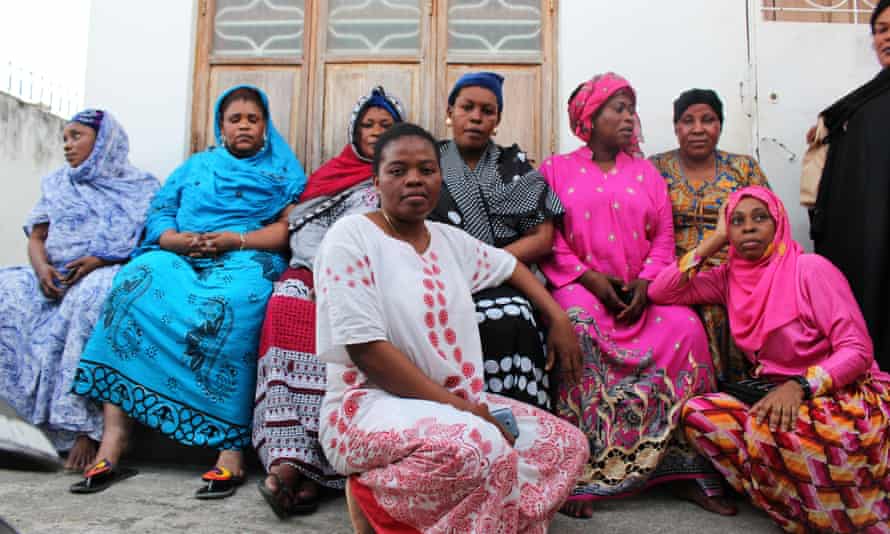
Sex worker rights defenders from Yosoa in Zanzibar, Tanzania. Yosoa conduct health outreach and provide support after police, client or family violence.

Sex worker rights defenders from Yosoa in Zanzibar, Tanzania. Yosoa do health outreach work and provide support after police, client or family violence. Photograph: Erin Kilbride/Front Line DefendersRights and freedom is supported by

Humanity United

Sex worker activists are among the most at risk defenders of human rights in the world, facing multiple threats and violent attacks, an extensive investigation has found.

The research, published today by human rights organisation Front Line Defenders, found that their visibility as sex workers who are advocates for their communities’ rights makes them more vulnerable to the violations routinely suffered by sex workers. In addition, they face unique, targeted abuse for their human rights work.

Drawing on the experience of 300 individuals in Tanzania, Kyrgyzstan, El Salvador and Myanmar, the report focuses oncases of sexual assault, threats from managers and clients, raids on homes and offices, physical attacks and police surveillance endured by sex workers undertaking human rights work.

The services the activists provide to fellow sex workers include: negotiating access to brothels, conducting gender rights training, offering legal and health counselling, reporting experiences of violence, and campaigning for freedom of movement and free choice of employment for those seeking to leave sex work.

Erin Kilbride, research and visibility coordinator at Front Line Defenders and lead author of the report, said: “Sex worker rights defenders take extreme personal risks to protect their communities’ rights to access justice, healthcare, housing and food, while responding to the immediate threats of police and domestic violence, discrimination, criminalisation and structural poverty.”

Often these activists were the only people able and willing to provide health education in locations in which sex was sold, the report found. They ensured treatment for sex workers who would otherwise be left with crippling injuries and life-threatening illnesses.

Activists’ role in creating community networks and defending sex workers’ right to assemble were also highlighted in the repot. “Coming together, even in private, is a radical, resistant, and dangerous act for defenders whose very identities are criminalised,” it said.

Defenders interviewed said they had been subjected to violations above and beyond what are typical for sex workers in their area. These included torture in prison, threats by name on the street, targeted abuse on social media and demands for sex in exchange for an advocacy meeting with a police commissioner. They also faced attacks from clients….

In Tanzania, sexual assaults in detention by the police have become a common occurrence for sex workers. They are often forced to perform sex acts in exchange for release. But human rights defenders have also been forced to perform sexual acts in order to secure other sex workers’ release. If they refuse, they are often tortured. One woman was given electric shocks after she refused to perform sex acts during a one-week detention related to her human rights work.

In El Salvador and other countries, physical attacks by clients and managers began after they learned about a sex worker’s activism, said the report.

In Myanmar, police followed activists to brothels to conduct raids duringhuman rights trainings. Some activists had been forced to change where they sell sex because police surveillance increased after they became known for their human rights work.Advertisement

Activists were often belittled at police stations in front of the sex workers they had tried to help. Htut, an outreach worker for Aye Myanmar Association, a network of sex workers, said: “[The police] let us in to the stations but then use rude words, take money from us, insult us, embarrass us, and made me feel bad about myself. It feels like they want to prove to the other sex workers that being an advocate is a humiliating thing.”

In Kyrgyzstan, sex workers have been paid or threatened by the police to help entrap rights defenders when they go to an area to distribute health supplies.

Despite the overwhelming evidence that sex worker activists have been under threat for their human rights work, much of it is dismissed by people ranging from the police to their own families, who assume such attacks are a result of being a sex worker.

Kilbride said: “Human rights defenders who are sex workers themselves are the best, and sometimes the only, activists and communities workers qualified and capable of accessing the most dangerous locations in which people sell sex.

The targeted attacks they experience – ranging from sexual assault in detention to raids on their homes and offices – are indicators of how powerful their human rights work is.”

https://www.theguardian.com/global-development/2021/aug/12/sex-workers-fighting-for-human-rights-among-worlds-most-at-risk-activists

https://www.frontlinedefenders.org/en/statement-report/first-global-report-sex-worker-rights-defenders-risk

UN experts demand release of human rights defender Dawit Isaak, imprisoned without trial in Eritrea since 2001

August 19, 2021

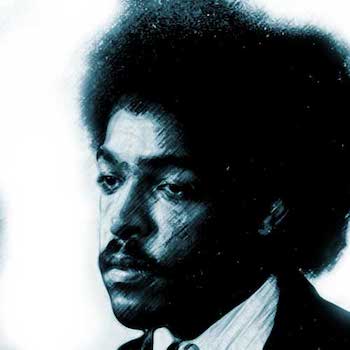
On 18 August 2021 UN experts demanded the release of journalist and human rights defender Dawit Isaak, imprisoned without trial in Eritrea since 2001, amid uncertainty about whether he is even still alive.

To this day, Dawit Isaak has never been charged with a crime, spent a day in court or spoken to his lawyer,” said Mary Lawlor, UN Special Rapporteur on the situation of human rights defenders. “The level to which the Eritrean Government is ignoring Mr. Isaak’s basic, fundamental human rights is appalling. He must be released at once.”

In the first years of his detention, “we received information that Mr. Isaak was often taken to hospital, which was concerning in itself,” Lawlor said, “Now we receive no news, and that’s worse. We fear for his life. At an absolute minimum, Eritrea must immediately present evidence that he is alive and well.”

Dawit Isaak, 56, a dual Swedish-Eritrean national, established one of Eritrea’s first independent media outlets in the 1990s, the Setit newspaper. In May 2001, it published open letters written by a group of politicians known as the G15 urging the Government to hold open elections and implement a newly drafted Constitution. With the world’s attention diverted by the September 11 terrorist attacks, Mr. Isaak was arrested on 23 September 2001.

According to a credible source, Mr. Isaak was alive in September 2020, the first sign of life in seven years. He is reportedly being held in Eiraeiro prison, a detention centre infamous for its conditions, where torture is allegedly common practice and where many inmates have reportedly died in custody.

The enforced disappearance of Mr. Isaak for almost two decades is extremely concerning,” said Mohamed Abdelsalam Babiker, Special Rapporteur on Eritrea. “The Government of Eritrea has not confirmed his whereabouts or provided any solid evidence about his state of health in all these years. It has denied torture allegations but has not allowed anyone to visit Mr. Isaak.

Lawlor said she had rarely witnessed such disregard for human life as she documents cases of human rights defenders in long-term detention around the world.

“Locking up human rights defenders for long periods of time may feel like a guarantee against internal scrutiny,” Lawlor said. “But we have not forgotten.”

Mr. Isaak’s work has been recognised by a number of prestigious awards, including UNESCO’s Freedom of Press Award {see: https://www.trueheroesfilms.org/thedigest/laureates/9329f937-0d8b-4543-8664-2263e968adbf] and he was a finalist for the Sakharov Award in 2017

The Special Procedures mandate holders are in contact with the Eritrean authorities on this matter.

The experts’ call is endorsed by: Ms. Tlaleng Mofokeng, Special Rapporteur on the right to physical and mental health; the Working Group on Enforced or Involuntary Disappearances: Mr. Tae-Ung Baik (Chair), Mr. Henrikas Mickevičius (Vice Chair), Ms. Aua Balde, Ms. Gabriella Citroni and Mr. Luciano Hazan; and Mr. Morris Tidball-Binz, Special Rapporteur on extrajudicial, summary or arbitrary executions.

https://www.miragenews.com/un-experts-demand-release-of-human-rights-615941/

Rida Faraj Fraitis, Libyan government staffer, abducted – UN Libya mission ‘deeply concerned’

August 19, 2021

Rida Faraj Fraitis, is Chief of Staff for the First Deputy Prime Minister of the Government of National Unity (GNU), the UN-backed administration that since March, has been leading a new unified Libyan push towards ending years of civil conflict and division. Up until this year, the oil-rich nation was split between the former Government of National Accord based in Tripoli, and a rival administration based in the east. In recent weeks, progress towards new democratic elections in December has stalled, despite wide-ranging and on-going negotiations continuing.

Mr. Fraitis was taken along with a colleague, on 2 August, following a visit to GNU premises in Tripoli: “The fate and whereabouts of both Mr. Fraitis and his colleague remain unknown and UNSMIL fears for their safety and security”, the mission said in a statement.  

The Mission expresses further concern about individuals who have taken on roles in support of Libya’s democratic transition and State institutions being targeted in this manner which has serious implications for the peace and reconciliation process and for the full unification of national institutions”, the statement continued.

UNSMIL said that it has documented several cases of illegal arrests and detention, enforced disappearances, as well as torture. The mission has also recorded cases of extrajudicial killings of citizens, officials, journalists, civil society members and human rights defenders, in the past year. See also: https://humanrightsdefenders.blog/2020/11/12/libyan-human-rights-defender-hanan-al-barassi-gunned-down-in-benghazi/

The Mission is now calling on Libyan authorities to fully investigate all alleged violations of international human rights law, and international humanitarian law.

Libya must end the entrenched culture of impunity in the country”, stressed Mr. Kubis. 

Three UN workers killed following Benghazi car bomb attack, as Security Council meets in emergency session, honours their ‘ultimate sacrifice’

https://news.un.org/en/story/2021/08/1097512

Human right defender Sergei Kovalev died

August 19, 2021

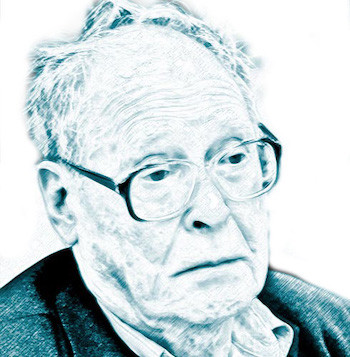
One of Russia’s most famous human rights defenders and former Soviet dissident, Sergei Kovalev, died aged 91 on Monday 9 August 2021 his family said. He won 9 international human rights awards, see: https://www.trueheroesfilms.org/thedigest/laureates/7B15D0E9-FDB2-4727-B94F-AA261BDB92D9

Kovalev was a biologist who became one of the leading members of the USSR’s pro-democracy movement. He was held for years in Soviet labour camps for his activism. After the collapse of the Soviet Union, he became a fierce critic of Moscow’s war in Chechnya and warned against democratic backsliding when President Vladimir Putin came to power in 2000.

His son Ivan Kovalev said on Facebook that his father died “in his sleep” in the early hours of Monday morning.

Russian rights group Memorial, which Kovalev co-founded, said he was “faithful to the idea of human rights always and in everything — in war and peace, in politics and every day life”.

The leading rights organisation — which has been labelled a “foreign agent” by Russian authorities under a controversial law — said Kovalev had campaigned for human rights since the 1960s. See also: https://humanrightsdefenders.blog/2013/04/26/russia-pursues-its-policy-of-labeling-human-rights-defenders-as-foreign-agents/

As a biology student, Kovalev had dreamed of devoting himself exclusively to science.

But he changed his mind after the arrests of dissident writers Yuli Daniel and Andrei Sinyavsky.

“I then understood that it was not possible to only be in science,” he said. “It would have been shameful.”

In 1968, Kovalev was fired from his job at a Moscow university laboratory for joining the Action Group for the Defence of Human Rights in the USSR — considered to be the Soviet Union’s first rights group.

He then grew close to the dissident academic Andrei Sakharov.

Kovalev was part of a group of dissidents writing the “Chronicle of Current Events”, an underground typed bulletin that reported on human rights violations in the USSR.

It reported the arrests and psychiatric internments of the Soviet regime’s opponents and on the situation in its labour camps.

He was arrested in 1974, accused of spreading “anti-Soviet propaganda” and sentenced to seven years in a Gulag camp, followed by three years of house arrest in the icy Siberian region of Kolyma.

He was only allowed to return to Moscow in 1987, thanks to the perestroika reforms launched by Soviet leader Mikhail Gorbachev.

He went on to help found Memorial, which recorded testimonies of Soviet political repression.

Kovalev was one of the few Soviet dissidents that entered post-USSR politics.

He contributed to writing Russia’s new constitution and was elected a parliamentary deputy twice.

In 1994, he was appointed as chairman of President Boris Yeltsin’s human rights commission in 1994. But he was forced to give up the post two years later for his outspoken criticism of Russia’s brutal intervention in the Chechen conflict.

Kovalev also criticised the political system created by Putin, from the beginning of the former KGB spy’s long rule. “A controlled democracy is being created in our country that seeks to create problems for ‘enemies inside as well as outside’,” he said in 2001, a year after Putin was inaugurated as president.

In 2014, he called on Western countries to “stop Russian expansion” into Ukraine after Moscow annexed Kiev’s Crimea peninsula.

According to Kovalev, the West had made “too many concessions” to Russia.

He also criticised Russian opposition leaders, whom he accused of being pragmatists without strong moral convictions. “I belong to the camp of idealists in politics,” he said.

https://www.france24.com/en/live-news/20210809-soviet-dissident-sergei-kovalev-dies

https://today.rtl.lu/news/world/a/1768110.html

https://www.hrw.org/news/2021/08/09/human-rights-watch-mourns-death-sergei-kovalev

https://www.theguardian.com/world/2021/aug/09/sergei-kovalev-soviet-dissident-who-clashed-with-yeltsin-putin-dies-aged-91

Results of 47th session of the Human Rights Council

August 7, 2021

The ISHR and 17 other organisations (see below for their names) share reflections on the key outcomes of the 47th session of the UN Human Rights Council, as well as the missed opportunities to address key issues and situations. See also: https://humanrightsdefenders.blog/2021/06/22/key-issues-affecting-hrds-in-47th-session-of-un-human-rights-council-june-2021/

CIVIL SOCIETY PARTICIPATION

We deplore the systemic underfunding of the UN human rights system and the drive for so-called efficiency, including the cancellation of general debates in June, which are a vital part of the agenda by which NGOs can address the Council without restrictions. We call for the reinstatement of general debates at all sessions, with the option of civil society participation through video statements.  We welcome the focus of the civil society space resolution on the critical role played by civil society in the COVID-19 response, and the existential threats to civil society engendered or exacerbated by the pandemic. For the resolution to fulfil its goal, States must now take action to address these threats; while we welcome the broad support indicated by a consensus text, this cannot come at the cost of initiatives that will protect and support civil society.

HUMAN RIGHTS ONLINE

We welcome a resolution on the promotion, protection and enjoyment of human rights on the Internet and its thematic focus on bridging digital divides, an issue which has become ever-important during the COVID-19 pandemic. We urge all States to implement the resolution by taking concrete measures to enhance Internet accessibility and affordability and by ceasing Internet shutdowns and other disruptions, such as website blocking and filtering and network throttling. In future iterations of the text, we encourage the core group to go further in mentioning concrete examples that could be explored by States in adopting alternative models for expanding accessibility, such as the sharing of infrastructure and community networks.  We welcome the resolution on new and emerging digital technologies and human rights, which aims to promote a greater role for human rights in technical standard-setting processes for new and emerging digital technologies, and in the policies of States and businesses. While aspects of the resolution risk perpetuating “technology solutionism”, we welcome that it places a stronger focus on the human rights impacts of new and emerging digital technologies since the previous version of the resolution, such as introducing new language reiterating the importance of respecting and promoting human rights in the conception, design, use, development, further deployment and impact assessments of such technologies.

GENDER EQUALITY AND NON-DISCRIMINATION

We are concerned by the increasing number of amendments and attempts to weaken the texts. We are particularly concerned by the continued resistance of many States to previously adopted texts and States’ willful misinterpretation of key concepts related in resolutions on human rights in the context of HIV and AIDS, accelerating efforts to eliminate all forms of violence against women and girls: preventing and responding to all forms of violence against women and girls with disabilities and preventable maternal mortality and morbidity and human rights on maternal morbidities. We deplore the instrumentalising of women’s rights and sexual and reproductive health and rights. We encourage States to center the rights of people most affected and adopt strong texts on these resolutions. We welcome the resolution on menstrual hygiene management, human rights and gender equality as the first step in addressing deep-rooted stigma and discrimination. We urge all States to address the root causes for the discrimination and stigma on menstruation and its impact.

RACIAL JUSTICE AND EQUALITY

The High Commissioner’s report highlighted the long-overdue need to confront legacies of slavery, the transatlantic trade in enslaved Africans and colonialism and to seek reparatory justice. We welcome the historic consensus decision, led by the Africa Group, to adopt a resolution mandating an independent international expert mechanism to address systemic racism and promote racial justice and equality for Africans and people of African descent. The adoption of this resolution is testament to the resilience, bravery and commitment of victims, their families, their representatives and anti-racism defenders globally. We deplore efforts by some Western States, particularly former colonial powers, to weaken the text and urge them to now cooperate fully with the mechanism to dismantle systemic racism, ensure accountability and reparations for past and present gross human rights violations against Black people, end impunity for racialized State violence and address the root causes, especially the legacies of enslavement, colonialism, and the transatlantic trade in enslaved Africans.

MIGRANTS RIGHTS

Whilst we welcome the return of a resolution on human rights of migrants, we deplore the continued failure of the Council to respond meaningfully to the severity and global scale of human rights violations at international borders including connected to pushbacks. International borders are not and must not be treated as places outside of international human rights law. Migrants are not and must not be treated as people outside of international human rights law. Expressions of deep concern in interactive dialogues must be translated into action on independent monitoring and accountability.

ARMS TRANSFERS AND HUMAN RIGHTS

We welcome the resolution on the impact of arms transfers on human rights and its focus on children and youth. However, we note with concern the resistance of the Council to meaningfully focus on legal arms transfers beyond those diverted, unregulated or illicitly transferred. The Council should be concerned with all negative human rights impacts of arms transfers, without focusing only on those stemming from diversion and unregulated or illicit trade.

CLIMATE CHANGE

We are disappointed that the resolution on human rights and climate change fails to establish a new Special Rapporteur. However, we welcome the increasing cross regional support for a new mandate. It is a matter of urgent priority for the Council to establish it this year.

COUNTRY SPECIFIC SITUATIONS

ALGERIA

While special procedures, the OHCHR and multiple States have recognized the intensifying Algerian authorities’ crackdown on freedom of association and expression, the Council failed to act to protect Algerians striving to advance human rights and democracy.

BELARUS

We welcome the renewal of the mandate of the UN Special Rapporteur on Belarus. Given the ongoing human rights crisis in Belarus, the mandate complements the OHCHR Examination in ensuring continuous monitoring of the situation, and the mandate remains an accessible and safe channel for Belarusian civil society to deliver diverse and up-to-date information from within the country.

CHINA

The Council has once again failed to respond meaningfully to grave human rights violations committed by Chinese authorities. We reiterate our call on the High Commissioner and member States to take decisive action toward accountability.

COLOMBIA

We are disappointed that few States made mention of the use of excessive force against protestors in a context of serious human rights violations, including systemic racism, and urge greater resolve in support of the right to freedom of peaceful assembly in the country and globally

ETHIOPIA

The resolution on Ethiopia’s Tigray region, albeit modest in its scope and language, ensures much-needed international scrutiny and public discussions on one of Africa’s worst human rights crises. We urge the Ethiopian government to engage ahead of HRC48.

ERITREA

We welcome the extension of the mandate of the Special Rapporteur on Eritrea, as scrutiny for violations committed at home and in Tigray is vital.

NICARAGUA

We warmly welcome the joint statement delivered by Canada on behalf of 59 States, on harassment and detention of journalists, human rights defenders, and presidential pre-candidates, urging Nicaragua to engage with the international community and take meaningful steps for free and fair elections. States should closely monitor the implementation of resolution 46/2, and send a strong collective message to Nicaragua at the 48th session of the Council, as the Council should ‘urgently consider all measures within its power’ to strengthen human rights protection in the country.

PALESTINE

We welcome the Special Rapporteur’s report that “Israeli settlements are the engine of this forever occupation, and amount to a war crime,” emphasizing that settler colonialism infringes on “the right of the indigenous population […] to be free from racial and ethnic discrimination and apartheid.” We also reiterate his recommendation to the High Commissioner “to regularly update the database of businesses involved in settlements, in accordance with Human Rights Council resolution 31/36.”

THE PHILIPPINES

While acknowledging the signing of the Joint Human Rights Programme with the UN OHCHR, the Government of the Philippines fails to address the long-standing issues on law enforcement and accountability institutions, including in the context of war on drugs. We continue to urge the Council to launch the long-overdue independent and transparent investigation on the on-going human rights violations.

SYRIA

We welcome mounting recognition for the need to establish a mechanism to reveal the fate and whereabouts of the missing in Syria, including by UN member states during the interactive dialogue on Syria, and the adoption of the resolution on Syria addressing the issue of the missing and emphasizing the centrality of victim participation, building on the momentum created by the Syrian Charter for Truth and Justice.

VENEZUELA

In the context of the recent arbitrary detention of 3 defenders from NGO Fundaredes, we welcome the denunciation by several States of persistent restrictions on civil society and again for visits of Special Rapporteurs to be accepted and accelerated.

*American Civil Liberties Union, Association for Progressive Communications, Cairo Institute for Human Rights Studies, Centro de Estudios Legales y Sociales (CELS), Center for Reproductive Rights, Child Rights Connect, CIVICUS: World Alliance for Citizen Participation, Commonwealth Human Rights Initiative, Conectas Direitos Humanos, Egyptian Initiative for Personal Rights, FIDH, Franciscans International, Human Rights House Foundation, International Bar Association’s Human Rights Institute, International Commission of Jurists, International Lesbian and Gay Association, International Service for Human Rights, US Human Rights Network

https://ishr.ch/latest-updates/hrc47-civil-society-presents-key-takeaways-from-human-rights-council/
Justice and Peace Netherlands seeks programme officer

August 7, 2021

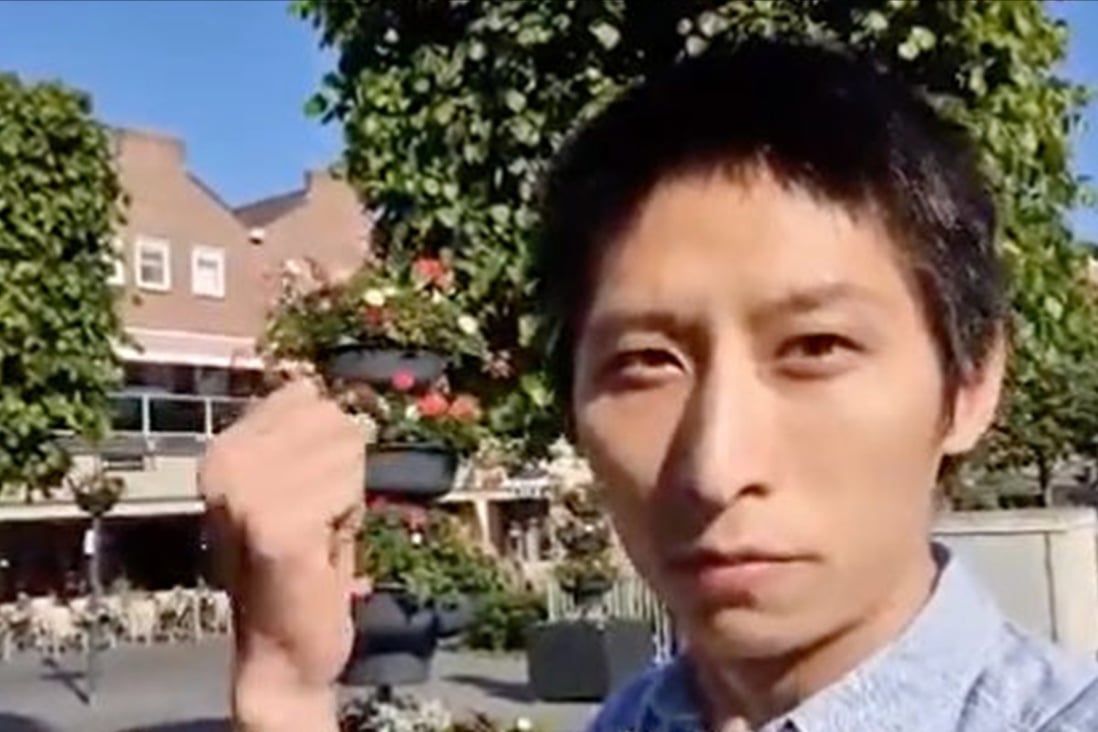
Justice and Peace NetherlandsRights Defenders team is looking for a Programme Officer. See also: https://humanrightsdefenders.blog/2017/06/08/justice-and-peace-nl-increasingly-active-for-human-rights-defenders/

Activities:

  • Design and organise trainings on security and protection for human rights defenders within our Shelter City programme;
  • Support defenders throughout their stay in the Netherlands with your knowledge of safety and security in the human rights field;
  • Support Shelter City alumni by building and coordinating the online community with creative and innovative activities and ideas;
  • Support the programme with relevant project management tasks (project development, evaluation, reporting, etc.);
  • Organise a broad range of events as part of the Shelter City programme, such as outreach events throughout the Netherlands and the annual International Shelter City Workshop;
  • Stay informed about the latest developments regarding security and protection in the field of human rights, and more specifically human rights defenders.

Your profile:

Having worked in the Global South in the field of human rights, you have a thorough understanding of the security challenges human rights defenders face and how to mitigate risks. Your enthusiasm for human rights issues translates into a hands-on and creative approach. You like to take initiative and are not afraid to try new things, engaging and mobilising people. You are a natural organiser who can work independently but also thrives in a team and you enjoy working with people from different cultural backgrounds.

Requirements:

  • You have an academic or University of Applied Sciences level education in a relevant field, such as international human rights, international relations, political science, or international law;
  • You have at least 3-5 years of relevant work experience in the field of human rights, of which a considerable part international field experience;
  • You have experience working on security and protection within the human rights field, preferably related to human rights defenders;
  • You have experience organising events, workshops and trainings (both online and offline) and online community building;
  • You are proficient in English. Additional languages such as French, Spanish, Russian, Swahili or Arabic are an asset.

What we offer:

  • Stimulating work environment in a small and dedicated team, where working hard and having fun go hand-in-hand.
  • Good and competitive working conditions.
  • Full reimbursement of travel expenses to our office building (2nd class public transport).
  • A part-time workplace at our office in The Hague city centre.

Justice and Peace is an equal opportunities employer and encourages applications from people who may bring diversity to our team.

Send a motivation letter and CV before 10 August 2021 to Suzan Goes, programme coordinator: vacature[at]justiceandpeace.nl, citing ‘Programme Officer Human Rights Defenders Team’. For more information you can e-mail the above address.