Archive for the 'Human Rights Defenders' Category

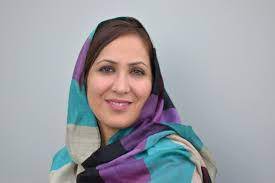
Profile of Rosana Lezama Sanchez from Venezuela

October 27, 2021

The International Service for Human Rights published on 30 September 2021 “Human rights defender’s story: Rosana Lezama Sanchez from Venezuela”.

What is needed from the international community in general, and from within the UN, is a concrete, coherent and unified voice in favour of the protection of human rights defenders, the safeguard of the fundamental liberties, the civic space and human dignity,” says Rosana Lezama Sanchez, a law student in Venezuela working with three national human rights organisations.

Rosana Lezama is a law student in Venezuela working with three national human rights organisations: Centro para los Defensores y la Justicia (CDJ) / Observatorio Venezolano de Conflictividad Social (OVCS) / Centro de Derechos Humanos de la Universidad Católica Andrés Bello (CDH-UCAB). Her work includes the protection of human rights defenders, issues of transitional justice, rule of law, the right to peaceful assembly, and State repression. In this video, Rosana talks about her vision for the future and her work to achieve it.

Rosana was also a participant in ISHR’s Human Rights Defender Advocacy Programme (HRDAP) and ISHR Academy in 2021. 

https://ishr.ch/defender-stories/human-rights-defenders-story-rosana-lezama-sanchez-from-venezuela/

Crackdown on Human Rights Lawyers in Belarus continues

October 27, 2021
Gennady Fedunych (left) and Natalia Matskevich (right) at the trial in Minsk, Belarus.
Gennady Fedunych (left) and Natalia Matskevich (right) at the trial in Minsk, Belarus. © Human Rights Center Viasna 2018

Anastasiia Zlobina, Assistant Researcher for Europe and Central Asia at Human Rights Watch reports that on 25 October 2021, the Minsk Bar Association disbarred prominent Belarusian defense lawyer Natalia Matskevich, the latest in a wide-raging and politically motivated crackdown on lawyers.

Matskevich is one of four lawyers who represented Viktar Babaryka, former presidential contender arrested on politically motivated charges in June 2020 in the run-up to the August 9 election. In July 2021, Supreme Court sentenced Babaryka to 14 years in prison for “grand bribery” and “laundering of illicit funds.”

On October 20, the Justice Ministry suspended the license of Evgeni Pylchenka, a lawyer who also represented Babaryka, pending the outcome of a disciplinary case against him. Matskevich’s disbarment and Pylchenka’s suspension came soon after they had filed an appeal in Babaryka’s case. Their colleagues said these sanctions were “absurd” and based on “ridiculous” allegations, including “some [supposedly] incorrectly worded questions to witnesses during trial.” 

In July, days after Babaryka’s verdict, authorities stripped his then-lawyer Dmitry Layevsky of his attorney’s license, citing “inappropriate comments about the work of his colleagues.” Prior to his disbarment, Layevsky had faced pressure from the authorities and the Minsk Bar Association.

In October 2020, the Justice Ministry terminated the license of Aliaksandr Pylchenka, another prominent member of Babaryka’s defense team, over supposed “incompetent comments to mass media”

According to Layevsky, Matskevich and Evgeny Pylchenka became “irreplaceable” in Babaryka’s case due to their detailed knowledge of the voluminous case as well as Babaryka’s trust in them.

Since August 2020, Belarusian authorities have been turning up the pressure on lawyers for publicly speaking out about human rights violations and in defense of clients in politically motivated cases. In addition to the obstruction of their work, lawyers have faced personal harassment such as threats, arbitrary detention, raids, revoked licenses, and administrative and criminal charges.

The Belarusian National Bar Association and its regional bars have continuously failed to protect their members.

At least 27 lawyers have already been banned or suspended in reprisal for speaking out against the recent wave of repressions in Belarus. See also: https://humanrightsdefenders.blog/2021/09/10/two-lawyers-from-belarus-share-lawyers-for-lawyers-award-2021/

In November, new restrictive amendments will enter into force, further increasing the Ministry of Justice’s authority over, and eviscerating the independence of, Belarusian lawyers. The arbitrary suspension and disbarment of Belarusian lawyers doesn’t just rob them of their ability to practice their profession, but undermines their clients’ right to legal counsel, and sends a chilling message of intimidation to their colleagues.

On October 26, the Belarusian human rights community issued a joint statement on their recognising another 12 persons as political prisoners, HRC Viasna reported. As of October 26, there are 833 political prisoners in Belarus on this list.

The updated list includes:

  • Syarhei Prus and Dzmitry Bondarau, who were sentenced under Part 3 of Article 130 of the Criminal Code to 5 years in a penal colony for creating and posting online a video calling for illegal actions against riot police officers of the Mahilioŭ regional department of internal affairs;
  • Dzmitry Sonchyk, who was sentenced under Art. 364 and Art. 369 of the Criminal Code to 5 years of imprisonment in a penal colony for insults and threats to police officers in comments in a Telegram channel in 2020 and 2021;
  • Andrey Razuvayeu , who was sentenced under Article 369 and 295 of the Criminal Code to 4 years in a penal colony for insulting a government official and keeping a small amount of hunting gunpowder;
  • Iryna Melkher, Anton Melkher, Halina Dzerbysh, Syarhei Razanovich, Lyubou Razanovich, Pavel Razanovich, who have been in custody on terrorism charges since early December 2020. According to the human rights defenders, they have not participated in any investigative actions, while the investigation is not formally completed, and the state propaganda resources back in 2020 claimed that the guilt and role of all those involved in the case was ‘established and proven’;
  • former investigator Yauhen Yushkevich. The circumstances of the new accusation of terrorism give grounds to believe that his detention may be arbitrary and related to his public activities, human rights activists stress;
  • Yauhen Buynitski, who was detained on charges under Part 3 of Art. 371 of the Criminal Code for organizing illegal border crossing by citizens fleeing arbitrary politically motivated persecution by the Belarusian authorities, which could have serious consequences for them – torture, cruel, inhuman, degrading treatment and illegal imprisonment.

https://www.hrw.org/news/2021/10/26/belarusian-authorities-retaliate-against-lawyers-defending-human-rights

Norway’s Telenor in Myanmar should do more than pull out – it should not hand sensitive data to the regime

October 26, 2021

The Norwegian firm took a principled stance to Myanmar’s coup. The same can’t be said for its exit from the country, writes Aung Myo Min, Minister of Human Rights in Myanmar’s National Unity Government., on 25 October 2021.

Praising Norway as a global leader when it comes to protecting human rights defenders and Telenor for acting in principled ways following the attempted coup by pushing back against the military junta’s illegal directives, the author is perplexed that in July, “after considering all possible alternatives and events,” Norway’s largely state-owned telecoms provider agreed to sell its Myanmar operations to the Lebanese firm M1 Group. According to the Centre for Research on Multinational Corporations (SOMO), M1 is “infamous for its business activities in countries with violent totalitarian and extremist regimes.” In 2012, telco MTN Syria, a subsidiary of MTN in which M1 is the major shareholder, undermined protest leaders by blocking text messages at the behest of the Bashir al-Assad regime. In 2013, MTN installed “lawful surveillance equipment” for its mobile network in South Sudan during a crackdown on government critics by state security forces.

It is to be feared that M1 group will hand over user details of some 18.2 million Telenor users to the military junta, placing human rights defenders even more clearly in the crosshairs.

Telenor has operated in Myanmar since 2014, a decision that back then, according to the Group, was informed by “a thorough human rights impact assessment as part of the due diligence.” The Norwegian Government holds a 53 percent stake in Telenor.s.

The Centre for Research on Multinational Corporations, in coordination with 474 Myanmar civil society organizations, has lodged a complaint against the sale with the Norwegian National Contact Point (NCP) for the OECD Guidelines for Multinational Enterprises and, after an initial assessment, the watchdog found merit in the claim. Mediation may well follow. This offers Telenor and the Norwegian government an opportunity to salvage something significantly more valuable than telecoms assets and investments: their reputations.

Telenor says that its decision to sell “was not motivated by financial or strategic objectives,” but guided by its “commitment to its values and standards.” This commitment requires scrutiny. The potential sale of Telenor requires assessment of any adverse human rights impact and prevention or mitigation where they present.

https://thediplomat.com/2021/10/telenor-in-myanmar-norways-human-rights-reputation-is-on-the-line/

Aarhus Convention gets new mechanism to protect environmental defenders

October 26, 2021

The United Nations Economic Commission for Europe (UNECE) Convention on Access to Information, Public Participation in Decision-Making and Access to Justice in Environmental Matters was adopted on 25 June 1998 in the Danish city of Aarhus. The Aarhus Convention establishes a number of rights of the public (individuals and their associations) with regard to the environment. The Parties to the Convention are required to make the necessary provisions so that public authorities (at national, regional or local level) will contribute to these rights to become effective. See also: https://humanrightsdefenders.blog/2021/10/11/new-right-to-healthy-environment-ngos-urge-action/

Now (on Thursday 21 October 2021) the 46-strong group of countries across the wider European region has agreed to establish a new legally binding mechanism that would protect environmental defenders.

It takes the form of Special Rapporteur – or independent rights expert – who will quickly respond to alleged violations and take measures to protect those experiencing or under imminent threat of penalization, persecution, or harassment for seeking to exercise their rights under the Convention. As time is of the essence to buttress the safety of environmental defenders, any member of the public, secretariat or Party to the Aarhus Convention, will be able to submit a confidential complaint to the Special Rapporteur, even before other legal remedies have been exhausted. The agreement delegates setting up the new mechanism to the United Nations, or another international body. See also: https://humanrightsdefenders.blog/2019/11/28/cop25-climate-defenders-also-needed-to-be-shielded/

I remain deeply concerned by the targeting of environmental activists”, said Secretary-General Antonio Guterres, welcoming the rapid response mechanism as “an important contribution to help advance my Call to Action for Human Rights”. 

This landmark decision is a clear signal to environmental defenders that they will not be left unprotected”, said UNECE chief Olga Algayerova. “It demonstrates a new level of commitment to upholding the public’s rights under the Aarhus Convention, as well as Parties’ willingness to respond effectively to grave and real-time challenges seen in the Convention’s implementation on the ground”.   

A report to the Human Rights Council by Mary Lawlor, Special Rapporteur on the situation of human rights defenders, found that one-in-two human rights defenders who were killed in 2019 had been working with communities around issues of land, environment, impacts of business activities, poverty and rights of indigenous peoples, Afrodescendants and other minorities. See also: https://humanrightsdefenders.blog/2021/09/13/global-witness-2020-the-worst-year-on-record-for-environmental-human-rights-defenders/  

Since January 2017, among the Parties to the Aarhus Convention, incidents of persecution, penalization and harassment of environmental defenders have been reported in 16 countries

Assault by Israel on Palestinian human rights NGOs

October 23, 2021

As if the fight against terrorists is not already complex enough, Israel has muddied the water more by accusing six prominent Palestinian human rights groups of being terrorist organisations, saying they have undercover links to a militant movement. Not surprisingly. most of the groups document alleged human rights violations by Israel and the Palestinian Authority.

The six are Al-Haq, a human rights group founded in 1979, [and the winner of 5 human rights awards, see: https://www.trueheroesfilms.org/thedigest/laureates/0F74BF45-72C4-9FDD-F96D-2B87BF6C7728] Addameer, Defence for Children International – Palestine, the Bisan Center for Research and Development, the Union of Palestinian Women’s Committees and the Union of Agricultural Work Committees.

The Israeli defence ministry said they were linked to the Popular Front for the Liberation of Palestine (PFLP), a secular political movement with an armed wing that in the past carried out attacks against Israel. The groups “were active under the cover of civil society organisations, but in practice belong and constitute an arm of the [PFLP] leadership, the main activity of which is the liberation of Palestine and destruction of Israel”, the defence ministry said. It claimed they were “controlled by senior leaders” of the PFLP and employed its members, including some who had “participated in terror activity”. The groups serve as a “central source” of financing for the PFLP and had received “large sums of money from European countries and international organisations”, the defence ministry said.

The groups, well known for their human rights work, have indeed quite openly received funding from EU member states, the United Nations and other donors.

Shawan Jabarin, the director of Al-Haq, said the move was an attempt to stifle criticism. “They may be able to close us down. They can seize our funding. They can arrest us. But they cannot stop our firm and unshakeable belief that this occupation must be held accountable for its crimes,he told the Times of Israel.

The Israeli human rights group B’Tselem called the government’s declaration “an act characteristic of totalitarian regimes, with the clear purpose of shutting down these organisations”. It added: “B’Tselem stands in solidarity with our Palestinian colleagues, is proud of our joint work over the years and is steadfast to continue so.”

Human Rights Watch and Amnesty International, who work closely with many of these groups, said in a joint statement:

This appalling and unjust decision is an attack by the Israeli government on the international human rights movement. For decades, Israeli authorities have systematically sought to muzzle human rights monitoring and punish those who criticize its repressive rule over Palestinians. While staff members of our organizations have faced deportation and travel bans, Palestinian human rights defenders have always borne the brunt of the repression. This decision is an alarming escalation that threatens to shut down the work of Palestine’s most prominent civil society organizations. The decades-long failure of the international community to challenge grave Israeli human rights abuses and impose meaningful consequences for them has emboldened Israeli authorities to act in this brazen manner.

How the international community responds will be a true test of its resolve to protect human rights defenders. We are proud to work with our Palestinian partners and have been doing so for decades. They represent the best of global civil society. We stand with them in challenging this outrageous decision.

The US Department of State spokesperson Ned Price said his office had not been given advance warning of the designation. “We will be engaging our Israeli partners for more information regarding the basis for the designation,” Price said on a telephone briefing with reporters in Washington.

The move by the Israeli government represents a challenge for the many European countries that provide financing to the six organizations, European governments, .. now risk being accused of funding terrorism if they continue financing the six groups. One senior European official working in the region admitted the move was likely aimed at putting pressure on donors’ decision-making but said there needed to be an analysis of any evidence put forward by Israel, said CNN Europe.

See also the 4 November post by Just Security: https://www.justsecurity.org/78884/the-downstream-effects-of-israels-terrorist-designation-on-human-rights-defenders-in-the-us/

See also: https://humanrightsdefenders.blog/2019/11/27/al-haq-named-2019-recipient-of-human-rights-and-business-award/

https://www.theguardian.com/world/2021/oct/22/israel-labels-palestinian-human-rights-groups-terrorist-organisations

https://www.aljazeera.com/news/2021/10/22/israel-palestinian-human-rights-groups-terrorism

https://www.msn.com/en-gb/news/world/stars-sign-letter-criticising-israel-s-move-to-label-palestinian-charities-as-terror-organisations/ar-AAQNM7

See also: https://www.commondreams.org/news/2022/01/06/dont-abandon-us-palestinian-rights-group-rebukes-dutch-government-halting-funding

https://news.un.org/en/story/2021/10/1103982

Shelter City Netherlands: Call for Applications for March 2022

October 23, 2021

Justice & Peace Netherlands is launching a new call for applications for at risk human rights defenders to participate in Shelter City. The deadline for applications is 7 November 2021 at 23:59 CET.

It is part of Shelter City network –  a worldwide initiative to protect human rights defenders at risk and support them to reclaim their civic space! Seventeen cities worldwide offer temporary relocation and shelter, capacity-building tools, trainings and safety to human rights defenders worldwide who stand up against human rights violations in their home countries.

Shelter City provides temporary safe and inspiring spaces for human rights defender at risk where they re-energise, receive tailormade support and engage with allies. The term human rights defender is intended to refer to the broad range of activists, journalists and independent media professionals, scholars, writers, artists, lawyers, civil and political rights defenders, civil society members, and others working to advance human rights and democracy around the world in a peaceful manner.

From March 2022 onwards, several cities in the Netherlands will receive human rights defenders for a period of three months. At the end of their stay in the Netherlands, participants are expected to return with new tools and energy to carry out their work at home.

Journalists’ Safe Haven Initiative

Justice & Peace aims to promote the safety of journalists, and in particular women journalists, worldwide so that they can build new strategies and continue their important work for freedom of expression in their country of origin. With support of the Dutch Ministry of Foreign Affairs, Justice & Peace will be able to provide two additional temporary safe spaces per year in The Hague for journalists at risk and provide them with tailor-made support.

Shelter City and COVID-19

Please note that COVID-19 may pose certain challenges to the stay of human rights defenders in the Netherlands in 2022. These challenges can include:

  • Limitations and/or changes in the programme that we can offer HRDs during their stay in the Netherlands;
  • New measures and restrictions (including a lockdown) taken by the Dutch government;
  • Cancellation of flights to/from the Netherlands;
  • Postponement of return to the home country after 3 months because of travel restrictions;
  • Participants might be requested to self-quarantine for 5-10 days upon arrival in the Netherlands (Shelter City programme will be adapted accordingly) and to take other preventive measures due to COVID-19, including a COVID-19 test before travelling to the Netherlands.

Please consider these potential challenges carefully before applying to the programme.

To be eligible for Shelter City, human rights defenders should meet the following conditions:

  • They implement a non-violent approach in their work;
  • They are threatened or otherwise under pressure due to their work or activism;
  • They can be relocated for a period of maximum 3 months. Limited spots are available for people who are not able to stay for the full 3 months;
  • They are willing and able to return to their country of origin after 3 months;
  • They are willing to speak publicly about their experience or about human rights in their country to the extent that their security situation allows;
  • They have a conversational level* of English (limited spots are available for French or Spanish speaking human rights defenders);
  • They have a valid passport (with no less than six months of validity) or be willing to carry out the procedures necessary for its issuance. Justice & Peace covers the costs of issuing a passport and / or visa (if applicable);
  • They are not subjected to any measure or judicial prohibition to leaving the country;
  • They are willing to begin their stay in The Netherlands around March 2022.

Note that additional factors will be taken into consideration in the final round of selection, such as the added value of a stay in The Netherlands as well as gender, geographic, and thematic balance. Please note that we can only accept human rights defenders currently residing in a third country under exceptional circumstances.

To apply for Shelter City, please fill in the form by clicking the link below. Application forms must be submitted by 7 November 2021 at 23:59 CET (Central European Time). An independent commission will select the participants.

For 2020 call see: https://humanrightsdefenders.blog/2020/11/24/new-call-for-applications-for-human-rights-defenders-at-risk-to-participate-in-shelter-city-netherlands/

Apply now to Shelter City 2022

Alexei Navalny wins EU’s Sakharov Prize

October 21, 2021

Imprisoned Russian opposition leader Alexei Navalny has been awarded with the Sakharov Prize for Freedom of Thought. The award winner was selected by the leaders of the political parties represented in the European Parliament during a plenary session in Strasbourg on Wednesday 20 October 2021. [For more on this and other awards in the name of Sakharov, see: https://www.trueheroesfilms.org/thedigest/awards/BDE3E41A-8706-42F1-A6C5-ECBBC4CDB449]

Navalny, the most prominent foe of Russian President Vladimir Putin, was nominated alongside Afghan women, whose plight has taken centre stage after the Taliban takeover, and Jeanine Áñez, a Bolivian politician who became interim president in 2019 after alleged electoral fraud by Evo Morales. Áñez was later arrested for allegedly plotting coup d’état against Morales. [see: https://humanrightsdefenders.blog/2021/09/29/the-nominees-for-the-eus-sakharov-prize-2021/]

The award is supposed to be presented during a European Parliament session in Strasbourg on December 15, although this seems unlikely to happen in the case of Navalny since he’s currently serving a two-and-a-half-year jail sentence for fraud in Russia.

See also: https://www.trueheroesfilms.org/thedigest/laureates/c549c081-1c9f-489a-8ba6-6e2323cb9fcb

He says the charges were politically motivated to halt his challenge to the Kremlin. Russian authorities have opened a new criminal case against Navalny that could see him stay in jail for another decade.

Today’s prize recognises his immense bravery and we reiterate our call for his immediate release,” said David Sassoli, President of the European Parliament, in a tweet. The main political parties also celebrated the laureate’s work and recognition, although some

“His unbroken commitment for a democratic Russia is representative of the many activists who are fighting for liberal rights,” wrote David McAllister, a German MEP of the centre-right EPP group and chairman of the parliament’s committee on foreign affairs.

His bravery for freedom of thought and expression show how they are the precondition for democratic politics, human dignity & peace,” said Belgian MEP Guy Verhofstadt, from Renew Europe.

https://www.euronews.com/2021/10/20/alexei-navalny-wins-sakharov-prize-the-eu-s-highest-award-for-human-rights-work

Internet Censorship 2021: A Global Map of Internet Restrictions

October 19, 2021

On October 12 I referred the report Freedom on the Net [see: https://humanrightsdefenders.blog/2021/10/12/report-freedom-on-the-net-2021/ and on 24 April to the latest RSF report [see: https://humanrightsdefenders.blog/2021/04/24/world-press-freedom-index-2021-is-out/]. Now my attention was drawn to another tool to measure internet censorship:

Nearly 60 percent of the world’s population (4.66 billion people) uses the internet. It’s our source of instant information, entertainment, news, and social interactions.

But where in the world can citizens enjoy equal and open internet access – if anywhere?

In this exploratory study, our researchers have conducted a country-by-country comparison to see which countries impose the harshest internet restrictions and where citizens can enjoy the most online freedom. This includes restrictions or bans for torrenting, pornography, social media, and VPNs, and restrictions or heavy censorship of political media. This year, we have also added the restriction of messaging/VoIP apps.

Although the usual culprits take the top spots, a few seemingly free countries rank surprisingly high. With ongoing restrictions and pending laws, our online freedom is at more risk than ever.

We scored each country on six criteria. Each of these is worth two points aside from messaging/VoIP apps which is worth one (this is due to many countries banning or restricting certain apps but allowing ones run by the government/telecoms providers within the country). The country receives one point if the content—torrents, pornography, news media, social media, VPNs, messaging/VoIP apps—is restricted but accessible, and two points if it is banned entirely. The higher the score, the more censorship. https://datawrapper.dwcdn.net/IBnNS/3/

The worst countries for internet censorship

  1. North Korea and China (11/11) – No map of online censorship would be complete without these two at the top of the list. There isn’t anything either of them doesn’t heavily censor thanks to their iron grip over the entire internet. Users are unable to use western social media, watch porn, or use torrents or VPNs*. And all of the political media published in the country is heavily censored and influenced by the government. Both also shut down messaging apps from abroad, forcing residents to use ones that have been made (and are likely controlled) within the country, e.g. WeChat in China. Not only does WeChat have no form of end-to-end encryption, the app also has backdoors that enable third parties to access messages.
  2. Iran (10/11): Iran blocks VPNs (only government-approved ones are permitted, which renders them almost useless) but doesn’t completely ban torrenting. Pornography is also banned and social media is under increasing restrictions. Twitter, Facebook, and YouTube are all blocked with increasing pressures to block other popular social media sites. Many messaging apps are also banned with authorities pushing domestic apps and services as an alternative. Political media is heavily censored.
  3. Belarus, Qatar, Syria, Thailand, Turkmenistan, and the UAE (8/11): Turkmenistan, Belarus, and the UAE all featured in our “worst countries” breakdown in 2020.  But this year they are joined by Qatar, Syria, and Thailand. All of these countries ban pornography, have heavily censored political media, restrict social media (bans have also been seen in Turkmenistan), and restrict the use of VPNs. Thailand saw the biggest increase in censorship, including the introduction of an online porn ban which saw 190 adult websites being taken down. This included Pornhub (which featured as one of the top 20 most visited websites in the country in 2019).

https://comparite.ch/internetcensorshipmap

48th session of the Human Rights Council: outcomes

October 19, 2021

On 11 October 2021 14 NGOs shared reflections on the key outcomes of the 48th session of the UN Human Rights Council, as well as the missed opportunities to address key issues and situations [See also: https://humanrightsdefenders.blog/2021/09/13/human-rights-defenders-issues-in-the-48th-session-of-he-un-human-rights-council/]:

We welcome the adoption of the resolution on the establishment of the UN Special Rapporteur on human rights and climate change, who will focus on the interdependence between human rights, a healthy environment, and combating climate change and we welcome the Council’s historic recognition of the human right to a clean, healthy and sustainable environment. These are vital steps towards addressing the climate crisis and achieving environmental justice.

Ensuring a safe and enabling environment for civil society participation at the national and international levels is essential.

We welcome the adoption by consensus of the resolution on cooperation with the UN in the field of human rights, in particular the invitation to the Secretary-General to submit his annual reprisals report to the General Assembly, which will ensure greater attention to the issue and contribute to a more coherent system-wide response across the UN.

We express concern over the reclassification of NGO written statements submitted to the 48th session of the HRC from Agenda Item 4 to Agenda Item 3 without informing or consulting with the submitting organizations, and without transparency for the reasons or scope of this reclassification.

We welcome that the resolution on equal participation in political and public affairs puts an important focus on the context of elections and on the impact of COVID-19, underscoring the importance of protecting civil society participation at every level  as part of an effective response to the pandemic, in post-pandemic recovery and as a vital component of democratic electoral processes. We regret that, in this and other resolutions, there has been systematic pushbacks against the inclusion of references to children’s right to participate in public affairs, in particular girls, in contravention of international human rights standards.

We also welcome the resolution on privacy in the digital age. Among other issues, the resolution responds to recent Pegasus revelations and includes new commitments on the use of privately-developed surveillance tools against journalists and human rights defenders. It is now essential that the Council goes further and champions the call made by various UN human rights experts to implement a global moratorium on the sale, export, transfer, and use of private surveillance technology without proper human rights safeguards. We also welcome new language in the text on privacy violations and abuses arising from new and emerging technologies, including biometric identification and recognition technologies. In future iterations of the text, we encourage the core group to go further in calling for a ban on technologies that cannot be operated in compliance with international human rights obligations.

With the withdrawal of the resolution on the realisation of a ‘better life’, we are glad to see that the Council’s mandate and resources will not be diverted to efforts that would distract from its core work or dilute human rights standards.

We regret that it was not possible to schedule the briefing by the Peacebuilding Commission (PBC) as per resolution 45/31 – and look forward to future opportunities for exchanges between the HRC and the PBC to learn from one another in efforts to address common contemporary challenges.

We deplore the abandonment of the Yemeni people by the HRC member States who did not support the renewal of the Group of Eminent Experts on Yemen. This failure of the HRC gives the green light to all parties to the conflict to continue their campaign of death and destruction in Yemen. We demand an international criminal investigative mechanism. Anything less is unacceptable.

We regret that the HRC has not responded to the calls of civil society and the evidence of widespread violations in countries including China, Egypt and Saudi Arabia where the situations manifestly warrant the establishment of international investigation and accountability mechanisms.

The establishment of a Special Rapporteur on the situation of human rights in Afghanistan supported by additional and dedicated expertise in OHCHR should bring much needed scrutiny. While we are disappointed that the Council did not establish the full-fledged investigative and monitoring mechanism that the situation warrants, we hope this decision represents a first step towards a stronger response to ensure accountability for human rights violations and crimes under international law in Afghanistan.

While the extension of international scrutiny in Burundi, including through ongoing documentation of violations, is welcome, we regret the absence of a clear strategy post-Commission of Inquiry. As the Burundian government continues to reject cooperation with the Council and its mechanisms and to deny violations, and given that the newly-created Special Rapporteur will not have access to the country for the foreseeable future, it is vital for the Council to rely on benchmarks to design the next steps of its action on, and engagement with, Burundi. We thank the COI for its important work since 2016. It has set the bar high for investigative mechanisms.

We welcome the extension of the mandate of the Special Rapporteur on the situation of human rights in Cambodia with a mandate to provide an additional oral update to the Council. However, the resolution falls short of the minimum action required to credibly address the increasing regression in democratic space and civil and political rights and to put in place necessary measures to create an environment conducive for free, fair and inclusive elections in 2022 and 2023, including mandating enhanced monitoring and reporting by the High Commissioner.

More than four years after the beginning of the conflict in the North-West and South-West regions in Cameroon, we deeply regret States’ failure, once again, to collectively address the country’s human rights crisis. As other international and regional bodies remain silent, the Council has a responsibility to act, including through the creation of an investigative and accountability mechanism. 

We welcome the renewal of the mandate of the Fact-Finding Mission (FFM) on Libya but regret that the mandate has only been extended for a 9-month period. The severity of ongoing and past violations and abuses in Libya, including war crimes, requires an FFM with a sustained and properly resourced mandate.

We welcome a second joint statement on Nicaragua, and urge concerned States to step up collective action in light of increasing repression ahead of the November 7 elections. Should the Government not revert course, it is fundamental that the Council takes stock and provides an adequate, strong response, including the establishment of an international mechanism at its 49th session.

We welcome the High Commissioner’s oral updates on the Philippines.  While the UN Joint Program on Human Rights (UNJP) might provide a framework for improvements, we remain concerned that the UN Joint Programme on Human Rights is instrumentalized by the Government only to please the international community. The national accountability mechanism fails to show meaningful progress. We continue to urge the Council to consider establishing a Commission of Inquiry on the Philippines, to eventually start the long-overdue independent and transparent investigation into the human rights violation in the country.

We welcome the robust resolution that extends the mandate of the Independent Expert on Somalia for a further year. 

While human rights advancements since 2019 in Sudan should be recognized, Sudan still faces significant human rights challenges including threats of the militarization of the State which is also the most challenging peril for women’s rights and WHRDs in Sudan. The transition is not complete, and political uncertainty remains. Against this backdrop, the Council’s decision to discontinue its formal monitoring of and reporting on Sudan is premature as the military establishment continues to pose a threat to democracy and stability in Sudan. We urge the Sudanese authorities to fully cooperate with the UN human rights system to address ongoing violations including sexual and gender based violence and the legacy of 30 years of dictatorship, including impunity for crimes under international law.

Signatories: International Service for Human Rights (ISHR), Cairo Institute for Human Rights Studies; DefendDefenders (East and Horn of Africa Human Rights Defenders Project); Commonwealth Human Rights Initiative (CHRI); FIDH; ARTICLE 19; International Commission of Jurists; FORUM ASIA; International Bar Association; Franciscans International; CIVICUS: World Alliance for Citizen Participation; Association of Progressive Communications – APC; child rights connect; Gulf Center for Human Rights

https://ishr.ch/latest-updates/hrc48-civil-society-presents-key-takeaways-from-human-rights-council/

Inter-American Court holds Colombia responsible in the case of Jineth Bedoya

October 19, 2021

The Inter-American Court of Human Rights on Monday 19 October 2021 ruled that the state of Colombia bears responsibility for the ordeal of a female journalist who was kidnapped, raped and then tortured in 2000 by paramilitaries. Jineth Bedoya was working for the El Espectador newspaper at the time, investigating a weapons smuggling ring, when she was abducted and assaulted by far-right militia members. [see: https://www.trueheroesfilms.org/thedigest/laureates/6f49a0f6-7dd6-4f95-902c-9d9f126e0bcc]

The paramilitaries, some of whom have since been convicted, were among the forces that fought left-wing guerrillas in Colombia until their official demobilization in 2006.

The acts against Bedoya “could not have been carried out without the consent and collaboration of the (Colombian) State, or at least with its tolerance,” the court, an autonomous part of the Organization of American States (OAS), ruled on Monday.

Bedoya, now 47, hailed the decision. “October 18, 2021 goes down in history as the day when a struggle that began with an individual crime has led to the vindication of the rights of thousands of women who have been victims of sexual violence and of women journalists who leave a part of their lives in their work,” tweeted Bedoya,

Colombia “fully accepts the decision,” President Ivan Duque tweeted.

Bedoya had implicated agents of the state, in particular an “influential” general of the police force, in the attack, which started when she was kidnapped in front of La Modelo prison in the capital Bogota. The paramilitaries tortured and raped her for 16 hours before leaving her lying naked by the side of a road. Bedoya has said she has suffered two decades of “persecution, intimidation and constant threats.”

The failure to investigate violated Bedoya’s “rights to judicial guarantees, judicial protection and equality before the law,” the court ruled. It also ordered Colombia to “punish those remaining responsible for the acts of violence,” and called for other measures including the creation of a training program for public officials and security forces focused on violence against women.

The Colombian state had apologized to the journalist before the same court in March, when it also ordered the government to immediately ensure the safety of Bedoya and her mother, who had both been victims of threats — including a 1999 attack on both that the state failed to investigate.

The Press Freedom Foundation (FLIP) welcomed Monday’s “dignified” decision for a woman who “has tirelessly sought justice for more than 20 years.” And the Committee to Protect Journalists (CPJ) called it “a historic acknowledgment of the deadly dangers that Colombia’s female journalists face.”

https://www.cbsnews.com/news/jineth-bedoya-journalist-rape-torrture-colombia-responsible-court-ruling/