Author Archive

Animated video clip on work of UN Special rapporteur on Human Rights Defenders

March 8, 2022

On 7 February 2022, the UN Special Rapporteur on Human Rights Defenders released an animated video explaining how to raise concerns about threats to HRDs and human rights abuses by governments and businesses.

Communications are the main tool used to addressed attacks, such as criminalization, smear campaign, threats and killings. Communications will remain confidential for up to 60 days, giving governments and businesses the time to respond to the allegations. The SR also makes two official country visit every year, and writes two thematic reports.

The UN Special Rapporteur has a mission to promote and protect the work of Human Rights Defenders (HRDs). Find out how she does this, and how you can send information about a Human Rights Defender at risk.

See also: https://humanrightsdefenders.blog/2021/05/20/special-rapporteur-mary-lawlor-starts-new-website/

Visit: https://srdefenders.org/

Follow: https://twitter.com/MaryLawlorhrds

NGOs express great worries about human rights situation in Russia at UN Human Rights Council

March 5, 2022

UN Human Rights Council should take urgent action to address the dire human rights situation in Russia say NGOs in a Joint Letter to the United Nations Human Rights Council. See also: https://humanrightsdefenders.blog/2022/02/27/anti-war-human-rights-defenders-in-russia/

To Permanent Representatives of Member and Observer States of the United Nations (UN) Human Rights Council:

Excellency,

As the 49th session of the UN Human Rights Council gets underway, and Russia continues its invasion of Ukraine, we, the undersigned civil society organisations, would like to draw your attention to the dire human rights situation within the Russian Federation, and urge all states to bring this neglected country situation onto the agenda of the Human Rights Council.

A year after last year’s joint statement on the situation in Russia, authorities there have further intensified the already unprecedented crackdown on human rights. A fully-fledged witch hunt against independent groups, human rights defenders, media outlets and journalists, and political opposition, is decimating civil society and forcing many into exile.

The gravity of this human rights crisis has been demonstrated in the last few days by the forcible dispersal of anti-war rallies and pickets across Russia with over 6,800 arrested (as of 2 March  2022), attempts to impose censorship on the reporting of the conflict in Ukraine and to silence those media and individuals who speak out against Russia’s invasion of Ukraine, including through blocking media websites, threats of criminal prosecution under “fake news” and “high treason” charges and other means.

In a shocking development, the authorities moved to shut down “Memorial,” one of the country’s most authoritative human rights organizations. At the end of December, courts ruled to “liquidate” the group’s key legal entities, International Memorial Society and Human Rights Center Memorial, over alleged persistent noncompliance with the repressive legislation on “foreign agents.” On 28 February, the Supreme Court upheld this decision, despite an article 39 ruling from the European Court of Human Rights ordering the Russian authorities to halt liquidation proceedings.

The December rulings came at the end of a particularly terrible year for human rights in the country, during which authorities threw top opposition figure Alexei Navalny in prison, banned three organizations affiliated with him as “extremist,” launched criminal proceedings against several of his close associates, doubled down on Internet censorship, and designated more than 100 journalists and activists as “media-foreign agents”.

Recent months also saw a dramatic escalation of repression in Chechnya, where Russian law and international human rights obligations have been emptied of meaning. With the Kremlin’s tolerance or acquiescence, the local governor, Ramzan Kadyrov has been eviscerating all forms of dissent in Chechnya, often using collective punishment. In December 2021, Kadyrov opened a brutal offensive against his critics in the Chechen diaspora, by having the police arbitrarily detain dozens of their Chechnya-based relatives. It continued in January with the abduction and arbitrary detention on fabricated charges of Zarema Musaeva, mother of human rights lawyer Abubakar Yangulbaev, and death threats issued against the Yangulbaev family and some prominent human rights defenders and journalists. 

This is a country situation urgently requiring the Council’s attention. We urge the Human Rights Council to adopt a resolution expressing serious concern about the human rights violations and abuses occurring in Russia, requesting the High Commissioner to monitor and report on the situation, and appointing a dedicated Special Rapporteur to address the human rights situation in Russia.

Yours sincerely,

Signed:

  1. Human Rights Watch
  2. Amnesty International
  3. Human Rights House Foundation
  4. International Federation for Human Rights
  5. International Service for Human Rights
  6. Human Rights Centre Memorial (Russia)
  7. Civic Assistance Committee (Russia)

There was also a statement was delivered by Yulian Kondur and the International Charitable Organization Roma Women Fund ‘Chiricli’ in the name of Minority Rights Group (MRG) and other organizations at the Human Rights Council’s Urgent Debate, held on Friday 4 March 2022, on the situation of human rights in Ukraine stemming from the Russian Aggression. They called on authorities and aid actors to ensure that Roma, minorities and marginalised peoples are granted equal access to protection and safety when seeking refuge, including those without identity documentation.

https://www.hrw.org/news/2022/03/04/joint-letter-united-nations-human-rights-council-human-rights-situation-russia
Draft Resolution on Human Rights Defenders in 49th session of Human Rights Council gets support from civil society

March 4, 2022

On 4 March 2022 Forum Asia published an Open Letter to States on the Draft Resolution on Human Rights Defenders, which has been signed by an impressive number of NGOs:

“At its current session, the UN Human Rights Council will be discussing a draft resolution on human rights defenders operating in conflict and post-conflict situations.  This is a useful and timely focus providing a means to give effect to a range of recommendations including those contained in the report of the Special Rapporteur on Human Rights Defenders in 2020.

[see also: https://humanrightsdefenders.blog/2022/02/21/guide-to-49th-session-of-human-rights-council-with-human-rights-defenders-focus/]

It is important for the Council to adopt a resolution that reflects the gravity and the reality of the situation defenders face every day and is tailored to addressing the specific protection needs they face. Our organisations call on members of the UN Human Rights Council to ensure that the resolution adopted by the Council clearly:

  • Acknowledges the critical role of human rights defenders in conflict and post-conflict situations, including those who report on gross and systematic human rights violations or systematic targeted violations against particular populations and communities as these can serve to provide an early warning of escalating conflict;
  • Acknowledges the precariousness that human rights defenders can experience working in conflict and post-conflict situations due to the disruption to basic supplies and services and increased security risks, all of which compound the risks associated with defending human rights;
  • Recognises the intersectional dimensions of discrimination, violations and abuses against specific groups of human rights defenders, including women human rights defenders, indigenous peoples, people of African descent, children, people belonging to minorities, defenders working on issues related to sexual orientation, gender identity and expression, older persons and rural and marginalized communities, and calls on States to pay particular attention to the protection needs of different groups in conflict and post-conflict situations integrating an age and gender responsive approach;
  • Outlines the elements that constitute a safe and enabling environment and restates that States have the obligation to create and safeguard such an environment including in conflict and post-conflict situations;
  • Includes in that overview the need to urgently lift all undue restrictions on the rights to freedom of association and collective bargaining, peaceful assembly and expression, including restrictive ‘NGO Laws’, foreign agent and foreign funding laws, counter-terrorism laws, ‘fake news’ laws and those specifically targeting women and LGBTQ+ organizations and defenders;
  • Expresses deep concern at the invocation of countering terrorism and extremism as a justification to target, threaten, or limit the activities and access to funding sources of human rights defenders operating in conflict or post-conflict areas, both online and offline;
  • Stresses that the use of digital surveillance tools must be regulated to ensure they are not used for violating human rights, including by targeting human rights defenders or journalists, and that mobile networks and internet access must not be shut down;
  • Calls for the development of protection mechanisms and support for human rights defenders in such contexts in line with the best practice identified by the Special Rapporteur. These should address the fact that, in some cases, state and non-state actors orchestrate ways  to make defenders appear to be supporting hostilities, and that attacks against defenders constitute “collateral damage” during hostilities;
  • Recognises that impunity and failure to protect and provide effective remedy prevails in several conflict and post-conflict situations, including in regard to attacks against human rights defenders, all of which can fuel further conflict;
  • Acknowledges the role of women human rights defenders and women peacebuilders in the prevention, in mediation and the resolution of conflicts, and recognizes the link between their involvement and the effectiveness and long-term sustainability of those efforts;
  • Recognizes that women human rights defenders are targeted for violence and subjected to intimidation and retaliation because of their efforts to ensure women’s rights, including sexual and reproductive health rights and for their demanding accountability for pervasive sexual violence and feminicides;
  • Calls on States to reaffirm the positive, important, and legitimate role played by child human rights defenders for the promotion of human rights in conflict and post-conflict situations, and the role of organisations advocating for the protection of the rights of older persons in these contexts;
  • Calls on States to act on their responsibility to protect against human rights abuses by non-State actors, including businesses, including in times of conflict when oversight of the operations of businesses can be weaker and human rights defenders can stand unprotected as they resist corporate abuse;
  • Calls on States to monitor and report on the implementation of this resolution in a comprehensive and systematic way and share updates on challenges faced and progress made during relevant UN dialogues and debates.

We ask States to actively support the drafting of a resolution that recognizes the essential work of human rights defenders operating in conflict and post-conflict situations, outlines means to ensure their work is enabled despite the situation of conflict and uncertainty that may prevail, and formulates concrete asks of States, companies and all other actors with the power to protect and promote the right to defend rights. We also call on States to resist efforts that undermine and weaken the resolution.”

Signed,

  • Access Now
  • African Centre for Democracy and Human Rights Studies (ACDHRS)
  • Al Mezan Centre for Human Rights
  • Al-Haq – Law in the Service of Man
  • Amnesty International
  • Amnesty International Norway
  • ARTICLE 19
  • Asian Forum for Human Rights and Development (FORUM-ASIA)
  • Association for Progressive Communications (APC)
  • Cairo Institute for Human Rights Studies (CIHRS)
  • Center for Reproductive Rights
  • Centro de Estudios Legales y Sociales (CELS)
  • Centro de Justicia y Paz – Cepaz
  • Centro para los Defensores y la Justicia (CDJ)
  • CIVICUS: World Alliance for Citizen Participation
  • Commonwealth Human Rights Initiative (CHRI)
  • DefendDefenders (East and Horn of Africa Human Rights Defenders Project)
  • Egyptian Initiative for Personal Rights (EIPR)
  • Freedom House
  • FRI – The Norwegian Organisation for Sexual and Gender Diversity
  • Gulf Centre for Human Rights
  • Human Rights House Foundation
  • Human Rights Watch
  • IFEX
  • International Commission of Jurists (ICJ)
  • International Service for Human Rights (ISHR)
  • KIOS Foundation
  • Mwatana for Human Rights
  • Norwegian Helsinki Foundation
  • Peace Brigades International
  • Protection International
  • Rafto Foundation for Human Rights
  • Rainforest Foundation Norway
  • Save the Children
  • Sexual Rights Initiative
  • UN Association of Norway
  • World Organisation Against Torture (OMCT)

Warning: Human rights defenders in Ukraine and in exile will be danger

March 4, 2022

Isabel Linzer and Yana Gorokhovskaia in Just Security of 3 March 2022 state that “Russia’s Invasion of Ukraine Imperils Human Rights Defenders and Political Exiles“:

It is not just human rights defenders in Russia who are at risk [see: https://humanrightsdefenders.blog/2022/02/27/anti-war-human-rights-defenders-in-russia/] but (soon?) also those based in Ukraine or exile:

.. while general humanitarian aid is essential to accommodate the expected millions fleeing the conflict, Ukraine’s allies should also provide immediate, strategic support to individuals who may be targeted for reprisals by Russian authorities, specifically human rights defenders, journalists, as well as political exiles from authoritarian states. As intelligence reports have suggested, Ukrainian and foreign activists – democracy’s vocal defenders – may be singled out for attacks by Russia.

As of 2021, Freedom House documented over thirty physical acts of transnational repression – attempts to silence dissent beyond its borders through physical violence or other coercion – committed by Russia since 2014. Increasingly, Russian authorities have also helped other repressive States, including Belarus, Tajikistan, and Turkmenistan, reach political activists and dissidents who reside in Russia. Among other dangers, Russia’s invasion of Ukraine threatens to extend the reach of these authoritarian practices and endanger civil society activists who had previously found safe haven in Ukraine.

Ukraine’s civil society is exceptionally vibrant. Widespread civic mobilization was crucial during both the Orange Revolution in 2005 and the Maidan Revolution in 2014. A dozen activists who participated in protests in 2014 were elected to the Rada (Ukraine’s parliament) and others joined regional and local councils around the country. Ukrainian civil society was instrumental in providing military supplies to the under-resourced Ukrainian army when Russian-backed forces began an armed conflict in the east of the county in 2014. Since then, non-governmental groups have worked hard to help internally displaced people including through programs that support young people and women. Though it has faced challenges, today Ukraine’s civic sector represents a wide range of causes and identities, including free expression, anti-corruption, and LGBT+ rights. Many of these same civic causes have been under attack in Russia for years.

Last week, reporting revealed that U.S. intelligence was aware of lists, drafted by the Russian government, of people in Ukraine who would be arrested or assassinated following the invasion. Russian and Belarusian dissidents, journalists, activists, religious and ethnic minorities, and LGBTQI+ individuals were identified as potential targets, and the U.S. government has reportedly warned individuals of the threats against them. Russian President Vladimir Putin seemed to confirm these chilling reports when he declared the invasion on Feb. 24, saying, “We will hand over everyone who committed bloody crimes against civilians, including Russian citizens, to court,” in a thinly-veiled threat to people his government broadly defines as opposition.

In addition to Ukrainian activists, the country is also home to many foreign activists. Ease of entry facilitated by Ukraine’s visa-free entry regime for citizens of dozens of countries makes it a natural refuge for people escaping repressive regimes and a hub of diaspora activism. Now, Ukraine’s uniquely inclusive civil society landscape may provide the Kremlin with an abundance of individuals it views as politically threatening to target for repression.

These are credible threats. …

Russia not only engages in transnational repression directly. It also helps other States to pursue their dissidents within its sphere of control.  Wherever the Russian government controls territory, activists, members of civil society, and political dissidents are at risk. Following a mass protest movement in response to fraudulent elections, Belarusian dictator Alexander Lukashenko undertook an aggressive campaign to pursue opponents within Belarus and abroad, relying especially on Russian assistance. The world was stunned when Minsk forced the landing of a RyanAir flight to arrest a dissident journalist on board, but Belarus has also extracted dozens of its citizens from Russian territory, with the full cooperation of Russian authorities. Many had been living in Russia for years and had done little except post messages of support for pro-democracy protests in their home country. Ukraine today is home to thousands of Belarusians who fled Minsk’s brutal repression. Their safety has been stripped from them by the invasion. See also: https://humanrightsdefenders.blog/2021/11/05/joint-statement-on-the-sentencing-of-two-members-of-human-rights-group-viasna-in-belarus/

Protecting civilians, and especially human rights defenders both Ukrainian and foreign, is one of the most urgent non-military actions Ukraine’s allies can take. They should coordinate to warn and, when desired by the individuals in question, extract and resettle vulnerable individuals. Family members of potential Russian targets should also be relocated, to prevent them becoming leverage points used against those who are evacuated. Given the Kremlin’s track record of transnational repression across Europe, at-risk individuals should be given the option of swift relocation to geographically distant countries, like the United States, rather than remaining in border States where they are more vulnerable. Civil society organizations in a position to offer digital security training and socio-psychological assistance to members of civil society should be given ample funding to do this work…

Fortify Rights calls on Thailand to drop charges against human rights defender Angkhana Neelapaijit

March 3, 2022

On 2 March 2022, Fortify Rights called on the Thai authorities to drop all remaining cases brought by Thai chicken company Thammakaset Company Limited against human rights defenders and protect the right to freedom of expression. On February 22, the Bangkok South Criminal Court rescheduled the start of the criminal defamation trial against Angkhana Neelapaijit to 25 April. See: https://www.trueheroesfilms.org/thedigest/laureates/0D5DED3E-F79F-4AB4-8261-F6A19486F062
 
Delaying the trial affects access to justice and leaves the defendant in fear and worry,” said Angkhana Neelapaijit. “It affects the person’s livelihood and freedom during the bail process. The delays are incredibly traumatizing.” 
 
Thammakaset first filed a complaint against Angkhana Neelapaijit more than two years ago, on October 25, 2019, alleging criminal defamation for posting two tweets on social media on December 3, 2018 and June 28, 2019 that expressed support for human rights defenders facing lawsuits by the company. On August 16, 2021, the court concluded that the case should proceed to trial following four preliminary hearings that spanned more than 17 months. The court originally scheduled the trial to start on March 3, 2022 but postponed the start due to rising COVID-19 cases in Thailand.
 
Angkhana Neelapaijit also faces a second criminal defamation complaint brought by Thammakaset in June 2020 that is part of a combined case that includes charges against Fortify Rights Senior Human Rights Specialist Puttanee Kangkun and Thanaporn Saleephol, a former Fortify Rights Communications Associate. The complaints against the three women all relate to similar social media posts expressing solidarity with others facing lawsuits brought by Thammakaset. The Bangkok South Criminal Court is scheduled to continue preliminary hearings on the combined case on March 21.

The Community Resource Center Foundationa Thai nonprofit and legal aid organization committed to promoting human rights, community rights, and environmental protection – is providing legal representation to human rights defenders facing complaints by Thammakaset, including in the cases against Angkhana Neelapaijit, Puttanee Kangkun, and Thanaporn Saleephol.

“Thailand should be proud and promote the work and achievements of Angkhana Neelapaijit as a strong Thai woman human rights defender, a winner of the prestigious Magsaysay award, and a former National Human Rights Commissioner,” said Amy Smith, Executive Director of Fortify Rights. “These types of lawsuits create an insecure environment for human rights defenders, hampering their ability to conduct critical activities that benefit the public. The case against Angkhana Neelapaijit and others should be dropped.” See: https://humanrightsdefenders.blog/2019/08/03/magsaysay-awards-2019-honor-4-outstanding-asians/

On March 31, the Court of Appeal will also decide whether to uphold an earlier decision by the Criminal Court to acquit human rights defender and former Thammakaset employee Nan Win and former Fortify Rights Thailand Human Rights Specialist Sutharee Wannasiri of criminal defamation charges brought by Thammakaset in October 2018.
 
Since 2016, Thammakaset has filed at least 37 complaints against 22 human rights defenders. The courts have dismissed or ruled against the company in almost all cases.
 
In 2018, the National Legislative Assembly amended Section 161/1 of the Thailand Criminal Procedure Code, allowing judges to dismiss and forbid the refiling of a complaint by a private individual if the complaint is filed “in bad faith or with misrepresentation of facts to harass or take advantage of a defendant.” Section 165/2 also allows the presentation of evidence to show that the complaint “lacks merit.” Despite these amendments and specific requests for the court to apply Section 161/1 to prevent cases brought by Thammakaset from moving forward, the courts have allowed these cases to proceed.

See also: https://humanrightsdefenders.blog/2020/07/09/andy-hall-finally-acquitted-of-criminal-defamation-in-thailand/

https://www.scoop.co.nz/stories/WO2203/S00035/thailand-drop-criminal-complaint-against-2019-magsaysay-award-winner-angkhana-neelapaijit.htm

Breaking news: MEA laureate Yu Wensheng released

March 3, 2022

On 1 March 2022, EFE reported that Chinese human rights lawyer Yu Wensheng, sentenced to 4 years in 2020 for “inciting subversion of state power,” was released Tuesday from prison in the eastern city of Nanjing, according to a Twitter post by his wife Xu Yan. Yu Wensheng was on a train bound for Beijing according to his wife, who awaits him at a hotel in the capital.

Could it be that campaigns help? See: https://humanrightsdefenders.blog/2022/02/17/campaign-to-free-chinese-human-rights-lawyer-yu-wensheng/ and https://mailchi.mp/3165601cacf1/749qlxejj6-33417?e=d1945ebb90

Yu, winner of the Martin Ennals Award in 2021 for championing human rights, had been in prison since his arrest in January 2018 while taking his son to school. See: https://humanrightsdefenders.blog/2021/02/11/breaking-news-yu-wensheng-chinese-human-rights-lawyer-is-martin-ennals-laureate-2021/

During the few meetings with his lawyer, Yu has claimed to have suffered torture and mistreatment during his confinement that may have caused him to lose part of the mobility of his right hand.

Human Rights High Commissioner Bachelet urges support for environmental defenders

March 2, 2022
United Nations
Protect the defenders of the planet, UN rights chief urges
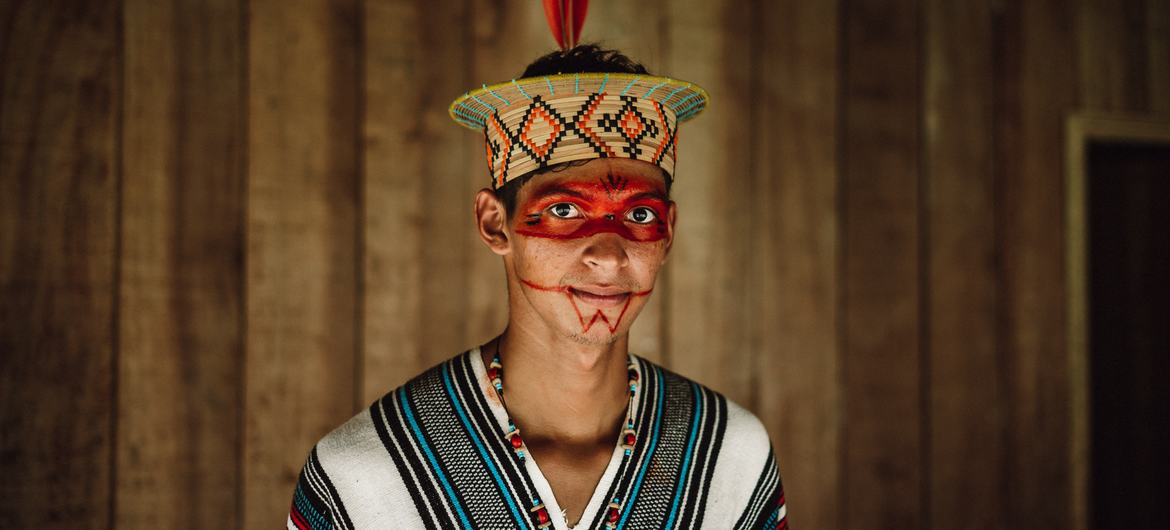
Poyowari Piyãko, a young activist, poses in his home in the Apiwtxa village, which belongs to the Ashaninka indigenous people, in northern Brazil.

Poyowari Piyãko, a young activist, poses in his home in the Apiwtxa village, which belongs to the Ashaninka indigenous people, in northern Brazil. © UNICEF/Alécio Cézar

The world must be made a safer place for people working to protect the planet, who sometimes pay with their own lives for their activism, UN Human Rights High Commissioner Michelle Bachelet said on Tuesday 1 March 2022.  Protecting the environment goes hand-in-hand with protecting the rights of those who defend it, she told the UN Human Rights Council in Geneva, which is holding its annual month-long session. 

Ms. Bachelet revealed how speaking out and standing up for environmental rights can come at enormous cost as activists have been killed or subjected to abuse, threats and harassment.   

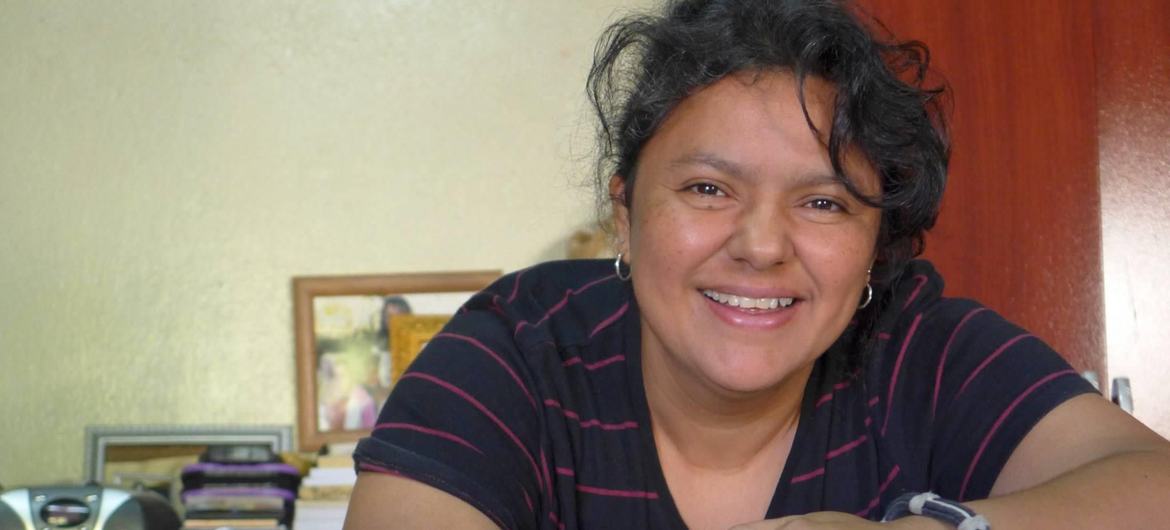
At particular risk are people who speak out against deforestation, extractives, loss of cultural heritage or identity, or large scale-agribusinesses and development projects – including those intended to produce clean energy, such as mega dams,she said.  Many environmental human rights defenders are also indigenous peoples, or members of local communities or minority groups – or those representing them.   Berta Caceres, an environmental activist from Honduras, was assassinated in March 2016.  She was recognized posthumously as a UN Champion of the Earth laureate for her tireless campaign for the rights of indigenous people.

Berta Caceres, an environmental activist from Honduras, was assassinated in March 2016. She was recognized posthumously as a UN Champion of the Earth laureate for her tireless campaign for the rights of indigenous people. © UNEP

She said entire communities may face threats and intimidation when someone speaks out on their behalf.  Ms. Bachelet underlined that States have an obligation to respect and protect the rights of environmental human rights defenders, and the communities they represent.  Authorities must also prevent and ensure accountability for attacks.  These actions are in line with a Council resolution adopted last year which upholds the right to a healthy environment, she said.  See also: https://humanrightsdefenders.blog/2021/10/26/aarhus-convention-gets-new-mechanism-to-protect-environmental-defenders/ and

“In addition, it is critical that States effectively regulate businesses and hold them accountable for human rights violations,” she said, while corporations also have a similar duty, as outlined in the UN Guiding Principles on Business and Human Rights

Ms. Bachelet advised that prior to undertaking any climate project, both governments and businesses must carry out human rights risk assessments.  

If indigenous peoples’ rights are at risk of being adversely affected by such projects, it is crucial that their free, prior and informed consent is obtained,” she said. 

The UN rights chief also reported on some of the global work of her staff.  “All around the world, my Office is committed to supporting States, businesses and environmental human rights defenders in all of their efforts to protect our planet,” she said. 

For example, over 200 human rights defenders in the Pacific region have been trained to help boost sustainable development, business and human rights in the context of climate change.  

In Southeast Asia, OHCHR is monitoring cases of harassment, arrest, killings and disappearances of environmental human rights defenders, while

https://yubanet.com/world/protect-the-defenders-of-the-planet-un-rights-chief-urges/working with governments towards ending punitive measures levelled against activists. 

https://news.un.org/en/story/2022/03/1113022

Women human rights defenders in conflict and post-conflict situations; side event 8 March

March 2, 2022

Women human rights defenders are crucial agents and leaders of change. However, due to their gender, they face particular obstacles and security risks. What are these gendered obstacles and risks? How can women human rights defenders best be supported and protected by States and other actors?
ISHR, the Ministry for Foreign Affairs of Finland and the Permanent Mission of Norway invite you to join a virtual event on the side of the Human Rights Council’s 49th session: 
Supporting women human rights defenders in conflict and post-conflict situations” takes place on Tuesday 8 March 2022 11:30am – 12:30pm (CET)
See also: https://humanrightsdefenders.blog/2020/08/03/roadmap-to-women-peace-and-security-wps-agenda-2020/

Opening statement:  Pekka Haavisto, Minister for Foreign Affairs, Finland

Panellists: 

Mary Lawlor, UN Special Rapporteur on the Situation of Human Rights Defenders

Ilwad Elman, Director of Program & Development, Elman Peace & Human Rights Centre [see also: https://humanrightsdefenders.blog/2020/09/17/fartuun-adan-and-ilwad-elman-from-somalia-named-2020-aurora-prize-winners/]

Horia Mosadiq, Human rights activist and Executive Director, Conflict Analysis Network (CAN)

Pooja Patel, Programme Director, International Service for Human Rights

Moderation:  Heidi Hautala, Vice-President, Member of Parliament, European Parliament.

Download the flyer here and click here to join the event.

More about the contributions of women human rights defenders to peace and security: ISHR report.

See also: https://www.trueheroesfilms.com/themes/

https://mailchi.mp/ishr/749qlxejj6-33413?e=d1945ebb90

Ukraine: visually documenting violations

March 1, 2022

Witness stands with the victims of Russia’s unlawful attacks. In a conflict that is rife with disinformation, false narratives, and manipulated media, the importance of capturing and preserving trusted, authentic accounts of human rights crimes cannot be underestimated.   They are sharing resources for those on the ground in Ukraine and Russia – who are navigating immense risks as they capture and share video documentation of potential human rights violations and war crimes. And, they are sharing resources for those of us witnessing from a distance, so that we amplify grassroots truths and decrease the spread of mis/disinformation. 

Guidance for Frontline Documenters working with and learning from activists documenting and preserving visual evidence of war crimes and human rights violations from Syria and Yemen to Brazil, it developed its peer-reviewed and field tested Video As Evidence Field Guide. Earlier they also worked with Ukrainian civil society and human rights groups during the 2014-15 conflict to prepare versions in Ukrainian and Russian

In Ukrainian: ПОЛЬОВИЙ ПОСІБНИК “ВІДЕО ЯК ДОКАЗ” Field Guide: Video as Evidence wit.to/VAE-UA  

In Russian: ПОЛЕВОЕ ПОСОБИЕ «ВИДЕО КАК ДОКАЗАТЕЛЬСТВО» Field Guide: Video as Evidence wit.to/VAE-RU  

https://www.witness.org/


New timely book on refugee flows

February 28, 2022

With massive new flows starting in the wake of the Russian attack on Ukraine, the new book announced on 28 February 2022 by UNHCR –People Forced to Flee: History, Change and Challenge – is most timely.

People Forced to Flee draws on the lessons of history to probe how we can improve responses to forced displacement. Tracing the roots of asylum from early history to contemporary times, the book shows how the 1951 Convention relating to the Status of Refugees turned the centuries-old ideals of safety and solutions for refugees into global practice. It highlights the major achievements in protecting people forced to flee since then, while exploring serious setbacks along the way.

Published at a time when over 84 million people in the world are forcibly displaced, it examines international responses to forced displacement within borders as well as beyond them, and the principles of protection that apply to both: reviewing where they have been used with consistency and success, and where they have not. At times, the strength and resolve of the international community seems strong, yet solutions and meaningful solidarity are often elusive.

Most forced displacement is experienced in low- and middle-income countries and persists for generations. People forced to flee face barriers to improving their lives, contributing to the communities in which they live, and realising solutions. Responding better is not only a humanitarian necessity but a development imperative.

The book shows how this work gained momentum with the international affirmation in December 2018 of the Global Compact on Refugees; and it illustrates how it is being supported by a growing group of partners encompassing forcibly displaced people, local communities and authorities, national governments, international agencies, non-governmental organisations and the private sector.

People Forced to Flee also examines how increased development investments in education, health and economic inclusion are helping to improve socio-economic opportunities both for forcibly displaced people and their hosts. Alongside this are greater investments in data, evidence and analysis pointing to what works best. And it discusses the wide array of financing mechanisms that can support sustainable responses.

As noted by Filippo Grandi, the UN High Commissioner for Refugees, in his foreword, the book highlights with great clarity the enormous challenges to preventing, mitigating, and finding solutions to forced displacement. “The drivers of displacement are unrelenting; the demands placed on humanitarian funding are growing,” Grandi notes. Yet he adds that while “the challenges are enormous, history has repeatedly demonstrated the potential for, and power of, positive change”.

The book is published by Oxford University Press in hardback or in digital format via this microsite.

People Forced to Flee: History, Change and Challenge, takes up the mantle of a series of UNHCR publications, stretching back to 1993, that were previously entitled The State of the World’s Refugees. This book was written by Ninette Kelley.

https://www.unhcr.org/news/press/2022/2/621c851f4/new-book-explores-past-present-future-protecting-people-forced-flee.html