
In mid 2013 True Heroes Films (THF) moved to Geneva to set up its office there. Now the NGO has produced its first newsletter for 2014 showing a remarkable range of activities for HRDs, NGOs and others:
share information on human rights defenders, with special focus on human rights awards and laureates
In mid 2013 True Heroes Films (THF) moved to Geneva to set up its office there. Now the NGO has produced its first newsletter for 2014 showing a remarkable range of activities for HRDs, NGOs and others:
In December 2013, the Swiss Government became one of the few countries to issue specific Guidelines on the Protection of Human Rights Defenders (http://www.humanrights.ch/en/switzerland/foreign-affairs/human-rights-foreign-policy/multilateral-policy/switzerland-guidelines-protection-human-rights-defenders). As in the case of all guidelines, the real test is in the implementation and on 12 June 2014, the Centre for Peacebuilding (KOFF) at Swisspeace organized a conference on the protection of HRDs, which brought together HRDs from Guatemala, Honduras, Serbia, Russia and Sri Lanka, Swiss government officials and representatives of Swiss civil society in order to give consideration to the different challenges that exist when it comes to HRD protection and, in particular, implementation of the Swiss guidelines.

Theo van Boven 2011
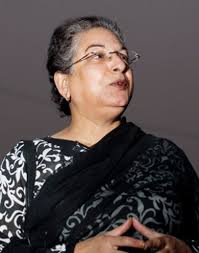
On 12 November 2014 the fifth annual Theo van Boven Lecture will be delivered by Mrs. Hina Jilani, in the University of Maastricht (16.00 – 18.30). The lecture is in honour of Prof. Theo van Boven, one of the founders of the Maastricht Centre for Human Rights and the most crucial human right director in the UN in 1977-1982 when the first special procedures were enacted. [https://thoolen.wordpress.com/tag/theo-van-boven/]
Mrs. Jilani is an internationally known human rights defender from Pakistan. She created Pakistan’s first all-women law firm and co-founded Pakistan’s first legal aid centre. She also founded the Human Rights Commission of Pakistan and Pakistan’s Women Action Forum, a prominent women’s rights group whose campaigns have been at the heart of the democracy movement in the country. She was the first Special Representative of the United Nations Secretary-General on Human Rights Defenders from 2000 to 2008. Since 2013 she is a member of The Elders. For more information on her work: http://www.maastrichtuniversity.nl/web/file?uuid=23a2b13c-1422-4e13-8df8-4209bb39e791&owner=20b720a7-b4e5-478d-a68e-9b2019fc1761. The lecture is open to the public.

Bangladesh human rights defender Adilur Rahman Khan, of the human rights organisation Odhikar, has won the 2014 International Bar Association (IBA) Human Rights Award.
 organises on 9-10 December 2014 its annual Human Rights Forum. It takes place in the Newseum in Washington DC, USA. Several panels are of direct relevance to human rights defenders, such as:
For more information and to enroll: http://www.humanrightsfirst.org/event/human-rights-summit
On 23 October former UN Rapporteur on Human Rights Defenders, Margaret Sekaggya, gave the Anna Lindh Lecture 2014 under the title: “Providing a safe and enabling environment for Human Rights Defenders: Critical factors to Consider”. This was done in the context of the 30th anniversary of the Raoul Wallenberg Institute in Lund, Sweden.
The full text is available: http://rwi.lu.se/wp-content/uploads/2014/10/AL-Sekaggya-2014.pdf
If there was any doubt on where civil society stands on the issue of reprisals and repression of NGO activity in Russia, the letter below and the enormous number and variety of organizations having signed it should put the doubt to rest: [see also: https://plus.google.com/+HansThoolen/posts/2nWSsUBuCJw]
“Dear President,
We, the undersigned non-governmental organizations, are writing to urge you to stop the clampdown on the right to freedom of association and end reprisals against independent non- governmental organizations (NGOs) in Russia.
We are deeply concerned that under the legislation on “foreign agents”, hundreds of NGOs have been subjected to unannounced inspections by government officials which have interrupted and obstructed their legitimate work with dozens currently embroiled in lengthy court hearings. Several NGOs and their leaders have had to pay prohibitive fines, and some were forced to close down because they refused to brand themselves as “foreign agents” – an expression akin to spying. Recent legislative changes now give the Ministry of Justice powers to register organizations as “foreign agents” without their consent and without a prior court decision. More than a dozen of leading Russian rights groups have already been branded by the Ministry. These NGOs are not foreign spies or “agents”, and have worked in the interest of the people of Russia. Many more face the same fate.
Under the previous legislation, NGOs in Russia were already accountable to the government and the public, having to report on their activities and finances. It is difficult to avoid concluding that the only purpose of the legislation on “foreign agents” is to publicly discredit and stigmatise them.
We believe that NGOs are essential to the healthy functioning of society. They play an important role in providing much needed services to the public. They help keep officials accountable and improve policies in the interests of the people.
We are calling on you as the President of the Russian Federation and the guarantor of its Constitution and of the fundamental rights and freedoms enshrined therein, to take all necessary steps to ensure that the “foreign agents” law is repealed and NGOs in Russia are able to do their work without hindrance, harassment, stigmatisation or reprisals.
• Action des chrétiens pour l’abolition de la torture (ACAT) (France)
• Agir ensemble pour les droits de l’homme (AEDH) (France)
• Amnesty International
• ARTICLE 19 (UK)
• Bulgarian Helsinki Committee (Bulgaria)
• Bunge la Mwananchi (Kenya)
• Centre de recherche et d’information pour le développement (CRID) (France) • Centrum Kształcenia Liderów i Wychowawców im. Pedro Arrupe (Pologne)
• CIVICUS
• Comité catholique contre la faim et pour le développement – Terre solidaire (CCFD) (France)
• Committee on the Administration of Justice Ltd (CAJ) (Northern Ireland, UK)
• Cordaid (Pays-Bas)
• Danny Sriskandarajah, our Secretary General
• English PEN (UK)
• European Human Rights Advocacy Centre (EHRAC) (UK)
• Emmaüs International (France)
• Finnish PEN (Finlande)
• Foundation Max van der Stoel (Pays-Bas)
• Free Press Unlimited (Pays-Bas)
• Front Line Defenders (Irlande) • Fundacja Edukacja dla Demokracji (Pologne)
• Fundacja im. Stefana Batorego (Pologne)
• Gevalor (France)
• Greenpeace Spain (Spain) • Helsińska Fundacja Praw Człowieka (Helsinki Foundation for Human Rights) (Pologne)
• Hivos (Pays-Bas)
• Human Rights Commission (Kenya)
• Human Rights House Foundation (Norway)
• Human Rights House Foundation HRHF (Switzerland)
• Human Rights Watch
• Index on Censorship (UK) • INPRIS – Instytut Prawa i Społeczeństwa (Pologne) • Instytut Spraw Publicznych (Pologne)
• International Service for Human Rights
• Kansalaisjärjestöjen ihmisoikeussäätiö KIOS (Finlande)
• Kenya Human Rights Commission (Kenya)
• Koalicja Karat (Pologne)
• La lliga del drets dels pobles (Spain)
• Ligue des droits de l’Homme (France) • Małopolskie Towarzystwo Oświatowe (Pologne)
• MEMORIAL Deutschland e.V. (Germany)
• Milieudefensie (Pays-Bas)
• MONIKA – Naiset liitto ry (Finlande)
• Movies that Matter (Pays-Bas)
• Naisten Linja Suomessa ry (Finlande)
• Netherlands Helsinki Committee (Pays-Bas)
• Nederlands Juristen Comité voor de Mensenrechten (NJCM)
• Nederlandse Vereniging van Journalisten (NVJ) (Pays-Bas)
• NGO Working Group OSCE (Switzerland)
• Observatoire pour la protection des défenseurs des droits de l’Homme (joint program FIDH and OMCT) (France/Switzerland)
• Pakolaisneuvonta ry (Finlande)
• Pat Finucane Centre, (Irlande)
• Queer Youth Norway (Norway)
• REDRESS (UK)
• Reporters sans frontières (RSF) (France)
• Russie-Libertés (France)
• Sadankomitea (Finlande)
• Society for Threatened Peoples (Switzerland)
• Stiftung Haus der Demokratie und Menschenrechte (Germany)
• Stowarzyszenie Wschodnioeuropejskie Centrum Demokratyczne (Pologne)
• The Bellona Foundation (Norvège)
• The Norwegian LGBT Association (Norvège)
• UNITED for Intercultural Action (Pays-Bas)
• XENION Psychsoziale Hilfen für politisch Verfolgte e.V. (Allemagne)
• Автономная некоммерческая правозащитная организация «Молодежный центр консультации и тренинга» (Russie)
• Автономная некоммерческая организация «Правозащитная организация «МАШР» (Russie)
• Благотворительный фонд развития города Тюмени (Russie)
• Общественная правозащитная организация «Солдатские матери Санкт-Петербурга» (Russie)”
The 2014 Sakharov Prize goes to the Congolese physician Denis Mukwege for his treatment of the victims of gang rape in the Democratic Republic of Congo.

Congolese physician Denis Mukwege, will be awarded this year’s Sakharov Prize for Freedom of Thought, European Parliament President Martin Schulz announced in Strasbourg on Tuesday.
Mukwege has been treating rape victims at a clinic in Bukavu on the Rwandan border for decades. He has performed thousands of surgeries on women to heal their injuries sustained in violent attacks, often by local militias. The 59-year-old founded a gynaecology unit and maternity ward in Bukavu in 1996, the first of its kind in the area. He has since expanded the station to an entire hospital, which he runs. The Second Congo War began in August 1998, ravaging the region. Mukwege is said to have performed over 10,000 operations on rape victims ever since.
The other finalists were Ukraine’s pro-Western Euromaidan movement and Azerbaijani rights defender Leyla Yunus.[https://thoolen.wordpress.com/2014/10/16/more-on-the-sakharov-prize-and-the-arab-nominees/]
For more information on the award see: http://www.trueheroesfilms.org/thedigest/award/sakharov-prize-freedom-thought
The 2014 prize will be awarded at a ceremony in Strasbourg on 26 November.
Congolese gynecologist wins Sakharov Prize | News | DW.DE | 21.10.2014.
for our french speakers: http://www.lemonde.fr/europe/article/2014/10/21/le-docteur-mukwege-recoit-le-prix-sakharov-pour-son-soutien-aux-femmes-violees-en-rdc_4510098_3214.html
On 16 October 2014 the Inter-Parliamentary Union [IPU] announced that a former “prisoner of conscience”, the Bangladeshi Saber Hossain Chowdhury, was elected as new IPU president.
A former businessman with an education in law, politics and economics in the UK, President Chowdhury first became an MP in 1996 at the age of 35. He was also the youngest member of the government when he held two deputy ministerial posts in succession between 1999 and 2001. A political prisoner in the early 2000’s, he is described as a firm believer in the rule of law and human rights. He was involved in ground-breaking legislation to criminalize custodial torture in Bangladesh and to address domestic violence.
 Hans Thoolen on Human Rights Defenders and their awards