Imogen Foulkes – who regularly reports from Geneva – wonders whether being UN High Commissioner for Human Rights is it the toughest job at the UN? On 27 June 2020 she published a lengthy interview with Zeid Ra’ad Al Hussein, who was UN High Commissioner for Human Rights 2014-2018.
Zeid, as he likes to be known, is from a privileged background. He is a member of Jordan’s royal family, but never seems to have been comfortable with the term ‘prince’. His career with the UN began, he told me, almost by accident, when he accompanied his brother on a trip to the United States. He ended up in New York, where a friend at the United Nations told him the UN was recruiting for its work during the conflict in former Yugoslavia.….
Almost 20 years later, in 2014, Zeid was approached to become UN High Commissioner for Human Rights. His initial reaction, perhaps based on his experience in former Yugoslavia, and his knowledge that the UN could at times be frustratingly ineffective, was to refuse. But he took a walk around New York’s Central Park to think about it. “That was probably fatal,” he remembers with a laugh. “If I had just said no, that would have been the end of it, but once I had thought about it I couldn’t say no.”
.…His maiden speech to the Geneva-based UN Human Rights Council in September 2014 contained a withering attack on Islamic State, warning that any territory it controlled would be ‘a harsh, mean-spirited house of blood’. He also turned his attention to Europe’s rightwing populist leaders, calling the UK’s Nigel Farage and Geert Wilders of the Netherlands ‘demagogues’. And when Donald Trump was running for office, Zeid described him as a ‘bigot’, and suggested it would be dangerous for him to get elected.
Rather than worry what the reactions of government leaders might be to the words and deeds of UN officials, Zeid believes it is governments who should have a wary respect for the UN.
And while we may remember Zeid most for his outspoken comments about Donald Trump, in fact during his four years in office, he and the UN Human Rights Office were hard at work, often quietly behind the scenes, investigating human rights violations around the world. ,(Syria, investigations into the conflict in Ukraine, into the persecution of the Rohingya in Myanmar, …..He described the violence as containing ‘elements of genocide’, and, in a final interview before leaving office, told me Aung San Suu Kyi should have resigned rather than preside over such atrocities.
But he remains a keen observer of the United Nations,and thinks to key to progress is persuading the permanent members of the UN Security Council to give up their veto when atrocity crimes are taking place. “That would unlock the possibility for collective action… and we can see the Security Council operating in the way it ought to be operating,” he said……
Joint statements by groups of UN experts are becoming more frequent, with at least three this month. When it comes to major powers like the USA, China and India – who are rather sensitive when criticised – there must be safety in numbers:
Addressing the USA after George Floyd..
On 5 June 2020 nearly 30 independent experts appointed by the UN Human Rights Council called for the United States to reform its criminal justice system in the wake of a recent spate of killings of African Americans, including at the hands of the police. In their statement they urged the US authorities to address systemic racism and racial bias, and to conduct independent investigations into cases of excessive use of force by police officers.
The UN human rights experts charged that these killings involved impunity, disregard or depravity toward human life, and the use of public spaces to assert racial control, with each characteristic of a modern-day lynching. “The latest videos to surface showing white men chase, corner, and execute a young man who was out jogging, or showing an officer kneeling with his weight on a man’s neck for eight minutes shock the conscience and evoke the very terror that the lynching regime in the United States was intended to inspire”, they said.
With millions of Americans taking to the streets, the experts also expressed concern about police response to these protests. They said demonstrations have been marked by violence, arbitrary arrest, militarisation and the detention of thousands of protesters. Journalists of colour have also been targeted and detained, some of whom have faced violence and harassment.
UN Experts Urge India To Release Protest Leaders
On 26 June 2020 13 UN experts jointly called on India to immediately release human rights defenders who have been arrested for protesting against changes to the nation’s citizenship laws. “These defenders, many of them students, appear to have been arrested simply because they exercised their right to denounce and protest against the CAA (Citizenship Amendment Act), and their arrest seems clearly designed to send a chilling message to India’s vibrant civil society that criticism of government policies will not be tolerated,” the experts said.
“Authorities should immediately release all human rights defenders who are currently being held in pre-trial detention without sufficient evidence, often simply on the basis of speeches they made criticising the discriminatory nature of the CAA,” they said. (Meeran Haider, Gulfisha Fatima, Safoora Zargar, Asif Iqbal Tanha, Devangana Kalita, Natasha Narwal, Khalid Saifi, Shifa Ur Rehman, Dr. Kafeel Khan, Sharjeel Imam, Akhil Gogoi.)
The experts also highlighted their concern that the authorities’ response to the protests seemed discriminatory. It appears they have not similarly investigated allegations of incitement to hatred and violence made by CAA supporters, some of whom are reported to have chanted “shoot the traitors” at counter-rallies.
UN experts call for decisive measures to protect ‘fundamental freedoms’ in China
On 26 June 2020 almost 50 UN independent experts on Friday to express their continuing alarm, urging the country to “abide by its international legal obligations”.
After having “repeatedly communicated” their concerns, they highlighted the repression of protests and democracy advocacy in the Hong Kong; impunity for excessive use of force by police; the alleged use of chemical agents against protesters; the alleged sexual harassment and assault of women protesters in police stations; together with the alleged harassment of health care workers.
The experts also raised their “grave concerns” on issues ranging from the collective repression of specific communities – “especially religious and ethnic minorities, in Xinjiang and Tibet” – to the detention of lawyers and prosecution – in addition to disappearances – of human rights defenders across the country. .
They urged China to invite civil and political rights monitors to conduct independent missions “in an environment of confidentiality, respect for human rights defenders, and full avoidance of reprisals” and encouraged the UN Human Rights Council (HRC) to urgently monitor Chinese human rights practices.
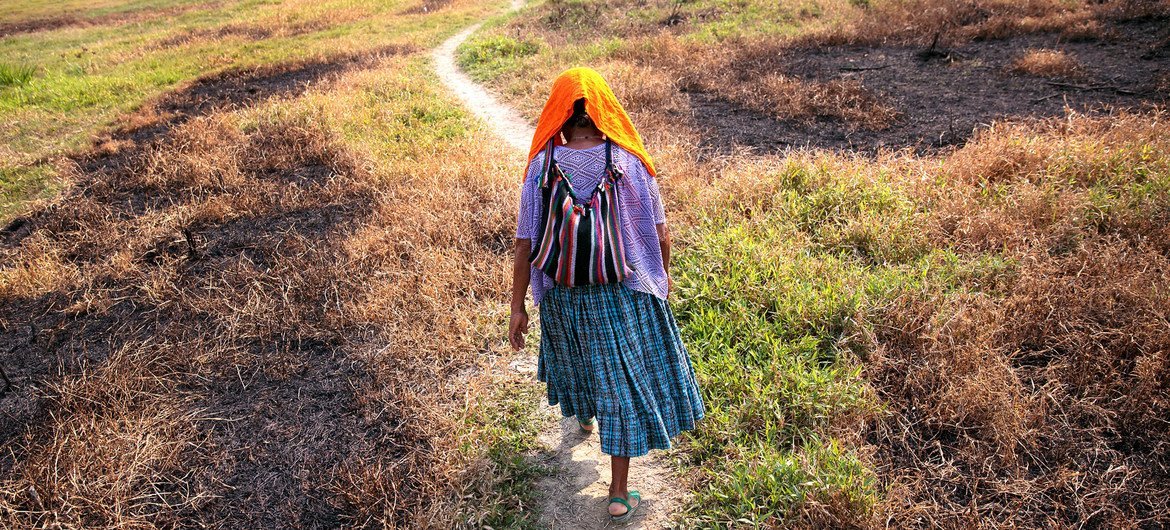
UN Women/Ryan Brown After surviving military enslavement in Guatemala, Maria Ba Caal received help through an emergency grant from the UN Voluntary Fund for Victims of Torture.
26 June 2020 was the International Day in Support of Victims of Torture. Torture is an “egregious abuse of human rights”, UN Secretary-General António Guterres said. Although international law “unequivocally prohibits torture in all instances”, the UN chief pointed out that it nevertheless continues in many countries, “even those where it is criminalized”.
“On this International Day in Support of the Victims of Torture, human rights defenders and survivors of torture around the world take the opportunity to speak out against this abhorrent denial of human dignity and they act to remember and support its victims”, Mr. Guterres said in his message.
Its prohibition forms part of customary international law, which means that it is binding on every member of the international community, regardless of whether a State has ratified international treaties that expressly prohibit the practice or not, according to the UN. Moreover, the systematic or widespread practice of torture constitutes a crime against humanity.
The UN Voluntary Fund for Victims of Torture, channels funding to assist victims of torture and their families by awarding hundreds of grants to civil society organizations worldwide for medical, psychological, legal, social and other assistance. It contributes to the rehabilitation, reparation, empowerment and access to remedies for nearly 50,000 torture survivors each year.
And to underline that torture is still very much a problem today the Himalayan Times of 26 June writes “that despite new criminal laws, impunity for acts of torture, ill-treatment prevails in detention” in Nepal
The International Commission of Jurists (ICJ), Advocacy Forum (AF) and Terai Human Rights Defenders Alliance (THRD Alliance) have voiced concerns about the near-total failure by authorities to investigate and prosecute acts of torture in Nepal. On the occasion of the International Day in Support of Victims of Torture, the three rights organisations urged the Government of Nepal to investigate into all allegations of torture and ill-treatment, and to bring prosecutions where warranted under the criminal provisions of the Penal Code…
The ICJ has made an appeal to the Government of Nepal to establish an independent preventative mechanism for monitoring of detention centres and to become party to the Optional Protocol of the Convention on Torture. Nearly two years after provisions in the new Penal Code came into effect, not a single torture prosecution appears to have been brought. There have also been very few instances in which victims have received an effective remedy and reparation for their ill-treatment, the press release stated.
Nepal has, as per the statement, failed to meet its obligations in this regard under article 2(3) of the International Covenant of Civil and Political Rights and article 14 of the Convention Against Torture….
The AF and THRD Alliance both published reports on Friday that document instances of torture and other ill-treatment against detainees over the past year. Some 20 per cent of the more than 1,000 detainees interviewed reported some form of unlawful ill-treatment during confinement.
“U.S. sanctions against ICC staff “direct attack” on judicial independence: UN experts” is the heading of a Xinhua report issued on 26 june 2020, referring to a statement by a group of UN human rights experts.
Even coming from the Xinhua News Agency – the official state-run press agency of the People’s Republic of China – this is welcome. Especially when it states that “These threats constitute improper interference with the independence of the ICC and could also have potential adverse impacts on human rights defenders, civil society organizations and victims’ representatives.“
What weakens this Xinhua report fatally is of course that it does not say that China is – with the US – among the seven countries that voted against the ICC treaty (with Iraq, Israel, Libya, Qatar, and Yemen.)
The ISHR published on 24 June its usual and irreplacable “HRC44 – Key issues on agenda of June 2020 session”
As usual I have lifted out of this the issues that would seem to affect most directly Human Rights Defenders. To stay up-to-date on all issues: follow @ISHRglobal and #HRC44 on Twitter, and look out for its Human Rights Council Monitor.
The UN Human Rights Council (the Council) will hold its 44th regular session at Palais des Nations in Geneva from 30 June to 21 July 2020.
Modalities for participation in HRC44
State delegations not wishing to enter the plenary room physically will be able to deliver their statements by pre-recorded video-message, as provided for under HRC decision 19/119. Similarly, NGOs in consultative status with ECOSOC will be given the opportunity to do the same insofar as interactive dialogues, panels and UPR adoptions are concerned. It won’t be possible to hold “official” side events during the 44th session (online or in-person). Any events happening on the sidelines of the session will be considered independent events and won’t be publicised in the Bulletin of Informal meetings by the Secretariat. Read here the information note by the Secretariat which is updated according to the latest information, and an additional explainer by HRC-net.
Human Rights implications of COVID-19
The High Commissioner will present an oral update on the human rights impact of COVID-19 at the 44th session, as mandated by the presidential statement adopted by the Council in May 2020. The presidential statement also calls on the High Commissioner to produce a report on the impact of the COVID-19 pandemic on the enjoyment of human rights around the world to be presented at the 46th session in March 2021. In addition to their previously mandated reports, some mandateholders will present additional reports to address the impact of COVID-19 as related to their mandate, including the Special rapporteur on freedom of opinion and expression, David Kaye. [for some of my earlier posts on covid and human rights see: https://humanrightsdefenders.blog/tag/covid-19/]
Here are some highlights of the session’s thematic discussions:
Business and human rights
At this session, the Working Group on Business and Human Rights is expected to present reports on their activities over 2019, including a country visit to Honduras and on the theme of anti-corruption and the UN Guiding Principles (UNGPs). They are also meant to present groundbreaking guidance on human rights defenders and the role of business. ISHR expects that such guidance should provide companies with concrete suggestions for how to engage human rights defenders in the development and implementation of their human rights policies. It is important that the guidance explains why this is not simply good practice, but is also aligned with the Guiding Principles’ word and spirit – and thus should be widely mainstreamed for any company committed to the UNGPs. There will tentatively be a resolution presented to renew the mandate of the UN Working Group on Business and Human Rights, as well as to welcome the thematic reporting.
Reports of cases of intimidation and reprisal against those cooperating or seeking to cooperate with the UN not only continue, but grow. Intimidation and reprisals violate the rights of the individuals concerned, they constitute violations of international human rights law, and undermine the UN human rights system. [agains for earlier posts see: https://humanrightsdefenders.blog/tag/reprisals/]
During the 42nd session, the Council adopted a resolution which listed key trends such as the patterns of reprisals, increasing self-censorship, as well as the use of national security arguments and counter-terrorism strategies by States as justification for blocking access to the UN. The resolution acknowledged the specific risks to individuals in vulnerable situations or belonging to marginalised groups, and called on the UN to implement gender-responsive policies to end reprisals. The Council called on States to combat impunity and to report back to it on how they are preventing reprisals, both online and offline.
Item 5 of the Human Rights Council’s agenda provides a key opportunity for States to raise concerns about reprisals, and for governments involved in existing cases to provide an update to the Council on any investigation or action taken toward accountability to be carried out.
Other thematic reports :
At this 44th session, the Council will discuss a range of civil, political, economic, social and cultural rights through dedicated debates with the mandate holders, including interactive dialogues with:
The Working Group on the issue of human rights and transnational corporations and other business enterprises (includes recommendations from 2019 visit to Peru)
The Special Rapporteur on contemporary forms of racism, racial discrimination, xenophobia and related intolerance
The Special Rapporteur on extrajudicial, summary or arbitrary executions
The Special Rapporteur on the rights to freedom of peaceful assembly and of association
The Special Rapporteur on the promotion and protection of the right to freedom of opinion and expression
In addition, the Council will hold dedicated debates on the rights of specific groups including:
The Special Rapporteur on trafficking in persons, especially women and children
The Special Rapporteur on the independence of judges and lawyers
The Special Rapporteur on the human rights of migrants
The Working Group on discrimination against women and girls
The Special Rapporteur on the human rights of internally displaced persons
The Special Rapporteur on violence against women, its causes and consequences
The Independent Expert on protection against violence and discrimination based on sexual orientation and gender identity
#HRC44 | Country-specific developments
China (Hong Kong and Uyghur regions)
Violations in China, especially those linked to freedom of association, were made even more clear during the government’s efforts to respond to the COVID-19 epidemic. …..States should ensure continued calls for access to UN human rights experts, in line with last year’s joint letter condemning China’s suppression of minorities. Finally, following nearly a year of protests – largely of peaceful civilians – the central government in Beijing launched an initiative to draft and pass National Security Legislation in Hong Kong. This alarming development was foreshadowed by increasing police violence and use of chemical weapons; the arrest and political prosecution of more than a dozen pro-democracy leaders; and further restrictions on the free press. Many activists, and the European Parliament, are calling for UN Secretary-General António Guterres to appoint an envoy, rightly recognising that China’s actions violate international agreements aimed at ensuring peace and security.
United States of America
Last week, the Council held an urgent debate and adopted a resolution in reaction to systemic racism and police violence in the US and elsewhere. The UN Special Rapporteur on contemporary forms of racism and the UN Working Group on Experts on People of African Descent had also voiced their support for an international commission of inquiry. They have urged the Human Rights Council to ensure the following outcomes from the debate: (1) the creation of an international commission of inquiry to investigate systemic racism in law enforcement in the United States; and (2) the creation of a thematic international commission of inquiry to investigate systemic racism in law enforcement globally, with a focus on systemic racism rooted in legacies of colonialism and transatlantic slavery. They stressed that “both measures described above are necessary and cannot be substituted for one another”.
Saudi Arabia
Women human rights defenders (WHRDs) have been in prison for over two years, only because they demanded that women be treated equally as men, and no one has been held accountable for their torture. While the Council has sustained pressure on Saudi Arabia in 2019, it is essential that this scrutiny continues as the situation on the ground has not improved. ISHR calls on all States to jointly call on Saudi Arabia to immediately and unconditionally release the WHRDs and drop the charges against them; and implement the bench-marks set out in the two joint statements delivered by Iceland and Australia in 2019, underlining that should these benchmarks not be met, more formal Council action would follow.
Saudi Arabia is running for Human Rights Council election in October 2020 and hosting the G20 in November 2020. These all provide windows of opportunity to push for the immediate and unconditional release of the women human rights defenders and all those detained for exercising their rights.
Nicaragua
The COVID-19 crisis has not prevented the Nicaraguan government from making further use of repressive methods to continue targeting released political prisoners, human rights defenders, as well as indigenous people and other social groups, and their relatives. In a rapidly-deteriorating human rights situation, the authorities’ dangerous denial and inaction in the face of the pandemic have additionally fueled an alarming health crisis.
It is in this context that Council Members renewed a resolution on Nicaragua this week at the resumed 43rd session of the Human Rights Council. ISHR joined Race and Equality and a number of national and international organisations in urging the Council to ensure strong support for the resolution on the human rights situation in Nicaragua. To ensure the international community is fully informed of the worsening national situation, the resolution requests the High Commissioner to prepare a report and two oral updates, the first of which should be presented at the Council’s 44th session.
Honduras
The Working Group on Business and Human Rights will present the report on its official visit to Honduras (carried out between the 19 and 28 August 2019). …According to the end of mission statement, a significant number of human rights defenders who work for the respect and protection of human rights in the context of business activity have been arbitrarily arrested, intimidated, stigmatised, criminalised, threatened and some killed.
This was particularly evident in reference to those working in the field of extractive and hydro-electric industries. The murder of leading land,environment and indigenous peoples´ rights defender Berta Cáceres, who had been campaigning against the construction of the Agua Zarca dam, is one case cited where impunity is ongoing. Individuals responsible for the killing have been tried and jailed. However, those suspected of planning the crime, including senior management from the company building the dam (DESA) according to the independent mission of experts GAIPE, have not been investigated or prosecuted. [see also: https://humanrightsdefenders.blog/2020/06/10/nina-lakhanis-who-killed-berta-caceres-reviewed/]. Another Special Procedure expert – the Special Rapporteur on the independence of judges and lawyers – will also be presenting a report on its official visit to Honduras in August 2019. After completion of the visit, he called on Honduras to take urgent action to end corruption and guarantee an independent judiciary, stressing that ‘the justice system, as well as the political class’ are being ‘called strongly into question by the citizens’.
Burundi
The Commission of Inquiry on Burundi will present its oral briefing during the 44th session of the HRC. ISHR continues to remain highly concerned about the human rights situation in Burundi and its refusal to cooperate with the Council’s mechanisms.
Egypt
Seven UN experts have expressed concern about the collective and corrosive effects of Egypt’s counter-terrorism laws and practices on the promotion and protection of human rights. They stated that “Despite repeated communications by UN experts over arbitrary detention of individuals, human rights defenders and activists, the Egyptian Government has not changed its laws of practice”. The ‘Terrorism Circuit courts’ in Egypt, are enabling pre-trial detention as a form of punishment including against human rights defenders and journalists, such as Ibrahim Metwally, Mohamed El-Baqer and Esraa Abdel Fattah, Ramy Kamel, Alaa Abdel-Fattah, Patrick Zaky, Ramy Shaat, Eman Al-Helw, Solafa Magdy and Hossam El-Sayed. All of the individuals that the Special Procedures and the High Commissioner have written about since September 2019 are still in pre-trial detention by these courts. Once the terrorism courts resumed after they were suspended due to COVID-19, they renewed their detention retroactively.
The government’s response to the UPR in March 2020 demonstrated its lack of political will to address key concerns raised by States and to engage constructively with the Council. For example, the government refused to acknowledge the systematic and widespread attacks against defenders, the practice of torture and ill-treatment in detention centres, and to receive visits by Special Rapporteurs on torture and human rights defenders. The government claimed that no one is detained for exercising their rights, despite the fact that the UN Working Group on Arbitrary Detention found that arbitrary detention is a systematic problem in Egypt and could constitute a crime against humanity.
ISHR urges States to call on Egypt to immediately and unconditionally release all those detained for exercising their human rights, to stop using pre-trial detention as a punishment, and to take immediate measures to guarantee their rights to contact their families on a regular and continuous basis and to ease sending and receiving letters, food and medical supplies to them.
Philippines
The OHCHR issued its report (A/HRC/44/22) on the human rights situation in the Philippines, drawing on extensive engagement with and information provided by civil society in the country, the region and globally. The report refers to the killing of 208 human rights defenders, journalists and trade unionists, including 30 women, between January 2015 and December 2019. Confirming practices of vilification, criminalisation, restrictions of fundamental rights, as well as the continuing attacks including ‘red-tagging,’ the report notes existing impunity and the failure of domestic mechanisms to ensure accountability. The presentation of this report provides an important opportunity for debate on the key findings, and to consider options for how to advance recommendations to address the government’s violations of human rights overall, and restrictions on human rights defenders in particular.
The Council will hold an interactive dialogue on the High Commissioner’s annual report on 2 July 2020. The Council will consider reports on and is expected to consider resolutions addressing a range of country situations, in some instances involving the renewal of the relevant expert mandates. These include:
Interactive Dialogue with the High Commissioner on the human rights situation of Rohingya people
Enhanced Interactive Dialogue with the High Commissioner on the situation of human rights in the Philippines
Interactive Dialogue with the SR on the situation of human rights in Eritrea
Oral update by the High Commissioner on the situation of human rights in Nicaragua
Interactive Dialogue with the SR on the situation of human rights in Belarus
Interactive Dialogue with the High Commissioner on the situation of human rights in the Bolivarian Republic of Venezuela
Interactive Dialogue with the Commission of Inquiry on Burundi
Interactive Dialogue with the SR on the situation of human rights in Myanmar
Interactive Dialogue with the Commission of Inquiry on the Syrian Arab Republic
Interactive Dialogue with the SR on the situation of human rights in the Palestinian Territories occupied since 1967
Enhanced ID on the oral reports of the Government of the Sudan and OHCHR on progress towards the opening of a country office
Oral update of the High Commissioner on cooperation with Georgia
Adoption of Universal Periodic Review (UPR) reports
During this session, the Council will adopt the UPR working group reports on Armenia, Grenada, Guinea, Guinea-Bissau, Guyana, Kenya, Kiribati, Kuwait, Kyrgyzstan, Lao People’s Democratic Republic, Lesotho, Spain, Sweden, and Turkey.
ISHR supports human rights defenders in their interaction with the UPR. We publish and submit briefing papers regarding the situation facing human rights defenders in some States under review and advocate for the UPR to be used as a mechanism to support and protect human rights defenders on the ground. This session of the Council will provide an opportunity for Turkey, Kuwait and Guinea to accept recommendations made in relation to human rights defenders, as proposed in ISHR’s briefing papers.
#HRC44 | Council programme, appointments and resolutions
During the organisational meeting for the 44th session held on 12 and 15 June 2020, the President of the Human Rights Council presented the programme of work. It includes five panels of discussion and 81 reports. States also announced at least 17 resolutions.
Appointment of mandate holders
The President of the Human Rights Council has proposed candidates for inter alia the Special Rapporteur on freedom of opinion and expression and the Special Rapporteur on trafficking.
Resolutions to be presented to the Council’s 44th session
At the organisational meeting the following resolutions were announced (States leading the resolution in brackets) especially relevant:
Elimination of discrimination against women (Colombia, Mexico)
Human rights situation in Eritrea (Australia, Austria, Belgium, France, Germany, Netherlands) mandate renewal
Business and human rights (Norway, Russian Federation, Ghana, Argentina) Working Group + Accountability and Remedy project mandate renewals
Extrajudicial, summary or arbitrary executions (Sweden) mandate renewal
Human rights and climate change (Bangladesh, Philippines, Viet Nam)
Independence and impartiality of the judiciary, jurors and assessors, and the independence of lawyers (Hungary, Australia, Botswana, Maldives, Mexico, Thailand) + mandate renewal
Trafficking in persons, especially women and children (Germany, Argentina, Philippines) + mandate renewal
Freedom of opinion and expression: access to information (Canada, Namibia, Brazil, Fiji, Netherlands, Sweden)
Rights of persons with disabilities (Mexico, New Zealand) mandate renewal
The human rights situation in Belarus (EU)
The right to peaceful protest (Switzerland, Costa Rica)
Panel discussions
During each Council session, panel discussions are held to provide member States and NGOs with opportunities to hear from subject-matter experts and raise questions. All panel discussions are broadcast live and archived on http://webtv.un.org. Five panel discussions are scheduled for this upcoming session:
Annual full-day meeting on the rights of the child (two panels, theme: “Realizing the rights of the child through a healthy environment”)
Annual full-day discussion on the human rights of women
Panel discussion on the impacts, opportunities and challenges of new and emerging digital technologies with regard to the promotion and protection of human rights; including an oral update of the Advisory Committee on its report on new and emerging digital technologies
Panel discussion on promoting and protecting the rights of persons with disabilities in the context of climate change
Annual thematic panel discussion on technical cooperation in the promotion and protection of human rights (theme: “Upholding the human rights of prisoners, including women prisoners and offenders: enhancing technical cooperation and capacity-building in the implementation of the Nelson Mandela Rules and the Bangkok Rules”)
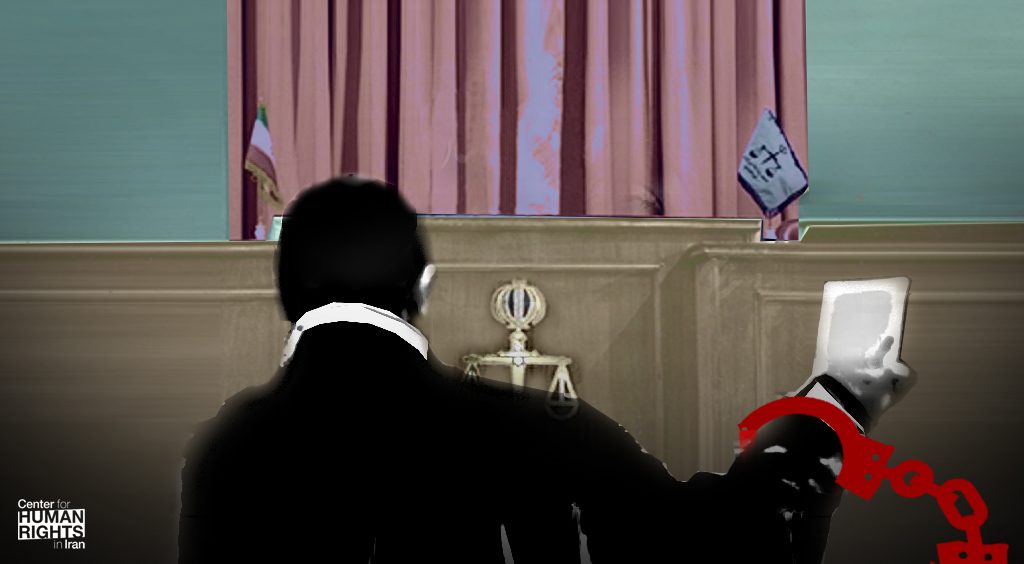
On 23 June 2020 the Center for Human Rights in Iran (CHRI) published under the title “No Lawyers, No Justice” a list of lawyers imprisoned in Iran for defending Human Rights Defenders. The adagium “utopia is a world without lawyers” clealry does not apply to Iran:
At least nine known cases of attorneys that have been arrested, charged with national security-related crimes, and/or banned from practicing law in the last two years. In addition to the list below, CHRI maintains this regularly updated list of lawyers known to have been imprisoned in Iran for their work defending the law.
Payam Derafshan: Held incommunicado at an unknown location since his arrest in June 2020 on unannounced charges. In May 2020, he was sentenced to a one-year suspended prison sentence for“insulting the supreme leader,” and suspended from practicing law for two years.
Soheila Hejab: Held at Gharchak Prison since May 2020, serving an 18-year prison sentence, five of which she must serve before becoming eligible for parole for “forming a group for women’s rights.”
Nasrin Sotoudeh: Detained in June 2018 and sentenced to 38 years in prison, 12 years of which she must serve before becoming eligible for parole. Among her charges were “encouraging prostitution” for advocating against compulsory hijab. Previously she served three years in prison for “acting against national security” and “membership in the Defenders of Human Rights Center.”
Mohammad Najafi: Imprisoned for demanding accountability for deaths in detention and facing new unspecified charges, he was sentenced in 2019 to 13 years in prison for “propaganda against the state,” “insulting the supreme leader,” and “collaborating with enemy states,” in addition to a four-year prison sentence in 2018. He must serve 10 years before becoming eligible for parole.
Amirsalar Davoudi: Behind bars since November 2018, he was sentenced to 30 years in prison and 11 lashes. He will be eligible for release after serving 15 years under the charge of forming “an illegal group,” which was a news channel for lawyers on the Telegram messaging app.
Arash Keykhosravi, who, along with fellow lawyer Ghasem Sholeh Sa’di, was sentenced to six years in prison but later acquitted, is facing new charges of “publishing falsehoods” for writing an article criticizing the imprisonment of attorney Mohammad Najafi.
Abdolfattah Soltani, who spent more than seven years behind bars for defending political prisoners, and Mohammad Ali Dadkhah, who was sentenced in 2012 to nine years in prison but released on furlough in 2013, are both banned from practicing law.
The assault on rights lawyers in Iran has been occurring amid a backdrop of two major changes to the legal process that have facilitated the authorities’ ability to convict defendants in politically motivated prosecutions on unsubstantiated charges.
In January 2018, Iranian courts began citing the Note to Article 48 of Iran’s Criminal Procedures Regulationsas justification for forcing defendants to choose their legal counsel from a court-approved list. The note also allows a delay in an individual’s access to counsel in cases involving “national security” charges, which are used against perceived critics of the state.
In a second blow to due process, in November 2019, Judiciary Chief Ebrahim Raisi ruled that Appeal Courts could issue verdicts without the presence of defendants and their attorneys, rendering the appeal process effectively meaningless.
“If the head of the judiciary can stop lawyers from practicing, it’s time to say goodbye to this profession,” Sotoudeh said in 2018. She was arrested two months after making the comments and has been behind bars ever since. [See also: https://humanrightsdefenders.blog/tag/nasrin-sotoudeh/]
The first episode features Serbian protest organizer and peaceful revolutionary Srdja Popovic.
In just a few years, Srdja transformed from a college student in a band to the leader of a national movement that ended the fearsome dictatorship of Slobodan Milošević with clever tactics and movement building, all without a single shot fired. After the tyrant’s fall, Srdja went on to serve in Serbia’s National Assembly and later launched an organization called CANVAS that teaches the art of protest to democracy activists around the world. He is the author of Blueprint for Revolution: How to Use Rice Pudding, Lego Men, and Other Nonviolent Techniques to Galvanize Communities, Overthrow Dictators, or Simply Change the World.
HRF chief strategy officer Alex Gladstein (@Gladstein) sat down with Srdja to discuss: How do you scale a movement of one up to millions of people? How do you overcome a regime that holds all the power and weapons? Why are peaceful revolutions much more successful than violent ones? Why are street movements like start-ups? Is it possible to sustain a movement during a global pandemic? How are protest movements around the world reacting to their new twin enemies, the coronavirus and the rise of authoritarianism?
HRCnet was established in 2006 to enhance NGO engagement with the Human Rights Council and to strengthen the Council’s impact and influence on the ground. Since then, HRCnet members working in coordination and solidarity, or as a network as a whole, have contributed significantly to some of the most important initiatives and outputs of the Human Rights Council and its mechanisms.
HRCnet’s membership comprises 16 NGOs and organisations working at the international level and across almost all regions:
Africa
African Centre for Democracy and Human Rights Studies (The Gambia)
DefendDefenders (East and Horn of Africa Human Rights Defenders Project) (Uganda)
Southern African Human Rights Defenders Network (Zimbabwe)
West African Human Rights Defenders Network (Togo)
Asia-Pacific
Asian Legal Resource Centre (Hong Kong, China)
Asian Forum for Human Rights and Development (FORUM ASIA) (Thailand)
Commonwealth Human Rights Initiative (India)
Human Rights Law Centre (Australia)
Latin America
Centro de Estudios Legales y Sociales (CELS) (Argentina)
Conectas Direitos Humanos (Brazil)
Middle East and North Africa
Cairo Institute for Human Rights Studies (Egypt)
Egyptian Initiative for Personal Rights (Egypt)
International
CIVICUS (South Africa)
Human Rights Watch (USA)
International Service for Human Rights (Switzerland)
Open Society Foundations (USA)
HRCnet members have substantially shaped debates and made influential policy proposals on country situations, as well as thematic and institutional issues. HRCnet works to:
Safeguard civil society: through securing actions by key actors that have, in a number of cases, assisted in the release of human rights defenders from detention or in alleviating pressure on NGOs.
Enhance access: by assisting rights holders from the Global South in engaging with the international human rights system and strengthening capacity to influence States, and harness civil society, from all regions.
Amplify impact: by facilitating coordination and collaboration between international and regional NGOs.
Promote accountability: seeking the establishment of commissions of inquiry or other independent expert mechanisms to investigate and promote accountability for gross human rights violations.
Enhance scrutiny: through the mandating of new Special Procedures to monitor human rights and document violations.
Strengthen protection: through the establishment of new Special Procedures and other mechanisms.
Raphael Mimoun wrote in Newsweek of 22 June 2020 an opinion piece “Dictators are Besieging Internet Freedom—and Trump Just Opened the Gates”. It is a detailed piece but worth reading:
Last week, the Trump administration started dismantling one of the US government’s most impactful agencies, the Open Technology Fund, which supports projects to counteract repressive censorship and surveillance around the world.
The Open Technology Fund, or OTF, is relatively new, founded in 2012 as a program of the government-backed Radio Free Asia. In 2019, it became an independent non-profit reporting to the US Agency for Global Media (USAGM). Since its founding, the organization has funded dozens of projects now part of the toolkit of millions of rights advocates and journalists around the world. But OTF is now under attack: the new leadership of USAGM, appointed just weeks ago, fired the leadership of all USAGM entities, including OTF, dismissed OTF’s independent and bipartisan board of directors, and is threatening to hollow out OTF altogether….
Many of those tools help those who most need it, where surveillance, censorship, and repression is most acute. Just last month, Delta Chat declined a request for user data from Russia’s communication regulator—because the security architecture developed with OTF support meant it did not have any data to handover. FreeWechat, which publishes posts censored by the Chinese government on the app WeChat, has been visited over 7 million times by Chinese-speakers. Dozens more OTF-funded tools enable millions to evade surveillance by autocratic governments and access the open internet, from Cuba to Hong Kong and Iran.
OTF’s work is critical to human rights defenders and journalists, but it brings privacy and security far beyond those groups. OTF only supports open-source projects, meaning that the code used must be available for anyone to view and reuse……….
But OTF’s work on internet freedom isn’t limited to funding technology development. The organization takes a holistic approach to internet freedom, providing life-saving training and capacity-building to groups directly targeted by cyberattacks, harassment, and violence: LGBTQI advocates in Indonesia, journalists in Mexico, civic activists in Belarus, or exiled Tibetan organizations. OTF also funds events bringing together researchers, technologists, policy-makers, and advocates. Those gatherings—whether global like the Internet Freedom Festival or focused on specific countries or regions like the Iran Cyber Dialogue, the Vietnam Cyber Dialogue, or the Forum on Internet Freedom in Africa–have been transformative. They have helped build a tight community in a space where trust is hard to achieve. Without such events, many of the projects, tools, and collaborations to circumvent censorship and counter surveillance would not exist.
On 23 June 2020 Ulande Nkomesha reported in News Diggers that the Alliance for Community Action (ACA) has partnered with like-minded organisations and individual activists to set up a legal and humanitarian fund for human rights defenders in Zambia. In a statement issued by (ACA) information and advocacy officer Jimmy Maliseni, the NGO explained that the fund had been necessitated by the continued shrinking space for civic actors, and that the detention of critical voices had prompted well-wishers to partner with ACA to offer financial and material support to human rights advocates.






 Hans Thoolen on Human Rights Defenders and their awards