Author Archive

Istanbul court jails four human rights defenders on terror charges; seven acquitted

July 6, 2020

Having announced the trial last Friday [https://humanrightsdefenders.blog/2020/07/03/will-long-running-saga-of-trial-against-the-istanbul-10-end-on-friday-3-july/] I need to report also on the outcome although it was widley reported in the media.

A Turkish court on Friday convicted Taner Kilic, former chairman of Amnesty International, of membership in a terror organisation and sentenced him to over six years in prison. (AP)

Arab News on 4 July 2020 reported that human rights activists, including a former head of Amnesty International’s Turkish branch, have been jailed by an Istanbul court on terror-related charges in a decision condemned as an “outrage” by fellow campaigners. Amnesty International Turkey’s honorary chair Taner Kilic was sentenced to six years and three months in prison for “terror organization membership. Gunal Kursun from the Human Rights Agenda Association; Idil Eser, former executive director of Amnesty International Turkey; and Ozlem Dalkiran, former head of Amnesty International’s communications department, were each handed jail terms of one year and 13 months for “aiding a terror organization.”

The prosecution claimed that the hotel gathering was a “secret meeting to organize an uprising,” in order to trigger a “chaos environment” in the country – a claim categorically denied by the defendants.

Amnesty International has described the case as a travesty of justice. The defendants are now expected to appeal the verdict in the case dubbed the ‘Buyukada trial.”

Other human rights activists, including Nalan Erkem, lknur Ustun, Ali Gharavi, Peter Steudtner, Veli Acu, Nejat Tastan and Seyhmus Ozbekli, were acquitted.

Another disappointing court verdict against civil rights and civil society in Turkey. Not how we put our relations on a positive track. My thoughts are with imprisoned and families. Solidarity with democratic forces in Turkey!” tweeted Sergey Lagodinsky, chair of the EU-Turkey delegation at the European Parliament. Dunja Mijatovic, the Council of Europe’s commissioner for human rights, voiced concerns that Turkey is targeting and silencing human rights defenders.

Andrew Gardner, Amnesty International’s Turkey researcher, who observed the hearing, said the verdict is an outrage based on absurd allegations without any evidence and is supported by a pro-government media smear campaign.

https://www.arabnews.com/node/1700036/middle-east

https://ahvalnews.com/buyukada-case/four-human-rights-activists-given-prison-sentences-buyukada-case

The Elders urge European leaders to stand firm on Israeli annexation threats

July 3, 2020

As reported in the Sri Lankan Guardian The Elders have called on European leaders to maintain their resolve against Israel’s plans to annex swathes of the West Bank, and to insist that any such moves would have negative political and economic consequences for bilateral relations.

The absence of any direct military and legal moves towards annexation on 1 July – the deadline unilaterally declared by Israel’s Prime Minister Benyamin Netanyahu – should not be taken as grounds for complacency. Annexation of any part of the West Bank, including illegal settlement blocs, would constitute a flagrant breach of international law.
In letters to French President Emmanuel Macron, German Chancellor Angela Merkel, UK Prime Minister Boris Johnson, EU Commission President Ursula von der Leyen and EU High Representative for Foreign Affairs Josep Borrell, The Elders underscored the damage annexation would cause not only to any hopes of a two-state solution to the Israeli-Palestinian conflict, but also to global respect for the rule of law.
Annexation “is fundamentally contrary to the long term interests of both the Israeli and the Palestinian peoples. [It] will not dampen future Palestinian demands for rights and self-determination, but destroying hopes in a two-state compromise will increase the risks of future violence in one of the most combustible areas in the world”, the Elders warned in their appeal to Europe’s leaders.
They called on the EU leaders to consider suspending the bloc’s Association Agreement with Israel if annexation does go ahead in any form, and recalled the UK’s historical and abiding responsibility to the region as the colonial Mandate holder in pre-1948 Palestine.
The Elders also reiterated their support for human rights defenders and civil society activists in Israel and Palestine, whose voices need to be protected and amplified at this challenging time.

http://www.slguardian.org/2020/07/the-elders-urge-european-leaders-to.html

In memoriam Santiago Manuin, defender of Peru’s Amazon forest

July 3, 2020

Neil Giardino for ABC News reports on the passing of Santiago Manuin, one of the most celebrated defenders of Peru’s Amazon rainforest and the leader of the Awajún tribe, whose vast and besieged territory spans the country’s mountainous northern region along the Ecuador border. He died on Wednesday of COVID-19 at the age of 63.

Manuin devoted his life to defending his tribe and their ancestral land, which in recent decades had endured illegal gold mining and logging, persistent threats linked to narco-trafficking and state-sanctioned oil and gas operations….

In 2009, Manuin nearly died defending Awajún territory after he was shot eight times by Peruvian security forces. The incident, referred to as “the Bagua Massacre,” occurred when police fired on thousands of Awajún and Wampis tribespeople who were blocking a jungle highway to protest a U.S.-Peru trade agreement that would’ve opened up land in the Amazon for gas, oil and lumber extraction. More than 30, both officers and natives, died in the clash.

For the Westerner, the Indigenous person is an impediment to development because we refuse to destroy the land. That’s why they label us anti-development,” he said. “Indigenous peoples are not anti-development. We protect the forest and live for the forest. Our spirituality is tied to it. We don’t need to go to the largest churches to pray. We pray within this natural world. We live in this plenitude.”..

In 1994, Manuin won the international Reina Sofia Prize for his defense of the Amazon, and in 2014 he was awarded Peru’s National Prize for Human Rights for a life lived in service of Indigenous peoples and the rainforest..

https://www.weisradio.com/santiago-manuin-tireless-defender-of-the-amazon-rainforest-succumbs-to-covid-19/

A journalist recalls the Indemnity bill in Gambia of which he became the victim

July 3, 2020

The government of Yahya Jammeh had orchestrated first an investigative ‘Commission’ and then an ‘‘Indemnity Bill’’ following the breakdown of public order during the student demonstrations’’ of 10-11 April 2000…..Nevertheless, the two most important charges were never independently investigated.  Instead …. the victims were criticised and condemned. Thanks to the ‘‘Bill’’.  [see also: https://humanrightsdefenders.blog/2012/10/19/how-bad-is-it-in-the-gambia-freedom-radio-has-some-disturbing-quotes/]

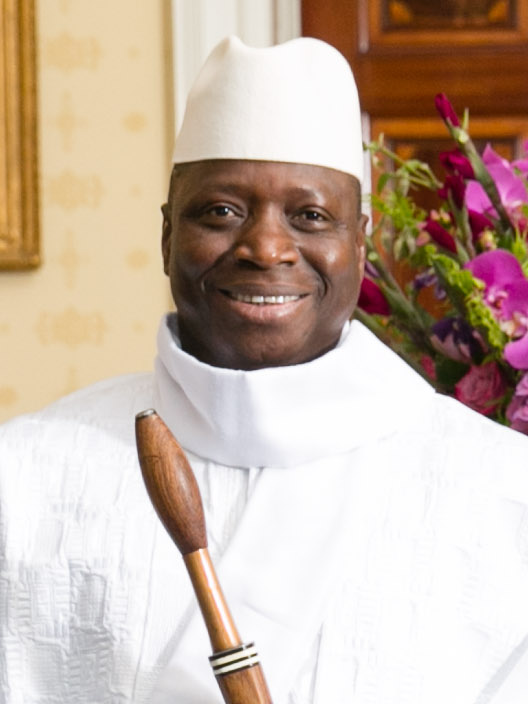
Now in a opinion piece of 3 July 2020 Gambian journalist Alhagie Mbye looks back on Yahya Jammeh’s Indemnity Bill that created so much damage:

As a journalist, I followed and covered the whole proceedings both at the ‘‘Commission’’ and outside of it. What was uncovered remained astonishing and shocking. Sadly, some of the ‘‘Commissioners’’ including some respected elites and religious leaders later promoted as heads of his Muslim Council and other lucrative posts remained deplorable and appalling indeed.

Most horrendous was that during the time, the APRC’s representative, refused to answer a single question from the press gallery. It was deliberate act of arrogance, deceit and deception on the part of both the Justice Minister and his boss. Both the local and international press were flabbergasted. The injustice by a Justice Minister will never be forgotten. 

Accordingly, the Coalition of Human Rights Defenders headed by Emmanuel Joof, were fuming. …The Coalition consisting of some of the best lawyers in the country maintained it was ‘‘unconstitutional and cannot be accepted in any civilised society’’.

The opposition parties also openly condemned it in its entirety prompting the National Assembly Members from the opposition side to walk out of the National Assembly in protest. It was a bold move during that crucial time.

...Observers and local human rights activists, including women groups warned that…”the indemnity Bill is untimely provocative, dangerous and unconstitutional”. They called it an ‘‘affront and violation of the county’s own Constitution that give right to citizens to express freely themselves’’. They jointly added that Gambian law ‘‘guarantees everyone to exercise his or her fundamental and basic human rights without interference’’. The international media groups and human rights bodies worldwide were alerted and some of them were absolutely furious but Yahya Jammeh as usual careless about such concerns…

The ambiguous and vague ‘‘Bill’’ also caused the unbelievably curtailing of the rights and freedoms of The Gambian press as well as opposition activities. It brazenly and blatantly downgraded the country’s reputation as well as the respect it earned since independent from Britain as a country of law, peace and stability.

As intended, the ‘‘Bill’’ resulted in several human rights violations with immunity including atrocities committed by reckless National Intelligent Agency (NIA) operatives and the so-called ‘jungler’ officers. Using the ‘‘Bill’’ as a protection and cover against violations, the regime was out to victimise and terrorise the population without any justification. As a result, many innocent citizens got hurt and humiliated. Several men and women maimed. Others lost their lives and livelihoods.

No doubt when I reported on it both in the local and international press, including the brutality of his men against law abiding and innocent citizens including poor farmers and peasants who were totally ignorant of his ‘‘Bill’’, Yahya Jammeh’s revenged was my arrest, detention in confinement at his notorious NIA headquarters in Banjul and brutally tortured me.

Thus, it is startling that today the same accused officers and officials with brutality are still trying to use the same ‘‘Bill’’ as umbrella to outsmart us in our modern courts. But accepting their arguments will be a travesty.

Recently a certain senior politician mocked that people are ‘‘angry’’. Clearly people are right to be angry until justice is seen to be done in favour of the victims of an indescribable and inexpressible human rights violation.

Yahya Jammeh’s ‘‘Indemnity Bill’’ was one of the darkest days of The Gambia. All those involved directly or indirectly should not only bow or hang their heads in shame but be brought to justice as soon as possible.

https://thepoint.gm/africa/gambia/opinion/journalist-alhagie-mbye-revisits-yahya-jammehs-indemnity-bill

see also: https://www.bbc.com/news/world-africa-51082371

Will long-running saga of trial against the Istanbul 10 end on Friday 3 July?

July 3, 2020

From the start, this has been a politically-motivated trial’Idil Eser© Amnesty International (Foto: Jordi Huisman)

The verdict in the trial of Amnesty Turkey’s chair, the organisation’s former Turkey director and nine other human rights defenders, is expected tomorrow. The key hearing will begin at 8.00am BST (10.00am local time) on Friday 3 July at Istanbul Heavy Penal Court, No 35.

Taner Kılıç, Idil Eser, Özlem Dalkıran, Günal Kurşun, Veli Acu, Nejat Taştan, Nalan Erkem, İlknur Üstün, Şeyhmus Özbekli, Ali Gharavi and Peter Steudtner are all on trial for baseless terrorism charges.

Over the course of 11 earlier hearings spread over nearly three years, ‘terrorism’ allegations against all 11 defendants have been repeatedly and categorically disproven, including – ironically – by the state’s own evidence. The prosecution’s attempt to present legitimate human rights activities as unlawful acts has comprehensively failed, said Amnesty. [see also: https://humanrightsdefenders.blog/2020/02/16/turkey-who-will-defend-the-human-rights-defenders/.]

In August 2018, after more than 14 months in prison, former Amnesty Turkey Chair Taner Kılıç was released on bail. Eight of the others spent almost four months each behind bars before they were released in October 2017.

At the tenth hearing in November 2019, the prosecutor requested acquittal for five of the 11, and convictions for the remaining six.

See: https://humanrightsdefenders.blog/2020/05/06/ali-gharavi-of-the-istanbul10-speaks-about-his-experience-and-his-hope/.

In the meantime, on 2 June 2020, the Council of Europe’s Commissioner for Human Rights spoke out on the independence of lawyers in Turkey: “I have taken note with concern of a bill recently submitted to the Turkish Parliament containing amendments to the Turkish Law No. 1136, which affect lawyers and their professional associations. The proposed changes would notably allow for a plurality of bar associations in provinces with large numbers of lawyers and modify the election procedures of bar associations and their Union. These changes raise particular concerns when seen against the background of the serious problems I identified in my latest report on Turkey published in February 2020. These problems include a hostile and repressive atmosphere affecting civil society in Turkey, of which professional associations, such as bar associations, are a very important part; the glaring lack of consultation and involvement of civil society in policy-making and legislation; and the very difficult situation, including undue judicial pressure, faced by lawyers in Turkey both as  human rights defenders and as a fundamental part of an increasingly hostile judicial system.

https://www.amnesty.org.uk/press-releases/turkey-verdict-expected-long-running-trial-amnesty-chair-and-ten-others

https://www.coe.int/en/web/commissioner/-/commissioner-s-concerns-about-proposed-changes-affecting-the-legal-profession-in-turkey

Even Costa Rica has serious problem with protection of indigenous defenders

July 1, 2020

On 8 June qcostarica.com reported that a UN expert expressed grave concern for the lives of indigenous human rights defenders being attacked in Costa Rica, saying that impunity and lack of accountability are fuelling a continuation of violence against defenders in the country despite some positive steps by the Government.

Costa Rica has experienced an upsurge in attacks on indigenous leaders since the March 2019 killing of indigenous Bribri leader Sergio Rojas, who worked for decades defending the rights of indigenous peoples against the illegal occupation of their territories. “Now, over 14 months later, it is still not clear whether the authorities are any closer to identifying the perpetrators,” said Mary Lawlor, the new Special Rapporteur on the situation of human rights defenders.

The expert said other attacks against human rights defenders had gone fully or partially unpunished, and “until there are proper investigations and accountability for these crimes, we may witness further intimidation, injury and death”.

A change in Costa Rican law in 1977 established a legal framework for the redistribution of ancestral indigenous land occupied by non-indigenous persons but the law’s implementation has been slow, and indigenous leaders have carried out peaceful requisitions of lands back to indigenous peoples. This has caused significant violent backlash from non-indigenous illegal land occupants.

While the Costa Rican Government has increased police presence in affected communities, police investigations have been inadequate or inconclusive. As a result, both the victims and their family members continue to be threatened by the suspected perpetrators.

Since the February killing of indigenous leader Yehry Rivera, for example, his family has been repeatedly threatened and intimidated by the family of the perpetrator, who regularly passes close to their land holding a machete.

Pablo Sibar, a human rights defender of the same Broran tribe as Rivera has also been intimidated and subjected to arson attacks that have still not been investigated. Minor Ortíz Delgado, an indigenous land defender from the same Bribri community as Rojas, was shot in the leg in March. The perpetrator, who was released and handed down restraining measures, has since sent death threats to Ortíz and his family.

The expert’s call has been endorsed by the UN’s Special Rapporteur on the rights of indigenous peoples, Francisco Cali Tzay.

The experts are in a dialogue with Costa Rican authorities and will continue to closely monitor the situation.

On 5 October 2020 came this: https://www.frontlinedefenders.org/en/statement-report/international-organisations-call-end-violence-and-impunity-against-indigenous-human

Swee also: https://humanrightsdefenders.blog/2019/05/22/misconceptions-about-indigenous-peoples-and-their-defenders-explained/

https://qcostarica.com/costa-rica-ongoing-impunity-prevents-effective-protection-of-indigenous-defenders-says-un-expert

Car bomb kills two human rights workers in Afghanistan

June 30, 2020

Two employees of Afghanistan’s human rights body were killed in a bomb attack in Kabul on Saturday, Agence France-Presse said on 27 June 2020.

The Afghanistan Independent Human Rights Commission said the pair died when a homemade ‘sticky bomb’ attached to their vehicle exploded in the morning. Kabul police spokesman Ferdaws Faramurz confirmed the attack, which has not been claimed by any group.

There can be no justification for attacks against human rights defenders,’ United Nations Assistance Mission in Afghanistan said on Twitter, calling for an immediate probe.

One of the victims was twenty-four-year-old Fatima Khalil, known as Natasha, was a shining example of young, progressive Afghanistan. Born a refugee in Quetta, Pakistan, she won a U.S. Embassy scholarship to study human rights at an American university in Kyrgyzstan. She spoke six languages, was a straight-A student, loved dancing and could have worked overseas like many educated Afghans to escape her country’s constant conflict, according to her family. Instead, she decided to move to Kabul last year to work as a donor coordinator for the Afghan Independent Human Rights Commission. https://news.trust.org/item/20200630144519-wd9kl/

It comes less than a week after two prosecutors and three other employees from the attorney general’s office were shot dead by gunmen on the outskirts of Kabul. On May 30, a television journalist was killed when a minibus carrying employees of private television channel Khurshid TV was hit by a roadside bomb in the city. That attack was claimed by the Islamic State group.

Violence had dropped across much of the country after the Taliban offered a brief ceasefire to mark the Eid al-Fitr festival last month, but officials say the insurgents have stepped up attacks in recent weeks.

http://www.businessworld.in/article/Two-staffers-of-human-rights-organisation-killed-in-Kabul/27-06-2020-291770/

https://www.newagebd.net/article/109619/bomb-kills-2-rights-workers-in-kabul

UN Experts Appalled by the Enforced Disappearance of Idris Khattak even though now re-appeared

June 30, 2020

UN experts no only jointly addressed three big countries [see: https://humanrightsdefenders.blog/2020/06/27/un-experts-address-3-big-ones-usa-china-and-india/] but on 30 june 2020 a group of experts also spoke out on the re-appearance of Idris Khattak, a human rights defender who went missing last year (https://humanrightsdefenders.blog/2019/11/25/how-human-rights-defender-idris-khattak-went-missing-in-pakistan/)

While welcoming of course the disclosure by the Pakistani Government of the whereabouts of Khattak, they strongly condemned his enforced disappearance. On 16 June 2020, the Pakistani authorities acknowledged for the first time that he has been in the custody of law enforcement authorities and detained incommunicado since then.

“The enforced disappearance of Mr. Khattak, which began over seven months ago, is an intolerable attack on his legitimate work of monitoring, documenting and advocating against a range of human rights and minority violations in the Khyber Pakhtunkhwa and the former Federally Administered Tribal Areas in Pakistan,” the independent experts said.

Even today, Mr. Khattak remains deprived of the most basic protections of the law, and his enforced disappearance subjected him and his family to severe and prolonged suffering, that could amount to torture,” the experts said. “Given the arbitrariness of Mr. Khattak’s arrest and detention, and the very serious violations of his integrity and procedural rights, we call on the Government of Pakistan to immediately release Mr. Khattak and to provide him and his family with adequate redress and rehabilitation,” said the experts..

The experts stressed that there can be no justification for the Government’s failure to end enforced disappearances and that any such violation must be investigated, prosecuted and punished.

Truth and justice must be served, both in the case of Idris Khattak and for countless other victims and their families in Pakistan. State-sponsored disappearances and related impunity may amount to a crime against humanity and must end now,” they said.

https://www.ohchr.org/EN/NewsEvents/Pages/DisplayNews.aspx?NewsID=26010&LangID=E

UN representative in South Korea sees balloon actions as freedom of expression

June 29, 2020

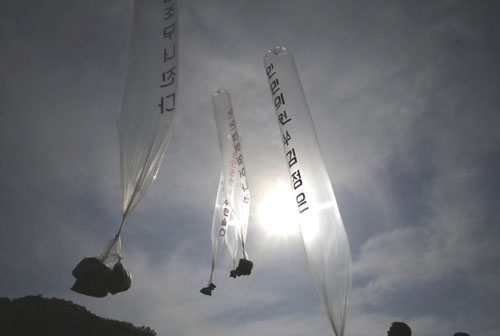
The World Tribune of 28 June 2020 reports on the fight sparked by North Korean defectors sending balloons with leaflets to their former homeland, which has brought both Koreas once again to the brink of war. Now Signe Poulsen, head of the Seoul office of the UN Office of High Commissioner for Human Rights, has stated that sending the leaflets is an exercise of the right to freedom of expression.

In this April 29, 2016 file photo, members of a South Korean civic group send leaflets denouncing the North Korean regime in Tanhyeon, Paju, near the North Korean border. / Korea Times photo by Choi Won-Suk

Both the North and South Korean governments have threatened the defectors in the South who have sought to counter communist “fake news” by sending real news North over the DMZ. The leaflets also often contain U.S. one-dollar bills and USB memory sticks meant to encourage North Koreans to pick up the leaflets.

Now the defectors have been targeted by hastily-passed legislation forbidding the practice. Poulsen made the remarks amid heightening tensions on the Korean Peninsula after the North threatened to retaliate against the South for what it called Seoul’s “connivance” at the floating of anti-Pyongyang materials in large balloons.

The government of South Korean President Moon Jae-In, sought to legislate a ban on leafleting and filed a criminal complaints against two defector groups who carry out such launches, the Korea Times reported on June 23. The provincial government of Gyeonggi, located near the border with the North and where a lot of leafleting takes places, issued an administrative order last week banning the entry into border areas to fly leaflets.

See also: https://humanrightsdefenders.blog/2015/04/21/the-interview-sequel-plays-at-the-korean-border/

and

https://en.wikipedia.org/wiki/Balloon_propaganda_campaigns_in_Korea

https://www.worldtribune.com/un-official-upholds-defectors-freedom-of-expression-under-attack-by-both-koreas/

Media oppression in India and elsewhere is a shifting landscape

June 29, 2020

In “Media oppression is a shifting landscape” by Sevanti Ninan (a media commentator and founder-editor of TheHoot.org) published on 29 June 2020 in the Indian Telegraph you wil find a good analysis of the problems of news gathering in the current situation. It is about India but the analysis would be valid for many countries.

Arms of the government see journalism (of all kinds) not as a useful source of feedback at a time when the population is in distress but as a nuisance to be squashed. Fake news is no longer seen only as an electronic menace but as reporting with malign intent, whether in Kashmir or elsewhere.
Arms of the government see journalism (of all kinds) not as a useful source of feedback at a time when the population is in distress but as a nuisance to be squashed. Fake news is no longer seen only as an electronic menace but as reporting with malign intent, whether in Kashmir or elsewhere. Pexels

For some years now, the growing challenge to journalism has come from the increasing use of predictable laws (think of sedition and criminal defamation in the Indian Penal Code)….but media oppression is a shifting landscape. Tracking its changing features is just the first challenge. While the onset of Covid-19 has led to the government putting hitherto under-used laws to work, such as the Disaster Management Act and the Epidemic Diseases Act, these have been used in tandem with Sections of the IPC to criminalize reporting of the government’s response to the pandemic as well of the outcomes of its handling, such as the migrant exodus. Panicky administrations across the country have, so far, used no less than 14 Sections of the IPC and Sections of the IT Act (including the one that was struck down), the DMA, the Unlawful Activities (Prevention) Act, the Motor Vehicles Act and the provisions of Scheduled Castes and Tribes (Prevention of Atrocities) Act to issue showcause notices, lodge first information reports against reporters and arrest, confine and torture them.

If newsgathering is being criminalized in some parts of the country, it is being policed in Jammu and Kashmir… it has been gifted a 50-page media policy, which makes the government the arbiter of fake news and mandates background checks of media owners and editors if they are to receive government advertising. Charming! Who knows what will follow elsewhere in the country.

Overall then, a convergence of factors is at work. Arms of the government see journalism (of all kinds) not as a useful source of feedback at a time when the population is in distress but as a nuisance to be squashed.

Electronically disseminated fake news, until now, was in the domain of technology. But when the charge is levelled at reporting on the ground in far-flung areas of the country, it enters the domain of physical fact-finding. Busting fake news with internet tools is one thing. Doing it for field reporting is quite another.…..

..What support structures can be put in place? The country has a Press Council, a Human Rights Commission and numerous courts. But it needs a growing network of human rights defenders, a galvanizing force created by an alliance of journalist organizations, concerned lawyers and civil society stalwarts to map a strategy for this canvas. The Press Council is selective in what it takes note of; one must also ask whether its censure changes anything on the ground.

So far, the response to a sustained assault on journalism has been statements issued by media bodies themselves. But journalists need allies at a time like this; solidarity within their own ranks is not enough to put pressure on the oppressors. Just as civil society has come together to keep alive a human rights campaign for the release of Gautam Navlakha, Sudha Bhardwaj and others in the Bhima Koregaon case, journalists, particularly the embattled, invisible ones the districts, now need ballast in their fight to keep up the pressure.

Precedents will be set if the misuse of laws goes unchallenged. District magistrates across states labelling reporting as fake news will be further emboldened without a pushback.

See also reent: https://humanrightsdefenders.blog/2020/06/27/un-experts-address-3-big-ones-usa-china-and-india/

https://www.telegraphindia.com/opinion/a-case-for-truth/cid/1784527