Author Archive

3 Women human rights defenders shortlisted for Václav Havel human rights award

January 11, 2021
Vaclav Havel banner above National Museum Prague, VitVit via Wikimedia Commons, CC BY-SA 4.0

This year’s Václav Havel Human Rights Award has shortlisted three female finalists, The panel nominated Saudi women’s rights defender Loujain al-Hathloul, a group of young Buddhist nuns from a monastery in Nepal and Julienne Lusenge, who documents cases of wartime sexual violence in the Congo.

The winner will be announced at the spring session of the Parliamentary Assembly of the Council of Europe on April 19. For more on this award see: https://www.trueheroesfilms.org/thedigest/award/7A8B4A4A-0521-AA58-2BF0-DD1B71A25C8D.

Al-Hathloul heads the opposition to the ban on women driving in Saudi Arabia. She has been imprisoned since 2018. [see https://humanrightsdefenders.blog/2020/12/29/loujain-al-hathloul-sentenced-to-over-5-years-prison-by-saudi-terror-court/]

The nuns from the monastery called Amitabha Drukpa constitute a group who promotes gender equality, environmental sustainability, and intercultural tolerance in the Himalayan villages. They gained fame by transporting material help to outlying villages after an earthquake near Kathmandu in 2015. They also teach women’s self-defense and they have biked over 20,000 kilometers in protest against trading in women and girls.

Lusenge is a human rights activist who documents cases of sexual abuse and violence against women in Congo. She has contributed to the conviction of hundreds of perpetrators of acts of sexual violence against women nationwide. She was often threatened for her work.

Michael Žantovský, director of the Václav Havel Library, said: “Last year, we dedicated the autumn Prague conference, which usually takes place on the occasion of the Václav Havel Prize, to women’s rights. We are glad that the jury followed a similar point.”.

https://www.expats.cz/czech-news/article/vaclav-havel-human-rights-prize-to-celebrate-international-female-activists

Five individuals now listed as foreign agents in Russia

January 11, 2021

On 8 January, 2021 RFE/RL’s Tatar-Bashkir Service reports on a worrying development in Russia: On 28 December, Russia said it had placed five people — three journalists who contribute to RFE/RL and two human rights activists — on the Justice Ministry’s registry of “foreign mass media performing the functions of a foreign agent.” Previously, only foreign-funded NGOs had been placed on the registry, in keeping with Russia’s passage of its controversial “foreign agents law” in 2012. The law was later expanded to include media outlets and independent journalists [SEE: https://humanrightsdefenders.blog/2019/11/19/russias-foreign-agents-bill-goes-in-overdrive/]

The three listed individuals affiliated with RFE/RL are Lyudmila Stavitskaya and Sergei Markelov, freelance correspondents for the North Desk of RFE/RL’s Russian Service; and Denis Kamalyagin, editor in chief of the online news site Pskov Province and a contributor to RFE/RL’s Russian Service.

Prominent human rights activist Lev Ponomaryov [see: https://humanrightsdefenders.blog/2013/06/25/russian-ngo-for-human-rights-forcibly-evicted-from-offices/]was also named to the registry, as was activist and Red Cross worker Daria Apakhonchich.

On December 29, the ministry expanded the list again, adding the Nasiliu.net human rights center, which deals with domestic violence cases. The additions bring the total number of individuals or entities listed to 18, the majority of them affiliated with RFE/RL.

Two international rights organisations have expressed concerns:

The UN Human Rights Office regrets the inclusion of the five individuals in the foreign agents list, which targets human rights defenders and journalists and appears to be aimed at limiting their freedom of expression and speech,” Liz Throssell, a spokeswoman for the UN Human Rights Office, said in a comment to RFE/RL on January 8.

The Office of the OSCE Representative on Freedom of the Media added in a separate comment that the move “narrows the space for freedom of expression, freedom of the media, and free flow of information in the Russian Federation.

The Justice Ministry did not explain on what grounds it included the recent additions of the five individuals and one entity to the registry.

In 2017, Human Rights Watch, a U.S.-based rights group, called the law “devastating” for local NGOs, saying more than a dozen had been forced to close their doors.

RFE/RL has said it is “reprehensible” that professional journalists were among the first individuals singled out by Russia as “foreign agents.”

The Council of Europe also has expressed concerns over situation, saying that the foreign agent law in general — “stifles the development of civil society and freedom of expression.”

https://www.rferl.org/a/russia-foreign-agents-list-united-nations-regrets/31038877.html

New low in Saudi sports washing: FIFA leader stars in Saudi PR video

January 11, 2021

By Rob Harris on actionnewsjax of 8 January 2021 reports on Amnesty International denouncing FIFA President Gianni Infantino’s for appearing in a promotional video for the Saudi Arabian government in which he claims the kingdom has made important changes. The slick 3½-minute PR campaign was posted on Twitter by the Saudi ministry of sport on Thursday, featuring Infantino participating in a ceremonial sword dance and sweeping shots of the palaces of Diriyah.

“It’s an amazing scenery, it’s an incredible history,” Infantino says in part. “This is something that the world should come and see. The video, which also features Infantino praising how “a lot has changed” in Saudi Arabia, was filmed while on a trip that saw him meet with the crown prince,

“It should be abundantly clear to everyone at FIFA that Saudi Arabia is attempting to use the glamour and prestige of sport as a PR tool to distract from its abysmal human rights record,” Amnesty International said in a statement to The Associated Press.

FIFA did not say if Infantino challenged Prince Mohammed on human rights issues in Saudi, given the governing body’s own code.

It’s worrying that Gianni Infantino has apparently endorsed a video where he hails the ‘greatness’ of Saudi Arabia but says nothing about its cruel crackdown on human rights defenders,” Amnesty said, “including people like Loujain al-Hathloul, who was given a jail sentence only days ago.”[see: https://humanrightsdefenders.blog/2020/12/29/loujain-al-hathloul-sentenced-to-over-5-years-prison-by-saudi-terror-court/]

We would urge Mr. Infantino to clarify the circumstances of his appearance in this video and to make a statement expressing support for jailed women’s human rights defenders like Loujain al-Hathloul,” Amnesty said. [https://humanrightsdefenders.blog/2020/11/06/loujain-al-hathloul-and-her-health-singled-out-by-cedaw/]

Scrutiny over Infantino’s links to Saudi Arabia in 2018 led to FIFA offering assurances that no nation would be allowed to fund its plans for new competitions. That followed a global uproar that saw Western businesses turn away from the crown prince and the sovereign wealth fund following outcry over Saudi writer Jamal Khashoggi’s slaying and dismemberment by government agents inside the kingdom’s consulate in Turkey.

FIFA said Infantino used his meetings to discuss how football can be a “vector of core social values, such as inclusion, solidarity and tolerance.” Amnesty did welcome Infantino’s support for women’s football in Saudi Arabia.

https://www.actionnewsjax.com/sports/amnesty-critical/X3PX62NHAFLLYABC7GA3BHZF7Q/

Palestinian human rights defender Amro Issa convicted for speaking out

January 7, 2021

On Wednesday morning 6 January 2021 an Israeli military court convicted Palestinian Human Rights Defender Issa Amro for peacefully protesting and civil disobedience. The Israeli military judge announced the verdict in a hearing attended by representatives of British, European, EU and Canadian consulates. Amnesty International issued a statement calling to drop all the “politically motivated” charges.

Today Israel announced that Palestinians are not allowed to peacefully protest the Israeli occupation without a permit from the occupier,” Amro stated. “This conviction is the military system against the Palestinian nonviolent resistance. It aims to suppress my voice and end all activism against the Israeli occupation.” Amro’s Israeli lawyer Gaby Lasky added that “The military court is just an organ of occupation. The [indictment for nonviolent protest] is an example of how the courts are used in order to deter the important voices of human rights defenders.”

Amro is a founder of the Youth Against Settlements group in Hebron, which organises non-violent activism against the illegal Israeli settlements in Hebron and the discriminatory restrictions placed on Palestinians by the Israeli authorities in the city. Amro first appeared in an Israeli military court in 2016 on 18 charges, ranging from “insulting a soldier” to “participating in a march without a permit”. Some of the charges dated back to 2010.

The indictment, first presented in 2016, included 18 charges related to Amro’s community organizing deemed “baseless,” “politically motivated” or “physically impossible” by Amnesty. The military judge convicted Amro on six counts: three counts of “participating in a rally without a permit,” two counts of “obstructing a soldier,” and one count of “assault.” These surround Amro’s participation in the peaceful “Open Shuhada Street” demonstration in 2016; Amro’s participation in the nonviolent “I Have a Dream” demonstration from 2013 in which participants wore masks of Obama and Martin Luther King; one count of obstruction relates to a nonviolent sit-in protest in 2012 calling to re-open the old Hebron municipality building; one count of “assault” by “shoving someone” related to a previously-closed case from 2010, an incident for which the indictment had included an obstruction charge (acquitted) for Amro yelling “I am being assaulted” in the Israeli police station prior to Amro being carried out to an ambulance on a stretcher.

In 2019, UN Special Rapporteurs called for Amro’s protection and expressed “concern” over the charges. In 2017[see: https://humanrightsdefenders.blog/2019/04/11/un-rapporteurs-intervene-again-for-palestinian-human-rights-defender-issa-amro/]; thirty-five U.S. House Representatives and four Senators including Bernie Sanders sent letters highlighting that some charges were not internationally recognizable offenses and that Amnesty would consider Amro a “prisoner of conscience” if convicted. Issa Amro is the co-founder and former coordinator of the Hebron-based Youth Against Settlements initiative. In 2010, he was declared “Human Rights Defender of the year in Palestine” by the UN OHCHR and he is formally recognized by the European Union. He won the One World Media Award in 2009 for his involvement in B’Tselem’s camera distribution project. He was a guest of the U.S. State Department in 2011 and has spoken at the UN Human Rights Council on numerous occasions. The sentencing is scheduled for 8 February.

See also: https://humanrightsdefenders.blog/2016/12/21/palestinian-human-rights-defenders-continue-to-be-persecuted/

Saleh Higazi, Amnesty International’s Middle East and North Africa Deputy Director, said: “The Israeli authorities must end their campaign of persecution against Palestinian activist Issa Amro, who is a prominent voice against Israel’s regime of discrimination and systematic human rights violations against Palestinians in the Occupied Palestinian Territories, particularly in Hebron.”

https://www.scoop.co.nz/stories/WO2101/S00025/israeli-military-court-convicts-un-recognized-palestinian-human-rights-defender-for-protesting-without-a-permit.htm

http://www.ekklesia.co.uk/node/30290

https://www.amnesty.org.uk/

https://mailchi.mp/3fff66fe2a8b/military-court-convicts-human-rights-defender-issa-amro?e=51113b9c0e

Crackdown habit now extends to Hong Kong

January 7, 2021

For those who thought that the new National Security Law (NSL) in Hong Kong would not be used so harshly or quickly, the latest salvo against the pro-democracy movement in Hong Kong is a rude wake up call: more than 50 people were arrested in the early hours of Wednesday 6 January 2021. Pro-democracy politicians and campaigners had their homes raided before being detained in an unprecedented crackdown. On 6 January 2021 Seth Farsides for the International Observatory for Human Rights described the scene:

In total, 53 individuals were detained on 6 January 2021 under provisions of the National Security Law (NSL), which was imposed on Hong Kong by the Chinese mainland in June 2020. The individuals stand accused of “subverting state power”, following a number of primaries being conducted for pro-democracy candidates ahead of the delayed Hong Kong election which had been due to take place in September 2020.

Today’s raids further demonstrate Carrie Lam’s willingness to stifle opposition movements and deny the people of Hong Kong a free and fair election. More than 1,000 officers were involved in an operation that “look[ed] more like a purge than law enforcement” according to Tom Cheshire, Asia correspondent for Sky news.

Among those arrested were several former lawmakers and district councillors, organiser of the primaries Benny Tai and American lawyer John Clancey and Robert Chung who provided the technology that carried out the poll through the Hong Kong Public Opinion Research Institute, of which he is the executive director.

It was reported that Joshua Wong was also raided by police, according to his Twitter account, while newspapers Apple Daily and the Stand were visited by police seeking contact information of primary candidates. {see also: https://humanrightsdefenders.blog/2020/12/10/albert-ho-wins-baldwin-medal-2020/]

Many of those arrested managed to livestream the events, with at least one capturing footage of authorities confirming their arrest was linked to participating in primary polling. Pro-Democrats had been aiming to win 35 seats in the upcoming election, a majority in the 70 seat LegCo.

Valerie Peay, Director of the International Observatory of Human Rights and past Hong Kong resident voiced her outrage at the move, saying:

At what point of this travesty will the UK Government hold China accountable for not only dismantling all protections put in place to protect the rights of the Hong Kong people but corrupting all sense of the rule of law? Almost all of the people arrested today were born in Hong Kong pre 1997 under British freedoms. Do their lives count for so little that we will not lift a finger to protect them now less than 24 years later?

In practice, this means that acts considered commonplace in western democracies – such as standing in elections – can now be punished in the once semi-autonomous city. Amnesty International’s Asia-Pacific Regional Director Yamini Mishra said:

Charging dozens of pro-democracy lawmakers and activists with ‘subversion’, just because they held their own informal primary contest, is a blatant attack on their rights to peaceful expression and association. People have a legitimate right to take part in public affairs. Political opposition should not be silenced just because the authorities don’t like it.

This is not the first crackdown under the NSL – although it is the most extensive single operation. In December 2020, the owner of Hong Kong tabloid Apple Daily, Jimmy Lai was charged with violating the law and Tony Chung, a teenage activist, was found guilty under the law for defiling a Chinese flag….For Jimmy Lai, see later: https://www.independent.co.uk/asia/china/hong-kong-jimmy-lai-un-apple-daily-b2055452.html

Between China’s election in October and taking its seat on the Human Rights Council on 1 January 2021, IOHR tracked over 100 human rights abuses, not including the ongoing daily abuse of the Uyghur Muslims. Within this, 17 abuses directly related to China’s actions in Hong Kong, including: The arbitrary detention of Hong Kong residents, establishment of a ‘snitching hotline’ incentivising residents to report violations of the NSL, requiring lawmakers to pass a ‘patriotism’ test, and the detention of three opposition lawmakers.

A slither of hope for those detained today might manifest in Hong Kong’s courtrooms. So far, Hong Kong’s courts have dismissed many of the charges brought against protesters under former laws and Hong Kong’s, albeit outgoing, chief justice has reaffirmed the courts commitment to the rule of law.

Worryingly, the NSL provides for the possibility of trials on the Chinese mainland and China’s Hong Kong and Macau Affairs Office has also lobbied for the need for “”judicial reform” in Hong Kong itself.

See also: https://humanrightsdefenders.blog/2020/12/18/chinas-continuing-crackdown-on-human-rights-lawyers-shocking-say-un-experts/

https://observatoryihr.org/news/unprecedented-crackdown-sees-more-than-50-of-hong-kongs-pro-democracy-movement-arrested/

https://mailchi.mp/hrf.org/last-chance-to-support-hrf-in-287987?e=f80cec329e

China-EU deal – what about human rights?

January 6, 2021

A long-awaited deal, the Comprehensive Agreement on Investment includes provisions for settling disputes and outlines clear rules against the forced transfer of technologies — a practice in which a government requires foreign investors to share their technology in exchange for market access.

The EU previously said the agreement should increase the transparency of Chinese state subsidies and make sustainable development a key element of the relationship between the two trading blocs.

China’s Ministry of Commerce said “both sides had made tremendous efforts” at a press conference following Wednesday’s meeting and that they had “overcome difficulties” to conclude talks. It said the deal focuses on institutional opening up with market access as the key principle of the deal, which will mean more investment opportunities for businesses on both sides and “a better business environment”.

But the EU expressed concerns about “the restrictions on freedom of expression, on access to information, and intimidation and surveillance of journalists, as well as detentions, trials and sentencing of human rights defenders, lawyers, and intellectuals in China.” The EU’s diplomatic agency, the European External Action Service, has called for the immediate release of Zhang Zhan, a former lawyer who reported on the early stage of the coronavirus outbreak in China and has been sentenced to four years in prison.

The issue of human rights could prove to be a sticking point for the deal clearing the EU Parliament, with critics drawing attention to reports of forced labour in some regions of China.

The stories coming out of Xinjiang are pure horror. The story in Brussels is we’re ready to sign an investment treaty with China,” Guy Verhofstadt, a Belgian MEP for Renew Europe, said on Twitter. “Under these circumstances, any Chinese signature on human rights is not worth the paper it is written on”.

There could also be friction with the new US President-elect Joe Biden and his administration, as just weeks ago the EU proposed a trans-Atlantic dialogue to address “the strategic challenge presented by China’s growing international assertiveness.”

Amid concerns about the human rights situation in China, the EU said the seven-year-long negotiations were concluded in “principle” during a video conference involving Mr Xi, European Commission president Ursula von der Leyen and EU Council president Charles Michel. German chancellor Angela Merkel – whose country holds the rotating presidency of the EU – and French president Emmanuel Macron also took part in the discussions with the Chinese president, the EU said. Macron highlighted the “concerns” of EU countries regarding human rights and called for the “closure of internment camps”, according to the speech given by his office. He also pleaded in favor of “measures to ban forced labor” and called for “a visit of independent United Nations experts”.

According to the EU, the deal was negotiated after China pledged to continue ratifying the International Labor Organization’s rules on forced labor. “We are open for business but we are attached to reciprocity, level playing field and values,” Ms von der Leyen said.

French president Emmanuel Macron attends an EU-China video conference along with Chinese president Xi Jinping, German chancellor Angela Merkel, European Commission president Ursula von der Leyen and president of the European Council Charles Michel, at the Fort de Bregancon in Bormes-les-Mimosas, southern France
French president Emmanuel Macron attends an EU-China video conference at the Fort de Bregancon in Bormes-les-Mimosas, southern France (Sebastien Nogier, Pool via AP)

The video conference launches a ratification process that will take several months. To enter into force, the agreement will need to be ratified by the European Parliament, and the issue of human rights could be a sticking point.

https://www.chesterstandard.co.uk/news/national-news/18976931.leaders-eu-china-seal-long-awaited-investment-deal/

https://www.euronews.com/2020/12/30/eu-and-china-set-to-sign-historic-investment-deal-but-could-human-rights-concerns-scupper-

What to do about global spyware abuse?

January 6, 2021

Mohamed EL Bashir, a Public Policy & Internet Governance Strategist, wrote a lengthy but informative piece about the persistent problem of commercial spyware Abuse: “Reshaping Cyberspace: Beyond the Emerging Online Mercenaries and the Aftermath of SolarWinds“, in CircleID 5 January 2021.

The piece starts of with some concrete cases such as Ahmed Mansoor [see https://humanrightsdefenders.blog/2016/08/29/apple-tackles-iphone-one-tap-spyware-flaws-after-mea-laureate-discovers-hacking-attempt/] and Rafael Cabrera, [see: https://www.nytimes.com/2017/06/21/world/americas/mexico-pena-nieto-spying-hacking-surveillance.html]. In 2018, a close confidant of Jamal Khashoggi was targeted in Canada by a fake package notification, resulting in the infection of his iPhone.

..Citizen Lab has tracked and documented more than two dozen cases using similar intrusion and spyware techniques. We don’t know the number of victims or their stories, as not all vectors are publicly known. Once spyware is implanted, it provides a command and control (C&C) server with regular, scheduled updates designed to avoid extensive bandwidth consumption. Those tools are created to be stealthy and evade forensic analysis, avoid detection by antivirus software, and can be deactivated and removed by operators.

Once successfully implanted on a victim’s phone using an exploit chain like the Trident, spyware can actively record or passively gather a variety of different data about the device. By providing full access to the phone’s files, messages, microphone, and video camera, the operator can turn the device into a silent digital spy in the target’s pocket.

These attacks and many others that are unreported show that spyware tools and the intrusion business have a significant abuse potential and that bad actors or governments can’t resist the temptation to use such tools against political opponents, journalists, and human rights defenders. Due to the lack of operational due-diligence of spyware companies, these companies don’t consider the impact of the use of their tools on the civilian population nor comply with human rights policies. [see: https://humanrightsdefenders.blog/2020/07/20/the-ups-and-downs-in-sueing-the-nso-group/]

The growing privatization of cybersecurity attacks arises through a new generation of private companies, aka online mercenaries. This phenomenon has reached the point where it has acquired its own acronym, PSOAs, for the private sector offensive actors. This harmful industry is quickly growing to become a multi-billion dollar global technology market. These newly emerging companies provide nation-states and bad actors the option to buy the tools necessary for launching sophisticated cyberattacks. This adds another significant element to the cybersecurity threat landscape.

These companies claim that they have strict controls over how their spyware is sold and used and have robust company oversight mechanisms to prevent abuse. However, the media and security research groups have consistently presented a different and more troubling picture of abuse…

The growing abuse of surveillance technology by authoritarian regimes with poor human rights records is becoming a disturbing new, globally emerging trend. The use of these harmful tools has drawn attention to how the availability and abuse of highly intrusive surveillance technology shrink already limited cyberspace in which vulnerable people can express their views without facing repercussions such as imprisonment, torture, or killing.

Solving this global problem will not be easy nor simple and will require a strong coalition of multi-stakeholders, including governments, civil society, and the private sector, to reign in what is now a “Wild West” of unmitigated abuse in cyberspace. With powerful surveillance and intrusion technology roaming free without restrictions, there is nowhere to hide, and no one will be safe from those who wish to cause harm online or offline. Not acting urgently by banning or restricting the use of these tools will threaten democracy, rule of law, and human rights worldwide.

On December 7, 2020, the US National Security Agency issued a cybersecurity advisory warning that “Russian State-sponsored actors” were exploiting a vulnerability in the digital workspace software developed by VMware (VMware®1Access and VMware Identity Manager2 products) using compromised credentials.

The next day, on December 8, the cybersecurity firm FireEye announced the theft of its “Red Team” tools that it uses to identify vulnerabilities in its customers’ systems. Several prominent media organizations reported an ongoing software supply-chain attack against SolarWinds, the company whose products are used by over 300,000 corporate and government customers — including most of the Fortune 500 companies, Los Alamos National Laboratory (which has nuclear weapons responsibilities), and Boeing.

A malware called SUNBURST infected SolarWind’s customers’ systems when they updated the company’s Orion software.

On December 30, 2020, Reuters reported that the hacking group behind the SolarWinds compromise was able to break into Microsoft Corp and access some of its source code. This new development sent a worrying signal about the cyberattack’s ambition and intentions.

Microsoft president Brad Smith said the cyber assault was effectively an attack on the US, its government, and other critical institutions, and demonstrated how dangerous the cyberspace landscape had become.

Based on telemetry gathered from Microsoft’s Defender antivirus software, Smith said the nature of the attack and the breadth of the supply chain vulnerability was very clear to see. He said Microsoft has now identified at least 40 of its customers that the group targeted and compromised, most of which are understood to be based in the US, but Microsoft’s work has also uncovered victims in Belgium, Canada, Israel, Mexico, Spain, the UAE, and the UK, including government agencies, NGOs, and cybersecurity and technology firms.

Although the ongoing operation appears to be for intelligence gathering, no reported damage has resulted from the attacks until the publishing date of this article. This is not “espionage as usual.” It created a serious technological vulnerability in the supply chain. It has also shaken the trust and reliability of the world’s most advanced critical infrastructure to advance one nation’s intelligence agency.

As expected, the Kremlin has denied any role in recent cyberattacks on the United States. President Vladimir Putin’s spokesman Dmitry Peskov said the American accusations that Russia was behind a major security breach lacked evidence. The Russian denial raised the question of a gap of accountability in attributing cyberspace attacks to a nation-state or specific actor. Determining who is to blame in a cyberattack is a significant challenge, as cyberspace is intrinsically different from the kinetic one. There is no physical activity to observe, and technological advancements have allowed perpetrators to be harder to track and to remain seemingly anonymous when conducting the attack (Brantly, 2016).

To achieve a legitimate attribution, it is not enough to identify the suspects, i.e., the actual persons involved in the cyberattacks but also be able to determine if the cyberattacks had a motive which can be political or economic and whether the actors were supported by a government or a non-state actor, with enough evidence to support diplomatic, military, or legal options.

A recognized attribution can enhance accountability in cyberspace and deter bad actors from launching cyberattacks, especially on civilian infrastructures like transportation systems, hospitals, power grids, schools, and civil society organizations.

According to the United Nation’s responsibility of States for Internationally Wrongful Acts article 2, to constitute an “internationally wrongful act,” a cyber operation generally must be 1) attributable to a state and 2) breach an obligation owed another state. It is also unfortunate that state-sponsored cyberattacks violate international law principles of necessity and proportionality.

Governments need to consider a multi-stakeholder approach to help resolve the accountability gap in cyberspace. Some states continue to believe that ensuring international security and stability in cyberspace or cyberpeace is exclusively the responsibility of states. In practice, cyberspace is designed, deployed, and managed primarily by non-state actors, like tech companies, Internet Service Providers (ISPs), standards organizations, and research institutions. It is important to engage them in efforts to ensure the stability of cyberspace.

I will name two examples of multi-stakeholder initiatives to secure cyberspace: the Global Commission on the Stability of Cyberspace (GCSC), which consisted of 28 commissioners from 16 countries, including government officials, has developed principles and norms that can be adopted by states to ensure stable and secure cyberspace. For example, it requested states and non-state actors to not pursue, support, or allow cyber operations intended to disrupt the technical infrastructure essential to elections, referenda, or plebiscites.

Cyberpeace Institute is a newly established global NGO that was one-year-old in December 2020 but has the important goal of protecting the most vulnerable and achieve peace and justice in cyberspace. The institute started its operations by focusing on the healthcare industry, which was under attack daily during the COVID 19 pandemic. As those cyberattacks were a direct threat to human life, the institute called upon governments to stop cyber operations against medical facilities and protect healthcare.

I believe that there is an opportunity for the states to forge agreements to curb cyberattacks on civilian and private sector infrastructure and to define what those boundaries and redlines should be.

SolarWinds and the recent attacks on healthcare facilities are important milestones as they offer a live example of the paramount risks associated with a completely unchecked and unregulated cyberspace environment. But it will only prove to be a moment of true and more fundamental reckoning if many of us, governments, and different multi-stakeholders played a part, each in their respective roles, in capitalizing and focusing on those recent events by forcing legal, technological, and institutional reform and real change in cyberspace.

The effects of the Solarwinds attack will not only impact US government agencies but businesses and civilians that are currently less secure online. Bad actors are becoming more aggressive, bold, reckless and continue to cross the red lines we considered as norms in cyberspace.

Vulnerable civilians are the targets of the intrusion tools and spyware in a new cyberspace wild west landscape. Clearly, additional legal and regulatory scrutiny is required of private-sector offensive actors or PSOAs. If PSOA companies are unwilling to recognize the role that their products play in undermining human rights or address these urgent concerns, then, in this case, intervention by governments and other stakeholders is needed. 

We no longer have the privilege of ignoring the growing impact of cyberattacks on international law, geopolitics, and civilians. We need a strong and global cybersecurity response. What is required is a multi-stakeholders’ courageous agenda that redefines historical assumptions and biases about the possibility of establishing new laws and norms that can govern cyberspace.

Changes and reforms are achievable if there is will. The Snowden revelations and the outcry that followed resulted not only in massive changes to the domestic regulation of US foreign intelligence, but they also shaped changes at the European Court of Human Rights, the Court of Justice of the European Union, and the UN. The Human Rights Committee also helped spur the creation of a new UN Special Rapporteur on the Right to Privacy based in Geneva.

The new cyberspace laws, rules, and norms require a multi-stakeholder dialogue process that involves participants from tech companies, academia, civil society, and international law in global discussions that can be facilitated by governments or supported by a specialized international intergovernmental organization.

Sources and References:

http://www.circleid.com/posts/20210105-reshaping-cyberspace-beyond-the-emerging-online-mercenaries/

Turkey: Our hearts remain in prison again this new year

January 4, 2021

On 2 January 2021 Nurcan Baysal – the winner of the 2018 Front line award [see: https://humanrightsdefenders.blog/2018/05/18/breaking-news-five-front-line-award-winners-2018-announced/] wrote a moving piece in Ahval about her friends and colleagues who are forced to spend their New Year in prison:

“OK,” I say to the children, “We are all overwhelmed in these corona days. Let’s decorate the house, the new year is coming. Down with the corona and with 2020. Let’s enter 2021 with hope. Come on, let’s make popcorn.” While I make the popcorn, I think of my dear friend Osman Kavala, who remains in prison.

I think back to an afternoon when a few human rights defenders had gathered. Whose turn was it to host us that day? “It’s me,” said Şeyhmus. “I’ll even buy you coffee.” Şeyhmus Gökalp, member of the Turkish Medical Association’s honorary board, is now in prison.

I know a walk would do me good. I go outside to get some air. I pick up pace as Leonarda Cohen sings – “Dance with me…” It’s cold outside, but the sun is shining, and I enjoy the birds on trees. I look at the beautiful sky.

I think of novelist Ahmet Altan’s second book written in prison, where he said he would never see the sky without prison walls. The very sky devastates me.

I walk through Diyarbakır’s Bağlar district. Gentrification will begin here soon. I walk up to the building that used to host Kardelen Women’s Centre. I think back to the early 2000s, and the enthusiastic inauguration of Kardelen – literally translates to English as “snow piercer,” refers to the flower snowdrop.

After the opening, we grab a bite in a corner with the then-mayor of Diyarbakır, Gültan Kışanak, and Çağlar, a young employee of the centre. We look at the endless row of coffeehouses that have put their tables on the sidewalk, making it harder for women to walk down that street. “We will change this male-dominated mentality,” Kışanak says proudly. Çağlar is also hopeful for the future.

Both Kışanak and Çağlar Demirel are now in prison.

What should I cook tonight? I open a jar of canned vegetables I prepared with my loving mother. I’ll sauté them, and make some rice on the side.

“Mum, should we put out pickles too?” asks my son. Let’s do it. My pickles have been good this year. I open the lid and I pop one in my mouth.

Nedim wrote in a letter that he liked pickles. Journalist Nedim Türfent and dozens more are in prison.

I go to Diyarbakır’s Sur district. I go in and out of the streets of my hometown, which get stranger every day. Ruins on one street, upscale cafés on the next. A Starbucks a few yards from abject poverty and hunger.

Along the Hevsel Gardens a nice walking path has been put up. I find myself thinking about whose dream that was. “There will be days when we will walk along the Tigris,” says Selçuk.

Selçuk Mızraklı, elected co-mayor of Diyarbakır, will not be able to see his beloved hometown for 9 years, 4 months and 15 days, he is in prison.

With the coronavirus… I feel like I’ve been home for years. The feeling of being trapped and its friend despair surround me. I feel like I haven’t been able to breathe for a long time. I make coffee and go out to the yard. I look at the sky, the stars. I remember my childhood, us sleeping on the roof under the stars, how much hope we had.

Meanwhile, the former leader of the Peoples’ Democratic Party (HDP) Selahattin Demirtaş whispers something from his prison cell.

“When you lose hope, look up at the sky, the stars are still there.”

May 2021 bring good health, but also bring back our loved ones. Let it bring freedom to thousands of people who are imprisoned unlawfully. Let this new year bring us hope, and hope for my hometown that has been destroyed.

https://ahvalnews.com/turkey-kurds/our-hearts-remain-prison-again-new-year

Post Brexit trade deals risk to leave human rights out

January 4, 2021

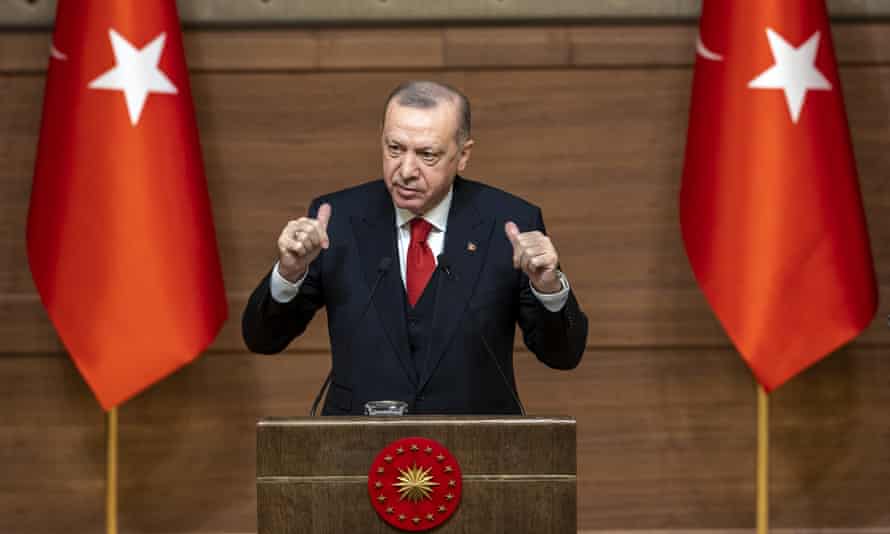
Simon Tisdall – in a strongly-worded opinion piece in the Guardian of 3 January 2021 entitled “‘Global Britain’ is willing to trade away everything. Including scruples” – attacks the UK’s new deal with Turkey which ignores its appalling human rights abuses and should have been scrutinised by parliament

Simon Tisdall
Turkish President Recep Tayyip Erdogan

Turkey’s ‘strongman’ president Recep Tayyip Erdoğan has hailed the trade deal with Britain as the start of a ‘new era’. Photograph: Anadolu Agency/Getty Images Sun 3 Jan 2021 07.00 GMT

The UK’s new trade agreement with Turkey, signed last week, ignores the Turkish government’s continuing human rights abuses, boosts its dangerous president, and undermines ministerial pledges that “global Britain” will uphold international laws and values. The deal took effect on 1 January without even rudimentary parliamentary scrutiny. Here, stripped of lies and bombast, is the dawning reality of Boris Johnson’s scruple-free post-Brexit world.

Recep Tayyip Erdoğan, Turkey’s “strongman” leader, is pleased as punch. He’s the new, biggest fan of Britain’s international trade secretary, Liz Truss, whose shabby work this is. Erdoğan hailed the deal as the start of a “new era” and a landmark for Turkey. After years of disastrous economic mismanagement and fierce rows with the US and EU over Turkish policy towards Russia, Syria, Libya, Greece and Cyprus, Erdoğan badly needed a win. Hapless Truss delivered….

This rushed deal rides roughshod over widely shared human rights concerns. It may be naive to think that the agreement, which replicates existing EU-Turkey arrangements, would allow matters of principle to imperil £18.6bn in two-way trade. Yet Britain is Turkey’s second-largest export market. Ankara was desperate to maintain tariff-free access. This gave Johnson and Truss leverage. It was a sovereign moment. But they failed to demand that Erdoğan change his ways.

…Selahattin Demirtaş, former leader of the pro-Kurdish Peoples’ Democratic party, languishes in jail despite an order to free him – from the European court of human rights.

Alive to these and similar problems relating to other post-Brexit trade partners, the House of Lords amended the government’s Trade Bill last month to require human rights risk assessments when making agreements – to ensure compliance with the UK’s international treaties and obligations. But the government is expected to scrap the amendment when the bill returns to the Commons. The Turkey deal contains no such safeguards.

[see also: https://humanrightsdefenders.blog/2020/02/13/uks-human-rights-policy-after-brexit/]

In its scramble to replace lapsed EU arrangements, Johnson’s government has so far “rolled over” about 30 existing trade deals. Like the Turkey deal, they have not faced thorough parliamentary scrutiny. The list includes other countries or entities with contentious human rights records, such as Egypt, Tunisia, Israel and the Palestinian Authority. Bilateral deals with notorious rights abusers such as China and Saudi Arabia have not been attempted – yet…

This lucrative business, or the prospect of losing it, may help explain the haste in finalising the Turkey deal. Yet the fact that Erdoğan stands accused of using British-made equipment and technology to repress domestic opponents, attack Syria’s Kurds, intervene in Libya’s civil war, and stoke the Azerbaijan-Armenia conflict should have given serious pause. These actions run contrary to British interests, as does Erdoğan’s trouble-making in the eastern Mediterranean. Yet Johnson’s government, ever mindful of its Brexit needs, has kept its head down.

Full and timely parliamentary scrutiny of post-Brexit trade deals would help bring such omissions and contradictions to light – but is sadly lacking, as Emily Thornberry, Labour’s shadow trade secretary, said in November. She accused the government of “sheer bumbling incompetence” after Greg Hands, the trade minister, admitted there was not enough time for MPs to scrutinise trade deals before the 31 December deadline. So much for a sovereign parliament “taking back control” of Britain’s destiny and laws.

The Turkey deal illustrates a bigger, fundamental hypocrisy. Extolling a future “global Britain” in 2019, foreign secretary Dominic Raab promised that “once we’ve left the EU … human rights abusers anywhere in the world will face consequences for their actions”. In January 2020, Raab assured the Commons that “a truly global Britain is about more than just international trade and investment … Global Britain is also about continuing to uphold our values of liberal democracy and our heartfelt commitment to the international rule of law.”

Raab seems to mean well, but ne’er-do-wells such as Erdoğan are laughing fit to burst. Raab’s recent imposition of sanctions on individual rights abusers in Russia, Saudi Arabia and elsewhere does not affect the bigger picture. It is of a British government hellbent on cutting hasty, ill-considered deals with all manner of undesirable customers around the world, without proper regard for the political, legal, strategic and human consequences. And to think Tory aristocrats used to look down on trade.

https://www.theguardian.com/commentisfree/2021/jan/03/global-britain-is-willing-to-trade-away-everything-including-scruples

New Year, New Charges against Thai Protesters – the Lese-majesty law in Thailand

January 4, 2021

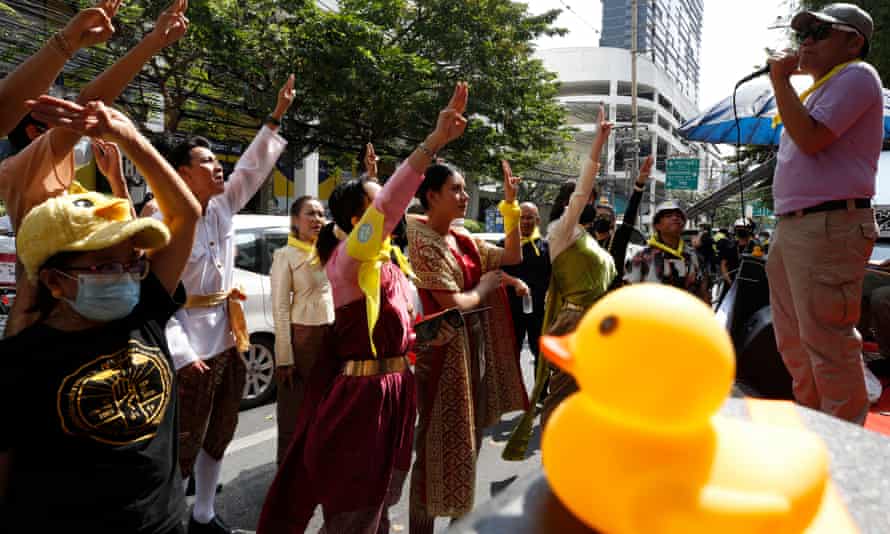
Thai authorities on 1 January 2021 made their 38th arrest of a pro-democracy activist in recent weeks under the country’s tough lèse majesté law as authorities crack down on the country’s unprecedented protest movement. That law, Section 112 of the Thai criminal code, forbids defamation of the king and provides for three to 15 years’ imprisonment for violations.The law had been dormant since King Maha Vajiralongkorn succeeded his father, King  Bhumibol Adulyadej, who died in 2016. The Thai government, though, is now using it to try to stamp out continuing protests calling for the government to resign, a new constitution and reform of the monarchy

Thailand’s authorities must stop targeting pro-democracy protesters with draconian legal action and instead enter into dialogue, according to the UN’s special rapporteur for freedom of assembly, who warned the country risks sliding into violence. Clément Voule said he had written to the Thai government to express alarm at the use of the fierce lese-majesty law against dozens of protesters, including students as young as 16.

It is legitimate for people to start discussing where their country is going and what kind of future they want,” Voule said of the protests. “Stopping people from raising their legitimate concerns is not acceptable.

So far, 37 people face charges of insulting the monarchy for alleged offences ranging from wearing traditional dress deemed to be a parody of the royals to giving speeches arguing that the power and wealth of the king should be curbed.

Anti-government protesters flash a three-finger salute – a gesture used adopted by protesters from the Hunger Games films – as they gather in support of people detained under the lese-majesty law at a police station in Bangkok.
Anti-government protesters flash a three-finger salute – a gesture used adopted by protesters from the Hunger Games films – as they gather in support of people detained under the lese-majesty law at a police station in Bangkok. Photograph: Narong Sangnak/EPA

Prominent protest leaders face an unusually high number of charges. This includes the student activists Parit Chiwarak, also known as Penguin, (12 charges) and Panusaya Sithijirawattanakul (six charges) and the human rights lawyer Anon Nampa (eight charges), who have given speeches calling for the power of the royals to be curbed.

The pro-democracy protest fundraiser Inthira Charoenpura
The pro-democracy protest fundraiser Inthira Charoenpura speaks from a stage outside Bang Khen police station in Bangkok. Photograph: Gemunu Amarasinghe/AP

Protesters – who have faced various other charges over recent months, including sedition – declined to participate in a government reconciliation panel in November, rejecting it as an attempt to buy time. The recent cases come after months of demonstrations in which protesters have made unusually frank and public calls for reform to the monarchy.

Benja Apan, 21, one of 13 people facing charges over a demonstration outside the German embassy in Bangkok, said legal action was unlikely to deter protesters from coming out in the new year. “I actually think it will bring more people out, because it is not fair,” she said.

The human rights group Amnesty International has launched a campaign calling on PM Prayut Chan-o-cha to drop charges pressed on a number of activists for their role in the pro-democracy movement and to repeal, or at least amend, Thailand’s draconian lèse majesté law. According to the campaign, at least 220 people, including minors, face criminal charges for relating to their actions in the pro-democracy movement. Activists are calling on government and monarchy reform, raising issues considered taboo and unprecedented in Thai society. Thailand must amend or repeal the repressive laws it is using to suppress peaceful assembly and the expression of critical and dissenting opinions.

Amnesty International is calling on people to take action and send a letter to the prime minister, calling on the Thai government to change their approach when handing the ongoing protests to protect human rights. Sample letter by AI’s campaign calls on Prayut to:

  • Immediately and unconditionally drop all criminal proceedings against protesters and others charged solely for exercising their rights to freedom of peaceful assembly and expression
  • Cease all other measures, including harassment, aimed at dissuading public participation in peaceful gatherings or silencing voices critical of the government and social issues
  • Amend or repeal legislation in order to ensure it conforms with Thailand’s international human rights obligations on freedom of peaceful assembly and expression, and to train state officials to carry out their duties confirming to Thailand’s obligation to respect, protect and fulfil the peaceful exercise of the rights to freedom of peaceful assembly and expression.

On Saturday 19 December 2020 Maya Taylor in The Thaiger had already reported that the United Nations High Commission for Human Rights has expressed shock and dismay at Thailand’s use of its strict lèse majesté law against a 16 year old pro-democracy activist. The UN High Commissioner for Human Rights’ spokesperson Ravina Shamdasani has called on Thailand to refrain from using the law against those exercising their right to freedom of speech, as she expressed alarm that a minor was being charged under the law. “It is extremely disappointing that after a period of 2 years without any cases, we are suddenly witnessing a large number of cases, and – shockingly – now also against a minor. We also remain concerned that other serious criminal charges are being filed against protesters engaged in peaceful protests in recent months, including charges of sedition and offences under the Computer Crime Act. Again, such charges have been filed against a minor, among others.

The UN Human Rights Committee has found that detention of individuals solely for exercising the right to freedom of expression or other human rights constitutes arbitrary arrest or detention. We also urge the government to amend the lèse majesté law and bring it into line with Article 19 of the ICCPR on the right to freedom of expression.”

Thailand’s Foreign Ministry spokesman has played down the UN High Commissioner for Human Rights’ criticisms over the kingdom’s enforcement of the Lese Majeste law.

See also in 2019: https://humanrightsdefenders.blog/2019/12/23/thailand-amnesty-and-un-rapporteur-agree-on-misuse-of-lese-majeste/

https://thethaiger.com/news/national/pro-democracy-movement-making-little-headway-monarchys-powers-remain-untouched

https://www.theguardian.com/world/2020/dec/27/un-thailand-protesters-royal-insult-law-lese-majesty

https://www.voanews.com/east-asia-pacific/new-year-new-charges-thai-protesters-slapped-royal-defamation-charges