Author Archive

MEA nominee Yu Wensheng in poor health after years in prison

January 21, 2021
email sharing button
Yu Wensheng was known for taking on a number of high-profile human rights cases. (AFP pic)

AFP reported on 19 January 2021 that Yu Wensheng Chinese lawyer nominated for the 2021 Martin Ennals award [see: https://humanrightsdefenders.blog/2021/01/18/%e2%80%8b%e2%80%8bmartin-ennals-award-finalists-2021-announced/] is in poor health after years in prison according to his wife.

Yu Wensheng was detained in Beijing in January 2018 in front of his young son just hours after he wrote an open letter calling for constitutional reforms, including multi-candidate elections.

His physical state is very poor. His right hand is deformed and trembles so much that he cannot write,” his wife Xu Yan told AFP. Last week, she was allowed to have a 25-minute video call with her husband, who is being held in a detention centre in the eastern province of Jiangsu. It was their first such meeting in three years, she said. Four of Yu’s teeth were missing and he was unable to chew food properly, Xu said, and that there was no heating in the detention centre.. “There are probably a lot of things he cannot say right now, we will only know the full extent of what he experienced after he is released,” she said.

Xu said her husband’s nomination “not only supports and honours (him), but is also  encouragement and affirmation to other human rights lawyers and defenders”. Yu’s defence lawyer Lu Siwei had his legal licence revoked by authorities last week after handling several sensitive human rights cases..

Beijing denied knowledge of either Yu or the Martin Ennals Award on Tuesday. “There are indeed some people abroad who are always using human rights as a pretext to create a disturbance,” said foreign ministry spokeswoman Hua Chunying at a regular briefing on Tuesday. “I think this behaviour has no meaning whatsoever.”

https://www.freemalaysiatoday.com/category/world/2021/01/19/imprisoned-chinese-human-rights-lawyer-in-poor-health-says-wife/

https://www.rfa.org/english/news/china/activists-crackdown-01252021082807.html

Fatima Al-Bahadly 2020 Front Line laureate MENA

January 20, 2021

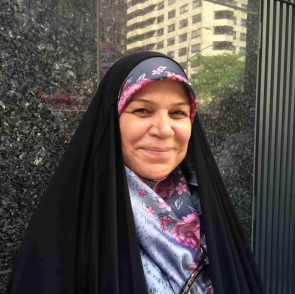
It has now been made public that Fatima Al-Bahadly, a human rights defender from the city of Basra, has received the 2020 Frontline Defenders Award.

The award was granted to Al-Bahadly for her role in founding Al-Firdaws Society, an organisation that focuses on protecting women affected by war and strengthening their role in peace building.

https://www.frontlinedefenders.org/en/profile/fatima-al-bahadly

https://www.middleeasteye.net/video/iraqi-female-rights-activist-receives-frontline-defenders-award-0

https://www.frontlinedefenders.org/en/front-line-defenders-award

Nominations for the Right Livelihood Award 2021 now possible

January 19, 2021

Nominations are to be submitted through the online form on the Submittable platform, found at the clickable button below.

Any living person or organisation can be nominated for a Right Livelihood Award. There are no restrictions on who may submit a nomination, individuals or organisations can submit a nomination – except Right Livelihood Award jury and staff members. We do not accept self-nominations, therefore nominations for oneself, close relatives or their own organisations will not be considered for a Right Livelihood Award. The Right Livelihood Foundation reserves the right to refuse clearly unsuitable proposals.

Normally, the Foundation makes three cash awards and one honorary award each year. The cash awards are intended for work in progress or the extension of existing activities; they are never given for personal use. For more information on this and other awards see: https://www.trueheroesfilms.org/thedigest/award/97238E26-A05A-4A7C-8A98-0D267FDDAD59

The deadline for nominations to be submitted for the 2021 Right Livelihood Award is 3rd March 2021.

For last year’s award, see: https://humanrightsdefenders.blog/2020/10/01/four-well-known-human-rights-defenders-are-the-2020-right-livelihood-laureates/

submit

​​Martin Ennals Award Finalists 2021 announced

January 18, 2021

Today 18 January 2021, the Martin Ennals Foundation announced that three outstanding human rights defenders based in authoritarian states are nominated for the 2021 Martin Ennals Award.

In isolated Turkmenistan, Soltan Achilova documents human rights violations and abuses through photojournalism.

Imprisoned in Saudi Arabia, Loujain AlHathloul is a leading advocate for gender equality and women’s rights.

A lawyer, Yu Wensheng defended human rights cases and activists before his conviction and imprisonment in China.

The Finalists distinguish themselves by their bravery and deep commitment to the issues they defend, despite the many attempts to silence them by respective governmental authorities. The 2021 Martin Ennals Award Ceremony will celebrate their courage on 11 February during an online ceremony hosted jointly with the City of Geneva which, as part of its commitment to human rights, has for many years supported the AwardEvery year thousands of human rights defenders are persecuted, harassed, imprisoned, even killed. The Martin Ennals Foundation is honored to celebrate the 2021 Finalists, who have done so much for others and whose stories of adversity are emblematic of the precarity faced by the human rights movement today”, says Isabel de Sola, Director of the Martin Ennals Foundation.

For more on this and similar awards, see: https://www.trueheroesfilms.org/thedigest/award/043F9D13-640A-412C-90E8-99952CA56DCE

Authoritarian states tend to believe that by jailing or censoring human rights defenders, the world will forget about them. During the COVID-pandemic, it seemed like lockdowns would successfully keep people from speaking out. This year’s Finalists are a testament to the fact that nothing could be further from the truth, says Hans Thoolen, Chair of the Jury.

  • In Turkmenistan, one of the world’s most isolated countries, freedom of speech is inexistent and independent journalists work at their own peril. Soltan Achilova (71), a photojournalist, documents the human rights abuses and social issues affecting Turkmen people in their daily lives. Despite the repressive environment and personal hardships, she is one of the very few reporters in the country daring to sign independent articles.
  • In Saudi Arabia, women still face several forms of gender discrimination, so much so, that the Kingdom ranks in the bottom 10 places according to the World Economic Forum’s Global Gender Gap Report 2020. Loujain AlHathloul (31) was one of the leading figures of the Women to drive movement and advocated for the end of the male guardianship system. She was imprisoned in 2018 on charges related to national security together with several other women activists. Tortured, denied medical care, and subjected to solitary confinement, Loujain was sentenced to 5 years and 8 months in prison on 28 December 2020. [see: https://humanrightsdefenders.blog/tag/loujain-al-hathloul/]
  • In China, more than 300 human rights activists and lawyers disappeared or were arrested in 2015 during the so called 709 Crackdown. A successful business lawyer, Yu Wensheng (54) gave up his career to defend one of these detained lawyers, before being arrested himself. Detained for almost three years now, Yu Wensheng’s right hand was crushed in jail and his health is failing. [see also: https://humanrightsdefenders.blog/2019/06/26/lawyers-key-to-the-rule-of-law-even-china-agrees-but-only-lip-service/]

Online Award Ceremony on 11 February 2021

The 2021 Martin Ennals Award will be given to the three Finalists on 11 February 2021 at an online ceremony co-hosted by the City of Geneva (Switzerland), a long-standing supporter of the Award. “The City of Genevareaffirmsits support to human rights, especially during these times of crisis and upheaval. Human rights are the foundation of our society, not even the pandemic will stop us from celebrating brave persons who have sacrificed so much”, says Member of the executive Alfonso Gomez.

For more information:

Chloé Bitton
Communications Manager
Martin Ennals Foundation
cbitton@martinennalsaward.org
media@martinennalsaward.org
Office: +41.22.809.49.25
Mobile: +41.78.734.68.79

Media focal point for Loujain AlHathloul
Uma Mishra-Newberry
FreeLoujain@gmail.com  
https://www.loujainalhathloul.org
+41.78.335.25.40 (on signal)

Press release

Press release (English)

Press release (French)

Press release (Chinese)

Press release (Russian)

Press release (Arabic)

You can now nominate a candidate for the 2021 Rafto Prize

January 18, 2021
Raftoemblem Test

Criteria

  • A candidate should be active in the struggle for the ideals and principles underlying the United Nations Universal Declaration of Human Rights.
  • A candidate’s struggle for human rights should represent a non-violent perspective.
  • A candidate may be a person or an organization, and two or more candidates may share the prize.

Anyone with an interest in and knowledge about human rights is welcome to nominate candidates. Candidates nominated by themselves or by their staff or by honorary officers will not be taken into consideration.

How do I nominate?

Fill in the form below by clicking the blue “make a nomination”-button and attach required documents.

Deadline for nominations: 1 February.
Nominations received after 1 February will be taken into consideration for the Rafto Prize the following year.

Each year we announce the recipient of the Rafto Prize in the end of September at a press conference at the Rafto House in Bergen. The announcement is live streamed on our website and on Facebook.

For more on this and similar awards see: https://www.trueheroesfilms.org/thedigest/award/A5043D5E-68F5-43DF-B84D-C9EF21976B18

For questions regarding nominations, please contact the Secretary of the Committee, Sunniva Ingholm, e-mail: sunniva.ingholm@rafto.no

For last year’s winner see: https://humanrightsdefenders.blog/2020/09/25/rafto-prize-for-2020-goes-to-the-egyptian-commission-for-rights-and-freedoms-ecrf/

Nominate a candidate

The International Service for Human Rights publishes its Strategic Framework for Human Rights Defenders 2021 – 2025

January 18, 2021

HUMAN RIGHTS DEFENDERS are people who promote and protect the human rights of others, whether individually or in association with others. They are people who act with humanity, serve humanity and bring out the best in humanity. For all of these defenders, international and regional human rights mechanisms can protect and amplify their work and impact on the ground. This strategy has been developed in a context characterised by uncertainty and change, including a worsening climate emergency, a global pandemic and associated financial crisis, deepening inequalities, worsening authoritarianism and populism, as well as the erosion of multilateralism, and the rule of law. It is also a context characterised by increased awareness and action at the local, national, regional and international levels. Human rights defenders are mobilising around issues such as environmental justice, racial justice, gender equality, freedom of For many defenders working in restrictive national contexts, regional and international mechanisms may be the only platforms available. For these mechanisms to be effective, however, they need to be credible, accessible and responsive to defenders, providing them with a safe and influential platform from which to demand justice, push for accountability, and contribute to positive change. freedom of expression and association, access to information, democratic representation and participation, the redistribution of economic and political power, and state and corporate accountability for intersecting human rights violations and abuses.

On many of these issues, we are at an inflection point; a point at which the work of human rights defenders is perhaps more imperilled but more important than ever. For example:

ENVIRONMENTAL ACTIVISTS AND INDIGENOUS PEOPLES, whose knowledge is vital to live more responsibly and sustainably, are being killed and displaced for their work to prevent exploitation and to protect precious forests and oceans.

STUDENTS AND WORKERS mobilising online and offline to call for democratic freedoms and protest against authoritarianism are being surveilled, harassed and criminalised under abusive counter- terrorism laws.

SOCIAL MOVEMENTS taking to the streets to demand racial justice are being met with disproportionate force from police and security forces.

WOMEN’S RIGHTS ACTIVISTS are being detained and tortured in retaliation for their work to challenge patriarchy and demand an end to discrimination and violence.

AT-RISK MIGRANT ACTIVISTS AND HUMANITARIAN WORKERS who support migrant rights are being criminalised and prosecuted as threats to national security.

The freedom, safety and work of these and many other human rights defenders is vital to build a better future for all. The purpose of this Strategic Framework is to guide the effective pursuit of ISHR’s Vision, Mission and Values, and the achievement of ISHR’s Overall Goals. It articulates Strategic Goals and a framework for identifying priorities, and maps an organisational structure and working methods that will ensure agility and sustainability in a fast changing world. The strategy was developed through a highly consultative process over a 10 month period with extensive and invaluable inputs from human rights defenders, NGOs working at the national, regional and inter-national levels, human rights experts, and diplomatic and financial partners, as well as ISHR Board and staff. It is complemented with a results framework, and implemented through an annual activity plan and budget, and reviewed and updated on a biennial basis to ensure it remains relevant, responsive, ambitious and agenda setting. The framework provides the structure for our planning, monitoring, evaluation and learning process.

Israel and Apartheid: Israeli Human Rights Group stirs debate

January 18, 2021

At the risk of inviting a torrent of abusive reactions, I think that the question of whether there is a case of APARTHEID is a legitimate one as a recent human rights NGO report asserts that one unequal system governs Israel, Gaza, the West Bank and East Jerusalem.

B’Tselem, a prominent Israeli human rights group has intensified its criticism of the country’s policies toward Palestinians, saying Israel pursues a nondemocratic “apartheid regime” and “Jewish supremacy” in both Israel and the Palestinian territories. The report of Tuesday 12 January 2021 reflects a recent shift by critics within Israel, widening their focus beyond the country’s half-century military occupation of Palestinian territories to policies stretching back to Israel’s founding, and endorsing highly charged parallels to South Africa’s former regime of white rule.

An editorial in the Guardian of 17 January states: It was a deliberate provocation by B’Tselem, Israel’s largest human rights group, to describe the Palestinians in the Holy Land as living under an apartheid regime. Many Israelis detest the idea that their country, one they see as a democracy that rose from a genocidal pyre, could be compared to the old racist Afrikaner regime. Yet figures such as Desmond Tutu and Jimmy Carter have done so. There is a serious argument about injustices to be had. Palestinians – unlike Israeli Jews – live under a fragmented mosaic of laws, often discriminatory, and public authorities which seem indifferent to their plight. Apartheid is a crime against humanity. It is a charge that should not be lightly made, for else it can be shrugged off. Some might agree with the use of such incendiary language, but many will recoil. The crime of apartheid has been defined as “inhumane acts committed in the context of a regime of systematic oppression and domination by one racial group over any other racial group or groups with the intention of maintaining that regime”.

Many Israelis firmly reject the comparison. They boast of a vibrant Israeli democracy, say Palestinians have representation in their own semi-autonomous Palestinian Authority, and justify restrictions on Palestinians as necessary security measures in the absence of peace.

B’Tselem’s director Hagai El-Ad, who is Jewish, said he hoped the report would inform the analysis of the incoming Biden administration as it considers how to steer U.S. policy, after the Trump administration sided with Israel and against Palestinian positions on the most sensitive aspects of the long-running conflict between the two peoples. “I expect this will be part of a new chapter for fighting for justice in this place,” El-Ad said.

B’Tselem, which has documented Israeli human rights abuses in Palestinian territories since 1989, said it now rejects the commonly held notion that Israel maintains two separate regimes side-by-side: a democracy inside Israel, where the country’s 20% Palestinian Arab minority shares equal citizenship and rights with its Jewish majority, and a military occupation imposed on Palestinian non-citizens in territories captured in 1967 which Palestinians seek for an independent state. “One organizing principle lies at the base of a wide array of Israeli policies: advancing and perpetuating the supremacy of one group – Jews – over another – Palestinians,” B’Tselem said in a statement Tuesday.

Daniel Estrin notes in his piece on NPR some reactions:

The Israeli government did not issue an immediate public response, but defenders of Israeli policy accused B’Tselem of radicalized anti-Israel propaganda.

This is no longer the same NGO that once gained respect, even from critics, by championing human rights based on credible research. Today, it is a platform for demonizers,” Gerald Steinberg of NGO Monitor, an Israeli watchdog of pro-Palestinian groups, said in a statement.

B’Tselem seeks to “fundamentally delegitimize Israel and call for its destruction – because one does not reform an Apartheid regime, one ends it,” said Eugene Kontorovich of the Kohelet Policy Forum, a conservative Israeli think tank.

Another prominent Israeli advocate for Palestinian rights, lawyer Michael Sfard, issued a legal opinion last year that Israelis practice apartheid over Palestinians in the Israeli-occupied West Bank, but he stopped short of evaluating whether the same definition applied within Israel proper.

Last year, the Israeli NGO Yesh Din found that Israeli officials were culpable of the crime of apartheid in the West Bank.

B’Tselem said Palestinian Arab citizens in Israel have more rights than non-citizens in the West Bank and Gaza but that they were second-class citizens to Jewish Israelis. It pointed to Israel’s construction of hundreds of Jewish communities while building few communities for the country’s Palestinian citizens; and laws that grant automatic Israeli citizenship to Jews around the world but exclude non-Jews, including Palestinians.

B’Tselem’s criticisms of Israel’s military occupation include travel restrictions placed on Palestinians, who require Israeli travel permits; and Palestinians’ lack of voting rights in the Israeli political system which holds sway over their lives.

B’Tselem said it decided to embrace the apartheid terminology following the adoption in 2018 of Israel’s Nation State Law, which defined Israel as a Jewish state and accorded Jews priority in areas ranging from the official use of Hebrew versus Arabic, to land development, to the government’s discussion last year of potentially annexing occupied West Bank territory without extending voting rights to Palestinians living there, a move Israel says is possible.

“Israel is not a democracy that has a temporary occupation attached to it: it is one regime between the Jordan River to the Mediterranean Sea, and we must look at the full picture and see it for what it is: apartheid,” El-Ad said.

The human rights group’s name, B’Tselem, Hebrew for “In the Image,” is taken from Genesis 1:27 which states that humanity was created in the image of God.

See also: https://www.aljazeera.com/news/2021/1/18/israel-moves-to-rein-in-rights-group-over-use-of-term-apartheid

https://www.npr.org/2021/01/12/956020789/israeli-human-rights-group-says-the-country-pursues-nondemocratic-apartheid-regi?t=1610539620271

https://www.theguardian.com/commentisfree/2021/jan/17/the-guardian-view-on-israel-and-apartheid-prophecy-or-description

https://www.scoop.co.nz/stories/WO2105/S00023/quibbling-over-cruelties-human-rights-watch-israel-and-apartheid.htm

“In Pursuit of Freedom,” digital art exhibit featuring 15 protest movements

January 18, 2021

On 13 January 2021) the Human Rights Foundation announced the opening of “In Pursuit of Freedom,” a digital art exhibit featuring 15 protest movements from around the globe. Street protests were a defining feature of recent civil and political resistance despite the spread of the novel coronavirus worldwide. Authoritarian regimes were exposed for using the COVID-19 pandemic as an excuse for repression, stricter restrictions, and power grabs instead of protecting their citizens’ lives. Nevertheless, people took the streets to make their voices heard, and as they adapted to champion social and political change in the face of the outbreak, art was a vigorous medium of protest and creative expression to expose the deception of tyranny. “In Pursuit of Freedom: A Year in Global Protest Art” showcases moving examples of protest art from 15 countries across regions, and attests to how art can be a powerful tool for activism and protest. From Belarus to Hong Kong, visit the exhibit to see striking works of protest art by artists who committed their talent in 2020 to push for change across 15 countries ruled by authoritarian regimes.

See also: https://humanrightsdefenders.blog/2020/01/24/lebanon-human-rights-defenders-use-graffiti-to-express-hope/

Explore the exhibit

Human Rights Watch publishes World report 2021, covering its work in 2020

January 14, 2021

World Report 2021, Human Rights Watch’s 31st annual review of human rights practices and trends around the globe, reviews developments in more than 100 countries.

In his introductory essay, Executive Director Kenneth Roth calls on the incoming US administration to more deeply embed respect for human rights as an element of domestic and foreign policy to counter the “wild oscillations in human rights policy” that in recent decades have come with each new resident of the White House. Roth emphasizes that even as the Trump administration mostly abandoned the protection of human rights, joined by China, Russia and others, other governments—typically working in coalition and some new to the cause—stepped forward to champion rights. As it works to entrench rights protections, the Biden administration should seek to join, not supplant, this new collective effort.

For last year’s report see: https://humanrightsdefenders.blog/2020/01/15/human-rights-watch-issues-world-report-2020-covering-2019/

https://www.hrw.org/world-report/2021

Looking ahead: next UN SG should be more proactive on human rights

January 12, 2021
Author image

On 11 January 2021 Louis Charbonneau the UN Director of Human Rights Watch looks ahead to the end of the year with: “Next UN Chief Should Fully Commit to Human Rights”

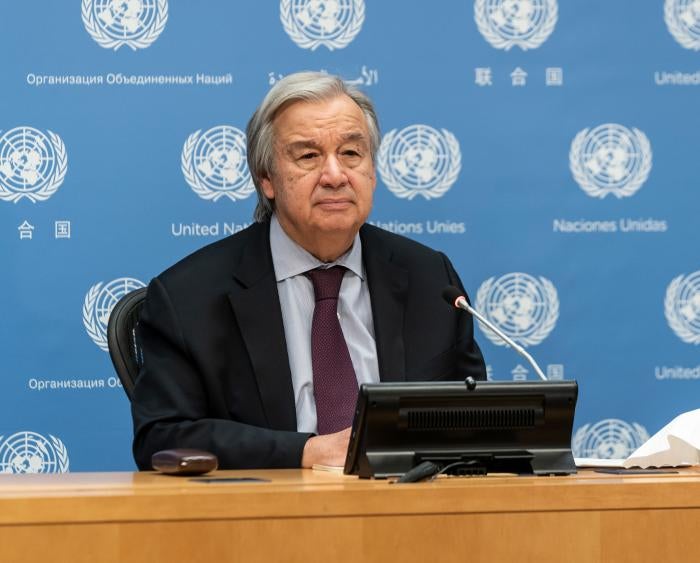
United Nations Secretary-General Antonio Guterres speaks to the press at UN Headquarters in New York, November 20, 2020.
United Nations Secretary-General Antonio Guterres speaks to the press at UN Headquarters in New York, November 20, 2020.  © 2020 Lev Radin/Sipa via AP Images

Antonio Guterres’ term ends on 31 December 2021.  Whoever assumes the role on January 1, 2022 should fully commit to improving the world body’s performance on upholding human rights. It’s crucial that the selection process is competitive and transparent. 

News agencies are reporting that Guterres will seek a second five-year term. If confirmed, he should not be handed a new term on a silver platter. The process should include multiple candidates who all publicly present concrete plans to improve the UN, including how to reinforce its human rights pillar at a time when some governments are actively working to undermine it.

Guterres’ performance on human rights over the past four years has been mixed, largely characterized by an unwillingness to publicly criticize rights-abusing governments by name and a preference for closed-door diplomacy.

Human Rights Watch and other organizations have called on Guterres to publicly urge the Chinese government to release over a million Turkic Muslims arbitrarily detained in so-called education camps and appoint an envoy to monitor rights abuses in China — he has not done so [see: https://humanrightsdefenders.blog/2020/09/09/exceptionally-large-coalition-of-ngos-urge-more-scrutiny-of-china/].

He has been reluctant to use his authority to launch investigations, as in the case of the murder of Saudi journalist Jamal Khashoggi, or name alleged perpetrators when he heeded pressure from member states and authorized a limited inquiry into attacks on humanitarian facilities in Syria. [see also: https://humanrightsdefenders.blog/2020/06/10/the-weakness-of-un-secretaries-general-versus-big-powers-in-speaking-out/]

Guterres took an important step last year when announcing his Call to Action on Human Rights.  While that pledge says all the right things about improving the UN’s commitment to human rights, its implementation remains very much a work in progress. 

The selection of the secretary-general is largely in the hands of the five permanent members of the UN Security Council, as the council nominates a leading candidate for members of the General Assembly to confirm. UN member states should be clear that they will only consider candidates who make credible commitments to resist the efforts of governments seeking to sweep human rights under the carpet.

https://www.hrw.org/news/2021/01/11/next-un-chief-should-fully-commit-human-rights