Sara Nabil is a human rights defender and artist from Afghanistan. She spoke to ISHR about her dream of one day seeing a ‘free democratic Afghanistan, where each human being [regardless of which] gender they are, man or woman, neutral or other genders, [would be] treated equally.’
Stand in solidarity with Sara and other women human rights defenders from Afghanistan: join us in our campaign to push for UN experts and States to explicitly and publicly recognise the situation in Afghanistan as a form of gender apartheid and the need for an accountability mechanism to address gross human rights violations against women.
Safety Net funding is for individual women human rights defenders (WHRDs) from or working in conflict and crisis affected countries, who, due to their commitments to human rights and peace, currently face – or have faced risks – with resulting impacts that continue to threaten their safety and work. SAFETY NET DOES NOT FUND CIVIL SOCIETY ORGANIZATIONS OR PROGRAM IMPLEMENTATION.
The WPHF Window for WHRDs Safety Net aims to improve the security and protection of WHRDs by providing for, but not limited to:
Temporary relocation costs (e.g. accommodation, food and transportation)
Security and protection costs (e.g. secure transportation, digital or physical security training)
Equipment (e.g. mobile phone, computer, security system and cameras)
Self-care (e.g. physical or mental health support)
Legal assistance
Repatriation costs, to facilitate return and reintegration in home country
Safety Net grants are provided for amounts up to USD 10,000 (subject to revision by the NGO partners of the WPHF Window for WHRDs) to cover needs for a duration of up to six months.
Eligibility Criteria
Gender: women and those who identify as women. This includes lesbian, gay, transgender and intersex (LGBTI) human rights defenders.
Age: 18 years old and above.
Country of origin: from/working in conflict and crisis-affected contexts. *See for reference countries that might be eligible for support: List of matters of which the UN Security Council is seized: S/2023/10.
Human rights activities: provides details of peaceful engagement in the advancement of human rights, either individually or through a civil society organization.
Threats and risks:
Demonstrates current or past serious security risks for her and/or her dependents, because of her commitment to human rights and peace; AND/OR
Demonstrates that risks are – or have been such – that her ability to keep working on behalf of human rights and peace is threatened.
Grant and duration: the requested funding cannot exceed USD 10,000, or cover needs beyond an anticipated 6-month period.
Decision-making process
You can submit your application using one of the two below methods below
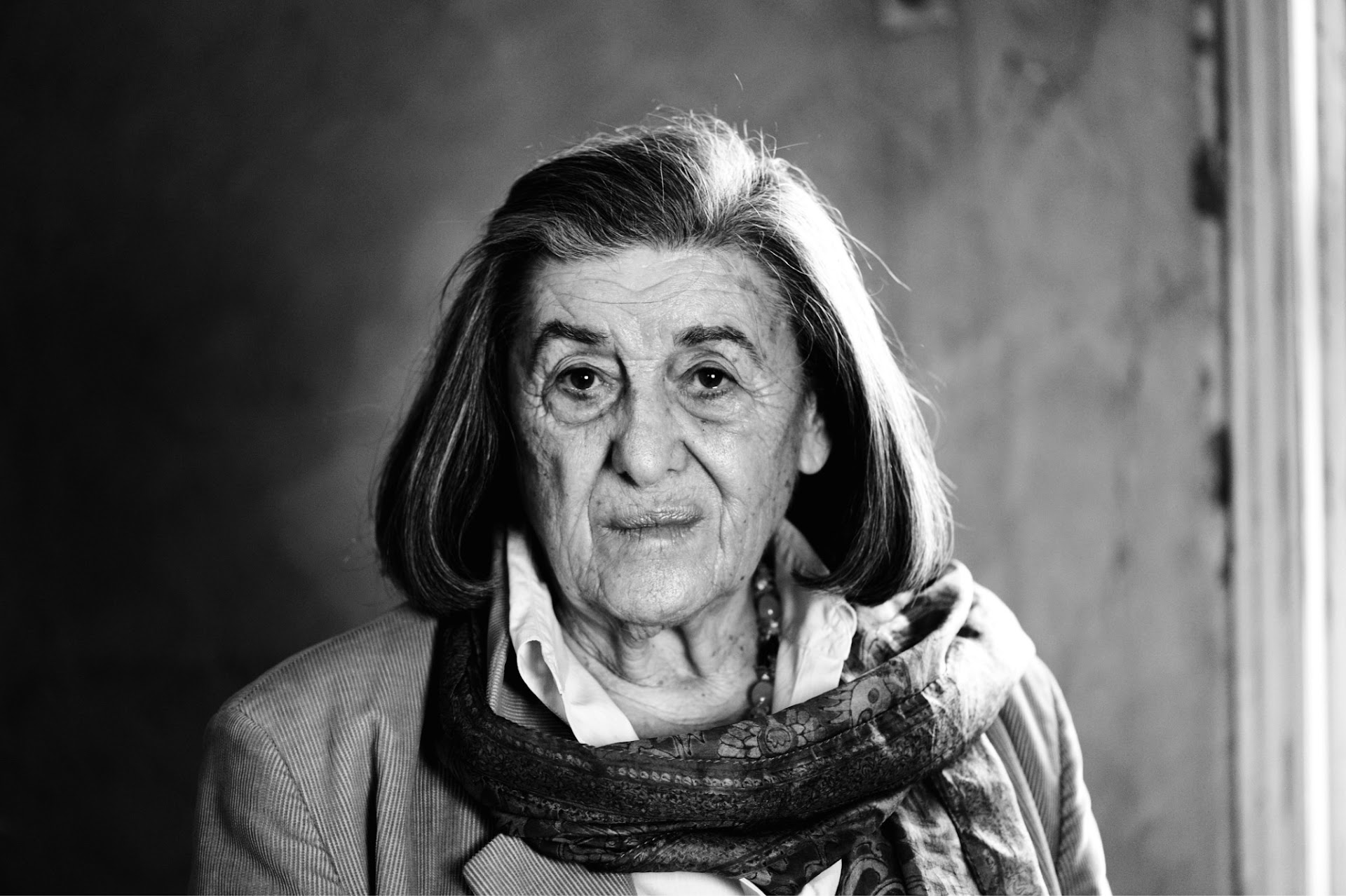
I am not a professional obituary writer, but I surely wished I were, as writing about my dear friend Leah Levin deserves the best possible skills. Fortunately, I received some excellent input from her caring family of which I am making good use. A celebration of Leah’s life will be held by the family on 13 June, 4 pm BST which can also be followed online.
Leah Levin, was a well-known figure in the international human rights movement of the 1970’s and onwards. She died of cardiac arrest on 25 May, 2024, at the formidable age of 98. For over half a century, she served and led a range of human rights organisations and collaborated globally with some of the world’s leading activists. For which she received an honorary doctorate from the University of Essex in 1992 and an OBE in 2001.
She was the author of UNESCO’s “Human Rights: Questions and Answers”, one of the world’s most widely disseminated books on human rights, (translated into more than 30 languages).
From 1982-1992, she was director of JUSTICE, a pioneering organisation that sought to right miscarriages of justice and which was a national section of the International Commission of Jurists . She served as a board member or trustee of the United Nations Association, the Anti-Slavery Society, International Alert, Redress, Readers International and The International Journal of Human Rights. But most of all, I remember her from the work she did to make sure that we would not forget one of our most impressive friends: Martin Ennals, who had led Amnesty from 1968 to 1980 and had been one of her closest friends until his death in 1981. [see his biography in the Encyclopedia of Human Rights, OUP, 2009, Vol 2, pp 135-138].
Frances D’Souza, said about Leah: “without any pretension she was nearly always right. She hit the nail on the head whether dealing with world affairs or people. She made a significant difference by her wise counsel and fact that she could really see what the issues were, read the situation and do something about it.”
Leah Levin had the special talent to draw other like-minded people to her and help coalesce a community of activists with whom she would collaborate throughout her entire life.
Her own life story is one of human rights struggle: Leah was born Sarah Leah Kacev on 1 April 1926 in Lithuania. She grew up as Leah Katzeff in Piketberg, South Africa, a small, rural town in Western Cape to where the family had to flee to escape poverty and anti-Semitism in the difficult years after the First World War and Russian revolution. Leah was the first of four children and the first person in her family to go to university. She graduated in 1945, when at the end of the second world war, the Katzeffs found out that their family along with their entire Jewish community in Mazeikiai, had been murdered by local Lithuanians organized by the Germans in the very first days of the Nazi advance in 1941.
In 1947 she married Archie Levin, fifteen years her senior. Like Leah, Archie was the child of European Jewish immigrants. Together they set up a new business, writing travel guides to Central and Southern Africa. In 1960, disgusted by the repression of anti-apartheid protest, the couple moved to the British colony of Southern Rhodesia (now Zimbabwe) with their two children Michal and Jeremy. A third son, David, was born in Salisbury (now Harare).
In Rhodesia, Leah completed a second degree in international relations at the University of Rhodesia and Nyasaland, while her husband became politically active. His activities angered those in power; shortly before Rhodesia unilaterally declared independence. Archie was tipped off that he was likely to be arrested. He rapidly left for the UK with his daughter Michal and later was joined by his son Jeremy; a few months later, Leah and her infant son David joined the rest of the family in the UK.
In London, Leah found a volunteer post as Secretary of the newly founded United Nations Association. The UNA human rights committee brought together people who became lifelong friends as well as colleagues: Martin Ennals, Sir Nigel Rodney, Amnesty’s first legal officer and later UN rapporteur on torture, and Kevin Boyle, who ran the Human Rights Centre of the University of Essex. After the death in 1977 of her husband Archie, Leah threw herself still more wholeheartedly into human rights work. In 1978, she took a job as Secretary of the Anti-Slavery Society, which connected her to the United Nations in Geneva. And in 1982 she moved to run JUSTICE for a decade. In 1992, she co-founded Redress, representing victims of torture to obtain justice and reparation for them.
Even when fully retired Leah continued to keep an active interest in children and grandchildren as well as her human rights “children”. I will bitterly miss her almost yearly phone calls to check on me to make sure I am doing the right thing.
On 3 June 2024, ISHR published Human rights defender’s story: Elham Kohistani, from Afghanistan
Elham Kohistani is a human rights defender from Afghanistan. Having witnessed successive governments trample human rights in her country since her childhood, she has dedicated her life to fighting for the basic rights of women and girls.
In an interview with ISHR, Elham spoke about her hopes for the future of Afghanistan, urging the international community to continue supporting human rights defenders in the long term to achieve peace and prosperity.
Stand in solidarity with Elham and other women human rights defenders (WHRDs) from Afghanistan: join us in our campaign to push for UN experts and States to explicitly and publicly recognise the situation in Afghanistan as a form of gender apartheid and the need for an accountability mechanism to address gross human rights violations against women.
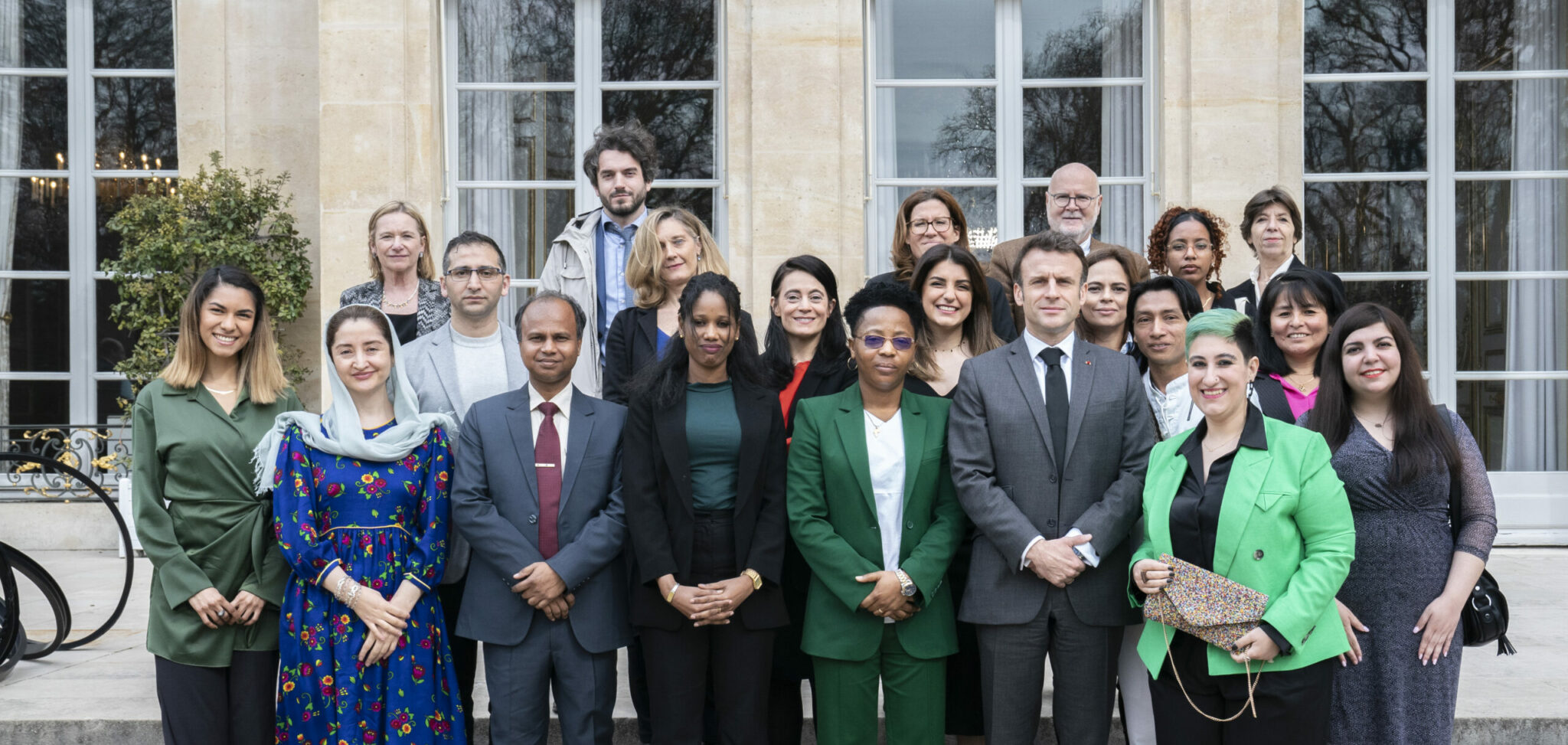
In 2021, French President Emmanuel Macron announced the launch of the Marianne Initiative for human rights defenders, aimed at better supporting them in their fight, both abroad and in France. The Marianne Association for Human Rights Defenders was created to federate the actors involved in our country (State, organisations and associations for the promotion of human rights and reception, local authorities, qualified personalities, etc.) and to carry the initiative’s support pillar in France, for the benefit of about fifteen laureates per year (reception, personalised support, networking, etc.).
After receiving the first all-female class in 2022 and a mixed class in 2023, the third class was officially launched now.
Some fifteen men and women from every continent have been welcomed to France for six months as part of the Initiative. The winners benefit from a training program designed to strengthen their skills and commitment in their home country or in France, whether in favour of civil and political rights, women’s rights, minority rights or environmental rights.
Recipients complete a comprehensive program consisting of:
Training in negotiation, leadership, advocacy, physical and digital security, project management, etc. ;
Courses from the School of International Affairs of Sciences Po Paris and French language;
Contact with French or international personalities involved in human rights and development issues;
Meetings with inspiring personalities and potential partner organizations (NGOs, foundations, institutions, etc.);
Conferences and cultural activities ;
Individual interviews to support the activist project;
Visits to international institutions and organizations;
Exchanges with members of the program’s alumni network.
The hosting programme in France provides for accommodation near Paris, the payment of a monthly grant to cover daily needs, a training programme, support, and networking with Human Rights Defenders for a period of 6 months. After the 6 months, participants no longer benefit from the grant, the accommodation and the support provided in the programme. Participation is individual and does not provide for the laureate to be accompanied by their family.
Class of 2025 runs from January-July 2025. The Application Deadline: 17th June 2024
Front Line Defenders issues regularly urgent appeals on behalf of Human Rights Defenders. This case is just an example: on 29 May 2024 FLD called for action on behalf of woman human rights defender Jina Modares Gorji in Iran who was sentenced to twenty-one years in prison.
Please get your own Front Line Defenders Appeals. By subscribing to this list [https://www.frontlinedefenders.org/secure/act-now.php] you will receive information on all cases that Front Line Defenders takes up on behalf of human rights defenders at risk. You will receive an average of 4 to 8 emails per week.
On 24 May 2024, Jina Modares Gorji was notified that Branch 1 of the Sanandaj Revolutionary Court has sentenced her to a total of twenty-one years in prison. In the verdict of the revolutionary court, the woman human rights defender has been sentenced to ten years in prison on the charge of “forming groups and association with the intention of disturbing the national security,” ten years in prison for “collaboration with a hostile government,” and one year in prison on the charge of “propaganda activities against the state.”
Jina Modares Gorji is a woman human rights defender, book seller, and feminist podcaster and blogger in Sanandaj, in the Kurdistan province in Iran. Her human rights work includes advocating for women among the Kurdish community, girls’ rights, and socio-cultural rights via holding book clubs and writing blogs. She has been arrested several times since September 2022, following the death of Mahsa (Jina) Amini in the custody of the Iranian morality police …
On 9 April 2024, the last hearing occurred for the woman human rights defender. The aforementioned charges are related to her peaceful human rights activities, which includes speaking to media, participating in international conferences and organising activities to promote women’s rights in the Kurdistan province in Iran. The woman human rights defender was arrested on 10 April 2023 and was arbitrarily detained for almost three months in solitary condiment and in the public Womens Ward of Sanandaj prison. She was also denied access to a lawyer. In mid-February 2023, she was informed that “spreading disinformation” had been added to the previous charges of “forming groups and association with the intention of disturbing the national security”, and “propaganda activities against the state”. On 3 July 2023, the woman human rights defender was released on a bail of one billion IRR.
In April 2023, Branch 1 of the Sanandaj Public and Revolutionary Court dismissed the lawsuit that Jina Modares Gorji filed against the physical and verbal assault during her arbitrary arrest.
On 12 February 2023, Jina Modares Gorji appeared with her lawyer before Branch 1 of the Sanandaj Revolutionary Court, where she did not sign the pardon scheme as she stated this would constitute an acknowledgement that the charges against her human rights work were legitimate. This scheme was announced by the Iranian judiciary in February 2023 on the occasion of the 44th anniversary of the Islamic Revolution.
The woman human rights defender had previously been arrested on 21 September 2022 for her work and participation in the “Woman, Life, Freedom” protests, and charged with “gathering and collusion against the national security” and “propaganda activities against the state.” She was released on a bail of 10 billion IRR on 30 October 2022, after going on hunger strike for three days in protest against the physical assault and detention she endured in the Sanandaj Correctional Centre.
The prosecution of Jina Modares Gorji is part of a wide crackdown on human rights defenders in Iran where, hefty sentences issued against human rights defenders on the charge of “forming groups and association with the intention of disturbing the national security,” against groups of human rights rights defenders reported by Front Line Defenders in April and May 2024.
Front Line Defenders is particularly concerned with the sentencing of the woman human rights defender Jina Modares Gorji , as it believes the judicial action is in reprisal for her peaceful and legitimate human rights work.
Sara Nabil is a human rights defender and artist from Afghanistan, forced into exile. She spoke to ISHR about her dream of one day seeing a ‘free democratic Afghanistan, where each human being [regardless of which] gender they are, man or woman, neutral or other genders, [would be] treated equally.’
‘Since the Taliban came to power, Afghanistan [has become] the only country where we see that women don’t have any kind of rights.’
On 19 April 2024, the OHCHR published the story of Wendy Flores -Risking it all to stand up for human rights in exile
“I had to leave Nicaragua irregularly. I left with a backpack, my computer, and the feeling that I was leaving my country for having defended other victims, for having accompanied them. I felt like I had committed a crime, when what I had been doing was defending human rights,” said Wendy Flores, a human rights defender from Nicaragua.
Flores studied law and became motivated to defend human rights after observing the injustices occurring in her country. She later joined the non-profit organization Nicaraguan Centre for Human Rights (CENIDH) as an intern in April 2002.
“I began to realise that I was a human rights defender because I was working for the victims, for their rights and supporting them as they faced a series of obstacles in the country,” Flores said.
Flores is currently living in exile, after the government began to cancel the legal status of several civil society organisations dedicated to the defence of human rights, as well as detaining their members, following the protests of April 2018.
According to an Office report, in early April 2018, demonstrations led by environmental groups, the rural peasant population and students erupted in Nicaragua to denounce the slow and insufficient response of the Government to forest fires in the Indio Maíz Biological Reserve. After this, more dissatisfaction grew from among the public from social security reform to the reduction of pension payments, which led to even more protests. The people protesting were quickly seen as Government opponents, which resulted in the repression of the protests, the criminalization of demonstrators and their arrests.
“During the last five years, in Nicaragua more than 3,600 civil society organizations have been cancelled. In December 2018, CENIDH was one of the first 10 organisations to be cancelled,” Flores said. “And even when we said we would continue to defend human rights, unfortunately we didn’t manage to do so inside the country because detentions started happening and it was obvious that that was going to prevent me from doing my job as a defender.”
Flores had to leave Nicaragua because of the risk of being criminalised for defending human rights and putting her family in jeopardy. “Feeling that I was leaving behind, even temporarily, my almost newborn son and my daughter, was one of the hardest situations I’ve faced,” Flores said.
Leaving Nicaragua forced Flores to reinvent her work as a human rights defender and with other human rights defenders who were also in exile, she established the human rights collective Nicaragua Nunca Más (Nicaragua Never Again). The collective aims to support victims, denounce human rights violations, and sends a symbolic message that, despite many obstacles and the need to live in exile, they continue to fight against impunity for human rights violations in Nicaragua.
“We were emotionally broken, apart from our families, disjointed, but we had the strength to continue denouncing human rights violations. And that was the main motivation that we had and that I identified with. In February 2019, we held a press conference to announce that we would continue our work as defenders in exile,” Flores said.
“And since then, we’ve continued to document cases of displaced people in Nicaragua. We’ve managed to identify more than 1140 cases in these five years. We’ve documented the way in which acts of torture have been perpetrated against political prisoners,” Flores said. “We’ve identified more than 40 methods of torture used against political prisoners and their families. And we’ve also identified perpetrators within these documented cases.”
Flores knows that those who remain in Nicaragua face danger, but she points out that there are also extraterritorial risks.
“Those of us who are outside have also experienced acts of siege and surveillance by State forces or forces installed outside Nicaraguan territory to persecute and intimidate defenders. In addition, the denationalisation imposed by authorities, affected more than 317 people who are mainly outside Nicaragua,” Flores said.
“For us to be able to return to Nicaragua, we would need a country that complies with international obligations, that initiates a process of dialogue with international mechanisms for the protection of human rights and that shows evidence that the country is going to undertake a democratic process and respect human rights,” Flores said.
For Flores, some of this evidence would include allowing international organisms such as UN Human Rights and the Inter-American Commission on Human Rights to return to the country.
Our work for defenders in exile
Flores said the impact of UN Human Rights work for human rights defenders in exile has been vital for her as a human rights defender and the human rights movement in her country.
“The UN Human Rights Regional Office for Central America and the Caribbean (ROCA) supports the work of defenders in exile by providing technical assistance to facilitate their access to the human rights mechanisms of the UN and accountability at the international level, such as universal jurisdiction,” said Alberto Brunori, the Representative at ROCA.
Thanks to successive resolutions adopted since 2019, the Human Rights Council addresses the situation in Nicaragua at its sessions through oral updates and written reports submitted by UN Human Rights.
This way, the Office has succeeded in bringing the human rights violations that continue to occur in Nicaragua to the attention of the international community and has supported a solution to the crisis based on human rights principles and standards.
“The Office has advocated for host countries to provide defenders fleeing Nicaragua with the protection they need, as well as the necessary support for their work,” Brunori said.
“Human rights defenders who are forced to leave the country need international protection as they require a safe legal situation that allows them to continue promoting human rights without fear of being returned to Nicaragua,” Brunori said. “They also need their claims of insecurity in exile to be considered. Their work requires financial resources and the necessary political support to ensure that their work, their analysis, and their human rights proposals are included in the decisions that are made about Nicaragua at the international level. Supporting their work means contributing to a more democratic and human rights-based future for the country.”
For Flores, it is essential that the international community continues to keep an eye on Nicaragua.
“Networking and the work that other organisations can do, supporting human rights defenders, really becomes an action for life, because to live is not only to breathe and feed oneself, but to live has to be to live fully, and this has to do with the psychological, mental and physical conditions in which we can carry out our work,” Flores said.
On 1 April 2024, Media and Law Studies Association (MLSA is a human rights organization committed to protecting freedom of expression, press freedom, the right to assemble and protest, and access to information in Turkey. It serves as a vital platform where journalism and legal expertise merge to safeguard these freedoms, particularly for journalists, lawyers, and human rights defenders facing increasing challenges). SEMRA PELEK wrote about Mine Özerden, a human rights defender now detained for 700 days. The detailed statement if woth reading in full:
From Mine Özerden’s standpoint, the Gezi Trial began with an unsubstantiated criminal complaint. Despite efforts, no informant was identified. Tax inspectors investigated the allegations but couldn’t confirm them. The court ruled the phone taps used as evidence were illegal. Nonetheless, Özerden was sentenced to 18 years and has been in prison for nearly two years.
“I’ve said this repeatedly, and I’ll say it again: I still can’t comprehend why I’m here, and there hasn’t been anyone who could logically explain it to me yet.”
With these words, Mine Özerden began her defense during the session of the Gezi Trial held at the Istanbul 13th Heavy Penal Court on October 8, 2021. She posed the same question during her defense at the session held on January 17, 2022. Özerden has been asking the same question at every hearing since the initial session of the Gezi Trial on June 25, 2019. However, in the years that have passed, she has received no answer to her question throughout the entire legal process.
Mine Özerden’s lawyer requested an explanation from the prosecutor through the court regarding this matter. However, the court rejected the request: “The request for a statement from the Public Prosecutor regarding which acts and crimes are being attributed to the defendant Mine Özerden by the defense attorney has been rejected…”
The court failed to provide any justification or further clarification of the rejection. However, according to the Code of Criminal Procedure, every defendant has the right to effectively present their defense, and the right to “be informed.” This means that prosecutors and courts are obligated to inform the defendant of the accusations against them to ensure a fair trial. The laws clearly state this right, however, Mine Özerden was not granted this right throughout the entire trial, and the judiciary system did not provide any logical explanation for this.
Let’s ask a question of our own here: Is there no answer to Ozerden’s question in the 657-page indictment written by the prosecution, which led to Osman Kavala’s aggravated life sentence and the 18-year sentences that Mine Özerden, Çiğdem Mater, Tayfun Kahraman, and Can Atalay have been given in the Gezi Trials? They are currently convicted of serious charges such as “attempting to overthrow the Republic of Turkey by force and violence” and “aiding this attempt,” which means the higher Court of Cassation also signed off on the decision. In the document of approval released by the Court of Cassation, is there any answer to the aforementioned question? No, there isn’t!
Scrutinizing the Gezi Trial files, one question remains: Why is Mine Özerden in prison?
And you can’t find the answer to that question. After poring over the files line by line, one can’t help but be reminded of Kafka’s novel, The Trial. So much so that you could replace the protagonist Josef K.’s name with Mine Özerden’s: “Somebody must have made a false accusation against Mine Özerden, for she was arrested one morning without having done anything wrong.”
This is exactly how the Gezi Trial, which today stands like a specter against the freedom of expression and assembly not only of the defendants but of the whole society, began for Mine Özerden.
Let’s start from the beginning: On September 26, 2013, a “criminal complaint” was sent via email to the Istanbul Communication Electronics Branch Directorate. According to the indictment, the person, who didn’t provide their name in “criminal complaint number 11167,” claimed to have “important information regarding the Gezi protests” and alleged that “before the protests began in Taksim, Mine Özerden opened bank accounts for several individuals under the direction of Osman Kavala from the Open Society Foundation.” According to the informant’s claim, the money collected in these accounts was intended to purchase “gas masks, bandages, and goggles,” which would then be “distributed to protesters.”
In the thousands of pages of the Gezi Trial file, this is the sole allegation concerning Mine Özerden.
Following up on this allegation requires due diligence in seeking the facts. Unlike Kafka’s novel, Özerden’s experiences are not allegorical but real; she has been held in Bakırköy Women’s Prison for nearly two years due to this unsubstantiated criminal complaint.
In the indictment, the prosecutor – after quoting the informant’s claim in quotation marks and bold black letters – immediately indicates in the next sentence that they “could not locate the informant”: “Upon the instruction of our Republic Prosecutor’s Office, an investigation was conducted into the IP address to obtain a detailed statement from the informant, however, no identification was made.”
In other words, the informant could not be found. So, were the bank accounts alleged by the informant opened?
No!
That, in fact, is the following sentence, where the prosecutor offers his admission that the informant could not be found. In the indictment, Istanbul Foundation’s 1st Regional Directorate’s investigation of the accounts of the Open Society Foundation, eventually preparing a report on this inquiry, but the report clearly stated that “no determination could be made regarding these allegations.”
In other words, the claim of an unidentified informant could not be substantiated.
On April 22, 2022 Mine Özerden’s lawyer submitted Tax documents, which proved that the informant’s claim was false to the file.
The court dismissed the Tax Inspectorate report and did not consider it as evidence.
Fact Two: No bank accounts opened; no purchase was made
Typically (in any rule-of-law state), when an informant cannot be found and an unsubstantiated criminal complaint is involved, the case is closed with a verdict of non-prosecution.
Moreover, according to the established jurisprudence of the Court of Cassation, evaluating a purely unsubstantiated complaint on its own is also unlawful. Thus, this jurisprudence also warranted closing the case at this stage. The law is clear: you cannot prosecute anyone with a non-existent crime and an unsubstantiated allegation.
However, instead of closing the file at this point, the prosecutor opened another investigation completely unrelated to the Gezi inquiry. Mine Özerden was incidentally wiretapped within the scope of this investigation. It wasn’t until much later, when the Gezi Trial indictment was prepared, that the fact Özerden had been coincidentally wiretapped in this investigation emerged. When her lawyer officially questioned this, it was revealed that Özerden had never been a suspect in this investigation. Furthermore, there was no wiretap order issued against her in this investigation. Her lawyer had requested wiretap orders from the court, neither the police nor the prosecution had submitted these orders to the file.
In one of these coincidental wiretaps included in the Gezi Trial indictment despite having no relevance to the Gezi investigation, Mine Özerden had a conversation with Osman Kavala on May 30, 2013. In this conversation, Mine Özerden mentioned to Osman Kavala that she had received “some offers.” Someone suggested, “Let’s buy gas masks and distribute them to the youth.” The conversation continued with discussions on how this could be done, such as “maybe opening a bank account.” It was nothing more than an exchange of ideas, with the conversation ending with the suggestion, “One of the volunteers could probably do that.”
The claim of the unidentified informant was based on this conversation. Özerden, who was coincidentally wiretapped in an investigation, where she was not a suspect, was accused on the basis of this wiretap turned into a criminal complaint. Özerden’s lawyer requested the full resolution of this wiretap. However, neither the complete resolutions of wiretaps nor the wiretap recordings were found by the prosecution and were never submitted to the file.
The conversation between Mine Özerden and Osman Kavala remained at the level of ideas because the content of the conversation was not substantiated during the investigation and trial process. No bank account was found to have been opened. Something that doesn’t exist can’t be found in the first place.
There is no evidence in the file that gas masks, bandages, or goggles were purchased. Not a single invoice exists, nor is there any evidence anywhere that these items were found.
So, suppose even one piece of evidence existed in the file – for example, if a bank account had been opened or if an invoice for goggles had been found – what would happen? Opening a bank account and buying gas masks, bandages, or goggles is not a crime under any law. Therefore, Özerden’s lawyer brought goggles, gas masks, and bandages to the trial and asked the panel, “Is acquiring these items a crime?”
Fact Three: No Press Statements or Meetings were Found to Constitute a Crime or Incitement to Commit a Crime
Despite the lack of concrete evidence, the indictment directed the accusation of “aiding an attempt to overthrow the Government of the Republic of Turkey by force and violence” against Mine Özerden. To strengthen such a serious accusation, the prosecutor highlighted Özerden’s voluntary coordination of the Taksim Platform and her continued membership in the board of directors of Anadolu Kültür, where she had worked years ago.
The Taksim Platform was established as a peaceful dialogue platform, holding weekly exchange of ideas meetings, and organizing art events. Although the activities of the platform fell within the scope of freedom of assembly and expression, it was criminalized in the indictment, yet no crime associated with the platform can be found.
Not a single press statement by the platform was included in the indictment. There was not any piece of evidence regarding which press statement or meeting of the platform, on which date, would constitute a crime according to the law. There was also no evidence that any post or statement released by the Taksim Platform could constitute a crime or incitement to violence in the indictment or the file.
The rationale behind the establishment of the Taksim Platform and all updates, statements and press releases ever released by the platform is still accessible today on the website taksimplatformu.com. So, if there had been even the slightest evidence that Taksim Platform was inciting violence, it would be easy for the prosecution to find and include in the indictment.
Moreover, the accusations against Özerden based on her membership in the board of directors of Anadolu Kültür were already refuted explicitly by the Tax Inspectorate report.
Fact four: Özerden was not in Istanbul during the Gezi protests.
It gets even stranger from here. In the indictment, Özerden is accused of organizing meetings of the Taksim Platform in Istanbul during the Gezi protests, attending the platform’s meetings, and even participating in violent actions in Gezi Park.
But the problem here is this: Mine Özerden was not in Istanbul during the Gezi protests.
The Gezi protests began on May 31, 2013. However, Özerden was working at a language school in Fethiye from June 1 to July 31, 2013. Furthermore, not a single video, photograph, or technical surveillance recorded by the police indicating Özerden’s presence in Istanbul during that period has been included in the case file.
However, official Social Security Institution (SGK) records proving Özerden’s presence in Fethiye during that period were submitted to the court. But neither the prosecutor during the investigation process nor the Istanbul 13th Heavy Penal Court during the trial took this into account. The Court of Cassation 3rd Criminal Chamber, which upheld the 18-year prison sentence, also did not. .
Even if it were the opposite, if Mine Özerden were in Istanbul during that time, it still wouldn’t prove anything. Being in Istanbul during the Gezi protests, organizing a meeting, or attending one is not a crime. On the contrary, the right to assembly and freedom of expression are protected by the Constitution.
Fact Five: Wiretapping is Illegal
So, what was written about Mine Özerden on all those pages in the indictment whenthere was no concrete evidence of a crime against her?
The indictment merely contains pages of phone conversations between Özerden and her friends! These conversations delve into personal matters, discussing, for instance, the exhaustion of life and the beauty of getting away from some stressors of life. In one conversation, for instance, Mine Özerden advises a friend to attend a conference in Istanbul where world-renowned philosophers Slavoj Žižek and Alain Badiou are speakers. The conference, titled ‘Globalization and the New Left,’ was organized by Bakırköy Municipality and MonoKL publications. However, this advice was included in the indictment as if it were a crime.
Similarly, Özerden’s response of “enjoy the beautiful weather, how lovely” to a friend saying “the weather was even better two or three days ago” is also included in the indictment as part of these casual conversations. None of the phone taps contain any reference to the organization of the Gezi protests. Instead, they clutter the file. Moreover, these wiretaps are illegal!
The Istanbul 13th High Criminal Court, which handled the case, determined that the wiretaps were illegal. In its decision dated February 18, 2020, acquitting 16 defendants in the Gezi trial, including Osman Kavala, Mücella Yapıcı, Can Atalay, Yiğit Aksakoğlu, Tayfun Kahraman, Çiğdem Mater, Mine Özerden, Yiğit Ekmekçi, and Ali Hakan Altınay, the court made the following legal assessment:
“We have 53 wiretap orders in our file. It is understood that the first wiretap order was issued for the offense of ‘forming and leading a criminal organization,’ not for the offense of ‘crimes against the government.’ Later, it was observed that Article 312 of the Turkish Penal Code (crimes against the government) was added to the requests and decisions for extending the wiretapping. However, Article 312 was not among the crimes subject to legal wiretapping as listed in Article 135/8 of the Criminal Procedure Code at that time. There is no wiretap order issued after that date. Therefore, it is accepted that the wiretap recordings are in violation of the law and are illegal evidence, considering the established precedents of the Court of Cassation and the principle that ‘the fruit of the poisonous tree is also poisonous.’ Hence, the wiretaps included in the indictment are considered as prohibited evidence.”
In other words, all phone conversations used as evidence against Mine Özerden, along with other defendants, were the fruits of the poisonous tree. In summary, the real crime was the wiretapping of phones.
But as if that weren’t enough, a new term called ‘revaluation’ was coined to justify the inclusion of wiretap recordings in the indictment. The indictment stated that “the revaluation of all evidence concerning the investigation, especially the wiretaps, was ordered.” However, there is no procedure called ‘revaluation’ in the Code of Criminal Procedure. Mine Özerden asks: “Isn’t this openly insulting to use the word ‘revaluation’?”
They Were Convicted with the “Poisonous Fruit of the Poisonous Tree”
Ultimately, the acquittal verdicts were overturned. Despite no additional evidence being presented to substantiate the allegations, the convictions handed down by the Istanbul 13th High Criminal Court on April 25, 2022, against Osman Kavala, Can Atalay, Çiğdem Mater, Mine Özerden, and Tayfun Kahraman were upheld by the Court of Cassation’s 3rd Criminal Chamber.
Osman Kavala, who was sentenced to an aggravated life sentence for the allegation of “attempting to overthrow the Government of the Republic of Turkey,” has been in prison for over six years. Can Atalay, Çiğdem Mater, Mine Özerden, and Tayfun Kahraman, who were each sentenced to 18 years in prison for “aiding this attempt,” have been deprived of their freedom for 700 days.
Responding to our questions from prison, Mine Özerden made the following comment regarding the entire legal process:
“Not only do the institutions and decision-makers of the country I am a citizen of fail to protect our rights, but they also increasingly violate our fundamental, constitutional, and legal rights more and more everyday. For nearly two years, we have been deprived of our physical freedom without reason, evidence, or truth…
I find myself involuntarily caught in a senseless quarrel of irrationality and illogic. We are continuously instrumentalized by different political segments with various affiliations. My wish is for people from all walks of life to stand up against injustice and for a collective will demanding basic human rights to emerge.”
Mine Özerden still awaits a logical explanation as to why she is being tried, why she is being punished, and why she has been held at Bakırköy Women’s Prison for years.
Instead of explaining, the judiciary merely extends to her the poisonous fruit of a poisonous tree.
NGOs and activists paid tribute to the late Chinese human rights defender Cao Shunli by holding a moment of silence and applauding her name during their speaking time at the Human Rights Council.
Delivering a joint statement before the Council plenary on behalf of ISHR and 16 organisations accredited to the UN as well as 20 NGOs without consultative status, a human rights defender from the Chinese mainland concluded her intervention with a short silence and a call to States and NGOs to mirror the courage of human rights defenders and always stand in solidarity with them.
After the intervention, in a sign of respect to Cao Shunli, the room was filled with applause from NGOs and a handful of governments in honour of Cao and in solidarity with victims of reprisals for cooperation with the UN.
‘It is unacceptable to normalise reprisals,’ the human rights defender from the Chinese mainland said. ‘Cao’s courage inspires defenders globally, so let her legacy and name resonate in this room until there is accountability for all victims of reprisals,’ she emphasised.
In an attempt to silence the activist, the Chinese delegation raised a point of order protesting against the statement. This mirrored their 2014 response to ISHR and other NGO’s attempt to hold a moment of silence at the Council after Cao’s death, during which Chinese diplomats disrupted the session for over an hour. This time, Cuba, Venezuela, the Democratic People’s Republic of Korea and Russia supported China in their attempt to silence activists’ right to speak at the United Nations.
In response to China’s attacks, Belgium on behalf of the 27 states of the European Union, supported by the United States of America, Canada and the United Kingdom, took the floor to defend NGOs’ right to speak freely.
‘We cannot allow Cao’s story and her work to be forgotten,’ said Raphaël Viana David, China Programme Manager for ISHR. ‘Ten years on, no one has been held to account for this emblematic case of tragic State reprisals. UN experts called for an inquiry in 2014, 2019 and once again last week. Governments cannot let Beijing off the hook: they must push for accountability for Cao’s fate and for that of all activists who have been persecuted for cooperating with the UN in standing up for human rights.’
ISHR and its civil society partners urge the international community to hold the individuals and institutions responsible for Cao’s death to account and to end all acts of reprisals and repressive measures seeking to restrict civil society space and prevent activists from engaging with the UN.




 Hans Thoolen on Human Rights Defenders and their awards