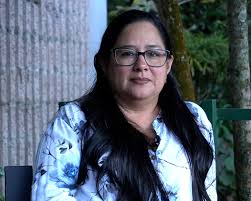
On 18 May 2026 UN experts and Human Rights Watch and Amnesty International expressed serious concern about the yearlong pre-trial detention of lawyer and woman human rights defender Ruth Eleonora López Alfaro in El Salvador.
“As time passes without the trial beginning, the presumption that detention is necessary is weakened,” the experts said.
López has been held in pre-trial detention for a year, officially authorised since 4 June 2025. During this time, she has been denied regular visits, despite precautionary measures ordered on 22 September 2025 by the Inter-American Commission of Human Rights. “This increases Ms. López’s vulnerability and puts her physical and psychological integrity at risk,” the experts said.
In maintaining judicial secrecy, the public is prevented access to hearings and the defence’s access to the criminal file is limited, thereby threatening the principle of equality of arms and the right to an adequate defence. The right to legal assistance of a lawyer of one’s choice is a cornerstone of the right to defence as established in Article 14 of the International Covenant on Civil and Political Rights.
“The circumstances of detention and the irregularities in the proceedings, point towards López being subject to reprisals because of her legitimate activities as a human rights defender and lawyer,” they said.
The experts underscored that there are elements suggesting that the criminalisation and prolonged pre-trial detention of Ruth López not only stem from her work exposing corruption and human rights violations, but also appear to reinforce patterns of social control designed to silence women leaders in the public sphere, while also seriously undermining the work of their organisations.
The experts urged the State to release Ruth López Alfaro immediately and consider alternative measures instead of keeping her in custody. They also called for the removal of the judicial secrecy imposed in the criminal proceedings, the cessation of all acts of harassment against her, and guarantees that she may carry out her human rights work without fear of reprisals. The experts are in contact with the Government of El Salvador on this matter.
On 15 October 2025, Fariba Nawa wrote about Mahshid Nazemi, Iranian human rights defender.
Mahshid Nazemi, an Iranian human rights activist, left her home one day in the fall of 2022 to walk to the corner store to buy yogurt for dinner. The sun had set in the valley in Isparta, a city in southwestern Turkey, and the air was crisp. Nazemi pulled the hat of her coat over her head. The streets were empty. She was tired and hungry. Suddenly, she saw two cars turn on their lights. A dated, navy-colored sedan with tinted windows drove behind her slowly as she walked. Nazemi became suspicious and stopped. The car braked and a pudgy, bearded man with a khaki shirt exited, cursing at her, calling her a prostitute. “Shut your mouth or we’ll send you to Iran in a suitcase,” Nazemi recounted the man saying. “Your sister is on death row. You want to go to Iran in a suitcase?”
A year later, she stood at the exact spot in Isparta, known for its roses and lavenders, as she retold her ordeal.
Nazemi’s case underscores a broader pattern of Iranian activists abroad facing intimidation and pressure from Tehran, despite the regime’s public denials of involvement.
For Nazemi, she says her plight began long ago as a woman in Iran, where women don’t have equal rights, and the situation has been likened to gender apartheid. Women can’t sing in public, their supreme leader has said riding a bike is shameful — though some women defy the taboo and ride bikes — their testimony is considered half of a man’s in court and their right to inheritance is less than men. Nazemi has survived a lot — imprisonment, sexual harassment, death threats and a deportation camp.
The night she was followed and harassed in the street would be a prelude to a series of dubious events terrorizing her life as a dissident in exile.
At that time, Nazemi was in Turkey, which has become an opposition haven for many Iranians. She was speaking out about political prisoners and crackdowns on protesters, while also helping dissidents in Turkey get legal aid and financial support. She’s been a dogged activist on behalf of women in her native Iran. Nazemi wasn’t doing that work alone. Her oldest sister Pouran Nazemi was at the forefront of the movement in Tehran. The renowned human rights defender has been in and out of Iranian prisons throughout her life. Nazemi said it was Pouran’s sacrifices that encouraged her to become an activist, too.
A selfie of Pouran (left) and Mahshid Nazemi nine years ago in Iran. The sisters haven’t seen each other in-person for a decade.Courtesy of Mahshid Nazemi
The sisters participated in previous uprisings in Iran, demanding democratic rights for women and minorities. They were both arrested in 2016, but Mahshid Nazemi was released. Her family told her to flee, so she went to neighboring Turkey and applied for asylum to a third country. When Pouran was also released from jail, she remained in Iran. But the sisters worked as a team online across the border. They talked to the opposition media, like Voice of America Farsi, making a case for regime change and a revolution.
Instead, the hardline clerical government arrested 22,000 protesters, including Pouran once again in 2022. The government also killed about 550 people inside Iran, calling them traitors and agitators. Then the regime came for those in the diaspora.
“Iran continues to target women human rights defenders abroad, and among the typical and easy-to-use methods are digital threats, such as phishing and hacking attempts, smear and defamation campaigns, as well as threats against family members in Iran,” said Michael Michaelsen, who studies Iran and transnational repression at the Citizen Lab at the University of Toronto.
Nazemi has been the victim of all these tactics but she said the regime went a step further in sending their thugs to threaten her in person that evening in 2022. She reported the incident to the Turkish police, but they didn’t believe her until they found CCTV footage of the incident. A few days later, a Turkish immigration agent called and asked her to come to their office. She thought she might be getting asylum to a third country, somewhere safer than Turkey. But instead, the agent accused her of making a fake ID card, which Nazemi denied. It’s a scene she remembers vividly.
“I didn’t make a fake card. I’m not going to admit to something I didn’t do. If you want to deport me, do so,” Nazemi told the agent. Nazemi was detained and moved into a deportation camp. “The Islamic Republic must have informants in Turkish immigration offices. Otherwise, how would I have ended up in a deportation camp, right after reporting what happened about that night,” she said.
In the camp, Nazemi said the guards beat her, pulling out half of her hair. Another Iranian migrant, who was also detained, accused her of being transgender and threw soup in her face. Nazemi said she had to disrobe in front of the other detainees to prove she was a biological woman to prevent more abuse. She said the camp almost broke her. She had medication with her and one day she took a lot of pills at once. “I didn’t take them to die, actually, but to prove something, how badly they treated us that it got me to this point,” Nazemi said. Nazemi was hospitalized outside the camp, doctors pumped her stomach and she recovered. Police released her and she returned to Isparta and appealed the deportation. Turkey denied the appeal again, but by this time Nazemi’s story was out in the Western press.
The World shared her story, along with press coverage she received in the French newspaper Le Monde — that attention helped her get a visa to France after eight years of being stuck in the Turkish asylum system. She resettled in a French village in December 2023, and continued her activism — Nazemi has expanded her cause to advocate for Afghan migrants as well.
She still gets death threats on social media. Many of the senders say they are the “soldiers of the Islamic Republic.” The direct messages in her inbox on Instagram threaten her with execution, drowning, even rape. Nazemi is under French police protection and reports all the threats.
On 27 April 2026, Halya Coynash reported on the case of Crimean Tatar human rights defender Lutfiye Zudiyeva.
Russia’s Second cassation court of general jurisdiction cases has rejected Lutfiye Zudiyeva’s cassation appeal against her inclusion by the Russian justice ministry in its notorious register of so-called ‘foreign agents’. Russia is deploying all weapons to silence the courageous Crimean Tatar human rights defender and journalist, and it cannot be said that any other outcome was seriously expected. The lawlessness was, however, even more extreme than usual with Lutfiye’s lawyer arriving for the hearing only to be told that it had been held earlier than scheduled, behind closed doors, with the justice ministry’s decision upheld.
The ‘hearing’ took place on 19 March however it was only a month later, and on the lawyer’s second attempt and she and Lutfiye were able to receive a copy of the ruling. Lutfiye’s application to take part by video link had been rejected, with the court claiming that no object grounds had been given for why the human rights defender and mother of four should come from occupied Crimea to Moscow. The court also pointed out that her presence was not mandatory but failed to warn her that it would also speed up the hearing, thus preventing her lawyer from taking part. Quite the contrary, with the ruling claiming that neither Lutfiye Zudiyeva nor her lawyer had “appeared”. The one hearing, which was over before its scheduled commencement at 10.30 a.m., took place behind closed doors, before presiding ‘judge’ Yelena Regina and two colleagues, Yury Denisov and Yelena Karpacheva.
As reported, the Russian justice ministry announced that Lutfiye Zudiyeva had been added to its ever-increasing register of alleged ‘foreign agents’ on 16 May 2025. It claimed that the renowned human rights defender and Graty journalist had “circulated false information about decisions taken by the public authorities of the Russian Federation and the policies they carry out”; that she was “under foreign influence” and “involved in political activities.”
An appeal was lodged immediately, with this rejected on 11 August 2025 by ‘judge’ Iryna Kozlova from the Zamoskvoretsky district court in Moscow. On that occasion, Lutfiye’s application to participate by video link from Dzhankoi, in occupied Crimea, “got held up” in the Russian postal system, however her legal representative was able to take part, and present Lutfiye’s written objections. These were, predictably, ignored, as they were in the cassation court’s secretive hearing on 19 March 2026.
The claims that have now been upheld by two Russian ‘courts’ were that there was proof of Lutfiye Zudiyeva being ‘under foreign influence’ in her publications in the independent Ukrainian publication Graty, in her commentary to the media and international organizations, as well as her supposed ‘membership’ of Frontline Defenders. There would be nothing at all illegal about such membership, but it is a figment of some Russian ministry official’s imagination. Frontline Defenders have spoken out in Lutfiye’s defence, but so have many other human rights organizations, diplomats and journalists. [https://www.frontlinedefenders.org/en/profile/lutfiye-zudiyeva]
Another bizarre claim which none of the ‘judges’ found the courage to question was that Lutfiye Zudiyeva had received money from foreign sources. To justify this totally false claim, reference was made to money for day-to-day needs which Lutfiye’s husband had transferred to her account. He in turn is involved in selling agricultural goods and, according to the FSB, received money between February and August 2024, from three ‘foreign nationals’ (from Ukraine, Germany and Vietnam). In her written statement for the appeal, Lutfiye explained that in each of those cases, the person had had dual citizenship, with this something her husband could scarcely have known, as he had no right to demand a passport from buyers. She also disputed the Russian ministry’s claim that her human rights work and journalism were ‘political activities’.
On 27 July 2023, Zudiyeva and another journalist were illegally detained, together with 12 other Crimean Tatars for trying to attend a purportedly open court hearing into the appeal against the appalling sentences passed on Crimean Tatar Mejlis leader, journalist and human rights defender Nariman Dzhelyal and two cousins, Asan and Aziz Akhtemov. She was fined on a preposterous charge of having taken part in an unauthorized mass event, with the occupation ‘judge’, like the Russian-controlled ‘police’, ignoring the fact that she had been there as a journalist…
“I cannot calmly sit and watch as the multiple searches which take place all the time in Crimea result in children being deprived of their fathers; in elderly parents being left without their children, without care, and in women remaining without their husbands. I believe that it is my right to have the possibility of speaking publicly about this. And this is the least I can do as a member of society.”
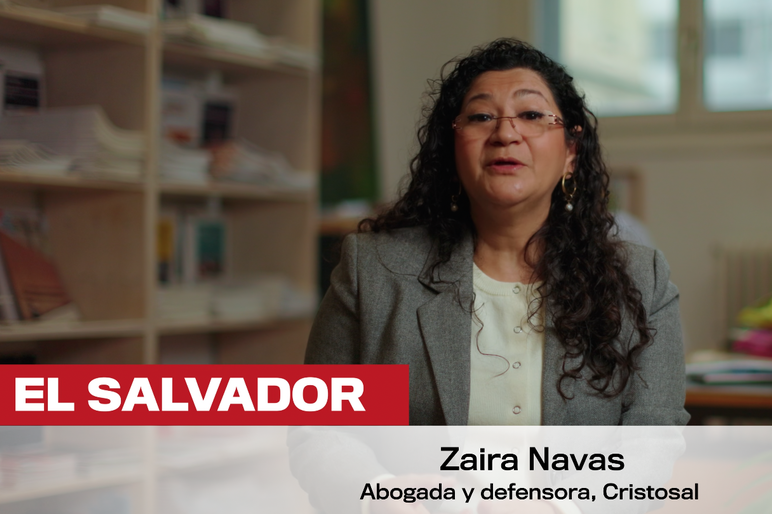
Zaira Navas, woman human rights defender from El Salvador.
In recent years, civic space has significantly reduced in El Salvador, under a state of exception, a state of emergency that suspended several constitutional rights. Human rights defenders have faced increasing threats and criminalisation, forcing many into silence or exile. Zaira Navas is a lawyer and human rights defender at Cristosal, partner of OMCT and the SOS-Torture Network. She is also a member of OMCT’s Latin America litigators’ group, part of four regional litigators’ groups that bring together lawyers and human rights defenders working at the front lines of the fight against torture and ill-treatment. Last year, Zaira Navas was pushed to flee El Salvador, after her colleague, Ruth López, prominent Salvadoran activist, was arrested. In Geneva to attend the Human Rights Council, she tells us about her experience being a woman human rights defender in exile, and where she still finds hope in her work.
What was it like to make the decision to leave El Salvador?
I am currently in exile due to repression under the state of exception in El Salvador imposed by President Nayib Bukele, which intensified in 2025. In May, my colleague Ruth López was detained on absurd corruption charges. That same week, I learned I could also be arrested. Our organisation, Cristosal, asked us to protect ourselves. There was no time to think about it. We left the country believing we would return in 15 days, but I have now been outside El Salvador for nine months.
How has exile affected you, as a woman and as a human rights defender?
The first months were filled with uncertainty. Violence and aggression against defenders increased, and our organisation was forced to close its operations in the country. There was no turning back.
There was a period when I felt depressed. Not only for being away from my country, but because I thought I could not continue my work. I am now separated from my family, but I am working, and that is a very important source of encouragement….
What actions should the international community take to ensure a safe environment for defending human rights in El Salvador?
The international community must closely monitor human rights violations in El Salvador and must pay close attention to what is happening in our country, questioning the anti-democratic methods and internal policies. International cooperation allows us to keep working. It is important that organisations that support human rights groups look for new ways to cooperate so that the work can continue from outside the country.
‘Urgent action needed to prevent surge in digital violence in Africa, experts say’ says article in Business and Human Right of 30 March 2026
Activists and lawyers in Africa are calling for urgent action to protect women, girls and boys as digital violence surges across the continent. A massive rise in internet users, coupled with huge numbers of people aged under 30, has fuelled an increase in gendered online violence across the continent, according to experts, by giving perpetrators new tools to control and silence women and girls, and influence boys. “Unfortunately the world offline is not safe, equal and inclusive. But the world online is proliferating that to such an extent that it’s creating a foundation for a very, very unequal future,” said Ayesha Mago, global advocacy director at the Sexual Violence Research Initiative, a global network looking at violence against women. “In Africa, internet access is growing exponentially and more than 70% of the population of sub-Saharan Africa is under 30. We know that young people generally face higher rates of online violence and very often are bigger users of any tech,” she said.
Digital violence against women and girls has devastating effects such as mental health problems, withdrawal from public and economic life, physical attacks on LGBTQI+ people in countries that criminalise homosexuality, and femicide. While there is very little pan-African research, one study across five countries in sub-Saharan Africa showed that 28% of women had experienced online violence. As internet access expands, this number is expected to rise. Only 38% of people on the continent are internet users, according to the International Telecommunication Union – and among women the figure falls to 31%. Studies, research and anecdotal evidence at a national level paint a horrifying picture of extreme levels of violence and a toxic online environment with dire real-life consequences.
…In Uganda, in 2021, the National Survey on Violence in Uganda revealed that half of the women (49%) reported having been subjected to online harassment. In South Africa, upcoming research by Equimundo and UN Women found that exposure to harmful content translated into men being 2.6 times more likely to perpetrate violence and 1.8 times more likely to believe misogynistic views. Primary targets on the continent include women in the political arena, along with human rights activists, journalists and women with a public profile. A 2021 report by the Inter-Parliamentary Union and the African Parliamentary Union looking at the experiences of 137 female parliamentarians across 50 African countries found that 46% had been the target of sexist attacks online and 42% said they had received threats of death, rape, beating, or abduction, often through social media.
Front line Defenders on 27 March 2026 shared an update on human rights defender Makhabat Tazhibek Kyzy:
On 23 March 2026, the Leninskii District Court of the City of Bishkek, Kyrgyzstan, ordered the release of a woman human rights defender Makhabat Tazhibek Kyzy from prison. At the preliminary session of the retrial in her case, the Court changed the measure of restraint and granted her release from the penal colony where she had been detained. Her release is conditional upon an order not to leave the country. The retrial is scheduled to begin on 7 April 2026.
Makhabat Tazhibek Kyzyis a woman human rights defender and journalist. She is the director of Temirov Live and Ayt Ayt Dece. Temirov Live is a YouTube-based media outlet that investigates and reports on corruption by state and non-state actors in Kyrgyzstan, founded in 2020 by Bolot Temirov, a prominent Kyrgyzstani human rights defender and journalist. Ayt Ayt Dese is a YouTube-based project aimed at popularising human rights issues through the performance and publication of folk songs on human rights topics. Among other topics, Ayt Ayt Dese has covered investigations by Temirov Live.
On 23 March 2026, Leninskii District Court of the city of Bishkek commenced the retrial of the case of Makhabat Tazhibek Kyzy with a preliminary session. The retrial was set following a decision of the Supreme Court of Kyrgyzstan on 10 March 2026. Based on Opinion No. 52/2025 by the UN Working Group on Arbitrary Detention, the Supreme Court ordered a retrial and overturned the previous rulings that sentenced the woman human rights defender to six years in prison.
At the preliminary session, Makhabat Tazhibek Kyzy’s lawyers filed three motions. First, the defence attorneys requested the Court to declare the expert witness evidence from previous trials as inadmissible, arguing that authorities had pressured the expert witnesses into giving false testimonies. The issue of evidence tampering by the authorities was previously highlighted in the case of human rights defender and whistleblower Zhoomart Karabaiev, who was on trial for reporting that authorities pressured expert witnesses to provide statements supporting the prosecution. The second motion requested that the Court immediately and unconditionally ceases all judicial proceedings against Makhabat Tazhibek Kyzy. The third motion sought a change in her measure of restraint, from detention in the penal colony to release under the condition that she remains in the country. While the Court denied the first two motions, it agreed to change the measure of restraint for Makhabat Tazhibek Kyzy, leading to her release later that day.
Upon her release, Makhabat Tazhibek Kyzy expressed gratitude for the support she has received since the beginning of the prosecution against her in 2024. However, she also shared that she was subjected to psychological pressure and violence from the authorities in the penal colony, which aimed at exacerbating her isolation from the community supporting and defending her rights.
Front Line Defenders welcomes the Court’s decision to release Makhabat Tazhibek Kyzy, who has been targeted solely for her peaceful and legitimate human rights work. The organisation continues to call upon the authorities in Kyrgyzstan to immediately and unconditionally cease all types of persecution targeting the woman human rights defender and drop all charges against her.
Judge Temirbek Mamatov, who reviewed the case following the ruling by the nation’s Supreme Court, refused to drop the charges and acquit the journalist who participated in the hearing via a web link from the prison colony, Radio Azattyk reported. Mamatov also imposed a travel ban on Tajibek kyzy, and her case is expected to be retried.
On 23 March 2026 Civil Rights Defenders welcomed the decision allowing Makhabat Tajibek kyzy to return home and to finally reunite with her family and teenage son. We also repeat the call that Civil Rights Defenders and other human rights groups have made since the day Tajibek kyzy and her colleagues were arrested: Kyrgyzstani authorities should drop all unsubstantiated charges brought in retaliation for her legitimate journalistic work. Makhabat Tajibek kyzy needs to be fully acquitted and rehabilitated.
The director of anti-corruption investigative outlets Temirov Live and Ait Ait Dese, Tajibek kyzy was arrested in January 2024 along with 10 other current and former staff members and sentenced in October of that year to six years in prison on charges of calling for mass unrest. Until today, all of her co-defendants in the case have been released from jail under probation, pardoned or acquitted.
Drivetime on RTE Radio of 13 March 2026 carries an interview with Mary Lawlor the departing UN Special Rapporteur on Human Rights Defenders about her work as a human rights activists.
UN experts on 26 February 2026 condemned the extreme violence committed against human rights defenders by the M23 armed group in the North and South Kivu provinces, in eastern DRC.
“We are horrified by the gravity and brutality of the abuse committed against human rights defenders and their families,” the experts said.
“There are allegations of attempted killings, repeated kidnappings, torture, sexual violence and death threats at the hands of M23, targeting those peacefully documenting abuses, supporting their communities and speaking out against violations.”
Between November 2025 and February 2026, several human rights defenders in North and South Kivu were reportedly targeted by members of M23 and their collaborators, in direct connection with their human rights work.
Two women human rights defenders protesting forced expulsions of civilians in Uvira, South Kivu, were reportedly abducted and tortured by M23 elements. Their fate and whereabouts remain unknown. One woman human rights defender working on LGBT rights was abducted multiple times, severely tortured and continues to be aggressively pursued.
In another case, a human rights defender was subjected to death threats and forced into hiding. Armed men allegedly raided his home, abducted and violently assaulted his spouse in an effort to force her to reveal his whereabouts. A young human rights defender from Goma, in North Kivu, was also reportedly threatened and forced into hiding following his public writings about killings of civilians in M23-controlled areas.
“Human rights defenders operating in the Kivu provinces are paying an unbearable price,” the experts said. “Those who dare to denounce abuses by M23 are being deliberately targeted. Women human rights defenders and LGBT rights defenders, who already face stigma and discrimination, are at acute risk of sexual violence and torture.”
“M23 must immediately stop targeting human rights defenders and civilians. The ceasefire must be fully respected and not undermined by ongoing intimidation and persecution,” they added.
The experts stressed that while the reported violations are attributed to M23 members, the State retains the obligation under international human rights law to protect individuals within its jurisdiction.
“Even where violations are committed by non-State armed groups, the State has a clear obligation to exercise due diligence to prevent, investigate, punish and redress such acts,” the experts said.
“We call on the authorities to ensure prompt and impartial investigations into all allegations, to provide protection and adequate medical and psychosocial support to survivors and their families and to take meaningful steps to guarantee that human rights defenders in eastern DRC can carry out their work safely and without fear.”
“Human rights defenders are not combatants. They are not enemies, but vital actors for justice, accountability and peace,” the experts said. “When they are silenced through fear and brutality, the prospects for lasting peace in eastern DRC grow ever more distant.”
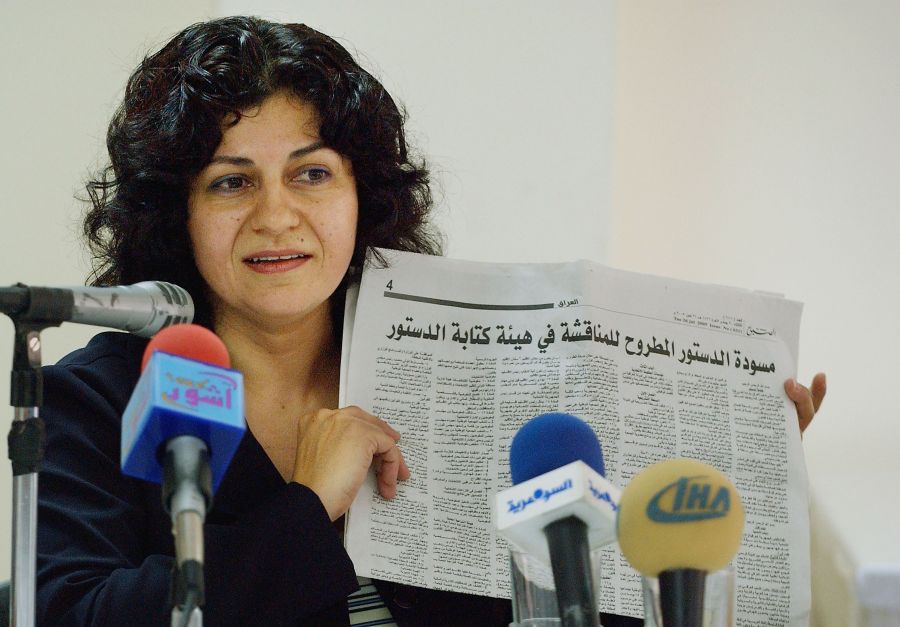
On 2 March 2026, woman human rights defender and feminist Yanar Mohammed was killed in an armed attack in front of her residence in northern Baghdad.
Yanar Mohammed was a prominent Iraqi woman human rights defender and feminist, and the co-founder and director of the Organisation of Women’s Freedom in Iraq (OWFI). Since 2003, she had worked to protect women facing gender-based violence, including domestic abuse, trafficking, and so-called ‘honour killings.’ Under her leadership, OWFI established a network of safe houses across several Iraqi cities, providing protection and support to hundreds of women. Yanar Mohammed led these efforts despite all the ongoing impediments and risks. She was a strong advocate for secularism and women’s equality. Throughout her activism, Yanar Mohammed faced death threats and, at times, was forced to restrict her movement. {see also: https://humanrightsdefenders.blog/2019/01/07/women-human-rights-defenders-in-iraq-have-to-live-dangerously/]
According to an offical statement from OWFI, on 2 March 2026 at 9:00, two unidentified gunmen on motorcycles opened fire on Yanar Mohammed as she stood outside her home. She was quickly transported to the hospital, however, despite the effort of medical personnel, she succumbed to her injuries.
Reportedly, Yanar Mohammed had returned to Baghdad from Canada just a few days prior to her assassination, raising concerns about the potential surveillance and monitoring of her movements.
On 24 April 2026 UN experts condemned the murder of Iraqi human rights defender Yanar Mohamed in March by unknown perpetrators and urged the government to act swiftly to ensure accountability.