Global Citizen is a social action platform for a global generation that aims to solve the world’s biggest challenges. On the platform, you can learn about issues, take action on what matters most, and join a community committed to social change. toRegister: https://www.globalcitizen.org/
On 27 September 2025, United Nations High Commissioner for Human Rights Volker Türk joined award-winning actor, playwright, and Global Citizen and UN Women Goodwill Ambassador Danai Gurira, along with Global Citizen Prize winners Valeriia Rachynska, Director of Human Rights, Gender and Community Development at 100% Life (Ukraine), and Omowumi Ogunrotimi, Founder and Executive Lead of Gender Mobile Initiative (Nigeria), to announce commitments to protect human rights defenders and share powerful personal stories of impact at Global Citizen Festival in New York City
“Today, I want to recognise the many human rights defenders who risk their lives around the world, and the courage and dedication of all my UN Human Rights staff,” said UN Human Rights Chief Volker Türk in his video message for World Humanitarian Day. “The sacrifice of our colleagues strengthens our resolve to continue their essential work.”
Twenty-two years ago, a devastating attack struck the United Nations headquarters at the Canal Hotel in Baghdad, Iraq. The bombing claimed the lives of 22 UN staff members and left more than a hundred others injured. It was a day that profoundly shook the humanitarian community and continues to resonate decades later.
In Geneva, Switzerland, colleagues, families, and friends gathered at the UN Human Rights headquarters to pay tribute — not only to those killed in Baghdad but to all humanitarian workers who have lost their lives in service across the globe.
Each year, 19 August is observed as World Humanitarian Day, a moment to recognize those who dedicate themselves to alleviating human suffering, and to remember the victims of humanitarian crises worldwide.
This year’s ceremony included a reading of the names of the 22 UN staff members who perished in the 2003 Baghdad attack, along with colleagues killed in Afghanistan, Haiti, and Rwanda, followed by a minute of silence. Flowers were later placed at the memorial to Sergio Vieira de Mello, the Secretary-General’s Special Representative for Iraq at the time, who also died in the bombing.
Nada Al-Nashif, the UN Deputy High Commissioner for Human Rights and a survivor of the Canal Hotel bombing, reflected on her experience when she was UNDP Country Director in Iraq during the commemoration in Geneva.
“We were caught up in a feverish excitement at the thought of what could be achieved, the endless possibilities of support, advice, assistance,” she said. “Even as we took daily risks and coped with the unrelenting pressure of delivering, we were sustained by a certain innocence — the belief that the big blue UN flag was our protection, its folds sufficiently strong to make us untouchable.”…
“Over two decades later, it is a humbling story of recovery that I am proud to tell; a journey of individual and collective resilience, a re-dedication to our cause, the cause of global justice and dignity, guided by an extraordinary commitment to service and the deep awareness that as humans, we are one.”
The event also highlighted the grave risks humanitarian workers face today, including targeted attacks that have led to deaths, injuries, abductions, and detentions. With 2024 marking the deadliest year on record for humanitarian personnel, concerns are growing that 2025 could prove even worse.
From Afghanistan to Sudan, from Gaza to Venezuela, humanitarian and human rights workers continue their missions under severe risks and limited access. With nearly 60 armed conflicts ongoing around the globe, the scale and complexity of crises are growing, and so are their human rights implications.
At the ceremony through prerecorded videos, staff from Haiti and Sudan remarked on the importance of humanitarian work.
Abdelgadir Mohammed, a Human Rights Analyst with UN Human Rights in Sudan, highlighted that the escalation of conflict in March and April 2025 has triggered a sharp rise in human rights violations, including ethnically targeted attacks and widespread sexual and gender-based violence, particularly in Darfur.
“I believe that human rights save lives,” he said. “I believe that human rights monitoring and reporting plays a critical role in protecting affected populations.”
Marie Sancia Dossier, a Protection Officer for UN Human Rights in Haiti, noted that as of 2025, nearly 85 percent of the capital’s metropolitan area is under the control of armed gangs, whose influence continues to expand across the country.
“Our motivation is an act of rebuilding and strengthening social cohesion, the rule of law and respect for human rights,” she said. “We are not only implementers. Together with institutions and civil society, we are co-builders of resilience, justice and social transformation. Our aim is to see a country where rights are respected, where institutions serve citizens, and where every person, regardless of their situation, can live in safety and dignity.”
The UN High Commissioner for Human Rights Volker Türk highlighted the critical role of human rights defenders in today’s tumultuous global landscape in a speech on 13 January 2025 to Wilton Park, the executive agency of the United Kingdom’s Foreign office.
For many workers, defending human rights is not just a job, but a calling. As he noted, many “work out of a deep sense of service to others, and a desire to make a meaningful impact.”
From conflict zones to post-war societies, they provide crucial support to detainees and victims of torture, deliver emergency relief, document violations and expose the root causes of conflict.
“Human rights defenders are key to conflict resolution. They are the messengers of dignity, justice and peace,” said Mr. Türk.
However, despite their invaluable work, human rights defenders face “unacceptably high” threats, with some attacks amounting to war crimes.
For journalists and humanitarian workers, being killed, kidnapped, harassed or detained has become an increasingly likely reality.
Women are particularly vulnerable, often targeted by sexual violence, online threats and risks to their family.
Mr. Türk cited the criminalisation of dissent, the forceful suppression of peaceful protests and restrictions on non-governmental organisations as alarming developments.
These events often force human rights defenders to operate in exile, exposing them to new forms of persecution and repression, including online surveillance.
“The full impact of digital technologies on the work and safety of human rights defenders is not yet known,” he warned, underlining the urgency of addressing these modern threats.
Mr. Türk urged governments to take decisive action, including establishing well-resourced national protection systems and supporting civil society networks that provide cross-border protection. He also noted the importance of reacting swiftly to emerging threats.
“The risks of this work must not be shouldered by the defenders alone,” he said, emphasising the need to support NGOs at risk and to push back against the labelling of defenders as terrorists, foreign agents or traitors.
“We must do everything we can to make sure [defenders] can operate safely wherever they are,” he concluded.
Volker Türk, United Nations High Commissioner for Human Rights
Global CITIZENS FESTIVAL 2024
New York
Friends, New Yorkers, global citizens.
Human rights defenders are champions for our future – shining a light on repression, on injustice and on solutions to humanity’s greatest challenges.
In return, they are often smeared, intimidated, imprisoned, and worse.
According to data gathered by my Office, last year, 320 human rights defenders, journalists and trade unionists in 40 countries were killed. Many of them while protecting nature and the environment.
Across the globe, environmental human rights defenders are leading efforts to tackle a climate crisis that is growing ever more ferocious, more terrifying, and more present.
They are standing up for the marginalized, for the natural world, and for the planet.
For the human right to a clean, healthy and sustainable environment.
They deserve our gratitude and our protection.
My office is proud to support the Leaders Network for Environmental Activists and Defenders (LEAD), a new initiative focused on meaningful and safe participation of defenders in climate and environmental discussions.
But they need your support too. So I urge you to join my office.
Take action to protect civic space and help us to build a more sustainable and more equal future.
On 1 July 2024 Arab News reported that Volker Turk, the UN High Commissioner for Human Rights stated rhat “when athletes use their voice to promote equality in sport, they are human rights defenders”. “They often speak out at great risk to themselves and to their careers, in a context that has not always been open to criticism from the inside. Because — as in other areas — power dynamics are still very much at play in the sporting world, and more is needed to dismantle them.” Turk, who did not name any athletes, said those who use their voice to address issues in their sport or in society should be protected and given “avenues to speak out and seek redress, safely and without fear of reprisals.” Turk was speaking at the UN Human Rights Council in Geneva on a panel alongside Thomas Bach, the president of the International Olympic Committee (IOC), on human rights and the Olympics ahead of the Paris Summer Games.
On 08 May 2024 the OHCHR published the address by Volker Türk, UN High Commissioner for Human Rights, to the 2024 Global Alliance of National Human Rights Institutions Annual Conference:
…The role that National Human Rights Institutions (NHRIs) can play in this era of global crises is more crucial than ever. An era of deepening divisions between our human family, where inequalities are widening, where poverty is at levels not witnessed in a generation.
…It implies that everyone can – and must – be a partner in the human rights movement. Including the private sector. This conference will address some of the big questions on the impacts – both negative and positive – that business can have on human rights.
On climate change, how can business avoid and avert harm, and instead innovate and adapt to be part of the solution?
On civic space, particularly in the online world, how can business live up to their responsibilities to enable and nourish freedom of expression and at the same time protect the human rights defenders bravely demanding change? More broadly, how can regulatory and policy measures on human rights work best for business, and how can we guarantee the necessary protection and support for affected individuals and communities?
And of course, ultimately, how can NHRIs leverage their unique mandate to guide and support businesses in addressing these issues?
The private sector is a key piece of the architecture needed to rebuild trust, and to restore faith in the unifying power of human rights. The landmark Edinburgh Declaration provides a robust framework to help NHRIs in these efforts.
And NHRIs are also playing a crucial role in ensuring governments live up to their responsibilities to implement effective remedies for the individuals and communities harmed by business-related activities.
As you well know, the United Nations Guiding Principles on Business and Human Rights were developed to protect against human rights abuse by business activity. The gold standard to ensure that business is held accountable. That business keeps on enhancing and adapting their practices to put human rights front and centre. And that victims of abuse have access to remedy.
Over the past thirty years, my Office has worked closely with Member States and their NHRIs to better promote and protect all human rights at the national level. A growing interest from countries in not only establishing NHRIs, but ensuring that they are independent, and that they are effective…
To date, 120 NHRIs have been accredited by the Global Alliance in an internationally legitimate process serviced by my Office. Eighty-eight of those have received ‘A’ status for their full compliance with the Paris Principles, the standards which all NHRIs must meet.
At the international level, too, my Office has supported NHRIs and their regional and global networks to engage with the UN human rights mechanisms, including the treaty bodies and the Human Rights Council, its Universal Periodic Review and the Special Procedures…
On 3 May, 2024 at 5.30 pm in the Maison de la Paix, Geneva Graduate Institute, and to mark World Press Freedom Day, the Freedom Cartoonists Foundation and the City of Geneva will be awarding its 2024 international editorial cartoon prize [City of Geneva’s International Press Cartoon Award]. See: https://www.trueheroesfilms.org/thedigest/awards/EBEE0ECF-565B-6614-9B67-A6938EB46155
The public event is fully booked, but a livestream will be available on this page.
Keynote by the 2003 Nobel Peace Prize laureate Shirin Ebadi from Iran, (mentor of Narges Mohammadi, current Nobel Peace Prize winner imprisoned in Teheran), in discussion with Christiane Amanpour, CNN chief international anchor and member of the Foundation’s advisory board.
Followed by a debate on women cartoonists around the world, with Ann Telnaes (USA), Rachita Taneja (India) and Willis from Tunis (Tunisia), moderated by Christiane Amanpour. Presentation of the “Kofi Annan Courage in Cartooning Award 2024” by the City of Geneva and the Freedom Cartoonists Foundation.
Introductions by Chappatte and Marie Heuzé (Chair and Vice-Chair of the Foundation), Sami Kanaan (Administrative Councillor of the City of Geneva) and Volker Türk (UN High Commissioner for Human Rights).
Film made by True Heroes Films.
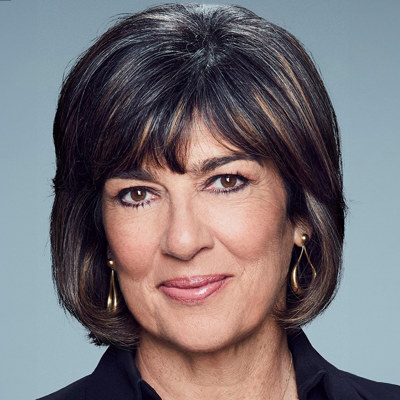
Christiane Amanpour, CNN anchorwoman, member of the foundation’s advisory board
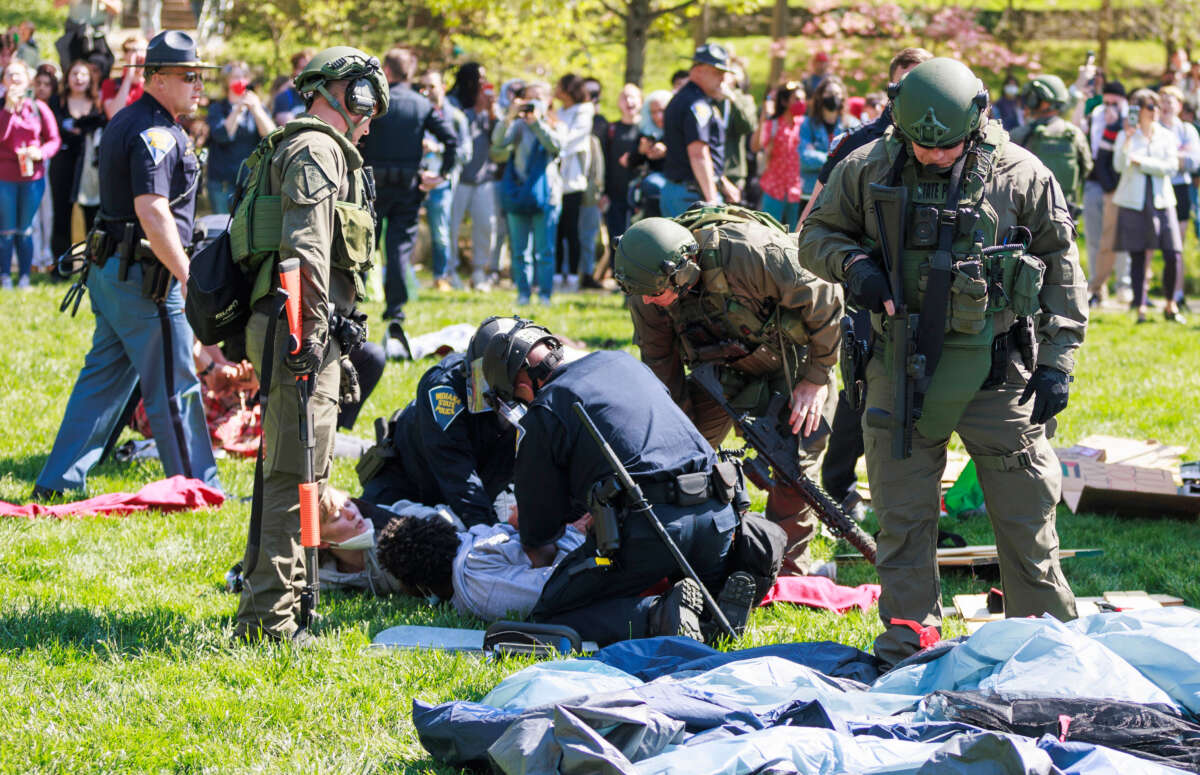
UN human rights officials are expressing alarm over the recent wave of violent repression by university administrators against the student protests for Palestinian liberation that have swept the U.S., raising concerns that protesters’ rights to free speech and assembly are being violated.
A statement on Tuesday said that UN High Commissioner for Human Rights Volker Türk, the UN’s top human rights officer, is “troubled” over a “series of heavy-handed steps taken to disperse and dismantle protests” across U.S. college campuses.
“Freedom of expression and the right to peaceful assembly are fundamental to society — particularly when there is sharp disagreement on major issues, as there are in relation to the conflict in the Occupied Palestinian Territory and Israel,” said Türk. “I am concerned that some of the law enforcement actions across a series of universities appear disproportionate in their impacts.”
Over the last two weeks, over 1,200 protesters have been arrested across dozens of campuses after university administrators enlisted police to crack down on encampments and other demonstrations set up by students calling for their schools to divest from Israel and supporting corporations, among other demands. At some universities, administrators even allowed law enforcement officers to aim sniper rifles at their students for their peaceful acts of protest.
UN Special Rapporteur on Human Rights Defenders Mary Lawlor said that universities’ crackdowns are an obvious violation of students’ rights.
At the 55th session of the Human Rights Council, Volker Türk – UN High Commissioner for Human Rights – made his overview statement on 4 march 2024. Here some highlights:
….Around the world, 55 conflicts are flaring. Widespread violations of international humanitarian and human rights law are generating devastating impact on millions of civilians. Displacement and humanitarian crises have already reached an unprecedented scale. And all of these conflicts have regional and global impact.
Overlapping emergencies make the spectre of spillover conflict very real. The war in Gaza has explosive impact across the Middle East. Conflicts in other regions – including in the Horn of Africa, Sudan and the Sahel – could also escalate sharply. Increasing militarisation on the Korean Peninsula raises threat levels. The deteriorating security c risis in the eastern provinces of the Democratic Republic of the Congo, which the Council will address on 3 April, is alarming. In the Red Sea, as well as the Black Sea, attacks are creating shock-waves for the global transport of goods, adding to the economic pain inflicted on less developed countries…..
In Latin America and the Caribbean, the prevalence and violence of gangs and organized crime have severe impact on the lives and rights of millions of people, including in Ecuador, Haiti, Honduras and Mexico. Punitive and militarized responses have in some cases led to grave human rights violations, potentially further fuelling violence. Only policies grounded in human rights can provide effective and sustainable solutions. Corruption, impunity, poor governance and the structural root causes of violence – such as discrimination and failure to uphold economic, social and cultural rights – must be tackled, with the full participation of civil society and affected communities. International cooperation needs to be enhanced, to address the illegal arms trade and ensure accountability for transnational crimes…
Fear is fragmenting societies across the world, unleashing fury and hatred. They are also fuelled by a winner-take-all attitude that frames elections as the spoils of conquest.
..Good governance requires constant oversight and accountability, via independent checks and balances to the exercise of power, meaning that it is strongly underpinned by the rule of law, including independent justice systems. Fundamental freedoms – the rights to freedom of opinion, expression, peaceful assembly and association – are also essential.
…
I am profoundly concerned by the prospect of intense disinformation campaigns in the context of elections, fuelled by generative artificial intelligence. There is an acute need for robust regulatory frameworks to ensure responsible use of generative AI, and my Office is doing its utmost to advance them…
Autocracy and military coups are the negation of democracy. Every election – even an imperfect one – constitutes an effort to at least formally acknowledge the universal aspiratio n to democracy However, in a so-called ‘illiberal democracy’ – or, as the Prime Minister of Hungary referred to his country, an ‘illiberal State’ – the formal structure of election is maintained, civic freedoms are restricted, the media’s scrutiny of governance is eroded by installing government control over key media outlets, and independent oversight and justice institutions are deeply undermined, concentrating power in the executive branch.
It is important to recognise that in many cases, this year’s electoral processes will ensure a smooth transfer of power, free of hatred; and that the governance structures that result will broadly achieve their main function of representing the many voices of the people, and advancing their rights.
But in other cases, I have serious concerns about the human rights context in which several elections are taking place.
In the Russian Federation, the authorities have further intensified their repression of dissenting voices prior to this month’s Presidential election. Several candidates have been prevented from running, due to alleged administrative irregularities. The death in prison of opposition leader Alexei Navalny adds to my serious concerns about his persecution. Since the onset of Russia’s war on Ukraine, t housands of politicians, journalists, human rights defenders, lawyers and people who have simply spoken their minds on social media have faced administrative and criminal charges, and this trend appears to have worsened in recent months, with many cultural figures targeted. Last month, a new bill passed into law that further punishes people convicted of distributing information deemed to be false about Russia’s armed forces, as well as people who seek to implement decisions by international organizations that the Russian Federation “does not take part in”. I urge a swift and comprehensive review of all cases of deprivation of liberty that result from the exercise of fundamental freedoms; as well as an immediate end to the repression of independent voices and the legal professionals who represent them. The future of the country depends on an open space.
Iran’s legislative election three days ago was Iranians’ first opportunity to vote since the “Women, Life, Freedom” protests of 2022 and 2023. It took place in a country that has been deeply divided by the Government’s repression of the rights of women and girls. People who participated in the protests have been persecuted, imprisoned on long sentences and in some cases, put to death. The draft Bill on “Supporting the Family by Promoting the Culture of Chastity and Hijab”, if adopted, would impose severe punishments for acts that should not be deemed criminal in any country. In my ongoing engagement with the Iranian authorities, I have urged immediate reforms to uphold the rights of all Iranians, including the right of women to make their own choices, and an immediate moratorium on the death penalty….
In the United States of America, in this electoral year, it is particularly important for authorities at all levels to implement recent recommendations by the UN Human Rights Committee to ensure that suffrage is non-discriminatory, equal and universal. A 2021 Presidential executive order acknowledges that disproportionate and discriminatory policies and other obstacles have restricted the right to vote for people of African descent, and emphasises the need to overturn them. Yet according to the Brennan Center for Justice , at least 14 states have passed laws in 2023 that have the effect of making voting more difficult. In a context of intense political polarisation, it is important to emphasise equal rights, and the equal value of every citizen’s vote…
In Afghanistan, I deplore continuing and systematic violations of human rights, particularly the comprehensive violations of the rights of women and girls, which exclude them from every aspect of public life, including secondary and tertiary education; employment; and movement. Advancing the rights of women and girls must be the highest priority for all who work on and in Afghanistan. The civic freedoms and media freedoms of all Afghans are profoundly curtailed, with many women human rights defenders and journalists suffering arbitrary detentions. The resumption of public executions is horrific. I remain concerned about forced expulsion of Afghans from neighbouring countries, particularly for those who face a risk of persecution, torture or other irreparable harm in Afghanistan.
In the United Arab Emirates, another mass trial is underway based on counter-terrorism legislation that contravenes human rights law. In December, new charges were brought against 84 people, including human rights defenders, journalists and others who were already in prison. Several were nearing the end of their sentence or have been arbitrarily held in detention after completion of their sentence. Their joint prosecution constitutes the second-largest mass trial in the UAE’s history, after the so-called “UAE94” case in 2021, and includes many of the same defendants. I remain concerned about broader patterns of suppression of dissent and the civic space in the country, and I urge the Government to review domestic laws in line with international human rights recommendations.
Dialogue between China and my Office continues in areas such as counterterrorism policies, gender equality, minority protection, civic space, and economic, social and cultural rights. As we move forward, it is important that this dialogue yield concrete results, notably in respect of the policy areas raised during the Universal Periodic Review. I recognise China’s advances in alleviating poverty and advancing development, and I have urged that these advances be accompanied by reforms to align relevant laws and policies with international human rights standards. During the UPR, China announced plans to adopt 30 new measures for human rights protection, including amendments to the Criminal Law, and revisions of the Criminal Procedure Law. My Office looks forward to engaging with China on this; I particularly encourage revision of the vague offence of “picking quarrels and making trouble” in Article 293 of the Criminal Law, and I urge the release of human rights defenders, lawyers and others detained under such legislation. I also call on the Government to implement the recommendations made by my Office and other human rights bodies in relation to laws, policies and practises that violate fundamental rights, including in the Xinjiang and Tibet regions. I am engaging with the Hong Kong authorities on continuing concerns about national security laws…
In many countries, including in Europe and North America, I am concerned by the apparently growing influence of so-called “great replacement” conspiracy theories, based on the false notion that Jews, Muslims, non-white people and migrants seek to “replace” or suppress countries’ cultures and peoples. These delusional and deeply racist ideas have directly influenced many perpetrators of violence. Together with the so called “war on woke,” which is really a war on inclusion, these ideas aim to exclude racial minorities – particularly women from racial minorities – and LGBTQ+ people from full equality. Multiculturalism is not a threat: it is the history of humanity, and deeply beneficial to us all.
Peace, like development, is built and nourished through rights. It is by upholding and advancing the full spectrum of human rights, including the right to development and the right to a clean, healthy and sustainable environment, that States can craft solutions that are durable – because they respond to the universal truth of our equality and the inextinguishable desire for freedom and justice.
History is a record of humanity’s capacity to surmount the worst challenges. Among the greatest achievements of humanity over the past 75 years has been the recognition that addressing human rights in every country– all human rights; it is not an à la carte menu – is a matter of international concern.
On 13 February 2024, UN High Commissioner for Human Rights Volker Türk urged EU leaders to approve a ground-breaking agreement on business and human rights, amid reports that support for the measure may now be in question in the European Council.
“The adoption of the Corporate Sustainability Due Diligence Directive would show historic leadership by the EU at a time when global leadership in support of human rights is needed more than ever,” said Türk.
“For the past four years, work on the Directive has seen unprecedented involvement by many stakeholders, including business and my Office, as well as political commitment from EU institutions and Member States to push it forward. This process has truly raised hopes of ensuring more effective management of human rights risks by large companies.”
“For the Directive to fail now would be a massive blow,” he said.
The EU-wide Directive would require certain large EU and non-EU companies to take reasonable steps to identify and address adverse human rights risks.
“Human rights due diligence is feasible and supports sustainable business processes that deliver long-term value to society at large. And for those reasons it also makes eminent business sense,” said Türk.
Many of the companies that would fall within the Directive’s scope have backed its adoption. It would create a level playing field by harmonizing disparate rules across jurisdictions.
“The agreement on the Directive is reported to be substantially aligned with the UN Guiding Principles on Business and Human Rights and other relevant international human rights standards. I am convinced the Directive can make a positive contribution to respect for human rights, and its adoption would send an important message of solidarity to those at risk from business activities,” the UN Human Rights Chief said.
A vote on the Directive is possibly due later this week.




 Hans Thoolen on Human Rights Defenders and their awards