Posts Tagged ‘UN’

HRC45: key issues for human rights defenders

September 6, 2020

Based on the as usual excellent preview by the ISHR: “HRC45 | Key issues on the agenda of September 2020 session”,  I am able to provide an overview of issues that are specially relevant for human rights defenders:

Summary: The Human Rights Council’s 45th session will take place from 14 September to 6 October 2020. The Council will consider issues including reprisals, rights of indigenous peoples and people of African descent, arbitrary detention, and enforced disappearances, among others. It will present an opportunity to address grave human rights situations in States including Yemen, China, the United States of America, Saudi Arabia, Libya, the Philippines, Venezuela, Burundi and Myanmar, among many others. Here’s an overview of some of the key issues on the agenda.

If you want to stay up-to-date: Follow @ISHRglobal and #HRC45 on Twitter, and look out for our Human Rights Council Monitor.

Modalities for civil society participation in HRC45

NGOs in consultative status with ECOSOC, with active designations in Geneva, will be given the opportunity to deliver video-statement insofar as interactive dialogues are concerned, pending further decision from the Council at the opening of HRC45 on 14 September, and additionally for panels and the adoptions of UPR outcomes as set out in HRC decision 19/119. It won’t be possible to hold “official” side events during the 45th session (online or in-person). Any events happening on the sidelines of the session will be considered independent events and won’t be publicised in the Bulletin of Informal meetings by the Secretariat. Read here the information note by the Secretariat which is updated according to the latest information, and an additional explainer by HRC-net.

Thematic areas of interest

Reprisals

On 25 September, the new Assistant Secretary General for Human Rights, Ilze Brands Kehris, will present the Secretary General’s annual report on Cooperation with the United Nations, its representatives and mechanisms in the field of human rights (also known as ‘the Reprisals Report’) to the Council in her capacity as UN senior official on reprisals. The presentation of the report will be followed by a dedicated interactive dialogue, as mandated by the September 2017 resolution on reprisals.

ISHR remains deeply concerned about reprisals against civil society actors who engage or seek to engage with UN bodies mechanisms. We call for all States and the Council to do more to address the situation.  [see also: https://humanrightsdefenders.blog/2020/08/31/ishrs-2020-report-on-reprisals-to-the-un-secretary-general/]

The dedicated dialogue provides a key opportunity for States to raise concerns about specific cases of reprisals, and demand that Governments provide an update on any investigation or action taken toward accountability. An increasing number of States have raised concerns in recent sessions about individual cases of reprisals, including in Egypt, Nicaragua, Cuba, Saudi Arabia, Malaysia, Bahrain, Yemen, Burundi, China and Venezuela.

During the 42nd session, the Council adopted a resolution which listed key trends, such as the patterns of reprisals, increasing self-censorship, and the use of national security arguments and counter-terrorism strategies by States as justification for blocking access to the UN. The resolution also acknowledged the specific risks to individuals in vulnerable situations or belonging to marginalised groups, and called on the UN to implement gender-responsive policies to end reprisals. The Council called on States to combat impunity and to report back to it on how they are preventing reprisals, both online and offline.

Other thematic issues

At this 45th session, the Council will discuss a range of civil, political, economic, social and cultural rights and issues through dedicated debates with Special Procedure mandate holders, including interactive dialogues with the:

  1. Working Group on Enforced or Involuntary Disappearances
  2. Special Rapporteur on truth, justice, reparation and guarantees of non-recurrence
  3. Special Rapporteur on the implications for human rights of the environmentally sound management and disposal of hazardous substances and wastes 
  4. Special Rapporteur on contemporary forms of slavery, including its causes and consequences
  5. Working Group on Arbitrary Detention

In addition, the Council will hold dedicated debates on the rights of specific groups including with the:

  1. Special Rapporteur  on the rights of indigenous peoples and the Expert Mechanism on the Rights of Indigenous Peoples
  2. Working Group of Experts on People of African Descent
  3. Independent Expert on the enjoyment of all human rights by older persons 

Country-specific developments

China (Hong Kong and Uyghur regions)

In light of worsening restrictions in Hong Kong and ongoing repression against Uyghur, Tibetan and other ethnic groups and those defending them, ISHR welcomes the joint statement from July and urges countries to step up action at HRC45 to improve the UN’s monitoring and reporting on China. This echoes the unprecedented press release by over 50 Special Procedures experts calling for urgent and ‘decisive measures’. ISHR expects opportunities for States to increase scrutiny, and for civil society who seek to keep the UN informed, to include:

  • interventions in dialogue with the UN WGAD and UN WGEID
  • responses to the Secretary General’s reprisals report, where China is regularly a ‘top violator’
  • reactions to the findings of the UN Independent Expert on Older Persons, following her December 2019 country visit

USA

The High Commissioner will present her first oral update to the Council on the preparation of the report on systemic racism and police brutality, especially those incidents that resulted in the death of George Floyd and of other Africans and people of African descent, as well as government responses to anti-racism peaceful protests. The High Commissioner will also provide an update on police brutality against Africans and people of African Descent.

ISHR joined 144 families of victims of police violence and over 360 civil society organisations to endorse this letter sent on 3 August to the UN High Commissioner, detailing expectations from the report and the process for its preparation, including an “inclusive outreach to communities of colour and the creation of meaningful, safe, and accessible opportunities for consultation”. On 19 August 2020, the High Commissioner responded to the letter. Read the response here.

ISHR urges all States to support the five recommendations presented by families of victims of police violence and civil society to the High Commissioner, in their national and joint statements at the Council under General Debate Item 9.

Background information: The report was mandated by the resolution adopted following the urgent debate at the Council in June 2020 on current racially inspired human rights violations, systemic racism, police brutality and violence against peaceful protests in the US and elsewhere. Though the urgent debate prompted by the African group initially called for the establishment of an international commission of inquiry on the US and other countries, due to acute diplomatic pressure from the US and its allies, the Council finally decided to instead mandate the High Commissioner with preparing the report, and to include updates on police brutality against Africans and people of African descent in all her oral updates to the Council.

In June 2020, ISHR joined the calls made by the families of George Floyd, Breonna Taylor, Philando Castile and Michael Brown and over six hundred human rights organisations from over 60 countries in requesting the Council to mandate a commission of inquiry for the situation of racism and police brutality in the United States. The UN Special Rapporteur on contemporary forms of racism, racial discrimination, xenophobia and related intolerance and the UN Working Group on Experts on People of African Descent had also voiced their support for the international commission of inquiry. They have urged the Council to ensure the following outcomes from the debate:

  1. the creation of an international commission of inquiry to investigate systemic racism in law enforcement in the United States; and
  2. the creation of a thematic international commission of inquiry to investigate systemic racism in law enforcement globally, with a focus on systemic racism rooted in legacies of colonialism and transatlantic slavery.

They stressed that “both measures described above are necessary and cannot be substituted for one another”. The experts “expressed serious concern that extreme pressure by certain powerful and influential countries—including countries that publicly voiced support for the need to take action in the face of systemic racism—has operated to dilute the strength of the planned consensus resolution of the Urgent Debate.”

Saudi Arabia

Women human rights defenders have been in prison for over two years, only because they demanded that women be treated equally as men. No one has been held accountable for their torture. While the Council has sustained pressure on Saudi Arabia in 2019, it is essential that this scrutiny continues as the situation on the ground has not improved. ISHR calls on all States to jointly call on Saudi Arabia to immediately and unconditionally release the WHRDs and drop the charges against them; and implement the bench-marks set out in the two joint statements delivered by Iceland and Australia in 2019, underlining that should these benchmarks not be met, more formal Council action would follow.

Saudi Arabia is running for Human Rights Council elections in October 2020 and hosting the G20 in November 2020. These all provide windows of opportunity to push for the immediate and unconditional release of the women human rights defenders and all those detained for exercising their rights. [see also: https://humanrightsdefenders.blog/2020/09/02/vloggers-selling-their-souls-to-boost-image-of-arab-regimes/]

Venezuela

The time has come for the fact-finding mission on Venezuela, created by the Human Rights Council last September, to report to the Council. ISHR has joined 85 national, regional and international organisations calling for the renewal and strengthening of the mandate, to keep the pressure on Venezuela. National NGOs have highlighted the ongoing human rights violations in the country as evidence that the new mandate should include an exploration of the root causes of these violations; a preservation of evidence to allow for processes to hold individual perpetrators to account, and a focus on gender-based violence. Oral statements from OHCHR will also be presented this session as will – potentially – a second resolution focusing on technical cooperation. The fact-finding mission’s report is due to be published on 15 September, with the interactive dialogue with States due the following week.

Philippines

The Anti-Terrorism Law passed earlier this month complements the Duterte Administration’s arsenal of tools, giving it the ability to label, detain and eliminate government critics using a vague definition of ‘terrorism’. In the prevailing climate of impunity and attacks against human rights defenders, this law granting the government excessive and unchecked powers will further jeopardise the safety of defenders.

This law passed in the context of ongoing violations against defenders in the country, with recent instances of judicial harassment of defenders and targeting defenders with smear campaigns. It is the most recent example of the government’s worsening human rights record. The recent report of the UN High Commissioner highlights widespread and systematic killings and arbitrary detention in the context of the war on drugs, silencing of independent media and critics, and stark and persistent impunity.

ISHR joined the calls by civil society and UN Special Procedures for an independent investigation mechanism into the human rights situation in the Philippines.

Burundi

ISHR joined more than 40 partners in a civil society call made public ahead of the 45th session, urging States to support the renewal of the mandate of the Commission of Inquiry (CoI) on Burundi.

Burundi is in a period of potential transition, following the 20 May 2020 presidential, legislative and local elections resulting in the election of a new President, Évariste Ndayishimiye and after the death of former President Nkurunziza. At this moment and in this context, there are signs of promise as well as of significant concern. Despite promising remarks by President Ndayishimiyeduring at his inauguration, as well as the authorities’ new, more transparent approach to tackling the COVID-19 pandemic, observers also raised concerns, notably over the fact that several newly appointed members of the Ndayishimiye administration are subject to international individual sanctions for their alleged responsibility in human rights violations. Nonetheless, the political transition represents an opportunity to open a new chapter for the Burundian people and for Burundi’s relationship with the UN human rights system.

As of today, the Commission of Inquiry remains the only independent mechanism mandated to monitor and document human rights violations and abuses, and publicly report on the situation in Burundi, with sufficient resources and experience to do so. At its 45th session, the Council should avoid sending the Government of Burundi signals that would disincentivise domestic human rights reforms, such as terminating the CoI’s mandate in the absence of measurable progress. It should avoid a scenario where re-establishing the CoI’s mandate would be necessary after a premature discontinuation, because of a renewed escalation of human rights violations and abuses. The Council should rather ensure continued investigations, monitoring, public reporting, and public debates on Burundi’s human rights situation.

Egypt

The ‘Terrorism Circuit courts’ in Egypt are enabling pre-trial detention as a form of punishment including against human rights defenders and journalists, such as Ibrahim Metwally, Mohamed El-Baqer and Esraa Abdel Fattah, Ramy Kamel, Alaa Abdel-Fattah, Patrick Zaky, Ramy Shaat, Eman Al-Helw, Solafa Magdy and Hossam El-Sayed. All of the individuals that the Special Procedures and the High Commissioner have written about since September 2019 are still in pre-trial detention by these courts.

ISHR urges States to call on Egypt to immediately and unconditionally release all those detained for exercising their human rights, to stop using pre-trial detention as a punishment, and to take immediate measures to guarantee their rights to contact their families on a regular and continuous basis and to ease sending and receiving letters, food and medical supplies to them.

Background information: Seven UN experts have expressed concern about the collective and corrosive effects of Egypt’s counter-terrorism laws and practices on the promotion and protection of human rights. They stated that “Despite [] repeated communications by UN experts over arbitrary detention of individuals, human rights defenders and activists, the Egyptian Government has not changed its laws of practice”. The government’s response to the UPR in March 2020 demonstrated its lack of political will to address key concerns raised by States and to engage constructively with the Council. For example, the government refused to acknowledge the systematic and widespread attacks against defenders, the practice of torture and ill-treatment in detention centres, and to receive visits by Special Rapporteurs on torture and human rights defenders. The government claimed that no one is detained for exercising their rights, despite the fact that the UN Working Group on Arbitrary Detention found that arbitrary detention is a systematic problem in Egypt and could constitute a crime against humanity.[see also: https://humanrightsdefenders.blog/2020/08/27/egypt-15-year-term-for-human-rights-defender-bahey-el-din-hassan/]

Other country situations

The High Commissioner will provide an oral update to the Council on 14 September 2020. The Council will consider updates, reports on and is expected to consider resolutions addressing a range of country situations, in some instances involving the renewal of the relevant expert mandates. These include:

  • Oral update by the High Commissioner on the human rights situation in Nicaragua 
  • Oral updates by the High Commissioner, and an Interactive Dialogue on the report of the independent international fact-finding mission on the Bolivarian Republic of Venezuela
  • Enhanced Interactive Dialogue on the report of the HC on the situation of human rights in Myanmar, including of Rohingya Muslims and other minorities, an interactive dialogue on the report of on the Independent Investigative Mechanism on Myanmar, and an Interactive Dialogue with the SR on the situation of human rights in Myanmar
  • Interactive Dialogue with the Commission of Inquiry on Burundi 
  • Interactive Dialogue with the Commission of Inquiry on the Syrian Arab Republic 
  • Enhanced Interactive Dialogue with the Commission on Human Rights in South Sudan
  • Interactive dialogue with the Group of Eminent International and Regional Experts on Yemen 
  • Interactive Dialogue with the High Commissioner on the situation of human rights in Ukraine 
  • Interactive Dialogue with the Special Rapporteur on the situation of human rights in Cambodia 
  • Enhanced Interactive Dialogue with the High Commissioner on the situation of human rights in the Democratic Republic of the Congo and on the final report of the team of international experts on the situation in Kasai
  • Interactive Dialogue with the Independent Expert on the situation of human rights in Somalia
  • Enhanced Interactive Dialogue with the Independent Expert on the situation of human rights in the Sudan 
  • Interactive Dialogue with the Fact-finding mission on Libya
  • Interactive Dialogue with the Independent Expert on the situation of human rights in the Central African Republic 
  • Presentation of the High Commissioner’s report on cooperation with Georgia 

Council programme, appointments and resolutions

Appointment of mandate holders

The President of the Human Rights Council will propose candidates for the following mandates:

  1. Special Rapporteur on the rights of persons with disabilities 
  2. Working Group on Arbitrary Detention, member from African States and member from Latin American and Caribbean States
  3. Working Group on discrimination against women and girls, member form Latin American and Caribbean States
  4. Working Group on Enforced or Involuntary Disappearances, member from African States
  5. Working Group on the use of mercenaries as a means of violating human rights and impeding the exercise of the right of peoples to self-determination, member from Asia-Pacific States
  6. Independent Expert on the situation of human rights in the Sudan (if renewed).

Resolutions to be presented to the Council’s 45th session

At the organisational meeting on 31 August the following resolutions were announced (States leading the resolution in brackets):

  1. Special Rapporteur on hazardous waste mandate renewal (African Group)
  2. Working Group of Experts on People of African Descent mandate renewal (African Group)
  3. From rhetoric to reality – a global call for concrete action against racism, racial discrimination, xenophobia and related intolerance (African Group)
  4. Technical assistance and capacity building in Sudan (African Group)
  5. Human rights and indigenous peoples (Mexico, Guatemala)
  6. Human rights and terrorism (Egypt, Mexico)
  7. The human rights to safe drinking water and sanitation (Germany, Spain)
  8. Technical assistance and capacity building in Yemen ((Yemen)
  9. Local government and human rights (Chile, Egypt, South Korea, Romania)
  10. The human rights situation in Yemen (the Netherlands, Belgium, Canada, Ireland, Luxembourg)
  11. Independent expert on the human rights situation in Somalia (Somalia and the United Kingdom)
  12. Technical cooperation and capacity building in the field of human rights (Brazil, Honduras, Indonesia, Morocco, Norway, Qatar, Singapore, Thailand, Turkey)
  13. Accountability for ensuring women’s and girls’ full enjoyment of human rights in humanitarian settings (Canada, Fiji, Georgia, Uruguay, Sweden)
  14. Human rights and the regulation of civilian acquisition, possession and use of firearms (Ecuador, Peru)
  15. Rights of the Child (EU, GRULAC)
  16. Human rights situations in Burundi (EU)
  17. IGWG Private military and security companies mandate renewal TBC (South Africa)
  18. Elimination of discrmination against women and girls in sport (South Africa)
  19. Inequalities in and amongst States in the realization of human rights (South Africa)
  20. National human rights institutions (Australia)
  21. Contribution of Human Rights Council to prevention of human rights violations (Norway, Sierra Leone, Switzerland, Uruguay)
  22. Safety of journalists (Austria, Brazil, France, Greece, Morocco, Qatar, Tunisia)
  23. Special Rapporteur on the promotion of truth, justice, reparation and guarantees of non-recurrence mandate renewal (Switzerland, Argentina, Morocco)
  24. Enforced disappearances mandate renewal (France, Argentina, Morocco, Japan)
  25. Women, peace and security (Spain, Argentina, Azerbaijan, Namibia, Tunisia, Finland)

Adoption of Universal Periodic Review (UPR) reports

During this session, the Council will adopt the UPR working group reports on Kyrgyzstan, Guinea, the Lao People’s Democratic Republic, Lesotho, Kenya, Armenia , Guinea-Bissau, Sweden, Grenada, Turkey, Kiribati and Guyana. ISHR supports human rights defenders in their interaction with the UPR and publishes briefing papers regarding the situation facing human rights defenders in some States under review and advocate for the UPR to be used as mechanism to support and protect human rights defenders on the ground. This session of the Council will provide an opportunity for Turkey and Guinea to accept recommendations made in relation to human rights defenders, as proposed in ISHR’s briefing papers.

Panel discussions

During each Council session, panel discussions are held to provide member States and NGOs with opportunities to hear from subject-matter experts and raise questions. Three panel discussions are scheduled for this upcoming session:

  1. Annual half-day discussion on the rights of indigenous peoples. Theme: Protection of indigenous human rights defenders
  2. Biennial panel discussion on the right to development. Theme: COVID-19 and the right to development: we are all in this together
  3. Annual discussion on the integration of a gender perspective throughout the work of the Human Rights Council and that of its mechanisms. Theme: Gender and diversity: strengthening the intersectional perspective in the work of the Human Rights Council

https://www.ishr.ch/news/hrc45-key-issues-agenda-september-2020-session


UNDP launches a Global Initiative on Business and Human Rights

July 8, 2020

With thanks to Reliefweb for posting on 7 July 2020 here UNDP’s launch of a project to implement the human rights and bussines agenda.

Excerpts from the speech by Mourad Wahba (Assistant Administrator of UNDP and Director of the UNDP Regional Bureau for Arab States):

UNDP has been working on advancing the business and human rights agenda since 2016 when we started a regional programme in Asia, built around the participation and partnership of governments, businesses, Civil Society organisations, National Human Rights Institutions, trade unions and other stakeholders. Our work has been strongly aligned with the UN Working Group on Business and Human Rights, the Office of the High Commissioner on Human Rights, ILO and the OECD.

Our collaboration will now grow. Last week, UNDP launched a Global Initiative on Business and Human Rights building on our achievements in Asia, which will incrementally expand to the rest of the world.

The Global Initiative will have four main fronts:

  1. Supporting governments in developing and implementing National Action Plans;
  2. Strengthening access to justice for victims of business-related human rights abuses;
  3. Advising corporations on how to address human rights risks; and
  4. Enabling peer-learning for government officials, businesses, civil society and national human rights institutions.

We are honoured to partner with the Working Group and OHCHR, to chart the lessons learned since the adoption of the Guiding Principles and accelerate their implementation. Over the coming 12 months we will be hosting regional consultations, which will guide the development of a joint Roadmap for the Next Decade of Business and Human Rights.

Our network of five regional offices and 170 country offices will be leveraged to ensure all relevant stakeholders, including representatives of vulnerable and marginalised groups, are consulted on the way forward.

UNDP believes that the elaboration of this Roadmap should be guided by the goals set in the 2030 Agenda and the Secretary General’s Call to Action for Human Rights….

See also: https://humanrightsdefenders.blog/2020/01/28/ngos-demand-that-rules-against-strategic-lawsuits-against-public-participation-slapp-are-upgraded/

https://reliefweb.int/report/world/project-launch-business-and-human-rights-towards-decade-global-implementation

Recent events make that May 20 elections in Burundi should be postponed

May 18, 2020
IDN-InDepthNews

It is a matter of extreme urgency that Burundi’s presidential, legislative, and local elections, scheduled for May 20, be postponed. Admittedly, it’s the eleventh hour, but the contagion of violence, and the viral contagion of COVID-19, make rescheduling imperative. Three events of the past several days make an incontrovertible  argument:

  • On May 14, the United Nations Commission of Inquiry (COI) on Burundi—investigating alleged crimes against humanity committed by Burundian government forces since September 2016  —released an urgent statement in light of the “numerous acts of violence and human rights violations” occurring during the election campaign. The Commission made clear that accelerating violence and the “shrinking of democratic space” put the electoral process at serious risk.
  • On May 13, the Burundian government expelled the World Health Organization (WHO) team just as the pandemic inexorably spreads in Burundi. The government has done little to address the COVID-19 crisis. Massive campaign events are being held—making a mockery of physical distancing — in blatant defiance of WHO recommendations. And now the government, in a spasm of defensive irrationality, declares the WHO persona non grata.
  • And, on May 8, the Burundian government informed the East African Community that election monitors would be required to quarantine for 14 days, effectively preventing them from entering Burundi before the May 20 vote. The election will thus be held without any international monitoring to ensure that the vote is free and fair.

Pierre Nkurunziza, granted the title of “Supreme Guide of Patriotism,” heads an authoritarian regime. Nkurunziza, who is not standing for re-election, has chosen as his successor a man who is complicit in the alleged crimes against humanity now being investigated by the UN’s COI and the International Criminal Court. His name is Evariste Ndayishimiye, a retired army general who has served as minister of the interior and security. “Do not be afraid,” General Ndayishimiye said of COVID-19 during the campaign. “God loves Burundi, and if there are people who have tested positive, it is so that God may manifest his power in Burundi.”

New reports from Human Rights Watch and Amnesty International amply testify that the crisis in Burundi has been worsening as the election nears. Government forces are launching attacks against real and perceived regime opponents. The few remaining independent media outlets are being threatened and harassed. Human rights defenders have either fled the country or been intimidated into silence…………..

[see: https://humanrightsdefenders.blog/tag/burundi/]


https://www.indepthnews.net/index.php/the-world/africa/3544-burundi-threatens-to-deal-a-severe-blow-to-un-reputation


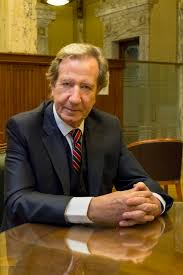
In memoriam Leandro Despouy: Argentinean human rights defender at the global level

March 16, 2020

When a good friend and soul mate dies, it is sometimes difficult to write something meaningful. So it was when I learned that Argentine human rights lawyer Leandro Despouy – whom I have known since 1976  – had died on 18 December 2019 in Buenos Aires, after a two-year battle with cancer. He was born on 4 April 1947 in San Luis.

The Argentine media paid quite a bit of attention to his passing but (understandably?) focused on his place in Argentinean politics (in the Radical Party) and his institutional role as Head of the Auditoría General de la Nación from 2002 – 2016.  But Leandro Despouy was of great importance to the international human rights movement as it developed in the last quarter of the 20th century. I hope that this ‘obituary’ does some justice:

He started as a lawyer and university teacher before state terrorism (in the form of the far-right death squad Alianza Anticomunista Argentina, known as Triple A) pushed him into exile in 1975 to France. He stayed a refugee until 1983 when he was able to return to his beloved country where he was appointed Extraordinary and Plenipotentiary Ambassador for Human Rights by President Alfonsin. More about what he was able to do in that capacity follows below but I wanted to give special attention how remarkably active Leandro was during his exile. He did not succumb to porosity and made the best of his chances. Always upbeat and entrepreneurial he had great social skills.

Friends helped him with a part-time job (between 1975-1977) as professor of Political Economy at the Université de Paris VIII. In order to make ends meet he accepted many different part-time jobs, including (his favorite!) driving around fashion models and their clothes. The models were quickly enamored of this elegant Latino and sometimes donated suits making him the best dressed refugee in Paris. His own work situation improved when he became one of the assistants of well-known parliamentarian Nicole Questiaux for the 13th arrondissement in Paris and as from July 1981 for her replacement, Louis Moulinet.

Interestingly enough his first activist attention while in exile went to the repressive situation in Uruguay (he told me it was easier to keep politics out of it than in the case of his own country) and it was in that context that we set up SIJAU (Secretariat Internationale des Juristes pour l’Amnestie en Uruguay). Leandro – with the help of French lawyers like Joinet and Weil – managed to organise in December 1978 in the French Senate (!) an international conference that helped the opposition to unite and put pressure on Uruguay.

He undertook a similar effort on Paraguay with the creation of SIJADEP (Secretariat Internationale des Juristes pour l’Amnestie et Democratie en Paraguay).

Leandro was regularly in Geneva to follow up with the UN (and sleeping on my couch) and when the first UN mandate for disappearances was created he was briefly hired as a consultant by the then Director Theo van Boven. The Argentine Ambassador got wind of it and with ‘terrorist’ accusations this had to be terminated quickly.  In the summer of 1982 he did a short stint as Professor of Human Rights at the Centre International des Droits de l`Homme, in Strasburg, France.

Then comes the return to Argentina with the slow process of normalisation and the question of how to deal with the crimes of the recent past. From 1984-1989  he is General Director of Human Rights at the Ministry for Foreign Affaires and with it comes a series of opportunities at the international level. Here some examples:

President of the First International Conference of States Parties on the Convention against Torture and other Cruel, Inhuman or Degrading Treatment or Punishment (1987).

In 1983 Leandro becomes a Member of the UN Sub-Commission on the Prevention of Discrimination and Protection of Minorities (later reduced to an advisory body for the new Human Rights Council). He plays a very active role, as Chairman and as:

  • Special Rapporteur of the Subcommission on disabled persons and human rights to study the connection between human rights, violations of fundamental human freedoms and disability which resulted in his final report, “Human Rights and Disabled Persons.” Which was adopted by ECOSOC resolution 1992/48 of March 1992
  • Special Rapporteur of the same on extreme poverty and human rights. Interim report adopted on 10 June 1994, E/CN.4/Sub.2/1994/19

In 2000 Leandro heads the Argentine Delegation at the 57th Session of the United Nations Commission on Human Rights and from March 2001 to March 2002 he is President of this Commission (currently the United Nations Human Rights Council).

In 2002 in Argentina he becomes the President of the Auditor General’s office (a function reserved for a member of the opposition under the Argentine constitution) but continues to accept assignments of an international nature:

In 2003: he is appointed as Special Rapporteur on the Independence of Judges and Lawyers, United Nations Human Rights Council (until 2009). In that capacity he and four other special rapporteurs asked in 2005 to be admitted to Guantanamo Bay to visit the prisoners held at the US naval base. He and one other was refused permission (see: https://newsarchive.ohchr.org/EN/NewsEvents/Pages/DisplayNews.aspx?NewsID=608&LangID=E}

He remained a sought-after speaker at courses and conferences, such as those organized by the International Institute of Humanitarian Law of San Remo, the Committee of the International Red Cross, FLACSO Argentina ,Harvard University, the European Society of International Law, and the Université de la Sorbonne Nouvelle.

In 1993 he becomes the Assistant Special Representative of the Secretary Generals of the United Nations and Organization of American States, in the context of the UN and OAS joint mission to Haiti.  Between 1999 and 2006 he regularly carried out Expert tasks mandated by a variety of UN agencies for short jobs in e.g.: Brazil, Paraguay, Equatorial Guinea, Colombia, Russia and Ecuador.

This is of course not a complete biography and any additional information would be most welcome. Leandro certainly deserves a lot more recognition at the international level. When Ben Whitaker died in 2014. Leandro was one of the first to honor his contribution [see: https://humanrightsdefenders.blog/2014/07/16/ben-whitaker-died-one-of-the-early-human-rights-defenders-at-the-international-scene/]. I hope this does the same for Leandro.

New academic study of UN human rights treaty system calls for online databases on impact

February 16, 2020

Christof Heyns (University of Pretoria; Member of the UN Human Rights Committee.) and Frans Viljoen (Director, Centre for Human Rights, University of Pretoria) reported on 11 February 2020 in Global Rights on the progress being made in a new, global academic study to answer the question “What difference does the UN human rights treaty system make, and why?”.

An comprehensive research project on the impact of the treaty system, which started some years ago, is now being expanded into a global study….The first steps of the study were taken two decades ago by a team of researchers coordinated from the University of Pretoria, in collaboration with the UN Human Rights Office (OHCHR). …..The researchers documented numerous instances of impact, and we were in a position to draw general conclusions, published as a book and an article. This included that the evidence showed that the treaty system has had an enormous impact on the protection of human rights on the ground, in particular through the—recognized or unrecognized—incorporation of treaty norms into domestic law.

The following factors were found to be among those that have enhanced its impact: a strong domestic constituency for specific treaties; national action plans; and the windows of opportunity that comes with a change to democracy. We also laid strong emphasis on a greater emphasis on the role of national human rights institutions in mediating impact, and for them to do follow-up.

Factors found to have limited the impact of the system included the following: concerns for State sovereignty; a lack of knowledge of the system; the absence of a robust domestic human right culture; ineffective coordination between governmental departments; an ad-hoc approach to reporting; federalism; reprisals against human rights defenders; a preference for regional systems; and weak follow-up by treaty bodies.

We reported a rallying cry from many far-flung countries that ‘Geneva is very far’—not only in terms of geography but also in terms of accessibility and psychological ownership. And we proposed that the treaty bodies should consider holding some of their meetings away from  UN headquarters in Geneva.

Now, twenty years later, we are reviewing the same 20 countries, again with the help of researchers based in the respective countries, and again in collaboration with the OHCHR. We are asking the same questions. This study is now nearing completion, and we plan to publish it in the middle of next year, this time, with Professor Rachel Murray from Bristol University as co-editor. The data from the more recent study is still coming in. So far, the results provide further evidence of the strong impact of the system in most countries. However, a systematic analysis will only be possible once all the data has been gathered.

In the meantime, some of the issues identified up in the earlier study have been taken up within the system. There is for example a much stronger recognition of the role of national implementation and monitoring mechanisms. The Disability Rights Convention adopted in 2007, explicitly calls for creation of national ‘focal points’ and the designation of national human rights institutions to promote, protect and monitor implementation of the Convention….

The need to ‘bring the system closer to the ground’  is now recognized by a range of NGOs in preparation for the 2020 review of treaty bodies. The idea of treaty body meetings outside Geneva was advanced again by Heyns and Gravett in a blog two years ago, also on the basis of the regional experience, and the first such meeting for a UN treaty body is now being planned for 2020.

During the course of these two studies, we became very aware of the importance of getting a clear picture of the impact of the system, but also of the limitations of what we were doing. With only 20 countries covered, the sample size is quite limited; and, providing a snapshot at a particular moment in those countries means they are quickly overtaken by events. Following wide consultation, we are currently in the process of setting up an online database, where information on the impact of the system in all UN member states will be posted. The 20 country studies mentioned above, as well as the supporting documentation, will for a start be posted on a website. In the meantime, clinical groups are being formed at universities around the world, where international students are gathering the relevant information on their home countries, to be posted on the website. We anticipate that up to 50 new countries will be covered per year and ones covered earlier will be updated. In an era of crowd-sourcing, contributions from all interested parties—NGOs, individual researchers etc.—will be solicited.

This will be a large-scale and long-term research project, but hopefully it will help to allow the collective wisdom of people anywhere in the world to ensure that the treaty system remains as effective and as responsive to the needs of our time as is possible. It is also intended, in some way, to be a response to the lament that ‘Geneva is very far’ and to ensure that the treaty system is brought closer to the actual rights-holders, even if only virtually.

The treaty system has played a pivotal role in developing the substantive norms of the global human rights project over the last six decades. The future of the treaty system depends on whether it will continue to lead the way on substance, but more is required: it will have to enhance its visibility and broaden its ownership to a global audience, and treaty norms will have to find their way into domestic law and practices. This is the gap that the new study aims to help fill.

See also: https://humanrightsdefenders.blog/2015/02/17/treaty-bodies-case-law-database-saved-and-resurrected-by-un/

https://www.openglobalrights.org/what-difference-does-un-human-rights-treaty-system-make/

Film “Sergio” (Vieira de Mello): first reviews decidedly mixed

January 31, 2020
This new film directed by Greg Barker [see also: https://humanrightsdefenders.blog/2014/01/23/we-are-the-giant-film-about-the-arab-spring-here-is-the-trailer/] and based on his own award-winning documentary, confusingly also called Sergio, is a biographical drama about Sérgio Vieira de Mello, a diplomat from Brazil who worked for the United Nations High Commissioner for Refugees (UNHCR) for most of his life and was briefly High Commissioner for Human Rights. He was celebrated as a pre-eminent humanitarian before tragically dying in the Canal Hotel bombing in Iraq alongside many of his staff in 2003. The fiction film Sergio made its premiere at the Sundance Film Festival on 28 January 2020 before heading to Netflix.

Kayleigh Donaldson in Screenrant of 2 january 2020 wrotes perhaps a bit too breathlessly that the film Sergio is “one of the most anticipated Netflix original movies in 2020“.

Now the first two reviews are out and they indicate that it is foremost a romantic story that is well acted but diverts a lot from reality.

Jessica Kiang in Variety of 29 January 2020 is the more critical and – in my view – serious voice:

… handsome, heroic, charismatic de Mello (played with persuasive charm by Wagner Moura) certainly does seem like a man whose present was shaped by …the better, brighter, freer global future he believed the U.N. could be instrumental in achieving and that he personally could help midwife into being. Such noble intentions and such impact on world affairs does render understandable Barker’s rather starry-eyed approach, but [puts] unnecessary length and sentimental emphasis on the man’s romantic life…

..First, we spin forward to the 2003 bombing of the U.N. headquarters in Baghdad, which was ordered by terrorist leader Abu Musab al-Zarqawi and which claimed at least 22 lives and wounded over 100 people, and here provides a loose framing device. De Mello and close associate Gil Loescher (Brian F. O’Byrne), both critically wounded, were trapped under tons of rubble in the blast, and … screenwriter Craig Borten imagines a borderline delirious de Mello reliving moments of significance from his storied life. Chief among these reminiscences is the tale of his romance with Carolina Larriera.. .an Argentinian U.N. economic adviser whom the married father-of-two met while brokering a peace deal between the rebels and the Indonesian government in East Timor.

In Adrian Teijido’s calm, throughful photography (it’s a refreshing choice to not go the shaky handheld docudrama route), de Armas and Moura make an attractive couple, and de Armas is able to imbue Carolina — whose role seems just a little wispy on the page — with an intelligence and will that makes her more than just de Mello’s romantic foil. But Barker’s emphasis on this love story at the expense of a deeper exploration of the exceptional talents that earned de Mello his reputation for feats of diplmatic wizardry in highly fraught situations where others had tried and failed, also has a curiously flattening effect.

Although the relationship with Larriera was doubtless crucially important to de Mello, it was not the thing that made him extraordinary in the eyes of the world. And so the hesitant courtship, the smouldering looks, and the romancing, including a tasteful but unnecessarily lengthy sex scene over which Fernando Velázquez’ otherwise rather generic political-thriller score crescendos like it’s high drama, all feel like a distraction from the more thorny and politically provocative side of de Mello’s story. That’s especially irksome given that the scenes of geopolitical debate, diplomatic argument and even ego clash between de Mello and the world-wearily witty Loescher … are actually where the film crackles to life.

…But this sentimental approach glosses over much of the potential drama that is set up only to dissipate: de Mello’s prickly relationship with U.S. Envoy Paul Bremer (Bradley Whitford); his association, criticized by Loescher, with war criminals and terrorists if he believed it could achieve his ends; and his fateful decision to send the U.S. Army guards away from the U.N. office in Baghdad in 2003. Sergio Vieira de Mello was, by all accounts, not a man who let fear of making the wrong decision stop him from acting decisively, and it’s a shame that the soft-edged romantic prevarications of “Sergio” prevent the film from embodying that same dynamism.

Courtesy of Sundance
 John DeFore in Hollywood Reporter of 30 January 2020 sees a more than successful transition from documentary to a feature film:

… Rather, it’s one of those rare films .. in which a genuine concern for geopolitics coexists perfectly well with romance and old-fashioned moviegoing pleasures. This portrait of influential U.N. diplomat Sergio Vieira de Mello benefits immensely from two magnetic leads, Wagner Moura and Ana de Armas, whose onscreen chemistry is undeniable; but its deft sense of structure is of equal importance, making it an engrossing picture even for those who know next to nothing about its subject or settings.

..Sergio and refugee expert Gil Loescher were trapped alive in the rubble; as a framing device, Sergio sets flashbacks to various points in his career during the hours when two American soldiers (Garret Dillahunt and Will Dalton) worked to extract the pinned men. These episodes help cement the diplomat’s reputation as an idealistic fix-it man for some of the world’s trickiest conflicts. …Sergio is out for a jog during his East Timor assignment when he passes another jogging foreigner, Carolina Larriera (de Armas). The attraction is immediate, but the film savors its development: …While the film plays up Sergio’s attractiveness to the younger woman (shirtless, the 50 year-old man probably bore little resemblance to Moura), it’s not blind to emotional flaws: He’s ignorant of key facts about his two sons’ lives, and he admits he’s most attentive to relationships and projects whose timeframe is finite.

Also on hand in East Timor is Loescher (Brian F. O’Byrne), who will be trapped by his side in Baghdad. The real Loescher, who had two legs amputated in his rescue from the site, was an independent expert who was only in Sergio’s Baghdad office (along with Arthur Helton – see: https://en.wikipedia.org/wiki/Arthur_Helton) to interview him for a column on openDemocracy.net. In Sergio, Loescher is a composite, depicted as Vieira de Mello’s right-hand man for multiple U.N. missions — the conscience who argues against his boldest moves. As a storytelling device, this works quite well; but using Loescher’s real name is an unexpected choice for a documentarian, and confuses the truth for no reason. [my view: INDEED – see also: https://humanrightsdefenders.blog/2017/06/07/gil-loescher-life-long-defender-of-rights-of-refugees-honored/ and https://www.imdb.com/title/tt0479980/]

Those who know the history intimately may take issue with other condensations that play perfectly well to a layperson: Sergio’s interactions with U.S. diplomat Paul Bremer (Bradley Whitford) are dramatically satisfying, and seem to capture the general nature of U.S./U.N. friction at the time; a question regarding the U.S. Army’s protection of Sergio’s office is probably also finessed for maximum thematic effect. The picture is most vulnerable to Hollywoodisms in scenes set after the bombing, as Carolina looks frantically for Sergio; the latter dreams of a sunny beach in his native Rio de Janeiro; and those soldiers heroically try to extract him despite having none of the necessary rescue equipment. But, coming late in the film as they do, these indulgences feel appropriate to the film’s lionization of its subject and investment in the couple’s relationship. Sergio believes in heroes and big ideals, and hopes we’re capable of the same belief…

Monica Castillo in NBC of 31 January 2020 adds an interview with the star Wagner Moura who “was so intrigued by Vieira de Mello’s story that he signed on as a producer for the movie. In the interview with NBC News, Moura said that this is the first of many stories he’d like to share to address the lack of Latinos on the screen. In the interview he also says “this guy is kind of a personal hero for me, and I’ve been working with the U.N. for a while; I’m a goodwill ambassador for the ILO [International Labour Organization] and the fight against slave labor..[Sergio] was a man who dedicated his life to human rights. When he was killed, he was the high commissioner for human rights; when he started in the U.N., he was the high commissioner for refugees“. Well he was NOT, he worked for the UNHCR.

——
https://variety.com/2020/film/uncategorized/sergio-review-1203473960/
https://screenrant.com/netflix-original-movies-anticipated-2020/
https://www.hollywoodreporter.com/review/sergio-1274882
https://www.nbcnews.com/news/latino/sergio-narcos-star-wagner-moura-plays-latino-who-doesn-t-n1127341

Colombia: 21 January 2020 civil society begins a much-needed Patriotic March

January 20, 2020

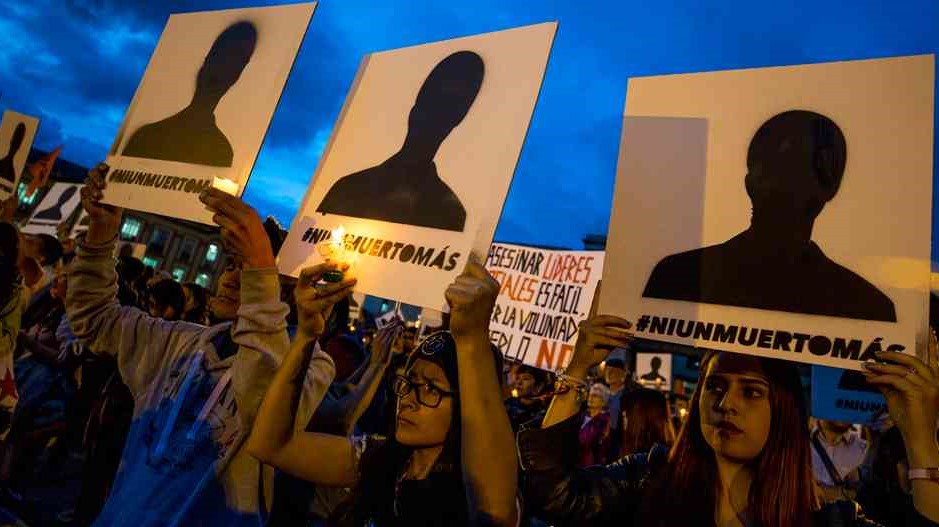
The United Nations’ mission chief told the Security Council on Monday 13 January that Colombia will not achieve peace “if the brave voices of social leaders continue to be silenced” and urged government action. In his address to the council, UN mission chief Carlos Ruiz dismissed President Ivan Duque‘s recent claim that violence against human rights defenders and community leaders dropped 25% last year. In the course of 2020, already 15 social leaders have been assassinated in an exceptional spike in political killings, according to independent think tanks. “On December 23, artist and social leader Lucy Villareal was killed in the Nariño department after conducting an artistic workshop for children and the killings of former FARC-EP combatants resumed on the very first day of the year with the death in the Cauca department of Benjamin Banguera Rosales,” Ruiz highlighted. Ruiz additionally warned that “the pervasive violence in conflict-conflicted areas continues to threaten the consolidation of peace as illustrated by several profoundly worrying developments in the last few weeks.”

According to conflict expert Camilo Gonzalez of think tank Indepaz, 368 community leaders and human rights defenders have been assassinated since Duque took office in August 2018. Gonzalez confirmed social organizations’ claims that “there is an omission or even complicity by elements of the public force, by agents of the state” with illegal armed groups accused of many of the killings. While Duque has blamed drug trafficking for the killings, think tanks and the United Nations have said that also land disputes and mining are among the main motives for the killings.

——-

https://www.plenglish.com/index.php?o=rn&id=50838&SEO=illegal-wiretapping-of-journalists-denounced-in-colombia

https://reliefweb.int/report/colombia/security-council-press-statement-colombia-3

15 community leaders assassinated in Colombia in 2020

UN mission chief says Colombia should ‘urgently’ and ‘fully’ implement peace deal

https://www.newsclick.in/colombia-stories-pain-and-resistance

https://www.batimes.com.ar/news/latin-america/united-nations-envoy-for-colombia-peace-depends-on-stopping-killings.phtml

Colombia’s human rights defender Leyner Palacios threatened by armed group

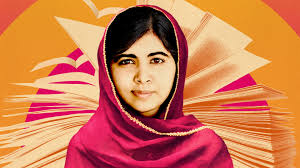
Malala Yousafzai, a lot more awards than the UN thinks

January 13, 2020

On 27 Pakistani human rights defender Malala Yousafzai has been declared as “the most famous teenager in the world” by the United Nations in the ‘Decade in Review‘ report of the UN. In recognition of her efforts for children’s rights which started before she was shot in the head by Taliban militants, Malala Yousafzai became the youngest recipient of the Nobel Peace Prize in 2014. According to the UN review reportThe attack made waves around the world and was widely condemned. On Human Rights Day that year, a special tribute to Malala was held at the Paris headquarters of UNESCO, pushing for action to ensure every girl’s right to go to school, and to advance girls’ education as an urgent priority,”.

Malala’s activism and profile have only grown since the assassination attempt. She won several high-profile awards, including the 2014 Nobel Peace Prize (alongside Indian social reformer Kailash Satyarthi), and became a UN Messenger of Peace in 2017, with a special focus on girls’ education,” the report added. Recently the 22-year-old was also chosen by Teen Vogue as its cover person for its last issue of the decade.

Just to make sure the record is correct, Malala has in fact received at least the following 10 awards:

2013   Vital Voices Global Leadership Awards

2013   Index on Censorship Awards

2013   Simone de Beauvoir Prize

2013   Tipperary Peace Prize

2013   Sakharov Prize for Freedom of Thought

2013   Ambassador of Conscience Award

2013   Anna Politkovskaya Award

2014   Franklin Roosevelt Four Freedoms Award

2014   Nobel Peace Prize

2014   Liberty Medal

https://news.un.org/en/story/2019/12/1053481


Nobel Peace Prize laureate Malala Yousafzai declared as “the most famous teenager in the world”: UN

UN seeking out civil society:  on-line consultations from 13 -24 January 2020. 

December 30, 2019

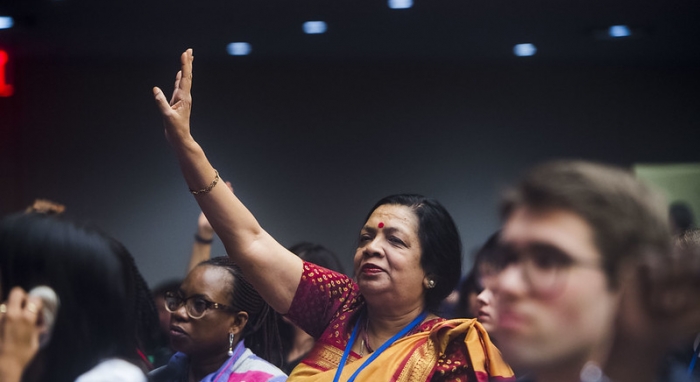
The Office of the High Commissioner for Human Rights (OHCHR) is inviting civil society globally to assist them in defining guidelines on how the UN can best contribute to promoting and safeguarding civil society space.  The aim is to define guidelines to encourage an effective and consistent approach across UN agencies and inform the methods of work of mechanisms.  This initiative was given a boost by the UN Secretary General who, in a recent audit of the work of the UN in regard to human rights defenders, called for the definition of ‘a system-wide approach to strengthen civil society space’ and ‘guidance on United Nations engagement with and support for human rights defenders.’ The consultation process will be held online from the 13-24 January 2020 on the Global Dev Hub platform.

This is a moment for all civil society players who see the value of greater and more effective engagement with UN agencies and bodies, to provide input on how best this should be done,’ said ISHR’s Eleanor Openshaw.There are no national-level consultations being held to our knowledge, but a full week of online consultations will, hopefully, provide many of us with the opportunity to participate,‘ she added.  The UN is seeking thoughts on a series of questions related to three key areas:  partnership and participation, the protection of civil society actors, and the promotion of and advoacy for civic space.

For further information and the key questions, see the UN consultation invitations in  English

Sad end of year message by Andrew Gilmour as he leaves his UN post

December 29, 2019

His assesment of the human rights situation – as laid down in the article ofThe past decade has seen a backlash against human rights on every front, especially the rights of women and the LGBT communities. Andrew Gilmour said the regression of the past 10 years hasn’t equaled the advances that began in the late 1970s — but it is serious, widespread and regrettable. He pointed to “populist authoritarian nationalists” in North America, South America, Europe and Asia, who he said are taking aim at the most vulnerable groups of society, including Myanmar’s Rohingya Muslims, Roma, and Mexican immigrants, as well as gays and women. He cited leaders who justify torture, the arrests and killing of journalists, the brutal repressions of demonstrations and “a whole closing of civil society space.”

I never thought that we would start hearing the terms ‘concentration camps’ again,” Gilmour told The Associated Press in an exclusive interview. “And yet, in two countries of the world there’s a real question.” He didn’t name them but appeared to be referring to China’s internment camps in western Xinjiang province, where an estimated 1 million members of the country’s predominantly Muslim Uighur minority are being held; and detention centers on the United States’ southern border, where mostly Central American migrants are being held while waiting to apply for asylum. Both countries strongly deny that concentration camp-like conditions exist.

….Despite his dim view of the past decade, Gilmour — a Briton who previously worked in politics and journalism — said he didn’t want to appear “relentlessly negative.” “The progress of human rights is certainly not a linear progression, and we have seen that,” he said. “There was definite progression from the late ’70s until the early years of this century. And we’ve now seen very much the counter-tendency of the last few years.”

He pointed to the fact that in the past eight years or so, many countries have adopted laws designed to restrict the funding and activities of nongovernmental organizations, especially human rights NGOs. And he alleged that powerful U.N. member states stop human rights officials from speaking in the Security Council, while China and some other members “go to extraordinary lengths to prevent human rights defenders (from) entering the (U.N.) building even, let alone participate in the meetings.”…..

The rights of women and gays are also at stake, Gilmour said. He said nationalist authoritarian populist leaders such as Hungarian Prime Minister Viktor Orban, Russian President Vladimir Putin and Turkish President Recep Tayyip Erdogan, have made “derogatory comments” about both groups. He said the U.S. is “aggressively pushing” back against women’s reproductive rights both at home and abroad. The result, he said, is that countries fearful of losing U.S. aid are cutting back their work on women’s rights. Gilmour also pointed out a report issued in September that cited 48 countries for punishing human rights defenders who have cooperated with the U.N. [See: https://humanrightsdefenders.blog/2019/12/10/andrew-gilmour-in-the-financial-times-about-reprisals/]

I feel that we really need to do more — everybody … to defend those courageous defenders,” he said. Gilmour said the U.N. should also stand up when it comes to major violations of international law and major violations of human rights, but “I have found it extremely difficult to do so in all circumstances.

..Gilmour said that after his departure from the U.N, he will take a fellowship at Oxford’s All Souls College, where he will focus on the importance of uniting human rights and environmental rights groups. “The human rights impact of climate change — it’s going to be so monumental,” he said.

What gives me hope as we start a new decade is that there will be a surge in youth activism that will help people to get courage, and to stand up for what they believe in,” he said.

https://apnews.com/1d7e80128857308743224aaaf28cd5f8