Posts Tagged ‘UN Special Rapporteur’

Burundian women’s rights defender Marie Louise Baricako pushes for a national dialogue

October 8, 2025
Marie Louise Baricako, a women’s rights activist from Burundi, in Geneva for the Human Rights Council (Geneva Solutions/Michelle Langrand)

Marie Louise Baricako, a women’s rights activist from Burundi, in Geneva for the Human Rights Council (Geneva Solutions/Michelle Langrand)

Michelle Langrand in Geneva Solutions of 8 October 2025, talks with Burundian women’s rights defender Marie Louise Baricako – who was In Geneva to attend the Human Rights Council. She warns that her country is sinking deeper into crisis as the region teeters on the brink, urging the international community to push for a national dialogue.

Marie Louise Baricako recalls the Arusha negotiations with a mixture of pride and sorrow. In the late 1990s, she pushed for women to have a seat at the table in the talks aimed at ending Burundi’s inter-ethic civil war – and yet, 25 years on, much of the agreement’s promises remain unfulfilled.

“If women are left out, Burundi will keep losing,” she says. “How can you hope to develop when 52 per cent of your population are left aside?”

Baricako has spent a lifetime trying to empower that 52 per cent. In 1988, she became the first Burundian woman to earn a PhD, studying in Cameroon, and later led the English department at the University of Burundi. Born in Muramvya province, she spent much of her adult life abroad, including in The Gambia, where she joined Femme Africa Solidarité, a feminist network founded in Geneva in 1996 to promote female leadership in peace, security and development……

Fortuné Gaetan Zongo, UN special rapporteur on Burundi since 2021, warns of a “real risk” of regional destabilisation. “If Kinshasa were to fall, Burundi would be deeply affected,” he tells Geneva Solutions. Some 78,000 Congolese refugees fleeing the violence have crossed into Burundi since the beginning of the year, raising questions about how Burundi, already struggling, can cope with their humanitarian needs while the UN aid system is strapped for cash.

Baricako sees how ethnic narratives continue to be exploited by those in power. “This is what our leaders today are nourishing, because in their mind, Tutsi had kept power for so long alone, excluding Hutus. Now, they say ‘we have taken it, we shall not release it, until Jesus comes back’,” she says.

Yet repression is not limited to a group. “When women or human rights defenders dare to speak out on any violation, the next day, either they are in prison or they are killed,” she says…

Despite the bleak prospects, Baricako places hope in ordinary Burundians. “They have had time to believe in these stories of Hutus or Tutsi being the enemy. Now I believe people have realised that it is not about the ethnic group,” she says. “Burundians want a peaceful country, and they are ready to work as hard as they can to rebuild Burundi.”

Baricako stresses that talks would lead to more unfulfilled promises without the participation of those in power. She calls on the African Union and the East African Community to step out of their indifference and pressure Burundi to the table.

Zongo, who has been met with the government’s outright refusal to cooperate with him and other human rights experts, also notes that certain states with good relations with Burundi, like Tanzania, DRC and Cameroon, “can convince Burundi to sit at the table and engage in cooperation.”

For all the setbacks, Baricako remains steadfast. “The support of civil society has been essential in staying strong and not abandoning the fight,” she says. “Peace is our business, whether they want it or not. I will not go to the battlefield with a weapon, but what I have in my heart, I will use it to stand for peace and security of Burundians.”

https://genevasolutions.news/human-rights/rights-defender-fights-for-political-way-out-as-burundi-sinks-deeper-into-crisis

UN expert urges support for Myanmar’s human rights defenders in face of military oppression

February 3, 2025

The fourth anniversary of the military coup in Myanmar is a time to mourn the loss of thousands of innocent lives at the hands of a brutal 2025military regime while celebrating the heroism of those who continue to stand up for human rights in a country under siege, a UN expert said on30januaary

It is also a time for the international community to provide the people of Myanmar a genuine partnership to help end this nightmare,” said Tom Andrews, Special Rapporteur on the human rights situation in Myanmar.

Andrews said four years of military oppression, violence and incompetence have cast Myanmar into an abyss.

“Junta forces have slaughtered thousands of civilians, bombed and burned villages, and displaced millions of people. More than 20,000 political prisoners remain behind bars. The economy and public services have collapsed. Famine and starvation loom over large parts of the population,” the Special Rapporteur said.

“The junta’s plans, including holding sham elections this year in a backdrop of escalating armed conflict and human rights violations, are a path to ruin,” Andrews said.

He said it was not possible to hold a legitimate election while arresting, detaining, torturing and executing leaders of the opposition and when it is illegal for journalists or citizens to criticise the junta.

“Governments should dismiss these plans for what they are – a fraud,” Andrews said.

He lauded pro-democracy activists, journalists, doctors, human rights defenders and citizens from all walks of life who have risked their lives to fight for Myanmar’s future.

The resilience and courage of Myanmar’s people continue to amaze and inspire others around the world. I am heartened by the courageous efforts of those documenting the junta’s crimes, caring for those injured by the attacks, providing food and shelter to those displaced, and teaching children whose education was upended by the coup. These heroic efforts are compelling indicators that Myanmar’s best days lie ahead,” the expert said.

Andrews said action by member states including targeted sanctions and a crackdown on the arms trade by Singapore have contributed to a one-third drop in the volume of weapons and military supplies the junta has been able to purchase through the formal banking system since the year ending March 2023.

“When governments muster the political will, they help save lives and support freedom in Myanmar,” the Special Rapporteur said, calling for stronger action from the international community. “The failure of the Security Council to take action requires that UN Member States who support human rights coordinate strong, sustained actions that can deny the junta the means to continue its brutality against the people of Myanmar.”

He urged governments to back efforts to hold perpetrators of grave human rights violations accountable, including in the International Criminal Court (ICC), and by supporting the democratic movement and civil society as they build the foundation for a strong justice system and transitional justice processes.

“Impunity has enabled a decades-long cycle of violence and oppression in Myanmar. Ultimately, this sad chapter of Myanmar’s history must end with junta leaders being prosecuted for their crimes,” Andrews said.

https://reliefweb.int/report/myanmar/un-expert-urges-support-people-myanmar-they-heroically-oppose-military-oppression

https://www.frontiermyanmar.net/en/america-first-in-action-trumps-aid-freeze-erodes-an-already-anemic-response-to-myanmar-crisis

UN experts demand detailed information on nine Tibetan environment defenders

August 18, 2023

From TibetanReview.net, on 11 August 2023:

Three UN human rights experts have issued a joint statement on Aug 10, asking the Chinese government to provide information about nine Tibetans imprisoned for their peaceful efforts to protect Tibet’s fragile environment.

The experts—the Special Rapporteur on the situation of human rights defenders (Ms Mary Lawlor); the Special Rapporteur on freedom of assembly and association (Mr Clément Nyaletsossi Voul); and the Special Rapporteur on human rights obligations relating to the enjoyment of a safe, clean, healthy and sustainable environment (Mr David Boyd)—have asked Beijing to provide details about the reason for the detention and the health conditions of the nine Tibetans, who were all taken in between 2010 and 2019.

“We urge the Chinese government to provide details on why and where they are being held and their health conditions, provide them with adequate medical care and permit their families access to visit them,” the Special Rapporteurs have said.

The experts have further made it clear that the lack of information shared by Chinese authorities could be interpreted as a “deliberate attempt” to hide the environmental defenders from global attention.

The nine Tibetans, identified in the release as Anya Sengdra, Dorjee Daktal, Kelsang Choklang, Dhongye, Rinchen Namdol, Tsultrim Gonpo, Jangchup Ngodup, Sogru Abhu and Namesy were all detained after they protested illegal mining activities or exposed the poaching of endangered wild lives.

Three of the activists are serving up to 11-years jail sentences. However, China has not made public the jail sentences of the remaining six, namely Dhongye, Rinchen Namdol, Tsultrim Gonpo, Jangchup Ngodup, Sogru Abhu and Namsey. [see also: https://humanrightsdefenders.blog/2022/08/31/enforced-disappearances-in-china/]

The experts have sought to know the extent of access to legal representation the imprisoned Tibetans had, and whether any of them had been provided with medical assistance while in prison.

Since the defenders were sentenced, the right to a clean, healthy and sustainable environment was recognised at the international level by the Human Rights Council and the General Assembly.

If China is committed to tackle the impacts of climate change, it should refrain from persecuting environmental human rights defenders and release all nine immediately,” the experts have said.

China has declared mining as one of its pillar industries in occupied Tibet, and has also continued to carry out massive environmentally devastating urbanization and infrastructure projects. These have led to increasing persecution and long-term imprisonment of many environment defenders.

In a report published in June 2022, Washington-based advocacy group International Campaign for Tibet had documented 50 known cases of such Tibetans arbitrarily detained, arrested, tried and/or sentenced since 2008. Of the 50 documented cases, the prison sentences imposed on 35 of the individuals are known. The sentences range from one year and nine months to 21 years, with an average sentence length of nine years, said the group Aug 10 while reporting on the UN experts’ statement.

The environmental health of Tibet has major global implications. As the world’s “Third Pole” and Asia’s “water tower,” the Tibetan Plateau holds the largest volume of frozen freshwater outside the polar regions and is the source of Asia’s eight great rivers, ultimately sustaining the livelihoods of up to 1.4 billion people living downstream, the group has pointed out.

http://www.phayul.com/2023/08/12/48800/

Coming up: Voices of Uyghur camp survivors – a conversation with Gulbahar Jalilova

May 24, 2021

The Voices of Uyghur camp survivors : a conversation with Gulbahar Jalilova, is organised by the International Service for Human Rights and the World Uygur Congress. This event will be held in English, with Uyghur and French interpretation. Time 25 May 2021 11:00 AM in Zurich

Description Over a million Uyghurs and Turkic Muslims people are held in internment camps in the Uyghur region, exposed to harsh detention conditions, sexual violence, and the suppression of culture and
religious practice.

Gülbahar Jalilova was arbitrarily detained for sixteen months: now in exile, she’s decided to speak out on what she’s been through as a woman detainee despite the very high risks she faces.

Last February, ten UN independent experts wrote to the Chinese government about her case, raising grave concern about violations of international human rights and requesting explanations. What is the impact of this letter? What can the United Nations do to push for greater documentation, accountability, and justice for victims?

An event with Gülbahar Jalilova, Elizabeth Broderick (Chair of the UN Working Group on discrimination against women and girls), and Zumretay Arkin (Program and Advocacy Manager, World Uyghur Congress). Moderation by Raphael Viana David (ISHR).

https://us02web.zoom.us/webinar/register/WN_aTNzmcMfTVqxuhkLNoqTsw

UN Special Rapporteur Léo Heller, under attack from industry, gets support from many NGOs

October 22, 2020

Over 100 civil society organizations (for the names, click the link at the end of the post) published a joint letter on 21 October 2020 to express their strong support for the ​report​ on “The Privatisation of Water and Sanitation Services” of the United Nations (U.N.) Special Rapporteur on the human rights to safe drinking water and sanitation, Mr. Léo Heller. He will present the report to the U.N. General Assembly today. They also express deep concern about the attempts by a group of private water operators to undermine the independence of the Special Rapporteur and his work. Programmes.

This new report is an important contribution to a debate that is crucial in current times. The role of private actors in the delivery of public services, including water and sanitation services, has been increasing in the last decades. In recent years, at least four other U.N. Special Procedures ( extreme poverty and human rights, education, housing, and debt) have written on this topic in their respective reports. Just this week, eight current and former U.N. Special Rapporteurs and independent experts met at a ​major event on privatisation​ gathering hundreds of people online, and five of them released an ​op-ed​ published worldwide on the importance of the issue of privatisation and human rights.
 
Mr. Heller’s report is balanced and acknowledges the diversity of context. His report is the result of his work over the last six years and, remarkably, it was prepared through ​several consultations that go far beyond what is expected or what is the usual practice under U.N. Special Procedures. The consultations included a wide range of stakeholders, including States and the private sector, and were transparently shared on the mandate’s ​website​.

Yet, despite the importance of this issue and the measured and constructive solutions offered, the Special Rapporteur has faced considerable pushback from Aquafed, a lobby group for private water companies such as Veolia and Suez​. We are aware that Aquafed wrote to the President of the Human Rights Council, the United Nations High Commissioner for Human Rights, and to States. These letters personalised the issue, questioning Mr. Heller’s impartiality and respect of the applicable rules. The concerns they raise are however unfounded; they aim at silencing and discrediting him, rather than debating substance.
 
This interference is a transparent and unacceptable attempt to protect the industry’s profits from exposure to the reality of the lived experience of far too many who have had their human rights violated under privatisation.
 
We would like to express our thorough support to Mr. Heller’s rigour and professionalism. Despite limited resources, he has consulted widely for this report, and for his previous reports. Throughout his six-year mandate, he paid attention to affected communities and families who do not enjoy the rights to water and sanitation. In strict adherence to the rules of conduct and the mandate of the Human Rights Council, he has conducted quality, evidence-based, thoughtful research. He has taken into consideration the views he received through consultations, but acted independently from States, the private sector, and other stakeholders, which is the pillar of the United Nations special procedures mechanism. ​There is no doubting his integrity, professionalism, or commitment to human rights.
 
The signatories would like to express our recognition for the work that the Special Rapporteur has undertaken in the last six years and in particular, we underline the importance of his work on privatisation. Mr. Heller makes recommendations for States, private actors and international financial institutions, which we believe merit due attention and action.  
 
We urge States, as duty-bearers, to continue placing their obligation to fulfill the human rights of all people above the financial interests of any private actor.

Sincerely,

Convening partners: Corporate Accountability Global Initiative for Economic, Social and Cultural Rights Public Services International The Transnational Institute
 
https://www.tni.org/en/article/over-100-civil-society-organizations-stand-behind-un-special-rapporteur-leo-heller-denounce

Agnes Callamard calls overturned verdict in Khashoggi case “parody of justice”

September 9, 2020

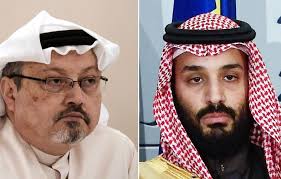
An independent UN human rights investigator called the overturned verdict of Saudi Arabia’s prosecutor in the 2018 murder of journalist Jamal Khashoggi a “parody of justice” that spared “high-level” plotters.  At a regular press briefing on Tuesday, Rupert Colville, spokesperson for the UN High Commissioner for Human Rights, (OHCHR), quoted Agnes Callamard, the UN Special Rapporteur on Extrajudicial Executions, in saying, “they came at the end of a process which was neither fair nor just, or transparent“. [for earlier posts on Khashoggi, see: https://humanrightsdefenders.blog/tag/jamal-khashoggi/]

In October 2018, the 59-year-old columnist for The Washington Post was killed and dismembered at the kingdom’s consulate in Istanbul. Saudi prosecutors in Riyadh had convicted eight people for the brutal murder. However, on Monday, a Saudi court overturned five death sentences in a final ruling that jailed eight defendants for between seven and 20 years, according to Saudi State media.

The press briefing came on the heels of a series of tweets from the independent UN expert who reacted disparagingly to Monday’s verdict. “The five hitmen are sentenced to 20 years imprisonment, but the high-level officials who organized and embraced the execution of Jamal Khashoggi have walked free from the start – barely touched by the investigation and trial,” Ms. Callamard tweeted.

As for the individual responsibility of the person on top of the State”, the independent UN expert upheld, “the Crown Prince Mohammed bin Salman, he has remained well protected against any kind of meaningful scrutiny in his country“. She stated that “the Saudi Prosecutor performed one more act today in this parody of justice”, adding “but these verdicts carry no legal or moral legitimacy”.

What can we do about the result of the Belarussian “election”? On line discussion

August 13, 2020
The Human Rights House Foundation, in partnership with Barys Zvozskau Belarusian Human Rights House, will host on THURSDAY, AUGUST 13, 2020 AT 14 PM an on -line  panel discussion with individuals closely following events on the ground. It will investigate what the European Union, United Nations, and individual states must do immediately to prevent further violence and seek a political solution to this growing crisis and how the international community should continue to occupy this space once this crisis moves off of the front pages.
On August 9, Belarusian President Alyasandr Lukashenka claimed a landslide re-election victory. This claim was widely anticipated, condemned by the political opposition, and met with large-scale peaceful protests across the country. Belarusian authorities responded with what international organisations label disproportionate violence against protesters. Since Monday, local human rights organisations report thousands detained, many of them arbitrarily, and facing further violence and abuse while in detention. More than 60 journalists – both domestic and foreign – have been arrested with the whereabouts of several unknown. In many ways, these early days of the post-election environment point towards a more violent crackdown than the country faced following the last presidential elections in 2010.
What can and should the international community do to pressure Belarusian authorities to cease their violent attacks on protesters and human rights defenders?
Speakers:
Anaïs Marin
UN Special Rapporteur on the human rights situation in Belarus

Oleg Kozlovsky

Amnesty International
Franak Viačorka
Vice President of the Digital Communication Network
Hanna Liubakova
Journalist, Outriders

Valiantsin Stefanovic

Viasna. Human rights in Belarus

and

Tanya Lokshina
Associate director, Europe and Central Asia, Human Rights Watch
Moderation by Dave Elseroad, Human Rights House Foundation.
Also today, 13 August 2020, 5 UN human rights experts strongly criticised Belarus for police violence against peaceful protesters and journalists and large scale detention following a controversial presidential election, and called on the international community to put pressure on Belarus to stop attacking its own citizens: https://yubanet.com/world/belarus-must-stop-attacking-peaceful-protesters-un-human-rights-experts-say/

UN Rapporteur and Amnesty seek freedom for those “punished for daring to drive.”

July 9, 2020

On 9 june 2020 Agnes Callamard, the UN special rapporteur on extrajudicial, summary or arbitrary executions, urged member states to pressure Saudi Arabia to free women activists before a G20 nations summit which Riyadh will be hosting in November. At least a dozen prominent women’s rights activists were arrested in Saudi Arabia in 2018 as it lifted a ban on women driving cars, a step that many of the detainees had long campaigned for. The women were rounded up as part of a broader crackdown on dissent that extended to clerics and intellectuals.

Several of the arrested women have alleged torture and sexual assault in detention. Saudi officials deny this and said the detainees were suspected of having harmed Saudi interests and offered support to hostile elements abroad.

Some of the activists are now on trial, but few charges have been made public. Charges against at least some of the activists relate to contacts with foreign journalists, diplomats and human rights groups. Their prosecution has drawn global criticism, particularly following the 2018 murder of journalist Jamal Khashoggi by Saudi agents inside the kingdom’s Istanbul consulate. (as Rapporteur Agnes Callamard also dealt with Khashoggi’s killing: https://humanrightsdefenders.blog/2019/12/23/the-unsatisfactory-end-to-the-khashoggi-investigation/)

The families of some of the activists, included Loujain al-Hathloul, raised concerns earlier this year when they were unable to contact their detained relatives in prison for several weeks. Contact was eventually restored. [https://humanrightsdefenders.blog/2019/10/07/lina-al-hathloul-speaks-out-for-her-sister-loujain-imprisoned-in-saudi-arabia/].

Earlier Amnesty International had called on Saudi Arabian authorities to immediately release women human rights activists, including those who are “being punished for daring to drive.“…. Amnesty UK has launched a “Beep for freedom” campaign in support of the persecuted women’s rights defenders. The campaign involves supporters sharing photos of themselves behind the wheel of a car or sharing the campaign’s “Beep For Freedom” car horn symbol, with an appeal to the Saudi authorities to “immediately and unconditionally” release the activists and drop all charges against them.

https://www.dailystar.com.lb/News/Middle-East/2020/Jul-09/508775-un-investigator-calls-on-saudi-arabia-to-free-female-activists.ashx

https://www.aa.com.tr/en/middle-east/amnesty-intl-urges-sarabia-to-release-female-activists/1889626

Hull and Oxford University honour UN Special Rapporteur Professor Subedi

April 24, 2020

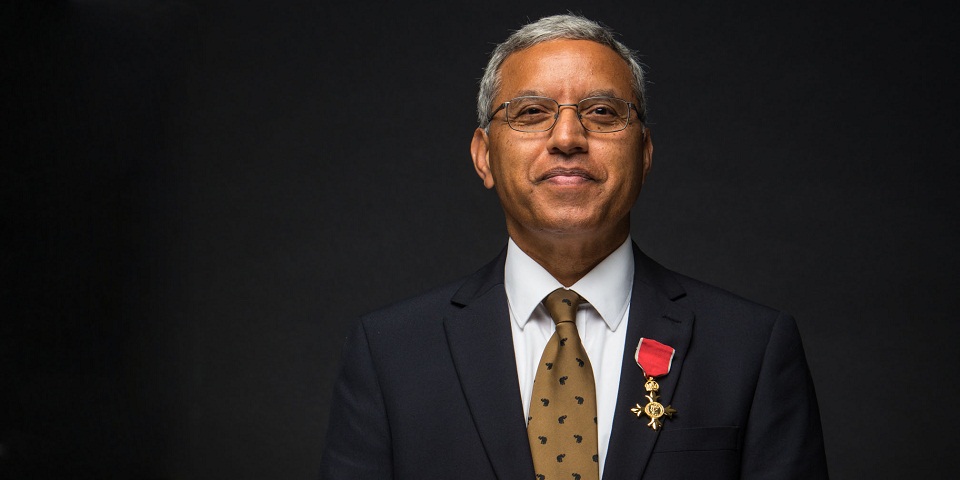
The University of Hull in the UK has awarded the degree of Doctor of Laws (LLD), honoris causa, to Professor Surya P. Subedi, QC, OBE, DCL in recognition of his accomplishments in the field of international law and human rights, the university said in a press statement. Professor Subedi had obtained an LLM with Distinction and a prize for best LLM student of the year in 1988 at Hull. Commenting on the award of such a high accolade by Hull, he said he was honored by the recognition of his accomplishments by his alma mater.

The 62-year-old professor was graduated from the Tribhuvan University, Nepal. Upon completion of his LLM, Professor Subedi won an FCO scholarship to study for a DPhil (PhD) in Law at the University of Oxford and obtained his degree with a prize in 1993. Last year, Oxford awarded him the highest degree – the Doctor of Civil Law in recognition of his contribution to international law and human rights.

This year the University of Oxford has established two awards in the name of Professor Surya Prasad SubediThe first prize named Dr Surya Subedi Award in Human Rights Law will be given to the outstanding performer in the Human Rights Law (Bachelor’s degree) and the second award named the Dr Surya Subedi Award for the D Phil in Law will be given for the doctoral thesis adjudged the best in the Faculty of Law. Prof Subedi expressed his happiness over the establishment of two awards by one of the world’s distinguished universities in his recognition. .

https://www.nepal24hours.com/oxford-university-establishes-two-awards-in-honour-of-prof-subedi/

https://myrepublica.nagariknetwork.com/news/hull-university-awards-doctor-of-laws-to-uk-based-nepali-professor-subedi/

https://en.wikipedia.org/wiki/Surya_Subedi

UN Guidelines for use of emergency powers in time of covid-19 pandemic

April 14, 2020
UN Special Rapporteur on Extra-Judicial Executions Agnes Callamard. Photo: Foreign and Commonwealth Office/Wikipedia.

a set of guidelines issued by the UN’s Human Rights’ Committee on Economic, Social and Cultural Rights (CESR), in whcih governments are urged to respect human rights across the spectrum, including economic and social rights, and civil and political rights as this would be fundamental to the success of the public health response.

The announcement shed light on the controversial decision by the Maltese government to close the country’s ports as migrant boats were stranded. The UN said it was aware that governments had to take difficult decisions in light of the coronavirus pandemic, but insisted measures should be proportionate. Emergency powers must be used for legitimate public health goals, not used as a basis to quash dissent or silence the work of human rights defenders or journalists.

This was also highlighted by Agnes Callamard, the UN Special Rapporteur on Extra-Judicial Executions, who said these emergency measures also had to be lifted when these were no longer necessary for protecting public health. People needed to be informed about the emergency measures, where these applied and for how long they were meant to be in effect. “As the crisis passes, it will be important for governments to return life to normal and not use emergency powers to indefinitely regulate day-to-day life, recognizing that the response must match the needs of different phases of this crisis,” the CESC said.

Unfortunately, several governments around the world – and in the EU – have taken advantage of the coronavirus pandemic to implement a series of measures that roll back human rights.

  • As people are being called upon to stay at home, governments must take urgent measures to help people without adequate housing. …The authorities should also take particular care to prevent more people from becoming homeless and implement good practices such as moratoriums on evictions, deferrals of mortgage or loan payments.
  • It was also important to keep in mind people who relied on community and home services to eat, dress and bathe – including people with a disability or the elderly.
  • The guidelines also refer to prisoners and those kept in detention, saying these were at a higher risk of infection in case of an outbreak. Social distancing was difficult to maintain in these places, which had a high risk of contamination. States should “urgently explore options for release and alternatives to detention to mitigate the risk of harm within places of detention,” it said.
  • The document also tackled the issue of migration, saying migrants and refugees also faced “particular risks” as these may be confined to camps and settlements, which might be overcrowded, overstretched and with poor sanitation. “It is also vital that any tightening of border controls, travel restrictions or limitations on freedom of movement do not prevent people who may be fleeing from war or persecution from accessing safety and protection,” the committee said.

This recommendation is the exact opposite of the decision taken by the Maltese government last week to close its ports, making it very clear that it would not be taking any more migrants as a measure to prevent the spread of COVID-19. This announcement came 24 hours after Italy closed all its ports, saying its harbours could not be considered safe. The decision was harshly criticised by more than 20 non-governmental organisations who called on the prime minister to ensure that all persons within Malta’s responsibility were rescued and their safety guaranteed. “The nation cannot quietly celebrate Easter while men, women and children are drowning on our doorstep. Saving lives and ensuring their disembarkation at a safe place is a fundamental legal obligation and also a moral imperative that can in no way be negotiated or renounced,” the NGOs said.

The guidelines called on governments to take “specific actions” to include migrants and refugees in national prevention and response campaigns by ensuring equal access to information, testing, and health care for all, regardless of their status. Earlier this month, the Maltese authorities put the Hal Far open centre under a two-week quarantine after eight migrants tested positive for coronavirus. The decision was slammed by local NGOs who said this would exacerbate the situation where the virus could potentially spread among the 1,000 residents.

On 14 April 2020 Clément Nyaletsossi Voule, the UN Special Rapporteur on the rights to freedom of peaceful assembly and of association, called on States not to use state of emergency declarations during the COVID-19 crisis to impose wholesale restrictions on freedom of peaceful assembly and association, and released detailed Guidelines governments and law enforcement agencies must follow to avoid human rights abuses.

No country or government can solve this health crisis alone and I am concerned about worrying trends and limitations emerging from civil society reports around the world, including on civil society’s ability to support an effective COVID-19 response,” said Clément Nyaletsossi Voule, the UN Special Rapporteur on the rights to freedom of peaceful assembly and of association. “Civil society organisations are key in helping States to frame inclusive policies, disseminate information, and provide social support to vulnerable communities in need,” he said.

In his 10 Guidelines, the expert said that where new laws or regulations are adopted, any limitations on rights imposed must adhere to the principles of legality, necessity and proportionality. Free-flow of information is crucial in times of crisis and laws criminalising ‘false news’, including those targeting human rights defenders, must be avoided. “It is inadmissible to declare blanket restrictions on human rights and fundamental freedoms,” Voule said. “Exemptions should be foreseen for civil society actors, particularly those monitoring human rights, trade unions, social services providing humanitarian assistance, and journalists covering the management of the crisis. “State of emergency does not halt the freedoms of peaceful assembly and of association,” the human rights expert said.

Voule said his Guidelines could help States reassess measures already in place to ensure compliance with their human rights obligations and to take citizens’ demands fully into account.

https://reliefweb.int/report/world/covid-19-restrictions-should-not-stop-freedom-assembly-and-association-says-un-expert

Coronavirus emergency measures must be timely and proportionate