The ceremony of the Martin Ennals Award 2014 is over (7 October 2014). It was again very impressive to hear and see 3 courageous Human Rights Defenders being honored. Some 450 people (my estimate) gave standing ovations to the 3 nominees whose work was shown in impressive films produced for the occasion. The film portraits are already available on the website: http://www.martinennalsaward.org where there is also a short summary of the whole evening.
Martin Ennals Award for Human Rights Defenders
Especially the film on Chinese HRD Cao Shunli is a masterpiece given that the film makers had almost no images to work with due to the modesty of the human rights defender as well as her untimely death in detention only 2 days after her nomination in March 2014.
One of the nicest surprises was the address by Zeid Ra’ad Al Hussein, the United Nations High Commissioner for Human Rights at one of his first public appearances outside the UN. The High Commissioner gave a moving and almost poetic description of the sorry state of affairs left to human rights defenders to correct: He said inter alia: Read the rest of this entry »
On 8 September 2014 the new UN High Commissioner for Human Rights, Zeid Ra’ad Al Hussein, addressed for the first time the Human Rights Council, and many will have been listening for clues about where he stands on key issues, how ‘activist’ he is likely to be etc. As the speech was rather long and covered a huge variety of issues, it is not easy to draw any conclusions yet. The fist half addressed issues of war and violence and in particular the humanitarian crises of today.
The role of the individual is beautifully worded: “courage is the first human virtue, revered the world over, the very virtue we value the most as human beings. The courageous individual is not he or she who wields great political power or points a gun at those who do not – that is not courage. The courageous individual is he or she who has nothing to wield but common sense, reason and the law, and is prepared to forfeit future, family, friends and even life in defence of others, or to end injustice. In its most magnificent form, the courageous individual undertakes this exertion, without ever threatening or taking the life of someone else, and certainly not someone defenceless.”..”the Takfiris [IS] who recently murdered James Foley and hundreds of other defenceless victims in Iraq and Syria – do they believe they are acting courageously? “…
“Navi Pillay was one of the greatest senior officials the UN has ever had, and one of the most able, formidable High Commissioners for Human Rights. That she could annoy many Governments – and she did – was clear; but she believed deeply and movingly in the centrality of victims, and of those who are discriminated against. They needed her vocal chords, her lungs and her pen, and she made everyone listen. I pledge to continue along the same path: to be as firm, yet always fair; critical of states when necessary, and full of praise when they deserve it.”
“A ministerial-level meeting will be held in New York on 25 September, on the need for a code of conduct to be adopted by the permanent members of the UN Security Council regarding use of veto, in situations where atrocities are ongoing and where those facts are well founded. This is not a call to have the UN Charter rewritten, but a call for the permanent members to exercise a moratorium in very specific circumstances involving atrocity crimes. I applaud the Government of France for taking the lead over this, and thank it for inviting me to participate on the 25th. When the veto is exercised for the sole purpose of blocking action by the Security Council, with no alternative course of action offered, and when people are suffering so grievously – that is also a form of cruelty.”
After briefly describing his priorities:
halt the increasingly conjoined conflicts in Iraq and Syria. In particular, dedicated efforts are urgently needed to protect religious and ethnic groups, children – who are at risk of forcible recruitment and sexual violence – and women, who have been the targets of severe restrictions.
ensure accountability and stop impunity
to take a step back and look at how and why these crises erupted,
the UN High Commissioner touched on a number of current situations and mentioned the importance of the different mechanisms and bodies. Finally he came to the civil society with the following words:
“But the work done by OHCHR, by the Special Procedures, by Treaty Bodies, this Council itself, and indeed, by Member States, could never be achieved without the greater efforts of civil society actors. We need their continuing support and contributions to realise progress. I encourage the Council to strengthen its constructive engagement with civil society actors, and to ensure that their voices can be raised safely and without reprisals. Freedoms of expression, association and peaceful assembly are rights that enable people to share ideas, form new thinking, and join together with others to claim their rights. It is through the exercise of these public freedoms that we make informed, considered and intelligent decisions about our development. To restrict them undermines progress. We must acknowledge the value of civic contribution, build the capacity of marginalised voices, ensure a place at the table for civil society actors, and safeguard their activities – including the activities of those who cooperate with this Council, its Special Procedures and Commissions of Inquiry. I take this opportunity to echo the Secretary-General’s condemnation of acts of reprisal against individuals by reason of their engagement with the United Nations.”
At the end of this speech, he paid significant attention to the issue of migration: “The treatment of non-nationals must observe the minimum standards set by international law. Human rights are not reserved for citizens only, or for people with visas. They are the inalienable rights of every individual, regardless of his or her location and migration status. A tendency to promote law enforcement and security paradigms at the expense of human rights frameworks dehumanises irregular migrants, enabling a climate of violence against them and further depriving them of the full protection of the law.”
My reference last week to an interview with the new Special Rapporteur on Human Rights Defenders [https://thoolen.wordpress.com/2014/08/05/michel-forst-new-special-rapporteur-on-human-rights-defenders-gives-indication-of-his-priorities/] seemed well appreciated judging from the number of views. Therefore I now refer you to a piece by the Director of the ISHR, Phil Lynch, of 16 July, who addresses the incoming UN High Commissioner for Human Rights, Zeid Ra’ad Zeid al-Hussein as the “human rights defender-in-chief“, saying that he has a particular responsibility to protect human rights defenders, especially so when they face intimidation and reprisals for their efforts to seek accountability at the UN for human rights violations. Read the rest of this entry »
My reference last week to an interview with the new Special Rapporteur on Human Rights Defenders [https://thoolen.wordpress.com/2014/08/05/michel-forst-new-special-rapporteur-on-human-rights-defenders-gives-indication-of-his-priorities/] seemed well appreciated judging from the number of views. Therefore I now refer you to a piece by the Director of the ISHR, Phil Lynch, of 16 July, who addresses the incoming UN High Commissioner for Human Rights, Zeid Ra’ad Zeid al-Hussein as the “human rights defender-in-chief“, saying that he has a particular responsibility to protect human rights defenders, especially so when they face intimidation and reprisals for their efforts to seek accountability at the UN for human rights violations. Read the rest of this entry »
In September 2014, Navanethem (Navi) Pillaywill finish her term as the UN High Commissioner for Human Rights. Since her appointment in 2008, she has been a principled and dedicated advocate for universal human rights, the protection of human rights defenders, accountability for perpetrators of human rights violations, and access to justice for victims. She has encouraged her staff to speak out and has done so herself courageously. Unanimity about her performance should not be expected – for that the topics she had to deal with are too controversial – but the human rights world generally has seen her as a ‘champion’ and one of them.
reports that 0n 23 June 2014, the Public Prosecutor in Egypt ordered that the detention of human rights defenders Ms Yara Sallam and Ms Sanaa Seif be extended by four days. The day before, the human rights defenders were accused of breaching the ‘Protests Law’ by demonstrating without a permit, committing acts of violence, possession of inflammable material and Molotov cocktails, blocking a road, sabotaging public and private property, and belonging to the banned group ‘April 6’. The human rights defenders were among 24 persons arrested on 21 June 2014 during a demonstration against the ‘Protests Law’.
Yara Sallam is a human rights researcher who currently works with the NGO Egyptian Initiative for Personal Rights (EIPR). She is also the winner of the African Shield Human Rights Defenders in 2013. Sanaa Seif is a student who has participated in previous protests in the defence of human rights. The human rights defender was arbitrarily detained during Magles El Wuzara events on 16 December 2011, and was released on the same day. Sanaa Seif is also the sister of human rights defender Mr Alaa Abd El Fattah, who was sentenced in absentia on 11 June 2014 http://www.frontlinedefenders.org/node/26164 and of Mona Seif, MEA Nominee of 2013 (https://thoolen.wordpress.com/2013/05/03/egyptian-hrd-and-mea-nominee-mona-seif-under-attack/)
Twenty-three of the individuals arrested at the protest have had their detention extended by four days and one was released on bail. A decision on whether to charge the human rights defenders is expected shortly. The human rights defenders’ lawyer, Mr Mohamed Khedr, has highlighted inconsistencies in the testimonies of witnesses for the prosecution, as well as within the police’s own statements. In particular, the police secretary accused the protesters of damaging a police vehicle at 9:30pm on 21 June 2014, despite the demonstrators having been arrested at 5:30pm that day outside a kiosk when they were not present at the protest, and a police report having been filed against them at 9:30pm. The police found no inflammable objects within the possession of the demonstrators.
The human rights defenders are two of several Egyptian human rights defenders, such as Maheinour Al Masry <http://www.frontlinedefenders.org/node/25996> , who have been targeted through the ‘Protests Law’ (Law no 107 of 2013 on the Right to Public Meetings, Processions and Peaceful Demonstrations). The law was approved on 24 November 2013 by interim Egyptian President Adly Mansour and has been condemned by the United Nations High Commissioner for Human Rights, Navi Pillay, as well as the UN Special Rapporteur on the rights to freedom of peaceful assembly and association, Maina Kiai.
Yesterday, 6 June 2014, the UN and media reported that the U.N. Secretary-General Ban Ki-moon has proposed that Jordans U.N. ambassador, Prince Zeid Raad Zeid al-Hussein, as the new United Nations High Commissioner for Human Rights (to replace Navi Pillay who leaves in August after serving a second term). The General Assembly still has to approve, but usually no announcement is made unless there is already agreement.
Prince Zeid is generally well-liked as a diplomat and has established a solid reputation. He is a graduate of Johns Hopkins University and Cambridge University, has previously served as Jordans ambassador to the United States and Mexico. He was also a political affairs officer in UNPROFOR, the U.N. peacekeeping mission in the former Yugoslavia during the Balkan conflict.
Still, after a two women High Commissioners with broad experience in human rights and proven independence as judges before their appointments, it is fair to ask what human rights defenders can expect from this shift back towards a High Commissioner chosen for more diplomatic skills (as was the first one José Ayala-Lasso in 1994). Anyway, the only thing is to wait and see how he works out in practice. After all, another Prince, Sadruddin Aga Khan served as United Nations High Commissioner for Refugees from 1966 to 1978, and was excellent.
While this blog tries to focus on human rights defenders rather than the general human rights situation, there are exceptions. This is simply to draw attention to the Central African Republic which is descending into utter barbarity. The issue is not human rights defenders, but pure survival. The UN High Commissioner for Human Rights, back from a short visit, does not mince her words:
“The UN’s top human rights official warned Thursday that the hatred between Christian and Muslim communities in Central African Republic is “at a terrifying level” and a state of near-anarchy means even those carrying bloody machetes and holding severed body parts in their hands are not arrested. Read the rest of this entry »
(High Commissioner for Human Rights Navi Pillay at the 25th session of the Human Rights Council. UN Photo/Jean-Marc Ferré)
Yesterday, 3 March 2014, the top UN functionaries opened the 25th session of the UN Human Rights Council with calls for the protection of members of civil society who pursue justice in their countries (a long euphemism for Human Rights Defenders).
“Streets, airwaves, entire countries are buzzing with demands for economic, social and political justice,” UN High Commissioner for Human Rights Navi Pillay said. Setting out this agenda and acknowledging the hard work that lay ahead in ensuring that all people enjoyed equal rights, Ms. Pillay emphasized the important role of civil society in those efforts. “We need to work together to ensure that the space, voice and knowledge of civil society is nurtured in all our countries,” she stressed. Recalling reports of what she labelled “intolerable” reprisals against people who coöperate with the UN’s human rights activities, she called for more action to protect them. “The UN itself is required to protect and support those who contribute to its work, often at great personal risk,” she said.
Secretary-GeneralBan Ki-moon added on this point that, “No one should have to risk their life for standing up and speaking out on violations of human rights and international humanitarian law.” Civil society was the representative of “We the Peoples,” as cited in the opening of the UN Charter, and that it must be able to carry out its vital work, “free of reprisals and intimidation.” In that context, the Secretary-General highlighted the “Rights Up Front” action plan that he launched last year to ensure that human rights considerations were the top priority in all UN activities. “This initiative seeks to ensure that the United Nations system leverages the full breadth of its mandates to protect people at risk,” he said. [https://thoolen.wordpress.com/2013/12/26/rights-up-front-presented-by-jan-eliason-it-is-irrefutable-that-serious-human-rights-violations-are-the-best-early-warning-of-atrocities/]
Interesting to note that while in Geneva, the Secretary-General met 4 NGOs: the International Service for Human Rights, Amnesty International, Human Rights Watch and the International Commission of Jurists. Their discussion certainly stressed human rights defenders and the importance of protecting them from attacks.
To illustrate the increased use of video and images in the human rights world, just scroll down and get a feel of the amount and variety through some examples, mostly from the end of this year:
Human Rights Watch produced an end-of-year 2013 overview.
The Asian Human Rights Commission (AHRC) is announces the latest issue of its weekly video news bulletin (episode number 10).
Amnesty International used a slick production to get attention for the fate of Syrian refugees in Europe (not explaining why other regions are not targeted by the way).
The UN High Commissioner for Human Rights used this video to address the world on Human Rights Day 2013;
On Human Rights Day, US-based Freedom House recognized the work of HRDs in the Eurasia region with a slide show on:Kazakhstan, Russia, Belarus, Kyrgyzstan.
The International Service for Human Rights in Geneva presents its work with a video.
Human Rights First used YouTube to announce its fundraising live stream for the end of the year.
There are of course many more examples, quite a few referred to in this blog over the years, such as those of the MEA: http://www.martinennalsaward.org/ but a special mention should be made of
the organisation Witnessin the USA which has pioneered the use of video cameras in the hands of human rights defenders.
When the internet some 25 years ago made it possible to send and ‘publish’ almost unlimited amounts texts, the original euphoria in the human rights movement (whose main weapon is after all documentation) was quickly dampened somewhat when it also led to information overkill. Something similar is bound to happen with images which can now be ‘published’ and transmitted as easily as documents (but without the free-text search capacity). On the other hand there will be new possibilities and different ways of getting the human rights ‘stories’ across, especially on mobile devices used increasingly by younger generations.
The True Heroes Foundation– of which I am a founding Board member – wants to follow and use this development in a way that Human Rights Defenders derive maximum benefit from the new information and communication technology. It hopes to do so by making stories and images of HRDs the most eminent entry point for those seeking information on human rights in the near future. Keep following this blog and the website www.trueheroesfilms.org in the coming year for ….I am afraid …yet MORE information!!
With these thoughts, I WISH YOU ALL THE BEST FOR 2014.

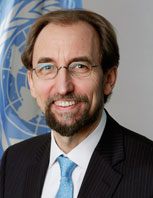 The High Commissioner gave a moving and almost poetic description of the sorry state of affairs left to human rights defenders to correct: He said inter alia: Read the rest of this entry »


 Hans Thoolen on Human Rights Defenders and their awards