Posts Tagged ‘Turkmenistan’

Central Asia Leaders Must Deliver on Human Rights Pledges Made at Summit say NGOs

April 26, 2025
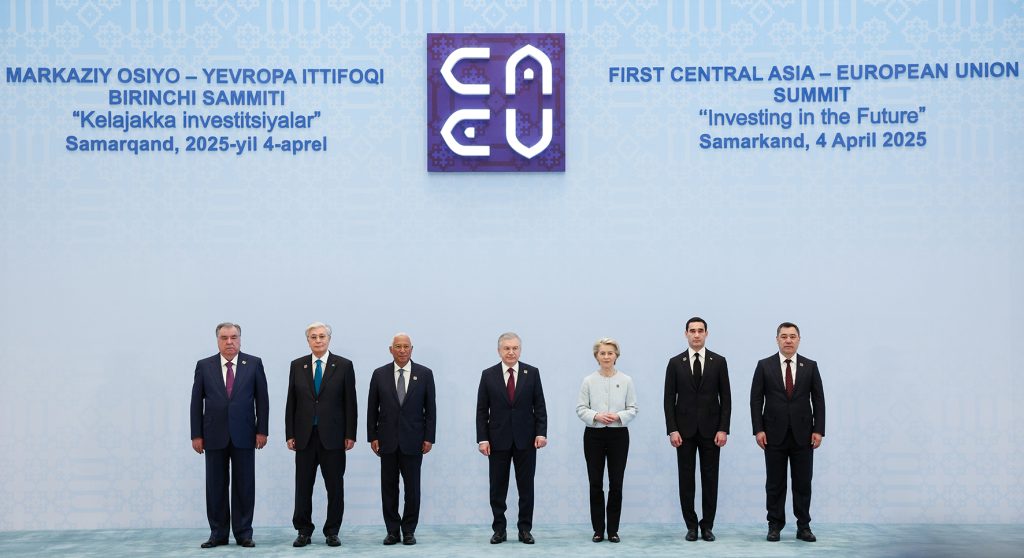
Photo and copyright: European Union.

On 10 April 2025 Civil Rights Defenders, along with seven other international human rights organizations, commend the commitments made at the EU-Central Asia Summit in Samarkand. We urge Central Asian leaders to prioritize human rights and uphold the civil and political freedoms enshrined in their national constitutions and international treaties. The commitments to peace, security, democracy, and the elevation of relations to a strategic partnership must be matched by concrete actions to protect human rights.

On Friday, April 4, the Uzbek city of Samarkand hosted the first ever EU – Central Asia Summit where high-level officials – all five regional presidents and European Council President António Costa and European Commission President Ursula von der Leyen – discussed economic cooperation and agreed to bring their existing partnership to a new strategic level. At the end of the summit, participants issued a joint declaration that, among others, stated their commitment to freedom of expression and association, creating an enabling environment for civil society and independent media, protection of human rights defenders, as well as to respecting the rights of women and children. According to an official press release, the European Commission promised to invest €12 billion in the region to strengthen transport links and deepen cooperation on critical raw materials, digital connectivity, water, and energy.

Paragraph 3 of the joint declaration says: “We are committed to cooperate for peace, security, and democracy, to fully respect international law, including the UN Charter and the fundamental principles of respect for the independence, sovereignty and territorial integrity of all States, within their internationally recognised borders. We emphasised the importance of achieving as soon as possible, a comprehensive, just, and lasting peace in Ukraine in accordance with the principles of the Charter of the United Nations. We emphasized the need to uphold the principles of the OSCE by the participating States. We reconfirmed the obligation of all States to refrain in their international relations from the threat or use of force, to respect international humanitarian law and underlined the need for peaceful resolution of conflicts.”

In paragraph 16, the “EU and Central Asian leaders reiterated that the promotion and protection of rule of law, human rights and fundamental freedoms is a common fundamental value. Ensuring freedom of expression and association, an enabling environment for civil society and independent media, protection of human rights defenders as well as the respect for the rights of women, the rights of the child, and labor rights remain at the core of EU–Central Asia relations. The EU reiterated its readiness to support efforts in this regard at regional as well as at national level.” 

Furthermore, in paragraph 15 the “Participants affirmed the need for their continued commitment to enhanced cooperation and the development of new approaches in the joint fight against organised crime, violent extremism, radicalisation, terrorism, drug trafficking, trafficking in human beings, migrant smuggling, cyber threats, including cybercrime and disinformationas well as addressing Chemical, Biological, Radiological and Nuclear risks whilst safeguarding human rights and media freedom [emphasis added].”

Civil Rights Defenders, International Partnership for Human Rights (IPHR), Araminta, Freedom Now, Norwegian Helsinki Committee, People in Need, International Federation for Human Rights (FIDH), and the World Organisation Against Torture (OMCT) welcome these declared commitments and urge the leaders of each Central Asian nation to take immediate steps to fulfill their promises. They should start by releasing from prison all journalists, bloggers, lawyers, human rights defenders, civil society activists, and political opponents who have been prosecuted and convicted on retaliatory and unsubstantiated charges. They should also repeal legislation containing provisions that directly contradict their declared commitment to human rights standards. 

The Central Asian governments should also end–and establish safeguards to prevent–the misuse of anti-extremism and anti-disinformation policies and security tools to restrict, persecute, and/or criminalize legitimate civil society activity. While enhanced cooperation in the joint fight against organized crime, violent extremism and terrorism, and disinformation are a welcome development, these types of laws and cooperation initiatives have been instrumentalized by the Central Asian governments against legitimate civil society actors, media and political opposition activists, including for imprisonment on lengthy sentences and transnational repression extending to the territory of the European Union. 

In particular:

  • In Kazakhstan, President Kassym-Jomart Tokayev should order the release from custody of activist Aigerim Tleuzhanova, political opposition party leader Marat Zhylanbayev, satirist blogger Temirlan Ensebek, and labor rights activist Erzhan Elshibayev among others prosecuted on politically motivated charges, We believe that these individuals were targeted in direct retaliation for exercising their civil and political rights, and authorities have failed to provide any credible evidence to support the allegations levelled against them. Kazakh authorities should repeal or thoroughly revise broadly worded criminal code provisions penalising the involvement in ‘’extremist’’ activities, ‘’incitement’’ to discord and the spread of ‘’false’’ information, which are frequently misused to target critics, including in some of the cases mentioned above. Kazakh authorities should also drop their declared plans to adopt a so-called “foreign agents’” law, cease the public attacks on the LGBTIQ community, and end reprisals against NGOs-recipients of foreign grants.
  • In Kyrgyzstan, it is welcome that President Sadyr Japarov pardoned Temirov Live associated journalist Azamat Ishenbekov this week, although he should not have been imprisoned in the first place. Authorities should also quash the charges against his colleagues convicted on similar charges, releasing Makhabat Tajibek Kyzy  and lifting the probational sentences imposed on Aike Beishekeyeva and Aktilek Kaparov. We believe all four journalists were targeted in retaliation for their critical opinions and independent journalism. Authorities should also release independent journalist Kanyshay Mamyrkulova and drop the criminal charges initiated against her and others in apparent retaliation for social media posts critical of the government. In addition, they should reverse the court ruling that ordered the liquidation of independent news organization Kloop Media and stop pressuring other independent media. They should repeal the law on so-called “foreign representatives” and revoke vaguely worded provisions that prohibit the dissemination of “false’’, defamatory or insulting information, as well as content that ‘’promotes non-traditional sexual relations’’. This legislation severely violates the fundamental freedoms of expression, association, and assembly.
  • In Tajikistan, President Emomali Rakhmon should take immediate steps to release from prison the eight independent journalists Rukhshona Hakimova, Abdusattor Pirmuhammadzoda, Ahmad Ibrohim, Abdullo Ghurbati, Daler Imomali, Khurshed Fozilov, Khushom Gulyam, and Zavqibek Saidamini. Human rights activists and lawyers Ulfatkhonim Mamadshoeva, Buzurgmehr Yorov, Manuchehr Kholiknazarov, and Faromuz Irgashov should also be freed without delay. By imprisoning these individuals the Tajik authorities have cemented a climate of fear among civil society actors – a record that must be reversed. Tajik authorities should also cease its continued crackdown in the Gorno-Badakshan Autonomous Region and its systematic use of transnational repression to target government opponents abroad, including in EU countries. Several individuals who were forcibly returned to Tajikistan in  2024 were tortured, arrested and handed lengthy prison sentences after closed trials. 
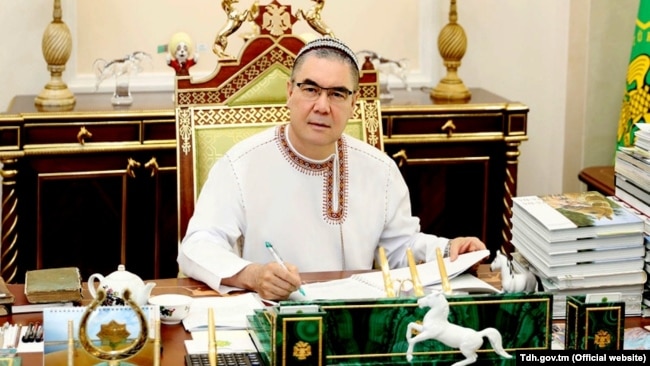
  • In Turkmenistan, President Serdar Berdimuhamedov should take concrete steps to rectify his government’s extremely poor human rights record, free political prisoners, and allow space for an independent civil society to develop. The government should publicly declare tolerance towards criticism in the media and end wide ranging internet censorship. Authorities should immediately end attacks and harassment of critics of the regime both inside the country and abroad, including veteran human rights defender and journalist Soltan Achilova, who has repeatedly been barred from leaving the country. They should also decriminalize homosexuality while adopting legislation to criminalize domestic violence.  
  • In Uzbekistan, President Shavkat Mirziyoyev should order to quash wrongful convictions and free from prison and retaliatory psychiatric ward lawyer Dauletmurat Tadzhimuratov, activists Nargiz Keldiyorova and Dildora Khakimova and blogger Valijon Kalonov. All these human rights defenders have been targeted with retaliatory prosecution and convicted on unsubstantiated charges for publicly expressing their opinions about the state of affairs in the country. The Uzbek government should also repeal the law on so-called “undesirable foreign persons,” decriminalize male homosexuality, and remove all legal provisions and bureaucratic obstructions that prevent independent civil society groups from engaging in legitimate human rights work.

We urge the leaders of each Central Asian nation to demonstrate that they have the political will to deliver on their declared commitments made at the Samarkand summit and to respect human rights and civil and political freedoms protected by their national constitutions and international treaties ratified by them. We call on the EU to ensure that the commitments expressed in the joint declaration are followed through and that Central Asian governments are held accountable for violations of their human rights obligations under EU cooperation instruments, including bilateral partnership and cooperation agreements and preferential trade schemes. In line with the EU’s value-based partnership with the Central Asian countries, advancing connectivity, trade, and investment should go hand in hand with efforts to promote concrete progress in human rights and rule of law in these countries. The steps listed above are merely a suggested choice of actions that we urge the Central Asia governments to implement without delay. Much more needs to be done for addressing past and ongoing abuses that respect and protect citizens’ rights and freedoms.

Signtures

Civil Rights Defenders

International Partnership for Human Rights (IPHR)

Araminta,

Freedom Now

Norwegian Helsinki Committee

People in Need

International Federation for Human Rights (FIDH)

World Organisation Against Torture (OMCT)

Soltan Achilova again banned from traveling to receive her award

November 21, 2024

The undersigned human rights organisations, which together represent the Jury for the Martin Ennals Award for Human Rights Defenders, condemn the continued harassment against 2021 Martin Ennals Award Finalist and woman human rights defender from Turkmenistan, Soltan Achilova. This morning, Soltan Achilova and her daughter were once again prevented from travelling to Geneva. As in 2023, Soltan Achilova was set to be recognized for her valuable contributions to the documentation of human rights violations in Turkmenistan by the Martin Ennals Foundation.

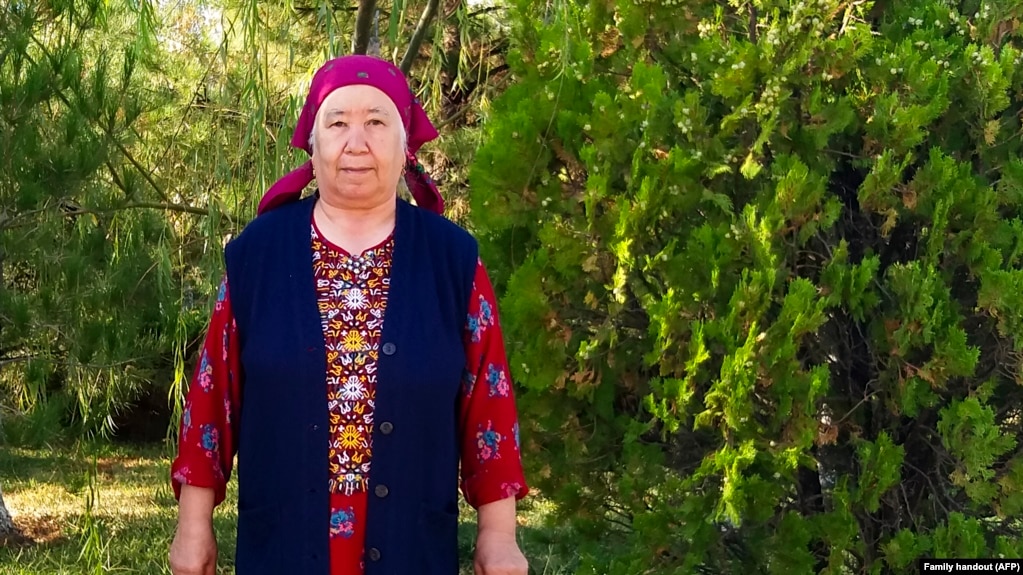
Soltan Achilova is a woman human rights defender and journalist, who continues to work in Turkmenistan, one of the most repressive and isolated countries in the world, ranking 176th out of 180 countries in terms of press freedom and working conditions for journalists. She has been reporting about her country for over a decade. Her pictures of daily life are one of the few sources of documentation of human rights violations occurring in Turkmenistan. As a result of this work, she remains under constant surveillance by Turkmen authorities and has suffered numerous incidents of harassment, intimidation, and threats. Despite the challenges, Soltan Achilova persists in her human rights work, regularly sending information and pictures outside the country so that government authorities can be held accountable. [see: https://humanrightsdefenders.blog/tag/soltan-achilova/]

On the morning of 20 November 2024, Soltan Achilova and her daughter Maya Achilova were scheduled to travel from Ashgabat to Geneva, to participate in the Martin Ennals Award ceremony. At 6:30 a.m. local time, according to the information received by the Martin Ennals Foundation, a group of law enforcement officers pushed Soltan Achilova, her daughter and her daughter’s husband into an ambulance and brought them to the specialised hospital “Infectious Disease Control Centre” in the Choganly neighbourhood of Ashgabat, located near the Ashgabat International Airport. Maya Achilova reported to the Foundation that her husband, her mother and herself are being retained at the medical facility, guarded by the security forces, and that one of the security service agents is in possession of the keys to Soltan Achilova’s apartment. Thereby, Turkmen authorities have once again prevented Soltan Achilova from travelling to Geneva, Switzerland, where she would finally be recognized as a Finalist of the 2021 Martin Ennals Award for her documentation of land grabs and forced evictions of ordinary citizens in Ashgabat.

Turkmen authorities have prevented woman human rights defender Soltan Achilova from traveling freely outside of her country on several occasions; the latest occurring as recently as November 2023. In the early hours of 18 November 2023, Soltan Achilova and her daughter were stopped by Turkmen government officials from boarding their flight to Switzerland. A customs official took their passports, wet them with a damp rag and declared the passports to be ruined, preventing Soltan and Maya Achilova from boarding the plane. Despite receiving assurances at high-level from Turkmen authorities that Soltan Achilova would not be prevented from traveling once again, the authorities continue to harass the woman human rights defender with travel restrictions and arbitrary detention.

The human rights organisations that make up the Jury of the Martin Ennals Award, as well as the Martin Ennals Foundation, once again condemn Turkmen authorities for their continued harassment of woman human rights defender and photojournalist Soltan Achilova and her family members and call for their immediate release. The organisations jointly call upon the Turkmen authorities to provide all the necessary assistance to enable her travel outside of Turkmenistan. Finally, the organisations renew their calls for Turkmenistan to fully implement their human rights obligations, including, inter alia, allowing human rights defenders and journalists to conduct their work without fear of reprisals.

Following the writing of this statement, an article containing further details was published by the Chronicles of Turkmenistan, an online publication of the Turkmen Initiative for Human Rights, which, according to its author, has also been in contact with Soltan Achilova’s family.

Signatories:

Amnesty International

Human Rights Watch

World Organisation Against Torture (OMCT)

International Service for Human Rights (ISHR)

International Federation for Human Rights (FIDH)

HURIDOCS

Human Rights First

Front Line Defenders

Brot für die Welt

International Commission of Jurists

The Martin Ennals Foundation

https://www.frontlinedefenders.org/en/statement-report/turkmen-authorities-yet-again-prevent-woman-human-rights-defender-and-2021-martin

https://www.reuters.com/world/journalist-seized-turkmenistan-ahead-swiss-award-ceremony-say-rights-groups-2024-11-21/

Soltan Achilova – finalist MEA 2021 – denied travel to Geneva Human Rights Week

November 21, 2023

On 21 November, 2023 the Martin Ennals Foundation, joined by HRW and the ISHR, issued the following statement:

The Martin Ennals Foundation condemns the harassment of Soltan Achilova and her daughter by government authorities at Ashgabat airport and calls for Turkmen authorities to stop their reprisals against journalists for their human rights work.

In the early hours of November 18th, 2023, Mrs. Soltan Achilova and her daughter were stopped by Turkmen government officials from boarding their flight for Switzerland. A customs official took their passports, wet them with a damp rag and declared the passports to be ruined, effectively obstructing Soltan from traveling to Geneva where she would feature as a keynote speaker at the University of Geneva’s Human Rights Week 2023.

This act of harassment and denial of freedom of movement is particularly reprehensible in that it comes only a few days after Turkmenistan’s 4th Universal Periodic Review, during which high-level government representatives expressed their “support for …the promotion and protection of fundamental freedoms and human rights“, giving multiple examples of their progress in terms of respect for freedom of expression.

Soltan Achilova believes she was not allowed to leave the country because of the authorities’ fear that negative information might be heard during the Human Rights week in Geneva. Yet, the obstruction from travel of an internationally recognized human rights defender is more striking evidence of the lack of freedoms in the country and the bad faith with which the Turkmenistan government engages with the Human Rights Council.  

Turkmenistan is one of the most repressive and isolated countries in the world, ranking 176th out of 180 countries in terms of press freedom and working conditions for journalists. Soltan has been reporting about her country for more than a decade. Her pictures of daily life are one of the few sources of documentation of human rights violations occurring in this most secretive nation. In 2021, Soltan was recognized by the Martin Ennals Award for her documentation of land grabs and forced evictions of ordinary citizens in Ashgabat.

Soltan has not been allowed to travel freely outside of her country on several occasions. She is under constant surveillance by Turkmen authorities and has suffered numerous incidents of harassment, intimidation, and threats. Despite the challenges, Soltan persists in her human rights work, regularly sending information and pictures  outside of the country so that government authorities are held to account.

We renew calls for Turkmenistan to fully implement their human rights obligations, including, inter alia, allowing human rights defenders and journalists to conduct their work peacefully. We invite Member States accompanying the 4th Universal Periodic Review of Turkmenistan to strongly sanction the silencing of Soltan Achilova and other Turkmen journalists.

For more on Soltan: https://youtu.be/7xkSvMXaZUU?si=JhWOrMxs4yQQ2wz8

https://www.hrw.org/news/2023/11/21/turkmenistan-journalist-prevented-travelling-abroad

https://www.frontlinedefenders.org/en/statement-report/turkmenistan-whrd-soltan-achilova-denied-travel-geneva-human-rights-week

https://www.rferl.org/a/turkmenistan-achilova-stopped-flying-europe/32692666.html

Turkmenistan through the eyes of photojournalist Soltan Achilova, master class 21 November

November 14, 2023
Turkmenistan through the eyes of photojournalist Soltan Achilova
Join us for a Master Class on Turkemnistan at UNIGE Human Rights Week, Tuesday Nov. 21 @12h30-14h !

The World Press Freedom Index ranked Turkmenistan one of the five most repressive regimes globally in 2023.
Martin Ennals Award Finalist Soltan Achilova is a 74 years-old photojournalist who captures the lives of ordinary people in Turkmenistan with her camera. Soltan’s pictures describing food insecurity, forced and illegal evictions, lack of adequate healthcare and the discrimination faced by people with disabilities, are an invaluable source of information on human rights violations endured by the people of Turkmenistan. In collaboration with the University of Geneva Human Rights Week this event will explore how independent journalism can push back on the denial of freedom of expression in the toughest authoritarian contexts.


Free Entry
Tuesday Nov
. 21, 2023
12h30-14h
Unimail Salle MS150

see also: https://humanrightsdefenders.blog/2021/02/23/soltan-achilova-has-issued-a-rare-rebuke-of-the-turkmen-president-on-youtube/

https://mailchi.mp/martinennalsaward.org/invitation-turkmenistan-master-class-unige-9415682?e=2898c3ec1a

Internet Censorship 2021: A Global Map of Internet Restrictions

October 19, 2021

On October 12 I referred the report Freedom on the Net [see: https://humanrightsdefenders.blog/2021/10/12/report-freedom-on-the-net-2021/ and on 24 April to the latest RSF report [see: https://humanrightsdefenders.blog/2021/04/24/world-press-freedom-index-2021-is-out/]. Now my attention was drawn to another tool to measure internet censorship:

Nearly 60 percent of the world’s population (4.66 billion people) uses the internet. It’s our source of instant information, entertainment, news, and social interactions.

But where in the world can citizens enjoy equal and open internet access – if anywhere?

In this exploratory study, our researchers have conducted a country-by-country comparison to see which countries impose the harshest internet restrictions and where citizens can enjoy the most online freedom. This includes restrictions or bans for torrenting, pornography, social media, and VPNs, and restrictions or heavy censorship of political media. This year, we have also added the restriction of messaging/VoIP apps.

Although the usual culprits take the top spots, a few seemingly free countries rank surprisingly high. With ongoing restrictions and pending laws, our online freedom is at more risk than ever.

We scored each country on six criteria. Each of these is worth two points aside from messaging/VoIP apps which is worth one (this is due to many countries banning or restricting certain apps but allowing ones run by the government/telecoms providers within the country). The country receives one point if the content—torrents, pornography, news media, social media, VPNs, messaging/VoIP apps—is restricted but accessible, and two points if it is banned entirely. The higher the score, the more censorship. https://datawrapper.dwcdn.net/IBnNS/3/

The worst countries for internet censorship

  1. North Korea and China (11/11) – No map of online censorship would be complete without these two at the top of the list. There isn’t anything either of them doesn’t heavily censor thanks to their iron grip over the entire internet. Users are unable to use western social media, watch porn, or use torrents or VPNs*. And all of the political media published in the country is heavily censored and influenced by the government. Both also shut down messaging apps from abroad, forcing residents to use ones that have been made (and are likely controlled) within the country, e.g. WeChat in China. Not only does WeChat have no form of end-to-end encryption, the app also has backdoors that enable third parties to access messages.
  2. Iran (10/11): Iran blocks VPNs (only government-approved ones are permitted, which renders them almost useless) but doesn’t completely ban torrenting. Pornography is also banned and social media is under increasing restrictions. Twitter, Facebook, and YouTube are all blocked with increasing pressures to block other popular social media sites. Many messaging apps are also banned with authorities pushing domestic apps and services as an alternative. Political media is heavily censored.
  3. Belarus, Qatar, Syria, Thailand, Turkmenistan, and the UAE (8/11): Turkmenistan, Belarus, and the UAE all featured in our “worst countries” breakdown in 2020.  But this year they are joined by Qatar, Syria, and Thailand. All of these countries ban pornography, have heavily censored political media, restrict social media (bans have also been seen in Turkmenistan), and restrict the use of VPNs. Thailand saw the biggest increase in censorship, including the introduction of an online porn ban which saw 190 adult websites being taken down. This included Pornhub (which featured as one of the top 20 most visited websites in the country in 2019).

https://comparite.ch/internetcensorshipmap

Euronews on Achilova and the MEA was banned by Turkmenistan

March 10, 2021

It now transpired that Turkmenistan on March 8 stopped broadcasting the news TV channel Euronews, which showed the footage about the 2021 Martin Ennals Award Ceremony for Human Rights Defenders and one of its finalist, the Turkmen journalist Soltan Achilova, independent foreign-based news website Chronicles of Turkmenistan reported.

The 2021 Award Ceremony of the most prestigious award for human rights defenders was held in an online format on 11 February.

As Vienna-based Chronicles of Turkmenistan has reported, l This year’s finalists included Soltan Achilova, a 72-year-old journalist and activist who has reported on state repression in Turkmenistan in the face of relentless intimidation. Her story was well told in a recent profile by AFP news agency. [see also; https://humanrightsdefenders.blog/2021/02/23/soltan-achilova-has-issued-a-rare-rebuke-of-the-turkmen-president-on-youtube/]

Akhal-Teke is a weekly Eurasianet column compiling news and analysis from Turkmenistan. It added on 9 March: Euronews is about as anodyne a news channel as one could hope to find. So much so that the Turkmen Foreign Ministry in January 2020 hosted the channel’s chief business development officer, Roland Nikolaou, for talks on future cooperation. That makes the inclusion of Euronews among the ranks of undesirables all the more remarkable. 

Turkmenistan has the backup option of Mir 24, a Euronews clone based out of Moscow and focused on news from Commonwealth of Independent States members. Turkmenistan is an associate member of the post-Soviet bloc. The station began broadcasting inside the country in December 2020, following a cooperation deal signed with the Turkmen state broadcaster a month earlier. 

Mir 24 also produces content, of the most unimaginably inoffensive kind, from inside the country. Recent reports have included one on a highly chaste beauty contest for female students, several touching upon celebrations for International Women’s Day and a piece about the creation of a national annual holiday devoted to the Alabai dog breed

Blocking Euronews is of little import in the larger scheme of things. As RFE/RL wrote on March 7, police are adopting invigorated measures to make sure that smartphone owners are not using VPN services to circumvent censorship. The broadcaster said that authorities in the city of Mary are stopping people in the street for spot inspections of their phones.  

The cause of this alarm is the continued seepage of news belying the absurd government insistence that the country has experienced no cases of COVID-19.

https://www.timesca.com/index.php/news/23543-turkmenistan-stops-broadcasting-euronews-channel-after-tv-footage-about-turkmen-journalist

https://eurasianet.org/turkmenistan-a-ban-on-all-news-ye-who-enter-here

Soltan Achilova has issued a rare rebuke of the Turkmen President – On YouTube

February 23, 2021

Turkmen journalist Soltan Achilova (file photo)

On 19 February 2021 RFE/RL reported that 71-year-old Turkmen journalist Soltan Achilova has issued a rare rebuke of the Central Asian nation’s authoritarian President Gurbanguly Berdymukhammedov, criticizing him and his government in a video posted on YouTube for failing to provide proper heating and water supply to Ashgabat residents during winter.

In the video statement that appeared on YouTube late on February 18, Achilova, who has previously worked as a reporter for RFE/RL’s Turkmen Service, said she will no longer call Berdymukhammedov “respected” because “millions of Turkmen had stopped respecting you long ago.”

Turkmen President Gurbanguly Berdymukhammedov (file photo)

Such an act of public dissent is a rare occurrence in Turkmenistan, where Berdymukhammedov has run the former Soviet republic with an iron fist since 2006, becoming the center of an elaborate personality cult

Last month, Achilova was named as one of three finalists for the Martin Ennals Award for Human Rights Defenders for her reports from Turkmenistan, one of the most repressive countries in the world. SEE ALSO: Turkmen Journalist Achilova Among Finalists For Top Human Rights Prize [https://humanrightsdefenders.blog/2021/01/18/%e2%80%8b%e2%80%8bmartin-ennals-award-finalists-2021-announced/]. See also: https://www.martinennalsaward.org/hrd/soltan-achilova/#film

Achilova also criticized Berdymukhammedov and his government for what she called a “failure to provide” ordinary people with decent food at acceptable prices, adding that “miserable pensions and salaries in the country” do not provide people with the means to shop for regular items at local markets. Achilova added that the heating system in her apartment had been switched off several times in recent days, which she called an intentional warning over her journalistic activities.

Our fellow Turkmen citizens working in foreign countries have staged several protests recently demanding your resignation. We join those protests and demand your resignation as well because you are incapable of carrying out your duties. We are suffering and you do not even care about it. All you are capable of is ruining our homes and causing our people to suffer,” Achilova said.

Based in Ashgabat, Achilova is currently a contributor to the Vienna-based independent news website Khronika Turkmenistana (Chronicles of Turkmenistan), which focuses on news and developments in Turkmenistan.
Turkmen authorities, who don’t tolerate an independent press, have targeted Achilova in the past for her work as a journalist. SEE ALSO: RFE/RL Correspondent Roughed Up — Again — In Turkmenistan

https://www.rferl.org/a/turkmenistan-journalist-achilova-rare-public-rebuke-president-berdymukhammedov/31111278.html

https://www.timesca.com/index.php/news/23482-turkmenistan-journalist-posts-rare-public-rebuke-of-president-on-youtube

​​Martin Ennals Award Finalists 2021 announced

January 18, 2021

Today 18 January 2021, the Martin Ennals Foundation announced that three outstanding human rights defenders based in authoritarian states are nominated for the 2021 Martin Ennals Award.

In isolated Turkmenistan, Soltan Achilova documents human rights violations and abuses through photojournalism.

Imprisoned in Saudi Arabia, Loujain AlHathloul is a leading advocate for gender equality and women’s rights.

A lawyer, Yu Wensheng defended human rights cases and activists before his conviction and imprisonment in China.

The Finalists distinguish themselves by their bravery and deep commitment to the issues they defend, despite the many attempts to silence them by respective governmental authorities. The 2021 Martin Ennals Award Ceremony will celebrate their courage on 11 February during an online ceremony hosted jointly with the City of Geneva which, as part of its commitment to human rights, has for many years supported the AwardEvery year thousands of human rights defenders are persecuted, harassed, imprisoned, even killed. The Martin Ennals Foundation is honored to celebrate the 2021 Finalists, who have done so much for others and whose stories of adversity are emblematic of the precarity faced by the human rights movement today”, says Isabel de Sola, Director of the Martin Ennals Foundation.

For more on this and similar awards, see: https://www.trueheroesfilms.org/thedigest/award/043F9D13-640A-412C-90E8-99952CA56DCE

Authoritarian states tend to believe that by jailing or censoring human rights defenders, the world will forget about them. During the COVID-pandemic, it seemed like lockdowns would successfully keep people from speaking out. This year’s Finalists are a testament to the fact that nothing could be further from the truth, says Hans Thoolen, Chair of the Jury.

  • In Turkmenistan, one of the world’s most isolated countries, freedom of speech is inexistent and independent journalists work at their own peril. Soltan Achilova (71), a photojournalist, documents the human rights abuses and social issues affecting Turkmen people in their daily lives. Despite the repressive environment and personal hardships, she is one of the very few reporters in the country daring to sign independent articles.
  • In Saudi Arabia, women still face several forms of gender discrimination, so much so, that the Kingdom ranks in the bottom 10 places according to the World Economic Forum’s Global Gender Gap Report 2020. Loujain AlHathloul (31) was one of the leading figures of the Women to drive movement and advocated for the end of the male guardianship system. She was imprisoned in 2018 on charges related to national security together with several other women activists. Tortured, denied medical care, and subjected to solitary confinement, Loujain was sentenced to 5 years and 8 months in prison on 28 December 2020. [see: https://humanrightsdefenders.blog/tag/loujain-al-hathloul/]
  • In China, more than 300 human rights activists and lawyers disappeared or were arrested in 2015 during the so called 709 Crackdown. A successful business lawyer, Yu Wensheng (54) gave up his career to defend one of these detained lawyers, before being arrested himself. Detained for almost three years now, Yu Wensheng’s right hand was crushed in jail and his health is failing. [see also: https://humanrightsdefenders.blog/2019/06/26/lawyers-key-to-the-rule-of-law-even-china-agrees-but-only-lip-service/]

Online Award Ceremony on 11 February 2021

The 2021 Martin Ennals Award will be given to the three Finalists on 11 February 2021 at an online ceremony co-hosted by the City of Geneva (Switzerland), a long-standing supporter of the Award. “The City of Genevareaffirmsits support to human rights, especially during these times of crisis and upheaval. Human rights are the foundation of our society, not even the pandemic will stop us from celebrating brave persons who have sacrificed so much”, says Member of the executive Alfonso Gomez.

For more information:

Chloé Bitton
Communications Manager
Martin Ennals Foundation
cbitton@martinennalsaward.org
media@martinennalsaward.org
Office: +41.22.809.49.25
Mobile: +41.78.734.68.79

Media focal point for Loujain AlHathloul
Uma Mishra-Newberry
FreeLoujain@gmail.com  
https://www.loujainalhathloul.org
+41.78.335.25.40 (on signal)

Press release

Press release (English)

Press release (French)

Press release (Chinese)

Press release (Russian)

Press release (Arabic)

Turkmenistan’s cotton activist Matalaev free after 3 years

September 11, 2019

Gaspar Matalaev

valdosta / Pixabay

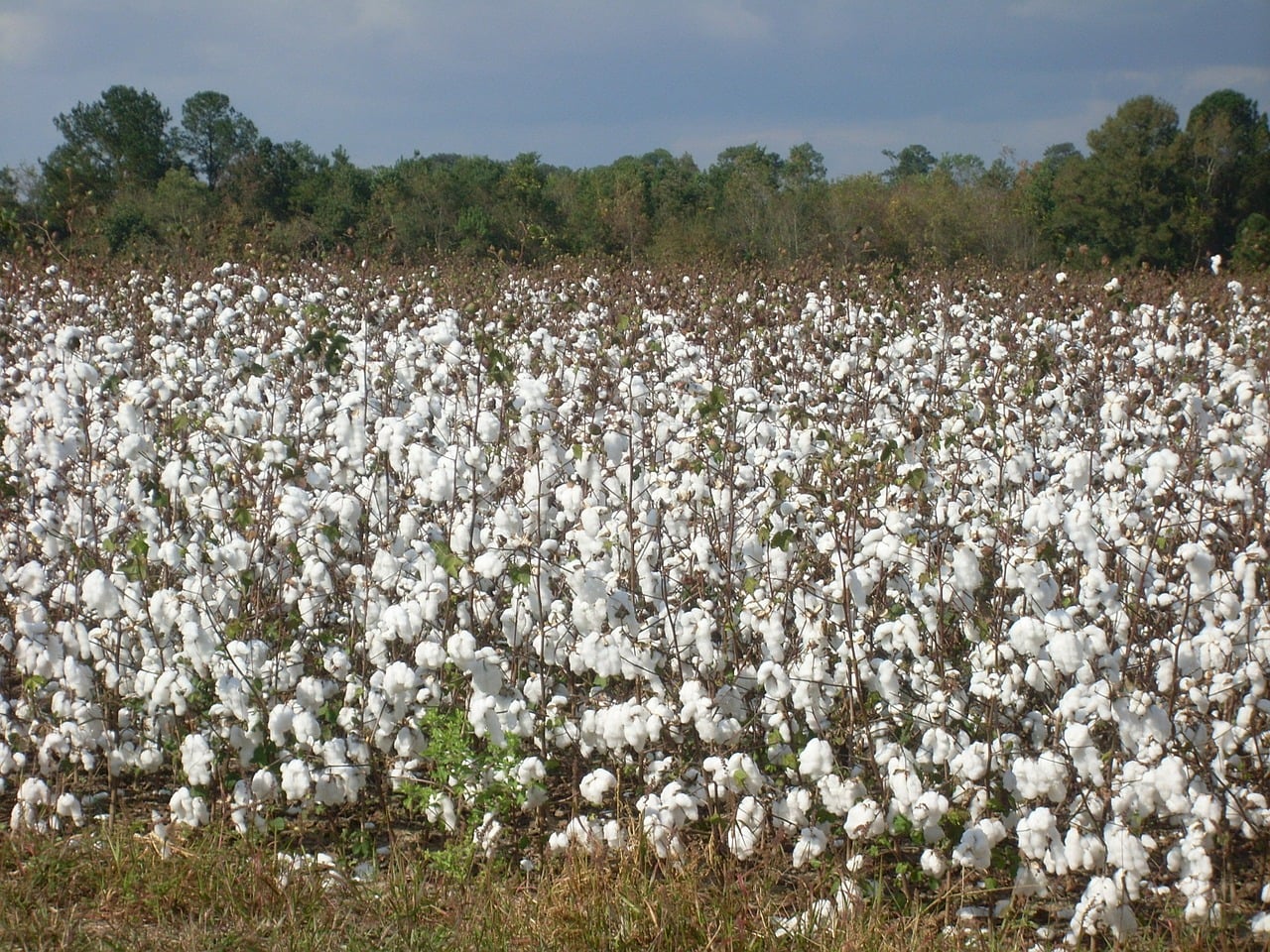
blogged in Value Walk of 9 September 2019 about “Gaspar Matalaev Free After Three Years Of Unjust Imprisonment”.  Gaspar Matalaev, a labor rights monitor from Turkmenistan, was released from prison on 6 September after three years’ imprisonment in retaliation for his reporting on forced labor. A court in Turkmenabat sentenced Matalaev on spurious charges of fraud in 2016 and Matalaev served the entire three-year sentence. “We are relieved that Gaspar is out of prison and home with his family where he belongs,” said Ruslan Myatiev, director of turkmen.news, a member of the Cotton Campaign. “But make no mistake, every day that Gaspar spent in prison was a travesty of justice to punish him for his human rights work and intimidate others from speaking out about abuses.”

Gaspar Matalaev, a reporter with turkmen.news who had monitored and reported on the systematic use of forced adult and child labor in Turkmenistan during cotton harvesting, was arrested in October 2016, just two days after turkmen.news published his extensive report on Turkmenistan’s labor practices. While in detention, Matalaev was tortured by electric shock and held incommunicado. Throughout the investigation and trial, he did not have access to effective legal representation or to key files, information, and documents. The United Nations Working Group on Arbitrary Detentions determined that Matalaev’s arrest and imprisonment was arbitrary.

“Matalaev and others take great personal risks when they document these abuses,” said Judy Gearhart, executive director at the International Labor Rights Forum, which hosts the Cotton Campaign. “Turkmenistan’s international partners, including in the U.S., EU, and the international development banks, should use their influence with the government of Turkmenistan to press for greater protections for human rights monitors and journalists.” International Labor Rights Forum honored Matalaev with its annual Labor Rights Defender award in 2019.

More than 100,000 people signed a petition calling on the government of Turkmenistan to release Matalaev. …….

The Cotton Campaign and investors called on companies to sign the Turkmen Cotton Pledge, and work to ensure that cotton from Turkmenistan produced with forced labor does not enter their supply chains. Thus far 70 major apparel and home goods brands and industry associations have signed the pledge.

Thanks to the work of reporters and human rights defenders like Gaspar Matalaev, companies and consumers can make informed sourcing and purchasing decisions,” said Patricia Jurewicz, vice president of the Responsible Sourcing Network, Cotton Campaign co-founder, and host of the Turkmen Cotton Pledge. “Companies can take a stand to end the human rights abuses in Turkmenistan, and ensure that materials produced with forced labor do not enter their supply chains.”

Cotton Campaign is a global coalition of human rights, labor, responsible investor, and business organizations dedicated to eradicating child and forced labor in cotton production.


https://www.valuewalk.com/2019/09/gaspar-matalaev-turkmenistan/

Human Rights Council: Reprisals instead of responses is the answer by many States

March 21, 2019
Room XX of the Human Rights Council

In two statements delivered to the 40th Session of the Human Rights Council, ISHR and Amnesty International reacted to the latest Joint Communications Report of the UN Special Procedures – independent human rights experts, appointed to monitor and report on human rights violations and to advise and assist in promoting and protecting rights. The report cites nine cases of reprisals against human rights defenders cooperating with the UN, and reveals that 95 states have not responded to letters from the UN experts concerning human rights violations.

There are two, related issues at stake here: (1) non-response to letters from the UN, and even worse (2) reprisals against human rights defenders who cooperate with the UN.

When I started my blog in 2010 (and one of the motivations) a main concern was the lack of response and enforcement [see https://humanrightsdefenders.blog/2011/03/20/taking-on-non-response-this-bloggers-lone-response/ and : https://www.linkedin.com/pulse/20140603192912-22083774–crime-should-not-pay-in-the-area-of-international-human-rights ].

As Helen Nolan of ISHR explains, 35 States have recently failed to respond to two or more of these letters. 13 of these nations are members of the Council. ‘Repeat offenders are a particular concern,’ says Nolan. India has failed to reply to a staggering 8 communications, Mexico 6, Italy 5, and Bangladesh and Nepal 4 each.’ Nolan emphasises that a failure to reply is a failure to cooperate, and welcomes the fact that the recently published report of the Annual Meeting of Special Procedures focuses on non-cooperation, including ‘more subtle forms’, such as selective cooperation with particular mandates. ‘To encourage cooperation, the Council must make non-cooperation more costly,’ says Nolan. ‘We urge the President of the Council to work closely with the Coordinating Committee of the Special Procedures to find ways to do this,‘ adds Nolan.

ISHR and Amnesty International’s second statement noted that under GA Resolution 60/251, Council members must ‘fully cooperate with the Council.’ Yet, the report cites nine cases of reprisals involving these members:

  • China sought to revoke the Society for Threatened Peoples’ ECOSOC status after vexatiously alleging that a person accredited by them, Dolkun Isa, participated in incitement and funding of separatism and terrorism, in retaliation for cooperation with the UN;
  • Egypt carried out forced evictions, and violations of the rights to physical integrity, liberty and security against individuals who cooperated with the Special Rapporteur on the right to adequate housing during her recent visit;
  • Iraq carried out unlawful arrest, enforced disappearance and torture against Imad Al Tamimi and intimidated and threatened Israa Al Dujaili for cooperating with the UN;
  • Libya arrested an individual in retaliation for taking steps to clarify the fate and whereabouts of his father, including with UN mechanisms;
  • The Philippines labeled defenders “terrorists” in reprisal for their engagement with the UN;
  • Russia surveilled, intimidated and harassed Yana Tannagasheva and her husband, for speaking out about impacts of coal mining on indigenous people in Siberia and in possible reprisal for their communication with UN mechanisms;
  • Turkmenistan carried out reprisals against a defender and her husband for her cooperation with the UN; and
  • In Yemen, forces loyal to President Hadi and the Saudi-led coalition detained human rights defenders Radhya Al-Mutawakel and Abdulrasheed Al-Faqih for cooperating with the UN.

‘We call on the President of the Council to request updates on the cases from Iraq, Libya, Russia, Turkmenistan and Yemen, as there has been no response from the States concerned,’ said Nolan. For an older post on reprisals, see: https://humanrightsdefenders.blog/2014/03/13/zero-tolerance-for-states-that-take-reprisals-against-hrds-lets-up-the-ante/

Full text of the first statement (on failure to reply) available here.

Full text of the second statement (on cases of reprisals) available here.

You can also watch the videos of the statements via the link below: