(Ravina Shamsadani, Spokesperson for the Office of the UN High Commissioner for Human Rights. Photo: UN Multimedia)
On 17 October 2014 the United Nations High Commissioner for Human Rightsfelt duty bound to express deep concern about a criminal case initiated by the Supreme Court of the Maldives against members of the country’s own official Human Rights Commission!
The Office of the High Commissioner for Human Rights (OHCHR), noted that five members of the Human Rights Commission of the Maldives were now facing “serious criminal charges” following the submission of their written contribution to their country’s second Universal Periodic Review (UPR), presented to the UN Human Rights Council (the actual UPR of the Maldives is scheduled to be held between April and May 2015). “The Government has a responsibility to ensure a safe operating space for the Commission and for civil society actors in the country, so that they are able to coöperate with UN human rights mechanisms without fear of reprisals.” the spokesperson stated.
[It is not the first time the Supreme Court of the Maldives has come under rebuke from OHCHR. In 2013, former High Commissioner for Human Rights Navi Pillay called for reforms to the judiciary to safeguard the rule of law following the Supreme Court’s repeated interventions in the presidential election process in the Maldives which, she said, were undermining the country’s democracy. In that specific case, the Court had nullified the first round of the election on the basis of irregularities in the process, despite conclusions by national and international observers that the election was free and fair.]
A UN Human Rights Council mandated inquiry is currently investigating alleged violations of international humanitarian law, as well as gross and systematic human rights abuses, committed by the Government of Sri Lanka and the Liberation Tigers of Tamil Eelam, which led to estimated 40,000 civilian deaths in 2009 alone. In a joint letter dated 25 August to the President of the UN Human Rights Council and to the Ambassador of Sri Lanka, a coalition of NGOs outline an alarming trend of intimidation, threats and reprisals in Sri Lanka against people engaging with UN human rights mechanisms, including the Commission of Inquiry.
This pattern has been brought many times to the attention of the UN Human Rights Council by civil society, human rights experts and States, and even by the UN Secretary-General and High Commissioner. ‘The Government of Sri Lanka has the primary responsibility for protecting people from threats, intimidation and reprisal, and must condemn all such acts immediately and unequivocally as well as take all necessary lawful steps to affirm and uphold the right of all persons to free communication with the UN, safe from hindrance or insecurity’ said ISHR Director Phil Lynch. See also on reprisals: https://thoolen.wordpress.com/tag/reprisals/
Still on 13 September 2014, human rights defenders Mr Namal Rajapakshe and Mr Manjula Pathiraja in Sri Lanka were threatened with death in connection to their work as defence lawyers, reported Front Line on 15 September. Namal Rajapakshe and Manjula Pathiraja are leading human rights lawyers who have frequently appeared (often pro bono) in public interest litigation representing victims of human rights violations across Sri Lanka.
[On 13 September 2014, two unidentified men wearing jackets and helmets covering their faces entered the office of Namal Rajapakshe and threatened that he and Manjula Pathiraja would be killed should they appear in any more “unnecessary cases”. This is not the first time that Namal Rajapakshe and Manjula Pathiraja have been targeted. On 4 August 2014, the human rights defenders were intimidated, along with another lawyer, while they were making representations on behalf of their clients. They were harassed by a group of thugs inside the Maradana Police station – in front of the local Inspector.]
“Protecting civil society space and preventing reprisals: National and international developments and next steps” is side event that will be held on Friday, 19 September 2014 from 9.15 to 10.45 am in the Palais des Nations, Geneva, Room XXIV.
Opening remarks Olivier de Frouville, member of the UN Working Group on Enforced and Involuntary Disappearances and member-elect of the UN Human Rights Committee
Panelists:
Reine Alapini-Gansou, Special Rapporteur on Human Rights Defenders, African Commission on Human and Peoples Rights
Stephania Kulaeva, Director, Anti-Discrimination Centre Memorial, Russia
Patricia OBrien, Ambassador of Ireland to the UN
Eleanor Openshaw, Reprisals Advocacy Manager, International Service for Human Rights
Mothusi Bruce Rabasha Palai, Ambassador of Botswana to the UN TBC
Moderator: Michael Ineichen, Human Rights Council Advocacy Director, ISHR
The event will be webcast at www.ishr.ch/webcast. You can also follow the event on Twitter @ISHRGlobal, using the hashtag #ProtectCSS.
If you would like to attend but do not have UN accreditation, please email information[at]ishr.ch before 12 noon on 16 September.
In this new video produced by ISHR and True Heroes Films [THF] you hear about 4 cases (from Russia, China, Sri Lanka and DRC) of reprisals against human rights defenders who have bravely engaged at the UN. It would seem that the political costs of silencing and intimidating HRDs is not high enough for certain States to desist from this terrible practice. [for more posts on reprisals: https://thoolen.wordpress.com/tag/reprisals/]
A joint letter by 6 international NGOs (International committee of Jurists, Amnesty International, Asia Forum for Human Rights and Development, CIVICUS, the International Movement Against Discrimination and All Forms of Racism, and the International Service for Human Rights) to the UN Human Rights Council and the Sri Lankan government cites a number of recent incidents in which human rights defenders in the country were intimidated. Sri Lanka has vowed not to cooperate with the UN probe saying it infringed on the country’s sovereignty. Sri Lanka has rejected a UNHRC resolution in March that called for an international investigation into allegations that 40,000 civilians were killed in the final months of the civil war that ended in 2009.
The government spokesman and media minister, Keheliya Rambukwella, has reportedly threatened all those who intend to provide information to the UN investigation and promised to “take appropriate action based on the evidence the detractors give“. “We stress that threats, harassment, intimidation and reprisals against persons who engage with the UN are prohibited by international human rights law,” the letter said. “While we affirm the importance of exercising the right to free expression by journalists and others, we stress that the exercise of speech that serves to significantly risk inciting violence, hostility or discrimination against persons is unacceptable“.
My reference last week to an interview with the new Special Rapporteur on Human Rights Defenders [https://thoolen.wordpress.com/2014/08/05/michel-forst-new-special-rapporteur-on-human-rights-defenders-gives-indication-of-his-priorities/] seemed well appreciated judging from the number of views. Therefore I now refer you to a piece by the Director of the ISHR, Phil Lynch, of 16 July, who addresses the incoming UN High Commissioner for Human Rights, Zeid Ra’ad Zeid al-Hussein as the “human rights defender-in-chief“, saying that he has a particular responsibility to protect human rights defenders, especially so when they face intimidation and reprisals for their efforts to seek accountability at the UN for human rights violations. Read the rest of this entry »
My reference last week to an interview with the new Special Rapporteur on Human Rights Defenders [https://thoolen.wordpress.com/2014/08/05/michel-forst-new-special-rapporteur-on-human-rights-defenders-gives-indication-of-his-priorities/] seemed well appreciated judging from the number of views. Therefore I now refer you to a piece by the Director of the ISHR, Phil Lynch, of 16 July, who addresses the incoming UN High Commissioner for Human Rights, Zeid Ra’ad Zeid al-Hussein as the “human rights defender-in-chief“, saying that he has a particular responsibility to protect human rights defenders, especially so when they face intimidation and reprisals for their efforts to seek accountability at the UN for human rights violations. Read the rest of this entry »
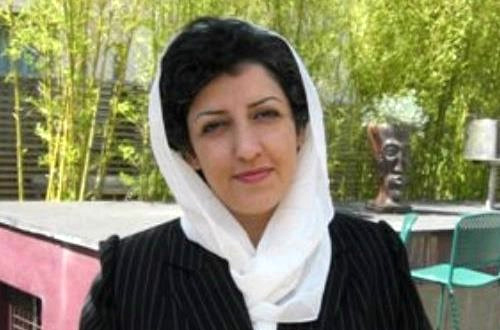
Reprisals are not limited to human rights defenders cooperating with the UN. Narges Mohammadi, a prominent human rights defender in Iran, told the NGO ‘International Campaign for Human Rights in Iran’ that new charges have been brought against her stemming from her March 8, 2014 meeting with the EU foreign policy chief Catherine Ashton. Mohammadi was charged with “propaganda against the state” and “collusion against national security” for her meeting with Ashton at the Austrian Embassy in Tehran. She was released on $10,000 bail. [Mohammadi was one of several women activists who accepted an invitation to meet the EU foreign policy head during her March visit to Tehran. The meeting took Iranian officials by surprise and unleashed a flurry of criticism by conservatives who described the meeting as “foreign interference in Iranian domestic affairs” and labeled the Iranian participants as foreign collaborators.]
Mohammadi stated: “I have been ‘charged’ with every single civil activity I have engaged in since my release from Zanjan Prison in August 2012, such as participating in gatherings on women’s rights, air pollution, and [Rouhani’s] Citizenship Rights Charter. I was also accused of honoring families of political prisoners at meetings, or attending a gathering with Gonabadi Dervishes in front of the Prosecutor’s Office, or giving interviews to media outside Iran. I told them there that when you fit all my civil activities into these two charges, it means that I must remain silent and still.”
Mohammadi was arrested in 2009 and charged with “assembly and collusion against national security,” “membership in the Defenders of Human Rights Center,” and “propaganda against the state.” She was first sentenced to 11 years in prison, but Branch 54 of the Tehran Appeals Court reduced her sentence to six years in prison. She was released in 2013 for medical reasons after a severe illness in Zanjan prison.
The ISHR Monitor of June 2014 contains a good wrap-up of the situation regarding reprisals against Human Rights Defenders written by Eleanor Openshaw under the title: “Reprisals: States must reduce unacceptable human cost of cooperating with UN”.
‘Regrettably, reprisals against persons cooperating with the United Nations, its mechanisms and representatives in the field of human rights continue. ...’ said UN Secretary-General Ban Ki-moon in 2013. In response, the UN Human Rights Council adopted a landmark resolution in September 2013 calling on the Secretary-General to designate a UN-wide senior focal point to combat reprisals. Regrettably, Human Rights Council resolution 24/24 was blocked by the UN General Assembly in New York in December 2013, but NGOs are now calling again on States to revisit the issue as a matter of priority. “The disappearance, arbitrary detention, ill-treatment and death of human rights defender Cao Shunli in retaliation for her efforts to hold China to account for its human rights record at the UN is just one example among many of the unacceptable human cost of cooperating with the UN,’ said Ms Openshaw.
A number of positive recent developments (referred to in earlier blog posts [https://thoolen.wordpress.com/tag/reprisals/]) include a May 2014 decision by the African Commission on Human and Peoples’ Rights in Angola to appoint its own focal point, and a joint statement delivered by Botswana on behalf of 56 States in Geneva in March 2014 recognising that ‘the current response by the UN and the member States in addressing reprisals is inadequate’ and calling on them to ‘address cases of reprisals through a more effective and coordinated approach.‘
‘With the opportunity for the General Assembly to revisit the issue in September, NGOs are urging States to transfer the political will shown on this issue in Angola and Geneva to New York, and achieve an outcome that challenges impunity for the perpetrators of reprisals and increases protection for human rights defenders and others who engage with the UN human rights system,‘ Openshaw said (Program and Advocacy Manager, e.openshaw[at]ishr.ch).
The Treaty Body that oversees the implementation of the International Covenant on Economic, Social and Cultural Rights, composed of independent experts, recently completed its review of China‘s compliance. In its conclusions (called ‘Concluding Observations’), the UN committee expressed serious concern about ‘instances where labour and human rights activists, and their lawyers, have been victims of repression and reprisals while taking up cases of violations of economic, social and cultural rights’ and said that China is obliged under international law ‘to protect human rights and labour activists, as well as their lawyers, against any form of intimidation, threat and retaliation‘.
[TheISHR had briefed the treaty body experts on the case of Chinese human rights defender, Cao Shunli, on of the 3 Final Nominees of the MEA 2014, who died in detention after being denied access to adequate health care. In its briefing, ISHR also expressed concern at ongoing intimidation and reprisals against other human rights defenders, saying, ‘The Chinese Government again restricted human rights defenders from travelling to Geneva to attend this session, a pattern which is widespread. We call on the Committee to recommend that the government immediately cease its harassment and intimidation of human rights defenders, and that it guarantee the right of everyone to safely access and communicate with international bodies, such as this Committee. Further, we request that the Committee remain vigilant about reprisals, and that it recommend that the Government investigate all cases of alleged reprisals, and hold perpetrators to account.’] [http://www.ishr.ch/news/china-un-committee-demands-respect-human-rights-activists-and-end-reprisals]
Two days earlier, 26 May, the NGO Chinese Human Rights Defenders reported that Chinese authorities have detained a top rights lawyer and questioned dozens of activists and family members of victims of the 1989 military crackdown on the Tiananmen Square pro-democracy movement after they held a seminar to mark the sensitive 25th anniversary.
 (Ravina Shamsadani, Spokesperson for the Office of the UN High Commissioner for Human Rights. Photo: UN Multimedia)



 Hans Thoolen on Human Rights Defenders and their awards