ISHR launched a new report that summarises and assesses progress and challenges over the past decade in relation to initiatives to protect human rights defenders in the context of business frameworks, guidance, initiatives and tools that have emerged at local, national and regional levels. The protection of human rights defenders in relation to business activities is vital.
Defenders play a crucial role in safeguarding human rights and environmental standards against adverse impacts of business operations globally. Despite their essential work, defenders frequently face severe risks, including threats, surveillance, legal and judicial harassment, and violence.
According to the Business and Human Rights Resource Centre (BHRRC), more than 6,400 attacks on defenders linked to business activities have been documented over the past decade, emphasising the urgency of addressing these challenges. While this situation is not new, and civil society organisations have constantly pushed for accountability for and prevention of these attacks, public awareness of the issue increased with early efforts to raise the visibility of defenders at the Human Rights Council and the adoption of key thematic resolutions, as well as raising defenders’ voices at other foras like the UN Forum on Business and Human Rights.
The report‘Business Frameworks and Actions to Support Human Rights Defenders: a Retrospective and Recommendations’ takes stock of the frameworks, tools, and advocacy developed over the last decade to protect and support human rights defenders in the context of business activities and operations.
The report examines how various standards have been operationalised through company policies, investor guidance, multi-stakeholder initiatives, legal reforms, and sector-specific commitments. At the same time, it highlights how despite these advancements, the actual implementation by businesses remains inadequate. Effective corporate action remains insufficient, highlighting a critical gap that must be urgently addressed to ensure defenders can safely carry out their vital work protecting human rights and environmental justice. In order to address this, drawing on case studies, civil society tracking tools, and policy analysis, the report identifies key barriers to effective protection and proposes targeted recommendations.
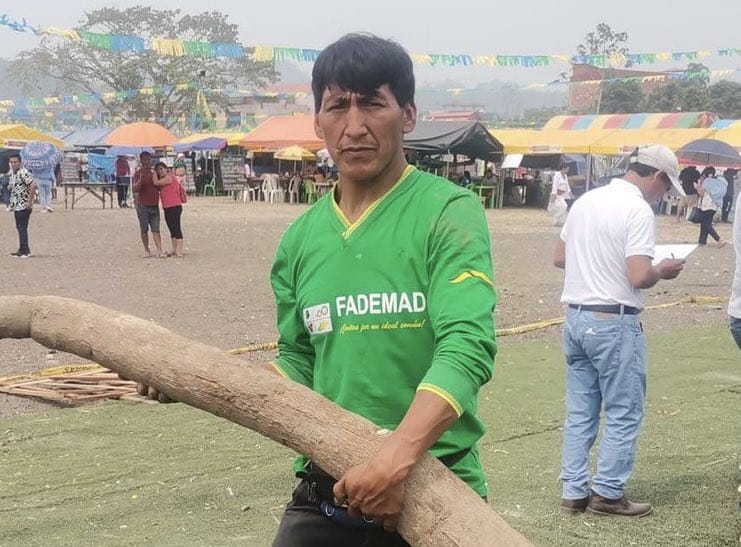
Environmental activist Hipólito Quispe Huamán was shot and killed Saturday night in the Madre de Dios region of southeastern Peru, in what authorities suspect was a targeted attack linked to his work defending the Amazon rainforest, AFP reported on 29 July 2025.
Quispe Huamán was driving along the Interoceanic Highway when he was gunned down, according to local prosecutors. Karen Torres, a regional prosecutor, told reporters that investigators are considering his environmental advocacy as the likely motive.
“This is a murder with a firearm of yet another defender of the Madre de Dios region,” she was quoted as saying by AFP.
Quispe Huamán had served as an active member of the Tambopata National Reserve Management Committee and was a vocal opponent of deforestation and illegal land use in the Peruvian Amazon. His killing has sparked outrage from human rights and environmental organizations, which say the attack reflects a growing pattern of violence against Indigenous leaders and environmental defenders in the region.
“We condemn the murder of environmental defender Hipólito Quispe Huamán in Madre de Dios, another victim of the growing violence against those who protect our territories and ecosystems,” said the National Coordinator for Human Rights (CNDDHH) in a statement posted on social media. “Not one more death!”
Hipólito Quispe Huamán. Photo courtesy of CNDDHH (on X).
Quispe Huamán’s brother, Ángel, called for accountability. “I demand justice for my brother’s death. This kind of thing cannot happen,” he told local media.
The Ministry of Justice has pledged to support the legal defense of Quispe Huamán’s family and ensure the perpetrators are brought to justice. However, critics say the government’s response mechanisms remain under-resourced. The Intersectoral Mechanism for the Protection of Human Rights Defenders, led by the Ministry of Justice, has faced ongoing criticism for lacking the budget and personnel needed to respond effectively to threats.
Attacks against environmental defenders have increased across Peru’s Amazonian regions, where extractive industries, drug trafficking, and illegal land grabs often operate with impunity. In July 2024, the Interethnic Association for the Development of the Peruvian Rainforest (AIDESEP) declared a state of emergency after an Indigenous leader was tortured and killed in central Peru, citing escalating threats from coca growers and criminal networks.
According to Global Witness, at least 54 land and environmental defenders have been murdered in Peru since 2012—more than half of them Indigenous. Many of these killings remain unsolved.
Quispe Huamán’s death has reignited calls for stronger protections for those who safeguard the rainforest and Indigenous territories. As investigations continue, activists and family members are demanding not only justice—but a systemic response to end the violence.
At the 59th Human Rights Council session, civil society organisations share reflections on key outcomes and highlight gaps in addressing crucial issues and situations. Full written version below.
We join others who have expressed grave concern about the UN’s financial situation throughout the session. We deplore that we are in this position primarily due to the failure of some States to pay their assessed contributions in full and on time. We regret that this crisis is currently affecting the Council’s ability to deliver its mandate. Today, UN Member States are sending a clear message that human rights and their implementation are optional and not inalienable. We call on all States to pay their dues to the UN in full and without delay, both now and in future years, and strengthen the human rights pillar of the UN by substantially increasing its regular budget. [see: https://humanrightsdefenders.blog/tag/united-nations/]
We welcome the Council’s decision to renew, once more, the Mandateof theIndependent Expert on protection against violence and discrimination based on sexual orientation and gender identity, following a call from more than 1,259 organisations from 157 countries and territories. While the mandate was supported by the overwhelming majority of Council members, we regret that a mandate focusing on core human rights issues such as freedom from violence and discrimination was once again put for a vote.
We welcome the adoption of the resolution on civil society space. The resolution acknowledges important civil society initiatives such as Declaration +25 and addresses key and emerging trends such as strategic lawsuits against public participation (SLAPPs), the phenomenon of transnational repression, and foreign funding legislation, as well as other restrictive legislation including counter-terrorism legislation. We regret, however, that language on transnational repression has been weakened throughout the negotiations and does not take a step forward in terms of defining the phenomenon and its patterns. ..
We welcome the adoption of the resolution on human rights and climate change in relation to climate finance. As acknowledged by the resolution, climate finance is a tool for addressing climate change and it is also important for the enjoyment of human rights when finance prioritises equity, climate justice, social justice, inclusion and just transition processes. … We also regret that, notwithstanding the support expressed by numerous delegations, this resolution is blatantly silent in recognising the positive, important, legitimate and vital role that environmental human rights defenders (EHRDs) play in the promotion and protection of human rights and the environment, particularly in the context of climate change. As recognised by the HRC resolution 40/11, EHRDs are one of the most exposed and at risk around the world. The Inter-American Court on Human Rights has recently ruled in its Advisory Opinion on “Climate Emergency and Human Rights” that EHRDs play a fundamental role due to the urgency, gravity and complexity to address the climate emergency. We will not have climate justice without consulting, listening and including EHRDs in climate actions and initiatives, including this annual resolution.
We express our support for a new strong resolution on the safety of journalists, adopted by consensus and co-sponsored by over 70 countries from all world regions, signalling a renewed international commitment to prevent, protect and remedy all human rights violations against journalists. The resolution becomes the first across the UN to recommend a range of concrete, specific measures to
It is concerning that the Council could not find consensus on the resolution on access to medicines, vaccines and other health products. States should acknowledge that intellectual property rights can be a barrier for access to health products, especially in public health emergencies and should act with a view to finding human-rights compliant solutions. States should further ensure that the benefits of scientific progress is available, accessible, acceptable and of good quality to all people, without discrimination.
We welcome the resolution on new and emerging digital technologies and human rights. The resolution reaffirms the need for human rights due diligence and impact assessments throughout the life cycle of new and emerging digital technologies, and crucially calls upon States to refrain from or cease the use of artificial intelligence applications that are impossible to operate in compliance with international human rights law. The resolution importantly mandates OHCHR to expand its work on UN system-wide promotion, coordination, and coherence on matters related to human rights in new and emerging digital technologies.
We welcome the rejection by the Council of an unprecedented, harmful draft resolution (L.1/Rev.1) presented in bad faith by Eritrea to discontinue the mandate of the Special Rapporteur. The voting result (25 against, 4 in favour) is clear and will deter similar initiatives to terminate mandates. The Pandora’s Box remains closed for now. We welcome the adoption of resolution L.7, which extends the mandate of the Special Rapporteur and enables continued scrutiny of Eritrea‘s dire human rights situation.
We welcome the adoption by consensus of the resolution on the situation of human rights of Rohingya Muslims and other minorities in Myanmar—a strong signal of the Council’s continued prioritization of their plight. As violence between the Myanmar military and Arakan Army escalates, Rohingya face renewed existential threats. We recognize the efforts made to align the resolution closer to the evolving situation on the ground, including its recognition of the role of Arakan Army along with the Myanmar military in perpetuating violence and targeting Rohingya. We also welcome the resolution’s acknowledgment of the worsening humanitarian crisis due to dwindling aid that is driving more Rohingya to risk dangerous journeys by sea. The call for protection of Rohingya across borders and respect for non-refoulement is vital. We support the resolution’s emphasis on accountability and reparations as prerequisites for safe, voluntary, and dignified return of Rohingya refugees. However, we regret its failure to call for an end to arms and jet fuel sale and transfers that continue to fuel ongoing violence.
We emphasize the vital role of investigative mechanisms and, in the context of the UN’s liquidity crisis, we urge all those involved, including the Secretary-General and the High Commissioner, to allocate sufficient resources for these mechanisms to operate. All UN Member States must pay their dues in full and on time. As the conflict in Sudan, now in its third year, shows no sign of abating, resulting in the world’s largest displacement crisis and egregious atrocities against civilians, the work of the Fact-Finding Mission (FFM) should continue. At HRC60, extending its mandate will be a priority.
We continue to deplore this Council’s exceptionalism towards serious human rights violations in China, including crimes against humanity. In his global update to this Council session, High Commissioner Türk indicated he remains ‘concerned about lack of progress on much-needed legal reform to ensure compliance with international human rights law’ and ‘regret[s] that there has not yet been a resolution to the individual cases [the OHCHR has] raised]’. It is imperative that the Council take action commensurate with the gravity of UN findings, by establishing a monitoring and reporting mechanism on China as repeatedly urged by over 40 UN experts since 2020. We urge China to genuinely engage with the UN human rights system to enact meaningful reform, and ensure all individuals and peoples enjoy their human rights, on the basis of recommendations from the OHCHR Xinjiang report, UN Treaty Bodies, and UN Special Procedures.
This Council’s continued silence on the human rights crisis in Egypt remains of major concern. The human rights situation in Egypt is worse than at any point in its modern history and continues to deteriorate. During its UPR process, Egypt rejected or dismissed as “already implemented” recommendations related to serious human rights violations 134 times. In particular, Egypt either rejected or dismissed recommendations to release political prisoners and end arbitrary arrests 12 times, to stop attacks against independent civil society and journalists 19 times, and to end torture and ill-treatment 6 times. The goverment also refused to ensure accountability for those who have committed torture and other human rights violations 7 times, and rejected or dismissed recommendations to halt violance and discrimination against women, minorities and members of the LGBT+ community 25 times, including repeatedly rejecting calls to criminalize marital rape, as well as forced virginity and anal exams. In this context, action by the HRC to address these violations is as important as ever.
Watch the video of the statement below:
Signatories:
African Centre for Democracy and Human Rights Studies (ACDHRS)
Asian Forum for Human Rights and Development (FORUM-ASIA)
The Finnish Ministry for Foreign Affairs published on 25 July 2025:
The Finnish OSCE Chairpersonship will organise a conference on 31 July 2025 to mark the 50th anniversary of the Helsinki Final Act. The conference will pay tribute to the legacy of the Conference on Security and Co-operation in Europe (CSCE) in Helsinki in 1975 and highlight the role of civil society in advancing OSCE’s principles and commitments. Helsinki+50 Fund will be launched as part of the Conference to support the OSCE’s operational capacity.
This year marks the 50th anniversary of the Helsinki Final Act signed in 1975, and its content is now more topical than ever before. The Final Act was a turning point for Europe’s security. As a result, 35 states – including those on the opposing sides of the Cold War – committed to following common principles that laid the foundation for the European security architecture…
The event at Finlandia Hall will be opened by Minister Valtonen, and High-Level Keynotes will be delivered by President of the Republic of Finland Alexander Stubb, OSCE Secretary-General Feridun H. Sinirlioğlu and UN High Commissioner for Human Rights Volker Türk.President of Ukraine Volodymyr Zelenskyy will speak at the conference via remote connection. UN Secretary-General António Guterres will send a video message.
“The Helsinki Principles are a reminder of what we can achieve through cooperation and trust – and what is at stake if we fail to defend them. Now, more than ever, these principles need their defenders,” Minister for Foreign Affairs Valtonen says.
The Helsinki+50 Fund will be launched as part of the Conference. The fund aims to enhance the channelling of voluntary funding to support work in line with the OSCE’s principles and commitments, and to strengthen the link between donors andthe OSCE.The fund will supplement OSCE’s budget, not replace it.
Josef Benedict and Rajavelu Karunanithi published a piece in the Diplomat of 18 July 2025 describing how from Hong Kong to India, governments are passing and weaponizing new laws to pursue and jail whoever speaks up for human rights.
Four years ago, on the 32nd anniversary of the 1989 Tiananmen Square massacre, plain clothes police arrested human rights lawyer and pro-democracy activist Chow Hang-tung outside her office in Hong Kong. Her alleged crime? Publishing two social media posts advertising a public vigil to remember the notorious crackdown in Tiananmen Square. At the time, Chow was the vice-chair of the now defunct Hong Kong Alliance in Support of the Patriotic Democratic Movement of China, the main organizer of annual Tiananmen vigils…
Sadly, such repression is not unique to Hong Kong. Across Asia, authoritarian and democratic governments alike are passing and weaponizing new laws – in clear violation of international law and standards – to pursue and jail whoever speaks up for human rights. Today, on Nelson Mandela International Day, we call for the release of Chow Hang-tang, who is part of CIVICUS’ Stand As My Witness campaign, as well as other human rights defenders unjustly locked up in Asia around the world.
The CIVICUS Monitor, which tracks civic space conditions across the world, now rates Hong Kong’s civic space as “closed,” the worst possible ranking. Hundreds remain behind bars as police systematically use the new laws to arrest and prosecute people on trumped-up charges. Often, the process itself becomes the punishment as activists spend years in detention before they are even tried…
Meanwhile, Hong Kong authorities are trying to take their repression international, by offering bounties for activists-in-exile charged under the National Security Law and by arresting the father of a prominent U.S.-based activist, Anna Kwok.
..Hong Kong’s National Security Laws have become something of a model for other Asian governments looking to stifle dissent.
Look no further than India, often called the world’s largest democracy, where Prime Minister Narendra Modi’s government resorts to similar laws to consolidate power and silence his critics. Dozens of activists have been jailed under the Unlawful Activities Prevention Act (UAPA), a draconian anti-terror law. Under the UAPA’s provisions, activists remain in pre-trial detention for long periods and are denied bail, including human rights defender Khurram Parvez, who was arrested in November 2021. His trial has yet to start, four years on. [see also: https://www.trueheroesfilms.org/thedigest/laureates/81468931-79AA-24FF-58F7-10351638AFE3]
Meanwhile, Cambodia’s Han Manet regime has used “incitement” laws as their weapon of choice to silence activists, journalists, and members of the opposition.
With legal repression spreading across Asia, the international community must do more to push back and stand with these brave activists. Foreign governments must not only speak out when activists are convicted, but step in much earlier when these human rights defenders are arrested. Diplomats should visit wrongly arrested activists in detention, monitor their trials, and engage with their families. Foreign governments must also use international platforms like the United Nations Human Rights Council and bilateral meetings to highlight their cases and call for their release.
Activists-in-exile also need support and assistance, especially when they face transnational repression. The recent G-7 Leaders’ Statement on Transnational Repression was a good start, but strong rhetoric must now turn into serious action. Failure to undertake such actions will see a further regression of democracy and repression of civic freedoms in Asia and elsewhere.
The Philippines recorded the highest number of alleged abductions involving human rights defenders (HRDs) across Asia from 2023 to 2024, according to a biennial report released on 19 July 2025 by the Asian Forum for Human Rights and Development (Forum-Asia).
The country topped the list of 24 nations with 15 documented abduction cases, surpassing Bangladesh with nine, and both Afghanistan and Pakistan with seven each. The report accounted for at least 32 Filipino victims, though it did not specify how many remain missing.
These incidents were compiled through the Asian Human Rights Defenders Portal, a publicly accessible database maintained by Forum-Asia using verified reports from civil society, media, and UN sources. Only cases with clear identification of victims and a link to their human rights work are recorded.
One cited case involved indigenous activists Job David, Peter del Monte Jr., and Alia Encela, who were reportedly abducted by military forces in Bongabong, Oriental Mindoro in September 2023. The Philippine Army denied the allegations, asserting that the three were members of the New People’s Army captured during an operation and are currently detained. However, Forum-Asia noted that the case mirrored earlier incidents where so-called “Red-tagging” was used to justify human rights violations.
Red-tagging, the practice of labeling activists as communist rebels or terrorists, has long been criticized for exposing individuals to threats, violence, and in some cases, fatal attacks.
The report also revealed that abduction is only one of many repressive methods used to target HRDs. Judicial harassment emerged as the most widespread, with 868 cases across Asia. This includes arbitrary arrests, the use of oppressive laws, and denial of fair trials.
Threats, intimidation, and censorship were also rampant, totaling 376 incidents. The Philippines accounted for 41 of these, with 18 cases of vilification—all allegedly perpetrated or backed by state actors.
Environmental, indigenous, land, and community-based defenders were among the most targeted groups, with 60 harassment cases documented in the Philippines—second only to Indonesia. The country also ranked second in attacks on labor rights defenders, tallying 16 cases.
Sixteen activists completed the 2025 Human Rights Defender Advocacy Programme in Geneva to strengthen their advocacy skills. During the programme, they called for reforms to the UN human rights system, and helped secure the renewal of the expert mandate on sexual orientation and gender identity.
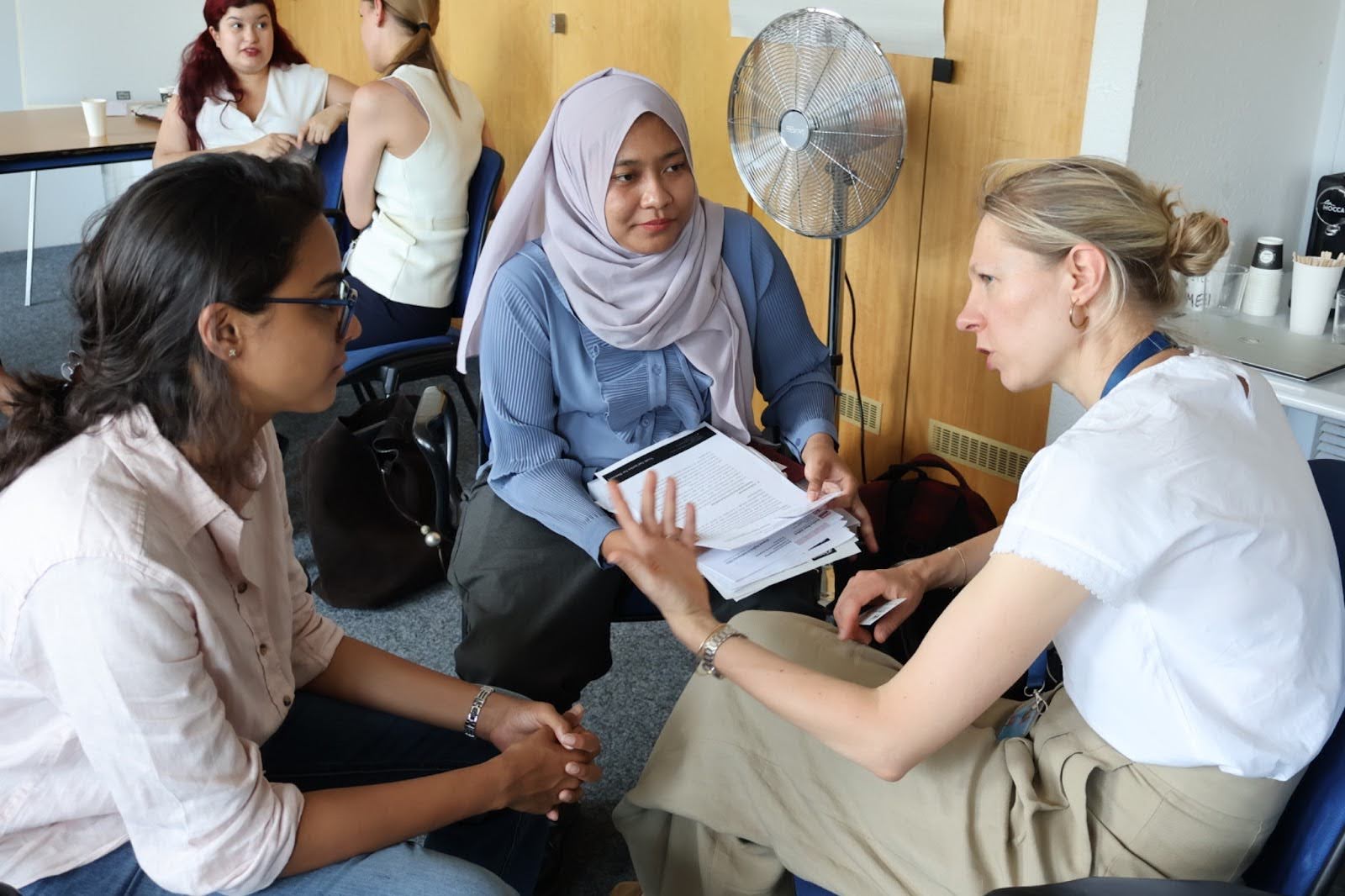
Held from 9 to 20 June 2025, the on-site part of HRDAP25 took place during the 59th session of the UN Human Rights Council. The programme blended online learning with face-to-face sessions in Geneva. Defenders explored UN human rights mechanisms such as the Human Rights Council, Special Procedures, Universal Periodic Review, and Treaty Bodies. They practiced advocacy techniques, developed strategic roadmaps, and engaged directly with mechanisms to push for real change at home.
It was intensive but very good. The platform is so user friendly, everyone can learn and take time to revisit, consult, see examples, and ask questions. The possibility to have online sessions and work in groups was very useful for me. Elena Petrovska, LGBTI Equal Rights Association for Western Balkans and Turkey, North Macedonia
Participants came from a wide range of regions and contexts, including Colombia, Guatemala, Nigeria, Indonesia, Tunisia, Lebanon, Nepal, India, Uganda, Cameroon, Syria, North Macedonia, Tibet and Sierra Leone. Their work focuses on LGBTIQ+ rights, environmental justice, transitional justice, gender equality, protection of migrants, business and human rights, and the protection of communities at risk.
Each day was filled with learning opportunities, advocacy and reflection. In April and May, the group enjoyed online training and coaching sessions which were then built upon with a packed in-person programme that gave participants the background preparation needed to engage with the various mechanisms and relevant stakeholders while in Geneva. They applied and practiced the knowledge and skills gained in a few different ways, which included: an NGO breakfast with the High Commissioner for Human Rights, where participants could ask very detailed and pertinent questions about the current situation; a brown bag lunch with experts from the Committee on Civil and Political Rights, where the group received first person tips on how to submit information and engage with Treaty Bodies; and meetings with UN Special Procedures (Business and human rights, Climate Change, Enforced Disappearances, Extreme Poverty) and their staff, were participants could start personal relationships with those experts and share their advocacy journey and plans.
Photo: ISHR
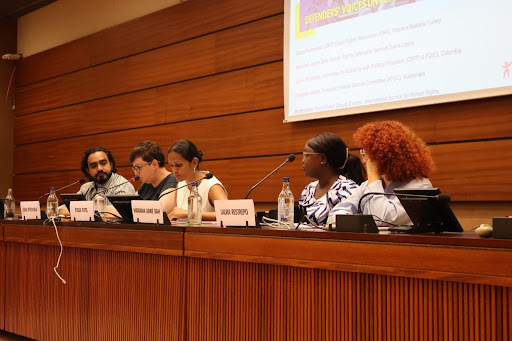
Defenders also participated in a powerful public side event about the reform of the UN human rights system. They shared lived experiences and challenges with over 30 States, calling for deeper access, stronger accountability, and genuine inclusion in the ongoing UN80 reform process. Laura Restrepo from Colombia reflected: ‘The UN must look inward and acknowledge its own colonial legacies — in who speaks, who decides, and whose knowledge counts. It must shift power toward grassroots and frontline communities.’
Throughout the programme, defenders stood up for key causes. Several participants joined the global campaign to #RenewIESOGI, advocating for the continuation of the UN mandate on Sexual Orientation and Gender Identity. Their voices contributed to a successful outcome: the Human Rights Council renewed the mandate for three more years, reaffirming its importance as a tool to combat discrimination and protect LGBTIQ+ communities.
Photo: ISHR
The sense of care and community ran deep. HRDAP helped participants’ work grounded in the values of solidarity and justice, and built their confidence to keep advocating at all levels. HRDAP25 not only provided skills and relevant exposure but also created a space for collaboration and resilience. Speaking during the public side event on UN reform, Pooja Patel, ISHR’s Deputy Executive Director, reminded States: ‘Human rights defenders are not only on the front lines of crises, they are on the front lines of solutions.’
No-one will have missed the recent media hype surrounding the opposite candidacies of US President Trump and UN rapporteur Francesca Albanese for this year’s Nobel Peace Prize. This blog with its focus on human rights defenders and their awards would be amiss in not taking note, even if the Nobel Prize is foremost a peace prize not necessarly a human rights award. [see also my piece of 2012 https://global.comminit.com/content/nobel-prize-peace-not-necessarily-human-rights]
So, it is not excluded that the ‘making peace at any cost’ considerations will prevail, but my bet is that the Peace Prize Committee will be careful in ignoring the massive support from the world’s human rights community who have massively come out against the Trump administration’s sanctions against Albanese. Human rights should trump ‘peace’ on this occasion.
Nominations for a Nobel Peace Prize for Francesca Albanese are gathering steam. See the links below:
Jasmin Lorch in an article of 25 June 2025 argues that European support to human rights NGOs, critical civil society and free media is not merely a “nice-to-have“. Instead, it directly serves European interests due to the important information function that these civil society actors perform.
USAID funding cuts have dealt a heavy blow to human rights defenders, critical Non-Governmental Organizations (NGOs) and independent media outlets around the globe. While the damage is hard to quantify exactly, it is clearly huge. For instance, the Centre for Human Rights and Democracy at People in Need estimates that the human rights and media organizations it supports have seen their budgets shrink by 40 to 100% because of the cuts. Based on a USAID fact sheet, meanwhile taken offline, Reporters without Borders (RSF) informed that the dismantling of USAID had affected support to 6,200 journalists, 707 non-state media outlets and 279 civil society organizations (CSOs) working to support free media. The impacts on local civil society are especially pronounced in closed authoritarian contexts where CSOs are both restricted and donor-dependent. In Cambodia, ADHOC, one of the few remaining local human rights organizations, lost 74 percent of its budget and had to close 16 out of its 22 provincial offices.
As critical CSOs and independent media outlets struggle to find alternative sources of funding, they face another threat to their survival: Major European donors, including Sweden, have cut down on foreign funding as well, citing their own national needs, including the necessity to invest more in defence. Germany, the biggest bilateral donor since the dismantling of USAID, has recently pledged to better integrate its foreign, defence, and development policy and to more closely align development cooperation with its security and economic interests. Accordingly, there is a significant risk that European donors will (further) cut down on funding for critical CSOs and free media as well.
However, European donors should consider that continuing to support human rights defenders, critical NGOs and independent media outlets is in their own interest.
Notably, these civil society actors serve an important information function. By furnishing insights into human rights abuses, governance deficits and patterns of corruption, they provide European (as well as other) governments with a better understanding of political developments, power relations and regime dynamics in their partner countries, thereby enhancing the predictability of security and economic partnerships. Authoritarian governments. in particular, restrict the free flow of information, while, concurrently, engaging in propaganda and, at times, strategic disinformation. Consequently, European foreign, economic and security policy towards these governments routinely suffers from severe information deficits, including the existence of numerous “unknown unknowns”. To compensate for this weakness, country assessments and expert opinions used by foreign, development, and defence ministries in Europe to devise policy approaches towards non-democratic partner countries often include information provided by independent media outlets, human rights or anti-corruption NGOs. Similarly, European embassies in authoritarian countries frequently draw on the reports and documentations accomplished by local human rights NGOs.
In some cases, the information provided by critical NGOs, human rights defenders and independent media outlets – both local and transnational – is highly economically and security relevant, for instance when it serves to unearth patterns of transnational crime. The Organized Crime and Corruption Reporting Project (OCCRP), an investigative journalist network, which also has a media development branch and was heavily affected by the USAID funding cuts, for instance, contributed to the Panama Papers that disclosed the secretive use of offshore tax havens. A recent report named Policies and Patterns. State-Abetted Transnational Crime in Cambodia as a Global Security Threat draws on interviews with journalists and civil society representatives. While expressing disappointment with the ineffectiveness of large parts of the aid community and big counter-trafficking NGOs in addressing the problem, it emphasizes that
“the ‘local civil society’ community — grassroots volunteer response networks, human rights defenders, and independent media —have been and remain the lynchpin of an embattled response. These heavily repressed and poorly funded groups have been and remain the primary source of available evidence on the lead perpetrators, their networks, and their modes of operation” (quote on p.3).
Last but not least, establishing partnerships with human rights defenders and critical NGOs also allows European countries to expand their social and political alliances in their partner countries, a diversification that can be highly useful in times of political uncertainty and change. ..
Support to human rights NGOs, other critical CSOs and free media constitutes an important contribution to democracy and pluralism. However, it also benefits European economic and security interests by enhancing the knowledge base on which European governments can draw when constructing their international alliances. European governments already use the information provided by these civil society actors in various ways, so they should continue providing diplomatic support, solidarity, and resources to them. Moreover, partnerships with human rights, media, and other civil society representatives provide European governments with an important possibility to diversify their international partnerships.
Against this backdrop, European support to these civil society actors is not a “nice-to-have” that can easily be dispensed with when funding gets more scarce. It is an important element in ensuring the predictability and reliability of European foreign relations.
The Internet Society (ISOC) and Global Cyber Alliance (GCA), on behalf of the Common Good Cyber secretariat, today announced on 23 June 2025 the launch of the Common Good Cyber Fund, an initiative to strengthen global cybersecurity by supporting nonprofits that deliver core cybersecurity services that protect civil society actors and the Internet as a whole.
This first-of-its-kind effort to fund cybersecurity for the common good—for everyone, including those at the greatest risk—has the potential to fundamentally improve cybersecurity for billions of people around the world. The Common Good Cyber secretariat members working to address this challenge are: Global Cyber Alliance, Cyber Threat Alliance, CyberPeace Institute, Forum of Incident Response and Security Teams, Global Forum on Cyber Expertise, Institute for Security and Technology, and Shadowserver Foundation.
The Fund is a milestone in advancing Common Good Cyber, a global initiative led by the Global Cyber Alliance, to create sustainable funding models for the organizations and individuals working to keep the Internet safe.
Despite serving as a critical frontline defense for the security of the Internet, cybersecurity nonprofits remain severely underfunded—exposing millions of users, including journalists, human rights defenders, and other civil society groups. This underfunding also leaves the wider public exposed to increasingly frequent and sophisticated cyber threats.
Common Good Cyber represents a pivotal step toward a stronger, more inclusive cybersecurity ecosystem. By increasing the resilience and long-term sustainability of nonprofits working in cybersecurity, improving access to trusted services for civil society organizations and human rights defenders, and encouraging greater adoption of best practices and security-by-design principles, the Common Good Cyber Fund ultimately helps protect and empower all Internet users.”Philip Reitinger, President and CEO, Global Cyber Alliance
The fund will support nonprofits that:
Maintain and secure core digital infrastructure, including DNS, routing, and threat intelligence systems for the public good;
Deliver cybersecurity assistance to high-risk actors through training, rapid incident response, and free-to-use tools
These future beneficiaries support the Internet by enabling secure operations and supplying global threat intelligence. They shield civil society from cyber threats through direct, expert intervention and elevate the security baseline for the entire ecosystem by supporting the “invisible infrastructure” on which civil society depends.
The Fund will operate through a collaborative structure. The Internet Society will manage the fund, and a representative and expert advisory board will provide strategic guidance.. Acting on behalf of the Common Good Cyber Secretariat, the Global Cyber Alliance will lead the Fund’s Strategic Advisory Committee and, with the other Secretariat members, engage in educational advocacy and outreach within the broader cybersecurity ecosystem.
The Common Good Cyber Fund is a global commitment to safeguard the digital frontlines, enabling local resilience and long-term digital sustainability. By supporting nonprofits advancing cybersecurity through tools, solutions, and platforms, the Fund builds a safer Internet that works for everyone, everywhere.
The Internet Society and the Global Cyber Alliance are finalizing the Fund’s legal and logistical framework. More information about the funding will be shared in the coming months.





 Hans Thoolen on Human Rights Defenders and their awards