Posts Tagged ‘OMCT’

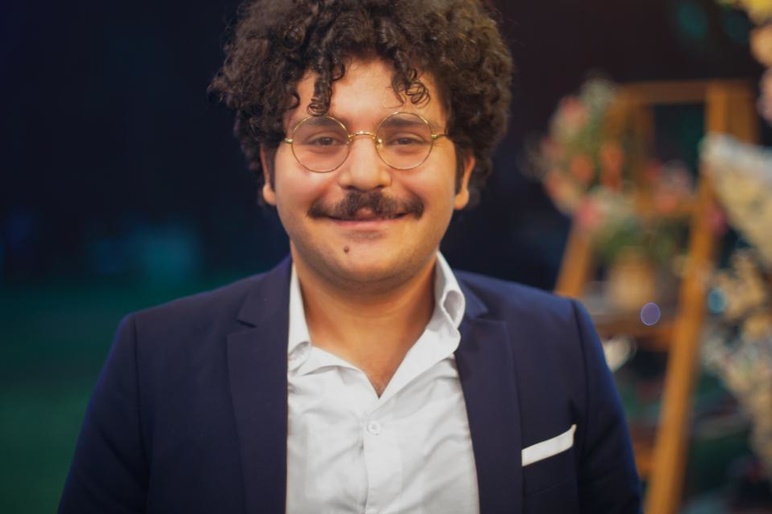
NGOs protest sentencing of human rights defender Patrick George Zaki – with success

July 19, 2023

A large group of civil society organizations, condemn the three-year prison sentence handed down to human rights researcher at the Egyptian Initiative for Personal Rights (EIPR) and academic Patrick George Zaki for his writings highlighting the hardship and discrimination faced by Coptic Christians in Egypt, such as himself.

On July 18, 2023, following a trial rife with due process violations, an Egyptian emergency state security court handed down a three-year prison sentence to Patrick on trumped up charges of spreading false news. Patrick, who was a graduate student at the University of Bologna at the time, was arrested by Egyptian authorities on February 7, 2020, while at the Cairo Airport during a visit home to see his family. In custody, he was held incommunicado for a 24-hour period; he was beaten, stripped, electrocuted, verbally abused, and threatened. He was initially accused of joining a terrorist organization and spreading false news. In September 2021, lawyers learned that he had been referred to emergency state security court on false news charges for a 2019 article that he authored for independent digital media outlet Daraj on his experience as a Coptic Christian religious minority, titled, “Displacement, Killing & Harassment: A Week in the Diaries of Egypt’s Copts.” On December 7, 2021, following 22 months behind bars, he was ordered released from detention pending trial, and placed on travel ban. His trial continued until the July 2023 verdict, following which he was taken back into custody today.

Verdicts handed down by an emergency court are not subject to legal appeal, only to ratification by the President. The President also has the authority to commute the sentence or to quash the verdict. Furthermore, under Circular No. 10 of 2017 governing emergency state security courts, “If the accused is brought to trial while not in custody and sentenced to a prison penalty, he must be released immediately without executing the penalty pending the decision of the ratifying authority.” Per this provision, Patrick must legally be free while the President considers ratification; for Egyptian authorities to have taken him into custody constitutes a clear violation of this circular.

The targeting, arrest, prosecution, and sentencing of Patrick Zaki for writing about his experiences as a Coptic Christian is an egregious measure by Egyptian authorities that is indicative of a larger failure by the state to protect religious minorities. Instead, the authorities target Copts for merely expressing themselves and bringing attention to the discrimination they regularly endure. This sentence occurs in violation of Egypt’s domestic laws and international legal commitments, and sends a clear message that the Egyptian government is not serious about implementing its national human rights strategy or carrying out a meaningful national dialogue. At a time during which Egyptian authorities should be addressing the dire economic crisis, this step raises severe questions on the trajectory of the country.

The undersigned civil society organizations, call on Egyptian President Abdel Fattah El-Sisi not to ratify the verdict handed down to Patrick Zaki and instead to quash it in its entirety. We call on Egyptian authorities to immediately release Patrick Zaki from custody, to drop all charges and close all cases brought against him in their entirety, and to lift the travel ban brought against him. We urge all of Egypt’s international, multilateral, and government partners to press the Egyptian government to immediately release Patrick and cease persecuting him for his legally protected speech and vital human rights work.

For once it seems to have worked: https://www.barrons.com/news/egypt-s-sisi-pardons-researcher-a-day-after-jailing-sparked-outcry-e22a3c1a?refsec=topics_afp-news

Signatories

  • Access Now
  • Alternative Press Syndicate
  • Amnesty International
  • Arab Reform Initiative
  • Cairo Institute for Human Rights Studies (CIHRS)
  • Campaign Against Arms Trade
  • Center for International Policy
  • CNCD-11.11.11
  • Committee for Justice
  • Daraj
  • Democracy in the Arab World Now (DAWN)
  • DIGNITY Danish Institute Against Torture
  • Egyptian Commission for Rights and Freedoms
  • Egyptian Front for Human Rights (EFHR)
  • Egyptian Human Rights Forum (EHRF)
  • Egyptian Initiative for Personal Rights (EIPR)
  • EgyptWide for Human Rights
  • El Nadim Center
  • FIDH (International Federation for Human Rights), within the framework of the Observatory for the Protection of Human Rights Defenders
  • Human Rights First
  • Human Rights Watch
  • HuMENA for Human Rights and Civic Engagement
  • INSM for Digital Rights
  • International Service for Human Rights (ISHR)
  • Kawaakibi Foundation
  • Lebanese Center for Human Rights – CLDH
  • MENA Rights Group
  • PEN America
  • PEN International
  • Project on Middle East Democracy (POMED)
  • Refugees Platform in Egypt (RPE)
  • Scholars at Risk
  • Shadow World Investigations
  • Sinai Foundation for Human Rights (SFHR)
  • SMEX
  • Start Point
  • Taafi initiative
  • The Freedom Initiative
  • The Legal Agenda
  • The Syria Campaign
  • The Tahrir Institute for Middle East Policy (TIMEP)
  • World Liberty Congress
  • World Organisation Against Torture (OMCT), within the framework of the Observatory for the Protection of Human Rights Defenders

https://www.omct.org/en/resources/statements/egypt-sentencing-of-academic-and-researcher-patrick-george-zaki

https://www.hrw.org/news/2023/07/18/civil-society-organizations-condemn-sentencing-egyptian-academic-and-researcher

https://www.aljazeera.com/news/2023/7/18/egypt-jails-rights-researcher-patrick-zaki-for-3-years-ngo-says

“G. N.” Saibaba in India continues from his cell

July 7, 2023

INPA02121512

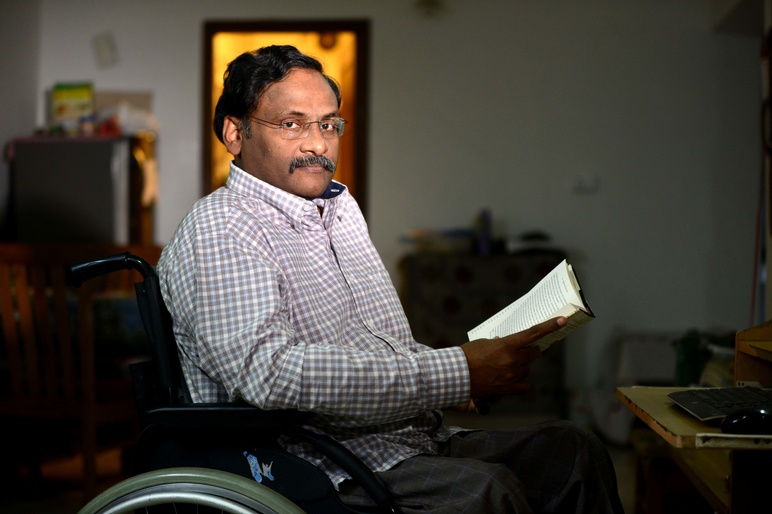
A wheel-chair using, human rights activist and former university lecturer of English, G. N. Saibaba has endured years of cruel, inhumane solitary confinement ©DR

I still stubbornly refuse to die
The sad thing is that
They don’t know how to kill me
because I love so much
The sound of growing grass

OMCT published this impressive story in calling for the immediate release of G. N. Saibaba:

These are the defiant words of Gokarakonda Naga “G. N.” Saibaba, written from his cell in Nagpur Central Jail in the Indian state of Maharashtra. A wheel-chair using, human rights activist and former university lecturer of English, Sai has endured years of cruel, inhumane solitary confinement. Still, his irrepressible resilience shines through. And Sai’s poetry fills a recently published anthology. But he did not write it in verse. In order to evade the prison’s punishing censors, and to disguise his messages of equality, positivity and love, Sai penned letters to friends and his partner of 30 years. These were transcribed, and became his book entitled, Why Do You Fear My Way So Much?

Prison conditions

Now, G. N. Saibaba is much less able to write. Since his erroneous conviction for terrorism-related crimes in 2017, and a sentence of life imprisonment, Sai’s health has progressively deteriorated. Suffering from a heart condition, a brain cyst, a lump in the abdomen and breathing difficulties, his multiple medical conditions require specialised treatment only available in New Delhi. And his disability as a result of childhood polio has been compounded by untreated nerve damage in his left arm, that has spread to his right, leaving him with no strength in his upper limbs. Sai needs support to perform any simple human function like sitting up, eating, drinking or using the toilet, a task which has been assigned to two fellow detainees. His dependency has been underlined by the constant monitoring of his cell. It was only recently – after Sai went on another hunger strike – that the prison authorities agreed to change the direction of CCTV cameras, giving him some semblance of privacy. Before that, his bed and toilet were recorded 24/7. This was a small victory. Despite repeated advocacy by the UN and human rights groups on G. N. Saibaba’s behalf, he is forced to inhabit a small, egg-shaped cell exposed to extreme weather conditions and with little space to move, particularly for someone in a wheelchair as Sai. Given his disability, some commentators believe the conditions of his detention may amount to torture.

Arrest in Delhi

It was 9th May 2014, and G. N. Saibaba was returning home for lunch from his lecturing duties at Delhi University. Without warning, a van jack-knifed in front of the car he was travelling in, forcing it to stop. Sai’s driver was pulled roughly from the vehicle, and replaced by a man in civilian clothing. Two others flanked their captive in the back. G N Saibaba was driven directly to the airport. He was never shown an arrest warrant, and nobody informed Sai’s relatives about his arrest. He was put on a plane to Nagpur, Maharashtra. On arrival, he was transported in an anti-landmine vehicle, in a convoy of commandos armed with automatic weapons. The military clearly wanted to send a message they had detained a hard-core terrorist – not a committed campaigner who has fought most of his life against discrimination and caste-based oppression, and for the rights of women and indigenous Indians.

Activism

G. N. Saibaba grew up in a small, rural community in southern India. Disabled by polio as a young child, he understood early on how unfairness and prejudice are perpetrated. Excelling in school, Sai went on to university where he became involved in student politics. His appointment as a professor of English did not dilute his outspoken criticisms of injustice.

In particular, he became a leading detractor of what became known as ‘Operation Green Hunt’ – a military campaign in central India, home to a large population of several indigenous communities (known as Adivasis), to eliminate Maoists, also called Naxals. Central India has witnessed numerous people’s movements opposing forceful occupation of indigenous land, and the exploitation of ancient forests and rich mineral resources. This military campaign against Naxals was used to quash such movements, leading to numerous human rights violations against civilians.

Conflict in this region dates back to the 1960s. ‘Operation Green Hunt’ began in 2009 – an all-out, on-going offensive by the Indian armed forces to rid the area of Naxals. G. N. Saibaba led the Forum Against War on the People – a solidarity organisation, and an attempt to shine a light on human rights abuses in the region. These atrocities – committed for the most part by the military and paramilitaries – have been well documented. They include extrajudicial killings, multiple rapes, and the deeply disturbing desecration of civilian corpses. It has been estimated more than 2,000 people have lost their lives since 2009.

Conviction

G. N. Saibaba’s advocacy certainly gave pause for thought to national and transnational mining corporations thinking about investing in the region. So, it was inevitable perhaps he would become a target. His persecution began under the Congress government – his Delhi home was raided more than once – and then continued under the BJP, and the prime ministership of Narendra Modi.

At G. N. Saibaba’s trial in 2017, with the courthouse fortified by hundreds of police officers to reinforce the impression of a dangerous extremist, he was tried under India’s anti-terror legislation – the Unlawful Activities (Prevention) Act. With five others, Sai was convicted of alleged links to the banned Maoist organisation.

Judicial rollercoaster

In October this year, the Nagpur Bench of the Bombay High Court ruled G. N. Saibaba’s initial trial had been flawed. The case against him was discharged. The elation he, his family and supporters felt quickly turned to disbelief. The government – infuriated, no doubt by the court’s decision to release an ‘urban Naxal’, a term regularly used to stigmatise human rights defenders – applied for a special sitting of the Supreme Court. The very next day, on a non-working day the special bench of the Supreme Court suspended the decision of the Bombay High Court. This leaves G N Saibaba still in that heavily monitored isolation cell, struggling to negotiate its curved walls in his wheelchair.

Above all, love

G. N. Saibaba’s hope of liberty has once more been dashed. Even so, his spirit is strong. The untreated infections in his hands, and the pain he experiences, means Sai cannot write more than two or three pages a month. But letters from home, especially from his partner, help sustain him.

I defeat the purpose
of the solitary confinement
by drowning myself
in your letters of love.

https://www.omct.org/en/resources/news/an-academic-is-caged-his-thoughts-are-still-free-resilient-and-undefeated

Women human rights defenders from Iran and Pakistan explain why women resisting are a force to be reckoned with.

March 13, 2023

Azin Mohajerin and Hina Jilal at OMCT’s offices on International Women’s Day, 8 March 2023. (Geneva Solutions/Michelle Langrand)

Michelle Langrand in Geneva Solutions of 10 March 2023 speaks with two human rights defenders, from Iran and Pakistan.

Iran’s crackdown on women’s rights protests that erupted in September and the Taliban recently banning women from working in NGOs or from attending university have served as a reminder of how fast women’s rights are sliding back in the region and other parts of the world. But despite widespread arrests, allegations of torture and the execution of four protesters in Iran, the women-led movement refuses to back down. For Azin Mohajerin, 36, it means that change is a little more within grasp. Mohajerin left Iran in 2010, following the wave of post-electoral protests that swept the country.

This time around she is supporting rights campaigners in the country, specifically from minority groups, through Miaan, an NGO in Texas she co-founded in 2019 and where she works as senior human rights officer.

Hina Jilani, an advocate of Pakistan’s Supreme Court and president of the World Organisation Against Torture (OMCT), who fought against sharia laws in Pakistan back in the 80s, views it as another illustration of women’s resistance on the path to obtaining change.

Mohajerin and Jilani were in Geneva for international women’s day for an event organised by OMCT. Geneva Solutions spoke to the activists about the challenges women face in their countries and the lessons they can draw from each other.

Born in Lahore, the capital of Pakistan’s Punjab region, Hina Jilani grew up hearing about courtrooms and prisons. At that time, Pakistan was under martial law and her father’s political opposition would often land him into trouble. Rather than being traumatised, Jilani was empowered by the environment in which she was raised. Later in life as a lawyer, her work would also land her in those same courtrooms and prisons. Jilani passed the bar exam in 1977, the same year Sharia law was imposed on Pakistan. One of the new laws made adultery a crime against the state. See also: https://www.trueheroesfilms.org/thedigest/laureates/705AB196-BD5E-4EC2-B6C1-96AC5DDB353E .“While now Pakistan has a fit and reasonably good, protective legal framework for women, we have not gotten rid of the notorious practices like child marriage or honour killings. Gender-based violence is one of our biggest issues in Pakistan,” she pointed out. Pakistan reported around 63,000 cases of gender-based violence in the past three years according to Pakistan’s National Commission of Human Rights.

In Iran, the women-led movement for the freedom to choose what they wear and what to do with their bodies has been shaking the country for the past few months. But observers are cautious about the chances of the current uprising spurring real change in Iran as previous ones have failed to do so. Mohajerin, who cannot return to her country because of the sensitive nature of her work, sees it as one more step in the long path towards the respect of human rights.

The protests in Iran have brought out Iran’s ethnic minorities to march along with the Persian majority. Mahsa Amini, whose death in custody of the morality police last September triggered mass unrest, was a 22-year-old Kurdish woman from Saqqez, in the Kurdistan province of Iran.

Mohajerin, who works with minority groups in Iran, sees that cultural change has seeped into some of the most conservative communities. “Women in Balochistan bravely went to the street in one of the rare moments that they have spoken up about their rights,” said Mohajerin.“There is a recognition that there is a gap that needs to be filled in terms of ethnic equality and gender equality.”

But Iran has also come down hard on these groups. “After Tehran, the top places in terms of arrests were minority populated areas: the Kurdish area, the Turkic and then Balochistan,” said Mohajerin. Many of them remain behind bars, she said.

Culture can help people to break the chains,” said Jilani. “Not everything is because of what the leadership or the ruling elite do. Unfortunately, the ruling elite act in a certain manner because that is the national psyche.”

Mohajerin noted that Iranians have been fighting for their freedom for a long time now. “It’s not a new movement, it is not something that started in September or even last year. It has been a long-lasting fight,” said Mohajerin.

She recalled when women first marched against the mandatory hijab after it was introduced by the Islamic revolution in Iran 44 years ago. “In Iran, the woman cannot have custody of the child after a certain age and they don’t have the right to divorce. But they do not just give up and say okay, this is how we should live. They’ve been fighting to get their rights and finding loopholes in the system,” she said.

“The cultural change that has been achieved during the past decades is way more significant than the law that exists,” said Mohajerin.

The situation in Iran has drawn international outcry, with western powers condemning Iran’s violent response to the protests. Like many activists, Jilani and Mohajerin see international solidarity as essential to their causes.

Voices from the outside can help when the environment inside the country is very difficult,” said Jilani. “I’m alive today because of international public opinion and the pressure of the international community,” said Jilani. She recalls former US president Jimmy Carter and former president of Ireland Mary Robinson pleading for her release from prison at one time. So many world leaders sent letters to Pakistan, protesting against my incarceration, that when they released me they showed me this thick file and said we don’t know why people around the world are so worried about you.”

When Iranian foreign minister Hossein Amir-Abdollahian was in Geneva last week to speak before the Human Rights Council, campaigners called for diplomats to stage a walkout during his speech. Mohajerin recognised it as a “significant symbolic gesture to condemn the human rights abuses in Iran”. “However, it is crucial for the international community to engage in dialogue with the Iranian government regarding human rights violations, particularly in cases of executions, at the highest level,” she added.

But both Jilani and Mohajerin are adamant about something: change has to come from within. “The voice should come from the people inside the country. They are the ones who live in the country, and they are the ones who have to decide for their future,” said Mohajerin, noting that views within her country are not a monolith.

https://genevasolutions.news/human-rights/one-step-forward-is-more-important-than-two-steps-back-pushing-for-women-s-rights-in-iran-and-pakistan

Naty Castro, human rights defender in the Philippines arbitrarily detained

March 10, 2022

On 8 March 2022 the Observatory for the Protection of Human Rights Defenders, a partnership of the World Organisation Against Torture (OMCT) and the International Federation for Human Rights (FIDH), requests an urgent intervention in the Philippines.

The Observatory has been informed by Karapatan Alliance Philippines (Karapatan) about the arbitrary detention and judicial harassment of Dr. Maria Natividad Marian “Naty” Castro, a public health practitioner and human rights defender. Ms. Castro has worked in the poorest and most marginalised areas in the Philippines as a community-based health worker. She has also worked for the defence of community rights of the indigenous Lumad and is a former National Council member of Karapatan.

In February 18, 2022, officials of the Philippine National Police (PNP) and the Philippine Army (PA) arbitrarily arrested Ms. Castro at her residence in San Juan City, Manila. The members of the PNP and PA presented an arrest warrant issued by the Regional Trial Court Branch 7 of Bayugan City, Agusan del Sur, in January 2020, on charges of “kidnapping” and “serious illegal detention” (Criminal Case No. 6527), filed by public prosecutor Genesis Efren in March 2019. Ms. Castro, together with 540 other individuals, is being accused of kidnapping and detaining an unknown individual in Barangay Kolambungan, Sibagat, Agusan del Sur Province, on December 29, 2018.

Following her arrest, Ms. Castro was taken to the San Juan City Police Station and then moved to the Quirino Memorial Medical Center in Quezon City to undergo medical examination. She was subsequently brought to the PNP’s headquarters in Camp Crame. However, neither her family members nor legal counsels were allowed to have contact with her, and their requests to bring her medicine for hypertension and diabetes were dismissed.

On the same day in the afternoon, Ms. Castro was flown to the island of Mindanao without her family or legal representatives being informed. On February 19, 2022, the authorities held Ms. Castro incommunicado. Only after multiple calls from her family and legal representatives, the PNP disclosed that Ms. Castro was being held at the Bayugan City Police Station in Agusan del Sur Province.

On the afternoon of February 20, 2022, Ms. Castro’s family and legal counsel were able to visit her and bring her medicines. On February 22, 2022, the Regional Trial Court Branch 7 of Bayugan City ordered her transfer to the Agusan del Sur Provincial Jail, where she was still being detained pending trial at the time of publication of this Urgent Appeal.

Ms. Castro’s lawyers filed a petition for bail and a motion to dismiss the charges against her. Both requests were pending before the court at the time of publication of this Urgent Appeal.

The Observatory for the Protection of Human Rights Defenders notes that since November of 2020, Ms. Castro has been a victim of red-tagging. Her name and picture have been circulated on social media platforms in Lianga, Surigao del Sur Province, falsely accusing her of being a “communist”, a “terrorist”, and a member of the New People’s Army (NPA).

Human rights defenders in the Philippines have been subjected to trumped-up charges and lengthy pre-trial arbitrary detention. Karapatan members have been subject to frequent harassment, criminalisation, and attacks, including the killing of Ms. Zara Alvarez and the arbitrary detention of Teresita Naul, Alexander Philip Abinguna, Nimfa Lanzas, and Renayn Tejero. Ms. Naul was released on October 28, 2021, after 18 months of arbitrary detention. Mr. Abinguna and Mses. Lanzas and Tejero remain detained. See also: https://humanrightsdefenders.blog/2021/05/27/william-zabel-human-rights-award-2021-to-philippines-ngo-karapatan/

https://www.fidh.org/en/issues/human-rights-defenders/philippines-arbitrary-detention-of-rights-defender-and-health

Greek court fails human rights defenders on antisemitism

February 18, 2022
greek orthodox bishop seraphim hate speech
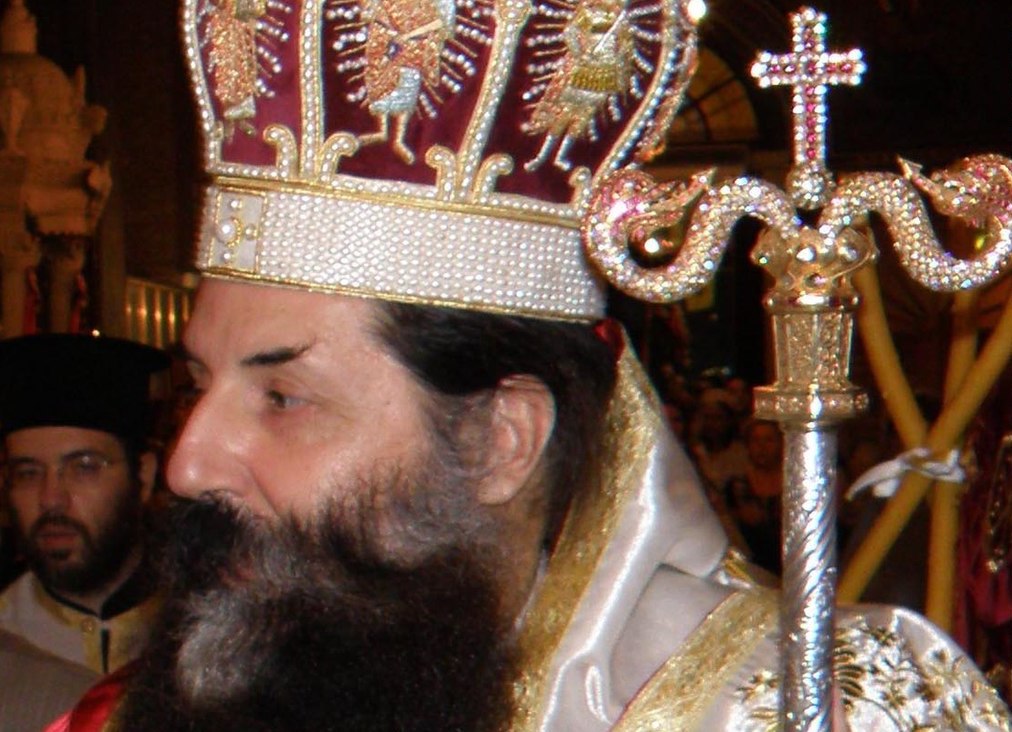
Greek Orthodox Bishop Seraphim of Piraeus. Two activists were found to have falsely accused him of hate speech by a Greek court on Tuesday. Credit: Ewiki/Wikimedia Commons/ CC BY-SA 3.0

Several newspapers (here Anna Wichmann for GreekReporter of 16 February 2022) commented on the rather surprising ruling by a Greek court that two human rights activists falsely accused a Greek Orthodox bishop of hate speech and sentenced them to year-long prison sentences that were suspended for three years.

Bishop Seraphim, who is the Metropolitan of Piraeus, was acquitted on charges of hate speech. The bishop has made what many believe are both coded and explicit references to antisemitic tropes many times. For example when Greece introduced new legislation to expand rights for gay and lesbian couples in 2015, he claimed that an “international Zionist monster” was behind the bill.

He also claimed that Jews themselves funded and planned the Holocaust and charged that they were the reason for Greece’s financial troubles on Greek television five years ago. After his statement about the Holocaust began to garner controversy, the Greek Orthodox Bishop clarified that it was his own opinion and not that of the Greek Orthodox Church.

These comments were seen as extremely troubling in a country whose once vibrant Jewish community was nearly wiped out during the Holocaust, and antisemitic rhetoric and attacks, usually in the form of vandalism, are still a major problem.

The accused brought a formal complaint against the Bishop in 2017 in which they claimed he fueled hatred and incited violence against Greece’ Jewish minority with his inflammatory statements about Jews and the Holocaust. They also claimed that he had abused his office.

The prosecutor dismissed the activists’ complaint in 2019, but the Bishop decided to file his own motion against the activists for falsely accusing him of hate speech, and the prosecutor subsequently formally charged the accused in November.

Greece passed Law No. 4285/2014 in 2014, which criminalized hate speech — particularly speech which incites violence — and genocide denial. The law reads “Anyone, who publicly incites, provokes, or stirs, either orally or through the press, the Internet, or any other means, acts of violence or hatred against a person or group of persons or a member of such a group defined by reference to race, color, religion, descent or national or ethnic origin, sexual orientation, gender identity, or disability, in a manner that endangers the public order and exposes the life, physical integrity, and freedom of persons defined above to danger, will be punished by imprisonment of from three months to three years and a fine of €5,000 to €20,000.”

Human rights groups around the world paid careful attention to the case; many believed that bringing the activists to trial alone was a sign of an alarming shift of the judicial system’s role in the country as a force against activists.

Amnesty International stated on social media that “The ruling poses a direct threat to the right to freedom of expression and has a chilling effect on human rights defenders advocating against racism and hate speech.”

Andrea Gilbert, one of the accused, who works for the Greek Helsinki Monitor rights group, expressed her outrage at the verdict to The Guardian: “Today’s outrageous verdict is representative of the institutionalized antisemitism that exists in Greece…We have immediately appealed and will fight it all the way.”

Activists and people who work for NGOs argue that the trial epitomizes how difficult it is for them to work in Greece.

“Human rights defenders (in Greece) are consistently targeted for their legitimate work…(They) face different types of attacks, including surveillance, judicial harassment, arbitrary arrests, detentions, ill-treatment, entry bans and expulsions,” the international secretariat of the World Organization Against Torture stated to The Guardian.

Although not included in the activists’ initial complaint of hate speech against Greek Orthodox Bishop Seraphim, he is also known to express what many believe are homophobic sentiments.

He has claimed that homosexuality brings about disease and can be “carcinogenic.” He has also called homosexuality an issue of “psychopathology” rather than sexuality.

In 2021, when Greece was hit with catastrophic wildfires that destroyed vast swaths of land and thousands of houses, Seraphim released a statement in which he hinted that the fires were a punishment for Greece adopting legislation that expanded the rights of gay people, writing:

“With love I would say to our leaders that when they show off the subversion of human ontology and human nature and institutionalize it as a “human right,” despite the fact that it doesn’t have any relationship with human nature, and they view it as a plus on their CV for advancement in their position of authority, they don’t understand that this is hubris, and each instance of hubris requires purification and ‘just repayment.’”

https://greekreporter.com/2022/02/16/greek-bishop-hate-speech-seraphim/embed/#?secret=PjaG4AEUTf#?secret=1rJoahvQnx

https://www.dw.com/en/dangerous-orthodoxy-greek-human-rights-activists-sentenced-for-challenging-clerical-antisemitism/av-60818537

Harassment of Adilur Rahman Khan and other Human Rights Defenders in Bangladesh

December 21, 2021

On 14 December 2021 a Statement Bangladesh: Stop Harassment of Human Rights Defenders” was published by Forum Asia, FIDH and other NGOs: “Bangladesh authorities must end the harassment of Adilur Rahman Khan and ASM Nasiruddin Elan, respectively Secretary and Director of the human rights group Odhikar, who have been targeted through the misuse of the criminal justice system”, eleven rights groups said.

On December 15, 2021, the Cyber Tribunal of Dhaka will continue the examination of prosecution witnesses in the case brought against Adilur Rahman Khan, also a member of OMCT General Assembly and FIDH Secretary-General, and ASM Nasiruddin Elan, for charges brought against them in Case No. 1 of 2013 under the notorious Section 57 of the Information and Communication Technology (ICT) Act, 2006 (amended in 2009), in relation to a fact-finding report issued by Odhikar on the killing of at least 61 people by security forces and law-enforcement agencies in May 2013. Khan and Elan face up to ten years in prison. See also; https://www.trueheroesfilms.org/thedigest/laureates/88F17E2F-F919-580F-2FDA-59B8E24ACBF6

The government should stop using vague laws to silence human rights defenders and start holding perpetrators of abuses to account, ” said Kerry Kennedy, President of Robert F. Kennedy Human Rights. “Odhikar’s findings not only should have led to investigations and reforms, but also should have been welcomed by the government as an opportunity to strengthen their commitment to upholding human rights.

Following Odhikar’s 2013 report, Khan and Elan were arbitrarily detained for respectively 62 and 25 days until they were both released on bail. On February 14, 2021, the Appellate Division of the Supreme Court of Bangladesh rejected Odhikar’s appeal to quash the case on its legal merits. On September 12, 2021, the Cyber Tribunal of Dhaka resumed the trial in the case against the two while their review petition is still pending hearing before the Appellate Division of the Supreme Court, contravening the right to a fair trial. On October 5, November 9, and November 24, 2021, the Cyber Tribunal of Dhaka started to examine prosecution witnesses in the case.

We express our deepest concern over the ongoing harassment of Adilur Rahman Khan and ASM Nasiruddin Elan, which is manifestly a form of reprisals against Odhikar for their legitimate human rights work, including for cooperating with UN human rights mechanisms in documenting enforced disappearances, extra-judicial executions and torture in Bangladesh.

It is further a matter of great concern that since 2013, attacks, unlawful surveillance, smear campaigns and harassment against Odhikar and its staff and management have been incessant. Odhikar is also facing serious difficulties to conduct its work due to violations of the right to freedom of association, since its registration has not been renewed by the NGO Affairs Bureau of the Government of Bangladesh and is still pending since 2015. Moreover, all of its bank accounts have been frozen and the organization has been forbidden from receiving funding from foreign or international sources, impacting its operations considerably.

The trial against Khan and Elan resumes in a context where human rights in Bangladesh are under attack from all sides. Human rights violations committed by security forces, including enforced disappearances, extrajudicial executions, and torture remain pervasive throughout the country, with absolute impunity. Authorities regularly crackdown on human rights defenders and journalists who speak out against these violations, including through the use of the Digital Security Act – 2018, the Special Powers Act – 1974, and other draconian laws. See also: https://humanrightsdefenders.blog/2014/12/02/adilur-rahman-khan-speaks-out-against-torture/

Cases such as these question the Bangladeshi government’s commitment to protecting human rights. The international community, including the United Nations and the diplomatic corps in Bangladesh, should monitor the case against Adilur Rahman Khan and ASM Nasiruddin Elan and take a clear stand to ensure that the government of Bangladesh respects the rights of the two defenders to a fair and public trial and, more generally, guarantees the right to defend human rights and puts an end to all acts of harassment against all human rights defenders in Bangladesh.

Our organisations call on the authorities of Bangladesh to immediately and unconditionally drop all charges against Adilur Rahman Khan and ASM Nasiruddin Elan, and to ensure in all circumstances that human rights defenders in Bangladesh are able to carry out their legitimate activities without any hindrance and fear of reprisals.

This trial is in reality an indictment of the authorities and a crucial test case for the country’s judiciary to be closely watched by the international community,” said Gerald Staberock, OMCT Secretary General, speaking on behalf of the Observatory. “The true culprits are those responsible for extra-judicial killings not those who report on it. Prosecuting human rights activists will not stifle dissent but will isolate Bangladesh from the international community.

The NGOs:

Amnesty International

Anti-Death Penalty Asia Network (ADPAN),

Asian Human Rights Commission (AHRC),

Asian Network for Free Elections

Capital Punishment Justice Project (CPJP)

CIVICUS: World Alliance for Citizen Participation,

Eleos Justice, Monash University, Associate Professor

FIDH, within the framework of the Observatory for the Protection of Human Rights Defenders, i

FORUM-ASIA

Robert F. Kennedy Human Rights

World Organisation Against Torture (OMCT), within the framework of the Observatory for the Protection of Human Rights Defenders

https://www.fidh.org/en/region/asia/bangladesh/bangladesh-government-must-act-to-address-rule-of-law-crisis

India arrests Khurram Parvez again

November 23, 2021

The National Investigation Agency (NIA) of India arrested on Monday, 22 November 2021 prominent human rights defender Khurram Parvez after a day of extensive searches at his residence and office in Jammu and Kashmir capital Srinagar. He is an internationally recognized human rights defender, see: https://www.trueheroesfilms.org/thedigest/laureates/81468931-79AA-24FF-58F7-10351638AFE3

A family member told The Wire that Khurram’s residence in the city’s Sonawar locality was raided by NIA officials who were accompanied by local police and paramilitary troopers, on Monday morning. Another raid was carried out later in the day at his office in the Amira Kadal locality.

The raids were carried out in connection with a case (RC 30/2021) filed by the agency earlier this year.

Sources said the investigators confiscated Khurram’s mobile phone, laptop, some books and documents from his office and residence before taking him to the agency’s camp office in Srinagar’s Church Lane on Monday afternoon. “In the evening, we got a call to bring his clothes,” said a family member, adding that his wife and their son went to the office and handed his clothes to the officials there.

The NIA has not so far issued any statement on the arrest of Khurram, who is also the chairman of Asian Federation Against Involuntary Disappearances. Sources said his family was handed the arrest memo on Monday evening and he is likely to be flown to New Delhi on Tuesday.

The United Nations said it was disturbed by the reports of Khurram’s arrest, “I’m hearing disturbing reports that  Khurram Parvez was arrested today in Kashmir & is at risk of being charged by authorities in #India with terrorism-related crimes. He’s not a terrorist, he’s a Human Rights Defender,” Mary Lawlor, UN Special Rapporteur on Human Rights Defenders, tweeted. David Kaye, a former UN Special Rapporteur, said Khurram’s arrest under terrorism charges was “yet another extraordinary abuse in Kashmir.”

World Organisation Again Torture (OMCT), a Geneva based non-profit which works with groups across the world to fight for human rights, said it was “deeply concerned” by Khurram’s arrest, “We are deeply concerned about the high risk of torture while in custody. We call for his immediate release,” OMCT said in a tweet.
One of the most prominent rights defenders from Kashmir, Khurram has extensively worked on documenting the abuses allegedly committed both by security forces and militants in Kashmir as coordinator of Jammu Kashmir Coalition of Civil Society (JKCCS), a rights group based in Srinagar. See also: https://humanrightsdefenders.blog/2016/12/01/human-rights-defender-khurram-parvez-reluctantly-released-in-india/

The JKCCS has published more than a dozen reports on human rights abuses in Kashmir and its last report, ‘Kashmir’s Internet Siege’ focused on the mass detentions and the reported breakdown of the judicial system in Jammu and Kashmir in the aftermath of the reading down of Article 370. See also: https://humanrightsdefenders.blog/2020/02/09/forgotten-kashmir-something-has-to-be-done/

Khurram’s last tweet on August 30 this year was about a programme organised by Asian Federation Against Involuntary Disappearances and its members countries across Asia who pledged “that truth will not be buried, disappeared won’t be ever forgotten & perpetrators will never be forgiven.”

However, India’s government resists any notion of having acted wrongly:

Ministry of External Affairs (MEA) spokesperson Arindam Bagchi said that the [UN] statement makes “baseless and unfounded allegations” against Indian security forces. “It also betrays a complete lack of understanding on the part of the OHCHR of the security challenges faced by India from cross-border terrorism and its impact on the most fundamental human right ‘the Right to Life’ of our citizens, including in Jammu and Kashmir,” he said.

Asserting that all actions are undertaken in accordance with the law, he said, “We urge the OHCHR to develop a better understanding of the negative impact of terrorism on human rights.”

https://www.sbs.com.au/news/prominent-human-rights-activist-arrested-by-india-s-top-anti-terrorism-agency/9b91bc37-0dd2-48d4-aedc-b020fb36ea54

https://www.telegraphindia.com/india/valley-rights-activist-khurram-parvez-detained-by-nia/cid/1840157

https://thewire.in/rights/khurram-parvez-nia-arrest

https://www.reuters.com/world/india/un-criticises-disturbing-arrest-rights-activist-indian-kashmir-2021-11-23/

https://www.thehindu.com/news/national/other-states/global-rights-bodies-call-for-release-of-kashmir-based-activist-khurram-parvez/article37640132.ece

https://thewire.in/diplomacy/un-ohchr-khurram-parvez-arrest-india-dismiss

Breaking: EU Court rules against Hungary’s foreign funding law

June 19, 2020

The EU Reporterof 19 June 2020 comes with the good news that on 18 June, the Court of Justice of the European Union (CJEU) recognized that Hungary’s 2017 law “on the Transparency of Organisations Supported from Abroad” (i.e. receiving foreign funds) unduly restricts the freedom of movement of capitals within the European Union (EU) and amounts to unjustified interference with fundamental rights, including respect for private and family life, protection of personal data and freedom of association, as well citizens’ right to participate in public life. [see https://humanrightsdefenders.blog/2018/02/20/250-ngos-address-letter-to-hungarian-parliament-regarding-restriction-on-the-work-of-human-rights-defenders/]

The Observatory for the Protection of Human Rights Defenders (FIDH-OMCT) welcomes this decision and hopes it will put an end to the Hungarian government’s constant attempts to delegitimise civil society organisations and impede their work.

It concerns decision (Case C-78/18, European Commission v. Hungary, Transparency of Associations).

This decision is more than welcome! It strongly asserts that stigmatizing and intimidating NGOs receiving funding from abroad and obstructing their work is not accepted in the European Union,” said Marta Pardavi, Co-Chair of the Hungarian Helsinki Committee (HHC), member organisation of FIDH and of OMCT’s SOS-Torture Network. “Today’s ruling is a victory not only for Hungarian civil society organisations, who have campaigned fiercely against this law since its adoption, but for European civil society as a whole. It is a clear reaffirmation of the fundamental role played by civil society in a democratic State founded on the rule of law.”

Hungary should now withdraw this anti-NGO law and conform with the CJEU’s decision,” added OMCT Secretary General Gerald Staberock.

https://www.eureporter.co/eu-2/2020/06/19/eus-top-court-rules-that-hungarys-anti-ngo-law-unduly-restricts-fundamental-rights

Azerbaijan: OMCT campaigns for human rights defender Elchin Mammad

May 26, 2020

Azerbaijani Human Rights Defender Elchin Mammad is one the cases in the  #FacesOfHope campaign by OMCT to which I referred yesterday [see: https://humanrightsdefenders.blog/2020/05/25/faces-of-hope-campaign-human-rights-defenders-imprisoned-worldwide/].

As a human rights lawyer and journalist, Elchin Mammad is used to speaking his mind. The 42-year old attorney presides over the Social Union of Legal Education of Sumgait Youth (SULESY), a non-governmental organisation that provides free legal assistance to low income families and non-profits. His busy schedule also includesda job as the editor in chief of Yukselish Namine, a newspaper specializing in human rights concerns. On 30 March 2020, a few days after he had published online a critical report on the human rights situation in Azerbaijan, police officers arrested Elchin at his home in Sumgait, a town north of the capital Baku. The police claimed to have found stolen jewellery at his office.

The next day, Sumgait City Court remanded Elchin Mammad in custody for three months as a criminal suspect. The father of two young children remains detained under trumped-up charges at Shuvalan pre-trial detention centre no. 3. This latest twist is nothing new to Elchin. He has faced harassment from the authorities in connection with his human rights work since 2015, when his organisation was investigated. He was subjected to arbitrary detention, repeatedly summoned and questioned by the police. He was also placed under travel restrictions in connection with the investigation.

On 15 May, the government officially stated that there are 46 COVID-19 infected inmates in the country. This puts Elchin’s life at risk, particularly as he suffers from hepatitis C. Azerbaijan’s prison system is plagued by severe overcrowding, while food, medication, sanitation, and even drinking water are substandard. This has led to the European Court of Human Rights repeatedly ruling that detention conditions in the country amount to inhuman and degrading treatment. In times of pandemic, such an environment risks becoming an incubator for the novel coronavirus.

Elchin’s case is particularly emblematic of the Azerbaijani authorities’ abusive and arbitrary methods used to silence critical voices. In 2014, the government launched an unprecedented crackdown on civil society. Prominent human rights defenders joined other political prisoners in Azerbaijan’s jails, on fabricated criminal charges of financial irregularities. Although most were released after spending years in prison, as a result of international pressure, the situation of defenders remains precarious

The authorities have seized the coronavirus outbreak as an opportunity to intensify the crackdown on civil society. On 19 March, President Ilham Aliyev used his yearly address to the nation on the Novruz Bayrami holiday to promise “new rules” for the duration of the pandemic, threatening to clear the country of “traitors” and “enemies” and to “isolate the fifth column”. To people like Elchin, who has dedicated his life to the defence of the downtrodden, these ominous words might now ring like a death sentence.

See also: https://humanrightsdefenders.blog/2020/04/26/azerbaijan-finally-full-acquittal-of-ilqar-mammadov-and-rasul-jafarov/

https://www.omct.org/human-rights-defenders/statements/azerbaijan/2020/05/d25855/

Faces of Hope Campaign: Human Rights Defenders Imprisoned Worldwide

May 25, 2020

Defending the right to housing for vulnerable communities, exposing corruption and torture, speaking up against injustice, raising their voices for the rights of indigenous peoples or of minorities, upholding miners’ rights, peacefully demonstrating against discrimination or for access to clean water. All are legitimate ways to affirm our common rights. And yet, such activities have led many human rights defenders around the world to prison.  During the COVID-19 pandemic, detention may come with serious risks. Like other inmates, defenders face overcrowding and poor sanitary conditions, with basic protective measures a distant dream. Worse, they may be denied access to health care as a form of punishment. These brave people are among the most exposed to contracting the virus, and among the least likely to receive proper treatment.

Following UN High Commissioner for Human Rights Michelle Bachelet’s call to governments to “release every person detained without sufficient legal basis, including political prisoners, and those detained for critical, dissenting views” to prevent catastrophic rates of COVID-19 infection, OMCT launched in May 2020 a global campaign calling for the release of all human rights defenders detained worldwide, including those in pre-trial detention.

See: https://humanrightsdefenders.blog/2020/04/29/un-high-commissioner-for-human-rights-bachelet-calls-for-restraint-in-governments-covid-emergency-powers/

Human Rights Defenders work to ensure journalists are free to keep us informed about how our governments are responding to the pandemic and about the effects of quarantine measures; they denounce the abuse of power and police violence that can result from the state of emergency; they champion the needs of discriminated communities; they call on States to protect our housing and labour rights as jobs disappear; they demand that women’s sexual and reproductive rights not be neglected as healthcare systems focus on the virus. In short, human rights defenders make sure no one is left behind.

…..Let’s bring this solidarity to all the arbitrarily detained human rights defenders whose lives are at risk. Join our campaign and ask for their release using #FacesOfHope. They need us. And we need them too.

Meet the #FacesOfHope:

PHILIPPINES: Teresita Naul

EGYPT: Ibrahim Ezz El-Din

GUATEMALA: Jorge Coc Coc and Marcelino Xol Cucul

INDIA: Safoora Zargar

CAMEROON: Mancho Bibixy Tse

PERU: Walter Aduviri Calisaya

TURKEY: Selçuk Kozağaçlı

AZERBAIJAN: Elchin Mammad

https://www.omct.org/human-rights-defenders/statements/2020/05/d25823/