The prominent Nigerian atheist, who was freed on 8 January 2024 after serving more than four years in prison for blasphemy, is now living in a safe house as his legal team fear his life may be in danger…
In 2024, the UN Working Group on Arbitrary Detention (UNWGAD) released its opinion that the Nigerian State violated international law by detaining Bala. Concluding that he was wrongfully imprisoned for exercising his right to freedom of thought, conscience, religion or belief and that because of this violation no trial should have taken place.
Humanists International welcomes news of the release of Mubarak Bala, however, it reiterates that he should never have been detained in the first place. The organization once again thanks all those individuals and organizations without whose support this work would not have been possible. The organization hopes that Bala will one day be able to return to his homeland, and resume his work.
Andrew Copson, President of Humanists International stated:
“Today, we celebrate Mubarak Bala’s release – a hard-won victory that fills us with immense joy and relief. This triumph would not have been possible without the unwavering dedication of Humanists International’s staff, the tireless advocacy of Leo Igwe, the expertise of James Ibor and Bala’s legal team, and the invaluable support of our partner organizations. We extend our deepest gratitude to each and every one of them. While we rejoice in Mubarak’s freedom, we remain committed to fighting for the countless others who remain unjustly imprisoned for their beliefs. Their struggle is our struggle, and we will not relent until they too are free.”
..A one-day conference was organized by African Centre for Media and Information Literacy (AFRICMIL), in collaboration with Amnesty International Nigeria, to explore the nexus between whistleblowing, corruption and human rights, and in doing so highlight the essence of whistleblowing as a conveyor belt of free speech and an affirmation of individual human dignity and moral worth that requires full protection from the state or other legitimate institutions.
Its theme, ‘Amplifying Whistleblowing to reduce Corruption and protect Human Rights,’ was painstakingly decided to assert the value of whistleblowers in exposing or preventing wrongdoing, and the necessity of standing up for them for largely playing the delicate role of human rights defenders who are in most cases victimized for performing what is clearly the citizenship duty of protecting the well-being of other citizens and the wider society.
Indeed, that whistleblowing is a fundamental human right is neither theoretical nor speculative. All applicable statutes from the domestic to the international are clear on this. And Maxwell Kadiri, senior legal officer at Open Society Justice Initiative (OSJI) and human rights advocate who was the keynote speaker, made the point succinctly in his refreshingly scholarly address by delving into the origin of whistleblowing and laying out all the laws proclaiming it as a human right that deserves protection.
However, worthy of note is that in exercising the right to hold opinion and express themselves by disclosing public interest illegalities or potential danger to competent authorities, whistleblowers are also helping – directly or indirectly – to protect the right being harmed by the wrongdoing they disclose. It isn’t for nothing, therefore, that some of the most prominent whistleblowing cases globally can be traced to whistleblowers who have reported wrongdoing that amounted to human rights abuse. Just one example of such is Dr. Li Wenliang, the 34-year-old Chinese ophthalmologist who was the first to blow the whistle on the covid-19 virus and other issues related to the right to life and access to healthcare. And there are many more unsung heroes like Wenliang whose disclosures have uncovered corruption and its collateral human rights violations. Whistleblowers have largely served as human rights defenders when they expose threats to human rights that the public are not able to access.
In Nigeria, they have continued to be victims of relentless persecution simply for doing the right thing: exposing wrongdoing which serves public interest. This is one of the major reasons for the whistleblowing, corruption and human rights conference. Institutions and individuals perpetrating wrongdoing often find it difficult to admit their mistake. Instead of tackling the message, they shoot down the messenger. Not a day passes without a report of public sector workers at the federal and sub-national levels being censored or penalized for challenging authorities by reporting fraud, corruption, misconduct and other illegalities. Although section 6 of Nigeria’s whistleblowing policy provides protection for whistleblowers on the receiving end of punishment for reporting wrongdoing, no whistleblower is known to have enjoyed any protection under this provision. This is because the oversight institutions are so weak that they are not able to assert themselves to implement this provision effectively. Rather than ensure honest implementation of the policy, these institutions are often found doing the bidding of the persons reported, not able to summon the courage to hold them to account for their wrongdoing and would perpetually ignore complaints of victimized whistleblowers.
At the conference, there were at least four whistleblowers with different stomach-churning tales of workplace oppression ranging from suspension, harassment, denial of salary and other benefits, punitive posting, abusive lawsuits, outright dismissal, and threat to life. At the risk of seeming immodest, it has to be stated that AFRICMIL is overwhelmed with demands for support from whistleblowers in this category. In the face of these varied attacks, it is no surprise that citizens are showing next to no interest in engaging whistleblowing despite its famed rating as an extension of the right of freedom of expression that is linked to the principles of accountability and integrity. To prevent an individual from exercising this right is much more than a denial of fundamental human right; it is a violation of humanity….
Whistleblowing is about promoting the culture of truth, self-expression and democracy. Dr. Chido Onumah, coordinator of AFRICMIL and his counterpart at the Amnesty International Nigeria, Isa Sanusi, have agreed as much and stated their resolve to work together to preserve the freedom of expression rights of citizens as it relates to whistleblowing.
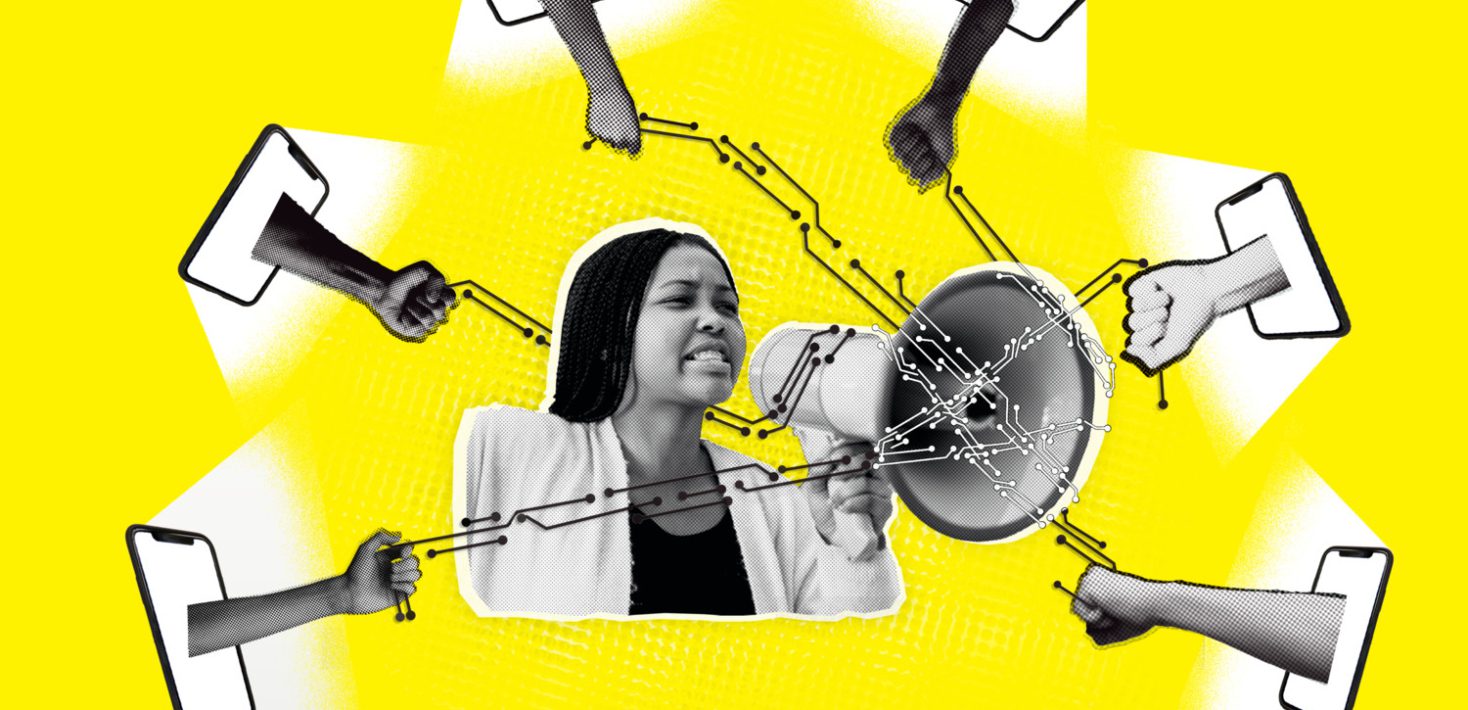
On July 1, 2024 AI published the findings of a survey which says that three out of five child and young human rights defenders face online harassment in connection with their activism, according to a new analysis of 400 responses to an Amnesty International questionnaire, distributed to young activists across 59 countries. More than 1400 young activists participated in the survey conducted as a part of Amnesty International’s global campaign to “Protect the Protest.”
Of those, 400 youth activists aged between 13 to 24 years agreed to the publication of their data.
They faced harassment in the form of hateful comments, threats, hacking and doxing which is often linked to offline abuse and political persecution often perpetrated by state actors with little or no response from Big Tech platforms resulting in the silencing of young people.
The highest rates of online harassment were reported by young activists in Nigeria and Argentina.
“I have been harassed […] by a stranger because of my pronouns. The stranger told me it is not possible to be a ‘they/them’ and kept sending messages about how I am crazy for identifying the way I identify. I had to ignore the person’s messages,” said a 17-year-old Nigerian queer LGBTI activist who asked not to be identified.
Another young activist – 21-year-old male Nigerian LBGTI rights activist said, “People disagree with my liberal progressive views, and immediately check my profile to see that I am queer Nigerian living in Nigeria, and they come at me with so much vitriol. I am usually scared to share my opinion on apps like TikTok because I can go viral. The internet can be a very scary place,” he said adding that, “Someone cat fishing as a gay man, lured me into coming out to see him after befriending me for a while, and then he attacked me with his friends. This is Nigeria, I couldn’t go to the police for secondary victimization.”
Twenty-one percent of respondents say they are trolled or threatened on a weekly basis and close to a third of the young activists say that they have censored themselves in response to tech-facilitated violence, with a further 14 percent saying they have stopped posting about human rights and their activism altogether.
“I always think twice before making a comment, when I express my political position, I start to get many comments that not only have to do with my position, but also with my body, my gender identity or my sexuality,” said Sofía*, a 23-year-old human rights defender from Argentina shared her experience on X formerly known as Twitter.
The survey respondents said they faced the most abuse on Facebook, with 87 percent of the platform’s users reporting experiences of harassment, compared to 52 percent on X and 51 percent on Instagram.
The most common forms of online harassment are upsetting and disrespectful “troll” comments (60 percent) and upsetting or threatening direct messages (52 percent).
Five percent of the young activists say they have faced online sexual harassment, too, reporting that users posted intimate images (including real and AI-generated images) of them without consent.
For many of the survey participants harassment in relation to their online activism is not limited to the digital world either. Almost a third of respondents reported facing offline forms of harassment, from family members and people in their personal lives to negative repercussions in school, police questioning and political persecution.
Twenty-year-old non-binary activist Aree* from Thailand shared their experience of facing politically motivated prosecution in five different cases whilst they were still a child.
Abdul* a 23-year-old Afghan activist reported being denied work at a hospital after authorities found out about his social media activism.
The Israel-Gaza war currently stands out as an issue attracting high levels of abusive online behaviour, but the threat of online harassment appears to be omnipresent across all leading human rights issues. Peace and security, the rule of law, economic and gender equality, social and racial justice, and environmental protection all served as “trigger topics” for the attacks.
However, the way young activists are targeted varies and appears to be closely linked to intersectional experiences of discrimination, likely harming survivors of identity-based abuse in longer lasting ways than issue-based harassment.
Twenty-one percent of respondents say they have been harassed in connection with their gender and twenty percent in connection with their race or ethnicity. Smaller percentages said they face abuse in connection with their socio-economic background, age, sexual orientation and/or disabilities.
“At first it was simply hateful comments since the posts I published were daring and spoke openly about LGBT rights, which later made me receive threats in private messages and it went further when my account was hacked,” said Paul a 24-year-old activist from Cameroon, on being targeted for his LGBTI related activism adding that, “For 2 years, I have been living in total insecurity because of the work I do as an advocate for the rights of my community online.”
For Paul and many other young activists, online harassment is having deep effects on their mental health. Forty percent of the respondents say they have felt a sense of powerlessness and nervousness or are afraid of using social media. Some respondents have even felt unable to perform everyday tasks and felt physically unsafe. Accordingly, psychological support is the most popular form of support which young activists call for, ahead of easier to use reporting mechanisms and legal support.
Many of the young activists voiced frustrations over leading social media platforms’ failure to adequately respond to their reports of harassment saying the abusive comments are left on the platforms long after being flagged.
Some respondents also felt that social media platforms are playing an active part in silencing them; multiple activists reported that they found posts about the war in Gaza removed, echoing previous reports of content advocating for Palestinian rights being subject to potentially discriminatory moderation by various platforms.
Others highlighted platforms’ role in enabling state-led intimidation and censorship campaigns, undermining activists’ hope for government regulation to provide answers to the challenge of tech-facilitated violence.
AI asked three older activists to reflect on their experiences, the changes they are campaigning for, and how being an older person gives them unique perspective and motivation.
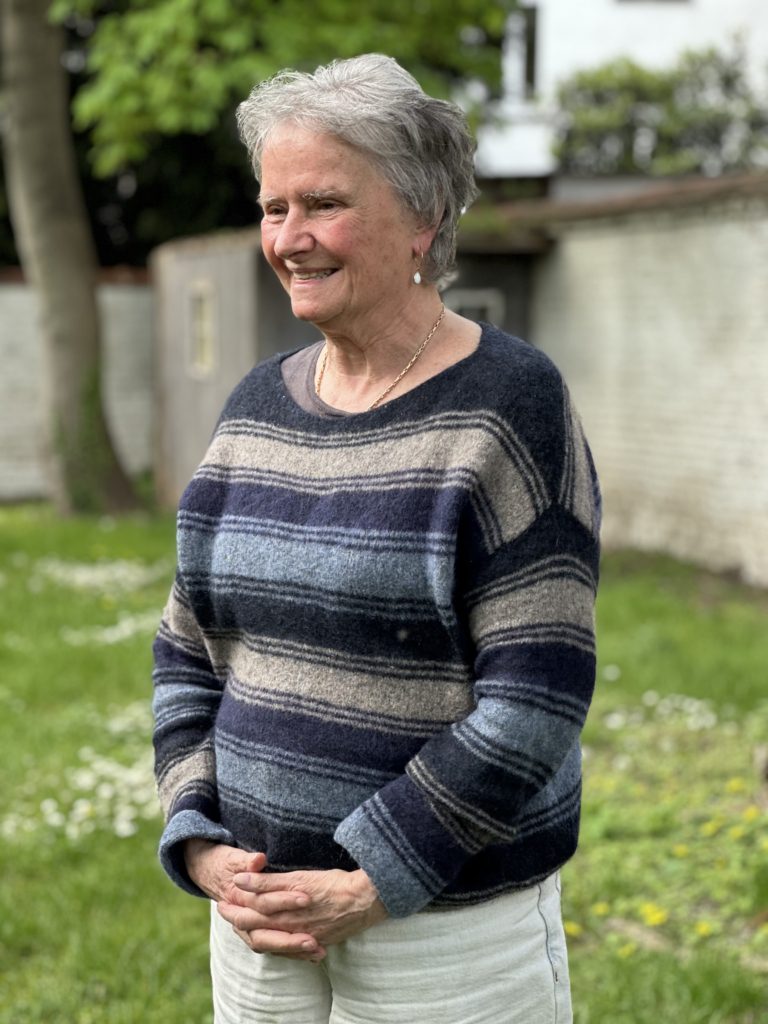
Cecile de Ryckel, 78, Belgium
Cecile is a lifelong activist working on anti-racism and climate change.
Why did you become an activist?
After a homelessness crisis amongst migrants in Belgium in 2015, my husband and I hosted two people from Ethiopia who the authorities had left to sleep in a city park. They told us that in Ethiopia they were small-scale farmers and grew food for their families. However, it was raining less frequently, and growing food was becoming more difficult. That was when I realized that climate change was one of the most important issues in the world today, and that it would have far-reaching consequences. Soon after that I participated in a citizens assembly discussing how best to address climate change and reduce carbon emissions. We learned how to mobilize people and change behaviours. I joined an advocacy collective, Grandparents for the Climate, and started working actively on the issue.
We have a responsibility to future generations to address this challenge today. It already has wide-ranging impacts on people of all ages. I remember when I was a child that we would joke that an older person was someone who “wouldn’t make it through the winter”, but today due to rising temperatures we sadly have to ask whether some older people can “make it through the summer”.
I recently saw how a group of older women won a landmark court case that the Swiss government’s weak climate change policy had violated their rights. This will help advance the cause greatly, for people of all ages.
Amina Musa, 72, Nigeria
Amina is an activist on behalf of victims of the armed conflict in north-east Nigeria and their families, including those who have been unlawfully killed or detained.
Why did you become an activist?
I became an activist nine years ago when Boko Haram forced us to leave our homes, and we found ourselves living in camps controlled by the Nigerian government. The military made baseless accusations that our sons were associated with Boko Haram. Our sons were blindfolded and arrested and held in dehumanizing conditions. I had no choice but to start campaigning for their release. As mothers, we came together and started a movement to seek justice. We are demanding that all those detained unlawfully be released immediately and that the government investigate the gross violations we have experienced. Some of our sons have been in detention for more than 10 years. We have had enough, we want justice.
I tell other older people that they should continue with their activism and bear with the challenges, and that our activism can also inspire younger people. I know it is not easy, but these causes are important. Age should not and will not deter us from making our society free from injustice.
Juan Jacobo Hernández, 82, Mexico
Juan is an activist on social issues and LGBTQ+ liberation.
Why did you become an activist?
In the 1960s, I was part of Mexican student movements. Then Stonewall happened: I had a boyfriend at the time who lived in New York, and he told me that I had to come and see it for myself. I witnessed the first LGBTQ+ rebellion: the first time gay men, trans people, lesbians were standing up and confronting the police. Coming back to Mexico, we started the Frente de Liberación Homosexual (Gay Liberation Front). I had learned a lot about how to make protests visible and how to make our voices heard. Finally, there was a space where we could be active, where we could do something. When I started my activism, we didn’t use the term “human rights” – but that’s what it has always been about. We held large demonstrations against political repression, for the abolition of the death penalty, and to fight restrictions on social protest. Persecution by the government was very real and close to us at the time – gay men and trans women were persecuted, raided by the police, extorted and beaten up.
Whenever we were out in the street, we felt that something bad could happen. We were struggling for our lives, for our security, for our right to be in the street without being beaten up, robbed or killed.
My whole life, I have never stopped being an activist. The AIDS epidemic collapsed the first phase of gay liberation. So many activists died and [as I grew older], I recognised the need to transmit my experience, knowledge and values [to the younger generation]. Since 1981 I’ve been part of Collective Sol, where we work to build and strengthen the capacity of small, grassroots organizations that are working on the most pressing LGBTQ+ issues they see today.
My life as an activist means I can look back and say I have witnessed three great moments in LGBTQ+ liberation. The first was when we formed political organizations, coming out of the shadows and breaking the silence. The second was the HIV/AIDS epidemic, the way it created a connection between LGBTQ+ liberation and people living with HIV, irrespective of whether they were LGBTQ+. This connection was powerful and drove the movement forward.
On 10 August 2023 Matthew Ogune of the Nigerian Guardian reported that Nigerian lawyer and human rights activist, Oluwafunke Adeoye, has emerged as one of the winners of the 2023 Waislitz Global Citizen Awards, with a prize money of $75,000. Adeoye is the founder of Hope Behind Bars Africa.
Adeoye was officially announced as a winner in the 2023 edition by the global body. The honour makes her the first individual working in the Criminal Justice sector to win this global award.
The Waislitz Global Citizen Awards are annual cash prizes totaling $250,000 that recognize the excellence of individuals in their work to end extreme poverty. The grand prize is $100,000 with two additional prizes at $75,000 each, for a total of three prizes. The awards are presented by the Waislitz Foundation and Global Citizen, and supported by the US and Australian based cellular medicines company, Mesoblast Ltd. and Unico Capital Holdings.
“Ending extreme poverty is not a choice, it’s an obligation. My hope is that it will inspire many thousands of people around the world to do what they can to improve the living standards of those in dire need,” Chairman and Founder of the Melbourne-based Waislitz Foundation, Alex Waislitz.
The Waislitz foundation exists to create a positive social impact locally and globally through innovative projects that empower individuals to meet their full potential and make a measurable difference to the world.
According to the global body, the Nigerian born lawyer has over the years helped in providing free legal services and direct support to indigent incarcerated people, while promoting criminal justice reform through research, advocacy and technology.
Reacting to the award in a statement on Wednesday in Abuja, Adeoye said she was inspired to begin the initiative in 2018, after some personal encounters with the justice system, including one where her father was arrested and detained for a crime he did not commit several years ago.
The organisation closes the justice gap by providing free legal services and direct support to low-income incarcerated individuals while promoting criminal justice reforms through research, evidence-based advocacy, and technology. Over 7,000 incarcerated individuals have benefitted from their interventions.
With the award, Adeoye plans to fully launch Justicepadi, a tech platform that will revolutionise legal aid in West Africa and also expand her work for climate justice.
“It is crucial for people to understand that behind the labels of ‘convicts’ or ‘prisoners’, there are human beings with stories, hopes, and dreams. By offering legal aid, we strive to ensure that every person, regardless of their circumstances, has access to fair representation and a chance to rebuild their lives,” Adeoye said.
The other winners of the award are: Peter Njeri and Esther Kimani, both Kenya citizens. They were named 2023 Waislitz Global Citizen Award winner and the Waislitz Global Citizen Disruptor Award winner respectively.
‘If we work together to make sure that issues are more visible, that happen in Africa, the civil society organisations, I think, will be achieving more.’
Odinakaonye ‘Odi’ Lagi is the programme director for the Network of University Legal Aid Institutions (NULAI), Nigeria, and she works on promoting access to justice and legal aid for Nigerians. Citing the example of the Nigerian social movement to protest against the actions of the Special Anti-Robbery Squad (known as the end #EndSars protests), which she says did not receive enough attention in the continent, she calls for civil society groups and activists across Africa to come together to shed more collective light on individual national struggles.
A recent BBC documentary is about the challenges faced by humanists and atheists in Nigeria. The film was released this week and focuses on Mubarak Bala, reporting on the events that took place in the run-up to his unjust and disproportionate sentencing in April 2022.Mubarak, who is the President of the Humanist Association of Nigeria, is currently serving a 24-year prison sentence, in connection with a series of Facebook posts that some deemed to be ‘blasphemous’ and ‘likely to cause a public disturbance’. See also: https://humanrightsdefenders.blog/2021/08/27/mubarak-bala-wins-humanist-international-2021-freedom-of-thought-award/
Leo Igwe, Humanists International Board Member & Founding member of the Humanist Association of Nigeria, has been spearheading the campaign for his release since he was first arrested in April 2020.: “The launch of the documentary marks more than 30 months since Mubarak was separated from his family. I’m so proud of his wife, Amina, for the strength she has shown, but you can see in her interview how hard this has been for her. Perhaps the most chilling part of the documentary is when the lawyer who brought about the complaint against Mubarak simply cannot hide his pleasure at the outcome of the sentence, despite the devastating impact on the family. He says: “I really feel bad for the wife and the little son” but the smile on his face tells a very different story.”
Following this week’s decision, Mubarak now has one year left of his sentence to serve however our work is not over; the state still has the opportunity to appeal. We will continue to monitor the situation closely and will work to support Mubarak until his safe release.
Germany and France honoured this year 15 people who have made outstanding contributions to the protection of human rights, campaigning for causes including women’s rights in Afghanistan, the freedom of the press in South Africa and children who are born as a result of rape in wartime.
On 10 December, international Human Rights Day, Foreign Minister Annalena Baerbock and French Foreign Minister Jean‑Yves Le Drian presented fifteen people with the Franco-German Prize for Human Rights. This award recognises the efforts of all those who work tirelessly every day to advance the causes of human rights and the rule of law. It is presented decentralised by the French and German missions in various locations around the world.
Jake Epelle who works to combat the ongoing stigmatisation and discrimination faced by people with albinism in Nigeria.
Noelah Godfrey Msuya who promotes the rights of children and women in Tanzania.
Monika Borgmann who is a German-Lebanese documentary-maker.
Jacques Letang who is a judge and lawyer in Haiti.
Cristina Palabay from the Philippines who leads the national association Karapatan.
Alexandrine Victoire Saizonou who is an advocate for women’s and children’s rights in Benin.
Ajna Jusic from Bosnia discovered at the age of 15 that she was born as a result of rape during wartime, and since then she has advocated for others in the same situation.
Erika Lorena Aifán Dávila is a judge who has been the target of constant attacks from the authorities of Guatemala.
Nebahat Akkoc is the Managing Director of the NGO Kamer in Turkey.
The Venezuelan Education-Action Program on Human Rights or PROVEA.
Narges Mohammadi who is spokesperson and vice chairman of the Iranian organisation Defenders of Human Rights Center.
May Sabai Phyu is a Kachin activist from Myanmar/Burma.
Shaharzad Akbar is an Afghan human rights defender who campaigns in particular for the rights of women in Afghanistan.
Tabelo Timse is an investigative journalist and a member of an independent non‑profit media centre in South Africa.
AI has launched the world’s biggest letter writing campaign to help 10 human rights defenders around the world facing.
Millions of letters, emails and texts will be sent to support people who have been jailed, attacked or disappeared
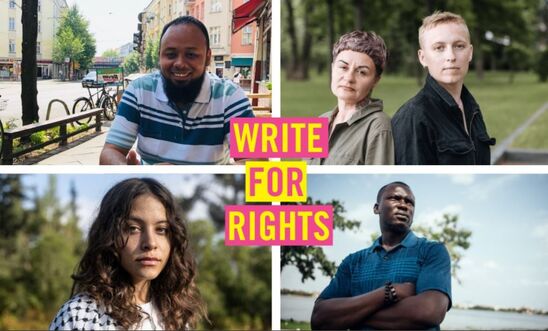
Amnesty International has launched its flagship annual letter-writing campaign, Write for Rights to support 10 activists from around the world who have been attacked, jailed, harassed or disappeared for standing up for their rights.
This year, Write for Rights – which is funded by players of the People’s Postcode Lottery – will be supporting ten individuals, including:
Imoleayo Adeyeun Michael from Nigeria, who faces years behind bars for joining the #EndSARS protests against the notorious Special Anti-Robbery Squad last year;
Janna Jihad, a 15-year-old journalist from Palestine, who faces harassment and death threats for reporting on the racist brutality her community experiences;
Mohamed Baker, an Egyptian human rights lawyer denied a trial and put behind bars for his work supporting people who have been imprisoned unjustly; and
Ciham Ali Ahmed, a US-Eritrean national, who was arrested nine years ago at the Sudanese border when she was trying to flee Eritrea aged 15 and has not been seen since.
Sacha Deshmukh, CEO of Amnesty UK, said:
“These individuals have been thrown behind bars, attacked, harassed or disappeared just for standing up for their rights. By coming together, people around the world have the power to raise their profile and increase their chances of protection or release.
“Sending a letter or email might seem like a small act, but when sent in their thousands they can have a huge impact. People in power are forced to listen.
Amnesty International’s Write for Rights campaign: Write for Rights goes back to the very roots of Amnesty International, which was founded in 1961, with Amnesty’s early campaigners writing letters of support to those affected by human rights abuses, as well as letters of concern to governments around the world.
More than 360,000 actions were taken for Algerian journalist Khaled Drareni, who was imprisoned for his reporting on the Hirak protest movement. He was provisionally released in February 2021.
Over 300,000 messages were sent to and on behalf of Paing Phyo Min, a satirical poet and student leader jailed for criticising the military in Myanmar. He was freed early in April 2021.
More than 777,000 actions were taken for Saudi women’s rights campaigner Nassima al-Sada. As a result, a G20 summit hosted by Saudi Arabia was overshadowed by international calls to free Nassima and other women human rights defenders. Nassima has since been conditionally released.
Seven UN human rights experts on Thursday 29 April 2021 demanded the release of a Nigerian atheist and humanist, Mubarak Bala, who has been detained without charge by the police for a year over alleged blasphemy.
The experts’ demand add to calls by many human rights groups, including Amnesty International, in the last one year for the release of the activist who faces death penalty if convicted under the law being operated in many parts of Northern Nigeria.
Mr Bala who is the president of Humanist Association of Nigeria, was arrested at his home in Kaduna State on April 28, 2020 over his Facebook post considered to be critical of Islam. His post reportedly caused outrage among Muslims in many parts of highly conservative northern part of the country.
The detainee whose arrest was prompted by a petition by a lawyer, S.S Umar, backed by some Islamic figures, was later transferred to the neighbouring Kano State.
His whereabouts remained unknown to his family and lawyer for many months before he was later granted access to them.
Delivering judgment in a fundamental human rights enforcement suit filed on his behalf, a judge of the Federal High Court in Abuja, Inyang Ekwo, on December 21, 2020, declared Mr Bala’s detention illegal and ordered his immediate release.
The court also ruled that the denial of his ability to choose his own legal representation, constituted gross infringements of his rights to personal liberty, fair hearing, freedom of thought, expression and movement.
It awarded damages of N250,000 damages in his favour.



 Hans Thoolen on Human Rights Defenders and their awards
