Posts Tagged ‘NGOs’

42nd session of the Human Rights Council: list of side events

September 9, 2019

The 42nd session of the UN Human Rights Council started today, 9 September 2019, and as usual is surrounded by a large number of side events. Here a selection with special relevance for human rights defenders:

  • Monday 9 September at 14:30 in Room VIII, Why is a Commission of Inquiry on Venezuela needed? organised by Amnesty International, ISHR, ICJ and Human Rights Watch.
  • Tuesday 10 September at 15:30-16:30 in Room XXII, Situation of the Right to Memory, Truth in Brazil: From the Transitional Policies to Denial organised by Centro de Estudios Legales y Sociales, Conselho Federal da Ordem dos Advogados do Brasil, Instituto Vladimir Herzog and Centro de Estudos sobre Justiça de Transição.
  • Wednesday 11 September, Privacy in the Digital Age: Priorities for Protecting Rights Online organised by Article19.
  • Wednesday 11 September 10:00-11:30, Room XXV. Human Rights Council Elections 2019: discussions of candidate States’ visions for membership, The event is co-sponsored by the Permanent Missions of the Czech Republic, Denmark and Fiji. It is intended to give candidates an opportunity to present their visions for Council membership and to respond to questions from a range of stakeholders on how they propose to realise the pledges and commitments they may have made in seeking election.
  • Thursday 12 September at 12:30-13:30 in Room XVI Ensuring credible HRC action on Sudan organised by Defendefenders.
  • Thursday 12 September at 13:30 to 14:30 in Room XVI Investigating Unlawful Deaths, organised by the International Commission of Jurists (ICJ) and the panel will include the Special Rapporteur on extrajudicial, summary or arbitrary executions (by video link).
  • Monday 16 September at 13:00 in Room IVCivic space restrictions as an early warning of a deteriorating human rights situation organised by CIVICUS.
  • Tuesday 17 September, 10:00-11:00, Room IV, Rule of law in China,  organised by ISHR, International Bar Association, World Uyghur Congress and Tibet Advocacy Coalition.
  • Tuesday 17 September at 13:00-14.30 in Room VIII Indigenous Justice and Human Rights co-organised by the UN Special Rapporteur on Rights of Indigenous Peoples and the International Commission of Jurists (ICJ).
  • Tuesday 17 September at 16:00-17:00, in Room IV Human rights in Myanmar organised by Forum-Asia.
  • Wednesday 18 September, 16:30-17:30, Room VIII, Ending Reprisals,  co-sponsored by the Cairo Institute for Human Rights Studies and Forum-Asia. The panel will include the Assistant Secretary General Andrew Gilmour and human rights defenders. It will discuss and expand on the Secretary-General’s report on cooperation with UN mechanisms, the nature and extent of reprisals and consider efforts to date to address the issue.
  • Thursday 19 September at 13:30 in Room VIII, The situation of human rights in Brazil organised by Conectas.
  • Thursay 19 September at 16:30 in Room XXII Access to Information organised by Article 19 and the Permanent Mission of the Kingdom of the Netherlands.
  • Thursday 19 September at 12:00 to 13:00 in Room XXI, The First Year of the Transitional Justice System in Colombia organised by the Colombian Commission of Jurists and the ICJ.
  • Friday 20 September from 15:00 to 16:30 Libya: How to advance accountability for Human Rights Violations and Abuses in Libya, organised by the Netherlands, the International Commission of Jurists, the Cairo Institute, Human Rights Watch and Lawyers for Justice in Libya.
  • Tuesday 24 September 13:00-14:00 in Room XXV, Human rights in Cambodia, organised by Forum-Asia.
  • Thursday 26 September, 09:30 in Room XXIV, The Continued Silencing and Imprisonment of Saudi women’s rights activists on  organised by CIVICUS, ISHR, Women’s March Global and the Gulf Center for Human Rights. The panel will share the experiences of Saudi women human rights defenders, reflect on the reality they face in prison, and discuss what further efforts can be taken to ensure their immediate release and provide guarantees for a safe and enabling environment for them to continue their work.

You can download the list of NGO events here.

see also: https://humanrightsdefenders.blog/2019/09/05/human-rights-defenders-issues-at-the-42nd-session-of-the-un-human-rights-council/

https://www.ishr.ch/news/hrc42-key-issues-agenda-september-2019-session

NGOs call Canada’s revised guidelines on human rights defenders a step in the right direction

September 1, 2019

With human rights defenders increasingly under attack around the world, civil society organizations in June 2019 welcomed the Government of Canada’s revised guidelines aimed at strengthening its approach to ensuring the safety and security of these courageous activists. In 2016 [see https://humanrightsdefenders.blog/2016/12/13/canada-joins-select-group-of-governments-with-guidelines-on-human-rights-defenders/] they were first made public. After input from civil society, the government now has revised and updated the guidelines.

.. The groups welcome Canada’s acknowledgement that human rights defenders put themselves at great risk—along with their families, communities and the movements they represent—as they work to promote human rights and strengthen the rule of law. Women and LGBTI human rights defenders, for example, face high-levels of sexual and other forms of gender-based violence because of their gender and the rights they are advocating for. “In many parts of the world, human rights defenders are at risk as a result of their courageous work and their willingness to speak truth to power. Canada and the international community need to be strong supporters of these brave individuals. Human rights defenders must be able to act freely and without any interference, intimidation, abuse, threats, violence or reprisal. We are committed to speaking out against violations, standing up for human rights defenders and striving for a world where the rights and freedoms of all people are respected,” said Foreign Affairs Minister Chrystia Freeland on 17 June in Ottawa at a human rights event where the guidelines were announced.

For Canada’s new guidelines to be effective in helping to protect and support human rights defenders, they will need to be accompanied by a comprehensive implementation plan and increased Canadian funding going directly to human rights defenders and the movements they represent.  Canada also needs to take a stronger approach to support human rights defenders advocating for corporate accountability, for instance, by enabling robust investigations when defenders face heightened risks linked to private sector investments.  It will also be critically important that Canada create an advisory body that includes the participation of human rights defenders with experience and first-hand knowledge of the threats facing human rights defenders….

Importantly, the new guidelines call for Canadian diplomats working abroad at overseas missions or at Global Affairs Canada headquarters in Ottawa to take a more feminist and intersectional approach to promoting the rights of defenders. The document notes that many human rights defenders have multiple and “overlapping” identities, and often work on multiple issues.  Human rights defenders may belong to one or more groups facing discrimination, including women, LGBTI people, Indigenous people, land and environment defenders, people with disabilities, journalists, and those seeking greater freedom of religion or beliefs.  Human rights defenders in conflict and post-conflict countries face unique risks posed by high levels of militarization.

Quotes from Canada’s Voices at Risk: Canada’s Guidelines on Supporting Human Rights Defenders

Canada recognizes the key role played by human right defenders in protecting and promoting human rights and strengthening the rule of law, often at great risk to themselves, their families and communities, and to the organizations and movements they often represent.

Canada’s guidelines on supporting human rights defenders is a clear statement of Canada’s commitment to supporting the vital work of HRDs.”

Endorsed by:
  • Amnesty International Canada
  • The MATCH International Women’s Fund
  • Nobel Women’s Initiative
  • Oxfam Canada
  • United Church of Canada

https://www.oxfam.ca/news/canadas-new-guidelines-to-support-human-rights-defenders-a-step-in-the-right-direction/

750 NGOs in Geneva: dynamic ecosystem for international governance work

August 29, 2019

On 29 August 2019, the Département présidentiel (PRE) of the Ville de Genève published “Un écosystème dynamique de plus de 750 ONG à Genève” in which – for the first time – researchers of the University of Geneva have made a survey of the NGO world in Geneva.  The study – in French – has some fascinating key findings:

Read the rest of this entry »

48 Human Rights groups intervene for detained Nigerian Omoyele Sowore

August 26, 2019

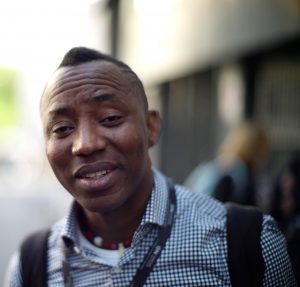
On 23 August 2019 48 NGOs issued an urgent appeal in relation to the arrest and detention of Omoyele Sowore, Nigerian journalist and human rights defender, to the UN and African human rights bodies. Joy Hyvarinen, head of advocacy at Index on Censorship said: “Index on Censorship urges the Nigerian authorities to release the prominent journalist and campaigner Omoyele Sowore immediately. The arrest and detention are a shocking violation of Mr Sowore’s human rights, which calls into question Nigeria’s willingness and ability to meet international human rights obligations.


Omoyele Sowore (Photo: Mohamed Nanabhay / Wikipedia)

To the members of the Working Group and the Special Rapporteurs:

We, 48 human rights and press freedom organisations, respectfully request that you consider this urgent appeal in relation to the arrest and arbitrary detention of Nigerian journalist and human rights defender Omoyele Sowore who was arrested by the authorities following a call for peaceful protest. We request that you urgently intervene to secure the immediate release of Mr Sowore and declare his arrest and detention a gross violation of his human rights, including the right not to be arbitrarily detained as protected by Article 9(1) of the International Covenant on Civil and Political Rights (ICCPR) and Article 6 of the African Charter on Human and Peoples’ Rights (the Banjul Charter); the right to a fair trial as protected by Article 14 ICCPR and Article 7 of the Banjul Charter; the right to freedom of expression as protected by Article 19 ICCPR and Article 9 of the Banjul Charter; the right of freedom of peaceful assembly and of association as protected by Articles 21 and 22 ICCPR and Articles 10 and 11 of the Banjul Charter; and his rights as a human rights defender as outlined in the 1999 UN Declaration on Human Rights Defenders and 2017 African Commission Cotonou Declaration on strengthening and expanding the protection of all Human Rights Defenders in Africa.

Background 

  1. Mr Sowore is a prominent journalist, human rights activist and pro-democracy campaigner. He is the founder of Sahara Reporters, an online news agency based in New York City that focuses on corruption, human rights abuses and other political misconduct in Nigeria. Challenging government corruption and speaking truth to power has been the constant thread throughout Mr Sowore’s career, from the leading of student protests in the 1990’s to his recent campaign running for Presidential office in Nigeria.

Omoyele Sowore’s arrest and detention 

  1. Mr Sowore was arrested on 3 August 2019 in his hotel room during a trip to Lagos. Security agents forcefully detained Mr Sowore without informing him of any charges against him and flew him to Abuja, where he is currently being detained at the facility of the headquarters of the Nigerian State Security Service. Mr Sowore has access to food and water, but no access to the outside world: no newspapers, television or phone, and he spends most days in isolation. He was held incommunicado until 6 August, during which time Mr Sowore refused to answer any questions without consulting with his lawyer. He was allowed access to his lawyers only on 7 August, 4 days after his arrest.
  2. Based on Section 35 of the Nigerian Constitution, Mr Sowore should have been arraigned before a court within 48 hours. As of today, Mr Sowore has not been arraigned in any court.
  3. However, on 6 August, 3 days after his arrest, the State Security Service did seek an ex- parte order from the Federal High Court in Abuja to detain Mr Sowore under Section 27(1) of the Terrorism Act 2013, which enables the detention of anyone planning to “commit an act of violence”. The Court’s order of 8 August, made within 48 hours after the State Security Service’s request, granted the authorities permission to detain Mr Sowore for 45 days. Within 24 hours, his legal team, led by Mr Femi Falana, filed a motion to set aside the order and requested Mr Sowore’s immediate release, arguing that his detention was contrary to the Nigerian Constitution. At the time of writing, this request has not been heard by the courts and no date for hearing has been fixed. Importantly: no formal charges have been filed against Mr Sowore.

Mr Sowore’s call for a peaceful #RevolutionNow protest 

  1. The arrest of Mr Sowore appears to be the direct consequence of his call for a peaceful protest scheduled to take place on 5 August 2019, using the hashtag #RevolutionNow.

The objective of the protest was to demand that the Nigerian government end corruption and economic inequality and guarantee education to all. That the protest Mr Sowore and the Coalition for Revolution (CORE) movement he founded called for was a peaceful one is made clear at the very outset of the call for protest, issued on 27 July, which starts by setting out the “rules of engagement”:

We eschew all forms of violence. No protester should throw any object as little as stones or attack any security officials. We are aware of their intent to provoke the mass unduly by using undue tactics and sponsored agents, so as to give the protest a bad name. We encourage all Nigerians to remain calm as we are ready to fight these injustices to a logical conclusion. 

  1. A week earlier, in an interview with the Arise News channel, Mr Sowore stated that “Nigeria needs revolution, not war,” clearly distinguishing his call for substantial change from a call to violence. Mr Sowore has used the word “revolution” contextually to mean “change for the better” since 2006, when he founded Sahara Reporters. Mr Sowore then stated that he would “revolutionise” the way news is being reported in Nigeria –– something he actually did with the investigative citizen journalism the website publishes.
  2. Despite Mr Sowore’s arrest and detention, the 5 August #RevolutionNow protests took place in Abuja, Lagos, Osun, Ondo and Cross River. Protesters met a police force that dispersed them with teargas and gunshots. Numerous protesters, including several of Sahara Reporters’ journalists, were arrested and charged with illegal assembly.

Request for urgent action 

  1. It is clear that Mr Sowore’s arrest on apparent grounds of suspicion of terrorism is unfounded. Mr Sowore did what he has done throughout his career as a journalist and human rights activist: exercise his right to freedom of expression and seek to bring about change through peaceful means, in this case a peaceful protest. The use of the emotive term “revolution” merely underlines his desire for transformative change in what he considers the shortcomings of the current government. There are strong suspicions that Mr Sowore’s arrest stems from ulterior motives than responding to any supposed criminal wrongdoing. This is further highlighted by the fact that the authorities failed to define a charge against him for the first few days after his arrest; the investigations that were subsequently instigated against him under the Terrorism Act were clearly only created to serve the purpose of silencing Mr Sowore.
  2. As such, the arrest and detention of Mr Sowore amount to a violation of his right not to be arbitrarily detained as guaranteed under Article 9 ICCPR and Article 6 of the Banjul Charter. The fact that the charges brought against him most likely stem from his call for a peaceful demonstration and his critical stance on the Nigerian government also violates Mr Sowore’s right to free expression under Article 19 of the ICCPR and Article 9 of the Banjul Charter and his right of freedom of peaceful assembly and of association under Articles 21 and 22 ICCPR and Articles 10 and 11 of the Banjul Charter. Not properly arraigning Mr Sowore before a competent court within the time limit mandated by the Nigerian Constitution and not allowing him access to a lawyer during the initial days of his detention violates his right to a fair trial as protected by Article 14 ICCPR and Article 7 of the Banjul Charter. The foregoing also constitutes a violation of his rights as a human rights defender as defined in the 1999 UN Declaration on Human Rights Defenders and 2017 African Commission Cotonou Declaration on strengthening and expanding the protection of all Human Rights Defenders in Africa.
  3. As a State Party to both treaties, Nigeria is under an obligation to guarantee these rights to all its citizens, as specified under Article 2(1) of the ICCPR and Article 2 of the Banjul Charter. Accordingly, we appeal to the Working Group and UN and AU Special Rapporteurs to:
  • intervene urgently to secure the immediate release of Mr Sowore; and
  • declare his arrest and continuing detention a gross violation of his human rights.

SIGNED BY:
All Workers’ Convergence (AWC) 

Afrika Movement for Freedom and Justice (AMFJ)

Agege Women Agenda (AWA)

ARTICLE 19 Senegal/West Africa

Centre for Constitutional Rights

Centre for Human Rights and Social Justice (CHRSJ)

Chidi Odinkalu Former Chairman, National Human Rights Commission (Nigeria) & Senior Fellow, Open Society Justice Initiative

Coalition for Revolution (CORE) 

Committee for the Defence of Human Rights (CDHR) 

Community Women Initiatives (CWI) 

The Concerned Forum 

Congress of Progressive Youths (COPY) 

Democratic Youth League

Edo State Civil Society Organisation (EDOSCO)

Enough is Enough (EiE) Nigeria 

Freedom of Expression Hub

Gani Fawehinmi Apostles 

Gani Fawehinmi Memorial Organization (gafam.org) 

Governance Advancement Initiative for Nigeria (GAIN)

Global Voices Sub-Saharan Africa

Grassroot Justice Centre

Human and Environment Development Agenda (HEDA) 

Human Rights Network for Journalists-Uganda (HRNJ-UGANDA)

IAmVocal

Index on Censorship 

Media Legal Defence Initiative

Media Rights Agenda

Moshood Abiola Vanguard for Democracy (MAVD)

Movement For People’s Rights

National Conscience Party (NCP), Lagos State Branch

Nigerians in Diaspora Europe, Belgium-Luxembourg (NIDOE-BeLux)

Open Society for West Africa (OSIWA), Nigeria Office

Paradigm Initiative

People’s Alternative Front (PAF)

Peoples’ Unite

Rivers State Civil Society Coalition (RIVSCO)

Rule of Law and Accountability Advocacy Centre (RULAAC) 

Save Lagos Group

Socialist Vanguard Tendency (SVT) 

Socio-Economic Rights and Accountability Project (SERAP)

Sovereign Vital Force 

Spaces for Change 

Take-It-Back (TiB) Movement 

Talakawa Parliament

Veteran Group for Operation Clean Crusade (VGOCC) 

Women for Leadership Change

Workbond International Network (WIN)

Youth In Good Governance Initiative (YIGGI) 

UN pulls Anti-Torture Conference from Egypt to seek other regional venue

August 21, 2019

The UN has postponed the anti-torture conference due to take place in Cairo, following an outcry from human rights defenders who accused the organisation of “whitewashing” the Egyptian government’s abuses. See: https://humanrightsdefenders.blog/2019/08/20/controversial-u-n-decision-to-hold-conference-on-torture-in-egypt/

https://www.aljazeera.com/news/2019/08/postpones-anti-torture-conference-cairo-outcry-190820193249344.html

https://www.theguardian.com/world/2019/aug/20/un-postpones-anti-torture-conference-in-cairo-after-backlash

International support for the staff of “The Intercept” website in Brasil

August 2, 2019

On 31 July a number of and leading international and Brazilian free speech organizations appealed for support for the staff of The Intercept Brasil, a Rio de Janeiro-based investigative news website that has been the target of a fierce campaign of harassment and intimidation since 9 June. The Intercept Brasil’s revelations about the “Operation Car Wash” corruption case triggered a wave of verbal attacks and threats against the website’s representatives. The most serious recent attacks include Brazilian President Jair Bolsonaro’s public threat on 27 July to imprison The Intercept Brasil founder and editor Glenn Greenwald. [see also: https://humanrightsdefenders.blog/2014/12/15/edward-snowden-gets-another-human-rights-award-in-berlin/]

The 26 press freedom and human rights organizations and media outlets named below strongly condemn the recent wave of attacks and threats against the investigative news website The Intercept Brasil. We call on the authorities to ensure respect for the constitutionally guaranteed right of journalists to protect the confidentiality of their sources.

The attacks began on 9 June after The Intercept Brasil published the first of a series of reports revealing apparent irregularities in the “Operation Car Wash” investigation, one of the most important corruption investigations in Brazilian history. To publish these revelations, which are based on documents provided by an anonymous source, The Intercept Brasil partnered with several Brazilian media outlets including the Folha de São Paulo newspaper and Veja magazine.

Since then, the staff of The Intercept Brasil and in particular, its founder Glenn Greenwald, have been subjected – especially on social networks – to countless insults, slurs and death threats accompanied by false information designed to undermine the credibility of its reporting. This harassment is symbolic and symptomatic of the difficulties encountered by all media workers who investigate sensitive stories in Brazil, where the journalists are often the targets of intimidation and persecution campaigns.

Regardless of their provenance, the attempts to undermine and attack the credibility of The Intercept Brasil and its partners are viewed by the signatories of this appeal as a grave threat to the freedom to inform. Not only are they designed to deflect the public’s attention from the content of the revelations but above all, they reinforce an increasingly hostile work environment for the media and especially for investigative journalism.

We remind the authorities that the Brazilian state has a duty to guarantee the protection of journalists and to investigate the serious threats received by the journalists at The Intercept Brasil and its partners.

Freedom of the press and information are pillars of democracy. They transcend political divisions and must be protected and guaranteed at all costs.

Signatories:

Agência Pública de Jornalismo Investigativo

Amnesty International Brazil

Article 19 Brasil

Asociación de la Prensa de Madrid (APM)

Associação Brasileira de Imprensa (ABI)

Associação Brasileira de Jornalismo Investigativo (Abraji)

Associação dos Correspondentes Estrangeiros (ACE) de São Paulo

Committee to Protect Journalists (CPJ)

Federação Nacional dos Jornalistas (FENAJ)

Federación de las Asociaciones de Periodistas de España (FAPE)

Freedom House

Freedom of the Press Foundation

Global Editors Network (GEN)

Human Rights Watch

IFEX

Index on Censorship

Instituto Vladimir Herzog

Interamerican Press Association (IAPA/SIP)

International Press Institute

Intervozes

Mediapart

Observatório da Imprensa

PEN International

Reporters sans frontières (RSF)

The Guardian

Witness Brasil

Following threats to NGO offices in Israel, human rights defenders demand investigation

August 1, 2019
On Wednesday, death threats were found spray-painted outside the offices of Amnesty International in Tel Aviv and ASSAF, an organization which advocates for refugees and asylum seekers in Israel. (Photo: @AmnestyIsrael/Twitter)

Human rights defenders in Israel linked recent threats at three civil society organizations to the rhetoric and policies of the country’s government, which has worked to intimidate and suppress groups critical of its treatment of Palestinians and other marginalized people. Staff members at Amnesty Israel in Tel Aviv and the Aid Organization for Refugees and Asylum Seekers in Israel (ASSAF) on Wednesday found death threats written in spray paint on walls outside the organizations’ offices. A box containing death threats and a dead mouse was found around the same time at the Elifelet Children’s Activity Center, which cares for refugee children.

“We have filed a complaint with the police and we see this as the result of the ongoing campaign of incitement against aid and human rights organizations, led by the government,” tweeted Amnesty Israel. Amnesty International denounced the threats as “deplorable and malicious acts” which must be investigated and unequivocally condemned by the government.

The Israeli authorities should take a strong stand by publicly condemning these acts and making clear that attacks against NGOs will not be tolerated,” said Philip Luther, the group’s research and advocacy director for the Middle East and North Africa. “The Israeli authorities must also take steps to ensure that human rights defenders and civil society organizations more generally are effectively protected and can carry out their work free from threats, intimidation, or harassment.

[see also: https://humanrightsdefenders.blog/2019/04/18/israel-deportation-of-human-rights-watchs-staff-member-again-on-the-table/ ]

…………”This is not the first time we are being threatened,” ASSAF wrote in a post on Twitter. “This is the result of the ongoing incitement campaign against aid and human rights organizations in Israel—with the encouragement and backing of politicians and public figures.” “You have to make sure this is the last time,” the group added, addressing authorities.

Aruanas: human rights defenders in fiction series playing in Amazon

July 17, 2019
Eco trip
Michael Pickard Michael Pickard writes in Drama Quarterly of 2 July 2019 about the Brazilian drama Aruanas, which charts the work of environmental human rights defenders who investigate the suspicious activities of a mining company in the Amazon rainforest. The Brazilian drama Aruanas  – launched two weeks ago worldwide – won’t be found on any of the major global streaming giants. Instead, it will be available on a standalone platform for anyone around the globe to download – because the subject matter demands this story not be restricted to viewers with the right kind of subscription. The 10-part Portuguese-language thriller, which is backed by more than 20 international and national non-governmental organisations (NGOs), including WWF Brazil, Amnesty International, Global Witness, UN Environment, UN Women, Oxfam Brazil and the Rainforest Foundation. Greenpeace is a technical collaborator on the show.

Aruanas comes from a partnership between prodco Maria Farinha Films and Brazil’s Globo TV, which have created the fictional story about three idealistic women who set up an NGO to investigate the suspicious activities of a mining company operating in the Amazon. Bypassing traditional broadcast partners by making the series available at aruanas.tv – in more than 150 countries and 11 different languages – also means 50% of the download fee will go to initiatives designed to protect the Amazon rainforest. In Brazil, Globo will air the first episode on its domestic and international channels, which reach more than 100 million people, with the series then being made available on SVoD service Globoplay…

For the last 10 years, Maria Farinha Films has been built on producing documentaries and TV series focusing on social and environmental issues, tackling subjects including childhood obesity, refugees and LGBT rights. Climate change has been a cause long on its agenda but, as the company’s founder Estela Renner explains: “We wanted to do something long term, something that could stay for seasons,” she tells DQ following the London premiere of Aruanas. “There are so many seasons of Grey’s Anatomy and ER and you learn so much about hospitals and the dynamics that are involved. How about making a TV series that takes place in an environmental NGO? What better way to talk about the drama and activists and all issues there are to address – the oceans, oil, soil, air. That’s why we decided to jump into fiction.”

Renner wrote the series with her business partner Marcos Nisti, in collaboration with Pedro de Barros, and developed it alongside Globo. The story introduces Aruana, an NGO that receives an anonymous complaint about a mining company working deep in the Amazon rainforest. When the NGO’s contact is killed and the incriminating dossier is destroyed, its staff become determined to uncover what is going on.

……the series is not a lecture about climate change, nor does it present an unwaveringly positive representation of an NGO or condemn mining outright. “It’s not propaganda. You can see the activists doing stuff you wouldn’t recommend doing,” Renner says. “We found a way to build the layers of the series so we can see why mining can be important, because it develops a country, it creates jobs and it brings development sometimes.

“Even when Natalie interviews our villain, they have a battle where, for a while, you don’t know which side to take because both sides are right. But at the end of the season, we see this type of mining is wrong. You cannot mine and pollute the rivers, the soil, the air and people. You have to do it the right way.”

Renner also states that her NGO partners, which contributed no money to the production, were clear this would be a non-factual drama from the outset: “They were with us from the beginning but they also understood this is fiction. You have to put some salt and pepper in to make it interesting and edgy. All the organisations understood that and were happy. Because it’s  fiction, they knew they didn’t have to correct us. It’s important it’s fiction; it’s not a documentary.”

Filming took place across four months, with the cast and 190-strong crew travelling back and forth between the south-west city of São Paulo and the Amazon, where filming took place in Manacapuru, in the northern state of Amazonas in the centre of the rainforest.

……..
The decision to set the drama within an NGO and the world of its activists doubles as a mechanism for the organisation, in future seasons, to explore other aspects of climate change, looking at the oil industry and the oceans. Work is already progressing on a second season, which will explore a different type of environmental crime. But Renner says that despite Aruanas’ representation of the work of NGOs and their fight for a more equitable and sustainable world, her main priority is to entertain viewers with this high-stakes thriller.

“Chernobyl would be the perfect example because it’s super well done, super entertaining and when you finish watching it, it makes you think this power of destruction we have now is bad,” she says, referring to HBO and Sky Atlantic’s recent miniseries about the 1980s nuclear disaster.

“Maybe people can connect with NGOs and see what they’re doing. We didn’t want this to be too on the nose. We want to stay for several seasons through the characters and their lives, and it does have a happy ending. There are so many series with a dystopian future; dreaming collectively of a good future is important because it has power.”

Eco trip

41st UN Human Rights Council: what the NGOs see as its result

July 16, 2019

On 12 july 2019, ISHR published what key civil society organisations thought of the just finished 41st session of the UN Human Rights Council.

Civil society organisations welcomed significant outcomes of the Human Rights Council’s 41st session, including the extension of the SOGI mandate, adopting the first resolution on the Philippines and extending its scrutiny over Eritrea, the Democratic Republic of Congo, Belarus and Ukraine. This session witnessed heightened scrutiny of Council members by shedding light on the situations in Saudi Arabia and China. It missed an opportunity, however, to ensure that human rights are not sidelined in Sudan.

16 leading human rights organisations (see below) expressed regrets that Council members seek to use their seats to shield themselves and others from scrutiny. They called on States to stand with victims of human rights violations. They welcomed the renewal of the mandate of the Special Rapporteur on freedom of peaceful assembly association, that the Council stood up to the global backlash against the rights of women and girls, and that it continued to address the threat posed by climate change to human rights. They also welcomed the reports on Venezuela, called on the High Commissioner to immediately release the UN database of businesses engaged with Israeli settlements, and on all States to pursue accountability for victims of intimidation and reprisals.

Full statement below:

By renewing the mandate of the Independent Expert on sexual orientation and gender identity (SOGI), the Council has sent a clear message that violence and discrimination against people of diverse sexual orientations and gender identities cannot be tolerated. It reaffirmed that specific, sustained and systematic attention is needed to address these human rights violations and ensure that LGBT people can live a life of dignity. We welcome the Core Group’s commitment to engage in dialogue with all States, resulting in over 50 original co-sponsors across all regions. However, we regret that some States have again attempted to prevent the Council from addressing discrimination and violence on the basis of SOGI.

This Council session also sent a clear message that Council membership comes with scrutiny by addressing the situations of Eritrea, the Philippines, China, Saudi Arabia and the Democratic Republic of Congo. This shows the potential the Council has to leverage its membership to become more effective and responsive to rights holders and victims.

The Council did the right thing by extending its monitoring of the situation in Eritrea. The onus is on the Eritrean Government to cooperate with Council mechanisms, including the Special Rapporteur, in line with its membership obligations.

We welcome the first Council resolution on the Philippines as an important first step towards justice and accountability. We urge the Council to closely follow this situation and be ready to follow up with additional action, if the situation does not improve or deteriorates further. We deeply regret that such a resolution was necessary, due to the continuation of serious violations and repeated refusal of the Philippines – despite its membership of the Council– to cooperate with existing mechanisms.

We deplore that the Philippines and Eritrea sought to use their seats in this Council to seek to shield themselves from scrutiny, and those States [1] who stood with the authorities and perpetrators who continue to commit grave violations with impunity, rather than with the victims.

We welcome the written statement by 22 States on China expressing collective concern over widespread surveillance, restrictions to freedoms of religion and movement, and large-scale arbitrary detention of Uyghurs and other minorities in Xinjiang. We consider it as a first step towards sustained Council attention and in the absence of progress look to those governments that have signed this letter to follow up at the September session with a resolution calling for China to allow access to the region to independent human rights experts and to end country-wide the arbitrary detention of individuals based on their religious beliefs or political opinions.

We welcome the progress made in resolutions on the rights of women and girls: violence against women and girls in the world of work, on discrimination against women and girls and on the consequences of child, early and forced marriage. We particularly welcome the renewal of the mandate of the Working Group on Discrimination Against Women and Girls under its new name and mandate to focus on the intersections of gender and age and their impact on girls. The Council showed that it was willing to stand up to the global backlash against the rights of women and girls by ensuring that these resolutions reflect the current international legal framework and resisted cultural relativism, despite several amendments put forward to try and weaken the strong content of these resolutions.

However, in the text on the contribution of development to the enjoyment of all human rights, long standing consensus language from the Vienna Declaration for Programme of Action (VDPA) recognising that, at the same time, “the lack of development may not be invoked to justify the abridgment of internationally recognized human rights” has again been deliberately excluded, disturbing the careful balance established and maintained for several decades on this issue.

We welcome the continuous engagement of the Council in addressing the threat posed by climate change to human rights, through its annual resolution and the panel discussion on women’s rights and climate change at this session. We call on the Council to continue to strengthen its work on this issue, given its increasing urgency for the protection of all human rights.

The Council has missed an opportunity on Sudan where it could have supported regional efforts and ensured that human rights are not sidelined in the process. We now look to African leadership to ensure that human rights are upheld in the transition. The Council should stand ready to act, including through setting up a full-fledged inquiry into all instances of violence against peaceful protesters and civilians across the country.

During the interactive dialogue with the Special Rapporteur on extrajudicial and summary executions, States heard loud and clear that the time to hold Saudi Arabia accountable is now  for the extrajudicial killing of journalist Jamal Khashoggi. We recall that women human rights defenders continue to be arbitrarily detained despite the calls by 36 States at the March session. We urge States to adopt a resolution at the September session to establish a monitoring mechanism over the human rights situation in the country.

We welcome the landmark report of the High Commissioner on the situation for human rights in Venezuela; in response to the grave findings in the report and the absence of any fundamental improvement of the situation in the meantime, we urge the Council to adopt a Commission of Inquiry or similar mechanism in September, to reinforce the ongoing efforts of the High Commissioner and other actors to address the situation.

We welcome the renewal of the mandate on freedom of peaceful assembly and association. This mandate is at the core of our work as civil society and we trust that the mandate will continue to protect and promote these fundamental freedoms towards a more open civic space.

We welcome the renewal of the mandate of the Special Rapporteur on Belarus. We acknowledge some positive signs of re-engagement in dialogue by Belarus, and an attempted negotiation process with the EU on a potential Item 10 resolution. However, in the absence of systemic human rights reforms in Belarus, the mandate and resolution process remains an essential tool for Belarusian civil society. In addition, there are fears of a spike in violations around upcoming elections and we are pleased that the resolution highlights the need for Belarus to provide safeguards against such an increase.

We welcome the renewal of the quarterly reporting process on the human rights situation in Ukraine. However, we also urge States to think creatively about how best to use this regular mechanism on Ukraine to make better progress on the human rights situation.

The continued delay in the release of the UN database of businesses engaged with Israeli settlements established pursuant to Council resolution 31/36 in March 2016 is of deep concern.  We join others including Tunisia speaking on behalf of 65 states and Peru speaking on behalf of 26 States in calling on the High Commissioner to urgently and fully fulfill this mandate as a matter of urgency and on all States to  cooperate with all Council mandates, including this one, and without political interference.

Numerous States and stakeholders highlighted the importance of the OHCHR report on Kashmir; while its release only a few days ago meant it did not receive substantive consideration at the present session, we look forward to discussing it in depth at the September session.

Finally, we welcome the principled leadership shown by Belgium, Luxembourg and the Netherlands, in pursuing accountability for individual victims of acts of intimidation and reprisals under General Debate Item 5, contrasting with other States which tend to make only general statements of concern. We call on States to raise all individual cases at the interactive dialogue on reprisals and intimidation in the September session.

[1]States who voted against the resolution on the Eritrea: Bahrain, Burkina Faso, Cameroon, China, Cuba, Egypt, Eritrea, Iraq, India, Saudi Arabia, Somalia, the Philippines and Pakistan.
States who voted against the resolution on the Philippines: Angola, Bahrain, Cameroon, China, Cuba, Egypt, Eritrea, Hungary, Iraq, India, Qatar, Saudi Arabia, Somalia, and the Philippines.

*Statement delivered by the International Service for Human Rights (ISHR) on behalf of: DefendDefenders (the East and Horn of Africa Human Rights Defenders Project); Global Initiative for Economic, Social and Cultural Rights; Asian Forum for Human Rights and Development (FORUM-ASIA); International Federation for Human Rights (FIDH); International Commission of Jurists (ICJ); Center for Reproductive Rights; ARTICLE 19; Cairo Institute for Human Rights Studies; Human Rights House Foundation; CIVICUS: World Alliance for Citizen Participation; Franciscans International; Association for Progressive Communications (APC); Amnesty International; Human Rights Watch; International Lesbian and Gay Association (ILGA).
For the preview of the the 41st session, see: https://humanrightsdefenders.blog/2019/06/14/guide-to-human-rights-defenders-issues-at-the-41st-human-rights-council-starting-on-24-june/

http://www.ishr.ch/news/hrc41-civil-society-presents-key-takeaways-human-rights-council

NGOs remember 10th Anniversary of Natalia Estemirova’s murder

July 15, 2019
On the 10th anniversary of the murder of Natalia Estemirova, Chechnya’s most prominent human rights defender, nine international and two Russian human rights groups, jointly with FIDH and its member organization, Human Rights Centre “Memorial,” call on the Russian authorities to finally fulfil their obligation to conduct a thorough, impartial and effective investigation into her killing, bring the perpetrators to justice in fair trials before ordinary civilian courts, and end impunity for human rights violations in Chechnya.