Posts Tagged ‘NGOs’

NGOs not willing to forget Syria’s disappeared human rights defenders

December 15, 2019
Human rights activists Razan Zaitouneh, Samira al-Khalil, Wael Hamada and Nazim Hammadi, called the “Douma 4”. Photo credit: Free #Douma4/Facebook

A very large number of human rights groups issued a joint statement on the missing, detained and forcibly disappeared human rights defenders in Syria, calling for their release, and an end to the culture of impunity for perpetrators of crimes against humanity. This statement was originally published on scm.bz on 9 December 2019.

Six years ago, the joint office of the VDC, LDSPS and Rising for Freedom in Douma in Eastern Ghouta was raided by armed men who abducted four human rights defenders, Razan ZAITOUNEH, Wael HAMADA, Samira ALKHALIL and Nazim HAMMADI (often referred to as the “Douma 4″). The parties controlling the region have changed and tens of thousands of people have been displaced, but the fate of our colleagues remains unknown. Razan Zaitouneh was one of the finalists of the MEA in 2016 (see: https://humanrightsdefenders.blog/2014/01/27/human-rights-defender-razan-zaitouneh-still-missing-in-syria-after-one-month/ and https://humanrightsdefenders.blog/2016/09/20/this-is-what-mea-jury-members-say-about-razan-zaitouneh-abducted-in-syria-in-2013/).

The groups pledge to fight impunity, as a basic guarantee for building a democratic state based on the separation of powers, the protection of human rights and citizenship, a state governed by law.   We remind the parties and guarantors of the political solution negotiations in Syria that revealing the fate of the missing, releasing the detainees, ensuring justice and holding the perpetrators of major crimes against humanity accountable is the best guarantee to end the culture of impunity and lay the first cornerstone for any future stability and peace in Syria and the region.

The organizations, emphasize the following:

  • We will continue to defend the fundamental rights of all Syrian citizens, seek truth and establish justice and work to hold those responsible for major crimes accountable.
  • We will continue to pursue the establishment of a transparent, fair and national accountability mechanism with international guarantees that investigate crimes and ensure accountability, reparation, and non-repetition, as only this guarantee will ensure sustainable peace in Syria.
  • We reaffirm our call on the countries and guarantors involved in the building of a political solution in Syria to face their responsibilities towards producing a political solution that establishes sustainable peace. By giving priority to restoring trust between parties to the conflict, first and foremost we urge those responsible to reveal the fate of the disappeared and detained in Syria, and pressure all parties of the conflict to commit to justice and to cooperate.
  • We call upon the international community and the United Nations to fulfill their responsibilities to defend human rights and work hard to uncover the fate of the missing and detained in Syria and ensure the freedom and safety of human rights defenders in order to ensure the launch of a political process that establishes a democratic state in Syria.

The Disappeared: Where are Syria’s forcibly disappeared activists?

Russia’s “foreign agents” bill goes in overdrive

November 19, 2019

Massive call in support of Ahmed Mansoor at his 50th birthday – How can Emirates remain deaf?

November 5, 2019

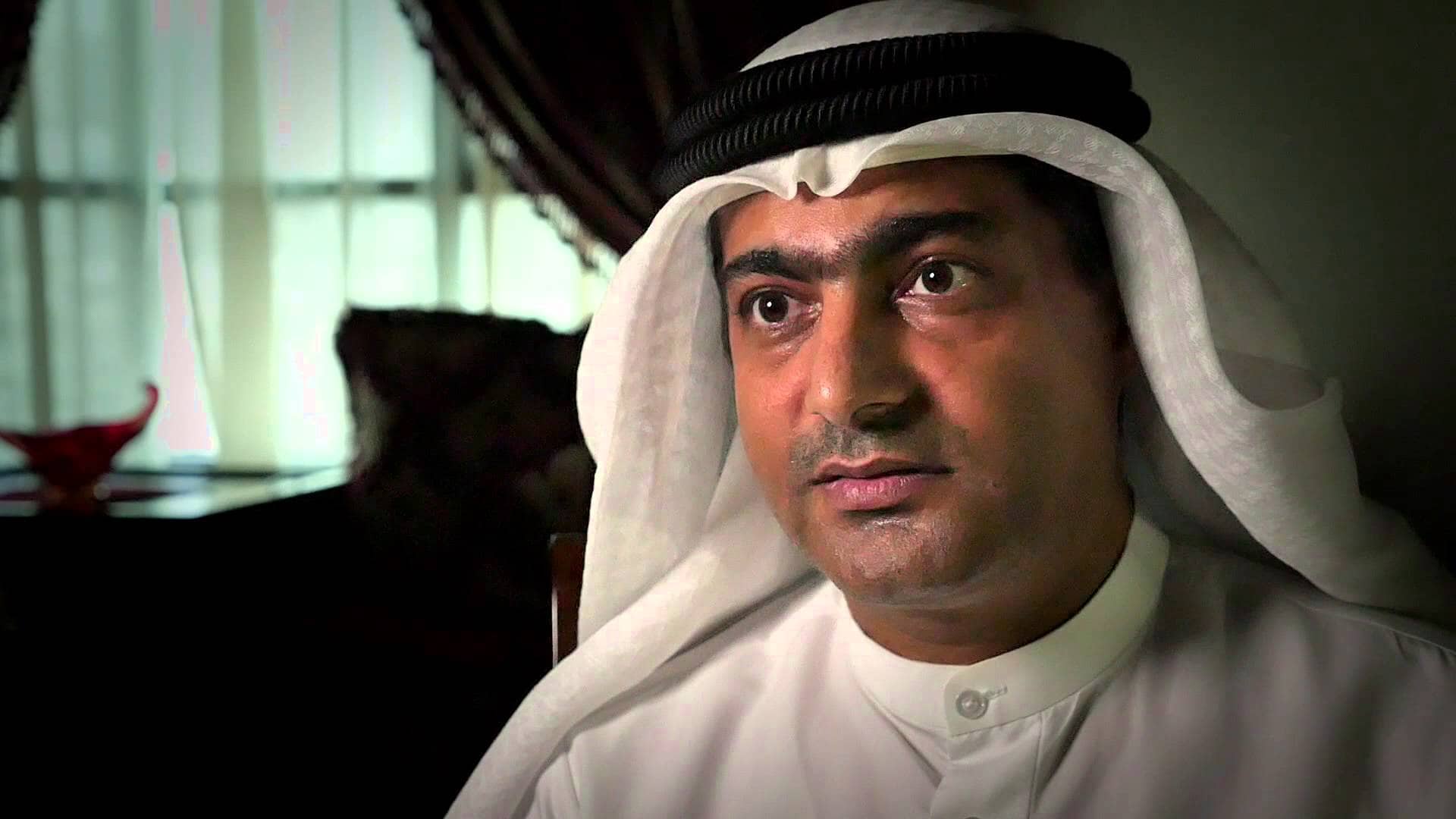
Screenshot from Youtube video on Ahmed Mansoor, a Martin Ennals Award Laureate 2015, Youtube/Martin Ennals Foundation

Screenshot from Youtube video on Ahmed Mansoor, a Martin Ennals Award Laureate 2015, Youtube/Martin Ennals Foundation

142 civil society organisations have called upon the UAE government to unconditionally release human rights defender Ahmed Mansoor, whose life they believe may be at risk following beatings and hunger strikes to protest his inhumane prison conditions. This statement was originally published on gc4hr.org on 16 October 2019.

Your Excellency, Sheikh Khalifa bin Zayed al Nahyan,

The United Arab Emirates (UAE) has recently announced multiple projects promoting pluralism and tolerance both at home and abroad. 2019 has been declared the ‘Year of Tolerance’ and in 2020, Dubai will host the World Expo trade fair, under the theme ‘Connecting Minds, Creating the Future.’ Upon Dubai’s selection for this exhibition in 2013, Sheikh Mohammed bin Rashid Al-Maktoum, Vice President and Ruler of Dubai, said: “[w]e renew our promise to astonish the world in 2020.” We welcome these public commitments to tolerance and open-mindedness.

It is in this same spirit that we, the undersigned, call upon the UAE government to immediately and unconditionally release human rights defender Ahmed Mansoor, whose life we believe may be at risk following beatings and hunger strikes to protest deplorable and inhumane prison conditions. The Authorities have convicted and imprisoned him solely for his human rights work and for exercising his right to freedom of expression, which is also protected under the UAE’s Constitution. Amnesty International considers him to be a prisoner of conscience.

Before his imprisonment, Mansoor was known as ‘the last human rights defender left in the UAE’ on account of his fearless work to document human rights violations in the country. His willingness to speak out publicly in defence of human rights on his blog, via social media and in interviews with international media was an example to us all. He is also an engineer, a poet, and a father of four. He is on the advisory boards of the Gulf Centre for Human Rights (GCHR) and Human Rights Watch and was awarded the 2015 Martin Ennals Award for Human Rights Defenders.

UAE authorities arrested Mansoor on 20 March 2017 at his home and subjected him to enforced and involuntary disappearance for over six months, with no access to a lawyer and sparse contact with his family, who did not know his exact whereabouts. The authorities held him in solitary confinement for prolonged periods of time.

Shortly after his arrest, a group of United Nations human rights experts said that the UAE should release him immediately, describing his arrest as “a direct attack on the legitimate work of human rights defenders in the UAE.” They expressed fear that his arrest “may constitute an act of reprisal for his engagement with UN human rights mechanisms, for the views he expressed on social media, including Twitter.”

A year later, on 29 May 2018, Mansoor was sentenced under vague charges of “insulting the status and prestige of the UAE and its symbols, including its leaders”, “publishing false information to damage the UAE’s reputation abroad” and “portraying the UAE as a lawless land.” He received a sentence of 10 years in prison, a fine of 1,000,000 UAE Dirhams (US$272,000), three years of probation after completion of his sentence, and confiscation of his electronic devices. On 31 December 2018, the State Security Chamber of the Federal Supreme Court upheld his conviction and sentence.

The UAE’s Government actions against Mansoor have been widely criticised. For instance, on 4 October 2018, the European Parliament adopted a resolution condemning Mansoor’s “harassment, persecution and detention, and calling for his release.” In May 2019, after he ended a month-long hunger strike to protest his unjust conviction and his detention conditions in Al-Sadr prison, a group of UN Special Rapporteurs stated that his conditions of detention “violate[d] basic international human rights standards and risk[ed] taking an irrevocable toll on Mr Mansoor’s health.” In September 2019, Mansoor was severely beaten for continuing his protests and he undertook yet another hunger strike. Nevertheless, he continues to be held in an isolation cell with no running water or bed and is not permitted to leave his cell except for family visits.

In September 2019, the annual report of the UN Secretary General about reprisals against those who cooperate with the UN mechanisms cited Mansoor’s case. This was the fourth time that the Secretary General had denounced reprisals against him, having previously raised concerns in 2014, 2017 and 2018.

It is a tragedy and a disgrace for the UAE that this Tuesday, on 22 October of the UAE’s ‘Year of Tolerance’, Ahmed Mansoor will turn 50, alone in a prison cell in such deplorable conditions, simply for exercising his fundamental right to free speech and for speaking out against human rights violations.

Mansoor’s imprisonment is part of a larger and growing pattern of repression in the UAE. Since 2011, the authorities have embarked on an unprecedented campaign of repression on freedom of expression, peaceful assembly and association in the country, shrinking the space for peaceful dissent to near-obliteration. Authorities have used privately manufactured technologies, such as those made by NSO Group, for the unlawful targeted surveillance of human rights defenders, including Mansoor, in order to monitor and clamp down on dissent. The authorities have arrested, detained, and prosecuted activists, human rights defenders and other critics of the government, including prominent lawyers, judges and academics, on broad and sweeping national security-related or cybercrime charges and in proceedings that fail to meet international fair trial standards.

The UAE has publicly declared itself a champion of tolerance in the Middle East and the world. Under the Universal Declaration of Human Rights, it has an obligation to protect the rights of its citizens and residents. For this reason, we call upon the UAE government to uphold these principles, and to release Ahmed Mansoor without further delay.

Yours sincerely,

https://ifex.org/open-letter-to-the-emirati-authorities-to-free-human-rights-defender-ahmed-mansoor-on-his-50th-birthday/

https://www.amnesty.org/en/latest/news/2019/10/uae-global-call-for-release-of-prominent-human-rights-defender-ahmed-mansoor/

One year after the 2018 Human Rights Defenders World Summit

November 1, 2019

One year after the event, the Convening Group of the Summit are sharing the summary of the 2018 Human Rights Defenders World Summit and the Action Plan (https://protectdefenders.us13.list-manage.com/track/click?u=9aa81f2f4c2a51b302fe6d634&id=7ea733deea&e=7dd7df85bc). The Action Plan, in particular, is a key document that was adopted by hundreds of HRDs and organizations attending the Paris Summit, with a series of recommendations that need to be put into practice urgently. For more on this summit see: https://humanrightsdefenders.blog/tag/human-rights-defenders-world-summit-2018/.

As we all know, HRDs continue to be discriminated, intimidated, harassed, criminalized and killed on an alarming scale and those suffering intersecting forms of discrimination are at an even higher risk. Action to tackle this scourge needs to be taken urgently and this is a powerful tool to address those with power: States, businesses, financial institutions, donors and intergovernmental organizations. Since the action plan was adopted, this document has already been presented to the United Nations General Assembly and has been regularly referred to in our advocacy work at the national level and in our work as international civil society organizations. We hope you agree that we need to keep this document alive and use it in our everyday activism and ensure that the right to defend human rights is upheld.

So, in this context, we urge you to for example:

  • Use it in your campaigns;
  • Refer to it in your interactions with State officials, companies, financial institutions, donors, INGOs;
  • Share it with other organizations, groups, and individuals who could not attend the Paris Summit;
  • Promote it in the media…


Human Rights and Counter-Terrorism issues at the UN

October 31, 2019

and in JustSecurity of 30 October 2019 publilshed a long article on the travails of the mandate “Human Rights and Counter-Terrorism” in the United Nations.

The authors then try to explain why other countires went along with Egypt’s intention to divert attention and resources from addressing human rights violations. [see e.g. https://humanrightsdefenders.blog/2019/10/19/egypt-all-you-can-think-of-widespread-arrests-torture-allegations-cyber-attacks/]

..

For states to treat Egypt as a reliable partner by allowing it joint leadership on the UN resolutions on human rights and terrorism only helps to provide cover for and perpetuate this egregious pattern, with serious consequences for the lives and dignity of Egyptians seeking to exercise their fundamental rights. The 74th session of the UN General Assembly Third Committee is an important opportunity for states to not only end their misguided acquiescence in Egyptian efforts to undermine UN work on terrorism and human rights, but also to restore the long legacy of Mexican leadership on the resolutions. In addition to the reasons identified in Saul’s Lawfare piece (which we won’t repeat here), several factors make this particular General Assembly resolution potentially an even more impactful moment.

In this moment, member states should recognize that a continuation of a Mexico-Egypt merged resolution on “terrorism and human rights” holds no promise of positive results for human rights. Now is the time for UN members to turn the tables and take a principled and strategic position: if Egypt will not agree to restoring key normative provisions previously lost, vigorously reinforcing rather than eroding support for the existing focus of the Special Rapporteur mandate, and laying the appropriate groundwork for a strong GCTS review in 2020, then states should insist that the merger be brought to an end and go back to the consensus text of resolution A/72/180.

Keeping Human Rights and Counter-Terrorism in Focus at the UN

Follow up on HRD summit during RightsCon Tunis 2019

October 23, 2019

On 12 June 2019, ProtectDefenders.eu participated at the RightsCon Tunis 2019 panel on the Human Rights Defenders World Summit 2018. A delegation of human rights defenders presented their experience of taking action to defend human rights and the consequences they had to face because of these actions. They have also mentioned the significance of the Summit 2018 had for them and what states, businesses and donors must do to ensure their fundamental role is protected and recognised in the digital sphere and beyond.  In relation to this, they have called on the Tech community to join them in the struggle for human rights. See also: https://humanrightsdefenders.blog/2018/12/18/premiere-powerful-video-summarizes-human-rights-defenders-world-summit-2018/

At the end of the HRD World Summit 2018 in Paris, all defenders agreed on a landmark Action Plan, which was presented to the UN General Assembly in December 2018. As participants to the Paris Summit continue to spread this message around the world, this panel was an opportunity to remind the world of the essential work they do and the need to create a safe and enabling environment for all those who actively defend human rights.

The Action Plan calls on Governments, corporations, international financial institutions, donors and others to take practical steps to ensure human rights defenders are recognised and protected, including by adopting national governmental action plans and legislation, and protecting defenders as a key priority in foreign policy, particularly women human rights defenders, LGBT+, indigenous rights defenders and other marginalized defenders who face the most risk and exclusion.

https://www.protectdefenders.eu/en/newsletter/october-2019_44#the-human-rights-defenders-world-summit-at-rightscon-tunis-2019-298

Carnegie paper: international community must redouble efforts to defend human rights defenders

October 22, 2019
The Carnegie Endowment for International Peace pubished on 22 October 2019 a working paper by Saskia Brechenmacher and Thomas Carothers entitled “Democracy,Defending Civic Space: Is the International Community Stuck?”. It concludes that as space for civil society continues to close, the international community must redouble its efforts to defend the right of human rights defenders to hold governments around the world accountable. The Executive Summary:

Civic Space Continues to Close

Since the mid-2000s, civic space has come under attack in many countries around the world. To counter this trend, transnational actors that support civil society have responded in many ways—from exerting diplomatic pressure and building international norms to providing emergency funds for activists. Despite these efforts, governments continue to impose legal and extralegal restrictions amid a worsening larger political environment for civil society. Closing civic space now appears to be just one part of a much broader pattern of democratic recession and authoritarian resurgence. The international response seems stuck: some useful efforts have been undertaken, but they appear too limited, loosely focused, and reactive.

Areas of Progress in the International Response

  • Research and knowledge dissemination: Timely information about civil society restrictions and overall trends is now widely available. Funders, policymakers, and relevant multilateral organizations are generally more aware of the problem; some actors have carried out internal strategic reviews and trainings to strengthen their programmatic and policy responses.
  • Support for local resistance and adaptation: Major funders have established or expanded emergency funds for persecuted rights activists and organizations. Some have also initiated programs to help civic actors adapt to regulatory, political, and legal pressures, while some have examined ways to offer more flexible funding. Several new transnational coalitions and initiatives have been set up to share lessons and lead joint campaigns.
  • Diplomatic pressure and international policy changes: Western governments have sometimes applied pressure on countries that are closing civic space, and they have supported advocacy in international bodies such as the United Nations. Civil society advocates have successfully pushed for reforms to harmful counterterrorism regulations, and some have begun engaging private sector actors on the importance of protecting civic space.

Factors Limiting the International Response

  • Lack of conceptual and strategic clarity: Ongoing confusion over the root causes of closing civic space impedes efforts to develop a more unified strategy. Diverse actors disagree on whether tackling the challenge will require addressing the global political backlash against progressive causes or the overall global democratic recession, or whether a more focused approach would be more effective.
  • Countervailing interests: Most Western governments still do not strongly prioritize closing civic space in their foreign policy agendas. They often refrain from escalating diplomatic pressure on repressive governments for fear of damaging their geopolitical, security, or economic interests. The loss of U.S. leadership on the issue has been particularly damaging.
  • Closing space at home: Civic space is now under threat in many established democracies, and the international repercussions are profound. Western governments that lash out against domestic critics are less likely to speak out against civil society restrictions abroad, and they have less credibility when they do so. Their actions also set a negative example for leaders in other parts of the world.
  • Inadequate scale: The resources committed to fighting the problem have been insufficient. Funders have also generally failed to embed their responses into a broader strategic framework. Explanations include a weak appetite for political risk among funders, the cross-cutting nature of the problem, and a lack of clarity on what a large-scale response might look like.
  • Working in silos: Weak coordination and information sharing between different parts of the assistance community persist. Obstacles include the diverging policy and organizational interests within and between governments, as well as divisions in the wider funder community, including between human rights organizations and development and humanitarian actors.
  • Struggles to change aid practices: Implementing far-reaching changes in aid practices has proven difficult, due to bureaucratic inertia, risk aversion, and narrower methods of monitoring and evaluation.
  • Chasing a moving target: The problem of closing space continues to evolve quickly, which makes it difficult for the international community to anticipate new openings and threats. For example, international actors have been slow to react to the spread of new technological tools for restricting civic space online and offline.

Policy Recommendations

  • Develop a strategic framework that links closing civic space to other key foreign policy challenges, articulates a positive vision of civic space globally, and offers tailored tactical guidance. Such a strategy should differentiate short-, medium-, and long-term priorities and distinguish between different types of political contexts.
  • Improve foreign policy alignment by issuing specific guidance on defending civic space to embassies, systematically integrating the issue into diplomatic training and senior leadership briefings, designating a senior official to spearhead interagency coordination on civic space–related issues, and amplifying the voices of civil society actors, particularly in restrictive contexts.
  • Avoid setting negative precedents by ensuring that domestic legislation does not threaten civic space. Nongovernmental actors should build cross-border alliances to share knowledge and resources, engage lawmakers in established democracies who stigmatize civil society, and champion transparency and accountability in internal practices and external partnerships.
  • Bolster coordination among concerned transnational actors by evaluating existing mechanisms, investing in new platforms or tools for information sharing and institutional learning, expanding country-level networks, and forging new partnerships between governmental and private funders.
  • Adjust funding practices to ensure a balance between support for long-term institution- building and catalytic funding, and track how much funding goes directly to local organizations as core versus project support. Funders should continue to expand flexible funding strategies for hostile environments, work with intermediaries that can reach a wider range of partners, and reduce grantees’ administrative burdens.
  • Anticipate new opportunities and threats by, for example, monitoring and recognizing examples of positive reform, developing targeted roadmaps that identify opportunities and flashpoints in collaboration with embassies or local partners, and investing in technological know-how.

For the full text of this working paper, see: https://carnegieendowment.org/files/WP_Brechenmacker_Carothers_Civil_Space_FINAL.pdf

See also: https://humanrightsdefenders.blog/2019/05/05/civil-society-and-human-rights-ngos-are-fighting-back-but-against-odds/ and https://humanrightsdefenders.blog/2019/02/21/amnesty-launches-report-on-laws-designed-to-silence-human-rights-defenders/

https://carnegieendowment.org/2019/10/22/defending-civic-space-is-international-community-stuck-pub-80110

Extra funds from ProtectDefenders.eu for human rights defenders in Turkey

October 21, 2019

In consideration of the latest developments in Turkey creating an ever less enabling environment for human rights defenders, with the support of ProtectDefenders.eu Secretariat, five international organizations working in the human rights field established a new grant-making program to provide support to human rights defenders in Turkey. The Comprehensive Support to Human Rights Defenders in Turkey program is funded by the European Union. The project aims to protect human rights defenders at risk, support human rights defender organizations in continuing to carry out their work while strengthening their domestic and international networks and increase their capacities in documenting human rights abuses, access to justice mechanisms and advocating for a more enabling environment for their work in Turkey.

Image result for protectdefenders.eu

The project is offering two types of grants in order to meet its objectives and address comprehensively human rights defenders’ needs in the country. Protection grants pay for provisions to improve the security and protection of human rights defenders and their organizations at risk through rapid response measures. Institutional support grants are designed to support human rights defender organizations in their work with two components . Core funding aims to ensure that human rights defenders can continue their daily human rights work. Grants for projects and/or activities aim to increase the capacity of human rights defenders in a broad range of areas. Human rights defenders who can benefit from the grant-making program can be individual human rights defenders, registered civil society organizations and unregistered groups, initiatives or networks who can use financial support for their human rights work. The project will give priority to those who are working in the most difficult situations such as remote areas and small cities, those who are specifically targeted for their area of human rights work and those who face obstacles to access funding to maintain their work including women HRDs, LGBTI HRDs, journalists and bloggers, and those denouncing the use of torture or working with survivors of torture. Human rights defenders are invited to submit their proposals starting from today on our website. The call for applications will remain open and ProtectDefenders.eu will welcome applications on a rolling basis. For more information about our grant-making programme, please visit ProtectDefenders.eu Turkey website

https://protectdefenders.eu/en/turkey.html


Result of the 42nd session of the UN Human Rights Council

October 2, 2019

On 27 September 2019 a group of civil society organisations welcomed significant outcomes of the HRC’s 42nd session, including reaffirming its condemnation of reprisals and extending its scrutiny over Yemen, Venezuela, Cambodia, Burundi, Myanmar, and Sudan. This session witnessed heightened scrutiny of Council members by shedding light on the situation in Saudi Arabia, but it missed an opportunity to ensure scrutiny over situations in China, Kashmir and Egypt. [see also: https://humanrightsdefenders.blog/2019/09/05/human-rights-defenders-issues-at-the-42nd-session-of-the-un-human-rights-council/]

The 42nd session also advanced standards on several issues including the right to privacy, administration of justice and the death penalty, but failed to defend the mandate of the Special Rapporteur on counter-terrorism against attempts to dilute and distract its focus. The High Commissioner failed again to present the database on companies facilitating Israel’s illegal settlements.

The Council reaffirmed that reprisals can never be justified. Council members rejected attempts to weaken the text including deleting the references to the roles of the Assistant Secretary-General and the Human Rights Council Presidents. [https://humanrightsdefenders.blog/2019/09/23/andrew-gilmours-2019-report-on-reprisals-it-gets-worse-but-response-remains-mostly-rhetoric/] The resolution listed key trends such as the patterns of reprisals, increasing self-censorship, the use of national security arguments and counter-terrorism strategies by States as justification for blocking access to the UN, acknowledged the specific risks to individuals in vulnerable situations or belonging to marginalized groups, and called on the UN to implement gender-responsive policies to end reprisals. The Council called on States to combat impunity and to report back to it on how they are preventing reprisals, both online and offline.

They welcome the creation of a Fact-Finding Mission (FFM) on Venezuela as an important step towards accountability for the grave human rights violations documented by the High Commissioner.

They welcome the renewal and strengthening of the mandate of the Group of Eminent Experts on Yemen, sending a clear message to parties to the conflict – and to victims – that accountability is at the center of the mandate, and providing a crucial and much-needed deterrent to further violations and abuses. States should support the recommendations made by the GEE in their recent report, including prohibiting the authorization of transfers of, and refraining from providing, arms that could be used in the conflict to such parties; and clarifying the GEE’s role to collect and preserve evidence of abuses.

They welcome the renewal of the mandate of the Special Rapporteur on Cambodia, but regret that calls to strengthen the mandate of the OHCHR to monitor and report on the situation have been ignored. We regret that the resolution fails to accurately depict the continuing crackdowns on civil society and the severity and scale of recent attacks on the political opposition.

They welcome the renewal of the mandate of the Commission of Inquiry on Burundi. Its work is vital as the country heads towards elections in 2020. The Burundian Government should desist from denial and insults, and should cooperate with the Commission and other UN bodies and mechanisms.

They welcome that the EU and OIC have jointly presented a resolution on Myanmar requesting the High Commissioner to report on the implementation of the recommendations of the Fact-Finding Mission at HRC 45. However, the international community needs to take stronger action to ensure accountability for and cessation of grave international crimes, in particular by referring Myanmar to the ICC and imposing a global arms embargo – and by acting on the FFM’s reports, including those on economic interests of the military and on sexual and gender-based violence in Myanmar and the gendered impact of its ethnic conflicts.

On terrorism and human rights, they are deeply disappointed that Mexico and other States have partially acquiesced in attempts by Egypt to dilute or distract the work of the Special Rapporteur on counter-terrorism away from its appropriate focus on human rights violations while countering terrorism and human rights of victims of terrorism. We regret that States have asked the Special Rapporteur to spend the limited time and resources of the mandate, to comment on the overbroad concept of the “effects” of terrorism, by which Egypt and some other States seem primarily to mean macroeconomic, industrial, and investment impacts, rather than the human rights of individual victims. The length to which States seem willing to put the existing Special Rapporteur’s mandate at risk, in the name of protecting it, while failing even to incorporate stronger consensus text on human rights issues included in the most recent merged parallel resolution at the General Assembly, suggests that the merger of the previous Mexican and Egyptian thematic resolutions no longer holds any real promise of positive results for human rights.

They welcome the Council’s renewed attention to the protection of the right to privacy in the digital age: fully integrating human rights into the design, development and deployment of Artificial Intelligence, machine learning technologies, automated decision-making, and biometric systems, is essential to safeguard not only the right to privacy, but also to freedom of expression, peaceful assembly, and association, and economic social and cultural rights.

On human rights in the administration of justice, we welcome the focus in this year’s resolution on concrete measures to prevent and respond to violence, death and serious injury in situations of deprivation of liberty, which illustrates the potential of thematic resolutions to set out specific practical, legal and policy steps that can be drawn on by governments, civil society, and other stakeholders to have real positive impact at the national level.

They commend Australia for its leadership on Saudi Arabia, as well as the other States who stood up for women’s rights activists and accountability. They urge more States to live up to their commitment to defend civil society and sign the statement in the coming 2 weeks.

For five years since the last joint statement in March 2014, the Council has failed to hold Egypt accountable for continuing systematic and widespread gross human rights violations. In the latest crackdown on peaceful protests, reports indicate that more than 2000 people have been arrested in the past week. When will the Council break its silence and convene a Special Session to address the grave and deteriorating human rights situation in Egypt?

Signatories:

  • International Service for Human Rights (ISHR)
  • DefendDefenders (the East and Horn of Africa Human Rights Defenders Project)
  • Commonwealth Human Rights Initiative (CHRI)
  • CIVICUS: World Alliance for Citizen Participation
  • Cairo Institute for Human Rights Studies
  • Asian Legal Resource Centre
  • Asian Forum for Human Rights and Development (FORUM-ASIA)
  • International Commission of Jurists (ICJ)
  • Amnesty International
  • Association for Progressive Communications (APC)
  • Human Rights Watch
  • International Federation for Human Rights (FIDH)
  • Physicians for Human Rights (PHR)

—————

Below the fulll list of 38 texts adopted:

Resolutions

Action on Text under Agenda Item 1 on Organizational and Procedural Matters

In a Presidential Statement (A/HRC/42/L.32) on the reports of the Advisory Committee, adopted without a vote, the Human Rights Council takes note of the reports of the Advisory Committee on its twenty-second and twenty-third sessions.

Action on Texts under Agenda Item 2 on the Report of the High Commissioner and Reports of the Office of the High Commissioner and the Secretary-General

In a resolution (A/HRC/42/L.6) on the composition of staff of the Office of the United Nations High Commissioner for Human Rights, adopted by a vote of 30 in favour, 13 against and four abstentions, the Council requests the United Nations High Commissioner for Human Rights to continue her efforts with a view to redress the current imbalance in the geographical composition of the staff of her Office and requests her to submit a report at the Council’s forty-fifth session.

In a resolution (A/HRC/42/L.16) on the human rights situation in Yemen, adopted by a vote of 22 in favour, 12 against and 11 abstentions, the Council decides to renew the mandate of the Group of Eminent International and Regional Experts for a further period of one year to, inter alia, monitor and report on the situation of human rights and carry out comprehensive investigations into all alleged violations and abuses of international human rights law and all alleged violations of international humanitarian law committed by all parties to the conflict since September 2014. The Council requests the Group of Eminent International and Regional Experts to present a comprehensive written report to the Human Rights Council at its forty-fifth session.

In a resolution ( A/HRC/42/L.21/Rev.1 ) on the situation of human rights of Rohingya Muslims and other minorities in Myanmar, adopted by a vote of 37 in favour, two against and seven abstentions, the Council requests the United Nations High Commissioner for Human Rights to follow up on the implementation of the recommendations made by the independent international fact-finding mission, including those on accountability, and to continue to track progress in the situation of human rights in Myanmar, including of Rohingya Muslims and other minorities, and to present a written report thereon to the Human Rights Council at its forty-fifth session.

In a resolution (A/HRC/42/L.38/Rev.1) on strengthening cooperation and technical assistance in the field of human rights in the Bolivarian Republic of Venezuela, adopted by a vote of 18 in favour, six against and 23 abstentions, the Council welcomes the permanent presence of the Office of the High Commissioner in Venezuela under the terms established in the memorandum of understanding signed on 20 September 2019, including unlimited access to all region and detention centres, and requests the High Commissioner to present to the Council, at its forty-third and forty-fifth sessions, as well as before the end of 2019, an oral update on the situation of human rights in Venezuela. The Council also requests the High Commissioner to submit a comprehensive written report on the situation of human rights in Venezuela at its forty-fourth session, including the outcome of the investigation on the ground into allegations of possible human rights violations to ensure the accountability of perpetrators and redress for victims.

Action on Texts under Agenda Item 3 on the Promotion and Protection of All Human Rights, including the Right to Development

In a resolution (A/HRC/42/L.1) on the human rights to safe drinking water and sanitation, adopted without a vote, the Council decides to extend the mandate of the Special Rapporteur on the human rights to safe drinking water and sanitation for a period of three years and requests the Special Rapporteur to compile good practices at the local, national, regional and international levels in order to promote the progressive realization of the human rights to safe drinking water and sanitation, and to report thereon to the Human Rights Council at its forty-fifth session.

In a resolution (A/HRC/42/L.2) on the role of prevention in the promotion and protection of human rights, adopted without a vote, the Council affirms the importance of effective preventive measures as a part of overall strategies for the promotion and protection of all human rights, and requests the Office of the High Commissioner to prepare a study, to be presented to the Human Rights Council at its forty-fifth session, on the contribution of the special procedures in assisting States and other stakeholders in the prevention of human rights violations and abuses.

In a resolution (A/HRC/42/L.5) on the World Programme for Human Rights Education: adoption of the plan of action for the fourth phase, adopted without a vote, the Council adopts the plan of action for the fourth phase (2020–2024) of the World Programme for Human Rights Education and decides to convene at its forty-eighth session a high-level panel discussion to mark the tenth anniversary of the United Nations Declaration on Human Rights Education and Training, on the theme “The tenth anniversary of the United Nations Declaration on Human Rights Education and Training: good practices, challenges and the way forward”.

In a resolution (A/HRC/42/L.7) on the promotion of a democratic and equitable international order, adopted by a vote of 25 in favour, 14 against and eight abstentions, the Council invites the Independent Expert on the promotion of a democratic and equitable international order to examine the impact of financial and economic policies pursued by international financial institutions on a democratic and equitable international order, in particular those of the World Bank and the International Monetary Fund, and to submit the report to the Human Rights Council at its forty-fifth session.

In a resolution (A/HRC/42/L.8) on the use of mercenaries as a means of violating human rights and impeding the exercise of the right of peoples to self-determination, adopted by a vote of 29 in favour, 14 against and four abstentions, the Council renews for a period of three years the mandate of the Working Group on the use of mercenaries as a means of violating human rights and impeding the exercise of the right of peoples to self-determination, and requests the Working Group to report its findings to the Human Rights Council at its forty-fifth session and to the General Assembly at its seventy-fifth session.

In a resolution (A/HRC/42/L.9) on the Special Rapporteur on contemporary forms of slavery, including its causes and consequences, adopted without a vote, the Council renews the mandate of the Special Rapporteur on contemporary forms of slavery, including its causes and consequences, for a period of three years, and requests the Special Rapporteur to submit reports on the implementation of the mandate to the Human Rights Council and the General Assembly in accordance with their annual programmes of work.

In a resolution (A/HRC/42/L.11) on human rights in the administration of justice, including juvenile justice, adopted without a vote, the Council invites States to take into consideration the issue of human rights in the administration of justice in the context of the Universal Periodic Review and requests the High Commissioner to submit to the Human Rights Council, at its forty-seventh session, an analytical report on human rights in the administration of justice, in particular on current and emerging challenges in the protection of persons deprived of their liberty, including judicial oversight.

In a resolution (A/HRC/42/L.13) on the human rights of older persons, adopted without a vote, the Council decides to extend the mandate of the Independent Expert on the enjoyment of all human rights by older persons for a period of three years, and requests the Secretary-General to ensure that the reports of the Independent Expert are brought to the attention of the Open-ended Working Group on Ageing.

In a resolution (A/HRC/42/L.14) on the right to social security, adopted without a vote, the Council decides to convene, before its forty-fifth session, an intersessional full-day panel discussion on the right to social security in the changing world of work with a view of identifying challenges and best practices. It also requests the High Commissioner for Human Rights to prepare a summary report on the panel discussion and to submit it to the Human Rights Council at its forty-sixth session.

In a resolution (A/HRC/42/L.17) on marking the twenty-fifth anniversary of the Beijing Declaration and Platform for Action, adopted without a vote, the Council decides to convene, during the high-level segment at its forty-third session, a high-level panel discussion to commemorate the twenty-fifth anniversary of the Fourth World Conference on Women, with a particular focus on the implementation of the Beijing Declaration and Platform for Action and the outcome documents of its review conferences, as well as on achievements, best practices and challenges in this regard.

In a resolution (A/HRC/42/L.18) on the right to privacy in the digital age, adopted without a vote, the Council requests the United Nations High Commissioner for Human Rights to organize, before its forty-fourth session, a one-day expert seminar to discuss how artificial intelligence, including profiling, automated decision-making and machine-learning technologies may, without proper safeguards, impact the enjoyment of the right to privacy, to prepare a thematic report on the issue, and to submit it to the Council at its forty-fifth session.

In a resolution (A/HRC/42/L.19) on the right of everyone to the enjoyment of the highest attainable standard of physical and mental health, adopted without a vote, the Council decides to extend the mandate of the Special Rapporteur on the right of everyone to the enjoyment of the highest attainable standard of physical and mental health, as established by the Human Rights Council in paragraph 1 of its resolution 6/29, for a further period of three years.

In a resolution (A/HRC/42/L.20) on human rights and transitional justice, adopted without a vote, the Council requests the Office of the United Nations High Commissioner for Human Rights to examine in a report how addressing a legacy of gross violations and abuses of human rights and serious violations of international humanitarian law through transitional justice measures can contribute to sustaining peace and the realization of Sustainable Development Goal 16, and to present the report to the Human Rights Council at its forty-sixth session.

In a resolution (A/HRC/42/L.23) on terrorism and human rights, adopted without a vote, the Council strongly condemns terrorist acts and all acts of violence committed by terrorist groups and the continued systematic and widespread abuses of human rights perpetrated by such groups, and requests States to refrain from providing support to entities or persons involved in terrorist acts, including support in establishing propaganda platforms advocating hatred that constitutes incitement to discrimination, hostility or violence, including through the Internet and other media.

In a resolution (A/HRC/42/L.24) on human rights and indigenous peoples, adopted without a vote, the Council decides to hold an intersessional round table on possible steps to be taken to enhance the participation of indigenous peoples’ representatives and institutions in meetings of the Human Rights Council on issues affecting them, with the full and effective participation of indigenous peoples’ representatives and institutions from the seven indigenous sociocultural regions represented at the thirteenth session of the Expert Mechanism on the Rights of Indigenous Peoples.

In a resolution (A/HRC/42/L.25) on human rights and indigenous peoples: mandate of the Special Rapporteur on the rights of indigenous peoples, adopted without a vote, the Council decides to renew the mandate of the Special Rapporteur on the rights of indigenous peoples for a period of three years to, inter alia, examine ways and means of overcoming existing obstacles to the full and effective protection of the rights of indigenous peoples, to pay special attention to the human rights and fundamental freedoms of indigenous children and women, and to take into account a gender perspective in the performance of the mandate.

In a resolution (A/HRC/42/L.27) on the protection of the rights of workers exposed to hazardous substances and wastes, adopted without a vote, the Council encourages States, business enterprises and other actors to implement the 15 principles presented by the Special Rapporteur on the implications for human rights of the environmentally sound management and disposal of hazardous substances and wastes through their respective legal and policy frameworks, as well as through initiatives and programmes to strengthen the coherence between human rights and occupational health and safety standards with regard to the exposure of workers to toxic substances.

In a resolution (A/HRC/42/L.34/Rev.1) on arbitrary detention, adopted without a vote, the Council decides to extend the mandate of the Working Group on Arbitrary Detention for a further period of three years, and requests the Working Group to prepare a study on arbitrary detention related to drug policies to ensure that upholding the prohibition thereon is included as part of an effective criminal justice response to drug-related crimes, and that such a response also encompasses legal guarantees and due process safeguards, and to submit to the Council at its forty-seventh session a report thereon, and to bring the report to the attention of the Commission on Narcotic Drugs as the policymaking body of the United Nations with prime responsibility for drug-control matters.

In a resolution (A/HRC/42/L.36) on the right to development, adopted by a vote of 27 in favour, 13 against and 7 abstentions as orally revised, the Council decides that, at its twenty-first session, the Working Group on the Right to Development will commence the elaboration of a draft legally binding instrument on the right to development on the basis of the draft prepared by the Chair-Rapporteur. The Council further decides to extend for a period of three years the mandate of the Special Rapporteur on the right to development, and to organize a biennial panel discussion on the right to development, starting at its forty-fifth session. It also decides to establish a subsidiary expert mechanism to provide the Council with thematic expertise on the right to development that shall consist of five independent experts who shall serve for a three-year period. The expert mechanism shall report annually to the Human Rights Council on its work and shall meet once annually for three days in Geneva and once annually for three days in New York.

In a resolution (A/HRC/42/L.37) on the question of the death penalty, adopted by a vote of 26 in favour, 14 against and 6 abstentions, the Council decides that the upcoming biennial high-level panel discussion to be held at the forty-sixth session of the Human Rights Council will address the human rights violations related to the use of the death penalty, in particular with respect to whether the use of the death penalty has a deterrent effect on crime rate, and requests the Office of the High Commissioner to prepare a summary report on the panel discussion and to submit it to the Human Rights Council at its forty-eighth session.

Action on Resolutions under Agenda Item 4 on Human Rights Situations that Require the Council’s Attention

In a resolution (A/HRC/42/L.4/Rev.1) on the situation of human rights in the Bolivarian Republic of Venezuela, adopted by a vote of 19 in favour, seven against and 21 abstentions, the Council requests the United Nations High Commissioner for Human Rights to prepare a comprehensive written report on the situation of human rights in Venezuela and to present the report to the Council at its forty-fourth session. The Council decides to establish, for a period of one year, an independent international fact-finding mission and to dispatch that mission urgently to Venezuela to investigate extrajudicial executions, enforced disappearances, arbitrary detentions and torture and other cruel, inhumane or degrading treatment since 2014, with a view to ensuring full accountability for perpetrators and justice for victims. The Council requests the mission to present a report on its findings during an interactive dialogue at its forty-fifth session.

In a resolution (A/HRC/42/L.10/Rev.1) on the situation of human rights in Burundi, adopted by a vote of 23 in favour, 11 against and 13 abstentions, the Council decides to extend the mandate of the Commission of Inquiry on Burundi in order for it to deepen its investigations, including into respect for and observance of political, civil, economic and social rights in the electoral context, until it presents a final report to the Human Rights Council during an interactive dialogue at its forty-fifth session and to the General Assembly at its seventy-fifth session. The Council requests the Commission to present an oral briefing to the Council at its forty-third and forty-fourth sessions during an interactive dialogue.

In a resolution (A/HRC/42/L.22) on the human rights situation in the Syrian Arab Republic, adopted by a vote of 27 in favour, six against and 13 abstentions, the Council deplores the fact that the conflict in the Syrian Arab Republic continues in its ninth year with its devastating impact on the civilian population, and urges all parties to the conflict to abstain immediately from any actions that may contribute to the further deterioration of the human rights, security and humanitarian situations. The Council demands that the Syrian authorities cooperate fully with the Human Rights Council and the Commission of Inquiry by granting the Commission immediate, full and unfettered access throughout the Syrian Arab Republic, and expresses deep concern about the grave humanitarian situation in the country and at the plight of the 11.7 million people in need of full, timely, immediate, unhindered and safe humanitarian assistance.

The Council welcomes the work of the International, Impartial and Independent Mechanism to Assist in the Investigation and Prosecution of Persons Responsible for the Most Serious Crimes under International Law Committed in the Syrian Arab Republic since March 2011 and its close cooperation with the Commission of Inquiry and Syrian civil society, and invites Member States to actively support the Mechanism and to provide adequate financial means for its functioning. The Council further welcomes the steps taken by Member States to prosecute the most serious crimes under international law committed in the Syrian Arab Republic in national courts under the principles of universal jurisdiction and extraterritorial jurisdiction as an important contribution to end impunity and ensure justice for victims.

Action on Resolution under Agenda Item 5 on Human Rights Bodies and Mechanisms

In a resolution (A/HRC/42/L.33/Rev.1) on cooperation with the United Nations, its representatives and mechanisms in the field of human rights, adopted by a vote of 36 in favour and 11 against, with no abstentions, as orally revised, the Council calls upon States to combat impunity by conducting prompt, impartial and independent investigations and pursuing accountability for all acts of intimidation or reprisal by State and non-State actors against any individual or group who seeks to cooperate, cooperates or has cooperated with the United Nations, its representatives and mechanisms in the field of human rights, and by condemning publicly all such acts, underlining that these can never be justified.

Action on Resolution under Agenda Item 9 on Racism, Racial Discrimination, Xenophobia and Related Intolerance

In a resolution (A/HRC/42/L.28/Rev.1) From rhetoric to reality: a global call for concrete action against racism, racial discrimination, xenophobia and related intolerance, adopted without a vote as orally revised, the Council requests the Office of the United Nations High Commissioner for Human Rights to organize, before the eleventh session of the Ad Hoc Committee on the Elaboration of Complementary Standards to the International Convention on the Elimination of All Forms of Racial Discrimination, a two-day expert seminar to consider the elements of a draft additional protocol to the Convention. It further requests the Group of Independent Eminent Experts on the Implementation of the Durban Declaration and Programme of Action to convene its seventh session for five working days during 2020 and to submit a report to the General Assembly at its seventy-fifth session.

Action on Resolutions under Agenda Item 10 on Technical Assistance and Capacity Building

In a resolution (A/HRC/42/L.3) on promoting international cooperation to support national mechanisms for implementation, reporting and follow-up, adopted without a vote, the Council requests the Office of the High Commissioner to organize five regional consultations to exchange experiences and good practices relating to the establishment and development of national mechanisms for implementation, reporting and follow-up, and their impact on effective implementation of human rights obligations and commitments.

In a resolution (A/HRC/42/L.12) on technical assistance and capacity-building for Yemen in the field of human rights, adopted without a vote, the Council requests the United Nations High Commissioner for Human Rights to continue to provide substantive capacity-building and technical assistance to the Government of Yemen and technical support to the National Commission of Inquiry to ensure that it continues to investigate allegations of violations and abuses committed by all parties to the conflict in Yemen, and requests the High Commissioner to present a written report on the implementation of technical assistance at the Council’s forty-fifth session.

In a resolution (A/HRC/42/L.15) on the enhancement of technical cooperation and capacity-building in the field of human rights, adopted without a vote, the Council decides that the theme of the annual thematic panel discussion under agenda item 10, to be held during its forty-fourth session, will be “Upholding the human rights of prisoners, including women prisoners and offenders: enhancing technical cooperation and capacity-building in the implementation of the Nelson Mandela Rules and the Bangkok Rules”.

In a resolution (A/HRC/42/L.26/Rev.1) on assistance to Somalia in the field of human rights, adopted without a vote as orally revised, the Council decides to renew the mandate of the Independent Expert on the situation of human rights in Somalia for a period of one year and requests the Independent Expert to report to the Human Rights Council at its forty-fifth session and to the General Assembly at its seventy-fifth session.

In a resolution (A/HRC/42/L.29/Rev.1) on technical assistance and capacity-building in the field of human rights in the Democratic Republic of the Congo, adopted without a vote, the Council requests the United Nations High Commissioner for Human Rights to present an oral update on the situation of human rights in the Democratic Republic of the Congo at its forty-third session and a comprehensive report at its forty-fifth session.

In a resolution (A/HRC/42/L.30) on technical assistance and capacity-building to further improve human rights in the Sudan, adopted without a vote as orally revised, the Council decides to renew the mandate of the Independent Expert on the situation of human rights in the Sudan for period of one year recognising the intention to phase out the mandate and requests the Independent Expert to present a report on the implementation of his mandate to the Human Rights Council at its forty-fifth session. The Council requests the Government of the Sudan and the Office of the High Commissioner to present their oral reports on progress towards the opening of a country office during an enhanced interactive dialogue at the Council’s forty-forth session.

In a resolution (A/HRC/42/L.31) on technical assistance and capacity-building in the field of human rights in the Central African Republic, adopted without a vote, the Council decides to renew, for one year, the mandate of the Independent Expert on the human rights situation in the Central African Republic and to organize, at its forty-third session, a high-level interactive dialogue to assess the evolution of the human rights situation on the ground, placing special emphasis on preventing the recruitment and use of children in the armed conflict and protecting their rights through their demobilization and reintegration.

In a resolution (A/HRC/42/L.35/Rev.1) on the advisory services and technical assistance for Cambodia, adopted without a vote, the Council decides to extend for two years the mandate of the Special Rapporteur on the situation of human rights in Cambodia, and requests the Special Rapporteur to report on the implementation of her mandate to the Human Rights Council at its forty-fifth and forty-eighth sessions.

http://ishr.ch/news/hrc42-civil-society-presents-key-takeaways-human-rights-council
https://reliefweb.int/report/venezuela-bolivarian-republic/human-rights-council-closes-forty-second-regular-session-adopts

What should Michel Forst’s successor as Rapporteur on HRDs look like?

September 11, 2019
The current Special Rapporteur on human rights defenders shaking hands with the UN Secretary General
Michael Forst (l) with the UN Secretary General

An exceptionally large group of 131 national and international NGOs (for list see: http://www.ishr.ch/sites/default/files/documents/190909_criteria_jt_letter_sr_on_hrds_signatories.pdf) have set out the criteria that should be at the heart of the selection of the next UN Special Rapporteur on the situation of human rights defenders. As Michel Forst’s term as mandate holder comes to an end, candidates have until 17 October 2019 to submit their applications for the position. (If your organisation would like to endorse the criteria, please sign on here)

The document sets out the skills and expertise that should be taken into account in the appointment of the next expert in March 2020. These fit under 4 priorities:

  • qualifications and skills;
  • relevant expertise
  • established competence;
  • and flexibility/ readiness and availability

The document also provides information on the application process, and underlines the importance of independence and impartiality, as well as experience or knowledge of the realities faced by human rights defenders.

ISHR’s Programme Manager Helen Nolan stated: ‘Human rights defenders who are most at risk around the world are often persons with discriminated identities or from communities that are marginalised, so the Special Rapporteur should be able to consider the particular contexts and challenges faced by these individuals and groups with the benefit of insights from the mandate holder’s personal experience’.

The checklist is available here.

http://www.ishr.ch/news/special-procedures-what-skills-do-we-need-next-un-expert-human-rights-defenders-rapporteur