On 1 February last year, the military seized power over Myanmar/Burma by overturning the election results and detaining State Counsellor Aung San Suu Kyi. The military is still controlling power by force and uses brutal violence against human rights defenders, civil society groups, and journalists in order to silence all forms of protest and dissent. More than 1,500 people have been killed by the military and over 8,000 people have been arrested.
Despite the military’s brutal response, people have come together to fight the dictatorship. Nationwide protests, boycotts, strikes, and coordinated civil disobedience movements have taken place. Journalists across the country have continued their work despite severe attacks by the military.
A new report by Athan looks at how the military coup has affected journalists’ work and press freedom in the country. Throughout the country’s history, military coups have led to severe attacks on press freedom and the 2021 coup is no exception. Since the launch of the coup, 141 journalists have been arrested and 13 have been sentenced to prison. On 10 December, photojournalists Ko Soe Naing and Ko Zaw Tun were arrested while taking photos of a nationwide silent strike. Ko Soe Naing was tortured to death at the interrogation centre four days later. Just a couple of weeks after that, editor of the Federal Journal, A Sai Kay (Aka) Sai Win Aung, was shot dead by the military in Lay Kay Kaw. See also: https://humanrightsdefenders.blog/2021/05/11/three-democratic-voice-of-burma-journalists-and-two-activists-risk-refoulement-by-thailand/
According to Athan, the attacks on press freedom since the 2021 military coup have been the worst the country has seen. “Journalists and news media require continuous support to sustain local media and its journalists in order to secure journalists’ careers and their safety, and to enable an environment for journalistic professionals and the industry,” says a representative from Athan about the report.
On the one-year anniversary of the military coup in Myanmar, the High Representative on behalf of the European Union and the Foreign Ministers of Albania, Australia, Canada, New Zealand, Norway, Republic of Korea, Switzerland, the United Kingdom, and the United States, have made the following declaration:
….The European Union is deeply concerned by the continuing escalation of violence and the evolution towards a protracted conflict with regional implications. Since the military coup, the situation has continuously and gravely deteriorated. A large part of the population is now in a highly precarious situation, experiencing poverty, food shortages, displacement, and violence. ..
The European Union condemns in the strongest terms continuing grave human rights violations including torture, sexual and gender-based violence, the continued persecution of civil society, human rights defenders, and journalists, attacks on the civilian population, including ethnic and religious minorities by the Myanmar armed forces. Therefore, the EU calls for full accountability of the leaders responsible for the coup as well as of the perpetrators of violence and human rights violations. The EU also reiterates its firm demand for the immediate and unconditional release of all prisoners arbitrarily detained in relation to the coup and the return to power of democratically elected leaders.
As a matter of priority, the EU reiterates its calls for an immediate cessation of all hostilities, and an end to the disproportionate use of force and the state of emergency. The military authorities must ensure rapid, safe, and unhindered humanitarian access to all displaced persons and people in need, in all parts of the country. The European Union will continue to provide humanitarian assistance, in accordance with the principles of humanity, neutrality, impartiality, and independence and reiterates its call for the full and immediate respect of international humanitarian law…
In view of the escalating violence in Myanmar, increased international action is required in line with the already existing EU arms embargo on Myanmar. Since the military coup on 1 February 2021, the EU has imposed targeted sanctions on the Myanmar military, its leaders, and entities. In the absence of any swift progress of the situation in Myanmar, the EU stands ready to adopt further restrictive measures against those responsible for undermining democracy and the serious human rights violations in Myanmar.
“It is a failed coup,” said Yanghee Lee, co-founder of the Special Advisory Group on Myanmar and former UN special rapporteur for human rights in the country in a CNN report of 1 February. “The coup has not succeeded in the past year. And that is why they are taking even more drastic measures to finish out the coup.” He reported on problems for human rights defenders already in 2015, see: https://humanrightsdefenders.blog/2015/03/19/myanmar-backsliding-by-prosecuting-human-rights-defenders-instead-of-perpetrators/
Germany and France honoured this year 15 people who have made outstanding contributions to the protection of human rights, campaigning for causes including women’s rights in Afghanistan, the freedom of the press in South Africa and children who are born as a result of rape in wartime.
On 10 December, international Human Rights Day, Foreign Minister Annalena Baerbock and French Foreign Minister Jean‑Yves Le Drian presented fifteen people with the Franco-German Prize for Human Rights. This award recognises the efforts of all those who work tirelessly every day to advance the causes of human rights and the rule of law. It is presented decentralised by the French and German missions in various locations around the world.
Jake Epelle who works to combat the ongoing stigmatisation and discrimination faced by people with albinism in Nigeria.
Noelah Godfrey Msuya who promotes the rights of children and women in Tanzania.
Monika Borgmann who is a German-Lebanese documentary-maker.
Jacques Letang who is a judge and lawyer in Haiti.
Cristina Palabay from the Philippines who leads the national association Karapatan.
Alexandrine Victoire Saizonou who is an advocate for women’s and children’s rights in Benin.
Ajna Jusic from Bosnia discovered at the age of 15 that she was born as a result of rape during wartime, and since then she has advocated for others in the same situation.
Erika Lorena Aifán Dávila is a judge who has been the target of constant attacks from the authorities of Guatemala.
Nebahat Akkoc is the Managing Director of the NGO Kamer in Turkey.
The Venezuelan Education-Action Program on Human Rights or PROVEA.
Narges Mohammadi who is spokesperson and vice chairman of the Iranian organisation Defenders of Human Rights Center.
May Sabai Phyu is a Kachin activist from Myanmar/Burma.
Shaharzad Akbar is an Afghan human rights defender who campaigns in particular for the rights of women in Afghanistan.
Tabelo Timse is an investigative journalist and a member of an independent non‑profit media centre in South Africa.
INTERPOL is going to have its General Assembly on the 23 – 24 November 2021 in Lyon. The election of both its President and a member of the Executive Committee look terrible. Already in 2017 there was a problem: see https://humanrightsdefenders.blog/2017/04/20/interpol-headed-by-chinese-police-official-human-rights-defenders-fearsome/. (The former chairman of Interpol Meng Hongwei was also a ministry of public security official, serving as vice-minister. However, Meng’s Interpol term ended prematurely in 2018 when he disappeared during a visit to China and was later jailed for 13 years on bribery charges, amid Xi Jinping’s anti-graft campaign targeting millions of officials.)
Several prominent members of the European Parliament (MEPs) have warned that the appointment of the Emirati official Major General Ahmed Nasser Al-Raisi to the position of president of Interpol would “undermine the mission and reputation” of the global police organisation. In a letter sent to the European Commission president, three MEPs urged European Union (EU) states to elect an Interpol chief that comes “from a country with an established criminal justice system and longstanding respect for human rights”.
The Gulf Center for Human Rights (GCHR), the French League for Human Rights and the International Federation for Human Rights are also concerned about the candidacy of Major General Ahmed Nasser Al-Raisi call to reject him.
Ahmed Al-Raisi has been Inspector General of the UAE’s Interior Ministry since 2015 and is also in charge of the UAE police force. Under his leadership, forces have carried out repeated and systematic arbitrary detentions and tortured prisoners of conscience and human rights defenders with complete impunity. One of the most emblematic cases concerns human rights defender Ahmed Mansour. Winner of the 2015 Martin Ennals Award and member of the GCHR steering committee, Ahmed Mansour has been imprisoned since March 2017 and sentenced to ten years’ imprisonment in 2018 for, according to the authorities, criticising the Emirati government and tarnishing his country’s image on social networks. Since 2017, he has been held in solitary confinement in Al-Sadr prison, in a 4m2 cell, without access to medical, hygiene, water or sanitary facilities. The inhumane conditions of Ahmed Mansour’s imprisonment have been the subject of several appeals without any favourable response from the Emirati authorities. [see: https://humanrightsdefenders.blog/tag/ahmed-mansoor/]
According to reports of several NGOs, torture is used systematically in detention centres in order to obtain confessions of guilt or testimonies against other detainees, particularly in the prisons of Al-Razeen, Al-Wathba and Al-Sadr. In addition, some prisons, such as Al-Awair prison and the Al-Barsha police detention centre, are overcrowded and unsanitary, making it extremely difficult to comply with social distancing and recommended hygiene practices in the context of the COVID-19 pandemic….In addition, prisoners are regularly denied medication and medical treatment for pre-existing health problems or illnesses developed during detention. Several UN experts have condemned these practices and expressed their concerns to the UAE authorities in recent years, but the authorities have not changed their practices.
Such inhumane treatment is recurrent in the UAE and is in flagrant contravention of international law and the Nelson Mandela Rules on the Treatment of Prisoners. While Major General Al-Raisi is, by virtue of his office, responsible for investigating complaints of abuse by the police and security forces in his country, none have been conclusively investigated. In the absence of any enforceable accountability mechanisms in the UAE, the GCHR has filed a complaint in France, against General Major Al-Raisi for acts of torture. Unfortunately, Interpol did not listen: https://www.businessinsider.com/interpol-president-uae-official-accused-of-torture-elected-2021-11
Another problematic candidate is Hu Binchen, the deputy director-general of the Chinese Ministry of international cooperation department, who is one of three candidates vying for two seats as Asia delegates on the committee.
The 13-member executive committee oversees the work of Interpol’s general secretariat and helps set future policy. Interpol controls a number of databases containing identifying details of people and property, which assist in global policing. It also operates the system of red notices, which are requests “to locate and provisionally arrest an individual pending extradition”.
However, there are long-running concerns over governments or authorities misusing the system to track down dissidents. While there are clear rules against the use of red notices on refugees, high-profile cases have shown countries are repeatedly able to obtain red notices, against Interpol policy.
Activists and advocacy groups, as well as 50 members of an international cross-party group of legislators, the Inter-parliamentary Alliance on China, have lodged their objections at Hu’s potential election to the committee, noting alleged attempts by China to use the red notice system to target exiled Uyghur activists.
“By electing Hu Binchen to the executive committee, the general assembly would be giving a green light to the PRC government to continue their misuse of Interpol and would place the tens of thousands of Hong Kong, Uyghur, Tibetan, Taiwanese and Chinese dissidents living abroad at even graver risk,” said the letter from the Alliance, citing the July detention of Uyghur activist Idris Hassan in Morocco.
“Allowing Interpol to be used as a vehicle for the PRC government’s repressive policies does great harm to its international standing.”
The human rights group Safeguard Defenders said the Chinese ministry’s international cooperation department, in which Hu is a senior official, oversaw operations named Sky Net and Fox Hunt, chasing down fugitives overseas. It alleged “teams were sent by the ministry “to intimidate and harass ethnic Chinese to force them to return to China ‘voluntarily’”. In a report also released on Monday, Safeguard Defenders said there had been a tenfold increase in the issuance of Chinese red notices between 2000 and 2020.
A later development is that 259 organizations, call on INTERPOL to immediately ban the Myanmar military junta from representing Myanmar as a member of INTERPOL. They demand that the military junta is excluded from the upcoming 89th INTERPOL General Assembly and all benefits and future cooperation that membership entails. [see: https://www.forum-asia.org/?p=36143]
The Norwegian firm took a principled stance to Myanmar’s coup. The same can’t be said for its exit from the country, writes Aung Myo Min, Minister of Human Rights in Myanmar’s National Unity Government., on 25 October 2021.
Praising Norway as a global leader when it comes to protecting human rights defenders and Telenor for acting in principled ways following the attempted coup by pushing back against the military junta’s illegal directives, the author is perplexed that in July, “after considering all possible alternatives and events,” Norway’s largely state-owned telecoms provider agreed to sell its Myanmar operations to the Lebanese firm M1 Group. According to the Centre for Research on Multinational Corporations (SOMO), M1 is “infamous for its business activities in countries with violent totalitarian and extremist regimes.” In 2012, telco MTN Syria, a subsidiary of MTN in which M1 is the major shareholder, undermined protest leaders by blocking text messages at the behest of the Bashir al-Assad regime. In 2013, MTN installed “lawful surveillance equipment” for its mobile network in South Sudan during a crackdown on government critics by state security forces.
It is to be feared that M1 group will hand over user details of some 18.2 million Telenor users to the military junta, placing human rights defenders even more clearly in the crosshairs.
Telenor has operated in Myanmar since 2014, a decision that back then, according to the Group, was informed by “a thorough human rights impact assessment as part of the due diligence.” The Norwegian Government holds a 53 percent stake in Telenor.s.
The Centre for Research on Multinational Corporations, in coordination with 474 Myanmar civil society organizations, has lodged a complaint against the sale with the Norwegian National Contact Point (NCP) for the OECD Guidelines for Multinational Enterprises and, after an initial assessment, the watchdog found merit in the claim. Mediation may well follow. This offers Telenor and the Norwegian government an opportunity to salvage something significantly more valuable than telecoms assets and investments: their reputations.
Telenor says that its decision to sell “was not motivated by financial or strategic objectives,” but guided by its “commitment to its values and standards.” This commitment requires scrutiny. The potential sale of Telenor requires assessment of any adverse human rights impact and prevention or mitigation where they present.
On 5 October 2021 FORUM-ASIA presented its new publication, “Summary Report: 9th Asian Human Rights Defenders Forum”, an abridgement from an event that facilitates human rights defenders (HRDs) and women human rights defenders (WHRDs) to discuss work and advocacy efforts, and share the experiences and challenges they face.
From 2019 to date, the situation of defenders and civil society organisations across Asia has grown increasingly challenging. Harassment and violations perpetrated against those defending human rights continue to increase and most perpetrators continue to benefit from impunity.
The global COVID-19 crisis, which started in 2020, exacerbated the already worrying situation for defenders. In the past one year alone, from 1 April 2020 to 31 March 2021, at least 760 cases of abuses and violations against defenders were recorded across 19 Asian countries, based on FORUM-ASIA’s monitoring. More than half of the cases recorded were related to judicial harassment (409 cases), which is often followed by arbitrary arrest and detention (323 cases). The number of killings is alarming at 55 cases, most of which took place in Myanmar, the Philippines, and Afghanistan.
Despite the restrictive atmosphere, human rights defenders and people from across Asia continue to bravely fight for their rights. Emblematic examples can be seen within the wave of pro-democracy protests that have been taking place in Thailand, the Civil Disobedience Movement in Myanmar, the Farmers Protest in India, and the anti-Omnibus Law protest in Indonesia, which have been held under the banner of the Milk Tea Alliance, alongside peoples’ movements from Hong Kong, Taiwan, Malaysia, and the Philippines.
Such movements show people’s determination to continuously find new ways to resist the shrinking civic space, and the rise of a new generation of defenders emerging to push for the realisation of human rights.
This year marks the 20th anniversary of the first AHRDF, and despite all the challenges this year posed, such as the COVID-19 pandemic and its restrictions on travel, FORUM-ASIA organised the event in an online format from 14 to 17 June 2021. This publication, “Summary report: 9th Asian Regional Human Rights Defender Forum,” highlights the key points discussed and provides the key recommendations made at the Forum.
Fortify Rights, a human rights organisation on Thursday urged the Bangladesh government to immediately investigate the assassination of Rohingya human rights leader Rohingya human rights leader Mohibullah
In a written statement the organisation called on the authorities to get to the bottom of the murder and hold the perpetrators accountable. No one has claimed responsibility for his murder, but a Rohingya leader claimed that Ullah was killed by the extremist group Arakan Rohingya Salvation Army, which was behind several attacks on Myanmar security posts in recent years.
“This is a devastating loss for everyone who knew and loved Mohib Ullah, and it is also a tremendous loss for Myanmar, the Rohingya people, and the human rights movement more broadly,” said Matthew Smith, chief executive officer at Fortify Rights.
He also said Mohibullah was committed to truth, justice, and human rights and had been facing serious and sustained threats in Bangladesh. Smith further said the Rohingya leader had needed protection.
“Dhaka must prioritize the protection of Rohingya people, including human rights defenders, who routinely experience heightened threats to their personal security,” he added.
Mohibullah, 46, who led the Arakan Rohingya Society for Peace and Human Rights, was shot dead at around 8:30pm at a Kutupalong camp office in Cox’s Bazar on Wednesday.
He had represented the Rohingya community at the United Nations Human Rights Council in 2019. In his address to UNHRC, he said: “Imagine you have no identity, no ethnicity, no country. Nobody wants you. How would you feel? This is how we feel today as Rohingya…”
“For decades we faced a systematic genocide in Myanmar. They took our citizenship. They took our land. They destroyed our mosques. No travel, no higher education, no healthcare, no jobs … We are not stateless. Stop calling us that. We have a state. It is Myanmar.”
Mohibullah came to the limelight on 25 August 2019 when a rally organised by Arakan Rohingya Society to observe two years of the latest Rohingya exodus from the Rakhine state of Myanmar, drew more than 100,000 people.
On 12 August 2021 Front Line Defenders came out with an unique report saying rights defenders working in sex industry face ‘targeted attacks’ around the world. The same day Sarah Johnson devoted a piece to it in the Guardian:
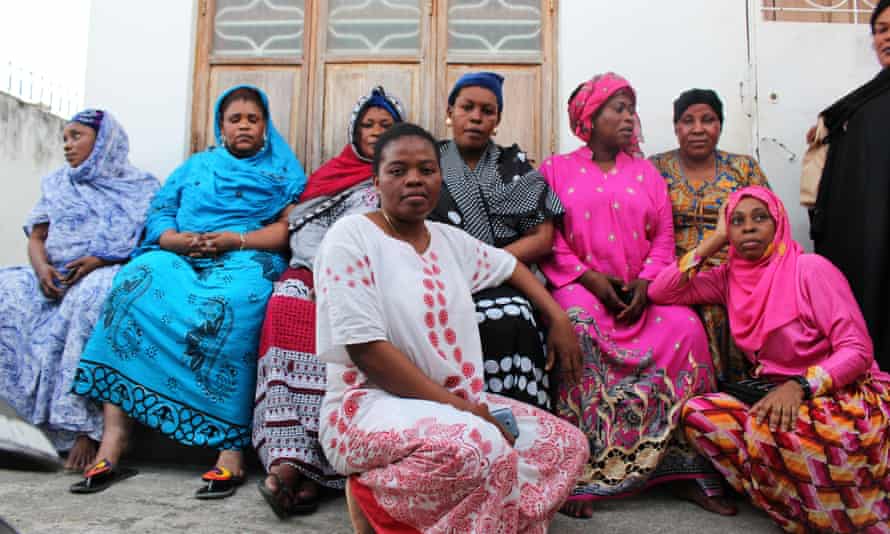
Sex worker rights defenders from Yosoa in Zanzibar, Tanzania. Yosoa do health outreach work and provide support after police, client or family violence. Photograph: Erin Kilbride/Front Line DefendersRights and freedom is supported by
Sex worker activists are among the most at risk defenders of human rights in the world, facing multiple threats and violent attacks, an extensive investigation has found.
The research, published today by human rights organisation Front Line Defenders, found that their visibility as sex workers who are advocates for their communities’ rights makes them more vulnerable to the violations routinely suffered by sex workers. In addition, they face unique, targeted abuse for their human rights work.
Drawing on the experience of 300 individuals in Tanzania, Kyrgyzstan, El Salvador and Myanmar, the report focuses oncases of sexual assault, threats from managers and clients, raids on homes and offices, physical attacks and police surveillance endured by sex workers undertaking human rights work.
The services the activists provide to fellow sex workers include: negotiating access to brothels, conducting gender rights training, offering legal and health counselling, reporting experiences of violence, and campaigning for freedom of movement and free choice of employment for those seeking to leave sex work.
Erin Kilbride, research and visibility coordinator at Front Line Defenders and lead author of the report, said: “Sex worker rights defenders take extreme personal risks to protect their communities’ rights to access justice, healthcare, housing and food, while responding to the immediate threats of police and domestic violence, discrimination, criminalisation and structural poverty.”
Often these activists were the only people able and willing to provide health education in locations in which sex was sold, the report found. They ensured treatment for sex workers who would otherwise be left with crippling injuries and life-threatening illnesses.
Activists’ role in creating community networks and defending sex workers’ right to assemble were also highlighted in the repot. “Coming together, even in private, is a radical, resistant, and dangerous act for defenders whose very identities are criminalised,” it said.
Defenders interviewed said they had been subjected to violations above and beyond what are typical for sex workers in their area. These included torture in prison, threats by name on the street, targeted abuse on social media and demands for sex in exchange for an advocacy meeting with a police commissioner. They also faced attacks from clients….
In Tanzania, sexual assaults in detention by the police have become a common occurrence for sex workers. They are often forced to perform sex acts in exchange for release. But human rights defenders have also been forced to perform sexual acts in order to secure other sex workers’ release. If they refuse, they are often tortured. One woman was given electric shocks after she refused to perform sex acts during a one-week detention related to her human rights work.
In El Salvador and other countries, physical attacks by clients and managers began after they learned about a sex worker’s activism, said the report.
In Myanmar, police followed activists to brothels to conduct raids duringhuman rights trainings. Some activists had been forced to change where they sell sex because police surveillance increased after they became known for their human rights work.Advertisement
Activists were often belittled at police stations in front of the sex workers they had tried to help. Htut, an outreach worker for Aye Myanmar Association, a network of sex workers, said: “[The police] let us in to the stations but then use rude words, take money from us, insult us, embarrass us, and made me feel bad about myself. It feels like they want to prove to the other sex workers that being an advocate is a humiliating thing.”
In Kyrgyzstan, sex workers have been paid or threatened by the police to help entrap rights defenders when they go to an area to distribute health supplies.
Despite the overwhelming evidence that sex worker activists have been under threat for their human rights work, much of it is dismissed by people ranging from the police to their own families, who assume such attacks are a result of being a sex worker.
Kilbride said: “Human rights defenders who are sex workers themselves are the best, and sometimes the only, activists and communities workers qualified and capable of accessing the most dangerous locations in which people sell sex.
“The targeted attacks they experience – ranging from sexual assault in detention to raids on their homes and offices – are indicators of how powerful their human rights work is.”
Lawyers from Myanmar and Belarus, and a lawyers’ collective from Algeria are shortlisted as finalists for the 2021 Lawyers for Lawyers Award. The 2021 Award will be presented to the laureate during a seminar hosted by Lawyers for Lawyers and the Amsterdam Bar Association in Amsterdam on 18 November 2021. The ceremony will also be live-streamed.
The expert jury selected U Khing Maung Zaw from Myanmar, the Collective for the Defence of Hirak Detainees from Algeria and Maksim Znak and Liudmila Kazak from Belarus as finalists for the Award. The laureate of the Award will be announced later this year.
About the finalists
In Myanmar, U Khing Maung Zawhas courageously upheld the rule of law for more than five decades. He is currently representing leaders of the recently deposed Myanmar government and a number of other persons who have been arbitrarily detained on politically motivated criminal charges associated with the military coup in Myanmar beginning 1 February 2021. In this context of repression and danger, U Khin Maung Zaw remains committed to representing his clients.
Since February 2019, grassroots peaceful protests (the “Hirak”) have called for genuine democratic reform and rule of law in Algeria. In response, the government launched a campaign of arrests and judicial harassment against all those associated with this movement. The Collective for the Defence of Hirak Detainees, formed in July 2019 after the first wave of arrests, voluntarily and tirelessly defends those arbitrarily prosecuted, especially from marginalised backgrounds who cannot afford legal support.
In the aftermath of the 2020 presidential elections in Belarus, lawyers working on politically sensitive cases or cases of human rights violations were subjected to pressure, harassment and intimidation in connection to their professional activities. Maksim Znak and Liudmila Kazakrepresented human rights defenders and opposition leaders, and are paying a high price for their work. On 9 September 2020, Maksim Znak was taken into custody and is still being detained. On 19 February 2021, Liudmila Kazak was disbarred.
The DVB made on 10 May 2021 the following emergency statement :
Three senior DVB’s journalists and two activists, who escaped to Thailand after the military crackdown in Burma, were arrested by the police on Sunday, May 9th in Chiang Mai, Thailand. They were arrested during a random search by the police and charged for illegal entry into Thailand. DVB strongly urges the Thai authorities to not deport them back to Burma, as their life will be in serious danger if they were to return. They have been covering the demonstrations in Burma until March 8 – the day the military authority revoked DVB’s TV license and banned DVB from doing any kind of media work. We also appeal to the United Nations High Commissioner for Refugees in Bangkok to intervene to help guard their safety. We request the international community to help call the Thai authorities to waive their deportation. Thank you in name of all DVB journalists, Aye Chan Naing, Executive director and chief editor DVB
UN Photo/Jean-Marc FerréA general view of the Geneva-based UN Human Rights Council in session. 24 March 2021
The UN’s top rights forum passed resolutions condemning abuses of fundamental freedoms in Belarus and Myanmar on Wednesday, in response to ongoing concerns over the human rights situation in both countries.
The ISHR and another 15 organisations (see below) produced as usual their reflections on the key outcomes of the 46th session of the UN Human Rights Council, as well as the missed opportunities to address key issues and situations including pushbacks and other human rights violations faced by migrants and refugees, and the human rights situations in Algeria, Cameroon, China, India, Kashmir and the Philippines.
They welcome some important procedural advances such as the possibility for NGOs to make video statements, which should be maintained and expanded after the pandemic for all discussions, including in general debates. …They are concerned by the renewal for another year of the ‘efficiency’ measures piloted in 2020, despite their negative impact on civil society participation in a year also impacted by the COVID-19 pandemic. We urge States to reinstate general debates in the June sessions, to preserve their open-ended nature, and maintain the option of video intervention also in general debates.
Environmental justice:
They welcome the joint statement calling for the recognition of the right of all to a safe, clean, healthy and sustainable environment that was delivered by the Maldives, on behalf of Costa Rica, Morocco, Slovenia and Switzerland and supported by 55 States. We call on all States to seize this historic opportunity to support the core-group as they continue to work towards UN recognition so that everyone in the world, wherever they live, and without discrimination, has the right to live in a safe, clean and sustainable environment.
We welcome the joint statement that was delivered by Bangladesh, on behalf of 55 States, calling the Council to create a new Special Rapporteur on human rights and climate change. We believe this new mandate would be essential to supporting a stronger human rights-based approach to climate change, engaging in country visits, normative work and capacity-building, and further addressing the human rights impacts of climate responses, in order to support the most vulnerable. This mandate should be established without further delay.
Racial Justice: Over 150 States jointly welcomed that the implementation of HRC Resolution43/1 will center victims and their families. They urge the Council to respond to the High Commissioner’s call to address root causes of racism including the “legacies of enslavement, the transatlantic trade in enslaved Africans, and its context of colonialism”. The Council must answer to the demands of victims’ families and civil society’s, and establish – at its next session – an independent inquiry to investigate systemic racism in law enforcement in the United States and a thematic commission of inquiry to investigate systemic racism in law enforcement globally, especially where it is related to legacies of colonialism and transatlantic slavery.
Right to health: The resolution on ensuring equitable, affordable, timely, and universal access by all countries to vaccines in response to the COVID-19 pandemic is a welcome move in highlighting the need for States not to have export and other restrictions on access to safe diagnostics, therapeutics, medicines, and vaccines, and essential health technologies, and their components, as well as equipment and encouraged States to use all flexibilities within TRIPs. However, a revised version of the resolution tabled was further weakened by the deletion of one paragraph on stockpiling of vaccines and the reference to ‘unequal allocation and distribution among countries”. The specific deletion highlights the collusion between rich States and big pharmaceuticals, their investment in furthering monopolistic intellectual property regimes resulting in grave human rights violations. The reluctance of States, predominantly WEOG States who continue to defend intellectual property regimes and States’ refusal to hold business enterprises accountable to human rights standards is very concerning during this Global crisis.
Attempts to undermine HRC mandate: They regret that once again this Council has adopted a resolution, purportedly advancing ‘mutual beneficial cooperation’ which seeks to undermine and reinterpret both the principle of universality and its mandate. Technical assistance, dialogue and cooperation must be pursued with the goal of promoting and protecting human rights, not as an end in itself or as a means of facilitating inter-State relations. We reiterate our call on all States, and especially Council members, to consider country situations in an independent manner, based on objective human rights criteria supported by credible UN and civil society information. This is an essential part of the Council’s work; reliance on cooperation alone hobbles the Council’s ability to act to support the defenders and communities that look to it for justice.
Country-specific resolutions: They welcome the new mandate for the High Commissioner focused on the human rights situation in Belarus in the context of the 2020 Presidential election. It is now essential for States to support the High Commissioner’s office, ensuring the resources and expertise are made available so that the mandate can be operationalised as quickly as possible. Immediately afterwards, on 24 March, 2021 the Human Rights House Foundation published a call by 64 Belarusian and international human rights organisations, welcoming the resolution passed by the UN Human Rights Council mandating the High Commissioner to create a new robust monitoring and reporting mandate focused on accountability for human rights violations in Belarus that have taken place since 1 May 2020. In so doing, the Council demonstrated its determination to hold Belarusian authorities to account. This mandate needs immediate action. We urge the international community to support this critical next step. The mandate should provide a complementary and expert international mechanism to regional accountability processes already under way. Furthermore, it should assist in the identification of those responsible for the most serious violations for future prosecution. [https://humanrightshouse.org/statements/civil-society-organisations-call-for-the-immediate-operationalisation-of-hrcs-new-mandate-on-belarus/]
They welcome the renewal of the mandate of the Special Rapporteur on Iran, and urge Council to consider further action to hold Iranian authorities accountable, in view of the systematic impunity and lack of transparency surrounding violations of human rights in the country.
They welcome the call for additional resources for the Special Rapporteur on Myanmar, increased reporting by OHCHR as well as the work of the IIMM. Lack of international monitoring on, the imposition of martial law in Myanmar to prosecute civilians, including protesters, before military courts, the dangerous escalation of violence by the Tatmadaw and the widespread human rights violations amounting to crimes against humanity demand more efforts to ensure accountability.
They welcome the renewal and strengthening of the OHCHR’s monitoring and reporting mandate on Nicaragua, in a context of steady human rights deterioration marked by the Government’s refusal to cooperate constructively with the Office, over two years after its expulsion from the country. The adopted resolution lays out steps that Nicaragua should take to resume good faith cooperation and improve the situation ahead of this year’s national elections. It is also vital that this Council and its members continue to closely follow the situation in Nicaragua, and live up to the resolution’s commitments, by considering all available measures should the situation deteriorate by next year.
They welcome the increased monitoring and reporting on the situation of human rights in Sri Lanka. However, in light of the High Commissioner’s report on the rapidly deteriorating human rights situation and Sri Lanka’s incapacity and unwillingness to pursue accountability for crimes under international law, the Council should have urged States to seek other avenues to advance accountability, including through extraterritorial or universal jurisdiction.
While they welcome the extension of the mandate of the Commission on Human Rights in South Sudan (CHRSS), they regret the adoption of a competing resolution under the inadequate agenda item 10. This resolution sends a wrong signal as myriads of local-level conflicts and ongoing SGBV and other violations of fundamental rights continue to threaten the country’s stability. We urge South Sudan to continue cooperating with the CHRSS and to demonstrate concrete progress on key benchmarks and indicators.
They welcome the report by the Commission of Inquiry on Syria on arbitrary imprisonment and detention and reiterate the recommendation to establish an independent mechanism “to locate the missing or their remains”, and call on States to ensure the meaningful participation of victims and adopt a victim-centered approach, including by taking into consideration the Truth and Justice Charter of Syrian associations of survivors and families of disappeared when addressing arbitrary detention and enforced disappearance.
Country-specific State statements: They welcome States’ leadership and statements on human rights situations that merit the HRC’s attention.
They welcome the joint statement on the situation in Ethiopia’s Tigray region and urge all actors, including the Ethiopian Federal Government, to protect civilians and ensure unhindered humanitarian access. Those responsible for crimes under international law, including Ethiopian soldiers, members of armed militias and non-State groups, and Eritrean soldiers involved in Tigray, must be held criminally accountable. The HRC should mandate an independent investigation and reporting by the High Commissioner.
For the first time in seven years, States at the HRC have united to condemn the widespread human rights violations by Egypt and its misuse of counter-terrorism measures to imprison human rights defenders, LGBTI persons, journalists, politicians and lawyers and peaceful critics. They welcome the cross-regional joint statement by 32 States and we reiterate our call supported by over 100 NGOs from across the world on the HRC to establish a monitoring and reporting mechanism on the situation.
They welcome the joint statement by 45 States focused on the human rights situation in Russia, including the imprisonment of Alexi Navalny and the large number of arbitrary arrests of protestors across Russia. The statement rightly expresses concern for shrinking civil society space in Russia through recent legislative amendments and Russia using its “tools of State” to attack independent media and civil society.
The next session will receive a report on pushbacks from the Special Rapporteur on human rights of migrants. The Council must respond to the severity and scale of pushbacks and other human rights violations faced by migrants and refugees in transit and at borders and the ongoing suppression of solidarity, including by answering the High Commissioner’s call for independent monitoring. The Council’s silence feeds impunity, it must build on the momentum of the joint statement of over 90 States reaffirming their commitment to protection of the human rights of all migrants regardless of status.
While the OHCHR expressed deep concern about the deteriorating human rights situation and the ongoing crackdown on civil society in Algeria, and called for the immediate and unconditional release of arbitrarily detained individuals, the Council has remained largely silent. As authorities are increasingly arbitrarily and violently arresting protesters – at least 1,500 since the resumption of the Hirak pro-democracy movement on 13 February, they call on the Council to address the criminalisation of public freedoms, to protect peaceful protesters, activists and the media.
Cameroon is one of the human rights crises the Council has failed to address for too long. They condemn the acts of intimidation and reprisal exercised by the Cameroonian government in response to NGOs raising concerns, including DefendDefenders. This is unacceptable behavior by a Council member. The Council should consider collective action to address the gross human rights violations and abuses occurring in the country.
They echo the calls of many governments for the Council to step up its meaningful action to ensure that concerns raised by civil society, the UN Special Procedures and the OHCHR about the human rights situation in China be properly addressed, including through an independent international investigation. We also regret that a number of States have taken an unprincipled approach of voicing support to actions, such as those by the Chinese government, including in Xinjiang and Hong Kong, through their national and other joint statements.
They call for the Council’s attention on the rapid deterioration of human rights in India. Violent crackdowns on recent farmers’ protests, internet shutdowns in protest areas, sedition and criminal charges against journalists reporting on these protests, and criminalisation of human rights defenders signal an ongoing dangerous trend in restrictions of fundamental freedoms in India. We call on India to ensure fundamental freedoms and allow journalists, HRDs and civil society to continue their legitimate work without intimidation and fear of reprisals. [see also: https://humanrightsdefenders.blog/2020/10/29/also-un-calls-on-india-to-protect-human-rights-defenders/]
We once again regret the lack of Council’s attention on the human rights crisis in Kashmir. Fundamental freedoms in the Indian-administered Kashmir remains severely curtailed since the revocation of the constitutional autonomy in August 2019. Raids in October and November 2020 on residences and offices of human rights defenders and civil society organisations by India’s anti-terrorism authorities in a clear attempt at intimidation have further exacerbated the ongoing crisis. We call on the OHCHR to continue to monitor and regularly report to the Council on the situation in both Indian and Pakistani administered Kashmir, and on Indian and Pakistani authorities to give the OHCHR and independent observers unfettered access to the region. [See also; https://humanrightsdefenders.blog/2020/02/09/forgotten-kashmir-something-has-to-be-done/]
Nearly six months since its adoption, the Council Resolution 45/33 on technical assistance to the Philippines has proven utterly insufficient to address the widespread human rights violations and persistent impunity. Killings in the war on drugs continue, and attacks on human rights defenders and activists have escalated. The killing of nine unarmed activists on 7 March 2021 clearly demonstrates that no amount of technical assistance will end the killings as long as the President and senior officials continue to incite violence and killings as official State policy. It is imperative that the Council sets up an international accountability mechanism to end the cycle of violence and impunity in the Philippines. [see also: https://humanrightsdefenders.blog/2021/03/09/philippines-killings-continue-and-de-lima-stays-in-jail/]
Watch the statement:
*The statement was also endorsed by: Franciscans International; Egyptian Initiative for Personal Rights (EIPR); International Commission of Jurists (ICJ); International Movement Against All Forms of Discrimination and Racism (IMADR); Asian Forum for Human Rights and Development (FORUM-ASIA); African Centre For Democracy And Human Rights Studies; International Federation for Human Rights Leagues (FIDH); MENA Rights Group; International Lesbian and Gay Association; Impact Iran; Ensemble contre la Peine de Mort (ECPM); Siamak Pourzand Foundation; Cairo Institute for Human Rights Studies (CIHRS); ARTICLE 19; CIVICUS: World Alliance for Citizen Participation.
NOTE: The 47th regular session of the Human Rights Council is scheduled from 21 June 2021 to 9 July 2021.