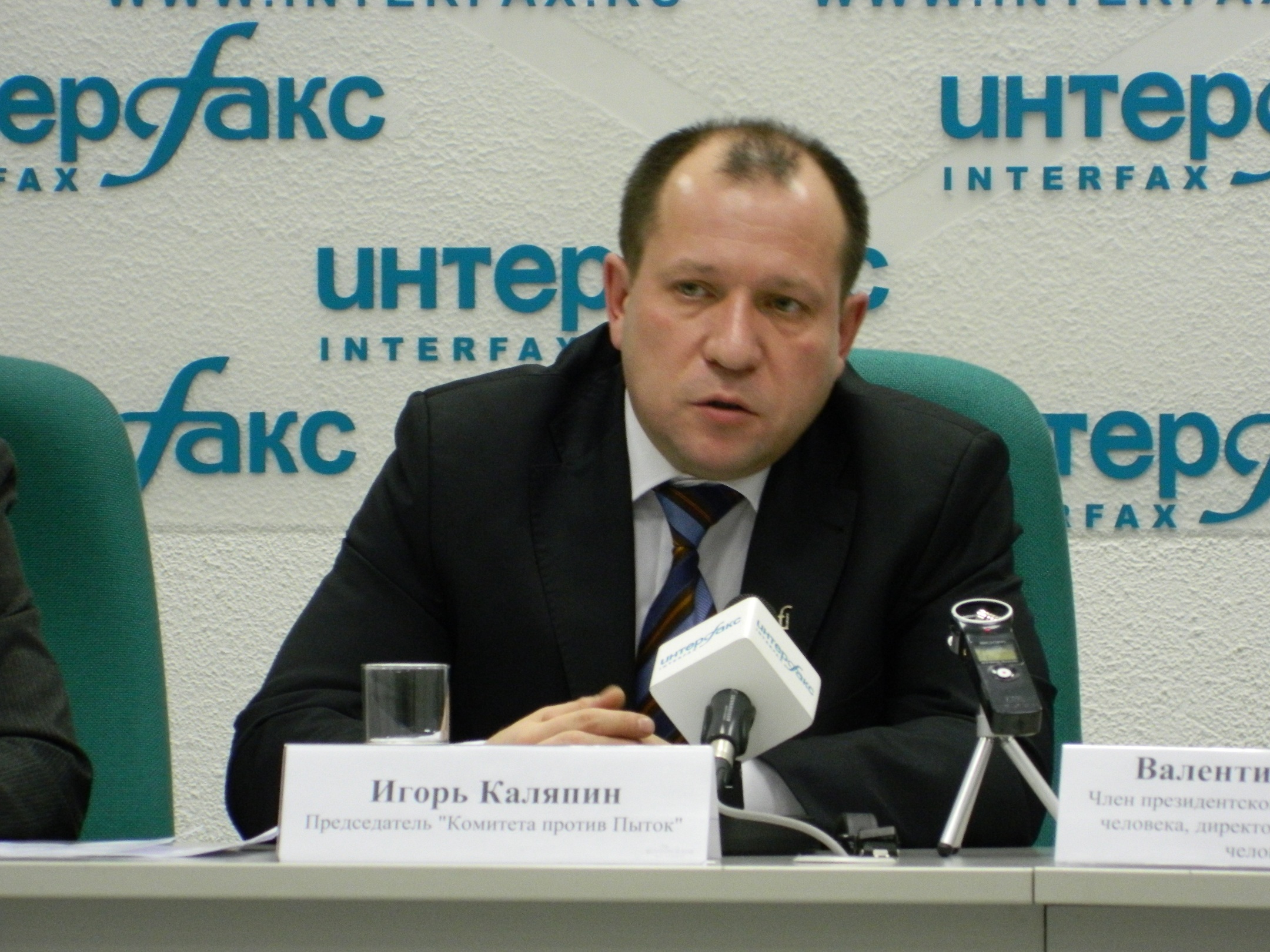
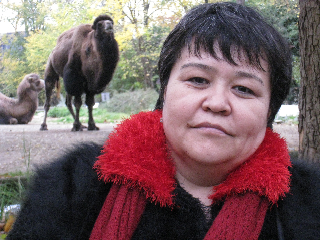
The Martin Ennals Jury just announced today (at 11h00 local time) the three Final Nominees for the Martin Ennals Award 2013. The MEA is the main award of the whole human rights movement thanks to its international Jury composed of 10 well-known human rights organisations (see below). The aim of the award is to provide protective publicity. The Final Nominees are:
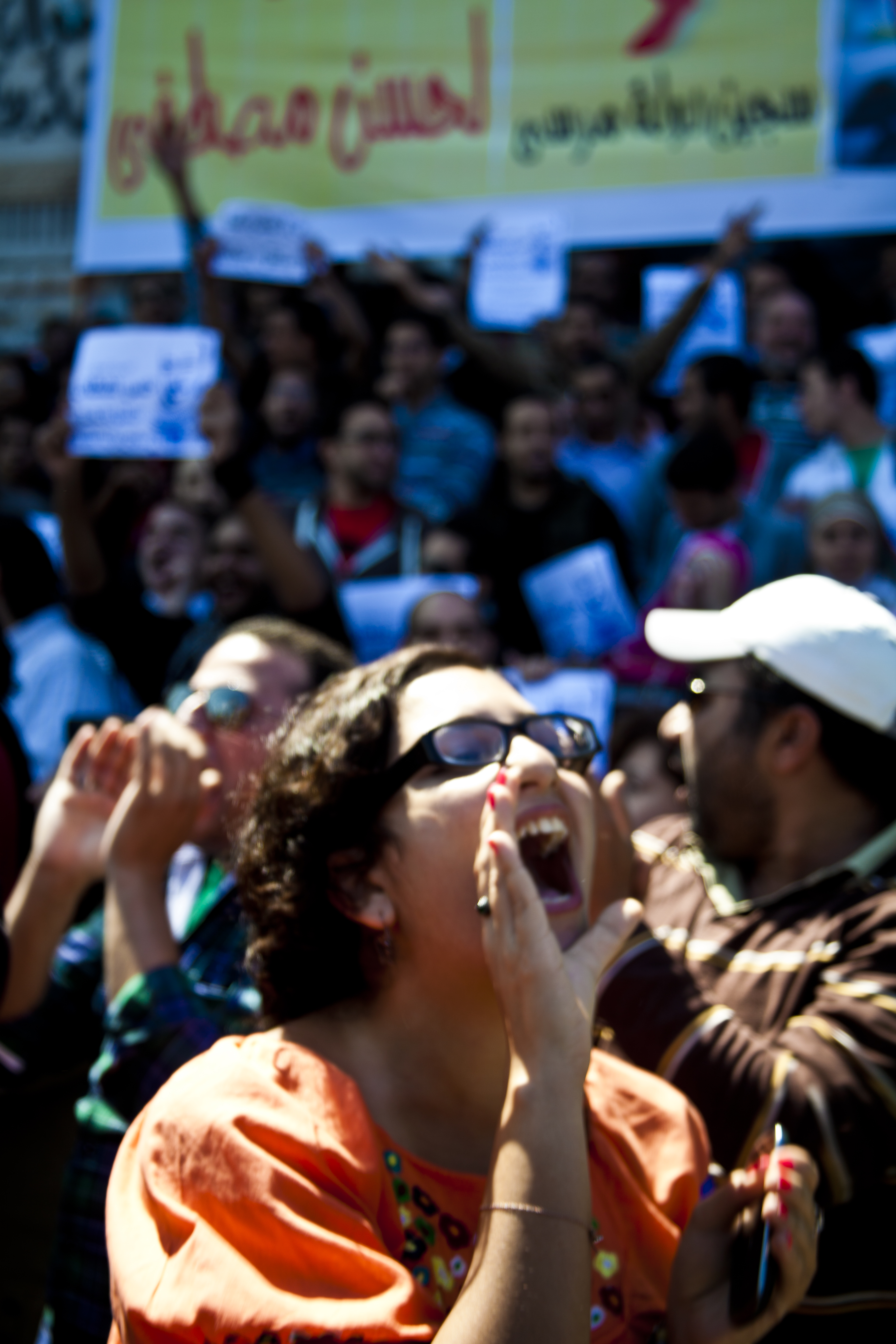
Mona Seif, Egypt – Final Nominee MEA 2013
Mona Seif, Egypt: Core founder of the ”No To Military Trials for Civilians”, a grassroots initiative which is trying to stop military trials for civilians. Since February 2011, Mona has brought together activists, lawyers, victims’ families,local stakeholders and started a nationwide movement against military trials. As part of the recent crackdown on the freedom of speech in Egypt she has been charged along with other Human Rights activists. She noted that “International solidarity, and I mean people’s support not governments’, empowers us to continue our battle and stop military trials for civilians“.
Tomorrow, 24 April, at 11hoo Geneva time, the three Final Nominees of the Martin Ennals Award for Human Rights Defenders 2013 will be announced. You can find the result here on this blog, of course, or on the site of the Martin Ennals Award: http://www.martinennalsaward.org. The following 10 NGOs on the Jury will also carry the news:
The annual lecture on human rights in Maastricht with the Minister of Foreign Affairs of the Netherlands, has quickly become a major event on the human rights agenda. As I was not able to attend, i have the great honor to introduce as my first guest author the well-known Theo van Boven, professor emeritus at Maastricht University, former Director of Human Rights in the UN, former Special Rapporteur on several subjects and a Patron of the MEA. With many thanks and in the hope that this will encourage others to contribute:
Theo van Boven 2011 (c) THF
On Wednesday April 17th, the newly appointed Foreign Minister of The Netherlands, Frans Timmermans, came to a very well-attended meeting at Maastricht University where he made a passionate plea for human rights as one of the cornerstones of Dutch foreign policy. While the Foreign Minister was the main speaker, his appearance was framed in a broader setting with other lively presentations on such issues as the need for consistency between domestic and foreign human rights policy (“practise what you preach”), the role of women in the Syrian armed conflict and the Rights of Lesbian ,Gay, Trans, Bisexual and Intersex Persons (LGTBI rights). Frans Timmermans expressed his strong personal commitment to human rights : “I passionately believe in human rights” and he recalled that no human right was achieved without struggle. He stressed that human rights, the rule of law, and democracy are strongly interconnected but that democratic majorities should respect the rights of minorities and individuals. The Netherlands foreign minister praised the role of persons,groups and organizations who in situations of great risk are standing up for human rights. He pledged his support for human rights activists/defenders as a “top priority“. It is of crucial importance to help human rights activists in expressing themselves and for The Netherlands to coöperate with other countries, bilaterally and through international organizations, in the defence and the promotion of the values enshrined in human rights instruments. Among the points that came up in the Q and A discussion were the need to give due and equal weight to the promotion and protection of economic,social and cultural rights together with civil and political rights; the inherent and imminent danger to human rights of the use of drones; the serious reduction in the Netherlands budget for development coöperation ( although not implying the reduction of funds in support of human rights activities); and the persistent evil of human trafficking as a contemporary form of slavery.
Interesting example of how NGO pressure can have effect on the EU: last December, FIDH organised a round of advocacy with its Vice-President and Laureate of the MEA 2006, Arnold Tsunga, to convey to the European Union its concerns around the ongoing risks for human rights defenders in the context of political deadlock and pre-electoral period [“Zimbabwe: Ongoing risks for human rights defenders in the context of political deadlock and pre-electoral period”, report of the Observatory for the protection of human rights defenders published in November 2012.] FIDH’s objective was to gear up the EU’s attention to ensure early warning and appropriate reaction in case of human rights violations taking place in the electoral cycle staring with the upcoming referendum on the new Constitution before the holding of Presidential elections in the summer of this year. FIDH’s advocacy was reflected in the European Parliament’s prompt reaction to the arrest of Okay Machisa, National Executive Director of ZimRights, and two other ZimRights members Leo Chamahwinya, Dorcas Shereni through an urgent resolution adopted on 7 February, which also relays the Observatory report recommendations. In addition, the EU Delegation and Heads of Missions in Harare issued a Statement on 22 February to indicate the EU’s particular concern around the pattern of incidents of harassment against civil society organisations and to call on the authorities to demonstrate impartiality in their relation to civil society.
Nataša Kandić, founder of Humanitarian Law Center in Serbia and 1999 MEA Laureate, has been awarded the 2013 “Civil Rights Defender of the Year Award” for her “persistent and fearless work on documenting war crimes and the most serious human rights abuses in the former Yugoslavia, and for supporting war crimes trials by providing courts with evidence and witnesses.” Nataša’s human rights work has put her life at risk but her concern has always been with the war crime victims and not her own persona. “Those who choose to work with human rights connected to war cannot be afraid. I have never thought about risks. I am always only thinking about uncovering the truth about the crimes that have been committed and seeking the conviction of those responsible. There is no room for fear”, she stated. Read the rest of this entry »
Most of you (but fortunately not all) seem to have understood that my previous post “Gadaffi Human Rights Award resurrected: Mugabe rumored to be Laureate” was not without good reason announced for April 1st.
There is however also more serious news on the awards front: On 13-14 April 2013 the Dalai Lama will hand out the Light of Truth Awards at a ceremony in Fribourg, Switzerland. The award is organised by the International Campaign for individuals and institutions who have made significant contributions to the public understanding of Tibet and the struggle for human rights and democratic freedoms for the Tibetan people. Among The Light of Truth honorees 2013 are:
The International Commission of Jurists, a member on the MEA Jury, and
Theo van Boven, Dutch professor emeritus in international law, former Director of Human Rights in the UN and a Patron of the MEA.
Bernard Kouchner, co-founder of the international humanitarian organisation Médecins Sans Frontières (MSF)will introduce the Dalai Lama.
(Special Rapporteur on the Situation of Human Rights in Iran Ahmed Shaheed. UN Photo/Jean-Marc Ferré)
On 11 March 2013 the Special Rapporteur on the situation of human rights in Iran, Ahmed Shaheed, voiced serious concern about the general situation of human rights in Iran, pointing to “widespread and systemic” torture, as well as the harassment, arrest and attacks against human rights defenders, lawyers and journalists. “The prevailing situation of human rights in Iran continues to warrant serious concern, and will require a wide range of solutions that are both respectful of cultural perspectives and mindful of the universality of fundamental human rights promulgated by the treaties to which Iran is a party,”.
Presenting his report to the Geneva-based Human Rights Council, Mr. Shaheed said that Iran has made some “noteworthy advances” in the area of women’s rights, including advancements in health, literacy and in enrolment rates on both the primary and secondary levels. Read the rest of this entry »
Mutabar Tadjibayeva, one of Uzbekistan’s best known human rights defenders and Laureate of the Martin Ennals Award 2008, has filed a complaint against Uzbekistan for her brutal torture and forced sterilisation when she was serving an eight-year prison sentence for her human rights activities. The international human rights organisations FIDH and REDRESS recently filed the complaint on her behalf before the UN Human Rights Committee. This is the first known case before the Committee involving a Uzbek human rights defender being forcibly sterilised.
Tadijbayeva has repeatedly sought an investigation from Uzbek authorities into the serious human rights violations that she has suffered since 2002, but her claims have never been investigated and no-one has ever been prosecuted for them. Tadjibayeva is asking the Committee to order Uzbekistan to conduct an effective investigation, punish those found responsible and provide her with reparation, including compensation, as well as her full medical records about the surgery that left her infertile, among other things. Read the rest of this entry »
Homosexuality is already illegal in the country and punishable by up to 14 years in prison, but the so-called Kill the Gays bill, sponsored by MP David Bahati and first introduced in 2009, would penalize “aggravated homosexuality”— consensual same-sex acts committed by “repeat offenders,” anyone who is in a position of power, is HIV-positive, or uses intoxicating agents in the process — with capital punishment. The lesser “offense of homosexuality,” also criminalized in the bill, encompasses anyone who engages in a same-sex sexual relationship, enters into a same-sex marriage, or conspires to commit “aggravated homosexuality”. And almost the most shocking, the bill also calls for three-year prison sentences for friends, family members and neighbors who do not turn in “known homosexuals” to the police!
Yvette Alberdingk Thijm, executive director of the US-based NGO Witness, wrote a post in the Huffington Post of 15 January about this fascinating topic on the occasion of Witness’ 20th anniversary. Here are some quotes before making a more critical comment:
“Twenty years ago, WITNESS was created because a world with many cameras — a world “where the eyes of the world are opened to human rights” — did not yet exist, a big bold vision at the time. Today, building on two decades of experience in creating tangible human rights change by exposing the truth through video, we are envisioning the next frontier: a world where video is not only ubiquitous, but has given millions the power to hold human rights abusers accountable, to deliver justice and to transform the human rights landscape.”….”So in 2013 and beyond, we are committed to building “video-for-change” communities, supporting networks of human rights defenders, from communities fighting forced evictions in Brazil to youth in the U.S. campaigning to protect the environment.”
In 2012, Witness launched the Human Rights Channel in partnership with YouTube and Storyful to ensure that important human rights stories are seen and contextualized. “We are committing in 2013 and beyond to take on the systems. The technology companies that run the platforms must create more human rights friendly spaces for all of us. And we decided to focus on the international legal systems to improve the understanding of how to authenticate citizen media to hold perpetrators of abuse accountable. We are working to achieve this vision by partnering and sharing in order to meet the challenge in front of us. We’ll join forces with technology mavens and mobile developers, with courageous human rights defenders worldwide, with brave bloggers, with witnessing citizens, with peer networks and effective organizations.”
—
Witness has indeed greatly advanced the use of images in the struggle for human rights and its future plans are daunting. What is missing – understandably in a piece that celebrates the achievement of a group’s anniversary – is the wider picture of what the human rights movement is doing with images. From the visualization of human rights defenders (the Martin Ennals Award, Front Line Defenders, Rights Livelihood Awards, Tulip Award, Civil Rights Defenders, HRF to mention just some who regularly make film portraits and/or stream their proceedings), the production of films on HRDs (e.g. True Heroes foundation), the systematization of access to images (e.g. by HURIDOCS) and the showing of films by a myriad of human rights film festivals (HRW, AI, Movies that Matter, and some 30 others). This modest blog alone has made some 60 references to the use of film images for human rights, many by Witness and the organizations mentioned above.
I mentioning this not because of ‘fairness’ in the sense that others need to be mentioned also, but because the full scope of the challenges ahead needs to be seen and addressed. Human rights images face the same problems as documentation: (1) information overload; (2) finding the most relevant information (even more daunting for images as searching directly on images is still far away); (3) authenticity and veracity; (4) ensuring quantity and quality of dissemination (what goes ‘viral’ is not necessarily what serves human rights) and (5) protecting of sources and participants (have the persons in the film given informed consent?). And I am sure there are quite a few other important issues.
So when the executive director of Witness states that it excites her “that we, together with so many allies, are taking the challenge for the future head on“, one must hope that it includes all those who can contribute to her vision of a world ” where many, many more citizens and human rights defenders have access to knowledge, skills and tools enabling them to create compelling, trustable videos and to make sure that their video is acted upon and human rights change happens.”


 Hans Thoolen on Human Rights Defenders and their awards