Posts Tagged ‘lobbying’

Front Line seeks advocacy officer for its Brussels office

June 29, 2017

is looking for an Advocacy Officer for its EU office in Brussels, Belgium


The Advocacy Officer helps develop the work of Front Line Defenders at European Union level as part of a small 2-person team in Brussels. This work includes the following tasks:

  • Responsibility for sending appeals on cases of human rights defenders at risk to EU/Member State authorities and to Norway/Switzerland to press them for action in accordance with the EU Guidelines on Human Rights Defenders and beyond;
  • Tracking results achieved, and compiling detailed data on responses for analysis and for reporting to headquarters;
  • Analysis, in coordination with Front Line Defenders’ Protection Coordinators, on the impact of EU action on Human Rights Defenders, and development and updating of strategies on maximising EU/MS response and impact on HRDs;
  • Prepare, in coordination with Front Line Defenders’ Protection Coordinators, briefings on HRDs for input into EU meetings;
  • By delegation of the Head of Office, participate in EU briefing and debriefing meetings, and advocate on HRD issues and individual cases;
  • In coordination with the Head of Office, initiate and undertake advocacy actions, in particular through the development of contacts with EU/Member State officials;
  • Organise and coordinate events, including visits of human rights defenders, awareness-raising workshops, etc.;
  • Assist with fundraising;
  • Assist the Head of Office in administrative tasks, as appropriate.

Desired profile and required qualifications

  • Relevant academic background;
  • At least two years of relevant experience, and sound knowledge of the functioning of the EU Institutions, the EU human rights instruments and the international human rights standards;
  • Dedication to the protection of human rights defenders and to the promotion of the UN Declaration on human rights defenders;
  • Strong organisation and time-management skills;
  • Excellent communication, relational and diplomatic skills, both oral and written in English and French;
  • Very good computer skills (office applications, database updating);
  • Experience of fundraising;
  • Availability for meetings early in the morning or late in the afternoon once or twice a week, upon coordination with the Head of Office. The position also requires very occasional international travel.

Salary €3050 per month gross. Conditions are according to Belgian legislation including the legal ability to live and work in Belgium.

Please send a letter of motivation and a CV to emma@frontlinedefenders.org by midnight on Monday 10 July 2017.

Interviews are planned to take place on 24-25th July. Only shortlisted candidates will be contacted – thank you for your understanding.


http://www.eurobrussels.com/job_display/130644/Advocacy_Officer_Front_Line_Defenders_Brussels_Belgium

ISHR’s Human Rights Defenders Advocacy Programme 2017 starts on Monday

May 27, 2017

ISHR‘s Human Rights Defenders Advocacy Programme begins on Monday 29 May, with 17 human rights defenders from around the globe travelling to Geneva to learn about strategic engagement with the UN mechanisms.

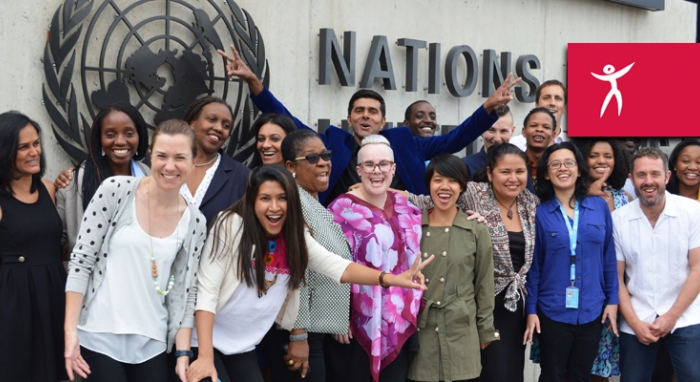
HRDAP 2016 Participants

The programme equips defenders with the knowledge and skills to make strategic use of the international human rights system. It also provides an opportunity for participants to directly engage in lobbying and advocacy activities at the UN level to effect change on the ground back home. ISHR’s Training and Advocacy Support Manager, Helen Nolan, explains that this year’s HRDAP participants were selected from a pool of 380 applicants – the highest number yet.

We’re incredibly excited to be collaborating with 17 committed human rights defenders working on women’s rights, business and human rights, the rights of LGBTI persons, and human rights defender protection,’ said Nolan. ‘These defenders are travelling from around the globe – including Argentina, Bangladesh, Cambodia, Ecuador, Egypt, Fiji, India, Nigeria, Peru, Russia and Sierra Leone – to spend two highly intense weeks gaining practical advocacy experience in Geneva.’

HRDAP coincides with the 35th Session of the Human Rights Council, and well as receiving training modules on all the UN human rights mechanisms from a range of experts, participants will have the opportunity to build networks in Geneva and around the world, carry out lobbying of UN member States and UN staff, and learn from peers from a range of regions working on a range of human rights issues.

Crucially, we know the programme works,’ said Nolan. ‘Last year, 100% of our participants were either very satisfied or satisfied with the programme, with 96% of them having at least partially achieved their key advocacy and learning objectives.’ In 2016, HRDAP enabled:

  • corporate accountability activist Alexandra Montgomery to provide frst hand testimony to state representatives and experts about the violence faced by land rights defenders in Brazil
  • Tehmina Zafar to sound the alarm in the UN Human Rights Council about proposed laws which could dramatically restrict the operation and independence of NGOs in Pakistan
  • Karen Mejía to inform a UN expert body about the need to defend women’s rights activists and decriminalise abortion in Honduras.
  • several participants to contribute substantially to the historic campaign to appoint the first ever UN expert on LGBTI rights

https://humanrightsdefenders.blog/2016/11/12/ishr-2017-training-course-for-human-rights-defenders-now-open-for-applications/

http://www.ishr.ch/news/supporting-defenders-ishrs-human-rights-defender-advocacy-programme-kicks

ISHR 2017 training course for human rights defenders now open for applications

November 12, 2016

 The International Service for Human Rights (ISHR) is calling for applications for its flagship Human Rights Defenders Advocacy Program in 2017 – the extensive training programme for human rights defenders. The training will take place in Geneva between 29 May and 9 June 2017 and provides defenders with opportunities to put their advocacy skills directly into action at the 35th session of the UN Human Rights Council.

ISHR’s Human Rights Defender Advocacy Programme (HRDAP) equips defenders with the knowledge and skills to make strategic use of the international human rights system. It also provides an opportunity for participants to directly engage in lobbying and advocacy activities at the UN level to effect change on the ground back home. As well as receiving training modules on all the UN human rights mechanisms from a range of experts, participants will also have the opportunity to build networks in Geneva and around the world, carry out lobbying of UN member States and UN staff, and learn from peers from a range of regions working on a range of human rights issues.

Participants will take part in:

  1. A short online learning component, prior to face-to-face training, to enable you to consolidate your existing knowledge and develop your advocacy objectives;
  2. Intensive training in Geneva during June, to coincide with the 35th session of the Human Rights Council. The training will focus on ways to effectively use international human rights mechanisms and to influence outcomes;
  3. Specific advocacy at Human Rights Council sessions and other relevant meetings, with regular feedback and peer education to learn from the experiences, including expert input from leading human rights advocates.

This programme is directed at experienced human rights defenders in non governmental organisations and national human rights institutions, with existing advocacy experience at the national level and some prior knowledge of the international human rights system. If you are interested in applying for ISHR’s training programme, please read the call for applications to check that you comply with the requirements. The link to the online application form can be found under point 5 of the call for applications.

The call for applicants can be found here. For more information, write to hrdap2017@ishr.ch.

Source: ISHR 2017 training for human rights defenders: now open for applicants! | ISHR

The Atlantic Council and the Human Rights Foundation at loggerheads over Gabon, Bahrain, Kazakhstan and Eritrea

October 27, 2016

Having reported last month on the Atlantic Council‘s questionable idea of giving an award to Gabon’s leader [https://thoolen.wordGabon’s leaderpress.com/2016/09/20/how-awards-can-get-it-wrong-four-controversial-decisions-in-one-week/], I would be amiss in not referring the big spat that this has developed into between Thor Halvorssen of the Human Rights Foundation and Frederick Kempe of the Atlantic Council. In opinion page in The Hill of 26 October does not mince words. The final paragraph sets the tone: “It’s fair to wonder how Kempe and his staff can look at themselves in the mirror every morning when they spend their days defending dictators like Eritrea’s Afwerki, Gabon’s Bongo, and Kazakhstan’s Nazarbayev. The donations might be juicy, but at some point, Kempe’s colleagues and prestigious board members must stop and realize that they are taking the side of tyrants, betraying the very ideals they set out to promote in the first place.” Some of the juicy excerpts:

Read the rest of this entry »

Amnesty and HRW trying to get Saudi Arabia suspended from the UN Human Rights Council

July 5, 2016

I have long argued that we should take another look at the possibility of using the suspension clause when members of the UN Human Rights Council go too far (see e.g. in the case of persistent reprisals https://thoolen.wordpress.com/2014/03/13/zero-tolerance-for-states-that-take-reprisals-against-hrds-lets-up-the-ante/in the  reprisals ). On Wednesday 29 June 2016, the two leading human rights NGOs, Amnesty International and Human Rights Watch, have urged UN member-states to suspend Saudi Arabia from the UN Human Rights Council over the killing of civilians in Yemen and repression at home. It will be a long shot but worth seeing how it works out: Read the rest of this entry »

Women human rights defenders want to be taken serious by UN body

June 15, 2015

Some 325 organisations have signed up to a joint Statement which expresses outrage at the way that they have been excluded from both the negotiation of the political declaration and the Commission on the Status of Women (CSW) Methods of Work resolution. [http://www.wave-network.org/content/nothing-about-us-without-us-statement-csw-methods-work-resolutions].

BACKGROUND:
The UN Commission on the Status of Women (CSW) each year provides a global platform for exchange and networking for women’s organizations working on furthering women’s rights all across the world, but this year’s session (March) was also the occasion to present the ‘Future organization and methods of work of the CSW which provides less space to NGOs to influence the outcomes of the session, through increasingly limited access to official negotiations and space to contribute to outcome documents.  It seems that governments are intent limiting the (sometimes) robust participation of non-governmental organizations, restrict recognition of the human rights of women and girls and the norm-setting role of the CSW in this regard and skirt responsibility for implementing the Sustainable Development Goals.

The statement says: “It seems they are intent on discussing everything about us, without us….Let us be clear: we do not come to the CSW to attend side events. We come to the CSW to hold our governments to account to the commitments they have made to guarantee gender equality, eliminate all forms of discrimination and violence against us and achieve the full realization of all of our human rights. We come to the CSW to advance progressive policies that, if implemented, will make a meaningful difference in our lives. If the CSW no longer provides us with a forum for policy change and accountability that fully involves us, we will stay at home.

Website Link which includes the 325 organizations that signed the Statement:
http://www.dawnnet.org/feminist-resources/sites/default/files/articles/nothing_about_us_without_us_0.pdf

via: http://www.wunrn.com

Training Programme on how to work in the UN Human Rights Council: 2 – 6 February

January 14, 2015

The Graduate Institute and the Geneva Academy of International Humanitarian Law and Human Rights organise jointly a training course specially designed for diplomates and NGO representatives in the UN Human Rights Council. The classes are on 2 – 6 February 2015 in the evenings from 15h30 to 19h15 in the Villa Barton, Geneva (final timings to be confirmed). The fee is  CHF 950. – (excludes housing).

Excerpts from the brochure:

Multilateral diplomacy in the advancement of Human Rights (primarily through the Human Rights Council) is one of the main activities of International Geneva.  Established in March 2006, the Council is now a well-established mechanism of the United Nations and is approaching its 10th year–yet the individuals who engage at the Council sessions often change, and they often juggle a larger portfolio of responsibilities.Human Rights Council

Everyone benefits when the Council functions better, and the council functions better when individuals arrive fully prepared to contribute at their best.

This reflects the non-partisan spirit in which this training has been designed.  Preparing for high-level professional engagements requires a deep understanding the rules of the council–as well as the personal acumen to advocate and negotiate with good judgment and strong communications skills–all of which comes from familiarity, practice and individual preparation for the Council sessions.

In order for delegates and representatives to better tackle the substantive and practical challenges ahead, we are offering this training program for individuals who aspire to perform more effectively in a multilateral context.  The programme is designed to enhance personal skills in multilateral diplomacy, with a particular focus on the human rights context.

Learning Themes

While taking examples on the work of the HRC and its special procedures, the training will highlight some of the prevailing substantive issues as well as the behaviors of the Council, in order to teach participants to better navigate in their aspirant work.  The training will be organised around the following themes:

Functioning of the Human Rights Council:

The phenomenon of working within and across “groupings”:

Leadership in the Human Rights Council:

Learning outcomes & skills-building

  • Functioning and rules of the Human Rights Council
  • Chairing formal and informal multilateral meetings
  • Drafting skills (in the Human Rights context)
  • Negotiation and mediation skills & techniques
  • Oral communications skills for public speaking “on the record” in the human rights context
  • Advocacy and lobbying techniques

Methodology

The training will combine some theory, background and insights (about negotiations, the HRC and its functional history) with applied skills and techniques–including best practices and opportunities to enhance personal effectiveness.  Sessions will be designed to address cross-cutting issues and will build participant skills through simulation exercises, small group breakouts, and role-playing.

Instructors will include those from the Graduate Institute and Geneva Academy, as well as actors working with (or in the domain) of the Human Rights Council.

http://graduateinstitute.ch/fr/home/executive/training-workshops/multilateralism-winter/multilateralism_winter_programme.html.

International Service for Human Rights holds again its Geneva Training Course: from 26 May to 7 June

April 23, 2013

You can now apply for ISHR‘s Geneva Training Course 2013. This advanced level training course will be held in Geneva from 26 May to 7 June, in parallel to the 23rd session of the UN Human Rights Council. The course offers an opportunity for participants with existing advocacy experience at domestic or regional level to expand their knowledge and skills, and over the 2-week period in Geneva directly engage in lobbying and advocacy activities at the UN level. This new programme blends ISHR extensive training experience, with its unique access to the UN mechanisms in Geneva and its close collaboration with leading human rights organisations. It will combine a common intensive training course with supported lobbying and advocacy activities adapted to the areas of interest of participants, as well as peer education among different groups of defenders. The programme will consist of the following elements:ISHR-logo-colour-high


a)    A short online learning component, which takes place prior to Human Rights Council sessions, and supports participants in consolidating existing knowledge and developing advocacy objectives;

b)    An intensive course in Geneva during the beginning of the June 2013 session of the Human Rights Council, focusing on ways to use international human rights mechanisms and to influence outcomes at the Human Rights Council;

c)     Specific advocacy at the Human Rights Council session, with regular feedback and peer education to learn from the experiences;

b)    Where appropriate, common follow-up at national level.

It is directed at experienced human rights defenders at the national level who have already some prior knowledge of the international human rights system.

The 23rd session of the Human Rights Council, which runs in parallel, will among other things focus on the following key areas:

  • A resolution to follow-up to the Council’s work combating discrimination and violence based on sexual orientation and gender identity (the SOGI resolution).
  • Thematic reports by the Special Rapporteur on Violence against Women; Special Rap on Cultural Rights;  Working Group on Discrimination Against Women
  • Thematic Reports by  Special Rapporteur on freedom of peaceful assembly and of association, and Special Rapporteur on freedom of expression.
  • Annual Full Day Discussion on Women’s Rights 
  • Report of the Working Group on the issue of human rights and transnational corporations and other business enterprises, the Forum on Business and Human Rights and a panel discussion on human rights and business

The draft programme of work of the Human Rights Council is expected to be published shortly, and will be available at http://bit.ly/pow-hrc23

A description of the course, what is expected of participants and instructions on how to apply are available at http://bit.ly/gtc2013-tor.