Posts Tagged ‘Kyrgyzstan’

Central Asia Leaders Must Deliver on Human Rights Pledges Made at Summit say NGOs

April 26, 2025
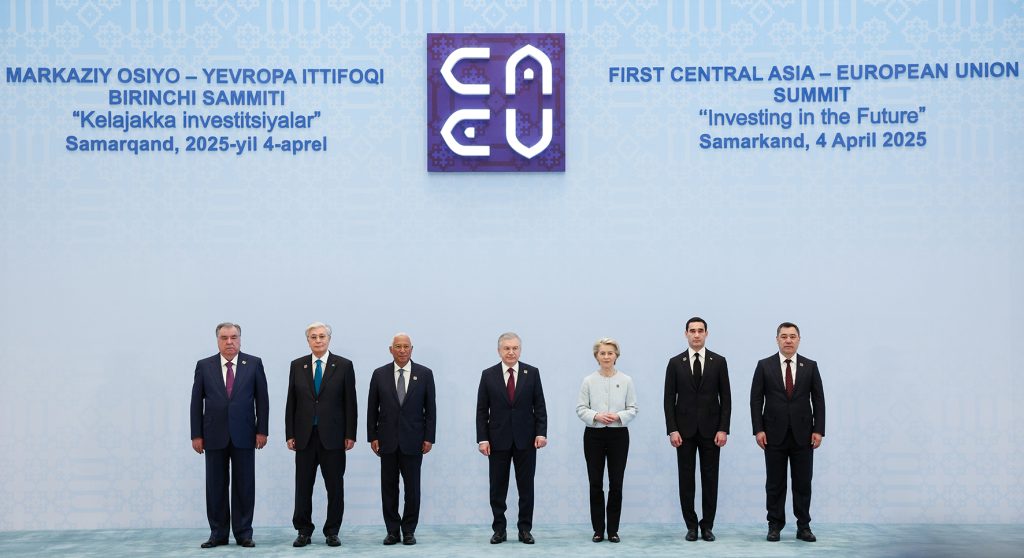
Photo and copyright: European Union.

On 10 April 2025 Civil Rights Defenders, along with seven other international human rights organizations, commend the commitments made at the EU-Central Asia Summit in Samarkand. We urge Central Asian leaders to prioritize human rights and uphold the civil and political freedoms enshrined in their national constitutions and international treaties. The commitments to peace, security, democracy, and the elevation of relations to a strategic partnership must be matched by concrete actions to protect human rights.

On Friday, April 4, the Uzbek city of Samarkand hosted the first ever EU – Central Asia Summit where high-level officials – all five regional presidents and European Council President António Costa and European Commission President Ursula von der Leyen – discussed economic cooperation and agreed to bring their existing partnership to a new strategic level. At the end of the summit, participants issued a joint declaration that, among others, stated their commitment to freedom of expression and association, creating an enabling environment for civil society and independent media, protection of human rights defenders, as well as to respecting the rights of women and children. According to an official press release, the European Commission promised to invest €12 billion in the region to strengthen transport links and deepen cooperation on critical raw materials, digital connectivity, water, and energy.

Paragraph 3 of the joint declaration says: “We are committed to cooperate for peace, security, and democracy, to fully respect international law, including the UN Charter and the fundamental principles of respect for the independence, sovereignty and territorial integrity of all States, within their internationally recognised borders. We emphasised the importance of achieving as soon as possible, a comprehensive, just, and lasting peace in Ukraine in accordance with the principles of the Charter of the United Nations. We emphasized the need to uphold the principles of the OSCE by the participating States. We reconfirmed the obligation of all States to refrain in their international relations from the threat or use of force, to respect international humanitarian law and underlined the need for peaceful resolution of conflicts.”

In paragraph 16, the “EU and Central Asian leaders reiterated that the promotion and protection of rule of law, human rights and fundamental freedoms is a common fundamental value. Ensuring freedom of expression and association, an enabling environment for civil society and independent media, protection of human rights defenders as well as the respect for the rights of women, the rights of the child, and labor rights remain at the core of EU–Central Asia relations. The EU reiterated its readiness to support efforts in this regard at regional as well as at national level.” 

Furthermore, in paragraph 15 the “Participants affirmed the need for their continued commitment to enhanced cooperation and the development of new approaches in the joint fight against organised crime, violent extremism, radicalisation, terrorism, drug trafficking, trafficking in human beings, migrant smuggling, cyber threats, including cybercrime and disinformationas well as addressing Chemical, Biological, Radiological and Nuclear risks whilst safeguarding human rights and media freedom [emphasis added].”

Civil Rights Defenders, International Partnership for Human Rights (IPHR), Araminta, Freedom Now, Norwegian Helsinki Committee, People in Need, International Federation for Human Rights (FIDH), and the World Organisation Against Torture (OMCT) welcome these declared commitments and urge the leaders of each Central Asian nation to take immediate steps to fulfill their promises. They should start by releasing from prison all journalists, bloggers, lawyers, human rights defenders, civil society activists, and political opponents who have been prosecuted and convicted on retaliatory and unsubstantiated charges. They should also repeal legislation containing provisions that directly contradict their declared commitment to human rights standards. 

The Central Asian governments should also end–and establish safeguards to prevent–the misuse of anti-extremism and anti-disinformation policies and security tools to restrict, persecute, and/or criminalize legitimate civil society activity. While enhanced cooperation in the joint fight against organized crime, violent extremism and terrorism, and disinformation are a welcome development, these types of laws and cooperation initiatives have been instrumentalized by the Central Asian governments against legitimate civil society actors, media and political opposition activists, including for imprisonment on lengthy sentences and transnational repression extending to the territory of the European Union. 

In particular:

  • In Kazakhstan, President Kassym-Jomart Tokayev should order the release from custody of activist Aigerim Tleuzhanova, political opposition party leader Marat Zhylanbayev, satirist blogger Temirlan Ensebek, and labor rights activist Erzhan Elshibayev among others prosecuted on politically motivated charges, We believe that these individuals were targeted in direct retaliation for exercising their civil and political rights, and authorities have failed to provide any credible evidence to support the allegations levelled against them. Kazakh authorities should repeal or thoroughly revise broadly worded criminal code provisions penalising the involvement in ‘’extremist’’ activities, ‘’incitement’’ to discord and the spread of ‘’false’’ information, which are frequently misused to target critics, including in some of the cases mentioned above. Kazakh authorities should also drop their declared plans to adopt a so-called “foreign agents’” law, cease the public attacks on the LGBTIQ community, and end reprisals against NGOs-recipients of foreign grants.
  • In Kyrgyzstan, it is welcome that President Sadyr Japarov pardoned Temirov Live associated journalist Azamat Ishenbekov this week, although he should not have been imprisoned in the first place. Authorities should also quash the charges against his colleagues convicted on similar charges, releasing Makhabat Tajibek Kyzy  and lifting the probational sentences imposed on Aike Beishekeyeva and Aktilek Kaparov. We believe all four journalists were targeted in retaliation for their critical opinions and independent journalism. Authorities should also release independent journalist Kanyshay Mamyrkulova and drop the criminal charges initiated against her and others in apparent retaliation for social media posts critical of the government. In addition, they should reverse the court ruling that ordered the liquidation of independent news organization Kloop Media and stop pressuring other independent media. They should repeal the law on so-called “foreign representatives” and revoke vaguely worded provisions that prohibit the dissemination of “false’’, defamatory or insulting information, as well as content that ‘’promotes non-traditional sexual relations’’. This legislation severely violates the fundamental freedoms of expression, association, and assembly.
  • In Tajikistan, President Emomali Rakhmon should take immediate steps to release from prison the eight independent journalists Rukhshona Hakimova, Abdusattor Pirmuhammadzoda, Ahmad Ibrohim, Abdullo Ghurbati, Daler Imomali, Khurshed Fozilov, Khushom Gulyam, and Zavqibek Saidamini. Human rights activists and lawyers Ulfatkhonim Mamadshoeva, Buzurgmehr Yorov, Manuchehr Kholiknazarov, and Faromuz Irgashov should also be freed without delay. By imprisoning these individuals the Tajik authorities have cemented a climate of fear among civil society actors – a record that must be reversed. Tajik authorities should also cease its continued crackdown in the Gorno-Badakshan Autonomous Region and its systematic use of transnational repression to target government opponents abroad, including in EU countries. Several individuals who were forcibly returned to Tajikistan in  2024 were tortured, arrested and handed lengthy prison sentences after closed trials. 
  • In Turkmenistan, President Serdar Berdimuhamedov should take concrete steps to rectify his government’s extremely poor human rights record, free political prisoners, and allow space for an independent civil society to develop. The government should publicly declare tolerance towards criticism in the media and end wide ranging internet censorship. Authorities should immediately end attacks and harassment of critics of the regime both inside the country and abroad, including veteran human rights defender and journalist Soltan Achilova, who has repeatedly been barred from leaving the country. They should also decriminalize homosexuality while adopting legislation to criminalize domestic violence.  
  • In Uzbekistan, President Shavkat Mirziyoyev should order to quash wrongful convictions and free from prison and retaliatory psychiatric ward lawyer Dauletmurat Tadzhimuratov, activists Nargiz Keldiyorova and Dildora Khakimova and blogger Valijon Kalonov. All these human rights defenders have been targeted with retaliatory prosecution and convicted on unsubstantiated charges for publicly expressing their opinions about the state of affairs in the country. The Uzbek government should also repeal the law on so-called “undesirable foreign persons,” decriminalize male homosexuality, and remove all legal provisions and bureaucratic obstructions that prevent independent civil society groups from engaging in legitimate human rights work.

We urge the leaders of each Central Asian nation to demonstrate that they have the political will to deliver on their declared commitments made at the Samarkand summit and to respect human rights and civil and political freedoms protected by their national constitutions and international treaties ratified by them. We call on the EU to ensure that the commitments expressed in the joint declaration are followed through and that Central Asian governments are held accountable for violations of their human rights obligations under EU cooperation instruments, including bilateral partnership and cooperation agreements and preferential trade schemes. In line with the EU’s value-based partnership with the Central Asian countries, advancing connectivity, trade, and investment should go hand in hand with efforts to promote concrete progress in human rights and rule of law in these countries. The steps listed above are merely a suggested choice of actions that we urge the Central Asia governments to implement without delay. Much more needs to be done for addressing past and ongoing abuses that respect and protect citizens’ rights and freedoms.

Signtures

Civil Rights Defenders

International Partnership for Human Rights (IPHR)

Araminta,

Freedom Now

Norwegian Helsinki Committee

People in Need

International Federation for Human Rights (FIDH)

World Organisation Against Torture (OMCT)

Write for Rights 2024 to start soon

October 26, 2024

Every year, people from around the world take part in Amnesty International’s Write for Rights campaign. It’s a really easy way to make a big difference by doing something “little”. It doesn’t take much time – all you need to do is write a letter, send a post or sign a petition.

Since Write for Rights started in 2001, millions of people have changed the lives of those whose human rights have been taken away. In fact, over the past 20 years more than 56 million actions have been taken, while over 100 people featured in our campaign have seen a positive outcome in their case. For this years toolkit see:

https://www.amnesty.org.au/write-for-rights-2024-activist-toolkit/

This year’s campaign will feature nine individuals and groups from all around the world. From a TikToker in Angola to a women’s rights defender in Saudi Arabia, these inspiring people are connected because their human rights have been violated.

For results from the recent past: Meet three incredible people whose lives have been changed for the better and find out what people power means to them.

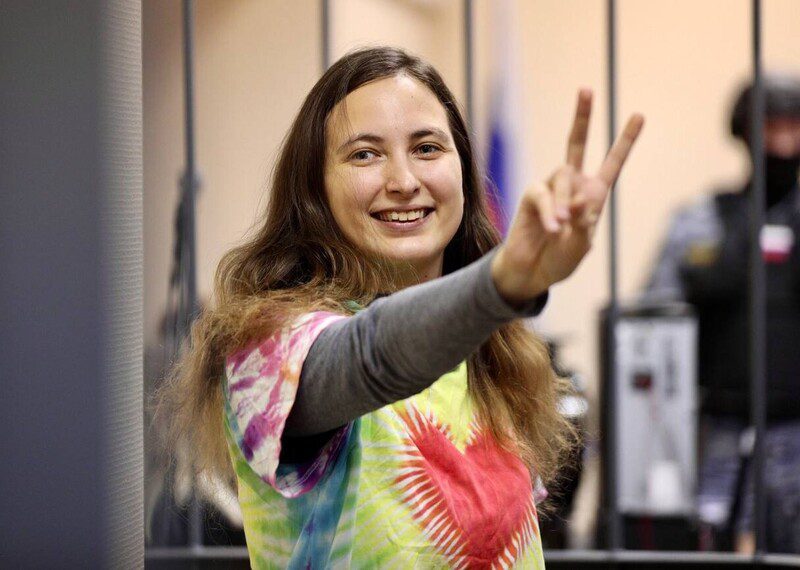
After huge public campaigning, artist and anti-war activist Aleksandra (Sasha) Skochilenko was freed in a historic prisoner swap in August 2024. The deal was brokered between Russia and Belarus on the one hand and Germany, Norway, Poland, Slovenia and the USA on the other.

Woman in rainbow tie-dye tshirt smiles and makes a v / peace hand gesture.
Aleksandra Skochilenko on the day of sentencing, November 16, 2023.

Rita Karasartova is a human rights defender and expert in civic governance from Kyrgyzstan. For over a decade she dedicated her life to providing independent legal advice, helping people whose rights had been violated. Charged with attempting to “violently overthrow the government”, which carries a maximum sentence of 15 years’ imprisonment, Rita and 21 other defendants were acquitted on 14 June 2024.   

In August 2017, Myanmar’s military unleashed a deadly crackdown on Rohingya Muslims – an ethnic minority who have faced decades of severe state-sponsored discrimination in Myanmar. Over 620,000 Rohingya fled to Bangladesh after security forces unleashed a campaign of violence, killing an unknown number of Rohingya; raping Rohingya women and girls; laying landmines; and burning entire Rohingya villages.  

Fearing for their lives, then 17-year-old Maung Sawyeddollah and his family walked 15 days to Bangladesh, where they reached Cox’s Bazar refugee camps. Fuelled by his desire to become a lawyer, Sawyeddollah wanted to seek justice for the suffering around him.

Alongside his studies, he started a campaign calling for Facebook’s owner, Meta, to take responsibility for the way its algorithms amplified anti-Rohingya incitement on the Facebook platform, fuelling the Myanmar military’s violence.  

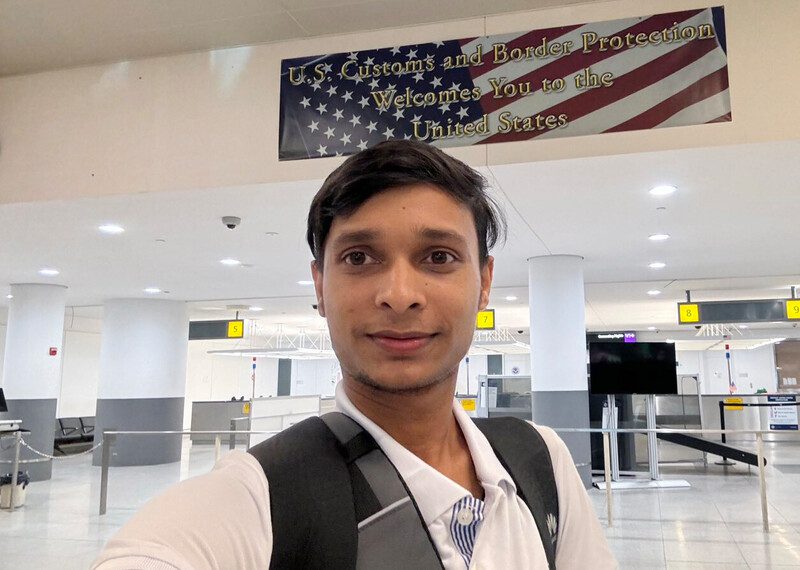
In 2023 Sawyeddollah was facing serious security risks in the refugee camps. Together with partners Victim Advocates International and Dev.tv, Amnesty International put together resources to help ensure Sawyeddollah’s safety. Through Amnesty’s Global Relief Team he was provided with urgent financial assistance to support his security needs throughout the year. In August 2024, Sawyeddollah was granted a student visa and moved to the USA to study. He landed in New York City on 19 August 2024, and he is now an international student at New York University.

Young person wearing a backpack taking a selfie in a US airport.
Maung Sawyeddollah, in New York, USA, 2024.

‘Foreign Agent’ Laws Spread, now also Georgia ?

April 8, 2024

Iskra Kirova, Advocacy Director, Europe and Central Asia Division of HRW, wrote on 4 April 2024: ‘Foreign Agent’ Laws Spread as EU Dithers to Support Civil Society

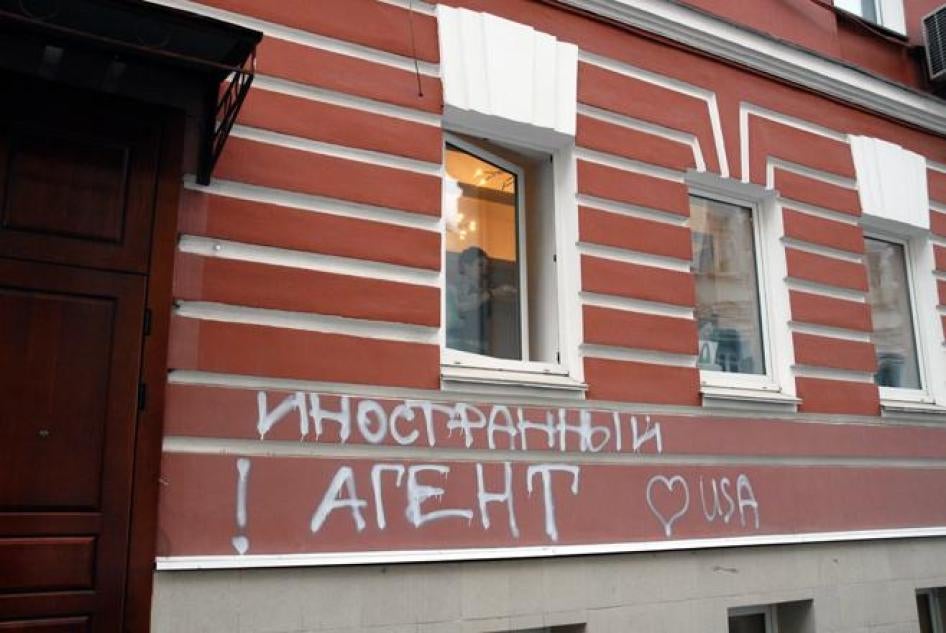
On the night before the infamous “foreign agents” law came into force back in 2012, unknown individuals sprayed graffiti reading, “Foreign Agent! ♥ USA” on the buildings hosting the offices of three prominent NGOs in Moscow, including Memorial. 
On the night before the infamous “foreign agents” law came into force back in 2012, unknown individuals sprayed graffiti reading, “Foreign Agent! ♥ USA” on the buildings hosting the offices of three prominent NGOs in Moscow, including Memorial.  © 2012 Yulia Klimova/Memorial

Georgia’s ruling party plans to reintroduce highly controversial Russia-style “foreign agent” legislation aimed at incapacitating civil society and independent media. If adopted, the laws, which were withdrawn last year in the face of massive protests, would require foreign-funded nongovernmental organizations and media to register as “agents of foreign influence”. That would make them subject to additional scrutiny and sanctions, including administrative penalties up to 25,000 GEL (about 8,600 Euro). Authorities claim the laws promote “transparency”, but their statements make it clear the laws will be used to stigmatize and punish critical voices.

Georgia was granted EU candidate status in December 2023 on the understanding it would improve conditions for civil society. This move risks derailing its EU integration even if the EU has until now been willing to move the country forward in the accession process despite limited progress on EU reform priorities. Georgia’s defiance of the EU on its civil society commitments isn’t so surprising when seen in the regional context. See also: https://humanrightsdefenders.blog/2024/03/24/kyrgyzstan-on-its-way-to-emulate-russia-with-a-draft-law-on-foreign-representatives-agents/

The day before Georgia’s announcement, Kyrgyzstan’s president signed an abusive “foreign representatives” law. Copied almost entirely from the Russian equivalent, the law would apply the stigmatizing designation of “foreign representative” to any nongovernmental organization that receives foreign funding and engages in vaguely defined “political activity”. The bill had been widely criticized after its initial submission in November 2022, including in a urgency resolution by the European Parliament.

The EU had ample opportunity to press the authorities to reject this bill. Kyrgyzstan benefits from privileged access to the EU internal market tied to respect for international human rights conventions: conventions this law clearly contravenes. The country is poised to sign an enhanced partnership agreement with the EU that centers democracy and fundamental rights. The EU has been silent on whether these deals would be imperiled by the bill’s adoption, despite the fact the European Commission’s own assessment highlighted Kyrgyzstan’s dire environment for civil society and the country’s breach of its obligations.

The latest spate of curbs on civil society comes in the wake of the European Commission’s December 2023 legislative proposal for an EU Directive on “transparency of interest representation” that would create a register of organizations which receive foreign funding. European civil society vehemently opposes the proposal because it risks shrinking space for independent organizations at home and diminishing the EU’s credibility in opposing such laws abroad. Yet the Commission forged ahead. On the same day the proposal was adopted, Hungary’s parliament approved a law that gives a government-controlled body broad powers to target civil society and independent media.

With civil society organizations under threat throughout Europe and Central Asia, we need an EU that in words and actions protects civic space and sets the right standards.

https://www.hrw.org/news/2024/04/04/foreign-agent-laws-spread-eu-dithers-support-civil-society

https://www.ohchr.org/en/press-briefing-notes/2024/04/kyrgyzstan-new-law-risks-undermining-work-ngos

https://news.un.org/en/story/2024/05/1149776

https://www.ohchr.org/en/press-releases/2024/05/georgia-un-experts-condemn-adoption-law-transparency-foreign-influence

and see this! https://oc-media.org/georgian-foreign-agent-law-protester-lazare-grigoriadis-found-guilty/

Kyrgyzstan (and Slovakia) on their way to emulate Russia with draft law on ‘foreign representatives (agents)’

March 24, 2024

On 21 March 2024, Nikkei Asia carried the story on Kyrgyzstan taking a page from Russia in pushing for a ‘foreign agents’ law

Kyrgyzstan: Veto the draft law on ‘foreign representatives’ - Civic Space

Kyrgyz President Sadyr Japarov faces a high-stakes decision on whether to sign new legislation that critics warn will significantly impair how human rights defenders and independent media, among others, can work in his mountainous Central Asian state. On March 14, Kyrgyzstan’s parliament voted overwhelmingly in favor of a “foreign agents” bill that mirrors legislation adopted in Russia over a decade ago. The law is designed to control the activities of nonprofit and nongovernmental organizations that receive funding from abroad by compelling them to register as “foreign representatives,” leading to closer scrutiny of their activities by the authorities.

Japarov has a month from that date to sign it into law. Many observers have been vocal in their opposition and are urging the president to veto the bill. Syinat Sultanalieva, Central Asia researcher at Human Rights Watch, told Nikkei Asia that this law “would see the further and sharper shrinking of civil society,” a sector that has been under attack in Kyrgyzstan for more than a decade. BUT see: https://www.aol.com/kyrgyzstan-adopts-law-targeting-foreign-100124498.html

In the meantime the Prague based NGO, People in Need, speaks out against the Slovakian government’s proposed measures to curb critical media and NGOs, which would mirror tactics employed by autocrats and dictators in places ranging from Russia to Latin America, It has raised concerns about the erosion of civil liberties and the stifling of dissent. In a move reminiscent of authoritarian regimes, officials seek to designate these entities as “foreign agents,” a term often utilised to suppress opposition voices. The Fico government has already taken steps to cut NGO funding, raising further alarms about the independence of civil society activities. Additionally, Culture Minister Martina Šimkovičová and Justice Minister Boris Susko have initiated cuts to subsidy programmes, redirecting funds away from NGOs to other areas, citing concerns about transparency and favouritism in grant allocation. The government’s actions have prompted backlash from NGOs, with 90 organisations signing a petition against the minister’s decisions. 

As an organisation with roots steeped in the freedom and civic movements of post-Cold-War Czechoslovakia, we are appalled to see the illiberal turn taken by the Slovak government. The Fico government’s proposal to impose a Russian-style foreign agents’ law is anathema to the shared goals of the Czech and Slovak people who fought to end the Russian subjugation of our homelands. This is of great concern and sadness to us at People in Need.  

https://www.peopleinneed.net/slovak-government-targets-ngos-with-proposed-foreign-agents-act-11299gp

On 21 March 2024, a large group of civil society organisations jointly called on the president of Kyrgyzstan, Sadyr Japarov, to veto the amendments to the Law on Non-commercial Organisations, known as the law on ‘foreign representatives’ which clearly violates the country’s international human rights obligations and would be a devastating blow the civil society. [see also: https://humanrightsdefenders.blog/tag/foreign-agent-law/]

We are writing to you on behalf of the undersigned civil society organisations from different countries to express support for Kyrgyzstan’s civil society and urge you to veto the amendments to the Law on Non-commercial Organisations, known as the law on ‘foreign representatives’, which parliament adopted on third reading on 14 March 2024. The proposed amendments fall seriously short of Kyrgyzstan’s international human rights obligations and risk delivering a devastating blow to its vibrant civil society. The amendments will impair civil society’s ability to carry out its important and legitimate work to the benefit of the people of Kyrgyzstan, and to promote public participation, transparency, accountability and good governance, thereby eroding democratic and human rights progress made by Kyrgyzstan with negative implications for its international reputation. Further, the proposed amendments will endanger international development and economic assistance programmes in the country, which will also undermine prospects for the achievement of sustainable development goals contrary to your government’s ambitious agenda in this area. Thus, we urge you to veto the amendments for the benefit of Kyrgyzstan and its people.

Both national and international human rights experts have concluded that the draft law on ‘foreign representatives’ clearly violates Kyrgyzstan’s international human rights obligations. For example, such conclusions were presented in a joint communication addressed to your government by three UN Special Rapporteurs, appointed by the UN Human Rights Council, of which Kyrgyzstan currently is a member. The three rapporteurs stated: ‘many provisions in the proposed law would be contrary to the international human rights obligations of the Kyrgyz Republic, including the right to the freedom of association, the right to freedom of opinion and expression, the right to non-discrimination and the right to privacy. If passed, this draft law could have a chilling effect on the operation of all associations in the Kyrgyz Republic, limiting their ability to advocate for human rights, provide social services, and contribute to the development of a robust and inclusive society.’

In an earlier legal assessment prepared at the request of Kyrgyzstan’s Ombudsperson, the OSCE Office for Democratic Institutions and Human Rights (ODIHR) found that the proposed provisions lack legitimate justification and do not meet the requirements of international human rights law for acceptable restrictions on the right to freedom of association. ODIHR also stressed that the key concepts of ‘foreign representatives’ and ‘political activities’ used in the draft law are inconsistent with the principle of legal certainty and predictability and ‘would allow unfettered discretion on the part of the implementing authorities’. ODIHR further found that the proposed provisions are contrary to the principle of non-discrimination and risk stigmatising organisations carrying out legitimate work and triggering mistrust, fear and hostility against them.

The draft law on ‘foreign representatives’ does not only violate your country’s international obligations but also contradicts provisions of the Constitution of the Kyrgyz Republic (including articles 36, 32, 24 and 29), which protect the right to freedom of association and other fundamental rights. In this way, the draft law challenges the legitimacy of the current Constitution, which was initiated by you and endorsed by citizens in a national referendum in 2021.

The proponents of the draft law on ‘foreign representatives’ have argued that it is aimed at ensuring the transparency of civil society organisations (CSOs). However, while transparency is an important issue, it is not a legitimate reason under international human rights law for imposing invasive, discriminatory, and stigmatising restrictions on CSOs. On the contrary, transparency can be ensured in ways that do not contradict international law nor hamper the work of CSOs. Moreover, all non-commercial organisations in Kyrgyzstan, including those that receive foreign funding, are already subjected to extensive state control and regularly report about their activities and finances to various state bodies, which ensures transparency of their work. In particular, amendments to the Law on Non-commercial Organisations, adopted in 2021, oblige non-commercial organisations to annually provide detailed information on their sources of funding, use of funds and assets for publication on the Tax Service’s website. This information is thus already publicly accessible.

Rather than increasing the transparency of non-commercial organisations, the draft law risks undermining civil society’s crucial role in assisting public bodies with the provision of support to vulnerable groups of the population, and also in promoting public sector transparency and accountability. Watchdog organisations have already warned of a significant decline in government transparency in Kyrgyzstan, preventing the exposure of wrongdoing and increasing the risk of corruption. This impairs foreign investments as well as economic growth and well-being in the country.

Kyrgyzstan’s international partners have warned that the adoption of the law on ‘foreign representatives’ would negatively affect development assistance programmes in the country. For example, in a joint statement issued on 14 March 2024, the Delegation of the EU to the Kyrgyz Republic and the Embassies of Canada, France, Germany, the United Kingdom, and the United States stated that the proposed provisions would ‘jeopardise our ability to provide assistance that improves the lives of the citizens and residents of the Kyrgyz Republic’. They stated that, if signed in its current form, the law ‘has the potential to hurt the most vulnerable who rely on the essential services – such as food, healthcare, and education – that non-profits and NGOs [non-governmental organisations] provide’. The UN Resident Coordinator in the Kyrgyz Republic pointed out that enacting the law would threaten civil society engagement in development initiatives and the achievement of UN Sustainable Development Goals (SDGs). Thus, the law contradicts the government’s aim of being among the top 30 countries in the realisation of SDGs by 2030.

The World Bank and the European Bank for Reconstruction and Development have also stressed the importance that they attach to CSO engagement for the success of their in-country operations, when commenting on NGO concerns about the draft law’s potential impact on the activities of international financial institutions in Kyrgyzstan.

As you know, as a beneficiary of the General Scheme of Preferences Plus (GSP+), the Kyrgyz Republic is required to effectively implement international human rights conventions, including the International Covenant on Civil and Political Rights (ICCPR) in return for trade benefits afforded by the EU. Thus, the adoption and enforcement of the law on ‘foreign representatives’ is likely to negatively affect these benefits. The European Commission’s recent GSP+ monitoring report on the Kyrgyz Republic highlighted shrinking space for civil society as a key area of concern and called for swift measures to reverse this negative trend in the light of the country’s ICCPR obligations. Moreover, in its resolution adopted in July 2023, the European Parliament called for a reassessment of Kyrgyzstan’s GSP+ benefits in view of recent developments, in particular draft legislation that runs counter to the country’s international human rights obligations.

We are aware that proponents of the draft law on ‘foreign representatives’ have argued that it is similar to the US Foreign Agent Registration Act (FARA). However, FARA differs from the proposed legislation in Kyrgyzstan in crucial respects. In particular, FARA is not targeted at non-commercial organisations that receive foreign funding. Instead, FARA requires persons who conduct certain activities ‘at the order’ or ‘under the direction or control’ of a foreign government or other foreign entity to register as an ‘agent of a foreign principal’ and periodically file supplementary information about their activities in this capacity. The purpose of FARA is to ensure the public disclosure of such information rather than to subject those registered under it to ongoing, invasive state control.

President Japarov, when you consider whether or not to sign the draft law on ‘foreign representatives’, you are deciding the fate of civil society in Kyrgyzstan. Will you opt for the path taken by authoritarian countries, where similar legislation has been used in campaigns to systematically dismantle independent civil society, with negative implications for the reputation, prosperity and well-being of these countries? Or for a more forward-looking, inclusive, and democratically-oriented approach under which CSOs are treated as important, respected partners who can work together with state bodies in addressing societal problems, and international partners retain their confidence in Kyrgyzstan’s commitment to sustainable development?

For the reasons outlined above, we urge you to refrain from signing the draft law on ‘foreign representatives’ and ensure that any new legislation impacting non-commercial organisations reflects Kyrgyzstan’s international human rights obligations and undergoes thorough and inclusive consultations with civil society, as well as national and international experts. When elaborating this type of legislation, it is crucial to take the opinions of CSOs directly affected by it into account.

Signed by the following organisations (listed in the order of signature):

International Partnership for Human Rights (IPHR), Belgium

IDP Women Association Consent, Georgia

Norwegian Helsinki Committee

Hungarian Helsinki Committee, Hungary

Legal Policy Research Centre, Kazakhstan

Public Association “Dignity”, Kazakhstan

Netherlands Helsinki Committee

Civil Rights Defenders, Sweden

Protection of Rights without Borders NGO, Armenia

Swedish OSCE-network

Helsinki Citizens’ Assembly – Vanadzor, Armenia

Center for Civil Liberties, Ukraine

Public Verdict, Russia

Turkmen Helsinki Foundation, Bulgaria

Crude Accountability, USA

Freedom Files, Poland

Human Rights Center “Viasna”, Belarus

Center for Participation and Development, Georgia

Human Rights Defence Center Memorial, Russia

Civic Assistance Committee, Russia

Austrian Helsinki Association

Bulgarian Helsinki Committee

Human Rights Center (HRC), Georgia

Macedonian Helsinki Committee

Sova Research Center, Russia

Promo LEX Association, Moldova

Helsinki Foundation for Human Rights, Poland

ARTICLE 19 Europe

FIDH (International Federation for Human Rights), within the framework of the Observatory for the Protection of Human Rights Defenders

World Organisation Against Torture (OMCT), within the framework of the Observatory for the Protection of Human Rights Defenders

Amnesty International

https://asia.nikkei.com/Politics/Kyrgyzstan-takes-page-from-Russia-in-pushing-foreign-agents-law
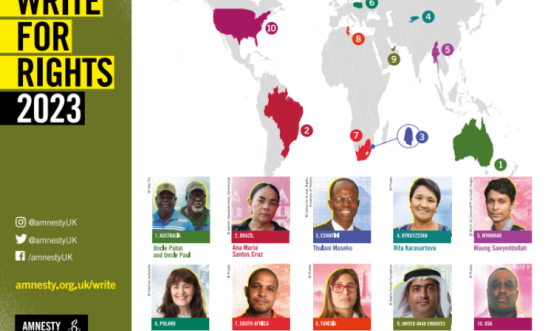
Write for Rights: Global letter writing campaign 2023 started

November 2, 2023

Amnesty International launched its flagship Write for Rights campaign to help people facing human rights abuses around the world. Millions of letters and emails will be sent to support these individuals and urge authorities to end injustices. While sending a letter may seem like a small gesture for any single one of us, the collective action of many of us has the potential to transform lives’ said Sacha Deshmukh, Chief Executive of Amnesty International UK.

Taking place across November and December, Write for Rights will see people around the world send millions of cards, emails and social media posts of solidarity to individuals whose fundamental rights are being threatened or denied, while urging those in power to put a halt to the abuses.

This year, the global Write for Rights campaign will focus on 10 cases of individuals and communities from across the world who are facing human rights violations, including:

  • Rocky Myers, a Black man, has been on death row in Alabama, USA, since 1994. A nearly all-white jury convicted and sentenced him to life without the possibility of parole for the murder of his white neighbour. The trial judge overrode their decision and imposed a death sentence – a practice now outlawed in Alabama. No evidence linked Rocky to the murder, except for a VCR stolen from the victim, which he maintains he had found abandoned in the street. In 2018, Rocky and others on death row were given 30 days to choose if they wanted to die by nitrogen gas asphyxiation or by amended lethal injection protocols. Rocky chose the former, and his execution could be reset as soon as the new protocol for execution by nitrogen gas asphyxiation is finalised and ready to be implemented, which is expected by the end of this year.
  • Rita Karasartova, a Kyrgyzstan-based human rights defender who works for the Institute of Civic Analysis – a human rights organisation and think-tank. Rita was arrested in October 2022 for joining group of activists who objected to a border demarcation agreement with Uzbekistan. After the group called for a public assembly and formed a committee to oppose the agreement, Rita and others were charged with attempting to violently overthrow the government, which carries a maximum sentence of 15 years imprisonment. Rita is now under house arrest and a strict curfew.
  • Ahmed Mansoor is a human rights defender and previously won the prestigious Martin Ennals Award for Human Rights Defenders in 2015. Ahmed has documented human rights abuses in the UAE since 2006, until he was arrested in early 2011 and March 2017, he was given a 10-year prison sentence. He has been held in solitary confinement since the beginning of his detention, and continues to be denied a mattress, access to books, and to be permitted to go out in a yard. See: https://humanrightsdefenders.blog/tag/ahmed-mansoor/ and https://www.trueheroesfilms.org/thedigest/laureates/074ACCD4-A327-4A21-B056-440C4C378A1A]
  • Justyna Wydrzyńska is a reproductive rights defender in Poland and is one of the co-founders of the Abortion Dream Team, an activist collective campaigning against abortion stigma and offering advice on accessing safe abortion in Poland, where abortion laws are among the most restrictive in Europe. In March 2023 Justyna was convicted to 8 months’ community service for helping a pregnant woman to access abortion pills in Poland, setting a dangerous precedent in a country where abortion is almost completely banned.

Amnesty International’s Write for Rights campaign dates back to the origins of Amnesty International in 1961. In the organisation’s early days, Amnesty campaigners wrote letters of support to individuals facing human rights violations. Now, Write for Rights is Amnesty’s flagship campaign, running every year to raise awareness about individuals whose rights are being seriously threatened.

Last year’s Write for Rights saw:

  • Over 5.3 million actions worldwide – of which at least 234,801 letters and cards were solidarity actions.
  • Letters were sent from around the world, from Zimbabwe to Hong Kong.
  • Amnesty’s International Secretariat digitally collected almost double the number of digital actions from 2021.

For 2021 see: https://humanrightsdefenders.blog/2021/11/08/write-for-rights-2021-launched/

https://www.amnesty.org.uk/press-releases/write-rights-global-letter-writing-movement-stands-victims-human-rights-abuses

Lawlor calls on Kyrgyzstan to stop harassment of human rights defender Kamilzhan Ruziev

November 12, 2021

Kyrgyzstan must investigate death threats against human rights defender Kamilzhan Ruziev instead of harassing him for making complaints against the police, said Mary Lawlor, the UN Special Rapporteur on the situation of human rights defenders “It is extremely disturbing that authorities began laying criminal charges against Mr. Ruziev after he exposed police torture and ineffectiveness, when they should actually be investigating the death threats made against him,”

As director of the non-governmental human rights organisation Ventus, Ruziev defends victims of torture, domestic violence, and discrimination. In 2019, a police investigator, whom Ruziev exposed for committing torture, reportedly threatened to kill him. When the State Committee for National Security and the Prosecutor’s Office failed to investigate the threats, Ruziev took them to court, only to find himself facing seven criminal charges.

“Kyrgyz authorities must give Mr. Ruziev a fair trial and effectively investigate all allegations of threats and ill-treatment against him and other human rights defenders,” she said. The next hearing on Mr. Ruziev’s case will be on 11 November 2021.

Lawlor said she was also disturbed by reports that Mr. Ruziev was ill-treated while held in detention for 48 hours in May 2020, and denied access to his lawyer.

“Now I hear that his health is deteriorating, and complaints to the authorities about violations committed against him continue to fall on deaf ears,” she added.

In a report to the Human Rights Council earlier this year on threats and killings of human rights defenders, Lawlor warned: “when a human rights defender receives death threats, swift action must be taken to prevent the threats from escalating. Impunity fuels more murders.”

Lawlor is in contact with the authorities of Kyrgyzstan on this issue, and stressed that “Kyrgyzstan must do better to safeguard the environment for human rights defenders to carry out their work.”

Her call was endorsed by: Ms. Tlaleng Mofokeng, Special Rapporteur on the right to physical and mental health.

https://www.miragenews.com/investigate-death-threats-against-human-rights-664761/

Sex workers fighting for human rights among world’s most at risk activists

August 20, 2021

On 12 August 2021 Front Line Defenders came out with an unique report saying rights defenders working in sex industry face ‘targeted attacks’ around the world. The same day Sarah Johnson devoted a piece to it in the Guardian:

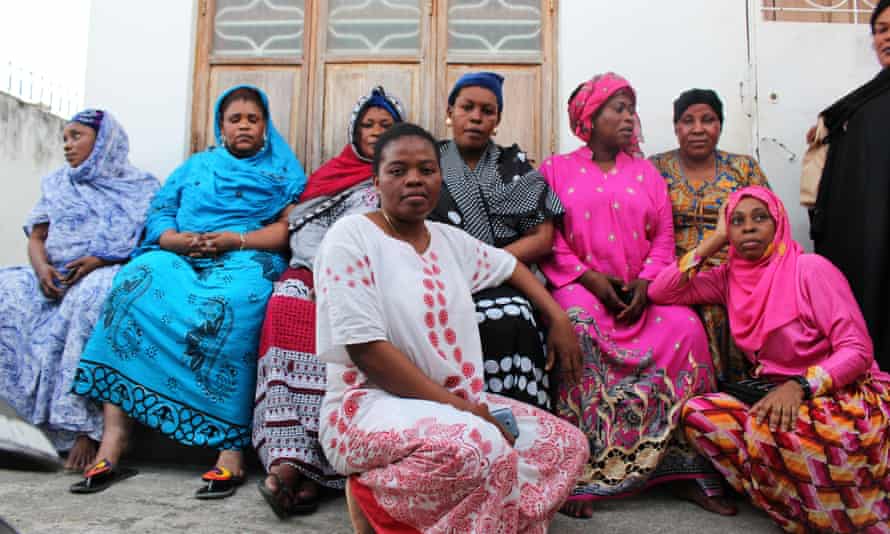
Sex worker rights defenders from Yosoa in Zanzibar, Tanzania. Yosoa conduct health outreach and provide support after police, client or family violence.

Sex worker rights defenders from Yosoa in Zanzibar, Tanzania. Yosoa do health outreach work and provide support after police, client or family violence. Photograph: Erin Kilbride/Front Line DefendersRights and freedom is supported by

Humanity United

Sex worker activists are among the most at risk defenders of human rights in the world, facing multiple threats and violent attacks, an extensive investigation has found.

The research, published today by human rights organisation Front Line Defenders, found that their visibility as sex workers who are advocates for their communities’ rights makes them more vulnerable to the violations routinely suffered by sex workers. In addition, they face unique, targeted abuse for their human rights work.

Drawing on the experience of 300 individuals in Tanzania, Kyrgyzstan, El Salvador and Myanmar, the report focuses oncases of sexual assault, threats from managers and clients, raids on homes and offices, physical attacks and police surveillance endured by sex workers undertaking human rights work.

The services the activists provide to fellow sex workers include: negotiating access to brothels, conducting gender rights training, offering legal and health counselling, reporting experiences of violence, and campaigning for freedom of movement and free choice of employment for those seeking to leave sex work.

Erin Kilbride, research and visibility coordinator at Front Line Defenders and lead author of the report, said: “Sex worker rights defenders take extreme personal risks to protect their communities’ rights to access justice, healthcare, housing and food, while responding to the immediate threats of police and domestic violence, discrimination, criminalisation and structural poverty.”

Often these activists were the only people able and willing to provide health education in locations in which sex was sold, the report found. They ensured treatment for sex workers who would otherwise be left with crippling injuries and life-threatening illnesses.

Activists’ role in creating community networks and defending sex workers’ right to assemble were also highlighted in the repot. “Coming together, even in private, is a radical, resistant, and dangerous act for defenders whose very identities are criminalised,” it said.

Defenders interviewed said they had been subjected to violations above and beyond what are typical for sex workers in their area. These included torture in prison, threats by name on the street, targeted abuse on social media and demands for sex in exchange for an advocacy meeting with a police commissioner. They also faced attacks from clients….

In Tanzania, sexual assaults in detention by the police have become a common occurrence for sex workers. They are often forced to perform sex acts in exchange for release. But human rights defenders have also been forced to perform sexual acts in order to secure other sex workers’ release. If they refuse, they are often tortured. One woman was given electric shocks after she refused to perform sex acts during a one-week detention related to her human rights work.

In El Salvador and other countries, physical attacks by clients and managers began after they learned about a sex worker’s activism, said the report.

In Myanmar, police followed activists to brothels to conduct raids duringhuman rights trainings. Some activists had been forced to change where they sell sex because police surveillance increased after they became known for their human rights work.Advertisement

Activists were often belittled at police stations in front of the sex workers they had tried to help. Htut, an outreach worker for Aye Myanmar Association, a network of sex workers, said: “[The police] let us in to the stations but then use rude words, take money from us, insult us, embarrass us, and made me feel bad about myself. It feels like they want to prove to the other sex workers that being an advocate is a humiliating thing.”

In Kyrgyzstan, sex workers have been paid or threatened by the police to help entrap rights defenders when they go to an area to distribute health supplies.

Despite the overwhelming evidence that sex worker activists have been under threat for their human rights work, much of it is dismissed by people ranging from the police to their own families, who assume such attacks are a result of being a sex worker.

Kilbride said: “Human rights defenders who are sex workers themselves are the best, and sometimes the only, activists and communities workers qualified and capable of accessing the most dangerous locations in which people sell sex.

The targeted attacks they experience – ranging from sexual assault in detention to raids on their homes and offices – are indicators of how powerful their human rights work is.”

https://www.theguardian.com/global-development/2021/aug/12/sex-workers-fighting-for-human-rights-among-worlds-most-at-risk-activists

https://www.frontlinedefenders.org/en/statement-report/first-global-report-sex-worker-rights-defenders-risk

Documentary Film Calls for Justice for Kyrgyzstan’s Azimjon Askarov

June 3, 2021
Azimzhan Askarov Pictured here during hearings at the Bishkek regional court, Kyrgyzstan, October 4th, 2016.  
Ethnic Uzbek journalist Azimzhan Askarov. Pictured here during hearings at the Bishkek regional court, Kyrgyzstan, October 4th, 2016.© 2016 AP

Philippe Dam, Advocacy Director, Europe and Central Asia Division of Human Rights Watch, on 2 June 2O21, writes aavout Azimjon Askarov, a 69-year-old human rights defender from Kyrgyzstan, who died in prison after contracting pneumonia. Askarov had been in prison for 10 years, having been given a life sentence following an unjust and unfair trial in 2010, in retaliation for his investigations into the tragic wave of inter-ethnic violence that year in southern Kyrgyzstan. [see: https://www.trueheroesfilms.org/thedigest/laureates/D8B31FA3-E648-4F92-81B9-8C3A4270F80E]

His death was the result of cruelty and negligence by Kyrgyz authorities. A screening this week of a documentary about Askarov, to be attended by senior European Union officials, is a reminder to Kyrgyzstan that it is responsible for his death and needs to show accountability and to the EU to press Bishkek on this issue. See also: https://humanrightsdefenders.blog/2020/07/31/mary-lawlor-calls-death-of-human-rights-defender-askarov-a-stain-on-kyrgyzstans-reputation/

Askarov’s trial in 2010 was marred by serious procedural violations and allegations of torture that were never investigated. A United Nations human rights body ruled in 2016 his detention was illegal and called for his immediate release, but Kyrgyz authorities looked the other way.

Since his death, many have called for a full inquiry into the causes and responsibilities for his death.  A toothless internal inquiry ordered by Kyrgyzstan has gone nowhere. The documentary “Last Chance for Justice,” by filmmaker Marina Shupac, is a touching portrayal of the fight by Khadicha Askarova, Askarov’s wife, for justice and his release from prison.

The screening is on June 4 as part of the One World Film Festival in Brussels. The panel discussion of the film will be joined by Eamon Gilmore, the EU’s top human rights envoy; Heidi Hautala, a European Parliament vice-president; and a representative of the Office of the EU’s Special Representative to Central Asia.

On the same day as the screening, the EU is set to hold its highest-level annual meeting with Kyrgyz officials. This is a crucial opportunity for the EU to make it clear that closer ties with Kyrgyzstan will depend on the resolve of Kyrgyzstan President Japarov’s administration to investigate Askarov’s death, clean up his judicial record, and grant compensation to his family.

This week’s high-profile screening makes clear: Kyrgyzstan will continue to be in the international spotlight on Askarov until it fulfils its human rights obligations to account for his death.

https://www.hrw.org/news/2021/06/02/documentary-calls-justice-kyrgyzstans-azimjon-askarov

Mary Lawlor calls death of human rights defender Askarov a stain on Kyrgyzstan’s reputation,

July 31, 2020

The death in prison of human rights defender Azimjan Askarov, who for 10 years had unsuccessfully challenged his life sentence, shows a cruel disregard for human rights in Kyrgyzstan, says said Mary Lawlor, UN Special Rapporteur on the situation of human rights defenders.[see: https://humanrightsdefenders.blog/2020/07/26/kyrgyzstan-activist-askarov-dies-in-prison-after-decade-battling-tainted-conviction/

I was deeply saddened to hear the news of Mr. Askarov’s death, despite multiple requests for his release on humanitarian grounds as his health deteriorated significantly in prison,”

Although the Kyrgyz Government shared detailed information on court proceedings and medical care afforded to Askarov, she criticized the government for not taking concerns about his health seriously.

“We learned in June that, in the midst of COVID-19, and despite his age and pre-existing conditions, Mr. Askarov did not qualify for early release under Kyrgyz law,” Lawlor said. “I now question whether more could have been done to protect his health.”

In the days before Askarov’s death, his lawyer made a number of urgent medical appeals to authorities after the 69-year-old fell ill with a cough, fever, aches and pains, and had difficulty eating and walking. It was only on 24 July 2020, when he had already been sick for 10 days, that he was transferred to a prison medical facility, where he died the following day.

“Mr. Askarov’s case should act as a reminder to all states of the serious and grave threat that prisoners in at-risk categories face during the COVID-19 pandemic,” she said. She stressed that human rights defenders and all those detained without sufficient legal basis, or most at risk of the virus, should be released…

Lawlor’s call has been endorsed by the Special Rapporteur on minority issues, Fernand de Varennes; the Special Rapporteur on the independence of judges and lawyers, Diego García-Sayán; and the Special Rapporteur on torture and other cruel, inhuman or degrading treatment or punishment, Nils Melzer.

https://akipress.com/news:646397:Death_of_human_rights_defender_Azimjan_Askarov_a_stain_on_Kyrgyzstan_s_reputation,_says_UN_expert/

Kyrgyzstan: Activist Askarov dies in prison after decade battling tainted conviction

July 26, 2020

Jul 25, 2020 Rights activist Azimjan Askarov, seen here holding one of his self-portraits in his basement prison cell in February 2012. (Photo: Nate Schenkkan) Rights activist Azimjan Askarov, seen here holding one of his self-portraits in his basement prison cell in February 2012. (Photo: Nate Schenkkan)

EURasia.net of 25 July 2020 gives the sad new that Azimjan Askarov, a celebrated ethnic Uzbek humn rights defender, husband to Hadidja Askarova, has died in prison at the age of 69.

The news of his death on July 25 was confirmed by his longtime friend, supporter and fellow activist Tolekan Ismailova and his lawyer, Valeryan Vakhitov. He had suffered from poor health for much of his 10 years in prison, but his condition worsened significantly in the past two weeks. Vakhitov, who visited Askarov in prison only a few days before his death, said his client had lost his appetite, that his skin “looked yellowish in color,” and that he was unable to move unaided.

On July 24, prison officials dismissed those concerns and the reports of Askarov’s ill-health as “inaccurate information.” [https://www.rferl.org/a/jailed-rights-activist-askarov-transferred-to-different-kyrgyz-prison-amid-reports-of-poor-health/30745718.html]

Although the likelihood of Askarov’s imminent death had been widely anticipated, the actual event has stunned his longtime colleagues and the rights community.

I am devastated. When we saw one another for the last time, they brought him to me in their arms. I told him: ‘Please hang on, we love you,’ and he began crying. He seemed to feel something,” Vakhitov told Kloop news website.

Askarov was arrested on June 15, 2010, in the immediate aftermath of a deadly whirlwind of ethnic unrest in southern Kyrgyzstan that killed hundreds, mostly ethnic Uzbeks.

In the days, weeks and months that followed that bloodshed, security services mainly targeted ethnic Uzbeks for investigations, arrests and systematic harassment. Askarov was among the first to be singled out for this treatment.

He was charged with purported involvement in the killing of a police officer on June 13, 2010, in the southern town of Bazar-Korgon. Immediately after his arrest, Askarov was beaten, subjected to abuse and denied access to his lawyer. He spoke about some of that mistreatment in an interview with Eurasianet in 2012, two years into his life sentence.

“They nearly killed me,” he said, referring to local police. “They held my arms behind my back, and took a weight filled with water, and hit me with it [in the stomach]. They hit me over the head with it so that huge lumps rose up.” He also said he saw witnesses beaten bloody to force them to testify against him….

In 2016, the Office of the United Nations High Commissioner for Human Rights found that Kyrgyzstan had in its treatment of Askarov violated multiple articles of the International Covenant on Civil and Political Rights.

Askarov’s initial criminal trial, as well as subsequent appeals, have been decried by legal experts as miscarriages of justice. Many supposed witnesses were intimidated into giving testimonies and people who would have spoken in his defense were denied that opportunity. Perhaps most ominously, hearings were routinely attended by relatives of the alleged murder victim, who openly threatened Askarov and his legal team with death. This pattern repeated over many years.

But as Philip Shishkin, a journalist, noted in his 2013 book Restless Valley, “of the many interesting things about the case, one detail stands out: the verdict relies heavily on the testimony of a half dozen policemen who had reasons to dislike Askarov even before his alleged participation in the murder of their colleague.”

Much of his 15 years of activism was focused on highlighting and documenting allegations of police abuse in his native Bazar-Korgon, including by some of the officers that then pursued his case…

In one typical rebuttal of criticism from 2015, the Foreign Ministry asserted that “the decision of the court was taken on the basis of undeniable evidence, Askarov’s guilt has been proven in all instances.”

“The Kyrgyz Republic stands for the supremacy of the law. The justice system is an independent branch of power,” the ministry said at the time.

There is strong reason to believe, however, that the government allowed itself to be taken hostage by the same kind of combustible, deeply violence-prone nationalist elements that lay behind the ethnic bloodshed of June 2010. Many notorious criminals have been allowed to walk free from prison in Kyrgyzstan over the decades, but as officials saw it, affording that same treatment to Askarov would have threatened to spark another cycle of unrest, immaterial of the legal particulars.

This reading was all but confirmed in an interview given to Eurasianet in 2018 by Roza Otunbayeva, who was interim president at the time of the ethnic unrest and Askarov’s arrest. Asked about the Askarov case, she evinced regret, but concluded that “it was a decision of our court. And this court’s decision was [upheld].” She did, however, have the authority to issue a pardon, which she declined to do.

“It was a decision that [would] again [have broken] the country,” she told Eurasianet. “I mean, the stability of the country, political consensus within the country was very much bound to such a touchy issue. And it was a very high price.”

See also: https://humanrightsdefenders.blog/2015/07/23/fury-about-us-award-for-askarov-in-kyrgyzstan-backlash-or-impact/.

https://eurasianet.org/kyrgyzstan-activist-askarov-dies-in-prison-after-decade-battling-tainted-conviction