Posts Tagged ‘joint statement’

23 rights groups call for release of Istanbul Bar board member Fırat Epözdemir

February 7, 2025
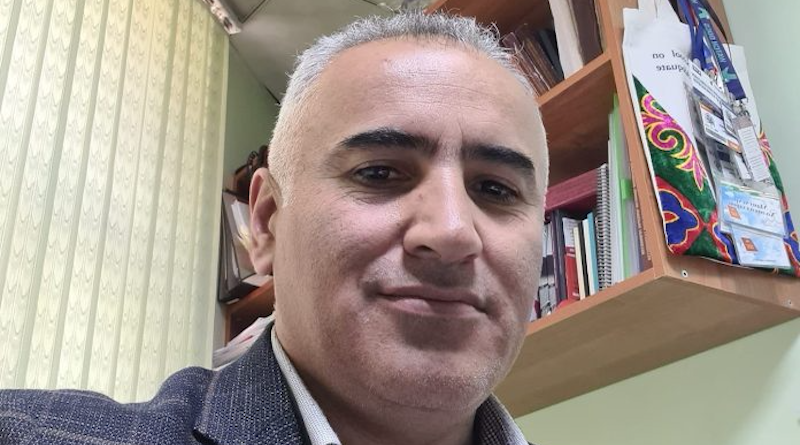
Photo: Evrensel

Twenty-three human rights organizations have called for the immediate release of İstanbul Bar Association executive board member Fırat Epözdemir, who was arrested last week over alleged ties to the outlawed Kurdistan Workers’ Party (PKK), the Media and Law Studies Association reported February 3, 2025,

Advocacy groups condemned his detention as unlawful and part of a broader crackdown on human rights defenders and legal professionals in Turkey.

The Human Rights Defenders Solidarity Network (İHSDA) issued a statement denouncing Epözdemir’s arrest and urging authorities to drop the charges. The statement, signed by multiple rights organizations, emphasized that targeting lawyers and human rights advocates with judicial harassment is unacceptable.

Epözdemir was arrested Saturday by an İstanbul court on charges of “membership in an armed terrorist group” and “disseminating terrorist propaganda.”

Prosecutors in İstanbul accuse Epözdemir of joining a PKK-linked WhatsApp group in 2015, during the peak of clashes between Kurdish militants and Turkish security forces in the country’s predominantly Kurdish southeast.

The PKK has waged an armed insurgency against the Turkish state since 1984, a conflict that has left more than 40,000 people dead. 

Epözdemir’s legal team has faced severe restrictions in accessing case files due to a confidentiality order, preventing them from reviewing the evidence against him. Authorities also imposed a 24-hour ban on lawyer visits without providing a clear justification, raising concerns of due process violations.

The joint statement criticized the prosecution’s reliance on a decade-old public event and phone conversations as grounds for Epözdemir’s arrest, calling the charges baseless and politically motivated.

His detention, rights groups argue, is an attack on the legal profession and human rights advocacy in Turkey. They linked his arrest to broader efforts to suppress dissent, noting that members of the İstanbul Bar Association have faced mounting pressure after issuing a statement regarding two journalists killed in Syria.

“Lawyers and bar associations must not be criminalized for their advocacy and defense of fundamental rights,” the statement said. “We reject all attempts to silence human rights defenders and demand the immediate and unconditional release of Fırat Epözdemir.”

Among the signatories were the MLSA, the Human Rights Association (İHD), Civil Rights Defenders, the Turkish Human Rights Foundation (TİHV) and numerous other civil society organizations.

UN special rapporteurs note human rights violations against Gülen movement in Turkey – Erdogan disagrees vehemently

December 7, 2024

The Turkish government has refused to respond to allegations of systematic repression against individuals allegedly affiliated with the Gülen movement made by United Nations special rapporteurs, according to official documents published on Friday by the Office of the United Nations High Commissioner for Human Rights.

In a joint letter dated October 7, 2024, seven UN special rapporteurs asked the Turkish government about alleged measures of “systematic repression against persons ostensibly affiliated with the Gülen Movement through the misuse of counter-terrorism legislation, and the concomitant impact on civil society, human rights defenders, political dissidents, and journalists.”

The allegations center on Turkey’s treatment of people allegedly associated with the faith-based Gülen movement, inspired by the late Muslim cleric Fethullah Gülen.

In its response via a diplomatic note dated October 30, the Turkish government refrained from answering the allegations brought up by the special rapporteurs and instead listed their accusations against the Gülen movement and requested the “Special Procedures of the Human Rights Council not to allow FETÖ and its members to abuse these mechanisms, and to dismiss their allegations.”

FETÖ is a derogatory acronym used to refer to the Gülen movement as a terrorist organization.

Turkish President Recep Tayyip Erdoğan has been pursuing followers of the Gülen movement since corruption investigations revealed in 2013 implicated then-Prime Minister Erdoğan and some members of his family and his inner circle.

Dismissing the investigations as a Gülenist coup and conspiracy against his government, Erdoğan designated the movement a terrorist organization and began to target its members. He intensified the crackdown on the movement following an abortive putsch in 2016 that he accused Gülen of masterminding. The movement has strongly denied involvement in the coup attempt or any terrorist activity.

The rapporteurs outlined practices they say violate international human rights laws, including arbitrary arrests, torture, transnational renditions and surveillance abuses.

The UN Rapporteurs said these individuals face intensified crackdowns involving mass detentions, forced disappearances and unjust prosecutions under vague anti-terrorism laws. Between June 2023 and June 2024, more than 8,800 people were detained and 1,500 were charged with terrorism offenses, they said.

Among the rapporteurs’ chief concerns was the treatment of children detained as part of these operations. In May 2024, 16 children were arrested in İstanbul and allegedly subjected to psychological pressure, physical torture and denial of legal counsel. The UN rapporteurs described these actions as clear violations of international protections for children under the Convention on the Rights of the Child.

The rapporteurs also criticized Turkey’s use of public “grey lists,” wanted lists where individuals — ranging from journalists to human rights defenders — are labeled as terrorists, often without evidence or due process. These lists, which include photos and personal details, are made public alongside monetary rewards for information leading to their capture. This practice, according to the rapporteurs, endangers lives, undermines freedoms and creates a “hitman economy.”

Another key concern involved transnational renditions. The rapporteurs alleged that Turkey has systematically abducted and forcibly returned suspected Gülen affiliates from other countries under vague bilateral security agreements. Victims were reportedly detained in secret, subjected to torture and coerced into confessions used in prosecutions.

The misuse of surveillance powers also drew heavy criticism. Turkey’s intelligence agency was accused of fabricating evidence from the ByLock messaging app to convict thousands of people on tenuous charges of affiliation with the Gülen movement. The UN noted that such actions lack due process and violate privacy rights under international law.

The rapporteurs called on Turkey to address these alleged violations, halt ongoing abuses and ensure compliance with international human rights standards. They expressed particular concern about the government’s expansive interpretation of anti-terrorism laws, which they argue target legitimate political activity, dissent and human rights advocacy.

The letter was authored by seven UN special rapporteurs and a UN expert, including Mary Lawlor, special rapporteur on the situation of human rights defenders; Alice Jill Edwards, special rapporteur on torture and other cruel, inhuman or degrading treatment or punishment; and Fionnuala Ní Aoláin, special rapporteur on the promotion and protection of human rights while countering terrorism. Other contributors included Gabriella Citroni, chair-rapporteur of the Working Group on Enforced or Involuntary Disappearances and Irene Khan, special rapporteur on freedom of opinion and expression.

Soltan Achilova again banned from traveling to receive her award

November 21, 2024

The undersigned human rights organisations, which together represent the Jury for the Martin Ennals Award for Human Rights Defenders, condemn the continued harassment against 2021 Martin Ennals Award Finalist and woman human rights defender from Turkmenistan, Soltan Achilova. This morning, Soltan Achilova and her daughter were once again prevented from travelling to Geneva. As in 2023, Soltan Achilova was set to be recognized for her valuable contributions to the documentation of human rights violations in Turkmenistan by the Martin Ennals Foundation.

Soltan Achilova is a woman human rights defender and journalist, who continues to work in Turkmenistan, one of the most repressive and isolated countries in the world, ranking 176th out of 180 countries in terms of press freedom and working conditions for journalists. She has been reporting about her country for over a decade. Her pictures of daily life are one of the few sources of documentation of human rights violations occurring in Turkmenistan. As a result of this work, she remains under constant surveillance by Turkmen authorities and has suffered numerous incidents of harassment, intimidation, and threats. Despite the challenges, Soltan Achilova persists in her human rights work, regularly sending information and pictures outside the country so that government authorities can be held accountable. [see: https://humanrightsdefenders.blog/tag/soltan-achilova/]

On the morning of 20 November 2024, Soltan Achilova and her daughter Maya Achilova were scheduled to travel from Ashgabat to Geneva, to participate in the Martin Ennals Award ceremony. At 6:30 a.m. local time, according to the information received by the Martin Ennals Foundation, a group of law enforcement officers pushed Soltan Achilova, her daughter and her daughter’s husband into an ambulance and brought them to the specialised hospital “Infectious Disease Control Centre” in the Choganly neighbourhood of Ashgabat, located near the Ashgabat International Airport. Maya Achilova reported to the Foundation that her husband, her mother and herself are being retained at the medical facility, guarded by the security forces, and that one of the security service agents is in possession of the keys to Soltan Achilova’s apartment. Thereby, Turkmen authorities have once again prevented Soltan Achilova from travelling to Geneva, Switzerland, where she would finally be recognized as a Finalist of the 2021 Martin Ennals Award for her documentation of land grabs and forced evictions of ordinary citizens in Ashgabat.

Turkmen authorities have prevented woman human rights defender Soltan Achilova from traveling freely outside of her country on several occasions; the latest occurring as recently as November 2023. In the early hours of 18 November 2023, Soltan Achilova and her daughter were stopped by Turkmen government officials from boarding their flight to Switzerland. A customs official took their passports, wet them with a damp rag and declared the passports to be ruined, preventing Soltan and Maya Achilova from boarding the plane. Despite receiving assurances at high-level from Turkmen authorities that Soltan Achilova would not be prevented from traveling once again, the authorities continue to harass the woman human rights defender with travel restrictions and arbitrary detention.

The human rights organisations that make up the Jury of the Martin Ennals Award, as well as the Martin Ennals Foundation, once again condemn Turkmen authorities for their continued harassment of woman human rights defender and photojournalist Soltan Achilova and her family members and call for their immediate release. The organisations jointly call upon the Turkmen authorities to provide all the necessary assistance to enable her travel outside of Turkmenistan. Finally, the organisations renew their calls for Turkmenistan to fully implement their human rights obligations, including, inter alia, allowing human rights defenders and journalists to conduct their work without fear of reprisals.

Following the writing of this statement, an article containing further details was published by the Chronicles of Turkmenistan, an online publication of the Turkmen Initiative for Human Rights, which, according to its author, has also been in contact with Soltan Achilova’s family.

Signatories:

Amnesty International

Human Rights Watch

World Organisation Against Torture (OMCT)

International Service for Human Rights (ISHR)

International Federation for Human Rights (FIDH)

HURIDOCS

Human Rights First

Front Line Defenders

Brot für die Welt

International Commission of Jurists

The Martin Ennals Foundation

https://www.frontlinedefenders.org/en/statement-report/turkmen-authorities-yet-again-prevent-woman-human-rights-defender-and-2021-martin

https://www.reuters.com/world/journalist-seized-turkmenistan-ahead-swiss-award-ceremony-say-rights-groups-2024-11-21/

Results of the 56th sesion of the UN Human Rights Council

August 6, 2024

At the 56th Human Rights Council session, civil society organisations share reflections on key outcomes and highlight gaps in addressing crucial issues and situations.[see:https://humanrightsdefenders.blog/2024/06/12/human-rights-defenders-issues-at-the-56th-session-of-the-un-human-rights-council/

States have an obligation to pay UN membership dues in full and in time. The failure of many States to do so, often for politically motivated reasons, is causing a financial liquidity crisis, meaning that resolutions and mandates of the Human Rights Council cannot be implemented. This is a breach of legal obligations, a betrayal of victims and survivors of violations and abuses, and a waste of the time and resources we have collectively invested over the last 4 weeks. The cuts to Special Procedures’ activities, including fewer country visits and the cancellation of the annual meeting, greatly limit rights holders’ ability to engage with mandate holders and it hinders their access to situations on the ground, and their engagement with domestic authorities for human rights change. Pay your dues!

We deplore the double standards in applying international law and the failure of certain States to push for accountability and ending impunity for all atrocity crimes, when these involve geopolitical interests, despite the clear relevance to thematic principles they endorse. We also deplore initiatives and threats by some States to undermine or sanction the vital work of international justice and accountability bodies, including the International Court of Justice and the International Criminal Court. This undermines the integrity of the framework, the legitimacy of this institution, and the credibility of those States. From Afghanistan to China, to Eritrea to Myanmar, to Palestine to Sri Lanka, to Sudan to Ukraine, resolving grave violations requires States to address root causes, applying human rights norms in a principled and consistent way. States promoting or supporting thematic resolutions must apply these same principles universally, including in their approach to country-specific issues. The Council has a prevention mandate and States have a legal and moral duty to prevent and ensure accountability and non-recurrence for atrocity crimes, wherever they occur.  We urge all States to implement resolutions consistently, both nationally and internationally, and to align their actions with the universal human rights standards they claim to uphold, especially in responding to atrocity crimes. We urge States to enhance objective criteria for action, with predictable parameters, consistent actions and a demonstrable way forward to addressing human rights crises.

We welcome the renewal of the mandate of the Expert Mechanism to Advance Racial Justice and Equality in the Context of Law Enforcement (EMLER) by consensus. We welcome the resolution’s request to strengthen the administrative and substantive support to the Mechanism, and to provide the resources necessary for it to effectively fulfill its mandate. This renewal is a recognition of the value of its unique work over the past three years, as well as the need for experts to continue investigating States’ law enforcement practices and their impact on Africans and Afrodescendant people and communities, including the legacies of colonialism and transatlantic slave trade in enslaved Africans. As recognised by the resolution, systemic racism particularly, against Africans and people of African descent needs a systemic response. In this regard, EMLER’s reports offer a powerful tool for much-needed transformation that governments everywhere should implement. We urge States to ensure full cooperation with EMLER towards the effective fulfillment of its mandate, including by implementing its recommendations and responding promptly to its requests for information and country visits.

This session was again marked by increasing attempts at retrogression on well-established human rights standards pertaining to sexual and reproductive rights and other thematic issues related to gender and sexuality. Nevertheless, civil society organisations continue to work together across movements to ensure the resilience of the multilateral system and the upholding of human rights standards. Out of the 26 draft resolutions presented this session, 5 had a stronger focus on gender and sexuality issues and took important steps in developing human rights standards in these areas. Specifically, we welcome the adoption of the resolution on HIV, the resumption of the tradition of adopting this resolution by consensus and the inclusion of a reference to sexual and reproductive health and rights. We welcome the adoption of the resolution on the Elimination of all forms of discrimination against women and girls requesting human rights-based, gender-responsive and intersectional approaches to poverty reduction; while also expressing concern at the multiple attempts to weaken the resolution which the strongest human rights standards on women and girls are reflected, including through amendments. We also welcome the new resolution on Technology-facilitated gender-based violence, the procedural resolution on Accelerating progress towards preventing adolescent girls’ pregnancy and the resolution on menstrual hygiene management, human rights and gender equality.

We welcome the adoption of the resolution on Eritrea, renewing the Special Rapporteur’s mandate.

The resolution on the situation of Rohingya Muslims and other minorities is essential to keep the situation of Rohingya high on the agenda of the Council. However, the resolution’s calls for repatriation of Rohingya refugees to Myanmar in the current context where remaining Rohingya in Myanmar are once again confronting the dire prospects of recurrence of grave atrocities they faced in 2016 and 2017 contradict and undermine the fundamental objectives of the resolution to ensure protection of Rohingya and to create conditions for their safe, voluntary, dignified and sustainable return.

We welcome that the Council decided to devote its annual resolution on climate change and human rights to address just transition. However, we regret that some fundamental points are missing in the resolution. The recognition of the right to a clean, healthy and sustainable environment by the Human Rights Council (res 48/13) and the General Assembly (res 76/300) has been a landmark achievement. Yet, we regret to see that once again, the resolution on human rights and climate change has failed to include this right more explicitly. Parties to the UNFCCC have already acknowledged that when taking action on climate change, States should respect, promote and consider the right to a clean, healthy and sustainable environment, among other rights (decision 1/CP.27). This resolution also failed to call upon States to transition away from fossil fuels. As has been repeatedly stated by the UN Secretary General, the High Commissioner for Human Rights, and several Special Rapporteurs, fossil fuels are the root cause of the triple planetary crisis, and the main driver of climate change. Despite the support expressed by numerous delegations, this resolution is deliberately silent in recognizing the positive, important, legitimate and vital role that environmental human rights defenders play in the promotion and protection of human rights and the environment. As recognized by the HRC resolution 40/11, EHRDs are one of the most exposed and at risk around the world. Many of these attacks include Indigenous Peoples and defenders raising concerns about climate related projects, transition minerals mining and renewal projects. We will not have a just transition in the context of climate change without listening and consulting EHRDs. It is time that the annual resolutions on human rights and climate change align itself to the recent developments and strongly reaffirm a commitment to effective, rights- and science-based climate action.

We welcome the Council’s continued efforts to address the human rights impacts of arms, including by highlighting human rights obligations of States and responsibilities of the arms industry and other businesses contributing to its operations. The adoption of the resolution on human rights and the civilian acquisition, possession and use of firearms is another significant contribution to these efforts. The OHCHR report requested by the resolution, —which will explore the root causes and risk factors of firearms-related violence and its impact on the enjoyment of the right to participation, particularly of individuals in vulnerable or marginalised situations, — presents a key opportunity to highlight critical concerns surrounding civilian firearms and their broader human rights impacts and to promote an effective response to these concerns.

We welcome a new resolution on freedom of opinion and expression, which rightly highlights how this right is an enabler for all other human rights and sustainable development. Among other key issues, the resolution has been updated to express concern at the growing trend of strategic lawsuits against public participation and calls on governments to adopt and implement measures to discourage such legal harassment. In this vein, it mandates a report and expert workshop to explore the impact of strategic lawsuits against public participation. We urge all States committed to freedom of opinion and expression to co-sponsor and fully implement the commitments of the resolution.

We welcome the adoption of the resolution on Independence and Impartiality of Judges and Independence of Lawyers, focusing on the use of Digital Technologies, including Artificial Intelligence. We welcome the inclusion of language addressing serious concerns relating to the potential negative impact on international fair trial standards, including equality of arms, confidentiality and the protection of legal professions, as well as risks connected to judicial independence and impartiality, the perpetration of existing stereotypes, discrimination or harmful biases. We also welcome the emphasis on the need to always ensure human oversight, scrutiny and accountability with respect to the use of artificial intelligence in the administration of justice.

We continue to deplore this Council’s exceptionalism towards serious human rights violations committed by the Chinese government. Despite China’s efforts to instrumentalise allied countries and GONGOs to portray itself as a constructive actor during its UPR adoption, NGO statements pointed to evidence of Beijing’s lack of willingness to engage in good faith with the UN system, including: a 30% rejection rate higher than its last UPR, acts of reprisals against civil society committed during the UPR cycle, disregard for calls from Western and Global South States to implement Treaty Body recommendations and to provide unfettered access to UN experts. We urge China to genuinely engage with the UN human rights system to enact meaningful reform, and ensure all individuals and peoples enjoy internationally protected human rights. Recommendations from the OHCHR Xinjiang report, UN Treaty Bodies, and UN Special Procedures chart the way for this desperately needed change. In the absence of genuine efforts, it is equally imperative that this Council establishes a monitoring and reporting mechanism on China as repeatedly urged by over 40 UN experts since 2020.

We regret that the Council failed to uphold its obligations to the Libyan people. We are concerned that the resolution on Libya falls short in addressing the urgent need to end impunity for widespread and serious human rights abuses across the country. It ignores the findings of the Independent Fact-Finding Mission on Libya, which documented likely war crimes and crimes against humanity perpetrated by State security forces and armed militia groups, and recommended the creation of an independent international investigation mechanism. Moreover, the resolution overlooks the inability of OHCHR and UNSMIL to conduct capacity-building activities in much of Libya due to threats of violence and governmental non-cooperation. Additionally, it neglects the severe suppression of civil society through arbitrary arrests, enforced disappearances, abductions, social media monitoring, harassment, and other forms of intimidation.

We regret that the Council failed to adequately respond to the situation in Saudi Arabia. Saudi Arabia is not fit to sit at the Human Rights Council, as it is responsible for the commission of atrocity crimes, a pattern of reprisals against those who cooperate with the UN, and the repression of civil society. The human rights situation in the country is dire, with the criminalisation of women human rights defenders, arbitrary detention and the application of the death penalty, among other abuses. We call on all UN States at the General Assembly not to vote for Saudi Arabia in the upcoming HRC elections.

We regret that once more, civil society representatives faced numerous obstacles to accessing the Palais and engaging in discussions during this session, as well as continuing and worsening incidents of reprisals and transnational repression here in Geneva against those seeking to cooperate with the Council. We are concerned by the barriers imposed to access room XX and that the majority of informal consultations on resolutions were held exclusively in person. We remind UN member States, as well as UNOG, that the Council’s mandate, as set out in HRC Res 5/1, requires that arrangements be made, and practices observed to ensure ‘the most effective contribution’ of NGOs. We reiterate that an inclusive approach to participation requires that the UN addresses the limited space for civil society engagement. Undermining civil society access and participation not only undermines the capacities and effectiveness of civil society but also of the Council itself.

Signatories:

  1. Asian Forum for Human Rights and Development (FORUM-ASIA)
  2. Cairo Institute for Human Rights Studies (CIHRS)
  3. CIVICUS
  4. Egyptian Initiative for Personal Right (EIPR)
  5. FIDH
  6. GIN SSOGIE – The Global Interfaith Network For People of All Sexes, Sexual Orientations, Gender Identities and Expressions
  7. Gulf Centre for Human Rights
  8. IFEX
  9. International Service for Human Rights (ISHR)
  10. Washington Brazil Office

https://ishr.ch/latest-updates/hrc56-civil-society-presents-key-takeaways-from-the-session

NGOs say that Chinese Government manipulates human rights (UPR) review

July 31, 2024

4 July 202: China’s government accepted – wholly or partially – 298 of the 428 (70%) recommendations the country received from UN member states during its fourth UPR on 23 January 2024. This represents a 12% drop in the proportion of recommendations the government accepted compared to the previous UPR in 2018.

In a worrying sign of the government’s outright refusal to heed the mounting international concern over key human rights issues, of the 130 recommendations Beijing did not accept, an unprecedented number – 98 – were categorised as “rejected” and 32 were “noted.

China’s government used the United Nations (UN)-backed review of its human rights record to rebuff international concern over serious abuses, issue blanket denials, and make blatantly false statements, the International Federation for Human Rights (FIDH), Human Rights in China (HRIC), the International Campaign for Tibet (ICT), the Taiwan Association for Human Rights (TAHR), and the Database Center for North Korean Human Rights (NKDB) said after the adoption of the outcome of China’s Universal Periodic Review (UPR) in Geneva, Switzerland.

Despite well-documented evidence to the contrary, the government claimed that many of the recommendations it accepted were being implemented or had already been implemented. Such was the case regarding the accepted recommendations related to human rights in Hong Kong, Tibet, and Xinjiang, and the situation of human rights defenders, lawyers, civil society, media, and journalists. The government also made the false claim that it protected “freedom of speech, association and assembly” and “the lawful rights of all citizens as equals“.

FIDH, HRIC, ICT, TAHR, and NKDB urge China’s government to reverse course and use the fourth UPR to address the concerns voiced by numerous UN member states without delay by implementing all the recommendations that are consistent with its obligations under international human rights law.

Below is an analysis of the government’s response to the UPR recommendations on selected human rights issues.

Human rights situation in Hong Kong, Tibet, and Xinjiang

The government received 57 recommendations on human right issues in Hong Kong, Tibet, and Xinjiang and accepted only 19 (33%) of them. With regard to Hong Kong, the rejected recommendations were overwhelmingly related to the National Security Law and its negative impacts. Rejected recommendations concerning the situation of the Uyghurs in Xinjiang included those that called for the implementation of the 2022 UN Office of the High Commissioner for Human Rights (OHCHR) assessment on Xinjiang which China’s government called “illegal“. China rejected 70% of the unprecedented number of Tibet-specific recommendations it received – notably the ones calling for an end of the boarding school system for Tibetan children – often claiming they were based on “false information” despite many verified reports, including by UN experts. Other recommendations concerning the respect of cultural and religious rights in Tibet were listed as “accepted and already implemented” in a blunt misrepresentation of the reality on the ground. Many of the recommendations received by China’s government concerning the situation in Tibet echoed those contained in the joint submission made by FIDH and the International Campaign for Tibet (ICT) for China’s fourth UPR.

Human rights defenders, lawyers, and civil society

The government accepted only 10 of the 25 recommendations it received on human rights defenders, lawyers, and civil society. It rejected recommendations that called on China’s authorities to end the harassment and arbitrary detention of human rights defenders and lawyers and to cease the restrictions on civil society. A submission by HRIC highlights how online rights and internet freedoms in Hong Kong have significantly deteriorated in the post-COVID era, especially after the promulgation of the National Security Law, and that women have been disproportionately affected, as evidenced by the online gender-based violence they experienced.

Media and journalists

The government rejected 10 of the 14 recommendations it received concerning the protection of media and journalists, claiming the authorities protect the right to freedom of speech.

Death penalty

The government rejected all 20 recommendations it received concerning the death penalty. It stated that the death penalty “should be retained with its application strictly and prudently limited” – a statement that clashes with the reality of a country that has consistently ranked as the world’s most prolific executioner.

https://www.fidh.org/en/region/asia/china/china-government-manipulates-human-rights-review

https://www.msn.com/en-xl/news/other/ngos-slam-china-for-rejecting-upr-recommendations-at-unhrc-s-56th-session/ar-BB1pu4Wz

Tajikistan: Two-Year Anniversary Of Arrest Of Human Rights Defender Manuchehr Kholiqnazarov 

May 29, 2024

Manuchehr Kholiqnazarov. Photo from personal Facebook page

Manuchehr Kholiqnazarov. Photo from personal Facebook page

On 29 May 2024, IPHR (International Partnership for Human Rights – an independent, non-governmental organization founded in 2008 in Brussels) published an Op-ed about Human Rights Defender Manuchehr Kholiqnazarov.

Tuesday marked the sad anniversary of the arrest of lawyer and human rights defender Manuchehr Kholiqnazarov in Tajikistan. First arrested on 28 May 2022, he has now spent two years behind bars, serving a 16-year-long prison sentence in retaliation for his human rights work. 

The organisations issuing this statement – International Partnership for Human Rights (IPHR), the Tajikistan Civil Society Coalition against Torture and Impunity, Helsinki Foundation for Human Rights (HFHR, Poland), Norwegian Helsinki Committee (NHC), as well as International Federation for Human Rights (FIDH) and World Organisation against Torture (OMCT) within the framework of the Observatory for the Protection of Human Rights Defenders – are increasingly worried about Manuchehr’s state of health and call again on the Tajikistani authorities to immediately and unconditionally release him.

[for earlier statement, see: https://humanrightsdefenders.blog/2023/09/14/call-to-release-human-rights-defender-manuchehr-kholiqnazarov-and-others-in-tajikistan/]

Manuchehr was arrested and imprisoned for no other reason than his tireless work to help the most vulnerable victims of human rights violations. We will not give up fighting against his unjust sentence until he is released and allowed to return home to his family,” said Brigitte Dufour, Director of IPHR.

On 9 December 2022 Tajikistan’s Supreme Court found Manuchehr guilty under articles 187, part 2 (participation in a criminal organisation) and 307 (3), part 2 (participating in the activities of a banned organisation due to its extremist activities) of the Criminal Code, sentencing him to 16 years’ imprisonment in a strict regime penal colony. 

Manuchehr is the Director of the Lawyers Association of Pamir (LAP), one of the few civil society organisations in Tajikistan’s Gorno Badakhshan Autonomous Region (GBAO) that works to promote and protect human rights.

On 25-28 November 2021, mass protests erupted in Khorog, GBAO, over the extrajudicial killing of a young man, Gulbiddin Ziyobekov. After the protests settled, Manuchehr joined the “Commission 44”, consisting of representatives of local civil society and law enforcement agencies, to investigate the events. Given his professional experience, Manuchehr was included in the Joint Investigation Team headed by the Prosecutor General’s Office and helped secure lawyers for victims of indiscriminate violence during the November 2021 protests.

However, May 2022 saw a renewed crackdown on protests in Khorog and Rushan District of GBAO.  On 28 May 2022, Manuchehr was arrested along with a dozen members of Commission 44 for alleged “participation in a criminal association” and “publicly calling for violent change of the constitutional order”. Their trial began on 20 September 2022, and was held behind closed doors at a detention facility of the State Committee for National Security (SCNS) in Dushanbe. Following his conviction, Manuchehr was transferred to a prison facility in the capital.

Manuchehr’s health has deteriorated significantly in detention. In particular, he suffers from back problems. The authorities should ensure that he has access to adequate medical assistance for these health problems and that his treatment complies fully with international standards as long as he remains behind bars.

In addition to human rights NGOs, the United Nations Special Rapporteur on Human Rights Defenders and other international human rights experts have repeatedly raised concerns about Manuchehr’s imprisonment and called for his release. The Tajikistani authorities should heed to these calls, promptly release him and allow him to reunite with his family.

Civil society view of the 55th session of the UN Human Rights Council

April 12, 2024

At the 55th Human Rights Council session, 22 civil society organisations share reflections on key outcomes and highlight gaps in addressing crucial issues and situations [see: https://humanrightsdefenders.blog/2024/02/26/human-rights-defenders-issues-at-the-55th-session-of-the-human-rights-council/]:

The failure of States to pay their membership dues to the United Nations in full and in time, and the practice of conditioning funding on unilateral political goals is causing a financial liquidity crisis for the organisation, the impacts of which are felt by victims and survivors of human rights violations and abuses. … Without the resources needed, the outcomes of this session can’t be implemented. The credibility of HRC is at stake. 

We welcome the adoption of three resolutions calling for the implementation of effective accountability measures to ensure justice for atrocity crimes committed in the context of Israel‘s decades long colonial apartheid imposed over the Palestinian people, and for the realisation of the Palestinian people’s right to self-determination. Special Procedures expressed their profound concern about “the support of certain governments for Israel’s strategy of warfare against the besieged population of Gaza, and the failure of the international system to mobilise to prevent genocide” and called on States to implement an “arms embargo on Israel, heightened by the International Court of Justice’s ruling […] that there is a plausible risk of genocide in Gaza […].”   This session, the Special Rapporteur on the OPT concluded that the actions of Israel in Gaza meet the legal qualifications of genocide. 

We deplore the double standards in applying international law and the failure of certain States to vote in favor of ending impunity. This undermines the integrity of the UN human rights framework, the legitimacy of this institution, and the credibility of those States. From Palestine, to Ukraine, to Myanmar, to Sudan, to Sri Lanka, resolving grave human rights violations requires States to address root causes, applying human rights norms in a principled and consistent way. The Council has a prevention mandate and UN Member States have a legal and moral duty to prevent and ensure accountability and non-recurrence for atrocity crimes, wherever they occur.

We want to highlight and specifically welcome the adoption of the first ever resolution on combating discrimination, violence and harmful practices intersex persons. The resolution builds on growing support in the Council on this topic and responds to several calls by the global coalition of intersex-led organisations. The resolution takes important steps in recognising that discrimination, violence and harmful practices based on innate variations of sex characteristics, such as medically unnecessary interventions, takes place in all regions of the world. We welcome that the resolution calls for States to take measures to protect the human rights of this population and calls for an OHCHR report and a panel discussion to address challenges and discuss good practices in protecting the human rights of intersex persons.

We welcome the renewal of the mandate of the Independent Expert on the enjoyment of human rights by persons with albinism. As attested by human rights defenders with albinism, the mandate played an invaluable role by shedding light on human rights violations against persons with albinism through ground breaking research, country visits, and human rights training, and ensuring that defenders with albinism are consulted and take part in the decision-making. The organisations also welcomed the inclusion of language reflecting the important role played by “organizations of persons with albinism and their families”, and the reference to the role of States in collaboration with the World Health Organization, “to take effective measures to address the health-related effects of climate change on persons with albinism with a view to realizing their right to the enjoyment of the highest attainable standard of physical and mental health, particularly regarding the alarming incidence of skin cancer in this population, and to implement the recommendations of the report of the Independent Expert in this regard”.

We welcome the adoption of the resolution on the renewal of the mandate of the Special Rapporteur on the human right to a clean, healthy and sustainable environment. We also welcome the update of the title of the mandate acknowledging the recognition of this right by the Human Rights Council in its resolution 48/13 on 8 October 2021 and the General Assembly resolution 76/300 on 28 July 2022. We also welcome the inclusion of gender-specific language in the text, and we call on the Special Rapporteur to devote a careful attention to the protection of environmental human rights defenders for their strong contribution to the realisation of the right to a clean, healthy, and sustainable environment, as called for by several States. We also welcome that the Council appointed for the first time a woman from the global south to fulfill this mandate, and we welcome the nomination of another woman as Special Rapporteur on the promotion and protection of human rights in the context of climate change. 

We welcome the resolution on countering disinformation, which addresses new issues whilst once again rejecting censorship and reaffirming the ‘essential role’ that the right to freedom of expression plays in countering disinformation. We welcome the specific focus on girls – besides women – as well as risks associated with artificial intelligence, gender-based violence, and electoral processes. We urge States to follow the approach of the resolution and to combat disinformation through holistic, positive measures, including by ensuring a diverse, free and independent media environment, protecting journalists and media workers, and implementing comprehensive right to information laws. Importantly, we also urge States to ensure that they do not conduct their own disinformation campaigns. At the same time, social media companies have an essential role to play and should take heed of the resolution by reforming their business models which allow disinformation to flourish on their platforms. The resolution also mandates the Advisory Committee to produce a new report on disinformation, and it is absolutely essential that this report mirrors and reinforces existing standards on this topic, especially the various reports of the Special Rapporteur on freedom of opinion and expression.

Whilst we welcome the technical renewal of the resolution on freedom of religion or belief, we regret that the parallel resolution on combating intolerance (widely known by its original name Resolution 16/18) was not tabled at the session. Since 2011, these duel resolutions have been renewed each year, representing a consensual and universal framework to address the root causes of hate based on religion or belief in law, policy, and practice. We call on the OIC to once again renew Resolution 16/18 in a future session, while ensuring no substantive changes are made to this consensual framework. We also urge all States to reaffirm their commitment to Resolution 16/18 and the Rabat Plan of Action and adopt comprehensive and evidence-based national implementation plans, with the full and effective participation of diverse stakeholders.

We welcome the adoption of the resolution on prevention of genocide and its focus on impunity, risks and early warnings, as well as the paragraph reaffirming that starvation of civilians as a method to combat is prohibited under international humanitarian law; however, we regret that the resolution fails to adequately reflect and address serious concerns relating to current political contexts and related risks of genocide. 

We welcome the adoption of the resolution on the rights of the child: realising the rights of the child and inclusive social protection, strengthening the implementation of child rights-compliant inclusive social protection systems that benefit all children. We also welcome the addition of a new section on child rights mainstreaming, enhancing the capacity of OHCHR to advance child rights mainstreaming, particularly in areas such as meaningful and ethical child participation and child safeguarding.  We remain concerned by persisted attempts to weaken the text, especially to shift the focus away from children as individual right-holders, to curtail child participation and remove the inclusion of a gender perspective.

We welcome the adoption of the resolution on torture and other cruel, inhuman or degrading treatment or punishment which addresses effective national legislative, administrative, judicial or other measures to prevent acts of torture. We welcome the new paragraph urging States concerned to comply with binding orders of the International Court of Justice related to their obligations under the Convention Against Torture.

We welcome the adoption of a new resolution on the human rights situation in Belarus. The Belarusian authorities continue their widespread and systematic politically-motivated repression, targeting not only dissent inside the country, but also Belarusians outside the country who were forced to flee for fear of persecution. Today, almost 1,500 prisoners jailed following politically-motivated charges in Belarus face discriminatory treatment, severe restriction of their rights, and ill-treatment including torture. The resolution rightly creates a new standalone independent investigative mechanism, that will inherit the work of the OHCHR Examination, to collect and preserve evidence of potential international crimes beyond the 2020 elections period, with a view to advancing accountability. It also ensures the renewal of the mandate of the Special Rapporteur who remains an essential ‘lifeline’ to Belarusian civil society.

We welcome the resolution on technical assistance and capacity building in regard to the human rights situation in Haiti and emphasis on the role civil society plays in the promotion and protection of human rights and the importance of creating and maintaining an enabling environment in which civil society can operate independently and free from insecurity. We similarly welcome the call on the Haitian authorities to step up their efforts to support national human rights institutions and to pursue an inclusive dialogue between all Haitian actors concerned in order to find a lasting solution to the multidimensional crisis, which severely impacts civil society. We welcome the renewal of the mandate of the designated expert and reference to women and children in regard to the monitoring of human rights situation and abuses developments, as well as encouragement of progress on the question of the establishment of an office of the Office of the High Commissioner in Haiti. We nonetheless regret that the resolution does not address the multifaceted challenges civil society faces amidst escalating violence, fails to further address the link between the circulation of firearms and the human rights violations and abuses, and does not identify concrete avenues for the protection of civilians and solidarity action to ensure the safety, dignity and rights of civilians are upheld.

We welcome the adoption of the resolution on Iran, renewing the mandate of the Special Rapporteur on human rights in Iran and extending for another year the mandate of the Independent International Fact-Finding Mission on Iran. The continuation of these two distinct and complementary mandates is essential for the Council to fulfill its mandate of promotion and protection of human rights in Iran. However, given the severity of the human rights crisis in the country, we regret that this important resolution remains purely procedural and fails to reflect the dire situation of human rights in Iran, including the sharp spike in executions, often following grossly unfair trials. It also fails to address the increased levels of police and judicial harassment against women and girls appearing in public without compulsory headscarves, human rights defenders, lawyers, journalists and families of victims seeking truth and justice, and the continued pervasive discrimination and violence faced by women and girls, LGBTI+ persons and persons belonging to ethnic and religious minorities in the country.  

We welcome the adoption by consensus of the resolution on Myanmar, which is a clear indication of the global concern for the deepening human rights and humanitarian crisis in the country as a result of the military’s over three-year long brutal war against the people resisting its attempted coup. We further welcome the Council’s unreserved support for Myanmar peoples’ aspirations for human rights, democracy, and justice as well as the recognition of serious human rights implications of the continuing sale of arms and jet fuel to Myanmar.

We welcome the resolution on the situation of human rights in Ukraine stemming from the Russian aggression. The latest report of the Independent International Commission of Inquiry (COI) reveals disturbing evidence of war crimes, including civilian targeting, torture, sexual violence, and the unlawful transfer of children. These findings underscore the conflict’s brutality, particularly highlighted by the siege of Mariupol, where indiscriminate attacks led to massive civilian casualties and infrastructure destruction. The report also details the widespread and systematic torture and sexual violence against both civilians and prisoners of war. Moreover, the illegal deportation of children emerges as a significant issue, as part of a broader strategy of terror and cultural erasure. The COI’s mandate extension is crucial for ongoing investigations and ensuring justice for victims. 

By adopting a resolution entitled ‘advancing human rights in South Sudan,’ the Council ensured that international scrutiny of South Sudan’s human rights situation will cover the country’s first-ever national elections, which are set to take place in De­cember 2024. With this resolution, the UN’s top human rights body extended the mandate of its Com­mis­sion on Human Rights in South Sudan.

We welcome the resolution on the human rights situation in Syria and the extension of the mandate of the Independent International Commission of Inquiry (COI), which will continue to report on violations from all sides of the conflict in an impartial and victim-centered manner. Syria continues to commit systematic and widespread attacks against civilians, in detention centers through torture, arbitrary detention and enforced disappearance and through indiscriminate attacks against the population in Idlib. We welcome that the resolution supports the mandate of the Independent Institution of the Missing People and calls for compliance with the recent order on Provisional Measures by the ICJ – both initiatives can play a significant role in fulfilling victims’ rights to truth and justice and should receive support by all UN Member States. In a context of ongoing normalisation, the CoI’s mandate to investigate and report on human rights abuses occurring in Syria is of paramount importance.

We continue to deplore this Council’s exceptionalism towards serious human rights violations committed by the Chinese government. At a time when double-standards are enabling ongoing atrocity crimes to be committed in Palestine, sustained failure by Council Members, in particular OIC countries, to promote accountability for crimes against humanity against Uyghurs and Muslim peoples in China severely undermines the Council’s integrity, and its ability to prevent and put an end to atrocity crimes globally. Findings by the OHCHR, the UN Treaty Bodies, the ILO and over 100 letters by UN Special Procedures since 2018 have provided overwhelming evidence pointing to systematic and widespread human rights violations across the People’s Republic of China. We reiterate our pressing call for all Council Members to support the adoption of a resolution establishing a UN mandate to monitor and report on the human rights situation in China, as repeatedly urged by UN Special Procedures. We further echo Special Procedures’ call for prompt and impartial investigations into the unlawful death of Cao Shunli, and all cases of reprisals for cooperation with the UN.

We regret the Council’s silence on the situation in India despite the clear and compounding early warning signs of further deterioration that necessitate preventive action by the Council based on the objective criteria. The latest of these early warning signals include the recent notification of rules to implement the highly discriminatory Citizenship Amendment Act by the Bharatiya Janata Party-led government just weeks before the election, along with recent intercommunal violence in Manipur and ongoing violence against Muslims in various parts of India amid increasing restrictions on civic space, criminalisation of dissent and erosion of the rule of law with political interference.

We further regret that this Council is increasingly failing to protect victims of human rights violations throughout the Middle East and North Africa, including in Algeria, Bahrain, Egypt, Libya, Saudi Arabia, and Yemen. The people of Yemen and Libya continue to endure massive ‘man-made’ humanitarian catastrophes caused in large part by ongoing impunity for war crimes, crimes against humanity and other grave violations of international law. In Algeria, Egypt, Bahrain, Saudi Arabia and in other MENA countries, citizens are routinely subjected to brutal, wide-spread human rights violations intended to silence dissent, eradicate independent civil society and quash democratic social movements. Countless citizens from the MENA region continue to hope and strive for a more dignified life – often at the cost of their own lives and freedom. We call on this Council and UN member States to rise above narrow political agendas and begin to take steps to address the increasing selectivity that frequently characterises this Council’s approach to human rights protection and promotion. 

We regret that once more, civil society representatives faced numerous obstacles to accessing the Palais and engaging in discussions, both in person and remotely, during this session. The UN human rights system in Geneva has always and continues to rely on the smooth and unhindered access of civil society to carry out its mandate. We remind UN Member States, as well as UNOG, that the Council’s mandate, as set out in HRC Res 5/1, requires that arrangements be made, and practices observed to ensure ‘the most effective contribution’ of NGOs. Undermining civil society access and engagement not only undermines the capacities and effectiveness of civil society but also of the UN itself.

Signatories:

  1. All Human Rights for All in Iran
  2. Asian Forum for Human Rights and Development (FORUM-ASIA)
  3. Association Arc pour la defense des droits de l’homme et des revendication democratique/culturelles du peuple Azerbaidjanais Iran -”ArcDH”
  4. Balochistan Human Rights Group
  5. Cairo Institute for Human Rights Studies
  6. Child Rights Connect (CRCnt)
  7. CIVICUS
  8. Commonwealth Human Rights Initiative (CHRI)
  9. Egyptian initiative for Personal Rights (EIPR)
  10. Ensemble contre la Peine de Mort
  11. Franciscans International
  12. Gulf Center for Human Rights
  13. Impact Iran
  14. International Bar Association’s Human Rights Institute (IBAHRI)
  15. International Federation for Human Rights (FIDH)
  16. International Lesbian and Gay Association (ILGA)
  17. International Service for Human Rights (ISHR)
  18. Kurdistan Human Rights Network
  19. Kurdpa Human Rights Organization
  20. PEN America
  21. The Syrian Legal Development Programme (SLDP)
  22. United 4 Iran

see also: https://www.eeas.europa.eu/delegations/un-geneva/eu-human-rights-council_en

https://www.fidh.org/en/international-advocacy/united-nations/human-rights-council/55th-human-rights-council-session-israel-palestine-belarus-iran
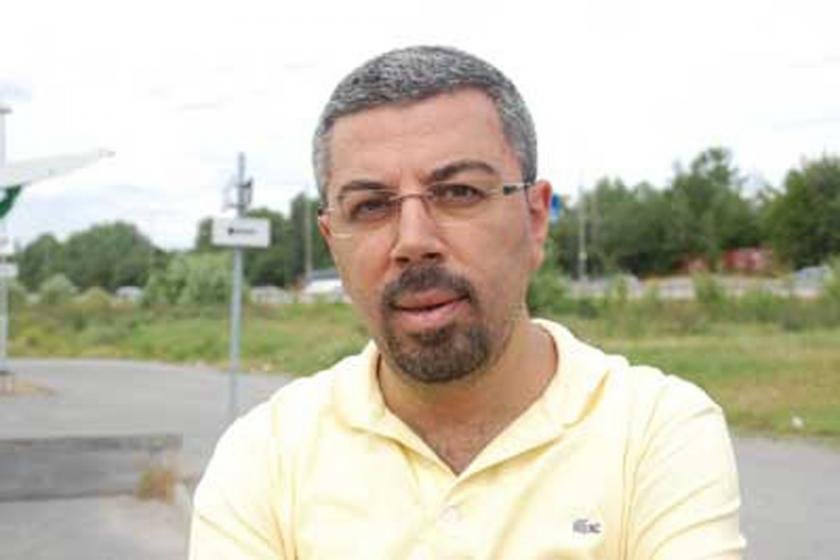
Joint statement on the 10-year anniversary of ‘deadly reprisals’ against Chinese activist Cao Shunli 

March 15, 2024

On 14 March 2024, a large number of leading NGOs paid tribute to Cao Shunli, and all human rights defenders targeted by the Chinese government for their commitment to uphold the promise of the Universal Declaration of Human Rights.  [see also: https://humanrightsdefenders.blog/tag/cao-shunli/]:

Cao Shunli was a brave Chinese woman human rights defender and lawyer. Working with fellow activists, Cao documented abuses, including the now-abolished ‘Re-education through Labour’ extrajudicial detention system, which she was also subjected to as a result of her human rights work. She campaigned for independent civil society to be meaningfully consulted and to be able to contribute to the Chinese government’s national reports to its first and second Universal Periodic Reviews (UPR). In an attempt to speak with government officials about the UPR, Cao courageously organised peaceful sit-ins with other concerned citizens outside the Ministry of Foreign Affairs despite great risks. She also submitted information on extralegal detention and torture in China to the UN and expressed the hope that ‘if we could get even 100 words’ into a UN report, ‘many of our problems could start to get addressed.’

On 14 September 2013, Chinese authorities detained Cao at the Beijing Capital International Airport as she was traveling to Geneva to participate in a human rights training, one month before China’s second UPR. Cao was forcibly disappeared for five weeks, until she resurfaced in criminal detention and was charged with ‘picking quarrels and provoking trouble’. By October 2013, it was clear that Cao Shunli was experiencing serious medical issues while in detention. After months of denial of adequate medical treatment, rejected appeals by her lawyers for bail on humanitarian grounds, and despite multiple calls from the international community for her urgent release, Cao died of multiple organ failure on 14 March 2014 in a hospital under heavy police guard to keep out her lawyers and friends.

Cao was one of the 2014 finalists of the prestigious Martin Ennals Award for Human Rights Defenders.

To this day, there has been no accountability for Cao Shunli’s death. The Chinese government refuses to admit wrongdoing, despite repeated calls in 2014 and 2019 by UN Special Procedures experts for a full investigation into this ‘deadly reprisal’. 

Her case is one of the longest-standing unresolved cases in the UN Secretary-General’s annual reports on reprisals against civil society actors for engaging with the United Nations. China is one of the most consistent perpetrators of reprisals over time, and one of the most egregious perpetrators in terms of the sheer number of individuals targeted. 

Cao is not alone: her courage, but also the abuses she endured, are unfortunately those of other human rights defenders who paid a high cost for cooperating with the UN. Her close colleague, Chen Jianfang was forcibly disappeared under Residential Surveillance at a Designated Location (RSDL) from 19-20 March 2019 after paying tribute to Cao Shunli on the 5th anniversary of her death. Chen was sentenced to four years and six months in jail for ‘inciting subversion of State power’ and left prison on 21 October 2023, after which authorities subjected her to strict surveillance. UN experts have raised with the Chinese government acts of reprisals against Chen Jianfang, but also Jiang Tianyong, Li Qiaochu, Dolkun Isa, Li Wenzu and Wang Qiaoling, among others. The recent instances of intimidation and harassment against NGO participants in China’s 4th UPR in January 2024 further highlight the gravity of the situation.

Li Qiaochu, Xu Zhiyong, Ding Jiaxi, Yu Wensheng, Xu Yan, Huang Xueqin, Li Yuhan, Chang Weiping: many other Chinese human rights defenders are today detained, disappeared, and at grave risk, for upholding the promise of the Universal Declaration of Human Rights.

These documented acts do not account for the even greater self-censorship and refusal to engage with the United Nation as a result of a generalised climate of fear

Ten years ago, when ISHR and many other human rights groups sought to observe a moment of silence at the Human Rights Council in her memory, the Chinese delegation, together with other delegations, disrupted the session for an hour and half.

Cao Shunli is a paradigmatic case of reprisals, not only because of her prominence, but also due to the array of severe human rights violations against her, committed in total impunity. These range from Chinese authorities blocking her exit from her own country, enforced disappearance, arbitrary detention, lack of due process, torture or ill-treatment and denial of adequate medical care, to subsequent death in custody, and the lack of accountability for these abuses. The lack of any progress in achieving accountability underscores the urgent need for continued international attention and pressure on the Chinese government to ensure justice for Cao and all human rights defenders who face persecution for their work.

Cao Shunli said before her death: ‘Our impact may be large, may be small, and may be nothing. But we must try. It is our duty to the dispossessed and it is the right of civil society.’

Today, we pay tribute to Cao Shunli’s legacy, one that has inspired countless human rights defenders in China and abroad. We urge UN Member States to call for a full, independent, impartial investigation into her death. We reaffirm that no perpetrator of reprisals, no matter how powerful, is above scrutiny, and that reprisals are fundamentally incompatible with the values of the United Nations and of the Universal Declaration of Human Rights. 

see also: https://ishr.ch/latest-updates/in-major-win-geneva-to-host-permanent-cao-shunli-monument

Signatories: 

  1. Art for Human Rights
  2. ARTICLE 19
  3. Asian Forum for Human Rights and Development (FORUM-ASIA)
  4. Asian Lawyers Network (ALN)
  5. Campaign for Uyghurs
  6. CIVICUS: World Alliance for Citizen Participation
  7. CSW (Christian Solidarity Worldwide)
  8. Front Line Defenders
  9. HK Labour Rights Monitor
  10. Hong Kong Centre for Human Rights
  11. Hong Kong Democracy Council (HKDC)
  12. Hong Kong Watch
  13. Human Rights in China
  14. Humanitarian China
  15. Humanitarian China
  16. International Bar Association’s Human Rights Institute (IBAHRI)
  17. International Campaign for Tibet
  18. International Federation for Human Rights (FIDH), within the framework of the Observatory for the Protection of Human Rights Defenders
  19. International Service for Human Rights
  20. International Tibet Network
  21. Lawyers’ Rights Watch Canada
  22. Martin Ennals Foundation
  23. Network of Chinese Human Rights Defenders (CHRD)
  24. PEN International
  25. Safeguard Defenders
  26. The 29 Principles
  27. The Rights Practice
  28. Tibet Justice Center
  29. Uyghur Human Rights Project
  30. World Organisation Against Torture (OMCT), within the framework of the Observatory for the Protection of Human Rights Defenders
  31. World Uyghur Congress

On 14 March also a group of UN Special Rapporteurs issued a joint call: “We regret that no action appears to have been taken over the last five years, since the last call for an independent, impartial and comprehensive investigation into Ms. Shunli’s death,” [https://www.ohchr.org/en/press-releases/2024/03/china-un-experts-renew-calls-accountability-cao-shunlis-death]

https://www.frontlinedefenders.org/en/statement-report/joint-statement-10-year-anniversary-deadly-reprisals-against-chinese-activist-cao

https://ishr.ch/latest-updates/in-tribute-to-cao-shunli-rights-groups-call-on-geneva-to-install-permanent-monument-for-her

March 8, 2024 was again International Women’s Day

March 8, 2024

Like every year, many organisations used the occasion to focus on the role of women human rights defenders. Here a selection of this year’s actions [for earlier posts see: https://humanrightsdefenders.blog/tag/international-womens-day/]:

Global Voices has released a special coverage called Empowering voices: Women in politics, which explores the state of women’s political participation around the world. 

Human Rights First referred to a new report reveals that WHRDs face increasing harassment and threats from a global movement against gender equality and LGBTQI+ rights. The Kvinna till Kvinna Foundation, a leading feminist women’s rights organization, released Hope and Resistance Go Together: The State of Women Human Rights Defenders 2023,  a report that found discouraging growth in harassment of WHRDs.  The foundation surveyed 458 women’s and queer rights activists and interviewed 25 activists representing WHRDs from 67 countries affected by violence or conflict.

They found that 75% reported facing harassment for their activism, a 15% increase from two years ago, and 25% of respondents have received death threats. Most harassment comes from government authorities, but increased harassment from far-right groups and anti-gender equality actors is also driving these startling statistics. Human Rights Defenders (HRDs) across the world face resistance and violence. In 2022, at least 401 HRDs were killed for their peaceful work. But some of the obstacles facing WHRDs are distinct. https://humanrightsfirst.org/library/recognizing-women-human-rights-defenders-on-international-womens-day/

Human Rights Watch on 7 March carried a piece by Macarena Sáez who says inter alia:

On this International Women’s Day, we march for the one in three women who experience physical or sexual violence in their lifetime. We cheer for countries like Argentina, Colombia, and Ireland that value our autonomy to choose to be pregnant and have legalized access to safe abortion, while protesting that abortion is still or again illegal in many places, including US states like Alabama and Texas. At the same time, we march to honor the women who marched before us, like the Mexican women who organized the first feminist congress in 1916 to push for family law reforms and their right to vote, and the Nigerians who waged their “Women’s War” against colonization and patriarchal laws in 1929. Their struggles sadly mirror the reality of many women around the world today – especially women who belong to historically marginalized groups – who continue to rally against violence and abuse.

Fearing the power of women’s solidarity and collective actions, governments have  stifled women’s speech through restrictions on movement, censorship, smear campaigns, and criminal prosecutions. In highly repressive contexts, like Afghanistan and Iran, women suffer arbitrary detention, and even enforced disappearance and torture, for their activism. Meanwhile, social media companies have not done enough to protect women from online violence, chilling women’s freedom of expression on and offline.    These barriers make it hard for women’s equality to become reality. Gender justice requires an enabling environment in which women can express themselves, speak and spread their political views, and participate in political and public life. Instead of repressing or tolerating the repression of women, governments should recognize our collective actions – and consequent power – and enshrine our rights in laws, policies, and practice. [https://www.hrw.org/news/2024/03/07/womens-voices-have-power-drive-change]

Amnesty International on 8 March highlighted three prominent women who reveal why sexual and reproductive rights are a major human rights issue : Charlotte Bunch, USA Leila Hessini, Algeria Marge Berer, UK [https://www.amnesty.org/en/latest/campaigns/2024/03/three-prominent-women-reveal-why-sexual-and-reproductive-rights-are-a-major-human-rights-issue/]

On 8 March 8, 2024 Almyra Luna Kamilla and Rosalind Ratana 
opined in IMHO on “Navigating the storms of repression: The resilience of young women rights defenders in Asia

[OPINION] Navigating the storms of repression: The resilience of young women rights defenders in Asia

In recent years, Asia has been witnessing rising authoritarianism and shrinking civic space. Among those in the frontlines of resistance are young women human rights defenders. As we celebrate International Women’s Day, let us demand for an enabling world where women human rights defenders can continue their noble pursuits without fear of reprisals.

In Thailand, the royal defamation law is being excessively used to silence criticisms against the monarchy. Meanwhile in Sri Lanka, economic and political mismanagement has sparked peaceful protests that are met with violence and intimidation. The fate of Asia’s political climate hangs by a thread as elections are held across many countries, including Bangladesh, Indonesia, India, South Korea, and Pakistan. Now more than ever, governments across the region are finding ways to solidify their power, putting an even tighter grip on civil society to the detriment of democracy and people’s fundamental rights and freedoms.

Despite such challenges, many are courageously speaking out and taking collective action to reclaim power for the people. This includes young women human rights defenders – or Youth WHRDs – who are claiming space to call out human rights violations and to demand accountability from oppressive governments. [https://www.rappler.com/voices/imho/young-women-rights-defenders-asia/]

The Alliance for Human Rights in Afghanistan (a coalition of 9 major NGOs) urgently appealed to the international community to significantly bolster its support and actively safeguard the human rights of Afghan women and girls, including Afghan women human rights defenders who face persecution for their peaceful campaigns for rights and basic freedoms.

In 2023, the Taliban further intensified its oppressive policies toward women, girls, the LGBTIQ+ community, and religious minorities. Afghan women and girls have seen their rights and prospects increasingly curtailed, from greater enforcement of restrictions on education – including a ban on girls attending secondary schools and universities – to intensifying exclusion of women from political and public life. Women have been banned from a growing list of forms of paid employment, and economic barriers, such as the ban on women registering organisations and undergoing vocational training, have contributed to a sharp decline in women’s participation in the labour market, impeding their right to make a living. This exacerbates financial insecurity, widens gender disparities, and further confines women to the private sphere. Lesbian, bisexual, and transgender women face severe threats, including torture, sexual violence, forced marriage, and death. Victims of gender violence, including those who identify as such, lack minimal legal and practical support. Obstacles to healthcare and education have exacerbated poverty and vulnerability among women and girls. In 2023, new discriminatory restrictions imposed by the Taliban included the closure of all beauty salons, blocking women from overseas travel for study, mandating female health workers in some areas to have a male chaperone while travelling or at work, and prohibiting women from entering a famous national park.

The oppressive environment extends to female activists, NGO leaders and journalists. Notable cases include the arrests of women’s rights activists Neda Parwani and Zholia Parsi, the enforced disappearance and subsequent discovery of Manizha Seddiqi in Taliban custody to date, the arrest of Matiullah Wesa, founder of an NGO advocating for girls’ education rights, and the arbitrary detainment of Ahmad Fahim Azimi and Seddiqullah Afghan—both dedicated girls’ education activists, among many others. Journalists reporting on the Taliban, facing arrests and threats, equally illustrate the difficulties encountered by the media, particularly women, when covering crimes against women or advocating for women’s rights. Collectively, these cases underscore the near-total denial of freedom of expression, gender equality, or any other internationally recognized right in Afghanistan under the Taliban.

Amid this growing oppression, segregation and fear, Afghan women human rights defenders have urged the international community to exert greater pressure on the Taliban. They call on international bodies to involve Afghan women in all negotiations with the Taliban and to facilitate direct meetings between women and the de facto authorities to address their concerns. Afghan women have also stressed the importance of advocacy for women’s rights by external actors based on the voices and realities of women inside Afghanistan. They call for coordinated efforts between organisations inside and outside the country to defend the rights of Afghan women and girls.

https://www.omct.org/en/resources/statements/afghanistan-lifting-afghan-women-from-the-shadows-into-the-light-in-the-face-of-the-taliban

The UN Special Rapporteur on the situation of human rights in Afghanistan, Richard Bennett, called on the Taliban to release women human rights defenders as the world marks International Women’s Day.

I reiterate my appeal to the Taliban to respect all the human rights of women and girls in Afghanistan, including to education, work, freedom of movement and expression, and their cultural rights, and I urge the meaningful and equal participation of Afghan women and girls in all aspects of public life. I call on the Taliban to immediately and unconditionally release all those who have been arbitrarily detained for defending human rights, especially the rights of women and girls.”

https://www.ohchr.org/en/statements/2024/03/afghanistan-un-expert-calls-taliban-release-women-human-rights-defenders

On 8 March, Civil Rights Defenders presented 4 woman human rights defenders and asked them to share their message to women around the world.


On International Women’s Day, the a group of NGOs (ALQST for Human Rights, Amnesty International, CIVICUS, European Saudi Organization for Human Rights (ESOHR), Front Line Defenders, Gulf Centre for Human Rights (GCHR), HuMENA for Human Rights and Civic Engagement, International Service for Human Rights (ISHR),MENA Rights Group, Salam for Democracy and Human Rights) renewed their call on Saudi Arabian authorities to release all women human rights defenders (WHRDs), women’s rights activists and their supporters who are detained in contravention of international human rights standards. The organisations further call on Saudi authorities to lift travel bans imposed on WHRDs and their relatives, and to abolish the male guardianship system. [https://ishr.ch/latest-updates/civil-society-reiterates-their-call-on-saudi-authorities-to-release-jailed-womens-rights-activists/]

The President of Georgia awarded severl with mesla of honor: co-founder of “Safari” organization Babutsa Pataraia, human rights defender Ana Arganashvili, founders of “National Network for Protection from Violence”: Eliso Amirejibi and Nato Shavlakadze and founder of “Vedzeb” organization Tamar Museridze.

https://www.interpressnews.ge/en/article/130159-in-connection-with-the-international-womens-day-the-president-awarded-five-female-human-rights-defenders-with-medals-of-honor

a few more addtions:

https://www.un.org/sg/en/content/sg/statement/2024-03-08/secretary-generals-remarks-the-observance-of-international-womens-day-delivered

https://www.eeas.europa.eu/delegations/indonesia/launch-women-human-rights-defenders-network-indonesia_en

https://www.unwomen.org/en/news-stories/speech/2024/03/speech-be-the-light-that-brings-hope-and-that-accelerates-progress-towards-an-equal-sustainable-and-peaceful-future

https://iucn.org/es/node/40738 [IUCN President and Director General’s Statement on International Women’s Day]

https://havanatimes.org/features/march-8-womens-day-with-less-rights-in-nicaragua/amp

https://bnnbreaking.com/breaking-news/human/global-women-human-rights-defenders-lead-the-charge-for-equality-and-justice

Rising Attacks against Women Human Rights Defenders in Sudan

February 25, 2024

© MENA WHRD Coalition

On 14 February 2024, eight organisations, including FIDH and OMCT within the framework of the Observatory for the Protection of Human Rights Defenders, expressed their grave concern over the closure of civic space, attacks on freedom of expression, rising militarisation and continuous disruption and shutdown of communication that threatens the work and safety of Women Human Rights Defenders (WHRDs) and Women’s Rights Groups in Sudan:

February 14, 2024. We the undersigned groups and organisations would like to express our grave concern and raise the alarm over ongoing reports about the closure of the civic space, attacks on freedom of expression, rising militarisation and continuous disruption and shutdown of communication that threatens the work and safety of Women Human Rights Defenders (WHRDs) and Women’s Rights Groups in Sudan.

Shutdown of Communications

On February 7th, 2024, Sudan witnessed a complete communications shutdown. Reasons behind this shutdown remain unknown in the absence of official statements from operating companies and the warring parties. This shutdown followed two days of the extensive interruption of communications at the end of January 2024. The interruption of communications and frequent shutdowns have life threatening implications and put the safety and security of WHRDs at risk. Without access to communications, WHRDs struggle to document and report on the mounting atrocities on the ground. The interruption of internet networks has also impeded women groups’ access to the mobile banking apps that facilitate money transfers to operate or secure protection for WHRDs at risk. The #KeepItOn coalition — a global network of over 300 human rights organisations from 105 countries working to end internet shutdowns — has raised concerns that “amid the ongoing brutal violence in Sudan, the continued weaponisation of internet shutdowns is a flagrant violation of international law.”

Attack on Wad Madani

Since the attack on Wad Madani, the capital of the central Al Jazirah state, in mid-December 2023, Women’s Rights groups and WHRDs have lost the resources collected since the start of the war. Dozens of WHRDs and Women’s Rights Groups were forcibly displaced for the second time, driven from the city that had been the humanitarian response hub for local and international NGOs. As WHRDs were forced to flee again, they faced enormous challenges searching for safe locations across states and neighbouring countries. Dozens of WHRDs were harassed, detained, summoned and threatened by both warring parties during the last few weeks.

Targeting of Activists

The Sudanese Armed Forces (SAF) launched an intensified attack on human rights defenders, humanitarian workers and volunteers, journalists, and peace activists in the last few months in the areas under their control. Aid groups and first responders faced rising restrictions of movement and supplies.

Rapid Support Forces (RSF) continued to arrest civilians, loot both public and private properties and perpetrate systemic sexual violence across the areas under their control. WHRDs and Women’s Rights Groups struggle to operate in these areas as the risks of sexual violence are growing.

At least five WHRDs and women first responders have been detained, summoned, harassed or threatened in the last few weeks. The attacks were reported in areas controlled by both warring parties. Since the war erupted, four WHRDs have been killed, two of whom were journalists. At least 11 women health workers were killed as well.

Closure of Civic Space and Restrictions on Freedom of Expression

In January 2024, Sudanese authorities in the relatively safer states in Northern and Eastern Sudan, including local governors, issued decrees to dissolve neighbourhood resistance committees. These grassroot groups were mobilizing and organising communities since the emergence of the protests movement in 2018. The governors of five states also banned publication of information and imposed heavy penalties on publishing information on social media or other newspapers regarding the security situation in their states. Journalists and activists were detained in three states and two women journalists were summoned and threatened by local authorities following these decrees. In the Blue Nile state, Red Sea and other states, meetings and other forms of peaceful civic activities are either banned or not authorized. Women’s Rights groups and other NGOs operating in these states are working in hostile and increasingly challenging environments. Civic space in Sudan is closed, with an increasing militarisation of the state and local communities.

Rising Militarisation

During the last three months, Sudanese authorities launched a mobilisation campaign to arm civilians in various states under SAF control. This campaign’s leaders attacked and threatened activists who criticized the armament of civilians, including women, girls and boys. Voices of peace activists are considered treasonous by SAF supporters. The widespread arms in the hands of civilians has led to unprecedented threats to women and peace and security, including gender-based violence (GBV) in the areas outside of the fighting zones.

We the undersigned groups call on:

The warring parties:

  • An immediate ceasefire and the prompt creation of safe corridors for humanitarian aid organisations and groups, and to guarantee the safety of their operations;
  • An immediate restoration of telecommunications across the country;
  • Cease attacks on health facilities, medical supplies, and health workers, and uphold obligations under international humanitarian law;

The international community:

  • States and international human rights, peace-building and feminist groups and organisations to work together to create an immediate long-term protection program for WHRDs (and their families) that addresses relocation needs (in several locations if needed), provides psychological support for post-traumatic stress caused by war and conflict, including due to GBV, and equips WHRDs’ with all the necessary means to continue their work in the defense of human rights;
  • States to provide support for the FFM and other international mechanisms mandated to document human rights violations in Sudan, including by ensuring that these entities have the necessary resources to carry out their work effectively;
  • States to support local initiatives providing humanitarian support to local communities as well as support services to victims, and to support civil society’s documentation and reporting efforts so that the evidence obtained can be used for future judicial proceedings, including for those related to SGBV crimes.
  • The international community to establish a mechanism for the disclosure of the whereabouts of the disappeared and the release of detainees, and to urgently address the issue of enforced disappearances and grave violations in detention centers, including GBV;
  • The international community to reinforce and protect medical staff in accordance with international humanitarian law;
  • The Fact Finding Mission (FFM) recently established by the UN Human Rights Council, to ensure accountability is pursued for GBV crimes committed by warring parties, to regularly and meaningfully engage with civil society in this process, and to ensure effective protection of witnesses and victims;
  • All other UN human rights mechanisms, including UN Special Procedures, to support the FFM’s work and to investigate GBV as a weapon of war, to call for the release of detainees and for the disclosure of the whereabouts of the disappeared, and to demand an investigation into violations in detention, including GBV;

https://www.fidh.org/en/region/Africa/sudan/sudan-rising-attacks-against-whrds-and-women-s-rights-groups