Based on the – as usual – excellent briefing by the International Service for human Rights on the key issues on the agenda of the 40th session of the UN Human Rights Council (starting on 25 February 2019), I am focusing on the items that concern human rights defenders most.
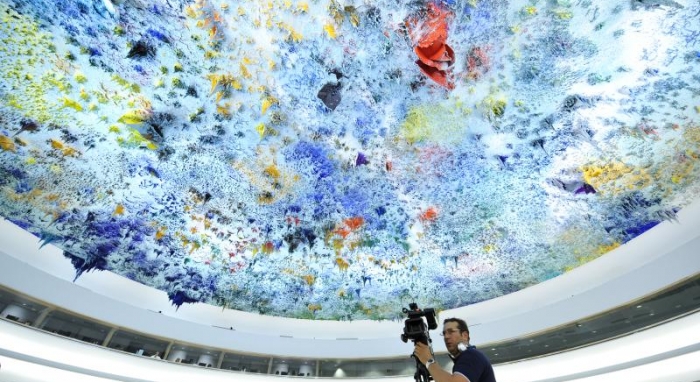
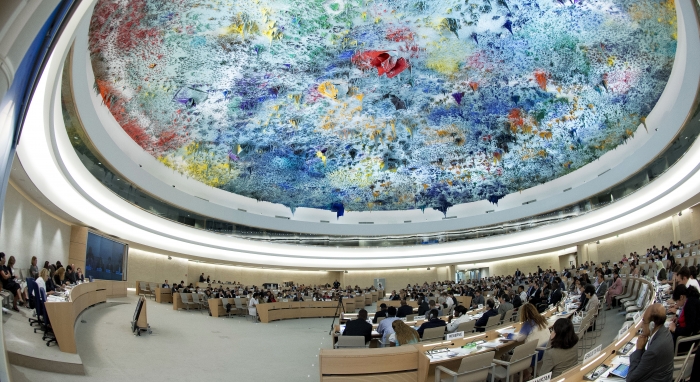
The UN Human Rights Council (the Council) will hold its 40th regular session at Palais des Nations in Geneva from 25 February 2019 to 22 March 2019.
Here are some highlights of the session’s thematic discussions.
Protection of human rights defenders including women human rights defenders
The Council will consider a resolution, presented by Norway, on the situation of human rights defenders working on rights related to land and environment, in particular the specific risks faced by women human rights defenders, to combat impunity for attacks against them, and ensure full civil society participation in development and the management of natural resources. The resolution should call on States to commit to conditioning the provision of diplomatic support to business – such as export credit guarantees and trade support – on companies’ commitment to respect, consult and protect defenders. It should also acknowledge the increasing willingness of some companies to speak out against threats and attacks on human rights defenders, and to raise the bar on accountability for companies who don’t.
The Special Rapporteur on the situation of human rights defenders will present his report on women human rights defenders on 28 February. [see: https://humanrightsdefenders.blog/2019/02/17/latest-report-by-special-rapporteur-on-women-human-rights-defenders-is-now-available/]
Reprisals
Reports of cases of intimidation and reprisal against those cooperating or seeking to cooperate with the UN not only continue, but grow. [I did almost too many posts on this, see recent ones: https://humanrightsdefenders.blog/tag/reprisals/]
The UN has taken action towards addressing this critical issue including:
- Establishing a dedicated dialogue under item 5 to take place every September;
- Affirmation by the Council of the particular responsibilities of its Members, President and Vice-Presidents to investigate and promote accountability for reprisals and intimidation; and
- The appointment of UN Assistant Secretary General on Human Rights, Andrew Gilmour, as the Senior Official on addressing reprisals.
However, ISHR and most NGOs remains deeply concerned about reprisals against defenders who try to engage with UN mechanisms, and consistently with previous calls, urges all States and the Council to do more to address the situation. Item 5 of the Human Rights Council’s agenda provides a key opportunity for States to raise concerns about reprisals, and for governments involved in existing cases to provide an update to the Council on any investigation or action taken toward accountability to be carried out. (In line with previous calls, ISHR expects the President of the Human Rights Council to publicly identify and denounce specific instances of reprisals)
Country-specific:
China
The past year was marked by vitally important monitoring and review of China’s human rights situation by the United Nations human rights system. The upcoming session of the UN Human Rights Council provides a key opportunity for States to reinforce the issues raised over the last year, and express collective concern about worsening rights abuse in China and the government’s failure to follow through on its obligations and commitments.
ISHR and almost 40 other organisations are calling on the Council to adopt a resolution addressing human rights in China, with particular focus on Uyghur Muslims and other ethnic and religious minority groups, over a million of whom are being interned and detained in Xianjiang region alone. [see: https://www.ifex.org/china/2019/02/19/xinjiang-resolution/]
Saudi Arabia
If the international community is serious about contributing to advancing women’s rights in Saudi Arabia, it should recognise Saudi women human rights defenders as agents of change and urge the Saudi authorities to take all necessary measures to guarantee a safe and enabling environment for them to continue their vital work. ISHR recalls that in November 2018, Saudi Arabia underwent its Universal Periodic Review where at least 23 States called for the protection of human rights defenders and journalists in the kingdom. Over 170 organisations from across the globe have previously called for the Council to hold an inquiry into human rights abuses in the country. [see also how Saudi Arabia is trying to cover up its violations: https://humanrightsdefenders.blog/2019/02/01/sports-and-human-rights-focus-on-sports-washing-big-names-play-for-big-money/%5D
Burundi
At last Council session, the Council renewed the mandate of the Commission of Inquiry on Burundi, who will present its oral briefing on 12 March at 12:00. ISHR continues to remain highly concerned about the human rights situation in Burundi and its refusal to cooperate with the Council’s mechanisms. For more information on the situation of human rights defenders in Burundi, check ISHR Briefing Paper for the UPR here. [see also: https://humanrightsdefenders.blog/2018/12/07/final-step-burundi-closes-down-un-office/]
Other thematic reports and country situations
The Council will also consider the promotion and protection of human rights while countering terrorism on several occasions. The High Commissioner will present a report on the issue and the Special Rapporteur will present her annual report focused on national security restrictions on civic space, as well as reports of the visits to Tunisia, Saudi Arabia, Sri Lanka, France and Belgium. [see inter alia: https://humanrightsdefenders.blog/tag/anti-terrorism-legislation/]
The Council will consider several reports on torture, including the annual report of the Special Rapporteur, the reports from his visits to Serbia and Kosovo, Ukraine, and Argentina, and two reports by the Secretary General on the United Nations Voluntary Fund for Victims of Torture and the Special Fund established by the Optional Protocol to the Convention against Torture and Other Cruel, Inhuman or Degrading Treatment or Punishment.
At this 40th session, the Council will discuss a range of economic, social and cultural rights in depth through dedicated debates with mandate holders alongside the annual report of the Secretary-General on the realisation of economic, social and cultural rights globally.
Country situations
The High Commissioner will present her first annual report to the Council on 6 March at 10:00. In addition, the Council will consider reports by the High Commissioner and mandate holders on several country situations. The Council is also expected to consider resolutions addressing a range of country situations, in some instances involving the renewal of the relevant expert mandates. The country-specific debates include:
- Interactive dialogue with the Commission of Inquiry on Syria
- Interactive dialogue with the Commission on human rights on South Sudan
- Interactive dialogue with the Special Rapporteur on Iran
- Interactive dialogue with the Special Rapporteur on the Democratic People’s Republic of Korea
- Interactive dialogue with the Special Rapporteur on Myanmar
- Enhanced interactive dialogue with the Special Rapporteur on Eritrea
- Interactive dialogues with the Special Rapporteur and the Commission of Inquiry on the Occupied Palestinian Territories
- Enhanced interactive dialogue on the High Commissioner’s report on the Democratic Republic of Congo
- Interactive dialogue with the Independent Expert on Mali
- High-level interactive dialogue on the Central African Republic
- Interactive dialogue on the OHCHR report on Sri Lanka
- Interactive dialogue on the High Commissioner’s oral report on Ukraine
- High Commissioner oral briefings and Secretary General reports on the following countries: Colombia, Cyprus, Guatemala, Honduras, Venezuela, Yemen and Afghanistan
Adoption of Universal Periodic Review (UPR) reports
During this session, the Council will adopt the UPR working group reports on several countries and provides an opportunity for Saudi Arabia, China, Nigeria and Chad to accept recommendations made in relation to human rights defenders, as proposed in ISHR’s briefing papers.
Resolutions
During the organisational meeting for the 40th session held on 11 February 2019, the President of the Human Rights Council presented the programme of work. It includes four panels of discussion and 108 reports. States also announced at least 15 resolutions but more can resolutions can be expected. These include:
- Rights of Child (GRULAC and the EU)
- Human rights situation in the Democratic People’s Republic of Korea (EU, Japan)
- Human rights situation in Myanmar (EU)
- Human rights, democracy and the rule of law (Morocco, Norway, Peru, Romania, Republic of Korea, Tunisia)
- Promoting reconciliation, accountability and human rights in Sri Lanka (UK, Germany, Macedonia)
- Human rights situation in South Sudan (UK)
- Human rights situation in Syria (France, Germany, Italy, Jordan, Kuwait, Morocco, Qatar, Saudi Arabia, Turkey, United Kingdom)
- Human rights defenders (Norway)
- Human rights situation in Iran (Macedonia, Moldova, UK, Sweden)
Panel discussions
During each Council session, panel discussions are held to provide member States and NGOs with opportunities to hear from subject-matter experts and raise questions. All panel discussions will be broadcast live and archived onhttp://webtv.un.org. These panel discussions include:
- Annual high-level panel discussion on human rights mainstreaming titled “Human rights in the light of multilateralism: opportunities, challenges and the way forward” which will take place on 25 February at 16:00.
- Biennial high-level panel discussion on the question of the death penalty, titled “Human rights violations related to the use of the death penalty, in particular with respect to the rights to non-discrimination and equality” which will take place on 26 February at 09:00.
- Debate on the mitigation and countering of rising nationalist populism and extreme supremacist ideologies (for the Commemoration of the International Day for the Elimination of Racial Discrimination), which will take place on 15 March at 16:00. [see also: https://humanrightsdefenders.blog/2018/05/24/mea-at-25-high-level-anniversary-panel-looks-at-human-rights-in-crisis/]
Side events
Many side event will be organized by NGOs (you can download the draft list of NGO events here). the ISHR is organizing at least 3 that are of particular interest to human rights defenders:
- Protection of women human rights defenders, 1 March from 11:30 to 13:00 in Room XXV
- Can the UPR advance Freedom of Expression in China?, 13 March from 13:30 to 14:30 in Room XXIII
- 20 years after the adoption of the HRD Declaration: The positive experience of West Africa on the development of national laws protecting defenders, 20 March 15:00 to 16:00 in Room XXIII
Also relevant are:
- Reconciliation, accountability and human rights in Sri Lanka, organised by Forum-Asia, will take place on 28 February, at 14:00 (time and location TBC). This side event aims to provide the international community with information on the Government’s implementation of the resolution 30/1 from the perspectives of civil society, and share proposals for further action by the Human Rights Council.
- Counter terrorism laws and civic space, organised by the Civic Space Initiative (A19, CIVICUS, ICNL and WMD) and will take place on 1 March at 10:30 (time and location TBC).
- Escazu and Beyond: Strengthening the global normative framework on protecting environmental defenders, organised by CIVICUS and will take place on 5 March at 11:00 (time and location TBC). The side event aims to bring together civil society representatives, UN bodies and State representatives to discuss their intersecting role in promoting and protecting civic space for environmental defenders.
- Saudi Arabia : Time for accountability, organised by the Right Livelihood Award Foundation, to take place on 4 March.
- Film screening of the Long Haul: a documentary tribute to human rights activist and professor Sir Nigel Rodley, organised by the International Commission of Jurists and the Permanent Mission of the UK. It will take place on 7 March from 13:00 to 15:00.
- South Sudan: No sustainable peace without justice, organised by DefendDefenders. It will highlight ongoing grave violations in South Sudan despite the signing of the Revitalised Peace Agreement, lack of domestic accountability, and the need to renew the mandate of the UN Commission on Human Rights (CoHR) in South Sudan. It will take place on 8 March from 13:00-14:00 in Room XXIV (time and location TBC).
- Human rights in Myanmar, organised by Forum Asia, will take place on 11 March at 16:00 (time and location TBC). Defenders from Myanmar will present their perspectives on the next steps the Human Rights Council should take to ensure justice and accountability for mass atrocity crimes, to address root causes, and provide support for victims.
- Human rights in Malaysia, organised by Forum Asia, will take place on 13 March at 13:00 (time and location TBC). Following Malaysia’s UPR in November 2018, civil society from the country will suggest steps for the government to implement its UPR recommendations, while engaging with civil society and the national human rights institution in the process.
Read here ISHR’s recommendations on the key issues that are or should be on the agenda of the UN Human Rights Council in 2019. [see https://humanrightsdefenders.blog/2019/02/09/ishr-sets-out-the-priorities-for-the-human-rights-council-in-2019/]
If you want to stay up-to-date: Follow @ISHRglobal and #HRC40 on Twitter, and look out for our Human Rights Council Monitor.
https://www.ishr.ch/news/hrc40-key-issues-agenda-march-2019-session-0




 Hans Thoolen on Human Rights Defenders and their awards