 – in collaboration with the members of HRCnet – is hosting a welcome reception for Vojislav Šuc, the new President of the Human Rights Council on Wednesday 31 January 2018. This is a regular opportunity for civil society staff, human rights experts and diplomats to meet and greet the new President and Vice-Presidents of the Council in a relaxed atmosphere. Those who won’t be in Geneva that evening, can give their thoughts about what the Human Rights Council’s priorities for 2018 should be. Share them on Twitter using #HRC2018 and Michael Ineichen, Human Rights Council Advocacy Director of the ISHR, will share a selection with the HRC President.
Posts Tagged ‘International Service for Human Rights’
NGOs in Geneva preparing for the 2018 Human Rights Council sessions
January 19, 2018Job opportunities at the International Service for Human Rights
October 4, 2017International Service for Human Rights (ISHR) announces two vacancies:
Civil society participation at the UN subject of ISHR event on 17 July
July 9, 2017Civil society participation at the UN is essential to ensure the relevance and value of debates and decisions at the international level along with the implementation of UN resolutions and recommendations on the ground. The International Service for Human Rights is organizing an interactive event to discuss NGO engagement with UN bodies and processes as well as opportunities and imperatives for reform. Monday 17 July, 11:30 – 13:00, Room XXIV, Palais des Nations, Geneva
ISHR will also launch a brand new handbook, the ‘Third Committee of the United Nations General Assembly: A Practical Guide for NGOs’. Copies of the updated version of the ‘Practical Guide to the UN Committee on NGOs’ will also be available at the event.
Panelists
• Dianela Pi, Deputy Permanent Representative of the Uruguayan Mission to the UN in Geneva
• Iniyan Ilango, FORUM-ASIA
• Eleanor Openshaw, International Service for Human Rights
Moderator
• Tanya Bennett, Deputy Permanent Representative of the Australian Mission to the UN in Geneva
Concluding remarks:
• Peggy Hicks, OHCHR
• Peggy Hicks, OHCHR
[Attendance with UNOG pass only. If you are a member of civil society interested in attending but don’t have a UNOG pass, please contact information@ishr.ch.]
ISHR’s Human Rights Defenders Advocacy Programme 2017 starts on Monday
May 27, 2017ISHR‘s Human Rights Defenders Advocacy Programme begins on Monday 29 May, with 17 human rights defenders from around the globe travelling to Geneva to learn about strategic engagement with the UN mechanisms.

The programme equips defenders with the knowledge and skills to make strategic use of the international human rights system. It also provides an opportunity for participants to directly engage in lobbying and advocacy activities at the UN level to effect change on the ground back home. ISHR’s Training and Advocacy Support Manager, Helen Nolan, explains that this year’s HRDAP participants were selected from a pool of 380 applicants – the highest number yet.
‘We’re incredibly excited to be collaborating with 17 committed human rights defenders working on women’s rights, business and human rights, the rights of LGBTI persons, and human rights defender protection,’ said Nolan. ‘These defenders are travelling from around the globe – including Argentina, Bangladesh, Cambodia, Ecuador, Egypt, Fiji, India, Nigeria, Peru, Russia and Sierra Leone – to spend two highly intense weeks gaining practical advocacy experience in Geneva.’
HRDAP coincides with the 35th Session of the Human Rights Council, and well as receiving training modules on all the UN human rights mechanisms from a range of experts, participants will have the opportunity to build networks in Geneva and around the world, carry out lobbying of UN member States and UN staff, and learn from peers from a range of regions working on a range of human rights issues.
‘Crucially, we know the programme works,’ said Nolan. ‘Last year, 100% of our participants were either very satisfied or satisfied with the programme, with 96% of them having at least partially achieved their key advocacy and learning objectives.’ In 2016, HRDAP enabled:
- corporate accountability activist Alexandra Montgomery to provide frst hand testimony to state representatives and experts about the violence faced by land rights defenders in Brazil
- Tehmina Zafar to sound the alarm in the UN Human Rights Council about proposed laws which could dramatically restrict the operation and independence of NGOs in Pakistan
- Karen Mejía to inform a UN expert body about the need to defend women’s rights activists and decriminalise abortion in Honduras.
- several participants to contribute substantially to the historic campaign to appoint the first ever UN expert on LGBTI rights
http://www.ishr.ch/news/supporting-defenders-ishrs-human-rights-defender-advocacy-programme-kicks
International Service for Human Rights publishes Annual Report
May 16, 2017The International Service for Human Rights (ISHR) has also published its annual report on 2016 (a bit confusingly called Annual Report 2017 as it also contains plans for 2017). Several chapters contain substantive information on the excellent work done for human rights defenders:
Agents of change | Empowering defenders to achieve impact (p 10)
Model Law | Groundbreaking new tool to protect defenders (p 14)
Strange bedfellows | The role of business in protecting civil society space (p 18)
Reprisals | Ending attacks against those who cooperate with the UN (p 21)
Defending diversity | The struggle for LGBTI dignity and rights.
https://www.ishr.ch/news/supporting-defenders-achieving-change-2017-annual-report
Video interview with Andrea Ixchíu Hernandez, human rights defender from Guatemala
February 5, 2017
Andrea Ixchíu Hernandez is an indigenous rights defender working for several organisations in Guatemala. She talks – in English – to ISHR (International Service for Human Rights) about her work to build up community media so the voices of indigenous people are heard and the violations they face are publicly unveiled.
ISHR 2017 training course for human rights defenders now open for applications
November 12, 2016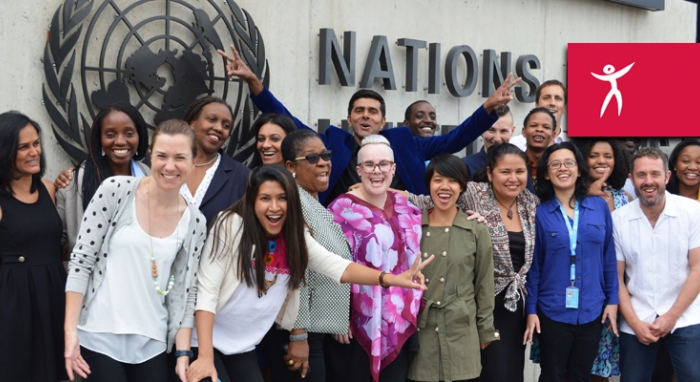
The International Service for Human Rights (ISHR) is calling for applications for its flagship Human Rights Defenders Advocacy Program in 2017 – the extensive training programme for human rights defenders. The training will take place in Geneva between 29 May and 9 June 2017 and provides defenders with opportunities to put their advocacy skills directly into action at the 35th session of the UN Human Rights Council.

ISHR’s Human Rights Defender Advocacy Programme (HRDAP) equips defenders with the knowledge and skills to make strategic use of the international human rights system. It also provides an opportunity for participants to directly engage in lobbying and advocacy activities at the UN level to effect change on the ground back home. As well as receiving training modules on all the UN human rights mechanisms from a range of experts, participants will also have the opportunity to build networks in Geneva and around the world, carry out lobbying of UN member States and UN staff, and learn from peers from a range of regions working on a range of human rights issues.
Participants will take part in:

- A short online learning component, prior to face-to-face training, to enable you to consolidate your existing knowledge and develop your advocacy objectives;
- Intensive training in Geneva during June, to coincide with the 35th session of the Human Rights Council. The training will focus on ways to effectively use international human rights mechanisms and to influence outcomes;
- Specific advocacy at Human Rights Council sessions and other relevant meetings, with regular feedback and peer education to learn from the experiences, including expert input from leading human rights advocates.
This programme is directed at experienced human rights defenders in non governmental organisations and national human rights institutions, with existing advocacy experience at the national level and some prior knowledge of the international human rights system. If you are interested in applying for ISHR’s training programme, please read the call for applications to check that you comply with the requirements. The link to the online application form can be found under point 5 of the call for applications.
The call for applicants can be found here. For more information, write to hrdap2017@ishr.ch.
Source: ISHR 2017 training for human rights defenders: now open for applicants! | ISHR
Online Survey on ISHR communication
November 4, 2016As the Geneva-based International Service for Human Rights (ISHR) is one of the most important sources of information on HRDs and the UN, I hope that many of you will be able to give them feedback on their various communications and digital publications by filling our the on-line survey in the link below. It indeed takes not more than 5 minutes to complete. 
Source: ISHR Online Survey
Profile of Jacobus Witbooi, LGBTI human rights defender from Namibia
August 31, 2016Profile of Jacobus Witbooi, human rights defender from Namibia, working at the Pan Africa International Lesbian, Gay, Bisexual, Trans and Intersex Association (PAI).
In June 2016 he completed ISHR’s Human Rights Defender Advocacy Programme and The Monitor of 27 June contained the following piece:
Jacobus Witbooi knows himself to be an ‘innate activist’ and says that his passion for human rights ‘comes from the inside.’ It has always been a strong part of who he is, taking up the challenge to advocate for those without a voice at a very early age. When still attending school, he recalls campaigning for education on safe sex and sexual health information and advice before it was even considered by national school policy makers.
‘Everyone knew that there were young people having unprotected sex, but they also didn’t have access to condoms, let alone information or advice from community health services about sexual health and safety, especially if they contracted a STI…They felt judged, couldn’t take steps to protect themselves or get help they needed.’
As he matured as a young professional he continued to pursue the issue and played a key role in eventually getting sex education on the national school curriculum in Namibia. He also helped to create a platform for young people to have a say in the design and evaluation of sexual and reproductive health programs, as well as assist health services to provide a caring and sympathetic environment for young people, enhancing accessibility.
Creating a network to drive change
Jacobus’ human rights advocacy journey has brought him to Pan Africa ILGA, a recently formed and rapidly expanding membership-based network for activists working to advance sexual orientation and gender identity rights. He delivers a continent-wide outreach strategy to small, grassroots LGBTI activists and defenders, helping to develop their skills and confidence to engage with both the UN human rights mechanisms and the African Commission on Human and Peoples’ Rights (the African Commission), and grow their ability to achieve meaningful and lasting human rights change.
The issue is close to his heart. He remembers coming out at a time in Namibia when it was unsafe, denied and denounced by all corners of the community.
‘I didn’t feel welcome in my own country, and was told I should leave.’
Whilst Pan Africa ILGA is rapidly expanding – it now has over 100 members – Jacobus is aware of the limitations his service can provide, and the needs of local LGBTI community organisations.
‘There’s a gap between the amount of work we can do to support local human rights activists, and how far we can teach them to carry forward UN outcomes and recommendations into their country.’
But he adds that he refuses to accept that it is a gap that cannot be closed. In May, Jacobus had a key part in delivering the third PAI regional LGBTI conference in South Africa. Bringing together 184 African delegates from over 34 African States, coming together to convene and share strategies, visions and fostering opportunities to collaborate. More encouraging, was the attendance of Government representatives and members of the African Commission, as well as National Human Rights Institutions.
Highlighting this significant social and political development, Jacobus points out that there is a growing support for sexual orientation and gender identity rights on the African continent, and is optimistic for the future of the LGBTI community. However, he knows there is a lot more work to be done.
‘I think this space we created was critical as a continent – sharing the success stories. But, how do we move this forward, and deal with the intersectionality of sexual orientation and gender identity issues?’
Expanding his human rights advocacy potential
He identified that one way forward for him was to better harness the UN international human rights mechanisms and expand his human rights advocacy potential and successfully applied to participate in the ISHR Human Rights Advocacy Programme.
‘It’s helped me a lot. I’ve broadened my understanding of available UN-mechanisms beyond the Universal Periodic Review alone. I’ve learnt that there is a wide range of approaches to doing human rights advocacy through the UN. This awareness combined with the confidence I’ve now gained will be vital for me on the ground back home.’
He has also noticed his own approach to engaging in human rights advocacy has transformed.
‘I’ve become more strategic now. Because I have a deeper understanding of the UN system, it means that I can use multiple mechanisms to get outcomes, such as the Treaty Bodies and the Special Procedures.’
Contributing to the first UN Resolution on Sexual Orientation and Gender Identity
With his training coinciding with the 32nd session of the Human Rights Council, Jacobus became heavily involved in contributing to the Working Group advocating and lobbying for a strong resolution on sexual orientation and gender identity. He describes this as,
‘My first real hands on experience advocacy at the Council, working with states delegations and diplomats, trying to bring across an argument that is sensitive and difficult to move on, and coming from a region where it is very difficult to even talk about. It has given me a better understanding of how these things work, what components come into play when these decisions are made.’
Contact: jacobus@panafricailga.org or follow him on Twitter @jacobuswitbooi
Source: Defender profile: Jacobus Witbooi, human rights defender from Namibia | ISHR
2016 Annual Report of the International Service for Human Rights is out
May 15, 2016Today the International Service for Human Rights (ISHR) announced the publication of its annual report which highlights key developments during 2015 and its vision for 2016 and the years ahead.
Source: Our vision and achievements: ISHR’s 2016 Annual Report | ISHR
for more posts on the ISHR, see: https://thoolen.wordpress.com/tag/ishr/

