On International Human Rights Day, the Open Society Foundations reaffirmed their vision for a shared humanity where everyone can thrive, continuing the philanthropy’s role as the world’s largest private funder promoting rights, equity, and justice.
Under the leadership of Chair Alex Soros, the philanthropy is streamlining its programming to support new voices and approaches that align with today’s emerging forms of organizing and leadership. The Foundations will pursue targeted time-bound efforts, provide long-term institutional support, and retain the flexibility to respond to crises through rapid response funds.
Binaifer Nowrojee, president of the Open Society Foundations, said:
Across the world, we are seeing inspiring and powerful movements working to shape a future framed by human rights. Standing with them as allies, we will deepen, broaden, reimagine, and catalyze efforts to advance a new vision of human rights that is not bounded by historic double standards, exclusions, and inequities.
We are crafting and implementing thoughtful, future-focused strategies for change that will leverage gains made through key openings and convert them into wins. Our investments will aim to work with groups to build on and sustain these wins over time. We are committed to listening and to being informed by the needs of allies leading the fights for rights, equity, and justice.
The commitments include multiyear investments across a broad range of issues and geographies, including:
Rights protection: Supporting human rights advocacy as well as protection of rights defenders at risk, particularly environmental and women’s groups
Inclusion: Ensuring marginalized and vulnerable groups can fully exercise their rights without fear of violence or discrimination
Public safety: Promoting communities-centered approaches to tackling repressive or militarized responses to violence and public safety
Accountability: Supporting human rights–based litigation in national, regional, and international courts
Political participation: Supporting new champions and nonpartisan movements of inclusive and accountable democratic practice in specific countries and globally
Economic rights: Developing and promoting new state-led economic models for a green transformation to advance economic and social rights
In 2025, Open Society will be approving further programming to promote rights, equity, and justice.
Open Society has also approved funding across other areas, including ideas, impact investing, advocacy, and higher education.
Here a few highlights for this year from UN and NGOs sources:
While commemorating the 76th anniversary of the Universal Declaration of Human Rights, the United Nations Secretary-General Antonio Guterres said that “human rights are under assault”. “Whether economic, social, civic, cultural or political, when one right is undermined, all rights are undermined,” Guterres said in a post on X. “Let’s protect, defend and uphold all human rights for all people,” he added. In a video message, The UN secretary-general said “we must stand up for all rights — always.”
..As we mark Human Rights Day 2024, we are reminded that human rights are not abstract ideals. They are vital tools for addressing these pressing challenges and advancing dignity and justice for all.
… the United Nations Development Programme (UNDP) works to support human rights solutions that strengthen accountability, protect communities and foster peace, recovery, and stability. This includes partnering with National Human Rights Institutions, which often represent the frontline defenders of human rights. … Local initiatives also remain key. That includes women in Somalia who are being supported to lead peace efforts including assisting those facing violence, discrimination, and injustice. “I have resolved numerous local disputes…I feel motivated when I see I have been able to change people’s lives positively,” says Fatuma who led a local Peace Working Group.
As the accelerating climate emergency threatens the ability of current and future generations to enjoy their right to a clean, healthy, and sustainable environment, UNDP is focusing on access to justice, working with the United Nations Environment Programme (UNEP) and OHCHR to help communities claim their rights. …The private sector also has a pivotal role to play. UNDP supports the implementation of the UN Guiding Principles on Business and Human Rights including to advance sustainable practices that protect the environment. Indeed, technology offers both risks and opportunities to advance human rights. The Global Digital Compact aims to create an inclusive, open, safe, and secure digital space that respects, protects and promotes human rights. Tech-enabled UNDP tools like iVerify and eMonitor+ deployed in over 25 countries to monitor and address false narratives and hate speech show the potential. It is now crucial to adopt a rights-based approach to technologies like A.I., addressing ethical challenges, protecting data, and tackling biases to mitigate risks today and unlock immense benefits for the generations to come. [https://humanrightsdefenders.blog/2024/09/27/united-nations-adopts-ground-breaking-pact-for-the-future-to-transform-global-governance/]
——
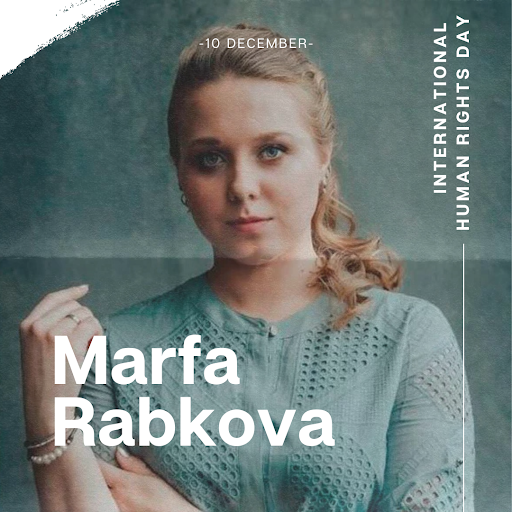
The NGO Index on Censorship spotlights four people standing up for human rights around the world:
Despite the declaration, all around the world human rights are being challenged, degraded and attacked. That is why this year, on Human Rights Day, we pay tribute to five human rights defenders who have worked tirelessly to defend people’s rights and have been persecuted as a result.
Jemimah Steinfeld, CEO at Index on Censorship said: “In this increasingly polarised and authoritarian world these people stand out as beacons of hope and light. It’s depressing to think that over 75 years since the Declaration, we still need a day like this but that should not detract from the bravery and fortitude of these people. May their example show us all how we can all better fight injustice.”
Marfa Rabkova (Belarus) Marfa Rabkova is a human rights defender who has been behind bars since 17 September 2020. She has long been targeted by the Belarusian authorities as a result of her civic activism. Marfa became head of the volunteer service at the Human Rights Centre Viasna in 2019. During the 2020 presidential election, she joined the “Human Rights Defenders for Free Elections” campaign, which registered over 1,500 election observers. When peaceful protests began to take place after the election, she helped document evidence of torture and violence against demonstrators. Marfa was indicted on a long list of charges, including inciting social hostility to the government and leading a criminal organisation. She was sentenced to 14 years and 9 months in prison in September 2022, after nearly two years of pre-trial detention. Index on Censorship calls for her immediate and unconditional release. See also: https://humanrightsdefenders.blog/2021/03/22/belarus-end-reprisals-against-human-rights-defenders/
It seems bold to be so optimistic, but lets not forget that the assertion starts from a very low base: 2022 was probably one of the worst years with the Ukrainian war, further repression in Russia, death sentences for protesters in Iran and no let up in China.
I think we have to start with where we are with the world and we are at a very peculiar moment. We have all lived through these multiple crises. We have seen the geopolitics, the divisions, the fragmentation, and all these things that have preoccupied us at a time when you would hope that the international community would come together and craft something that would respond to the big challenges that we face.
So for me, human rights is the force that comes in and unifies us. Because it brings us back to human dignity and to what makes us all connected with each other. Let’s not forget that the Universal Declaration of Human Rights emerged out of the ashes of the Second World War. It provided the inspiration and the motivation that the world needed at that time. So, I think we need to almost counter intuitively go back to the basics of what this unifying force – this concentration on the human being – was. We need to regain the universality and the indivisibility of the human rights regime.
Secondly, we also need to look at human rights in the 21st century, for example in the digital transformation that we’re seeing. Take the letter I wrote to Twitter’s Elon Musk, for instance. Social media platforms play a very important role. We know the role Facebook played in Myanmar, for example, when the Rohinga crisis happened, in allowing disinformation and hatred to spread. So, human rights needs to look at the type of issues that we face today.
And the third area that I hope we can achieve next year, is we have to look at the human rights ecosystem as a whole. So, what is the role of the treaty bodies, of the special procedures mandate-holders, of the Human Rights Council, Universal Periodic Review process, and of my own office too – and how do we strategically deal with different situations?
Freedom House took the occasion to consider that Political prisoners and the victims of human rights abuses have taken a back seat when global summits and events occur. But it is exactly because of those events that we should be giving the victims of such abuses our full attention...
Symbolic dates like International Human Rights Day offer space to reflect on and advocate for the rights of the brave people who have been imprisoned or experienced retaliation for standing up to repressive, authoritarian rule. But political prisoners and others fighting for freedom deserve our attention for more than one day of the year. We cannot allow their plight to be sidelined because it is inconvenient to think about them during an event like the World Cup.
The World Cup is one of several events in recent months that has drawn criticism for the human rights controversies surrounding it. In what was meant to be a historic summit to discuss the imminent threats posed by climate change, the latest United Nations Climate Change Conference (COP27), held in Egypt in early November, instead became a spotlight on the host country’s abysmal human rights record. The large number of human rights defenders and activists currently detained or imprisoned in Egypt was difficult to ignore, and one case in particular stood out for its perilously high stakes. British-Egyptian democracy activist Alaa Abdel Fattah, imprisoned for his activism, endured a six-month hunger strike, now over, which resulted in the Egyptian authorities denying his family the ability to contact him as the conference took place. They desperately pleaded with the authorities for proof he was alive, and his sister Sanaa took the stage at official summit events to advocate for her brother’s release. She faced threats from Egyptian officials who accused her of calling on foreign entities to intervene in the country’s internal affairs.
Participating governments could have added to this pressure and set the stage for the release of Abdel Fattah and numerous other political prisoners, by conditioning Egypt’s hosting role on freeing political prisoners ahead of COP27. Instead, the conference’s setting appeared hypocritical, as climate justice depends in large part on respect for democracy and human rights.
Similarly, this fall’s G20 summit saw leaders of multiple countries that hold political prisoners convene for strategic discussions. The lives and freedoms of imprisoned human rights defenders, journalists, and prodemocracy activists in Saudi Arabia, China, Turkey, Russia, Mexico, India, and even the host state Indonesia, were superseded by “other priorities.” In Indonesia, human rights defender Victor Yeimo, who has spoken out on the rights abuses occurring in West Papua, was arrested in May 2021, reportedly due to his involvement in antiracism and self-determination protests two years prior. Charged with crimes including treason, he remained in detention while the G20 met. His case and others across the various member states should have been highlighted, as respect for international human rights principles and commitment to strong democracies are key to long-term national and global security and economic stability.
Scott Walker, a Researcher at the Castan Centre for Human Rights Law, a and a Research Assistant within the Faculty of Law, Monash University.decided to draw attention to an important case concerning climate justice; On 10 December 2022 the world marks Human Rights Day commemorating the adoption of the Universal Declaration of Human Rights(UDHR) in 1948. This year’s theme is dignity, freedom, and justice for all, in anticipation of the 75thanniversary of the UDHR in 2023. It gives us cause to reflect on the mobilising force that the UDHR has become in the struggle for human rights across the world. Yet, there is always more work to be done to truly achieve a world in which dignity, freedom, and justice is a lived reality for all. To do so we must utilise human rights both as a guidepost for advocacy and a tool for concrete, on the ground change to address some of the most pressing and ongoing challenges facing our world; including the immediate and catastrophic impacts of climate change.
Here in Australia, the path to domestic enshrinement of human rights has been a meandering one: only two States (Victoria and Queensland) and one Territory (the Australian Capital Territory) have Human Rights Acts. Yet, the capacity of these Human Rights Acts to achieve real and meaningful change in people’s lives is profound. Increasingly, people on the frontline of the climate crisis are also turning towards human rights to achieve justice. The potential impact of human rights-based climate litigation was recently demonstrated in the decision of the Land Court of Queensland in Warratah Coal Pty Ltd v Youth Verdict Ltd. In this case, the Court recommend against the grant of a mining lease and environmental authority to allow Warratah Coal to mine thermal coal in Queensland’s Gallilee Basin. This case deserves closer examination to illustrate the way in which human rights enshrined in law can be mobilised in claims for climate justice.
On 10 December 2022, the Human Rights Campaign Foundation (HRCF), the educational arm of the nation’s largest lesbian, gay, bisexual, transgender and queer (LGBTQ+) civil rights organization, announced this year’s recipients of 20 Global Innovation Small Grants as a part of the organization’s Global Partnerships Program. The grants range from $1,000 to $5,000 and are awarded to organizations around the world working to improve the lives of LGBTQ+ people in these countries. This announcement coincides with International Human Rights Day, which is celebrated annually around the world, marks the December 10 anniversary of the United Nations adoption of the Universal Declaration of Human Rights in 1948. The declaration was the first of its kind and recognized that “every human being is born free and equal in rights and dignity.” The grants support members of of HRC’s growing global alumni network, which now consists of some 200 LGBTQ+ advocates in close to 100 countries. All of them have participated in one of the HRC Foundation’s global programs, including the flagship annual Innovative Advocacy Summit.
The Network of Chinese Human Rights Defenders, December 9, 2022 Ahead of International Human Rights Day on December 10, CHRD celebrated the courage and bravery of human rights advocates and calls on the Chinese government to stop violating its obligations to protect human rights and free those detained for exercising their human rights. We urge the international community to keep hope alive and continue supporting defenders on the forefront.
In recent years. Xi Jinping, the General Secretary of the Chinese Communist Party, has suffocated civil society and space for free expression, jailed COVID whistleblowers, journalists, lawyers, labor organizers and feminists, LGBTQ+ activists and religious practitioners. Yet we are encouraged by the glimmers of hope that have emerged in the recent protests. The protests demanding political changes began with spontaneous gatherings to pay tribute to Uyghur victims in the Urumqi Fire. The rapidly spreading protests, led by youth, likely proved to be the last straw in forcing the Chinese Party-State to reverse course on its draconian “zero-COVID” measures.
Reasons for hope: Young people have brought new vitality to the fight for human rights
The scope of this short-lived wave of protests in cities across China was enormous, comparatively speaking. Thus far, there have been at least 68 protests across 31 cities since November 25, according to the Australia Strategic Policy Institute (ASPI). And it has largely been young people who have led the protests. The Urumqi apartment complex fire, which took the lives of at least ten Uyghur women and children, as rescue was obstructed by barriers thought to be erected for COVID lockdown but likely for “counter-terror” measures, brought people into the streets to mourn the loss of lives, to assemble and speak out against the devastating zero-COVID control and the political system that made such control possible.
At the occasion of International Human Rights Day, Ugandan NTV Uganda broadcast on 13 December 2021 a talk show: “DEFEND DEFENDERS: Human rights defenders’ voices at the centre”.
At the heart of human rights lie the principles of equality and non-discrimination. Equality has the power to help break cycles of poverty; it can give young people the world over the same opportunities; it can help in advancing the right to a healthy environment; it can help tackle the root causes of conflict and crisis.
Equality “means that we embrace our diversity and demand that all be treated without any kind of discrimination,” says UN Human Rights High Commissioner Michelle Bachelet. On Human Rights Day, we are calling for a new social contract. This means addressing pervasive inequalities and structural discrimination with measures grounded in human rights. It requires renewed political commitment, the participation of all, especially the most affected, and a more just distribution of power, resources and opportunities.
Equality and non-discrimination are the key to prevention of some of the biggest global crises of our time. Human rights have the power to tackle the root causes of conflict and crisis, by addressing grievances, eliminating inequalities and exclusion and allowing people to participate in decision-making that affects their lives. Societies that protect and promote human rights for everyone are more resilient and sustainable, and stand better equipped to weather unexpected crises such as pandemics and the impacts of the climate crisis. As we continue on the path towards the 2030 Agenda for Sustainable Development, and countries’ commitments to leave no one behind, we must strive for a world where a life of equality in dignity and rights is a lived reality for all.
—–
Bertrand G. Ramcharan on this occasion wrote for the Universal Human Rights Group in Geneva a blog post: Human Rights Day 2021: protect the right to be as well as the right to become
..What the Universal Declaration sought to do, seventy-three years ago, was to invite all governments to pursue human rights strategies of governance. That is to say, government policies and laws should take the precepts of the Universal Declaration as their basic starting point, and governments should be held accountable against those standards.
Human Rights Day this year is being commemorated at a time when the present and the future are joined together as perhaps at no other time in the history of the UN. The world is simultaneously facing a range of critical human rights crises, including a global pandemic, a biodiversity crisis, a pollution crisis, and a climate crisis. The human rights challenges presented by these crises overlay existing discrimination and inequality.
Regarding climate change, the recent Glasgow conference witnessed the tensions between those who fervently believe that the use of fossil fuels must be halted and those who equally fervently plead that they cannot feed and take care of their peoples if they precipitously stop the use of fossil fuels.
The Universal Declaration of Human Rights provides the reference points, the frame of principles, for thinking through, formulating, and implementing policies on challenges such as these. It is a crucial document for every country.
The fourth principle is the rule of law, enshrined, among others, in article 10 of the Universal Declaration: ‘Everyone is entitled in full equality to a fair and public hearing by an independent and impartial tribunal.’ The rule of law must be respected everywhere. In many countries it is not.
In our times, both the right to be and the right to become are under serious threat. On this Human Rights Day, the eight principles of the Universal Declaration enumerated above can help humanity protect the right to be as well as the right to become.
———-
For Human Rights Day 2021, award-winning filmmaker Shred Shreedhar has planned to release his animated short Reena Ki Kahaani which talks about human trafficking. The short is made for all age groups and is based on a real-life incident. Directed by Shreedhar, animation and creative direction was done by Ashish Wagh and PS Jayahari took care of the music.
“Reena Ki Kahaani is based on the true story of Reena (name changed), a survivor of human trafficking. She got sold into the market of flesh trade on grounds of false promises only to be rescued later by Vihaan, the anti human trafficking NGO,” Shred Creative Lab director Shreedhar told AnimationXpress in an email interview.
He revealed that they chose ‘folk as an art style to connect to the region from where the story originated’. “It helped in making the story more relatable. The former National Geographic Channel India creative VP hopes that with this film, a heinous crime like human trafficking gets talked about more in the mainstream media.
About choosing animation as a medium, Shreedhar said, “Animation as a format is visually appealing to children as well as adults. The purpose was for the film and its message to reach out to not only adults and caregivers but children as well; so a difficult topic was made palatable for all age groups through an animated film so that the dangers are understood.”
According to him, there wouldn’t have been a better day to highlight this reassuring story of courage and human grit in the face of a brutal violation of human rights and spirit. “Nothing celebrates Human Rights Day as the rise and triumph of the human spirit in Reena’s story,” he concluded.
Reena Ki Kahaani, the animated short film of nearly 10 minutes will be released on Shred Creative Lab’s YouTube Channel and other social media handles.
In a statement to mark International Human Rights Day, the Zimbabwe Human Rights Commission (ZHRC) said young people have a significant role to play in the protection and promotion of human rights. The ZHRC said rights come with certain responsibilities and obligations and young people should exercise their rights responsibly. “For instance, young people must shun all forms of violence and refrain from being used to oppress other people, engaging in political violence and other acts inconsistent with human rights principles and values of respect for human dignity, honesty, justice, fairness and equality,” reads the ZHRC statement. The commission said it is advocating for youths across the political divide to push their parties towards embracing human rights. ZHRC said youths should positively change the national narrative towards enjoyment of rights.
The Bahamas Weekly used the occasion of International Human Rights Day to publish a statement by the OAS Secretary General: ..As Secretary General of the Organization of American States(OAS), I have dedicated myself above all else to promoting a strong vision: more rights for more people. ..This year I particularly want to express my concern about the violence suffered by people who defend human rights in the Americas. Unfortunately, all too often we are forced to remember what should be obvious: the human rights of social leaders are, as are the human rights of all citizens of the Hemisphere, inviolable. I want to recognize these leaders and defenders of human rights throughout the Hemisphere. For the OAS, it has been and remains imperative to accompany and support their efforts to promote, assert, respect and protect human rights. This work constitutes a central axis for social transformation and the consolidation of peace, democracy and the validity of human rights in the region. It is fair to make a special mention of all those women leaders defending human rights, for transforming their realities, for being peace-building agents, for opening spaces that historically have been denied them, making way for more women to exercise their rights every day with a powerful agenda of equality and peace.
The New Times of Rwanda focused on people with disabilities.
…..Despite political will and legal guarantees, persons with disabilities are generally denied many of their rights and dignity across the world. This is often due to discrimination and stigma in society. We see this discrimination and stigma in the way people relate to persons with disability and in the language that is used towards them, their parents and their siblings. We also see it in the names people give them, the way people look at them and the manner in which they are often dismissed, excluded and marginalized in schools and businesses etc.
This is why we must work hard on changing mindsets and improving awareness. We need the current and the next generation to realize that people with disabilities are still people, who think and dream and feel the same way we do. And they have abilities, as much as the rest of us, but they sometimes need some assistance to realize their full potential.
The Sustainable Development Goals (Agenda 2030) calls for the empowerment of persons with disabilities in all spheres of life. Disability is referenced in various parts of this Agenda and specifically in parts related to education, economic growth and employment, inequality, accessibility of human settlements, access to services, as well as data collection and monitoring. The 2030 Agenda encourages us to focus on providing fair and equitable opportunities to all, including persons with disabilities……How often do we stop to ask, “How accessible are our homes, schools, hospitals, public transport, churches, public offices, entertainment buildings to persons with disabilities?” Do we include sign language in meetings and television? Do we welcome persons with disabilities in our workshops and on our panels to discuss important topics pertinent to all? In our families, study and work environments, in our churches and communities, are we having conversations about the needs and rights and abilities of persons with disability?
Finally, empowerment is about equipping persons with disabilities with skills and facilities, including assistive devices, which allow them to actively and independently contribute to the development of themselves, their families, communities and countries. It is about not giving them a fish to survive on for a day but teaching them to fish to create a better future and, and also contribute to Rwanda’s development.
Yemen:
Over 17 NGOs wrote to the leaders of all warring parties in Yemen, Saudi Arabia and the UAE:
We write to you on Human Rights Day to call on you to take meaningful steps to end detentionrelated abuse in Yemen. Steps taken in recent weeks by both the Ansar Allah armed group (Houthis) and the Kingdom of Saudi Arabia to unilaterally release hundreds of detainees were positive. There remains an urgent need to address rampant, ongoing detention-related abuse that continues to affect tens of thousands of Yemenis across the country. The impact of detention-related abuse goes beyond the person detained – it impacts their family members, their loved ones and wider society. In addition to ending the suffering of victims and their families, ending and redressing detention-related abuses also would contribute towards reaching a just and sustainable resolution of the conflict in Yemen.
We specifically write to ask you to build on recent positive steps by using your authority and influence to help ensure the release of all those arbitrarily detained, an end to enforced disappearances, torture and other ill-treatment, the improvement of conditions of detention, including the facilitation of family visits, and full cooperation with efforts to ensure that individuals reasonably suspected of responsibility for war crimes and serious human rights violations, including torture and hostage-taking, are prosecuted in fair trials that preclude the death penalty.
……. While the recent unilateral release of prisoners – mostly fighters – by both the Houthis and KSA, may help build confidence between the parties, more extensive and comprehensive steps must be taken to address rampant detention-related rights abuse, regardless of the state of political talks. To that end, we call on you to use your influence and good offices to help bring about an end to ill-treatment, torture, arbitrary detention and forced disappearances by all parties to the conflict. We urge you to help secure the release of those arbitrarily detained, human rights defenders, journalists and peaceful activists; and that anyone deprived of their liberty is granted regular access to their families and lawyers; and that international monitors are allowed immediate access to all detention facilities, unofficial and official.
PNG/EU
The EU honored 5 civil society organizations which have over the years worked with the EU in advancing and defending Human Rights in communities across Papua New Guinea.
These five organizations are: Child Fund Papua New Guinea, World Vision Papua New Guinea, Transparency International Papua New Guinea, City Mission PNG Limited and PNG Tribal Foundation. The specific topics addressed by these civil society organizations include: providing safe refuge centers and accommodation for victims of intimate partner violence and abused children; training and capacity building of front line workers; advocacy and awareness raising; advocating for the recognition of the work of Human Rights defenders and fighting corruption in the country. They are just examples of many countless organizations and individuals who are at the forefront of promoting and defending human rights in Papua New Guinea. The European Union recognizes the importance of the work of such organizations in defending human rights, often in the face of adversity and personal cost. The European Union calls on all partners to allow such organizations and individuals to work in a safe and enabling environment, free from obstruction and insecurity.
Nigeria: Lawyers and activists have used this year’s International Human Rights Day to assess the human rights situation in Nigeria. Marking the event last week in Abuja, the activists were of the view that the human rights situation has dropped since the return of democracy in 1999. Speaking at the event organised by the Nigerian Bar Association (NBA), the International Federation of Women Lawyers (FIDA), and civil society groups, senior lawyers and rights defenders called on legal practitioners and citizens to defend liberty. In his remark, Jibrin Okutepa (SAN) said “until the legal profession begins to take objection to every violations of human rights, including self-violations, and begin to apply sanctions, the government will continue to violate human rights with such impunity and audacity of arrogance.” Speaking on the topic ‘The State of Human Rights in Nigeria’, a civil society activist, Ebun-Olu Adegboruwa (SAN), criticised the Social Media Regulation Bill and Hate Speech Bill before the National Assembly as a breach of the provisions of Section 39 of the 1999 Constitution which grants freedom of expression. “When you get to a situation in a country where the leader says people should not talk, then they are afraid of something. It is either we are getting set for a third term agenda or getting set for a full blown civilian dictatorship,” he said. Also commemorating the day, the Avocats Sans Francaise France (ASFF) otherwise known as Lawyers Without Borders, called on security agencies to adhere to the rule of law and due process in the discharge of their duties.
Heinrich Boell Foundation: used the occasion to publish a article by ISHR’s Salma El Hosseiny the 20th anniversary (in 2020) of the creation of the mandate of the UN Special Rapporteur on the situation of human rights defenders. For the full article follow the link below. “All UN agencies should treat the Declaration on human rights defenders as a ‘guiding star’ for their work. UN agencies working on promoting the implementation of the Sustainable Development Goals (SDGs) should integrate the protection of defenders as a vital component of contributing to implementation of the SDGs and the prevention of human rights violations. At a time where people across the globe are demanding more inclusive, sustainable and fairer societies, defenders are acting as leaders and agents of change to ensure that the world’s leaders have no choice but to listen.“
International Human Rights Day, 10 December 2019, was celebrated or observed all around the world and there is no way to report on every event. Stil to add flavour here a selection of some 14 smaller and bigger events – for more details follow the links provided (and for last year’s anthology see references at the end):
There was of course the annual statement by UN High Commissioner for Human Rights Michelle BacheletRightly, these young people are pointing out that it is their future which is at stake, and the future of all those who have not yet even been born. It is they who will have to bear the full consequences of the actions, or lack of action, by the older generations who currently run governments and businesses, the decision-makers on whom the future of individual countries, regions and the planet as whole depends…We have a duty to ensure young people’s voices are heard. The Universal Declaration of Human Rights, adopted by the UN General Assembly on 10 December 1948, was a firm commitment by States to protect the rights of everyone – and that includes making it possible for future generations to uphold human dignity, equality and rights…..Climate harms will not be halted by national borders – and reactions based on hostile nationalism, or short-term financial considerations, will not only fail: they will tear our world apart. The struggles for climate justice and human rights are not a political quarrel. This is not about left or right: it is about rights – and wrongs… We need to mobilise across the world – peacefully and powerfully – to advance a world of rights, dignity and choice for everyone. The decision-makers understood that vision very clearly in 1948. Do they understand it now? I urge world leaders to show true leadership and long-term vision and set aside narrow national political interests for the sake of everyone, including themselves and all their descendants.
Pakistan: Human Rights Defenders asked the government to make serious efforts to provide fundamental rights. Human rights, labour rights and civil society activists called upon the government to make serious efforts for the provision of fundamental human rights and freedoms, especially the freedoms of association and expression, enshrined in the Constitution of Pakistan and the Universal Declaration of Human Rights. Addressing a joint press conference at the Karachi Press Club to mark International Human Rights Day, PILER joint director Zulfiqar Shah, human rights activists Naghma Shaikh and Saeed Baloch representing the Sindh Human Rights Defenders Network said the government should ensure the restoration of the freedom of expression and the freedom to association. They demanded that the government should bring in a law to protect the rights of human rights defenders as they stood up for the voiceless people…. They also demand fully restoring the freedom of expression, as it was a constitutional right of the people to express their thought. Access to the information right must be ensured, they said.
India: Activists say NHRC urgently needs to protect human rights defenders. The National Human Rights Commission should proactively protect the rights of ‘human rights defenders’, said activists at the national convention on rights of Dalit and Adivasi rights defenders in the capital on Tuesday. Human Rights Defenders appealed to the commission to proactively intervene in cases where the works of Dalit and Adivasi organisations were being obstructed. Activists said there were a growing attack on human rights defenders in India and said the need of the hour was collective action….On Human Rights Day, the convention highlighted the importance of the work of human rights defenders. Despite the country having national human rights institutions and over 160 state human rights institutions dealing with human rights, women, children, minorities, SCs, STs, right to information, persons with disabilities, and safai-karamcharis, these institutions have often failed to protect the human rights defenders, activists said. In addition to the usual challenges, women human rights defenders face gender-specific violations, such as rape and sexual violence which are used as tools for harassment, said activists. Caste discrimination has also presented a greater danger for women rights defenders belonging to the Dalit and Adivasi communities.
Cambodia: The Khmer Times reported that very differing opinions on the status of human rights in the Kingdom became apparent as various groups marked Human Rights Day at two venues in the capital. About 400 government officials and youth group members marked the day’s 71st anniversary at the Cambodia-Korea Cooperation Centre, while about 2,000 unionists and members of the public marked the day at Freedom Park.
Keo Remy, president of the Cambodian Human Rights Committee, at the CKCC said the government has always paid attention to the rights of citizens. “Our leaders prioritise peace and stability,” Mr Remy said. “Youths can make the country chaotic because of the words democracy and human rights. That is why we focus on youths and stability.” while..
Ath Thorn, president of the Coalition of Cambodian Apparel Workers’ Democratic Union, at Freedom Park said respecting the rights of workers has decreased over the years and it is a source of concern for many. “We see that respecting workers’ rights has decreased – investors do not pay attention to workers,” Mr Thorn said. “Investors need to consider the rights of workers.” He said garment factory workers are faced with decreasing salaries, overtime work, discrimination, short-term contracts, violence and imprisonment. The Cambodian Centre for Human Rights in a statement said the government has taken action to curb issues surrounding human rights, but it has not done enough. “We call on the government to encourage the celebration of Human Rights Day in Cambodia and acknowledge the benefit human rights have on society as a whole,” it said. “We implore the government to cease all arbitrary action and targetting of human rights defenders.” The CCHR also called for the charges against two former Radio Free Asia journalists and Kem Sokha to be dropped.
Palestine: the Addameer Prisoner Support and Human Rights Association reported that Palestinians marked International Human Rights Day following a year of nonstop violence and widespread human rights violations by Israeli Occupation Forces (IOF), against the Palestinian population used, as a form of collective punishment and a method to control Palestinian society. These consistent and systematic policies by the occupation include, extrajudicial executions and issuance of discriminatory legislations, mass arrests campaigns, torture, administrative detention, and medical negligence against Palestinian political prisoners…..In 2019, the (IOF) continued its crackdown and repression of human rights defenders. Currently, Addameer faces gag orders against around 40 of the cases they represent, who are in interrogation. The gag order prohibits us from releasing any information to the public regarding their detention status, or face grave consequences.
Philippines: Groups under the Ecumenical Voice for Human Rights and Peace in the Philippines (Ecuvoice) has submitted its first wave of reports on the human rights situation in the Philippines to United Nations Commissioner on Human Rights Michelle Bachelet on Monday, Dec. 9. This is in line with Resolution 41/2 which was adopted by the UN Human Rights Council (UNHRC) in July this year. “With the intensifying transgressions on the Filipinos people’s political rights and civil liberties, we are participating in this report-making process of the UN High Commissioner for Human Rights to pursue justice and accountability,” the convenor of Ecuvoice, Edita Burgos, said.
while
the international trade union movement was using international human rights day to call attention to the alarming attacks on human and labour rights defenders in the Philippines. The government’s targeting of trade unionists has been ramped up recently with fresh waves of arrests and violence. The international trade union movement is united in calling on the government to stop the attacks. The government is targeting labour activists through a practice known as red-tagging. By falsely identifying people who speak out against the government as associated to armed militia groups, the government purposely targets them with harassment and arrests and exposes them to violence and even murder….The International Labour Organization (ILO) has resolved to send a High-Level Tripartite Mission to the Philippines to investigate the human rights situation, but despite the urgency, the government has yet to receive the Mission. The international labour movement is undertaking solidarity events across the world to demand an end to the human rights abuses and the targeting of trade unionists. The ITUC has requested to meet with the representative of the Philippines to the EU on Human Rights Day and has outlined three key demands.
Turkey. Amnesty International Turkey and MetroPOLL Strategic and Social Research Center have jointly conducted a Survey on Perception of Human Rights. The results of the survey have shown that when they hear the expression of “human rights”, 65.2 percent of the participants think of “right to life” first. While “freedom of expression” comes to the minds of 33.5 percent, the right to a fair trial ranks third with 22.1 percent. According to the survey participated by 2,651 people from 28 cities and conducted in a face-to-face manner, 82.1 percent of the society think that fundamental rights and freedoms are violated in Turkey. Of these people, 58 percent say that fundamental rights are occasionally violated and 42 percent say that they are frequently violated. 62.6 percent of the participants are of the opinion that fundamental rights and freedoms are restricted in Turkey. While 72 percent of the young participants think that fundamental rights and freedoms are restricted, this rate falls as the age of the participant gets older. For more detials see the full report.
China:Samuel Wade posted an interesting piece in China Digital Times on how the Chinese government defends if record on human rights and how others see this. Here one excerpt out of manY:
On Tuesday, International Human Rights Day, spokesperson Hua Chunying mounted a familiar defense of China’s rights record at the Ministry of Foreign Affairs’ regular press conference …and went on to note that the MoFA and State Council Information Office would host the “2019 South-South Human Rights Forum” this week “with a view to adding new dimensions and injecting impetus into exchange and cooperation in the field of human rights.” ….. At Hong Kong Free Press, the Uyghur Human Rights Project’s Omer Kanat commented on the ‘South-South Human Rights Forum’ hailed by Hua Chunying,…… Among the enablers of Xi Jinping’s repression are states with disreputable recor[ds attracted to a possible exemption from universal standards that ‘human rights with Chinese characteristics’ affords. And again, if we could freely ask the populations who reside in these states how they feel about such a concept, there would be few advocates. Therefore, on Human Rights Day, we have a responsibility to defend those who defend universal values and be clear ‘never again’ has meaning. There is injustice everywhere and we must fight it. Uyghurs are among them, for example, the imprisoned Ilham Tohti, and in exile Rebiya Kadeer, Nury Turkel, Rushan Abbas, and Gulchehra Hoja, whose families have been detained and disappeared in East Turkestan because of their advocacy. The second ‘South-South Human Rights Forum’ is opening in Shanghai for this year’s Human Rights Day. The dangerous fiction of the ‘Beijing Declaration’ that there are exceptions to the universality of rights should be firmly resisted.
Afghanistan ‘Human Rights’ should be more focused during peace talks. MENAFN (Afghanistan Times) reported that UN Special Representative for Afghanistan and head of UNAMA, Tadamichi Yamamoto, in a gathering has expressed concerns regarding the human rights achievements, saying that these gains should be saved in the ongoing negotiation with the Taliban. He called on the National Security Council to consider perseverance of human and civil rights in talks with the Taliban, adding ‘Afghanistan Independent Human Rights Commission’s role is very important in the peace process, every voice that raise should be heard and rights of the victims should be observed.‘.. Moreover, head of AIHRC, Shaharzad Akbar has called on the Taliban to legislatively recognize the values of human rights. …There are massive concerns about the violation of achievements of human rights and freedom of speech in the peace negotiation with the Taliban militants. The Taliban has back in 1990 ruled Afghanistan with the sever restriction on girls and school students. The cultural Taboos and less freedom of women are one of the other key issues that have brought sever concerns from Afghan and foreign officials.
The NGO WITNESS used the occasion to publish its ANNUAL REPORT which looks at key successes from July 2018-June 2019 (fiscal year 2019). See the video clip:
Malaysia. “What happened to Harapan’s vow to improve human rights?” asks Jasmine Choin an open letter:…’When Pakatan Harapan won a dramatic victory in the GE14 elections, they vowed to steer the country forward with human rights as one of their top priorities. However, since their win, we have seen a heavy regression in the area. The kind of regression that has gotten us worried about our present and our future as a modern, fair, and humane nation. From the Suaram 2019 report, several areas of abuse were glaring. One was the treatment of prisoners. The government has yet to abolish the Security Offences (Special Measures) Act 2012, the Prevention of Crime Act 2015 and the Dangerous Drugs (Special Preventive Measures) Act 1985……….The list of human rights abuse is getting longer and the frustration we feel with our government is reaching boiling point. Malaysia is considered a modern and democratic country, so why are we so far behind when it comes to human rights? The government should stop pandering to the religious majority and stop focusing on external matters. The rights of the rakyat are being abused.
Netherlands/Sri Lanka. The Dutch Ambassador Gonggrijp spoke at an event for Human Rights Day 2019 organized by Equal Grounds Sri Lanka saying inter alia:
…Sri Lanka has recently known a long period of conflict, during which human rights were under pressure. The reconciliation process after the end of the war has been slow. And I hear people say: what is the point of looking back, let’s move forward. To my opinion it is about recognition and human dignity. To that respect we should also recognize the progress that has been made: the Office on Missing Persons has been mandated to restore the rights of every Sri Lankan of any background, language or religion, to know what happened to their loved ones. And the work of the Sri Lanka Human Rights Commission, as an independent entity, mirrors the country’s commitment to uphold human rights and civil freedoms. The Netherlands supports this and stands ready to help Sri Lankan institutions like these with capacity building and technical expertise…..
The policy of Netherlands is aimed at 1) abolishing the criminalization of homosexuality, 2) opposing discrimination on the basis of sexual orientation and gender identity and 3) achieving wider social acceptance of gay people. In the Netherlands we have taken the first step of decriminalization a long time ago, but we are also still working on stopping discrimination and promoting acceptance. As I hope Sri Lanka will also take this first step in the near future, I also recognize that this will not solve all issues the LGBTI community is facing. It is key to inform people about the rights they have, regardless of their sexual orientation. To empower them to take responsibility, stand up or seek justice. It is also key to educate and make people from outside the community aware of the harassment and discrimination that people from the LGBTI community face. In order to also empower them to show solidarity and to take action if necessary. Every form of emancipation has been and still is a struggle. It starts with a ‘fight for your rights’. This is why this initiative of Equal Ground is so important, because – and allow me to quote again:
Mongolia / EU: Montsame reported that on the occasion of International Human Rights Day the Delegation of the European Union to Mongolia together with the Embassies of France and Italy presented European Union Human Rights Defenders’ Award (a national award!) to nine people, who are making their efforts to human rights protection…..Unfortunately, we are still observing human rights violations in many countries, especially gender and racial discrimination and discrimination in sexual orientation. Therefore, the EU Delegation to Mongolia, the Embassies of France and Italy and the Embassies of other countries are showing respect to human rights activists in Mongolia. Protection of human rights is one of main principles of the European Union, which defines its internal, and foreign policies and it is belonged to everyone. We will ever protect and encourage the people who endeavor for human rights, “ Ambassador of the European Union to Mongolia Traian Laurentiu Hristea said at the opening of the award presenting ceremony. The Ambassador also highlighted that the event will be traditionally held in the future.
MEXICO An indigenous activist who documented and denounced abuse committed by the military in Guerrero is this year’s winner of the National Human Rights Prize. Obtilia Eugenio Manuel was awarded the prize at Tuesday’s presidential press conference by National Human Rights Commission (CNDH) president Rosario Piedra Ibarra. The human rights chief said that among the military abuses that have been documented by Eugenio are the forced sterilization, sexual assault and sexual torture of indigenous women. Piedra also said the activist has received numerous threats and noted that she was abducted for four days earlier this year. ..“We don’t want one more rapist in our way,” Eugenio said, making a reference to the Chilean feminist anthem that has been performed around the world in recent weeks. Also at Tuesday’s press conference, Piedra recognized the human rights work of Margarito Díaz González and presented an award to his widow, Modesta Chávez de la Rosa. A former member of the Wirikuta security council and an advocate for environmental and indigenous rights, Díaz was murdered in Nayarit last year. Piedra recalled that the activist opposed the construction of a dam and other projects in San Luis Potosí and the development of Canadian-owned mines on sacred sites of the Huichol people.
If you are interested to compare with last year, see:
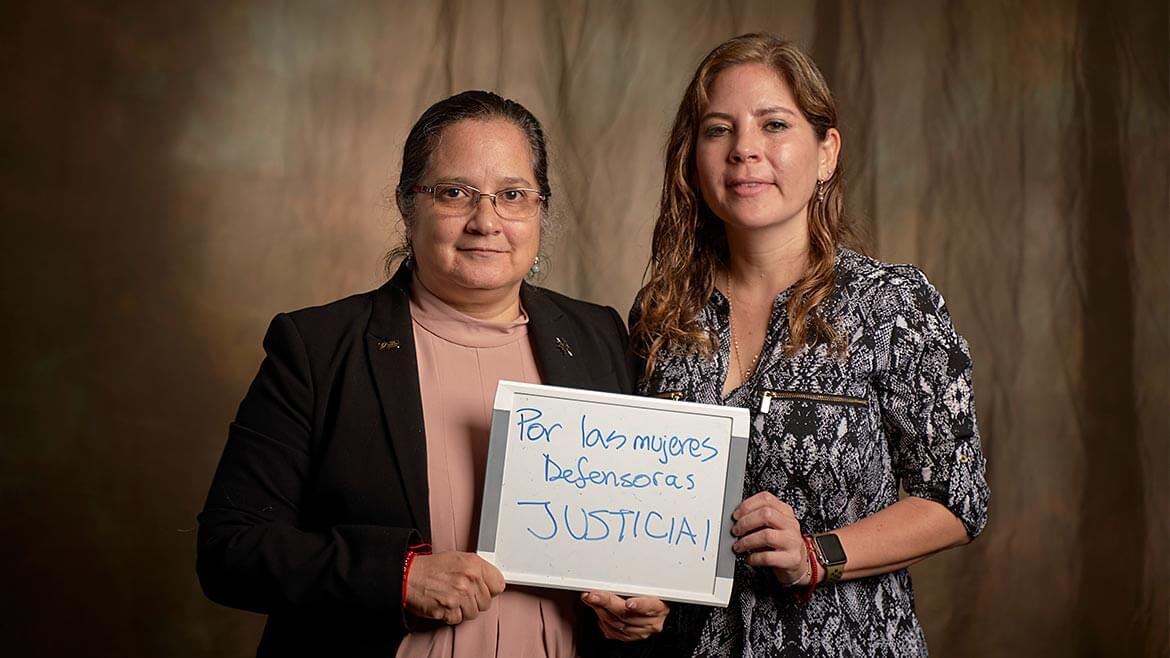
“The right to defend human rights is a right already recognized. We have to be mindful and careful and state clearly that no one should be defamed, persecuted, prosecuted, or killed because they exercise their right to defend rights, regardless of their political position.”
CLAUDIA SAMAYOA
Unidad de Protección a Defensoras y Defensores de Derechos Humanos
Guatemala
and
ALEJANDRA SERRANO PAVÓN
Environmental Law Alliance
Mexico
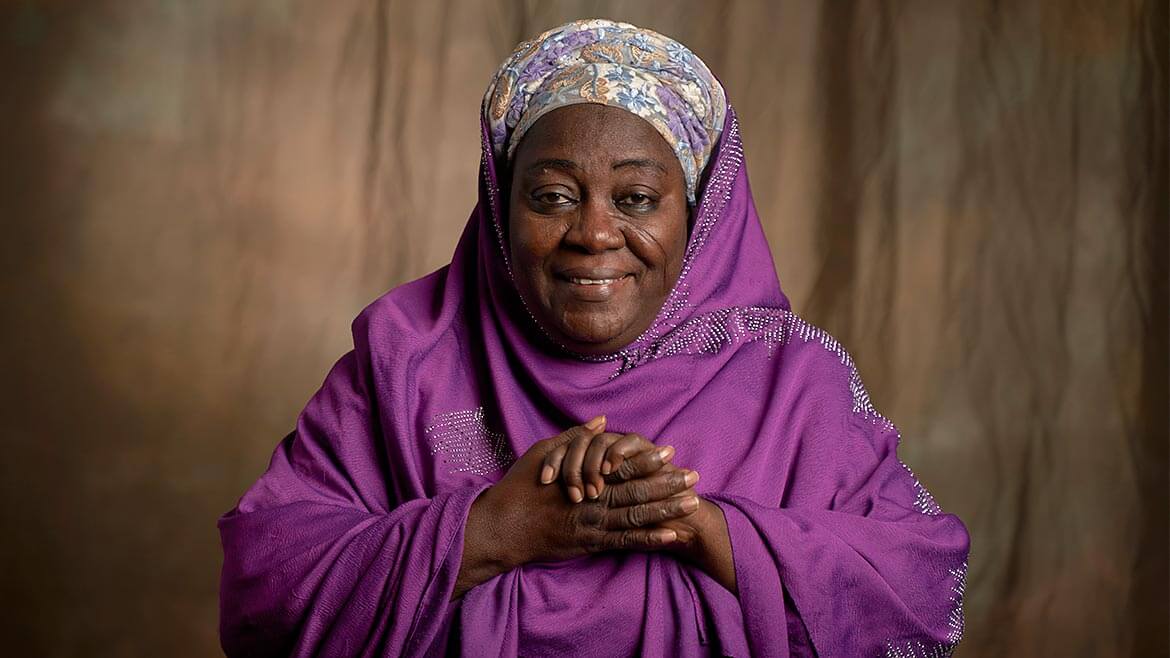
“We believe that if people understand the concept of human rights and are able to apply it to their lives, then there will be more peaceful coexistence. Then government can cut down on the bills for buying arms and ammunitions. Then development can take place because everybody’s living peacefully and they’re able to go about their normal businesses fully.”
HALIMAT JIBRIL
Federation of Muslim Women’s Associations in Nigeria (FOMWAN)
Nigeria
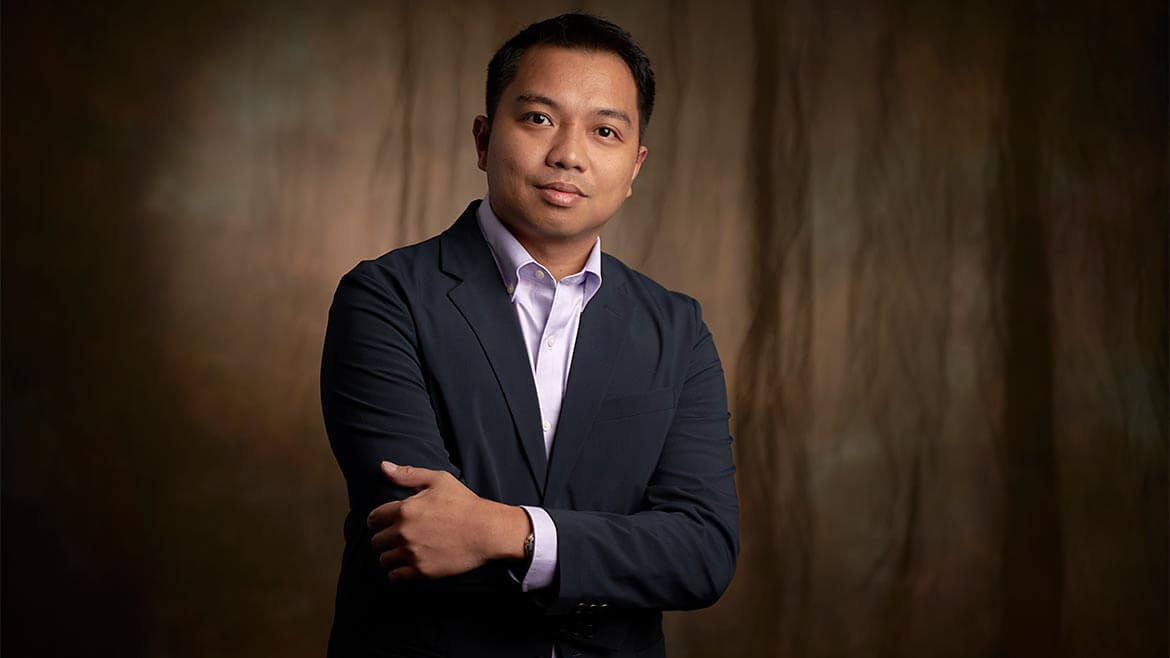
“We have seen the rise of many youth-led movements around the world, and these young protesters are speaking out and standing up not just on the issue of environmental crisis, but also on land rights, on democracy. All of them are using the internet as a tool not just for communication but also for organizing and mobilizing these campaigns. One concrete way we can support youth-led movements is to make sure that these internet tools remain accessible, safe, and truly empowering.”
RAYMOND “MONG” PALATINO
Global Voices
The Philippines
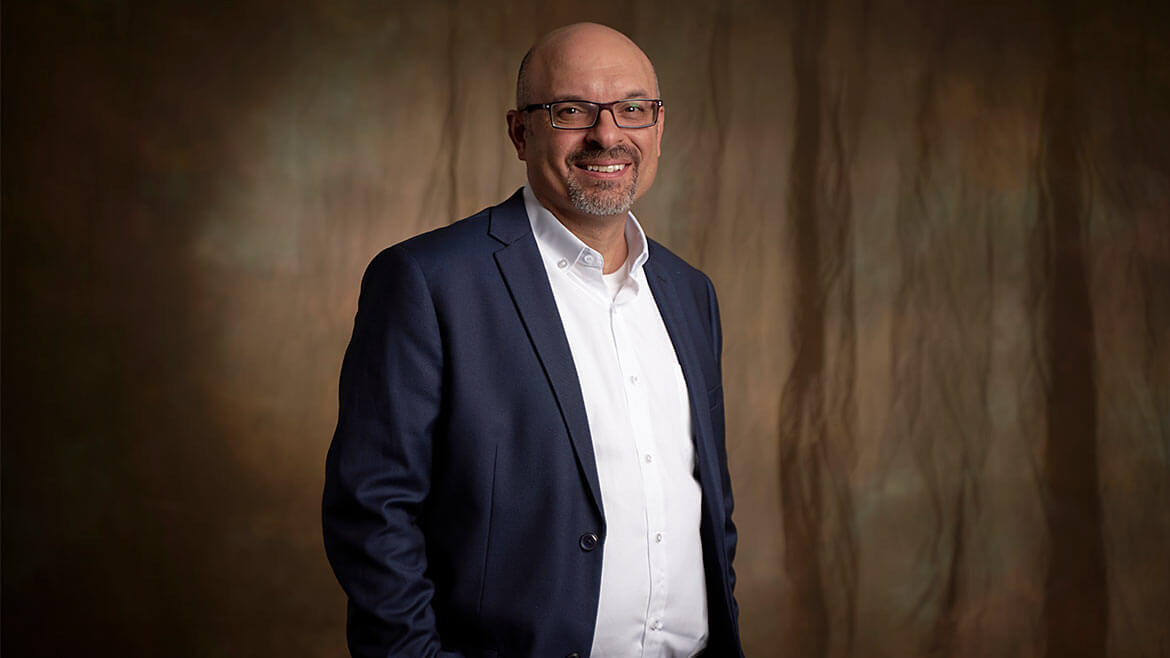
“The Palestinian people, just like all people around the world, are seeking the preservation of life, liberty, and the pursuit of happiness. And when that is undermined in one part of the world, it is undermined everywhere. I feel like the Palestinian situation is just a microcosm of global injustice. If we can solve one, we can solve the other. But big problems require collective minds.”
WESAM AHMAD
Al-Haq
Palestine
“Every time that we’ve had significant change in our country, religion has been at the heart of it. It’s been part of what motivates people. It speaks to our values. To neglect religion in thinking about human rights would be to neglect a huge part of the resources that we have in taking on the injustices we face.”
COLLEEN WESSEL-MCCOY
Kairos Center for Religions, Rights, and Social Justice
United States
“Solidarity is not about ‘me’; it’s about ‘we.’ It’s about just being there – not being ahead of somebody or behind somebody, but standing with them.”
STACEY HOPKINS
Activist
United States
“The relationship we build between people is the greatest wealth we can have. It is beyond money. It goes beyond what you have in your bank account. When you have a good relationship with the people – your friends, your family, your colleagues – that is a good foundation to build a country.”
HALIDOU NGAPNA
Carter Center Human Rights House
Democratic Republic of Congo
“In 1996, we embedded human rights into our three-year program. Immediately, we started seeing change. It was like a revolution. Community members started coming out and promoting their own rights, started talking about their responsibilities. This was possible because we talked about all the aspects of human rights – economic rights, cultural rights, political rights, and civil rights. After people understood human rights, we started seeing changes in deeply rooted cultural practices, including female genital cutting and child marriage. They started having dialogues around gender-based violence against women and girls. Women started taking political positions, because they now understood they have the right to vote, and the right to be elected. Things started changing.”
GODFREY OCHIENG OKUMU
Tostan International
Senegal
“If you’re not indifferent, the world will be different. Challenging our own indifferences is extremely important.”
RAMESH SHARMA
Ekta Parishad
India
“In 2015, our lives began to change completely. We lost our jobs; we lost our homes; we lost our country; we lost our dignity. But we did not lose hope, and we will never lose hope.”
MUNA LUQMAN
Food4Humanity
Yemen
“The motto of our organization is taken from John 17:21, which says, ‘That all of them may be one.’ If all should be one, there should be no violence, there should be no quarrel, there should be no killing. For all of us to be one, there must be love. There must be peace. There must be unity. And there must be togetherness.”
VICTORIA BOLANLE IHESIULOR
Christian Association of Nigeria, Women’s Wing
Nigeria
On the occasion of International Human Rights Day 2019, Andrew Gilmour – the UN assistant secretary-general for human rights – wrote an opinion piece in the Financial Times stressing that the UN must protect human rights defenders from government reprisals against them….
Within the global movement, it’s widely accepted that the onslaught on the human rights agenda is more ferocious now than ever before. ……..We estimate that, around the world, several hundred people have been punished for co-operating with the UN since 2016 when I was assigned responsibility for dealing with this issue. Reprisals can take many forms — I’ve been presented with countless stories of travel restriction, threats from security agents, internet abuse, arrest, imprisonment and even torture, rape, disappearance and killing. The aim is punishment and/or deterrence. And it often works. Despite the staggering courage of many human rights defenders, who persist in exposing violations notwithstanding their knowledge of the likely consequences, others understandably self-censor their actions and words.
…..Even though reprisals appear to be on the rise, however, there are grounds for optimism. More countries now take the issue seriously. They condemn such acts and warn against the scope of the problem, which many recognise has an impact on the global discourse on any matter related to human rights — development, the environment, protection of civilians in conflict settings and even preventing terrorism. When people are cowed into silence, governments and inter-governmental organisations are deprived of the full picture, and that makes their actions in any of these spheres less effective. Increased awareness that there is a growing problem with intimidation and reprisals against human rights defenders is vital. But so is the courage to speak out on behalf of the victims of such actions, even if the perpetrators are hugely powerful, such as the Chinese authorities, whose efforts to silence almost anyone from speaking out are often draconian and can extend even into UN headquarters. There are many brave people who are ready to withstand the threats of their own governments and provide information to the UN, even when the price for doing so can be horrific. Surely everyone at the world body, starting with its member states, has a moral obligation to show at least a fraction of that courage and speak up in defence of those beleaguered front-line defenders. Such is the nature of the governments that carry out most reprisals that only a firm international response of solidarity can have any chance of halting this ominous trend.
Cyndi Lauper will receive the inaugural High Note Global Prize from the Office of the High Commissioner for Human Rights and the High Note Global Initiative.
For her decades of activism with LGBTQ youth, Cyndi Lauper will be awarded the inaugural High Note Global Prize presented by the United Nations Human Rights and the High Note Global Initiative at her annual Home for the Holidays concert December 10, according to Rolling Stone. For more on this award: http://www.trueheroesfilms.org/thedigest/awards/high-note-global-prize
The High Note Global Initiative stated: “In 2008, Lauper co-founded True Colors United after learning that while 10% of American youth identify themselves as LGBTQ, up to 40% of American youth experiencing homelessness do so. The organization works to prevent and end youth homelessness, focusing on the unique experiences of LGBTQ youth. In 2008, Cyndi Lauper co-founded True Colors United, a nonprofit organization that implements innovative solutions to youth homelessness that focus on the unique experiences of LGBTQ young people, who make up to 40% of the youth homelessness population in America.”
The 2019 High Note Global Prize will be presented during the High Note Honors segment of Cyndi Lauper & Friends: Home for the Holidays at the Novo Theater at LA Live on December 10th. The award will be presented to Lauper by Kesha during the concert in Los Angeles. In 2008, Lauper cofounded True Colors United (named for her smash hit song about celebrating otherness), which “implements innovative solutions to youth homelessness that focus on the unique experiences of LGBTQ young people,” according to its website. In addition to Kesha, additional celebrities supporting Cyndi at the Novo Theater on UN Human Rights Day include, Billy Porter, Brandi Carlile, Belinda Carlisle, King Princess, Charlie Musselwhite, Henry Rollins, Perry Farrell with Etty Lau Farrell, Justin Tranter, K. Flay, Emily Estefan, Shawn Wasabi, comics Carol Leifer and Lily Tomlin, U.K. comedian Gina Yashere, Margaret Cho, and Carson Kressley. Taylor Swift, Billie Eilish, Mariah Carey, Dolly Parton, Lady Gaga, Kelly Clarkson, Dua Lipa, Kacey Musgraves, RuPaul, and Tegan and Sara are among the artists who have donated items and experiences for a charity auction with 100% proceeds supporting True Colors.





 Hans Thoolen on Human Rights Defenders and their awards