Posts Tagged ‘India’

Selection of what happened at the local level on Human Rights Day 2015

December 13, 2015

International human rights day is an occasion for a multitude of local activities, some denouncing violations others quietly remembering, some (trying to) march in the streets, others issuing statements. This anthology of 10 such events is far from complete but gives an idea of the variety, from human rights defenders speaking out to governmental institutions ‘celebrating’ …. Read the rest of this entry »

South Africa does ‘about-turn’ on UN resolution on human rights defenders

November 30, 2015

In relation to my post of 26 November [https://thoolen.wordpress.com/2015/11/26/unfortunately-the-un-voted-on-the-resolution-on-human-rights-defenders/] there is an interesting development. South-African media, NGOs and human rights defenders (e.g. http://www.timeslive.co.za/thetimes/2015/11/27/We-join-the-bullies) criticized heavily the position taken by Government in voting against. Today Barry Bateman reports that the South African government appears to have done an about-turn on its position and will now support the resolution when the matter is referred to the full General Assembly in the next few days.  The Department of International Relations says the Africa group of members’ states had about 39 proposed amendments to the resolution following intense negotiations. The department raised concerns around the definition of a human rights defender, the responsibilities placed on sovereign parliaments and issues of NGO funding.  It says the resolution’s main sponsor introduced oral amendments at the last-minute without informing South Africa.  These amendments rendered the country’s concerns redundant.

India‘s Yes-vote was circumscribed by its statement that “stressed” that it does not feel it necessary to not create “any new obligations at national level”. Counterview  of 28 November takes issue with this citing examples of where human rights defenders in India are still missing protection. [see also: http://www.amnesty.org.uk/blogs/yes-minister-it-human-rights-issue/india-uk-narendra-modi-david-cameron-visit-human-rights]

In the meantime Khoo Ying Hooi writing in a post in the Malaysian Insider of 30 November welcomes the Yes-vote by Malaysia, but shares the skepticism of many local human rights defenders that it is mostly window-dressing way. (“Malaysia has in many instances not walked the talk when it comes to international commitments on human rights affairs. One glaring example is their lack of commitment to the peer-review mechanism, Universal Periodic Review (UPR) in the United Nations Human Rights Council. At this point of time, Malaysia’s adoption of the UN resolution in protecting human rights defenders does not reflect the reality back home. It was obvious that it is, at least for now, nothing more than diplomatic window dressing. While a UN resolution such as this would help in many ways, human rights protection must start at home.“)

Sources: Govt does ‘about-turn’ on its human rights defenders position

http://www.themalaysianinsider.com/opinion/khoo-ying-hooi/article/malaysias-vote-on-protecting-human-rights-defenders-diplomatic-window-dress

http://www.counterview.net/2015/11/india-doesnt-need-new-legal-mechanism.html

Eulogy of deceased Indian human rights defender Dr R.M.Pal

October 21, 2015

How broad the human rights movement is nowadays, is demonstrated by this eulogy of Dr R M Pal by Vidya Bhushan Rawat, a social and human rights activist in India. It is a very personal story and I provide the text in toto below. The writer states that at this crucial moment is a great blow to all the right thinking secular forces as Pal was the man who always believed in the idea of a secular inclusive India and spoke regularly against the Hindutva’s communalism.

Dr R.M.Pal: Human Rights of The Most Marginalised Was His Uncompromising Passion

By Vidya Bhushan Rawat

20 October, 2015
Countercurrents.org

It was Prof Y.P.Chibbar, the PUCL General Secretary for years, who introduced me to Dr R.M.Pal when I visited him at ARSD College where he was teaching. ‘Dr Pal is the right person for you. He is the editor of PUCL Bulletin and lives in Greater Kailash. You must meet him,’ suggested Prof Chibbar. And after that it was a relationship that grew up every passing day. As a young aspiring boy from a nondescript town of Uttarakhand, I had come to Delhi ‘incidentally’, during the tumultuous years of anti Mandal agitation where most of our ‘intellectuals’ had been exposed. Staying with Dr Mulk Raj Anand, pioneer of English writing in India, there was a period of great personal churning for me and Dr Pal made it clear to me to earn to learn. ‘What are you doing there’, he asked. Jee, I am looking after his work, typing his scripts and accompany him to various places where he moves, I said. My aim is to do social work and it is a great honor to be with a man who calls himself a ‘Gandhian’. For a young person like me who had so many fantasies about Gandhism as perhaps we did not have the opportunity to know and understand ‘others’ and it seemed the only way to fight against oppression particularly untouchability which Gandhi had claimed to be the biggest ‘sin’ of Hinduism. So for me any one who had seen Gandhi or worked with him became a hero and ‘Lokayat’ where Dr Mulk Raj Anand stayed became my ‘sabarmati’. Dr Pal was a no nonsense person who could speak fearlessly without being hypocritical in front of you and he remained unimpressed. ‘Well, I can tell you Mulk Raj Anand will not help you’, he said. ‘ Don’t live under the romance of ‘Gandhian’ fame as it is good to do ‘social work’ but you need to be independent and earn to do things, he suggested. I know you came from Dehradun and may face prejudices here because of your village background. Better you do some evening courses as you plan and earn for your living and hopefully you will be able to contribute to society as you wish. And I can say with firm conviction that after coming to Delhi and staying here as meek and submissive person for over two and half years, Dr Pal gave me the confidence in myself and helped me become independent and rebuild my self respect and confidence.

Over the years our interaction grew and he became fond of me. He would guide me and ask me write in particular way. He suggested diverse topics to me and so much was the trust that many times he would send me to go on fact finding on particular issues and get direct information for him. It was not just he would ask to write but he would call me and discuss with me the issue in detail and point out those particular references which he would wish me to focus. I was fortunate to have met and acquaint with a number of eminent, Human Rights activists, Ambedkarite scholars and writers at young age and all of them respected me and appreciated my courage and enthusiasm but Dr Pal remain the one who mentored me and guided me. He would appreciate a number of my elderly friends but unlike them he would guide me and even point to me the grammatical mistakes in my writings. I knew them very well and the fact was that being a teacher, it was like a student sitting in his class as if he is dictating and then checking our assignment. Many times, he warned me of being neutral in my criticism and asked me to be as ruthless to Muslim fanatics too who try to defame the community but one thing was clear that he made a distinction between minority communalism and majoritarian communalism and cautioned India of the dangers of the Hindu communalism. He was afraid of the fact that India might become victim of the majoritarian communalism and for that all the like-minded parties and people have to join hand. He would often quote that no movement will succeed unless it is preceded by a political philosophy.

I still remember how he guided me to write a paper for a seminar being organized by Indian Social Institute, Delhi, in collaboration with UGC, on Ambedkar and M N Roy’s relationship and Roy’s thought on rationalism and Buddhism. He was determined despite my own feeling that it was a misfit for a seminar on Human Rights education issue yet he felt only I could have done justice to this and he guided me. Yes, that paper took me to various files including that information where Dr Ambedkar had, as a minister in Viceroy’s Council, sanctioned an amount of Rs 13,000 for anti war efforts of M N Roy and on the basis of this information ‘inspired’ Arun Shourie to write ‘Worshipping the False God’, a book based on hard prejudices and lies. I met Justice Tarkunde several time and got those letters where he mentioned that it was he who took the money many time on behalf of the Party and that Roy never took the money himself. Ambedkar was in deep appreciation of MN Roy and his intellectual honesty and that is why there are lots of similarities on their thoughts and philosophy, which need further elaborations. I can say with conviction that if Dr Pal had not guided me in this regard, I would have missed the great opportunity and work of M N Roy related to caste, religion and fascism.

As the editor of PUCL Bulletin he was able to focus a lot on atrocities against Dalits and issue of communalism in India. Both the issue of caste violence against Dalits and communalism were matter of great concern for him and he remained uncompromising in his condemnation of them. At the various national and international forums he always focused on the issue that Human Rights are not just state laws and their steady implementation which of course are important, but what he spoke and emphasized was ‘societal violation of human rights’ which he always felt, got out of the scrutiny of the human rights defenders and the organsations working for the human rights. It was his conviction that Dalits, Muslims and other marginalized people should join Radical Humanist and Human Rights Movement to raise their issues. As he became president of Delhi PUCL, he ensured that these segments are fairly represented and we know personally many of the radical humanists and PUCL ‘leaders’ were not very happy with his ‘casteist’ approach.

For long he listened to many youngsters claiming that ‘human rights’ organisations in India have no space for the Dalits. He always mentioned to me this point that PUCL is a membership based organisations and if the Dalits, Muslims wanted to lead it, they need to become member and increase their numbers. He introduced many eminent persons in the human rights and said that there is no point complaining if you are unable to be member of it. People’s organisations are led by people and need further understanding and working of the organisations and its structures. Merely blaming the organisations for being representative of ‘upper castes’ was not correct according to him though we knew that many activists became members but frankly speaking the functioning of the organisations like PUCL did not change. The dark fact is that he was not liked inside the PUCL as well as in the Radical Humanists circle for his ‘overemphasis on caste and communalism. His unambiguity and openness made many people his enemy who would be jealous of his forthrightness. The man always enjoyed being with young activists, guiding them and providing ideas to write on particular issues. I can vouch with my own experience having met numerous people of eminence how they just use you. The dirty secret of the ‘intellectual’ world is that it does not want to engage in dialogue with people but work on ‘networking’.

We had lots of disagreement particularly on the issue of Gandhi and Ambedkar. He knew it well that I have no liking for Gandhian philosophy, which I called humbug and absolutely patronizing as far as Dalits are concern. He would always say that though Gandhi made eradication of untouchability and fight against communalism pivot of his philosophy, he failed in both count yet he felt that Gandhi’s intention were not wrong but lots of discussions and debate on the issue actually saw his opinion changing. He said any one who read ‘annihilation of caste’, will only find Gandhi on the wrong side and Ambedkar fighting for the rights of the people. He felt Ambedkar was wronged.

His personal association with M N Roy and later working on the human rights issues had broadened his horizon much bigger than many of his contemporaries who remained very narrow in their personal lives. There are very few who would spare time for you and guide you whatever possible ways and feel good at your achievements. He loved speaking Bangla and always followed the incidents happening in East Bengal or what we call today Bangladesh. The pain of division and migration was always with him and that is why he was always warm to people like me who left home in search of a new identity and to fulfill their commitments. He would always warn me like a teacher of what to do and what not to do. There are so many things to remember where he asked me to write on and suggested me to attend particular programmes.

The last togetherness of mine with him was at a seminar that he has been trying to organize for years in Mumbai on Dr Ram Manohar Lohia but always felt lacking supporting hands there as he would have them in Delhi as it was the city he always missed and left after he had paralytic stroke that confined him on wheelchair and external help. Many of my friends actually spoke to me after visiting him and felt pained to see a vibrant man depended on people for help, a man who was always active doing things at his own. But it was his strong willpower that despite being confined to bed he could do a lot of work, which is highly impossible for many of us to do. I never saw him complaining about himself whenever I spoke to him on phone as it was work work and work. He would ask for certain book or speak to certain person or provide the phone numbers of some friends. He complained that being in Mumbai has curtailed his freedom as he always enjoyed his friendship circle in Delhi and felt that he has got isolated in Mumbai.

The seminar on Ram Manohar Lohia in Mumbai reflected how he wanted to do things so fast. Academics saw him speaking passionately on Lohia-Ambedkar relationship where he quoted Lohia saying that he wanted Dr Ambedkar to lead the entire Indians and not confined to the leadership of the Dalits even when people like me questioned Lohia suggesting his vision ended at Gandhsim, Dr Pal remain open to new ideas which supported freethinking and secular democratic traditions in India.

There are so many fond memories of him. I can only say that he was the one on whom I could count for guidance and support. He never failed and once promised would go to any extent to finish the task. I grew up admiring him for his courage and forthrightness as whenever he spoke he was to the point and blunt. At a seminar, a leading human right academic, who happened to be a Muslim, actually supported practice of Sati as cultural practice and therefore outside the purview of human rights laws in the name of ‘personal laws’ of Hindus. I got up and objected saying whether he feel that veil and Burqa should be put beyond the limit of human rights laws. It became heated and Dr Pal came for my rescue saying that he always wanted human rights defenders and organisations to speak against societal violation of human rights as human rights in South Asia are not just violated by the state but majority of violation happen because of cultural practices and we need to come out in open against such rigid and inhuman practices such as caste system and untouchability.

The demise of Dr R M Pal at this crucial moment is a great blow to all the right thinking secular forces as we would often go to him and seek his advice on many issues confronting us. He was the man who always believed in the idea of a secular inclusive India and spoke regularly against the Hindutva’s communalism. Though he is no longer with us, his writings will always inspire us to work for a secular democratic India. We promise to carry on his legacy for our better future.

Vidya Bhushan Rawat is a social and human rights activist. He blogs at http://www.manukhsi.blogspot.com twitter @freetohumanity Email: vbrawat@gmail.com

Source: Dr R.M.Pal: Human Rights of The Most Marginalised Was His Uncompromising Passion By Vidya Bhushan Rawat

4 Human Rights Defenders receiving the Alison des Forges Award 2015

August 11, 2015

2015 Alison Des Forges Award Honorees

2015 Alison Des Forges Award Honorees. Top: Khadija Ismayilova (Azerbaijan), Yara Bader (Syria), Father Bernard Kinvi (CAR – 2014 winner). Bottom: Nicholas Opiyo (Uganda), Nisha Ayub (Malaysia), Dr. M.R. Rajagopal (India – 2014 winner). © Jahangir Yusif, Francesca Leonardi (Internazionale), 2014 Human Rights Watch, 2015 Rebecca Vassie, 2015 Nisha Ayub, Paramount Color Lab, Ulloor, Trivandrum

Human Rights Watch just announced that its Alison Des Forges Award winners 2015 come from Uganda, Syria, Malaysia and Azerbaijan:

Nisha Ayub, Malaysia
For over a decade, Nisha Ayub has championed the rights of transgender people in Malaysia through support services, legal and policy analysis, and public outreach. Human Rights Watch honors Nisha Ayub for challenging the discriminatory laws that prevent transgender people in Malaysia from living free of violence, fear, and oppression.

Yara Bader, Syria
Yara Bader, a journalist and human rights activist, works to expose the detention and torture of activists – including her husband, Mazen Darwish recently released – in war-torn Syria. She has experienced first-hand how the Syrian government uses its security and intelligence agencies to brutally crack down on independent voices. Human Rights Watch honors Yara Bader for her tremendous courage in speaking out on behalf of Syrian detainees despite grave risks to her safety.

Khadija Ismayilova, Azerbaijan 
Khadija Ismayilova, a prominent investigative journalist in Azerbaijan, has dedicated her life to the fight against corruption, for human rights, and for freedom for political prisoners in a country under increasingly harsh authoritarian rule. Human Rights Watch honors Khadija Ismayilova for her extraordinary courage as a journalist and human rights activist in the face of an escalating crackdown on freedom of expression in Azerbaijan. She is currently behind bars. see also: https://thoolen.wordpress.com/2014/12/11/khadija-ismayilova-azerbaijan-is-not-deterred/

Nicholas Opiyo, Uganda
Nicholas Opiyo is a leading human rights lawyer and founder of Chapter Four Uganda, a human rights organization. He has successfully argued several high-level constitutional challenges, including to the notorious Anti-Homosexuality Act of 2013, which was declared null and void in August 2014. Human Rights Watch honors Nicholas Opiyo for his unfaltering dedication to upholding the human rights of all Ugandans by promoting universal access to justice.


The award is named for Dr. Alison Des Forges, senior adviser at Human Rights Watch for almost two decades, who died in a plane crash in New York State on February 12, 2009. For more on the award, see: http://www.brandsaviors.com/thedigest/award/alison-des-forges-award-extraordinary-activism. See also: https://thoolen.wordpress.com/2015/04/19/events-in-memory-of-alison-des-forges-at-buffalo-university/

The four 2015 honorees will be honored at the Voices for Justice Human Rights Watch Annual Dinners held in more than 20 cities worldwide in November 2015 and March-April 2016. Also two 2014 recipients of the award, Father Bernard Kinvi from the Central African Republic and Dr. M.R. Rajagopal from India will included in this series of events:


Father Bernard Kinvi, Central African Republic
Father Bernard Kinvi is a Catholic priest who directs the hospital at the Catholic mission in Bossemptele, Central African Republic. In early 2014, when sectarian violence devolved into coordinated violence targeting Muslim civilians, Kinvi saved the lives of hundreds of besieged Muslims, whom he gathered from their homes and sheltered in the Catholic church. Despite repeated death threats, Kinvi persisted in protecting those in his charge until they could be taken to safety. Human Rights Watch honors Father Bernard Kinvi for his unwavering courage and dedication to protecting civilians in the Central African Republic.

Dr. M. R. Rajagopal, India
Dr. M. R. Rajagopal is a leading palliative care physician from India who, for more than 20 years, has battled conditions that cause patients to suffer severe pain unnecessarily. As clinician, academic, and activist, Rajagopal is a global force behind efforts to promote and put into practice palliative care as a human right. He built the world’s most successful community-based palliative care program, and he and his organization, Pallium India, played a key role in convincing India’s government to make morphine accessible. Human Rights Watch honors Dr. M. R. Rajagopal for his efforts to defend the right of patients with severe pain to live and die with dignity.

Rights Activists Honored | Human Rights Watch.

8 Must-Read Stories from the US Human Rights Reports selected by Catherine Russell

July 2, 2015
Catherine Russell, the U.S. Ambassador-at-Large for Global Women’s Issues, wrote in the Huffington Post of 1 July 2015 a piece which highlights 8 stories about women taken from the State Department’s annual human rights reports, that she says would not reach the evening news but are a must. Here is her selection:

2015-07-01-1435772655-6505904-HRRblog.jpg

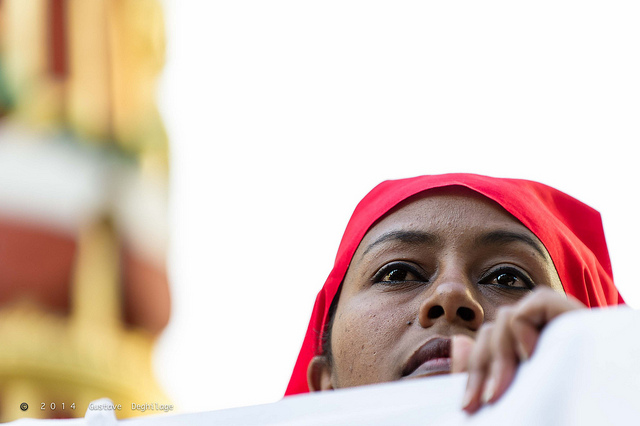
[Photo: Gustave Deghilage ]

In Nepal, a mother may be denied the ability to confer her Nepali citizenship to her children if the father’s identity is unknown or he is not Nepali. This is not uncommon: 27 countries discriminate against women in their ability to pass citizenship on to their children. Too often this results in a child who is stateless, meaning he or she may not be able to access basic services like health care and education.

In Afghanistan, a survey found that 39 percent of Afghan women between the ages of 20 and 24 were married before the age of 18 — making them part of a global trend where one in three girls in the developing world is married as a child — and Afghan women who marry later in life often don’t have a choice in their marriage. These stories and statistics exist despite laws against early and forced marriage.

A story in the Nigerian report highlights the case of a college student who reported that a soldier lured her to a police station and raped her repeatedly. The soldier was reportedly “disciplined” for leaving his post, but as of December nothing else had happened.

In Burma, there is an effort underway to enact legislation that would mandate that women can’t have children more than once every three years. There are obvious questions as to how such a law would be enforced. Many are concerned that it would only be enforced in areas where many members of minority groups live.

Fortunately, the news is not all bad.

In Afghanistan, the national electoral commission’s gender unit focused on women’s political participation in the 2014 election, and increased the number of women who helped determine their country’s future.

In Brazil, the federal government operates a toll-free nationwide hotline for women to report intimate partner violence, while in India, a partnership between state government and civil society led to the launch of a crisis center for survivors of rape, dowry harassment, and domestic violence.

Another partnership — between government and civil society in Guinea — is helping to educate Guinean health workers on the dangers of female genital mutilation. The report says that more than 60 health facilities have integrated FGM/C prevention into their services thanks to this effort.


You can follow Catherine Russell on Twitter: www.twitter.com/AmbCathyRussell

8 Must-Read Stories From the Human Rights Reports | Catherine Russell.

Asia and human rights defenders: the shrinking space for NGOs

May 26, 2015

In a few recent posts I drew attention to the trend of shrinking space for NGOs in countries such as Russia, Kyrgyzstan and Cambodia [https://thoolen.wordpress.com/2015/05/21/draft-laws-on-civil-society-restrictions-also-pending-in-kyrgyzstan-and-cambodia/]. On 9 May 2015, The Economist’s column on Asia (Banyan) was devoted to the same issue, concluding that “Democratic Asian governments as well as authoritarian ones crack down on NGOs“. Under title “Who’s afraid of the activists?” it mentions China, Cambodia, India, Pakistan, Sri Lanka, Bangladesh, Kyrgyzstan and Tajikistan.

It lists the usual ‘complaints’ that both authoritarian and democratic leaders use against the activities of NGOs, which range from:

  • threats to national sovereignty
  • promotion of ‘Western’ values
  • hidden agenda (such as conversion to Christianity)
  • blocking development through environmental objections.

E.g. the Indian home ministry claims that 13 billion $ in foreign money has gone to local charities over the past decade and that 13 of the top 15 donors were Christian outfits. Interestingly, similar complaints come from the biggest Indian NGO, Rashtriya Swayamsevak Sangh (RSS), which itself has “strong foreign links, draws on an Indian diaspora in America and elsewhere for support, and dishes out help across borders, such as in Nepal following last month’s earthquake”.

Quite rightly the article concludes that in the long run, such limitations only rally political opponents, while (local) NGOs may face close scrutiny themselves one day (when the Government has changed hands): “Battering-rams, after all, have two ends.”

Who’s afraid of the activists? | The Economist.

Human rights defender Kalimuthu Kandhasamy in Tamil Nadu arrested for using the word human rights!

February 26, 2015

HRD Alert – India (a Forum of Human Rights Defenders) and Front Line Defenders have called for the release of Mr Kalimuthu Kandhasamy who was arrested in the morning of 26 February 2015.

[Kalimuthu Kandhasamy is the District Organizer of Citizens for Human Rights Movement (CHRM), which provides legal counsel and assistance to victims of human rights violations in Tamil Nadu, including by providing assistance in complaints before courts, human rights institutions, law enforcement officials and other relevant bodies. The organisation was founded by People’s Watch, an NGO that monitors human rights violations and provides legal assistance to victims in Tamil Nadu. The human rights defender also works as an assistant to a lawyer providing legal representation in People’s Watch’s cases.]

The accusations against Kalimuthu Kandhasamy include, ‘impersonating a public servant’, cheating, and improper use of emblems. And here comes the almost funny part: the charges against Kalimuthu Kandhasamy are reportedly in relation to the fact that CHRM contains the words “human rights” in its title. It is claimed that this is in violation of the Tamil Nadu Societies Registration Act, which reportedly states that no non-governmental institution should have the terms “human rights” in its name (this amendment was made on the recommendation of the Tamil Nadu State Human Rights Commission [SIC] that no non-governmental institution should have the terms “human rights” in its name! Would seem a clear violation of the right to association). The accusations are being brought under sections 170 and 420 of the Indian Penal Code, and Section 5 of the Emblems and Names (Prevention of Improper Use) Act 1950.

The human rights defender denies that either he or CHRM have posed as a public authority.

Human Rights Day: a selection of articles from Asian media that you may have missed

December 10, 2014
 I call on states to honour their obligation to protect human rights every day of the year. I call on people to hold their governments to account. And I call for special protections for the human rights defenders who courageously serve our collective cause,” UN Secretary-General stated in his message for Human Rights Day.  There is so much to report on this day, that I decided to focus on stories from 4 Asian countries (China (Hong Kong), India, Thailand, Bangladesh) which give an impression (not more than that) of how Human Rights Day is reflected in the media.
The first article “Responsibility for the protection of human rights is in our hands” appeared in the South China Morning Post of Tuesday, 09 December, 2014

Read the rest of this entry »

Malala Yousafzai and Kailash Satyarthi share Nobel Peace Prize

October 11, 2014

You will have learned this already from the main news media, but to bee complete in the area of human rights awards: On Friday 10 October the Nobel Peace Prize 2014 was awarded to India‘s Kailash Satyarthi and Pakistan‘s Malala Yousafzai for their struggles against the violations of the rights of children. As the chairman of the Norwegian Nobel Committee, said, “Children must go to school, not be financially exploited.

Photos: Nobel Peace Prize winners

Malala Yousafzai came to global attention after she was shot in the head by the Taliban — two years ago Thursday — for her efforts to promote education for girls in Pakistan. Since then, after surgery, she has won several high level human rights awards and now the Peace Prize. [https://thoolen.wordpress.com/2013/10/10/malala-collects-another-award-sacharov-instead-of-snowden/]

Satyarthi, age 60, has shown great personal courage in heading peaceful demonstrations focusing on the grave exploitation of children for financial gain, the committee said. Satyarthi told reporters that the award was about many more people than him — and that credit should go to all those “sacrificing their time and their lives for the cause of child rights” and fighting child slavery.

The peace aspect of the Prize is double this year: Read the rest of this entry »

India and South Africa in UN Human Rights Council remain reluctant towards civil society

October 1, 2014

Under the title “India dissociates itself from UN Human Rights Council resolution favouring pluralistic civil society“, Counterview of 30 September 2014, expresses its disappointment with the position taken by India (and other States such as South Africa) who one would normally expect to come out in support of a vibrant civil society, including specifically human rights defenders. They did not call for a vote – so the resolution passed – but expressed strong opposition. This is in line with earlier behaviour in the Council [see: https://thoolen.wordpress.com/2014/04/12/india-and-south-africa-forsaking-their-human-rights-credentials/]. Here some extracts: Read the rest of this entry »