The Liberian Observer (Joaquin M. Sendolo)of 6 August carries the story of 9 human rights groups in Liberia having expressed fear that they are receiving threats from some ranking security officers of the Liberian Government.
Human Rights Activist, Adama K. Dempster
In a statement issued in Monrovia on August 5, 2020, the groups in a collective letter noted that “Credible threats” have been made against a staff of the Global Justice and Research project (GJRP), Hassan Bility, as well as witnesses of alleged crimes by a recent defendant of a war crimes unit in the United Kingdom.
The human rights organizations that include CIVITAS MAXIMA, Center for Justice and Accountability, Center for Civil and Political Rights, Civil Society Human Rights Platform, Human Rights Watch and the Advocates for Human Rights amongst others also indicated in the release that “Credible threats have been made against Adama Dempster, Secretary-General of the Civil Society Human Rights Advocacy Platform of Liberia, in connection to his human rights work and advocacy for a war crimes court.” [see also: https://humanrightsdefenders.blog/2018/01/23/human-rights-defenders-to-president-weah-the-ball-is-in-your-camp/]
The groups said that Dempster, who led the civil society delegation that traveled to Geneva to report to the United Nations on Liberia’s human rights record, has also received credible information that he is being “targeted for elimination.”
“These threats come from certain leading figures within the Liberian government’s security services, and confidential sources state that they are related to Dempster’s work delivering human rights reports to the International Community and the United Nations against the current Government, as well as his advocacy for a war crimes court,” said the human rights groups.
Bility’s GJRP has been actively involved in researching and identifying some key perpetrators of war crimes and crimes against humanity during Liberia’s civil war, and some based on the work of GJRP have been prosecuted in the United States while others are detained in Europe awaiting trial for their roles. Among those prosecuted in the United States under this effort is Mohammed Jabateh (alas Jungle Jabbah). In Europe, Martina Johnson of the defunct National Patriotic Front of Liberia (NPFL) with some former fighters of the United Liberation Movement (ULIMO-K) of warlord Alhaji G.V. Kromah has been arrested.
The recently announced threats against human rights advocates come following the release and subsequent coming to Liberia Agnes Reeves Taylor, former wife of jailed Liberian President Charles Taylor.
There are still more warlords and war crimes perpetrators in Liberia who were identified in Liberia’s Truth and Reconciliation report, and some are currently serving in the National Security Agency (NSA).
The human rights organization state in their statement that: “The intimidation and threats against GJRP staff and witnesses started immediately after Agnes Reeves Taylor, who was indicted in 2017 in the United Kingdom for torture, returned to Liberia in July 2020. They included multiple threatening phone calls to GJRP staff, including the director, Hassan Bility, as well as against witnesses of her alleged crimes.”
According to the human rights groups, several witnesses have said that people claiming to be Reeves Taylor supporters have threatened their lives — including in person, and claiming also that certain public statements about Bility and the GJRP by Reeves Taylor, who was not acquitted, but whose case in the UK did not go to trial based on a point of law, also raise concerns.
The groups also reminded the Government of Liberia of the United Nations Human Rights Committee’s Concluding Observations, issued in 2018.
The UN body said that the Government of Liberian should make certain that “all alleged perpetrators of gross human rights violations and war crimes are impartially prosecuted and, if found guilty, convicted and punished in accordance with the gravity of the acts committed.”
The Human Rights Committee’s Observations required Liberia to report by 27 July 2020 on the implementation of the recommendations regarding accountability for past crimes. Liberia has not met this deadline. “We sincerely hope that Liberia will take its international treaty obligations seriously by implementing the recommendations and submitting its follow-up report to the Committee,” said the groups.
The groups called on the Government of Liberia to ensure that human rights defenders in Liberia are protected from harassment and threats by individuals within the Government security services.
Nobel Peace Prize Laureate, Dr Denis Mukwege, says his family has been intimidated and threatened since he denounced the recent massacre in Kipupu in Mwenga territory in South Kivu of Congo. Mukwege, who is the founder and Medical Director of Panzi Hospital and Foundations, said in a statement on Monday 3 August 2020 that since 2012 and even after two assassination attempts, he had continued to receive death threats [see also; https://humanrightsdefenders.blog/2018/10/05/breaking-news-see-which-other-awards-the-2018-nobel-peace-prize-laureates-won-already/].
“Since my tweet on Sunday, July 26 denouncing the recent massacre in Kipupu in Mwenga territory in South Kivu, I have received various hate mails, and members of my family have been intimidated and threatened,” he said.
“Since then[ 22 years ago], I have not ceased to campaign for the search for truth and the application of justice, without which we cannot hope for lasting peace,” he said.
While calling for peace, the Nobel Peace Prize Laurel made a case for the examination of the mapping report carried out by the United Nations High Commissioner for Human Rights, adding that the report contained a compilation of war crimes, crimes against humanity, and genocides detailed from 1993 to 2003. “Without analyzing these crimes-which mark the history of the Congo-and without justice being rendered for these crimes, no people involved in these conflicts will be able to recover or live in peace,” he said. He further said it seemed that advocating for the creation of a special jurisdiction to try crimes in the Congo scares some people who pour out their hatred on social media by pitting one against the other, often on the basis of lies. However, he said reconciliation between peoples and the establishment of reparations for the victims could not be achieved without our relentless search for the truth. “No intellectual malfeasance, no threat, no intimidation, will prevent me from expressing myself on the reality of the atrocities experienced by the populations of my country and the consequences of which I treat every day in my hospital in Bukavu,” he said.
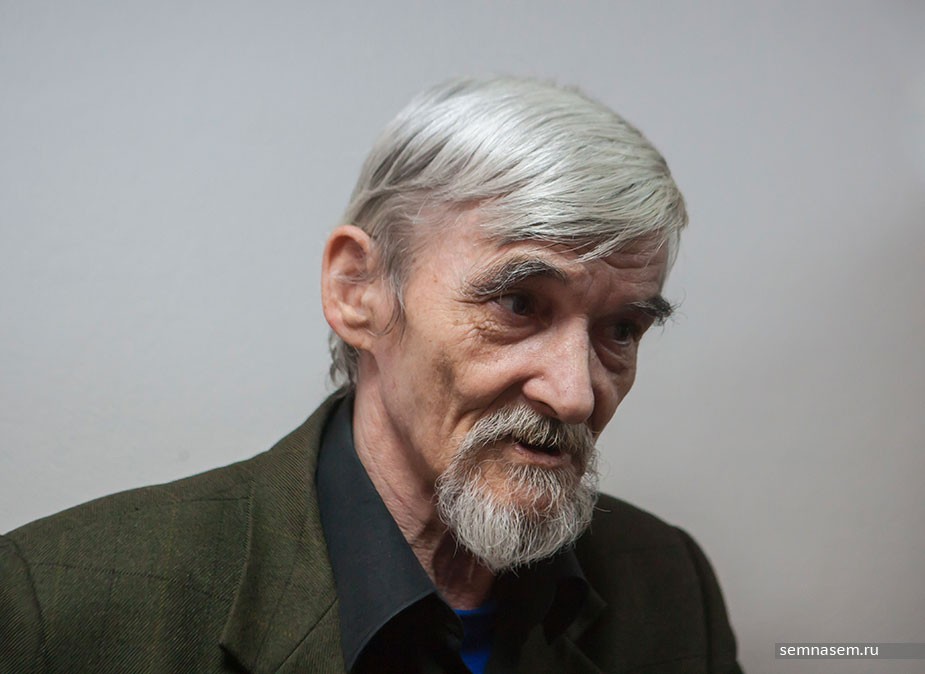
Expert on Stalin atrocities Yury Dmitriyev. Photo: Igor Podgorny, 7×7-journal.ru
The Moscow Times of 22 July 2020 carries a detailed report by Evan Gershkovich on Gulag historian Yury Dmitriyev who has spent decades calling attention to one of the darkest chapters in Russia’s history. He now faces up to 15 years in prison on sexual assault charges in a case his allies say has been trumped up to silence him. Acquitted of child pornography, Yury Dmitriyev now faces charges of sexual assault.
The Moscow Times profiled Dmitriyev in 2018:
Yury Dmitriyev normally hates Moscow. The concrete, the commotion, the pollution. As much as he can, he stays in Karelia, where he was born, raised and has spent his 62 years. In the northwestern region bordering Finland and the Baltic and White Seas, he can usually be found in the woods or in his study, writing.
Yet on a pleasant evening in mid-May, Dmitriyev, a prominent researcher of Soviet crimes, was happy to be in the metropolis. Accompanied by his elder daughter, Yekaterina Klodt, and his lawyer, Viktor Anufriyev, old friends greeted him with grins and tight hugs in a courtyard outside Teatr.doc, a progressive theater, ahead of a human rights awards ceremony.
One month earlier, Dmitriyev had been cleared of child pornography charges. Authorities had detained him in December 2016 after investigators found nude photos of his 11-year old adopted daughter; Dmitriyev said he took the photos to monitor her physical changes as she was prone to illness. From the outset, human rights defenders claimed that the case was fabricated to silence an outspoken activist.
If the arrest came as a shock to those who knew him, so too did his acquittal: Fewer than one percent of criminal defendants in Russia are cleared.
But authorities, human rights defenders now say, weren’t done with the historian just yet. Only a month after the awards night, a judge annulled the April decision, starting the trial anew.
Then, two weeks later, prosecutors brought additional charges to the table: This time they claimed that Dmitriyev had sexually assaulted his daughter. As of late June, the historian was back in jail facing another uphill legal battle, his freedom having been fleeting.
“The new charges are a chance for the prosecution to get it right,” Anufriyev said. “They failed the first time, so officials are giving them another chance to get the job done.”
Digging and documenting
Two decades ago, Dmitriyev discovered a set of mass graves in a Karelian forest containing the bodies of more than 9,500 victims of Josef Stalin’s Great Terror. Poring over KGB documents, the head — and sole employee — of Memorial’s Karelia branch spent the next 20 years documenting each victim’s story.
“What makes Yury unique is that he combines both the digging and the documenting,” said Sergei Krivenko, a colleague of Dmitriyev’s at Memorial and a member of the Presidential Human Rights Council. “Some people work on compiling books of names, some people search for the exact locations of the killings. No one has dedicated themselves to both the way Yury has.”
No one has dedicated themselves to both digging and documenting the way Yuri has.
Those who know Dmitriyev say he toiled everyday. “He’s been doing this work for the past 30 years, and I’m 33,” said Klodt, his elder daughter. “I’m so used to it that, for me, his work is no different than a dentist’s.”
Since the fall of the Soviet Union in 1991, historians say, the state has supported them in locating and memorializing the burial sites of the estimated 15 to 30 million victims of Stalin’s rule. At the location Dmitriyev discovered — Sandarmokh — local authorities helped build roads and erect monuments and aided with an annual gathering at the site.
But in recent years, human rights defenders say, the climate has become less hospitable. Those who spoke with The Moscow Times pointed to a resurgence in Stalin’s popularity as a significant reason: In June last year, Russians voted him the “most outstanding” person in history. In second place was President Vladimir Putin, who has accused the West of “excessive demonization” of the Soviet leader.
Others pointed to a surge in nationalism since 2014, when Russia annexed Crimea and got involved in Ukraine. “There were many foreigners killed at Sandarmokh — Norwegians, Poles, Finns and Ukrainians, including around 200 intellectuals,” Krivenko said. “This is a very important place for Ukrainians especially, and a delegation would visit the site annually.”
Dmitriyev organized the memorial visit every year on Aug. 5. He invited foreign delegations and led discussions, Krivenko said. After the events in Crimea and Ukraine, the discussions often turned to politics.
“I think this is why they went after him,” Krivenko said. He also pointed to an October 2016 decision to add Memorial to a register of “foreign agent” organizations that receive foreign funding. “I think this gave the local siloviki” — officials with ties to law enforcement — “a signal that they could go after us.”
Two months later, in December, Dmitriyev was first arrested.
Prison as a work trip
The day after the awards night, Dmitriyev was invited to speak with human rights students at the Sakharov Center, named after the Nobel Prize-winning human rights activist.
Klodt had come with him and complained that she wasn’t feeling well. “Maybe they should put you in prison for a year too so they can toughen you up,” her father joked.
Quick to laugh, thin and slightly disheveled, Dmitriyev presented an unimposing figure. But when the subject of his work came up, he turned deadly serious.
“I don’t fight the system. That’s a dead end, and I’m already old now,” he told The Moscow Times before the event. “I fight for memory. I fight so anyone who wants to can learn about their relatives, regardless of whether the government wants it or not. These people existed at some point. They worked and loved and had children. I’m for protecting the freedom of private life and of those memories.”
Without those memories, Dmitriyev continued, today’s generation cannot judge whether their government is laudable or acting improperly.
The people I dig up were in the same prison, walked the same halls and were behind the same bars.
“When a person knows the history of their family for multiple generations, they can understand what our state is doing right and what it’s doing wrong,” he said. “Called upon by the state to do this or that, they’ll say, ‘No, my great-grandfather was summoned in the same way and it ended badly for him. So maybe it’ll end badly for me as well.’”
Dmitriyev shrugged at the subject of his time in prison. “I don’t make a great tragedy out of that year,” he said. “I just think of it as a work trip. I’ve gained a better understanding of what my heroes — the people I dig up and write about — were thinking. They were in the same prison, walked the same halls and were behind the same bars.”
More difficult, he said, was being separated from his younger daughter. Dmitriyev himself was adopted, and at some point he decided he wanted to care for an orphaned child too. He hoped he’d be able to talk to her again by the end of the year. “It’s a humane policy by the prosecutor’s office,” he joked. Then he turned serious again: “I can handle it, I’m a tough person. But what about the child? She thinks everyone has abandoned her.”
Into the forest
After Dmitriyev was first arrested, the girl was taken in by her biological grandmother. Klodt said the family and the grandmother maintained regular communication. But when Dmitriyev was acquitted, Klodt said, the grandmother cut off all communication with the family. Then she sent a letter to the prosecution demanding the acquittal be overturned.
Anufriyev, Dmitriyev’s lawyer, believes that local authorities pressured her into writing the letter. He also says that the new charges of sexual assault are founded solely on a June 6 meeting between investigators and the girl during which, Anufriyev says, they coerced her into saying what they wanted. “They say they’re helping the child, but really they’re making her suffer,” he said.
Reached by phone, Tatyana Kordyukova, a spokesperson for the prosecutor’s office, said she couldn’t comment on the case and referred The Moscow Times to the Investigative Committee. The Investigative Committee, in turn, did not respond to requests for comment.
On July 25, the retrial of the first case will begin. The Investigative Committee is currently researching the new charges, a process which could take months. The original charges carry up to 15 years in prison; the new charges up to 20.
This time, though, Anufriyev says Dmitriyev is better prepared. “After his last stint in prison, he now knows that we can fight and win this thing,” he said.
Klodt, too, is ready for the fight. “I’m not constantly hysterical like last time,” she said. “I understand that something needs to be done. I’m not giving up.”
His colleagues say they won’t give up either. When Dmitriyev was first arrested, human rights defenders, artists and writers across the country spoke out for him and wrote letters to Putin. Still, they are sober about the possible outcome.
“This is the atmosphere for us right now,” Krivenko said. He pointed to the case of Oleg Sentsov, a Ukrainian filmmaker accused of terrorism after he had refused to accept the annexation of Crimea, and Memorial colleague Oyub Titiyev, who is also in prison on charges widely believed to be fabricated.
“The only good thing from all this is that the president is showing us how it all happened in the 1930s — how people were blamed, how siloviki read signals from the top,” Krivenko said. “We used to study this in archives, now we see it in real life.”
During his short stint out of prison, Dmitriyev returned to work. Anatoly Razumov, a historian and one of Dmitriyev’s closest friends, stayed at his house from the night before the acquittal was overturned until June 19. The entire time, he says, Dmitriyev worked on a book he had to put off when he was first arrested.
In May, asked if he would return to his work or if he feared doing so would anger certain parties, Dmitriyev was unmoved. “If you’re afraid of wolves, you shouldn’t go into the forest,” he replied.
This article first appeared in The Moscow Times and is republished in a sharing partnership with the Barents Observer.
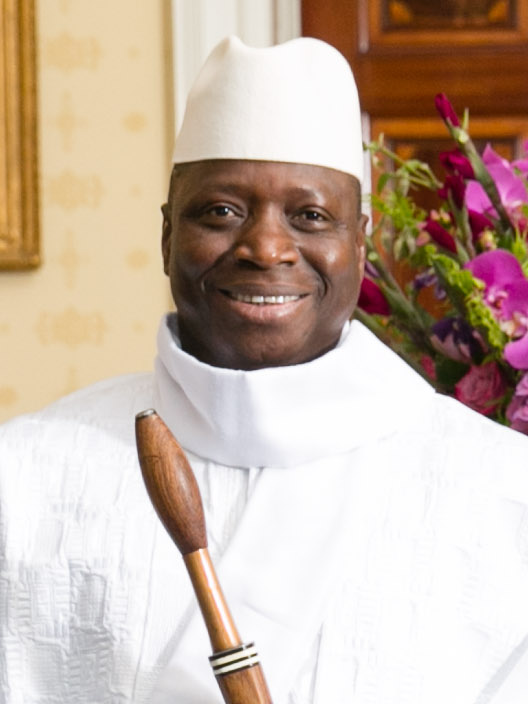
The government of Yahya Jammeh had orchestrated first an investigative ‘Commission’ and then an ‘‘Indemnity Bill’’ following the breakdown of public order during the student demonstrations’’ of 10-11 April 2000…..Nevertheless, the two most important charges were never independently investigated. Instead …. the victims were criticised and condemned. Thanks to the ‘‘Bill’’. [see also: https://humanrightsdefenders.blog/2012/10/19/how-bad-is-it-in-the-gambia-freedom-radio-has-some-disturbing-quotes/]
Now in a opinion piece of 3 July 2020 Gambian journalist Alhagie Mbye looks back on Yahya Jammeh’s Indemnity Bill that created so much damage:
As a journalist, I followed and covered the whole proceedings both at the ‘‘Commission’’ and outside of it. What was uncovered remained astonishing and shocking. Sadly, some of the ‘‘Commissioners’’ including some respected elites and religious leaders later promoted as heads of his Muslim Council and other lucrative posts remained deplorable and appalling indeed.
Most horrendous was that during the time, the APRC’s representative, refused to answer a single question from the press gallery. It was deliberate act of arrogance, deceit and deception on the part of both the Justice Minister and his boss. Both the local and international press were flabbergasted. The injustice by a Justice Minister will never be forgotten.
Accordingly, the Coalition of Human Rights Defenders headed by Emmanuel Joof, were fuming. …The Coalition consisting of some of the best lawyers in the country maintained it was ‘‘unconstitutional and cannot be accepted in any civilised society’’.
The opposition parties also openly condemned it in its entirety prompting the National Assembly Members from the opposition side to walk out of the National Assembly in protest. It was a bold move during that crucial time.
...Observers and local human rights activists, including women groups warned that…”the indemnity Bill is untimely provocative, dangerous and unconstitutional”. They called it an ‘‘affront and violation of the county’s own Constitution that give right to citizens to express freely themselves’’. They jointly added that Gambian law ‘‘guarantees everyone to exercise his or her fundamental and basic human rights without interference’’. The international media groups and human rights bodies worldwide were alerted and some of them were absolutely furious but Yahya Jammeh as usual careless about such concerns…
The ambiguous and vague ‘‘Bill’’ also caused the unbelievably curtailing of the rights and freedoms of The Gambian press as well as opposition activities. It brazenly and blatantly downgraded the country’s reputation as well as the respect it earned since independent from Britain as a country of law, peace and stability.
As intended, the ‘‘Bill’’ resulted in several human rights violations with immunity including atrocities committed by reckless National Intelligent Agency (NIA) operatives and the so-called ‘jungler’ officers. Using the ‘‘Bill’’ as a protection and cover against violations, the regime was out to victimise and terrorise the population without any justification. As a result, many innocent citizens got hurt and humiliated. Several men and women maimed. Others lost their lives and livelihoods.
No doubt when I reported on it both in the local and international press, including the brutality of his men against law abiding and innocent citizens including poor farmers and peasants who were totally ignorant of his ‘‘Bill’’, Yahya Jammeh’s revenged was my arrest, detention in confinement at his notorious NIA headquarters in Banjul and brutally tortured me.
Thus, it is startling that today the same accused officers and officials with brutality are still trying to use the same ‘‘Bill’’ as umbrella to outsmart us in our modern courts. But accepting their arguments will be a travesty.
Recently a certain senior politician mocked that people are ‘‘angry’’. Clearly people are right to be angry until justice is seen to be done in favour of the victims of an indescribable and inexpressible human rights violation.
Yahya Jammeh’s ‘‘Indemnity Bill’’ was one of the darkest days of The Gambia. All those involved directly or indirectly should not only bow or hang their heads in shame but be brought to justice as soon as possible.
On 8 June qcostarica.com reported that a UN expert expressed grave concern for the lives of indigenous human rights defenders being attacked in Costa Rica, saying that impunity and lack of accountability are fuelling a continuation of violence against defenders in the country despite some positive steps by the Government.
Costa Rica has experienced an upsurge in attacks on indigenous leaders since the March 2019 killing of indigenous Bribri leader Sergio Rojas, who worked for decades defending the rights of indigenous peoples against the illegal occupation of their territories. “Now, over 14 months later, it is still not clear whether the authorities are any closer to identifying the perpetrators,” said Mary Lawlor, the new Special Rapporteur on the situation of human rights defenders.
The expert said other attacks against human rights defenders had gone fully or partially unpunished, and “until there are proper investigations and accountability for these crimes, we may witness further intimidation, injury and death”.
A change in Costa Rican law in 1977 established a legal framework for the redistribution of ancestral indigenous land occupied by non-indigenous persons but the law’s implementation has been slow, and indigenous leaders have carried out peaceful requisitions of lands back to indigenous peoples. This has caused significant violent backlash from non-indigenous illegal land occupants.
While the Costa Rican Government has increased police presence in affected communities, police investigations have been inadequate or inconclusive. As a result, both the victims and their family members continue to be threatened by the suspected perpetrators.
Since the February killing of indigenous leader Yehry Rivera, for example, his family has been repeatedly threatened and intimidated by the family of the perpetrator, who regularly passes close to their land holding a machete.
Pablo Sibar, a human rights defender of the same Broran tribe as Rivera has also been intimidated and subjected to arson attacks that have still not been investigated. Minor Ortíz Delgado, an indigenous land defender from the same Bribri community as Rojas, was shot in the leg in March. The perpetrator, who was released and handed down restraining measures, has since sent death threats to Ortíz and his family.
The expert’s call has been endorsed by the UN’s Special Rapporteur on the rights of indigenous peoples, Francisco Cali Tzay.
The experts are in a dialogue with Costa Rican authorities and will continue to closely monitor the situation.
While welcoming of course the disclosure by the Pakistani Government of the whereabouts of Khattak, they strongly condemned his enforced disappearance. On 16 June 2020, the Pakistani authorities acknowledged for the first time that he has been in the custody of law enforcement authorities and detained incommunicado since then.
“The enforced disappearance of Mr. Khattak, which began over seven months ago, is an intolerable attack on his legitimate work of monitoring, documenting and advocating against a range of human rights and minority violations in the Khyber Pakhtunkhwa and the former Federally Administered Tribal Areas in Pakistan,” the independent experts said.
“Even today, Mr. Khattak remains deprived of the most basic protections of the law, and his enforced disappearance subjected him and his family to severe and prolonged suffering, that could amount to torture,” the experts said. “Given the arbitrariness of Mr. Khattak’s arrest and detention, and the very serious violations of his integrity and procedural rights, we call on the Government of Pakistan to immediately release Mr. Khattak and to provide him and his family with adequate redress and rehabilitation,” said the experts..
The experts stressed that there can be no justification for the Government’s failure to end enforced disappearances and that any such violation must be investigated, prosecuted and punished.
“Truth and justice must be served, both in the case of Idris Khattak and for countless other victims and their families in Pakistan. State-sponsored disappearances and related impunity may amount to a crime against humanity and must end now,” they said.
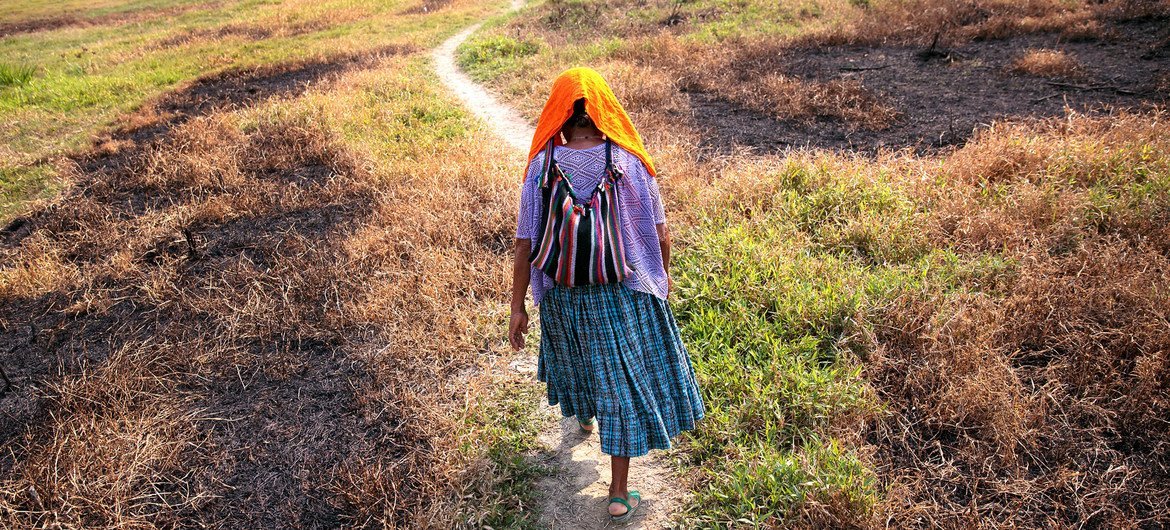
UN Women/Ryan Brown After surviving military enslavement in Guatemala, Maria Ba Caal received help through an emergency grant from the UN Voluntary Fund for Victims of Torture.
26 June 2020 was the International Day in Support of Victims of Torture. Torture is an “egregious abuse of human rights”, UN Secretary-General António Guterres said. Although international law “unequivocally prohibits torture in all instances”, the UN chief pointed out that it nevertheless continues in many countries, “even those where it is criminalized”.
“On this International Day in Support of the Victims of Torture, human rights defenders and survivors of torture around the world take the opportunity to speak out against this abhorrent denial of human dignity and they act to remember and support its victims”, Mr. Guterres said in his message.
Its prohibition forms part of customary international law, which means that it is binding on every member of the international community, regardless of whether a State has ratified international treaties that expressly prohibit the practice or not, according to the UN. Moreover, the systematic or widespread practice of torture constitutes a crime against humanity.
The UN Voluntary Fund for Victims of Torture, channels funding to assist victims of torture and their families by awarding hundreds of grants to civil society organizations worldwide for medical, psychological, legal, social and other assistance. It contributes to the rehabilitation, reparation, empowerment and access to remedies for nearly 50,000 torture survivors each year.
And to underline that torture is still very much a problem today the Himalayan Times of 26 June writes “that despite new criminal laws, impunity for acts of torture, ill-treatment prevails in detention” in Nepal
The International Commission of Jurists (ICJ), Advocacy Forum (AF) and Terai Human Rights Defenders Alliance (THRD Alliance) have voiced concerns about the near-total failure by authorities to investigate and prosecute acts of torture in Nepal. On the occasion of the International Day in Support of Victims of Torture, the three rights organisations urged the Government of Nepal to investigate into all allegations of torture and ill-treatment, and to bring prosecutions where warranted under the criminal provisions of the Penal Code…
The ICJ has made an appeal to the Government of Nepal to establish an independent preventative mechanism for monitoring of detention centres and to become party to the Optional Protocol of the Convention on Torture. Nearly two years after provisions in the new Penal Code came into effect, not a single torture prosecution appears to have been brought. There have also been very few instances in which victims have received an effective remedy and reparation for their ill-treatment, the press release stated.
Nepal has, as per the statement, failed to meet its obligations in this regard under article 2(3) of the International Covenant of Civil and Political Rights and article 14 of the Convention Against Torture….
The AF and THRD Alliance both published reports on Friday that document instances of torture and other ill-treatment against detainees over the past year. Some 20 per cent of the more than 1,000 detainees interviewed reported some form of unlawful ill-treatment during confinement.
Families hold photographs of missing loved ones during a protest in Colombo, Sri Lanka’s largest city, in February 2020. (TNH)
Rights groups are warning of a crackdown on dissent and rising authoritarianism in Sri Lanka, raising fears for the future of long-stalled civil war reconciliation efforts. Since President Gotabaya Rajapaksa took office after November elections, local rights activists have reported a rise in surveillance by state security forces, threats, and other measures more common during the country’s 26-year civil war, which ended in 2009, as well as its aftermath. A long piece in the New Humanitarian of 10 june 2020 gives the details:
“Surveillance has always been there, but since the election what we have seen is that it’s more open and more rampant,” said Shreen Saroor, a women’s rights activist…
Human Rights Watch says Rajapaksa is re-establishing a “state of fear” in Sri Lanka, citing interviews with dozens of activists and journalists. Many local journalists say they are self-censoring as threatening phone calls and other pressures escalate, acutely aware of the country’s history of unsolved murders and abductions. At least two reporters have already fled the country, according to the Committee to Protect Journalists.
In February, Sri Lanka announced it was backing out of commitments made to the UN Human Rights Council in 2015 by a previous administration. These promised a range of measures to investigate abuses during the civil war. ..
[see also: from my blog post https://humanrightsdefenders.blog/2020/02/24/human-rights-defenders-issues-on-the-agenda-of-43rd-human-rights-council/ Sri Lanka: Civil society groups are concerned over the backsliding on the commitments made by Sri Lanka in Human Rights Council Resolution 30/1. The recently elected president, Gotabaya Rajapaksa, along with his brother Mahinda Rajapaksa, who has been appointed prime minister, have been implicated in war crimes and numerous human rights violations when they were defence secretary and president respectively from 2005 to 2015. The new Government has made clear its intention to walk away from the Council process on Sri Lanka, a process that is currently the only hope for victims of human rights violations that truth, justice, reparations, and guarantees of non-recurrence are possible. [see https://www.nwaonline.com/news/2020/feb/23/sri-lanka-details-un-case-pullout/] Meanwhile, the relatively open climate for human rights defenders and journalists of the past few years seems to be rapidly closing. More than a dozen human rights and media organisations have received intimidating visits by members of law enforcement and intelligence agencies, while death threats against journalists have resumed. ISHR calls on States to urge for continued cooperation of the Government of Sri Lanka with OHCHR and the Special Procedures. The Council should reiterate the reference in Resolution 40/1 to “the adoption of a time-bound implementation strategy” for implementation of all elements of Resolution 30/1. [see also: https://humanrightsdefenders.blog/2020/01/22/sri-lankan-government-accused-of-embarking-on-process-to-silence-critics/]
And, this month, Rajapaksa created two “task forces” with vague mandates, which rights groups fear could operate parallel to existing institutions. One, a body created to combat “anti-social activities”, is led by security and intelligence officials. Another task force mandated to protect cultural heritage appears to exclude non-Buddhists and non-Sinhalese. Rajapaksa’s first six months in office, the International Crisis Group said in a May report, have been “aggressively Sinhala nationalist, family-centred, and authoritarian”.
….“All these years of looking for justice would be then wasted,” said Yogeshwari, 45, whose husband disappeared 15 years ago.TNH Families of Sri Lanka’s missing thousands fear the government is aiming to curb investigations into unsolved civil war disappearances.
In announcing his country’s withdrawal from its UN Human Rights Council commitments in February, Sri Lanka’s foreign minister, Dinesh Gunawardena, said the previous pledges would infringe on “the sovereignty of [the] people of Sri Lanka”…
A government body tasked with investigating disappearances, the Office on Missing Persons (OMP), didn’t begin its work until 2018. It’s effectively the only government body actively working on reconciliation issues. Ruki Fernando, an advisor with Inform, a Colombo-based human rights documentation centre, expects the Rajapaksa government to take a similar line domestically by clipping the OMP’s powers. “It is not about shutting them down,” Fernando said. “It is more about making them administratively limp.”…
Saroor believes the Rajapaksa government will likely ramp up its stance against investigations and reconciliation efforts. “Sri Lanka transitional justice and truth-seeking will come to a standstill,” she said.
This piece was reported by a freelance journalist whose name is being withheld over concerns for their safety.
Matias Perez Ojeda del ArcoPolice Protection Act (Law No. 31012), which was passed in Peru by the new Congress on 27 March, without approval by the Executive, 11 days after declaring a state of emergency in the country due to the spread of COVID-19. This law is constitutionaly questionable and may open the door to impunity according to the Institute of Legal Defense (IDL), the Ombudsman’s Office, the National Human Rights Coordinator (CNDDHH) of Peru, and the Inter-American Commission on Human Rights (IACHR). [The Act forbids ordering a warrant of arrest or pre-trial detention for Peruvian National Police (PNP) personnel who may injure or kill in a regulatory intervention. Its complementary provision repeals the principle of proportionality in the use of force for a police officer response, which undermines actions under a constitutional framework and is against full respect for human rights, and may create excesses and arbitrariness.]
According to the Ombudsman’s Office, as of January 2020, there were 129 socio-environmental conflicts in Peru. So how will the National Police respond to unforeseen events, even more so in a post-COVID-19 context, where indigenous people’s territories could be more vulnerable to actions to reactivate the country’s economy? This is more relevant within the framework of the End of Mission Statement of the United Nations Special Rapporteur on the situation of human rights defenders. At the beginning of this year, it identified that, despite the progress made in this area, human rights defenders, especially from indigenous peoples and local communities, are still unable to carry out their work in a safe environment.
According to the Rapporteur and a report by the Ombudsman’s Office, 960 people have been criminalised for defending and promoting human rights since 2002, of whom 538 were criminalised during social protests. Between 2011 and 2016, 87 human rights defenders lost their lives in Peru, 67% because of law enforcement, according to a CNDDHH report.
…Comprehensive police protection for common interest has lost its essence. Instead, the interests of companies are gaining serious ground in Peru, i.e. 145 agreements of “Extraordinary Police Service”, between the Peruvian Police and extractive companies (mining and hydrocarbon sector), were established between 1995 and 2018, according to a report by the Working Group on Indigenous Peoples of the CNDDH. One example of this is the agreement between the hydrocarbon company PETROPERÚ S.A. and the PNP (2018) for operations in Amazonas and Loreto regions, which affects the ancestral land of the Autonomous Territorial Government of the Wampis Nation (GTANW).It is crucial that Peruvian authorities repeal said law to avoid risking the lives of human rights defenders, especially indigenous peoples who are at the forefront of threats, harassment and criminalisation when they protest due to conflicts arising in their territories. Indigenous territories are more vulnerable than ever during the current community contagion phase of COVID-19, as proper health infrastructure and equipment may not reach those areas, nor provide timely and dignified protection for them. There are companies working on indigenous territories during the State of Emergency, including the oil palm company Ocho Sur P. in the Shipibo land of Santa Clara de Uchunya. According to IDL, Ocho Sur is continuing to work without an approved Environmental Impact Assessment. When the State of Emergency is over, most companies will want to recover their losses by any means, regardless the rights of indigenous peoples. This is the moment when the State Protection rules must focus on these issues.
A year ago this January, I flew out of Sarajevo to join the ABA Center for Human Rights (CHR), ready to start work on CHR’s new program, TrialWatch. ….Since the TrialWatch program was new, I did not know what to expect. In Bosnia, I had dedicated the past several years to advocating for wartime victims seeking justice. Many of these men and women had spent decades pounding on the doors of institutions that had long consigned them to oblivion. As I entered the ABA lobby on my first day, I wondered what it would be like to instead focus on defendants vulnerable to abuse of their rights. What I found was that the experience and ethos of TrialWatch were uncannily similar to those of my work in Bosnia. We aim to ensure that people are not forgotten.
…..
Criminal prosecutions are one weapon in the ever-expanding arsenal of those who seek to derail human rights. Through TrialWatch, CHR sends monitors to proceedings at which they are often the only independent observers. These are remote, dilapidated courtrooms outside the capitals, places where no one would expect a monitor to show up. Our presence can make a significant difference.
In Algeria, for example, CHR sent a monitor to observe the trial of Ahmed Manseri, a human rights defender prosecuted for defamation for claiming that he had been tortured by the authorities. The monitor traveled through multiple checkpoints to reach the city of Tiaret in northern Algeria, some 300 kilometers from the capital of Algiers. The judge, aware of CHR’s interest in the case, treated Manseri differently from all others in court that day, giving Manseri’s lawyers adequate time to conduct questioning, providing Manseri himself with an opportunity to speak, spending several hours on the hearing (as opposed to the five to 15 minutes afforded other defendants), and ultimately acquitting Manseri. When we spoke to Manseri and his lawyer after the trial, they relayed that Manseri may not have gone home that day if the monitor had not been in court. This is CHR’s work: ensuring that people facing the greatest risks are not forgotten, that their voices are heard, and that relevant institutions take their experiences and claims seriously. In some cases, as in Algeria, making an appearance is just as important as the final report.
More than 100 defendants were convicted as part of a mass trial with respect to an alleged coup plot in Equatorial Guinea. Photo provided by the ABA Center for Human Rights.
In other cases, documentation is critical. If we do not record the abuses that occur in the courtroom, they will be lost in a labyrinthine system with no recourse for defendants. In Equatorial Guinea, CHR monitored the trial of over a hundred individuals prosecuted in connection with an alleged coup attempt. In court, our monitors observed egregious fair trial violations, such as the repeated use of confessions induced by torture, the intervention of military officials in the judicial process, and the imposition of time limits on defense questioning. The defendants were ultimately convicted—some to what were functionally life sentences.
As Equatorial Guinea is a relatively closed country—its doors wide open to oil behemoths but shut to most others—CHR was the only outside entity to send observers to the trial. The information we acquired proved helpful for embassies and other organizations tracking the proceedings. Human Rights Watch, for example, employed CHR’s report to produce a video on the trial that was widely disseminated in Equatorial Guinea via WhatsApp. Meanwhile, CHR’s report was raised before the United Nations Human Rights Committee, after which the committee condemned military interference in civilian trials. Correspondingly, defense lawyers have used the report’s conclusions in advocating for their imprisoned clients. Without the valuable data gained from simply sitting in the courtroom, these various opportunities for impact would have been lost and—again—the defendants forgotten.
TrialWatch followed a case in Guatemala of a human rights defender named Abelino Chub, shown here with an unidentified woman. Chub was held in pretrial detention for two years. Chub was being prosecuted on allegations he had burned down trees and fields on a plantation operated by Cobra Investments, a banana and palm company. He was ultimately acquitted. Photo provided by the ABA Center for Human Rights
The overarching goal of ensuring that defendants receive the necessary support motivates the TrialWatch team to grapple with these challenges, as do the inspiring monitors with whom we work. One of TrialWatch’s objectives is to democratize trial monitoring—to place the tools to observe trials in the hands of affected communities. Dedication and a willingness to learn are the only requirements. In a recent case, two different entities within the prosecution appeared to be at odds. One entity had withdrawn the charges, and the other seemed to still be pursuing the case. CHR’s enterprising trial monitor brought a copy of the withdrawal document across town to the latter entity’s office. The office claimed to have never seen this document—or at least to have never been directly confronted with it—and stated that it would cease work on the case. At the moment, the office no longer appears to be pursuing the charges.
In another example, a CHR monitor who is not a lawyer but passionate about press freedom issues agreed to travel to a remote province in Cambodia—a nine-hour bus ride—on Christmas day to observe the start of a trial in which two journalists were being prosecuted for incitement. Though the trial did not in fact proceed that day, the monitor was able to document valuable information, such as the judge ordering defense counsel not to contact the U.S. embassy: a troubling and noteworthy development. That my job entails working closely with these monitors—such a perseverant, diverse group of individuals—makes it all the more worthwhile.
Lastly, one of the most ironic features of trial monitoring is that there is frequently no trial to monitor. In many countries, authorities use criminal charges and detention as a punishment in itself: the trial in such cases is not of consequence. By imprisoning defendants pending trial, deferring substantive proceedings in the vein of Godot, states can avoid scrutiny while still harassing defendants and stifling their work. Through TrialWatch, we have been able to document and respond to this phenomenon.
In India, for example, CHR monitored habeas corpus proceedings brought by journalist Kishorechandra Wangkhem, who had been arrested on sedition charges for posting Facebook videos in which he criticized the ruling party. When the judge presiding over the case released Wangkhem on bail, the authorities rearrested and imprisoned him on national security grounds. CHR subsequently issued a preliminary report concluding that Wangkhem’s detention was inconsistent with international law. Soon thereafter, he was released, having spent 132 days behind bars.
Similarly, in Nigeria, CHR monitored proceedings against Omoyele Sowore, a journalist who had been charged with treason. Awaiting trial, Sowore remained imprisoned by the state security services despite the presiding court’s order to release him. Amal Clooney, the co-founder of TrialWatch, made a public statement calling for Sowore’s release, bolstering the international uproar and placing pressure on the state. Approximately a month later, Sowore was released.
Defendants languishing in detention, sometimes for years on end, are the most at risk of being forgotten. Seeing these individuals go free in part because of our work is one of the most rewarding aspects of TrialWatch. I am proud to lead the program at the ABA Center for Human Rights and look forward to my second year.
If you are interested in signing up to be a TrialWatch monitor, please fill out this form.


 Families hold photographs of missing loved ones during a protest in Colombo, Sri Lanka’s largest city, in February 2020. (TNH)
 TNH Families of Sri Lanka’s missing thousands fear the government is aiming to curb investigations into unsolved civil war disappearances.


 Hans Thoolen on Human Rights Defenders and their awards