The Rafto Prize 2025 has been awarded to The Emergency Response Rooms of Sudan (ERRs) for their courageous work to preserve the most fundamental human right – the right to life.
The Emergency Response Rooms of Sudan are grassroot networks that emerged in the wake of the war in Sudan in 2023. They consist of thousands of volunteers who engage in collaborative, community driven efforts to meet urgent humanitarian needs of others, at great personal risk. The ERRs save lives and maintain human dignity in a place of misery and despair.
After the brutal war between the Sudanese Armed Forces (SAF) and the Rapid Support Forces (RSF) broke out in April 2023, the Sudanese state collapsed. As a consequence, civilians have an enormous need for humanitarian assistance.In a desperate attempt to save lives, ordinary Sudanese took matters in their own hands and formed self-help groups to offer services supporting basic life, welfare, and human dignity through Emergency Response Rooms (ERRs).
The ERRs originated in Khartoum and has spread to other conflict areas of Sudan. To mitigate excessive loss of life and human suffering, ERRs provide key services such as health, food, water, body retrieval and burial. They also work on monitoring, documenting, and responding to cases of sexual violence.
The Rafto Prize 2025 honours the Emergency Response Rooms and the thousands of individuals protecting the right to life and health, who are building hope in Sudan, at tremendous risk to their own lives. The prize is also a recognition of the significance of grassroot mobilization and collective effort in ensuring basic human rights in times of conflict. The need for protection of human rights and humanitarian assistance is becoming greater by the day. In these trying times, we must all stand in solidarity with the people of Sudan.
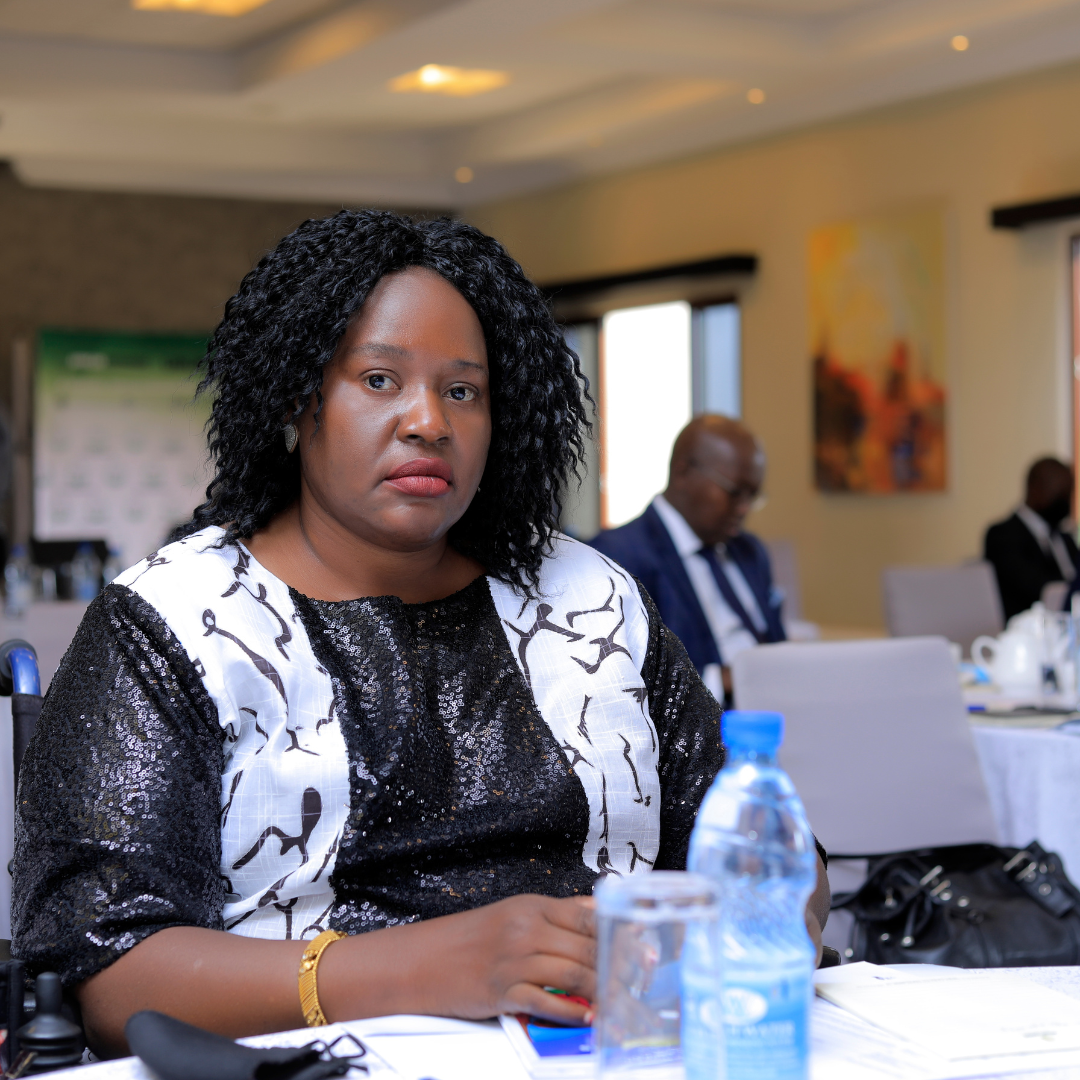
DefendDefenders in January 2024 has chosen as HRDs of the MonthPamela Angwech from Uganda.
For most of her life, Pamela Angwech’s existence has always been a defiant and simultaneous act of survival and resistance. In 1976 when she was born, the anti-Amin movement was gathering pace, and her family was one of the earliest victims in Northern Uganda. Her father, a passionate educationist in Kitgum district was one of the most vocal critics of the dictatorship’s human rights excesses, which made him an obvious target of the state’s marauding vigilantes. Fearing for his life and that of his young family, he escaped North, to Sudan, leaving behind his wife, then pregnant with Pamela, to follow him as soon as she could. It was on the treacherous journey to rejoin her father that Pamela was born, somewhere between Uganda and Sudan, and named Angwench, an Acholi word to mean “on the run,” in keeping with the circumstances of her birth.
Unfortunately, those precarious circumstances would continue to define most of Angwech’s childhood. Although Amin was eventually overthrown, paving way for her family’s return home, the immediate post-Amin years were equally tumultuous, and when President Museveni’s National Resistance Army took power in 1986, Northern Uganda was immediately engulfed in a civil war by the Lord’s Resistance Army(LRA) rebels that would rage on for the next 20 years, bringing wanton anguish and suffering to the region’s people and communities.
Angwench navigated those precarious circumstances to pursue an education, convinced that only then could she impact her community for the better. At University, she studied Gender and Women Studies and immediately returned home to seek work with the UN’s World Food Program Office in Gulu, determined to join the relief effort to alleviate the suffering of her people in Internally Displaced People’s (IDP)Camps.
Initially, they told me there was no job. But I was determined to work with the UN and nowhere else. So, I camped at their office for 14 straight days. Sometimes, I would volunteer as a gatekeeper when the substantive gatekeeper was away, and other times, I would sit at the front patch of the Office Head the whole day. When they realized I was determined not to leave, they allowed me to start officially volunteering with them. “I would go with them to distribute food in the IDP camps, until later, I was formally integrated as official staff.
Yet, despite her dogged stubbornness and resilience, she was not prepared for the heart-rending experience of life in the IDPs, particularly the plight of women and girls.
“I started to notice that after picking their food rations, women and children would start picking residue beans from the floor, to take for either their little children or their elderly parents who could not queue. One other time, I noticed a visibly tired woman carrying a baby on her back, being pushed out of the queue by others. I called her to the front and assured her that I would give her a special ration but asked her to first untie her baby from the back, so she could protect her from the sun and breastfeed her. When she untied her baby, I noticed that the baby’s neck was twisted – it had suffocated and died! That changed me, forever,”
From Humanitarian to Human Rights Activist
Angwech realized that like a balm, humanitarian work could only soothe the suffering of her people but fell short of tackling the root causes of the same suffering. “So I decided that someone had to speak up about the heartbreaking indignity and human rights violations surrounding the conflict in Northern Uganda. I turned full scale, from a humanitarian to a human rights activist, particularly championing the rights of women who were most vulnerable “she says.
Angwech would move on the streets rallying women to stand up for their rights, holding placards signaling injustices against women in IDP camps like molestation and rape. Overtime, she won followers: Emboldened by her courage and audacity, other women started to show up and speak up against the conflict and related violence. Angwech mobilized grassroot women groups to pursue LRA leader Joseph Kony in Congo’s Garamba forest, to dramatize their cries for peace, under UN resolution 13/25 which provides for women’s participation in peace processes.
In 2004, Angwech started Gulu Women’s Economic Development & Globalization (GWED-G) to rehabilitate victims of the war, from victims of conflict-related sexual and gender-based violence to those physically harmed by the conflict. Since then, Angwech says GWED-G has rehabilitated over 1700 war victims through physical rehabilitation projects, giving them prosthesis, among other forms of support. It has also continued to sensitise and organise grassroot women into human rights defenders’ groups, through which they can report and address GBV cases, issues of women economic rights among others. Today, Angwech says there are about 600 of these groups across Gulu, Lamwo, Amuru and Kitgum, each with a membership of 30 -40 members.
Today, GWED-G is arguably the largest grassroots human rights organisation in Northern Uganda. It has also expanded to cover other social and economic causes, including environmental protection advocacy. Angwech says the environment is the local communities’ last refugee, and yet deforestation and charcoal burning are threatening it. “For post-conflict communities like us in Northern Uganda, land is our primary resource. It is the land from which people make an income to feed their families, send their children to school, and access medical care. War destroyed everything else. So, if we don’t protect the environment, our land will be degraded, rainy seasons will begin to change which will affect food production and bring back hunger,” she says.
Nominees must be established, nongovernmental, publicly supported charitable organizations. U.S. Internal Revenue Service tax-exempt status—or the equivalent for international organizations—will determine eligibility. (International nominees will be contacted by the Foundation for appropriate documentation.)
Nominees must be legally established for at least five years in order to be considered.
Nominees must have their own audited financial statements for at least five years.
Nominees must have expenditures greater than U.S. $750,000 in their most recent audited fiscal year of operation
The nomination letter should emphasize the organization’s accomplishments rather than future goals. Both historic and recent performance should be addressed. Following are elements to consider in describing your nominee’s work:
Extraordinary contributions toward alleviating human suffering.
Significance of the issue(s) the organization is addressing.
Established record of achievement in significantly contributing to solutions.
Demonstration of a compelling programmatic approach to make a lasting impact.
Organizational capacity and administrative efficiency to address the issue(s) at hand.
Prioritization of diversity, equity and inclusion in strategies, programs and operation.
Demonstration of effective partnerships to leverage further impact.
Prioritization of evaluating programmatic approach for continual improvement.
Impact the Prize would have on the organization and the issue(s) on which the organization focuses.
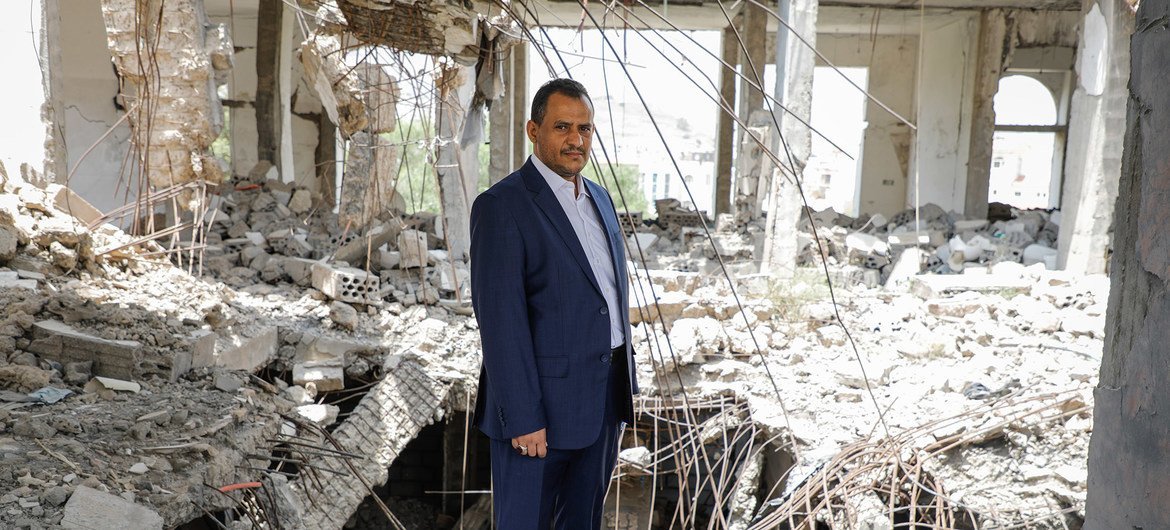
The Jeel Albena Association for Humanitarian Development, a Yemeni humanitarian organization that has supported tens of thousands of people caught up in the country’s conflict, is the winner of the 2021 UNHCR Nansen Refugee Award.
UN High Commissioner for Refugees, Filippo Grandi, announced the laureate this Wednesday 29 September 2021. Every year, the prize recognizes a person or group, that goes above and beyond the call of duty, to help displaced or stateless people. For more on this award for refugee workers: https://www.trueheroesfilms.org/thedigest/awards/CC584D13-474F-4BB3-A585-B448A42BB673
In a statement, Mr. Grandi said that “Jeel Albena does this in an extraordinary way helping people on all sides of Yemen’s conflict.”
“Its staff and volunteers have stayed put, working quietly on the ground throughout the conflict, in the face of the harshest adversity, at a time when many others have left,” he said.
Frontline work
Their work, often near the frontlines, has included constructing 18,000 emergency shelters for internally displaced people and their host communities. Their work has also allowed thousands to make a living, and been a vehicle to restore basic human dignity.
Mr. Grandi noted that Jeel Albena’s motto is “By Yemenis, for Yemenis” and that it “exemplifies its spirit of local community action.”
“Always, they seek solutions together with the communities where they are active,” he explained.
Established in June 2017, the association started with only fifteen staff and now has more than 150 employees, over 40 per cent of them, recruited from within displaced communities. .
The organization’s founder, Ameen Jubran, will collect the award on behalf of the organization.
Mr. Jubran first started working with displaced people while he was at university and he has never stopped. He was nearly killed in the conflict and, like many of his team, have experienced displacement first-hand.
“But he did not give up. In fact, he says the experience of being forced to flee his home only increased his determination, in the true spirit of Nansen,” Mr. Grandi recalled. For the High Commissioner, the award “puts a much-needed spotlight on Yemen, a country where the suffering faced by civilians does not receive the attention it deserves.”“It is my profound hope this award draws international attention to Yemen and that Jeel Albena’s extraordinary work will inspire more action for the people there who have suffered,” concluded the High Commissioner.
This new film directed by Greg Barker [see also: https://humanrightsdefenders.blog/2014/01/23/we-are-the-giant-film-about-the-arab-spring-here-is-the-trailer/] and based on his own award-winning documentary, confusingly also called Sergio, is a biographical drama about Sérgio Vieira de Mello, a diplomat from Brazil who worked for the United Nations High Commissioner for Refugees (UNHCR) for most of his life and was briefly High Commissioner for Human Rights. He was celebrated as a pre-eminent humanitarian before tragically dying in the Canal Hotel bombing in Iraq alongside many of his staff in 2003. The fiction film Sergio made its premiere at the Sundance Film Festival on 28 January 2020 before heading to Netflix.
Kayleigh Donaldson in Screenrant of 2 january 2020 wrotes perhaps a bit too breathlessly that the film Sergio is “one of the most anticipated Netflix original movies in 2020“.
Now the first two reviews are out and they indicate that it is foremost a romantic story that is well acted but diverts a lot from reality.
Jessica Kiang in Variety of 29 January 2020 is the more critical and – in my view – serious voice:
… handsome, heroic, charismatic de Mello (played with persuasive charm by Wagner Moura) certainly does seem like a man whose present was shaped by …the better, brighter, freer global future he believed the U.N. could be instrumental in achieving and that he personally could help midwife into being. Such noble intentions and such impact on world affairs does render understandable Barker’s rather starry-eyed approach, but [puts] unnecessary length and sentimental emphasis on the man’s romantic life…
..First, we spin forward to the 2003 bombing of the U.N. headquarters in Baghdad, which was ordered by terrorist leader Abu Musab al-Zarqawi and which claimed at least 22 lives and wounded over 100 people, and here provides a loose framing device. De Mello and close associate Gil Loescher (Brian F. O’Byrne), both critically wounded, were trapped under tons of rubble in the blast, and … screenwriter Craig Borten imagines a borderline delirious de Mello reliving moments of significance from his storied life. Chief among these reminiscences is the tale of his romance with Carolina Larriera.. .an Argentinian U.N. economic adviser whom the married father-of-two met while brokering a peace deal between the rebels and the Indonesian government in East Timor.
In Adrian Teijido’s calm, throughful photography (it’s a refreshing choice to not go the shaky handheld docudrama route), de Armas and Moura make an attractive couple, and de Armas is able to imbue Carolina — whose role seems just a little wispy on the page — with an intelligence and will that makes her more than just de Mello’s romantic foil. But Barker’s emphasis on this love story at the expense of a deeper exploration of the exceptional talents that earned de Mello his reputation for feats of diplmatic wizardry in highly fraught situations where others had tried and failed, also has a curiously flattening effect.
Although the relationship with Larriera was doubtless crucially important to de Mello, it was not the thing that made him extraordinary in the eyes of the world. And so the hesitant courtship, the smouldering looks, and the romancing, including a tasteful but unnecessarily lengthy sex scene over which Fernando Velázquez’ otherwise rather generic political-thriller score crescendos like it’s high drama, all feel like a distraction from the more thorny and politically provocative side of de Mello’s story. That’s especially irksome given that the scenes of geopolitical debate, diplomatic argument and even ego clash between de Mello and the world-wearily witty Loescher … are actually where the film crackles to life.
…But this sentimental approach glosses over much of the potential drama that is set up only to dissipate: de Mello’s prickly relationship with U.S. Envoy Paul Bremer (Bradley Whitford); his association, criticized by Loescher, with war criminals and terrorists if he believed it could achieve his ends; and his fateful decision to send the U.S. Army guards away from the U.N. office in Baghdad in 2003. Sergio Vieira de Mello was, by all accounts, not a man who let fear of making the wrong decision stop him from acting decisively, and it’s a shame that the soft-edged romantic prevarications of “Sergio” prevent the film from embodying that same dynamism.
Courtesy of Sundance
John DeForein Hollywood Reporter of 30 January 2020 sees a more than successful transition from documentary to a feature film:
… Rather, it’s one of those rare films .. in which a genuine concern for geopolitics coexists perfectly well with romance and old-fashioned moviegoing pleasures. This portrait of influential U.N. diplomat Sergio Vieira de Mello benefits immensely from two magnetic leads, Wagner Moura and Ana de Armas, whose onscreen chemistry is undeniable; but its deft sense of structure is of equal importance, making it an engrossing picture even for those who know next to nothing about its subject or settings.
..Sergio and refugee expert Gil Loescher were trapped alive in the rubble; as a framing device, Sergio sets flashbacks to various points in his career during the hours when two American soldiers (Garret Dillahunt and Will Dalton) worked to extract the pinned men. These episodes help cement the diplomat’s reputation as an idealistic fix-it man for some of the world’s trickiest conflicts. …Sergio is out for a jog during his East Timor assignment when he passes another jogging foreigner, Carolina Larriera (de Armas). The attraction is immediate, but the film savors its development: …While the film plays up Sergio’s attractiveness to the younger woman (shirtless, the 50 year-old man probably bore little resemblance to Moura), it’s not blind to emotional flaws: He’s ignorant of key facts about his two sons’ lives, and he admits he’s most attentive to relationships and projects whose timeframe is finite.
Also on hand in East Timor is Loescher (Brian F. O’Byrne), who will be trapped by his side in Baghdad. The real Loescher, who had two legs amputated in his rescue from the site, was an independent expert who was only in Sergio’s Baghdad office (along with Arthur Helton – see: https://en.wikipedia.org/wiki/Arthur_Helton) to interview him for a column on openDemocracy.net. In Sergio, Loescher is a composite, depicted as Vieira de Mello’s right-hand man for multiple U.N. missions — the conscience who argues against his boldest moves. As a storytelling device, this works quite well; but using Loescher’s real name is an unexpected choice for a documentarian, and confuses the truth for no reason. [my view: INDEED – see also: https://humanrightsdefenders.blog/2017/06/07/gil-loescher-life-long-defender-of-rights-of-refugees-honored/ and https://www.imdb.com/title/tt0479980/]
Those who know the history intimately may take issue with other condensations that play perfectly well to a layperson: Sergio’s interactions with U.S. diplomat Paul Bremer (Bradley Whitford) are dramatically satisfying, and seem to capture the general nature of U.S./U.N. friction at the time; a question regarding the U.S. Army’s protection of Sergio’s office is probably also finessed for maximum thematic effect. The picture is most vulnerable to Hollywoodisms in scenes set after the bombing, as Carolina looks frantically for Sergio; the latter dreams of a sunny beach in his native Rio de Janeiro; and those soldiers heroically try to extract him despite having none of the necessary rescue equipment. But, coming late in the film as they do, these indulgences feel appropriate to the film’s lionization of its subject and investment in the couple’s relationship. Sergio believes in heroes and big ideals, and hopes we’re capable of the same belief…
Monica Castillo in NBC of 31 January 2020 adds an interview with the star Wagner Moura who “was so intrigued by Vieira de Mello’s story that he signed on as a producer for the movie. In the interview with NBC News, Moura said that this is the first of many stories he’d like to share to address the lack of Latinos on the screen. In the interview he also says “this guy is kind of a personal hero for me, and I’ve been working with the U.N. for a while; I’m a goodwill ambassador for the ILO [International Labour Organization] and the fight against slave labor..[Sergio] was a man who dedicated his life to human rights. When he was killed, he was the high commissioner for human rights; when he started in the U.N., he was the high commissioner for refugees“. Well he was NOT, he worked for the UNHCR.
The AidExHumanitarian Hero of the Year Award aims to recognise and celebrate stand-out individuals from the humanitarian and development aid community and showcases the courageous work and dedication that they put into their line of work. Nominations are open to individuals from all parts of the sector, including those who work for suppliers, NGOs, governmental and the development aid community and the winner is awarded during the AidEx networking drinks reception.
PREVIOUS WINNERS OF THE HUMANITARIAN HERO AWARD are:
2017 – DR. MICHAEL KÜHNEL, DOCTOR AT AUSTRIAN RED CROSS
2016 – DR. CYNTHIA MAUNG, DOCTOR AND FOUNDER OF THE MAE TAO CLINIC
2015 – SEAN CASEY, REGIONAL DIRECTOR OF INTERNATIONAL MEDICAL CORPS
2014 – CHRISTIAN AND MARIE-FRANCE DES PALLIÈRES, FOUNDERS OF POUR UN SOURIRE D’ENFANT
2013 – DR JUMANA ODEH, FOUNDER OF PALESTINIAN HAPPY CHILD CENTRE
2012 – DR ABBAS GULLET, SECRETARY GENERAL OF THE KENYAN RED CROSS
2011 – JANINA OCHOJSKA, FOUNDER OF POLISH HUMANITARIAN ACTION
In case you missed it, AI‘s annual report came out some days ago. The video above gives a short summary.
As usual the report provides a comprehensive overview of the state of human rights in 160 countries over the course of 2014.
In its annual assessment of the world’s human rights, AI says that without urgent action and a fundamental shift in approach, there is strong reason to believe the next few years could see:
more civilian populations forced to live under the quasi-state control of armed groups, subject to abuse, persecution and attacks
deepening threats to freedom of expression and other rights, including violations caused by new draconian anti-terror laws and intrusive mass surveillance
a worsening humanitarian and refugee crisis with even more people displaced by conflict as governments continue to block borders and the international community fails to provide assistance and protection
“If lessons are not learned – if governments continue to ignore the relationship between the current security crisis and the rights failures which have led us here – then what was a bad year for rights in 2014 could get even worse in the years to come,” said Salil Shetty, Secretary General of Amnesty International.
To my horror I see that I missed this year’s Nansen Award. Rectified with the video clip above which was published on 1 October , 2014 by UNHCR. UN High Commissioner for Refugees, António Guterres, presented the Colombian women’s rights group, Butterflies with New Wings Building a Future, with the Nansen Refugee Award in Geneva, Switzerland, on Monday 29 September. The courageous Colombian women’s rights network received the award for its outstanding work to help victims of forced displacement and sexual abuse in Buenaventura, Colombia.
In an important statement to a Ministerial meeting of the General Assembly on Regulating the veto in the event of mass atrocities, the new High Commissioner for Human Rights, Zeid Ra’ad Al Hussein, made some crucial points. He said that in recent years, the Security Council‘s “inability to take decisive action regarding a number of appalling crises has led to enormous, avoidable, human suffering. It has shaken confidence in our own institutions. It has granted time and space to the perpetrators to commit more violations, and made them far less likely to provide access to UN officials or to respond to their concerns.” Therefore, he added, “From the human rights perspective, the adoption of a code of conduct on use of the veto, in very specific circumstances where well-founded facts demonstrate that international crimes are occurring or about to occur, would demonstrate on the part of the permanent members of the Council that quality of leadership and responsibility which our world so badly needs.”
On 8 September 2014 the new UN High Commissioner for Human Rights, Zeid Ra’ad Al Hussein, addressed for the first time the Human Rights Council, and many will have been listening for clues about where he stands on key issues, how ‘activist’ he is likely to be etc. As the speech was rather long and covered a huge variety of issues, it is not easy to draw any conclusions yet. The fist half addressed issues of war and violence and in particular the humanitarian crises of today.
The role of the individual is beautifully worded: “courage is the first human virtue, revered the world over, the very virtue we value the most as human beings. The courageous individual is not he or she who wields great political power or points a gun at those who do not – that is not courage. The courageous individual is he or she who has nothing to wield but common sense, reason and the law, and is prepared to forfeit future, family, friends and even life in defence of others, or to end injustice. In its most magnificent form, the courageous individual undertakes this exertion, without ever threatening or taking the life of someone else, and certainly not someone defenceless.”..”the Takfiris [IS] who recently murdered James Foley and hundreds of other defenceless victims in Iraq and Syria – do they believe they are acting courageously? “…
“Navi Pillay was one of the greatest senior officials the UN has ever had, and one of the most able, formidable High Commissioners for Human Rights. That she could annoy many Governments – and she did – was clear; but she believed deeply and movingly in the centrality of victims, and of those who are discriminated against. They needed her vocal chords, her lungs and her pen, and she made everyone listen. I pledge to continue along the same path: to be as firm, yet always fair; critical of states when necessary, and full of praise when they deserve it.”
“A ministerial-level meeting will be held in New York on 25 September, on the need for a code of conduct to be adopted by the permanent members of the UN Security Council regarding use of veto, in situations where atrocities are ongoing and where those facts are well founded. This is not a call to have the UN Charter rewritten, but a call for the permanent members to exercise a moratorium in very specific circumstances involving atrocity crimes. I applaud the Government of France for taking the lead over this, and thank it for inviting me to participate on the 25th. When the veto is exercised for the sole purpose of blocking action by the Security Council, with no alternative course of action offered, and when people are suffering so grievously – that is also a form of cruelty.”
After briefly describing his priorities:
halt the increasingly conjoined conflicts in Iraq and Syria. In particular, dedicated efforts are urgently needed to protect religious and ethnic groups, children – who are at risk of forcible recruitment and sexual violence – and women, who have been the targets of severe restrictions.
ensure accountability and stop impunity
to take a step back and look at how and why these crises erupted,
the UN High Commissioner touched on a number of current situations and mentioned the importance of the different mechanisms and bodies. Finally he came to the civil society with the following words:
“But the work done by OHCHR, by the Special Procedures, by Treaty Bodies, this Council itself, and indeed, by Member States, could never be achieved without the greater efforts of civil society actors. We need their continuing support and contributions to realise progress. I encourage the Council to strengthen its constructive engagement with civil society actors, and to ensure that their voices can be raised safely and without reprisals. Freedoms of expression, association and peaceful assembly are rights that enable people to share ideas, form new thinking, and join together with others to claim their rights. It is through the exercise of these public freedoms that we make informed, considered and intelligent decisions about our development. To restrict them undermines progress. We must acknowledge the value of civic contribution, build the capacity of marginalised voices, ensure a place at the table for civil society actors, and safeguard their activities – including the activities of those who cooperate with this Council, its Special Procedures and Commissions of Inquiry. I take this opportunity to echo the Secretary-General’s condemnation of acts of reprisal against individuals by reason of their engagement with the United Nations.”
At the end of this speech, he paid significant attention to the issue of migration: “The treatment of non-nationals must observe the minimum standards set by international law. Human rights are not reserved for citizens only, or for people with visas. They are the inalienable rights of every individual, regardless of his or her location and migration status. A tendency to promote law enforcement and security paradigms at the expense of human rights frameworks dehumanises irregular migrants, enabling a climate of violence against them and further depriving them of the full protection of the law.”