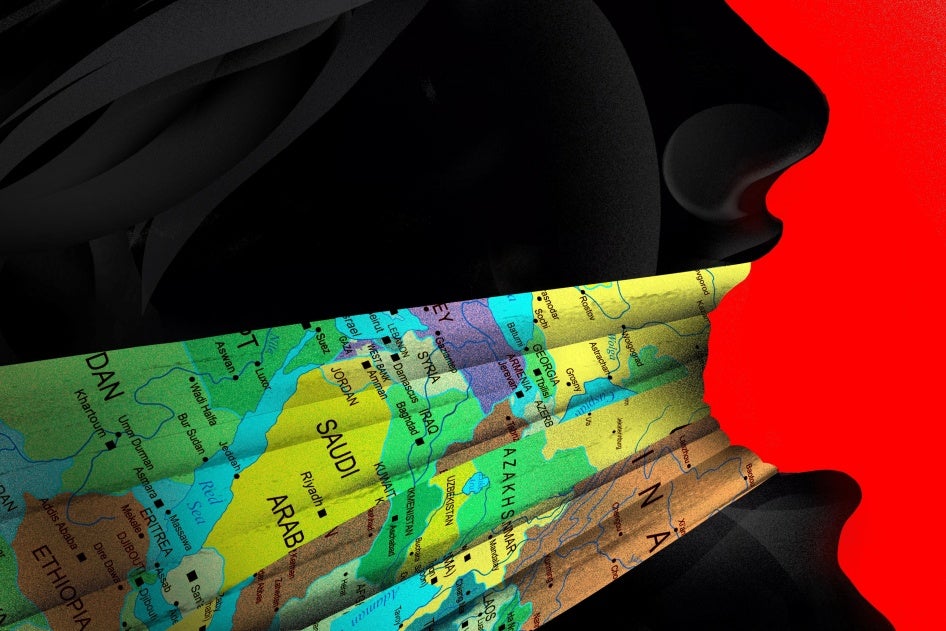
On 12 June 2024, Human Rights Watch published a useful, short “questions-and-answers” document which outlines key questions on the global trend of transnational repression.
The term “transnational repression” is increasingly used to refer to state actors reaching beyond their borders to suppress or stifle dissent by targeting human rights defenders, journalists, government critics and opposition activists, academics and others, in violation of their human rights. Particularly vulnerable are nationals or former nationals, members of diaspora communities and those living in exile. Many are asylum seekers or refugees in their place of exile, while others may be at risk of extradition or forced return. Back home, a person’s family members and friends may also be targeted, by way of retribution and with the aim of silencing a relative in exile or forcing their return.
Transnational repression can have far-reaching consequences, including a chilling effect on the rights to freedom of expression and association. While there is no formal legal definition, the framing of transnational repression, which encompasses a wide range of rights abuses, allows us to better understand it and propose victim-centered responses.
What tactics are used?
Documented tactics of transnational repression include killings, abductions, enforced disappearances, unlawful removals, online harassment, the use of digital surveillance including spyware, targeting of relatives, and the abuse of consular services. Interpol’s Red Notice system has also been used as a tool of transnational repression, to facilitate unlawful extraditions. Interpol has made advances in improving its vetting systems, yet governments continue to abuse the Red Notice system by publishing unlawful notices seeking citizens who have fled abroad on spurious charges. This leaves targets vulnerable to arrest and return to their country of origin to be mistreated, even after they have fled to seek safety abroad.
Is transnational repression a new phenomenon?
No, the practice of governments violating human rights beyond their borders is not new. Civil society organizations have been documenting such abuses for decades. What is new, however, is the growing recognition of transnational repression as more than a collection of grave incidents, but also as an increasing phenomenon of global concern, requiring global responses. What is also new is the increasing access to and use of sophisticated technology to harass, threaten, surveil and track people no matter where they are. This makes the reach of transnational repression even more pervasive.
Where is transnational repression happening?
Transnational repression is a global phenomenon. Cases have been documented in countries and regions around the world. The use of technology such as spyware increases the reach of transnational repression, essentially turning an infected device, such as a mobile phone, into a portable surveillance tool, allowing targeted individuals to be spied on and tracked around the world.
Do only “repressive” states commit transnational repression?
While many authoritarian states resort to repressive tactics beyond their own borders, any government that seeks to silence dissent by targeting critics abroad is committing transnational repression. Democratic governments have also contributed to cases of transnational repression, for example through the provision of spyware, collaborating with repressive governments to deny visas or facilitate returns, or relying upon flawed Interpol Red Notices that expose targeted individuals to risk.
Are steps being taken to recognize and address transnational repression?
Increasingly, human rights organizations, UN experts and states are documenting and taking steps to address transnational repression.
For example, Freedom House has published several reports on transnational repression and maintains an online resource documenting incidents globally. Human Rights Watch has published reports, including one outlining cases of transnational repression globally and another focusing on Southeast Asia. Amnesty International has published a report on transnational repression in Europe. Many other nongovernmental organizations are increasingly producing research and reports on the issue. In her report on journalists in exile, the UN Special Rapporteur on freedom of expression dedicated a chapter to transnational repression. The UN High Commissioner for Human Rights used the term in a June 2024 statement.
Certain governments are increasingly aware of the harms posed by transnational repression. Some are passing legislation to address the problem, while others are signing joint statements or raising transnational repression in international forums. However, government responses are often piecemeal, and a more cohesive and coordinated approach is needed.
What should be done?
Governments should speak out and condemn all cases of transnational repression, including by their friends and allies. They should take tangible steps to address transnational repression, including by adopting rights-respecting legal frameworks and policies to address it. Governments should put victims at the forefront of their response to these forms of repression. They should be particularly mindful of the risks and fears experienced by refugee and asylum communities. They should investigate and appropriately prosecute those responsible. Interpol should continue to improve vetting process by subjecting governments with a poor human rights record to more scrutiny when they submit Red Notices. Interpol should be transparent on which governments are continually abusing the Red Notice system, and limit their access to the database.
At the international level, more can be done to integrate transnational repression within existing human rights reporting, and to mandate dedicated reporting on cases of transnational repression, trends, and steps needed to address it.
Nina Alizadeh Marandi of HRW on 28 May 2024 said that German environmental activists are facing increasingly harsh rhetoric and legal action from authorities as they mobilize to confront the climate crisis.
Last week, on 21 May, Germany’s efforts to curb environmental activism took a disturbing turn when authorities used an offence typically reserved for prosecutorial pursuit of serious organized crime to indict Letzte Generation (Last Generation), a climate activist group known for disruptive protests such as roadblocks and other acts of civil disobedience, as a criminal organization. A conviction under federal law would pave the way for prosecuting anyone who participates in or supports Letzte Generation, including administratively or financially.
The investigation into Letzte Generation as a criminal organization has involved armed police conducting predawn raids, storming private apartments while the activists were still asleep, and granting warrants for police to surveil the group’s communications, including calls made with media.
Last year the group’s website was temporarily seized during a fundraising campaign, with a notice from the police falsely labeling Letzte Generation a criminal organization and stating any donation constitutes illegal support for crime. This move by the police, despite no judicial assessment of the charges having taken place, exposes a deeply worrying bias against the group and raises questions about whether authorities are respecting due process.
International law protects the right to public participation in environmental matters and recognizes peaceful, nonviolent civil disobedience as a legitimate form of assembly. Disruptions like traffic blockades, while inconvenient, generally do not constitute violence under international standards, although damage to or destruction of private or public property may.
While civil disobedience often involves breaking national laws, authorities are required to respond proportionately, giving due weight to the right to protest and the importance to the public interest of the issues at stake.
The government’s extreme response to Letzte Generation’s activism appears disproportionate, threatens the very right to protest, and smears climate activists when their cause has never been more urgent. Instead of intimidating environmental defenders, Germany should live up to its commitment to ambitious climate action and investigate the concerns that groups like Letzte Generation raise.
On 27 May 2024 Human Rights Watch published a major report on the politically motivated crackdown on Human Rights Lawyers in Belarus.
Summary: In August 2020, peaceful protests in Belarus began with hundreds of thousands of people gathering in the streets of Minsk and across Belarus following the contested electoral victory of Aliaksandr Lukashenka, who had already served as president for more than 26 years. Belarusian authorities responded with unprecedented brutality, using excessive force, arbitrarily detaining thousands of peaceful protesters, and subjecting them to ill-treatment and torture in detention before conveyor-belt administrative and criminal trials.
Since then, Belarusian authorities have unrolled widespread and systematic repression of any form of dissent. Government critics have been forced into exile or thrown behind bars on politically motivated charges. The number of political prisoners swelled and at time of publication exceeded 1300, according to Human Rights Center “Viasna,” the prominent Belarusian human rights organization. The term “political prisoner,” for the purpose of this report, includes anyone detained, imprisoned or otherwise deprived of their liberty by Belarusian authorities for peacefully exercising their rights and freedoms or defending human rights and fundamental freedoms.
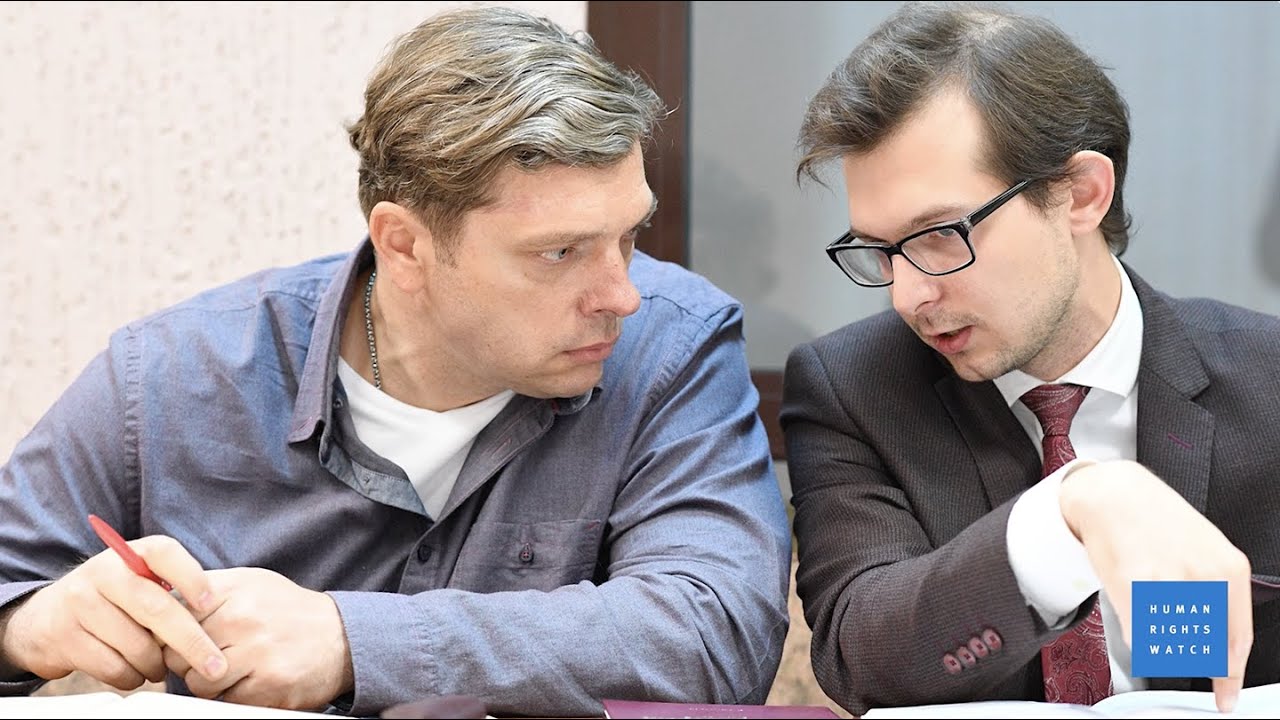
In the face of these grave and widespread rights violations, some lawyers stepped up to represent clients in politically motivated cases. ..This report examines the Lukashenka government’s retribution against lawyers who represent government critics and its nearly complete takeover of the legal profession in Belarus. The authorities have subjected lawyers in politically motivated cases, as well as lawyers who criticize state abuses, to harassment, arbitrary revocation of their licenses, detention and administrative charges, and politically motivated criminal prosecution. Behind bars, lawyers along with other politically-targeted detainees and convicts, experience retaliatory ill-treatment. The authorities have left no space for earnest and efficient discharge of lawyers’ duties in politically motivated cases. At the time of writing, very few lawyers, if any, were willing to take on such cases, which has severely undermined the right to a fair trial, due process, and access to remedy in Belarus.
The report shows that while governmental crackdown on lawyers in times of political unrest in Belarus is not new, the scale and severity of this wave of repression is unprecedented. For the first time in the history of modern Belarus, lawyers have become political prisoners themselves for their work on behalf of clients.
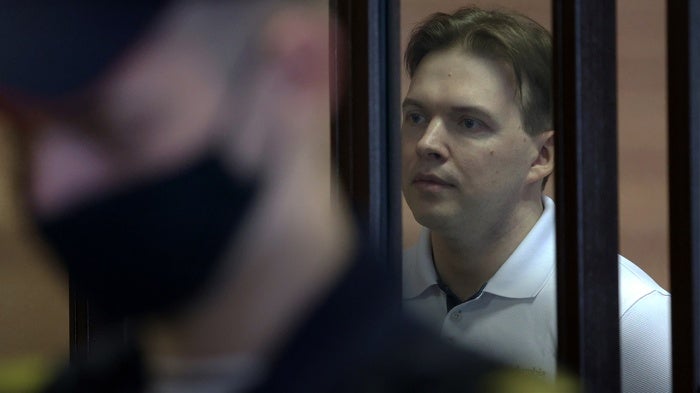
At the time of writing, six lawyers—Maksim Znak, Aliaksandr Danilevich, Vital Brahinets, Anastasiya Lazarenka, Yuliya Yurhilevich, and Aliaksei Barodka—were serving sentences on politically motivated charges ranging from six to ten years. Such charges included providing legal aid to political opposition figures and activists or giving interviews to and sharing information with independent media labelled “extremist” by the authorities. [see https://humanrightsdefenders.blog/2021/09/10/two-lawyers-from-belarus-share-lawyers-for-lawyers-award-2021/]
In addition to politically motivated prosecution, lawyers also have faced politically motivated disbarment. Since 2020, more than 140 lawyers have been disbarred by the regional bar associations or faced arbitrary license revocation by the Justice Ministry following decisions of its Qualification Commission because they supposedly breeched some regulations or were not sufficiently qualified to work as lawyers. These grounds are often easily exposed as flimsy pretexts: on average, those “unqualified” lawyers had more than 13.5 years of experience; many had successfully worked in the legal field for two to three decades, or more, and some of them were previously recognized by bar associations for their excellence…
The report also examines how the Belarusian government has established all-encompassing control over the legal profession in the country by controlling the admission of lawyers into the profession, regulating the way they discharge their duties, and exercising other broad controlling functions including but not limited to revoking lawyers’ licenses and essentially stripping lawyers’ self-governing bodies of independence.
In November 2021, a set of amendments into the Law on the Bar and Practice of Law in the Republic of Belarus (Law on the Bar) entered into force, which banned lawyers from working individually or opening law firms, requiring them to join legal consultation offices created and supervised by regional bar associations in coordination with the Justice Ministry. The amendments also significantly expanded the Justice Ministry’s control over the self-governing bodies of the bar and eased the conditions for obtaining a lawyer’s status for ex workers of law enforcement and judiciary….
The Belarusian Republican Bar Association (BRBA) and regional bar associations generally have failed to represent and protect the rights of their members and withheld support from lawyers facing obstacles in discharging their duties, which in recent years have come to include harassment, arbitrary detention, and criminal prosecution. Moreover, bar association executive bodies have become vehicles for the agenda of state officials, triggering sanctions against and disbarring lawyers deemed undesirable by the authorities. In light of the control exercised by the state over the formation of the Belarusian bar’s executive bodies and their work, these associations cannot be considered genuinely independent self-governing bodies representing the interests of all lawyers in Belarus.
Some lawyers described the current state of the Belarusian justice system and bar as a “total collapse of the legal system” and many felt “disarmed” in the face of systematic and widespread violations of due process, fair trial, and rule of law. Yet, lawyers noted, that it is their duty to discharge their functions to the highest professional standard, notwithstanding the political motivation of their clients’ cases and the unprecedented pressure from the state:
Recommendations
To the Belarusian Government
Immediately end the systematic detention and prosecution of anyone who peacefully exercises their rights and freedoms, release all political prisoners, provide effective remedies for victims and survivors of human rights abuses, and carry out prompt and impartial investigations into all alleged human rights violations;
Immediately end the ill-treatment of prisoners and ensure the protection of their rights and freedoms in confinement, including by ending the pervasive practice of incommunicado detention; grant lawyers and families unhindered access to detainees, and ensure all prisoners receive adequate medical assistance;
End all harassment of, attacks on, and interference with lawyers, particularly those representing clients in politically motivated cases and exercising their freedom of expression in line with international standards;
Ensure all courts adhere to fair trial standards. Allow lawyers to effectively perform their professional functions in accordance with the guarantees provided for in article 14 of the International Covenant on Civil and Political Rights (ICCPR) and the UN Basic Principles on the Role of Lawyers, including by instructing law enforcement and state agencies on the protected role and function of lawyers;
Repeal and amend national legislation to bring domestic law in compliance with international standards to ensure the independence and self-governance of the legal profession in Belarus;
Restore the licenses of all lawyers who have been disbarred or lost their licenses as a result of discharging their professional duties in accordance with international standards or for exercising their freedom of expression (including those lawyers who lost their license over arbitrary and state-controlled procedures at the Justice Ministry’s Qualification Commission);
Guarantee the independence of disciplinary proceedings against lawyers, which should be carried out by lawyers’ self-governing bodies in a fair and objective manner;
Curtail the Justice Ministry’s authority to interfere with independence of the legal profession, including the ministry’s authority to issue regulations on the work of lawyers, admit them into the profession, revoke licenses, carry out certification procedures, initiate disciplinary proceedings, and shape the selection of executive bodies of bar associations;
Void existing policies undermining the independence of legal profession and ensure separation of the bar from the state, including by abolishing the pervasive practice of forcing lawyers to express support for the government’s agenda and interests;
Respect the right to legal assistance, including by removing arbitrary obstacles to lawyers’ access to clients, safeguarding lawyer-client privilege, stopping the practice of making lawyers sign arbitrary and overly broad non-disclosure obligations, and ensuring fair and public trials and full equality of arms in courts of law;
Promptly comply with repeated requests by the UN special rapporteur on the human rights situation in Belarus to conduct a country visit.
To the Belarusian Republican Bar Association and Regional Bar Associations
Immediately end retaliation against members for carrying out professional duties or legitimately exercising their freedom of expression, and ensure lawyers targeted on such grounds have access to an effective remedy;
Repeal internal regulations that undermine the unhindered provision of legal assistance;
Advocate resolutely with the Belarusian government in support of the above recommendations and for Belarus’s adherence to international standards on the role of lawyers and the right to a fair trial;
Take measures to actively protect the interests of lawyers, defend the right of all accused to an effective defense regardless of the charges, and emphasize that lawyers cannot be identified with or punished for the alleged crimes of their clients;
Push back consistently and in principled fashion against the ongoing severe erosion of the bar’s professional autonomy and integrity, and the state’s overarching control of the bar;
Encourage regional bar associations to draw up rosters of lawyers to visit prisons to provide free legal advice and assistance to prisoners.
To United Nations Member States, Council of Europe, Organization for Security and Co-operation in Europe, and the European Union
Refrain from any cooperation with the Belarusian Republican Bar Association and regional bar associations until they become independent self-governing bodies representing the interests of Belarusian lawyers;
Call on the government of Belarus and the Belarusian bar to respect the rights of lawyers and to end arbitrary arrests, harassment, retaliation, and attacks against them;
Develop and fund programs to support lawyers who have faced retaliation for their professional activities or exercise of freedom of expression and examine ways of integrating Belarusian lawyers in exile into the legal profession in host countries;
Recognize Belarusian lawyers who have faced retaliation for their professional activities in defending clients in politically motivated cases as human rights defenders and afford them the requisite protection, including assistance with access to visas, funding and protection in exile and protection from transnational repression;
Consider imposing coordinated, targeted sanctions against the Justice Ministry officials and leaders of the Belarusian bar responsible for the systematic and widespread abuses against lawyers working on politically motivated cases and exercising their freedom of expression;
Recognize the Belarusian Association of Human Rights Lawyers as a key independent organization of Belarusian lawyers, and support its efforts to promote and protect the human rights of lawyers deprived of their right to exercise their profession in retaliation for discharging their duties and exercising their freedom of expression, and to improve the provision of legal aid in Belarus;
Express solidarity with and provide support to Belarusian human rights defenders working to deter politically motivated repression and document cases of grave rights violations for future accountability;
Support independent information sources providing independent coverage of events in Belarus and promoting universal human rights principles.
To Bar Associations and Lawyers’ Associations in Europe, Canada, and the US
Advocate for the above recommendations, in particular , for Belarusian authorities, and bar, to uphold international human rights standards, ending politically motivated persecution, ensuring independence and guarantees for legal profession.
Privately and publicly express concern at the interference of the government in the work of lawyers in Belarus;
Support Belarusian lawyers who have experienced or face retaliation for their legitimate professional activities, including by monitoring politically motivated cases against lawyers and, when relevant, providing third party interventions to courts and international agencies;
Refrain from any cooperation with the Belarusian Republican Bar Association and regional bar associations until they become independent self-governing bodies representing the interests of Belarusian lawyers.
Human Right Watch wrote to the Belarusian Justice Ministry and the Belarusian Republican Bar Association in April 2024 seeking their response to a summary of the report findings. At the time of writing no response had been received.
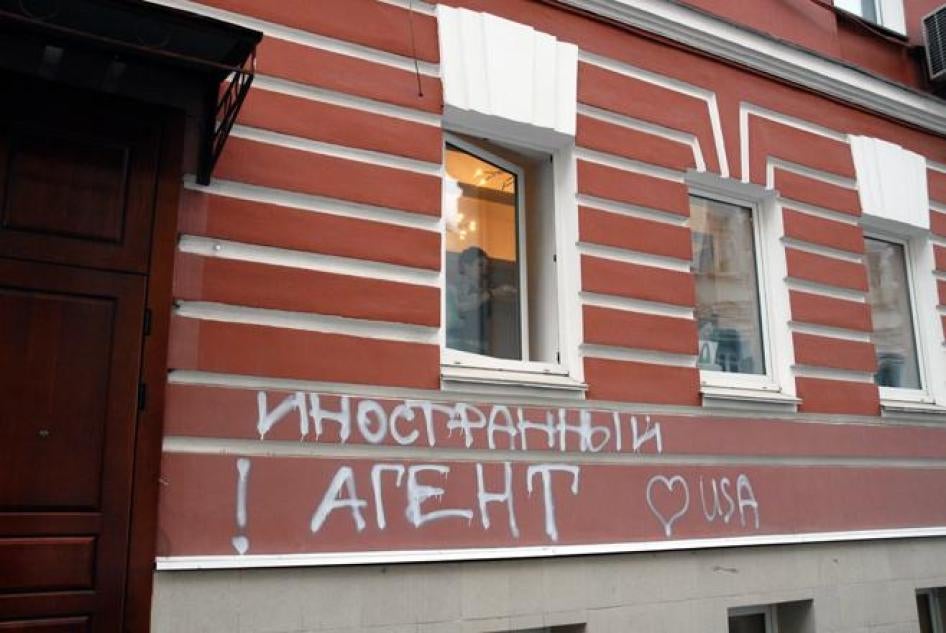
Iskra Kirova, Advocacy Director, Europe and Central Asia Division of HRW, wrote on 4 April 2024: ‘Foreign Agent’ Laws Spread as EU Dithers to Support Civil Society
Georgia’s ruling party plans to reintroduce highly controversial Russia-style “foreign agent” legislation aimed at incapacitating civil society and independent media. If adopted, the laws, which were withdrawn last year in the face of massive protests, would require foreign-funded nongovernmental organizations and media to register as “agents of foreign influence”. That would make them subject to additional scrutiny and sanctions, including administrative penalties up to 25,000 GEL (about 8,600 Euro). Authorities claim the laws promote “transparency”, but their statements make it clear the laws will be used to stigmatize and punish critical voices.
The day before Georgia’s announcement, Kyrgyzstan’s president signed an abusive “foreign representatives” law. Copied almost entirely from the Russian equivalent, the law would apply the stigmatizing designation of “foreign representative” to any nongovernmental organization that receives foreign funding and engages in vaguely defined “political activity”. The bill had been widely criticized after its initial submission in November 2022, including in a urgency resolution by the European Parliament.
The EU had ample opportunity to press the authorities to reject this bill. Kyrgyzstan benefits from privileged access to the EU internal market tied to respect for international human rights conventions: conventions this law clearly contravenes. The country is poised to sign an enhanced partnership agreement with the EU that centers democracy and fundamental rights. The EU has been silent on whether these deals would be imperiled by the bill’s adoption, despite the fact the European Commission’s own assessment highlighted Kyrgyzstan’s dire environment for civil society and the country’s breach of its obligations.
The latest spate of curbs on civil society comes in the wake of the European Commission’s December 2023 legislative proposal for an EU Directive on “transparency of interest representation” that would create a register of organizations which receive foreign funding. European civil society vehemently opposes the proposal because it risks shrinking space for independent organizations at home and diminishing the EU’s credibility in opposing such laws abroad. Yet the Commission forged ahead. On the same day the proposal was adopted, Hungary’s parliament approved a law that gives a government-controlled body broad powers to target civil society and independent media.
With civil society organizations under threat throughout Europe and Central Asia, we need an EU that in words and actions protects civic space and sets the right standards.
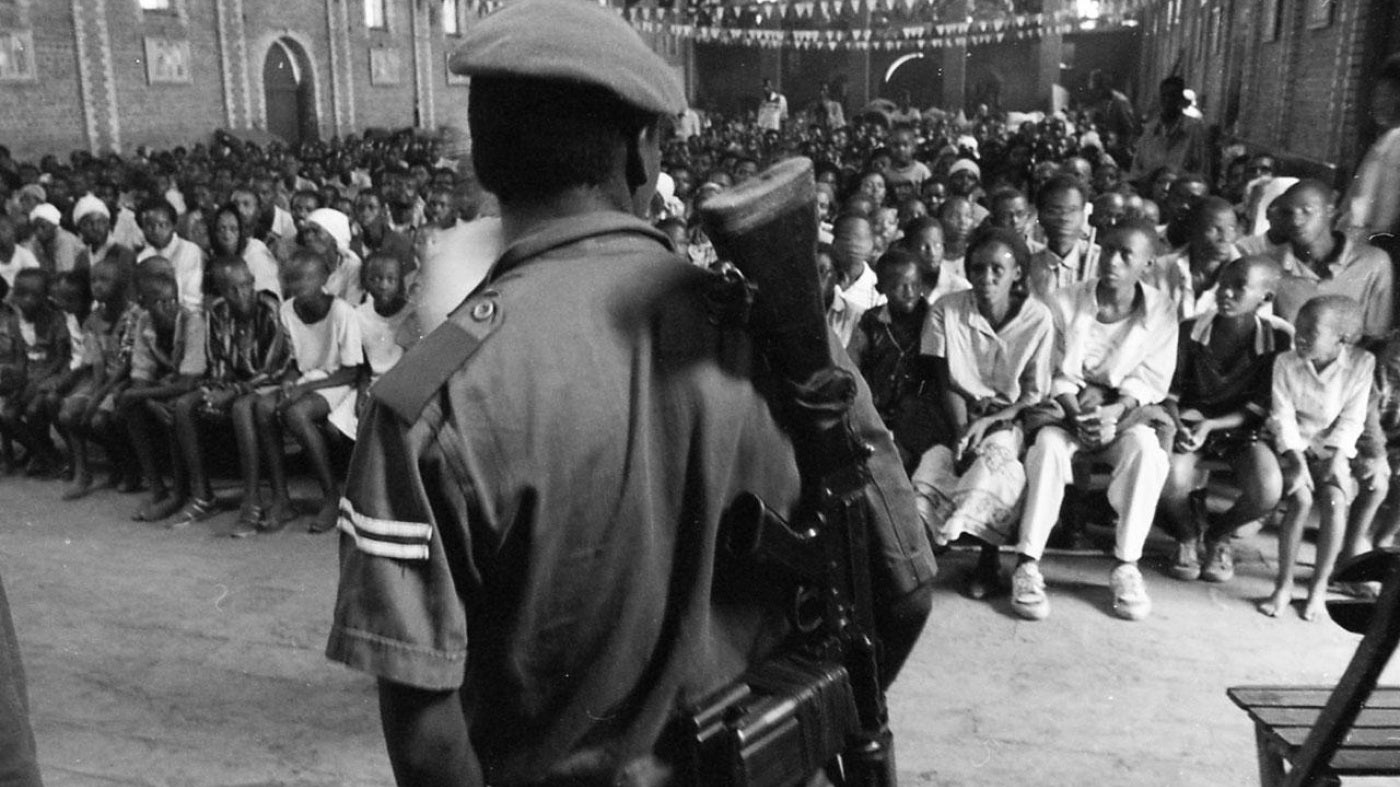
On 2 April, 2024 Human Rights Watch made part of its Rwanda Archives public in digital form.
Human Rights Watch has been documenting and exposing human rights violations in Rwanda since the early 1990s. Its senior adviser in the Africa division, Alison Des Forges, one of the world’s foremost experts on Rwanda, dedicated her career to the struggle for human rights in the Great Lakes region of Africa, and to Rwanda in particular. In the period leading up to the 1994 genocide, she worked tirelessly to alert world powers to the impending crisis in Rwanda. Few would listen. By the time the genocidal forces had unleashed their sinister program and the world had awakened to the full horror that was unfolding in Rwanda, it was too late. The killings in Rwanda increased as a civil war in Burundi waged on. The violence in Burundi, also based on ethnic divisions between Hutu and Tutsi ethnic groups, lasted from 1993 until 2005.
Des Forges’s efforts did not stop when the genocide ended. She continued to painstakingly gather information on the killings, rapes, and other horrific crimes, which she compiled into what has become one of the main reference books on the Rwandan genocide: “Leave None to Tell the Story: Genocide in Rwanda”, a 500-page account of the genocide published jointly by Human Rights Watch and the International Federation of Human Rights (FIDH) in 1999.
Des Forges testified as an expert witness in 11 trials at the United Nations International Criminal Tribunal for Rwanda (ICTR) in Arusha, Tanzania, as well as in domestic court proceedings involving Rwandan genocide suspects in several countries.
Des Forges campaigned vigorously for justice for the genocide until her tragic death in a plane crash in the US on February 12, 2009. She also documented human rights abuses by the new government of Rwanda after the genocide and advocated for accountability for all abuses, past and present.
Thirty years after the genocide, Human Rights Watch has begun the process of digitizing and making available some of Des Forges’s archives. The documents summarized below are some of those that remained in Human Rights Watch possession after Des Forges’s death and help shed light on efforts by Des Forges and others to warn about, and then attempt to stop, the genocide. These are just a selection of the many documents in the archives; others will not be published at this time for a variety of reasons. The private exchanges, letters, statements, and reports below do not purport to be a comprehensive account of the work of Human Rights Watch and others at the time, as it is likely documents are missing from the archive.
On 13 March 2024 Human Rights Watch announced that it would be closing its long-running film festival. Founded in 1988, the Human Rights Watch Film Festival showcased nearly 1,000 independent films, was presented in over 30 cities across the globe, and is the world’s longest running human rights film festival.
“It’s with sadness and deep regret that we have made the difficult decision to close the Human Rights Watch Film Festival,” said Tirana Hassan, executive director of Human Rights Watch. “The film festival is a celebrated cultural institution that educated and inspired hundreds of thousands of filmgoers and filmmakers around the world over three decades, providing a critical space for connection, conversation, and action on human rights issues.”
The decision to close the festival was part of a wider restructuring due to financial constraints, Human Rights Watch said. Human Rights Watch Film Festivals will take place as planned across the United Kingdom and Ireland, opening on March 14, 2024, and across Canada starting on March 21.
Human Rights Watch is immensely proud of the talented film festival leadership and staff, who built partnerships across the human rights community and film industry. The festival established a mainstream platform for impactful films and in-depth conversations about human rights issues, with a priority focus on underrepresented perspectives from around the world.
The festival staff have been instrumental in pushing for increased accessibility standards in the film industry, resulting in three fully inclusive film festivals in the last two years. During the Covid-19 pandemic and the lockdowns that shuttered cinemas, the film festival team created a digital streaming site that tripled attendance figures, encouraged festival members to tune in for live conversations, and ensured that the public would not be isolated at home. The innovative site continued the festival’s work of creating spaces for dialogue, connection, and action on human rights issues.
“We owe the Human Rights Watch Film Festival’s success and impact to the longstanding commitment of our festival staff and consultants, volunteers, partners, the filmmakers, and of course our audiences,” Hassan said. “They helped to nurture the human rights storytelling movement that we see thriving today.”
On 31 January 2024 several NGOs – including HRW and AI -came out in support of a bill in the US Senate. Senator Ben Cardin introduced the Human Rights Defenders Protection Act of 2024, which aims to protect individuals abroad “who face reprisals for defending human rights and democracy.” The law, if enacted, would strengthen the US government’s ability to “prevent, mitigate, and respond” to such cases.
Senator Cardin said this legislation “will help elevate, guide, and enhance US efforts to support these courageous individuals globally at a time when their efforts are more important than ever.”
HRW said: The bill would integrate support for rights defenders into various US policies and programs and encourage engagement with the private sector. It aims to improve assistance for rights defenders living in exile from their home countries and strengthen US tools to hold perpetrators of rights abuses accountable.Human Rights Watch has long documented the risks, threats, and attacks that rights defenders across the globe face. In Rwanda, for example, the government for many years has targeted with impunity rights defenders at home and extended its repression beyond its borders to silence Rwandan critics living abroad. Last December, the Emirati government brought new charges under its counterterrorism law against 87 activists and dissidents, including imprisoned rights defender Ahmed Mansoor.
The proposed legislation would create a new US visa for rights defenders who face a “credible fear of an urgent threat,” allowing those who qualify to reach safety before they are detained or harmed. It would also increase the number of US government personnel dedicated to democracy and human rights issues in the federal government and at embassies in countries with a high risk of rights abuses.
Andrew Fandino, Advocacy Director for the Individuals at Risk Program at Amnesty International USA. stated: “The Human Rights Defenders Protection Act of 2024 is a critical piece of legislation that will help strengthen and improve the U.S. government’s ability to support human rights defenders around the world,” ..“With over 401 human rights defenders killed globally in 2022 alone, now more than ever, human rights defenders need this additional support and protection.”
If passed, the legislation would require the US government to establish a “Global Strategy for Human Rights Defenders.” The strategy would survey current tools and resources to support human rights, identify how the government would prioritize and bolster protections for rights defenders, and establish specific goals for implementing the legislation’s policy objectives. This would link to the existing EU Guidelines on Human Rights Defenders (2008), and the OSCE Guidelines on the Protection of Human Rights Defenders (2014) and those of a small group of European countries.
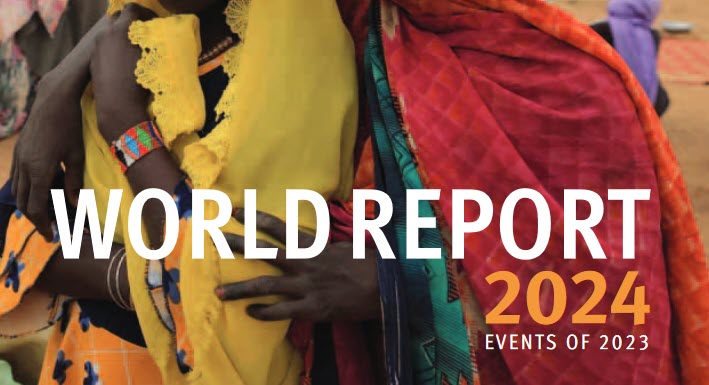
On 27 January 2024, Olivia Biliunaand Madison Whittemore in the Davis Vanguard produced a useful summary of the 2024 Human Rights Watch Report
After reflecting on the formidable human rights challenges of 2023, it has become evident that changes in how human rights are approached will be needed in 2024 to prevent the atrocious suppression and human rights crises that have been prominent in the past year, according to Human’s Rights Watch’s “World Report 2024: Our annual review of human rights around the globe.” [see: https://www.hrw.org/world-report/2024]
However, despite the human rights atrocities seen in 2023, the group added that there appears to be some hope for upholding human rights in 2024 through enforcing principles of international human rights law.
Looking back on 2023, the 2024 World Report reflects on renewed conflicts between Israel and Hamas that resulted in the abuse of many and a tragic loss of life, and other countries such as Ukraine and Myanmar that continue to struggle with their own intense conflicts.
Human Rights Watch notes that in accordance with the aforementioned conflicts, “Economic inequality rose around the world, as did anger about the policy decisions that have left many people struggling to survive.”
However, while many are quick to blame the government for being complicit in these human rights crises, the report maintains action is needed outside of just government action alone to help diminish these threats, since they “often transcend borders and cannot be solved by governments acting alone.”
In fact, the report notes the often forgotten importance of universal principles of international human rights and the rule of law which are more critical now than ever.
The 2024 World Report argues governments have the ability to help improve human rights and that they have double standards in “applying the human rights framework,” as stated in the 2024 World Report, and “chips away at trust in the institutions responsible for enforcing and protecting rights.”
The legitimate laws and universality of human rights are weakened when governments that are vocal about denouncing the Israeli government war crimes against Gaza citizens do not speak up about the crimes against humanity in Xinjiang, China, according to the 2024 World Report.
Governments have found it is easier to disregard international human rights matters because internationally there is no challenge to human rights nationally, writes Tirana Hassan, the executive director.
Hassan also noted that autocrats across regions have taken away both the independence of key institutions to protect human rights and the freedom of dissent, as stated by the 2024 World Report, “with the same endgame in mind: to exercise power without constraint.”
Hassan explains that with campaigning of civil rights groups and years of diplomatic negotiations, 83 countries were able to protect their citizens by adopting a political declaration that provided protection from explosive weapons in populated areas.
The international pledge to recognize the “long-standing practice of warring parties to use aerial bombing, artillery, rockets, and missiles in villages, towns, and cities” is the first to address this issue as the 2024 World Report states.
Some countries are addressing long-marginalized communities. With years of pressure, the Japanese government parliament has passed its first law to protect LGBT people from “unfair discrimination,” the 2024 World Report states.
With the humanitarian crises there has been questioning on the effectiveness of the human rights framework in the realm of protection, notes the 2024 World Report, adding, “especially in the face of selective government outrage, transactional diplomacy seeking short-term gain, growing transnational repression, and the willingness of autocratic leaders to sacrifice rights to consolidate their power.”
With that, the 2024 World Report also suggests the human rights framework will continue to be the plan to build “thriving, inclusive societies” and governments need to be persistent and, with urgency, defend human rights to handle the global and existential threats to humanity.
As also highlighted by Hassan in the report, the assault on Israel by Hamas-led fighters on Oct. 7 that deliberately killed hundreds of vulnerable civilians led to swift condemnation from many countries around the world.
In retaliation to the Oct. 7 attack, the Israeli government ceased all running water and electricity in the Gaza strip, “blocking the entry of all but a trickle of fuel, food, and humanitarian aid – a form of collective punishment that is a war crime,” the 2024 World Report noted.
The Israeli government and military continue frequently bombing the Gaza strip. Following these attacks, countries were outraged after they found out that Israel used a chemical called white phosphorus during the indiscriminate attacks on Gaza, with many countries even highlighting the attacks as “apparent war crimes,” stated by Human Rights Watch.
However, despite world-wide outrage after Israel’s war crimes on Gaza, countries have failed to publicly call the Israeli government out on its war crimes resulting in severe human rights abuses, the report detailed, noting even the U.S. and the European Union have acknowledged Israel’s human rights abuses on Gaza citizens, yet have continued to be complicit in the “ongoing crimes against humanity of apartheid and persecution against Palestinians.”
The report asserted the repercussions of governments failing to intervene undermine the legitimacy of the rules system designed 75 years ago to safeguard all citizen’s rights. In response to the inconsistencies, Hassan cites that governments like Russia and China aim to take advantage of the shaky legitimacy by attempting to infringe on human rights and take advantage of the system that is supposed to punish both countries.
Another example used by the 2024 World Report that displays these inconsistencies is the power battle between two influential generals in Sudan, Gen. Abdelfattah al-Burhan and Gen. Mohamed Hamdan Dagalo.
This conflict resulted in civilians facing deadly abuses and human rights infringements in the Darfur region—with numerous countries listed in the 2024 world report allegedly ignoring the horrendous abuses and abstaining from intervening.
Despite nations such as Gabon, Ghana, and Mozambique being on the Security Council, “the UN, under pressure from the Sudanese government, shuttered its political mission in Sudan.” the 2024 World Report stated, also concluding that “This marked the conclusion of the UN’s limited capacity in the country to safeguard civilians and openly address the human rights situation.”
Regardless of African governments refusing to hold the Sudanese government accountable, the report highlights that many have been strong advocates for resolving the human rights issues in other places like Palestine, even leading a full-fledged effort to investigate its human rights abuses last November and recently asserting that “Israel violated its obligations under the 1948 Genocide Convention in its military operations in Gaza.”
Domestic policies and foreign policies should hold value in human rights and their rules of laws at the forefront of governments, charged the 2024 World Report.
Even rights-respecting governments hold these principles as “optional, seeking short-term, politically expedient “solutions” at the expense of building the institutions that would be beneficial for security, trade, energy, and migration in the long term,” according to the 2024 World Report, adding transactional diplomacy carries a human cost that extends past borders, the group adds.
The 2024 Report writes that without awareness while making transactional diplomacy, risks are created. Removing human rights and the rule of law from a sensible direction creates leverage for right-violating governments too, the 2024 World Report adds, arguing, “It can also contribute to further human rights violations, including transnational repression,” which governments do when they commit human rights abuses against their nationals abroad or to those families living at home, the report continues.
According to the World Report of 2024, India, a democracy, under its Prime Minister Narenda Modi has moved toward an autocracy “with authorities targeting minorities, tightening repression, and dismantling independent institutions, including federal investigative agencies.”
Additionally, as cited in The Report, the US, Australia, the UK, and France chose trade and security over raising human rights concerns.
As reported by Executive Director Hassan, the Modi government’s repressive tactics went past borders and were empowered to do so from the Indian government’s “silence on the Indian government’s worsening rights record…including to intimidate diaspora activists and academics or restrict their entry into India.”
Rwandan’s government has had three decades of no punishment for their repression of civil and political rights at home, the 2024 World Report states, writing “to stifle dissent beyond its borders,” and noting, Rwanda, despite having risen on the international stage, has failed to recognize its problematic human rights violations.
Similarly, Chinese government abuses in Beijing escalate its repression against both Chinese and non-Chinese with failure of resistance from other countries, according to the 2024 World Report, explaining a Laos lawyer and human rights defender, Lu Siwei, received pressure from the Chinese government to return and authorities pushed out warrants.
The 2024 World Report claims nowhere is safe if repressive governments can get away with “strong approaches to silence human rights defenders, exiled politicians, journalists, and critics beyond their borders.”
As reported by the Human Rights 2024 World Report, with almost half of the global population being eligible to vote in 2024, both citizens and independent institutions need to participate in order to effectively have leaders who defend human rights, regardless of society and many institutions having “become renewed battlegrounds for autocratic leaders around the world looking to eliminate scrutiny of their decisions and actions.”
According to Hassan, the nations of Guatemala and Nicaragua are two stories of autocratic leaders consolidating power and failing to prioritize civil society.
For example, after Guatemala’s President-elect Bernardo Arévalo ran on an anti-corruption platform, a corrupt judiciary attempted to overturn Arévalo’s election triumph.
Similarly, the report refers to Nicaragua, where corrupt and authoritarian President Daniel Ortega uses “abusive legislation to shut down over 3,500 nongovernmental organizations” in order to dominate the political landscape and wield unchecked power.
The Human Rights report insists these “vital” checks and balances continue to be eroded, it poses great harm to human rights.
Judicial independence has also been drastically sabotaged in Poland, the report alleges, with the Polish government suppressing civil society groups through law enforcement and incarceration. Polish freedom and independence are extremely threatened, with the Law and Justice party most notably encroaching on women’s reproductive rights and essentially banning abortion, Hassan suggested in the report.
“In May 2023, an abortion rights activist was convicted of helping a woman to get abortion pills and was sentenced to eight months of community service – the first known prosecution of its kind in the EU,” the 2024 World Report noted.
On an environmental note, with the impending issue of global warming, the 2024 report highlights activists being shot by governments across the globe who want to “deter the climate movement.”
In another example, the report cites how one of the largest oil producers, the United Arab Emirates (UAE), continues to expand its production of fossil fuels; however, people are discouraged from exposing the UAE unless they are willing to face grave punishment.
Apart from punishing dissent, governments are using technology and social media platforms to “silence critics and censor dissent,” the 2024 World Report notes, citing a 54-year-old retired Saudi Arabian teacher named Muhammad al-Ghamdi, who received the death penalty after he expressed his opinions on X and Youtube and allegedly went against the country’s counterterrorism law.
Despite everything that occurred in 2023, there were also positive moments for human rights where institutions and movements succeeded, the 2024 World Report states, arguing, “Indeed, these successes illustrate why self-serving politicians and repressive governments work so hard to curtail them – and why all governments should recognize and support these fragile successes.”
Additionally, according to the Executive Director Hassan, the ICC issued warrants for Russia’s President Vladimir Putin and his children’s rights commissioner for war crimes related to deporting and transferring children and a court ruled that South Africa had a commitment to arrest Putin.
According to the 2024 World Report, the Xokleng Indigenous people succeeded when the Brazil Supreme Court, as noted by the 2024 World Report, “upheld all Indigenous peoples’ rights to their traditional lands,” despite efforts by the Santa Catarina state.
The 2024 World Report said, “These victories highlight the tremendous power of independent, rights-respecting, and inclusive institutions and of civil society to challenge those who wield political power to serve the public interest and chart a rights-respecting path forward” and that “all governments, in their bilateral relations and at the multilateral level, should redouble efforts to uplift key institutions and protect civic space wherever it is under threat.”
The human rights crisis highlights the importance for “mutually agreed principles of international human rights law everywhere,” the 2024 World Report notes.
It also points out that through governments centering their human rights obligations through moral governing, it will provide a diligent change to those affected.
The 2024 World Report concludes that consistently upholding human rights, “across the board, no matter who the victims are or where the rights violations are being committed, is the only way to build the world we want to live in.”
On 1 December, 2023, at about 4 p.m., four or more unidentified men abducted Diallo, the secretary-general of the Collective Against Impunity and Stigmatization of Communities (Collectif contre l’Impunité et la Stigmatisation des Communautés, CISC) in Burkina Faso’s capital, Ouagadougou. Diallo had just left the government’s passport office after a meeting with officers to renew his passport. The CISC issued a statement the same day saying that men in civilian clothes pushed Diallo into a vehicle and drove off. His whereabouts remain unknown.
On December 2, the United Nations special rapporteur on human rights defenders, Mary Lawlor, raised serious concerns about Diallo’s abduction. In a December 3 statement, The People’s Coalition for the Sahel, an alliance of civil society organizations, said that “the abduction of a prominent activist in broad daylight […] demands an immediate government response,” and called on the military authorities to take action.
“Burkina Faso authorities should urgently and impartially investigate the abduction of Daouda Diallo and release him if he is in government custody,” said Ilaria Allegrozzi, senior Sahel researcher at Human Rights Watch. “We are deeply concerned for Diallo’s safety and the safety of everyone working to improve respect for human rights in Burkina Faso.”
Since it took power in an October 2022 coup, Burkina Faso’s military junta has increasingly cracked down on peaceful dissent and the media, shrinking the civic space in the country. National and international journalists, as well as civil society members, face increasing harassment, threats, and arbitrary arrests. On December 2, the military authorities announced the suspension of “all distribution methods” of the French newspaper Le Monde daily, claiming an article published on Le Monde’s website on December 1 about a deadly attack by an Islamist armed group on a military base in Djibo, Sahel region, on November 26, was “biased.”
On 4 December the Martin Ennals Foundation and several other NGOs addressed an urgent letter to the Représentant Permanent de Burkina Faso at the UN in Geneva.
On 27 October, 2023 Human Rights Watch stated that FIFA has broken its own human rights rules in announcing a plan for hosting the next two men’s World Cups that effectively eliminates bidding and human rights due diligence.
Within hours after FIFA published its arrangements for the 2030World Cup, Saudi Arabiaannounced its ambitions to host the 2034 World Cup.
“Barely a year after the human rights catastrophes of the 2022 Qatar World Cup, FIFA has failed to learn the lesson that awarding multi-billion dollar events without due diligence and transparency can risk corruption and major human rights abuses,” said Minky Worden, director of global initiatives at Human Rights Watch “The possibility that FIFA could award Saudi Arabia the 2034 World Cup despite its appalling human rights record and closed door to any monitoring exposes FIFA’s commitments to human rights as a sham.”
In February 2023, Human Rights Watch contacted FIFA to request details on its due diligence and stakeholder consultation for selection of future World Cup hosts and awarding commercial sponsorship contracts. FIFA has not responded.
Because of regional rotation requirements, the six-country 2030 World Cup means that FIFA will only accept bids from Asia or Oceania for 2034, opening the way for Saudi Arabia to be the host. FIFA instead needs to keep open bidding for the 2034 World Cup and apply the same human rights benchmarks to all bidders in advance of selection, Human Rights Watch said.
FIFA’s Human Rights Policy, adopted in 2017, outlines its responsibility to identify and address adverse human rights impacts of its operations, including taking adequate measures to prevent and mitigate human rights abuses. Article 7 of FIFA’s Human Rights Policy states that “FIFA will constructively engage with relevant authorities and other stakeholders and make every effort to uphold its international human rights responsibilities.” This should include consulting a wide range of stakeholders, including potentially affected groups, domestic human rights monitors, athletes, fans, migrant laborers, and unions, before making major hosting decisions. [see also: https://humanrightsdefenders.blog/2022/04/17/fifa-world-cup-the-human-rights-plans-of-host-cities/]
Under FIFA’s human rights policies, countries bidding to host games must commit to strict human rights and labor standards. In the introduction to FIFA’s “Key Principles of the Reformed Bidding Process,” FIFA President Gianni Infantino writes: “Whoever ends up hosting the FIFA World Cup must …formally commit to conducting their activities based on sustainable event management principles and to respecting international human rights and labour standards according to the United Nations’ Guiding Principles.”
FIFA has so far failed to apply these principles in the award of the 2030 and 2034 World Cups.
In June, FIFA cancelled its planned announcement about the bidding process for the 2030 World Cup, instead announcing that:
in line with the principle of confederation rotation and of securing the best possible hosting conditions for the tournaments, the bidding processes for both the 2030 and 2034 editions would be conducted concurrently, with FIFA member associations from the territories of the Asian Football Confederations and the Oceania Football Confederation invited to bid to host the FIFA World Cup 2034
FIFA’s Overview of the Bidding Processes document sets a deadline for any member associations to confirm bidding by October 31, 2023, an unreasonably tight deadline for the 2034 World Cup 11 years away that should include national stakeholder consultation and could ultimately cost billions of dollars. Saudi Arabia’s appalling human rights record has deteriorated under Crown Prince Mohammed Bin Salman’s rule, including mass executions, continued repression of women’s rights under its male guardianship system, and the killing of hundreds of migrants at the Saudi-Yemen border. Torture and imprisonment of peaceful critics of the government continues, and courts imposed decades-long imprisonment on Saudi women for tweets. Sex outside marriage, including same-sex relations, is a crime, with punishments including death. Lesbian, gay, bisexual and transgender (LGBT) people in Saudi Arabia practice extreme self-censorship to survive their daily lives. LGBT players and fans visiting Saudi Arabia could face censorship, stigma, and discrimination on the basis on their sexual orientation and gender identity. See e.g.: https://humanrightsdefenders.blog/tag/saudi-arabia/]
Independent human rights monitors, journalists, women’s rights activists, and other peaceful critics are jailed, under house arrest, and cannot safely work in Saudi Arabia. Saudi Arabia has severe restrictions on journalists and free expression, a basic requirement for World Cup hosts, Human Rights watch said. In October 2018, Saudi agents murdered and dismembered the Washington Post columnist Jamal Khashoggi, who had been critical of the Saudi government, an assassination apparently approved by the crown prince himself.
“In Saudi Arabia, independent human rights monitoring is not possible due to government repression. This makes it effectively impossible for FIFA to carry out the ongoing monitoring and inspection of human rights its human rights policy requires,” Worden said.
While welcoming the Saudi bid to host the World Cup in 2034, FIFA has not said anything about how it proposes to assess its human rights conditions.
“With Saudi Arabia’s estimated 13.4 million migrant workers, inadequate labor and heat protections and no unions, no independent human rights monitors, and no press freedom, there is every reason to fear for the lives of those who would build and service stadiums, transit, hotels, and other hosting infrastructure in Saudi Arabia,” Worden said.
“FIFA is failing in its responsibility to the world of football to conduct World Cup bidding and selection procedures in an ethical, transparent, objective, and unbiased way,” Worden said. “If there’s to be any integrity in what remains of this process, FIFA needs to immediately delay and open the bidding process for the 2034 World Cup, make public its labor, human rights, and environment policies, and then make sure protections are fully carried out.”


 Hans Thoolen on Human Rights Defenders and their awards