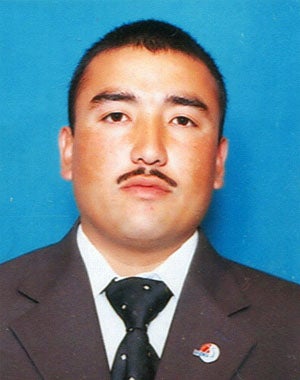
in its July 2015 Newsletter puts the spotlight on Khalef Khalifa, Executive Director of the NGO MUHURI in Kenya.
On 8 April 2015, the official Gazette notice listed 85 companies and organisations, including MUHURI and Haki Africa, as suspected of having links to terrorism and linking them as specified entities. On 20 and 21 April, the police raided the offices of both organizations, disabling their servers, carrying away hard disks and documents, allegedly to determine whether they had been involved in tax evasion. On 28 May, the Non-Governmental Organisations’ Coordination Board announced through the media that they had de-registered the organizations. On 12 June the court dismissed all charges against MUHURI and Haki Africa on the basis that there was no evidence against them.
Khalef Khalifa (KK): As you know, on the 12th June was a good day for us as both MUHURI and Haki Africa, were entirely vindicated in court. The judge dismissed all the charges against us and said that there was absolutely no evidence to link us to terrorism in any form and specifically forbade the police or even the Minister to make any such reference in the future. However the outstanding difficulty is that he refused to unfreeze our bank accounts on the basis that we had failed to include the Central Bank in our case against the state. They have now agreed to join our case calling for the accounts to be freed but we have to wait for another hearing before the judge makes his ruling and we can begin getting back to normal.
FLD: Given the various lines of attack that were opened against MUHURI it seems as though the government was out to get you?
KK: ...we were targeted on three fronts: by the police, the Revenue Commissioners and by the NGO Board. So while the government accused us of terrorism, the Revenue Commissioners descended on our office and took away all out financial documentation to look for evidence of tax avoidance and the NGO Board lodged a complaint that we had not kept them properly informed of our activities, and in particular that we had not informed them of new appointments to our board, as required by the NGO Law. In the final verdict, while the judge said there was no evidence of involvement in terrorism, both the Revenue Commissioners and the NGO Board had to concede that we were 100% compliant with the regulations. The only thing the NGO Board could trip us up on was that while we had notified the NGO Board of the new appointments, we had not used the appropriate, and newly introduced, form. What is interesting is that in the early stages of the case the government was totally focused on pursuing a case on the basis of terrorism, but they quite quickly changed tack and started looking for any small technical failures they could find to try and make a case against us. But they failed because we have always operated in an entirely open and transparent way.
KK: The real reason for their animus against MUHURI is that we are critical of the police and have investigated their involvement in extrajudicial executions and forced disappearances. There have been at least 52 such killings and disappearances in the Mombasa region in the last two years. The police claim to be fighting terror but in fact terror is a more accurate description of the way the police themselves work. In one incident 8 people were shot dead in a church. The police claimed that it was an attack by Al Shabaab. However when the perpetrators were arrested it was clear that they were not Muslims and in fact had no affiliation to any particular group. The police then hid the names and tried to maintain the fiction of an Al Shabaab attack.
FLD: Will the work of MUHURI get back to normal now?
KK: ...As soon as the accounts are unfrozen we will continue out work as normal. For us it is clear that the government wants to intimidate and frighten MUHURI but we will not be intimidated – we will not give up.
The more general backdrop can be found in earlier Front Line messages, the 5 June appeal by the Observatory [http://www.omct.org/human-rights-defenders/urgent-interventions/kenya/2015/06/d23190/] and the statements made by NGOs on 26 June 2015 at the adoption by the UN Human Rights Council of the report of the Universal Periodic Review [UPR] of Kenya:
– International Service for Human Rights (ISHR) : Kenya should create an enabling environment for the work of human rights defenders – including repealing restrictions on NGO access to foreign funding and amending or repealing the Information Communication Amendment Bill and Media Council Bill. The statement also emphasised the risks faced by LGBTI people and organisations in Kenya as a result of the criminalisation of same-sex conduct. ‘It is crucial that the voices of human rights defenders are safeguarded and encouraged. This assists to create a vibrant, independent and diverse civil society which is essential to protect human rights, democracy and the rule of law’ said Michael Ineichen of ISHR.
AllAfrica.com reports on Human Rights Watch comments: “We note Kenya’s acceptance of some important recommendations such as commitments to investigate torture and extrajudicial killings, including the killing of activist Hassan Guyo, and to fully cooperate with the International Criminal Court. But we remain concerned that there has been little tangible progress in many key areas. The ongoing abuses and recent threats to civil society illustrate a lack of commitment to implement these recommendations.”
It is encouraging to see the range of human rights actors that have taken to using the Baku Games, starting today, as an occasion to draw attention to the human rights record of Azerbaijan. One of the more creative is the FIDH‘s launch of “REAL BAKU 2015,” an online video game, to denounce the arbitrary imprisonment of dozens of human rights defenders:
Uzbek authorities should immediately and unconditionally release the imprisoned human rights defender Azam Farmonov, whose sentence has been arbitrarily extended for five years by an Uzbek court, Human Rights Watch said on 28 May. In a related press statement NGOs call on the UN Human Rights Council to mark the 10th anniversary of the Andijan massacre to establish a special rapporteur on the human rights situation in Uzbekistan to hold the government accountable for ongoing, egregious abuses and the ensure sustained scrutiny and public reporting on human rights developments in the country. The Uzbek government’s serious, systematic violations and persistent refusal to cooperate with the UN’s human rights mechanisms-including by denying access to special procedures, and failing to implement key recommendations made by treaty bodies and UN member states under the Universal Periodic Review-warrant resolute Human Rights Council action.
[The arbitrary extension of Farmonov’s prison term shortly before his scheduled release date for allegedly “violating prison rules,” came to light on May 21, 2015. The EU and the UN Committee against Torture have previously called for Farmonov’s release. “Azam Farmonov has already lost nine years simply for being a human rights activist in Uzbekistan,” said Steve Swerdlow, Central Asia researcher at Human Rights Watch. “The cruel addition of five more years to his sentence is yet another sign that the Uzbek government should be made to pay a price for its abysmal human rights record.”]
Human Rights Watch has documented the practice of arbitrarily extending the sentences of people imprisoned on political charges. The action is often taken just days before the person is to be released, on bogus grounds such as possessing “unauthorized” nail clippers, saying prayers, or wearing a white shirt and may result in years of additional imprisonment.
Farmonov’s family also revealed that they had received a note Farmonov had written on toilet paper in which he appeals to United Nations Secretary-General Ban Ki-moon to raise the issue of his unjust treatment directly with President Islam Karimov and senior officials in the Uzbek government. Ban is scheduled to visit Uzbekistan from June 9 to 11 and should urge President Karimov to uphold Uzbekistan’s international human rights commitments and release all those held on politically motivated charges.
The EU, the UN Committee against Torture, and other bodies have earlier called for Farmonov’s release. In an official statement by then-European Commission president José Manuel Barroso, at a January 2011 meeting in Brussels with Karimov, Barroso raised specific human rights concerns, including Farmonov’s unjust imprisonment and ill-treatment. In its 2014 human rights dialogue with Uzbekistan, the EU noted its concern with the authorities’ practice arbitrarily extending sentences. But an EU statement on May 18 following a meeting of the EU-Uzbekistan Cooperation Council reads: “the EU welcomed Uzbekistan’s readiness to discuss about human rights with the EU in an increasingly open fashion within the Human Rights Dialogue.” “The extension of an unjust sentence for a human rights defender, not Uzbek officials’ hollow rhetoric, is the real test of whether the government is ‘ready’ to improve human rights,” Swerdlow reacted
Lewis Hamilton has just won the Bahrain Grand Prix [which was canceled in 2011 amid violent clashes after an uprising demanding political reforms]. It was the occasion for F1 chief Bernie Ecclestone to says that the Azerbaijan “Baku European Grand Prix” will make its début in 2016, despite concerns over the country’s human rights record. Earlier this week, the sport’s official website carried a notice stating that “The Formula One Group is committed to respecting internationally recognized human rights in its operations globally.” Asked if the human rights situation in Azerbaijan had been checked out with a view to hosting next year’s race, Ecclestone said “We have” before adding “I think everybody seems to be happy. There doesn’t seem to be any big problem there.”
One wonders where he got this idea as the Human Rights Watch report (and that of other NGOs, such as FIDH/OMCT, see link below) on Azerbaijan for 2015 was damning:
Maya Wang (twitter @wang_maya), a China researcher at Human Rights Watch, published on 8 April 2105 an interesting post under the title “China’s new foreign NGO law will help silence critics“.
Some years back I participated in an interesting meeting with Chinese academics in Beijing about exactly this issue of the status of NGOs in China. The meeting resulted in a book ‘NGOs in China and Europe’(exceptionally also published in Chinese!) edited by Yuwen Li and published by Ashgate in 2011 (ISBN: 978-1-4094-1959-4). Although almost all participants agreed that the current regime for establishing associations is too cumbersome and too heavy-handed for Chinese civil society to flourish, the Government made clear that its main concern remained with what Maya calls ‘sensitive’ NGOs. Those working on issue that are even faintly related to human rights or smack of possible activism, especially when funded from abroad, are seen as a danger and should be subject tot maximum control. That seems to be born out by the draft of the long-awaited ‘Foreign NGOs Administration Law’, likely to be adopted this year and of which Human Rights Watch obtained a copy.
As Maya states, it has never been easy to run an independent organisation in China. The risks of being arbitrarily shut down or harassed are high, as shown by the arrest on 8 March of five women’s rights activists and a 24 March raid on an NGO that supports their work in Beijing. But the absence of a national law governing NGOs, coupled with differences in attitudes towards NGOs by regional leaders, have afforded some leeway for those with creative strategies. It has been common for ‘sensitive’ NGOs to register as a business to bypass the wary eyes of the state, or not register at all. And over the years, some international funding to these organisations in China has been tolerated.
Especially ‘sensitive’ NGOs have been unable to access domestic funding sources because they are not legally registered as a nonprofit and anyway those who did want to fund would receive official harassment. The new Foreign NGOs Administration Law is bound to end the funding lifeline that allowed more outspoken NGOs to operate.
The draft law is likely to significantly tighten the Government’s control over civil society says Maya: “If approved, the Ministry of Public Security (not the Ministry of Civil Affairs) will now have the power to supervise and approve registration of foreign NGOs. That ‘supervision’ can entail entering the premises of the foreign NGO at any point, questioning its staff, and copying or seizing any document, all tactics more commonly reserved for a criminal investigation. Foreign NGOs will have to submit for approval annual work plans and funding allocations, and will be prohibited from engaging in a range of peaceful activities, from raising funds or accepting donations in-country to recruiting volunteers or trying to recruit members ‘directly or indirectly.’” Violations of these prescriptions mean that an NGO’s representative in China would be liable to punishments, including a 15-day detention.
“The draft law is another step towards the Chinese Government’s ‘differentiated management’ model of NGOs, in which domestic groups working on issues approved by the state, such as charities for people with disabilities, can register easily and are considered for increased state funding and support. But those engaged on rights or lobbying are stifled. The draft explicitly prohibits activities that ‘endanger…national security, unity and solidarity’ or that ‘go against China’s social morality’. These are vague terms, but ones frequently used to silence peaceful government critics and activists.”
During the last 2 days of March 2015 it decided to detain a Georgian trial observer in the airport. As ‘non co-operation’ (to use a euphemism) tends to get underreported – which is exactly why it is so attractive – here in full the interview which Giorgi Lomsadze of EurasiaNet.org had with the Giorgi Godia, the Human Rights Watch’s South-Caucasus representative who is the one who came to observe the trials of imprisoned human-rights lawyer Intigam Aliyev and rights-activist Rasul Jafarov. [The Azerbaijani government, as yet, has not provided a reason for Gogia’s detention and subsequent deportation back home.] Azerbaijan may be willing to host sports events, but fair play is not part of it.
Here is his side of the story:
EN: What happened when you arrived in Baku?
Gogia: I flew into Baku at about 1:30 on Monday afternoon [on March 30, 2015].
When I gave my passport to the border-control officer, he unthinkingly stamped it like they probably often do when they see a Georgian passport. But then something appeared to turn up on his computer screen, and he went pale. He called to some other people, and they began making calls, while I was asked to step aside.
Then they took me back through security control, took me to the transit zone and said ‘Sit here.’ They would end up taking me back and forth through security control three times on that day, and each time I had to take off my belt and shoes, and each time they went through my bag.
EN: Were you given any explanation?
Gogia: To my enquiries, they would simply respond “Mы изучаем” [We are studying this]. Time and again, they asked me: “Who are you? What is this organization you are working for? Have you been here before?” And I told them that I was there to attend the trials of [imprisoned] human-rights defenders Intigam Aliyev [a human-rights lawyer imprisoned in August 2014 and facing charges of alleged tax evasion, illegal business activities, abuse of power, embezzlement and misappropriation of funds] and Rasul Jafarov [an activist imprisoned in August 2014 and facing charges of alleged tax evasion, illegal business activities,abuse of power,embezzlement and forgery — ed].
There was not much I could do for Intigam and Rasul other than just be there for them, to show solidarity. The trials would probably be included in my reports on the human-rights situation in Azerbaijan.
As they kept making calls, it was clear they were trying to decide what to do to me. When I said I had to use the facilities, one official followed me there. As the hours went by, I was asked if I had eaten anything yet. “Here’s a pizza place,” I was told.
EN: At that point, did you tell your work or the Georgian embassy about your situation?
Gogia: I did. I had two phones, American and Georgian. We [at Human Rights Watch] decided not to go public with it quite yet.* With all the arrests in Azerbaijan, we thought that it may make things worse for me. I hoped that they would still eventually let me in and I’d get the opportunity to attend the trials.
But then two of my minders disappeared, and I was left with this guy who did not speak Russian or English. Then, even he left. It was getting late and the airport became empty.
After some communication with the Georgian consulate and their communications with the Azerbaijani side . . . I was told that I would be deported. But they did not put me on the flight back that night or the morning after.
So, I spent the night in the airport. I did not sleep a wink and was quite exhausted by the morning. Then, I thought that I was going to be arrested. It was only late in the night, 31 hours after my arrival, that I was eventually put on a flight back to Tbilisi . . .
EN: The news was that you were arrested . . .
Gogia: I was effectively detained, as they would not let me in or out for two days and one night. I am still much luckier that my Azerbaijani friends like Leyla [Yunus], Arif [Yunus], Intigam [Aliyev], Rasul [Jafarov] and Khadija [Ismayilova]. [Rights-activist Leyla Yunus, her husband, conflict-analyst Arif Yunus, and investigative journalist Khadija Ismayilova are among a number of other imprisoned government-critics — ed].
I am not sure how the news got out. In hindsight, what they did made no sense. Had they simply let me in, I would have written another report, which would have had its limited audience. The New York Times would not be reporting about it. But suddenly I was everywhere in the news and tweets kept going out, and they got much more damage to their reputation. . .
EN: Will you try to get into Azerbaijan again?
Gogia: I hope that I will be allowed into Azerbaijan. I am hoping, and I am working on it, that the Georgian embassy will pass a note [diplomatique] to the Azerbaijani side, and that a solution will be found.
EN: You’ve long followed Azerbaijan. What is the human rights situation in Azerbaijan?
Gogia: Azerbaijan was never an easy place to work. But it was relatively recently that things started getting really bad. I long monitored the situation in Azerbaijan and for the past two years I watched how the country has been closing up.
First, they began preventing transfers of foreign grants for human right projects. The local chiefs of party for international democracy watchdogs like ISFED [International Society for Human Rights and Democracy] were arrested. They shut down major international groups like World Vision, the Soros Foundation, IREX.** Then, they went after lawyers, journalists, activists . . .
EN: Why do you think this is happening?
Gogia: I think it is a combination of factors. First, there was the Arab Spring and the authorities became wary of youth activists and began arresting them in droves, like the NIDA [youth] activists. Then, there was [in 2012] Eurovision, which was largely a vanity-project for the government, but human-rights organizations seized the opportunity to put rights-violations in the spotlight then and Azerbaijan got so much bad press that they began another civil society and media clampdown. Later, came Euromaidan [in Ukraine], prompting more fears among the élites that such upheavals can spill over.
Now, they are preparing for the “Olympics” [this June]; the European Games that Azerbaijan pretty much invented. It is designed as another success story for the government and they don’t want to take any chances about getting bad press and are silencing everyone that they can silence. I don’t expect it to get any better after the Games, as then there will be parliamentary and, later on, presidential elections.
EN: The response from the international community to the situation in Azerbaijan is often considered to be too soft . . .
Gogia: The thing is that Azerbaijan’s geopolitical importance has been increasing in the light of the Ukrainian-Russian war. The West could use a strategic partner in the region and Azerbaijan’s energy resources, too. So, Azerbaijan speaks to Europe from this vantage point.
The European Union stops short of taking it to task, even if it runs counter to the EU’s own commitments to working on promoting human rights internationally. Previously, the EU sought a Strategic Partnership for Modernization agreement with Azerbaijan. Then, Baku made it clear that it not that interested in closer ties with the EU; at least, not to a degree to take up a commitment to modernize and change the way things are done. Since then, the EU has switched to discussing a less ambitious Strategic Partnership Agreement.
With only mild criticism coming from the EU, the Azerbaijani authorities are proceeding with impunity . . . Not only was Baku not taken to task for this, but went on to become the chair of the Committee of Ministers of the Council of Europe, one of the world’s main human-rights organizations.
When [President] Ilham Aliyev spoke to the Parliamentary Assembly of the Council of Europe last June, he was defiant and responded sharply to criticism. Then I wrote in a report that “if President Aliyev is this belligerent when addressing such a high tribune and assembly members, we should all be really worried what future holds for his critics at home.”
Unfortunately, those words proved prophetic. And until Azerbaijan’s authorities see that there is a price for what they are doing, it will only get worse.
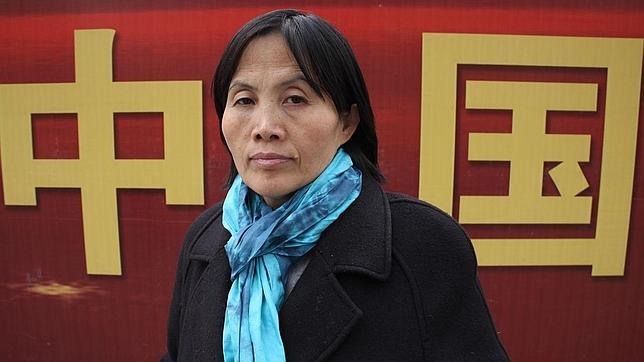
When late Chinese human rights defender Cao Shunli – as Final Nominee of he Martin Ennals Award 2014 – got a standing ovation during the ceremony in October last year, we all said, with the 10 NGOs on the Jury, that we should not forget her. On 19 March 2015 in a statement to the UN Human Rights Council that is exactly what a group of NGOs [International Service for Human Rights and supported by Human Rights Watch, CIHRS, CIVICUS, Conectas, EHARDP, Article 19, HRHF and ALRC] asked for: Ensure independent investigation into death of Cao Shunli.
China must ensure a full, independent and impartial investigation into the death of Chinese human rights defender Cao Shunli, ..If Chinese authorities are unable or unwilling to conduct such an investigation in accordance with international standards, the Human Rights Council as the world’s top human rights body must take appropriate action, the statement said.
‘One year after her tragic death, there has been no adequate investigation or accountability in relation to the death of Chinese defender Cao Shunli,’ said Michael Ineichen, Head of Human Rights Council Advocacy at ISHR. ‘If China is let of the hook for such a blatant case of reprisals against someone wanting to cooperate with UN human rights mechanisms, the Council sends a message to rights abusers that activists can be attacked with impunity.’
The statement highlighted the negative effect of impunity for cases of intimidation and reprisals, as shown by the numerous reported cases of intimidation and reprisals occurring during the 28th session of the Human Rights Council, including against South Sudanese and Bahraini defenders.
The legal and moral obligations of States to protect those who cooperate with the UN are clear, and if a State fails to conduct stop reprisals or to properly investigate allegations, the UN has a responsibility to act, the statement said.
‘We welcome recent advances on the institutional level, such as the treaty body policies that recognise States’ primary duty to ensure accountability in the case of reprisals, and the UN’s own duty of care,’ said Eleanor Openshaw, Head of Reprisals Advocacy at ISHR. ‘However, in the absence of a more systematic approach, such as through a dedicated focal point on reprisals which could coordinate investigation of and follow-up to individual cases, these steps will remain the proverbial drop in the ocean’ The statement is available as a PDF and video.
President Obama’s announcement to normalize relations with Cuba has led to a range of reactions. Most of the world (the UN General Assembly has called for an end to the US embargo for years – in October 2014, 188 of the 192 member countries voted for a resolution condemning the policy) and certainly most of the human rights movement, including in the US itself, has welcomed the long-overdue move:
E.g. Human Rights Watch and RFK Human Rights have come with positive comments:
“It’s been clear for years that US efforts to promote change in Cuba through bans on trade and travel have been a costly and misguided failure. Rather than isolating Cuba, the embargo has isolated the United States, alienating governments that might otherwise speak out about the human rights situation on the island.” said José Miguel Vivanco, Americas director of HRW on 18 December. [the statement of HRW added: Nevertheless, the Cuban government continues to repress individuals and groups who criticize the government or call for basic human rights. Arbitrary arrests and short-term detention have increased dramatically in recent years and routinely prevent human rights defenders, independent journalists, and others from gathering or moving about freely. Detention is often used pre-emptively to prevent people from participating in peaceful marches or meetings to discuss politics. Detainees are often beaten, threatened, and held incommunicado for hours or days.] “The embargo has imposed indiscriminate hardship on Cubans, but done nothing to end abuses,” Vivanco said. “The Obama administration should make human rights a focus of its Cuba policy but look for more effective ways – including working with other democracies in the region – to press the Cuban government to respect fundamental rights.”
On 17 December, Kerry Kennedy and Santiago A. Canton, on behalf of Robert F. Kennedy Human Rights, welcomed the announcement saying that the change in policy will lead to an opening of dialogue at all levels between the United States and Cuba, including on the issue of protecting and advancing human rights.
Still, some chose to disagree:
The Washington Times reports that former Florida Gov. Jeb Bush was one of many Republicans to criticize President Obama’s move on Wednesday to open up diplomatic relations with Cuba, saying the move undermines the “quest for a free and democratic Cuba“…..Mr. Bush, who announced Tuesday he was actively exploring a bid for the presidency in 2016, said he’s “delighted” that American Alan Gross was freed after five years in prison, but said it was “unfortunate” that the United States chose to released three convicted spies as part of the deal. …Earlier this month, Mr. Bush said the U.S. should consider strengthening its embargo against Cuba at the annual luncheon of the U.S.-Cuba Democracy PAC as he pledged support for the group, a strong defender of the policy.
In the Hudson Reporter (Hudson County is home to thousands of Cuban emigrants and refugees) Congressman Albio Sires stated: “What should be a joyous moment to celebrate the overdue homecoming of Alan Gross today has been marred by the actions undertaken by the administration to secure his release”..“The president’s announcement today detailing plans for a loosening of sanctions and initiating discussions to re-establish diplomatic relations with Cuba is naïve and disrespectful to the millions of Cubans that have lived under the Castros’ repressive regime; and the thousands of human rights defenders that have fought tirelessly and at times with their lives to bring about democratic change to Cuba. Moreover, “while I may welcome the release of over 50 political prisoners, little has been said for the countless others that remain inside a Cuban prison or the fact that the same 50 plus prisoners freed today could very well be imprisoned again tomorrow for exercising the same human rights of free speech that unjustly placed them inside prison the first time.”
In the past year, some senior members of the UK government have been highly critical of the current human rights framework, claiming falsely that it mainly benefits criminals, terrorists, and undocumented migrants, and suggesting that the UK should replace the Human Rights Act with a UK Bill of Rights. They have also hinted that the UK should withdraw from the European Convention so that it can more easily deport people. “To scrap the Human Rights Act and withdraw from the European Convention would be an extreme and reckless step, weakening rights protections for everyone in the UK” said Izza Leghtas, Western Europe researcher at Human Rights Watch. “It would gravely damage a system that has helped safeguard fundamental freedoms in some 47 European countries over six decades.”
In a Q&A released on 29 September, Human Rights Watch addresses some of the recurring criticisms of the Human Rights Act and the European Convention.
The Q&A responds to the criticism that human rights make it difficult to deport foreigners who have committed serious criminal offences. In fact, the UK already has legal powers to deport foreigners convicted of a serious criminal offence, but human rights law prohibits the deportation of a person in the limited cases where they would face a real risk of death, torture, or ill-treatment in the country of destination or have no prospect of a fair trial. Courts can also block a deportation if there would be a serious adverse impact on the deportee’s family, but in reaching such decisions courts must weigh the potential harm to the individual, the individual’s family (who may be British citizens), and the impact on society if he or she were allowed to remain.
The Q&A also addresses the criticism that the Human Rights Act is undemocratic. If a domestic court finds a UK law to be inconsistent with the Human Rights Act, it cannot strike down that law. It can only note that incompatibility and it is then for parliament to decide whether and how to change the law, in comparison to many other democratic countries where courts can strike down laws. As a last resort, people who invoke those rights unsuccessfully before UK judges can still seek to take their case to the court in Strasbourg, an arrangement approved by British governments for many decades.
The European Convention and the rulings of the European Court of Human Rights are binding on governments across the 47 countries that are part of the Council of Europe. The European Court has played a key role in protecting the rights of 800 million people across the Council of Europe region. Its rulings have been instrumental ending torture in police custody, ensuring victims of abuses by state authorities have access to justice and allowing people to express themselves freely. In many countries the court offers the only meaningful chance for justice for those whose rights are abused.
Reaffirming human rights at home is essential for any UK government that seeks to promote respect for human rights around the world. If the UK is to have any credibility on human rights in its foreign policy, it should strengthen, not weaken, its own human rights protections, Human Rights Watch said.
Attacks in the UK on the European Court of Human Rights undermine those efforts and provide succor to abusive governments in the Council of Europe that would prefer to ignore the European Court. The only European country currently not a member of the Council of Europe is Belarus. The only country to have withdrawn from the ECHR was Greece in 1969, while it was under a military dictatorship.
“The UK’s withdrawal from the European Convention would be welcomed by abusive governments everywhere,” Leghtas said. “But it would gravely weaken an institution that has done so much to safeguard and advance basic freedoms across Europe and it would destroy the credibility of the UK when discussing human rights internationally.”
During the current session of the Human Rights Council there will again many side events in Geneva. I will refer to some of them not only in the hope that you may able to attend, but also to illustrate the concerns of the NGO movement:
On Tuesday 9 September from 12.00 to 13.30 (Palais des Nations, Room XXI) there will be a side-event organised jointly by Amnesty International, CIVICUS, Human Rights Watch, FIDH, ISHR and the International Bar Association. Speakers are:
Kenneth Roth, Executive Director, Human Rights Watch
Souhayr Belhassen, Honourary President, International Federation for Human Rights FIDH
Philip Luther, Middle East and North Africa Program, Amnesty International
Phillip Tahmindjis, Director, International Bar Association Human Rights Institute
 in its July 2015 Newsletter puts the spotlight on Khalef Khalifa, Executive Director of the NGO MUHURI in Kenya.