From 10 – 19 June, 2016, the annual Human Rights Watch Film Festival takes place in New York City [https://thoolen.wordpress.com/2016/02/20/human-rights-watch-film-festival-2016/]
For information and tickets: http://ff.hrw.org
share information on human rights defenders, with special focus on human rights awards and laureates
From 10 – 19 June, 2016, the annual Human Rights Watch Film Festival takes place in New York City [https://thoolen.wordpress.com/2016/02/20/human-rights-watch-film-festival-2016/]
For information and tickets: http://ff.hrw.org
From 9 – 18 March there will be the 2016 human rights film festival of Human Rights Watch in London, and from there it will travel to Toronto (30 March – 7 April), New York (10 – 19 June) and Nairobi (14-18 November). Read the rest of this entry »
The recent ruling by the UN Working Group on Arbitrary Detention has created quite a storm in and outside the human rights world. At first sight it would indeed seem almost ridiculous to maintain that Julian Assange, who is in ‘sel-imposed’ exile in the Ecuadorian Embassy, is being arbitrary detained. But a bit of reflection (which is not what the UK, Sweden practiced) would in order, especially as the countries involved still have a chance to comment the decision.
The General Council of the US-based NGO Human Rights Watch, Dinah PoKempner, wrote a clarifying piece on 5 February 2016 under the title: “On Assange, Following the Rules or Flouting Them?“. It does certainly help to see the decision in this context, in particular the consideration that Assange (whether one likes it or not) was recognized as a refugee by Ecuador and thus should be free to move.
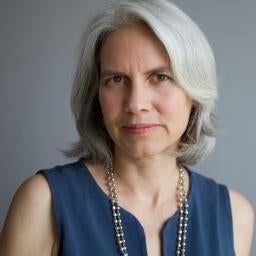
It should not have been terribly surprising to Sweden or the United Kingdom that the United Nations Working Group on Arbitrary Detention found that the various forms of confinement suffered by WikiLeaks founder Julian Assange violate his human rights. The Working Group has many times warned that it is unlawful to force someone to choose between liberty and a fundamental right, such as asylum, which Assange now enjoys only so long as he stays inside the walls of the Ecuadorean embassy.
What is news are the deplorable rhetorical parries from the UK and Swedish governments, who both stated not just disagreement, but that the Working Group opinion would have absolutely no effect on their actions. This is not what one expects from democratic governments who usually support the UN mechanisms and international law.
“This changes nothing,” declared the UK Foreign & Commonwealth Office. The foreign secretary diplomatically called the ruling “frankly ridiculous,” disparaging the Working Group as “a group of laypeople, not lawyers” (in fact, many of the experts are professors of law or human rights or both – see below). Sweden managed to avoid imprecation, but was no less unreceptive. The Foreign Ministry declared that the Working Group had no right to “interfere in an ongoing case handled by a Swedish public authority” and continued to insist that “Mr. Assange is free to leave the Embassy at any point.” As for the Prosecutor’s Office, it declared the UN body’s opinion “has no formal impact on the ongoing investigation, according to Swedish law.”
While the Working Group does not have the authority to force governments to heed its decisions, it is the authoritative voice of the UN on the issue of arbitrary detention, and its opinions are given great weight as interpretations of binding international law obligations. The Office of the UN High Commissioner for Human Rights today attempted to remind Sweden and the UK of that in a discrete Note to Editors, saying the opinions should be taken into consideration as they are based on international human rights law that binds the relevant states.
Not much consideration appears to be happening. The UK has said that it will arrest Assange if he leaves the shelter of the embassy, either because of the European arrest warrant the Swedish prosecutor issued to investigate allegations of sexual offenses, or because he violated the conditions of his house arrest by going directly from his last UK court appearance to the Ecuadorean embassy in London to apply for asylum.
The Working Group found that Assange’s confinement – first in a UK prison, then under house arrest, and now in the embassy – violated his human rights. Given that Assange has claimed political asylum, a claim Ecuador recognizes but the UK and Sweden have not taken into account, the Working Group said his freedom of movement and security as a refugee should be respected, and compensation awarded.
Both Sweden and the UK are parties to the International Covenant on Civil and Political Rights, the treaty on which much of the decision rests, and are bound by other customary international law against returning refugees to locations where they risk persecution. Their failure to give due consideration to these international rights and obligations is what drove the conclusion that Assange’s confinement is “arbitrary.”
Let’s be clear: the issue is not Assange fleeing Swedish justice; he has continually expressed his willingness to be investigated by Sweden. What he won’t do is risk eventual extradition to the United States, which would like to prosecute him under the Espionage Act.
That is because WikiLeaks revealed the embarrassing diplomatic cables that Chelsea Manning leaked. And if you look at Manning’s fate, Assange has plenty to fear. Manning was abused in pretrial detention, denied the defense that the public interest justified her disclosures, and sentenced to 35 years. A secret US grand jury has been investigatingAssange on related Espionage Act charges for close to five years. Neither Sweden nor the UK will promise Assange he won’t be extradited, and both are close US allies in national security and intelligence affairs.
So who are the losers? Assange, who has already been confined longer than the maximum term he would serve in a Swedish prison were he found guilty, and the Swedish women who made the original allegations, and whose government won’t pursue the matter if it means protecting Assange from extradition to the US.
And now the UK and Sweden are big losers as well. Their fatuous dismissal of the Working Group won’t impugn this necessary and neutral body that was established by the world’s governments to uphold rights. But both have severely damaged their own reputation for being so ready to dismiss upholding inconvenient human rights obligations and their credibility as global advocates for rights by refusing to respect the institution of asylum.
Source: On Assange, Following the Rules or Flouting Them? | Human Rights Watch
On 18 January 2016 Human Rights Watch published an open Letter from Legal Experts on detained lawyers in China. [https://thoolen.wordpress.com/2015/07/29/the-remarkable-crackdown-on-lawyers-in-china-in-july-2015/]. The letter, reproduced below, tries to link the Chinese leaders to their earlier promises that ‘China is a country ruled by law’ and that ‘every individual Party organisation and Party member must abide by the country’s constitution and laws and must not take the Party’s leadership as a privilege to violate them.’ It concludes that the events described appear entirely contrary to those commitments. The list of signatories is impressive. Read the rest of this entry »
After the IOC awarded the winter olympics 2022 to China, Minky Worden, Human Rights Watch’s Director of Global Initiatives, had this to say on 31 July 2015:
 in its July 2015 Newsletter puts the spotlight on Khalef Khalifa, Executive Director of the NGO MUHURI in Kenya.
On 8 April 2015, the official Gazette notice listed 85 companies and organisations, including MUHURI and Haki Africa, as suspected of having links to terrorism and linking them as specified entities. On 20 and 21 April, the police raided the offices of both organizations, disabling their servers, carrying away hard disks and documents, allegedly to determine whether they had been involved in tax evasion. On 28 May, the Non-Governmental Organisations’ Coordination Board announced through the media that they had de-registered the organizations. On 12 June the court dismissed all charges against MUHURI and Haki Africa on the basis that there was no evidence against them.
Khalef Khalifa (KK): As you know, on the 12th June was a good day for us as both MUHURI and Haki Africa, were entirely vindicated in court. The judge dismissed all the charges against us and said that there was absolutely no evidence to link us to terrorism in any form and specifically forbade the police or even the Minister to make any such reference in the future. However the outstanding difficulty is that he refused to unfreeze our bank accounts on the basis that we had failed to include the Central Bank in our case against the state. They have now agreed to join our case calling for the accounts to be freed but we have to wait for another hearing before the judge makes his ruling and we can begin getting back to normal.

FLD: Given the various lines of attack that were opened against MUHURI it seems as though the government was out to get you?
KK: ...we were targeted on three fronts: by the police, the Revenue Commissioners and by the NGO Board. So while the government accused us of terrorism, the Revenue Commissioners descended on our office and took away all out financial documentation to look for evidence of tax avoidance and the NGO Board lodged a complaint that we had not kept them properly informed of our activities, and in particular that we had not informed them of new appointments to our board, as required by the NGO Law. In the final verdict, while the judge said there was no evidence of involvement in terrorism, both the Revenue Commissioners and the NGO Board had to concede that we were 100% compliant with the regulations. The only thing the NGO Board could trip us up on was that while we had notified the NGO Board of the new appointments, we had not used the appropriate, and newly introduced, form. What is interesting is that in the early stages of the case the government was totally focused on pursuing a case on the basis of terrorism, but they quite quickly changed tack and started looking for any small technical failures they could find to try and make a case against us. But they failed because we have always operated in an entirely open and transparent way.
KK: The real reason for their animus against MUHURI is that we are critical of the police and have investigated their involvement in extrajudicial executions and forced disappearances. There have been at least 52 such killings and disappearances in the Mombasa region in the last two years. The police claim to be fighting terror but in fact terror is a more accurate description of the way the police themselves work. In one incident 8 people were shot dead in a church. The police claimed that it was an attack by Al Shabaab. However when the perpetrators were arrested it was clear that they were not Muslims and in fact had no affiliation to any particular group. The police then hid the names and tried to maintain the fiction of an Al Shabaab attack.
FLD: Will the work of MUHURI get back to normal now?
KK: ...As soon as the accounts are unfrozen we will continue out work as normal. For us it is clear that the government wants to intimidate and frighten MUHURI but we will not be intimidated – we will not give up.
for full interview see: HRD Spotlight: Khalef Khalifa, Kenya | Front Line Defenders.
The more general backdrop can be found in earlier Front Line messages, the 5 June appeal by the Observatory [http://www.omct.org/human-rights-defenders/urgent-interventions/kenya/2015/06/d23190/] and the statements made by NGOs on 26 June 2015 at the adoption by the UN Human Rights Council of the report of the Universal Periodic Review [UPR] of Kenya:
– International Service for Human Rights (ISHR) : Kenya should create an enabling environment for the work of human rights defenders – including repealing restrictions on NGO access to foreign funding and amending or repealing the Information Communication Amendment Bill and Media Council Bill. The statement also emphasised the risks faced by LGBTI people and organisations in Kenya as a result of the criminalisation of same-sex conduct. ‘It is crucial that the voices of human rights defenders are safeguarded and encouraged. This assists to create a vibrant, independent and diverse civil society which is essential to protect human rights, democracy and the rule of law’ said Michael Ineichen of ISHR.
http://www.ishr.ch/news/kenya-safeguard-and-encourage-essential-voices-human-rights-defenders
AllAfrica.com reports on Human Rights Watch comments: “We note Kenya’s acceptance of some important recommendations such as commitments to investigate torture and extrajudicial killings, including the killing of activist Hassan Guyo, and to fully cooperate with the International Criminal Court. But we remain concerned that there has been little tangible progress in many key areas. The ongoing abuses and recent threats to civil society illustrate a lack of commitment to implement these recommendations.”
http://allafrica.com/stories/201506260835.html
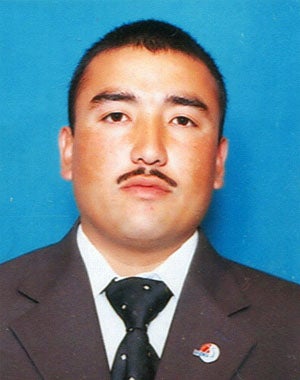
[The arbitrary extension of Farmonov’s prison term shortly before his scheduled release date for allegedly “violating prison rules,” came to light on May 21, 2015. The EU and the UN Committee against Torture have previously called for Farmonov’s release. “Azam Farmonov has already lost nine years simply for being a human rights activist in Uzbekistan,” said Steve Swerdlow, Central Asia researcher at Human Rights Watch. “The cruel addition of five more years to his sentence is yet another sign that the Uzbek government should be made to pay a price for its abysmal human rights record.”]
Human Rights Watch has documented the practice of arbitrarily extending the sentences of people imprisoned on political charges. The action is often taken just days before the person is to be released, on bogus grounds such as possessing “unauthorized” nail clippers, saying prayers, or wearing a white shirt and may result in years of additional imprisonment.
Farmonov’s family also revealed that they had received a note Farmonov had written on toilet paper in which he appeals to United Nations Secretary-General Ban Ki-moon to raise the issue of his unjust treatment directly with President Islam Karimov and senior officials in the Uzbek government. Ban is scheduled to visit Uzbekistan from June 9 to 11 and should urge President Karimov to uphold Uzbekistan’s international human rights commitments and release all those held on politically motivated charges.
The EU, the UN Committee against Torture, and other bodies have earlier called for Farmonov’s release. In an official statement by then-European Commission president José Manuel Barroso, at a January 2011 meeting in Brussels with Karimov, Barroso raised specific human rights concerns, including Farmonov’s unjust imprisonment and ill-treatment. In its 2014 human rights dialogue with Uzbekistan, the EU noted its concern with the authorities’ practice arbitrarily extending sentences. But an EU statement on May 18 following a meeting of the EU-Uzbekistan Cooperation Council reads: “the EU welcomed Uzbekistan’s readiness to discuss about human rights with the EU in an increasingly open fashion within the Human Rights Dialogue.” “The extension of an unjust sentence for a human rights defender, not Uzbek officials’ hollow rhetoric, is the real test of whether the government is ‘ready’ to improve human rights,” Swerdlow reacted
Uzbekistan: 5 More Years for Jailed Activist | Human Rights Watch.
Maya Wang (twitter @wang_maya), a China researcher at Human Rights Watch, published on 8 April 2105 an interesting post under the title “China’s new foreign NGO law will help silence critics“.

Some years back I participated in an interesting meeting with Chinese academics in Beijing about exactly this issue of the status of NGOs in China. The meeting resulted in a book ‘NGOs in China and Europe’ (exceptionally also published in Chinese!) edited by Yuwen Li and published by Ashgate in 2011 (ISBN: 978-1-4094-1959-4). Although almost all participants agreed that the current regime for establishing associations is too cumbersome and too heavy-handed for Chinese civil society to flourish, the Government made clear that its main concern remained with what Maya calls ‘sensitive’ NGOs. Those working on issue that are even faintly related to human rights or smack of possible activism, especially when funded from abroad, are seen as a danger and should be subject tot maximum control. That seems to be born out by the draft of the long-awaited ‘Foreign NGOs Administration Law’, likely to be adopted this year and of which Human Rights Watch obtained a copy.
As Maya states, it has never been easy to run an independent organisation in China. The risks of being arbitrarily shut down or harassed are high, as shown by the arrest on 8 March of five women’s rights activists and a 24 March raid on an NGO that supports their work in Beijing. But the absence of a national law governing NGOs, coupled with differences in attitudes towards NGOs by regional leaders, have afforded some leeway for those with creative strategies. It has been common for ‘sensitive’ NGOs to register as a business to bypass the wary eyes of the state, or not register at all. And over the years, some international funding to these organisations in China has been tolerated.
Especially ‘sensitive’ NGOs have been unable to access domestic funding sources because they are not legally registered as a nonprofit and anyway those who did want to fund would receive official harassment. The new Foreign NGOs Administration Law is bound to end the funding lifeline that allowed more outspoken NGOs to operate.
The draft law is likely to significantly tighten the Government’s control over civil society says Maya: “If approved, the Ministry of Public Security (not the Ministry of Civil Affairs) will now have the power to supervise and approve registration of foreign NGOs. That ‘supervision’ can entail entering the premises of the foreign NGO at any point, questioning its staff, and copying or seizing any document, all tactics more commonly reserved for a criminal investigation. Foreign NGOs will have to submit for approval annual work plans and funding allocations, and will be prohibited from engaging in a range of peaceful activities, from raising funds or accepting donations in-country to recruiting volunteers or trying to recruit members ‘directly or indirectly.’” Violations of these prescriptions mean that an NGO’s representative in China would be liable to punishments, including a 15-day detention.
“The draft law is another step towards the Chinese Government’s ‘differentiated management’ model of NGOs, in which domestic groups working on issues approved by the state, such as charities for people with disabilities, can register easily and are considered for increased state funding and support. But those engaged on rights or lobbying are stifled. The draft explicitly prohibits activities that ‘endanger…national security, unity and solidarity’ or that ‘go against China’s social morality’. These are vague terms, but ones frequently used to silence peaceful government critics and activists.”
 Hans Thoolen on Human Rights Defenders and their awards