Posts Tagged ‘human rights of women’

Profile: Bose Agbonmerele, woman human rights defender from Nigeria

July 7, 2016

On 20 June 2016 the ISHR Monitor contained the following portrait of Ms Bose Agbonmerele Iro-Nsi, the founder and team leader of the Women’s Rights and Health Project (WRAHP) in Nigeria. WRAHP is an NGO that works to promote community and women’s rights, reproductive health and children’s development.

Ms Bose Agbonmerele of the Women’s Rights and Health Project (WRAHP) in Nigeria.

As an advocate, Bose focuses on access to justice for women suffering domestic violence, child abuse, and cultural practises that are detrimental to health and contravene fundamental rights of both women and children – an example includes female genital mutilation. Bose seeks to create awareness of existing laws that address domestic violence, and educates vulnerable communities on their rights contained in those laws.

‘WRAHP previously received between 2 and 4 cases of women who had suffered domestic violence each month. Since engaging with the media and speaking publically on the common violation of women and children’s rights, WRAHP now receives about 5 cases and large numbers of calls every day from women in distress.’

Challenges and risks

Cultural norms and practise endorse a system of patriarchy in Nigeria. This means that raising children in an environment rife with domestic violence perpetuates a vicious cycle. Bose highlights the importance of focusing on building awareness within the family, as well within religious institutions and churches – which can then create further awareness about Gender based violence.

‘Gender based violence constitutes a further challenge. Domestic violence is often viewed as a personal domestic dispute, which results in law enforcement agencies turning a blind eye. This further drives a system of impunity among the community. Moreover, the stigma associated with calling the police on your own family member and the lack of independence of women puts them at risk of destitution.’

Bose also identified gaps and loopholes in Nigerian laws and policies that need strengthening. She identified 2 major limitations in the Violence Against Persons Prohibition Act, which addresses, among other violations, female genital mutilation and acid attacks. This law is restricted to the capital of Nigeria and often imposes fines for offences that should result in more significant penalties.

Some community elders have claimed that WRAHP’s work is intrusive to their culture and traditions. As a result Bose has suffered intimidation. However, she has maintained a holistic approach to raising awareness, including amongst men who might oppose her views.

Engagement with the international community

Bose explained that her experience in Geneva at ISHR Human Rights Defender Advocacy Programme (HRDAP) has broadened her knowledge of UN mechanisms and her perspective about civil society engagement. Going forward Bose intends to incorporate the international networks she has made in Geneva into her existing regional networks. She also intends to engage with Special Procedures mandate holders to increase awareness about the human rights situation in Nigeria.

‘One of the positive aspects of my experience at HRDAP was the opportunity to share experiences with other participants. I learnt about the diverse issues which other human rights advocates face. The organisation of the programme and activities have been great.’

The change Bose would like to see

Through her brief experience at the UN, Bose has noticed the use of the phrase “intimate partner violence”. She believes the use of this phrase in addressing domestic violence overlooks other serious aspects of domestic violence. This term focuses only on partners, disregarding child abuse, parental abuse of children, and violence at the hands of extended family. Bose would like to see a more robust policy addressing all aspects of domestic violence.

Goals and objectives

Bose believes that it is crucial to understand successful strategies used by defenders working on other issues and defenders in different regions. Bose is grateful to have had the opportunity to interact with defenders working on different thematic groups, including LGBTI and business Human Rights issues. She believes that all activists share the same common goal and working together and learning from each other will help to improve advocacy success rates. Bose would like to continue engaging foreign missions to bolster her national advocacy.

In the long run, Bose would like to see herself as a regional and international advocate sharing her experiences on an international platform. She was impressed with the participation of young people in HRDAP and says she would like to encourage other young people to participate in advocacy training sessions in Nigeria.

‘I just can’t recommend HRDAP enough to other people.’

Source: Defender profile: Bose Agbonmerele Iro-Nsi, woman human rights defender from Nigeria | ISHR

UN Commission on Status of Women misses again opportunity to tackle plight of Women Human Rights Defenders

June 16, 2016

The Commission on the Status of Women (CSW) is the principal global intergovernmental body exclusively dedicated to the promotion of gender equality and women’s rights. Its 60th session this year focused on women’s empowerment and its link to sustainable development. Despite mounting evidence of targeted violence against women human rights defenders (WHRDs), particularly those working on development issues, the Commission on the Status of Women failed at ensuring their adequate protection says the International Service for Human Rights (ISHR) in a report of 12 May 2016. ISHR-logo-colour-high

The role and contribution of WHRDs around the world in human rights and development policies and programmes must be a guarantee by all States,’ said Ms Pooja Patel, programme manager at ISHR. ‘It is disappointing that the Agreed Conclusions did not go further to call for a safe and enabling environment explicitly for women defenders, and that the text was adopted without any acknowledgement of the particular risks faced by women human rights defenders’.

The UN General Assembly resolution 68/181, adopted in 2013, outlines a series of steps for States to better protect women defenders. This was echoed by CSW in 2014, however, negotiations in subsequent years have seen such references taken out.

Noelene Nabulivou, who spoke on a panel on the role of women human rights defenders held during CSW noted, ‘The 60th Commission on the Status of Women missed another opportunity to adequately support and defend women human rights defenders, despite increased public calls and momentum this year,’

She added that..’Women human rights defenders are targeted, imprisoned and killed for their work every day. Soft language and fence sitting do not help. Governments must publicly stand with those at the dangerous front-lines of gender equality, women’s human rights, and economic, ecological and social justice, and clearly reject those rolling back decades-long gains. Where there is violation of the human rights of WHRDs there must be clear political response – from south, north and all between.’

Just days before the Commission on the Status of Women (CSW) met in New York, the murder of Honduran activist, Berta Caceras, made evident the high risks involved in protecting land and environment rights while confronting corporations.[https://thoolen.wordpress.com/2016/03/07/exceptional-response-from-ngo-world-on-killing-of-berta-caceres/]

Source: CSW: Progress urgently needed to recognise WHRDs and SOGI | ISHR

Conversation with Yanar Mohammed on trafficking in Iraq

May 19, 2016

The Organization of Women’s Freedom in Iraq focuses on protecting women’s human rights, including fighting against trafficking of women and girls, and operates six safe houses for women survivors of violence. The Global Fund for Women interviewed its President, Yanar Mohammed who speaks about her work and the impact from the conflict with ISIS.

Yanar, you’ve been an activist and a defender of women’s rights in Iraq for over 13 years. What do you think are the main challenges women in Iraq are facing right now?
We focused in the last year on working against trafficking in women and girls and expanding a new network, the Network of Anti-Trafficking of Women in Iraq. We started the network in 2013, barely nine months before ISIS began gaining ground in Iraq. As ISIS grew, they started their attacks against women in the north of Iraq, including against the women of Yazidi faith. They trafficked them in broad daylight.

Trafficking in women and girls is now a tactic used by opposing groups in instances of sectarian violence in Iraq. Women and girls are looked upon as the representatives of a community’s honor, and so the sexual exploitation of women and girls belonging to a certain community is seen as the most effective way to humiliate and break it. Unfortunately, it is therefore not a surprise that the so-called Islamic State, ISIS, as a Sunni group, has targeted non-Sunni Muslim women and girls such as Shi’a Muslims, Christians, and Yazidis. Retaliations ensue and wars are led on women’s bodies.

When ISIS began to enslave women, we found that this was the time when we should rise to the occasion and highlight the issue of trafficking in society and the government. This is an issue that needs to be addressed by laws, practices, programs, and by some understanding from the society as to what it means that a woman gets compromised, gets exploited, and gets enslaved. So we set up this network, which is now about 40 NGOs working together on the issue. We began to talk about trafficking in women and girls, especially sexual exploitation, and address it as something that’s not only happening under ISIS but also happening in Iraq more broadly, without anybody daring to give it any importance.

Beyond ISIS, orphans and widows of war in Iraq who are extremely impoverished have fallen prey to sexual exploitation. They are being used and exploited and violated daily in Iraq, without anybody thinking of it as a human rights issue. So this is our focus; we have decided we will work on this until we get the government to pass laws that make the suffering of these women less, and also that open the way for us to protect the women from this kind of violence.

Is there any legislation right now against trafficking?
We demanded that the government pass a law for the financial support of Yazidi women when they step out of their enslavement. When they come back to areas of Iraq that are not under ISIS control, they should be compensated just like prisoners of war for the sufferings they went through. And we were so happy when it took only a few months and the Iraqi government decided to give monthly stipends for survivors in May 2015. That was the first success of the network. At the time nobody else had demanded this kind of support for ISIS survivors, so we felt that we were on the right track and that we should proceed to the rest of our demands that we needed in order to address violence against women.

What would you say is the level of public awareness around the issue of trafficking?
We have struggled a lot to make many words and terms debatable in our society—to remove the taboo. I will give you an example: in 2003 when we began to talk about honor killings and how it needs to stop, everybody was disgusted with us and saying that women’s groups should refrain from speaking about taboo and sexual issues, and that we do not address women’s rights in a way that they find acceptable. It took us almost 5 years to make discussion of honor killings a mainstream argument. Now when you go to Iraq, the issue of honor killing has become such a regular thing to talk about. There are so many NGOs that are standing against it, talking about it, are lobbying against it. Whenever we have an issue like this, we find ourselves the first ones on the front lines to address it until, it becomes a mainstream argument. Now as we talk about trafficking and discuss sexual exploitation of women and girls this issue is a very taboo and difficult issue to address.

How many women and girls in Iraq are at risk of being trafficked?
The dilemma of displacement in Iraq is huge because of ISIS. The number of displaced people is two million, going to three million. Most of these are women, because the men are either in the Iraqi army fighting ISIS or have been recruited into militias also heading to fight ISIS, or stuck in the cities defending them. It may be impossible to give the exact number, but we can estimate that out of the 1.5 million women who are displaced, half of them are between ages 16 and 30—the biggest age group at risk of trafficking. So I would say not less than 100,000 women are being trafficked at this point in Iraq.

So the political instability caused by ISIS is increasing the threat of trafficking for women and girls, even if ISIS is not doing the trafficking directly.
Yes. ISIS has created the most ugly reality of trafficking, where they defend it as a religious right. They say it is their right to enslave the “spoils of war” who are not of Muslim faith. They describe them as faithless and as less of human beings whose enslavement makes them better, makes them closer to Islam. ISIS has brought an example that has totally shocked the region and shocked it in a way as to taking us back to a time when people had no human rights, basically. And they are trying to make it a fact to force on the people of Iraq, Syria, and maybe other places if they are allowed to expand.

Can you tell me about the shelters that your group runs?
Our shelters are currently keeping safe women who survive trafficking. They are also getting educated; our shelters are not only a place for women to rest and be safe, they are also schools for social transformation for women to turn from victims into defenders of women. We only had one shelter until 2008; since then we have expanded to have six shelters all over the country. We also have a pipeline from the southern city of Busra, to direct violated women to our shelters in Baghdad. And we have many supporters in the network of the 40-plus NGOs, who are our eyes and ears in more than nine cities in Iraq and are guiding women who are in need of shelter to us. I like to put it in a very short story: our organization was able to spread its wings over most of the Iraqi cities in the last few years.

However, the Iraqi government is not facilitating our undertaking of women into our shelters. And it boils down to one point—we need a piece of legislation from the Iraqi government to provide legal status to shelters that are run by NGOs or other private sector groups. Although the government does not have a law that says that our shelters are illegal, they do have a law that allows the ministry of social affairs to determine if they should stay open. So some of the tribal and misogynist officials did tell us in the past that we are doing an illegal thing, but they did not shut us down.

So, although we are protecting women from trafficking and domestic violence and all that—although we are doing the duty of the government, the duty the government is not taking seriously and do not want to move on, and although they should be supporting us and applauding us for doing their job, in reality they confront us, telling us that our sheltering of women is promoting promiscuity, that it is encouraging women to go against their families and have full sexual freedoms and come stay in our shelters. So some governmental officials have intimidated us in the past, telling us we are doing something illegal, when we are protecting women.

What can the international community do to help Iraqi women be empowered and experience less violence?
We are asking the international community to ask the legal committee in the Iraqi parliament to legislate for the legal status of our shelters. Letters that are addressed to the Iraqi parliament—and specifically to the legal committee of the Iraqi parliament—asking them to legislate for the legal status of women’s shelters that are run by the NGOs. This would be a great help to us.

Would you say that action now is especially important to protect women? Is right now a critical moment?
Right now is a very critical moment because ISIS is at the point where it can be defeated. It has lost the social support of those among the Sunni groups in Western Iraq that were supporting it because people saw the atrocities that ISIS can commit against them. It is a very special moment in time to act against ISIS, but is the kind of action we are seeking a military one, where we have more US army in Iraq? No.

Our experiences of the last 13 years tell us that US intervention in Iraq never brought us anything good. It always has caused more deterioration. Now is the time to have a political intervention, and to ask the Iraqi government to stop its sectarian, politics that gave way to ISIS, as well as empower the Iraqi army so that they can regain the cities that were taken by ISIS.

What are some of the other forms of violence that women come up against in Iraq?
We have many kinds of violence we undergo, and we know what is making this kind of violence worse, which is Islamist extremist parties reaching power. Some of these parties have shown us a terrible example of what they want to bring to Iraq, including legislating for Jaafari law. This law allows the marriage of a 9-year-old girl to an adult man—in other words it legalizes pedophilia in Iraq. It also allows men to be polygamous, and allows for getting rid of wives if they are not sexually pleasant for husbands.

The amount of humiliating material in this law against women is incredible, and out of this era. It’s something that modern humanity cannot even bear to hear of. We must keep this legislation outside of parliament, because the law was not passed, but it is still waiting for us. The Islamist political parties are just waiting for some stability and for the moment when they feel stronger to bring back this legislation. And that would really be the end for Iraqi women.

Source: In Conversation: Yanar Mohammed on trafficking in Iraq – Global Fund for Women

Profile of Denis Mukwege from the Democratic Republic of Congo: an amazingly courageous doctor

April 12, 2016

Dr Denis Mukwege is a surgeon and the most prominent human rights defender from the Democratic Republic of Congo (DRC). He won several international awards as detailed in earlier posts [https://thoolen.wordpress.com/2014/10/22/congolese-gynecologist-wins-europes-sakharov-prize-in-2014/https://thoolen.wordpress.com/2013/10/17/human-rights-first-honors-doctor-denis-mukwege-in-washington-on-21-october/]. He was in Geneva on the occasion of the 2016 International Film Festival and Forum on Human Rights for the screening of the documentary film The Man Who Mends Women. The ISHR met with Mukwege on 31 March 2016 and published the following profile with details of his grassroots activities to defend women’s dignity and of the threats he faces due to his work: Dr. Denis Mukwege

Read the rest of this entry »

DETERMINED: the voices of 20 women human rights defenders

December 21, 2015

In order to match moral obligation with political declarations, the Global Fund for Women launched a new online campaign in October 2015 called Determined. Featuring the voices and stories of 20 courageous women human rights defenders from around the world, Determined raises awareness of global situations — from forced marriage and domestic violence to the denial of girls to receive education and the exclusion of women from political processes. The campaign recognizes the crucial role defenders play in effectively eliminating what continues to be the most acceptable human rights violation, the violence that prevents women from having fully realized and fully dignified lives.

On the occasion of international human rights day, Samina Ali (www.twitter.com/GroundbreakHers) in the Huffington Post of 11 December 2015 highlighted four of the 20 women human rights defenders in the campaign:

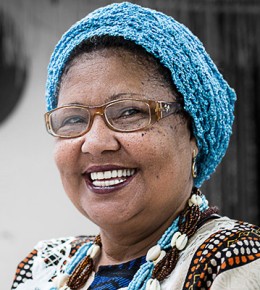
1. Nilce Naira Nascimento, Brazil
Article 23 of UDHR: Everyone, without any discrimination, has the right to equal pay for equal work.

2015-12-10-1449719648-2069767-Nilce.jpg

Nilce responds to Brazil’s strong racial divide and inequality through her work with CRIOLA, a women’s rights organization led by black women who work with other Afro-Brazilian women and girls in the poorest areas of Rio de Janeiro to empower them to combat this rampant racism and improve the living standards for the Afro-Brazilian community.

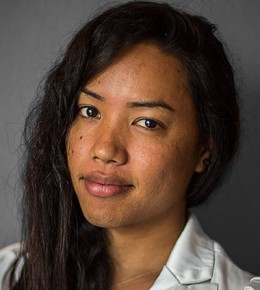
2. Swastika TamaNg, Nepal
Article 3: Everyone has the right to life, liberty and security of person.

2015-12-10-1449719720-2122292-Swastika.jpg

When Swastika came out as a transgender woman five years ago, her father disowned her and she had to leave home. With little education, she had no job prospects so she turned to being a sex worker. Through her involvement with Mitini Nepal, an LGBTQI support and advocacy group, she was able to understand her gender identity and is now working to achieve human rights for LGBTQI people in Nepal, where existing laws protecting LGBTQI’s rights are rarely enforced.

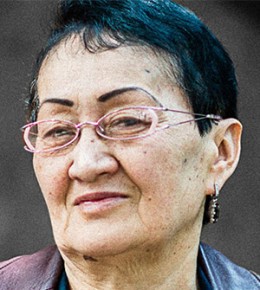
3. Asipa Musaeva, Kyrgyzstan
Article 2: Everyone is entitled to all the rights and freedoms set forth in this Declaration, without distinction of any kind, such as race, color, sex, language, religion, political or other opinion, national or social origin, property, birth or other status.

2015-12-10-1449719804-2914822-Asipa.jpg

At the young age of 17, Asipa was in an accident that severely injured her hip, leaving her permanently disabled. She found that perceptions around her disability made it difficult for her to find a job, or to be treated with dignity by those around her. She founded the Republican Independent Association of Women with Disabilities of Kyrgyzstan. In the face of tremendous obstacles, including her arrest, she and her group advocated for public spaces to be accessible for people with disabilities. The law was ultimately adopted, and today Asipa and her organization continue to advocate on behalf of people with disabilities

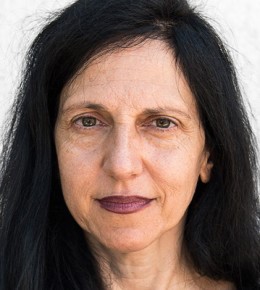
4. Nela Pamukovic, Croatia
Article 5: No one shall be subjected to torture or to cruel, inhuman or degrading treatment or punishment.

2015-12-10-1449719900-9095078-Nela.jpg

In 1992, Nela co-founded the Centre for Women War Victims (ROSA) during the Bosnian war, when rape was used as a weapon to terrorize communities and intimidate women. Now, more than 20 years later, women survivors of rape are still healing from the trauma and stigma of their experience. ROSA provides women with a safe space to share their stories, and their advocacy led the Croatian parliament to pass the first law in the country recognizing rape as a war crime.

see also: https://thoolen.wordpress.com/tag/women-human-rights-defenders/

Source: This Human Rights Day, Fight for Human Rights in New Ways | Samina Ali

A Documentation Manual for and about Women Human Rights Defenders

December 3, 2015

A new publication “Gendering Documentation: A Manual for and about Women Human Rights Defenders” (http://www.omct.org/files/2015/12/23505/gen_doc_manual_final.pdf) has come out to mark International Women Human Rights Defender Day (29 November) and International Human Rights Day (10 December). It has been produced by the Women Human Rights Defenders International Coalition. The manual will be posted in pdf format in coming days on the website of the Women Human Rights Defenders International Coalition: www.defendingwomen-defendingrights.orgwomen human rights defenders

Gendering Documentation: A Manual For and About Women Human Rights Defenders is designed for use by those who document Read the rest of this entry »

In Memoriam for Indonesian Education campaigner Yanti Muchtar

November 24, 2015

A leading campaigner for adult education in Indonesia, Darmiyanti [Yanti] Muchtar, passed away on Tuesday 17 November 2015 after a long battle with cancer.

She was a noted feminist who had been part of the country’s women’s movement since the 1980s, she was a cofounder of Solidaritas Perempuan or the Women’s Solidarity for Human Rights group, and later joined Kapal Perempuan or the Women’s Ship Institute, where she once served as a director.

Kapal represented her passion for alternative education targeting adults in disadvantaged and marginalized communities. In her last months, Yanti’s colleagues said she continued working on numerous projects including a women’s education module.  Among her other passions was pushing for the passing of a draft law on domestic workers, in her capacity as a member of the Jala PRT advocacy network for domestic workers. The campaigner believed adult education was key to fighting illiteracy and promoting critical thinking.

Yanti, a sociology graduate from the University of Indonesia, completed a PhD at Murdoch University in Perth, Australia, late last year, with a thesis on local Islamic politics in West Nusa Tenggara, under the supervision of sociologist Vedi R. Hadiz. Her thesis also reflected her concern for identity politics based on ethnicity and religion, while she championed equal rights for minorities and the marginalized, including women and low-income people, as well as equal recognition for lesbian, gay, bisexual and transgender people and for interfaith couples.

For more see the Jakarta Post of 19 November:  Education campaigner Yanti Muchtar dies | The Jakarta Post

16 days of Activism: Stop Violence against SRHR defenders

November 24, 2015
The Women’s Global Network for Reproductive Rights (WGNRR) calls for an end to the violence directed at SRHR defenders, as well as their recognition and protection as Women Human Rights Defenders (WHRDs). For those who are not familiar with the term: SRHR stand for Sexual and Reproductive Health and Rights.The 16-day campaign encourages all to share stories and experiences on social media using the hashtags #SRHRvoices #SRHRheroes, speak out for the recognition of SRHR defenders as Women Human Rights Defenders and demand their protection.

The 16 Days of Activism Campaign links two international days of action: 25 November, International Day of Action for Elimination of Violence against Women, and 10 December, International Human Rights Day. In between falls 29 November, International Women’s Human Rights Defenders Day.

WHRDs who work on sexual and reproductive rights issues have been recognized at particular risk of grave consequences because of their work, as they are often perceived to be “challenging accepted socio-cultural norms, traditions, perceptions and stereotypes about femininity, […] and the role and status of women in society“. Not only are the advocacy efforts of SRHR activists often shunned, ignored or feared by broader society, but they often find their own lives and well-being at risk.

Read the rest of this entry »

Elsa Saade talks about her work for “Gulf Centre for Human Rights”

July 28, 2015

On 26 June 2015 the ISHR (International service for Human Rights) featured a portrait of Elsa Saade, a woman human rights defender who works for the Gulf Centre for Human Rights (GCHR), an independent, non-profit and non-governmental organisation that works to provide support and protection to human rights defenders in the Gulf region by promoting freedom of expression, association and peaceful assembly.

Elsa, who has worked closely on the issue of women human rights defenders in the Gulf and neighboring countries, explained how women human rights defenders are at particular risk. E.g. she  received a message from a women defender stating that she could no longer talk, that she was going underground. ‘They are threatening to kill me’, she said. ‘They will arrest me. I need to disappear.’ Elsa confirmed that she could not mention the defender’s name or where she is from as it would endanger her life, however highlighted how women not only face pressures from the government or non-state actors when she stands up for human rights, but even faces societal and cultural clashes which could be reflected inside her home.

Elsa explained how States in the Gulf region are mostly patriarchal. The simplest example of patriarchy is the fact that women in Saudi Arabia cannot drive. Two women defenders in Saudi Arabia, Maysaa Al Amoudy and Lujain Al-Hathlol, who were caught driving as a statement to allow women to drive, were arrested and tried in the Specialized Criminal Court in Riyadh, which deals with cases of terrorism and State security. They currently await sentencing.

Elsa referred to the situation in Iran, KSA, and Syria, which she considers is especially bad. ‘If we hadn’t publicised certain cases, some of our human rights defenders would already be dead. If no-one knew their names, the government wouldn’t consider them, as if they didn’t exist. Those who exercise their right to freedom of expression face death threats, flogging and indefinite prison sentences.’..‘Some defenders fall silent but others gain confidence when bad things happen – it confirms the need to struggle for their rights. Although the conditions are depressing, it is inspiring to see how tragedies motivate women to raise their voice. Out of their misery they create something beautiful.’

At this point, Elsa further referred to cases of women Syrian refugees in Lebanon and how important their role in the house, family and society was. On that account she mentioned several challenges that humanitarian people who help Syrian refugees face. Having worked in the field she highlights that they are often at risk.

As a result of my work I have personally experienced challenges. I was put in a situation were I could have been beaten several times, just because I was helping the Syrian refugees.’ As a woman, and especially after having widened the scope of interest in the region’s several HRD cases, Elsa has begun to feel increasingly vulnerable. The greater the exposure, the greater the risk. In Lebanon the situation is not so bad for women. But on a recent trip to Egypt I felt incredibly paranoid. I was on the constant look out. That is why so many women defenders prefer to stay on the low.’

Elsa is adamant, however, on the necessity of continuing her work to support human rights defenders.

Without human rights defenders, the reality would remain hidden. There is a clash between three concepts: reality, delusion and myth. You have the myth, the image that the State wants to portray; the delusion, as people keep quiet to put bread on the table; and the reality on the ground. Human rights defenders, be they journalists, bloggers, lawyers, teachers or women defenders, portray this reality. They are the ones who ask for accountability, for independent judges, for basic human rights.’

[The Gulf Centre supports and protects human rights defenders in different ways to eventually create a community of strong and safe human rights defenders protected by international mechanisms. Firstly, it can mobilise a network of prominent human rights defenders to generate support amongst each other. Secondly, it runs UN advocacy projects and provides funding and technical assistance for HRDs to attend UN meetings. Thirdly, it allocates private funding for relocation, personal finance, appeals, and assisting with the provision of safe havens in case they are in danger. Fourthly, it runs training workshops on various issues HRDs are in need of and specifically on how to engage with UN mechanisms and protection mechanisms.]

For previous posts on the Gulf center: https://thoolen.wordpress.com/tag/gulf-centre-for-human-rights/


Elsa Saade: Human rights defender from the Gulf Centre for Human Rights | ISHR.

8 Must-Read Stories from the US Human Rights Reports selected by Catherine Russell

July 2, 2015
Catherine Russell, the U.S. Ambassador-at-Large for Global Women’s Issues, wrote in the Huffington Post of 1 July 2015 a piece which highlights 8 stories about women taken from the State Department’s annual human rights reports, that she says would not reach the evening news but are a must. Here is her selection:

2015-07-01-1435772655-6505904-HRRblog.jpg

[Photo: Gustave Deghilage ]

In Nepal, a mother may be denied the ability to confer her Nepali citizenship to her children if the father’s identity is unknown or he is not Nepali. This is not uncommon: 27 countries discriminate against women in their ability to pass citizenship on to their children. Too often this results in a child who is stateless, meaning he or she may not be able to access basic services like health care and education.

In Afghanistan, a survey found that 39 percent of Afghan women between the ages of 20 and 24 were married before the age of 18 — making them part of a global trend where one in three girls in the developing world is married as a child — and Afghan women who marry later in life often don’t have a choice in their marriage. These stories and statistics exist despite laws against early and forced marriage.

A story in the Nigerian report highlights the case of a college student who reported that a soldier lured her to a police station and raped her repeatedly. The soldier was reportedly “disciplined” for leaving his post, but as of December nothing else had happened.

In Burma, there is an effort underway to enact legislation that would mandate that women can’t have children more than once every three years. There are obvious questions as to how such a law would be enforced. Many are concerned that it would only be enforced in areas where many members of minority groups live.

Fortunately, the news is not all bad.

In Afghanistan, the national electoral commission’s gender unit focused on women’s political participation in the 2014 election, and increased the number of women who helped determine their country’s future.

In Brazil, the federal government operates a toll-free nationwide hotline for women to report intimate partner violence, while in India, a partnership between state government and civil society led to the launch of a crisis center for survivors of rape, dowry harassment, and domestic violence.

Another partnership — between government and civil society in Guinea — is helping to educate Guinean health workers on the dangers of female genital mutilation. The report says that more than 60 health facilities have integrated FGM/C prevention into their services thanks to this effort.


You can follow Catherine Russell on Twitter: www.twitter.com/AmbCathyRussell

8 Must-Read Stories From the Human Rights Reports | Catherine Russell.