Posts Tagged ‘Human Rights Defenders’

How can companies take concrete actions to protect human rights defenders?

September 19, 2018

Published a few days ago by the Business & Human Rights Resource Centre and the International Service for Human Rights, this new guidance was commissioned by the Business Network on Civic Freedoms and Human Rights Defenders, seeking to encourage companies to focus on an increasingly inescapable agenda.

‘Shared space’ under pressure

..Data from around the world shows there is a concerted attack in many countries on the essential freedoms and the rule of law on which business and civil society depend. And the defenders and organisations who expose the risk of abuse by companies in their operations and supply chains are under particular attack. Business and civil society operate in and benefit from a ‘shared space’ defined by common, fundamental elements. The rule of law and freedom of expression, association and assembly are essential to the realisation of all human rights, to good governance and accountable institutions. These elements are also critical to stable, profitable and sustainable business environments in which companies thrive and economies prosper. Yet this shared space is as much an ideal as it is a reality.

The strength of the shared space is tested by a history and legacy of mistrust between elements of civil society and business, especially between multinational corporations in certain industries and local communities in the Global South. This mistrust is reflected in actions, whether intentional or inadvertent, by individual companies and even entire industries to undermine civic freedoms and to undercut human rights defenders. It shows up in conflicts and confrontations in almost every region. Yet standards and practices have evolved over the last two decades to encourage or require companies to respect human rights – however incompletely and inconsistently. Moreover, engagement and consultation of companies with local communities and stakeholders are leading to solutions in conflicts in ways that encourage further progress. ‘The time is now for responsible business to act to defend civic freedoms and protect human rights defenders’, said Michael Ineichen, Programme Director at ISHR…

Guidance for companies

But why, when and how should business engage on this urgent agenda? This guidance represents a major step forward towards business action. It is a practical guide to realistic action by responsible companies, investors, industry associations and business leaders. It is informed by pragmatism and the principles of freedom and fair play. It is also the result of over 90 interviews with business leaders, investors, civil society advocates and other international experts who gladly offered their insights.

The document elaborates on why business should be compelled to join civil society and human rights defenders in resisting the crackdown on their work by:

  • Providing the complementary normative framework, business case and moral considerations which all encourage companies to support civic freedoms and defenders under threat;
  • Elaborating on the main elements of the business case to protect defenders, namely the business interest to secure the shared space, to manage operational and reputational risks, to build competitive advantage, and to secure a social license to operate;
  • Outlining a decision framework that is both analytical and operational to determine whether and how to act in various circumstances.

Authored by Bennett Freeman, a leader and innovator in the business and human rights  field for two decades, the guidance intends to further push the thinking and debate on how we can forge new alliances to counter the attacks on civic freedoms and human rights defenders and hold open these precious shared spaces. The Business & Human Rights Resource Centre and the International Service for Human Rights look forward to deeper and more powerful collaboration with business and stronger alliances with civil society partners through the publication of this guidance.

Download the full guidance – Shared space under pressure: business support for civic freedoms and human rights defenders

Download an executive summary – Shared space under pressure: Executive Summary

see also: https://humanrightsdefenders.blog/2017/03/09/2017-9-business-can-be-better-allies-of-human-rights-defenders/

Campaign to give the Nobel Peace Prize 2018 to the global community of Human Rights Defenders

September 18, 2018

Over 200 organisations from all over the world have signed on to an open letter endorsing the idea of giving the Nobel Peace Prize 2018 to the global community of Human Rights Defenders.


12 September 2018

Dear Members of the Norwegian Nobel Committee,

9 December 2018 will mark the 20th anniversary of the UN’s Declaration on Human Rights Defenders (HRDs). It is an ideal and opportune moment to recognise and celebrate the efforts of these extraordinary individuals who despite threats of violence and unlawful imprisonment, harassment, intimidation, torture and assassination, continue to peacefully challenge injustice and call for the implementation and strengthening of the rule of law. Since 1998, over 3000 human rights defenders have been killed for defending the fundamental values enshrined in the Universal Declaration of Human Rights adopted by the UN.

In recognising the increasingly hostile environments globally, in which human rights defenders must work, the late Former Secretary-General to the United Nations, Kofi Annan, recently said:

“To stand up for human rights requires courage, perseverance, vigilance and a strong foundation of knowledge and evidence. We need to be vigilant in the protection of human rights defenders, for when the defenders’ rights are violated, all our rights are injured.”

In the same vein and emphasising the critical role that human rights defenders play in promoting and fostering stable democracies and sustainable peace, Permanent Representative of Norway to the Organisation for Security and Cooperation in Europe, Ambassador Steffen Kongstad said: “Threats and attacks against human rights defenders may hamper the realisation of economic, social and cultural rights, undermining social cohesion, and ultimately stability and development.”

Despite this recognition and respect at the highest levels of the international community, human rights defenders are killed every day. HRDs who suffer disproportionately are those activists working at grassroots and community levels, in isolated regions and from marginalised populations, who lack networks and resources to command international attention. Human rights defenders can be community leaders, lawyers, journalists, environmental activists, victims of abuse, trade unionists and teachers.

It is for these urgent reasons that Peace Brigades International with the support of the UK All-Party Parliamentary Human Rights Group has nominated the global community of HRDs for the 2018 Nobel Peace Prize. It is the highest humanitarian achievement through which to recognise HRDs and celebrate their commitment to advocating for and building societies that are peaceful, safe, inclusive, tolerant, just and sustainable for all. The nomination is currently supported by the UN Special Rapporteur on the situation of HRDs and some governments, diplomats and parliamentarians around the world.

We believe that awarding the Nobel Peace Prize to the global community of HRDs will mark a milestone in legitimising the crucial work they undertake to protect humanity and bring the trends of persecution they suffer to the public eye.

Furthermore, this collective award would mark a world first. By nominating a community rather than individuals or organisations, we emphasise that the trends making the defence of human rights ever more risky and ever more admirable, are global. We seek to highlight that the community itself is integral to the defence of human rights and it is the idea of community that motivates people to take enormous risks defending the rights of others and advancing peace.


For some of my earlier post on the Declaration: https://humanrightsdefenders.blog/tag/20th-anniversary-un-declaration-on-hrds/

The release of the open letter is accompanied by a public petition: Human Rights Defenders for the Nobel Peace Prize, which can be signed here.

https://peacebrigades.org.uk/open-civil-society-letter-support-nobel-peace-prize-human-rights-defenders

Important side event in Geneva on ending reprisals coming up

September 12, 2018

On Wednesday 19 September (16:00-17:30 – Room XXIV, Palais des Nations, Geneva) the International Service for Human Rights (ISHR) is organizing a side event Ending reprisals: Discussion with human rights defenders and experts.

This event seeks to provide a space for human rights defenders and experts to shed light on the nature and extent of reprisals and intimidation against those cooperating with the UN; discuss and expand on the Secretary-General’s report; and to consider efforts to date to address reprisals and intimidation against those cooperating with the UN as well as ways to further develop and strengthen policies and practices to prevent and address reprisals.

Participants: 

  • Andrew Gilmour, Assistant Secretary General for Human Rights
  • Victoria Tauli-Corpuz, Special Rapporteur on the Rights of Indigenous Peoples
  • National human rights defenders

Moderator: Phil Lynch, Director of ISHR (see also: https://humanrightsdefenders.blog/2018/06/08/ishr-new-report-on-reprisals-and-restrictions-against-ngo-participation-in-the-un/)

The event is co-sponsored by the Permanent Mission of Ireland to the United Nations and the Permanent Mission of Uruguay to the Office of the United Nations.

Download the flyer here

some of my earlier posts on reprisals: https://humanrightsdefenders.blog/tag/reprisals/

Many HRD issues at the 39th session of the UN Human Rights Council

September 8, 2018

The 39th session of the UN Human Rights Council is held from coming Monday to 28 September 2018. Human Rights Defenders issues abound. Thanks to the excellent overview of the ISHR I can provide a short summary. To stay up-to-date, follow @ISHRglobal and #HRC39 on Twitter.

Reprisals

On 19 September, the Council will hold its first dedicated interactive dialogue on reprisals. It will engage with the Assistant Secretary General for Human Rights (Andrew Gilmour) who as UN senior official on reprisals will present the Secretary General’s annual report on the United Nations’ “the reprisals report”. The dedicated dialogue to address acts of intimidation and reprisals was mandated by the resolution on reprisals in September 2017 and provides a key opportunity for States to raise concerns about reprisals, and demand that Governments involved in existing cases provide an update on any investigation or action taken toward accountability. [for some of my earlier posts on reprisals: https://humanrightsdefenders.blog/tag/reprisals/]

Other key thematic reports relevant to HRDs

The Council will hold interactive dialogues and consider the reports of the Working Group on Arbitrary Detention, including on their country visits to Argentina and Sri Lanka, as well as the Working Group on Enforced or Involuntary Disappearance including on their country visit to Gambia.

The Council will consider the human rights of indigenous peoples on several occasions: it will hold a panel on the issue (see further below), the annual reports by the High Commissioner,  the Special Rapporteur on the rights of indigenous peoples, including on her visits to Mexico and Guatemala, and the Expert Mechanism on the Rights of Indigenous Peoples.

The Special Rapporteur on the promotion of truth, justice, reparation and guarantees of non-recurrence will also present his annual report, followed by an interactive dialogue, in addition to discussing the Secretary General report on the prevention of genocide.

The Council will discuss the report of the Secretary-General on capital punishment and the implementation of the safeguards guaranteeing protection of the rights of those facing the death penalty.

The Council will also discuss the report of the High Commissioner on mechanisms concerned with ensuring the safety of journalists and the Council will consider a resolution on the issue. The first informal consultation is scheduled for 11 September at 15:30.

The Special Rapporteur on the implications for human rights of the environmentally sound management and disposal of hazardous substances and wastes will present a set of principles for States, businesses and other actors to protect workers, including the need to protect worker representatives and human rights defenders from reprisal.

Country-specific developments

Burundi. During its 36th session, the Council passed two resolutions on Burundi (read here ISHR’s analysis of these two resolutions). At the 39th session, the Council will hold an interactive dialogue with the High Commissioner on his final report on Burundi on 11 September from 15:00 to 18:00. The Council will also hold an interactive dialogue with the Commission of Inquiry on 17 September between 09:00 and 12:00. ISHR continues to remain highly concerned about the human rights situation in Burundi and its refusal to cooperate with the Council’s mechanisms, which clearly warrant an invitation to the General Assembly to consider the suspension of Burundi as a member of the Council. ISHR joined a group of NGOs in calling for the renewal of the mandate of the Commission of Inquiry. [for earlier posts on Burundi: https://humanrightsdefenders.blog/tag/burundi/]

Yemen. Last September, the Council appointed a Group of Eminent Experts to carry out a comprehensive examination of all alleged violations of international human rights law committed by all parties to the conflict since September 2014. They will present their report followed by an interactive dialogue on 26 September from 09:00 to 12:00. The Council will also consider a report of the High Commissioner on the human rights situation in Yemen and on the implementation of the technical assistance. The Group of Eminent Experts’ report strongly suggests that parties to the armed conflict have perpetrated, and continue to perpetrate, violations and crimes under international law. Over 50 civil society organisations have called on the Council to renew and strengthen the mandate of the Group of Eminent Experts through the enhancement of its reporting structure and strengthening language on accountability.

China. The 39th session is the final session before China’s Universal Periodic Review. [https://humanrightsdefenders.blog/2016/03/15/remember-2nd-anniversary-of-the-death-of-cao-shunli/; https://humanrightsdefenders.blog/2018/03/26/chinas-win-win-resolution-gets-the-votes-in-the-un-council/ and many more]

Other country situations where HRD issues are relevant

The Council will hear reports on and is expected to consider resolutions addressing a range of country situations, in some instances involving the renewal of the relevant expert mandates.

They include:

  • Interactive dialogue with the Commission on Syria
  • Interactive dialogue with the Commission on human rights in South Sudan
  • Interactive dialogue with the Fact-finding mission on Myanmar
  • Interactive dialogue on the High Commissioner’s oral update on Ukraine
  • Interactive dialogue on the High Commissioner’s report on the Democratic Republic of the Congo
  • Interactive dialogue on the High Commissioner’s oral update on Libya
  • Interactive dialogue with the Special Rapporteur on Cambodia
  • Interactive dialogue with the Independent Expert on Somalia
  • Interactive dialogue with the Independent Expert on Sudan
  • Interactive dialogue with the Independent Expert on the Central African Republic

Adoption of Universal Periodic Review (UPR) reports

During this session, the Council will adopt the UPR working group reports on Turkmenistan, Burkina Faso, Cabo Verde, Colombia, Uzbekistan, Tuvalu, Germany, Djibouti, Canada, Bangladesh, Russian Federation, Azerbaijan, Cameroon, and Cuba.

Appointment of mandate holders

The President of the Human Rights Council has proposed candidates for the following two vacancies of mandate holders to be filled at this session:

  1. Special Rapporteur on the situation of human rights in Belarus
  2. Special Rapporteur on the situation of human rights in Eritrea

Resolutions to be presented to the Council’s 39th session

At the organisational meeting the following resolutions relevant to HRDs were announced (States sponsoring the resolution in brackets):

  1. The human rights situation in Yemen (Yemen and a group of countries)
  2. The protection of human rights in the Democratic Republic of Congo (Togo on behalf of the African group)
  3. The protection of human rights in the Sudan (Togo on behalf of the African group)
  4. World Programme for Human Rights Education (Brazil, Costa Rica, Italy, Morocco, Slovenia, Senegal,  Philippines, Thailand)
  5. The human rights situation in Syria (France, Germany, Italy, Jordan, Kuwait, Morocco, Qatar, Saudi Arabia, Turkey, the United Kingdom)
  6. The human rights situation in Somalia (the UK and a group of countries)
  7. The safety of journalists (Austria, Brazil, France, Greece, Morocco, Qatar and Tunisia)
  8. The human rights of indigenous peoples (Guatemala and Mexico)
  9. The promotion and protection of the human rights of peasants and other people working in rural areas (Bolivia, Cuba, Ecuador, South Africa)
  10. The human rights situation in Burundi (the European Union)
  11. The human rights situation in Myanmar (the European Union)
  12. Equal participation in political and public affairs (Botswana, Czech Republic, Indonesia, Netherlands, Peru)
  13. The situation of Rohingya muslims and other minorities in Myanmar (Pakistan on behalf of the Organisation for Islamic Cooperation)

Panel discussions

During each Council session, panel discussions are held to provide member States and NGOs with opportunities to hear from subject-matter experts and raise questions. All panel discussions will be broadcast live and archived on http://webtv.un.org. Three panel discussions are scheduled for this upcoming session:

  • The high-level panel discussion to commemorate the seventieth anniversary of the Convention on the Prevention and Punishment of the Crime of Genocide will take place on 13 September from 10:00 to 12:00.
  • The annual half-day panel discussion on the rights of indigenous peoples will take place on 19 September from 9:00 to 11:00. The theme will be the participation and inclusion of indigenous peoples in the development and implementation of strategies and projects in the context of the 2030 Agenda for Sustainable Development.
  • The annual discussion on the integration of a gender perspective throughout the work of the Human Rights Council and that of its mechanisms will take place on 24 September from 16:00 to 18:00. The theme will be gender integration and human rights investigations: strengthening a victim-centred approach.

Side events. As always there will be many side events concerning HRDs to which I will refer in the future.

——

https://www.ishr.ch/news/hrc39-key-issues-agenda-september-2018-session

Nominations for the European Civil Society Prize 2018 closing soon

September 1, 2018

Although not a human rights award in the strict sense, I think that the current state of civil society in large parts of Europe does need a boost [see e.g. https://humanrightsdefenders.blog/2017/04/04/europe-also-sees-shrinking-space-for-human-rights-defenders/]. So the EESC Civil Society Prize 2018 on identities, European values and cultural heritage in Europe is most welcome and human rights groups and defenders should apply.

The European Economic and Social Committee (EESC) this year is promoting initiatives to do with European values, identities and cultural heritage. The deadline is 7 September 2018. The Civil Society Prize, now in its tenth edition, was launched by the EESC to reward and encourage by civil society organisations and/or individuals that have made a significant contribution to promoting the common values that bolster European cohesion and integration.

Prize money totals EUR 50 000 and will be awarded to a maximum of five winners and it will reward innovative initiatives which have made a significant contribution to:

  • raising awareness of the multiple layers and richness of European identities;
  • exploiting the full potential of Europe’s cultural wealth;
  • facilitating access to European cultural heritage; and
  • promoting European values such as respect for human dignity and human rights, freedom, democracy, equality and the rule of law.

The full list of requirements and the online application form are available on webpage – EESC Civil Society Prize 2018.

The EESC Civil Society Prize is open to all civil society organisations officially registered within the European Union and acting at local, national, regional or European level. It is also open to individuals.

The award ceremony will take place on 13 December 2018 in Brussels.

https://www.eesc.europa.eu/en/news-media/press-releases/eesc-civil-society-prize-2018-applications-closing-soon

Major piece by departing High Commissioner in the Economist

August 31, 2018

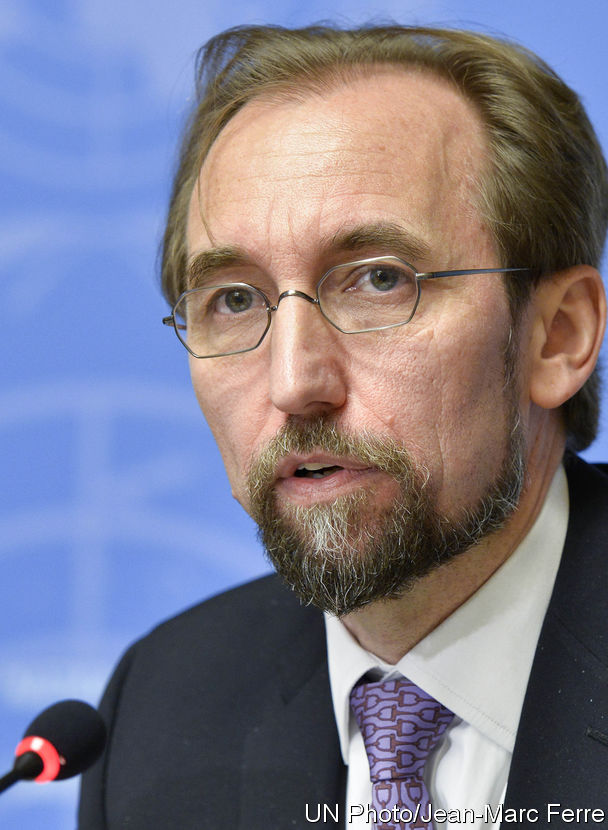
Zeid Ra’ad Al Hussein, the UN High Commissioner for Human Rights, who steps down on 1 September wrote a long and hard-hitting piece under the title “Grassroots leaders provide the best hope to a troubled world” in the Economist of 30 August 2018. Just some excerpts here, please read the whole thing:

If they are growing in number it is because (with exceptions) many other politicians are mediocre. They, too, are focused on their own image, the vanities associated with protocol and re-election. Too busy with themselves, or too afraid to stand up to the demagogues and for others, they seem to shelter in the safety of silence and shuffled papers. Only when they leave public office do some speak up, discovering their courage rather belatedly. Many come and go; no one really notices.

In consequence, too many summits and conferences held between states are tortured affairs that lack profundity but are full of jargon and tiresome clichés that are, in a word, meaningless. What is absent is a sincere will to work together, though all will claim—again, under the lights and on camera—that they are wholly committed to doing so. The systems for states to act collectively at higher levels in pursuit of solutions are decomposing. There are signs of it everywhere we care to look.

….

I believe it is only a matter of time, for example, before we see a Takfiri confrontation with Buddhist extremism in Asia. Where this is likely to occur, geographically, and who is likely to be involved, can already be surmised. The how and the when are, as always, indeterminate. It will depend on the outcome of regional presidential elections and how the situations in Cox’s Bazaar and Myanmar play out. The current signs are not encouraging. What is clear is that our systems for fixing this are broken.

When Myanmar inflicts enormous suffering on the Rohingya—burns them in their homes, cuts the throats of their children, rapes and terrorises, sends 700,000 people fleeing to Bangladesh in only three weeks—and the government pays no penalty for this—what are we saying to the perpetrators? Or to the victims? And to other potential perpetrators across the globe? Xi Jinping openly backs the government of Myanmar and, unusually for the US, given the extent of the horrors, President Trump did not even mention Rakhine when he addressed the UN General Assembly in September 2017. Strong evidence indicates the Burmese military and others may have committed acts of genocide. How much more cruel can humanity be, and how much chaos and pain are we fomenting?

….

And when multiple stress fractures already exist—the result of decades of mediocre leadership—all that’s required is a tripwire. To heal those fractures, whether in the Middle East or elsewhere, we must think differently, think more about human rights, and do this with some urgency.

A fracture within society is often shorthand for human suffering or the existence of burning grievances. Before conflicts begin, suffering stems from three types of human rights violations. One is the denial of fundamental freedoms, such as of opinion, expression and peaceful assembly, creating a situation where life and fear of the state become inseparable. A second is the deprivation of basic services, such as legal and social protections or rights to education and healthcare, which often only confirms the hold of political elites over others. And third, feeding the first two, discrimination, structural and deep, propped up by racism, chauvinism and bigotry.

When multiple stress fractures already exist—the result of decades of mediocre leadership—all that’s required is a tripwire

…If we do not change course quickly, we will inevitably encounter an incident where that first domino is tipped—triggering a sequence of unstoppable events that will mark the end of our time on this tiny planet.   Can we swerve in time?   

My hope lies in a set of people not widely known internationally, but familiar to those in the human rights community. Unlike the self-promoters—the elected xenophobes and charlatans—these people do have courage. They have no state power to hide behind: instead, they step forward. They are the leaders of communities and social movements, big and small, who are willing to forfeit everything—including their lives—in defence of human rights. Their valour is unalloyed; it is selfless. There is no discretion or weakness here. They represent the best of us, and I have had the privilege of knowing some of them personally, while others are well known to my office. 

Suffering reflects a massive dereliction of the duty to serve, by those who exercise sovereignty on behalf of their people

This is what true leaders look like. Bertha Zuniga Caceres from Honduras, the young daughter of the murdered environmental activist, Bertha Caceres, who has bravely continued her mother’s struggle. Dr Sima Samar in Afghanistan, who leads the country’s independent human rights commission and is utterly fearless, even when threats to her personal safety abound. The same could be said of Senator Leila de Lima in the Philippines, who has now been arbitrarily imprisoned without trial for 18 months. Pierre Claver Mbonimpa from Burundi, a gentle yet principled soul, undeterred even after his son was murdered and he himself survived repeated attacks.

I have also been deeply impressed by the dignity and courage of Denis Mukwege from the Democratic Republic of Congo, an extraordinary human being by any measure. Likewise, I have been humbled by the determination of Angkhana Neelapaijit from Thailand, whose husband, a lawyer, disappeared in 2004 leaving her to become a most courageous activist, fighting against enforced disappearances. 

There are others too, from Bahrain for example: the Khawaja family, Nabeel Rajab, Maytham Al Salman and Ebtisam Al Sayegh, who have all have shown extraordinary courage in the face of considerable adversity. Hatoon Ajwad Al Fassi and Samar Badawi in Saudi Arabia: courageous leading voices for the rights of Saudi women, both currently in detention. Amal Fathy in Egypt and Radhya Al Mutawakel in Yemen are also two brave individuals who have put their own safety at risk as they have spoken out against injustice and on behalf of victims of human-rights violations. 

Likewise, Ludmila Popovici, an activist against torture in Moldova. In Poland, Barbara Nowacka has been active in organising protests against measures to pull back women’s rights. Sonia Viveros Padilla in Ecuador is fighting for the rights of people of African descent. Close by, in El Salvador, Karla Avelar, the courageous transgender activist, deserves high praise—as does the Peruvian Maxima Acuna, a well-known environmental human rights defender.   

I could continue. There are grassroots leaders of movements against discrimination and inequalities in every region.  These names are just a sample of the real store of moral courage and leadership that exists among us today.      

While some speak from an individual vantage point, fighting specific battles on behalf of their local communities, others lead broader social movements. World-wide, they are not coordinated. But what if they were? What would happen if all the movements supported each other, openly and actively?  

There are grassroots leaders of movements against discrimination and inequalities in every region…the real store of moral courage and leadership among us.

……What if this coordinated, focused, human-rights movement had the backing of business leaders? There are business leaders who are also real leaders, and who have thought seriously about human rights; people like Barbara Novick of Blackrock, Paul Polman of Unilever, Microsoft’s Brad Smith and Deepmind’s Mustafa Suleyman. This has never been done before; but if we did do it, it might just deliver a sort of shock therapy to those dangerous or useless politicians who now threaten humanity. Maybe, just maybe, it would be enough to stop the rot, so that when a fool tips that first domino or strikes the tripwire they hurt no one but themselves, and we can hope that the injury is only a slight one.  

I leave you with that thought. This is my parting note: one of courage and defiance, and a longing for the leadership of the just.

__________

https://www.economist.com/open-future/2018/08/30/grassroots-leaders-provide-the-best-hope-to-a-troubled-world?

——–

See also my: https://humanrightsdefenders.blog/2018/08/22/change-of-high-commissioner-for-human-rights-at-the-un-optimism-warranted/

Some good news from Cambodia: Tep Vanny and three other human rights defenders pardoned

August 22, 2018

Tep Vanny, second from left, gestures upon arrival at her home in Phnom Penh, Aug. 20, 2018.

Tep Vanny, second from left, gestures upon arrival at her home in Phnom Penh, Aug. 20, 2018. – AP Photo

Cambodia’s King Norodom Sihamoni on 20 August 2018 granted royal pardons to prominent land rights activist Tep Vanny and three others convicted for their roles in a protest over a land grab in the capital Phnom Penh’s Boeung Kak Lake community. Tep Vanny, 38, was arrested on 15 August 2016 after participating in a demonstration, handed six days in prison for “insulting a public official” and, instead of being released when the sentence was served, charged with “aggravated intentional violence” for a protest she held more than three years earlier in front of the home of Prime Minister Hun Sen.

On Feb. 23, 2017, the Phnom Penh Municipal Court convicted Tep Vanny of assaulting two security officers during the 2013 protest at Hun Sen’s home, sentencing her to 30 months in prison and making her pay 9 million riels (U.S. $2,250) in compensation to the officers. Three other female activists—Heng Mom, Bo Chhorvy, and Kong Chantha—were also convicted for “obstructing public officials” during the protest, but released on bail.

On Monday, King Sihamoni issued a royal decree at the behest of Hun Sen, overturning the convictions of all four activists without providing any reason for the decision. Speaking to RFA’s Khmer Service, Tep Vanny said: “I was given no prior notice that I would be released,”“The prison guards came to inform me just before 8:30 p.m. that I would be freed soon and said I should get my things ready. I told them they had come to tell the wrong person.”  Although I am happy tonight for the freedom to meet with my family, relatives, and community members, my pain remains with me, as I have spent over two years in jail,”.

Tep Vanny was awarded the 2013 Vital Voices Global Leadership Award for her work campaigning on behalf of the community evicted from Boeung Kak Lake, which was later filled with sand to make way for a development project with ties to Hun Sen and the ruling Cambodian People’s Party (CPP). On Monday, she appealed to Hun Sen to release all of the country’s remaining political prisoners, including former RFA reporters Uon Chhin and Yeang Sothearin, who have spent nine months behind bars on “espionage” charges.

Various rights groups had demanded Tep Vanny’s release in the lead up to the 15 August anniversary marking her two years in prison, with New York-based Human Rights Watch’s deputy Asia director Phil Robertson calling her conviction “just one of many outrageous cases in which the authorities have misused Cambodia’s justice system to harass and imprison peaceful land rights activists.” On Monday, London-based Amnesty International’s senior director of global operations Minar Pimple welcomed Tep Vanny’s release in a statement, but called it “long overdue.”

re Boeung Kak Lake case see my older: https://humanrightsdefenders.blog/2012/06/20/boeung-kak-lake-women-sentenced-for-peaceful-protest-in-cambodia/

Still this is only SOME good news as in the meantime Front Line reported that on 12 August 2018, human rights defender Nay Vanda received a court summon dated 9 August 2018 issued by the Vice Prosecutor of the Phnom Penh Municipal Court, summoning him to attend a trial at 7:30am on 27 August 2018 at the Phnom Penh Municipal Court. Subsequently, human rights defender Ny Chakrya also received the same court summons. These summons are related to charges brought against five human rights defenders on 2 May 2016. Nay Vanda, Ny Sokha, Yi Soksan and Lim Mony were charged  <https://www.frontlinedefenders.org/en/case/five-adhoc-members-detained#case-update-id-3050&gt; with bribing a witness under Article 548 of the Criminal Code, and Ny Chakrya was charged as an accomplice to bribery of a witness in accordance with Articles 28 and 548 of the Criminal Code. If convicted, they face between five to ten years imprisonment. It is anticipated that the three human rights defenders who have not received the court summons will receive them in the coming days. 

The Cambodian Human Rights and Development Association (ADHOC) <https://www.frontlinedefenders.org/en/profile/adhoc&gt;  is a human rights organisation founded in December 1991 by a group of former political prisoners aiming to address violations of rights and freedoms. See also: https://humanrightsdefenders.blog/tag/adhoc/

—–

Many links including: https://www.rfa.org/english/news/cambodia/pardons-08202018162801.html

Human Rights in crisis? – here the last word (before the summer!)

August 1, 2018

This blog (among many other sources) has dedicated quite a few posts to the mood of crisis that has engulfed the human rights movement, especially at international level. The international human rights regime as we have known it for the last decades is indeed under pressure, from autocratic regimes, from populist leaders and – let us be honest – from quite a few ‘normal’ people. Below you find a small selection earlier blog posts on this theme of crisis. On  30 May 2018 the MEA organized in Geneva a public event “Human Rights in a Changing World”. At this 25th Anniversary event, the leaders of the 10 international NGOs on the MEA Jury and several laureates had wide ranging discussions both in private and in public. The MEA has now produced a summary for public consumption which I have published separately earlier this day [https://humanrightsdefenders.blog/2018/08/01/report-of-meas-25thanniversary-event-human-rights-in-a-changing-world-30-may-2018/ ]

July 31 July 2018, Kathryn Sikkink published an interesting piece that has some elements in common with findings of the MEA event referred to above. The title is: “Rethinking the notion of a human rights crisis”, with as summary that “The frame of constant crisis has negative implications for human rights, especially when questions of legitimacy arise. But hope—based on empirical evidence of human rights progress—should give advocates the motivation to keep working.

Photo by Perry Grone on Unsplash

There is an epidemic of pessimism surrounding human rights today. To name but a few examples, former UN Secretary-General Ban Ki-moon has suggested that there has never been so much suffering since World War II, University of Chicago law professor Eric Posner has claimed that there have been no marked decreases in human rights violations in the same time period, and international relations scholar Stephen Hopgood has argued that we are witnessing the “end times of human rights.”

Such a pessimistic mindset is understandable because of the worrisome situations that human rights activists face every day. The idea of peril and crisis, however, points not only to the present moment but also implies some knowledge about trends and change over time; it suggests that human rights were not challenged before, and that the situation is now worse.

I recognize that many alarming human rights situations exist in the world today, and I am particularly worried about the current situation in the United States, but I am not persuaded that the state of human rights globally is now worse than it has been before. Instead, let us consider how the frame of constant crisis itself could have negative consequences for human rights.

My recent book, Evidence for Hope: Making Human Rights Work in the 21st Century, proposes that pessimistic claims need to be submitted to rigorous examination, both historical and statistical. This debate matters because of the inadvertent effects the frame of crisis and peril may have on perceptions about the effectiveness and legitimacy of human rights activism.

Historically, human rights progress has occurred as a result of struggle, and has often been spearheaded by oppressed groups. Where it has occurred, human rights progress has not been at all inevitable, but rather contingent on continued commitment and effort. Some activists and scholars fear that if they admit there has been progress, people will grow complacent and disengaged.

A recent survey of 346 individuals currently or previously working in the field of human rights found that this work is associated with elevated levels of depression and post-traumatic stress disorder. One source of this appears to be negative self-appraisals about human rights work. These findings suggest that one of the most difficult parts of being a human rights activist is the doubt about whether you are contributing to positive change. A frame of excessive crisis thus may not only contribute to the impression that the human rights movement has historically been ineffective, but it could also diminish the motivation and well-being of activists.

By their very definition, human rights are needed when things are bad. I worked at a small human rights organization, the Washington Office for Latin America (WOLA) in the late 1970s and early 1980s, a time that is now seen by some as the golden age of human rights activism. Yet we never felt like human rights goals were easily within our reach. How could we, when the Argentine government was disappearing thousands of its citizens; the Salvador government, with the heavy support of the US government, was massacring people; and the world had ignored the recent genocide in Cambodia?

Some of the current pessimism also suggests that human rights activists were popular at some point in the past and are now denigrated. But human rights activists have never been popular in the countries where they work. Repressive governments have a long history of attacking and vilifying human rights groups, through smear campaigns and other repressive tactics. Human rights organizations often defend the rights of unpopular minorities such as political leftists in Latin America, the Roma in Europe, and transgender people in the US.

The fact that the fight for human rights has always faced significant opposition should not discourage us. The longer history of human rights offers a positive message that can help sustain us in the context of our current struggles. In Evidence for Hope, I explore what changes have taken place over time, using the best data I can find on what many of us would agree to be good measures of diverse human rights.

Looking at this data carefully, issue by issue, we see that some situations are worsening—such as the absolute number of refugees displaced by war or economic inequality within many countries. Nevertheless, there are many more positive trends, including a decline in genocide and politicide, a shrinking number of people killed in war, decreasing use of the death penalty, and improvements in poverty, infant mortality, and life expectancy, as well as advances in gender equality, the rights of sexual minorities, and the rights of people with disabilities.

So why is it that so many people believe human rights violations in the world are getting worse rather than better? The short answer is that we think the world is worse off because we care more and know more about human rights than ever before. The media and human rights organizations have drawn our attention to an increasingly wide range of rights violations around the world. Their success in doing so sometimes inadvertently causes people to think that no human rights progress is occurring. Discouraging results are also generated because we compare our current situation not to the past but to an imagined ideal world, and thus we always fall short.

My point here is not to suggest that the situation for human rights defenders is improving in the world. I mainly want to remind readers that human rights defenders have long been on the front line, and we should be cautious in suggesting that there was a better period for human rights in the second half of the twentieth century that has now been eroded in the twenty-first century. Some of the threats—particularly those involving invasive laws about registration and funding—are indeed new and threatening, while other challenges have been almost a constant for civil society human rights organizations over time.

Nothing about how new or old these challenges are or about any trends in fundamental human rights detracts from acknowledging the frightening challenges groups and individuals face, nor do they negate the urgent need to strategize about how to respond to these challenges. Yet, what I hope is that some information about historical trends, as well as a more focused look at data, may be useful as part of an action-oriented discussion of promising tactics and how to address these challenges.

The stakes in this human rights debate are high. Anger, hope, and the knowledge that you can make a difference in the world give people the energy to keep working. Knowing more specifically how human rights groups have made a difference can teach us more about effective strategies and tactics to use in the future.

————–

Report of MEA’s 25thAnniversary event: Human Rights in a Changing World (30 May 2018)

August 1, 2018

And here is finally the Discussion Summary (in full) of the Martin Ennals Award 25thAnniversary event “Human Rights in a Changing World” [https://humanrightsdefenders.blog/2018/05/24/mea-at-25-high-level-anniversary-panel-looks-at-human-rights-in-crisis/].  

 Introduction

On 30 May 2018, the Martin Ennals Foundation convened a meeting of leaders of the ten organizations that make up the Martin Ennals Jury, together with some former MEA laureates, to discuss current human rights priority issues. This, the first such meeting, took place in the context of the 25thanniversary of the Martin Ennals Award for human rights defenders.  The document below attempts to capture the main elements discussed and draws some conclusions.

Discussion

Three issues were scheduled to serve as the agenda:  (1) influencing authoritarians, (2) countering populism, and (3) effective human rights action. We focus on the five main points raised throughout the discussion.

  1. Human rights are increasingly the target of populist and/or authoritarian leaders as they demonize “others” to build support;

Not all authoritarians are populists, and not all populists are authoritarians. The initial discussion looked at the phenomenon of populists who build support by using messages and approaches that give cause for major human rights concerns.  Populist leaders who end up trampling human rights are often those most eager to remove constraints on their own power by weakening the institutions that can challenge them: the judiciary, media, parliaments, and civil society, especially Human Rights Defenders (HRDs).

Authoritarians are increasingly willing to stand up for their approaches, using justifications such as the need for economic development, the rejection of “Western” or “liberal” models, or the protection of national identity.  This is the case for countries where the population have little say in the choice of their leaders (e.g. China); nominal say (e.g.  Russia or Venezuela); or even where the population can vote freely (e.g. Hungary or USA).

The blaming or demonization of marginalised groups is a principal tool in the authoritarians’ arsenal. These groups can include religious or ethnic minorities, or even the targeting of criminals by extrajudicial means. But currently overshadowing all is the way that irregular immigrants have become the focus especially in Europe and the US of attempts to find a scapegoat for the problems that preoccupy the wider population.

The concerns among the population that provide the breeding ground for authoritarian leaders to reject more traditional democratic politics are linked to a variety of issues in the spheres of economic insecurity and law and order, as well as cultural displacement and loss of identity.  Populists have tapped into these concerns, but rather than looking at the deeper complexities they have created resonance with simple, compelling messages that appeal to emotion more than to reason.

The manner in which populists have built support by attacking marginalised groups includes a discourse to deny them certain basic rights. Statements that in the past were seen as reminiscent of fascism and thus politically unacceptable are now part of the political dialogue and supported or at least ‘accepted’  in many countries that were considered “liberal democracies”. Regardless of who is in power, suggesting denial of basic rights to certain groups is now common currency even in many democracies.

Immigration, and in particular “uncontrolled” or “illegal” immigration, is a particular target for populist leaders.  Human rights advocates who stand up for these people’s rights are now more easily accused of working against the national interest. Disconcertingly, blaming such an identifiable “other” time and again appears a simple but effective tool. Politicians focusing on complex causes face an uphill battle. Human rights organizations trying to protect the “other” may find their messages not just ineffective, but providing arguments for populists to use against them.

The result is that human rights, and human rights activists and organizations, are seen by significant numbers of people in many countries as serving effectively to support those who threaten their livelihood, safety and cultural values. Thus, human rights, as a concept, come under attack when associated with protecting “undesirables”.

While “human rights” as a concept may be easily misunderstood, or intentionally manipulated, views tend to be more supportive once specific rights are acknowledged and advanced. This applies particularly to a broad range of economic and social rights issues that resonate with a wider cross-section of the population: corruption, land rights, labour rights, and environmental degradation.  These issues tend to be underrepresented as human rights concerns and more effort should be made to show the connections. It was stressed that young people especially are willing to work on these issues.

A recurring theme in the discussion was that while there may be support for particular rights such as LGBT or land rights, this would not usually be translated into supporting the overarching human rights architecture in general. Messaging by human rights organizations often involves conceptual messages, which have been ineffective in the past. However, the new, and more dangerous, element is rather than just being ineffective, these messages can provide arguments in the opposite direction for populists.

The conclusion that presents itself is that those working on any particular topic will have to be much more aware of the wider context in which they work. While trying to draw attention onto specific issues, it is important to remain credible in the eyes of the wider public. This means that as human rights organizations decide where and how to focus their activities, the balance of issues worked on needs to be considered as part of the perception that the organization wants to build.

For those organizations with very specific mandates, and so a limited choice of issues to focus on, it is even more important to find approaches that do not provide arguments that can be used by those working against them.

  1. Naming and shaming needs to take into account that certain approaches can reinforce populist leaders


“Naming and shaming” has long been one of the main tools to press for human rights.  However, given the success of the populist messages, some leaders have been able to justify human rights violations and even use criticism to make their point to supporters. This is particularly so when the criticism associated human rights with the least “desirable”.

Even though authoritarians may feel no compunction to stand behind their methods or even boast about them, they still are sensitive to their reputations. They often mobilize significant resources to thwart or stop human rights defenders, which shows that they still think arguments in favour human rights are important enough to be dangerous for them.

There is no reason to conclude that public shaming is no longer effective, but it needs to be carefully tailored to each situation. Failure to do so can play directly into the hands of the authoritarian leader who may claim the criticism as a badge of honour. Populists are sensitive to being ridiculed; humour at their expense can be powerful. In any case the planned message needs to be carefully analysed to determine how the message could be used to their benefit by those it seeks to challenge.

Sanctions against Individuals

The use of personal sanctions and restrictions on autocrats and their cohorts is increasing and is found often to have considerable impact.   However, where this can trigger counter-measures it is important for unintended consequences such as reprisals against human rights defenders to be factored into the equation.


  1. Public communication

There was broad agreement about the importance of moving beyond the traditional ways of communicating human rights concerns and articulating advocacy. The human rights narrative mainly resonates with those most familiar with, and supportive of, the issues.  Messages are often legalistic and technical, limiting their appeal to a wider audience. In the current fractured political dialogue, when the objective is seen as supporting an “other” a new level of hostility can result.

The most effective communications are on issues that the recipient can identify with. This makes normative and conceptual work very hard to get the wider public people excited about. They are more likely to react to messages where they see themselves as potentially affected. This is what makes the demonization of “others” so effective.  Action against migrants or minorities does not strike people as something that can happen to them. Even when talking about civil and political rights, it is still possible to see the most serious violations such as torture and enforced disappearance as something that happens to others.

It may well be easier to mobilise people around social justice issues like corruption, land rights, labour rights, and pollution. There is a general sense that economic, social, and cultural rights are not sufficiently addressed. Countering populists will need messages in language that appeal to populist followers’ values, interests and indeed emotions. Here it is important to offer constructive solutions to move the debate forwards rather than condemning what is wrong. Furthermore, there is a need to work in alliance with broader elements of civil society such as social movements, and so tap into sources of wider support. Effective use of visual and social media is indispensable.

Dialogue with autocrats

Governments are not monoliths. There are different interests and views within autocratic states that can be utilized when dealing with them. It is important to weigh the trade-offs in any such interaction; while dialogue can be opened up it needs to be able to lead to action. There are risks that autocrats could use the fact of dialogue to legitimise their actions. At the same time, they may go along but with no intent to move forward – e.g. dialogue that only involves the foreign ministry is usually a sign that little will happen. As a rule, dialogue should go hand in hand with public communication that creates pressure. The ‘diplomacy’ must have a public component.


  1. Non-state actors/business and human rights

Non-state actors can play powerful roles influencing the state primarily for their own benefits, and so contributing directly or indirectly to infringement of human rights. The business sector, notably multinational enterprises, is considered a clear priority in this regard. Effective action to ensure compliance is still limited by gaps in normative rules; where such enterprises may be vulnerable to reputational risk, strengthened regulation should help ensure that they are competing on a level playing field.

There is a multitude of pressure- and leverage points. One that drew particular attention is the notion that the eventual cost to companies resulting from a lack of early engagement with the local population may be exponentially higher than had they consulted at the start. Involvement at the early planning process by all sides can reduce the risk of project failure or excessive costs later on. Other leverage points include banks/financial institutions, shareholder activism, and associated business partners such as suppliers who may have reputational concerns.

Overall, the thrust of engaging with the business sector in the sphere of human rights must be to shift the emphasis from focusing on transparency to seeking accountability.


  1. Supporting local action for human rights

Much of the discussion looked at recent changes in the West as to how human rights are viewed, whereas the global South continues to face the challenges it always has.  Furthermore, certain changes that originated in the West such as funding restrictions on political activity, and anti-terrorism legislation have inspired new methods to restricts human rights defenders  in countries with more structural human rights problems.

Reassuringly, experience shows that even in countries with structurally problematic human rights records there are networks of committed human rights activists. While they may be small in numbers, their commitment and drive allow them to keep human rights concerns on the agenda. Many of these activists feel unsupported when facing the resources, restrictions, and wrath of their own governments. However, this commitment to human rights by an engaged minority is a clear counterweight to populism and human rights abuses more widely.

Thus, a key message arising out of the discussion is the importance of supporting local activists and networks. Supporting them is a critical function of the international human rights movement. The work for human rights defenders cannot be seen in isolation from the causes they espouse, which in turn enables international human rights organisations to connect with broader social movements.

Rules vs implementation

While there may still be a need for developing norms and standards in certain areas (as with regard to business and human rights), the overall emphasis must increasingly be on implementation and enforcement of existing rules. This requires a more comprehensive approach that moves from identifying where norms are violated, to a systematic approach to keeping pressure on governments in question until there is change. This will involve increased coordination between international actors and those working locally.


In conclusion

Convening the leaders of all the MEA jury organizations together with former laureates was a first. It gave a unique opportunity to discuss the state of human rights and human rights action in today’s rapidly changing and increasingly contested world. The analysis differed in nuance only, the overall findings and conclusions had a large degree of consensus. While these outcomes may not in themselves offer ground-breaking new insights, that fact of the shared orientation and commitment is remarkable and encouraging in the face of the formidable challenges in front of us.

You can see and hear the public debate led by BBC’s Lyse Doucet on the MEA website: http://www.martinennalsaward.org (viewed by hundreds of people)

BRICS leaders should have addressed human rights at their recent summit

July 30, 2018

Russian President Vladimir Putin (L) Indian Prime Minister Narendra Modi (C) and Turkish President Recep Erdogan (R) interact during a family photo during the BRICS summit meeting in Johannesburg, South Africa, 27 July 2018. EPA-EFE/GIANLUIGI GUERCIA / POO

As they met in Johannesburg last week, BRICS leaders focused on the economy, development, peacekeeping, health and industrialisation issues within the bloc (accounting for 40% of the world’s population). However, equally important issues such as the protection and realisation of human rights in the respective countries remained off the agenda. Jennifer Wells, an intern with AI South Africa, on 30 July 2018, gave a useful reminder of what could and should have been also addressed:

Brazil

Brazil has one of the highest murder rates in the world, with around 60,000 people murdered each year…Brazil’s failure to protect black Brazilians from police violence remains critical as this year marks the 25th anniversary of the Candelaria killings. The tragedy, in which eight young black boys were killed by off-duty police officers in Rio de Janeiro in 1993, represents the endemic racism within the Brazilian security forces. The situation was aggravated by the murder of Rio de Janeiro human rights defender and councilwoman Marielle Franco on 14 March 2018. [https://humanrightsdefenders.blog/2018/03/16/marielle-franco-38-year-old-human-rights-defender-and-city-councilor-of-rio-assassinated/]

Russia

human rights defenders and civil society activists continued to face harassment, intimidation and arbitrary arrests across the country. The trial of human rights defender Oyub Titiev started in Chechnya. He, like several other human rights defenders, is being prosecuted on trumped-up criminal charges. Law enforcement agencies continue to launch cases on fabricated “extremism” and “terrorism” charges. [https://humanrightsdefenders.blog/2018/01/15/chechen-human-rights-defender-oyub-titiev-arrested-on-trumped-up-charges/] The Ukrainian film director Oleg Sentsov, serving 20 years on “terrorism” charges, is on day 75 of a hunger strike demanding the release of “64 political prisoners from Ukraine”. The right to freedom of peaceful assembly has been increasingly restricted in Russia since 2012 and remains under severe clampdown. …. The rights of LGBTI people are trampled upon daily and the authorities continue to refuse to investigate the horrific gay purge in Chechnya. The World Cup has come and gone, but the suppression of freedoms and shrinking of civil liberties continues unabated.

India

It’s a similar story in India where human rights defenders are consistently under threat, attacked and threatened, often from security forces. India has witnessed horrific instances of alleged extrajudicial executions by security forces for years as police and federal forces have effective immunity from prosecution. In the North-Eastern state of Manipur, human rights defenders who have lost their loved ones in alleged extrajudicial executions and are now campaigning for justice, face unprecedented attacks. Salima Memcha, a widow who lost her husband to an alleged extrajudicial execution, was verbally threatened by security personnel. Her house was also vandalised by them. Three other human rights defenders in Manipur have faced similar reprisals for campaigning for justice for their loved ones.

China

In China, the government continues to enact repressive laws under the guise of “national security” that present serious threats to human rights. Nobel Peace Prize laureate Liu Xiaobodied in custody whilst other human rights defenders are detained, prosecuted and sentenced on vague charges such as “subverting state power”, “separatism” and “picking quarrels and provoking trouble”. Controls on the internet have been strengthened and freedom of expression and freedom of association are under attack.[see also:https://humanrightsdefenders.blog/2018/04/12/how-china-extracts-televised-confessions-from-human-rights-defenders/]

South Africa

In the host nation, nearly a quarter of century after adopting arguably one of the most progressive constitutions in the world, the country is bedevilled by profound inequalities, which persistently undermine economic, social and cultural rights. Failures in the criminal justice system continue to present barriers to justice for victims of human rights abuses and violations, including the state’s failure to hold perpetrators accountable for the killing of 34 striking mineworkers in Marikana in 2012 by the South African Police Service. Access to sexual and reproductive health services remain a human rights issue as does the provision of quality education.

https://www.dailymaverick.co.za/article/2018-07-30-what-brics-leaders-should-have-talked-about/