Posts Tagged ‘Human Rights Defenders’

China: Weiquanwang’s annual report details more than 800 political prisoners in 2018

January 2, 2019
And for those interested in China there is a good wrap up in a piece of 31 December 2018 by Radio Free Asia. It refers to the Weiquanwang rights website which published its annual report detailing more than 800 political prisoners in China. [for some of my other posts on China: https://humanrightsdefenders.blog/tag/china/]

The same article details other cases such as:

Authorities in Guangdong have handed down a two-year jail term to anti-censorship campaigner Zhen Jianghua after finding him guilty of subversion. He was tried in secret in Guangdong’s Zhuhai city on Aug. 10, and sentenced to two years’ imprisonment after the court found him guilty of “incitement to subvert state power,” his former defense attorney Ren Quanniu told RFA. “Given the particular circumstances of the case, two years is quite a harsh sentence,” Ren said. “They could have given him a suspended sentence for this, but this is probably because he refused to cooperate and plead guilty.” Zhen had registered a website overseas to elude ruling Chinese Communist Party censorship, and offered information about censorship, and circumvention tools for accessing the internet beyond the complex system of blocks, filters, and human censorship that make up China’s Great Firewall. [According to Frontline Defenders, Zhen had also worked as a technical consultant with Human Rights Campaign in China, as an advising expert with Chinese Wikipedia, and as a project officer of a HIV/AIDS prevention education project in Zhuhai, run by the Hong Kong AIDS Foundation.]

The tally also included Deng Yaoqiong, a woman incarcerated in a psychiatric facility in the central province of Hunan after she live-streamed video of herself splashing ink on a poster of President Xi Jinping. Dong Yaoqiong was sent for “compulsory treatment” after she streamed live video of herself splashing ink on a poster of President Xi in Shanghai, in protest at “authoritarian tyranny” on July 4. She is being held as a psychiatric patient in a women’s ward in Hunan’s Zhuzhou No. 3 Hospital. Her father Dong Jianbiao and Beijing artist-activist Hua Yong were also detained when they spoke out about her detention. Beijing artist Guo Zi said Hua Yong is now in contact with the outside world after his detention, but that nothing has been heard from Dong Yaoqiong or her father. “It’s nearly 2019 now, and it’s a great tragedy that there is still no legal framework being implemented for the freedom of speech … nearly 20 years into the 21st century,” he said.

Another political prisoner, veteran democracy activist Wang Bingzhang, has warned that his life is in danger in prison, where he is serving a life sentence for “espionage” in the southern province of Guangdong. Wang made the comments to his daughter, who visited him on Christmas Day. “In particular, he said that if he met with an unfortunate end, it wouldn’t be from health or physical problems, because his health was OK.

Patrick Poon, China researcher for Amnesty International, said the mass incarceration of Muslim Uyghurs and other ethnic groups in the northwestern region of Xinjiang has been a major concern during 2018. The authorities have also stepped up a nationwide crackdown on religious believers, shutting down churches and mosques and detaining anyone who resists. “Uyghurs, Kazakhs, Hui Muslims, and other Muslim minorities have been persecuted to a high degree, and we have heard reports of torture and inhumane treatment,” Poon said. Meanwhile, a crackdown on human rights lawyers and associated activists begun in July 2015 continues to widen, while political prisoners are denied a fair trial in Chinese courts. “The Chinese government should stop all of this persecution, and respond to concern from the international community by releasing all political prisoners,“. [see also: https://humanrightsdefenders.blog/2018/01/15/today-ilham-tohti-completes-his-fourth-year-in-chinese-detention/]

https://www.rfa.org/english/news/china/prisoners-12312018133354.html  (as reported by Lau Siu-fung for RFA’s Cantonese Service, and by Liu Fei for the Mandarin Service; translated and edited by Luisetta Mudie))
Happy New Year, but not for Ahmed Mansoor and Nabeel Rajab in the Gulf monarchies

January 2, 2019

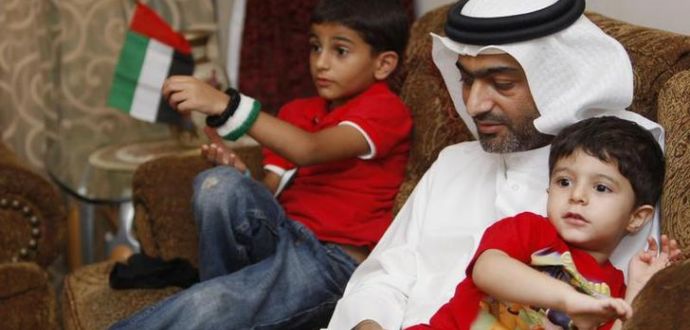
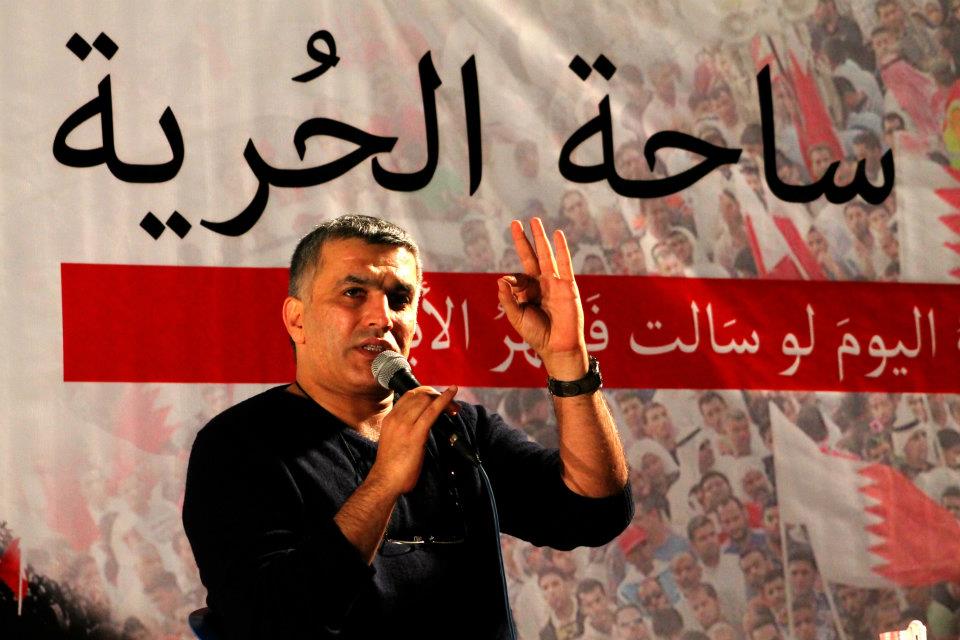
First of all I wish my readers a happy 2019. Unfortunately this year augurs badly for two human rights defenders who have figured frequently in this blog: Ahmed Mansoor [https://humanrightsdefenders.blog/tag/ahmed-mansoor/] and Nabeel Rajab [https://humanrightsdefenders.blog/2015/01/20/video-statement-of-troublemaker-nabeel-rajab-who-is-on-trial-today/]. Courts in the United Arab Emirates and Bahrain on Monday upheld the convictions of these two prominent human rights defenders serving lengthy prison terms for expressing anti-government dissent on social media. They have no right to further appeal. On 4 January 2019 there UN joined the critics of these sentences.

Nabeel Rajab, Final Nominee MEA 2012


https://www.washingtonpost.com/world/uae-and-bahrain-uphold-stiff-prison-sentences-for-human-rights-activists/2018/12/31/a31a3cf2-0d1b-11e9-8f0c-6f878a26288a_story.html?utm_term=.b3d062a3f670

http://icfuae.org.uk/news/uae-10-year-prison-sentence-upheld-ahmed-manoo

https://www.frontlinedefenders.org/en/profile/ahmed-mansoor

https://www.denverpost.com/2018/12/31/emirati-court-upholds-10-year-sentence-against-cu-boulder-grad-for-criticizing-government/

https://www.ifex.org/bahrain/2018/12/31/nabeel-condemn-sentence-upheld/

https://news.un.org/en/story/2019/01/1029832

Barbara von Ow-Freytag argues (well) for a new communication-based approach

December 26, 2018

As the Universal Declaration of Human Rights turns 70 – is it time for a new approach? asks Barbara von Ow-Freytag, Journalist, political scientist and adviser, Prague Civil Society Centre, in the World Economic Forum.This piece is certainly worth reading as a whole. It is close to my heart in that it stresses the need to have a hard look at how young human rights defenders  focus their energy where they can achieve real, concrete change within their own communities. Their campaigns are grassroots-led and use local languages and issues their communities understand. They often use technology and creative formats, with a heavy dose of visual and artistic elements. Where the international scene seems to stagnate and even backpedal, better use of communication skills and tools (such as images) are certainly part of the answer:

As the Universal Declaration of Human Rights turns 70, a new generation of human rights defenders are reinventing themselves to fight for old rights amid a new world order. Based not on declarations, charters and international bodies, but on the values which underpin them – justice, fairness, equality – they shun the language of their predecessors while embracing the same struggle…However, in the new realities of the 21st century, the mechanisms to promote human rights that grew out of the Universal Declaration are showing their age. Authoritarianism is on the rise across the world, with popular leaders cracking down on human rights defenders.

Freedom House found 2018 was the 12th consecutive year that the world became less free. Civicus, which specifically monitors the conditions for civil society activists and human rights defenders, found civil society was “under attack” in more countries than it wasn’t, with all post-Soviet countries (except Georgia) ranging between “obstructed” and “closed”.

Image: Freedom House

Troublingly, both the willingness and the ability of Western bastions of human rights are also on the wane. Inside the EU, talk of illiberal democracy gains traction, and internal crises divert attention away from the global stage. Perhaps unsurprisingly, throughout Eastern Europe and the former Soviet Union, younger activists and civil society are giving up on western governments and international organizations to advocate on their behalf. Pavel Chikov, director of the Agora group, said recently that, “Russian human rights groups no longer have a role model,” calling the liberal human rights agenda “obsolete”.

Growing disillusionment has led many rights groups to shift away from appealing to outsiders for support. Younger campaigners no longer frame their work in the traditional language of human rights, and many do not even consider themselves human rights defenders. Instead of referring to international agreements violated, they focus on solving practical problems, or creating their own opportunities to advance values of equality, justice and fairness.

Formats too have changed. Throughout the region, tools used by civil society to raise social consciousness are becoming diverse, dynamic and smart. Instead of one-person legal tour de forces, genuinely grassroots, tech-powered, peer-to-peer or horizontal networks are proving effective. Media, music, art, film, innovative street protests, urbanism and online initiatives focused on local communities are coming to replace petitions and international advocacy.

Team 29, an association of Russian human rights lawyers and journalists, is among the most successful of this new generation. It has repositioned itself as part-legal aid provider, part-media outlet. Its website offers a new mix of news on ongoing trials, animated online handbooks for protesters, videos on torture and a new interactive game telling young people how to behave if they are detained by police.

What may look like PR-friendly add-ons are actually core to their operation. Anastasia Andreeva, the team’s media expert, says: “Before, we consulted some 30 clients, now we reach tens of thousands of people.”

Azerbaijani activist Emin Milli also embodies this journey of wider civil society – turning away from the international towards local solutions. In the early 2000s, he was a traditional human rights defender, successfully using international mechanisms, such as the Council of Europe to assist political prisoners.

After his own arrest and return to activism, Milli changed tack. “When I was in jail, I had a lot of time to think,” he told the Oslo Freedom Forum. “I decided to do something that will give voice to millions.” His idea? Meydan TV – an online-only independent TV channel, targeting a young audience, which now reaches more than 500,000 people inside Azerbaijan through its Facebook page.  [see also: https://humanrightsdefenders.blog/2013/03/07/azerbaijan-harasses-human-rights-defenders-even-the-recipient-of-the-homo-homini-award/]

The key to Meydan’s success is its accessibility. Milli says: “We do stories about ordinary people. Real Azeris who have everyday problems.” Through its smart coverage, investigating and highlighting how injustice affects these ordinary people, and not referring to UN-enshrined rights and responsibilities, Meydan is “giving a voice to people who fight for women’s rights, people who fight for political rights, for civil liberties, and everybody who feels they are voiceless”.

Music, too, is increasingly being used as a vehicle to realize human rights. Though he might shun the label, Azeri rapper Jamal Ali is perhaps one of the country’s most well-known “human rights defenders”. His songs about injustice and corruption regularly go viral, raising national and international awareness in the same way a statement at the UN General Assembly might have done three decades ago.

In a 2017 hit, he highlighted how two young men had been tortured by police and faced 10 years in prison for spraying graffiti on a statue of former president Heydar Aliyev. In response, the regime arrested Ali’s mother, demanding that he remove the video from YouTube, only to ensure that Ali’s song went even more viral among Azeri youngsters.

Gender equality and women’s rights is also being advanced through unexpected new champions. In Kyrgyzstan, 20-year-old singer Zere Asylbek sparked a feminist shockwave earlier this year with her video Kyz (“Girl”). “Don’t tell me what to wear, don’t tell me how to behave,” she sings, bearing her top to reveal her bra. Seen by millions, the Kyrgyz-language feminist anthem has set off a new #MeToo debate in the Central Asian country, where many young women are still abducted, raped and forced to marry.

In the wake of the video, a first “feminist bar” is about to open in Bishkek. Other feminist videos have been used to directly address the issue of bride-kidnapping, with animated cartoons being used as part of local campaigns to change mindsets in a conservative society.

Perhaps most excitingly, an all-female team of 18 to 20-year-olds is building the country’s first micro-satellite. “Girls taking us into space is the best message against sexism,” says Bektour Iskender, whose news site Kloop initiated the project. He says the girls’ project has a deep social mission, promoting national pride and the country’s return to advanced technological development.

These examples – and countless more – show that civic groups see no value in lobbying an increasingly disinterested West and sluggish international organizations. Instead they focus their energy where they can achieve real, concrete change within their own communities. Their campaigns are grassroots-led and use local languages and issues their communities understand. They target specific audiences, often using technology and creative formats, with a heavy dose of visual and artistic elements.

Addressing discrimination, environmental protection, corruption, health issues, women’s rights, they speak not about the failure of their states to abide by international accords, but about common dignity and life opportunities, addressing people on a direct human level.

Clearly, the values of the Universal Declaration of Human Rights are still valid, but their approach and the packaging have changed. “We all want to change the world,” says Sergey Karpov of the Russian online media and philanthropic platform Takie Dela. “Today communications are the best way”.

https://www.weforum.org/agenda/2018/12/universal-declaration-of-human-rights-70-is-it-time-for-a-new-approach/

Premiere: powerful video summarizes Human Rights Defenders World Summit 2018

December 18, 2018

Today, on the occasion of the presentation of the Action Plan at the plenary session of the General Assembly of the United Nations in New York, the NGOs who organized the World Summit 2018 (Paris October 2018) make public a powerful 8-mn video that summarizes The Human Rights Defenders World Summit 2018 and the highlights of this historic event in Paris. Click on play and meet the defenders, inspiring and courageous individuals and representatives of communities that advance and protect human rights, every day, in the most difficult places around the world. Film made by True Heroes Films (THF – www.trueheroesfilms.org).

Change the world. Protect human rights defenders! #WeAreAllDefenders

https://hrdworldsummit.org

Human Rights House Foundation developed major new tool kit “Rights of Defenders”

December 18, 2018

“Rights of Defenders” aims to promote understanding of international standards that protect and empower human rights defenders. The project is inspired by the 20th anniversary year of the landmark 1998 Declaration on Human Rights Defenders.

For implementation of international standards to be effective, it is essential that human rights defenders know and understand their rights. The Rights of Defenders project promotes and builds understanding of international standards and provides clear, accessible, and targeted insight into the standards and the context that surrounds them. As part of the project, HRHF has developed tools and resources for defenders to disseminate standards nationally, engage with authorities and hold them accountable to the commitments they make internationally, and initiate national conversations on the importance of defenders and their work.

The Rights of Defenders resources – developed by Human Rights Houses and HRHF – promote and build an understanding of international standards and provide clear, accessible, and targeted insight into the standards and the context that surrounds them. The aim is to provide resources to help defenders to disseminate standards nationally, engage with authorities and hold them accountable to the commitments they make internationally, and initiate national conversations on the importance of defenders and their work.

These resources are currently available in English, Russian, and Georgian. Human Rights Houses and HRHF are in the process of translating the booklet and other related materials into other languages. These will be published on this page when available. We currently expect translations into Armenian, Croatian, Tatar, and Ukrainian.

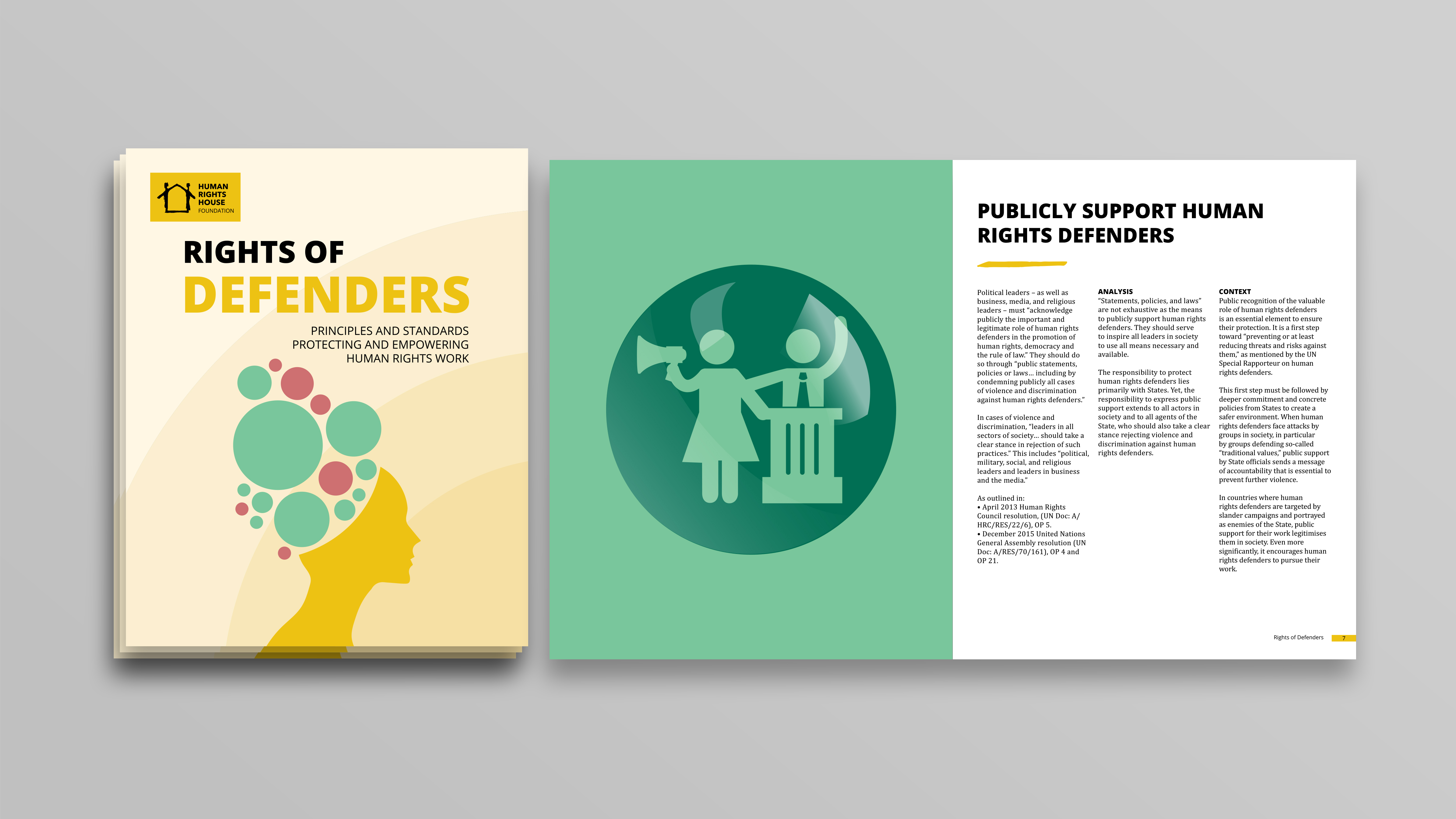
The Rights of Defenders booklet is divided into 16 standards, inspired by the strong content of landmark resolutions on human rights defenders and their work, adopted at the United Nations and Council of Europe. It condenses the main points of each standard as outlined in the resolutions. The standards confer both positive and negative obligations – whether it is action or refraining from an action. They are illustrated in red or green respectively to illustrate these obligations. The booklet also provides analysis to inform the interpretation and implementation of these standards. This is inspired by the commentary of experts such as UN Special Rapporteurs and by the experience of HRHF and Human Rights Houses in Western and Eastern Europe, Balkans, and the Caucasus. Further, to give context, the booklet outlines the trends affecting each standard and provides recommendations for their implementation.

Download the Rights of Defenders booklet.

References and sources In most cases, defenders may only need the main points of each standard together with analysis and context, as provided in the booklet. Yet there may be other occasions that require more detailed information. Our companion document provides sources and in-depth referencing to the full language of the resolutions.

Download the Rights of Defenders companion document of references and sources.

Poster

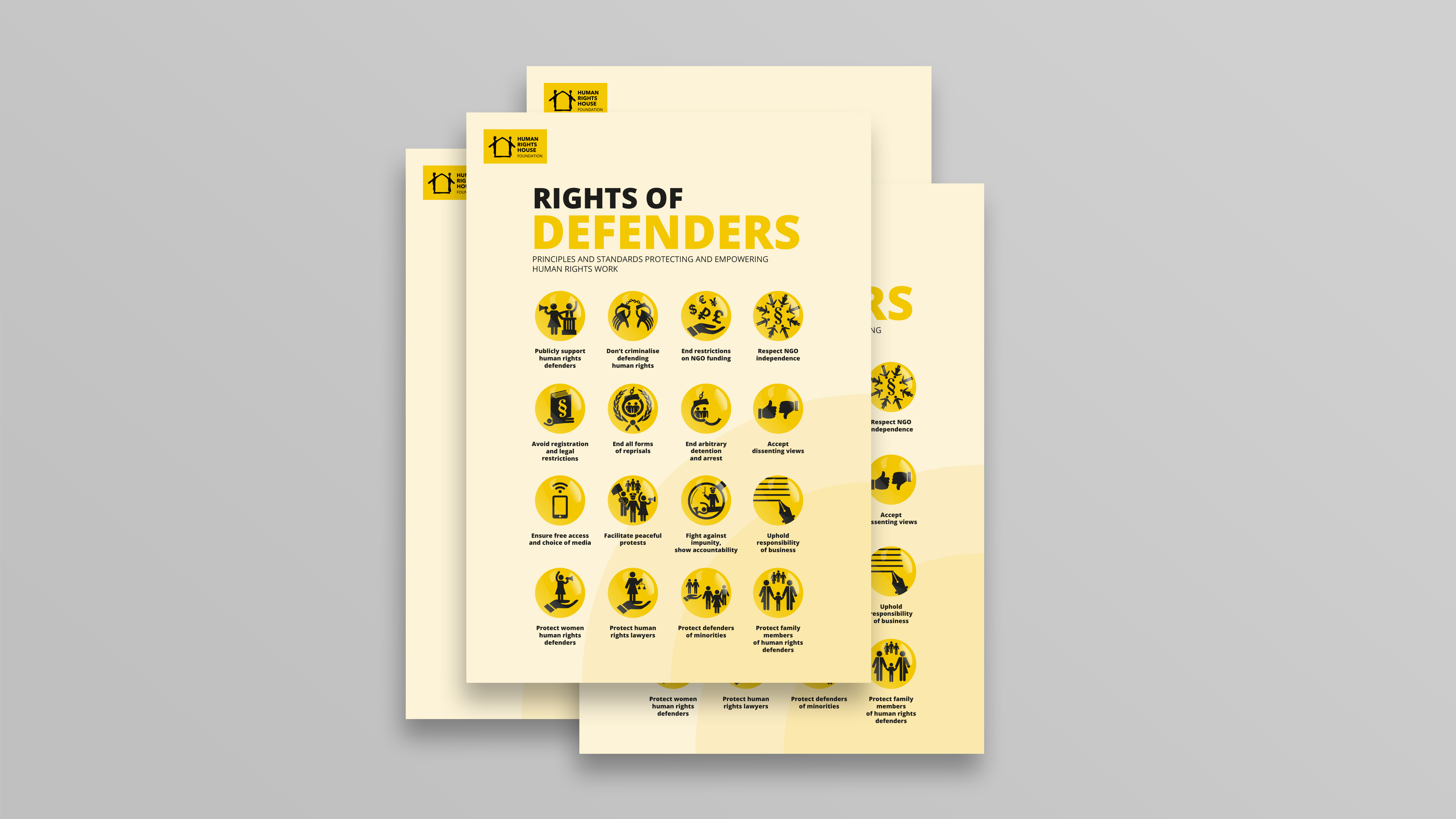
The Rights of Defenders poster promotes the 16 international standards outlined in the booklet. It aims to help promote and raise awareness of these standards.

Download the Rights of Defenders poster

Postcards

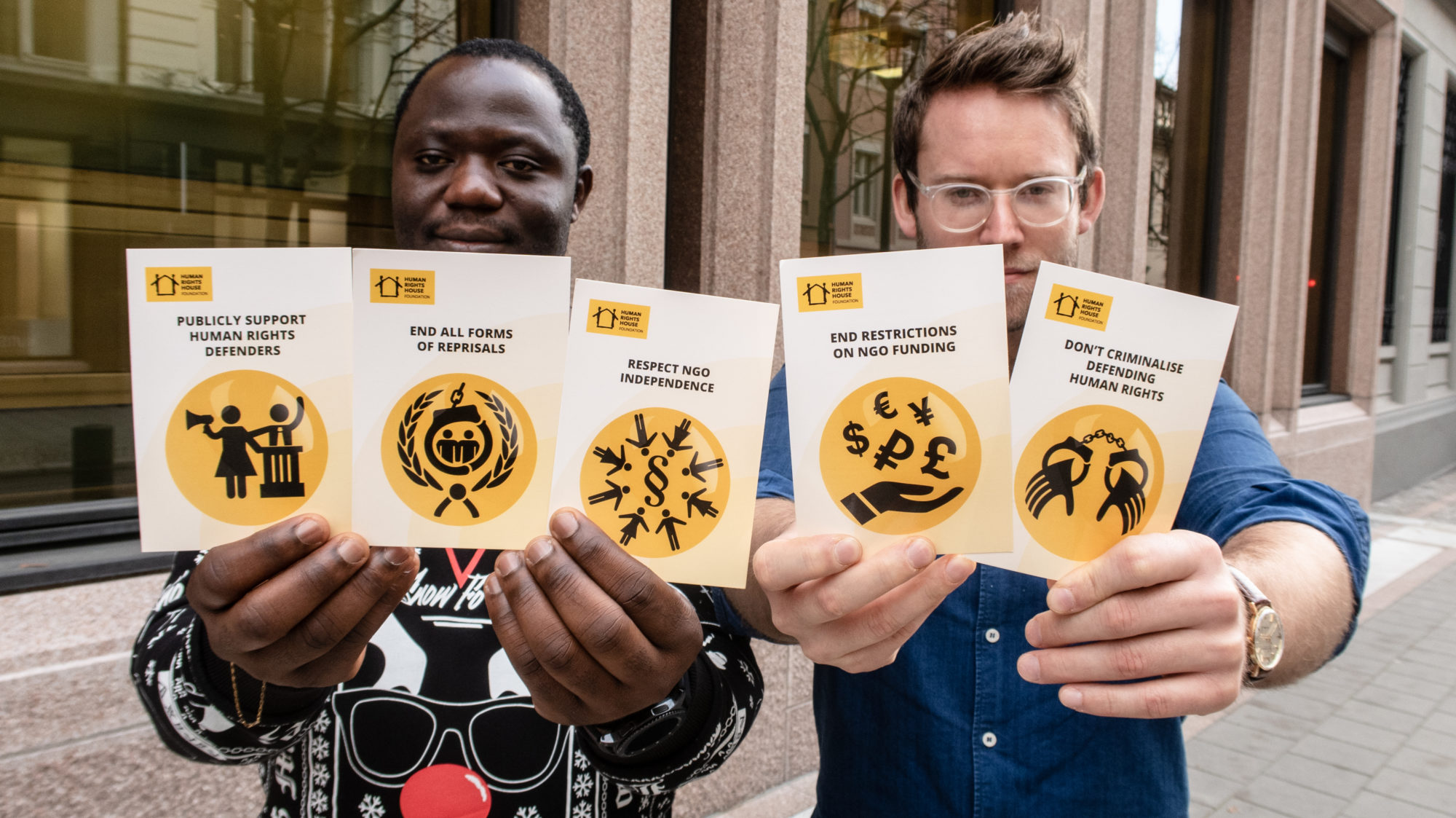
The Rights of Defenders postcards are a tool to promote and raise awareness of the standards that are most relevant to a particularly country or situation. They are designed to be printed A6, but also work at other sizes. Postcards with five of the most prominent standards are available to download below, though on request we can provide postcards for any of the 16 standards featured in the booklet.

Download postcards for:

Contact

Doriane Anfrie
PROJECT COORDINATOR
Languages: English, French, Spanish
For some of my earlier posts on the HRHF: https://humanrightsdefenders.blog/tag/hrhf/

Human Rights Day 2018 – anthology part III (the last)

December 18, 2018

Mopping up after International Human Rights Day 2018 here six more ‘events’:

For part I, see https://humanrightsdefenders.blog/2018/12/10/human-rights-day-2018-just-an-anthology/

For part II, see: https://humanrightsdefenders.blog/2018/12/11/human-rights-day-2018-anthology-part-ii/.


  1. Tibetans in Sydney celebrate Nobel Peace Prize Day and Int’l Human Rights Day.
    Tibetans in in Sydney, New South Wales, Australia, observe an official function to mark the 29th anniversary of the conferment of Nobel Peace Prize on His Holiness the Dalai Lama, on December 15, 2018. Photo: TPI/Yeshe Choesang

Tibetans in Sydney celebrate Nobel Peace Prize Day and Int’l Human Rights Day

https://www.hongkongfp.com/2018/12/16/best-human-rights-books-october-december-2018/

https://www.adventistreview.org/for-people-of-faith-70-year-old-human-rights-document-holds-special-meaning

https://www.gov.uk/government/speeches/lord-ahmad-speech-at-amnesty-international-annual-human-rights-day-reception

https://blogs.library.duke.edu/blog/2018/12/12/duke-announces-winner-of-2018-juan-e-mendez-human-rights-book-award/

https://menafn.com/1097819272/Somaliland-HRC-Commemorates-Human-Rights-Day-2018-In-Burao

Third annual Sporting Chance Forum in Paris is over

December 14, 2018
The third annual Sporting Chance Forum brought together some 300 delegates from a broad range of stakeholders to drive progress toward a world of sport that fully respects human rights.  Representatives of affected groups, sports bodies, governments, trade unions, sponsors, NGOs, broadcasters, NHRIs, and intergovernmental organisations gathered in Paris at UNESCO under the backdrop of the 70th anniversary of the Universal Declaration of Human Rights. Reports follow in early 2019.Hosted this year by the new Centre for Sport and Human Rights, UNESCO and Institute for Human Rights and Business, the Forum covered a diversity of geographies and issues including a special spotlight on survivors of sexual abuse, athletes’ rights, worker safety, fan monitoring, media freedom, child rights, and community wellbeing.

There was also a special session  dedicated to Human Rights of Defenders, Activists, and Journalists with the following speakers:

  • Lene Wendland (Chief, Human Rights and Economic and Social Issues Section, Office of the UN High Commissioner for Human Rights)
  • Maryam Shojaei (Founder, My Fundamental Right)
  • Andreas Graf (Human Rights Manager, FIFA)
  • Courtney Radsch (Advocacy Director, Committee to Protect Journalists)
  • Moderated by: Piara Powar (Executive Director, FARE Network)

FIFA was one of the participants and reported as follows on its upcoming participation: FIFA is actively supporting the development of the Centre for Sport and Human Rights and we are glad to participate at the Sporting Chance Forum to share our experiences and best practices, and learn from stakeholders and other experts that are also dedicated to promoting human rights in sport. Since 2016, FIFA has strengthened and systematised its human rights work following guidance from the UN Guiding Principles on Business and Human Rights. Examples include:

  • Inclusion of an article on human rights in the FIFA Statutes in 2016 (see article 3)
  • Development of a Human Rights Policy in 2017 in accordance with principle 16 of the UN Guiding Principles on Business and Human Rights and international best practice
  • Systematic human rights due diligence checks and integration of human rights in the bidding and hosting requirements for its tournaments
  • Set up of an independent Human Rights Advisory Board which provides FIFA with independent expert advice on its efforts to implement article 3 of its statutes, with members from the UN system, NGOs, trade unions, FIFA sponsors and other relevant organisations, as well as regular consultation and cooperation with a large number of additional stakeholders.
  • Launch of a complaints mechanism for human rights defenders and media representatives who consider their rights to have been violated while performing work related to FIFA tournaments.

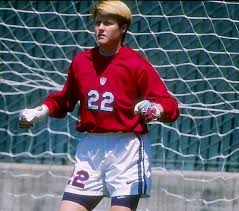
See also my recent post: https://humanrightsdefenders.blog/2018/12/12/mary-harvey-her-goal-is-now-human-rights/

https://www.sporthumanrights.org

https://www.fifa.com/governance/news/y=2018/m=12/news=fifa-participates-at-the-sporting-chance-forum-in-paris.html


Protection International: A collective approach to the right to defend human rights

December 13, 2018

On 13 December 2018 Protection International launched its latest publication and flagship item of its global campaign #CommunitiesareHRDs.

With the recent 20th anniversary of the UN declaration on Human Rights Defenders, this publication brings to attention the indispensable work carried out by communities of human rights defenders across the globe. Human rights defenders do not usually work alone, but in groups, in association with others, in social movements, building collective networks and supporting each other. Nevertheless, the tendency of protection mechanisms is to choose an individual HRD, a practice which can limit the impact of measures to a very narrow number of defenders and also undermine the collective dimension of human rights defence work.

The publication identifies a number of problems which stem from the individualisation of HRDs, highlighting that most protection programmes, both at international and national level, are based on sets of measures intended to provide security to a given individual, but fail to provide structural policy changes that are indispensable for the effective protection of all those defending rights.

The publication also provides ideas of key measures and actions that should be taken into account when developing collective protection strategies with communities or groups of HRDs. For protection to be effective, sustainable and reach a greater number of human rights defenders, we shift towards a more collective mindset.

https://indd.adobe.com/view/13d2cdbb-fb92-4648-ac56-2f73e7df19ac

First time major companies say that human rights defenders are essential for profitable business

December 13, 2018

Ana Zbona, Project Manager of Civic Freedoms and Human Rights Defenders at the Business & Human Rights Resource Centre writes about a primeur in her area: for the first time major companies have said that that human rights defenders and civic freedoms essential for profitable business,

Image: Companies supporting the statement

The statement is the first of its kind, with supporters including Unilever, Adidas, Primark, ABN AMRO, Anglo American, Leber Jeweler, Domini and the Investors Alliance on Human Rights. It stresses that when human rights defenders are under attack, so is sustainable and profitable business….Human rights defenders, civil society organizations, international organizations and progressive governments have been insisting for years that if civic freedoms which allow citizens to propose solutions to social problems, and to push governments to respect and protect human rights, are eroded, so are any prospects for sustainable development and just and inclusive economic growth. Now, these voices have been joined by a group of well-known brands and investors who are vocal about how they, too, depend on the rule of law, accountable governance, stable investment environments and respect for human rights. Read the statement here.

However, see also: https://humanrightsdefenders.blog/2018/11/13/new-human-rights-ranking-for-businesses-shows-dismal-progress-for-most-firms/

https://www.business-humanrights.org/en/human-rights-defenders-and-civic-freedoms-essential-for-profitable-business-say-major-companies

Mary Harvey: her goal is now human rights

December 12, 2018