Posts Tagged ‘Human Rights Defenders’

Human rights work seen as a market

February 27, 2022

For a rather unusual look at human rights as a “market”see the following:

On 25 February 2022 the annual “Human Rights Organizations Global Market Report 2022 report has been added to ResearchAndMarkets.com’s offering.

The global human rights organizations market is expected to grow from $16.60 billion in 2021 to $17.47 billion in 2022 at a compound annual growth rate (CAGR) of 5.3%. The growth is mainly due to the companies rearranging their operations and recovering from the COVID-19 impact, which had earlier led to restrictive containment measures involving social distancing, remote working, and the closure of commercial activities that resulted in operational challenges.

The market is expected to reach $20.53 billion in 2026 at a CAGR of 4.1%.

The human rights organizations market consists of revenue generated through human rights services by entities that are engaged in promoting causes associated with human rights either for a broad or a specific constituency.

Establishments in this industry address issues such as protecting and promoting broad constitutional rights and civil liberties of individuals and those suffering from neglect, abuse, or exploitation, promoting the interests of specific groups such as children, women, senior citizens, or persons with disabilities, improving relations between racial, ethnic, and cultural groups, and promoting voter education and registration.

The main types of human rights organizations are nongovernmental organizations, intergovernmental organizations, governmental organizations and international organizations. Governmental human rights organizations are run by government bodies and are involved in the protection of human rights and the reduction of human rights violations.

The different modes of donation include online, offline. The organization locations can be domestic, international and have various applications in areas such as all humans, children, women, disabled, LGBTQ, others.

Asia Pacific was the largest region in the human rights organizations market in 2021. North America was the second largest region in the human rights organizations market. The regions covered in this report are Asia-Pacific, Western Europe, Eastern Europe, North America, South America, Middle East and Africa.

The rise in hate crimes is expected to drive the human rights organizations market. Hate crime is a form of criminal violence upon a person or property, caused in whole or in part by an offender’s bias against a race, religion, disability, sexual orientation, ethnicity, gender, or gender identity.

As per the annual report of FBI published in 2019, physical attacks against individuals have risen, accounting for 61% of the 7,120 cases reported by law enforcement authorities nationally as hate crimes in the USA. Government and non-governmental organizations aim to curb the abuses that challenge people’s human rights, which further aids in the growth of the human rights organizations market. Increasing attacks against human rights defenders are anticipated to hinder the human rights organization market. Attacks against human rights organizations that strive to safeguard human rights are rising at an alarming rate.

For instance, in 2019, the Business and Human Rights Resource Center has tracked around 572 attack cases that were related to business-related activities. These attacks cause a sense of fear and timidness among individuals who work for human rights protection and challenges human rights protection activities, which thereby impedes the growth of the market. See alsO: https://humanrightsdefenders.blog/2022/02/18/business-network-on-civic-freedoms-and-human-rights-defenders-launches-new-website/

Organizations and human rights defenders are working towards protecting the digital human rights of individuals.

“Companies” mentioned in the report inlcude:

  • Amnesty International
  • Human Rights Watch
  • Civil Rights Defenders
  • Human Rights Without Frontiers International
  • Physicians for Human Rights
  • Anti-Slavery International
  • Global Rights
  • UN Watch
  • European Centre for Minority Issues
  • International Federation for Human Rights

For more information about this report visit https://www.researchandmarkets.com/r/a3tco8

Anti-war Human Rights Defenders in Russia

February 27, 2022
People attend an anti-war protest, in Saint Petersburg, Russia.
People attend an anti-war protest, in Saint Petersburg, Russia, February 24, 2022, after Russian President Vladimir Putin authorized a military operation in Ukraine. © 2022 REUTERS/Anton Vaganov

It is of course the worst for the direct victims of Russia’s aggression in Ukraine, but the very courageous people who stand up against the autocratic government and nationalistic media in Russia deserve all our attention. On 26 February 2022, Human Rights Watch wrote “Russia: Arbitrary Detentions of Anti-War Protesters“:

Police arbitrarily detained hundreds of peaceful protesters across Russia on February 24, 2022, at rallies in solidarity with Ukraine and against the war, Human Rights Watch said. The authorities also arrested at least two human rights defenders who spoke up against Russia’s full-scale invasion in Ukraine, threatened to block mass media outlets in case their reporting on the war differed from the official narrative, and demanded that foreign social media platforms stop restricting reports from Russian state media.   

“For years, Russian authorities have been suppressing free speech and peaceful protests to stifle critical voices,” said Hugh Williamson, Europe and Central Asia director at Human Rights Watch. “Now the government is silencing all those who speak out against the war with Ukraine.”  

According to OVD-Info, an independent human rights project working to protect freedom of assembly in Russia, by the evening of February 25, police had detained at least 1,858 people for participation in anti-war protests in 57 cities, including Moscow, Saint Petersburg, Krasnodar, Ekaterinburg, Saratov, Nizhny Novgorod, and Voronezh. Some of detained protesters stood in single pickets and held posters saying “no to war, do not be silent,” “stop the war,” and other similar slogans.

At around 3 p.m. on February 24, the police detained Marina Litvinovich, a human rights activist, in Moscow after she had made a call over social media to “come out and say we are against war.” She was released several hours later, pending a court hearing and the next day was fined for violating the rules on public gatherings.   https://www.rferl.org/a/russia-litvinovich-fined-ukraine-invasion-protest/31723131.html

In response to calls for peaceful protests, Russia’s Investigative Committee published a news release with a warning that organizing unsanctioned gatherings is a prosecutable offense and threatening “harsh punishment” for organization of “mass riots.”

In the evening of February 24, protesters gathered in different cities across Russia to demonstrate against war. According to OVD-Info, more than 1,000 protesters were arbitrarily detained in Moscow and around 400 in Saint Petersburg where the biggest protests took place.

Human Rights Watch analyzed and verified 27 videos recorded north of the Gostinny Dvor metro station in Saint Petersburg and close to Pushkinskaya Square in Moscow that were published on social media on February 24. The vast majority document brutal arrests of peaceful activists by police officers. In at least four cases, videos show police officers beating protestors, pushing them to the ground, dragging them, grabbing them by the head, and choking them.

Mass media and OVD-Info also reported other cases of excessive use of force by the police, refusal of medical assistance, and denial of access to lawyers. At night, at least six police stations in Moscow, and some stations in Saint Petersburg, Saratov, Voronezh and Ekaterinburg refused access to outside visitors after initiating the “Fortress” protocol, authorized for  a situation of potential attack, which meant lawyers were denied access to their clients for hours. On February 25, OVD-info reported they could not get in touch with three of the detainees on their list.

Russian public figures, journalists, scientists, activists, and average social media users have been publicly expressing their shock and indignation at the full scale Russian military operations in Ukraine and calling for the hostilities to end. Thousands used the hashtag #нетвойне (#notowar).

Lev Ponomarev, a prominent human rights defender and the founder of the Movement for Human Rights, initiated a petition “against war,” calling on the Russian military to withdraw from Ukraine and inviting people to join the peaceful anti-war movement. The police detained Ponomarev on February 24 and charged him with organizing unsanctioned protests in connection with the petition, which had gathered over 550,000 signatures by the evening of February 25.

On February 24, the internet regulator Roskomnadzor published a warning to mass media disseminating “unverified” and “false” information, claiming that only information from official sources can be used when reporting on the “special operation” in Ukraine. The authorities also said that all “false” information would be instantly blocked and warned about fines for disseminating “fake” news.

Roskomnadzor also sent official letters to Facebook (Meta) demanding that it should lift restrictions imposed by the social media platform on official pages of state and government mass media. The authorities said that Facebook had marked them as “untrustworthy” and hid their publications from the platform’s search. Roskomnadzor also called on Russian users to switch to national internet resources and social networks due to “unfounded blockings by foreign platforms.”

On February 25, the Office of the Prosecutor General, in coordination with the Ministry of Foreign Affairs, accused Facebook of being “involved in violation of fundamental human rights and freedoms” and imposed restrictions on access to the platform in Russia.

The authorities’ actions to prevent people from participating in peaceful public protests and freely expressing their opinions violate fundamental rights, including those to freedom of expression and assembly and the prohibition on arbitrary detention, guaranteed by the European Convention on Human Rights (ECHR), the International Covenant on Civil and Political Rights (ICCPR), and Russia’s own Constitution.

“The ability to express disagreement in a peaceful way is crucially important in any society that respects human rights and rule of law,” Williamson said. “This abusive crackdown on a peaceful anti-war movement is yet further proof, if more was needed, of the government’s intolerance of independent voices.”

On the other hand, in a post of 25 February 2022, Brian Dooley of Human Rights First relates what human rights defenders in Ukraine are telling about the immediate impact on them of the Russian invasion.

https://www.hrw.org/news/2022/02/26/russia-arbitrary-detentions-anti-war-protesters

https://www.humanrightsfirst.org/blog/human-rights-activists-ukraine-call-swift-response

China now badgers Ireland about its human rights stand

February 24, 2022
Dolkun Isa, President of the World Uyghur Congress, was labelled a "terrorist" by the Chinese Embassy in Ireland on Monday. Photo: REUTERS/Denis Balibouse.

Dolkun Isa, President of the World Uyghur Congress, was labelled a “terrorist” by the Chinese Embassy in Ireland on Monday. Photo: REUTERS/Denis Balibouse.

Eoghan Moloney in the Irish Independent of 22 February 2022 describes another case of undue pressure by the Chinese authorities on a nation that differs from their view on human rights. For other such behaviour, see my earlier post;

  • Ireland has been urged to “respect China’s sovereignty” and to “stop interfering in China’s internal affairs” after an Uyghur leader attended a meeting in the Department of Foreign Affairs on Monday.

Dolkun Isa, President of the World Uyghur Congress (WUC), urged Ireland to “take action on Uyghur genocide” when he met with UN Special Rapporteur on Human Rights Defenders Mary Lawlor and with officials from the Department of Foreign Affairs.

In response, the Chinese Embassy in Dublin said they “strongly condemn the anti-China separatist activities of the so-called ‘World Uyghur Congress’ in Ireland, and firmly oppose Irish government officials’ meeting with Dolkun Isa”.

The Embassy also accused “a few” Irish politicians of spreading “lies on Xinjiang and support for terrorist and separatist activities” and jumping “on the bandwagon of dirty political farce against China”.

The Chinese Embassy labelled the WUC as an “extremist organisation” and said its leader Dolkun Isa is a “terrorist” who is suspected of “organising and committing a series of violent terrorist activities and serious crimes in China”.

“The issues concerning Xinjiang are not about human rights, nationality or religion, but about fighting terrorism, separatism and religious extremism. The so-called “genocide”, “cultural extermination” or “forced labour” in Xinjiang, which are based on flat lies and disinformation, are political manipulations with hidden motives,” a statement from the Chinese Embassy said.

“We urge the Irish side to respect China’s sovereignty and territorial integrity, and stop interfering in China’s internal affairs under the guise of “human rights”. For those Irish politicians who have jumped on the bandwagon of dirty political farce against China, we urge them to stop parroting disinformation,” the statement continued.

https://www.independent.ie/world-news/asia-pacific/china-warns-ireland-to-stop-interfering-as-leader-of-persecuted-uyghurs-attends-meeting-with-irish-officials-in-dublin-41370665.html

New report Freedom House on Human Rights Defenders in Latin America

February 24, 2022

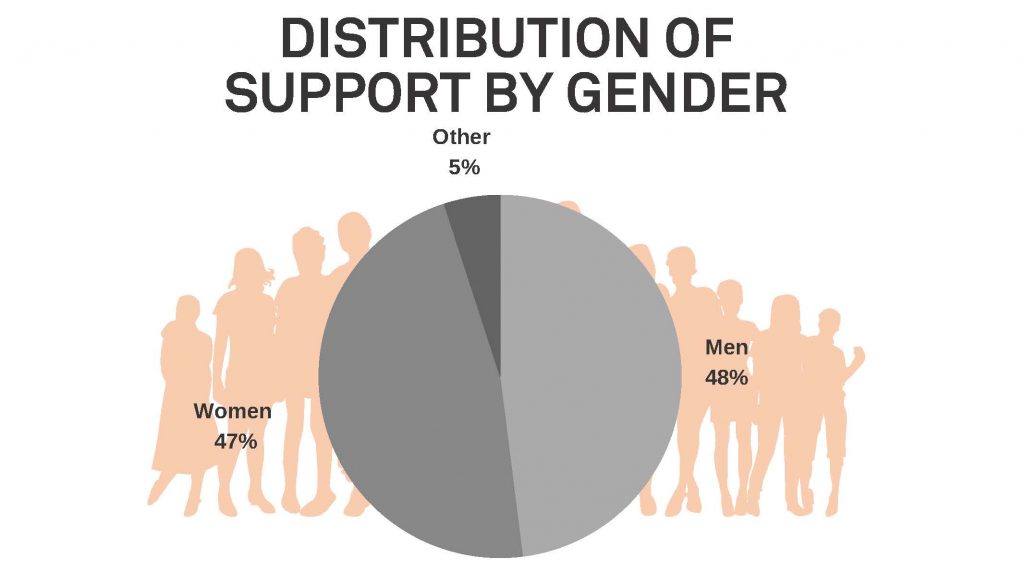
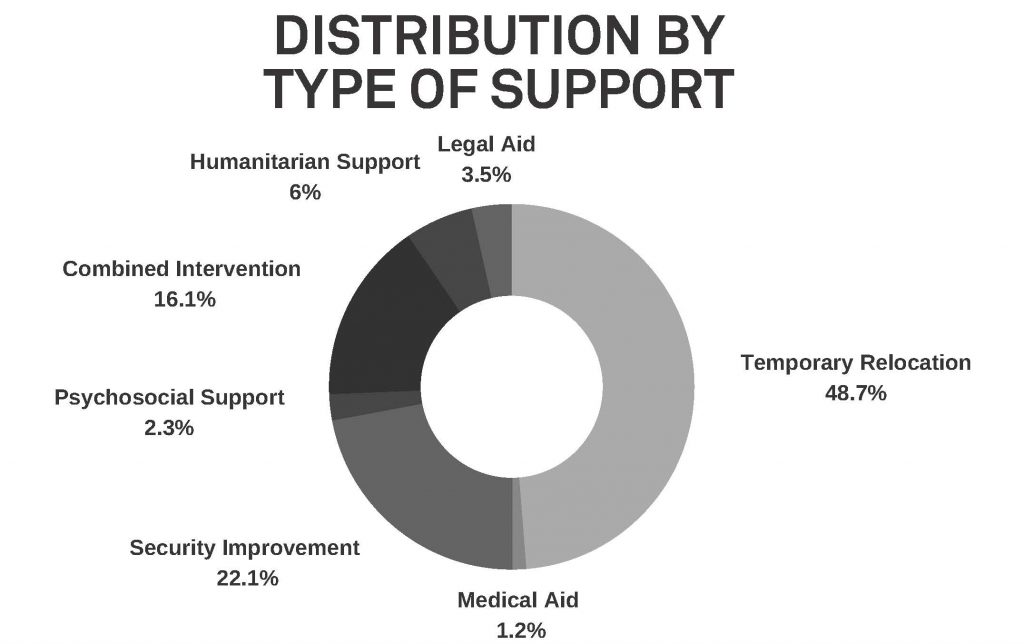
It finds that Latin American human rights defenders and their organizations face intimidation, harassment, physical attacks, and legislation that criminalizes their work, among other threats.

Latin America was the most dangerous region in the world for human rights defenders during 2020, and according to Defending Latin American Human Rights and Democracy Activists, a new report released today by Freedom House, the ongoing COVID-19 pandemic has only made things worse. Under the guise of enforcing public health measures, governments have deployed authoritarian restrictions to inhibit movement, curtail freedoms of expression and assembly, and implement militarized security policies.

“This is a seminal study that lays the foundation for further areas of inquiry and analysis,” said Gerardo Berthin, vice president of international programs at Freedom House. “The report identifies the main needs of vulnerable activists and human rights defenders in Latin America and highlights major issues that merit regional and national attention.”

The report found that worsening human rights conditions have also spurred unprecedented levels of migration and displacement—including of human rights defenders—across the region. Growing migrant and refugee populations in Latin America have been especially vulnerable in the context of COVID-19, as border closures and lockdowns made living conditions even more precarious and curtailed mobility and access to information and services. See also: https://humanrightsdefenders.blog/2020/07/29/global-witness-2019-worst-year-ever-for-land-rights-and-environmental-defenders/

The democratic landscape in Latin America is discouraging. According to Freedom House’s Freedom in the World 2021 report, fewer than 40 percent of the countries in the region are classified as Free. Against this backdrop, the new study provides a baseline review of regional efforts to protect human rights defenders and prodemocracy civil society organizations in Latin America, including through shelter and relocation programs.

Key findings:

  • Human rights defenders are increasingly being forced into exile in neighbouring countries, and many are unable to continue their work.
  • The pressure experienced by human rights defenders can push them beyond the limits of physical and psychosocial safety. This can result in some level of trauma, as well as severe psychological symptoms including anxiety, depression, feelings of isolation, and suicidal inclinations. The symptoms have also taken the form of physiological conditions such as high blood pressure and diabetes.
  • Human rights defenders, especially women and Indigenous people, have sought to rethink “security,” moving away from a military and policing approach toward a more comprehensive and gender-balanced understanding. For example, women human rights defenders are incorporating the body, self-care, and self-awareness when defining security, and examining how these elements can affect other types of security, including the security of the family. For them, security is not just about reacting to a threat; it is also about maintaining economic security, food security, mental or psychological security, and physical health security. Indigenous human rights defenders are proposing to include their perspective in the design of protections for activists, dissidents, journalists, and others. This has begun to shift the focus of some protection mechanisms from the individual toward a more community-based model that accounts for the collective nature of human rights defense.
  • State-run protection mechanisms are often prescriptive, offering a predetermined menu of services that do not necessarily address the specific needs or risks faced by human rights defenders.
  • International protection organizations have implemented good practices pertaining to protection and security in general, aided by the expansion of internet access. This has enabled enhanced connection and communication with civil society organizations on the ground, including continuous and more systematic meetings and planning for effective protection.
  • The report contains two case studies of Venezuelan and Nicaraguan human rights defenders who have been forced into exile in Colombia and Costa Rica, respectively. The cases highlight key forms of individual, collective, and contextual support that would strengthen protection and allow human rights defenders to expand their work while in exile.
  • Few approaches to protect human rights defenders in Latin America have been evaluated systematically. The need for systematic evaluation is a key recommendation of the report, as such analysis could be used to develop future programs and strategic plans, and would help to identify the potential security risks that human rights defenders may face at home or in exile.
  • There are still gaps in knowledge about how to best support human rights defenders. However, human rights defenders themselves are driving efforts to share information about effective protection approaches. Thanks to their active involvement in protection strategies, temporary relocation providers, national protection organizations, and human rights defenders are more frequently raising the notion of holistic protection or integral security, which goes beyond physical or traditional security to include services such as medical, psychosocial, and psycho-emotional support.

Access the full report here.

https://freedomhouse.org/article/new-freedom-house-report-reveals-dire-conditions-human-rights-defenders-and-democracy

Guide to 49th session of Human Rights Council – with human rights defenders focus

February 21, 2022

The 49th session of the UN Human Rights Council, from 28 February – 1 April 2022, will consider issues including the protection of human rights defenders, freedom of religion or belief, protection and promotion of human rights while countering terrorism, the right to food and adequate housing, among others. It will also present an opportunity to address grave human rights situations in States including Nicaragua, Venezuela, China, Syria, South Sudan, Sri Lanka, Iran, the Democratic People’s Republic of Korea, Myanmar, Eritrea, among many others. Here’s an overview of some of the key issues on the agenda. The ISHR has issued again its excellent Guide to the upcoming session and I have extracted from it the issues most directly related to human rights defenders:

Protection of human rights defenders

On 11 March 2022, the UN Special Rapporteur will present her report on the work of human rights defenders to address corruption. At the 49th session of the HRC, Norway will present a thematic resolution on human rights defenders in conflict and post-conflict situations. A group of NGOs have produced a list of 25 recommendations related to key concerns that should be addressed in the resolution. These include recommendations related to the removal of legislation that impinges upon the ability of defenders to do their work, including counter-terrorism legislation; the development of protection measures that take into account the specific needs of particular groups of defenders and the precarious nature of their situation in conflict and post-conflict contexts, and specific measures to support human rights defenders in such contexts, including in regard to the provision of cloud-based solutions for storage of documentation, flexible and reliable funding and swift responses in the case of the need for relocation of human rights defenders and their families. ISHR joins these calls and to impress upon the Council the need for a strong commitment to acknowledging and taking action to protect human rights defenders working in such contexts.  In addition, we call on all UN members to monitor and report on their implementation of the resolution in a comprehensive way, sharing updates on challenges faced and progress made during relevant UN dialogues and debates.   

Reprisals

Reports of cases of intimidation and reprisal against those cooperating or seeking to cooperate with the UN not only continue, but grow. Intimidation and reprisals violate the rights of the individuals concerned, they constitute violations of international human rights law and undermine the UN human rights system.

The UN has taken some action towards addressing this critical issue including:

  • an annual report by the Secretary General;
  • a dedicated dialogue under item 5 to take place every September;
  • The appointment of the UN Assistant Secretary General on Human Rights as the Senior Official on addressing reprisals.

Despite this, ISHR remains deeply concerned about reprisals against civil society actors who try to engage with UN mechanisms, and consistent in its calls for all States and the Council to do more to address the situation. See also: https://humanrightsdefenders.blog/tag/reprisals/

During the 48th session, the Council adopted a resolution on reprisals. The text was adopted by consensus for the first time since 2009 and invites the UN Secretary General to submit his annual report on reprisals and intimidation to the UN General Assembly. Once again the resolution listed key trends including that acts of intimidation and reprisals can signal patterns, increasing self-censorship, and the use of national security arguments and counter-terrorism strategies by States as justification for blocking access to the UN. The resolution also acknowledged the specific risks to individuals in vulnerable situations or belonging to marginalised groups, and called on the UN to implement gender-responsive policies to end reprisals. The Council called on States to combat impunity by conducting prompt, impartial and independent investigations and ensuring accountability for all acts of intimidation or reprisal, both online and offline, by condemning all such acts publicly, providing access to effective remedies for victims, and preventing any recurrence.

Item 5 of the Human Rights Council’s agenda provides a key opportunity for States to raise concerns about specific cases of reprisals, and for governments involved in existing cases to provide an update to the Council on any investigation or action taken toward accountability to be carried out. The President should also update the Council on actions taken by the President and Bureau to follow up on cases and promote accountability under this item.

Other thematic debates

At this 49th session, the Council will discuss a range of topics in depth through dedicated debates with mandate holders. The debates with mandate holders include: 

  • The Special Rapporteur in the field of cultural rights 
  • The Special Rapporteur on freedom of religion or belief
  • The Special Rapporteur on torture
  • The Special Rapporteur on the right to privacy

In addition, the Council will hold dedicated debates on the rights of specific groups including the Special Rapporteur on minority issues

In addition, the Council will hold dedicated debates on interrelation of human rights and human rights thematic issues including:

  • The Special Rapporteur on the promotion and protection of human rights while countering terrorism
  • The Special Rapporteur on human rights and the environment

Country-specific developments

China: High Commissioner Bachelet has still not released her Office’s report on grave human rights violations in the Uyghur region, six months after announcing its upcoming publication, and three months since her spokesperson indicated it would only be a matter of ‘weeks’. Further delays risk entrenching the Chinese government’s sense of impunity, and will harm the credibility of, and confidence in her Office’s capacity to address grave violations, some of which could amount to atrocity crimes. States should urge the High Commissioner to promptly publish her report, and present it to the Human Rights Council as a matter of utmost priority.  This includes ensuring sustained pressure around China’s abuse of national security in discourse and law, and on the widespread and systematic use of enforced disappearance under ‘Residential Surveillance at a Designated Location’ (RSDL). See also: https://humanrightsdefenders.blog/2022/02/05/chinas-residential-surveillance-at-a-designated-location-needs-to-disappear/

Burundi: The Commission of Inquiry on Burundi (CoI) concluded its work at the 48th HRC session in October 2021 while a new resolution establishing a mandate of UN Special Rapporteur on Burundi was adopted, resolution 48/16. The resolution tasks the mandate with monitoring the human rights situation in the country, making recommendations for its imp­ro­ve­ment, and re­por­ting to the Human Rights Council. While the Spe­cial Rapporteur will be unable to continue the entirety of the investigative work carried out by the CoI, they will “collect, examine and assess” information on human rights deve­lop­ments. Ahead of HRC48 more than 40 organisations, including ISHR, urged the Council to continue its scrutiny and further work towards justice and accountability in Burundi. See also: https://humanrightsdefenders.blog/2021/07/03/germain-rukuki-burundi-human-rights-defender-out-of-jail/

The UN Human Rights Office (OHCHR) will ensure that evidence col­lec­ted by the CoI is “consolidated, preserved, accessible and usable in support of ongoing and future accountability efforts” including efforts to hold Bu­rundian officials responsible for atrocities in front of the International Criminal Court (ICC). The Burundian government should resume its engagement with the Council and grant the Special Rap­porteur, who will be appointed in March 2022, access to the country for an official visit.

France: Following an urgent call by ISHR and the Comité Adama, UN experts sent two communications to the French government on 15 and 26 November 2021 asking for measures to ensure that human rights defenders, including people of African descent, enjoy a safe environment in which to carry out their legitimate work for human rights and justice. The lack of investigation in the case of Adama Traoré’s death and the judicial harassment against his sister Assa Traoré for her activism is a sign of broader systemic racism against Black people in policing and criminal justice in France. 

ISHR urges the HRC to continue its scrutiny and calls on France to ensure a prompt, transparent, and impartial investigation into the case of Adama Traoré; end the judicial harassment of Assa Traoré for her activism; accept the requests of the UN Special Rapporteur on Racism and the Working Group on People of African Descent to visit the country; end impunity for police violence; and ensure truly free and impartial investigations into the death or injury of anyone at the hands of the police, especially people of African descent.

Egypt: The joint statement delivered by States in March 2021 at the 46th session of the HRC played a critical role in securing the conditional release of several human rights defenders and journalists arbitrarily detained throughout 2021 and 2022. Regrettably, these releases do not reflect any significant change in Egypt’s systematic attacks on civic space and human rights defenders, including arbitrary detention, torture, ill-treatment, enforced disappearances and criminalisation of the exercise of the rights to freedom of expression, association, assembly or public participation. On 3 February 2022, 175 parliamentarians from across Europe urged the HRC to establish a “long overdue monitoring and reporting mechanism on Egypt”. ISHR joined more than 100 NGOs from around the world in urging the HRC to create a monitoring and reporting mechanism on the ever-deteriorating human rights situation in Egypt. Continued, sustained and coordinated action on Egypt at the HRC is more necessary than ever. The HRC should follow up on the 2021 State joint statement and heed the calls of civil society and parliamentarians. See also: https://humanrightsdefenders.blog/2022/01/11/the-arabic-network-for-human-rights-information-has-shut-down/

Nicaragua: A year after Council resolution 46/2, civil society reporting indicates no meaningful action has been taken by Nicaragua to implement any of the Council’s recommendations to the government. Instead, it has deepened its crackdown on human rights defenders and any form of dissent, and further closed civil society space ahead of the November 2021 electoral process. The government’s absolute disregard for cooperation with international and regional mechanisms, including the treaty bodies, is an additional sign that the government does not intend to revert course on the country’s human rights crisis. ISHR, jointly with the Colectivo 18/2, urges the Human Rights Council to establish an independent mechanism to investigate grave human rights violations since April 2018 in Nicaragua, as well as their root causes. The mechanism should verify alleged grave violations, identify perpetrators, and preserve evidence, with a view to long-term accountability processes. See also my post of today: https://humanrightsdefenders.blog/2022/02/21/nicaragua-death-in-detention-and-sham-trial/

Saudi Arabia: According to ALQST’s 2021 annual report, for a short time in early 2021, intense global pressure on Saudi Arabia’s leaders to improve their dismal human rights record resulted in some minor reforms and concessions, yet, when the pressure eased, the Saudi authorities resumed their habitual pattern of abuses with renewed intensity. A number of high-profile women human rights defenders and prisoners of conscience were conditionally released, but they remain under severe restrictions which means that while they are released, they are not yet free. Saudi authorities continue to crackdown on freedom of expression and hand down lengthy prison sentences to human rights defenders. Saudi Arabia is sensitive regarding its reputation and susceptible to international pressure.

Sudan: On 5 November 2021, the Human Rights Council held a special session to address the ongoing situation in the Republic of Sudan and mandated an Expert on human rights in Sudan to monitor and report on the situation until the restoration of its civilian-led Government. The HRC must extend the reporting mandate of the Expert as the human rights situation is deteriorating. The military is closing the civic space for women’s rights groups and women human rights defenders, including by stigmatising women’s rights groups as terrorists or drug abusers. The recent arrests of women human rights defenders are part of a systemic attack against WHRDs in Sudan. The military and security forces are using social media and traditional media to defame women protesters. Women’s rights groups and WHRDs are facing a new wave of attacks that include framing charges to prolong the detention of WHRDs and defame the women’s rights movement. The military reinstated the authorities of the former regime’s security forces in December 2021 in the emergency order number 3. The new emergency order gave Sudanese security complete impunity and protection from accountability for any form of violations on duty.  Sudanese security forces have a well-documented history of sexual abuse and torture of women detainees. WHRDs in detention are at risk of maltreatment, torture, and sexual violence. 

Venezuela is back under the microscope with updates from the Office of the High Commissioner and from the Council’s fact-finding mission on the country both scheduled for 17th March. Attention on the human rights situation in the country follows hot on the heels of the Universal Periodic Review of Venezuela that took place at the end of January.  The Council session is taking place at a time that Venezuelan civil society continues facing restrictions and attacks on their work. The head of human rights organisation, Fundaredes, has now been arbitrarily detained for 224 days. The Council session is an opportunity for States to express concern about the restrictions on civil society, and to enquire about the implementation of prior recommendations made to Venezuela by both OHCHR and the Mission. Despite being a Council member, Venezuela has yet to allow the Council’s own fact-finding mission access to the country, something the Council as a whole should denounce. 

The High Commissioner will provide an oral update to the Council on 7 March. The Council will consider updates, reports on and is expected to consider resolutions addressing a range of country situations, in some instances involving the renewal of the relevant expert mandates. These include:

  • Oral update and interactive dialogue with the Special Rapporteur on Eritrea
  • Oral update and interactive dialogue with the High Commissioner on the Tigray region of Ethiopia 
  • Interactive Dialogue on the High Commissioner’s written update on Sri Lanka
  • Interactive dialogue on the High Commissioner’s report on  Nicaragua
  • Interactive dialogue on the High Commissioner’s report on Afghanistan
  • Interactive Dialogue on the High Commissioner’s report on ensuring accountability and justice in the Occupied Palestinian Territory, including East Jerusalem
  • Oral updates and interactive dialogues with the High Commissioner and fact-finding mission on Venezuela 
  • Oral update bv the High Commissioner and interactive Dialogue with the Special Rapporteur on the Democratic People’s Republic of Korea
  • Enhanced Interactive Dialogue on the OHCHR’s report on Belarus
  • Interactive Dialogue on the High Commissioner’s report, enhanced interactive dialogue on the Secretary-General’s report, and interactive dialogue on the Special Rapporteur’s report on Myanmar
  • Interactive Dialogue on the Special Rapporteur’s report on Iran
  • Interactive Dialogue on the Commission of Inquiry’s report on Syria 
  • Interactive Dialogue on the Special Rapporteur’s report on the Palestinian territories occupied since 1967
  • Interactive Dialogues on the High Commissioner’s report and Commission on Human Rights’ report on South Sudan
  • Interactive Dialogue with the High Commissioner on Ukraine
  • High-level Interactive Dialogue with the Independent Expert on Central African Republic
  • Oral updates and enhanced interactive dialogue with the High Commissioner and the team of international experts on the Democratic Republic of the Congo
  • Oral update by the Special Rapporteur on Cambodia 
  • Interactive Dialogue on the Independent Expert’s report on Mali 
  • Interactive Dialogue on the fact-finding mission’s report on Libya

Appointment of mandate holders

The President of the Human Rights Council will propose candidates for the following mandates: 

  1. Three members of the Expert Mechanism on the Rights of Indigenous Peoples (one from the Pacific, one from Central and South America and the Caribbean, and one from Central and Eastern Europe, the Russian Federation, Central Asia and Transcaucasia); 
  2. The Special Rapporteur on the promotion and protection of human rights in the context of climate change; 
  3. The Special Rapporteur on the situation of human rights in Afghanistan; 
  4. The Special Rapporteur on the situation of human rights in Burundi; 
  5. The Special Rapporteur on the situation of human rights in the Palestinian territories occupied since 1967; 
  6. A member of the Working Group on Arbitrary Detention, from Western European and other States; 
  7. A member of the Working Group on Enforced or Involuntary Disappearances, from Asia-Pacific States; 
  8. A member of the Working Group on the issue of human rights and transnational corporations and other business enterprises, from Asia-Pacific States;
  9. A member of the Working Group on the use of mercenaries as a means of violating human rights and impeding the exercise of the right of peoples to self-determination, from Latin American and Caribbean States (an unforeseen vacancy that has arisen due to a resignation).

Resolutions to be presented to the Council’s 49th session

At the organisational meeting on 14 February the following resolutions were announced (States leading the resolution in brackets):

  1. Human rights of persons belonging to minorities (Austria, Mexico, Slovenia)
  2. Combating intolerance, negative stereotyping and stigmatization of, and discrimination, incitement to violence and violence against, persons based on religion or belief (Pakistan on behalf of the OIC) 
  3. Human rights situation in the Occupied Palestinian Territory, including East Jerusalem, and the obligation to ensure accountability and justice (Pakistan on behalf of the OIC) 
  4. Cultural rights (Cuba)
  5. The negative impact of unilateral coercive measures on the enjoyment of human rights (Azerbaijan on behalf of NAM)
  6. Right to work (Egypt, Greece, Indonesia, Mexico, Romania)
  7.  Situation of human rights in the Islamic Republic of Iran – mandate renewal (Iceland, Moldova, North Macedonia, UK) 
  8. Rights of the child (GRULAC and EU)
  9. Human rights defenders (Norway)
  10. Adequate housing as a component of the right to an adequate standard of living, and the right to non-discrimination in this context (Germany, Brazil, Finland, Namibia)
  11. Situation of human rights in the Syrian Arab Republic – mandate renewal (France, Germany, Italy, Jordan, Kuwait, Netherlands, Qatar, Turkey, UK, USA)
  12. Situation of human rights in South Sudan – mandate renewal (Albania, Norway, USA, UK)
  13. Mandate of the Special Rapporteur on the promotion and protection of human rights and fundamental freedoms while countering terrorism – mandate renewal (Mexico)
  14. Prevention of genocide (Armenia)
  15. Situation of human rights in Belarus – mandate renewal (EU)
  16. Situation of human rights in the Democratic People’s Republic of Korea (DPRK)- mandate renewal (EU) 
  17. Situation of human rights in Myanmar – mandate renewal (EU)
  18. Freedom of religion or belief (EU)
  19. Technical assistance and capacity-building for Mali in the field of human rights (Africa Group)
  20. Technical assistance and capacity-building for South Sudan (Africa Group) 
  21. Role of states in countering the negative impact of disinformation on human rights (Ukraine)

During this session, the Council will adopt the UPR working group reports on Myanmar, Greece, Suriname, Samoa, Hungary, Saint Vincent and the Grenadines, Papua New Guinea, Tajikistan, United Republic of Tanzania, Eswatini, Antigua and Barbuda, Trinidad and Tobago, Thailand and Ireland.

During each Council session, panel discussions are held to provide member States and NGOs with opportunities to hear from subject-matter experts and raise questions. 7 panel discussions and 1 thematic meeting are scheduled for this upcoming session:

To stay up-to-date: Follow @ISHRglobal and #HRC49 on Twitter, and look out for our Human Rights Council Monitor.

See also: https://humanrightsdefenders.blog/2021/10/19/48th-session-of-the-human-rights-council-outcomes/

https://ishr.ch/latest-updates/hrc49-key-issues-on-agenda-of-march-2022-session/

Nicaragua: death in detention and sham trial

February 21, 2022

The United Nations Human Rights Council’s 49th session, which begins on February 28 in Geneva, presents an opportunity to send a powerful message to the Ortega-Murillo government that these human rights violations will not be tolerated. Governments should support a strong resolution on Nicaragua, demanding the release of all detainees subjected to arbitrary detention and prosecutions and establishing an independent mechanism to investigate rights violations.

Tamara Taraciuk Broner, Acting Director, Americas Division of HRW, describes the latest in the Nicaraguan Government’s Attempts to Tighten its Authoritarian Grip:

Nicaragua’s courts are scheduled to hold a sham trial of seven government critics and opposition leaders, all arbitrarily imprisoned since June 2021. It’s the latest in a slew of trials of people detained on absurd charges months on end.

This week’s trial epitomizes Nicaragua’s mockery of justice: A joint trial, with no due process, on charges of “conspiracy to undermine national integrity,” in most cases based solely on the defendants’ exercise of their right to free expression, that will most likely result in swift convictions for all.

Since February 1, at least 14 detainees have been found guilty of “undermining national integrity” during closed-door trials at “El Chipote” prison, rather than at public courthouses, as Nicaraguan law requires. Each trial has lasted just a few hours and has resulted in swift convictions and sentences of several years in prison.

Announcing the trials on January 31, the Attorney General’s Office called the detainees “criminals and thieves.” Authorities had suspended the trials in October 2021 without offering a clear reason.

Between May and November 2021, the government unleashed a wave of arbitrary arrests to pave the way for President Daniel Ortega’s reelection to a fourth consecutive term. Nicaraguan authorities arrested at least 40 critics, including student and business leaders, campesino representatives, defense lawyers, journalists, activists, and seven presidential candidates. More than 130 others were detained earlier and remain in detention.

Criminal proceedings have lacked basic due process. In many cases, detainees were held incommunicado for weeks or months at El Chipote, some in prolonged solitary confinement. When allowed visits, families described abusive conditions, including repeated interrogations and insufficient food.

On February 12, Hugo Torres died in detention. Torres a 73-year-old former companion of Nicaraguan President Daniel Ortega, had been arbitrarily arrested in early June and accused of “treason.”

Prosecutors have based serious accusations solely on claims that the accused had given interviews to media outlets, shared WhatsApp messages, participated in meetings, or signed letters calling for free elections, demanding international condemnation of government abuses, or expressing support for sanctions against Nicaraguan officials.   

These trials contribute to President Ortega’s mounting record of abuse. Given the lack of judicial independence of Nicaraguan courts, this would provide victims the possibility of being heard by an independent body with a chance to holding perpetrators accountable.

Other inmates also are in dire straits, according to family members and rights defenders, who say the prisoners are malnourished, losing weight, teeth and memory, and getting weaker by the day.

“Many are facing a serious risk to health and life,” the former president of the Inter-American Commission on Human Rights (IACHR), Antonia Urrejola, said on Twitter.

Ortega, who secured a fourth consecutive term in November elections, has faced widespread criticism from rights groups, opposition figures and international observers who decried the vote as “a sham”.

On Monday, the European Union’s external affairs spokesman, Peter Stano, sent “deep condolences” to Torres’s family and called for an independent investigation into his death. “We reiterate our call for the immediate and unconditional release of all political prisoners … subjected to inhumane detention conditions” in Nicaragua, Stano tweeted.

See also: https://humanrightsdefenders.blog/2021/12/24/vilma-nunez-human-rights-defender-who-stays-in-nicaragua/

https://www.hrw.org/news/2022/02/14/nicaraguas-ultimate-sham-trial

https://www.aljazeera.com/news/2022/2/14/calls-grow-for-nicaragua-to-release-jailed-opposition-figures

Human Rights Defenders and the EU’s mandatory due diligence initiative

February 21, 2022

Since Mary Lawlor took up her mandate of Special Rapporteur on the situation of Human Rights Defenders, she has been paying close attention to the EU’s legislative initiative on sustainable corporate governance, and in particular to the proposed creation of binding obligations for companies to carry out due diligence to identify and address human rights and environmental risks linked to their activities. See also: https://humanrightsdefenders.blog/2021/09/07/un-experts-urge-eu-to-take-the-lead-on-protecting-human-rights-defenders-in-context-of-business/

The reason is that defenders who draw attention to the human rights and environmental risks associated with business projects, including of EU companies, and who seek accountability where violations and harms actually occur, are often at high risk of retaliation for their actions, in particular where they themselves are from the communities directly affected.

With this in mind, in September 2021, she issued the public statement referred to above calling on the EU Commission to seize the moment and craft a powerful, progressive proposal which would include safeguards for Human Rights Defenders highlighting corporate harms. She followed this up in November with a series of meetings with key EU Commissioners and their teams in Brussels, during which she outlined what she believes to be the key provisions to include in their proposal on due diligence for it to empower human rights defenders. This position has now become public through the paper below:

FIFDH dedicates its 20th edition to Pham Doan Trang and Ida Leblanc

February 15, 2022

The Geneva Human Rights Film Festival of 2020 (FIFDH – The Festival) dedicates its 20th edition to human rights defenders Pham Doan Trang and Ida Leblanc

Journalist and blogger Pham Doan Trang has been in detention since October 2020 and was recently sentenced to 9 years in prison for “propaganda against the state”. The 43-year-old was accused by the Hanoi regime of “defaming the Vietnamese government and inventing fake news“. In one of the world’s most repressive countries towards civil society, where freedom of the press is non-existent, Pham Doan Trang – RSF 2019 Prize – has founded numerous independent media and publishing houses – including Nha Xuat Ban Tu Do or Law Magazine – and the NGO Green Trees, making her the target of a government that does not tolerate dissent. Despite intimidation, torture and repeated arrests, Pham Doan Trang is fighting to end systematic abuse of both human rights and freedom of the press in Vietnam. She won several awards including recently the Martin Ennals Award 2022. See: https://www.trueheroesfilms.org/thedigest/laureates/fe8bf320-1d78-11e8-aacf-35c4dd34b7ba

Trinidad and Tobago is home to more than 10,000 domestic workers, most of them without any social protection. Ida Leblanc fights daily for them to obtain rights similar to those of all workers, notably as General Secretary of the National Union of Domestic Employees (NUDE), which she founded. In 2011, the International Labour Organisation adopted the Convention on Domestic Workers thanks to Ida Leblanc’s active campaigning. Though the government of Trinidad and Tobago has never implemented the Convention, tireless Ida Leblanc remains undeterred.

She successfully campaigned for the decriminalisation of the Minimum Wage Act, giving unions the right to hear cases of non-compliance with the Act in the Labour Court. She has spearheaded many victories on behalf of low-income workers in cases of unfair dismissal, lay-offs and breaches of the Maternity Protection and Minimum Wage Acts.

She is the winner of this year’s Martine Anstett 2022 Prize, [see https://www.trueheroesfilms.org/thedigest/laureates/696be661-30ac-4c6a-84d1-989aab323b65]

https://fifdh.org/en/the-festival/news/article/the-fifdh-dedicates-its-20th-edition-to-pham-doan-trang-and-ida-leblanc

For this year’s programme see: https://genevasolutions.news/peace-humanitarian/geneva-s-human-rights-film-festival-poised-for-emotional-return-to-the-big-screen
 

China’s “Residential Surveillance at a Designated Location” needs to disappear!

February 5, 2022

In China, brave activists are trying to improve the daily life of their fellow citizens and defend their rights to speak freely, to be treated on an equal footing with others, to protest peacefully, or to practice a religion. But the Chinese government fears that their actions will challenge its power and that their criticisms will undermine it. Like the Uyghur and Tibetan peoples, many who stand up for human rights are repressed and silenced, and the authorities have found a very effective way to do that: they disappear them.

On 22 October 2020, exactly a year ago, lawyer Chang Weiping was disappeared under ‘Residential Surveillance at a Designated Location’ (or ‘RSDL’) for ‘inciting subversion of State power.’ Lawyer Chang is a human rights lawyer, who has bravely defended sensitive cases of victims of sexual harassment during China’s ‘Me Too’. He has also worked with victims of discriminatory practices due to their sexual orientation or HIV status, or targeted for speaking freely or practicing their religion. Ten days before his disappearance, he had published a video denouncing torture he had endured when he was first held under RSDL in January 2020, after attending a meeting with other activists a month earlier. UN experts have publicly called for his release. No one knows where he is held. [see also: https://www.trueheroesfilms.org/thedigest/laureates/2e6ec951-79e7-4a36-b077-76bfe05e3817]

Since 2012, China’s rubber-stamp legislative body passed and amended several articles in its Criminal Procedure Law that give police the power to take people into custody without disclosing where they will be held: this is called ‘Residential Surveillance at a Designated Location’. When this happens, people are denied all contact with the outside world, even with their family or a lawyer, for up to six months. No one knows where they are. They are interrogated and often tortured to extract confessions. Meanwhile, despite the barriers and risks they have to overcome, their families persist in seeking knowledge about their loved one’s fate and justice for what they suffered.

United Nations experts are clear: RSDL is a form of enforced disappearance. With estimations of up to 57.000 individuals under RSDL, enforced disappearances are endemic in China. RSDL tears families apart, and is intended to instill fear into China’s human rights movement. See also: https://humanrightsdefenders.blog/2018/01/10/more-on-residential-surveillance-in-a-designated-location-rsdl-in-china/

Many human rights activists have stopped promoting dignity, peace and justice in their communities because they fear to be disappeared by the police. This practice – enforced disappearance – is absolutely wrong and prohibited under international law. Everyone should be able to speak their mind and participate in the life of their communities. 

ISHR, Safeguard Defenders, The Rights Practice and The 29 Principles are mobilising the international community to put pressure on China to #RepealRSDL and end enforced disappearances against human rights defenders.

They want the Chinese government to repeal RSDL (articles 74 to 79 of China’s Criminal Procedure Law), and to bring truth and justice to victims.

RSDL should be high on the agenda of any human rights exchange with the Chinese government. We want governments worldwide to speak out and use all bilateral and multilateral channels to press the Chinese government to #RepealRSDL. We want the UN to amplify its monitoring of RSDL in China, and to sustain its pressure on the authorities to respect international law and to #RepealRSDL.

Feeling supported is vital for disappeared defenders and their relatives. We want the media, human rights groups and activists across the world to pay closer attention to RSDL, to raise awareness around them, and to stand in solidarity with disappeared Chinese human rights defenders and their relatives.

How do we achieve this? 

We are working hard to: 

  • Increase the awareness and legal understanding of government officials and diplomats, UN experts, journalists, and human rights groups, there is a short document that explains clearly what UN experts have said about RSDL, and are spreading the word online and offline.
  • Mobilise diplomatic missions, through meetings and letters, and encourage them to speak out on RSDL at the UN and in other spaces; 
  • Push UN experts to take up individual cases and pay a closer look at the use and impact of RSDL in light of China’s obligations under international human rights law ;
  • Encourage governments, activists, and concerned individuals to stand in solidarity with disappeared human rights defenders and their relatives

What can you do? 

Stand in solidarity! Feeling supported is vital for disappeared defenders and their relatives. Send a solidarity message with Chen Zijuan, lawyer Chang’s wife: write a postcard, and share it with her on your social media by clicking on the image below. Don’t hesitate to personalise it before tweeting. Alternatively you can copy paste this link in your browser: https://ctt.ac/477cf

You can also raise awareness! Check out the informational and communication material in our ‘Campaign Toolbox’, and share it with your country’s ministry of foreign affairs, a journalist you know, your friends or your social media followers – and remember to tag @ISHRglobal, and #StandWithDefenders #RepealRSDL.

https://ishr.ch/action/campaigns/call-on-china-to-free-defenders-and-repealrsdl/

Myanmar: one year after the coup – only getting worse

February 2, 2022
A crowd of protesters wearing face masks, holding up an image of a woman, Aung San Suu Kyi.

On 1 February last year, the military seized power over Myanmar/Burma by overturning the election results and detaining State Counsellor Aung San Suu Kyi. The military is still controlling power by force and uses brutal violence against human rights defenders, civil society groups, and journalists in order to silence all forms of protest and dissent. More than 1,500 people have been killed by the military and over 8,000 people have been arrested.

The coup prompted mass protests and more than 1,500 people have been killed by the military. Over 8,000 people have been arrested in the harsh crackdowns. In a series of charges, Aung San Suu Kyi has been sentenced to several years in prison. Most recently, five new corruption charges against her were announced and in all she faces up to 164 years in jail. See also: https://humanrightsdefenders.blog/2021/09/30/rohingya-human-rights-leader-mohibullah-murdered-in-bangladesh-refugee/

Despite the military’s brutal response, people have come together to fight the dictatorship. Nationwide protests, boycotts, strikes, and coordinated civil disobedience movements have taken place. Journalists across the country have continued their work despite severe attacks by the military.  

A new report by Athan looks at how the military coup has affected journalists’ work and press freedom in the country. Throughout the country’s history, military coups have led to severe attacks on press freedom and the 2021 coup is no exception.  Since the launch of the coup, 141 journalists have been arrested and 13 have been sentenced to prison. On 10 December, photojournalists Ko Soe Naing and Ko Zaw Tun were arrested while taking photos of a nationwide silent strike. Ko Soe Naing was tortured to death at the interrogation centre four days later. Just a couple of weeks after that, editor of the Federal Journal, A Sai Kay (Aka) Sai Win Aung, was shot dead by the military in Lay Kay Kaw.  See also: https://humanrightsdefenders.blog/2021/05/11/three-democratic-voice-of-burma-journalists-and-two-activists-risk-refoulement-by-thailand/

According to Athan, the attacks on press freedom since the 2021 military coup have been the worst the country has seen.  “Journalists and news media require continuous support to sustain local media and its journalists in order to secure journalists’ careers and their safety, and to enable an environment for journalistic professionals and the industry,” says a representative from Athan about the report. 

On the one-year anniversary of the military coup in Myanmar, the High Representative on behalf of the European Union and the Foreign Ministers of Albania, Australia, Canada, New Zealand, Norway, Republic of Korea, Switzerland, the United Kingdom, and the United States, have made the following declaration:

….The European Union is deeply concerned by the continuing escalation of violence and the evolution towards a protracted conflict with regional implications. Since the military coup, the situation has continuously and gravely deteriorated. A large part of the population is now in a highly precarious situation, experiencing poverty, food shortages, displacement, and violence. ..

The European Union condemns in the strongest terms continuing grave human rights violations including torture, sexual and gender-based violence, the continued persecution of civil society, human rights defenders, and journalists, attacks on the civilian population, including ethnic and religious minorities by the Myanmar armed forces. Therefore, the EU calls for full accountability of the leaders responsible for the coup as well as of the perpetrators of violence and human rights violations. The EU also reiterates its firm demand for the immediate and unconditional release of all prisoners arbitrarily detained in relation to the coup and the return to power of democratically elected leaders.

As a matter of priority, the EU reiterates its calls for an immediate cessation of all hostilities, and an end to the disproportionate use of force and the state of emergency. The military authorities must ensure rapid, safe, and unhindered humanitarian access to all displaced persons and people in need, in all parts of the country. The European Union will continue to provide humanitarian assistance, in accordance with the principles of humanity, neutrality, impartiality, and independence and reiterates its call for the full and immediate respect of international humanitarian law…

In view of the escalating violence in Myanmar, increased international action is required in line with the already existing EU arms embargo on Myanmar. Since the military coup on 1 February 2021, the EU has imposed targeted sanctions on the Myanmar military, its leaders, and entities. In the absence of any swift progress of the situation in Myanmar, the EU stands ready to adopt further restrictive measures against those responsible for undermining democracy and the serious human rights violations in Myanmar.

“It is a failed coup,” said Yanghee Lee, co-founder of the Special Advisory Group on Myanmar and former UN special rapporteur for human rights in the country in a CNN report of 1 February. “The coup has not succeeded in the past year. And that is why they are taking even more drastic measures to finish out the coup.” He reported on problems for human rights defenders already in 2015, see: https://humanrightsdefenders.blog/2015/03/19/myanmar-backsliding-by-prosecuting-human-rights-defenders-instead-of-perpetrators/

https://edition.cnn.com/2022/01/31/asia/myanmar-coup-anniversary-resistance-junta-intl-hnk-dst/index.html