Posts Tagged ‘Human Rights Defenders’

India sinking in civic freedoms survey

March 21, 2022

While the world’s attention is understandably focused on the war in Ukraine, other major countries should not stay outside the limelight, e.g. India (conspicuously absent in the condemnation of the aggression) which continues to flaunt human rights. [See e.g. https://humanrightsdefenders.blog/2022/01/28/anti-terror-laws-in-india-keep-being-used-against-human-rights-defenders/].

On 10 March 2022, The Wire in New Delhi reported that India has been added to CIVICUS’ watchlist of countries that have seen a “rapid decline” in civic freedoms by an independent monitor, highlighting the drastic measures taken by Prime Minister Narendra Modi to silence critics of his Bharatiya Janata Party (BJP).

India and Russia were added to CIVICUS Monitor’s Watchlist. CIVICUS Monitor is an online platform that tracks the latest developments to civic freedoms, including the freedoms of expression, association and peaceful assembly, across 197 countries and territories.

India has remained a “repressed” nation in the ‘People Power Under Attack 2021’ report by the CIVICUS Monitor, along with 48 other countries including Afghanistan, Russia and Hong Kong. Its rating was first downgraded in 2019, “due to a crackdown on human rights activists, attacks on journalists and civil society groups, and the assault on civic freedoms in Indian administered Jammu and Kashmir”.

This rating is typically given to countries where civic space is heavily contested by power holders, who impose a combination of legal and practical constraints on the full enjoyment of fundamental rights.

In its report, CIVICUS highlighted several developments that it saw as cause for concern.

In January, the Central Bureau of Investigation conducted raids on Madurai-based human rights watchdog, People’s Watch. The raid came against the backdrop of 6,000 other civil society organisations, including Oxfam, losing their foreign funding licenses under the controversial Foreign Contribution (Regulation) Act. Greenpeace and Amnesty International are among the civil society groups that have had to close their offices in India.

Meanwhile, scores of human rights defenders and activists remain in detention under the draconian Unlawful Activities (Prevention) Act (UAPA) and other laws. They include the 15 human rights defenders linked to the 2018 Bhima Koregaon incident who have been accused of having links with Maoist organisations, based on evidence believed to be “fabricated”.

Waiting for bail, 84-year-old tribal rights activist Stan Swamy, who remained in custody since October 2020 in the Elgar Parishad case under UAPA, died in July last year. [Update on this case: The death of Jesuit priest and Adivasi rights activist Stan Swamy in judicial custody will “forever remain a stain on the human rights record of India”, says a new brief by the United Nations’ Working Group on Arbitrary Detention. The group had formally adopted its opinion on Swamy’s death during its 92nd session on November 16, last year but made its comments public just this week. The Working Group transmitted to the Indian Government a communication concerning Swamy on May 12 last year, but did not receive any response. India is a party to the International Covenant on Civil and Political Rights [ICCPR]. In its communication, the Working Group urged the Government to prioritize the use of non-custodial measures at all stages of criminal proceedings, including during the pretrial phase, in the current context of a global pandemic. Furthermore, its source submitted that placing Father Swamy in prison increased his risk of contracting COVID-19 and thus put his life at risk. The failure of the Government to heed these prescient warnings led to his avoidable death in custody, the opinion states.] [https://theleaflet.in/un-working-group-asks-india-to-accord-stan-swamys-family-with-compensation-and-reparations-under-international-law/]

Further, at least 13 activists who were arrested under the UAPA for their work against the Citizenship (Amendment) Act (CAA) 2019 remain in detention. The slow investigative processes and extremely stringent bail provisions ensure that those detained under the law are held in pre-trial detention for long periods.

“The office raids and foreign funding bans are part of the government’s strategy to harass and silence their critics,” said Josef Benedict, Civic Space Researcher for the CIVICUS Monitor. “The use of broadly worded anti-terrorism laws against activists, journalists, academics, and students, reflect a multi-year decline in the state of civic and democratic freedoms in the country.”

Journalists have continued to be targeted in India for their work in recent months and there have also been concerns about the widespread surveillance of activists, journalists and others critical of the Modi government following the Pegasus spyware expose.

The government must release all human rights defenders detained and come clean about its surveillance of activists and journalists as well as establish an independent and effective oversight mechanism to monitor all stages of interceptions of communications,” said Henri Tiphagne, national working secretary of HRDA – India.

In a letter addressed to Prime Minister of India Narendra Modi, 21 members of European Parliament stated, “We, the undersigned Members of the European Parliament, are writing to express our concern over the treatment of human rights defenders (HRDs) in India.” “We have followed cases of HRDs being jailed for their peaceful work, targeted under anti-terror laws, labeled as terrorists, and facing increasing restrictions on their ability to safely mobilize and access funds due to restrictive legislation. We are especially concerned about the safety of unjustly jailed defenders with emphasis on 15 HRDs accused in what is known as the Bhima Koregaon case and 13 defenders currently in jail for their campaign against the Citizenship Amendment Act (CAA).”

They expressed worry that the prominent human rights defender Khurram Parvez remained in detention under the UAPA in one of the most overcrowded and unsanitary prisons in the country for his documenting of rights violations in Indian-administered Kashmir.

Echoing calls by UN experts, they viewed their case as emblematic of the way the Indian government “continues to use the UAPA as a means of coercion to restrict human rights defenders’ fundamental freedoms in the country.” [see also: https://humanrightsdefenders.blog/2021/11/23/india-arrests-khurram-parvez-again/]

See also 31 March: https://www.hrw.org/news/2022/03/31/human-rights-watch-submission-universal-periodic-review-india
https://thewire.in/rights/for-rapid-decline-in-civic-freedoms-india-added-to-civicus-monitors-watchlist

2022 Women of Courage awards announced by USA State Department

March 18, 2022

On Monday, 14 March, 2022 Secretary of State, Antony J. Blinken, hosted the annual International Women of Courage (IWOC) Awards in a virtual ceremony at the U.S. Department of State. The 2022 IWOC Award ceremony honours a group of twelve extraordinary women from around the world.  The First Lady of the United States, Dr. Jill Biden, delivered remarks in recognition of the courageous accomplishments of this year’s IWOC awardees. For more on this award and its laureates, see: https://www.trueheroesfilms.org/thedigest/awards/A386E593-5BB7-12E8-0528-AAF11BE46695

Out of an abundance of caution due to the COVID-19 pandemic, and in order to practice safe social distancing, the ceremony was live streamed on www.state.gov.

Now in its 16th year, the Secretary of State’s IWOC Award recognizes women from around the globe who have demonstrated exceptional courage, strength, and leadership in advocating for peace, justice, human rights, gender equity and equality, and the empowerment of women and girls, in all their diversity – often at great personal risk and sacrifice.  U.S. diplomatic missions overseas nominate one woman of courage from their respective host countries and finalists are selected and approved by senior Department officials.  Following the virtual IWOC ceremony, the awardees will participate in an International Visitor Leadership Program (IVLP) Virtual exchange to connect with their American counterparts and strengthen the global network of women leaders.  The 2022 awardees are:

Rizwana Hasan – Bangladesh [see: https://www.trueheroesfilms.org/thedigest/laureates/48B5C07A-458C-4771-97F9-FAD0CA89F478]

Simone Sibilio do Nascimento – Brazil

Ei Thinzar Maung – Burma

Josefina Klinger Zúñiga – Colombia

Taif Sami Mohammed – Iraq

Facia Boyenoh Harris – Liberia

Najla Mangoush – Libya

Doina Gherman – Moldova

Bhumika Shrestha – Nepal

Carmen Gheorghe – Romania

Roegchanda Pascoe – South Africa

Phạm Đoan Trang – Vietnam Vietnam’s official reaction: https://www.reuters.com/world/asia-pacific/vietnam-irked-by-unsuitable-us-prize-jailed-dissident-2022-03-17/

See also: https://humanrightsdefenders.blog/2021/03/09/state-department-hands-out-21-international-women-of-courage-awards-2021/

https://www.state.gov/2022-international-women-of-courage-award-recipients-announced/

Civil Rights Defenders’ Emergency Fund gives insight over 2021

March 18, 2022

Zinaida Muradova, Head of Rapid Response at Civil Rights Defenders

Defending human rights has become increasingly dangerous in many parts of the world. Many of those who do, face numerous risks and threats on a daily basis. When a threat towards a human rights defender escalates, Civil Rights Defenders’ Emergency Fund provides rapid assistance to strengthen the defender’s security as quickly as possible. 

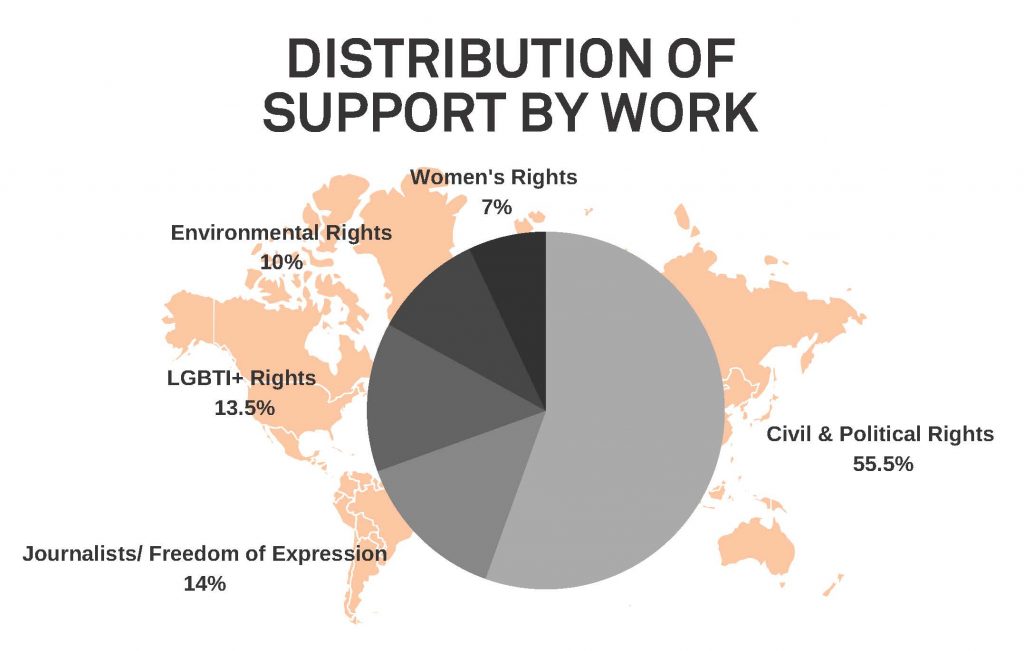
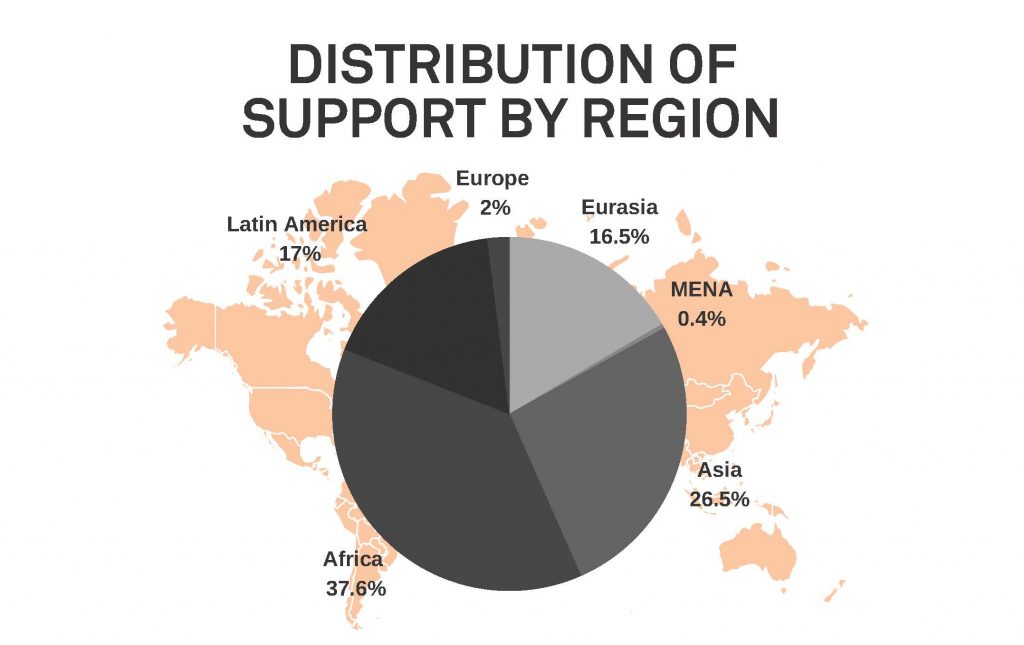
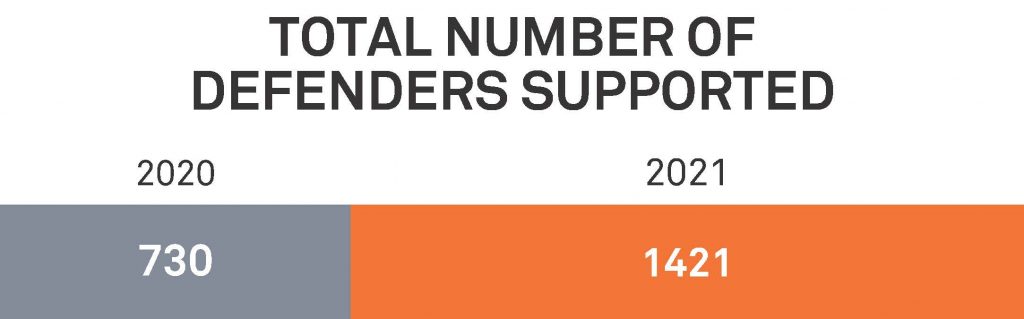
On 7 March 2022 it provided a breakdown of its use. The fund can, for example, provide legal aid or temporarily relocate people who suffer persecution, as well as provide preemptive efforts such as security trainings and digital security solutions. In 2021, the fund supported a total of 1421 human rights defenders in 30 countries. 

Emergency support doubled in 2021

In 2021, Civil Rights Defender’ Emergency Fund has received and processed the largest number of applications since the inception of the fund in 2012. We have supported a total of 1.421 Human Rights Defenders (HRD:s) and/or members of their families at risk through a total of 171 grants in 30 countries. The number of applications and granted support have thus both doubled compared to 2020.  

The world is becoming an increasingly dangerous place for human rights defenders, which is a significant explaining factor behind this increase. The CRD Emergency Fund has seen and reacted to the global backsliding of democracy and a number of emerging conflicts in 2021. The aftermath of the war between Armenia and Azerbaijan, the military coup in Burma, the spring protests in Colombia, the witch-hunt on civil society in Belarus, the civil war in Ethiopia and the Taliban’s takeover in Afghanistan are only a few of the conflicts that have deteriorated the security situation for human rights defenders in 2021. Many human rights defenders cannot continue their work for human rights and democracy without the support of the outside world.

Although the number of applications has doubled, so has the number of Emergency Fund applications granted. This increase is much thanks to the additional resources that Civil Rights Defenders has been able to put into processing fund applications. 

We are humbled to have been able to support so many human rights defenders in 2021. The need for emergency support is greater than ever, with the war in Ukraine the number of applicants is likely to keep increasing in the immediate future”, says Zinaida Muradova.

Emergency support to Burma and Asia has significantly increased in 2021, although the majority of human rights defenders who received emergency support continued to be from Africa. Additionally, the Emergency Fund continued to expand its global reach in five more regions – Eurasia, Europe, Africa, Latin America and MENA. In total, support was provided to human rights defenders in 30 countries during the course of 2021. 

Further advancing gender sensitivity 

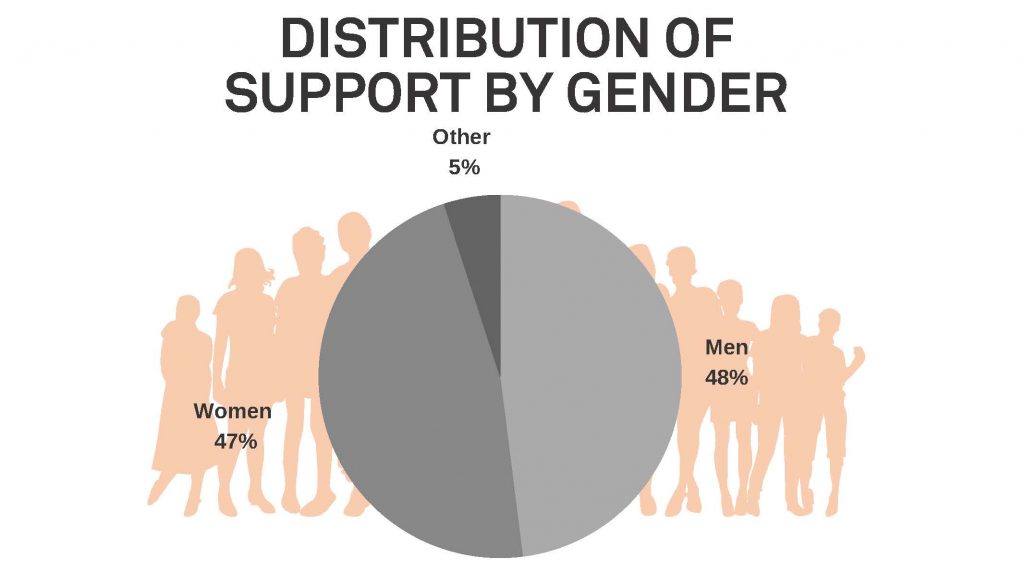
The Emergency Fund continued to build on gender work started in 2019 to ensure a good gender balance and representation amongst the beneficiaries of support. We have been working to increase the accessibility of the mechanism for the most vulnerable groups. We see an improvement in gender balance, for example the percentage of non-conforming people supported doubled compared to 2020.

An increasing demand for legal aid and psychological support  

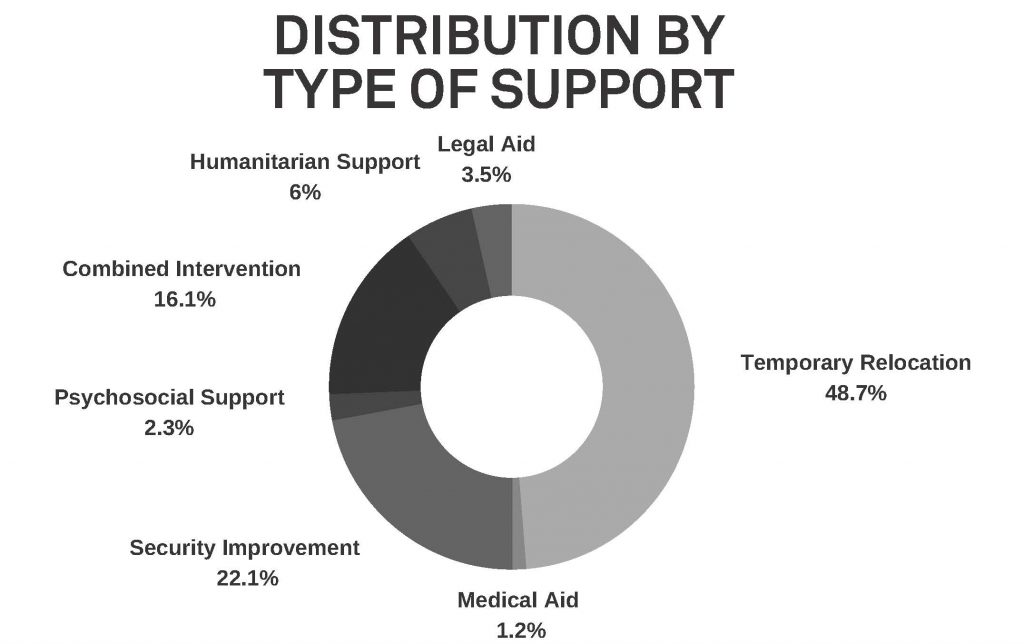
Despite the Covid 19 pandemic and continued strict restrictions on travel around the world, temporary relocations, where human rights defenders can reside safely for a short period, remained by far the most requested type of support in 2021. The majority of relocations were related to the major crises in countries mentioned above. Requests for preventive security measures to improve home, office or digital security, such as installing security cameras or digital security software, remained to be in high demand as well. Many HRD:s needed so called combined interventions, meaning a combination of several of the above mentioned support types. 

In 2021 The Emergency Fund has seen a noteworthy increase in requests for humanitarian and psychological support. Many HRDs also request legal aid due to an increasing trend of arbitrary arrests and charges.

Democracy and human rights cannot be achieved without human rights defenders. Through the Emergency Fund we ensure that they feel safe enough to continue their work which ultimately helps ensure that the fight for democracy can continue worldwide”, says Zinaida Muradova. 

See also: https://humanrightsdefenders.blog/2020/12/11/civil-rights-defender-of-the-year-award-2020-goes-to-naw-ohn-hla/

Exiled Nicaraguan Human Rights Defenders in Costa Rica

March 15, 2022

A recent case study by Freedom House focuses on programming that offers holistic protection, support, and services, tailored to the needs of human rights defenders in their host country. This case study focused on the most current wave of migration of HRDs and CSOs who were forced to flee after anti-government protests in April 2018.

The Nicaraguan government continues to violate freedoms of expression, assembly and information and thwart the work of HRDs, including journalists and CSOs. Ortega-Murillo’s recent actions against potential presidential candidates and opposition figures demonstrate that the country will continue to see an outpouring of critics, activists, and HRDs to Costa Rica, among other countries. Nicaraguans continue to flee based on the attacks and harassment they face as HRDs and members of CSOs that champion democracy and human rights. See also: https://humanrightsdefenders.blog/2022/02/21/nicaragua-death-in-detention-and-sham-trial/

Of those 20 Nicaraguan HRDs who were surveyed, almost 90% stated that harassment and surveillance was a primary reason for leaving Nicaragua, followed by violence (65%) and threats (50%).
Costa Rica provides comparatively ample protection for migrants, and recently launched a new asylum category for those fleeing from authoritarian regimes in Venezuela, Cuba, and Nicaragua. The flow of migration since 2018 has persisted until March 2020 when the border shut due to the COVID-19 pandemic. Yet, migrant flows have begun to increase in recent months. However, Costa Rica is struggling to recover economically from the pandemic, particularly within the tourist, service, and commercial industries where most migrants and refugees find work. Most Nicaraguan refugees find themselves in a precarious economic situation, unable to find steady work, forcing many to resort to informal work with low salaries. HRDs are often not recognized as having different needs or characteristics from the larger refugee population, either by organizations or the Costa Rican population in general. Even for those who continue to work in human rights describe their ability to
continue work is difficult, and many express experiencing severe trauma as an exile, with remorse for not being able to stay and remain fighting for human rights at home. [see also: https://humanrightsdefenders.blog/2021/12/24/vilma-nunez-human-rights-defender-who-stays-in-nicaragua/]
However, many Nicaraguan HRDs try to carry out their work by investigating the laws and procedures in Costa Rica, accompanying their compatriots in their efforts, sharing knowledge, and giving advice. There are support and protection options for HRDs and CSOs in exile in Costa Rica, including a network of organizations and institutions facilitated by the United Nations High Commissioner for Refugees (UNHCR) that provide access to vital services.

All available support and protection options for Nicaraguan HRDs are operating at full capacity and cannot keep pace with the growing demand. We believe that it is necessary to seek support and accompaniment mechanisms for HRDs that facilitate their subsistence and enhance the
implementation of their work to defend the human rights of exiles and other Nicaraguan migrants who lack mechanisms for complaint and demand for their rights in Costa Rica.

https://freedomhouse.org/article/fighting-democracy-exile-my-story-nicaraguan-activist

later: https://thegaltimes.com/daniel-ortegas-regime-outlawed-another-25-ngos-in-nicaragua/87071/

Interactive Dialogue with Special Rapporteur on human rights defenders

March 12, 2022

The Human Rights Council on 11 March held an interactive dialogue with the Special Rapporteur on the situation of human rights defenders. With thanks to Reliefweb, here an extract:

Mary Lawlor, Special Rapporteur on the situation of human rights defenders, said last year she had presented a report detailing the shocking scale of killings of human rights defenders across the world – in almost a third of the Member States of the United Nations. Words of support had been heard from States at her presentation, saying they would work with her to stop this scourge – to date, she had received no invitations from any States as to ways to discuss how to stop these killings, and she had received more communications on killings. Human rights defenders who worked against corruption were often attacked for exposing or researching abuse of power, graft, bribery, fraud and other related malpractices, and these attacks took many forms. Governments and business targeted anti-corruption fighters as they feared exposure. Corruption was deeply rooted in some societies and could not be rooted out overnight, but States needed to publicly recognise the work of human rights defenders, and openly combat attacks against them.

In the ensuing dialogue, speakers said the international community should work to better support human rights defenders and protect them from retaliation. Human rights defenders played a vital role all across the globe. States should end impunity for those seeking to stifle the voices of human rights defenders, and work better to protect them, amplifying their voices in the United Nations system. Human rights defenders protected and fought for the core values of the international community; they should be given an enabling environment. Corruption was, as the Special Rapporteur’s report said, a human rights issue, and national legislators were obliged to defend those investigating it. Work needed to continue to create an environment where human rights defenders and all civil society workers could operate without fear of violence and reprisals, which would further reinforce democratic and legislative institutions.

Speaking in the dialogue with the Special Rapporteur on the situation of human rights defenders were European Union, Lithuania (on behalf of a group of countries), Australia (on behalf of a group of countries), Liechtenstein, Germany, Paraguay, Philippines, Egypt, UN Women, Norway (on behalf of a group of countries), Sierra Leone, Montenegro, Slovenia, Iraq, Cuba, France, Venezuela, Luxembourg, China, Burkina Faso, India, Namibia, Marshall Islands, Lesotho, Armenia, Netherlands, Switzerland, Russian Federation, Cambodia, Indonesia, Peru, Morocco, Algeria, Togo, Ireland, Belarus and Uruguay. Tunisia, United States, Belgium, Afghanistan, Bahrain, Côte d’Ivoire, United Kingdom, Niger, Czech Republic, Albania, Botswana, Malta, Vanuatu, Italy, Georgia, Mauritania, Kazakhstan, Colombia, Republic of Moldova, Saudi Arabia, Viet Nam, Iran and Pakistan.

Also speaking were SUHAKAM, Morocco National Human Rights Institution, Helsinki Foundation for Human Rights, American Association of Jurists, Sociedade Maranhense de Direitos Humanos, International Service for Human Rights, Dominicans for Justice and Peace – Order of Preachers, World Organisation Against Torture, Oidhaco, Bureau International des Droits Humains – Action Colombie, Families of Victims of Involuntary Disappearance (FIND), Peace Brigades International, and Il Cenacolo.

Speaking in right of reply were Armenia, Israel, Lithuania, China, Indonesia, Cambodia, Cuba, Azerbaijan and Bahrain.

https://reliefweb.int/report/world/human-rights-council-holds-interactive-dialogue-special-rapporteur-situation-human

Call for nominations 2022 Roger Baldwin Medal

March 12, 2022

Today, Human Rights First announced a call for nominations for the 2022 Roger N. Baldwin Medal of Liberty Award. Nominations are due by April 10.

For more than thirty years, the Baldwin Medal of Liberty has provided recognition and support for courageous human rights activists around the world,” said Human Rights First President and CEO Mike Breen. “We are proud to issue this prestigious award, and we encourage supporters of human rights to nominate deserving individuals or organizations.”

For more on the Roger N. Baldwin Medal of Liberty Award, see: https://www.trueheroesfilms.org/thedigest/awards/F23B5465-6A15-4463-9A91-14B2977D9FCE

This year’s award will honor an individual or organization outside of the United States that has demonstrated an exceptional commitment to human rights advocacy in areas such as the protection of refugees; human rights accountability; countering extremism, including anti-Semitism and Islamophobia; or technology and human rights, among other topics. See also: https://www.trueheroesfilms.org/thedigest/awards/F23B5465-6A15-4463-9A91-14B2977D9FCE

A distinguished jury will select this year’s winner, who will receive a $30,000 prize and a trip to the United States to engage in advocacy. An individual or an organization can make nominations. Nominees will be judged based on the following criteria:

  • The nominee’s work is unique or particularly distinctive;
  • The nominee’s work has been effective in advancing human rights in a country other than the United States;
  • The nominee faces risk or insecurity as a result of their work; and
  • The nominee would benefit significantly from receiving the Baldwin Award in the form of enhanced protection or any other way.

The nomination form can be found here

For any questions about the award or the nomination process, please contact Human Rights First at BaldwinAward2022@humanrightsfirst.org.

https://www.humanrightsfirst.org/press-release/human-rights-first-calls-nominations-2022-roger-n-baldwin-medal-liberty-award

Impressive list of speakers at Oslo Freedom Forum 23-25 May 2022

March 10, 2022

Every year, human rights defenders bring their stories to the Oslo Freedom Forum stage to shed light on the struggle for freedom around the world.

The 2022 theme, CHAMPION OF CHANGE, captures the idea that celebrates both activists – who are themselves champions – and their causes, to promote positive change.

At the Oslo Konserthus, you’ll listen to talks that will expose you to a breadth of human rights issues, pro-democracy causes, and inspiring stories of nobility and triumph against monumental odds.

OFF 2022 Speakers

Areej al-Sadhan Activist & Sister of Jailed Saudi Dissident and Humanitarian Worker Abdulrahman Al-Sadhan

Bektour Iskender Kyrgyz Journalist & Free Speech Activist

Chemi Lhamo Tibetan Activist & Community Organizer

Roman Dobrokhotov Russian Investigative Journalist

Carine Kanimba Daughter of Imprisoned “Hotel Rwanda” Hero Paul Rusesabagina

Matthew Caruana Galizia Director of the Daphne Caruana Galizia Foundation

see https://www.trueheroesfilms.org/thedigest/laureates/840cf16d-c095-4033-b931-c1533f87e665

Zarifa Ghafari Exiled Afghan Activist & Politician [see: https://www.trueheroesfilms.org/thedigest/laureates/154a0717-54d4-448c-8055-cbb2bb7b7a85]

Omar Alshogre Director of Detainee Affairs at the Syrian Emergency Task Force

Agnès Callamard Secretary General of Amnesty International

see also: https://humanrightsdefenders.blog/2021/03/30/new-sg-for-amnesty-international-agnes-callamard/

Filmon Debru Eritrean Human Trafficking Survivor

Glacier Kwong Hong Kong Political & Digital Rights Activist

More details about the speakers on https://oslofreedomforum.com/oslo-freedom-forum-2022/?mc_cid=a33c5d0c01&mc_eid=f80cec329e#2022speakers

Naty Castro, human rights defender in the Philippines arbitrarily detained

March 10, 2022

On 8 March 2022 the Observatory for the Protection of Human Rights Defenders, a partnership of the World Organisation Against Torture (OMCT) and the International Federation for Human Rights (FIDH), requests an urgent intervention in the Philippines.

The Observatory has been informed by Karapatan Alliance Philippines (Karapatan) about the arbitrary detention and judicial harassment of Dr. Maria Natividad Marian “Naty” Castro, a public health practitioner and human rights defender. Ms. Castro has worked in the poorest and most marginalised areas in the Philippines as a community-based health worker. She has also worked for the defence of community rights of the indigenous Lumad and is a former National Council member of Karapatan.

In February 18, 2022, officials of the Philippine National Police (PNP) and the Philippine Army (PA) arbitrarily arrested Ms. Castro at her residence in San Juan City, Manila. The members of the PNP and PA presented an arrest warrant issued by the Regional Trial Court Branch 7 of Bayugan City, Agusan del Sur, in January 2020, on charges of “kidnapping” and “serious illegal detention” (Criminal Case No. 6527), filed by public prosecutor Genesis Efren in March 2019. Ms. Castro, together with 540 other individuals, is being accused of kidnapping and detaining an unknown individual in Barangay Kolambungan, Sibagat, Agusan del Sur Province, on December 29, 2018.

Following her arrest, Ms. Castro was taken to the San Juan City Police Station and then moved to the Quirino Memorial Medical Center in Quezon City to undergo medical examination. She was subsequently brought to the PNP’s headquarters in Camp Crame. However, neither her family members nor legal counsels were allowed to have contact with her, and their requests to bring her medicine for hypertension and diabetes were dismissed.

On the same day in the afternoon, Ms. Castro was flown to the island of Mindanao without her family or legal representatives being informed. On February 19, 2022, the authorities held Ms. Castro incommunicado. Only after multiple calls from her family and legal representatives, the PNP disclosed that Ms. Castro was being held at the Bayugan City Police Station in Agusan del Sur Province.

On the afternoon of February 20, 2022, Ms. Castro’s family and legal counsel were able to visit her and bring her medicines. On February 22, 2022, the Regional Trial Court Branch 7 of Bayugan City ordered her transfer to the Agusan del Sur Provincial Jail, where she was still being detained pending trial at the time of publication of this Urgent Appeal.

Ms. Castro’s lawyers filed a petition for bail and a motion to dismiss the charges against her. Both requests were pending before the court at the time of publication of this Urgent Appeal.

The Observatory for the Protection of Human Rights Defenders notes that since November of 2020, Ms. Castro has been a victim of red-tagging. Her name and picture have been circulated on social media platforms in Lianga, Surigao del Sur Province, falsely accusing her of being a “communist”, a “terrorist”, and a member of the New People’s Army (NPA).

Human rights defenders in the Philippines have been subjected to trumped-up charges and lengthy pre-trial arbitrary detention. Karapatan members have been subject to frequent harassment, criminalisation, and attacks, including the killing of Ms. Zara Alvarez and the arbitrary detention of Teresita Naul, Alexander Philip Abinguna, Nimfa Lanzas, and Renayn Tejero. Ms. Naul was released on October 28, 2021, after 18 months of arbitrary detention. Mr. Abinguna and Mses. Lanzas and Tejero remain detained. See also: https://humanrightsdefenders.blog/2021/05/27/william-zabel-human-rights-award-2021-to-philippines-ngo-karapatan/

https://www.fidh.org/en/issues/human-rights-defenders/philippines-arbitrary-detention-of-rights-defender-and-health

Animated video clip on work of UN Special rapporteur on Human Rights Defenders

March 8, 2022

On 7 February 2022, the UN Special Rapporteur on Human Rights Defenders released an animated video explaining how to raise concerns about threats to HRDs and human rights abuses by governments and businesses.

Communications are the main tool used to addressed attacks, such as criminalization, smear campaign, threats and killings. Communications will remain confidential for up to 60 days, giving governments and businesses the time to respond to the allegations. The SR also makes two official country visit every year, and writes two thematic reports.

The UN Special Rapporteur has a mission to promote and protect the work of Human Rights Defenders (HRDs). Find out how she does this, and how you can send information about a Human Rights Defender at risk.

See also: https://humanrightsdefenders.blog/2021/05/20/special-rapporteur-mary-lawlor-starts-new-website/

Visit: https://srdefenders.org/

Follow: https://twitter.com/MaryLawlorhrds

NGOs express great worries about human rights situation in Russia at UN Human Rights Council

March 5, 2022

UN Human Rights Council should take urgent action to address the dire human rights situation in Russia say NGOs in a Joint Letter to the United Nations Human Rights Council. See also: https://humanrightsdefenders.blog/2022/02/27/anti-war-human-rights-defenders-in-russia/

To Permanent Representatives of Member and Observer States of the United Nations (UN) Human Rights Council:

Excellency,

As the 49th session of the UN Human Rights Council gets underway, and Russia continues its invasion of Ukraine, we, the undersigned civil society organisations, would like to draw your attention to the dire human rights situation within the Russian Federation, and urge all states to bring this neglected country situation onto the agenda of the Human Rights Council.

A year after last year’s joint statement on the situation in Russia, authorities there have further intensified the already unprecedented crackdown on human rights. A fully-fledged witch hunt against independent groups, human rights defenders, media outlets and journalists, and political opposition, is decimating civil society and forcing many into exile.

The gravity of this human rights crisis has been demonstrated in the last few days by the forcible dispersal of anti-war rallies and pickets across Russia with over 6,800 arrested (as of 2 March  2022), attempts to impose censorship on the reporting of the conflict in Ukraine and to silence those media and individuals who speak out against Russia’s invasion of Ukraine, including through blocking media websites, threats of criminal prosecution under “fake news” and “high treason” charges and other means.

In a shocking development, the authorities moved to shut down “Memorial,” one of the country’s most authoritative human rights organizations. At the end of December, courts ruled to “liquidate” the group’s key legal entities, International Memorial Society and Human Rights Center Memorial, over alleged persistent noncompliance with the repressive legislation on “foreign agents.” On 28 February, the Supreme Court upheld this decision, despite an article 39 ruling from the European Court of Human Rights ordering the Russian authorities to halt liquidation proceedings.

The December rulings came at the end of a particularly terrible year for human rights in the country, during which authorities threw top opposition figure Alexei Navalny in prison, banned three organizations affiliated with him as “extremist,” launched criminal proceedings against several of his close associates, doubled down on Internet censorship, and designated more than 100 journalists and activists as “media-foreign agents”.

Recent months also saw a dramatic escalation of repression in Chechnya, where Russian law and international human rights obligations have been emptied of meaning. With the Kremlin’s tolerance or acquiescence, the local governor, Ramzan Kadyrov has been eviscerating all forms of dissent in Chechnya, often using collective punishment. In December 2021, Kadyrov opened a brutal offensive against his critics in the Chechen diaspora, by having the police arbitrarily detain dozens of their Chechnya-based relatives. It continued in January with the abduction and arbitrary detention on fabricated charges of Zarema Musaeva, mother of human rights lawyer Abubakar Yangulbaev, and death threats issued against the Yangulbaev family and some prominent human rights defenders and journalists. 

This is a country situation urgently requiring the Council’s attention. We urge the Human Rights Council to adopt a resolution expressing serious concern about the human rights violations and abuses occurring in Russia, requesting the High Commissioner to monitor and report on the situation, and appointing a dedicated Special Rapporteur to address the human rights situation in Russia.

Yours sincerely,

Signed:

  1. Human Rights Watch
  2. Amnesty International
  3. Human Rights House Foundation
  4. International Federation for Human Rights
  5. International Service for Human Rights
  6. Human Rights Centre Memorial (Russia)
  7. Civic Assistance Committee (Russia)

There was also a statement was delivered by Yulian Kondur and the International Charitable Organization Roma Women Fund ‘Chiricli’ in the name of Minority Rights Group (MRG) and other organizations at the Human Rights Council’s Urgent Debate, held on Friday 4 March 2022, on the situation of human rights in Ukraine stemming from the Russian Aggression. They called on authorities and aid actors to ensure that Roma, minorities and marginalised peoples are granted equal access to protection and safety when seeking refuge, including those without identity documentation.

https://www.hrw.org/news/2022/03/04/joint-letter-united-nations-human-rights-council-human-rights-situation-russia