Posts Tagged ‘Human Rights Defenders’

Nine Afro-Latina and Afro-Caribbean women human rights defenders

August 8, 2023

On 25 July, 2023 – International Afro-Latina, Afro-Caribbean and Diaspora Women’s Day, – Amnesty International highlighted nine defenders and collectives who have devoted their lives to ending inequality and violence, advocating a dignified life for all people because their work deserves the recognition, visibility, protection and resources necessary for it to continue to spread.

Rede Vozes Negras pelo Clima, Brazil

Rede Vozes Negras pelo Clima is an initiative of 11 Black Brazilian women who are working in their respective territories to protect human rights, confront climate racism and promote anti-racist socio-environmental justice. They belong to traditional, riverine quilombola communities. They are also activists and leaders of communities that live on the margins of large urban centres, communities that are being directly affected by the consequences of the climate crisis and development projects that fail to take into account the rights of local populations.

They are thus fighting for anti-racist adaptation policies and an energy transition that will guarantee the promotion of human rights and nature. Mitigation initiatives need to incorporate the ancestral knowledge and wisdom of traditional peoples and communities and ensure the participation of those people affected by extreme weather events when decisions are being made as to the investments that need to be made to repair losses and damage.

Dayana Blanco Acendra, Colombia
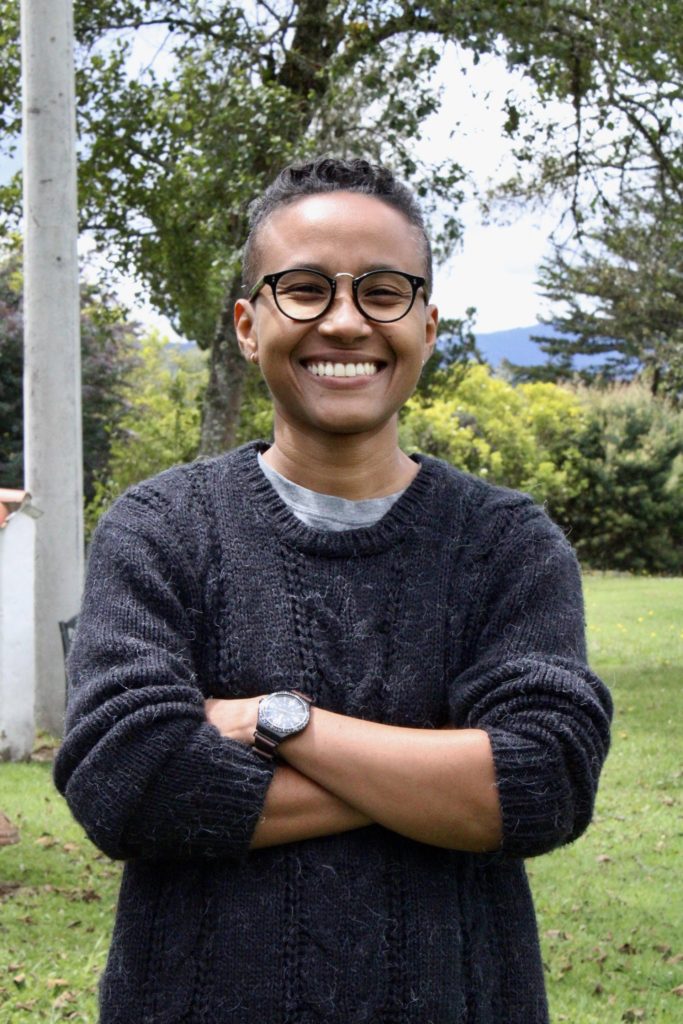
Dayana Blanco is a renowned Colombian lawyer

Dayana Blanco is a renowned Colombian lawyer who heads ILEX Acción Jurídica, an Afro-Colombian and Afro-LGBTQI+ organization committed to racial justice in Colombia, Latin America and the Caribbean. According to Blanco, “Racial justice in Colombia requires all of society to commit to combatting the historical inequality that has affected the Afro-descendant population. This means actions to address social and economic inequality.”

With an outstanding academic background and experience in different sectors, Dayana has promoted innovative research on racist police violence, statistical invisibility in the systematization of violence against Afro-descendant leaders and economic and social rights. In addition, together with her team and in coordination with other civil society organizations, she has obtained notable rulings in defence of Afro-Colombian midwifery, overcoming the statistical invisibility of the Afro-descendant population, among others, and demonstrating her dedication to the struggle for equality and justice.

Under her leadership, ILEX has – through legal mobilization, research and strategic communications – become a reference for promoting the rights of the Afro-descendant population. Dayana and her team highlight the importance of addressing social and economic inequality as a fundamental element of racial justice in Colombia, calling on the whole of society to unite in the struggle and build a more equitable future for all.

Donaida Pérez Paseiro, Cuba
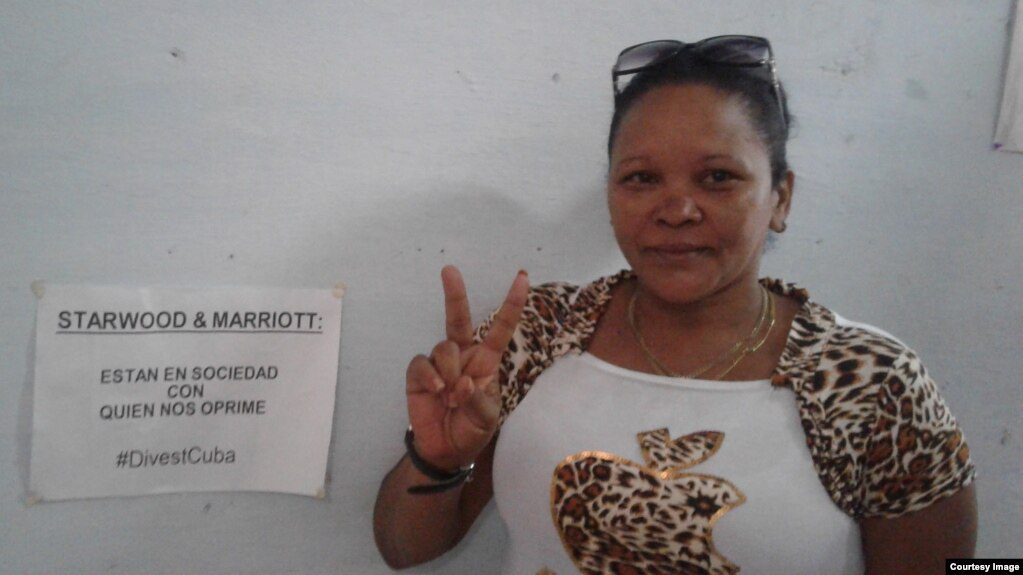
Donaida Pérez Paseiro is a Cuban activist

Donaida Pérez Paseiro is a Black activist, religious leader and president of the Asociación Yorubas Libres de Cuba. Yoruba is a religion of the African diaspora that is practised in many countries, including Cuba. Donaida was arrested on 16 July 2021 and sentenced in February 2022 to eight years’ imprisonment by the Santa Clara Municipal People’s Court for “public disorder”, “contempt” and “attacking” an official. According to the information available to Amnesty International, Donaida should never have been charged with these crimes.

The charges of “contempt” and “public disorder” are frequently used in Cuba to limit the right to freedom of expression and peaceful assembly. Both she and her husband, Loreto Hernández García, were tried along with 14 other protesters in what appears to have been an unfair trial.

Donaida is the wife of Yoruba leader and activist Loreto Hernandez Garcia who was unjustly sentenced to seven years in prison for demanding respect for human rights in Cuba during the 11 July 2021 demonstrations.

Donaida is an example of courage and perseverance in the resistance against repression in Cuba. Her commitment has manifested itself in numerous peaceful marches and protests. According to her family, she was a freelance journalist and founded the Laurel Express press agency, where she gave visibility to the injustices and challenges faced by her community in the city of Placetas. Her activism spans multiple spheres, having been a member of the Orlando Zapata Tamayo resistance front and the central opposition coalition. Donaida’s legacy transcends borders and leaves a profound inspiration for those who seek a Cuba without repression.

Guerline M. Jozef, Haiti
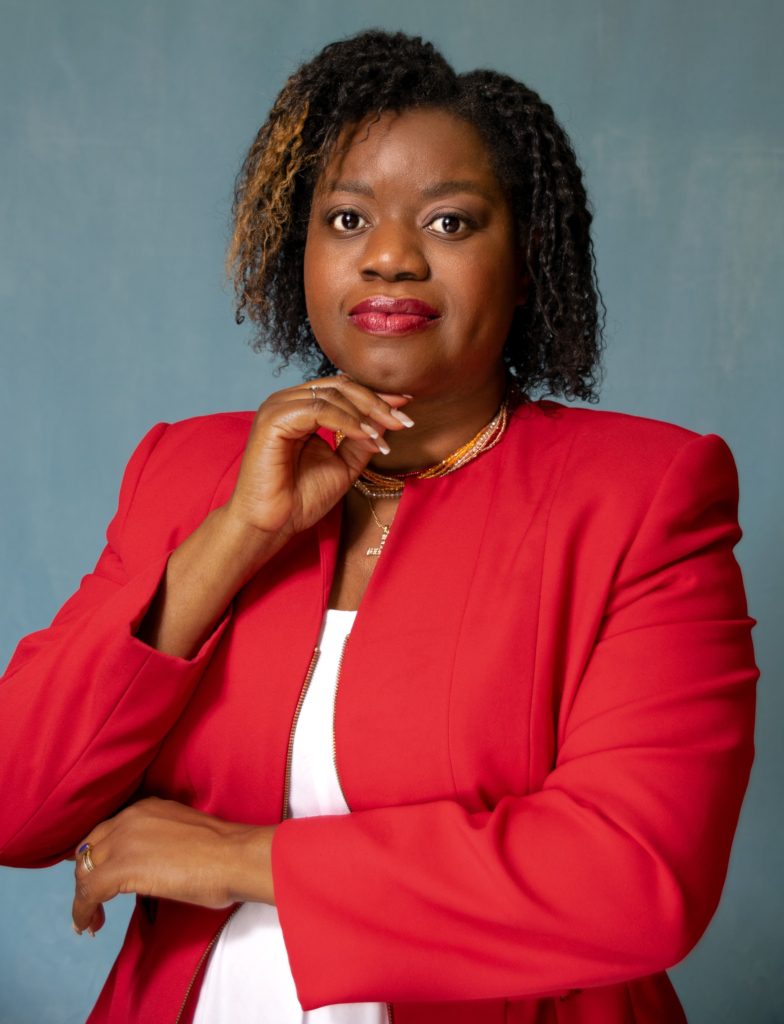
Guerline M. Jozef is the founder and executive director of the Haitian Bride Alliance

Guerline M. Jozef is the founder and executive director of the Haitian Bridge Alliance, the only Black and Haitian women-led organization serving migrants on both sides of the U.S.-Mexico border. Named one of the most influential people in 2021 on racial issues by Politico, she is also co-founder of the Black Immigrants Bail Fund and the Cameroon Advocacy Network.

 The Haitian Bridge Alliance (HBA), also known as “the Bridge,” is a grassroots community-based organization that advocates for just and humane immigration policies and provides migrants and immigrants with humanitarian, legal and social services, with a special focus on Black migrants, the Haitian community, women and girls, LGBTQIA+ people, and survivors of torture and other human rights abuses. HBA also seeks to highlight issues specific to Black migrants and encourages solidarity and collective action to bring about policy changes. Through her work, Guerline reminds us that together, Anpil men, chay pa lou! Many hands lighten the load!

Miriam Miranda, Honduras
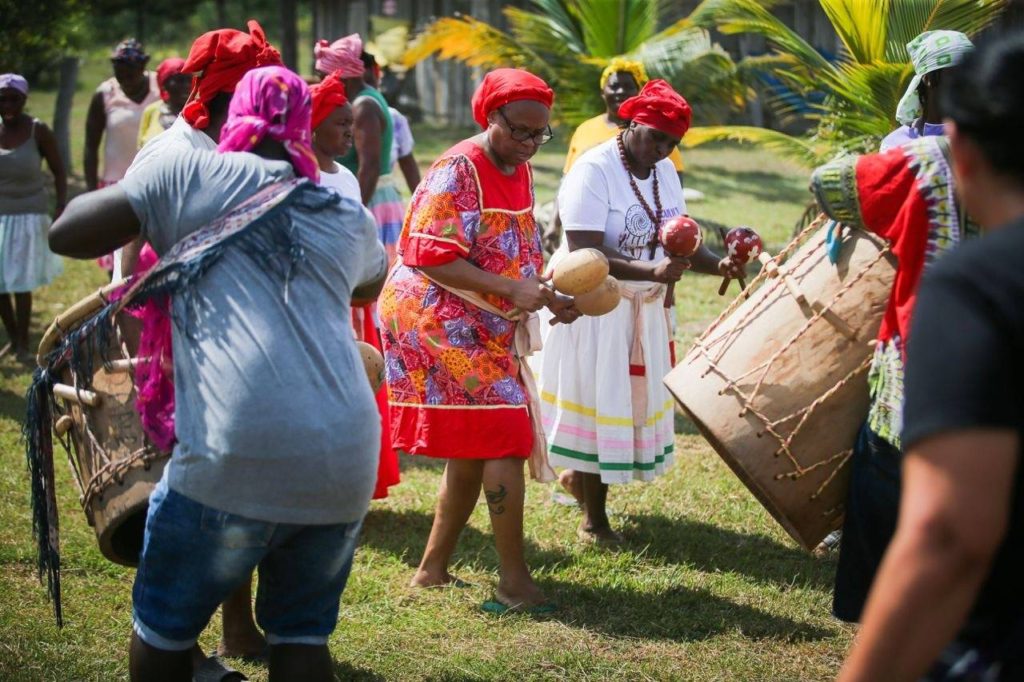
Miriam Miranda is an Afro-indigenous Garífuna leader from Honduras

An Afro-indigenous Garífuna leader from Honduras, Miriam Miranda stands out as a courageous defender of human and environmental rights. As coordinator of the Organización Fraternal Negra Hondureña (OFRANEH), she has carried out invaluable work to protect and defend the rights of the Garífuna people in Honduras. Her tireless work, lucidity and commitment have earned her the recognition of prestigious awards, such as that of the Friedrich Ebert Foundation, as well as the Carlos Escaleras and Oscar Romero awards.

Miriam’s struggle is deeply rooted in the Garífuna territory of Honduras and is manifested through the history of OFRANEH, an organization through which these people are building their dignity and their future. The land and the sea, as an indispensable part of their identity, determine an essential struggle to preserve the natural assets of their territory.

Miriam is a highly respected thinker and leader within the social movement. She has an enormous capacity to devour books and mobilize energies from all sides to defend her people. She is one of those people who make life possible, whose words always point forward and who finds strength in the deep roots of her origin, where her future of freedom was born. As the daughter of Barauda (representing Garífuna female strength, Barauda is an historical character who pushed the Garífuna hero Sathuye to continue the struggle for the liberation of his people), Miriam has turned her critical eye to the source of it all: the predatory civilization of consumerism.

Her tireless work and courage inspire others to keep fighting. Her contribution and leadership have already left an indelible mark on the history of Honduras and global struggles for territory. [see also: https://humanrightsdefenders.blog/tag/miriam-miranda/]

Shackelia Jackson, Jamaica

The Jamaican human rights defender Shackelia Jackson

The extrajudicial killing of her brother, Nakiea Jackson, in 2014 pushed Shackelia Jackson into a life of activism. Since then she has been healing, evolving, learning and gathering the tools with which to reconcile her conflicting realities. A political science scholar and communicator, Shackelia is the mother of an empathetic child, who longs with innocence to experience the world. Despite challenges and setbacks, Shackelia remains dedicated to the wider struggle, supporting causes that prevent the institutionalization and normalization of practices that violate human rights and erode the sanctity of life.

Through her grassroots organizing efforts in Jamaica, she has raised funds to support back-to-school initiatives and education programmes, recognizing the importance of empowering the younger generation. Shackelia’s work has gone far beyond her local community. She has become a global force, lending her voice and expertise to international platforms. As keynote speaker at an Amnesty International event in London, she captivated the audience with her powerful words, urging them to stand up and take action. In 2017, Shackelia also participated in roundtable discussions at Amnesty International events in Brazil and the United States, amplifying the voices of the oppressed and demanding accountability.

It was on this journey that Shackelia realized that change starts with each individual. She has encouraged others to join her in writing for rights, and to use their words as weapons against injustice. “Let us write until we are heard, let us write until justice is done,” she said.

Ivana C. Fred Millán, Puerto Rico

Ivana Fred attends the "Mala Mala" Premiere during the 2014 Tribeca Film Festival at Chelsea Bow Tie Cinemas on April 19, 2014 in New York City.

Ivana Fred is a prominent Black and transgender activist, writer and leader from Puerto Rico. She has dedicated her life to fighting for human rights and equality for transgender people in her country. Her passion for justice has made her an influential figure and a powerful voice in Puerto Rican society.

Since her first steps into activism in 1999, Ivana has formed part of pioneering projects aimed at trans people and has used her voice and pen to amplify the stories and needs of trans people.

As she says: “Life put me in a place where I could develop as a leader, the ‘Ponte el Sombrero’ project gave me the tools to empower and educate socially disadvantaged and discriminated populations. That was how I came to understand that to exist is to resist”.

Ivana has also made her mark in the media, writing for the Metro newspaper and participating in acclaimed documentaries and films such as “Mala Mala” and “Las Muchachas”. Her presence and perspective have helped generate greater visibility and understanding of transgender experiences in Puerto Rico.

Ivana Fred is currently one of the directors of the organization Trans Goofy Games, where she continues to lead and support initiatives that promote transgender inclusion and empowerment. With unwavering commitment, Ivana has remained a visible leader and loyal activist. From her early days of activism to the present day, her voice has been resolute in seeking dignity and respect for all transgender people.

With her courage and determination, Ivana has shown that to exist is to resist and has paved the way for a more inclusive and respectful future in Puerto Rico and beyond. Her legacy as a visible leader and her tireless activism inspire us all to continue fighting for a world where everyone can live with equality and dignity.

Elena Lorac, Dominican Republic
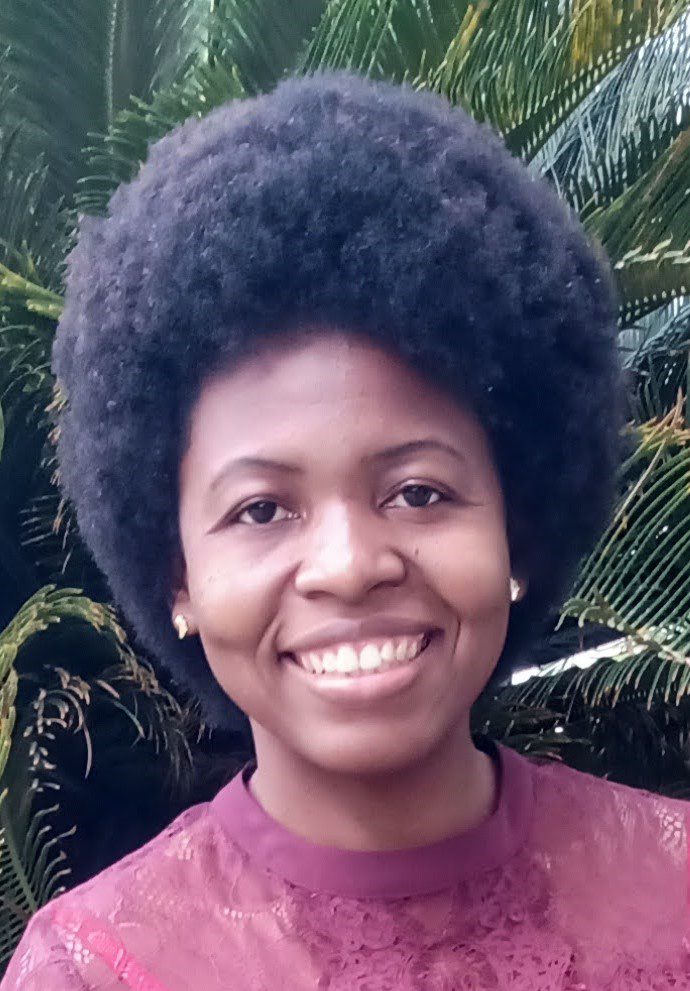
Elena Lorac is a prominent activist and advocate for human rights in the Dominican Republic

Elena Lorac is a prominent activist and advocate for human rights in the Dominican Republic, especially on the part of Dominicans of Haitian descent. As national coordinator of the Movimiento Reconoci.do, she has led the fight for the right to nationality and full integration of this community into Dominican society.

With more than 12 years’ experience, Elena has worked to strengthen community leadership and empower black women in the country’s bateyes [sugar mill settlements]. She also provides support to Haitian migrants and Venezuelan migrants and refugees, and is known for her community-based approach.

Elena is also a nationally and internationally renowned speaker, speaking on issues such as nationality, discrimination and racism, and raising awareness of policies that affect Dominicans of Haitian descent in the Dominican Republic. Her tireless work has been instrumental in promoting human rights and achieving the real inclusion of this community in Dominican society.

Aracelis Sánchez, Venezuela
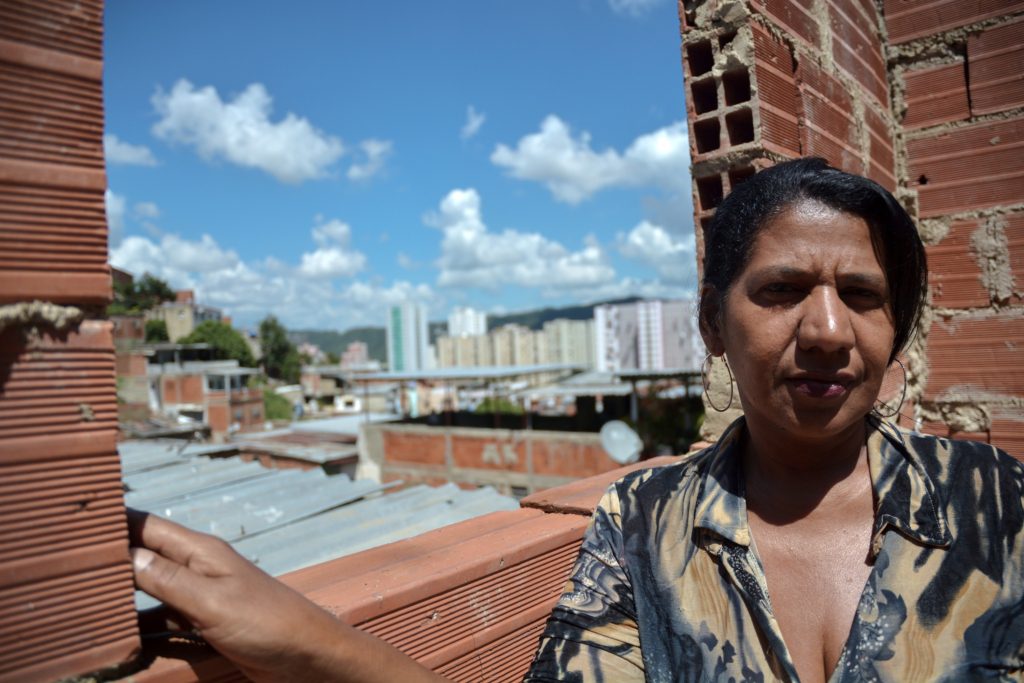
Aracelis Sánchez is a human rights defender and the founder of Organización de Familiares de Víctimas de Violación de Derechos Humanos (Orfavideh)

Aracelis Sánchez, a human rights defender and the founder of Organización de Familiares de Víctimas de Violación de Derechos Humanos (Orfavideh), is promoting solidarity and demanding justice together with more than 200 mothers of victims of extrajudicial executions in Venezuela.

Aracelis, who lost her son Darwilson Sequera, has been fighting for more than 10 years to get cases of human rights violations committed by Venezuelan state security forces investigated. Orfavideh provides human rights training workshops for mothers, equipping them with tools with which to demand guarantees and use the mechanisms of justice in Venezuela.

Aracelis stresses that when victims are empowered and able to put pressure on prosecutors, their cases are investigated. She believes that support and empowerment are essential to transform grief into positive action and thus achieve justice for victims and their families.

https://www.amnesty.org/en/latest/news/page/2/

see also: https://www.peacebrigades.org/themes/women-human-rights-defenders
Winners of 2023 UN Human Rights Prize Announced

July 22, 2023
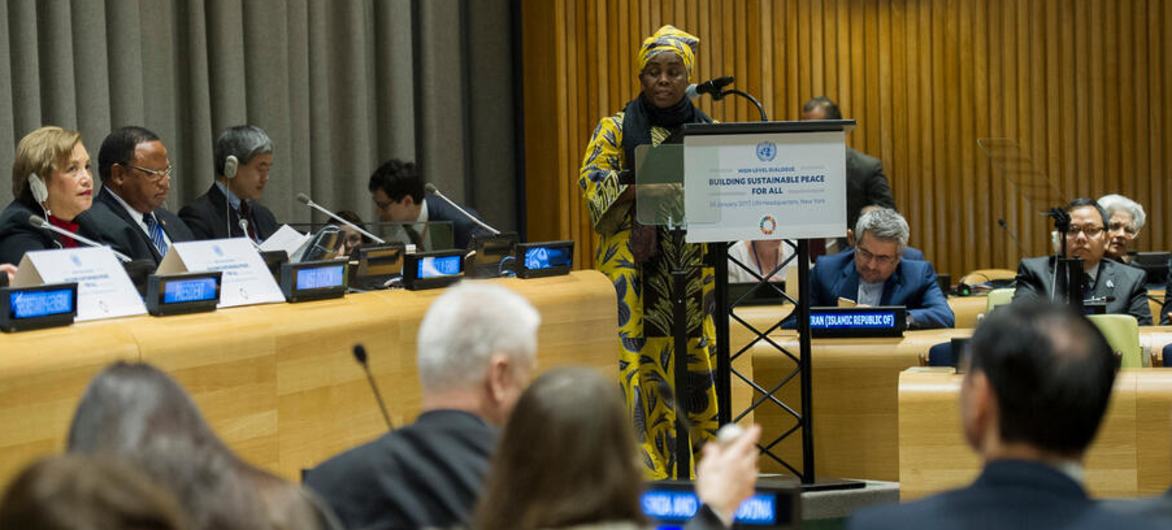
Julienne Lusenge, one of the 2023 UN Human Rights Prize winners speaking at the General Assembly high-level dialogue on “Building Sustainable Peace for All” earlier this year.

Julienne Lusenge, one of the 2023 UN Human Rights Prize winners, speaking at the General Assembly high-level dialogue on “Building Sustainable Peace for All” earlier this year. UN Photo/Manuel Elías

On 20 July 2023 the President of the General Assembly Csaba Kőrösi announced the winners of the United Nations Prize in the Field of Human Rights for 2023. 

For more on this prize which is awarded every five see: https://trueheroesfilms.org/thedigest/awards/74A3B502-F3DF-4DDB-8D6F-672C03B4A008

This year’s winners were the Human Rights Center “Viasna”, based in Belarus, Julienne Lusenge from the Democratic Republic of the Congo [see also: https://humanrightsdefenders.blog/2021/10/11/congolese-julienne-lusenge-wins-1-million-2021-aurora-prize/], Amman Center for Human Rights Studies from Jordan, Julio Pereyra from Uruguay and the Global Coalition of civil society organizations, Indigenous Peoples, social movements and local communities.

The recipients of the Prize were chosen by a Special Committee from more than 400 nominations received from Member States, the UN system, and civil society. 

The Committee is chaired by the President of the General Assembly, and its members include the President of the Economic and Social Council, the President of the Human Rights Council, the Chair of the Commission on the Status of Women, and the Chair of the Advisory Committee of the Human Rights Council

The Office of the UN High Commissioner for Human Rights (OHCHR) provided support to the special committee.  The award ceremony for the 2023 Prize will take place at UN Headquarters in New York in December 2023, as part of activities to commemorate Human Rights Day. 

The members of the Special Committee also acknowledged the important role played by human rights defenders and activists, praising them for their courage and dedication while strongly condemning any attempts to “silence and intimidate” them.

They expressed solidarity with those who are detained in retaliation for their work in defending human rights and pursuing the implementation of all the provisions of the Universal Declaration of Human Rights, marking it’s 75th birthday this year.

https://news.un.org/en/story/2023/07/1138957

https://www.ohchr.org/en/about-us/what-we-do/un-human-rights-prize/2023-recipients

Algerian human rights defenders Slimane Bouhafs and Kamira Nait Sid 3-year sentence confirmed

July 20, 2023

On 18 July 2023 Front Line Defenders reported that on 4 July, a court of appeal in Algiers confirmed the three-year prison sentence of human rights defenders Slimane Bouhafs and Kamira Nait Sid, in addition to confirming the fine of DZD 100,000 (approx. EUR 660). The charges against both human rights defenders include “belonging to a terrorist organisation”; “receiving funds from abroad for the purpose of political propaganda”; “hate speech and discrimination”; “use of technology to spread false information”; and “conspiracy”, among others.

Slimane Bouhafs is a human rights defender advocating for freedom of expression and democracy in Algeria through social media. He is the Chairman of the St. Augustine Coordination of Christians in Algeria which defends minority rights and freedom of religion in the country. Kamira Nait Sid is a woman human rights defender and co-president of the World Amazigh Congress (WAC), an international NGO defending the rights of the Amazigh people. The mission of the WAC is to ensure the defence and promotion of political, economic, social, cultural, historical and civil rights of the Amazigh people.

The human rights defender Slimane Bouhafs, who was granted refugee status in Tunisia before being illegally transferred back to Algeria, received the same three-year prison sentence as the one previously handed down at the first instance. Meanwhile, the woman human rights defender Kamira Nait Sid received a three-year prison sentence, which was a two-year reduction of the original sentence handed down by the court of first instance.

Both Slimane Bouhafs and Kamira Nait Sid reject and deny all the charges against them and maintain that they have been targeted because of their peaceful human rights work and advocacy for freedom of expression and belief. The defence counsel, which represented both human rights defenders, reportedly emphasised the lack of due process and fair trial guarantees during the trial and the appeal processes, including a lack of evidence supporting the charges.

In December 2022, Slimane Bouhafs and Kamira Nait Sid were sentenced to three and five years respectively by the court of first instance mainly on the basis of an alleged association with the Movement for the Autonomy of Kabylie (MAK), classified as a terrorist group by the Algerian authorities. The human rights defenders continue to deny any involvement with the MAK group.

The two human rights defenders have been arbitrarily detained since the summer of 2021. On 25 August 2021, the human rights defender Slimane Bouhafs was abducted, subjected to ill-treatment and forcibly returned to Algeria from Tunisia, where he had been granted refugee status, in a gross violation of international law. On 24 August 2021, the woman human rights defender Kamira Nait Sid was also abducted by Algerian security forces from her home in Draa-Ben-Kheddaas in northern Algeria and detained at an unknown location. On 1 September 2021, the two human rights defenders appeared before an investigating judge in an Algerian court to be charged with several terrorism-related accusations based on an alleged connection with the MAK.

Front Line Defenders condemns the confirmation of the sentence of human rights defenders Slimane Bouhafs and Kamira Nait Sid and calls on the authorities of Algeria to immediately release them and quash their conviction as it believes that it is solely motivated by their legitimate and peaceful work in the defence of human rights. It urges the authorities to guarantee the physical and psychological security and integrity of the human rights defenders while in detention.

Front Line Defenders also calls on the authorities to cease targeting all human rights defenders in Algeria and guarantee in all circumstances that they are able to carry out their legitimate human rights activities without fear of reprisals and free of all restrictions including judicial harassment.

https://www.frontlinedefenders.org/en/case/court-appeal-confirms-three-year-prison-sentence-human-rights-defenders-slimane-bouhafs-and

Results of 53rd session of the UN Human Rights Council as seen by NGOs

July 19, 2023

Over a dozen organisations share reflections on the key outcomes of the 53rd session of the UN Human Rights Council, as well as the missed opportunities to address key issues and situations. A shortened version was delivered at the Council. [see also: https://humanrightsdefenders.blog/2023/06/20/human-rights-defenders-issues-at-the-53rd-session-of-the-un-human-rights-council/]

We welcome the resolution put forward by the OIC to ensure the full implementation of the United Nations database of businesses facilitating Israeli settlements in the Occupied Palestinian Territory as well as the recent publication of the partial update to the database issued by the Office of the High Commissioner for Human Rights on 30 June 2023. The effectiveness and credibility of the HRC and OHCHR has suffered considerably from the chronic under-implementation of the database by this Council. The resolution put forward at the 53rd session represents an important step forward, and it is crucial that future updates are conducted annually, regularly, including both the addition and removal of businesses from the database, as appropriate, to ensure accurate and comprehensive information for all stakeholders involved. We regret that some States failed to vote in favor of the resolution to ensure the full implementation of the database.  We believe this failure constitutes a dangerous example of double standards and urge States who abstained or voted against the resolution to begin to approach this issue in line with international human rights standards and their duties as UN member States. 

We welcome the fact that the resolution on civil society space addressed the limitations to civil society access and participation in decision-making processes, including at the UN, and called on States to “enable and institutionalize meaningful online participation in hybrid meetings” and to establish “a transparent, fair and gender-responsive accreditation processes”. We welcome that the resolution acknowledges the significant role played by civil society in the promotion and protection of human rights, including with regard to monitoring, documenting and raising awareness about human rights violations and abuses, but we regret that the role of civil society in the prevention of human rights violations, as well as the Council’s prevention mandate, was not highlighted. We also welcome that the resolution emphasizes undue restrictions of civic space, including on funding of civil society actors, nonetheless we express concern that it does not address the misuse of restrictive laws in a more comprehensive manner. We appreciate the call upon States to establish or enhance information-gathering and monitoring mechanisms, including by benefiting from data collected by civil society, for the collection, analysis and reporting of data on threats, attacks or violence against civil society, and the request to the High Commissioner to prepare a report identifying challenges and best practices in regularly assessing civic space trends drawing on the views of civil society, amongst others. This may lead, in the longer term, to the development of a collective methodology including indicators and benchmarks that will permit the effective and systematic monitoring of civic space developments on the international level. We also call on States to prevent the deterioration and closure of civic space and provide support to build civil society resilience.

We welcome the focus of the resolution on human rights of migrants on human rights violations in transit. However, the resolution fails to answer the call from over 220 CSOs for the Council to establish an investigative mechanism on deaths, torture and other grave human rights violations at and around international borders. The focus on monitoring in the intersessional panel requested must be used as a stepping stone towards a response from the Council that matches the severity of the situation. The 53rd session opened as yet another horrific incident unfolded with hundreds presumed dead at sea. The normalisation of deaths caused by border management policies and practices, as well as criminal networks, must end. It is unclear what scale of atrocity will prompt this body to act.     

We welcome the adoption of resolutions on child and early forced marriage and on violence against women and girls, despite hostile amendments contravening international human rights law, UN technical guidance and WHO Guidelines. The resolution on child and early forced marriage on the theme of forced marriage, identifies root causes of forced marriage and calls for practical guidelines to be developed by the OHCHR which can help States work to prevent and eliminate forced marriage, centering the autonomy of women and girls. The resolution on violence against women and girls looks at systemic violence against women and girls in criminal detention systems. The resolution centers the respect, protection and fulfillment of human rights for women and girls in criminal detention, in addition to the Bangkok and Mandela Rules.

We welcome the adoption of the resolution on ‘the impact of arms transfer on human rights‘. Ensuring arms related risks to human rights continues to be part of the Council’s work is critical – both those acquired by civilians and those transferred. We look forward to the stocktaking intersessional workshop on the role of States and the private sector in preventing, addressing and mitigating negative human rights impacts of arms transfers.

We welcome the resolution on new and emerging digital technologies, which reinforces the need to respect, protect and promote human rights throughout the lifecycle of artificial intelligence systems. The resolution mandates an enhanced role of the OHCHR in providing its expertise on the human rights implications of these technologies, including artificial intelligence, to other UN bodies, mechanisms, and processes. We believe that bolstering this existing expertise is vital in ensuring a consistent human rights-first approach to the growing number of UN initiatives relevant to this topic. We also particularly welcome that the resolution stresses that certain applications of artificial intelligence “present an unacceptable risk to human rights”. We now call on States to put this language into practice and ban those technologies that cannot be operated in compliance with international human rights law.

We welcome the adoption of the resolution extending the mandate of the UN Special Rapporteur on Independence of Judges and Lawyers for three years.

We regret the adoption of a new resolution on countering religious hatred constituting incitement to discrimination hostility or violence. While we are dismayed over the rise of hate against persons on the basis of their religion or belief worldwide, this resolution ultimately aims to protect not individuals but rather religious books and symbols that do not enjoy protection under international human rights law. We note that prohibitions on the defamation of religions fuel division and religious intolerance by shutting down interfaith dialogue, and can facilitate human rights violations against religious minorities. While the burning of holy books is considered disrespectful and offensive by many, this is not an act of incitement in and of itself, and such acts should only be challenged through open space for dialogue, debate, and dissent. By evoking language on the defamation of religions, this resolution puts over a decade of progress in jeopardy and risks undermining the consensual, positive action plan to combat religious intolerance achieved in landmark Resolution 16/18 in 2011.

We regret that the resolution on the contribution of development to the enjoyment of human rights weakens the interdependence of human rights and sustainable development. We reiterate deep concerns at the long-term goal of this initiative, in light of the penholder’s remarks during negotiations that the ‘contribution of development to human rights’ is a methodology ‘conflicting with’ human rights-based approaches to development (HRBA) widely-endorsed by the Secretary-General, UN agencies and States. We regret the inclusion of undefined domestic concepts such as ‘better life’, ‘high-quality development’ and ‘people-centred approach to development’, and the failure to consider middle-ground proposals to reallocate resources to meet the OHCHR’s needs for additional capacity on HRBA to development. We lament that the penholder disregarded strong concerns shared across all regions, including from developing countries as reflected in the abstentions of Costa Rica, Chile, Georgia, India and Paraguay, despite commitments to seek consensus and engage constructively.

We welcome the adoption of the resolution on Belarus, which re-mandates the Special Rapporteur for a further year. The Special Rapporteur on Belarus remains critical to civil society, whose options for seeking redress for human rights violations at an international level were further reduced recently when Belarus withdrew from the First Optional Protocol of the ICCPR.

We welcome the adoption of the resolution presented by Colombia seeking to enhance technical cooperation to implement the recommendations made by the Commission for the Clarification of Truth, Coexistence and Non-Repetition in the country – a resolution looking towards a future of peace.. The text highlights the OHCHR report’s findings that violence disproportionately affects, inter alia, human rights defenders, Indigenous Peoples, people of African descent, peasant leaders, women and girls, as well as persons on the basis of their sexual orientation or gender identity. We regret however that Pakistan, on behalf of the OIC except Albania, tabled an amendment to remove the reference to ‘sexual orientation and gender identity’, and in doing so did not respect Colombia’s decision to acknowledge the vulnerability of populations inside its own territory, and meant that a vote was called on the resolution.

This year’s strengthened resolution on Eritrea is in line with civil society’s ask to substantively address violations Eritrean authorities commit at home and abroad and to move beyond merely procedural resolutions that extend the Special Rapporteur’s mandate. We encourage States to go even further next year and to reinstate fully substantive resolutions on Eritrea’s human rights situation, as was the rule before 2019.

We welcome the adoption of the Item 10 resolution on Ukraine, maintaining the Council’s regular dialogues with the High Commissioner on the human rights situation in Ukraine. The work of the OHCHR in Ukraine is critical, complementary to the work of the International Commission of Inquiry on Ukraine, and it is important that HRC is kept abreast of this work.

While we believe the resolution on Rohingya and other minorities in Myanmar is an important step to maintain the situation of Rohingya and other minorities in Myanmar high on the agenda of the Council, we regret that the resolution failed to reflect the reality of the situation on the ground in Myanmar especially following the 1 February 2021 military coup. It calls for immediate commencement of repatriation of Rohingya refugees in direct contrast to conclusions and recommendations of the Special Rapporteur, the High Commissioner as well as Rohingya themselves that conditions for safe, voluntary, dignified and sustainable return for Rohingya do not exist in Myanmar, and that their return under the current circumstances could lead to the recurrence of violence that led to their displacement.

The holding of a Special Session on Sudan on 11 May 2023, does not preclude, but rather should be seen as the start of a process toward, stronger resolutions. Civil society will continue to push for the establishment of an investigative mechanism, which is the least the Council can do for the victims and survivors of the conflict and violations and abuses committed in the country in the last three decades. We highlight the need for a holistic, comprehensive response by the international community. In this regard, the Final Communiqué of the First Meeting of the IGAD Quartet Group of Countries for the Resolution of the Situation in the Republic of Sudan resolved to request that “the East Africa Standby Force (EASF) summit … convene in order to consider the possible deployment of the EASF for the protection of civilians and guarantee humanitarian access” and committed “to work closely with the international community to put in place a robust monitoring and accountability mechanism that will be instrumental in bringing perpetrators to justice.”

We deplore the sustained failure of this Council to respond meaningfully to the human rights situation in China, gradually undermining its credibility and ability to scrutinise countries on the basis of objective, impartial UN documentation, including the OHCHR Xinjiang report. We further regret the failure of the joint UN Office on Genocide Prevention and the Responsibility to Protect to act in line with its mandate on the CERD’s historic referral of the situation in Xinjiang, weakening the UN’s genocide-prevention architecture. The CESCR, the CEDAW, the CERD, the OHCHR, the ILO, as well as Special Procedures through three joint statements, nearly 30 press releases and 100 letters to the government since 2018, have provided more than sufficient evidence pointing to systematic and widespread human rights violations. So long as the Council is not able to take principled action on the basis of objective criteria, other powerful perpetrators will feel empowered to continue committing atrocity crimes, relying on the Council’s silence. We reiterate our pressing call for all Council Members to support the adoption of a resolution establishing a UN mandate to monitor and report on the human rights situation in China.

We regret that the Council failed to adequately respond to the situation in Egypt. Since the joint statement delivered by States in March 2021 at the Council , there has been no significant improvement in the human rights situation in Egypt despite the launching of the national human rights strategy and the national dialogue. The Egyptian government has failed to address, adequately or at all, the repeated serious concerns expressed by several UN Special Procedures over the broad and expansive definition of “terrorism”, which enables the conflation of civil disobedience and peaceful criticism with “terrorism”. The Human Rights Committee raised its concerns “that these laws are used, in combination with restrictive legislation on fundamental freedoms, to silence actual or perceived critics of the Government, including peaceful protesters, lawyers, journalists, political opponents and human rights defenders”. Egyptian and international civil society organisations have been calling on the Council to establish a monitoring and reporting mechanism on the human rights situation in Egypt, applying objective criteria and in light of the Egyptian government’s absolute lack of genuine will to acknowledge, let alone address, the country’s deep-rooted human rights crisis.

We regret the Council’s repeated failure to address the situation in India including to exercise its prevention mandate in relation to the potential escalation of violence against religious minorities and Dalits and Adivasis into mass atrocity crimes with unchecked hate speech and incitement to violence by Hindu nationalist leaders, the most recent illustration of which is the ongoing communal violence in the Northeastern state of Manipur.  We remind the Council that this is happening in the context of systematic rollback of fundamental freedoms, the rule of law and independent institutions as well as the ongoing  criminalisation, harassment and intimidation of human rights defenders, activists, journalists, and dissidents, and targeting of civil society organisations using national security and counter-terrorism infrastructure.  Silence of the Council further enables impunity and makes the international community complicit.

We regret that the Council failed to adequately respond to the situation in Saudi Arabia. In light of the ongoing diplomatic rehabilitation of crown prince and de facto ruler Mohammed bin Salman, the Saudi authorities’ brazen repression continues to intensify, as ALQST has documented. Some notable recent trends include, but are not limited to: the further harsh sentencing of activists for peaceful social media use, such as women activists Salma al-Shehab (27 years), Fatima al-Shawarbi (30 years and six months) and Sukaynah al-Aithan (40 years); the ongoing detention of prisoners of conscience beyond the expiry of their sentences, some of whom continue to be held incommunicado such as human rights defenders Mohammed al-Qahtani and Essa al-Nukheifi, and; regressive developments in relation to the death penalty, including a wave of new death sentences passed and a surge in executions (47 individuals were executed from March-May 2023), raising concerns for those currently on death row, including several young men at risk for crimes they allegedly committed as minors. We call on the Council to respond to the calls of NGOs from around the world to create a monitoring and reporting mechanism on the ever-deteriorating human rights situation in Saudi Arabia.

We regret that the Council failed to exercise its prevention mandate and address the deteriorating human rights situation in Tunisia. Civil society organizations, the High Commissioner and UN Special Procedures all have raised alarm at the escalating pattern of human rights violations and the rapidly worsening situation in Tunisia following President Kais Saied’s power grab on 25 July 2021 leading to the erosion of the rule of law, attacks on the independence of the judiciary, reprisals against independent judges and lawyers and judges associations, a crackdown on peaceful political opposition and abusive use of “counter-terrorism” law in politicized prosecutions, as well as attacks on freedom of expression and threats to freedom of association. A wave of arrests that started in February 2022 continued to include at least 40 members of peaceful political opposition. On 21 February 2023, President Saied made inflammatory comments that triggered a wave of anti-Black violence and persecution – including assaults and summary evictions – against Black African foreign nationals, including migrants, asylum seekers and refugees. Between February and early March 2023, police indiscriminately arrested at least 850 Black African foreign nationals, apparently based on racial profiling. Since July 2, 2023 Tunisian security forces collectively expelled several hundreds of Black African migrants and asylum-seekers to the Tunisian-Libyan borders without any due process, along with reports of beatings and sexual assaults. The High Commissioner has addressed the deteriorating situation in the three latest global updates to the HRC. Special Procedures issued at least 8 communications in less than one year addressing attacks against the independence of the judiciary, as well as attacks against freedom of expression and assembly. Despite the fact that in 2011 Tunisia extended a standing invitation to all UN Special Procedures, and received 16 visits by UN Special Procedures since, Tunisia’s recent postponement of the visit of the Special Rapporteur on the independence of judges and lawyers, is another sign of Tunisia disengaging from international human rights mechanisms and declining levels of cooperation.

Signatories: International Service for Human Rights (ISHR), Cairo Institute for Human Rights Studies, Asian Forum for Human Rights and Development (FORUM-ASIA), International Bar Association’s Human Rights Institute (IBAHRI), International Federation for Human Rights (FIDH), Commonwealth Human Rights Initiative, Center for Reproductive Rights, DefendDefenders (East and Horn of Africa Human Rights Defenders Project), Gulf Centre for Human Rights.

https://ishr.ch/latest-updates/hrc53-civil-society-presents-key-takeaways-from-human-rights-council/

State of Human Rights in Belarus called ‘Catastrophic’ at the UN

July 12, 2023
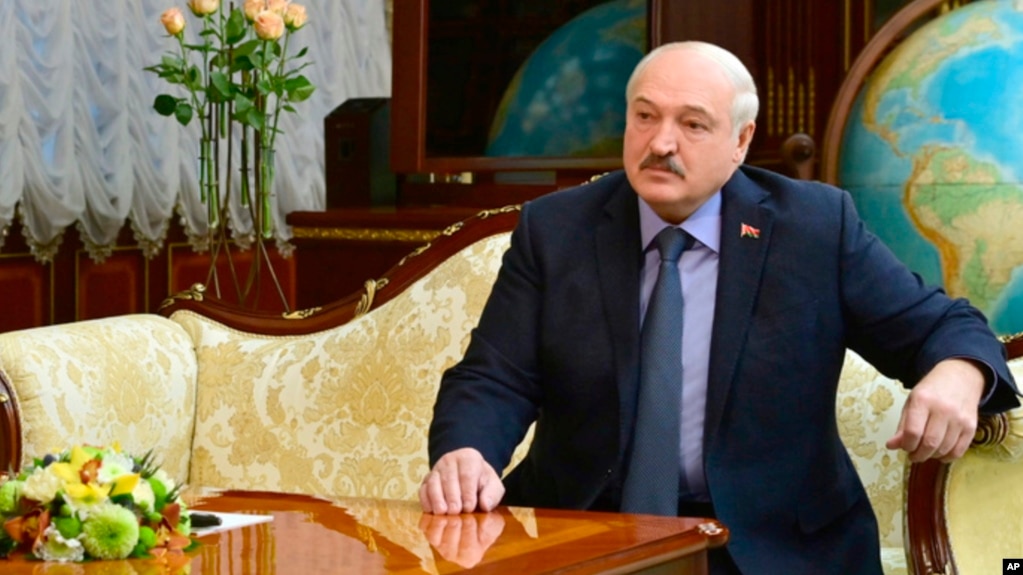
The regime of Belarusian President Alexander Lukashenko — seen here in Minsk, Belarus, on April 10, 2023 — is deliberately purging civil society of its last dissenting voices, a United Nations special rapporteur told the U.N. Human Rights Council on Tuesday.

The human rights situation in Belarus is catastrophic, and only getting worse, the United Nations special rapporteur on the country said on 4 July 2023, according to AFP.

Belarusian leader Alexander Lukashenko’s regime in Minsk is deliberately purging civil society of its last dissenting voices, Anais Marin told the U.N. Human Rights Council.

“The situation remains catastrophic. Unfortunately, it keeps on worsening,” said the special rapporteur on the human rights situation in Belarus. “The Belarusian government amended an already restrictive legislation aimed at dismantling civic freedoms, leading to a surge in politically motivated prosecutions and sentencing.

“The lack of accountability for human rights violations fosters a climate of fear among victims and their families,” Marin said. Marin has been in post for five years and reminded the council that she alerted them two years ago to the “totalitarian turn” taken by Minsk, evidenced by the “disregard for human life and dignity” during the crackdown on peaceful protesters in 2020. In her annual report, the French political scientist said more than 1,500 individuals were still being detained on politically motivated charges, with a daily average of 17 arbitrary arrests since 2020.

“I have good reasons to believe that prison conditions are deliberately made harsher for those sentenced on politically motivated grounds, by placing them in punishment cells for petty infraction to prison rules,” said Marin.

“No one has been held accountable in Belarus for arbitrarily detaining tens of thousands of peaceful protesters in 2020, nor for the violence or torture many of them have been subjected to.

“This general impunity, and the climate of fear resulting from ongoing repression, have compelled hundreds of thousands of Belarusians into exile.

Human rights defenders face ongoing persecution, she said, with more than 1,600 “undesirable organizations forcibly dissolved, including all remaining independent trade unions.

“This illustrates a deliberate state policy of purging civic space of its last dissenting elements,” she said.

Marin said independent media outlets had been labelled as “extremist organizations,” while academic freedom is “systematically attacked.”

“Ideological control and disciplinary measures restrict freedom of opinion and their expression,” she said.

Primary and secondary education is also subject to “ideological control,” with children “discouraged from expressing their own opinions” and facing “threats and consequences” for holding dissenting views.

Consequences for speaking out

As for the Russian invasion of Ukraine, individuals face challenges when trying to speak out against it or question Belarus’s role in facilitating the 2022 invasion.

“Anti-war actions led to numerous detentions and arrests, some on charges of planning terrorist attacks — a crime which can now be punished by death,” she said.

Belarus was immediately offered the Human Rights Council floor to respond to Marin’s comments but was not present.

On 11 July HRW underlined this with the case of Belarusian lawyer Yulia Yurhilevich and journalist Pavel Mazheika who ace up to seven years in prison

https://www.eeas.europa.eu/delegations/un-geneva/hrc53-interactive-dialogue-situation-human-rights-belarus-eu-statement_en?s=62

https://www.voanews.com/a/state-of-human-rights-in-belarus-catastrophic-un-told-/7167606.html

https://www.hrw.org/news/2023/07/11/travesty-justice-reaches-new-low-belarus

Vietnam Frees Australian democracy activist Chau Van Kham

July 12, 2023

On 11 July 2023 EFE reported that Vietnam had released Vietnamese-Australian activist Chau Van Kham, sentenced in 2019 to 12 years in prison for extremism over his ties to the Viet Tan pro-democratic party.

Australian Prime Minister Anthony Albanese said he “very much welcomes the release of Chau,” in remarks Monday from Berlin, through Australian public broadcaster ABC.

Chau’s lawyer Dan Nguyen said in a statement through Amnesty International Australia that the activist, who returned Monday night to Australia, is with his wife and two sons. He also thanked the government’s, organizations and individuals’ efforts that fought for his release.

Chau was arrested in Ho Chi Minh City in January 2019 after being accused of entering the country with a false document and sentenced in an express trial to 12 years in prison for extremism charges 10 months later. See: https://humanrightsdefenders.blog/2020/06/08/chau-van-kham-australian-human-rights-defender-disappeared-inside-vietnams-prison-system/

This was due to Chau, 73, being linked to pro-democratic group Viet Tan, considered an extremist entity in the country but a human rights organization in Australia.

Deputy Australian Prime Minister Richard Marles said Chau was released on “humanitarian” reasons and “in the spirit of friendship which exists between Australia and Vietnam,” according to ABC.

Chau is one of “more than 150 political activists in Vietnam who have been detained for peaceful acts in favor of freedom of expression,” Human Rights Watch Asia Human Rights Director Elaine Pearson said in a statement.

Pearson spoke of journalist Dang Dihn Bach and activists Mai Phan Loi, Dang Dinh Bach, and Hoang Thi Minh Hong among them and urged Australia to continue advocating for their release.

The exact number of political prisoners in Vietnam is unknown, as numbers provided by different human rights organizations have discrepancies.

While Human Rights Watch says the total exceeds 150, Amnesty International said there were 128 political prisoners in the country last year. Dissident organization Defend the Defenders raised the number to more than 250.

https://www.abc.net.au/news/2023-07-26/dan-phuong-nguyen-chau-van-kham-human-rights-vietnam-730/102646526

Nice ‘tit-for-tat’ by Swedish newspaper against Turkish demands to extradite refugees

July 7, 2023

Aftonbladet, the biggest daily newspaper of Sweden published a call where it was stated that the Turkish authorities and President Recep Tayyip Erdoğan among them, are making calls, at every opportunity, for Sweden to repatriate some authors, journalists, academicians, and human rights defenders living freely in Sweden by obtaining refugee status, the number of whom ranges between 33 and 130. 

Simultaneously with Turkey requesting Sweden to repatriate its opponents, Sweden is facing the largest organized criminal actions in its history. Almost every day comes reports of armed attacks and killings from all parts of Sweden,” the call states*.  

“It is as if anyone can be killed anywhere at any time. Most of these cruel attacks are being organized by Swedish criminals now living in luxury in Turkey. These criminals have obtained Turkish citizenship and Turkey is therefore arguing that they cannot be returned to Sweden.” 

One such leader of a criminal gang threatening security in our country is Rawa Majid, the leader of the criminal organization called “Foxtrot” (with nickname Kurdish Fox). Another one organizing these crimes belongs to the group called Bandidos .”

“On the one side, Turkey claims to be fighting terrorism and requests that people who are in Sweden because of their political opinions to be returned to Turkey. On the other side, the country is rejecting to return to Sweden criminals of grave offences, people who risk the security and the future generations in Sweden. 

No, this cannot go on Turkey! It is time to act like a serious state. Return the “Kurdish Fox” and the other criminal people from Sweden to Sweden.” 

The signatories of the call:

Kurdo Baksi, Author
Göran Eriksson, Ex-Chief of Stockholm Workers Education Center (ABF) 
Göran Greider, Author, Dala-Demokraten Gazetesi Baş Redaktörü
Pierre Schori, Ex-Minister responsible for Refugees and UN Ambassador
Olle Svenning, Author

https://bianet.org/english/politics/281229-swedish-newspaper-calls-turkey-to-return-to-sweden-the-criminals-who-live-in-luxury-here

Researcher puts bomb under ‘traditional’ protection of human rights defenders

July 7, 2023

On 6 July 2023 Janika Spannagel in Open Global Rights comes with a study of great importance to the work for human rights defenders. The researcher states that “focusing only on defenders’ physical integrity risks undermining the very idea of supporting agents of human rights change” and that there is a need to Rethink campaigns on human rights defenders

Spannnagel’s work featured in this blog before [see: https://humanrightsdefenders.blog/tag/janika-spannagel/] but this work questions more directly the core of HRD protection.

Instead of summarising I will provide large quotes:

,,,,The theory of change put forward by actors, including Front Line Defenders, International Service for Human Rights, and many others, claims that by protecting local human rights activists, international campaigns can support them in their work to advance human rights protection on the ground. This assumption appears plausible and aligns with prominent accounts in academic human rights literature, where domestic activists’ protection from repression is seen as a way to open spaces for them to challenge the regime and enact change.

That said, empirical evidence from UN casework and the experience of Tunisian defenders shows that this promise has not been fulfilled when it comes to human rights defenders in authoritarian regimes, as I show in my recent book. There, I argue that, while international attention can have important protective benefits, it does little to support individual human rights defenders as agents of change in repressive contexts. [Emphasis added]

The reason for this is that international casework on defenders, including urgent action–like campaigns or UN communications, maintain the traditional focus on physical integrity rights that has guided the long-standing casework on political imprisonment, torture, or enforced disappearances. In doing so, it overlooks the many administrative, discursive, and covert forms of repression that typically bypass international scrutiny more broadly but that often very effectively disrupt and thwart defenders’ work toward change.

The analysis of over 12,000 individual cases of human rights activists taken up by the UN special rapporteur on human rights defenders between 2000 and 2016 reveals that, in almost three-quarters of them, at least one of the violations described fell within the category of physical integrity violations. Detention cases alone made up 56% of all cases raised during that period. In contrast, only 4% of the cases dealt exclusively with softer types of repression, such as travel bans, bureaucratic issues, job dismissals, surveillance, or defamation.

This distribution far from represents the everyday experience of human rights defenders in authoritarian states—instead, it is reflective of a humanitarian instinct in human rights casework to privilege cases that are considered most severe. One could argue that UN communications, and perhaps attention-based campaigning more broadly, are inherently humanitarian, not transformative instruments. But one should ask: What, then, is the purpose of focusing on human rights defenders, as opposed to any victim of repression? [Emphasis added]

The priority given to physical integrity violations has two important adverse consequences. First, we can see that the data profoundly shape our understanding of what human rights defenders are struggling with. For example, on the basis of such data a CIVICUS report claims that in order to repress civic space, states resort “most often” to detention of activists, attacks against journalists, and excessive use of force against protesters. The human rights community’s own focus on violent repression thus paradoxically misleads us to believe that this is where most attention is needed.

Secondly, this focus reinforces a protection gap for violations that fall outside of the conventional notion of state repression as physically harmful and as undeniably politically motivated. Research on repression highlights that authoritarian states engage in repressive substitution, where they replace highly scrutinized coercive tactics—typically harder and overt types of repression—with softer and more covert measures. The case of Tunisia under Ben Ali aptly illustrates the strong impact of such tactics on defenders’ ability to carry out meaningful work.

When analyzing the further development of cases taken up by the UN, I also found that, while some positive effects of the UN’s attention could be identified for most of them, many did not see an actual improvement relative to the reported violations over the course of the next year; where they did, it was mostly an easing of harder repression. Ultimately, there is a real risk that governments continue to use hard repression to increase their bargaining power and then pass off a release from prison as a costly concession, while in reality imposing softer but equally effective measures against the activist in question.

With this problem in mind, what could be done differently? Casework that follows a transformative logic should not seek to maximize the reduction of physical harm—the humanitarian logic—but should define protection needs in terms of safeguarding a defender’s ability to do effective human rights work. 

Those engaging in casework and campaigns on human rights defenders should actively revisit their priorities in terms of the violations they tend to address. Far too often, softer repression remains unreported, unnoticed, and not acted upon, which effectively creates a twilight zone in which authoritarian states can comfortably stifle opposition voices without risking much pushback. We owe it to the countless number of human rights activists around the world to ensure that the label of “human rights defender” does not merely serve to laud their heroism and excite donors and the media, but that it is dedicated to fulfilling its promise of human rights change.

https://www.openglobalrights.org/rethinking-campaigns-human-rights-defenders/index.cfm

For the more traditional approach, see e.g. https://www.ipsnews.net/2023/07/recognising-human-rights-defenders-remarkable-agents-positive-change/

Tunisia no longer poster child of Arab spring

June 29, 2023

The Human Rights Council should urgently address the deterioration of the human rights situation in Tunisia, four human rights organizations said on 27 June 2023 as the 53rd Council’s session is underway.

In a letter sent to UN Member States’ Representatives on 5 June 2023, the four undersigned organizations warned against the rapidly worsening situation in Tunisia, and urged States to seize the opportunity of the ongoing Human Rights Council’s session to address it. The organizations called on the Council and Member States to press the Tunisian authorities to comply with their obligations under international human rights law particularly those guaranteeing the rights to fair trial, freedom of expression, freedom of peaceful assembly and association, and non-discrimination.

The Human Rights Council should urge Tunisia to end the ongoing crackdown on peaceful dissent and freedom of expression, and drop charges against, and release, all individuals being detained and prosecuted solely on the basis of their peaceful political activities and the exercise of their human rights. The Council should also call on Tunisia to conduct prompt, thorough, independent, impartial and transparent and investigation into a wave of anti-Black violence – including assaults and summary evictions – against Black African foreign nationals, including migrants, asylum seekers and refugees, and bring to justice anyone reasonably suspected to be responsible, and provide victims with access to justice and effective remedies.

Over the past two years, Tunisia has witnessed a significant rollback on human rights. Judicial independence guarantees have been dismantled and individual judges and prosecutors have been subjected to arbitrary dismissal, politicized criminal prosecutions and increased interference by the executive. Lawyers are being prosecuted for the discharge of their professional duties and exercise of their right to freedom of expression.

The Tunisian authorities’ interference in the judiciary and attacks on lawyers have greatly undermined the right to fair trial and public trust in the integrity of the justice system. The authorities must ensure that the courts are not weaponized to crush dissent and free expression,’ said International Commission of Jurists’ MENA director Said Benarbia. 

Under the guise of ‘fighting offences related to information and communication systems’,  punishable by up to a 10 years’ imprisonment and a hefty fine according to Decree Law 54, at least 13 individuals, including journalists, political opponents, lawyers, human rights defenders and activists, have been subject to police or judicial investigations and are facing possible prosecutions.

‘With Tunisia facing political uncertainty and economic crisis, it’s more important than ever that Tunisians be free to debate their country’s future without fear of reprisal. The authorities should strive to allow the effective enjoyment of the right to freedom of expression of everyone; instead, they are attacking it,’ said Rawya Rageh, Amnesty International’s acting deputy director for the Middle East and North Africa.

Last week, the UN High Commissioner for Human Rights called on the Tunisian authorities to stop restricting media freedoms and criminalizing independent journalism. In a statement published on 23 June, Volker Türk expressed deep concern at the increasing restrictions on the right to freedom of expression and press freedom in Tunisia, noting that vague legislation is being used to criminalize independent journalism and stifle criticism of the authorities. ‘It is troubling to see Tunisia, a country that once held so much hope, regressing and losing the human rights gains of the last decade,’ said the High Commissioner.

Since February 2023, a wave of arrests targeted political opponents and perceived critics of Tunisia’s President, Kais Saied. In the absence of credible evidence of any offences, judges are investigating at least 48 people, such as dissidents, opposition figures, and lawyers, for allegedly conspiring against the State or threatening State security, among other charges. At least 17 of them are being investigated under Tunisia’s 2015 counter-terrorism law.

‘By jailing political leaders and banning opposition meetings, the authorities are dangerously trampling on the fundamental rights that underpin a vibrant democracy. The democratic backsliding and the human rights violations, which are unprecedented since the 2011 revolution, require urgent attention from the Human Rights Council and Member States,’ said Salsabil Chellali, Tunisia director at Human Rights Watch.

Signatories:

  1. International Commission of Jurists (ICJ)
  2. International Service for Human Rights (ISHR)
  3. Amnesty International
  4. Human Rights Watch (HRW)

Download as PDF

Human Rights Watch addresses Spain’s Presidency of the EU

June 27, 2023

On 26 June 2023 HRW called on Spain use its six-month tenure as EU Presidency to translate into concrete and bold actions commitment to protect fundamental rights and the rule of law.

Spain holds the presidency as the world marks the 75th anniversary of the Universal Declaration of Human Rights (UDHR) on 10 December 2023. In anticipation of this pivotal moment Spain should make every effort to uphold the rights and values enshrined in this historic document.

HRW calls upon the Spanish government to consider the following priority issues and recommendations:

  1. Fundamental Rights and Rule of Law in EU member states

Two EU member states – Hungary and Poland – currently face scrutiny under Article 7 of the Treaty on European Union (TEU)…

The freezing of EU recovery and cohesion funds under the conditionality mechanism represents a welcome step but it is insufficient to address the gravity of the erosion of rule of law and human rights. While Hungary and Poland have adopted some limited measures in response to requirements under the mechanism, these have failed to address fundamental and long-standing concerns. ….We urge the Council to hold the Polish and Hungarian governments to account by using the powers conferred to it under the Treaties and to fulfil the strong mandate to act given to it by the European Commission and Parliament. The urgency of Spain’s leadership and responsibility cannot be overstated as it is one of only two remaining presidencies before Hungary and Poland in turn assume leadership of the Council. It is highly likely that during that time progress on rule of law will at best stall, and at worst Article 7 scrutiny will come to an end altogether…

  1. Rights-Respecting and Principled EU Migration Policy

Spain’s EU Council presidency comes at a critical time for the EU’s migration policy after the Council agreed on 8 June on a negotiating position on an EU-wide reform of its asylum and migration system. Given its mandate to lead on behalf of member states the negotiations with the European Parliament on a final agreement, Spain has an opportunity to broaden the scope for a rights-respecting approach.

We call on your government to:

  • Support the establishment of proactive, state-led SAR operations in the Mediterranean Sea that could involve expanding the mandates and capacity of existing initiatives like EUNAVFOR MED and Frontex, funding professional rescue NGOs and ensuring predictable disembarkation.
  • Promote a discussion on the critical role of NGOs to ensure that they are fully able to carry out their lifesaving SAR activities, instead of facing obstruction and criminal and administrative penalties; and provide platforms for discussion of cooperation between member state rescue coordination centers and NGOs.
  • Advocate for independent and effective border monitoring mechanisms to document human rights violations at EU external borders, such as unlawful pushbacks, to ensure accountability for those responsible for human rights abuses and access to justice for victims.
  • Ensure that migration cooperation with third countries, and all provision of financial, technical, and material assistance, are contingent on clear and verifiable human rights commitments. 
  • Enable a constructive trialogue on the asylum procedures regulation and the asylum and migration management regulation with a view to limiting the use of accelerated border procedures, the detention of asylum seekers including families with children, and discretionary use of the “safe third country” concept.
  • Promote a discussion on establishing more safe and legal pathways for migration as called for by EU Justice and Home Affairs Commissioner Johansson.[8]
  1. Human Rights as a Pillar of EU’s Foreign Policy

The EU is equipped with solid instruments to ensure that human rights protection remains at the centre of its external action. The EU has shown resolve in its response to Russia’s invasion of Ukraine and has led at the United Nations to address key human rights crises.

..

During its Presidency, we call on your government to:

  • Continue to combat impunity for crimes committed in Ukraine, including by providing adequate resources to the International Criminal Court’s (ICC) regular budget, advocating and supporting the implementation of ICC arrest warrants, pressing Ukraine to ratify the Rome Statute and supporting independent investigations and prosecutions under universal jurisdiction.
  • Continue to support Human Rights Defenders (HRDs) at risk and share your experience with other EU member states. Encourage other EU member states to learn from and replicate Spain’s forward-leaning approach with the Program for Support and Protection of Human Rights Defenders at Risk that provides dedicated one-year residential visas for HRDs. Advocate with EU member states to use their discretion and facilitate access by HRDs to multi-year multi-entry Schengen visas in line with EU guidelines.
  • Recalibrate EU’s engagement with China to address the government of China’s human rights record through measurable deliverables; counter the government of China’s flawed narratives on its own human rights record; reject efforts to undermine international human rights institutions; lead the creation of a UN investigative and monitoring mechanism for crimes against humanity committed in Xinjiang; sanction or hold accountable those responsible for such crimes; and make plans to reduce dependency on a government that assaults human rights both domestically and in its foreign policy.

see also: https://freedomhouse.org/article/media-freedom-and-journalists-groups-call-eu-prioritise-media-freedom-reforms-and-human

HRW Letter – Spain Presidency June 2023