Sara Nabil is a human rights defender and artist from Afghanistan, forced into exile. She spoke to ISHR about her dream of one day seeing a ‘free democratic Afghanistan, where each human being [regardless of which] gender they are, man or woman, neutral or other genders, [would be] treated equally.’
‘Since the Taliban came to power, Afghanistan [has become] the only country where we see that women don’t have any kind of rights.’
Iranian hip-hop artist Toomaj Salehi, Uyghur poet and activist Tahir Hamut Izgil, and Venezuelan pianist and recording artist Gabriela Montero.
On 22 May 2024) The Human Rights Foundation announced the recipients of the 2024 Václav Havel International Prize for Creative Dissent: Iranian hip-hop artist Toomaj Salehi, Uyghur poet and activist Tahir Hamut Izgil, and Venezuelan pianist and recording artist Gabriela Montero.
“Their work stands as a testament to extraordinary bravery and ingenuity,” HRF Founder Thor Halvorssen said. This year’s laureates will be recognized during a ceremony on Tuesday, June 4, at the 2024 Oslo Freedom Forum (OFF) in Oslo, Norway. Montero will be performing the European and Scandinavian premiere of “Canaima: A Quintet for Piano and Strings” at the Oslo Konserthus. The Havel Prize ceremony will also be broadcast live at oslofreedomforum.com.
Toomaj Salehi is an Iranian hip-hop artist known for lyrics protesting the Iranian regime and calling for human rights. In September 2022, at the height of the nationwide “Women, Life, Freedom” protests, Salehi released several songs supporting women’s rights. One song, “Divination,” with the lyrics, “Someone’s crime was that her hair was flowing in the wind. Someone’s crime is that he or she was brave and…outspoken,” grew in popularity and was sung throughout the protests. Salehi was first arrested in October 2022 and was released on bail in November 2023 after the Iranian Supreme Court overturned his charges of “corruption on Earth,” “propaganda against the system,” “collaboration with a hostile government,” “inciting people to murder and riot,” and “insulting the leadership.” On November 27, 2023, he posted a YouTube video describing the torture and forced confession he experienced during his detention. Three days later, armed plain-clothes agents abducted Salehi. He was subsequently charged in two trials. On April 24, the Isfahan Revolutionary Court sentenced him to death.
Tahir Hamut Izgil is a prominent Uyghur poet, filmmaker, and activist. He is known for his avant-garde poetry, written in Uyghur and influenced by Uyghur life. Originally from Kashgar, Izgil led the 1989 student movement at the Central Nationalities Institute in Beijing. In the late 1990s, he was arrested on charges related to the possession of sensitive literature, leading to a three-year sentence in forced labor camps. He is among the few Uyghur intellectuals who successfully escaped the region in 2017.Izgil’s new memoir, “Waiting to Be Arrested at Night: A Uyghur Poet’s Memoir of China’s Genocide,” documents his journey living in and escaping the Uyghur Region, sharing a rare testimony of the Uyghur genocide with the broader world. His book has been listed as one of the “50 notable works of nonfiction” by The Washington Post and as one of the “10 0 Must-Read Books of 2023” by Time Magazine
Gabriela Montero is a Grammy Award-winning Venezuelan pianist and recording artist. Celebrated for her exceptional musicality and ability to improvise, Montero has garnered critical acclaim and a devoted following on the world stage. Montero’s recent highlights include her first orchestral composition, “Ex Patria,” a tone poem that grew from the human rights struggle in Montero’s native Venezuela. The piece powerfully illustrates and protests Venezuela’s descent into lawlessness, corruption, and violence, winning her first Latin Grammy® for Best Classical Album.Montero is a committed human rights advocate, using her gifts of composition and improvisation as tools of creative dissent. In 2015, she was named an Honorary Consul by Amnesty International. Montero was awarded the 2012 Rockefeller Award for her contribution to the arts and was a featured performer at Barack Obama’s 2008 Presidential Inauguration. [see also: https://humanrightsdefenders.blog/2018/10/15/venezuelan-pianist-gabriela-montero-wins-the-2018-beethoven-prize/]
On 22 May 2024 Front Line Defenders launched its Global Analysis 2023/24 on the situation of human rights defenders (HRDs) at risk around the world, an in-depth annual publication detailing the variety of risks, threats and attacks faced by HRDs around the world.
The report also reveals statistics gathered and verified by the HRD Memorial initiative – which Front Line Defenders coordinates – documenting the killings of at least 300 HRDs in 28 countries in 2023. Almost a third of those killed (31%) were Indigenous people’s rights defenders. This brings the total documented killings of HRDs in the last decade to nearly 3,000.
“This appalling wave of attacks on human rights defenders is a direct result of an international human rights framework left in tatters and governments’ double standards when it comes to respecting human rights,” said Alan Glasgow, Executive Director of Front Line Defenders. “A quarter decade after the UN adopted a Declaration on human rights defenders, not enough progress has been made to ensure defenders are valued and protected. In this time, thousands of defenders have paid with their lives and many more face ongoing attacks and intimidation for their peaceful work. Urgent action is needed to change this.”
Wide-ranging risks to HRDs
Globally, the violation most commonly cited by HRDs was arbitrary arrest/detention (15%), followed by legal action (13%), continuing an ongoing trend of criminalisation as the most-reported risk. This was followed by death threats (10.2%), surveillance (9.8%) and physical attacks (8.5%). Trans and non gender-conforming HRDs reported slightly higher rates of physical attacks, and a much greater risk of smear campaigns. Globally, the five most targeted areas of human rights defence were: LGBTIQ+ rights (10.2%); Women’s rights (9.7%); Human rights movements (8.5%); Indigenous peoples’ rights (7.1%); and Human rights documentation (5.2%).
The statistics in the Global Analysis are derived from Front Line Defenders’ casework and approved grant applications between 1 January and 31 December 2023. The statistics are based on 1,538 reported violations in 105 countries. Front Line Defenders documents multiple violations per case or grant, as this is the reality of the situation for human rights defenders. For more details on how these and the HRD Memorial data are gathered, please refer to the Methodology section at the end of the report.
AI asked three older activists to reflect on their experiences, the changes they are campaigning for, and how being an older person gives them unique perspective and motivation.
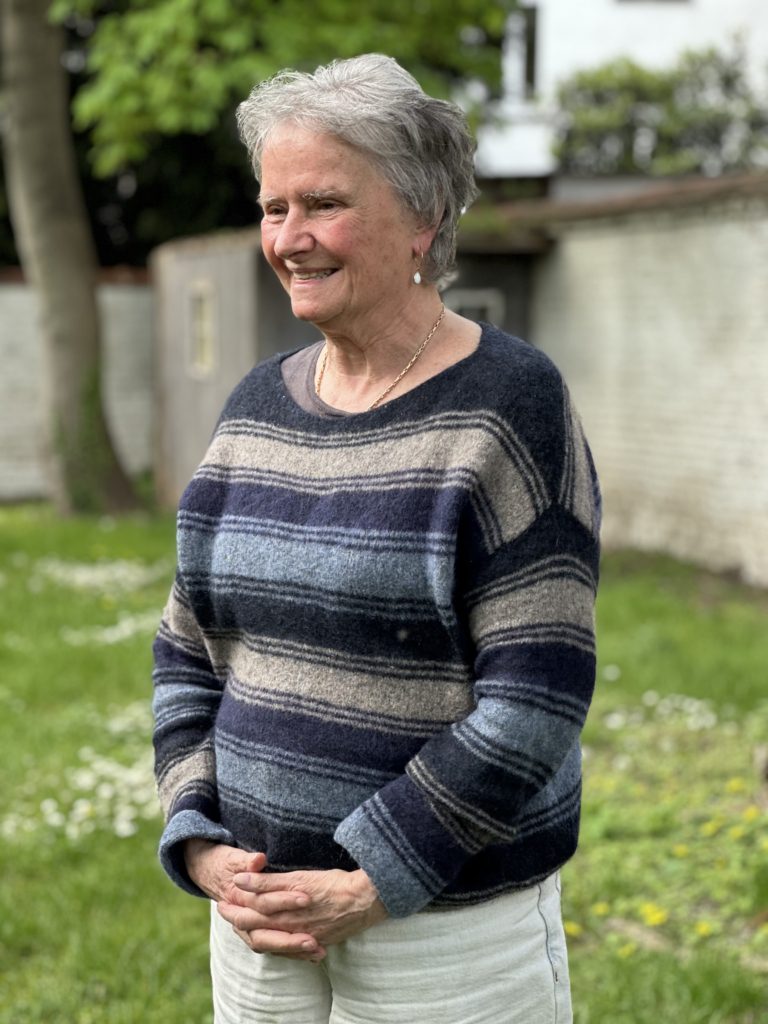
Cecile de Ryckel, 78, Belgium
Cecile is a lifelong activist working on anti-racism and climate change.
Why did you become an activist?
After a homelessness crisis amongst migrants in Belgium in 2015, my husband and I hosted two people from Ethiopia who the authorities had left to sleep in a city park. They told us that in Ethiopia they were small-scale farmers and grew food for their families. However, it was raining less frequently, and growing food was becoming more difficult. That was when I realized that climate change was one of the most important issues in the world today, and that it would have far-reaching consequences. Soon after that I participated in a citizens assembly discussing how best to address climate change and reduce carbon emissions. We learned how to mobilize people and change behaviours. I joined an advocacy collective, Grandparents for the Climate, and started working actively on the issue.
We have a responsibility to future generations to address this challenge today. It already has wide-ranging impacts on people of all ages. I remember when I was a child that we would joke that an older person was someone who “wouldn’t make it through the winter”, but today due to rising temperatures we sadly have to ask whether some older people can “make it through the summer”.
I recently saw how a group of older women won a landmark court case that the Swiss government’s weak climate change policy had violated their rights. This will help advance the cause greatly, for people of all ages.
Amina Musa, 72, Nigeria
Amina is an activist on behalf of victims of the armed conflict in north-east Nigeria and their families, including those who have been unlawfully killed or detained.
Why did you become an activist?
I became an activist nine years ago when Boko Haram forced us to leave our homes, and we found ourselves living in camps controlled by the Nigerian government. The military made baseless accusations that our sons were associated with Boko Haram. Our sons were blindfolded and arrested and held in dehumanizing conditions. I had no choice but to start campaigning for their release. As mothers, we came together and started a movement to seek justice. We are demanding that all those detained unlawfully be released immediately and that the government investigate the gross violations we have experienced. Some of our sons have been in detention for more than 10 years. We have had enough, we want justice.
I tell other older people that they should continue with their activism and bear with the challenges, and that our activism can also inspire younger people. I know it is not easy, but these causes are important. Age should not and will not deter us from making our society free from injustice.
Juan Jacobo Hernández, 82, Mexico
Juan is an activist on social issues and LGBTQ+ liberation.
Why did you become an activist?
In the 1960s, I was part of Mexican student movements. Then Stonewall happened: I had a boyfriend at the time who lived in New York, and he told me that I had to come and see it for myself. I witnessed the first LGBTQ+ rebellion: the first time gay men, trans people, lesbians were standing up and confronting the police. Coming back to Mexico, we started the Frente de Liberación Homosexual (Gay Liberation Front). I had learned a lot about how to make protests visible and how to make our voices heard. Finally, there was a space where we could be active, where we could do something. When I started my activism, we didn’t use the term “human rights” – but that’s what it has always been about. We held large demonstrations against political repression, for the abolition of the death penalty, and to fight restrictions on social protest. Persecution by the government was very real and close to us at the time – gay men and trans women were persecuted, raided by the police, extorted and beaten up.
Whenever we were out in the street, we felt that something bad could happen. We were struggling for our lives, for our security, for our right to be in the street without being beaten up, robbed or killed.
My whole life, I have never stopped being an activist. The AIDS epidemic collapsed the first phase of gay liberation. So many activists died and [as I grew older], I recognised the need to transmit my experience, knowledge and values [to the younger generation]. Since 1981 I’ve been part of Collective Sol, where we work to build and strengthen the capacity of small, grassroots organizations that are working on the most pressing LGBTQ+ issues they see today.
My life as an activist means I can look back and say I have witnessed three great moments in LGBTQ+ liberation. The first was when we formed political organizations, coming out of the shadows and breaking the silence. The second was the HIV/AIDS epidemic, the way it created a connection between LGBTQ+ liberation and people living with HIV, irrespective of whether they were LGBTQ+. This connection was powerful and drove the movement forward.
Here Haris Azhar shares how and why he believes the law can be used as a powerful tool to deal with repression of democratic voices and their rights. Read more from our In My Own Words series here.
My name is Haris Azhar. I would say I’ve been working, in general terms, on human rights issues for the last 25 years. I work across the country in Indonesia on some human rights, issues or situations, and in some conflict areas such as in Papua.
I have been working for and dealing with some vulnerable groups such as labour groups, as well as the indigenous people and victims from the violence as well. These days I practise as a lawyer, I do pro bono and also professional for-profit work where I use the profits work to subsidise the pro bono and public interest legal work. I have also joined some organisations, and I was director for two human rights organisations. So that’s why I’ve been very human rights focused.
In early 2024 me and my friend Fatia were brought to court. We won, and we got a good decision from the court. But this is not the final one, because the attorney general has appealed to the Supreme Court. I think this whole process was meant to serve as an example.
The whole process, especially last year, was intended to be intimidation. The litigation or the pre-trial process was intended to intimidate me [and] not to not say more about the practice of business oligarchs in this country. But myself, lawyers, and groups here said, we would not say sorry. We would not stop speaking, and that those in power could continue their judicial harassment of us and that we would fight them.
And during the fight, a lot of things happened [such as] intimidations, negative accusations and campaigns. They accused us of hoax stories, but actually they did the hoax stories. They took over and intercepted my mobile phone as well. These are the lengths and practices of intimidation in place.
However, the process of the court for people like us, we pretty much don’t really care about the final decisions. We can see the shadow of the prisons, because what the government thinks is important for them is for us to not have democratic voices. There aremany cases by politicians and by business groups that aim to criminalise decent voices, and it has become a [common] practice. There are even consultants that can help you if you would like to know how to criminalise decent/democratic voices.
It’s become an industry against freedom of expression, to show that, “This is what happens if you are against us.” They wanted to show they could bring me to court so the warning was that anyone who becomes the client of Haris should be aware. It was symbolic, and that’s what I mean it is a message to intimidate and to intimidate vulnerable groups especially.
Widespread engagement on human rights, working through organisations, has developed not only my knowledge, my skill, but also my networks. This has also developed my interest in what some of the ways we (as a nation) would like to put on the table with regards to issues of human rights.
As a practising lawyer, we have always believed here that we can use the law [to achieve justice]. However the movement here is not like in South Africa, as an example, where at one point in South Africa there was no real equality. There was no legal institution that could be used to secure fairness. We don’t have that kind of situation here [in Indonesia], but we are still looking for the formalisation of equality and fairness.
We like to use the legal debate, space, and discourse as a way to combat evil, because the law provides the kind of tools or ammunition to attack evil. Those in power hide behind the law and therefore here in Indonesia, most of the battle and discourse always has an element of legality.
I believe that the law is one of the crucial things that need to be handled, in addition to other advocacy issues. Because we know that the law or legal mechanisms are [also] being used by the bad guys, by the oligarchs to justify and legalise their plans and to do their own business. Those in power always say that they have complied with the law, that they uphold the rule of law, but actually we know that the law they comply with is their own creation. It is their own definition. That’s why we [as legal practitioners] need to step in, even though it’s not the popular action to do so.
If those in, and adjacent to, power cannot be left to create what is good and not good within the framework of law. We need to bring in the voices from the ground. We need to bring the voices from the indigenous people. We need to bring the voices from the labour groups, from the students, from the women’s groups, and many other vulnerable groups who are connected to the issues.
This is instead of the politicians and the business groups alone making their own arguments and developing their own definitions. We cannot let them be, and let them take over in that kind of way. Rule of law and legislation, has to be accompanied and coloured by the vulnerable voices and interests. This is why we insist that a part of the campaign, part of the research, is that we take the legal action as well.
The gap between the haves and the political groups on the ground is huge. This has been happening year on year, and it is getting worse every year. The new regulations and legislations that we have here, which very much comply with the interests of the business groups which belong to some politicians, create more loose protection of rights of workers and women. For the youth and the students, they are getting fewer protections for their education and freedom.
There’s no freedom on campus for students anymore, [because of] intervention from the government and the police on campuses. It’s getting obvious these days. So I think we need at least two things. First, figuring out how to protect vulnerable groups, because why they were attacked or would be attacked is because they found irregularities, and problematic issues behind the policies of the government, or the law.
These issues have led to economic issues, social issues, business issues and so the vulnerable groups make a choice where they complain or protest, but they get attacked by police, government and intelligence. That is why we need more collaborations with vulnerable groups.
We also need more friends — lawyers, international advocates, researchers — coming down into the rural areas, and into the urban areas to capture what is happening and make a noise, to campaign. That’s why we need to have the first group that I mentioned before. We need not to deal with the substance of the problem, but with the second layer of the problem, [which is] the attacks of the participation, the effects to the participation. For this we need to have a lot of groups [working on] how to deal with this kind of shrinking space.
We just had the 2024 elections where we campaigned around the threat to our freedoms of speech and expression. Some of the candidates responded very well, but the one that was supported by the current regime didn’t have a strong resonance with what we are saying. In addition to the campaign, along with my criminalisation, myself, some friends and organisations submitted a complaint to the Constitutional Court.
Our complaint was regarding some legal articles which were being used against me and against some journalists. We won the case in the Constitutional Court earlier this year, and an article which had been used to criminalise a lot of people has now been dropped. But this win is very short [lived] because we have some articles within certain laws which allow the police to criminalise speech.
When I said we won, that’s regarding just one article in our criminal code. But in the next year and a half we will have a new criminal code implemented and new articles to criminalise speeches. We will need to challenge those articles in the next two years. It’s like Tom and Jerry, where we play hide and seek. It seems politicians and business need a shield to protect themselves from the public, hence these situations but we keep fighting them using the same law.
Legal institutions are not our institutions yet. They are still their institutions [meaning the powerful]. However to a certain degree, the legal space is an open stage for you to perform, to have a say. I think if we don’t fill the space, it will be filled by those who are not supportive of freedom of speech or freedom of expression.
These are the reasons why I think we have to join legal action. So as to not give space for evil to come in and occupy. Also, legal action is not the only type of work needed. It has to be one among others. For instance there is advocacy work too. But law cannot be neglected and that’s why this current situation (and the coming situations), require more than just focusing on the legal system. It has to be about a collaborative methodology and approach.
Human rights defenders and civil society are the voices of our communities. These voices must be at the heart of decision and policy making at all levels. Yet, some States and non-states actors feel those voices are too loud. Cao Shunli, Chinese human rights defender, victim of reprisals who died in detention 10 years ago. Around the world, inspiring voices echo Cao’s ambition, on different issues and in different contexts, but with the same aspiration: promoting and protecting human rights. In so doing, many have engaged with the United Nations to share evidence of abuses with experts and States. Regrettably, some are facing the same form of reprisals as Cao, and are now arbitrarily detained.
These include Trang in Viet Nam, Irfan and Khurram in India and Abdulhadi in Bahrain.
It’s time to take a stand. Join us in our campaign to #EndReprisals and call for the release of Trang, Abdulhadi, Khurram and Irfan. Let’s ensure that no one else faces Cao’s fate. Their voices deserve to be heard, and their freedom and lives must be protected.
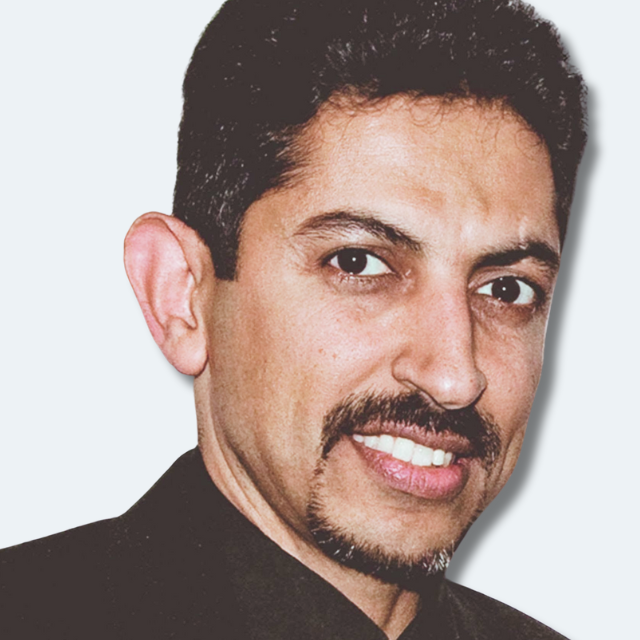
Abdulhadi Al-Khawaja
Abdulhadi Al-Khawaja is a Bahraini-Danish advocate known for his unwavering commitment to freedom and democracy. An outspoken human rights defender he serves as a source of inspiration for activists in Bahrain and globally. Abdulhadi has protested Bahrain’s unlawful detention and torture of several civilians since he was a student. He received political asylum in Denmark with his family where he continued his advocacy work, documenting human rights violations in Bahrain.
Abdulhadi Al-Khawaja was included for five times in the Secretary-General report on reprisals, noting “allegations of arbitrary arrest, torture and lengthy sentence following his engagement with United Nations human rights mechanisms.” In 2012, the Working Group on Arbitrary Detention found the detention of Abdulhadi arbitrary.
Pham Doan Trang is an author, blogger, journalist and pro-democracy activist from Viet Nam. She is a well-known advocate for human rights and has written on a wide range of human rights topics, including LGBTQI+ rights, women’s rights, environmental issues and on the suppression of activists.
She is considered among the most influential and respected human rights defenders in Viet Nam today. She has always been a major source of inspiration and mentorship for Vietnamese civil society and the next generation of human rights defenders.
Trang was prosecuted for her articles and reports on the human rights situation in Viet Nam, including an analysis of a 2016 report on the Formosa Ha Tinh Steel Plant environmental disaster that was shared with the United Nations. See also: https://humanrightsdefenders.blog/tag/pham-doan-trang/
Trang was the subject of several communications by special procedures mandate holders and an Opinion by the Working Group on Arbitrary Detention in 2021, which found her deprivation of liberty arbitrary. On 2 November 2022, experts addressed Trang’s detention, including restriction of her right to family visits and her deteriorating health status.
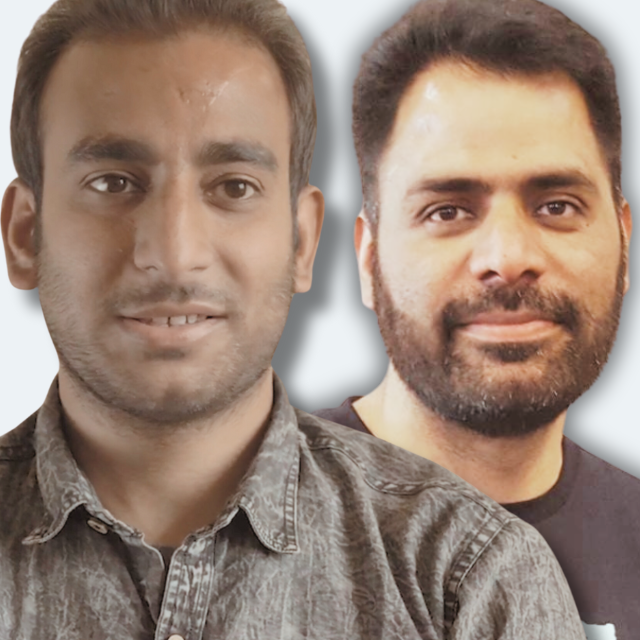
Irfan Mehraj and Khurram Parvez
Khurram Parvez and Irfan Mehraj are two Kashmiri human rights defenders. They have conducted ground-breaking and extensive human rights documentation in the Indian-administered Jammu and Kashmir, including through their work within the Jammu Kashmir Coalition of Civil Society (JKCCS) – Khurram as founder and programme coordinator, and Irfan as a researcher.
On 22 November 2021, Khurram was arrested again by the Indian Government, this time by India’s National Investigation Agency (NIA) under the Unlawful Activities (Prevention) Act (UAPA) and other laws, reportedly on allegations of “terrorism funding, being a member of a terrorist organisation, criminal conspiracy, and waging war against the state.” He remains in arbitrary detention to this day.
Meanwhile, on 20 March 2023, Irfan was summoned for questioning and arbitrarily detained by the NIA in Srinagar also under provisions of the UAPA and other laws. The NIA targeted Irfan for being ‘a close associate of Khurram Parvez.’ Both Khurram and Irfan are presently in pre-trial detention in the maximum-security Rohini prison in New Delhi, India. If convicted, Khurram and Irfan could face life imprisonment or even the death penalty.
Khurram’s situation has been included in the Secretary-General’s report on reprisals since 2017 and Irfan’s case was included in the 2023 report.
In June 2023, United Nations experts expressed serious concerns regarding the charges against and arrest of Irfan and Khurram, stating that their continued detention is ‘designed to delegitimise their human rights work and obstruct monitoring of the human rights situation in Indian-administered Jammu and Kashmir.’ The United Nation Working Group on Arbitrary Detention (WGAD) published an opinion in the same year, finding Khurram’s detention arbitrary.
What do we want? It’s simple. We want Irfan, Khurram, Trang and Abduhadi to be freed so they can continue their work without fear of further reprisals, and we want accountability for Cao.
How do we achieve this?
We mobilise diplomatic missions, encouraging them to speak out and raise individual cases of reprisals against defenders at the UN and in other spaces and hold their peers to account. We convince the UN Secretary General and his team to acknowledge and document ALL cases of reprisal and intimidation by including them in his annual report on reprisals and intimidation against defenders engaging or seeking to engage with the UN and its human rights mechanisms. We push the UN system to establish clearer protocols on how to consistently and effectively prevent, respond and follow up on cases of reprisals. We encourage governments, activists, and concerned individuals to stand in solidarity with human rights defenders and organisations who are subjected to reprisals and intimidations.
What can you do?
To achieve our goals, we are drawing attention to some of the most emblematic cases of reprisals that illustrate how human rights defenders are prevented from or punished for engaging with the UN. Here are impactful actions you can take:
In order to assist stakeholders with research, analysis and action on cases of reprisals and intimidation, ISHR launched an online database compiling cases or situations of intimidation and reprisals documented by the United Nations (UN) Secretary-General between 2010 and 2020.
878 Cases of intimidation and reprisals against human rights defenders engaging with the UN reported by the UN Secretary General between 2010 and 2020.
81 Countries were cases of reprisals were documented by the UN Secretary-General between 2010 and 2020.
13 Reports published by the UN Secretary General on intimidation and reprisals.
Mozilla is highlighting each year the work of 25 digital leaders using technology to amplify voices, effect change, and build new technologies globally through its Rise 25 Awards. On 13 May 2024 was the turn of Raphael Mimoun, a builder dedicated to making tools that empower journalists and human rights defenders. Aron Yohannes talked with Raphael about the launch of his app, Tella, combatting misinformation online, the future of social media platforms and more.
Raphael Mimoun: So I never worked in tech per se and only developed a passion for technology as I was working in human rights. It was really a time when, basically, the power of technology to support movements and to head movements around the world was kind of getting fully understood. You had the Arab Spring, you had Occupy Wall Street, you had all of these movements for social justice, for democracy, for human rights, that were very much kind of spread through technology, right? Technology played a very, very important role. But just after that, it was kind of like a hangover where we all realized, “OK, it’s not just all good and fine.” You also have the flip side, which is government spying on the citizens, identifying citizens through social media, through hacking, and so on and so forth — harassing them, repressing them online, but translating into offline violence, repression, and so on. And so I think that was the moment where I was like, “OK, there is something that needs to be done around technology,” specifically for those people who are on the front lines because if we just treat it as a tool — one of those neutral tools — we end up getting very vulnerable to violence, and it can be from the state, it can also be from online mobs, armed groups, all sort of things.
There’s so much misinformation out there now that it’s so much harder to tell the difference between what’s real and fake news. Twitter was such a reliable tool of information before, but that’s changed. Do you think that any of these other platforms can be able to help make up for so much of the misinformation that is out there?
I think we all feel the weight of that loss of losing Twitter. Twitter was always a large corporation, partially owned by a billionaire. It was never kind of a community tool, but there was still an ethos, right? Like a philosophy, or the values of the platform were still very much like community-oriented, right? It was that place for activists and human rights defenders and journalists and communities in general to voice their opinions. So I think that loss was very hard on all of us.
I see a lot of misinformation on Instagram as well. There is very little moderation there. It’s also all visual, so if you want traction, you’re going to try to put something that is very spectacular that is very eye catchy, and so I think that leads to even more misinformation.
I am pretty optimistic about some of the alternatives that have popped up since Twitter’s downfall. Mastodon actually blew up after Twitter, but it’s much older — I think it’s 10 years old by now. And there’s Bluesky. So I think those two are building up, and they offer spaces that are much more decentralized with much more autonomy and agency to users. You are more likely to be able to customize your feeds. You are more likely to have tools for your own safety online, right? All of those different things that I feel like you could never get on Threads, on Instagram or on Twitter, or anything like that. I’m hoping it’s actually going to be able to recreate the community that is very much what Twitter was. It’s never going to be exactly the same thing, but I’m hoping we will get there. And I think the fact that it is decentralized, open source and with very much a philosophy of agency and autonomy is going to lead us to a place where these social networks can’t actually be taken over by a power hungry billionaire.
What do you think is the biggest challenge that we face in the world this year on and offline, and then how do you think we can combat it?
I don’t know if that’s the biggest challenge, but one of the really big challenges that we’re seeing is how the digital is meeting real life and how people who are active online or on the phone on the computer are getting repressed for that work in real life. So we developed an app called Tella, which encrypts and hides files on your phone, right? So you take a photo or a video of a demonstration or police violence, or whatever it is, and then if the police tries to catch you and grab your phone to delete it, they won’t be able to find it, or at least it will be much more difficult to find it. Or it would be uploaded already. And things like that, I think is one of the big things that we’re seeing again. I don’t know if that the biggest challenge online at the moment, but one of the big things we’re seeing is just that it’s becoming completely normalized to grab someone’s phone or check someone’s computer at the airport, or at the border, in the street and go through it without any form of accountability. People have no idea what the regulations are, what the rules are, what’s allowed, what’s not allowed. And when they abuse those powers, is there any recourse? Most places in the world, at least, where we are working, there is definitely no recourse. And so I think that connection between thinking you’re just taking a photo for social media but actually the repercussion is so real because you’re going to have someone take your phone, and maybe they’re going to delete the photo, or maybe they’re going to detain you. Or maybe they’re going to beat you up — like all of those different things. I think this is one of the big challenges that we’re seeing at the moment, and something that isn’t traditionally thought of as an internet issue or an online digital rights issue because it’s someone taking a physical device and looking through it. It often gets overlooked, and then we don’t have much kind of advocacy around it, or anything like that.
What do you think is one action everybody can take to make the world and our lives online a little bit better?
I think social media has a lot of negative consequences for everyone’s mental health and many other things, but for people who are active and who want to be active, consider social networks that are open source, privacy-friendly and decentralized. Bluesky, the Fediverse —including Mastodon — are examples because I think it’s our responsibility to kind of build up a community there, so we can move away from those social media platforms that are owned by either billionaires or massive corporations, who only want to extract value from us and who spy on us and who censor us. And I feel like if everyone committed to being active on those social media platforms — one way of doing that is just having an account, and whatever you post on one, you just post on the other — I feel like that’s one thing that can make a big difference in the long run.
We started Rise25 to celebrate Mozilla’s 25th anniversary. What do you hope that people are celebrating in the next 25 years?
I was talking a little bit earlier about how we are building a culture that is more privacy-centric, like people are becoming aware, becoming wary about all these things happening to the data, the identity, and so on. And I do think we are at a turning point in terms of the technology that’s available to us, the practices and what we need as users to maintain our privacy and our security. I feel like in honestly not even 25, I think in 10 years, if things go well — which it’s hard to know in this field — and if we keep on building what we already are building, I can see how we will have an internet that is a lot more privacy-centric where communications are by default are private. Where end-to-end encryption is ubiquitous in our communication, in our emailing. Where social media isn’t extractive and people have actual ownership and agency in the social network networks they use. Where data mining is no longer a thing. I feel like overall, I can see how the infrastructure is now getting built, and that in 10,15 or 25 years, we will be in a place where we can use the internet without having to constantly watch over our shoulder to see if someone is spying on us or seeing who has access and all of those things.
Lastly, what gives you hope about the future of our world?
That people are not getting complacent and that it is always people who are standing up to fight back. We’re seeing it at. We saw it at Google with people standing up as part of No Tech for Apartheid coalition and people losing the jobs. We’re seeing it on university campuses around the country. We’re seeing it on the streets. People fight back. That’s where any change has ever come from: the bottom up. I think now, more than ever, people are willing to put something on the line to make sure that they defend their rights. So I think that really gives me hope.
Nikole Yanez is a computer scientist by training, and a human rights defender from Honduras. She is passionate about feminism, the impact of the internet and protecting activists. She was first drawn to human rights through her work as a reporter with a local community radio station. After surviving the coup d’état in Honduras in 2009, Nikole broadened her approach to focus her activism on technology. When she applied for the Digital Forensics Fellowship with the Amnesty Tech Security Lab in 2022, she was looking to learn more about cybersecurity and apply what she learnt with the organizations and collectives she works with regularly.
She highlighted her commitment to fostering a network of tech-savvy communities across Latin America in an interview with Elina Castillo, Amnesty Tech’s Advocacy and Policy Advisor:
I grew up in Honduras, where I lived through the coup d’état, which took place in 2009. It was a difficult time where rights were non-existent, and people were constantly afraid. I thought it was something you only read about in history books, but it was happening in front of my eyes. I felt myself just trying to survive, but as time went by it made me stronger and want to fight for justice. Despite the difficulties, people in my community remained hopeful and we created a community radio station, which broadcast stories about everyday people and their lives with the aim of informing people about their human rights. I was a reporter, developing stories about individual people and their fight for their rights. From there, I found a passion for working with technology and it inspired me to train to become a computer scientist.
I am always looking for ways to connect technology with activism, and specifically to support women and Indigenous people in their struggles. As much as technology presents risks for human rights defenders, it also offers opportunities for us to better protect ourselves and strengthen our movements. Technology can bring more visibility to our movements, and it can empower our work by allowing us to connect with other people and learn new strategies.
Is there one moment where you realized how to connect what you’ve been doing with feminism with technology?
In my work, my perspective as a feminist helps me centre the experiences and needs of marginalised people for trainings and outreach. It is important for me to publicly identify as an Afrofeminist in a society where there is impunity for gendered and racist violence that occurs every day. In Honduras we need to put our energy into supporting these communities whose rights are most violated, and whose stories are invisible.
For example, in 2006, I was working with a Union to install the Ubuntu operating system (an open-source operating system) on their computers. We realized that the unionists didn’t know how to use a computer, so we created a space for digital literacy and learning about how to use a computer at the same time. This became not just a teaching exercise, but an exercise for me to figure out how to connect these tools to what people are interested in. Something clicked for me in this moment, and this experience helped solidify my approach to working on technology and human rights.
There are not many women working in technology and human rights. I don’t want to be one of the only women, so my goal is to see more women colleagues working on technical issues. I want to make it possible for women to work in this field. I also want to motivate more women to create change within the intersection of technology and human rights. Using a feminist perspective and approach, we ask big questions about how we are doing the work, what our approach needs to be, and who we need to work with. Nikole Yanez Honduras Human Rights Defender
For me, building a feminist internet means building an internet for everyone. This means creating a space where we do not reproduce sexist violence, where we find a community that responds to the people, to the groups, and to the organizations that fight for human rights. This includes involving women and marginalised people in building the infrastructure, in the configuration of servers, and in the development of protocols for how we use all these tools.
In Honduras, there aren’t many people trained in digital forensics analysis, yet there are organizations that are always seeking me out to help check their phones. The fellowship helped me learn about forensic analysis on phones and computers and tied the learning to what I’m actually doing in my area with different organizations and women’s rights defenders. The fellowship was practical and rooted in the experience of civil society organizations.
How do you explain the importance of digital forensics? Well first, it’s incredibly relevant for women rights defenders. Everyone wants to know if their phone has been hacked. That’s the first thing they ask:, “Can you actually know whether your phone has been hacked?” and “How do I know? Can you do it for me? How?” Those are the things that come up in my trainings and conversations.
I like to help people to think about protection as a process, something ongoing, because we use technology all day long. There are organizations and people that take years to understand that. So, it’s not something that can be achieved in a single conversation. Sometimes a lot of things need to happen, including bad things, before people really take this topic seriously…
I try to use very basic tools when I’m doing digital security support, to say you can do this on whatever device you’re on, this is a prevention tool. It’s not just applying technical knowledge, it’s also a process of explaining, training, showing how this work is not just for hackers or people who know a lot about computers.
One of the challenges is to spread awareness about cybersecurity among Indigenous and grassroots organizations, which aren’t hyper-connected and don’t think that digital forensics work is relevant to them. Sometimes what we do is completely disconnected from their lives, and they ask us: “But what are you doing?” So, our job is to understand their questions and where they are coming from and ground our knowledge-sharing in what people are actually doing.
To someone reading this piece and saying, oh, this kind of resonates with me, where do I start, what would your recommendation be?
If you are a human rights defender, I would recommend that you share your knowledge with your collective. You can teach them the importance of knowing about them, practicing them, as well as encouraging training to prevent digital attacks, because, in the end, forensic analysis is a reaction to something that has happened.
We can take a lot of preventive measures to ensure the smallest possible impact. That’s the best way to start. And it’s crucial to stay informed, to keep reading, to stay up to date with the news and build community.
If there are girls or gender non-conforming people reading this who are interested in technical issues, it doesn’t matter if you don’t have a degree or a formal education, as long as you like it. Most hackers I’ve met become hackers because they dive into a subject, they like it and they’re passionate about it.Nikole Yanez Honduras Human Rights Defender.
On 4 May 2024, during World Press Freedom Day, the European Parliament launched a call for the submission of entries for the Daphne Caruana Galizia Prize 2024. The award is for all journalists who work in newspapers registered in one of the 27 member countries. The purpose of the award is to recognize outstanding work that promotes and defends the fundamental principles and values of the European Union, such as human dignity, freedom, democracy, equality, rule of law, and human rights. [see: https://www.trueheroesfilms.org/thedigest/awards/ea7f958d-a957-4495-9ab4-9550741a8a58]
An independent jury, comprising representatives of the press and civil society from EU countries and members of leading European journalists’ associations, will award the 20,000 europrize. The award ceremony will be around October 16, the anniversary of Daphne Caruana Galizia’s murder. Journalists have until 12 on July 31 to submit their entries.
The award aims at remembering Daphne Caruana Galizia, a Maltese journalist active against corruption, who was killed in 2017 by an explosive device planted in her car. The president of the European Parliament, Roberta Metsola, in presenting the 2024 edition, was keen to remember Daphne Caruana Galizia: “She was murdered, but her spirit endures in the work of journalists who, like her, defend truth, pluralism, and justice. This prize is for them.”
Associated Press on 23 January 2023 informs us that Colombia’s human rights watchdog is reporting that 215 human rights advocates were killed last year, the highest death toll since a peace accord was signed with leftist rebels in 2016.
José Ricaurte Quintero, who founded the Maná Survivors Association, was one of the last victims of 2022. He was assassinated in the street in Armenia in December. His group supported families of people who disappeared during more than five decades of armed conflict in Colombia.
The ombudsman’s office says the murders coincide with places that are strategically important to organized crime groups involved in drug trafficking, illegal mining and contraband.
The government of Gustavo Petro — Colombia’s first-ever leftist president — has proposed in his “total peace” policy to initiate peace talks with armed groups such as the ELN guerrillas and to reach out to FARC dissidents who refused to sign the peace accord, as well as the Gulf Clan cartel, with whom the government announced a truce.
Ombudsman Carlos Camargo expressed hope that such talks would lead to a reduction in actions against leaders of human rights groups.
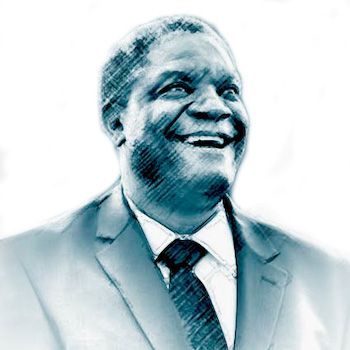
On 10 May 2024, the Aurora Humanitarian Initiative announced that eighth Aurora Prize for Awakening Humanity was awarded to Dr. Denis Mukwege, a world-renown gynecological surgeon and human rights activist from the Democratic Republic of the Congo (DRC). Dr. Mukwege is the president of Panzi Hospital and Foundation in the DRC, which he founded in 1999 to address the systemic issue of maternal healthcare and maternal mortality. Amidst ongoing conflict and critical healthcare needs stemming from war, the hospital has become one of the world’s pre-eminent treatment centres for survivors of sexual violence in conflict. Dennis Mukwege is one of the most recognized HRDs in the world, as shown by the 14 human rights awards already received [see: https://www.trueheroesfilms.org/thedigest/laureates/30515CB2-A763-412A-B61D-549E71306CD4]
In recognition of his courageous work and dedication to improving human rights for all, the Aurora Prize Selection Committee revealed their decision after conferring during a three-hour closed session. The Laureate receives a $1,000,000 award and a chance to continue the cycle of giving by supporting local grassroots leaders helping people in need. See also: https://humanrightsdefenders.blog/tag/denis-mukwege/
“Dr. Mukwege has dedicated his life not only to caring for women and girls suffering from the brutality of sexual violence, but also fiercely advocating for their rights,” said Dr. Noubar Afeyan, Co-Founder of the Aurora Humanitarian Initiative. “Aurora is honored to support Dr. Mukwege’s mission to help those in need, demand justice for the victims of sexual violence in war, and bring the perpetrators to justice.”
Guests at the Aurora Prize Ceremony also honored the contributions of two other shortlisted Aurora Humanitarians: Abdulhadi Al-Khawaja, a human rights advocate who has been fearlessly defending the most vulnerable communities in Bahrain and the MENA region, and Nasrin Sotoudeh, a prominent Iranian human rights defender.





 Hans Thoolen on Human Rights Defenders and their awards