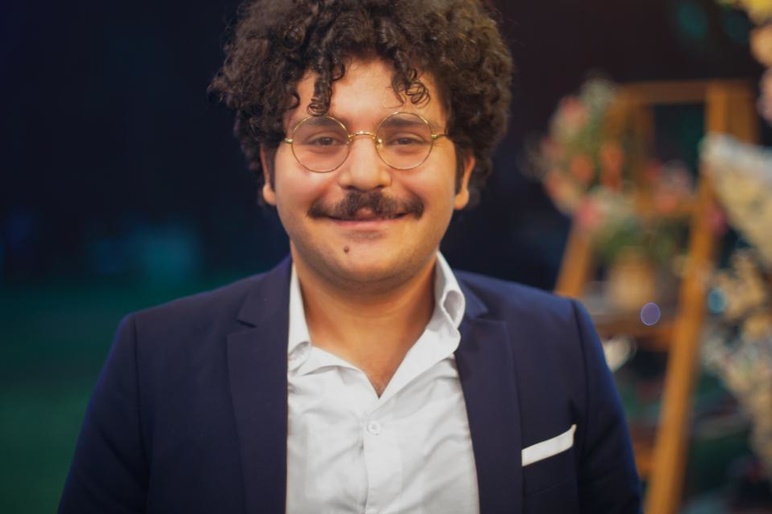
Posts Tagged ‘Human rights defender’

NGOs protest sentencing of human rights defender Patrick George Zaki – with success

July 19, 2023

A large group of civil society organizations, condemn the three-year prison sentence handed down to human rights researcher at the Egyptian Initiative for Personal Rights (EIPR) and academic Patrick George Zaki for his writings highlighting the hardship and discrimination faced by Coptic Christians in Egypt, such as himself.

On July 18, 2023, following a trial rife with due process violations, an Egyptian emergency state security court handed down a three-year prison sentence to Patrick on trumped up charges of spreading false news. Patrick, who was a graduate student at the University of Bologna at the time, was arrested by Egyptian authorities on February 7, 2020, while at the Cairo Airport during a visit home to see his family. In custody, he was held incommunicado for a 24-hour period; he was beaten, stripped, electrocuted, verbally abused, and threatened. He was initially accused of joining a terrorist organization and spreading false news. In September 2021, lawyers learned that he had been referred to emergency state security court on false news charges for a 2019 article that he authored for independent digital media outlet Daraj on his experience as a Coptic Christian religious minority, titled, “Displacement, Killing & Harassment: A Week in the Diaries of Egypt’s Copts.” On December 7, 2021, following 22 months behind bars, he was ordered released from detention pending trial, and placed on travel ban. His trial continued until the July 2023 verdict, following which he was taken back into custody today.

Verdicts handed down by an emergency court are not subject to legal appeal, only to ratification by the President. The President also has the authority to commute the sentence or to quash the verdict. Furthermore, under Circular No. 10 of 2017 governing emergency state security courts, “If the accused is brought to trial while not in custody and sentenced to a prison penalty, he must be released immediately without executing the penalty pending the decision of the ratifying authority.” Per this provision, Patrick must legally be free while the President considers ratification; for Egyptian authorities to have taken him into custody constitutes a clear violation of this circular.

The targeting, arrest, prosecution, and sentencing of Patrick Zaki for writing about his experiences as a Coptic Christian is an egregious measure by Egyptian authorities that is indicative of a larger failure by the state to protect religious minorities. Instead, the authorities target Copts for merely expressing themselves and bringing attention to the discrimination they regularly endure. This sentence occurs in violation of Egypt’s domestic laws and international legal commitments, and sends a clear message that the Egyptian government is not serious about implementing its national human rights strategy or carrying out a meaningful national dialogue. At a time during which Egyptian authorities should be addressing the dire economic crisis, this step raises severe questions on the trajectory of the country.

The undersigned civil society organizations, call on Egyptian President Abdel Fattah El-Sisi not to ratify the verdict handed down to Patrick Zaki and instead to quash it in its entirety. We call on Egyptian authorities to immediately release Patrick Zaki from custody, to drop all charges and close all cases brought against him in their entirety, and to lift the travel ban brought against him. We urge all of Egypt’s international, multilateral, and government partners to press the Egyptian government to immediately release Patrick and cease persecuting him for his legally protected speech and vital human rights work.

For once it seems to have worked: https://www.barrons.com/news/egypt-s-sisi-pardons-researcher-a-day-after-jailing-sparked-outcry-e22a3c1a?refsec=topics_afp-news

Signatories

  • Access Now
  • Alternative Press Syndicate
  • Amnesty International
  • Arab Reform Initiative
  • Cairo Institute for Human Rights Studies (CIHRS)
  • Campaign Against Arms Trade
  • Center for International Policy
  • CNCD-11.11.11
  • Committee for Justice
  • Daraj
  • Democracy in the Arab World Now (DAWN)
  • DIGNITY Danish Institute Against Torture
  • Egyptian Commission for Rights and Freedoms
  • Egyptian Front for Human Rights (EFHR)
  • Egyptian Human Rights Forum (EHRF)
  • Egyptian Initiative for Personal Rights (EIPR)
  • EgyptWide for Human Rights
  • El Nadim Center
  • FIDH (International Federation for Human Rights), within the framework of the Observatory for the Protection of Human Rights Defenders
  • Human Rights First
  • Human Rights Watch
  • HuMENA for Human Rights and Civic Engagement
  • INSM for Digital Rights
  • International Service for Human Rights (ISHR)
  • Kawaakibi Foundation
  • Lebanese Center for Human Rights – CLDH
  • MENA Rights Group
  • PEN America
  • PEN International
  • Project on Middle East Democracy (POMED)
  • Refugees Platform in Egypt (RPE)
  • Scholars at Risk
  • Shadow World Investigations
  • Sinai Foundation for Human Rights (SFHR)
  • SMEX
  • Start Point
  • Taafi initiative
  • The Freedom Initiative
  • The Legal Agenda
  • The Syria Campaign
  • The Tahrir Institute for Middle East Policy (TIMEP)
  • World Liberty Congress
  • World Organisation Against Torture (OMCT), within the framework of the Observatory for the Protection of Human Rights Defenders

https://www.omct.org/en/resources/statements/egypt-sentencing-of-academic-and-researcher-patrick-george-zaki

https://www.hrw.org/news/2023/07/18/civil-society-organizations-condemn-sentencing-egyptian-academic-and-researcher

https://www.aljazeera.com/news/2023/7/18/egypt-jails-rights-researcher-patrick-zaki-for-3-years-ngo-says

“G. N.” Saibaba in India continues from his cell

July 7, 2023

INPA02121512

A wheel-chair using, human rights activist and former university lecturer of English, G. N. Saibaba has endured years of cruel, inhumane solitary confinement ©DR

I still stubbornly refuse to die
The sad thing is that
They don’t know how to kill me
because I love so much
The sound of growing grass

OMCT published this impressive story in calling for the immediate release of G. N. Saibaba:

These are the defiant words of Gokarakonda Naga “G. N.” Saibaba, written from his cell in Nagpur Central Jail in the Indian state of Maharashtra. A wheel-chair using, human rights activist and former university lecturer of English, Sai has endured years of cruel, inhumane solitary confinement. Still, his irrepressible resilience shines through. And Sai’s poetry fills a recently published anthology. But he did not write it in verse. In order to evade the prison’s punishing censors, and to disguise his messages of equality, positivity and love, Sai penned letters to friends and his partner of 30 years. These were transcribed, and became his book entitled, Why Do You Fear My Way So Much?

Prison conditions

Now, G. N. Saibaba is much less able to write. Since his erroneous conviction for terrorism-related crimes in 2017, and a sentence of life imprisonment, Sai’s health has progressively deteriorated. Suffering from a heart condition, a brain cyst, a lump in the abdomen and breathing difficulties, his multiple medical conditions require specialised treatment only available in New Delhi. And his disability as a result of childhood polio has been compounded by untreated nerve damage in his left arm, that has spread to his right, leaving him with no strength in his upper limbs. Sai needs support to perform any simple human function like sitting up, eating, drinking or using the toilet, a task which has been assigned to two fellow detainees. His dependency has been underlined by the constant monitoring of his cell. It was only recently – after Sai went on another hunger strike – that the prison authorities agreed to change the direction of CCTV cameras, giving him some semblance of privacy. Before that, his bed and toilet were recorded 24/7. This was a small victory. Despite repeated advocacy by the UN and human rights groups on G. N. Saibaba’s behalf, he is forced to inhabit a small, egg-shaped cell exposed to extreme weather conditions and with little space to move, particularly for someone in a wheelchair as Sai. Given his disability, some commentators believe the conditions of his detention may amount to torture.

Arrest in Delhi

It was 9th May 2014, and G. N. Saibaba was returning home for lunch from his lecturing duties at Delhi University. Without warning, a van jack-knifed in front of the car he was travelling in, forcing it to stop. Sai’s driver was pulled roughly from the vehicle, and replaced by a man in civilian clothing. Two others flanked their captive in the back. G N Saibaba was driven directly to the airport. He was never shown an arrest warrant, and nobody informed Sai’s relatives about his arrest. He was put on a plane to Nagpur, Maharashtra. On arrival, he was transported in an anti-landmine vehicle, in a convoy of commandos armed with automatic weapons. The military clearly wanted to send a message they had detained a hard-core terrorist – not a committed campaigner who has fought most of his life against discrimination and caste-based oppression, and for the rights of women and indigenous Indians.

Activism

G. N. Saibaba grew up in a small, rural community in southern India. Disabled by polio as a young child, he understood early on how unfairness and prejudice are perpetrated. Excelling in school, Sai went on to university where he became involved in student politics. His appointment as a professor of English did not dilute his outspoken criticisms of injustice.

In particular, he became a leading detractor of what became known as ‘Operation Green Hunt’ – a military campaign in central India, home to a large population of several indigenous communities (known as Adivasis), to eliminate Maoists, also called Naxals. Central India has witnessed numerous people’s movements opposing forceful occupation of indigenous land, and the exploitation of ancient forests and rich mineral resources. This military campaign against Naxals was used to quash such movements, leading to numerous human rights violations against civilians.

Conflict in this region dates back to the 1960s. ‘Operation Green Hunt’ began in 2009 – an all-out, on-going offensive by the Indian armed forces to rid the area of Naxals. G. N. Saibaba led the Forum Against War on the People – a solidarity organisation, and an attempt to shine a light on human rights abuses in the region. These atrocities – committed for the most part by the military and paramilitaries – have been well documented. They include extrajudicial killings, multiple rapes, and the deeply disturbing desecration of civilian corpses. It has been estimated more than 2,000 people have lost their lives since 2009.

Conviction

G. N. Saibaba’s advocacy certainly gave pause for thought to national and transnational mining corporations thinking about investing in the region. So, it was inevitable perhaps he would become a target. His persecution began under the Congress government – his Delhi home was raided more than once – and then continued under the BJP, and the prime ministership of Narendra Modi.

At G. N. Saibaba’s trial in 2017, with the courthouse fortified by hundreds of police officers to reinforce the impression of a dangerous extremist, he was tried under India’s anti-terror legislation – the Unlawful Activities (Prevention) Act. With five others, Sai was convicted of alleged links to the banned Maoist organisation.

Judicial rollercoaster

In October this year, the Nagpur Bench of the Bombay High Court ruled G. N. Saibaba’s initial trial had been flawed. The case against him was discharged. The elation he, his family and supporters felt quickly turned to disbelief. The government – infuriated, no doubt by the court’s decision to release an ‘urban Naxal’, a term regularly used to stigmatise human rights defenders – applied for a special sitting of the Supreme Court. The very next day, on a non-working day the special bench of the Supreme Court suspended the decision of the Bombay High Court. This leaves G N Saibaba still in that heavily monitored isolation cell, struggling to negotiate its curved walls in his wheelchair.

Above all, love

G. N. Saibaba’s hope of liberty has once more been dashed. Even so, his spirit is strong. The untreated infections in his hands, and the pain he experiences, means Sai cannot write more than two or three pages a month. But letters from home, especially from his partner, help sustain him.

I defeat the purpose
of the solitary confinement
by drowning myself
in your letters of love.

https://www.omct.org/en/resources/news/an-academic-is-caged-his-thoughts-are-still-free-resilient-and-undefeated

MEA laureate 2012 Luon Sovath needs urgently your support

June 29, 2023

Currently living in exile in Switzerland, Luon Sovath finds himself in urgent need of financial support to cover his mounting medical bills.

Venerable Luon Sovath, a Buddhist monk since the age of 9, documented land grabs of vulnerable villages by big businesses in Cambodia before joining the movement for democracy, freedom, and governmental accountability in his country. His documentation work won him international recognition, including the Martin Ennals Award for Human rights defenders in 2012.

However, the journey towards justice has taken its toll on Luon Sovath, both physically and emotionally. He was forced to leave Cambodia in 2020 to escape government persecution. Currently living in exile in Switzerland, he finds himself in urgent need of financial support to cover his mounting medical bills. A recent dental procedure left him with a large invoice of 2,000.00 CHF, a burden that he cannot shoulder alone.

Luon Sovath has saved 900.00 CHF towards his medical expenses. However, he still requires further support to bridge the remaining financial gap and ensure that he receives the necessary healthcare to regain his strength.

Luon Sovath’s advocacy empowered marginalized communities and shed light on the injustices they face. His commitment to non-violence and his use of mediums such as videos, poems, and songs inspired thousands of other Cambodians to join the movement for democracy. Luon Sovath’s struggle is not only his own but a collective fight for justice and dignity.

On 21stJune 2023, The Martin Ennals Foundation decided to step in and organised this fundraiser for him.

If each of us makes a small contribution, we can help alleviate the burden of his medical bills and enable him to continue his crucial work in defending the rights of those who have been silenced. Together, we can make a difference in the life of this remarkable individual who has given so much to others.

Illustration of helping hands

Give CHF20 and be a founding donor

Your donation is the start of Martin Ennals Foundation’s journey to success. Your early support inspires others to donate.

Make a donation

https://www.gofundme.com/f/2012-mea-laureate-luon-sovath-needs-your-help

Pierre-Claver Akolly Amégnikpo Dekpoh from Togo tells his story

May 12, 2023

Pierre-Claver Akolly Amégnikpo Dekpoh works at the West African Human Rights Defenders Network (WAHRDN) in Lome, Togo. He spoke to ISHR about what drove him to become a human rights defender and about the challenges that he and his colleagues in Togo and West Africa face in working towards the realisation of human rights.

https://ishr.ch/defender-stories/human-rights-defenders-story-pierre-claver-akolly-amegnikpo-dekpoh-from-togo/

Vietnam should drop charges against Human Rights Defender Truong Van Dung

March 29, 2023
Truong Van Dung hold a sign that says, Request the Immediate Release of Nguyen Thuy Hanh. 

On 27 March 2023 7:00 Human Rights Watch said that the Vietnamese authorities should immediately release land rights activist Truong Van Dung and drop all charges against him. Police in Hanoi arrested Truong Van Dung in May 2022 on charges of “conducting propaganda against the state.” A Hanoi court on March 28, 2023 sentenced him to six years in prison.

Vietnamese authorities have convicted at least 163 people since 2018 for exercising their rights to freedom of expression or association under vague or over broad laws that criminalize protesting or criticizing the government. At least 18 others have been charged and are awaiting trial. The authorities have brought many of these cases using the propaganda charge, criminalized under articles 88 and 117 of Vietnam’s penal code.

“Truong Van Dung is the latest in a long line of human rights defenders silenced by the Vietnamese government for protesting against human rights violations and advocating for reforms,” said Phil Robertson, deputy Asia director at Human Rights Watch. “Democratic governments forging closer ties with Vietnam need to speak out publicly and forcefully in his support and call on Vietnam to release all political prisoners and take genuine steps toward reform.”

Truong Van Dung, 65, first became active in land rights advocacy in the 2000s, campaigning against forced confiscation of his own house. In the early 2010s, he joined other activists and began to advocate for basic rights, including freedom of expression, association, and assembly. Between 2011 and 2018, he also participated in numerous anti-China and pro-environment protests. He joined a protest opposing Vietnam’s problematic 2018 law on cybersecurity and publicly boycotted Vietnam’s national “elections,” a process controlled by the Vietnam Communist Party which is neither free nor fair.

He also publicly voiced support for numerous political prisoners and detainees, including Nguyen Thuy Hanh [see also: https://humanrightsdefenders.blog/2021/04/09/viet-nam-profile-of-human-rights-defender-nguyen-thuy-hanh-arrested-and-charged/], Pham Doan Trang, [see also: https://www.liv.ngo/content/files/2022/04/Pham-Doan-Trang_-UN-experts-call-for-release-of-Vietnamese-human-rights-defender-_-Hans-Thoolen-on-Human-Rights-Defenders-and-their-awards.pdf] Can Thi Theu, Nguyen Thi Tam, Trinh Ba Tu, Trinh Ba Phuong, Le Dinh Luong, Hoang Duc Binh, Nguyen Tuong Thuy, Pham Chi Dung, Le Huu Minh Tuan, Do Nam Trung, and members of Hoi Anh em Dan chu (Brotherhood for Democracy).

In December 2013, Truong Van Dung and other activists founded a humanitarian group, Hoi Bau bi Tuong Than (Association of Gourd and Squash Mutual Assistance), to provide financial and spiritual support for political prisoners, land rights petitioners, and their families.

After his arrest in May 2022, Truong Van Dung was held incommunicado for more than nine months. He was allowed to meet with his lawyer for the first time in March. His family has not been allowed to see him. Vietnam’s courts, controlled by the ruling Communist Party of Vietnam, are not independent and hearings and trials do not meet international standards. “How can Truong Van Dung get a fair trial when Vietnam’s legal system isn’t independent and the laws under which he is charged violate basic international human rights standards – and what he has been accused of shouldn’t even be crimes,” Robertson said.

https://www.hrw.org/news/2023/03/27/vietnam-drop-charges-against-human-rights-activist

Human rights defender Pierre-Claver Akolly Amégnikpo Dekpoh from Togo

March 22, 2023

Witnessing the realisation of human rights in our countries would be a great joy because that is what we work towards.’

Pierre-Claver Akolly Amégnikpo Dekpoh works at the West African Human Rights Defenders Network (WAHRDN) in Lome, Togo. He spoke to ISHR about what drove him to become a human rights defender and about the challenges that he and his colleagues in Togo and West Africa face in working towards the realisation of human rights.

Learn more about Pierre-Claver and hear the stories of other human rights defenders like him: https://ishr.ch/defender-stories/

https://ishr.ch/defender-stories/human-rights-defenders-story-pierre-claver-akolly-amegnikpo-dekpoh-from-togo/

Human Rights Defender, Jane Naini Meriwas, from Kenya, defends the young women of the Samburu community

March 15, 2023

The regional NGO DefendDefenders highlights every month a “Human Rights Defender of the month”. In January 2023 it was Jane Naini Meriwas. Like many African societies, The Samburu community in Northern Kenya is a gerontocracy – a very hierarchical community in which elders hold sway over almost all private and public matters. Among these predominantly pastoral nomads, very little importance is attached to the young – especially young girls, who are barely given a chance at education and often married off before their first menstrual cycle, but not before they undergo mandatory Female Genital Mutilation (FGM).

It is in this community that Jane Naini Meriwas was born 46 years ago, in Kipsing village,  Oldonyiro Subcounty, Isiolo County. When she was 16, her mother passed on, and she watched with great trepidation as her father planned to marry another wife, not sure what that would mean for her or her ambitions for school. As it turned out, fate was on her side. When her father uncharacteristically asked what she thought of his plans, Jane seized the opportunity to stand up for herself and interests:

“I told him that if he wants to go ahead and remarry, he should give me my mother’s share of livestock to support my education since I know I would have no one looking out for me going forward,” says Meriwas. Simultaneously shocked and touched by his daughter’s candidness, Meriwas’ father decided to give the idea of remarrying more thought. By the time Meriwas returned home at the end of the school term, she found that her father had abandoned the idea altogether, and decided to support her to finish school. “I was surprised and elated in equal measure. It also encouraged me to always be confident and speak my mind, assured that I had a father who would always listen to me,” she says. At University, Meriwas studied Community Development, after which she worked with a catholic mission in her community. But her passion to empower more women in her community would not let her rest. “Issues like FGM, girl child beading, forceful abortion, early marriages, wife beating, were still holding my community back and I could not just pursue a personal career and pretend everything was right. I had to do something,” she says. Meriwas teamed up with five other women, with whom they would every month, organise groups of women and sensitise them to resist and push back against these harmful cultural practices. Overtime, they also started engaging with men, encouraging them to educate girl children, using Meriwas’ father as an example. Won over by his daughter’s dedication, Meriwas’ father would tag along to some of these meetings, to testify on the benefits of educating a girl-child. “From a reluctant patriarchal man, he had become a champion of girl-child empowerment,” says Meriwas.Jane Naini Meriwas

Encouraged by the growing consciousness and awareness her and her colleagues’ efforts were igniting in her community, Meriwas, in 2006 resigned her formal job to start Samburu Women Trust, a not-for-profit organisation devoted to the empowerment of  Samburu’s indigenous women and girls.  Here, the Trust offers pyscho-social support to women who have been abused by their husbands, runs campaigns against FGM, supports girls denied an opportunity to go to school by their parents, and engages local and opinion leaders on the consequences of some of the community’s harmful cultural practices to influence mindset change.

Today, Samburu Women Trust has 50 women and girls of different ages, including a Chief Government Officer, who have been empowered to successfully resist FGM and are instead now local champions against the practice. Over the years, the community’s women and girls who previously never owned land have been empowered to start asserting their rights to land, so much that when the Kenyan Government came to issue land tittles to the Samburu Community last year, of the 1000 land tittles issued, 600 were issued to women.

These gains have marked Meriwas out for hateful threats and profiling by especially the patriarchal elders and local politicians afraid of losing their power and social influence thanks to the emerging social consciousness in the community. At one time, she was trailed and pursued by two men and only managed to escape them by running to the nearest police station.

Still, Meriwas will not relent. Together with her team they are now drafting an anti-beading law for tabling in the Samburu County assembly, to outlaw the culture of girl-child beading. The practice involves the community’s warrior men known as Morans marking out young girls between 9 -15years with beads around their necks and proceeding to have involuntary sexual relations with them, as a way of preparing them for marriage. Since the morans and their beaded girls are always from the same clan, marriage is prohibited, and in the event of a pregnancy, it is terminated through forceful abortion carried out by the community’s women elders. “It is a very abusive practice in so many ways, and it is only the Samburu that practice it. So, we are determined to end it,” she says.Jane Naini Meriwas

Asked about what drives her, she says it is the urge to push the ladder back. “I went to school by a chance, I overcame all the obstacles as an indigenous woman to be where I stand today as a respected woman leader in my community and country. So I feel I have an obligation to empower other young girls and women like me to emerge.”  

https://defenddefenders.org/human-rights-defender-of-the-month-jane-naini-meriwas/

Odinakaonye ‘Odi’ Lagi from Nigeria tells her story

February 8, 2023

If we work together to make sure that issues are more visible, that happen in Africa, the civil society organisations, I think, will be achieving more.’

Odinakaonye ‘Odi’ Lagi is the programme director for the Network of University Legal Aid Institutions (NULAI), Nigeria, and she works on promoting access to justice and legal aid for Nigerians. Citing the example of the Nigerian social movement to protest against the actions of the Special Anti-Robbery Squad (known as the end #EndSars protests), which she says did not receive enough attention in the continent, she calls for civil society groups and activists across Africa to come together to shed more collective light on individual national struggles.

https://ishr.ch/defender-stories/human-rights-defenders-story-odinakaonye-odi-lagi/

Human rights lawyer Thulani Maseko shot dead in eSwatini

January 23, 2023

On 22 January 2023 Freedom Under Law (FUL) said that the news that eSwatini human rights lawyer Thulani Maseko has been gunned down in cold blood comes as no surprise. The eSwatini government said Maseko was brutally shot and killed by unknown criminals at his home in Mbabane on Saturday night. See: https://www.trueheroesfilms.org/thedigest/laureates/03464020-c1e6-11ea-a3f7-933e766692a6

A ceaseless and fearless human rights lawyer, an outspoken critic of the regime in his beloved eSwatini, Thulani had all too long suffered at the hands of a heedless regime. But he lived by the motto: ‘My head is bloody, but unbowed … I am the master of my fate: I am the captain of my soul’.

“Sadly, and to the shame of those engaged in the administration of justice in his country, all too often he was a lone beacon of light,” FUL chair judge Johann Kriegler said. He said no-one could be misled by the cynical message of condolence put out on behalf of the eSwatini government.

His passing has not only left his family bereft of a loved one; his country has been left the poorer, its human rights conscience brutally stifled.

FUL said in paying tribute to Maseko that it respectfully suggested it would be fitting if the Law Society of eSwatini were to mark his passing by observing January 21 every year as a day of mourning his death and rededication to the rule of law. “To his widow and family we express our grateful condolences. They have paid a bitter price on behalf of all who try to serve the principles for which their dear one lived.

According to the eSwatini government, Maseko was shot by “unknown criminals”. “[His] demise is a loss to the nation, and his footprints as a human rights lawyer are there as proof of his contributions to the country. He will be surely missed,” it said in a statement.  Spokesperson Alpheous Nxumalo said the country’s security forces had assured the government that they were already at work looking for the killers and would not rest until they have been brought to book. “Government also wants to warn against speculations and insinuations, peddled particularly on social media platforms in instances like these. Again, government distinctively disassociates… and the country’s authorities from these heinous acts.”

Maseko chaired the Multi-Stakeholders Forum, a collaboration of political parties and civil society groups working to amplify calls for democratic reforms. 

In 2018, Maseko took Swaziland’s King Mswati III to court for changing the country’s name. He had argued that the resources to be channelled to the name change should rather go towards improving living standards of the poor, according to reports by City Press. In 2014, Maseko was sentenced to two years in prison, with the editor of news magazine The Nation, Bheki Makhubu, for contempt of court over articles critical of the government and judiciary. The Nation published articles co-authored by the two men which were critical of the chief justice and suggested that he may have abused his powers. See also: https://lawyersforlawyers.org/en/lawyers/thulani-maseko/

A very impressive group of NGOs and individuals co-signed a statement condemning his killing: https://www.fidh.org/en/issues/human-rights-defenders/eswatini-condemnation-of-assassination-of-renowed-hrd-thulani-maseko

https://www.businesslive.co.za/bd/national/2023-01-22-human-rights-lawyer-thulani-masekos-murder-is-no-surprise-says-freedom-under-law/

https://www.hrw.org/news/2023/01/25/eswatini-activist-rights-lawyer-brutally-killed

https://www.news24.com/news24/southafrica/news/human-rights-lawyer-thulani-maseko-shot-dead-outside-home-in-eswatini-20230122

https://www.frontlinedefenders.org/en/case/case-history-thulani-maseko

Mongolian human rights defender Munkhbayar Chuluundorj gets support from over 100 NGOs

January 18, 2023

On 12 January 2023, over 100 Groups urged world leaders to jointly press for all charges against Mongolian writer and activist Munkhbayar Chuluundorj to be dropped and for him to be freed.

We urge the Mongolian government to immediately release Mr. Munkhbayar Chuluundorj who was arbitrarily arrested in Ulaanbaatar, Mongolia, by the General Intelligence Agency (GIA) of Mongolia on February 17, 2022.

Mr. Munkhbayar Chuluundorj is an award-winning Mongolian journalist, poet, and human rights activist known for defending the linguistic, cultural, and historical identities of Southern Mongolians.

Mr. Munkhbayar Chuluundorj was detained in Ulaanbaatar on politically motivated charges related to his public criticism of the Mongolian government’s close ties with China and the shrinking rights in Southern Mongolia. His arrest and sentencing took place amid China’s increasingly severe policies in Southern Mongolia that aim to remove learning in the Mongolian language for several key subjects. …

Mr. Munkhbayar Chuluundorj was sentenced to 10 years in prison on June 28, 2022, for “collaborating with a foreign intelligence agency” against the People’s Republic of China. On December 21, 2022, the Supreme Court of Mongolia heard his appeal and upheld the lower court’s original decision. There is no evidence linking Mr. Munkhbayar Chuluundorj to the charge and his lawyer, Ms. Baasan Geleg, has dismissed the national security charge against him as entirely baseless.

In September 2022 two handwritten letters from Mr. Munkhbayar Chuluundorj – penned in the detention center in June 2022 – were received by the Southern Mongolian Human Rights Information Center. In the letters, he pleaded his innocence and detailed how he believed the evidence against him had been fabricated in relation to his work to better the conditions of Mongolians.

Land-locked Mongolia is highly dependent on China for imports and there has been an increase in economic influence, including vast loans via Xi Jinping’s ‘Belt and Road Initiative’, in recent years that have pushed Mongolia into major indebtedness to China. These debts are further exacerbated by a program of cultural propaganda such as the establishment of Confucius Institutes, television and radio broadcasts, and cultural centers.

Growing concern about the Mongolian state’s harassment, intimidation, and reprisals against human rights defenders is growing. In October 2022, the UN Committee on Economic, Social, and Cultural Rights raised the issue of human rights defenders and recommended Mongolia put in place protection safeguards and ‘urgently investigate cases in which human rights defenders are criminalized’. Later in the same month, the Japanese “Parliamentary Support Group for Southern Mongolia” published a statement regarding the sentence of Mr. Munkhbayar Chuluundorj.

Rights groups are calling on like-minded governments – both jointly and bi-laterally – and the UN Human Rights Council to call for the immediate release of Mr. Munkhbayar Chuluundorj.

https://www.nchrd.org/