Posts Tagged ‘Human rights defender’

Pro-Israel lobby in USA seems to control Harvard’s human rights centre

January 10, 2023

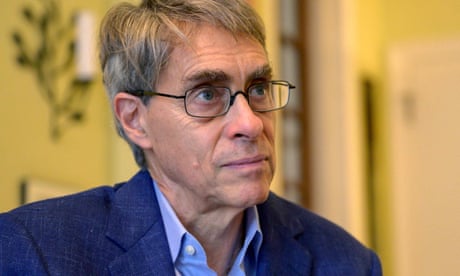
Kenneth Roth wrote in the Guardian of 10 January 2023 “I once ran Human Rights Watch. Harvard blocked my fellowship over Israel. I was told that my fellowship at the Kennedy School was vetoed over my and Human Rights Watch’s criticism of Israel”.

Kenneth Roth said Harvard’s move was a reflection of ‘how utterly afraid the Kennedy School has become of any criticism of Israel’.

. ..If any academic institution can afford to abide by principle, to refuse to compromise academic freedom under real or presumed donor pressure, it is Harvard, the world’s richest university. Yet the Kennedy School’s dean, Douglas Elmendorf, vetoed a human rights fellowship that had been offered to me because of my criticism of Israel. As best we can tell, donor reaction was his concern.

Soon after I announced my departure from Human Rights Watch [see: https://humanrightsdefenders.blog/2022/04/27/after-almost-30-years-kenneth-roth-will-leave-human-rights-watch/], the Kennedy School’s Carr Center for Human Rights Policy reached out to me to discuss offering me a fellowship. ..

.. in anticipation of my stay at the school, I reached out to the dean to introduce myself. We had a pleasant half-hour conversation. The only hint of a problem came at the end. He asked me whether I had any enemies.

It was an odd question. I explained that of course I had enemies. Many of them. That is a hazard of the trade as a human rights defender.

I explained that the Chinese and Russian governments had personally sanctioned me – a badge of honor, in my view. I mentioned that a range of governments, including Rwanda’s and Saudi Arabia’s, hate me. But I had a hunch what he was driving at, so I also noted that the Israeli government undoubtedly detests me, too.

That turned out to be the kiss of death. Two weeks later, the Carr Center called me up to say sheepishly that Elmendorf had vetoed my fellowship. He told Professor Kathryn Sikkink, a highly respected human rights scholar affiliated with the Kennedy School, that the reason was my, and Human Rights Watch’s, criticism of Israel.

That is a shocking revelation. How can an institution that purports to address foreign policy – that even hosts a human rights policy center – avoid criticism of Israel. Elmendorf has not publicly defended his decision, so we can only surmise what happened. He is not known to have taken public positions on Israel’s human rights record, so it is hard to imagine that his personal views were the problem.

But as the Nation showed in its exposé about my case, several major donors to the Kennedy School are big supporters of Israel. Did Elmendorf consult with these donors or assume that they would object to my appointment? We don’t know. But that is the only plausible explanation that I have heard for his decision. The Kennedy School spokesperson has not denied it.

Some defenders of the Israeli government have claimed that Elmendorf’s rejection of my fellowship was because Human Rights Watch, or I, devote too much attention to Israel. The accusation of “bias” is rich coming from people who themselves never criticize Israel and, typically using neutral sounding organizational names, attack anyone who criticizes Israel.

Moreover, Israel is one of 100 countries whose human rights record Human Rights Watch regularly addresses. Israel is a tiny percentage of its work. And within the Israeli-Palestinian context, Human Rights Watch addresses not only Israeli repression but also abuses by the Palestinian Authority, Hamas and Hezbollah.

In any event, it is doubtful that these critics would be satisfied if Human Rights Watch published slightly fewer reports on Israel, or if I issued less frequent tweets. They don’t want less criticism of Israel. They want no criticism of Israel.

The other argument that defenders of Israel have been advancing is that Human Rights Watch, and I, “demonize” Israel, or that we try to “evoke repulsion and disgust”. Usually this is a prelude to charging that we are “antisemitic”.

Human rights advocacy is premised on documenting and publicizing governmental misconduct to shame the government into stopping. That is what Human Rights Watch does to governments worldwide. To equate that with antisemitism is preposterous. And dangerous, because it cheapens the very serious problem of antisemitism by reducing it to criticism of Israel. See also: https://humanrightsdefenders.blog/2022/02/04/amnesty-joins-debate-on-apartheid-versus-palestinians-but-reactions-debase-struggle-against-real-antisemitism/

The issue at Harvard is far more than my own academic fellowship. I recognized that, as an established figure in the human rights movement, I am in a privileged position. Being denied this fellowship will not significantly impede my future. But I worry about younger academics who are less known. If I can be canceled because of my criticism of Israel, will they risk taking the issue on?

The ultimate question here is about donor-driven censorship. Why should any academic institution allow the perception that donor preferences, whether expressed or assumed, can restrict academic inquiry and publication? Regardless of what happened in my case, wealthy Harvard should take the lead here.

To clarify its commitment to academic freedom, Harvard should announce that it will accept no contributions from donors who try to use their financial influence to censor academic work, and that no administrator will be permitted to censor academics because of presumed donor concerns. That would transform this deeply disappointing episode into something positive.

See also the reaction by Gerald L. Neuman: https://hrp.law.harvard.edu/staff-reflections/hks-kenneth-roth-and-the-message-to-human-rights-defenders/

https://www.theguardian.com/commentisfree/2023/jan/10/kenneth-roth-human-rights-watch-harvard-israel

Belarusian Human Rights defender Aleh Hulak dies

December 18, 2022
Aleh Hulak
Aleh Hulak © 2022 Belarusian Helsinki Committee

On 16 December, 2022 Human Rights Watch published “In Memory of Aleh Hulak“, chair of the Belarusian Helsinki Committee (BHC) and a long-time leader of the Belarus human rights movement. Hulak, 55, led the Helsinki Committee with courage and unwavering commitment, including through the country’s recent, vicious crackdown on rights and the entrenchment of President Aliaksandr Lukashenka’s autocracy.

The BHC, one of the country’s oldest human rights groups, has a broad mandate to advance civil and political, and social and economic rights. Hulak was a strong voice for free speech and the release of political prisoners and also for fair work conditions, and upholding human rights in business, trade union operations and health care.  

The Belarusian government liquidated the BHC in 2021, along with hundreds of other independent groups. Hulak for years had pursued, against all odds, the group’s accreditation at the United Nations Economic and Social Council. In a bittersweet victory, his efforts succeeded less than two months ago.

https://www.hrw.org/news/2022/12/16/belarus-memory-aleh-hulak

MEA laureate AbdulHadi Al-Khawaja facing new charges for protesting injustice in Jau Prison

November 29, 2022

There seems to b no end to the persecution of AbdulHadi AlKhawaja, the 2022 laureate of the Martin Ennals Award [see: https://www.trueheroesfilms.org/thedigest/laureates/4d45e316-c636-4d02-852d-7bfc2b08b78d]

On Americans for Democracy and Human Rights in Bahrain strongly denounced new charges brought against this dual Bahraini-Danish citizen, who is serving a life sentence at Jau Prison for his participation in the 2011 pro-democracy demonstrations. See also: https://humanrightsdefenders.blog/2014/09/12/bahrain-travails-of-a-family-of-human-rights-defenders/

In November 2022, AlKhawaja informed his family that authorities are bringing four new charges against him for his protests against the harsh conditions which he and other political prisoners have been subjected to in Jau prison.

On 16 November, the Second Lower Criminal Court scheduled a hearing on the first of these new charges for an incident in November 2021 when authorities denied his right to call his daughters. However, the court postponed this hearing until 28 November on the grounds that Al-Khawaja needed to perform a power of attorney, something which he was going to do in-person during the hearing. A lieutenant attempted to pressure and threatened Al-Khawaja into recording a video stating that he was refusing to attend the hearing. Nevertheless, Al-Khawaja  refused and repeatedly stated on camera his desire to attend the hearing. He was then transferred back to his cell.

The second charge against him is for insulting a public servant and criticizing a foreign state (Israel) in March 2022 when Al-Khawaja led a peaceful protest inside the prison. He was chanting his opposition to the normalization of relations between Bahrain and Israel, as well as insulting a public servant, who allegedly tortured one of his cellmates. The hearing for this charge was set for 21 November. Prior to the hearing, authorities denied him the every-other-day calls with his lawyer. This hearing was also postponed and while the judge stated that AlKhawaja refused to attend, has not presented any evidence to AlKhawaja’s attorney to support this claim. AlKhawaja has informed his daughter that he wanted to attend.

The third charge, by far the most serious, is a charge of incitement to overthrow or change the regime, and relates to an incident in July 2022 when AlKhawaja was scheduled to attend a medical appointment for treatment on his back. During this appointment, authorities insisted on shackling his feet and hands during transfer and putting him in a small bus with no ventilation, creating conditions like an oven. In response, AbdulHadi started protesting and chanting “Down with the Interior Minister ” holding him accountable for his mistreatment and torture.

The fourth and final charge relates to the protest against the ill-treatment of a fellow inmate and is expected in the coming days.

In addition to these charges and violations, AlKhawaja was already suffering the unceasing legal and bodily violations of prison authorities since his arrest 12 years ago. In addition to inhumane restrictions and property confiscation, authorities have systematically used medical negligence as a form of reprisal against AlKhawaja’s activism. He has been denied proper medical treatment which has significantly contributed to the deterioration of his health. He suffers from back pain and vision impairment which were exacerbated by the extreme torture he endured during interrogations by security officers, as well as magnesium deficiency and leg spasms. In response to this treatment, AlKhawaja has gone on multiple hunger strikes and protests with his fellow inmates against the dehumanizing and unjust treatment by authorities.

These charges clearly demonstrate how prison authorities are trying to silence all dissent against their systematic repression of pro-democracy Bahrainis. Many organizations and individuals have condemned these charges because they set a dangerous precedent.

See also: https://humanrightsdefenders.blog/2021/01/27/over-100-ngos-write-to-prime-minister-of-denmark-to-pressure-bahrain-to-release-abdul-hadi-al-khawaja/

Nigerian Mubarak Bala subject of BBC documentary

November 11, 2022

A recent BBC documentary is about the challenges faced by humanists and atheists in Nigeria. The film was released this week and focuses on Mubarak Bala, reporting on the events that took place in the run-up to his unjust and disproportionate sentencing in April 2022.Mubarak, who is the President of the Humanist Association of Nigeria, is currently serving a 24-year prison sentence, in connection with a series of Facebook posts that some deemed to be ‘blasphemous’ and ‘likely to cause a public disturbance’. See also: https://humanrightsdefenders.blog/2021/08/27/mubarak-bala-wins-humanist-international-2021-freedom-of-thought-award/

Leo Igwe, Humanists International Board Member & Founding member of the Humanist Association of Nigeria, has been spearheading the campaign for his release since he was first arrested in April 2020.: “The launch of the documentary marks more than 30 months since Mubarak was separated from his family. I’m so proud of his wife, Amina, for the strength she has shown, but you can see in her interview how hard this has been for her. Perhaps the most chilling part of the documentary is when the lawyer who brought about the complaint against Mubarak simply cannot hide his pleasure at the outcome of the sentence, despite the devastating impact on the family. He says: “I really feel bad for the wife and the little son” but the smile on his face tells a very different story.”

see also: https://humanists.international/civi/?civiwp=CiviCRM&q=civicrm%2Fmailing%2Fview&reset=1&id=1422&cid=12522&cs=4a8ba3875028250988e91d06b138a2c8_1680716745_168

Following this week’s decision, Mubarak now has one year left of his sentence to serve however our work is not over; the state still has the opportunity to appeal. We will continue to monitor the situation closely and will work to support Mubarak until his safe release.

Human rights defender Şebnem Korur Fincancı in Turkey now also jailed

October 31, 2022
Şebnem Korur Fincancı
Şebnem Korur Fincancı © 2022 TİHV

On 28 October 2022 HRW reports on the continuing crackdown on human rights defenders in Turkey, where Şebnem Korur Fincancı is the latest human rights defender to be jailed as authorities pursue a bogus investigation against her for “spreading terrorist propaganda.” Korur Fincancı is head of the Turkish Medical Association, former head of the Human Rights Foundation of Turkey, and a retired professor of forensic pathology. Her work was central to the creation of the United Nations’ “Istanbul Protocol,” a landmark manual on how to identify and document signs of torture. She has also worked on the exhumation of mass graves and forensic documentation of war crimes in different countries. See also: https://humanrightsdefenders.blog/2018/11/05/turkish-human-rights-defender-and-forensic-doctor-sebnem-korur-fincanci-honoured/

Korur Fincancı’s arrest and pre-trial detention followed an interview she gave to pro-Kurdish TV on October 19. Responding to allegations that the Turkish military had used chemical weapons against the armed Kurdistan Workers’ Party (PKK) in the Kurdistan Region of Iraq, Korur Fincancı said the video footage she had seen suggested use of toxic gases affecting the nervous system and that there should be a full investigation. Turkish pro-government media and President Recep Tayyip Erdoğan accused Korur Fincancı and the Turkish Medical Association of slandering the Turkish military. Prosecutors and courts rapidly responded by ordering her investigation and detention.

Korur Fincancı’s arrest is the latest in a pattern of politically motivated cases as the Erdoğan government continues its crackdown on critics and opponents. Just this week, police also detained 10 Kurdish journalists on top of 16 incarcerated in June. The Turkish authorities show all the signs of being determined to silence the voices of experts like Korur Fincancı as well as the journalists who report their words.

Authorities also appear focused on a broader plan of reshaping and taking over professional bodies that have been critical of government policies. On October 27, Turkey’s justice minister announced a plan to restructure both the Turkish Medical Association, from which Korur Fincancı will be removed as head, and the Union of Chambers of Turkish Engineers and Architects. Mücella Yapıcı, a prominent member of the latter, was convicted and jailed in April along with rights defender Osman Kavala and six others for her alleged role in the 2013 Gezi Park protests.

In the run-up to the 2023 presidential and parliamentary elections, the Turkish government is likely to continue to misuse criminal charges and detention against individuals it wants to silence and attempt to seize institutions outside its control.

https://www.hrw.org/news/2022/10/28/turkey-jails-another-human-rights-defender

Rafto Prize 2022 to Nodjigoto Charbonnel of Chad

September 22, 2022

The Rafto Prize 2022 is awarded to Nodjigoto Charbonnel and his organization Association Jeunesse pour la Paix et la Non-Violence (AJPNV), “Youth for peace”, for their courageous struggle to abolish torture in Chad as well as internationally. In the context of authoritarianism, terrorism, war on terror and institutionalized violence, and at great personal risk, Charbonnel and his team assist survivors in rebuilding their lives after torture, and advocate the protection of human rights, and the prevention
of torture and sexual violence by providing human rights education for youth and civil society.

For more on this award and its laureates, see: https://www.trueheroesfilms.org/thedigest/awards/A5043D5E-68F5-43DF-B84D-C9EF21976B18.
Since the year 2000, AJPNV has conducted programs for the rehabilitation of victims of torture, the promotion of peace and non-violence and the prevention of torture in Chad. The need is overwhelming: in 2021, the organization treated 575 torture survivors. AJPNV provides medical, psychological, and legal support, free of charge, to victims of torture and sexual violence to reduce its somatic, psychological, and social harm. They assist the reintegration of victims of sexual violence through vocational training and prevent torture through education on the effects of torture on the individual and on the society.

Nodjigoto Charbonnel became familiar with the long-term harm and suffering caused by torture after his father survived mistreatment by state authorities. This experience motivated Charbonnel to found AJPNV. For 8 years he worked as an engineer at an international oil and gas production company, but in 2012 they terminated his contract because of his human rights work.
Charbonnel serves as the Sub-Saharan Africa Council member of the International Rehabilitation
Council for Torture Victims and as a regional leader of the Global Human Rights Project. Due to his work, Charbonnel has been detained and imprisoned three times. He and his family have also suffered harassment by state agents. Despite the political repression, Charbonnel and his AJPNV team maintain a clear voice for the victims of torture and sexual violence: “We reaffirm our commitment to shed light on those who commit torture, to expose their violation, to prevent future acts of torture, to ensure justice

https://www.rafto.no/en/news/raftoprisen-til-nodjigoto-charbonnel

see also: https://www.hrw.org/news/2022/09/23/chad-security-force-abuse-amid-national-dialogue

Karen activist Porlajee ‘Billy’ Rakchongcharoen’s murder: finally an indictment

August 22, 2022

The Thai authorities should fully and fairly prosecute all those responsible for the murder of a prominent ethnic Karen environmental activist, Porlajee ‘Billy’ Rakchongcharoen, in 2014, Human Rights Watch said on 16 August 2022. See also: https://humanrightsdefenders.blog/2014/05/06/un-high-commissioner-condemns-disappearance-of-billy-in-context-of-retaliation-against-environmentalist-in-south-east-asia/

Porlajee “Billy” Rakchongcharoen
Porlajee “Billy” Rakchongcharoen, a prominent ethnic Karen community and environmental activist, was allegedly murdered in the custody of the Kaeng Krachan National Park officials in Phetchaburi province, Thailand, in April 2014. © 2014 Private

On August 15, 2022, the Attorney General’s Office formally notified the Justice Ministry’s Department of Special Investigation (DSI) of its decision to indict four park officials accused of abducting and murdering Porlajee “Billy” Rakchongcharoen in April 2014. The charges include illegal confinement, premeditated murder, and concealing the victim’s body.

“Thai officials have long hindered justice for Billy through cover-ups and exploitation of legal loopholes,” said Elaine Pearson, acting Asia director at Human Rights Watch. “The authorities can right this wrong by ensuring that the attorney general’s decision to indict four officials moves promptly to an effective and fair prosecution.”

Billy was last seen on April 17, 2014, in the custody of Chaiwat Limlikitaksorn, then-head of Kaeng Krachan National Park in Phetchaburi province, and his staff. The park officials said they released him after questioning him briefly and had no information regarding his whereabouts. On September 3, 2019, DSI officials announced that his remains had been found in Kaeng Krachan National Park. Chaiwit was among the four indicted.

Pinnapa Prueksapan, Billy’s wife, told Human Rights Watch that she hoped there would be answers to basic questions, such as who had abducted and killed her husband, and who had obstructed justice.

Thailand is obligated under international human rights treaties to which it is a party to investigate and appropriately prosecute enforced disappearance, torture, custodial deaths, and other alleged human rights violations. In addition, in September 2019, Prime Minister Gen. Prayut Chan-ocha ordered the Department of Special Investigation to ensure that the case was watertight so the culprits could be brought to justice, regardless of their rank or position.

However, the investigation has suffered from a cover-up, Human Rights Watch said. Despite a long list of allegations against Chaiwat for serious abuses and misconduct during his tenure as head of Kaeng Krachan National Park, he has never been held to account.

In addition, Thai law does yet not recognize enforced disappearances as a crime. Human Rights Watch has repeatedly urged Prime Minister Prayut and his government to ratify the International Convention for the Protection of All Persons from Enforced Disappearance, which Thailand signed in 2012, and make enforced disappearance a criminal offense.

Chaiwat and his staff arrested Billy on April 17, 2014, for alleged illegal possession of a wild bee honeycomb and six bottles of honey.

At the time of his enforced disappearance, he was traveling to meet with ethnic Karen villagers and activists in preparation for an upcoming court hearing in the villagers’ lawsuit against Chaiwat and the National Park, Wildlife, and Plant Conservation Department of the Ministry of Natural Resources and Environment.

The villagers alleged in the lawsuit that, in July 2011, park authorities had burned and destroyed the houses and property of more than 20 Karen families in the Bangkloy Bon village. Billy was also preparing to submit a petition about this case to Thailand’s monarch. When he was arrested, he was carrying case files and related documents with him. Those files have never been recovered.

In September 2014, Police Region 7 officers filed malfeasance charges under article 157 of the penal code against Chaiwat and three other park officials for unlawfully detaining him. The other suspects named in the case are Boontaen Bussarakham, Thanaseth or Pitoon Chaemthes, and Krissanapong Jitthes. The DSI found traces of human blood in a vehicle belonging to the park office, but was not able to verify if the blood belonged to Billy because the vehicle was cleaned before forensic experts could examine it.

On September 3, 2019, the DSI announced that his remains had been found in Kaeng Krachan National Park, where he was last seen in custody of the park officials. The investigation team found an oil barrel, its lid, two steel rods, a burned wooden piece, and two bones at the bottom of the reservoir on April 26, 2019.

The Central Institute of Forensic Science subsequently confirmed the genetic trace of one of the bones found inside the barrel matched Billy’s mother. The investigation team then concluded it was part of his remains. The condition of this piece of human skull, which was burned, cracked, and shrunk due to exposure to heat of 200 to 300 degrees Celsius, suggests the killers burned his body to conceal the crime.

“The indictment of Chaiwat and other park officials is an important step for justice for Billy and all those whom Thai government officials have forcibly disappeared and killed,” Pearson said. “Thai authorities should recognize that they can’t escape being held accountable for the most heinous crimes.”

https://www.hrw.org/news/2022/08/16/thailand-officials-indicted-karen-activists-murder

Stop Reprisals Against Mongolian Human Rights Defender Sukhgerel Dugersuren

August 22, 2022

An astonishing 128 organisations joined Forum Asia on 18 August 2022 in signing the joint letter in support of the Mongolian human rights defender Sukhgerel Dugersuren which strongly condemns the criminalization and smear campaigns against her,

They call on all the international institutions and actors active in the country – including development banks, UN bodies and experts, EU member states and institutions, international embassies, international investors or private companies – to publicly speak out in support of Sukhgerel, use their leverage to strongly condemn reprisals, and take any action they can to ensure Sukhgerel can continue to safely carry out her work.

Who is Sukhgerel Dugersuren?

Sukhgerel Dugersuren is an internationally renowned human rights defender and the Executive Director of the Mongolian organizations Oyu Tolgoi Watch and Rivers without Boundaries Mongolia. She has a long trajectory of exposing human rights abuses and defending the rights of herder and rural communities in Mongolia. Her courageous and inspirational work is admired by scores of international and local civil society organizations, as well as UN Special Rapporteurs and experts, who have closely worked with her.

In the past decades, Sukhgerel has supported dozens of communities negatively affected by large-scale projects, such as mines and hydropower dams. She has helped these communities in denouncing the harmful impacts of these activities and bringing their grievances to the attention of the Mongolian government, development banks, and international organizations. For example, she supported complaints to the independent accountability mechanisms of the World Bank, International Finance Corporation, European Bank for Reconstruction and Development and the Asian Development Bank.

What happened and why is she being criminalized?

According to Front Line Defenders, on 2 August 2022, Mongolia’s General Intelligence Agency informed Sukhgerel that she is under investigation for committing crimes under the Mongolian Criminal Code Article 19.4, which prohibits the “illegal cooperation with foreign intelligence agency, agent.” Although no other details around the investigations have been shared, we fear Sukhgerel might be at risk of imminent arrest and we are deeply concerned for her safety.

Sukhgerel is being subject to a clear criminalisation process, where the law is used to limit civic freedoms and punish human rights defenders. The undersigned human rights organizations consider these accusations false and baseless, as they appear to be related to Sukhgerel’s support to the communities impacted by the Erdeneburen hydropower plant, funded by China’s EXIM Bank, and her legitimate requests for access to environmental information, public participation in environmental decision-making and transparency.

On 3 August 2022, during a government briefing, Mongolia’s Minister of Justice and Internal Affairs, H. Nyambaatar, stated that the construction of the Erdeneburen hydro plant had been suspended for two years, as a result of a letter from the local communities to the Chinese authorities. He also said that when development projects are interrupted by a civil society organization or person, then a task force should be established to investigate these cases as ‘sabotage’ under Criminal Code Article 19.6 and that the government could claim compensation for the lost economic opportunity. This concerning statement was shared just a few days before the visit by China’s Foreign Minister Wang Yi, to Ulan Bator on 7 and 8 August to discuss economic cooperation between the two countries and who specifically mentioned the Erdeneburen hydropower plant in his remarks.

The Mongolian Minister’s statement could be construed as a direct threat of reprisal against human rights defenders like Sukhgerel. It also sends a very chilling message to all individuals and communities peacefully raising concerns or opposing harmful projects, especially in a context where several environmental activists have already been threatened and criminalized.

Sukhgerel is also facing a worrying and orchestrated smear campaign in online media and social media. We are deeply worried about the criminalization and smear campaign against Sukhgerel, which puts her at additional risk and constitutes a threat to all human rights defenders and civil society groups in the country.

They call on the government and other relevant authorities in Mongolia to:

  1. Immediately investigate and unconditionally cease all attempts to target and criminalize Sukhgerel Dugersuren, as well as other human rights defenders and individuals expressing their opinion or raising concerns about development projects in the country;
  2. Guarantee in all circumstances that all human rights defenders in Mongolia are able to carry out their human rights activities without fear of reprisals and free of all restrictions, in line with Mongolia’s international human rights obligations and commitments, including its recently approved law on human rights defenders;
  3. ​​​​​​​​​​​​​​​​​​​​​Publicly recognise the importance of freedom of expression, meaningful participation, unimpeded access to information on development projects and environmental impacts, and a safe environment for human rights defenders, to help ensure development projects are truly sustainable for Mongolia.

https://www.forum-asia.org/

Kavala ruling of European Court of Human Rights – infringement procedure against Turkey

July 27, 2022
Osman Kavala © 2017 Private

Several sources (here HRW) reported on the European Court of Human Rights (ECtHR) handing down a landmark judgment (announced on July 11, 2022) against Turkey for its failure to carry out the court’s order to free the imprisoned human rights defender Osman Kavala. See: https://humanrightsdefenders.blog/2022/04/27/unexpected-in-its-harshness-kavala-gets-life-sentence-without-parole/

The court found in Kavala v. Türkiye, a case brought by the Council of Europe’s Committee of Ministers, that Turkey failed to fulfil its obligation under Article 46(1) of the European Convention on Human Rights to comply with its judgment issued on  December 10, 2019.  The judgment is an important step toward accountability for Turkey’s systemic disregard for the convention system and as recognition of the urgency of implementing the court’s order to release Kavala.

This is the only second time, after Mammadov v. Azerbaijan, that the ECtHR has ever conducted infringement proceedings and determined that a member state has not complied with a European Court judgment,” said Helen Duffy of the Turkey Litigation Support Project.

It is an acknowledgement of Turkey’s ever-deepening rule of law crisis, which has involved seriously undermining the Convention system and the escalating use of criminal law for political purposes.”

In its new judgment, the court held that “Türkiye has failed to fulfil its obligation under article 46§1 to abide by the Kavala v. Türkiye judgment of 10 December 2019.”

The European Court underlined that:

Its finding of a violation of Article 18 taken together with Article 5 in the Kavala judgment had vitiated any action resulting from the charges related to the Gezi Park events and the attempted coup. It is nonetheless clear that the domestic proceedings subsequent to the above judgment, which resulted first in an acquittal and then a conviction, have not made it possible to remedy the problems identified in the Kavala judgment (para. 172).

The Grand Chamber judgment addresses these practices of the Turkish authorities by stating that “the measures indicated by Türkiye do not permit it to conclude that the State Party acted in good faith,’ in a manner compatible with the ‘conclusions and spirit’ of the Kavala judgment, or in a way that would make practical and effective the protection of the Convention rights which the Court found to have been violated in that judgment” (para. 173).

Aisling Reidy, senior legal adviser at Human Rights Watch said: “As the European Court has now confirmed Turkey’s failure to execute the 2019 Kavala judgment, the Committee of Ministers needs urgently to take all feasible measures to ensure the judgement is respected and Kavala released“.

The Committee of Ministers is expected to resume its supervision process and take more robust steps to discharge its mandate of ensuring the necessary individual and general measures are taken by Turkey to implement the court’s ruling.

Now, it is up to the Committee of Ministers, which oversees the implementation of the ECtHR rulings, what measures to take against Turkey after the country failed to comply with the court’s ruling. This could lead to Turkey’s suspension from the Council of Europe. In anticipation, the Foreign Ministry of Turkey said they expected the Committee of Ministers “to act without bias and with common sense” in a statement.

However, see: https://stockholmcf.org/coe-fails-to-sanction-turkey-over-jailed-philanthropist-opts-for-dialogue-instead/

https://www.hrw.org/news/2022/07/12/landmark-judgment-against-turkey-ignoring-european-ruling

Al-Roken remains in UAE jail even after 1 his ten years have expired.

July 27, 2022

On 22 July 2022 Brian Dooley and Quinn Fulton wrote for Human Rights First a post: “Ten Years But Still Counting – UAE Fails To Release Jailed Activist Al-Roken

..Prominent Emirati human rights defender and lawyer Dr. Mohammed Al-Roken finished his ten-year sentence on July 17, but still hasn’t been released from jail. [see: https://www.trueheroesfilms.org/thedigest/laureates/7B69B1D9-E359-444A-B448-02E8B9C0750C]

Al-Roken practiced peaceful activism, looking for minimal reforms towards democracy and standing up for human rights. He and other peaceful activists, including Ahmed Mansoor and Nasser bin Ghaith, were given long sentences after unfair trials. [see also: https://www.trueheroesfilms.org/thedigest/laureates/074ACCD4-A327-4A21-B056-440C4C378A1A]

Human Rights First has covered their cases and others for many years, and urged a succession of U.S. administrations to use the influence they have accrued – not least through supplying the Emirates with billions of dollars of weapons – to push for the release of jailed human rights activists there.

The U.S. government knows exactly who Al-Roken is and what he stands for.  He has been featured in a succession of U.S. reports describing him as “a human rights activist” (2007), “a lawyer…reportedly held incommunicado and without charge for unknown reasons” (2012), and a “lawyer, academic and human rights defender” (2021).

In 2015, Human Rights First wrote about his wrongful imprisonment, and noted in a report that year on human rights in the Emirates that “Former heads of the Jurists Association are now political prisoners, including renowned constitutional scholar Dr. Mohammed Al-Roken. He is one of dozens serving long prison sentences after being convicted in mass trials.”

We have continued to raise cases through the media of human rights defenders wrongfully detained in the Emirates, and we successfully campaigned for the release of American citizens Mohammed and Kamal Al Darat when they were tortured and detained in the Emirates for over a year.

We are not alone in recognizing Al-Roken’s human rights work and wrongful imprisonment. Major international human rights organizations have campaigned for him for years, and in 2017 he was awarded the prestigious Ludovic-Trarieux International Human Rights Prize

When calling for Al-Roken’s release, the UN Special Rapporteur on Human Rights Defenders noted that he was jailed on charges of “plotting against the government,” and “subjected to intermittent periods in solitary confinement, allegedly without justification or explanation.” The UN Working Group on Arbitrary Detention said Al-Roken “is reportedly well known for defending victims of human rights violations in the United Arab Emirates,” and deemed his detention as arbitrary.

We know that getting people who have been wrongfully detained in the Emirates out of prison is difficult, but it sometimes can be done if there is substantial international public pressure – as with the Al Darats and the British academic Matthew Hedges.

That’s why it’s important that the Biden administration speaks out publicly about Al-Roken. Our years of advocacy experience tells us that behind-the-scenes diplomacy is unlikely to work..

https://www.humanrightsfirst.org/blog/ten-years-still-counting-uae-fails-release-jailed-activist-al-roken