‘My passion is the defence of the right to land and territory,’ says Lourdes Gómez, a land rights defender and professor working on issues affecting Indigenous women defenders and the impacts of palm oil production.
The ISHR had the chance to meet Lourdes Gómez during her Geneva visit to attend the Human Rights Council’s 55th session. Lourdes, a land right defender and professor working on issues of Indigenous women defenders and the impacts of oil palm production, delivered a powerful statement during the session. She was also one of the speakers at a side event about the human rights situation in Guatemala.
Lourdes recently participated into the ‘artivism’ project by journalist and photographer Teresa Ordás, ‘Paisojos de mujeres defensoras de derechos humanos de Guatemala‘ (‘Landscapes of women human rights defenders from Guatemala’). The project is a collection of beautiful photographs of the real reflections of the subjects’ eyes, where Teresa Ordás highlights ‘the world in people’s eyes.’ [Website: https://www.paisojos.com]
Here is how Lourdes introduces herself in the frame of ‘Paisojos’:
‘I am a Q’eqchi’ Mayan woman of African descent. I inherited my path of defending human rights from my mother Lucia Willis Paau, who since my childhood had joined the movement to defend the rights of Mayan women in the north of Guatemala. My passion is the defense of the right to land and territory. I have dedicated myself to denouncing the violence that the State of Guatemala exerts at the community level on Indigenous, rural and peasant women while they fight for access, use, control and protection of their land. These communities face racism, discrimination and machismo. I have dedicated myself to the defense of land rights, contributing through historical registry and communal research, to the restitution of land rights’.
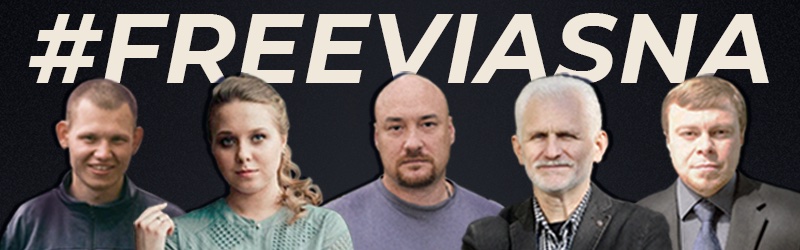
On 20 March 2024, it was reported that Aliaksandr Vaitseshyk was arrested during a raid on his home.
Last week, human rights defender Aliaksandr Vaitseshyk was detained in Baranavičy. The police released a video of the raid on his home, which shows him lying on the floor during the arrest. The reasons for this harassment are unknown. The activist is being held in the Baranavičy temporary detention center.
Jurist of 25 February, 2024 reported that police in China have charged Chen Pin Lin, director of documentary “Not the Foreign Force,” with “picking quarrels and provoking trouble,” according to Chinese human rights news watchdogs Weiquanwang and Civil Rights and Livelihood Watch.
The Thursday charges come after Chen’s arrest in January 2024. He has been in detention for more than a month. In a letter to his family members, the authorities accused him of “picking quarrels and provoking troubles,” which is criminalized by Article 293 of the Criminal Act. Human Rights Watch previously criticized Article 293 for its elusive definition and use against human rights defenders.
The film “Not the Foreign Force,” also known as “Ürümqi Road” in Chinese, depicts the nationwide protests against COVID-19 lockdown measures in China. The demonstrations erupted in Shanghai after a fire killed 10 people in Ürümqi, where lockdown policies had slowed down fire services. During the rallies, colloquially known as the “White Paper Protests,” participants held a piece of blank paper over their heads to symbolize their speechlessness over the tragedy. The protests ultimately prompted the Chinese government to lift all COVID-19 restrictions in December 2022.
Chen published the video on China Digital Times under the pseudonym “Plato” on 27 November 2023, one year after the demonstrations started. In the caption, Chen criticized the Chinese government for shifting the blame to foreign forces. “The more the government tries to mislead, forget and conceal, the more we should speak out, remind and remember,” he wrote. “Remember the White Paper Protests.”
‘Our impact may be large, may be small, and may be nothing. But we must try. It is our duty to the dispossessed and it is the right of civil society.’ – Cao Shunli
Ten years ago, Chinese woman human rights defender Cao Shunli was a victim of deadly reprisals for engaging with the United Nations.
The International Service for Human Rights (ISHR) and partners invite you to attend a photo exhibition on 14 March 2024, at Place des Nations to honour her memory.
Cao Shunli was a brave Chinese woman human rights defender and lawyer. She campaigned for the meaningful consultation and contribution of independent civil society to the Chinese government’s national reports for its first and second Universal Periodic Reviews (UPR). On 14 September 2013, one month before this review, while on her way to Geneva to attend a human rights training organised by ISHR and CHRD, she was detained and forcibly disappeared by Chinese authorities for five weeks. When she resurfaced in custody in October 2013, she had been charged with ‘picking quarrels and provoking trouble’, and it was evident that she was experiencing serious medical issues in detention. Despite repeated international calls for her urgent release over months of being denied adequate medical treatment, Cao Shunli died of multiple organ failure on 14 March 2014, having been granted bail for medical reasons just days before her death. Cao Shunli was one of the finalists of the prestigious Martin Ennals Award for Human Rights Defenders in 2014. [see also: https://humanrightsdefenders.blog/tag/cao-shunli/ as well as https://www.martinennalsaward.org/hrd/cao-shunli/]
To this day, Chinese authorities have ignored appeals seeking accountability for Cao’s death, including repeated calls by UN Special Procedures experts in 2014 and 2019 for a full investigation into this ‘deadly reprisal’. Her case remains the longest-standing unresolved case in the UN Secretary-General’s annual reports on reprisals. March 2024 marks the 10th anniversary of Cao Shunli’s death. A decade ago, when ISHR and many other human rights groups sought to observe a moment of silence at the Human Rights Council in her memory, the Chinese delegation, together with other delegations, disrupted the session for an hour and a half. China is consistently one of the most frequent perpetrators of reprisals against individuals or groups engaging with the United Nations. Frequently mentioned alongside Saudi Arabia, it has the second highest number of reprisals cases and situations reported by the UN Secretary-General since 2010.
Cao Shunli’s story is a paradigmatic case of reprisals, not only because of her belief in the importance of civil society participation in UN mechanisms, but also due to the array of severe human rights abuses she endured because of this belief, ranging from being barred from exiting her own country, enforced disappearance, arbitrary detention, lack of due process, torture, ill-treatment, and denial of adequate medical care, to subsequent death in custody without any accountability for these abuses.
Kadar Abdi Ibrahim is a human rights defender and journalist from Djibouti. He has drawn inspiration from iconic figures in the human rights movement in the hopes of building a genuine and lasting democracy in his country.
Kadar Abdi Ibrahim has also been the subject of acts of reprisals by his government for his engagement with international bodies. In 2018, days after returning from Geneva where he carried out advocacy work ahead of Djibouti’s Universal Periodic Review, intelligence service agents raided his house and confiscated his passport.
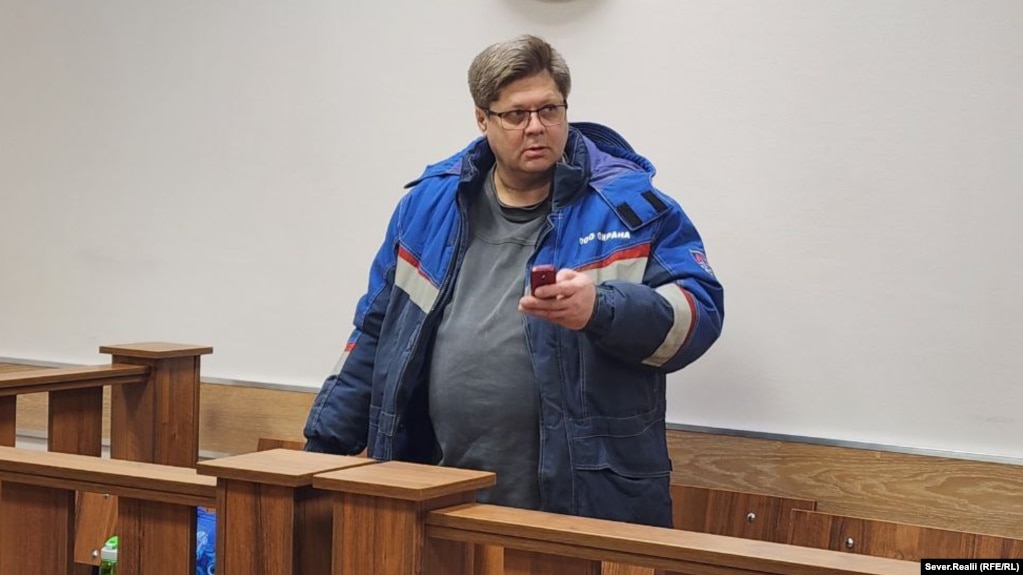
Human rights activist Gregori Vinter appears in court in Cherepovets, Russia, on January 17.
On 29 January 2024, Rafio Free Europe reported that Russian paleontologist and human rights defender Gregori Vinter, who was sentenced to three years in prison earlier this month on a charge of distributing “false” information about Russian armed forces involved in Moscow’s ongoing invasion of Ukraine, has asked President Vladimir Putin to euthanize him “to avoid an excruciating death of diabetes.”
Vinter’s lawyer, Sergei Tikhonov, on January 28 called the letter written by his client before he was handed his sentence on January 18 “a gesture of despair.”
In the letter, Vinter says prisons could not supply the insulin he needs to treat his diabetes, while getting supplies from outside the institution would be impossible because he would have to visit doctors to get prescriptions, something that wouldn’t be allowed.
“My experience tells me that without my medicine my life in custody will be very short…. I will face a process of a long and cruel death…. Knowing that as an inmate I will face a mere excruciatingly painful death among the alien, cruel, and absolutely indifferent people of the prison, I ask you to allow a voluntary medical euthanasia for me,” Vinter’s letter to Putin says.
“Imprisonment for a person like me, a person who survived a stroke, a clinical death during COVID, an attempted murder in 2018, actually means an execution, a public execution accompanied with long-term suffering through a slow and painful death. This is not just 1937 [period of Josef Stalin’s great purge] — it is perverted pathological sadism that is known to the whole world as the Russian Federation’s Federal Penitentiary Service.”
Prison officials have not commented on Vinter’s letter and whether he would have regular access to the medical assistance he needs.
The 55-year-old Vinter is the leader of the For Human Rights group branch in his native city of Cherepovets. His human rights activities in recent years helped to reveal the mass beatings of inmates at a local prison and investigations of the penitentiary’s guards. He also made headlines in 2019 after he led several rallies protesting against the local government’s deforestation activities in the region around Cherepovets.
During the pandemic in 2020, Vinter was handed a parole-like two-year sentence over an online post about the transportation of convicts without medical masks and other COVID precautions.
Before the sentence was pronounced, Vinter spent time in a detention center where, he said, investigators tortured him with electricity and broke his leg.
Vinter later told journalists about what he endured in the detention center, which led to a public outcry and investigations of the center’s administration.
The case against Vinter was initiated in August 2022 after he posted materials on the Internet about alleged atrocities committed by Russian troops against civilians in Ukraine.
The Memorial human rights group has recognized Vinter as a political prisoner.
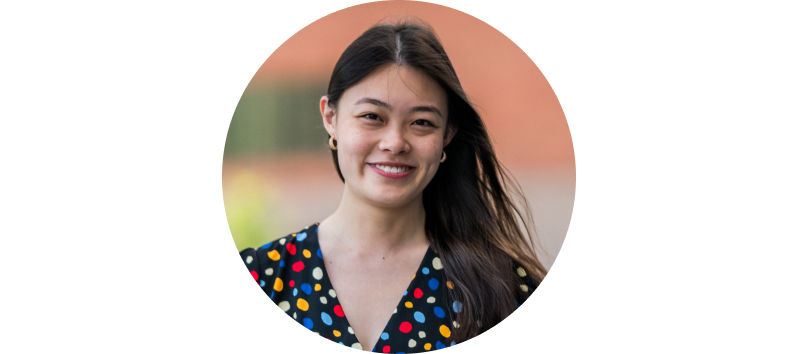
Meet Joey Siu, a Human Rights Foundation (HRF) Freedom Fellow and Hong Kong activist based in Washington, D.C. Siu played a vital role in Hong Kong’s 2019 pro-democracy protests, co-founding a student advocacy coalition and organizing city-wide demonstrations. After fleeing Hong Kong in 2020, Siu served as an advisor to the Inter-Parliamentary Alliance on China and a policy advisor to Hong Kong Watch. Siu is currently an Asia Pacific coordinator for the World Liberty Congress, an advisor to the Athenai Institute, and oversees the Hong Kong program at the National Democratic Institute.
In exile, Siu remains a dedicated advocate for Hong Kongers, Tibetans, Uyghurs, and other communities oppressed by the Chinese Communist Party (CCP). Learn more about her activism in the exclusive interview below.
Q: Tell us a little bit about yourself and your current projects.
A: I am a human rights activist from Hong Kong (HK). Back in 2019, when the pro-democracy movement in Hong Kong first started, I was one of the student leaders who led many of the on-campus activities and city-wide protests and demonstrations. In 2019, I also co-founded a student coalition with other student activists in HK to solidify international advocacy efforts for HK. I was forced to flee HK in late 2020 and settled in Washington, D.C. Since then, my efforts have been focused on international advocacy for HK’s democratic freedoms overseas.
I am establishing a regional activist network for women advocates to connect, amplify, and empower one another and to elevate women leaders in this space. Beyond that, I am very active in the HK diaspora community and working to foster cross-movement solidarity with other communities under the repression of the Chinese Communist Party (CCP).
Q: How do you feel about the bounty HK authorities placed on your head?
A: On Dec. 13, I woke up to the news that HK authorities issued an arrest warrant and a $1 million HK bounty on me. Ever since I fled, I knew this could happen given the Chinese and HK authorities’ efforts to silence dissent, not just from those in HK but from those in exile. But this bounty is like a death certification — I can really never go back. I was overwhelmed by the news and the actions I’ve had to take to step up my personal security.
I — and the 12 others with bounties on their heads — saw this coming. They issued the bounty to threaten us, to deter us from continuing our advocacy, to scare us, and to really intimidate us. But that will not work on me. I will not stop; I will continue my advocacy until I can return to HK.
Q: What tactics does the Chinese regime employ to suppress activists like yourself?
A: The overseas communities have lobbied for international attention on China and HK and all of the human rights atrocities committed by the CCP. That is why the CCP is trying so hard to silence us.
Over the past few years, the CCP and the HK authorities have stepped up their transnational repression. We’ve witnessed a wide variety of tactics employed by the CCP, from holding our loved ones back home as hostages to infiltrating our communities, setting up secret police stations all across the world, including in the United States, to coercing different stakeholders and industries to spy on their behalf.
These tactics have not been used just against Chinese and Hong Kongers but also against Uyghurs and Tibetans. And we’ve seen other authoritarian regimes copying the CCP’s tactics, including Russia, Iran, and Belarus. In fact, these regimes are working hand-in-hand to silence dissent overseas.
Q: Should democracies be paying more attention?
A: I want to stress that the impact of transnational repression extends beyond the activists. Beyond spying on dissidents overseas, tactics include economic coercion, brainwashing, and education through Confucius institutes in American universities and colleges. Those tactics impact every individual living in a democracy.
Democracies all across the world should pay attention to this and take concrete steps to combat transnational repression on their soil and in other democracies. Securing the safety and security of dissidents like me is an essential step to allowing us to have the freedom to continue speaking up and to continue confronting authoritarianism.
Q: How has the Freedom Fellowship supported you in your work?
A: The Fellowship allowed me to meet activists from communities I otherwise would not have been in touch with as actively or frequently. In my cohort, I met activists from Bolivia, Cuba, Myanmar, Morocco, Egypt, and more. I got to talk with them and learn the tactics they’ve used to overcome challenges and unite their communities. Fostering relationships and strategizing on campaigns together was the most valuable experience for me.
Building that cross-community solidarity is essential. We see dictators working together and it is of the utmost importance that we, human rights activists, are working together. Democratic backsliding is not an issue faced by one community alone; it is an issue faced by all communities under oppression.
Q: What have you recently been doing? What do you hope to achieve in 2024?
A: After the news about the HK bounty broke, I had several meetings with US congressional offices. I met with the House Foreign Affairs Committee, Chairman Mike Gallagher of the House Select Committee on the Chinese Communist Party, and Sen. Jennifer Sullivan. Hopefully, these meetings will lead to legislation to combat transnational repression, but we require a coordinated and bipartisan effort in Congress. I hope to see something like the Transnational Repression Policy Act advanced and adopted in this Congress.
With the ongoing reports of the bounty on me and other activists, Jimmy Lai’s case, and the upcoming sentencing of the 47 activists in HK, we can hopefully take advantage of the momentum. We can push the US government and other democracies to take action.
Additionally, during the 2023 Freedom Fellowship retreat, I came up with the idea of the regional women’s network. In the upcoming months, I want to turn this idea into something concrete—start inviting people to be founding members and board members, start the registration process, and establish a financial foundation and fundraising plan.
On 9 January 2024, Global Voices postedan interview with labour rights defender Prak Pheaktra. [This article by Klaing Kimhuoy was originally published by Prachatai, an independent news site in Thailand. An edited version has been republished by Global Voices under a partner content-sharing agreement.]
Despite threats from the Cambodian government, who claim he is damaging the country’s image, 39-year-old Prak Pheaktra, a Cambodian migrant worker-turned-advocate, is striving to help other Cambodian workers facing unfair treatment from their employers.
In 2000, Pheaktra, who is from Pusat province, came to Thailand to find work. His family was facing financial difficulties after the death of his mother, and his father could no longer afford to send him to school. Chasing the promise of better pay and less strenuous work, he decided to come to Thailand.
Pheaktra started out working as a construction worker in Don Mueang province, but he later faced exploitation and abuse from his employer. Once, his employer withheld wages and threatened legal action against him. Having experienced first-hand the unfair treatment and exploitation of migrant workers in Thailand, he became an advocate so he could help other workers get fair treatment in the workplace.
Pheaktra’s dedication led him to become a Khmer-Thai interpreter for the Ministry of Labour of Thailand in from 2018–2019, where he began studying Thai law. After completing his ministry contract, he joined the Labor Rights Promotion Network (LPN) in 2019–2020 as a Complaints Receiving Officer.
Having worked with both government and civil society, he is now working as an independent advocate for migrant workers. He offers assistance to workers dealing with wage issues, pressure from employers, sexual harassment, and other threats — all pro bono. He also uses social media to educate workers on how to legally live and work in Thailand and warn them of exploitation by brokers. He works with NGOs as part of research projects, including one on child exploitation in Phuket and another on labour abuses faced by fishing boat workers.
However, his advocacy has attracted criticism and threats, including from Cambodian officials, who claim he could damage the Cambodian government’s public image. Last February 2023, when he assisted 10 Cambodian workers in Samut Prakan whose employer wasn’t paying them, he faced some questions from the chief of the Labour Attaché Office at the Cambodian Embassy. When he was in Rayong working on another case, he was asked if he knew that what he was doing could affect the public image of the Cambodian government and was threatened with having his passport revoked.
The chief of the Labour Attaché Office threatened to revoke my passport if I continued to engage in activities that negatively impact the public image of the Cambodian government. I said, you can block my passport if you think what I am doing is really wrong. I’m not afraid.
He has also faced threats from Thai officials, who he observed can be biased in favour of employers and accuse him of putting excessive trust in the workers. He gave an example of a particular case he worked on where an inaccurate resolution led to a worker being unfairly blamed.
He suggested the need for greater accuracy within the Ministry of Labour’s processes and expressed frustration at being accused of trusting workers too much. He’s urging a more balanced approach to better serve the rights and interests of migrant workers.
Despite the threats he faces, Phaektra persists. “I love what I’m doing right now, and I will continue to help Cambodian workers no matter what,” he said.
Those who have worked with Phaektra described him as kind and dedicated. Prum Somnang, a Cambodian worker at a plastic bag factory, was assisted by Phaektra after being abruptly dismissed by her Thai employer, citing lack of work. Somnang had worked there for ten years and was laid off along with 40 other workers. Her employer wanted to sue her, she said, because she started a protest against the layoff. At the same time, her visa was expiring in seven days, and she needed to find a new job within the week. Her friend advised her to seek help from Pheatra.
“He’s very kind. He helped me get money back from the employer and even assisted me in finding a new job before my visa expired,” Somnang said…
Pheaktra said that one key concern about the lives of migrant workers in Thailand is the risk of falling victim to scams orchestrated by middlemen or company representatives when filing documents. Pheaktra emphasized the need for workers to take charge of their documentation to prevent such scams.
Looking ahead, Pheaktra expressed a commitment to continue social work aimed at assisting migrant workers. Despite the presence of numerous NGOs and institutions offering help, some workers hesitate to seek assistance directly due to concerns about influential individuals associated with these organizations. Pheaktra sees himself as an advocate for migrant workers, standing by their side and addressing their problems.
On 3 January 2023 it was reported that a prominent Ugandan LGBTQ+ activist Steven Kabuye was stabbed by unknown assailants on a motorbike after receiving death threats. Steven Kabuye, 25, suffered knife wounds and was left for dead on the outskirts of the capital Kampala.
Human rights defenders have been warning about the risk of attacks on members of the LGBTQ+ community after Uganda last year adopted what is considered one of the harshest anti-gay laws in the world.
Kabuye told detectives investigating the incident that he had been receiving death threats, according to a statement issued by police spokesperson Patrick Onyango.
Richard Lusimbo, head of the community action group Uganda Key Populations Consortium, said: “All our efforts at the moment [are to ensure] that he gets the medical attention he deserves and also the perpetrators of this heinous act are held responsible.”
Ugandan gay rights activist Hans Senfuma said in post on X that the attackers wanted to kill Kabuye. “Steven claims that these two guys’ intentions were to kill him, not robbing, and also claims that it seems they have been following him for several days,” Senfuma wrote.
Kabuye, who works with the Coloured Voices Media Foundation, which campaigns on behalf of LGBTQ+ youth, told investigators who visited his bedside that he had been receiving death threats since March 2023. He had returned to Uganda in December for Christmas after travelling abroad in June.
Himself a survivor of the harsh journey across the Mediterranean Sea, Moses Von Kallon SOS Méditerranée’s Aquarius vessel in 2018 – a journey during which his rescue ship was turned away from Italian and Maltese waters. He told ISHR about how he started his organisation after Aquarius Supervivientes after settling in Spain and how he has wrestled with everyday racism. ‘Immigration is not a disease,’ he said, as he shared his hopes for a future where justice and free movement would be guaranteed to those who are forced to leave their homelands to find safety. Learn more about Moses and other human rights activists and defenders like him: https://ishr.ch/defender-stories/