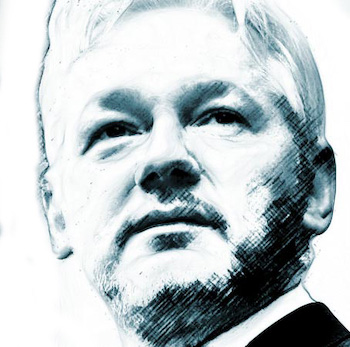
Human rights defender and former professor at the University of Delhi, Gokarakonda Naga(G.N.)Saibaba passed away on 12 October 2024 due to a cardiac arrest at the Nizam’ Institute of Medical Sciences Hospital at Hyderabad, India. On 7 March 2024, G.N. Saibaba was released from the Nagpur Central Jail after nearly a decade of imprisonment. In March 2024 he was acquitted of all charges by the Nagpur bench of the Bombay High Court, after being falsely accused of having links with banned Maoist organisations, and charged with serious offences including under the Unlawful Activities Prevention Act (UAPA).
G.N. Saibaba suffered from severe health conditions which worsened during his time in prison. These health conditions included polio related disabilities, a heart condition, a brain cyst, hypertension and breathing difficulties. While in prison, the human rights defender G.N. Saibaba was held in solitary confinement in a windowless cell and kept under constant CCTV surveillance. He contracted COVID-19 twice whilst in prison, in January 2021 and in February 2022, leading to further deterioration of his health condition. In a letter to his wife, G.N. Saibaba had spoken about his ill-treatment in prison stating that he had received no treatment for his ailments despite recommendations by doctors at the Government Medical College Hospital that he receive immediate medical attention. The United Nations Special Rapporteur on Human Rights Defenders had previously called for his release on medical grounds, calling on the “Indian authorities to immediately ensure that G.N. Saibaba has continuous and unrestricted access to health care, including adequate treatment and rehabilitation.”
Even though G.N. Saibaba was released prior to his demise, the ill-treatment suffered by the human rights defender and denial of healthcare during his imprisonment contributed to his already severe health issues. G.N. Saibaba never fully recovered from his time in prison which had prevented him from receiving urgent medical intervention. Front Line Defenders believes that his wrongful imprisonment is at least partially responsible for his untimely demise. It calls on Indian authorities to revise draconian counter-terrorism laws such as the UAPA and ensure that the legitimate work of human rights defenders is not criminalised.
Front Line Defenders holds the Indian authorities accountable for the death of G.N. Saibaba and calls for adequate monetary compensation to be awarded to his family.
A prominent human rights defender in Burkina Faso has been abducted by unknown individuals, rights groups have said. Activists say it could be the latest attempt by the military government to target dissidents using a controversial law.
Daouda Diallo, 2022 recipient of the Martin Ennals international human rights award, was abducted on Friday in the capital Ouagadougou after visiting the passport department where he had gone to renew his documents, according to the local Collective Against Impunity and Stigmatisation of Communities civic group, which Mr Diallo founded.
His captors – in civilian clothing – accosted him as he tried to enter his car and took him to “an unknown location”, the group said in a statement on Friday, warning Mr Diallo’s health could be at risk and demanding his “immediate and unconditional” release.
Amnesty International’s west and central Africa office said the abduction was “presumably (for him) to be forcibly conscripted” after he was listed last month among those ordered to join Burkina Faso’s security forces in their fight against jihadi violence as provided by a new law.Right now, civil society activists, human rights defenders and even leaders of opposition political parties do not dare express freely their opinions
“Amnesty International denounces the use of conscription to intimidate independent voices in #BurkinaFaso and calls for the release of Dr Diallo,” the group said via X, formerly known as Twitter.
Earlier this year, Burkina Faso’s junta announced the “general mobilisation” decree to recapture territories lost as jihadi attacks continue to ravage the landlocked country.
Mehmet Onat Sarıtaş, UN Volunteer with UNICEF in Türkiye supports the design and implementation of climate change-related programmes.
Diana Assenova, Mehmet Onat Sarıtaş and Madinabonu Salaidinova have one thing in common — They are young volunteers who believe that progress cannot be made without youth. Let’s hear from them in their own words.
“By investing in education, building the capacity of community members, and fostering global citizenship, young people play a crucial role in creating a better future that is inclusive, equitable, and sustainable for generations to come.” The words of Diana Assenova, a UN Volunteer Education Assistant with the UN Refugee Agency (UNHCR) in Kazakhstan resonate with the importance of youth and progress.
Diana focuses on the rights of youth refugees by making sure they have equal access to education. She coordinates the DAFI Scholarship Programme, through which, young refugees get education support. She encourages many more opportunities for education for refugee youth in Kazakhstan via awareness and advocacy campaigns.
The enthusiasm of youth propels her efforts — she recounts how she volunteered to organize a summer camp for teenagers from the displaced population.
The energy of working together with young people was unforgettable! This reaffirmed my dedication to making a positive impact through volunteerism.” Diana Assenova, UN Volunteer with UNHCR Kazakhstan
Another young and skilled UN Volunteer is Mehmet Onat Sarıtaş who serves with the UN Children’s Fund (UNICEF) in Türkiye as an Adolescent Development and Participation Assistant. Onat is witness to the disproportionate impact of climate change on the lives of children and adolescents in Türkiye and that is when he decided to volunteer. He values collective volunteer action to create a greener world for children.
Onat supports the design and implementation of environment-related projects. He also coordinates UNICEF’s climate-focused youth platforms, performs administrative tasks and collects data.
Youth platforms give Onat the opportunity for peer-to-peer support and technical assistance to young people. This close communication and learning has helped strengthen UNICEF’s relations with young people, he notes.
Next, we have the voice of UN Volunteer, Madinabonu Salaidinova, “I focus on increasing the engagement of young leaders from the south of Kyrgyzstan in civic activism and strengthening their potential to promote human rights.”
Madinabonu serves as a Legal and Monitoring Volunteer with the Office of the United Nations High Commissioner for Human Rights (OHCHR) Regional Office for Central Asia in Kyrgyzstan.
She monitors media channels, observes trials, and engages with the government and civil society partners, including human rights defenders. She also responds to individual complaints of alleged human rights violations submitted to OHCHR from five Central Asian countries — Kazakhstan, Kyrgyzstan, Tajikistan, Turkmenistan and Uzbekistan.
Including youth in decision-making is crucial, says Madinabonu. She feels that her voice is heard and appreciated. This gives her momentum to bring her ideas to fruition.
I appreciate that OHCHR gives me opportunities to integrate my interests and ideas into my work. I feel that I’m where I’m supposed to be right now.” Madinabonu Salaidinova, UN Volunteer with OHCHR Kyrgyzstan.
August 14, 2024:The recent summons by the Athens Magistrate marks a new development in Mr Dimitras’ long history of judicial harassment, this time also prospecting the criminal prosecution of his wife, constituting a major violation of their right to defend human rights as well as of the recently adopted European Union (EU) anti-SLAPP Directive. The Observatory for the Protection of Human Rights Defenders (FIDH-OMCT) urges the Greek authorities to put an immediate end to this practice of harassment and to ensure that all human rights defenders in the country can carry out their legitimate activities without hindrance or fear of reprisals.
Panayote Dimitras is a Greek migrants’ rights defender and Spokesperson of the Greek Helsinki Monitor (GHM) who, over the past ten years, has faced continuous episodes of judicial harassment as well as vicious smear campaigns deliberately aimed at discrediting him and his work. In the latest development, Mr Dimitras and his wife – Nafsika Papanikolatou – were summoned on May 31, 2024, by an Athens Magistrate carrying out a preliminary criminal investigation into alleged breach of trust and money laundering (in violation of paragraph 1 of Article 390 of the Greek Criminal Code and paragraphs 1 b) and 1 c) of Article 39 of Law 4557/2018, respectively), following the opening of a criminal case by the Athens First Instance Prosecutor. Mr Dimitras and Ms Papanikolatou replied to the summons and their file is in the hands of the Athens First Instance Prosecutor since then.
Exactly one year earlier, on May 31, 2023, the Greek Anti-Money Laundering Authority had already ordered the freezing of Mr Dimitras’ and Ms Papanikolatou’s personal account, pending an investigation into alleged misuse of donations to the Communication and Political Research Society (ETEPE) – a non-profit research organisation co-founded in 1990 by Mr Dimitras that manages human rights NGOs like GHM and Minority Rights Group – Greece (MRG-G). The same day the order was issued, Greek media published apparently leaked and inaccurate information about the case, reporting that all Mr Dimitras’ personal assets as well as those of the NGOs headed by him had been frozen, and that the alleged money laundering concerned funding received mainly from the EU “to support human rights causes” that “was used for other purposes than those claimed.” In fact, only a joint personal account of Mr Dimitras and Ms Papanikolatou had been frozen, and Mr Dimitras was accused of misusing, between 2010 and 2015, private donations to ETEPE amounting to 178.666,80 Euros and not EU funding.
Mr Dimitras and Ms Papanikolatou received the official notification from the Anti-Money Laundering Authority only one month and a half after the decision to freeze their personal account was taken, thereby delaying their right to access a remedy. The account freeze was initially ordered for nine months and then renewed for another nine months in February 2024. At the time of publication of this statement, the freeze is still effective notwithstanding Mr Dimitras’ and Ms Papanikolatou’s repeated requests to terminate it.
In another court case, the Three-Member Misdemeanours Court of Athens acquitted, in April 2024, Panayote Dimitras after five years of judicial harassment. Mr Dimitras was prosecuted under criminal charges of “false accusation” and “aggravated defamation” (Articles 229 and 363 of the Criminal Code of Greece, respectively) for having denounced racist comments from a public official, Christos Kalyviotis, who in return filed a complaint against Mr Dimitras for defamation.
The Observatory recalled, already at that time, that the procedure initiated by Mr Kalyviotis was only one of many abusive cases brought against Mr Dimitras over the past few years and constitutive of strategic lawsuits against public participation (SLAPPs), abusive civil proceedings aimed at criminalising human rights defenders and journalists.
Notably, since November 2022 a criminal case is ongoing against Panayote Dimitras at the Kos Court of First Instance in which he is accused of “forming or joining for profit and by profession a criminal organisation with the purpose of facilitating the entry and stay of third country nationals into Greek territory” under several articles of Law 4251/2014 (Immigration and Social Integration Code), for having provided humanitarian assistance to asylum-seekers. On January 23, 2023, preventive measures were imposed pending trial. Mr Dimitras was banned from carrying out activities with the GHM, a measure which was subsequently lifted. He was also banned from leaving the country, subjected to the obligation to report to the police station of his place of residence every 15 days, and required to pay a bail of 10,000 Euros.
More than one-and-a-half year later, these last three measures are still in place, with the consequence that Mr Dimitras cannot travel abroad for GHM human rights activities. In August 2023, he requested that the travel ban be lifted so that he could attend international meetings, and to be allowed temporarily to report to the police station in Kelafonia, where he has a summer home. Both requests were rejected by the First Instance Court of Kos. The European Parliament expressed concern about these measures in its resolution of February 7, 2024, on the rule of law and media freedom in Greece (2024/2502(RSP)). The responses provided by the Supreme Court and the Greek government to the resolution are of particular concern and seem to constitute both smear campaigns against Mr Dimitras as well as violations to his right to a fair trial, as it was falsely claimed that he had been arrested and that he had contacted a human smuggler.
The Observatory recalls that the anti-SLAPP Directive adopted by the European Parliament entered into force on May 6, 2024. The Observatory encourages the Greek authorities to bring into force the laws, regulations and administrative provisions necessary to comply with this Directive and to ensure its effective implementation to protect human rights defenders from abusive proceedings.
The Observatory expresses concern about the continued judicial harassment against Mr Dimitras and its recent enlargement towards his wife. The Observatory urges the Greek authorities to put an immediate end to all acts of harassment against Panayote Dimitras and Nafsika Papanikolatou and to allow their free exercise of the right to defend human rights.
Óscar Calles is a journalist and human rights defender from Venezuela. Since 2019, he has been working for PROVEA, one of the country’s most prominent rights groups.
In an interview with ISHR, he recalled his experience of witnessing and broadcasting mass protests in his country in 2017, and how harshly these were repressed. This, he said, led him to take direct action in the defence of human rights and civil liberties.
Human rights organisations, activists and defenders only exist to ensure that all persons can live with dignity,’ says Oscar Calles. ‘Do not turn your backs on the hundreds of victims who are still awaiting justice to this day,’ he further urges States at the UN Human Rights Council, calling on to renew a key accountability mechanism for Venezuela.
In June 2024, Óscar was also one of 16 defenders who participated in ISHR’s Human Rights Defender Advocacy Programme (HRDAP)
On 25 june 2024, when adopting a resolution today based on the report by Petra Bayr (Austria, SOC), PACE strongly condemned the frequent attacks perpetrated against women human rights defenders, and called for an end to impunity for perpetrators of violence.
The resolution emphasises that women human rights defenders – which include activists, NGO members, health workers, private sector actors, researchers, lawyers, students, teachers, artists, trade unionists, bloggers and journalists – act “in a peaceful and legal way to promote and protect human rights”. The Assembly deplores that they face attacks and specific threats, both on and offline, and are often victims of intersecting forms of discrimination
In this context, PACE called on member States to “repeal laws, policies and practices that affect women human rights defenders, in all their diversity, and unduly restrict their activities”. It also recommended guaranteeing their protection, by ensuring a secure and enabling environment in which to carry out their activities, and prosecuting the perpetrators of attacks and threats, including members of police forces.
Finally, PACE called on national parliaments to support women human rights defenders through practical actions and the introduction of new policies.
But many, such as the NGO ARTICLE 19, have a warning: However, this is not a slam-dunk win for press freedom. The US should have never brought these charges. The single remaining criminal count of conspiring to obtain and disclose classified US national defence documents puts investigative journalism at severe risk in the United States and beyond. Journalists that cover national security, the armed forces and defence do this day in and day out as part of providing transparency and accountability to hold abuses of power in check.
‘We are all at risk if the government can hold an archaic law, the Espionage Act, over the heads of journalists to silence them.’ The charge under the Espionage Act undermines the principles of media freedom, accountability, and independent journalism that Assange, his legal team, and campaigners had championed throughout his case, which began in 2012. The fact that his release from Belmarsh prison is a result of plea deal is a clear reminder of how important it is to redouble our efforts defending media freedom and pushing for accountability.
Sayed Ahmed AlWadaei is a human rights defender from Bahrain and the director of advocacy at the Bahrain Institute for Rights and Democracy (BIRD).
‘All we are asking for are the most basic rights. We hope to see Bahrain healing from over a decade of ordeal, of repression, of imprisonment, of torture, into a State where individuals can challenge their State without fear.’
He spoke to ISHR about how the 2011 Arab Spring uprising in Bahrain led him into activism and shared his hopes for a free, democratic future for his country despite the regime’s efforts to silence him and all those it perceives as opponents.
Front Line Defenders issues regularly urgent appeals on behalf of Human Rights Defenders. This case is just an example: on 29 May 2024 FLD called for action on behalf of woman human rights defender Jina Modares Gorji in Iran who was sentenced to twenty-one years in prison.
Please get your own Front Line Defenders Appeals. By subscribing to this list [https://www.frontlinedefenders.org/secure/act-now.php] you will receive information on all cases that Front Line Defenders takes up on behalf of human rights defenders at risk. You will receive an average of 4 to 8 emails per week.
On 24 May 2024, Jina Modares Gorji was notified that Branch 1 of the Sanandaj Revolutionary Court has sentenced her to a total of twenty-one years in prison. In the verdict of the revolutionary court, the woman human rights defender has been sentenced to ten years in prison on the charge of “forming groups and association with the intention of disturbing the national security,” ten years in prison for “collaboration with a hostile government,” and one year in prison on the charge of “propaganda activities against the state.”
Jina Modares Gorji is a woman human rights defender, book seller, and feminist podcaster and blogger in Sanandaj, in the Kurdistan province in Iran. Her human rights work includes advocating for women among the Kurdish community, girls’ rights, and socio-cultural rights via holding book clubs and writing blogs. She has been arrested several times since September 2022, following the death of Mahsa (Jina) Amini in the custody of the Iranian morality police …
On 9 April 2024, the last hearing occurred for the woman human rights defender. The aforementioned charges are related to her peaceful human rights activities, which includes speaking to media, participating in international conferences and organising activities to promote women’s rights in the Kurdistan province in Iran. The woman human rights defender was arrested on 10 April 2023 and was arbitrarily detained for almost three months in solitary condiment and in the public Womens Ward of Sanandaj prison. She was also denied access to a lawyer. In mid-February 2023, she was informed that “spreading disinformation” had been added to the previous charges of “forming groups and association with the intention of disturbing the national security”, and “propaganda activities against the state”. On 3 July 2023, the woman human rights defender was released on a bail of one billion IRR.
In April 2023, Branch 1 of the Sanandaj Public and Revolutionary Court dismissed the lawsuit that Jina Modares Gorji filed against the physical and verbal assault during her arbitrary arrest.
On 12 February 2023, Jina Modares Gorji appeared with her lawyer before Branch 1 of the Sanandaj Revolutionary Court, where she did not sign the pardon scheme as she stated this would constitute an acknowledgement that the charges against her human rights work were legitimate. This scheme was announced by the Iranian judiciary in February 2023 on the occasion of the 44th anniversary of the Islamic Revolution.
The woman human rights defender had previously been arrested on 21 September 2022 for her work and participation in the “Woman, Life, Freedom” protests, and charged with “gathering and collusion against the national security” and “propaganda activities against the state.” She was released on a bail of 10 billion IRR on 30 October 2022, after going on hunger strike for three days in protest against the physical assault and detention she endured in the Sanandaj Correctional Centre.
The prosecution of Jina Modares Gorji is part of a wide crackdown on human rights defenders in Iran where, hefty sentences issued against human rights defenders on the charge of “forming groups and association with the intention of disturbing the national security,” against groups of human rights rights defenders reported by Front Line Defenders in April and May 2024.
Front Line Defenders is particularly concerned with the sentencing of the woman human rights defender Jina Modares Gorji , as it believes the judicial action is in reprisal for her peaceful and legitimate human rights work.
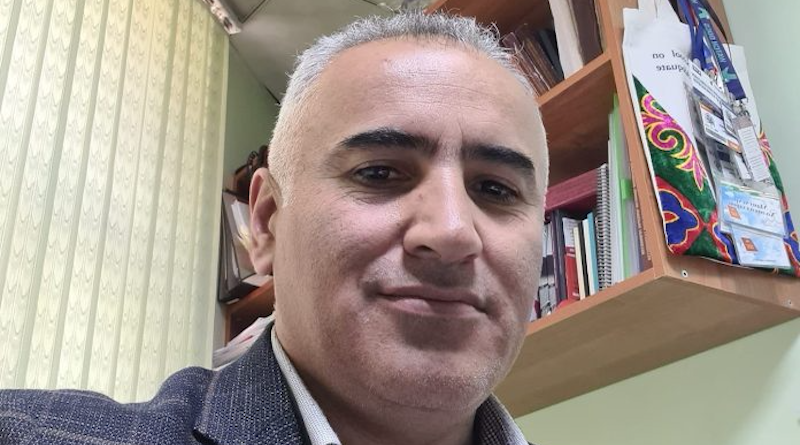
Manuchehr Kholiqnazarov. Photo from personal Facebook page
On 29 May 2024, IPHR (International Partnership for Human Rights – an independent, non-governmental organization founded in 2008 in Brussels) published an Op-ed about Human Rights Defender Manuchehr Kholiqnazarov.
Tuesday marked the sad anniversary of the arrest of lawyer and human rights defender Manuchehr Kholiqnazarov in Tajikistan. First arrested on 28 May 2022, he has now spent two years behind bars, serving a 16-year-long prison sentence in retaliation for his human rights work.
The organisations issuing this statement – International Partnership for Human Rights (IPHR), the Tajikistan Civil Society Coalition against Torture and Impunity, Helsinki Foundation for Human Rights (HFHR, Poland), Norwegian Helsinki Committee (NHC), as well as International Federation for Human Rights (FIDH) and World Organisation against Torture (OMCT) within the framework of the Observatory for the Protection of Human Rights Defenders – are increasingly worried about Manuchehr’s state of health and call again on the Tajikistani authorities to immediately and unconditionally release him.
“Manuchehr was arrested and imprisoned for no other reason than his tireless work to help the most vulnerable victims of human rights violations. We will not give up fighting against his unjust sentence until he is released and allowed to return home to his family,” said Brigitte Dufour, Director of IPHR.
On 9 December 2022 Tajikistan’s Supreme Court found Manuchehr guilty under articles 187, part 2 (participation in a criminal organisation) and 307 (3), part 2 (participating in the activities of a banned organisation due to its extremist activities) of the Criminal Code, sentencing him to 16 years’ imprisonment in a strict regime penal colony.
Manuchehr is the Director of the Lawyers Association of Pamir (LAP), one of the few civil society organisations in Tajikistan’s Gorno Badakhshan Autonomous Region (GBAO) that works to promote and protect human rights.
On 25-28 November 2021, mass protests erupted in Khorog, GBAO, over the extrajudicial killing of a young man, Gulbiddin Ziyobekov. After the protests settled, Manuchehr joined the “Commission 44”, consisting of representatives of local civil society and law enforcement agencies, to investigate the events. Given his professional experience, Manuchehr was included in the Joint Investigation Team headed by the Prosecutor General’s Office and helped secure lawyers for victims of indiscriminate violence during the November 2021 protests.
However, May 2022 saw a renewed crackdown on protests in Khorog and Rushan District of GBAO. On 28 May 2022, Manuchehr was arrested along with a dozen members of Commission 44 for alleged “participation in a criminal association” and “publicly calling for violent change of the constitutional order”. Their trial began on 20 September 2022, and was held behind closed doors at a detention facility of the State Committee for National Security (SCNS) in Dushanbe. Following his conviction, Manuchehr was transferred to a prison facility in the capital.
Manuchehr’s health has deteriorated significantly in detention. In particular, he suffers from back problems. The authorities should ensure that he has access to adequate medical assistance for these health problems and that his treatment complies fully with international standards as long as he remains behind bars.
In addition to human rights NGOs, the United Nations Special Rapporteur on Human Rights Defenders and other international human rights experts have repeatedly raised concerns about Manuchehr’s imprisonment and called for his release. The Tajikistani authorities should heed to these calls, promptly release him and allow him to reunite with his family.