Human rights funders network (HRFN) is a NETWORK OF FUNDERS in the global south, east, and north dedicated to resourcing HUMAN RIGHTS ACTION around the world. Its members boldly SUPPORT MOVEMENTS leading us toward a more just future.
For almost 30 years, Human Rights Funders Network (HRFN) has brought funders together to collaborate, strategize, and advance the field of global human rights grantmaking. Today, we are crafting an HRFN that relentlessly builds toward justice, works with love, and continues to serve as a space for funders to strategize together and with movements.
Its vision is a peaceful future where rights are protected and upheld, the planet is cared for, and all people can live and love with dignity.
Learn more about HRFN programs, member events, and emerging human rights issues.
In the study The Landscape of Public International Funding for Human Rights Defenders, released on 12 June 2024, ProtectDefenders.eu sheds light on the critical challenges faced by human rights defenders (HRDs) worldwide, specifically focusing on their financing by public actors.
The research, which combines an analysis of financial data over a period of four years with interviews, investigations, and input from defenders, underscores the pressing need for greater financial support and resources to safeguard the invaluable work of human rights defenders in promoting and protecting human rights globally.
The ProtectDefenders.eu study reveals and documents a concerning trend: while the need for support for HRDs has never been greater, funding levels have stagnated, with only marginal increases observed over the examined period. Despite rhetoric emphasising the importance of prioritising human rights prioritisation, the actual allocation of resources has failed to keep pace with the deteriorating global situation, representing a mere 0.11% of total Official Development Assistance (ODA) annually.
Key findings from the study include:
Disparity in funding: While some donors have demonstrated a strong commitment to supporting HRDs, others have allocated minimal resources, with wide variations observed among donor contributions. This disparity is also evident among different groups of defenders and thematic areas, as well as in funding dynamics by region, with a concerning decrease in attention to the MENA region
Challenges in accessing funds: HRDs continue to face obstacles in accessing international funds, including restrictive funding requirements and bureaucratic hurdles
Need for core funding: There is a critical need for core, flexible, and sustainable funding to enable HRDs to effectively carry out their vital work
Lack in localisation efforts: The study emphasises the importance of localising HRD protection programs and ensuring that funding reaches grassroots organisations and movements.
“This research underscores the urgent need for action to better support human rights defenders and is a call to action for donors, policymakers, and stakeholders to stand in solidarity with human rights defenders,” said Gerald Staberock, Chair of the Board of ProtectDefenders.eu and Secretary-General of the World Organisation against Torture. “HRDs play a vital role in advancing human rights and democracy worldwide, yet they continue to face increasing risks and challenges. It is imperative that donors and stakeholders heed the recommendations outlined in this study to ensure that HRDs receive the support they need to carry out their crucial work.”
In response to these findings, the study presents a series of detailed recommendations aimed at addressing the funding gap and improving support for HRDs. These recommendations include increasing overall funding levels, reducing restrictions on grants, enhancing political and diplomatic support, and investing in donors’ own capacities to better understand the needs and contexts of HRDs.
ProtectDefenders.eu issues a clear call to all donors and public actors to urgently address this situation. Specifically, the demands include:
Increase in public funding: Advocating for an increase in public funding for HRDs from 0.11% to 0.5% for the period 2025-2028.
Building trust through core grants: Urging for more core grants with reduced restrictions, audits, lower result expectations, and extended support horizons.
Directing more grants locally: Advocating for a higher proportion of grants to be allocated to local NGOs to ensure funding reaches grassroots organizations and movements.
Establishment of HRD principles for regranting: Calling upon the community of donors and financiers of HRD work to establish HRD Principles for Regranting, outlining guidelines for more effective and equitable distribution of funds.
Safety Net funding is for individual women human rights defenders (WHRDs) from or working in conflict and crisis affected countries, who, due to their commitments to human rights and peace, currently face – or have faced risks – with resulting impacts that continue to threaten their safety and work. SAFETY NET DOES NOT FUND CIVIL SOCIETY ORGANIZATIONS OR PROGRAM IMPLEMENTATION.
The WPHF Window for WHRDs Safety Net aims to improve the security and protection of WHRDs by providing for, but not limited to:
Temporary relocation costs (e.g. accommodation, food and transportation)
Security and protection costs (e.g. secure transportation, digital or physical security training)
Equipment (e.g. mobile phone, computer, security system and cameras)
Self-care (e.g. physical or mental health support)
Legal assistance
Repatriation costs, to facilitate return and reintegration in home country
Safety Net grants are provided for amounts up to USD 10,000 (subject to revision by the NGO partners of the WPHF Window for WHRDs) to cover needs for a duration of up to six months.
Eligibility Criteria
Gender: women and those who identify as women. This includes lesbian, gay, transgender and intersex (LGBTI) human rights defenders.
Age: 18 years old and above.
Country of origin: from/working in conflict and crisis-affected contexts. *See for reference countries that might be eligible for support: List of matters of which the UN Security Council is seized: S/2023/10.
Human rights activities: provides details of peaceful engagement in the advancement of human rights, either individually or through a civil society organization.
Threats and risks:
Demonstrates current or past serious security risks for her and/or her dependents, because of her commitment to human rights and peace; AND/OR
Demonstrates that risks are – or have been such – that her ability to keep working on behalf of human rights and peace is threatened.
Grant and duration: the requested funding cannot exceed USD 10,000, or cover needs beyond an anticipated 6-month period.
Decision-making process
You can submit your application using one of the two below methods below
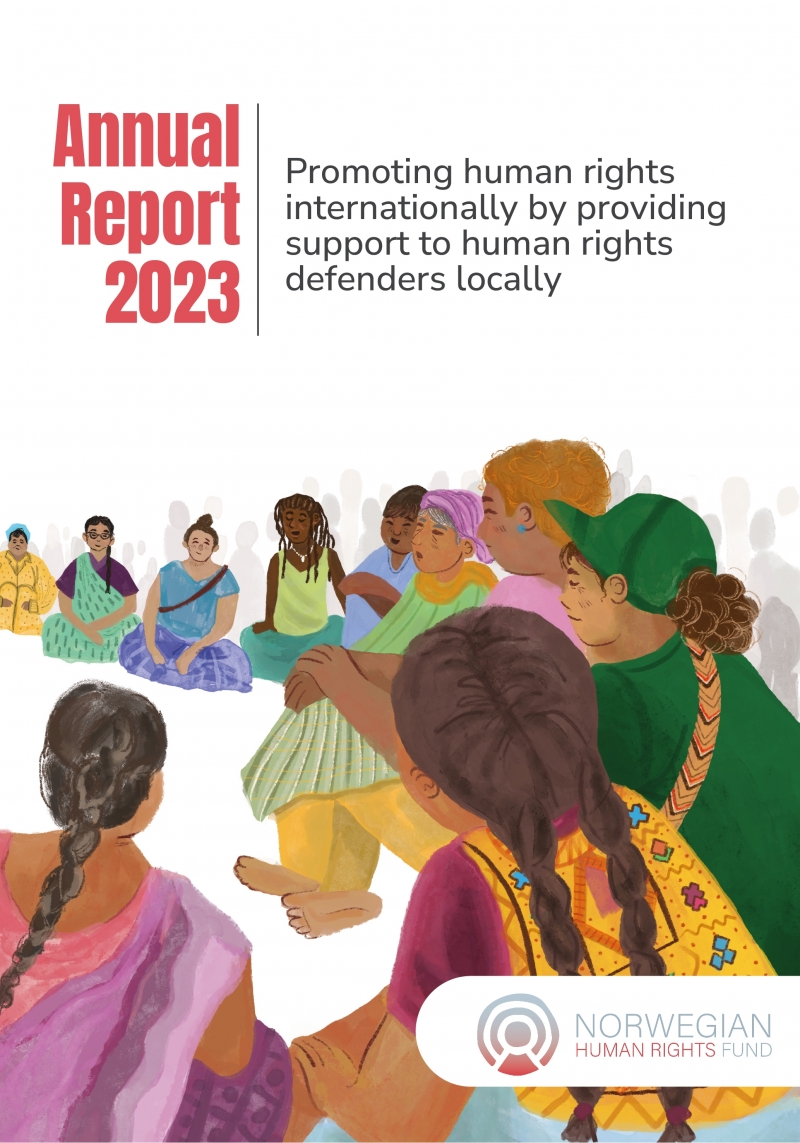
In the NHRF Annual Report for 2023, you will find comprehensive information on the NHRF’s activities and the remarkable work carried out by its grantee partners throughout the year.
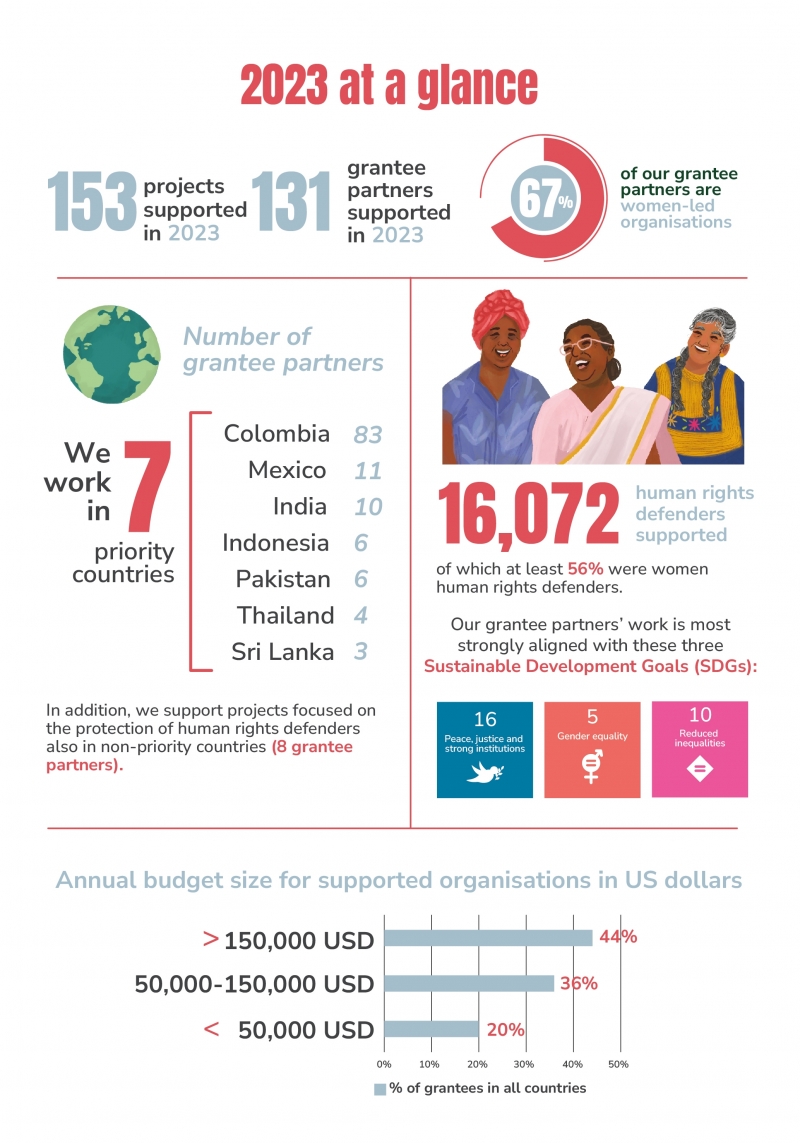
In 2023, NHRF supported 153 projects and 131 grantee partners in 7 priority countries. Through these projects, 16,072 human rights defenders were supported, of which at least 56% were women human rights defenders.
Scroll down this page to read the full annual report or open it here. You will find annual reports from previous years at the end of this page.
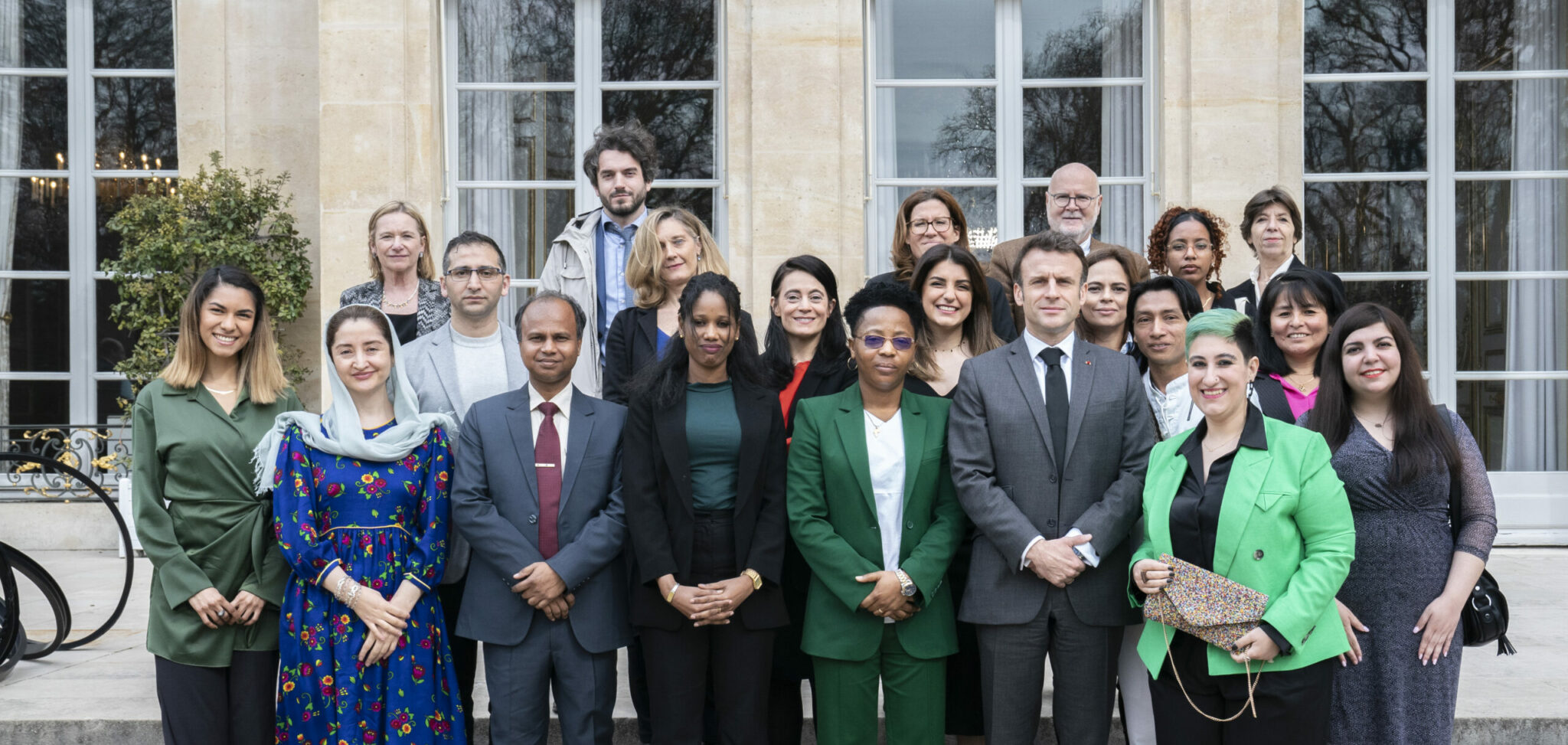
In 2021, French President Emmanuel Macron announced the launch of the Marianne Initiative for human rights defenders, aimed at better supporting them in their fight, both abroad and in France. The Marianne Association for Human Rights Defenders was created to federate the actors involved in our country (State, organisations and associations for the promotion of human rights and reception, local authorities, qualified personalities, etc.) and to carry the initiative’s support pillar in France, for the benefit of about fifteen laureates per year (reception, personalised support, networking, etc.).
After receiving the first all-female class in 2022 and a mixed class in 2023, the third class was officially launched now.
Some fifteen men and women from every continent have been welcomed to France for six months as part of the Initiative. The winners benefit from a training program designed to strengthen their skills and commitment in their home country or in France, whether in favour of civil and political rights, women’s rights, minority rights or environmental rights.
Recipients complete a comprehensive program consisting of:
Training in negotiation, leadership, advocacy, physical and digital security, project management, etc. ;
Courses from the School of International Affairs of Sciences Po Paris and French language;
Contact with French or international personalities involved in human rights and development issues;
Meetings with inspiring personalities and potential partner organizations (NGOs, foundations, institutions, etc.);
Conferences and cultural activities ;
Individual interviews to support the activist project;
Visits to international institutions and organizations;
Exchanges with members of the program’s alumni network.
The hosting programme in France provides for accommodation near Paris, the payment of a monthly grant to cover daily needs, a training programme, support, and networking with Human Rights Defenders for a period of 6 months. After the 6 months, participants no longer benefit from the grant, the accommodation and the support provided in the programme. Participation is individual and does not provide for the laureate to be accompanied by their family.
Class of 2025 runs from January-July 2025. The Application Deadline: 17th June 2024
On 28 May 2024 ACCESS NOW published its overview of grants in 2023: Through our Access Now Grantsprogram — now in its ninth year — we provide flexible, grantee-driven financial support to the grassroots and frontline organizations confronting these threats. We do this because we believe the people most directly impacted by attacks on human rights — from Palestine to Myanmar to Ukraine and beyond — are best placed to define solutions and implement them. Below is an overview of our grant-making in 2023, including a deep dive into the humanitarian response to the Gaza crisis, which was sparked that year.
AN OVERVIEW
In 2023, Access Now Grants awarded a total of just under $1.7 million USD, fortifying our collective efforts to defend and extend digital rights. We provided 66 grants to 63 organizations and individuals leading digital rights efforts in about 30 countries. [for details, see: https://www.accessnow.org/digital-rights-grants/]
We strive to support those who need it most. Currently, Access Now Grants reserves nearly all of our funding for people and organizations in Global Majority countries. In 2023, we awarded the highest number of grants (20) in Eastern Europe and Central Asia, followed by Asia Pacific (15), Africa (13), the Middle East and North Africa (10), Latin America and the Caribbean (7), and one grantee that works on the global level but supports journalists and human rights organizations operating in countries experiencing armed conflict and crisis.
Notably, 71% of our 2023 grants supported efforts in countries that Freedom House has classified as “not free” in its Freedom in the World reporting. We also extended funding to organizations and communities we had not previously supported, including in Libya, Iraq, Palestine, Thailand, and Senegal. In addition, 25% of our grants focused on defending gender and sexuality rights and supported people who identify as women, non-binary, or LGBTQ+.
In addition to ensuring we reach people with the funding they need, we work to provide the kind of longer-term support that can help organizations build momentum. In 2023, 60% of the grantees that received core, project, and discretionary grants were receiving their third or more year of consecutive funding.
SPOTLIGHT ON GAZA : It is impossible to remark on any human rights efforts in 2023 without acknowledging the genocide now unfolding in Palestine. After the Hamas attack on Israel on October 7, 2023, we have seen digital threats play a devastating role in deepening the crisis in Gaza: from the Israeli military’s reported use of AI technology to bomb and kill Palestinians, often with their family; to internet shutdowns that restrict Gazans’ access to life-saving information and ability to communicate; to communication platforms’ censorship of Palestinians and pro-Palestinian voices; to the documented increase in hate speech and incitement to violence against Palestinians online….
As we continue our grant-making in the year ahead, in Palestine and around the world, we remain committed to human rights organizations and activists who are fighting for justice, security, and dignity for their communities and for all of us. Their collective work is more necessary and urgent than ever.
ACCESS NOW gives a list of the grants awarded in 2023. Some grants are not included for security reasons. Others must be listed anonymously.
On 25 April 2024, ProtectDefenders.eu, the European Union (EU) Human Rights Defenders Mechanism, presented its comprehensive annual report entitled “REACHING FURTHER,” covering the period November 2022 – October 2023. This report illustrates the support provided and efforts made by ProtectDefenders.eu to support human rights defenders (HRDs) around the world, and especially to reach those who are the most at risk.
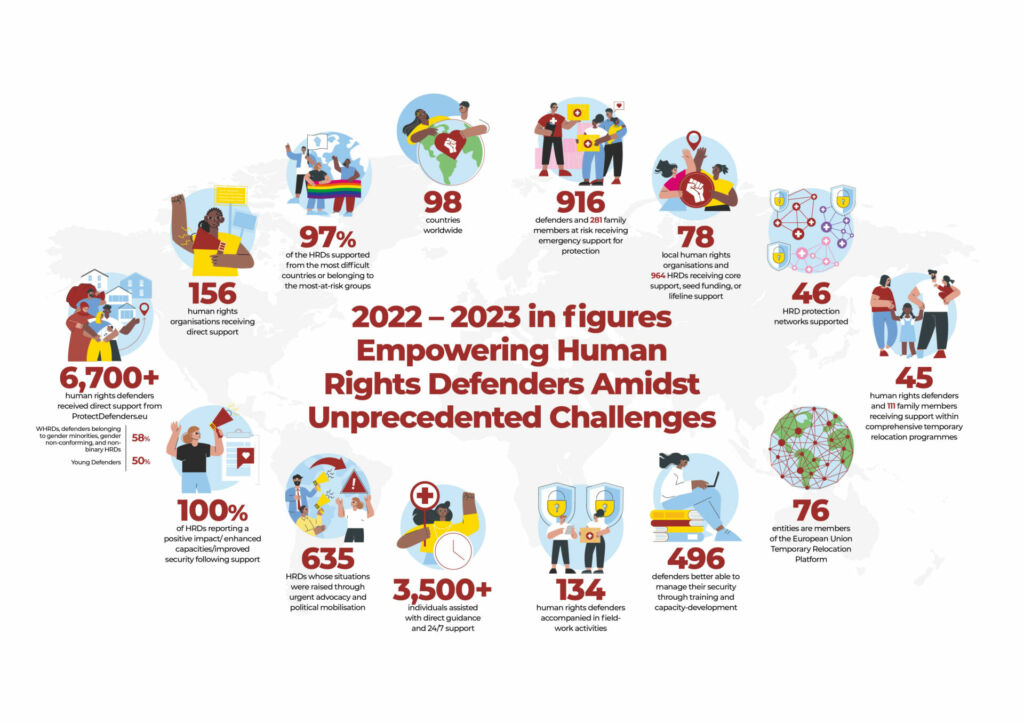
In November 2022, ProtectDefenders.eu entered the third phase of its implementation, marking a milestone in its commitment to safeguarding human rights defenders worldwide. Throughout the first year of this new phase, the renewed and consolidated EU HRD Mechanism has provided direct protection, support, and empowerment to over 6,700 at-risk HRDs, with a particular focus on those facing the highest risks. Notably, 50% of beneficiaries were young defenders, and 58% identified as women human rights defenders (WHRDs), trans-male, trans-female, genderqueer, or gender non-conforming individuals.
Despite facing extraordinary challenges amidst protracted crises globally, ProtectDefenders.eu has demonstrated remarkable effectiveness, efficiency, and adaptability in addressing the pressing needs of HRDs. The mechanism has extended support not only to individual defenders but also to their families, communities, and organizations. This comprehensive support, including financial aid, technical assistance, and guidance, has been delivered through collaboration among consortium partners, showcasing flexibility, creativity, and responsiveness in the face of evolving challenges.
ProtectDefenders.eu has actively responded to increased requests for protection support amid protracted crises in various regions, including Belarus, Myanmar, Afghanistan, Nicaragua, Sudan, Tanzania, and beyond. Emergency protection measures have been consistently provided, alongside investments in the capacity and resilience of human rights organisations and communities. The international temporary relocation system supported by ProtectDefenders.eu, including through the Shelter Initiatives program, further exemplifies the mechanism’s commitment to HRD safety.
Through reactive and preventative advocacy efforts, ProtectDefenders.eu has achieved multiple successes globally, pioneering a collective advocacy approach on shared concerns such as international funding for HRDs and EU visas. The enhanced coordination among consortium partners has facilitated continuous improvements and innovation, addressing challenges faced by HRDs and organizations at risk more effectively.
Moreover, significant progress has been made in enhancing outreach efforts to new groups, including young defenders and those with disabilities. Increased collaboration with local actors, context-specific support, and prioritized coordination have extended the impact of ProtectDefenders.eu widely, with 93% of supported organizations not affiliated with consortium partners.
Looking ahead, ProtectDefenders.eu will remain particularly committed to fulfilling its protection mandate by addressing comprehensively the unique vulnerabilities and barriers faced by HRDs with disabilities. The EU HRD mechanism will actively engage in finding innovative solutions to ensure their protection, inclusion, and access to resources.
On 9 April 2024, Michael Morrison in Human Rights Centre Blog of the University of Essex wrote a post “Standing Strong: Supporting Human Rights Defenders Worldwide” about the work of Prisoners Of Conscience (PoC), a UK-based charity,
In a world where human rights are not universally respected, there are courageous individuals who face persecution, silencing, torture, and forced displacement just for standing up for their beliefs. Prisoners Of Conscience (PoC), our UK-based charity, stands in solidarity with these brave people, offering both financial and practical support to those who defend human rights worldwide.
Prisoners Of Conscience operates on a simple yet powerful belief: no one should be persecuted for protecting or advancing human rights. We recognise that while we enjoy the freedom to express ourselves, many others around the world are not so fortunate. These individuals face unimaginable challenges for their beliefs, often enduring imprisonment, torture, harassment, violence, or being forced to flee their home countries.
Our mission is clear: supporting those who stand for rights. Our charity provides rapid financial assistance through grants; ensuring immediate relief, resettlement, and requalification during a recipient’s time of greatest need. These grants are not just about providing temporary relief; they are a lifeline for those who have sacrificed their freedom for the principles they believe in. Financial assistance includes covering legal fees, medical expenses, and basic living costs for individuals and their families.
Moving towards holistic support, we have developed various programs to empower our beneficiaries beyond financial aid. Our employability panel offers guidance and opportunities for career development, including job placement services and vocational training. Additionally, our web-based forum provides a platform for networking and collaboration, where individuals can connect with like-minded activists and organisations. We also collaborate with other parties to offer signposting to practical support, such as mental health services, legal advice, language classes, and integration support for those seeking asylum.
Yuzana* for example, is a writer, surgeon, and founding member of PEN Myanmar. Yuzana faced a daunting 20-year sentence for her role as a campaigns assistant for the National League of Democracy (NLD) and her unwavering commitment to human rights. Despite enduring almost six years of imprisonment in one of Myanmar’s most notorious prisons, Yuzana’s determination remained unyielding. After being released on humanitarian grounds due to her declining health and international pressure, she continued her advocacy work.
Yuzana
In the wake of the military coup in Myanmar in February 2021, PEN Myanmar continues to monitor and share critical information despite grave risks to their safety. Several members of the organisation have been detained, and tragically, four poets are among the unarmed civilians killed. Yuzana, concerned for her safety, was compelled to leave Myanmar and seek refuge in another country. With the assistance of Prisoners Of Conscience, Yuzana was able to cover her travel expenses and basic living costs while she establishes herself in a new environment.
Our recent research indicates that at any one time there are tens of thousands of prisoners of conscience who are persecuted and in need of our support. The impact of our work is evident in the numbers: in the past year alone, Prisoners of Conscience awarded 130 grants to over 420 individuals from 28 countries. This vital support reached a total of 424 individuals, offering crucial assistance during times of adversity. We are profoundly grateful for the generosity of our donors, whose unwavering support enables us to continue our mission of empowering those who defend human rights.
The challenges of the past year, compounded by the pandemic, have prompted us to adapt and innovate, and right now, April is all about #RightsRealityCheck.
Not everyone has access to even the most basic of human freedoms, so we launched the #RightsRealityCheck campaign. This April, human rights champions are undertaking a series of challenges to raise awareness of the rights that many take for granted – basic rights and freedoms which prisoners of conscience risk their life to uphold and protect. Whether it’s reading 5 books throughout the month, writing a blog post each week, or walking in public each day without wearing a head covering, our kind-hearted fundraisers are standing in solidarity with those who face persecution for these simple acts. If you would like to join others who have taken on this commitment to an everyday right, you will not only be standing with prisoners of conscience, but also raising crucial funds to help keep those who defend human rights, and their voices, alive. It’s easy to get started: Simply download our fundraising pack by signing up here (it’s packed with tips and resources to make your challenge a success). Then, share your challenge with friends, family, and colleagues to gather sponsorship. Every pound raised goes directly to supporting human rights defenders and prisoners of conscience around the world. Or alternatively, see what we’re up to and support someone on their challenge by heading to the link here: #RightsRealityCheck Challenge – JustGiving. Let’s turn our everyday actions into a powerful force for change. Together, we can make a difference in the lives of those who need it most.
Michelle Langrand for Geneva Solutions of 20 March 2024 has an exclusive report on the liquidity crunch and its effect on the UN human rights branch. Here her report in full:
UN secretary general António Guterres and UN human rights high commissioner Volker Türk at the opening of the Human Rights Council 55th session in Geneva, 26 February 2024. (UN Photo/Elma Okic)
As the United Nations faces its worst liquidity crisis in recent history, experts, staff and observers worry about the ramifications on human rights work. Correspondence seen by Geneva Solutions reveals concerns at the highest levels of the UN human rights branch in Geneva as they are forced to scale back their operations.
A patchwork of cost-saving measures taken over the winter holidays at the Palais des Nations in Geneva, from keeping the heat down and closing the premises for two weeks, revealed how serious the UN’s cash troubles were after states failed to fully pay their bills in 2023. The new year didn’t brighten prospects either. In January, UN secretary general Antonio Guterres in New York announced that “aggressive cash conservation measures” would be taken across the organisation to avoid running out of cash by August as year-end arrears reached a record $859 million.
It couldn’t have come at a worse time for a cash-strapped UN Office of the High Commissioner for Human Rights (OHCHR) as worsening human rights crises worldwide add to its workload. The Geneva-based office acts as a secretariat for dozens of independent experts, investigative bodies and human rights committees that rely for the most part on the UN’s regular budget and few voluntary contributions from states. Between vacancies and travel restrictions, both insiders and outsiders worry that planned cuts could severely impair the UN’s crucial human rights work.
Understaffed and overwhelmed
On 12 February, just as the UN’s Geneva headquarters prepared for one of its busiest months hosting the Human Rights Council’s first session of the year, bad news came from New York. Countries had only paid one-third of the UN’s $3.59bn regular budget for 2024, and instructions from the higher-ups were that the hiring freeze imposed in July 2023 would be extended throughout 2024 across UN operations. The organisation said that $350 million would need to be shaved off through spending restrictions on travel, conference services and others.
Human rights bodies, where vacancies had been piling up in the last months, would have to continue to run with reduced staff. In a letter from 23 December, UN high commissioner for human rights Volker Türk had already warned Council president Omar Zniber that 63 posts in over 10 investigative mandates were waiting to be filled while recruitments had been placed on hold. Currently, there are active investigations on serious human rights abuses in Ukraine, Iran, Syria, South Sudan and Nicaragua among others.
“While no compromise has been made in terms of methodology, some of the investigative bodies have had to narrow the scope of both their investigations and their upcoming reports,” the letter reads.
The fact-finding mission on Sudan was one of the bodies immediately affected. Created in October to collect evidence on atrocities committed during the last year of bloody conflict in which thousands of civilians have been killed and millions displaced, the probe body has struggled to begin work. The independent experts composing it, who aren’t paid, have been appointed since December, but as of late February, the Human Rights Office hadn’t been able to hire a support team due to insufficient cash flow, according to a Human Rights Council spokesperson. The experts, who have been mandated for one year, are due to present their findings in September, with observers wondering whether the western-led proposal will garner the political backing it needs to be renewed.
That isn’t the only initiative struggling to get off the ground. “We have met with some new mandates, and we realised that they barely have a team, if any, to support them,” said one NGO member who collaborates with the human rights mechanisms and asked to remain anonymous. Observers say most investigative bodies, even older ones, are impacted at some level.
Kaoru Okoizumi, deputy head of the Independent Investigative Mechanism on Myanmar (IIMM) – the largest human rights probe team – said six out of 57 staff positions funded through the UN’s regular budget were vacant, significantly affecting their work. The IIMM, which also relies on a trust fund made up of voluntary donations and doesn’t depend on the OHCHR’s budget, is coping better than most.
Expert committees that oversee states’ compliance with international human rights law, such as on children’s rights and on torture, are also stretched thin. One staffer said they were required to take on more work than normally expected, for example, having to conduct research and compile information about several countries at the same time for one session. “It’s just too much!” they said, adding that their team was short of more than 10 people.
Another worker from the OHCHR’s special procedures branch, who said was covering for several vacant spots, conceded that the quality of work is affected in such conditions. “Of course, you won’t work as well after pulling all-nighters,” they said. Türk’s letter to Zniber acknowledges that the secretariat was having trouble supporting some 60 special procedures, which are UN-backed independent experts or groups of experts assigned to report to the council on a specific theme or country.
While the problem of understaffing isn’t new, and many also point to cumbersome months-long recruitment processes that are often incompatible with brief mandates, the situation has worsened. To compensate for the hiring freeze, the UN has also increasingly resorted to temporary contracts that last for a few months and can be exceptionally renewed for up to two years. The two workers, who have living on contract to contract for more than a year, said that there is fear that temporary staff may be among the first to go, along with consultants. “In the food chain of contracts, we’re at the bottom,” one of them said.
A slim year for the Human Rights Council
The UN’s human rights branch, which receives as little as four per cent of the UN’s total budget – around $142 million – just enough to cover one third of its activities, has been scrambling to cut back on spending. On Friday, in another letter seen by Geneva Solutions, Türk informed Zniber that his office would be forced to axe certain activities this year.
OHCHR spokesperson Marta Hurtado confirmed the information to Geneva Solutions by writing: “The office has developed an internal contingency plan, which provides for adjustment pending the complete availability of regular budget resources become available.”
Among the measures it proposes is postponing some activities to 2025 altogether while as many consultations and meetings as possible would be moved online without interpretation, according to Hurtado, since the UN in New York hasn’t authorised it for virtual meetings. For those that will be held in person, resources to fly in experts and civil society will also be reduced.
The UN’s recent decision that it would no longer provide online services for meetings has drawn outcry from rights campaigners who argue it curtails the possibility of civil society groups and states with little resources to participate. While the move has been attributed to matters of rules, observers can’t help but wonder if it isn’t, in the end, about the money. Echoing the concerns in the letter, Türks described the impact of these measures on participation from experts and other stakeholders as “deeply regrettable”.
Another issue raised by the UN rights chief is the difficulty that his office has been facing in providing technical assistance to national authorities. He gave the example of the Marshall Islands, which requested help in 2022 to assess the human rights impact of US nuclear testing in its territory in the 1940s and 50s. A source said that although a first visit finally took place this year, work has been delayed.
Marc Limon, director of the human rights think tank Universal Rights Group, remarked that work by the Council to help states improve their rights record through capacity-building support was unfortunately “almost inexistent” and regretted that resources couldn’t be spared for what he calls the “hard end of human rights diplomacy”. “While UN investigations must be protected, there is little threat to key commissions of inquiry due to the huge budgets allocated to them in the first place,” he said. Most probe bodies have between 17 to 27 staff while special procedures usually have one or two assistants.
The Moroccan ambassador forwarded Türk’s letter to fellow states on Monday and said a draft decision regarding the measures would be tabled for the council to consider at the end of the session at the beginning of April.
Human rights credibility at stake
One that has raised eyebrows but isn’t explicitly mentioned by the UN rights chief is limiting country visits by UN experts to one visit instead of two. Hurtado acknowledged that special procedures and other expert mechanisms, including probe bodies, would see their country visits “reduced” while not commenting on the number of authorised visits.
One UN expert, speaking under the condition of anonymity, voiced concern over the restriction. “Country visits are extremely important because they give us a real intimate understanding of a place and the state gets direct feedback on what they’re doing well and what they can do to improve, while also energising civil society,” they said, point out that experts were already barely able to conduct visits during the Covid-19 pandemic.
Limon commented that while it was a wise choice to cut back on some of the “superfluous” debates and activities, reducing special rapporteur trips to countries to one per year, an idea that he said has been floated around before, showed the office “had its priorities wrong”.
Travel restrictions could also have significant implications for criminal cases. Okoizumi said her Myanmar team only had 65 per cent of its usual travel budget, which is key for the Geneva-based group to reach victims and witnesses. “We do our witness interviews in person because we think it’s important in a criminal investigation to make sure that interviews are being conducted in a way that preserves the integrity of the testimony,” she said.
The body, set up in 2018 by the Human Rights Council, is currently working to support a case brought by The Gambia against Myanmar for violating the Genocide Convention at the International Court of Justice, as well as investigations on crimes against the Rohingya at the International Criminal Court and Argentina.
“These are very concrete proceedings and our ability to support them will be impacted by the number of interviews that we’re able to conduct or the analysis that we’re able to produce and share with these jurisdictions,” Okoizumi said, noting that the ICJ case is particularly time-sensitive as both parties were expected to make submissions this year.
The international lawyer said this has meant shifting resources to meet shorter-term deadlines at the risk of putting aside other objectives. “The whole point of having an investigative mechanism is to make sure that we can collect the evidence very soon after a crime happens, even if there isn’t an investigation or prosecution until many years or even decades later. So, shifting our resources in that way, overall will have a negative impact,” she explained.
Top experts within the human rights branch have also rang alarm bells about the wider repercussions of the funding crisis. In a letter seen by Geneva Solutions addressed to the president of the General Assembly, Dennis Francis, dated 23 February, 10 chairs of human rights committees warned that the liquidity crisis “severely threatens the credibility and efficiency of the United Nations human rights system”.
The experts said the treaty bodies were “being denied even the minimum staff and operational resources required to deliver their critical mandates to advance human rights” at a time of “such a severe existential crisis of multilateralism and of non compliance with international law”.
Referring to some of the measures being considered, the signatories also argue that suspending sessions “for the first time in their over six decades of history for financial reasons, together with visits to prevent torture and other human rights violations” would lead to “concrete and irreversible” harm.
“When the collective security system has failed to honour the ‘never again’ pledge of 1945, the least to do is to strengthen human rights monitoring mechanisms, so that human rights violations are documented, even when justice seems extremely challenging to serve. We note with deep regret that the opposite is being done,” the custodians of human rights law wrote.
On 5 February 2024, the Swedish Government adopted a new five-year strategy for development cooperation for human rights and freedoms, democracy and the rule of law. This strategy is an important part of the implementation of the Government’s new reform agenda for development assistance and contributes to free and inclusive democratic societies built on respect for human rights and freedoms.
Democracy, human rights and freedoms, and the rule of law are essential for freedom, security and the continued development of society. At the same time, we see storm clouds gathering. Democracy is in decline for the seventeenth consecutive year, which gives rise to increased oppression and conflicts. Russia’s full-scale invasion of Ukraine is a clear example of this.
Another is the way authoritarian states are undermining fundamental human rights and freedoms and using new digital technology for oppression and to spread disinformation.
“With this strategy, the Government is placing greater emphasis on the individuals around the world who fight for their freedom every day. We want to help those living under oppressive systems. Unfortunately, we see that democracy is headed in the wrong direction. That’s why Sweden has to do its part. We will do what we can to support the positive forces that exist,” says Minister for International Development Cooperation and Foreign Trade Johan Forssell.
The strategy outlines the Swedish Government’s increased focus on supporting defenders of human rights and democracy, free elections and independent journalism, in comparison with the previous strategy. The allocated budget for the strategy in 2024 is SEK 900 million. This budget is set out by the Government each year.