The conviction of four Burundian journalists in a flawed trial on January 30, 2020 is a clear example of the misuse of the justice system to stifle freedom of expression, Human Rights watch said on 4 February 2020.
The High Court of Bubanza, in western Burundi, convicted Christine Kamikazi, Agnès Ndirubusa, Egide Harerimana, and Térence Mpozenzi – all of whom work for the country’s last remaining independent newspaper, Iwacu – and sentenced them to two and half years in prison and a fine of approximately US$530. Although they were charged with complicity in threatening the internal security of the state, they were ultimately convicted of attempting to commit the crime, a lesser criminal offense against which, their lawyers say, they were not allowed to defend themselves in court. They will appeal the conviction.
“Reporting on issues of public interest should not result in a criminal prosecution,” said Lewis Mudge, Central Africa director at Human Rights Watch. “The authorities are leading an assault on free expression in the months before the country’s 2020 elections.” These proceedings lay out in stark terms the politicization of the judiciary in Burundi, Human Rights Watch said.
The court acquitted Masabarakiza, who had already been released from pretrial detention. The judge ordered that the phones, camera, company car, recorders, and notebooks seized from the convicted journalists should be returned to Iwacu. Neither the accused nor representatives of the diplomatic community in Burundi were present when the verdict was announced. On January 16, 2020, the European Parliament adopted a resolution calling on Burundi’s authorities to drop charges and immediately and unconditionally release the four journalists and all others arrested for exercising their fundamental rights. It also called for European diplomats in Burundi to attend trial proceedings of journalists, human rights activists, and political prisoners, and to visit them in prison, in line with the EU Guidelines on Human Rights Defenders. The diplomatic community in Burundi should publicly show its solidarity with the Iwacu journalists by attending the appeals hearings and visiting them in prison.
The convictions form part of a pattern of government repression of people attempting to expose abuse or report on sensitive issues. They take place against a backdrop of an increasing crackdown on perceived government critics, in advance of elections scheduled to begin in May. Prosecutions, threats, and intimidation have forced many activists and journalists to stop working on sensitive political or human rights issues, or leave the country. [see also: https://humanrightsdefenders.blog/2019/03/05/un-human-rights-office-in-burundi-formally-closed/]
OMCT in the meantime published on 6 February 2020 an urgent appeal re judicial harassment against twelve Burundian human rights defenders in exile (in French)
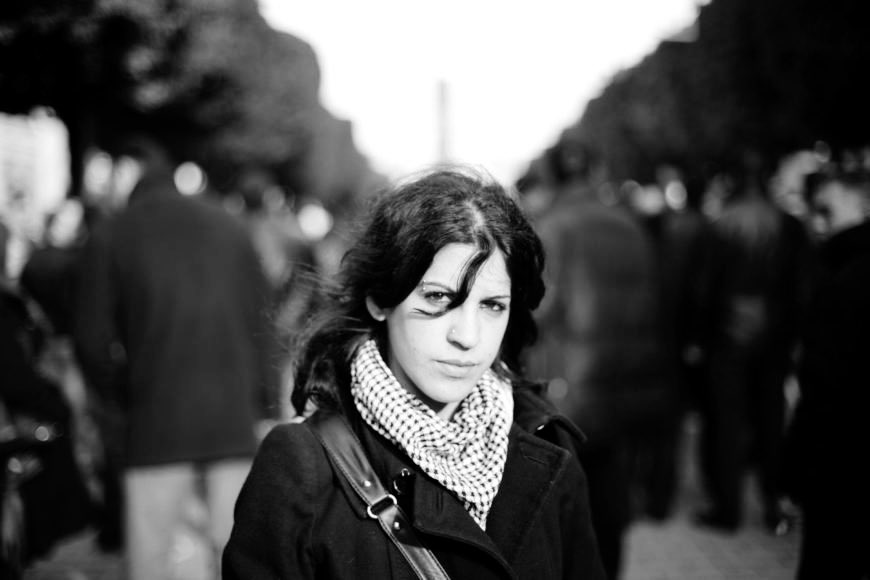
On 28 January 2020 The Human Rights Foundation in New York expressed its sadness at the passing of Tunisian activist, journalist, and educator Lina Ben Mhenni, after a long battle with a chronic illness (1983-2020).
“Lina was a force who fought tenaciously until her last breath. She fought censorship, corruption, and human rights abuses, all while grappling with serious illness. But nothing stood in her way. Her voice and cause will resonate with generations to come,” said Thor Halvorssen, president of HRF. “She will forever be an inspiration to all of us at HRF and in the Oslo Freedom Forum community to never give up even in the darkest moments. We will truly miss our beloved friend Lina.”
Lina was one of the only Tunisians to criticize the repressive government openly on international broadcasts before the Jasmine Revolution began in 2011. She is often described as one of the bravest bloggers in the world, whose work was instrumental in documenting, informing, and mobilizing citizens during the Revolution. Lina’s impactful achievements led her to be nominated for the 2011 Nobel Peace Prize. She authored and published a book the same year entitled, “Tunisian Girl: A Blogger for an Arab Spring.” Much of her writing was focused on freedom of expression and rights of women and students in Tunisia.
“Lina’s life experiences went beyond her 36 years. Many people know about Lina – whether through the media or different social platforms – but no amount of reporting on her could do justice to the values and principles for which she fought during Tunisia’s era of tyranny and after the Revolution,” said Aymen Zaghdoudi, MENA Legal Advisor at Article 19 in Tunisia. “Lina stood with the weak, the deprived, and the oppressed – even at the expense of her own health – and turned her pain into inspiration and hope for those around her.”
Lina spoke at the 2011 Oslo Freedom Forum, urging the outside world to continue to pay attention to events in Tunisia and other Arab countries where recent revolutions appeared to have ended. Upon joining the HRF community that year, she was actively involved in the discussions unfolding about the Arab Spring.
In recent years, Lina continued to press for human rights and continued democratic reform. In 2016, she started a campaign called “Books to Prison,” to counter extremism within Tunisia’s prisons. She was inspired by her father, who was a political prisoner, and had once told her that prisoners had so little to read to change their minds or be inspired. By November 2019, her campaign had collected more than 45,000 books, helping to free the minds of tens of thousands of people. Apart from her calls for democratic reform, Lina taught linguistics at a university in Tunisia and was a professional translator. She also brought awareness to the issue of organ donation and after a kidney transplant, amazingly received silver medals in the World Transplant Games.
You can read Lina Ben Mhenni’s blog “A Tunisian Girl” here.
Malaysian cartoonist Zunar helps launch a report by the International Commission of Jurists at the Foreign Correspondents’ Club of Thailand. (Photo by Osama Motiwala/ICJ))
The ICJ has a slightly different take from other non-governmental organisations that seek to protect freedom of speech. For the ICJ, the law is both the problem and the solution: Southeast Asian governments use existing laws and draft new ones to stifle dissent, violating international statutes upholding freedom of expression that they themselves have signed onto. The report calls for governments in Southeast Asia to “repeal, amend or otherwise rectify existing legal and regulatory frameworks to bring them in line with their international obligations” — and argues that “legislation framed in human rights terms is also the best and most effective way to protect against the very real threats posed by the spread of hate speech, disinformation online, cyber-attacks and other cybercrimes.”
From left: ICJ director of Asia and the Pacific Frederick Rawski, Myanmar surgeon Ma Thida, human rights defender Sutharee Wannasiri, Singaporean activist Jolovan Wham and Malaysian cartoonist Zunar (Photo by Dave Kendall)
“It’s not a pretty picture,” Frederick Rawski, ICJ director of Asia and the Pacific told the forum. “Laws are used to harass and threaten human rights defenders, lawyers, journalists and others…New legal frameworks are being seen as an opportunity to consolidate and protect political power.” Corporations, too, have joined the party. “Businesses are using strategic lawsuits to avoid criticism, claiming they are protecting their businesses interests,” Sutharee Wannasiri told the audience. [https://humanrightsdefenders.blog/2019/05/04/international-civil-society-week-3-human-rights-defenders-engaging-business/]. The human rights activist is out on bail.
Governments have often cited vague concepts of “national security” and “public order” to justify using disproportionate means to shut down opposing views, sometimes even when privately expressed. “I was sentenced to 23 years in prison in 1993,” said Dr Ma Thida, a Myanmar surgeon, writer, and human rights activist. “The first charge was ‘endangering national serenity’.” She said the use of speech-suppressing colonial-era laws such as the National Secrets Act has actually increased since Aung San Suu Kyi joined the Myanmar government.
Governments across Southeast Asia vary in the subtlety — or otherwise — they employ in using the law to stifle dissent. “The police were very nice to me,” recalled Jolovan Wham, a Singaporean civil and labour rights activist [https://humanrightsdefenders.blog/2019/02/24/human-rights-defender-jolovan-wham-in-singapore-sentenced-ngos-dismayed/]. “They asked me, ‘Is the room too cold? Would you like some biscuits?’ Singapore introduced its Protection from Online Falsehoods and Manipulation Act this year. “Singapore has a very good PR machine… they use democratic processes for authoritarian ends,” said Mr Wham. “They made a show of democratic consultation to justify this repressive law.”
The ICJ report was welcomed by Sutawan Chanprasert, the founder of DigitalReach, a new organisation campaigning to protect digital rights in Southeast Asia. “The report shows that while technology gives more opportunities for people to express themselves on social media, the state is moving to control the online space too,” she told the Bangkok Post. “Under repressive ‘fake news’ laws, any content can be interpreted as ‘fake’, ‘false’ and ‘misleading’. And tech has provided a new kind of threat to freedom of expression– digital surveillance of political dissidents.”
Thailand:Amnesty International published a special 30-page report “They Cannot Keep Us Quiet” on Wednesday 11 December 2019. It is sub-titled “The criminalization of activists, human rights defenders and others in Thailand.” It was released hours after David Kaye, the UN Special Rapporteur on freedom of opinion and expression, after meetings on Tuesday launched a scathing attack on what he called misuse of laws prohibiting defamation of the monarchy. “Thai authorities are waging a campaign to criminalise and punish dissent by targeting civil society and political activists who peacefully exercise their rights to freedom of expression and assembly,” the Amnesty report said.
Mr Kaye said at a media briefing: “Lese-majeste provisions have no place in a democratic country. I urge the authorities of Thailand to take steps to revise the country’s Criminal Code and to repeal the law that establishes a justification for criminal prosecution.”
And both singled out the refusal of the regime to back bail for dissident Jatupat Boonpatararaksa, better known as Pai Daodin.
Arsenal’s Mesut Ozil posted to his millions of social media fans about the persecution of Uighurs in China. Photograph: Facundo Arrizabalaga/EPA
..Arsenal’s response has been a cynical attempt to placate government-manufactured outrage in the pursuit of profits over principles. Executives should remember that critical Chinese voices face detention and censorship. Following in the footsteps of many brands that adopted the Chinese Communist party (CCP) political stance, the club released a Chinese-language statement that “The content published is Özil’s personal opinion. As a football club, Arsenal has always adhered to the principle of not involving itself in politics.” The statement still does not appear on its English-language social media accounts or website.
As many NBA fans found out in October, when the Houston Rockets manager sparked a major crisis for briefly supporting the Hong Kong protestors, sports clubs are not prepared to stand up to the Chinese government for fear that it will shut down a significant source of revenue. Though global football institutions stayed silent when Uighur footballer Erfan Hezim was sent to an internment camp, they should not look away now that one of the sport’s most prominent players has forced the issue. China will host the 2021 Club World Cup and Xi Jinping has his eye on hosting the World Cup. Human rights abuses should not be swept under the rug.
No matter how much brands grovel to the Chinese government, they will always be vulnerable to nationalist sentiment inflamed by the Communist party that has tied its legitimacy on having led the country out of its “century of national humiliation”. Self-censorship is not a guarantee of protection for western brands and only exposes their hypocrisy to fans back home in democracies. Instead of falsely claiming they do not involve themselves in politics, Arsenal should use this opportunity to stand up for human rights.
On 18 November 2019 Emma Frost wrote in the Boar a piece extolling writing as an act of courage. She refers to courageous laureates and concludes that “unfortunately, the need for such awards merely confirms the continual existence of persecution, state-sponsored violence and oppression in our world”. THF’s digest lists more than 40 international awards under the theme freedom of expression: http://www.trueheroesfilms.org/thedigest.
Befeqadu Hailu is an Ethiopian writer, blogger, and human rights activist who recently was awarded the 2019 PEN Pinter Prize for International Writer of Courage. Before achieving this prestigious title, Befeqadu had been imprisoned, brutalised, dehumanised and labelled a ‘terrorist’ by his own government for exercising what should be a basic human right: freedom of speech. …However, Befeqadu isn’t the only writer who has faced such injustice. Instead, he is one of thousands of courageous individuals who dare to speak and write about the truth of their society, and who are consequently punished for doing so. Many readers will recognise the story of Malala Yousafzai, a girl from Pakistan who was almost assassinated by the Taliban in 2012 for her blog posts to BBC Urdu about life under the terrorist organisation and her campaigning for female education. She was only 15 years old when she took that famous bullet to her head.
Female author Nazanin Zaghari-Ratcliffe was sentenced to 10 years’ imprisonment in 1982 in Iran for campaigning for civil and female rights. She used her time in prison as an inspiration for her novel The Secret Letters From X To A, a beautifully written book that ponders the responsibility of publishing an individual’s truth in the face of personal danger for doing so. More recently, Maltese journalist Daphne Caruana Galizia was killed by a car bomb in 2017,as a consequence for her dedication to exposing the corruption of Maltese politicians through her blog, ‘Running Commentary’.
These examples are testaments to the importance of writing. Without the written records of their struggle and their defiance, the the courage of brave individuals would remain unheard and we would remain in ignorance of their plight. In a world where it is safer not to write about injustice, writers make a valiant choice every day to speak out, knowing the risk of exile, imprisonment, or even death. The former 2015 PEN Pinter award winner Raif Badawi, a Saudi blogger for his website ‘Free Saudi Liberals’ and activist for greater human rights in Saudi Arabia, is currently imprisoned to this very day and his exact whereabouts are unknown.
The significance of awards such as the PEN Pinter Prize for International Writer of Courage cannot be exaggerated. They validate the heroic and life-threatening efforts by writers to create a better world and convey to those who are imprisoned for their literature that they are seen, they are heard, and that they won’t be abandoned. The Civil Courage Prize is another such human rights award that recognises “steadfast resistance to evil at great personal risk”. This award was inspired by the story of Alexander Solzhenitsyn, whose book The Gulag Archipelago exposed the true horrors of the Russian gulag system through the use of interviews, diaries, legal documents and his own experience as a gulag prisoner.
Unfortunately, the need for such awards merely confirms the continual existence of persecution, state-sponsored violence and oppression in our world. It signifies that human rights organisations such as Amnesty International have a long way to go in achieving freedom for everyone. In spite of this, I have hope that these brave individuals won’t give up and will continue to write for the sake of a better humanity. All of this reaffirms my steadfast belief that the pen truly is mightier than the sword, and that writing is the most important political tool of our century.
A bill before the Russian parliament that would expand the status of “foreign agents” to private persons, including bloggers and independent journalists, is a source of serious concern, state 10 major human rights organizations on 18 November 2019. This legislative initiative will have a detrimental impact on the already restrictive environment for independent journalism in Russia and should be dropped they say. For some alternative campaign ideas see the end of this post.
Russia’s legislation on “foreign agents” already covers nongovernmental organizations (NGOs) and media outlets that receive any amount of funding from foreign sources. It requires them to indicate their ‘foreign agent’ status in publications and creates onerous reporting requirements and restrictions and non-compliance carrries haevy penalties. In November 2017, human rights organizations criticized Russia for its adoption of legislation amendments that extended “foreign agent” regulations to media outlets.
The proposed expansion of the legislation would allow authorities to also label individuals as “foreign agents” if they disseminate information to an unspecified number of people and receive funding for this from abroad. This definition would cover bloggers and independent journalists who may receive grants, salaries, or payment for specific pieces of work from any foreign source. Bloggers and independent journalists who fall under the law will be required to register with the Ministry of Justice, and those living abroad would also have to create and register a legal entity inside Russia in order to publish in Russia. All information published by the “foreign agent” blogger or journalist would then have to be marked with the “foreign agent” label. The proposed amendment passed the first reading in January 2018 and could become law by the end of 2019.
A proposed amendment to Russia’s Code of Administrative Violations also stipulates that the media, and therefore bloggers, should be fined between 10,000 (approximately US$160) and five million rubles ($79,000) for non-compliance with “foreign agent” regulations. These new amendments make the “foreign agents” legislation, which already violates international standards on freedom of expression and association, unjustifiably tough, said Galina Arapova, senior media lawyer at the Mass Media Defense Center in Russia.
“Journalists collaborating with foreign editorial offices will be the ones most affected by the law,” she said. “If they receive remuneration through foreign bank transfers to Russian banks, then this will formally be a sufficient basis for recognition as a foreign agent, so there is no guarantee that the regulatory authorities will be able to determine ‘foreign funded’ work from their other journalism.”
It will also become a strong tool to silence opposition voices. Bloggers have an important role in informing public opinion in Russia and this is an attempt to control this inconvenient source of information.
The 10 NGOs call on the Russian government to drop the proposed amendments and bring the existing legislation in line with Russia’s obligations under international human rights law, including the right to freedom of expression (article 10) and the right to freedom of assembly and association (article 11) of the European Convention on Human Rights. The government should end its continued efforts to throttle online debate and silence independent journalism in the country.
Signed by: Amnesty International ARTICLE 19 Civil Rights Defenders Committee to Protect Journalists Human Rights Watch International Federation for Human Rights (FIDH) International Media Support International Partnership for Human Rights Norwegian Helsinki Committee Reporters Without Borders (RSF)
Still, one wonders whether the battle should not be fought also in the public domain as the ‘foreign agent campaign’ by the authorities is clearly not about financial control (there is enough of that already to satisfy any suspicious prosecutor) or political control (in which case registration as simple lobbyist would suffice) but about ‘framing’ the human rights defenders as traitors, unpatriotic people. The requirement to identify oneself as foreign agent on every paper or poster is a clear indication of what the Government wants to achieve. This kind of action by governments (not just Russia) is a deliberate (mis)information effort that should be fought in the same arena of public perception. Admittedly far from easy and costly but there are things that COULD be done, I think:
bumper stickers and T-shirts with “I am a foreign agent” (in Russian of course, but supporters abroad could have it in English)
well-known Russian celebrities could make statements such as: “IF …is a foreign agent ,in that case I am also one!”
production of video clips that poke fun at the idea, etc
As a concrete example: on 21 November 2013, a year after the law came into effect, Amnesty International Norway, LLH (the Norwegian LGBT Organisation) and the Norwegian Helsinki Committee called themselves for one day foreign agents in solidarity with Russian organisations who struggle to keep their work going (see also in Norwegian: http://www.amnesty.no/agent). Of course, people on the ground know best what will work, but I think some form of ‘counter-defamation’ should be tried. It would benefit Russia and could de-motivate the authorities in other countries watching what happens in Russia.
the Swedish PEN’s Tucholsky Prize was presented to jailed Swedish-Chinese publisher Gui Minhai, . EPA-EFE/Fredrik Sandberg SWEDEN OUT
New Europe reports that Sweden’s culture minister defied a Chinese threat on Friday 15 November after she had awarded a Swedish human rights prize to detained Chinese-Swedish book publisher Gui Minhai. The ceremony at Sven-Harry’s Art Museum in Stockholm, took place on 15 November 2019. The Swedish section of the International organization PEN awarded its free speech Tucholsky Prize free speech prize to the 55-year-old Gui, a Chinese-born Swedish citizen now detained in China. The Tucholsky Prize was established in 1984 and is named after German writer Kurt Tucholsky, who sought asylum to Sweden fleeing Nazi Germany in the 1930s. It has been previously awarded to writers such as Adam Zagajevski, Nuruddin Farah, Salman Rushdie, Taslima Nasrin and Svetlana Alexievich.
Gui Minhai published stories about Chinese political leaders out of a Hong Kong book shop. He disappeared while on holiday in Thailand in 2015. He then appeared on Chinese state television confessing to a fatal drink-driving accident from more than a decade earlier. He served two years in prison, was released in October 2017, and then arrested again while travelling on a train to Beijing with Swedish diplomats. [see also: https://humanrightsdefenders.blog/2016/01/21/confessions-abound-on-chinese-television-first-gui-minhai-and-now-peter-dahlin/]
“Those in power should never take the liberty to attack free artistic expression or free speech,” Swedish Culture and Democracy Minister Amanda Lindsaid during the ceremony. An empty chair symbolically represented the writer at the ceremony in Stockholm. The Chinese Ambassador to Stockholm, Guy Congyou, opposed both the award and its presentation by a Swedish government official. Gui Congyou told Radio Sweden that there would be “serious consequences” and “countermeasures” against Sweden.
More specifically, Gui Congyyou told Swedish news agency TT that any government representative attending the ceremony would be unwelcome in China. The Chinese Ambassador maintains that Gui Minhai is not a persecuted author but a criminal who has “committed serious offences in both China and Sweden.
Swedish Prime Minister Stefan Löfven made clear that his government would not back down: “We are not going to give in to this type of threat. Never. We have freedom of expression in Sweden and that’s how it is, period,” Lofven told Swedish Television. “We have made it clear to China’s representatives that we stand by our position that Gui Minhai must be released and that we have freedom of expression in Sweden,” Lind told TT. Sweden’s foreign ministry issued a statement on Friday calling on China to release Gui and made an official representation to Chinese authorities over the ambassador’s statements.
..Unfortunately, social media platforms are now a primary tool for coordinated, state-aligned actors to harass, threaten and undermine advocates. Although public shaming, death threats, defamation and disinformation are not unique to the online sphere, the nature of the internet has given them unprecedented potency. Bad actors are able to rapidly deploy their poisoned content on a vast scale. Social media companies have only just begun to recognize, let alone respond, to the problem. Meanwhile, individuals targeted through such coordinated campaigns must painstakingly flag individual pieces of content, navigate opaque corporate structures and attempt to survive the fallout. To address this crisis, companies such as Facebook, Twitter and Youtube must dramatically increase their capacity and will to engage in transparent, context-driven content moderation.
For human rights defenders, the need is urgent. .. Since 2011, the ABA Center for Human Rights (CHR) has ..noted with concern the coordination of “traditional” judicial harassment of defenders by governments, such as frivolous criminal charges or arbitrary detention, with online campaigns of intimidation. State-aligned online disinformation campaigns against individual defenders often precede or coincide with official investigations and criminal charges.
……
While social media companies generally prohibit incitement of violence and hate speech on their platforms, CHR has had to engage in additional advocacy with social media companies requesting the removal of specific pieces of content or accounts that target defenders. This extra advocacy has been required even where the content clearly violates a social media company’s terms of service and despite initial flagging by a defender. The situation is even more difficult where the threatening content is only recognizable with sufficient local and political context. The various platforms all rely on artificial intelligence, to varying degrees, to identify speech that violates their respective community standards. Yet current iterations of artificial intelligence are often unable to adequately evaluate context and intent.
Online intimidation and smear campaigns against defenders often rely on existing societal fault lines to demean and discredit advocates. In Guatemala, CHR recently documented a coordinated social media campaign to defame, harass, intimidate and incite violence against human rights defenders. Several were linked with so-called “net centers,” where users were reportedly paid to amplify hateful content across platforms. Often, the campaigns relied on “coded” language that hark back to Guatemala’s civil war and the genocide of Mayan communities by calling indigenous leaders communists, terrorists and guerrillas.
These terms appear to have largely escaped social media company scrutiny, perhaps because none is a racist slur per se. And yet, the proliferation of these online attacks, as well as the status of those putting out the content, is contributing to a worsening climate of violence and impunity for violence against defenders by specifically alluding to terms used to justify violence against indigenous communities. In 2018 alone, NPR reports that 26 indigenous defenders were murdered in Guatemala. In such a climate, the fear and intimidation felt by those targeted in such campaigns is not hyperbolic but based on their understanding of how violence can be sparked in Guatemala.
In order to address such attacks, social media companies must adopt policies that allow them to designate defenders as temporarily protected groups in countries that are characterized by state-coordinated or state-condoned persecution of activists. This is in line with international law that prohibits states from targeting individuals for serious harm based on their political opinion. To increase their ability to recognize and respond to persecution and online violence against human rights defenders, companies must continue to invest in their context-driven content moderation capacity, including complementing algorithmic monitoring with human content moderators well-versed in local dialects and historical and political context.
Context-driven content moderation should also take into account factors that increase the risk that online behavior will contribute to offline violence by identifying high-risk countries. These factors include a history of intergroup conflict and an overall increase in the number of instances of intergroup violence in the past 12 months; a major national political election in the next 12 months; and significant polarization of political parties along religious, ethnic or racial lines. Countries where these and other risk factors are present call for proactive approaches to identify problematic accounts and coded threats against defenders and marginalized communities, such as those shown in Equality Labs’ “Facebook India” report.
Companies should identify, monitor and be prepared to deplatform key accounts that are consistently putting out denigrating language and targeting human rights defenders. This must go hand in hand with the greater efforts that companies are finally beginning to take to identify coordinated, state-aligned misinformation campaigns. Focusing on the networks of users who abuse the platform, instead of looking solely at how the online abuse affects defenders’ rights online, will also enable companies to more quickly evaluate whether the status of the speaker increases the likelihood that others will take up any implicit call to violence or will be unduly influenced by disinformation.
This abuser-focused approach will also help to decrease the burden on defenders to find and flag individual pieces of content and accounts as problematic. Many of the human rights defenders with whom CHR works are giving up on flagging, a phenomenon we refer to as flagging fatigue. Many have become fatalistic about the level of online harassment they face. This is particularly alarming as advocates targeted online may develop skins so thick that they are no longer able to assess when their actual risk of physical violence has increased.
Finally, it is vital that social media companies pursue, and civil society demand, transparency in content moderation policy and decision-making, in line with the Santa Clara Principles. Put forward in 2018 by a group of academic experts, organizations and advocates committed to freedom of expression online, the principles are meant to guide companies engaged in content moderation and ensure that the enforcement of their policies is “fair, unbiased, proportional and respectful of users’ rights.” In particular, the principles call upon companies to publicly report on the number of posts and accounts taken down or suspended on a regular basis, as well as to provide adequate notice and meaningful appeal to affected users.
CHR routinely supports human rights defenders facing frivolous criminal charges related to their human rights advocacy online or whose accounts and documentation have been taken down absent any clear justification. This contributes to a growing distrust of the companies among the human rights community as apparently arbitrary decisions about content moderation are leaving advocates both over- and under-protected online.
As the U.N. special rapporteur on freedom of expression explained in his 2018 report, content moderation processes must include the ability to appeal the removal, or refusal to remove, content or accounts. Lack of transparency heightens the risk that calls to address the persecution of human rights defenders online will be subverted into justifications for censorship and restrictions on speech that is protected under international human rights law.
A common response when discussing the feasibility of context-driven content moderation is to compare it to reviewing all the grains of sand on a beach. But human rights defenders are not asking for the impossible. We are merely pointing out that some of that sand is radioactive—it glows in the dark, it is lethal, and there is a moral and legal obligation upon those that profit from the beach to deal with it.
Ginna Anderson, senior counsel, joined ABA CHR in 2012. She is responsible for supporting the center’s work to advance the rights of human rights defenders and marginalized dommunities, including lawyers and journalists at risk. She is an expert in health and human rights, media freedom, freedom of expression and fair trial rights. As deputy director of the Justice Defenders Program since 2013, she has managed strategic litigation, fact-finding missions and advocacy campaigns on behalf of human rights defenders facing retaliation for their work in every region of the world
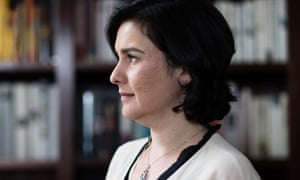
Kamila Shamsie. Photograph: Teri Pengilley/The Guardian
Arundhati Roy, JM Coetzee and Sally Rooney are among more than 250 writers who have defended Kamila Shamsie after a German literary prize withdrew an award [named for the Jewish Nobel Prize-winning German-born poet and playwright Nelly Sachs (1891-1970)] over her support for the Boycott, Divestment, Sanctions (BDS) movement against Israel. In an open letter published today in the London Review of Books, the writers, who also include Noam Chomsky, Amit Chaudhuri, William Dalrymple,Yann Martel, Jeanette Winterson and Ben Okri, say that the Nelly Sachs prize has chosen to “punish an author for her human rights advocacy”. Michael Ondaatje, a former winner of the award, is one of the signatories to the letter. This post is based on Alison Flood in the Guardian of
The judges had initially chosen Shamsie for writing that “builds bridges between societies”, but changed their minds on learning she backed the BDS movement, saying that her “political positioning to actively participate in the cultural boycott … contrasts with the claim of the Nelly Sachs prize to proclaim and exemplify reconciliation among peoples and cultures”.
Shamsie’s supporters reply asks: “What is the meaning of a literary award that undermines the right to advocate for human rights, the principles of freedom of conscience and expression and the freedom to criticise? … Without these, art and culture become meaningless luxuries.”
The revoking of Shamsie’s award follows a motion passed in May by the German parliament that labelled the BDS movement antisemitic. But the letter writers point to a decision earlier this month in the administrative court of Cologne ruling that Bonn city council’s decision to exclude the German-Palestinian Women’s Association from a cultural festival because of its support for BDS was unjustified. The writers highlight the statement last year from more than 40 progressive Jewish organisations arguing that conflating anti-Jewish racism with opposition to Israel’s policies and system of occupation and apartheid “undermines both the Palestinian struggle for freedom, justice and equality and the global struggle against antisemitism”.
The letter also criticises the German city of Dortmund, which runs the award, for refusing to make public Shamsie’s written response to the decision.
Shamsie, winner of the UK’s Women’s prize for fiction, had called it a “matter of outrage that the BDS movement (modelled on the South African boycott) that campaigns against the government of Israel for its acts of discrimination and brutality against Palestinians should be held up as something shameful and unjust”. Asked to comment, a spokeswoman for the city of Dortmund said that the jury had decided not to give any further statements. “The council has legitimated the jury of Nelly Sachs prize to choose an awardee,” she said. “The jury is autonomous in its decision and gave reasons in the press release. There has been no council meeting after the jury’s decision, so the withdrawal has not been a topic for the council yet.”






 Hans Thoolen on Human Rights Defenders and their awards