Posts Tagged ‘freedom of expression’

Soltan Achilova – finalist MEA 2021 – denied travel to Geneva Human Rights Week

November 21, 2023

On 21 November, 2023 the Martin Ennals Foundation, joined by HRW and the ISHR, issued the following statement:

The Martin Ennals Foundation condemns the harassment of Soltan Achilova and her daughter by government authorities at Ashgabat airport and calls for Turkmen authorities to stop their reprisals against journalists for their human rights work.

In the early hours of November 18th, 2023, Mrs. Soltan Achilova and her daughter were stopped by Turkmen government officials from boarding their flight for Switzerland. A customs official took their passports, wet them with a damp rag and declared the passports to be ruined, effectively obstructing Soltan from traveling to Geneva where she would feature as a keynote speaker at the University of Geneva’s Human Rights Week 2023.

This act of harassment and denial of freedom of movement is particularly reprehensible in that it comes only a few days after Turkmenistan’s 4th Universal Periodic Review, during which high-level government representatives expressed their “support for …the promotion and protection of fundamental freedoms and human rights“, giving multiple examples of their progress in terms of respect for freedom of expression.

Soltan Achilova believes she was not allowed to leave the country because of the authorities’ fear that negative information might be heard during the Human Rights week in Geneva. Yet, the obstruction from travel of an internationally recognized human rights defender is more striking evidence of the lack of freedoms in the country and the bad faith with which the Turkmenistan government engages with the Human Rights Council.  

Turkmenistan is one of the most repressive and isolated countries in the world, ranking 176th out of 180 countries in terms of press freedom and working conditions for journalists. Soltan has been reporting about her country for more than a decade. Her pictures of daily life are one of the few sources of documentation of human rights violations occurring in this most secretive nation. In 2021, Soltan was recognized by the Martin Ennals Award for her documentation of land grabs and forced evictions of ordinary citizens in Ashgabat.

Soltan has not been allowed to travel freely outside of her country on several occasions. She is under constant surveillance by Turkmen authorities and has suffered numerous incidents of harassment, intimidation, and threats. Despite the challenges, Soltan persists in her human rights work, regularly sending information and pictures  outside of the country so that government authorities are held to account.

We renew calls for Turkmenistan to fully implement their human rights obligations, including, inter alia, allowing human rights defenders and journalists to conduct their work peacefully. We invite Member States accompanying the 4th Universal Periodic Review of Turkmenistan to strongly sanction the silencing of Soltan Achilova and other Turkmen journalists.

For more on Soltan: https://youtu.be/7xkSvMXaZUU?si=JhWOrMxs4yQQ2wz8

https://www.hrw.org/news/2023/11/21/turkmenistan-journalist-prevented-travelling-abroad

https://www.frontlinedefenders.org/en/statement-report/turkmenistan-whrd-soltan-achilova-denied-travel-geneva-human-rights-week

https://www.rferl.org/a/turkmenistan-achilova-stopped-flying-europe/32692666.html

Defamation indictment for Fatia Maulidiyanti and Haris Azhar, two human rights defenders in Indonesia

November 14, 2023

Responding to the indictment of two prominent human rights defenders, Fatia Maulidiyanti and Haris Azhar, Amnesty International Indonesia’s Executive Director Usman Hamid said on 13 November 2023:

This disgraceful indictment will have a destructive effect on the work of human rights defenders in Indonesia. Instead of protecting the right to freedom of expression, the Indonesian authorities are obliterating civic space. These alarming indictments illustrate the increasing oppression faced by activists who express dissenting opinions. We urge the Indonesian authorities to immediately release Fatia Maulidiyanti and Haris Azhar. The right to freedom of expression must be respected and guaranteed.” See also: https://humanrightsdefenders.blog/2021/10/15/indonesia-human-rights-defenders-under-pressure/

The prosecutor demanded that Fatia should be imprisoned for three years and six months, and Haris for four years. They were deemed guilty after being sued by the Coordinating Minister for Maritime Affairs and Investment, Luhut Binsar Pandjaitan. The minister filed a defamation case against Fatia and Haris in September 2021. Both were charged by the police on 17 March 2022 with defamation under Article 27 section (3) of the Electronic Information and Transactions (EIT) Law. Amnesty International Indonesia has voiced concerns related to problematic provisions in Indonesian EIT Law, including this provision.

The police investigation relates to a YouTube video of a conversation between the two human rights defenders where they discussed the findings of a report on the alleged involvement of several military figures in the mining industry.

Amnesty International Indonesia has recorded that at least 1,021 human rights defenders were prosecuted, arrested, attacked and intimidated by various actors from January 2019 to December 2022. Meanwhile, there are at least 332 people that have been charged under the EIT Law, most of them accused of defamation, between January 2019 and May 2022.

https://www.amnestyusa.org/press-releases/alarming-defamation-indictment-for-two-human-rights-defenders-in-indonesia/

Others also came out in support:

https://www.frontlinedefenders.org/en/statement-report/solidarity-human-rights-defenders-fatia-maulidiyanti-and-haris-azhar

But then on 8 January 2024 comes the good news: https://www.straitstimes.com/asia/se-asia/two-activists-cleared-of-defaming-indonesian-senior-cabinet-minister-luhut-pandjaitan

And on 21 March 2024: https://www.ucanews.com/news/indonesian-court-scraps-defamation-laws/104540

https://forum-asia.org/?p=38920

Also worth reading on this topic: https://www.icj.org/indonesia-criminalization-of-disinformation-threatens-freedom-of-expression/

Group of UN Experts on Nicaragua finds escalating persecution against human rights defenders

September 14, 2023

Nicaragua has increased human rights violations and persecution of the opposition as it ratchets up its efforts to stifle dissent, a United Nations group of experts monitoring the country said on 12 September 2023.

The Group of Human Rights Experts on Nicaragua told the U.N. Human Rights Council in Geneva, Switzerland, that the government continues increasing pressure on human rights defenders to force them to leave the country.

That persecution has extended to the education sector, where the government has systematically cancelled the legal status of private universities and seized their campuses.

We have observed the intentional and severe deprivation of economic and social rights, in particular the right to education and academic freedom,” said Jan-Michael Simon, chair of the group. “Today, the university sector of Nicaragua as a whole no longer has independent institutions. Nicaragua is being stripped of its intellectual capital and critical voices, leaving the country’s prospects and development on hold.”

Last month, the government confiscated the prestigious Jesuit-run University of Central America in Nicaragua. It was the latest in a series of actions by authorities against the Catholic Church, but also among some 27 higher education institutions that have been cancelled and confiscated.

The group noted that religious figures, in particular from the Catholic Church, are increasingly targets of attacks and some have been forced to leave the country. Once abroad they are sometimes stripped of their nationality and have their assets in Nicaragua confiscated.

The university and other education institutions were important centers of dissent during the popular protests in April in 2018 that became a referendum on President Daniel Ortega’s administration. Ortega was re-elected after jailing seven potential competitors in 2021.

The government’s pursuit of the opposition has continued and intensified. Students and other opposition figures have been imprisoned or forced into exile.

In February, the Nicaraguan government put 222 prisoners on a plane to the United States, declaring them traitors.

The seriousness of these violations, in conjunction with the other crimes documented to date, perpetrated by reason of the political identity of the group targeted, leads the Group of Experts to conclude that these constitute prima facie the crime against humanity of persecution on political grounds,” the group said.

See also: https://humanrightsdefenders.blog/2022/02/21/nicaragua-death-in-detention-and-sham-trial/

https://www.ohchr.org/en/news/2023/09/group-experts-nicaragua-finds-escalating-persecution-against-dissent-and-crackdown?sub-site=HRC

https://abcnews.go.com/International/wireStory/nicaraguas-human-rights-violations-persecution-dissidents-rise-103128377

Mary Lawlor urges India to release HRD Saibaba

August 29, 2023
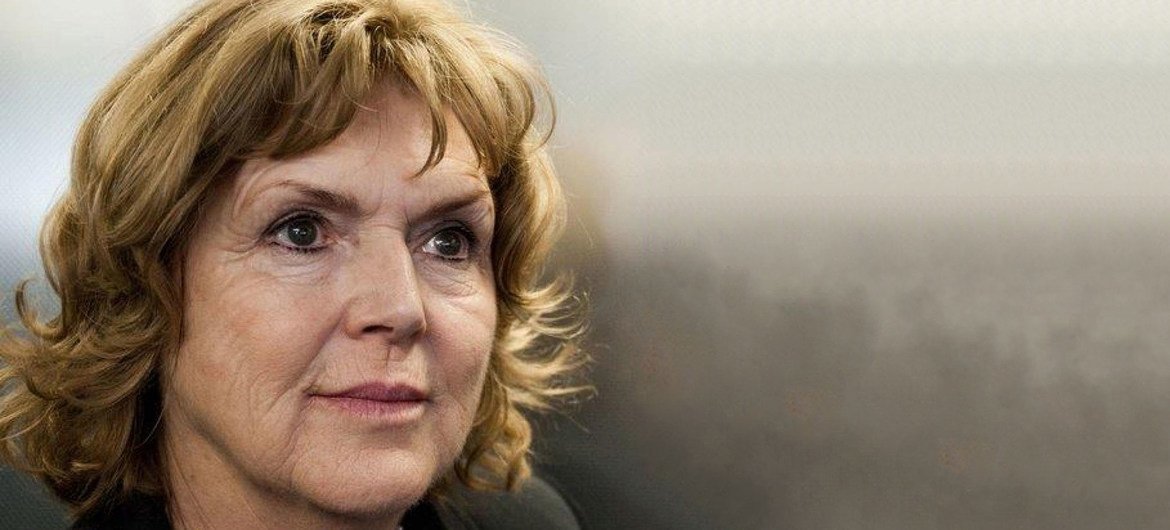
Mary Lawlor, UN Special Rapporteur on the situation of human rights defenders.

Mary Lawlor, UN Special Rapporteur on the situation of human rights defenders.

An independent UN human rights expert has called for India to release an activist imprisoned since 2017, expressing concern over his persistent detention and deteriorating health. GN Saibaba, a former English professor at Delhi University, was arrested in 2014 and accused of links to banned Maoist groups, according to media reports. See: https://humanrightsdefenders.blog/2023/07/07/g-n-saibaba-in-india-continues-from-his-cell/

He was sentenced to life imprisonment three years later for multiple offences under the country’s Unlawful Activities Prevention Act.

GN Saibaba is a long-standing defender of the rights of minorities in India, including the Dalit and Adivasi people,said Mary Lawlor, UN Special Rapporteur on the situation of human rights defenders on 21 August “His continued detention is shameful. It bears all the hallmarks of a State seeking to silence a critical voice,” she added.

UN human rights experts have repeatedly raised grave concerns about the prosecution of Mr. Saibaba, who has suffered from a spinal disorder and polio since childhood and uses a wheelchair. 

His detention was declared arbitrary by the UN Working Group on Arbitrary Detention in an opinion issued in 2021.

In March 2024 came the good news: The Nagpur bench of Bombay High Court set aside the conviction, Read more at:
http://timesofindia.indiatimes.com/articleshow/108246679.cms?utm_source=contentofinterest&utm_medium=text&utm_campaign=cppst

https://news.un.org/en/story/2023/08/1139932

https://english.mathrubhumi.com/news/world/un-expert-pitches-for-ex-delhi-university-professor-g-n-saibaba-s-release-1.8840381

Article 19 calculated that 80% of the world lost freedom of expression during the last decade

July 12, 2023

80% of citizens in the world have less freedom of expression today than a decade ago. That’s more than 6 billion people in more than 80 countries. Far more people are experiencing increases in repression than decreases regardless of whether you measure it over 1, 5 or 10 years, freedom of expression organisation Article 19’s annual Global Expression Report shows. The report comprises 161 countries. 

There are more countries in which freedoms are in decline than countries seeing rises in expression”, the report says. 

What’s more, the countries in decline contain many more people than countries in advance, which tend to have much smaller populations. 95% of countries that advanced in the last decade had populations of under 50 million people, while only 74% of countries that declined over the same period had populations of that size.”

Key findings:

  • In the last year, 363 million people across 12 countries experienced declines in their freedom of expression, while 165 million people across 7 countries saw advances.
  • In the last 5 years, 4.7 billion across 51 countries experienced declines in their freedom of expression, while only 673 million people in 25 countries saw advances.
  • In the last 10 years, 6.3 billion people across 81 countries experienced declines in their freedom of expression, while 452 million people in 21 countries saw advances.

The report shows that threats are posed not just by autocratic governments, but also by legislation and law enforcement within democratic structures that erode  human rights, as well as by corporate interests and organised crime. 

“Where those groups and their interests overlap, freedoms are in acute danger”, Article 18 says.

“Conflict is the greatest and most immediate threat to free speech, particularly for those on the frontlines of expression: In 2022, journalists and human rights defenders were predominantly killed in countries suffering from conflicts, either internal or international.” 

“However, political violence targeting civilians also became more common – and more deadly – during 2022, with more than 125,700 events globally leading to over 145,500 reported fatalities.”

From the report:

= 401 human rights defenders were murdered in 2022, including 186 in Colombia, 50 in Ukraine, and 45 in Mexico. 48% of those murdered were defending land, environmental, and Indigenous peoples’ rights.

– 87 journalists were murdered in 2022 – 33 more than in 2021 – including 19 in Mexico and 10 in Ukraine. 64 more were missing in 2022. 

– At the end of 2022, 363 journalists were behind bars. The top jailers were Iran, China, Myanmar, Turkey, and Belarus.

“While the full-scale Russian invasion of Ukraine dominated the global conflict landscape as well as the headlines in 2022, violence also intensified in places like Myanmar and the Sahel, as did criminal violence and conflict in Latin America and the Caribbean, while domestic unrest and state violence against protest escalated in places like Iran.” 

Human Rights Measurement Initiatives – 2023 Human Rights Data Release on Asian countries

June 16, 2023

On 14 June 2023 FORUM-ASIA announced the upcoming 2023 Human Rights Data Release by affiliate member, the Human Rights Measurement Initiatives (HRMI) based in New Zealand. HRMI will this June unveil the latest findings on civil and political rights, economic and social rights (ESR), and human rights in East Asia. On June 22nd, HRMI will present the civil and political rights data, including the measurement of Freedom of Religion and Belief in nine countries, as well as scores for Bangladesh, Thailand, and the Maldives. On June 29th, they will reveal the economic and social rights data, highlighting the crucial role of ESR data in increasing investment in low-income countries and its correlation with wealth improvement. Furthermore, on June 28th, HRMI will delve into the human rights situation in China, Hong Kong, and Taiwan, exploring topics such as the evolving freedom of opinion and expression and the impact of Hong Kong’s National Security Law. Esteemed guest panelists will share their valuable insights and provide context to the scores.

For HRMI see: https://humanrightsdefenders.blog/2023/06/16/human-rights-measurement-initiative-hrmi-explained/

Civil and political rights data launch

June 22nd 2023 11pm NZ Standard Time

2023 civil and political rights data, including measuring Freedom of Religion and Belief in 9 countries, producing scores for BangladeshThailand, and the Maldives, producing people at risk data about sex workers, and much more.

You can register for the zoom webinar here, it will also be livestreamed on Youtube here.

Economic and social rights data launch

June 29th 2023 Every time zone

2023 economic and social rights (ESR) data, including the role of ESR data in increasing investment in low income countries, how improving ESRs increases wealth, and much more.

You can register for our zoom webinar here, it will also be livestreamed on Youtube here.

Human rights in East Asia data launch

June 28th Every time zone

China, Hong Kong, and Taiwan’s 2023 human rights data, including how freedom of opinion and expression are evolving in these countries, the impact of Hong Kong’s National Security Law on human rights, and much more.

You can join the zoom webinar here (no registration required), it will also be livestreamed on Youtube here.

See also: https://humanrightsdefenders.blog/2019/08/22/new-zealand-funds-much-needed-human-rights-monitoring-in-the-pacific/

Now it is the turn of the Iranian journalists who reported on Mahsa Amini

May 11, 2023
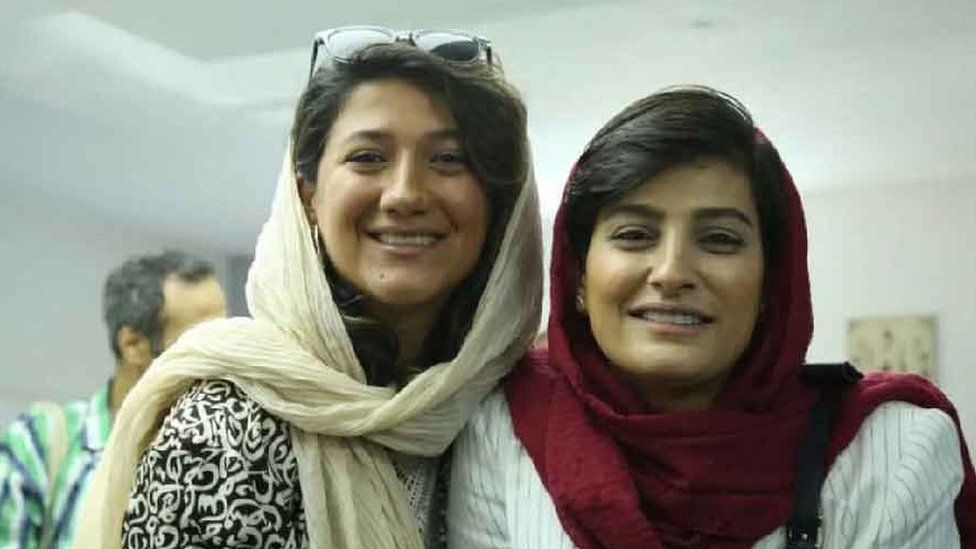
Niloufar Hamedi and Elaheh Mohammadi
Image caption, Niloufar Hamedi and Elaheh Mohammadi have been detained in Iran for more than 200 days

BBC Persian Service on 5 May 2023 drew attention to the fate of the two journalists who reported first on Mahsa Amini, whose name made headlines around the world when she died in custody last September, sparking waves of protests in Iran. But not many people have heard of Niloufar Hamedi and Elaheh Mohammadi.

The two female journalists helped break the story of Ms Amini’s death and have been detained in two of Iran’s most notorious prisons ever since. On Tuesday, they and the imprisoned Iranian human rights activist Narges Mohammadi were awarded the 2023 Guillermo Cano World Press Freedom Prize by the United Nations’ cultural agency, UNESCO.”They paid a hefty price for their commitment to report on and convey the truth. And for that, we are committed to honouring them and ensuring their voices will continue to echo worldwide until they are safe and free,” said Zainab Salbi, the jury chair. For more on Narges, see; https://www.trueheroesfilms.org/thedigest/laureates/07C20809-99E2-BDC0-FDC3-E217FF91C126

On 22 September, just six days after she tweeted a photograph of Mahsa’s grieving family, Niloufar Hamedi was arrested. Security forces also raided Elaheh Mohammadi’s home at the same time, seizing her electronic devices. On 29 September, she too was arrested.

Both Ms Hamedi and Ms Mohammadi were already known for hard-hitting news reports and coverage of human rights issues.

As well as winning UNESCO’s press freedom prize, Ms Hamedi and Ms Mohammadi have been named as two of Time Magazine’s 100 Most Influential People of 2023 and given the 2023 Louis M Lyons Award for Conscience and Integrity in Journalism, presented by Harvard University in the United States. See: https://www.trueheroesfilms.org/thedigest/awards/8809EB31-7E9C-4624-88E3-FC592D496807 and https://www.trueheroesfilms.org/thedigest/awards/1748C306-757A-49EB-8436-A9C607356112

“Journalists in Iran are risking their lives on a daily basis to report on the conditions and oppressions there,” the Harvard fellows noted.

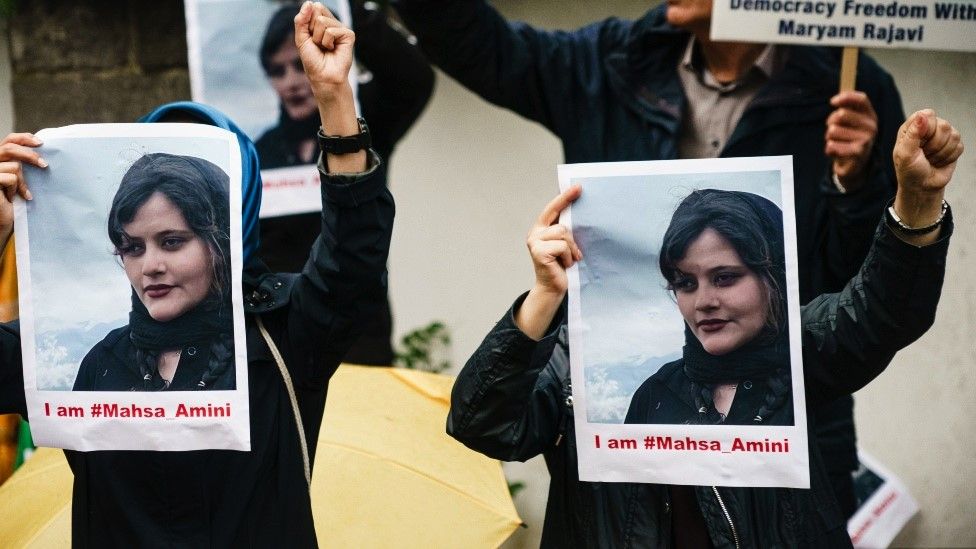
Protesters hold up pictures of Mahsa Amini in Berlin, Germany
Image caption, Mahsa Amini’s death led to a wave of protests in Iran and rallies in solidarity around the world

Ms Hamedi and Ms Mohammadi have meanwhile been kept in harsh conditions at Evin prison in Tehran and Qarchak Women’s Prison, south of the city. Reports from inside Qarchak suggest that the facilities are inhumane, with a lack of medicine, food and even safe drinking water or clean air. Ms Mohammadi lost 10kg (22lbs) in the first three months of her detention, her husband wrote on his Instagram page.

Both women have also struggled to access legal support. The first lawyer appointed to represent the pair said in October that he was unable to communicate with them or access the legal documents surrounding their arrests. Less than a month later, he was himself arrested. The journalists’ families have struggled with the pain of not knowing what is going to happen to them.

“I’m asked, ‘What do the authorities tell you?’ I’m not even sure which institution or person to contact,” Ms Hamedi’s husband, Mohammad Hossein Ajorlou, said in an interview with Sharq.

He too has found it difficult to get information about what his wife is accused of and what is likely to happen to her.

At the end of October, Iran’s ministry of intelligence and the intelligence agency of the Revolutionary Guards issued a statement accusing Ms Hamedi and Ms Mohammadi of being trained by the US Central Intelligence Agency to foment unrest in Iran.

Their newspapers denied the allegations and insisted they had just been doing their jobs.

Last week, after they had both spent more than 200 days in custody, the Iranian judiciary announced that Ms Hamedi and Ms Mohammadi had been indicted and their cases referred to a court.

On Monday, Ms Hamedi’s husband wrote on Twitter that she and Ms Mohammadi had been transferred back to Evin prison from Qarchak, apparently in preparation for their trial.

https://www.bbc.com/news/world-middle-east-65466887

see also: https://iranhumanrights.org/2023/06/iran-proposed-bill-pushes-denial-of-basic-rights-to-unveiled-women/

in August 2023, things got further out of hand: with mass arrests:

https://www.nbcnews.com/news/world/iran-arrests-women-activists-mahsa-amini-protests-anniversary-rcna100566

https://www.frontlinedefenders.org/en/statement-report/iran-alarm-over-mass-arrests-human-rights-defenders-advance-anniversary-september

https://www.hrw.org/news/2023/08/19/iran-mass-arrests-womens-rights-defenders

Lebanon: human rights lawyer Nizar Saghiyé’s freedom of expression curtailed

April 25, 2023

On Thursday 20 April, the Lebanese lawyer, human rights defender and director of the NGO Legal Agenda Nizar Saghiyé was summoned to appear before the Beirut Bar Council. The summons followed Mr Saghiyé’s criticism of an amendment to the Code of Ethics of the Beirut Bar Association which prevents lawyers from speaking publicly in the media without prior authorisation from the President of the Bar Association.

EuroMed Rights, Front Line Defenders, the International Federation for Human Rights (FIDH) and the World Organisation Against Torture (OMCT), both within the framework of the Observatory for the Protection of Human Rights Defenders, express their support for Mr Nizar Saghiyé and strongly condemns this summons. Requiring lawyers to obtain prior authorisation from the President of their Bar Association before making any media statements curtails their freedom of expression.

The modification of the Code of Ethics published by the Beirut Bar Association on 3 March 2023, interferes with Article 19 of the International Covenant on Civil and Political Rights, which was ratified by Lebanon in 1972. In addition to the ICCPR, the UN Basic Principles on the Role of Lawyers makes clear that whilst states bear the primary obligation to protect lawyers, they share this with the bar associations (Principle 25). In addition, Principle 23 states that “Lawyers like other citizens are entitled to freedom of expression, belief, association and assembly. In particular, they shall have the right to take part in public discussion of matters concerning the law, the administration of justice and the promotion and protection of human rights and to join or form local, national or international organizations and attend their meetings, without suffering professional restrictions by reason of their lawful action or their membership in a lawful organization. In exercising these rights, lawyers shall always conduct themselves in accordance with the law and the recognized standards and ethics of the legal profession.

Currently, the Lebanese government is debating a new media law behind closed doors and there has been an increase in the number of arrests of journalists. Recently the President of the Lebanese Bar Association recently denounced the “chaos and confusion” allegedly created by the proliferation of websites and social networking platforms. This latest summons is a worrying development in an already troubling trend towards limiting freedom of expression of Nizar Saghiyé, the Bar’s lawyers, amongst others.

https://euromedrights.org/publication/lebanon-behind-the-summons-of-nizar-saghiye-a-threat-to-freedom-of-expression/

Suspicious Death of Investigative Journalist John Williams Ntwali in Rwanda

January 24, 2023
John Williams Ntwali.
John Williams Ntwali. © Private

Human Rights Watch and others demand that the Rwandan authorities allow an effective, independent, and transparent investigation into the suspicious death of John Williams Ntwali, a leading investigative journalist and editor of the newspaper The Chronicles. Ntwali was regularly threatened due to his work as a journalist exposing human rights abuses in Rwanda and had expressed concern about his safety to Human Rights Watch and others.

John Williams Ntwali was a lifeline for many victims of human rights violations and often the only journalist who dared report on issues of political persecution and repression,” said Lewis Mudge, Central Africa director at Human Rights Watch. “There are many reasons to question the theory of a road accident, and a prompt, effective investigation, drawing on international expertise, is essential to determine whether he was murdered.

News of Ntwali’s death emerged in the evening of January 19, 2023. Police asked Ntwali’s brother to identify his body at Kacyiru Hospital morgue, telling him that Ntwali had died in a road accident the night of January 17 to 18. The police told the New Times website that Ntwali died in a motorbike accident in Kimihurura, Kigali, on January 18 at 2:50 a.m., but to date, have not provided details of the accident such as a police report, its exact location, or information on the others involved. Human Rights Watch is not aware of any reports about an alleged accident coming to light until the evening of January 19.

Ntwali was regularly threatened and attacked in the pro-government media for his investigative reporting. He played a leading role in covering and bringing attention to the plight of Kangondo neighborhood residents, who are in a long-standing dispute with authorities over land evictions. Recently, he also published videos on his YouTube channel about people who had suspiciously “disappeared.” His last video, posted on January 17, was about the reported disappearance of a genocide survivor who had spoken out about being beaten by police officers in 2018.

Ntwali was also one of only a few journalists independently covering high profile, politicized trials of journalists, commentators and opposition members, and posting videos about their conditions in prison. In June 2022, he told Human Rights Watch about the torture wounds he had seen on some of these critics and opponents. He also told Human Rights Watch:

I don’t know what’s going to happen to me after CHOGM [the Commonwealth Heads of Government Meeting which took place in Kigali in June 2022]. I’m told that after CHOGM, they won’t play around with us anymore. I’ve been told five or six times. I receive phone calls from private numbers. Some [intelligence] people have come to my house twice to tell me. NISS [National Intelligence and Security Services] has told me: ‘If you don’t change your tone, after CHOGM, you’ll see what happens to you.’

On July 12, he told a friend he had survived a number of “staged accidents” in Kigali. “He was telling me about ordeals and threats he faces for his journalism,” his friend told Human Rights Watch.

Given these circumstances, Rwanda has a legal obligation to ensure a prompt, effective investigation that is capable of determining the circumstances of Ntwali’s death and identifying those responsible, with a view to bringing them to justice. An effective investigation must be independent, impartial, thorough, and transparent, conducted in full compliance with the Revised United Nations Manual on the Effective Prevention and Investigation of Extra-legal, Arbitrary and Summary Executions (The Minnesota Protocol on the Investigation of Potentially Unlawful Death).

Because Rwandan authorities have consistently failed to ensure credible investigations into and accountability for suspicious deaths of political opponents or high-profile critics, such as Kizito Mihigo in February 2020, foreign experts such as the United Nations special rapporteur on extrajudicial, summary or arbitrary executions should be involved in the investigation, Human Rights Watch said. All Rwandan authorities should fully support and cooperate with the investigation, and the Commonwealth, which Rwanda currently chairs, should publicly call for such an investigation. See also: https://humanrightsdefenders.blog/2021/02/16/call-for-independent-investigation-into-rwandan-singer-kizito-mihigos-death/

Rwandan authorities have long targeted Ntwali. He was arrested in January 2016, in the lead up to the 2017 elections, and accused of raping a minor. Judicial officials later changed the charge to indecent assault and eventually dropped the case for lack of evidence.

At the time, Ntwali had been investigating several sensitive issues, including the death of Assinapol Rwigara, a businessman and father of would-be independent presidential candidate Diana Rwigara, whose candidacy to the 2017 elections was later rejected. The police said that Assinapol Rwigara died in a car accident in February 2015, but his family contested the authorities’ version of events.

Ntwali had also been arbitrarily arrested several other times and his website was blocked by a government regulator, apparently in retaliation for his reporting that was critical of the government.

“It is an embarrassment for the Commonwealth and a problematic message about its values that the country that presides over it is a place where the suspicious deaths of journalists and activists can be swept under the carpet,” Mudge said. “Rwandan authorities should not only not harm journalists but should be actively protecting them, and Rwanda’s partners should be holding the government to account in full for its obligations under international human rights law.”

https://www.hrw.org/news/2023/01/20/rwanda-suspicious-death-investigative-journalist

https://www.reuters.com/world/africa/john-williams-ntwali-rare-rwandan-journalist-critical-govt-dies-2023-01-20/

and also; https://www.hrw.org/news/2023/02/09/no-clarity-over-journalists-death-rwanda

Twitter’s dangerous new direction

November 30, 2022

Marc Limon, Executive Director of the Universal Rights Group – on 29 November 2022 – published a blog post,Twitter’s descent reminds us of the dangers of free speech absolutism” which is worth reading in full:

..A decade ago normative interpretations of freedom of expression under international human rights law and under relevant resolutions of the Human Rights Council were fairly finely balanced between the ‘anything goes’ ideology espoused by the United States (US) as well as by American human rights lawyers and experts (including several Special Rapporteurs) on the one hand, and those States and experts (especially from the Organisation of Islamic Cooperation – OIC) advocating a far more interventionist approach, on the other. However, over recent years the needle has shifted discernibly towards the latter view.

There are several reasons for this, but perhaps the most important are, first, a growing recognition, initially on the part of European countries but also increasingly in the US, of the growing threat posed by incitement to religious or racial hatred (i.e., ‘hate speech’) to human rights in the digital age, and second, a growing acknowledgement that disinformation (or ‘fake news’) spread online can no longer be held in check by societal checks and balances (i.e., the long-held American view that ‘best antidote to bad speech is more speech’) and thus poses a direct threat to democracy. In a stark example of the latter point, the administration of President Joe Biden has repeatedly acknowledged, and promised to respond to, the key role that disinformation about US elections (i.e., ‘stop the steal’) played in inciting the mob that attacked Congress in January 2021.

Today, the international community, including members of the Human Rights Council, while certainly not united on the thorny question of the threshold between speech that is ok and speech that is not, at least share something of a (albeit wide) common ground.

What is more, that growing intergovernmental consensus has been reflected in the operations of another former absolutist bastion of free speech: the social media giants. Meta (formerly Facebook) and Twitter have been at the forefront of this shift, bringing in increasingly sophisticated content moderation protocols heavily influenced by international human rights law and by guidance provided by Treaty Bodies, Special Procedures, and UN frameworks like the Rabat Plan of Action.

Is Larry soaring or hurtling towards the ground?

Which makes recent developments at Twitter (Larry is the name of the blue Twitter bird), following the company’s takeover by Elon Musk, all the more dispiriting – but also all the more instructive (i.e., demonstrating that the Human Rights Council and the wider UN have been moving in the right direction over the past ten years).

Elon Musk is a freedom of expression absolutist who, moreover, subscribes to the widely held view among such extremists that free speech is being threatened by a censoring ‘woke’ orthodoxy.

Musk arrived at Twitter with a hard-line approach based on a belief that the platform’s efforts over recent years to check hate speech and malicious disinformation is part of some left-wing plot to destroy free speech and thus, in his mind, to threaten democracy. That is why he is now on a crusade to allow suspended users back on to the platform. The accounts of Donald Trump, Kanye West, and Jordan Peterson have been reinstated, along with nearly all those that were suspended for falling foul of old Twitter’s content rules on abuse, disinformation, and hate speech.

This means that Twitter is about to turn into a very unpleasant and potentially dangerous experiment in the reality of free expression without limit.

See also: https://humanrightsdefenders.blog/2020/06/03/more-on-facebook-and-twitter-and-content-moderation/